COVID-19 Immigration Effects December 2020

With the release of all December 2020 datasets, I have updated my slides showing the impact of COVID-19 on immigration to Canada. Slides 3 and 4 have the highlights.

The dramatic decrease in immigration and related programs in 2020 helps explain the government’s response, whether reasonable in the case of providing more flexibility in when and how to submit documents, flexibility for international students studying online from their country of origin, shift to online testing for citizenship; some more questionable as having express entry drafts with minimum score of 75 for invitations of apply (compared to the more reasonable scores of mid to high 400s:

Pdf: https://multiculturalmeanderings.com/wp-content/uploads/2021/02/covid-19-immigration-effects-key-slides-december-2020-draft.pdf):

Canada’s immigration policies create discriminatory outcomes for African applicants, critics say

All immigration policies and programs have discriminatory criteria in terms of whom they select and whom they refuse as part of managing borders, contributions and impacts. Financial resources of international students and the requirement to leave at the end of the studies (unless they transition to permanent residency) are legitimate criteria even if they discriminate against those with fewer financial resources.

So the question always revolves whether the criteria strike the appropriate balance between admitting permanent and temporary residents (along with visitor visas). Different groups will advocate for more open or more closed policies.

In the case of international students, who have an easier path towards transitioning to permanent residency, with students being about half of all transitions. So a more interesting data question would be to look at the country of citizenship of those students transitioning and assess the common factors of those who successfully transition: 

Canada must apply a racial lens to its goal of increasing francophone immigration, and address why officials are refusing visas and study permits to African countries at higher rates, say immigration critics, if it has any hope of meeting its French-speaking targets.

MPs and immigration advocates said they’ve repeatedly warned Ottawa that a section on issuing study permits is leading to discriminatory practice on who gets approved, and creating higher rejection rates for African students that they worry will only worsen amid pandemic-driven backlogs. They said the condition under the Immigration and Refugee Protection Regulations (specifically, subsection 216(1)) that the officer must be confident the applicant will leave Canada by the end of their studies, and financial requirements stipulating whether they are eligible to study in Canada, should be removed and are unfair.

These requirements, they contend, are leading Canada to fail to meet its own targets to attract French speakers to live and stay in Canada. In the 2019-20 report on departmental targets, Immigration, Refugees, and Citizenship Canada (IRCC) said 1.8 per cent of permanent residents admitted to Canada, outside Quebec, identified as French-speaking, despite a target of reaching 4.4 per cent. That’s slightly fewer than the 2.8 per cent of permanent residents outside of Quebec who speak French, with both goals among the third of the department’s performance targets missed during the last fiscal year. In Quebec’s case, Bloc Québécois MP Christine Normandin (Saint-Jean, Que.) said, often, the province wants students to stay, contrary to the IRCC requirement that they be expected to leave at the end of their permit.

Canada should look at suspending use of that provision, said NDP MP Jenny Kwan (Vancouver East, B.C.).

“There’s definitely a disconnect with the reality of what’s happening, versus what Canada claims and what our government claims that they want to achieve,” said Ms. Kwan. She called on Immigration Minister Marco Mendicino (Eglinton-Lawrence, Ont.) to ask the “hard questions” about the barriers preventing IRCC from achieving its own objectives.

It’s apparent the government wants to push francophone immigration, but to succeed, Canada needs to take a “deep look” at where the source countries are, and what type of programs are in place to facilitate immigration, said Will Tao, a B.C.-based immigration lawyer. African nations make up more than a quarter of the 88 La Francophonie members, for example, and constitute a large pool of potential applicants to Canada.

In a December 2020 submission to the House Immigration Committee, the non-profit Arenous Foundation, which Mr. Tao helped launch, wrote it was “deeply concerned” that anti-Black racism continues to lead to high refusal rates from African and global South countries.

In 2019, 75 per cent of African study permits were refused, compared to 39 per cent as the global rejection, the report noted, citing an analysis by the news site Polestar Immigration. Arenous’ numbers suggest COVID-19 has exacerbated the situation, and that countries with 70 per cent or higher refusal rates continue to disproportionately represent the same African and global south countries.

“When we look at this—the government’s plan to bring more francophone students—you can’t remove that race lens,” he said, and one of the biggest barriers in reaching that goal is Canada’s high rates of refusal for international students from francophone-speaking African countries.

Pointing to Canada’s poor history with Black immigrants—including a 1911 government order that denied Black people entry to Canada on the basis of climate unsuitability—the report said “it is incumbent on Canadian immigration to explore how to create a more racially just, anti-racist framework for assessing [temporary resident visas] and study permits from African countries.”

Though some efforts have been made through the student-direct stream, Mr. Tao said, prioritizing a limited subset of candidates from French-speaking countries won’t bring a greater, more diverse group of students. The IRCC added Morocco, Pakistan, and Senegal in September 2019 to facilitate more francophone markets.

The IRCC has a francophone immigration strategy that aims to attract more French-speaking foreign nationals to Canada. It has “intensified its year-round promotion and recruitment support activities,” said IRCC spokesperson Lauren Sankey in an email.

She said Canada is committed to “a fair and non-discriminatory application of immigration procedures,” and that anyone can apply if they meet the necessary qualifications.

“All applications from around the world are assessed equally against the same criteria. … Admissibility factors, such as having adequate resources to support yourself in Canada or showing that you would leave Canada if your authorized stay ends in the future, are common to many types of applications,” Ms. Sankey said. She added applicants aren’t refused if they intend to apply for permanent residence in the future.

Officers assessing whether a temporary resident application is “genuine” will consider applicants’ ties to their home country and their overall economic and political stability, their family and economic situation, and the purpose of the visit.

A study-permit applicant, meanwhile, needs to demonstrate they have the financial resources for their first year in Canada and a likelihood that they’ll continue to have adequate resources in future years. Ms. Kwan and Ms. Normandin said the House Immigration Committee, which they sit on, heard that applicants have been refused even when awarded scholarships or bursaries from colleges or the province.


Quebec colleges are “losing the race” to attract French-speaking students, and it’s long been an issue, said Ms. Normandin.

“Not only do we want these students to come, but we want to keep them after,” she said. In some cases, she added, students will have additional financial support from the province or universities, but that isn’t taken into account. “It’s really ironic the way it’s dealt with.”

Students coming from poorer nations may have a harder time proving they have sufficient assets to sustain their living while they are here, and to prove that they will come back to their country after they’re done, she noted. During the House committee’s recent study on the impacts of COVID-19 on immigration, she said, she was surprised to see how widespread the problem is, and that institutions outside of Quebec are experiencing the same issues.

While the language of the regulations don’t identify or isolate specific nations, the “result is discriminatory,” she said, and limits the students who are considered eligible from an already small French-speaking pool of potential recruits.

Applicants can also be rejected if the officer has reason to believe the applicant won’t respect the end of their authorized stay in the future, Ms. Sankey said. To Ms. Kwan, it seems “assumptions” are being made about who is more likely to comply with the rules of their visas given the “stark” contrast when you compare acceptance for African countries to arrivals from Europe.

“It seems that students from particular countries are routinely denied,” she said. “Perhaps there’s something wrong how that section is being applied.”

Canada’s approach to Haitian refugees might serve as an example, said Jamie Liew, an associate professor at the University of Ottawa.

Even as record numbers come from the French-speaking nation—often irregularly across the United States border—she said barriers are “increasingly put in place that prevent people from certain francophone countries from accessing our borders.” And while she lauded Canada’s massive effort to resettle Syrian refugees in 2015 and 2016, she worried whether it led to longer processing times in some African nations with French-speaking populations with similarly acute needs, including the Congo, Rwanda, Burundi, and Djibouti.

If Canada wants to targets certain migrants, like francophones, she said, “we have to keep in mind where they are, who they are, and how does that fit with humanitarian objectives as well.”

“Some of these people are skilled workers, and I think we need to be more aware about how processing is being done and who’s applying,” she added.

Green MP Jennica Atwin (Fredericton, N.B.) questioned Mr. Mendicino in November on whether the 4.4 per cent target was an adequate goal for French speakers outside of Quebec. New Brunswick is the only officially bilingual province.

“The latest numbers show the government isn’t even close to that target,” she said, and that was before the pandemic-driven backlogs.

“Clearly, more needs to be done to ease pathways to Canada from countries with French-speaking populations, including many African nations,” she added. “As we explore and confront systemic racism in Canadian policing, justice, and health systems, we need to confront it in our immigration policies and procedures. Why are African visas rejected at a higher rate than the global average? That’s a very good question.”

Source: Canada’s immigration policies create discriminatory outcomes for African applicants, critics say

For Hong Kongers, Canada is the beaten path out of China’s iron grip

While the number of returnees will be hard to determine, any new wave of Hong Kong immigrants will be captured by regular IRCC and related StatsCan data (1,545 in 2019, the last full year before COVID-19):

A second generation of Hong Kongers is heading to Vancouver and other Canadian cities for refuge from political uncertainty, but unlike their parents in the 1980s and 1990s, this time the move seems for good.

Cities such as Vancouver and Toronto are a magnet for those looking to escape as China tightens its grip on the territory of 7.5 million people. Some 300,000 already have Canadian citizenship after many families initially moved there before Hong Kong’s return from British to Chinese rule in 1997.

Source: For Hong Kongers, Canada is the beaten path out of China’s iron grip

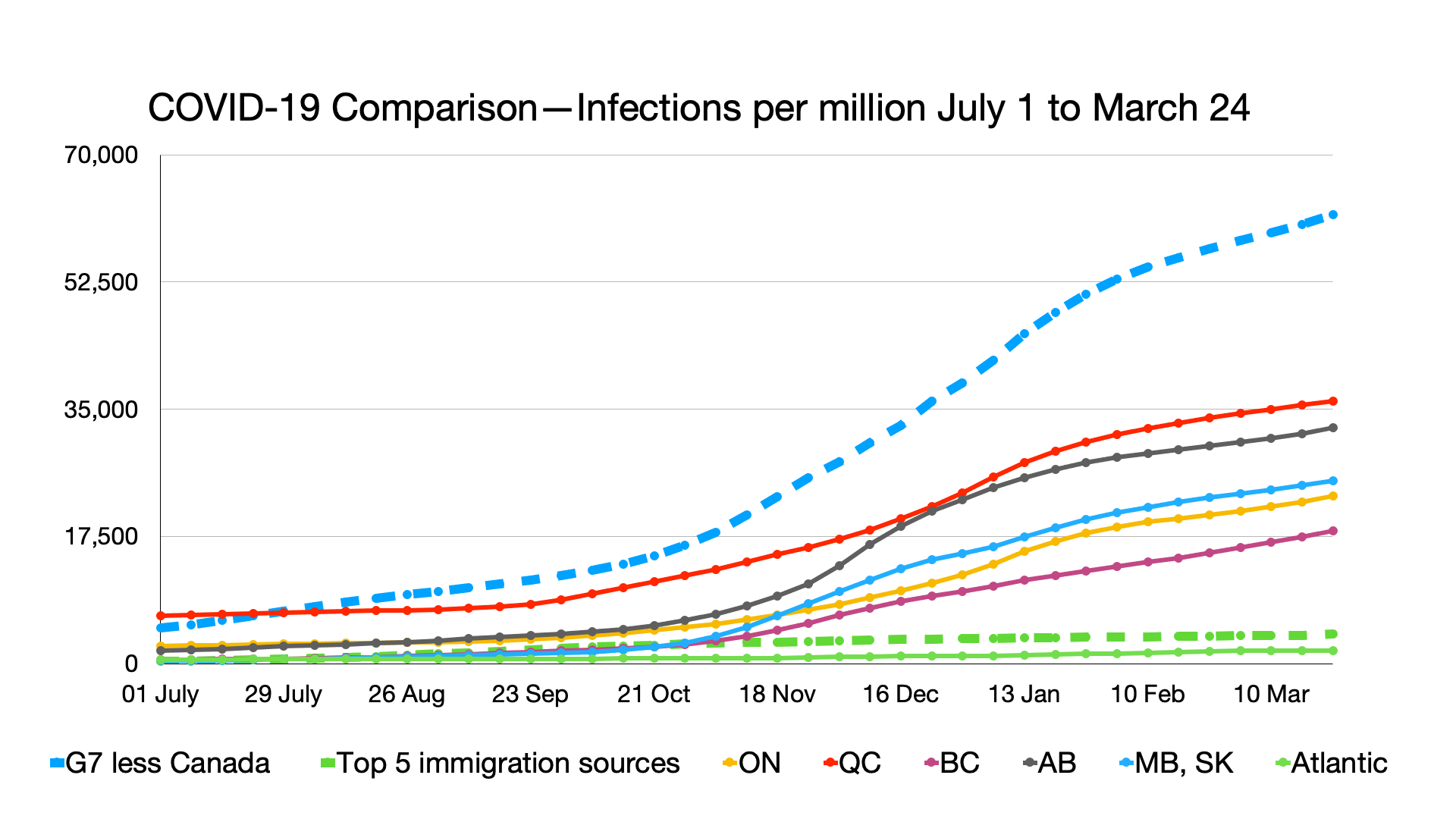
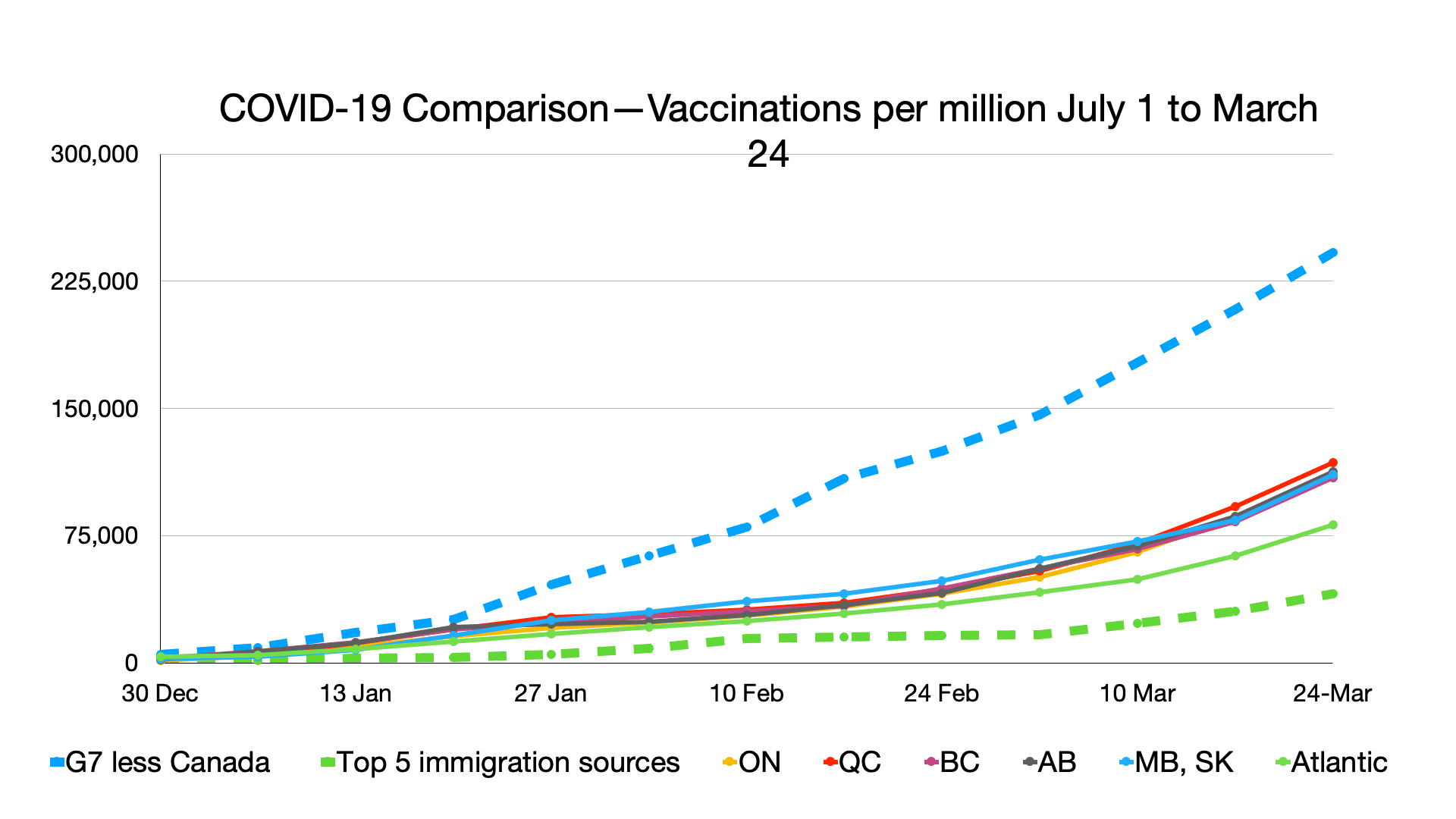
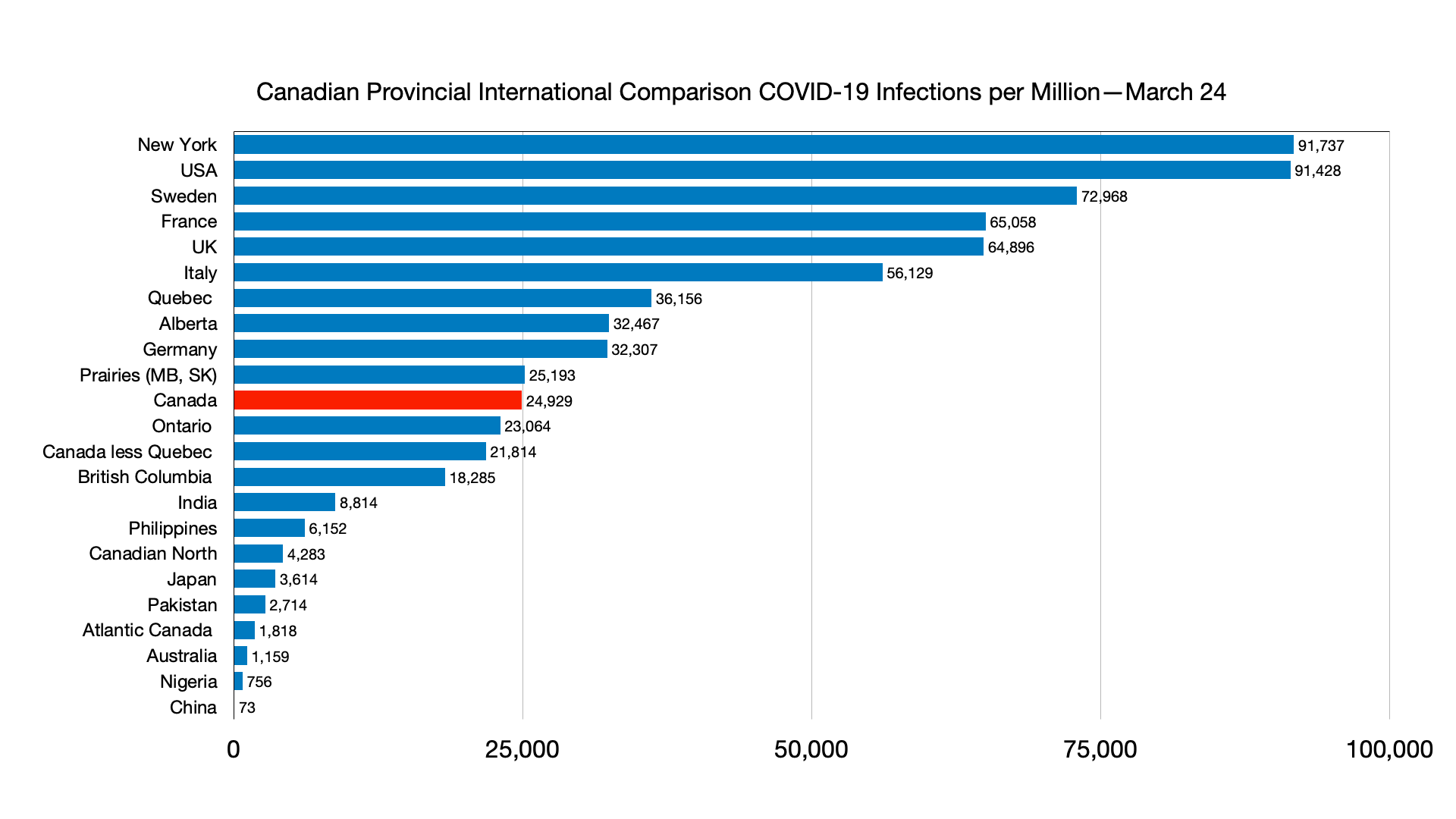
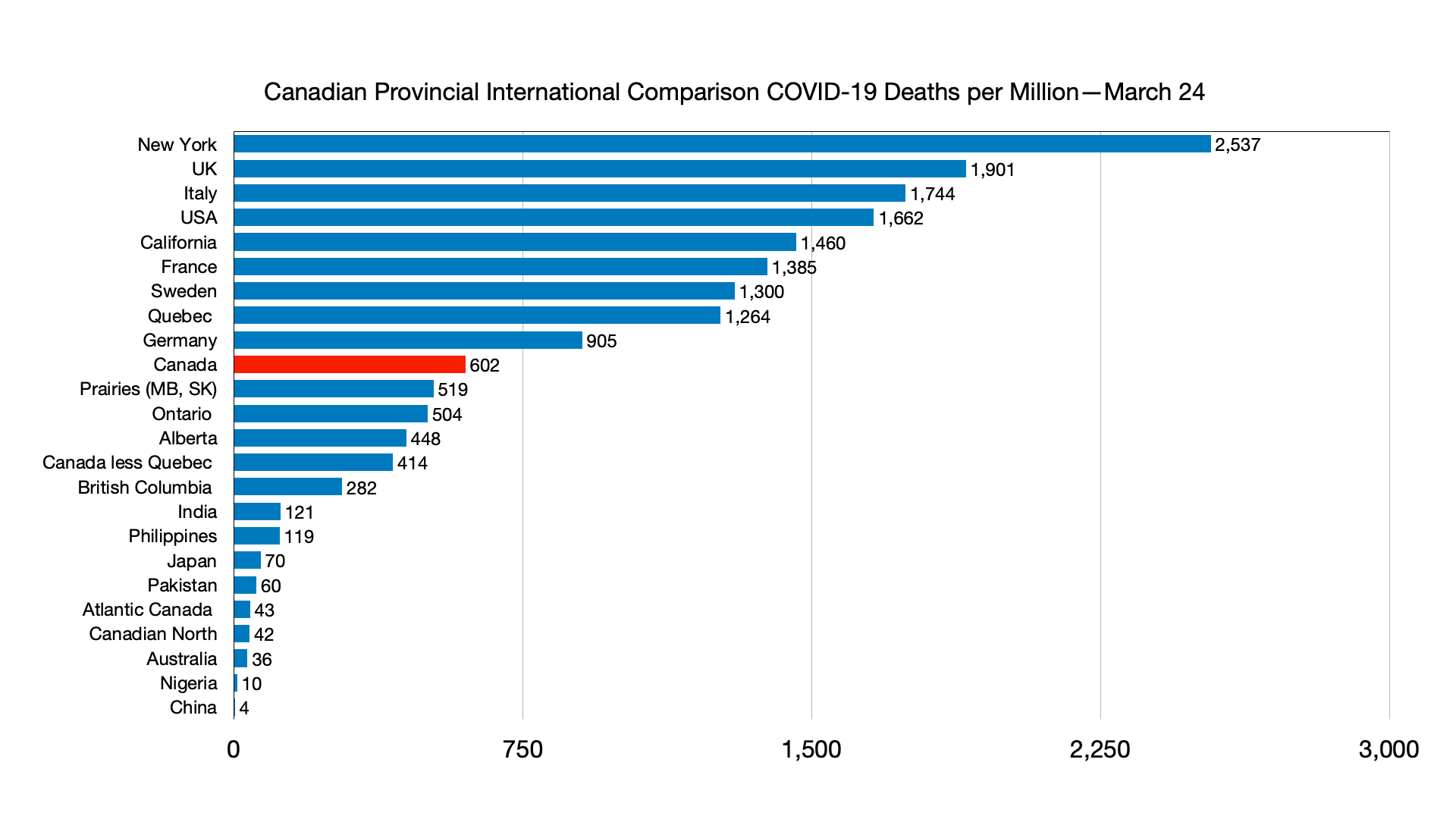
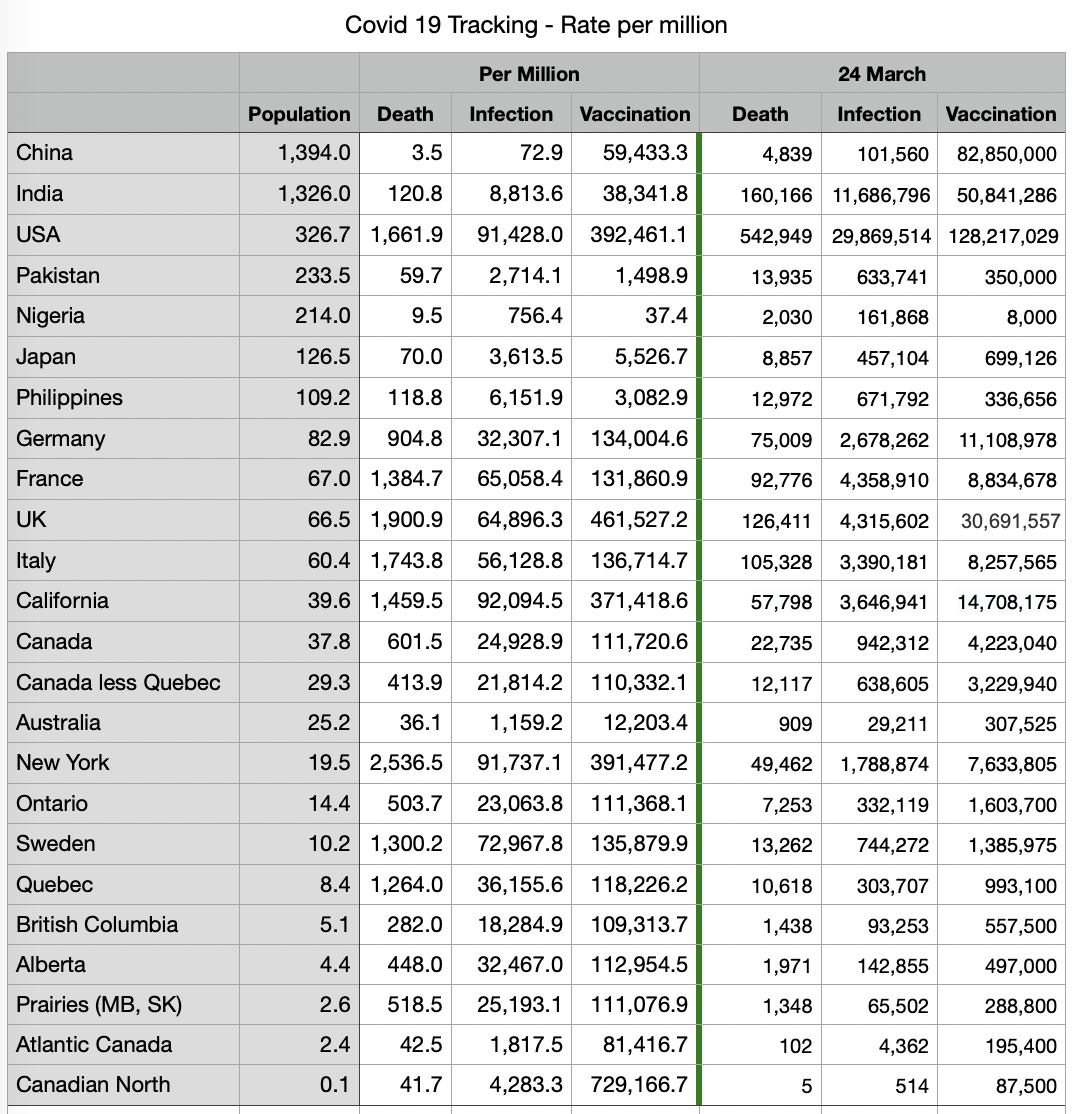
#COVID-19: Comparing provinces with other countries 10 February Update

The latest charts, compiled 10 February.

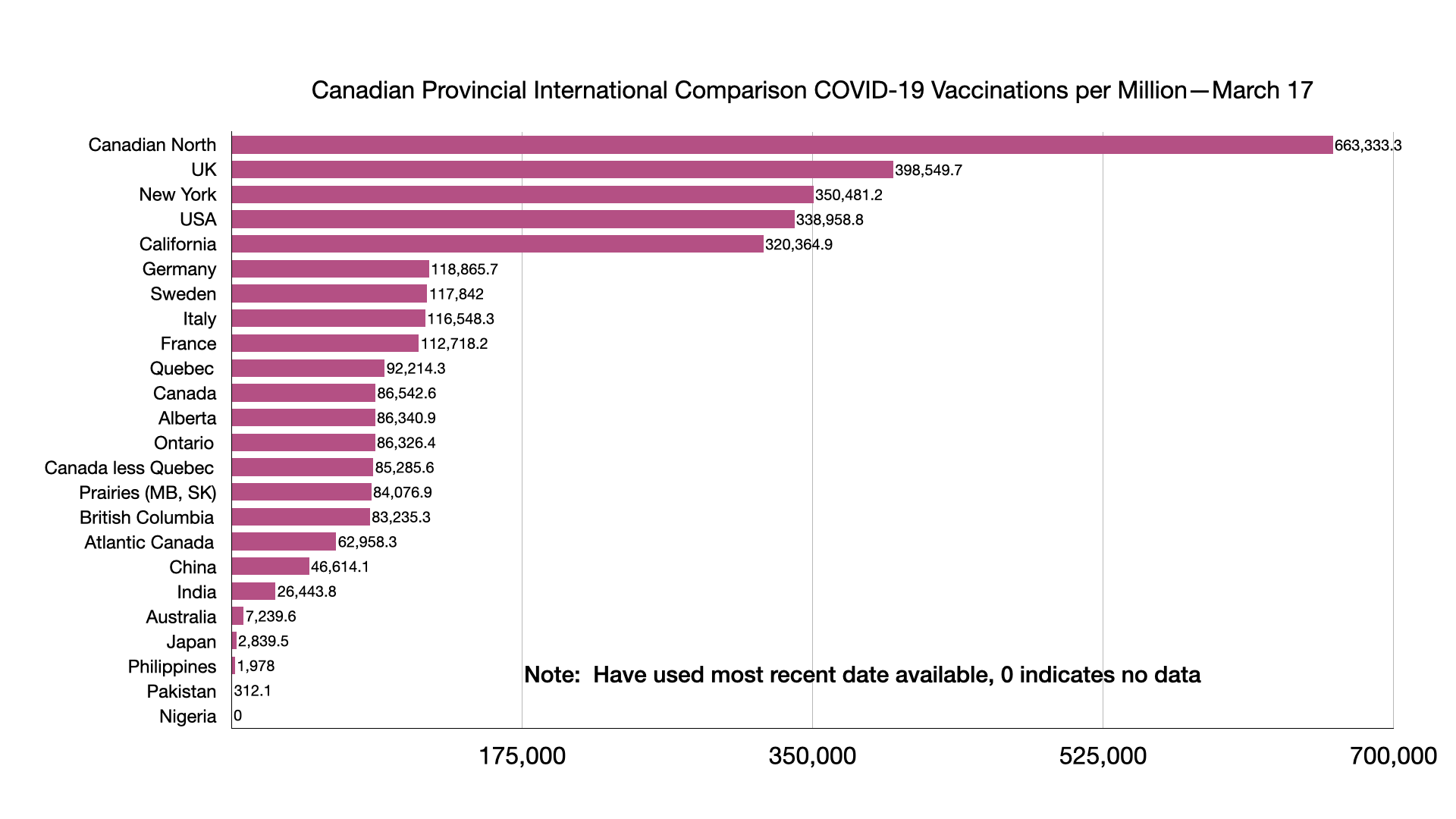
Vaccinations: The gap between the leading G7 countries (UK, USA) and other EU countries continues to grow given the pause in deliveries to Canada, with the notable exception of the Canadian North and the Prairies behind slightly ahead of France.

Trendline charts

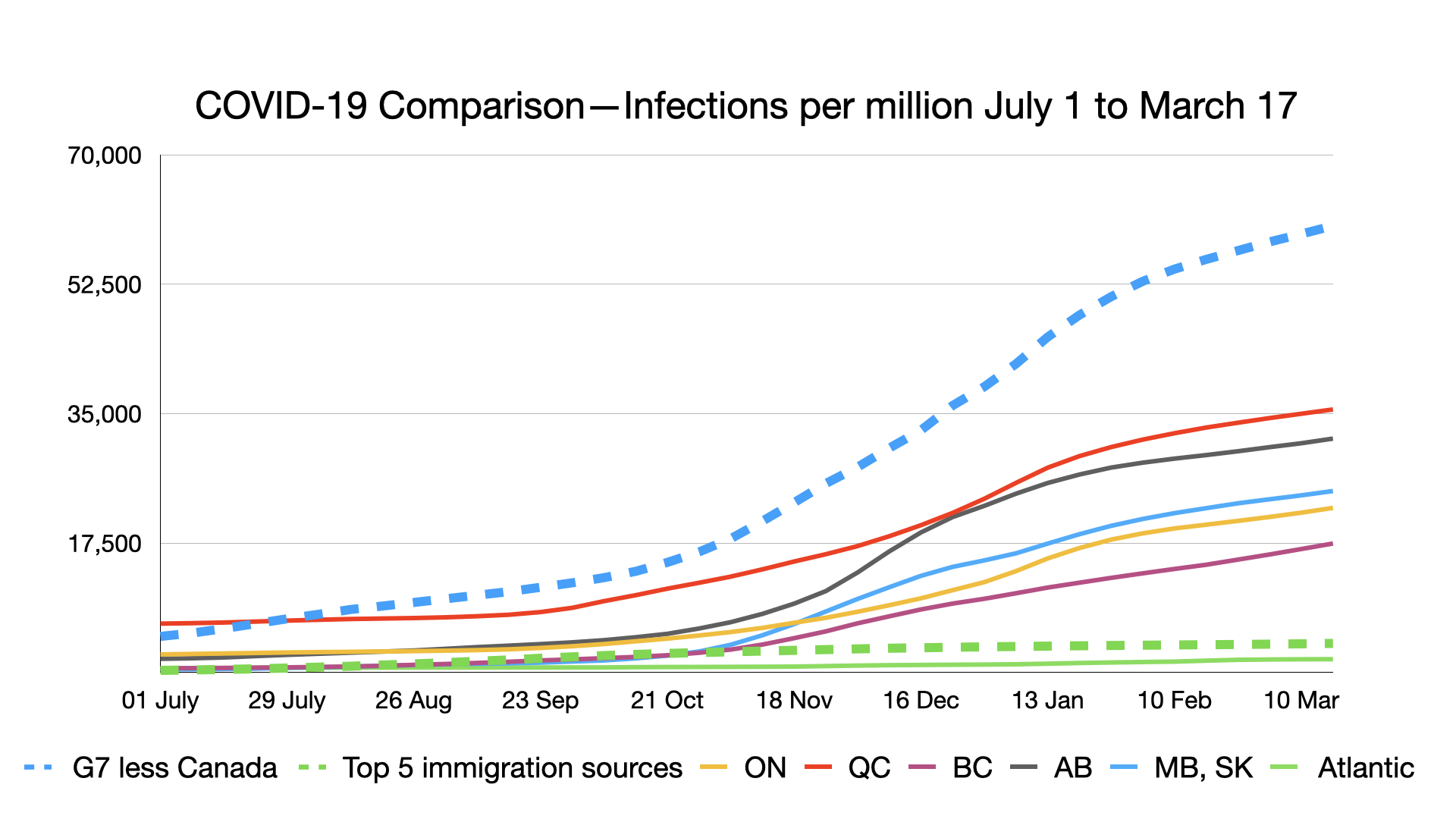
Infections per million: Alberta continues to be controlling the virus better than Quebec.

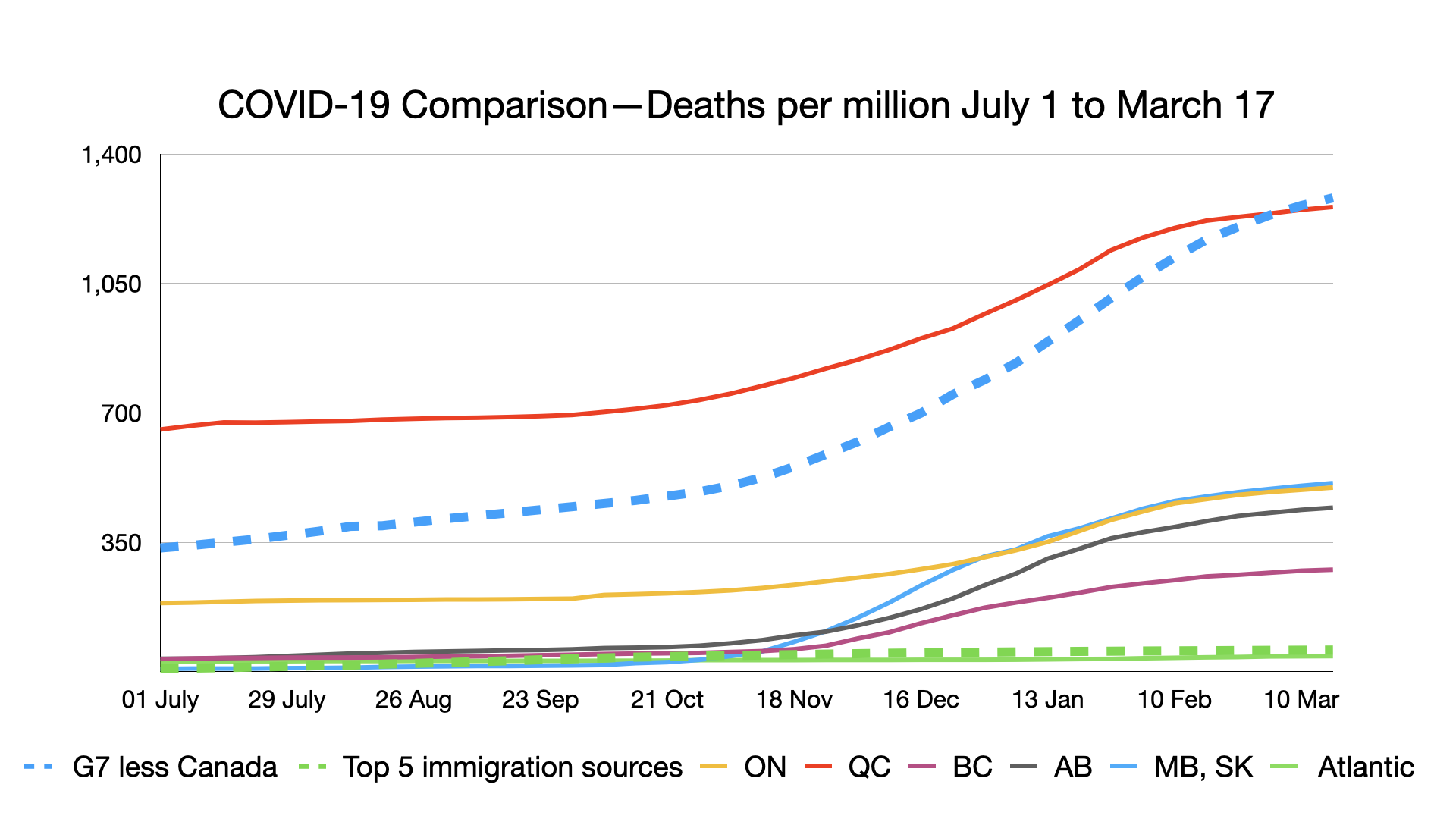
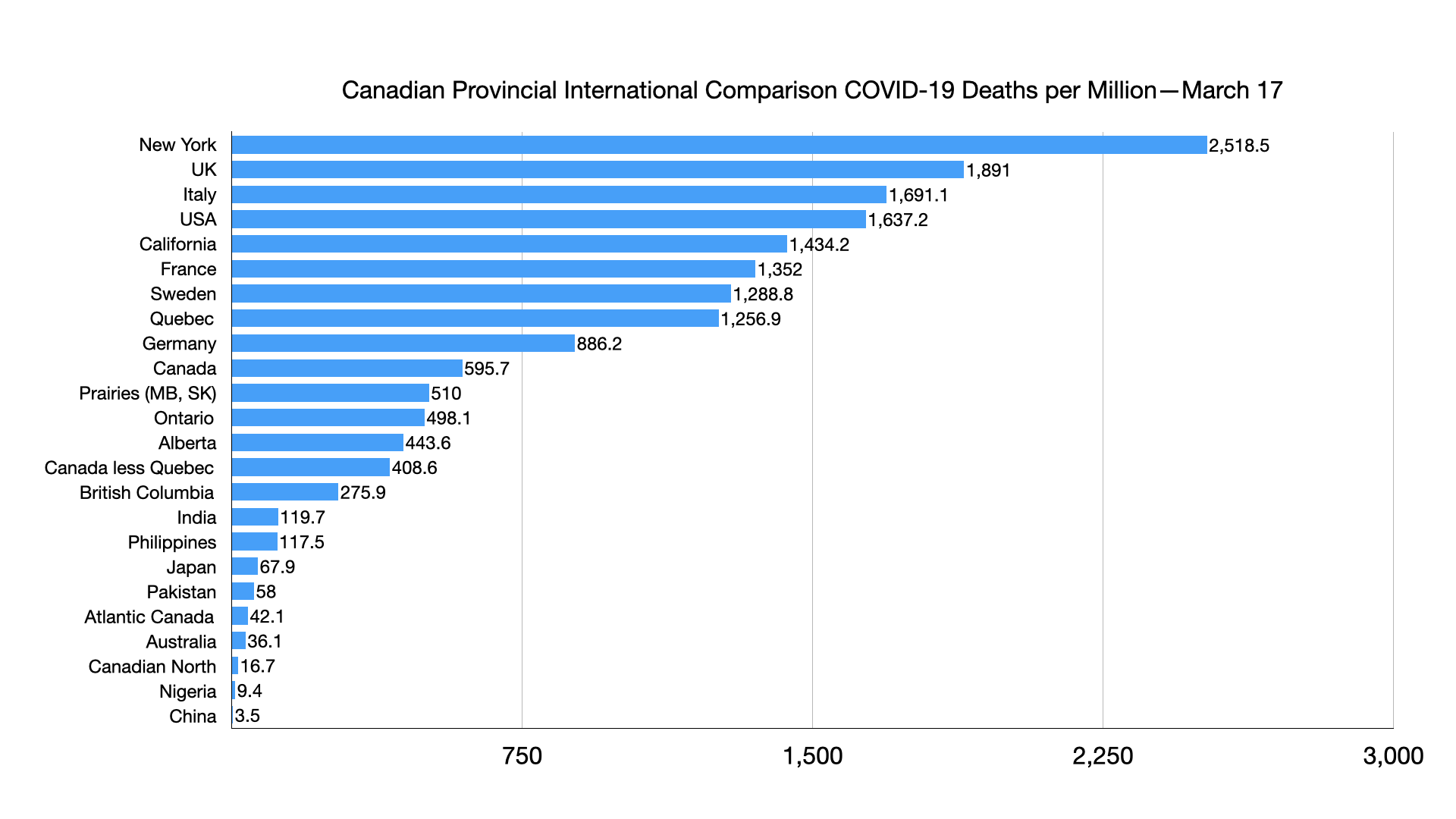
Deaths per million: G7 continues to close in on Quebec, Prairies continue to have similar rates to Ontario with Alberta death rates tapering off compared to Ontario and Prairies.

Vaccinations per million: Gap between G7 and Canada, driven by UK and USA, continues to widen. While not on the chart, Canadian North (NWT, Yukon and Nunavut) have the highest vaccination rates overall.

Weekly

Infections per million: Prairies move ahead of Canada total

Deaths per million: France marginally ahead of Sweden.

Trump And Miller Left Biden With Unfinished Immigration Business

Of note:

Donald Trump, Stephen Miller and the rest of the Trump immigration squad left the Biden administration with a lot of unfinished business, only some of which has garnered newspaper headlines. The Biden administration has moved quickly on several high-profile issues, including protection for refugees and DACA (Deferred Action for Childhood Arrivals) recipients. However, the list of immigration issues that requires attention after four years is long. Below are some of the most significant issues.

Stephen Miller’s Department of Labor Rule: Jyoti Bansal came to America on an H-1B visa. “I waited seven years for my employment-based green card [due to the per-country limit] and I wanted to leave my job and start a new company but couldn’t,” Bansal told me in an interview. “What is most frustrating about the green card process is you have no control over a major part of your life.”

In the final days of Donald Trump’s term, as part of a longstanding goal to price out of the U.S. labor market employment-based immigrants, international students and H-1B visa holders, White House adviser Stephen Miller and other members of the Trump immigration team pushed through a final rule on wages from the Department of Labor (DOL). The rule would significantly boost the required minimum or “prevailing” wage employers must pay employment-based immigrants and H-1B visa holders by 24% to 40% across a range of occupations, according to an analysis by the National Foundation for American Policy.

If the DOL rule had been in effect years ago, Jyoti Bansal likely would never have been able to come to America, nor would the many people who played critical roles in developing the Covid-19 vaccines and came to (or remained in) America on H-1B visas and employment-based green cards.

In 2007, Bansal received an employment authorization document (EAD) as part of the green card process. He later left his employer and started AppDynamics. The company, which monitors websites for clients such as HBO, has grown to employ over 2,000 people and was valued at $3.7 billion when Cisco acquired it in 2017.

The DOL final rule cites Donald Trump’s anti-immigration “Buy American and Hire American” executive order for the regulation’s “justification,” its “need” and the “Objectives of and Legal Basis for the Final Rule.” However, on January 25, 2021, President Biden revoked Trump’s “Buy American and Hire American” executive order. In other words, the authority cited for the DOL final rule by Trump’s Department of Labor no longer exists. The nation’s leading anti-immigration group, which has called for a “permanent pause” on immigration to America, has praised the DOL rule. This should not be a difficult choice for the Biden administration on what to do with the rule.

An Agenda on International Students: It is too soon to expect a full agenda from the Biden administration on international students. Rescinding the DOL wage rule would help attract students, since the rule makes it far less likely international students could get a work visa or permanent residence in the United States. There are other pressing student issues.

First, processing delays in Optional Practical Training (OPT) have bedeviled international students, particularly at the Texas Service Center Lockbox. Without a receipt, students can lose their status. (Attorneys have reported some improvements.) The Biden administration disbanded a last-minute effort by the Trump administration to establish a new unit to go after international students working on OPT, which may facilitate more targeted enforcement against bad actors, rather than a generalized effort against all students working on OPT.

Second, the Trump administration’s student policies left in place from 2020 may need to be adapted to the current situation. “After a concerted advocacy effort by the higher education community, the U.S. Department of Homeland Security (DHS) stated that international students should ’continue to abide’ by emergency pandemic guidance that allows them to take all or some of their courses online,” according to a letter from the Presidents’ Alliance on Higher Education and Immigration to Immigration and Customs Enforcement (ICE). “We strongly support this guidance because without it, a large number of international students still in the United States during the pandemic would have had to take classes in person or leave–neither tenable as COVID cases rise and the pandemic is still prevalent.

“However, DHS has still not issued additional guidance that would allow all international students, including those who were not already enrolled during the initial COVID-19 outbreak in March 2020 but have since enrolled or who will enroll, to enter and remain in the United States. Current guidance stipulates that if a new international student’s courses are online, they are prohibited from entering the United States or must depart the country. This policy is a substantial problem for programs with students living in different time zones.”

Universities would like updates to the policy, including “explicitly allowing initial international students to enter the country, as well as permitting existing students to remain in the United States when enrolled in online-only courses (as opposed to currently only allowing students enrolled in hybrid courses to enter).”

A recent survey found that during Fall 2020, “new enrollment of international students physically in the United States declined by 72%,” more than the 43% drop in foreign enrollment overall because students started online overseas.

If the Biden administration is looking for policy suggestions for a broader agenda on international students, NAFSA: Association of International Educators has put one together. The recommendations include a series of administrative and legislative actions to “establish a welcoming environment for international students and scholars.”

The Spouses of H-1B Visa Holders and Long USCIS Processing Times for Work Authorization: The Trump administration was unsuccessful in its plans to rescind the Obama administration’s rule on H-4 EAD (employment authorization document). A lawsuit (Kolluri v. USCIS) credibly alleges that USCIS put in place an unnecessary biometrics requirement to prevent the applicants, mostly women from India, from working in the United States. The California Service Center is taking up to two years to process an extension for work authorization. Another lawsuit charges current USCIS policies make it “mathematically” impossible for the spouses to continue working because extension applications cannot be processed in time.

Startup Visas and the International Entrepreneur Rule: The Biden administration’s outline on immigration legislation did not include a startup visa that would allow foreign nationals to gain green cards after demonstrating they have started a business that creates a threshold number of jobs. Congress can add that to any proposal. In the meantime, the administration can revive the International Entrepreneur Rule.

A letter from a coalition that includes the National Venture Capital Association, FWD.us, the Ewing Marion Kauffman Foundation, the National Immigration Forum and others asks DHS Secretary Alejandro N. Majorkas “to implement the International Entrepreneur Rule . . . . originally put in place at the end of the Obama Administration, would work similar to a Startup Visa by allowing world-class foreign entrepreneurs to launch high-growth companies in the United States by utilizing the parole authority of DHS.”

A new report from the Progressive Policy Institute finds implementing the International Entrepreneur Rule could lead to significant job creation. A study last year from the National Foundation for American Policy examined the international experience and concluded startup visas for foreign-born entrepreneurs can bring jobs and innovation to a country.

It may take years for the Biden administration to undo many of the immigration policies implemented over the last four years. Addressing some of the issues not making front-page news will improve the chances the effort will be successful.

Canada’s visa application centre in Beijing run by Chinese police

Getting a fair amount of attention and concern. Comments by former Canadian Ambassador Guy Saint-Jacques of note:

Chinese police own a company that collects details of people applying for visas to Canada and numerous other countries, giving Beijing security services a direct stake in the processing of private information provided by people planning travel outside China.

Beijing Shuangxiong Foreign Service Company, which operates the Canadian visa-application centre in the Chinese capital, is owned by the Beijing Municipal Public Security Bureau, a Globe and Mail investigation has found. And at least some of the people working inside the centre are members of the Communist Party, recruited from a school that trains the next generation of party elite.

Beijing Shuangxiong is a subcontractor for VFS Global, a company headquartered in Zurich and Dubai that holds a wide-reaching contract to provide visa-processing services around the globe for the Canadian government. VFS offices collect personal and biometric information that is then forwarded to Canadian immigration officials for decisions on who shall be granted visas.

In China, VFS relies on subcontractors to operate its 11 Canadian visa centre locations. The company, which provides visa services for 34 countries in China, says it has strict processes in place to safeguard personal data.

However, the police ownership of the Beijing centre raises questions about the extent to which it is possible for VFS to shield people’s private and confidential information from authorities in a country such as China, which maintains a sweeping and invasive surveillance apparatus, and restricts international travel for some officials and ethnic groups.

Chinese security services “obviously have a huge interest in mining visa data,” said Robert Potter, a cybersecurity consultant in Australia who has worked as an adviser to the Canadian government.

Knowledge of what happens inside a visa centre could have high-level intelligence value. “If you can see who is getting declined and who is getting approved, it gives you a better chance of getting your agent through,” Mr. Potter said.

It could also be used to bar people from leaving China. For some people, like the country’s Muslims, “even applying for a visa to get out of China is enough to get flagged as a terrorist,” he said. “If you’re a Uyghur and you’re applying for a visa to Canada on humanitarian grounds, giving that information to the security service is really dangerous.”

Ward Elcock, a former director of the Canadian Security Intelligence Service, said the fact that companies connected to China’s security forces or its government are playing a part in the Canada visa-application process “represents a lazy abdication of our standards to those of a police state.”

VFS Global said in a statement that neither individuals nor operators of the local companies with which it partners are able to gain access to visa-application data.

Other Western countries also use Beijing Shuangxiong, including Britain, Italy, Belgium, Ireland and New Zealand.

VFS Global handles visa services for Canada in at least 83 countries.

The Globe has previously reported that China Investment Corp., one of the biggest state-run financial institutions in the world, is a backer of an investment fund that is VFS’s majority owner. VFS says investors do not have a say in how the company operates.

In Ottawa, opposition parties have urged the federal government to reconsider its contract with VFS. NDP MPs have written to Immigration Minister Marco Mendicino and Public Services Minister Anita Anand to express “serious concerns around the security of information handled by VFS Global.”

VFS, which operates in 144 countries, has said the investment fund “doesn’t have access to any data from VFS Global nor any of its other portfolio companies.”

But the company has developed much closer operational ties with Chinese state-backed companies inside China, The Globe has discovered.

The Shanghai Municipal Education Commission owns 30 per cent of the Canadian visa office in that city. China Travel Services, a large centrally owned company, owns the majority of the centre in Guangzhou. In Jinan, the 93.55-per-cent owner of the subcontracting company is Pei Zhongyi, a member of the Chinese People’s Political Consultative Conference, a key part of China’s ruling apparatus. People who answered the phone at those locations declined to answer questions.

But the Beijing centre stands out for its proximity to China’s security and political establishment.

Chinese corporate records show that Beijing Shuangxiong is wholly owned by Beijing Tongda Asset Management Group, which is a subsidiary of Beijing Sifu Enterprise Management Office. Corporate records list Beijing Sifu as an arm of the Beijing Municipal Public Security Bureau, the city’s police. A 2017 city of Beijing document describes Beijing Sifu as a work unit of the city’s police.

Asked if police or security services had access to visa-application information, a woman who answered the phone at the Canada Visa Centre in Beijing said she could only discuss visas. Beijing Shuangxiong did not respond to an e-mail request for comment. A receptionist at Beijing Sifu provided a fax number to the Beijing police, which did not respond to a request for comment.

Peter Brun, chief communications officer for VFS Global, said that like many foreign companies, VFS operates with locally owned “facility management companies” to provide visa-application services on the ground. “Individuals or local companies having a stake in the facility management companies you describe have no access to visa-application data. They cannot influence the visa-application process set by the Canadian government,” the VFS official said.

Mr. Brun said all application data are encrypted upon entry and then transferred “securely and directly to servers located in Canada only.” He said only Canadian government officials can gain access to this data.

He said no data are stored in China and the servers processing the applications are located in Canada. Mr. Brun said VFS conducts thorough “credit and criminal record checks on all employees before they are hired” and staff’s e-mail and telecommunications are monitored “for security risks.”

He said the Canadian government either installs or supervises the Immigration department data servers and biometric equipment at the visa-application centres.

Mr. Brun said it has 64 governments as clients around the world including the U.S., Britain and nearly all European Union countries.

Guy Saint-Jacques, who served as Canada’s ambassador to China between 2012 and 2016, said it’s best to assume there is no privacy for visa applications made in China.

“You can bet the Chinese government is interested in knowing who is going to study where abroad, who is going as a tourist and who wants to leave and immigrate,” he said.

Canada’s Department of Citizenship and Immigration is defending the visa-application arrangements it has made in Beijing and throughout China.

“For any foreign company to operate in China, they must be partnered with a local Chinese company, and Canadian contractors are not exempted from this,” department spokesman Rémi Larivière said in a statement. “Canadian officials closely monitor the activities of visa-application centres (VACs) around the world to ensure that our stringent privacy standards are met.”

He said applications are handled “according to Canada’s privacy laws” and the service providers have pledged not to interfere with visa applications. “As set out in the contract, VACs are expressly forbidden from providing any visa-related advice to applicants or from making any type of determination on their application.”

Beijing Shuangxiong dates back to 1993, and describes itself as among the first agencies approved by the Beijing Municipal Public Security Bureau to provide entry and exit services.

It also has close ties with China’s ruling party.

You Xiangdong, the company’s legal representative and general manager, serves as secretary of its Communist Party branch, and the company has cultivated close ties to Beijing Youth Politics College, a school that has for decades played a foundational role in training new generations of Communist Party leadership.

The college’s English study students have become coveted workers for Beijing Shuangxiong, which has brought many in to work in its visa centres. In a report on the partnership, the company said it valued the political reliability of students from the school.

Source: https://www.theglobeandmail.com/world/article-canadas-visa-application-centre-in-beijing-run-by-chinese-police/

Express entry economic immigration timelines a ‘joke,’ say lawyers as processing times increase

Further to the IRCC departmental results report and its failure to meet its service standards (see https://multiculturalmeanderings.com/2021/01/21/immigration-program-ircc-results-highlights/ :

Canada’s “express entry” approach to key economic immigration programs isn’t working, immigration lawyers say, following a recent report showing that none of them are meeting the six-month service standard.

That failed grade was among 17 missed performance targets the Immigration, Refugees, and Citizenship Canada (IRCC) reported for the 2019-20 fiscal year, or 31 per cent of the 54 total targets. It said none of the government’s business lines for permanent residents adhere to service standards during a time period that had yet to feel the pandemic’s full impact. 

Launched in 2015, the express entry process is described by Canada as its “flagship” system for various federal skilled worker programs, and a portion of the provincial nominee program, as a pathway to permanent residence for skilled workers in Canada and overseas. IRCC has said it plans to increase permanent-resident admissions, setting a target of 341,000 for 2020 and 350,000 for 2021, with most of the uptick expected from economic immigration streams.

Evelyn Ackah, founder of Ackah Business Immigration Law in Calgary, laughed when she repeated the program’s name.

“Express entry, that’s a joke. When they first launched that program a few years ago, it was incredible. It was three months, four months,” she said, but now she warns clients it can take more than a year.

She said it’s disappointing the government hasn’t been able to keep up with the high volume of applications. To her, it’s a clear resourcing and staffing problem that doesn’t line up with Canada’s stated goals to increase immigration levels. 

“It’s not working as an express process, absolutely not. It’s the same as the old process, as far as I’m concerned, and it’s lost its credibility with people,” she said. “The trend is getting slower and slower.”

Over the last three years, and before COVID-19 interruptions, processing times have increased, and in some cases, doubled the time it takes to deal with 80 per cent of applicants. The federal skills trade stream jumped from six months in 2017 to one year for the majority of applicants, while the federal-skilled worker and provincial-nominee programs increased from six to nine months in that same time frame. The Canadian Experience Class increased from four to seven months. Across all programs, only 60 per cent of the applications met the standard by the end of 2019.

According to the department’s latest plan, its overall spending is set to increase from $1.92-billion in 2017-18 to the peak last fiscal year at $3.46-billion, before going back down this fiscal year to $2.84-billion, $2.6-billion in 2021-22, and $2.56-billion in 2022-23.

The stretching timelines reflect an increase in applications to express entry, with the 332,331 submissions in 2019 amounting to a 20 per cent jump from the number of applications in 2018. Among the 2019 profiles submitted in 2019, 72 per cent were eligible for at least one of the business programs, according to the program’s year-end report.

https://flo.uri.sh/visualisation/5180771/embed

Still, the government promises to those searching for information online about the express entry system that it “will result in fast processing times of six months or less.

“I can’t even bring up that number [to clients],” said B.C.-based  immigration lawyer Will Tao of Heron Law, saying more transparency is needed. 

It’s “misleading” and can “give the wrong impression” to applicants, he said, especially now with the pandemic posing even more of a challenge to processing times.

“I think they pretty much internally abandoned it, so from my perspective, if you’ve done that, then you probably should … let clients know,” he said, calling for better transparency so that people can get more certainty about their situations. 

Even though it’s supposed to be an automated system, based on points, both lawyers said the process gets bogged down during the authentication stage, as officials check over and verify the many documents submitted. Eligible candidates in the pool are given a score based on their skills and experience, with top-ranking candidates invited to submit an application for permanent residence. As of June 2017, IRCC added extra points to candidates with strong French-speaking skills.

Both Mr. Tao and Ms. Ackah acknowledged it can be a complicated process, but Ms. Ackah said that’s all the more reason to match up resourcing.

In IRCC’s report on performance targets, the department said “substantial efforts” have been made to reduce applications that took longer than six months to process in the express entry system.

“While service standards are being met for a higher number of applications compared to previous years, this was offset by an increase in applications and the processing of older applications,” the report said.

The department noted early results show “progression towards higher admission targets” and efforts to increase the intake are having an impact on service standards, in this case, the promise to have the majority completed within six months. The department doesn’t control intake for provincial nominee program’s paper applications and Quebec-selected skilled workers.

By email, IRCC spokesperson Lauren Sankey said the government remains committed to reducing application processing times and improving the department’s service delivery. 

IRCC misses a third of 2019-20 targets

In 2019-20, the department met 37 of 54 performance targets, and missed 17, or 31 per cent. The express-entry delay was the worst among several performance targets the department didn’t reach. Canada’s backlogged asylum system again failed to make the cut, with the department reporting only 32 per cent of asylum claims were referred to the Immigration and Refugee Board of Canada within service standards, compared to target of 97 per cent.

A couple of targets found language-development delays for people settling in Canada. In one case, only 37 per cent of IRCC’s settlement clients reported improved official language skills compared to the target of 60 per cent, while 19 per cent of people reported receiving language-training services compared to target of 25 per cent.

Ms. Sankey said every newcomer’s experience is unique, including their participation in settlement services, which is managed by IRCC and delivered by more than 500 service provider organizations across the country, outside of Quebec. Federally funded language training is “a key component” said Ms. Sankey, who noted there’s been a proportionate increase in newcomers with limited knowledge of English or French over the past few years.

In 2019-20, IRCC also reported 2.82 per cent of permanent residents outside Quebec identified as French speaking, compared to the target of 4.4 per cent. Ms. Sankey said under the Francophone Immigration Strategy, IRCC is “pursuing year-round targeted promotion and recruitment” to attract more qualified French-speaking candidates, and noted under the express entry program, the government increased invitations to French-tested candidates from 4.5 per cent in 2018 to 5.6 per cent in 2019.

These results suggest issues with respect to service standards, language training, and refugee claims, said Andrew Griffith, a fellow of the Canadian Global Affairs Institute who was once a director general at the department’s Citizenship and Multiculturalism Branch.

While many reflect perennial problems and backlogs, given these markers IRCC seems to be “systematically” missing the standards it sets to monitor how well it’s delivering its services, he said.

“So if they’re consistently their targets it says there’s either a management problem, an operational problem, a resource problem, or some combination of those,” he said. 

Even so, he noted a contrasting target the department met: a 91 per cent satisfaction rate from visitor, international students, and temporary worker applicants who reported they were satisfied overall with the services they received. While he doesn’t advocate for lowering targets, Mr. Griffith questioned why the government reports on aspirational or unrealistic goals. 

“Personally, I favour realistic standards for public departmental reports, with aspirational more appropriate for internal use,” he said. 

IRCC’s targets are based on factors like historic trends, program objectives, resourcing levels, client service goals, and evolving influences such as the impact of increasing temporary resident and permanent resident immigration levels, said Ms. Sankey.

“Targets are reviewed regularly, and in some cases, the department establishes ambitious targets that serve to stretch program vision and encourage innovation. In other cases, they are based on baselines and historic trends where achievement is more certain,” said Ms. Sankey, noting following a 2020 departmental review how IRCC tracks performance will change.

Distilling service performance down into two tracks—one for permanent residents (PR) and one for temporary residents (TR)—is not a true representation of the department’s performance, she said, given the disparate programs under the two umbrellas. Instead, IRCC will report on the service standard for each individual program, which Mr. Griffith called a “significant change” given the “overly simple” approach before.

“This change will capture more accurate service standard performance for the many lines of business which make up the temporary and permanent resident programs,” Ms. Sankey said. 

Source: https://hilltimes.us10.list-manage.com/track/click?u=a90bfb63c26a30f02131a677b&id=4ac92e0ed3&e=685e94e554

The impact of COVID may make it difficult to attract immigrants compared to other G7 countries, making it difficult to meet the targets set for 2024.

Howard Ramos, Dan Hiebert and I have been looking at COVID-19 impact on immigration (my last monthly update can be found here: https://multiculturalmeanderings.com/wp-content/uploads/2021/01/covid-19-immigration-effects-key-slides-november-2020-draft-1.pdf).

One of the research questions we have is whether or not a country’s ability to manage or control COVID-19 will impact on its relative impact to potential immigrants. Out initial analysis is below, published in Policy Options (the updated slides can be found in the previous post):

Statistics tracking infections and deaths during the COVID pandemic show that Canada is faring better than all its G7 allies, save for Japan. Yet, it is doing far worse than the top five immigration source countries that it draws newcomers from. Canada cannot assume that it looks as attractive as it once did to newcomers, suggesting that it may be time to act proactively to meet ambitious immigration targets.

In October, Refugees and Citizenship Minister Marco Mendicino made an ambitious announcement to bring 1.2 million newcomers to the Canada over the next three years. If it the country has a shot at meeting those targets, it cannot not sit back and simply expect those numbers to happen.

Immigration is driven by a complex set of push and pull factors that incentivises migration. Put simply, source countries have attributes that make life look more attractive abroad and host countries have features that attract newcomers. For instance, a weak economy or poorer quality of life at home compared to good jobs and good health abroad.

The lingering impact of the COVID-induced downturn is flipping traditional push and pull factors on their head. In past economic downturns and recessions, for example, recent immigrants suffer the most and this means we need to consider the inequalities that might get triggered by returning to recent levels (340,000 in 2019) too quickly, which the federal government’s plan largely ignores. This is not to mention how Canada’s health care system looks compared to other countries in addressing the pandemic.

The statistics may weaken the perceptions of potential immigrants of Western public health, social welfare programs and quality of life advantages. Take for instance COVID-19 infections-per-million from July to January 2021 as an example. If you look at the top-five immigrant-source countries to Canada (India, China, Philippines, Nigeria and Pakistan) all have far lower rates of infection than the G7 which are among the countries that compete with Canada for newcomers.

Although there may be undercounting of COVID infections and deaths in non-Western countries, rates would have to be five or more times higher to change the trends we report here. We do not believe such issues are significant enough to change the overall picture that rates in G7 countries are among the highest in the world.

Rates of infection can be taken as a proxy of a number of factors. They reflect the strength of a country’s social welfare system, its healthcare system and the quality of life it can offer newcomers. Polling of immigrants to Canada time and time again show that quality of life is a reason people move to the country and it is also seen in polling on specific regions, such as Nova Scotia. Rates of infection put this all into question.

The situation is even more stark when looking at deaths-per-million over the same period in 2020. Again Canada’s top immigrant source countries all have lower rates of death compared to the G7. On this front, again, Canada tends to look better than its G7 allies. But when regions of the country are examined in more depth, Quebec has worse outcomes than other immigrant destinations and has some of the highest death rates in the world.

https://e.infogram.com/3bb049d7-ee59-4cde-b209-ed8f1edbacce?parent_url=https%3A%2F%2Fpolicyoptions.irpp.org%2Fmagazines%2Ffebruary-2021%2Fwill-the-pandemic-make-canada-less-attractive-to-newcomers-2%2F&src=embed#async_embed

The degree to which Canada is to vaccinate may also become a factor, given its sluggish start compared to the UK and U.S. but higher than immigration source countries. Such statistics put into question whether traditional immigration destinations can offer the quality-of-life immigrants seek and this may change mix of the push and pull factors that drove migration before the pandemic.

https://e.infogram.com/7176996e-d1b1-406e-b337-d32fd0bf9c85?parent_url=https%3A%2F%2Fpolicyoptions.irpp.org%2Fmagazines%2Ffebruary-2021%2Fwill-the-pandemic-make-canada-less-attractive-to-newcomers-2%2F&src=embed#async_embed

The statistics put into question the ability of the West to offer strong public health and social welfare safety nets. Dampened perceptions of the West’s advantage will likely impact the speed at which countries recover from the pandemic, the pace at which they can get their economies back to speed and thus their relative attractiveness to immigrants.

In this context, the federal and provincial governments may well need to revise immigration targets downward, at least in 2021. The mix may also need to be revisited given that the economic immigration streams prioritize the higher skilled where one lesson from the pandemic is the essential nature of lower-skilled service jobs. At the same time, Canada’s attractiveness compared to the U.S. will likely decline under the Biden administration, which is of particular importance to the tech sector.

The government cannot take for granted that the push and pull factors that drove migration before COVID will remain the same in the new normal. Instead, Canada needs to act boldly and proactively if it has a chance to returning to being a key player in attracting newcomers.

Source: https://policyoptions.irpp.org/magazines/february-2021/will-the-pandemic-make-canada-less-attractive-to-newcomers-2/

#COVID-19: Comparing provinces with other countries 3 February Update

The latest charts, compiled 3 February.

Vaccinations: The gap between the leading G7 countries (UK, USA) and other EU countries continues to grow given the pause in deliveries to Canada, with the exception of France and Sweden.

Trendline charts

Infections per million: Alberta appears too be controlling the virus better than Quebec.

Deaths per million: G7 continues to close in on Quebec, Prairies continue to have similar rates to Ontario.

Vaccinations per million: Gap between G7 and Canada, driven by UK and USA, continues to widen.

Weekly

Infections per million: No change in relative ranking from last week.

Deaths per million: Atlantic Canada now ahead of Australia.

The Mystery Of India’s Plummeting COVID-19 Cases

Of interest as had been wondering whether this reflected data issues. Appears not:

Last September, India was confirming nearly 100,000 new coronavirus cases a day. It was on track to overtake the United States to become the country with the highest reported COVID-19 caseload in the world. Hospitals were full. The Indian economy nosedived into an unprecedented recession.

But four months later, India’s coronavirus numbers have plummeted. Late last month, on Jan. 26, the country’s Health Ministry confirmed a record low of about 9,100 new daily cases — in a country of nearly 1.4 billion people. It was India’s lowest daily tally in eight months. On Monday, India confirmed about 11,000 cases.

“It’s not that India is testing less or things are going underreported,” says Jishnu Das, a health economist at Georgetown University. “It’s been rising, rising — and now suddenly, it’s vanished! I mean, hospital ICU utilization has gone down. Every indicator says the numbers are down.”

Scientists say it’s a mystery. They’re probing why India’s coronavirus numbers have declined so dramatically — and so suddenly, in September and October, months before any vaccinations began.

They’re trying to figure out what Indians may be doing right and how to mimic that in other countries that are still suffering.

“It’s the million-dollar question. Obviously, the classic public health measures are working: Testing has increased, people are going to hospitals earlier and deaths have dropped,” says Genevie Fernandes, a public health researcher with the Global Health Governance Programme at the University of Edinburgh. “But it’s really still a mystery. It’s very easy to get complacent, especially because many parts of the world are going through second and third waves. We need to be on our guard.”

Scholars are examining India’s mask mandates and public compliance, as well as its climate, its demographics and patterns of diseases that typically circulate in the country.

Mask and mandates

India is one of several countries — mostly in Asia, Africa and South America — that have mandated masks in public spaces. Prime Minister Narendra Modi appeared on TV wearing a mask very early in the coronavirus pandemic. The messaging was clear.

In many Indian municipalities, including the megacity Mumbai, police hand out tickets — fines of 200 rupees ($2.75) — to violators. Mumbai’s mask mandate even applies outdoors, to joggers on the beach and passengers in open-air rickshaws.

“Every time they fine a person 200 rupees, they also give them a mask to wear,” explains Fernandes, a Mumbai native. “Very stereotypically, we [Indians] are known to break rules! You see traffic rules being broken all the time,” she says, laughing.

But in the pandemic, when it comes to masks, “the police, the monitoring, enforcement — all that was ramped up,” she says.

Authorities reportedly collected the equivalent of $37,000 in mask fines in Mumbai on New Year’s Eve alone.

But the fines and mandates appear to have worked: In a survey published in July, 95% of respondents said they wore a mask the last time they went out. The survey was conducted by phone in June by the National Council of Applied Economic Research, India’s biggest independent economic policy group.

Awareness is widespread. Whenever you make a phone call in India — on landlines and mobiles — instead of a ring tone, you hear government-sponsored messages warning you to wash your hands and wear a mask. One message was recorded by Bollywood legend Amitabh Bachchan, 78, who battled and recovered from COVID-19 last summer.

The mask and hand-washing messages have now been replaced with new ones urging people to get vaccinated; India began vaccinations on Jan. 16.

Heat and humidity

Aside from mask compliance, there’s also India’s climate: Most of the country is hot and humid. That too has deepened the mystery. There’s some evidence that India’s climate may help reduce the spread of respiratory viruses. But there’s also some evidence to the contrary.

A review of hundreds of scientific articles, published in September in the journal PLOS One, found that warm and wet climates seem to reduce the spread of COVID-19. Heat and humidity combine to render coronaviruses less active — though the certainty of that conclusion, the review says, is low. Previous research has also found that droplets of the virus may stay afloat longer in air that’s cold and dry.

“When the air is humid and warm, [the droplets] fall to the ground more quickly, and it makes transmission harder,” Elizabeth McGraw, director of the Center for Infectious Disease Dynamics at Pennsylvania State University, told NPR last year. (However, the science of transmission is still evolving.)

In a survey of COVID-19 cases in India’s Punjab state, Das, the health economist at Georgetown, found that 76% of patients there did not infect a single other person — though it’s unclear why. He and his colleagues examined data collected from contact tracing and found that most patients who did infect others infected only a few other people, while a few patients infected many. Overall, 10% of cases accounted for 80% of infections. One implication, which Das says he’s investigating further, is the possibility of making contact tracing more efficient by first testing a patient’s immediate family members. If no one at all is infected, the process can end there.

“The temperature, of course, is in our favor. We do not have too cold of a climate,” says Dr. Daksha Shah, an epidemiologist and deputy executive health officer for the city of Mumbai. “So many viruses are known to multiply more in colder regions.”

But there’s also some scientific evidence to the contrary, that India might actually be more conducive to the coronavirus: Research published in December in the journal GeoHealth says that urban India’s severe air pollution might exacerbate COVID-19. Not only does pollution weaken the body’s immune system, but when air is thick with pollutants, those particles may help buoy the virus, allowing it to stay airborne longer.

A paper published in July in The Lancet says extreme heat may also force people indoors, into air-conditioned spaces — and thus might contribute to the virus’s spread. The Natural Resources Defense Council has warnedthat extreme heat can lead to a spike in other illnesses — dehydration, diarrhea — that might lead to overcrowding in hospitals and clinics already struggling to treat victims of COVID-19.

Prevalence of other diseases

Another point to consider about India is how many other diseases are already rampant: malaria, dengue fever, typhoid, hepatitis, cholera. Millions of Indians also lack access to clean drinking water, sanitation and hygienic food. Some experts speculate that people with robust immune systems may be more likely to survive in India in the first place.

“All of us have pretty good immunity! Look at the average Indian: He or she has probably had malaria at some point in his life or typhoid or dengue,” says Sayli Udas-Mankikar, an urban policy expert at the Observer Research Foundation in Mumbai. “You end up with basic immunity toward grave diseases.”

Two new scientific papers support that thesis, though they have yet to be peer-reviewed: One study by Indian scientists from Chennai and Pune, published in October, found that low- and lower-middle-income countries with less access to health care facilities, hygiene and sanitation actually have lower numbers of COVID-19 deaths per capita. Another study by scientists at India’s Dr. Rajendra Prasad Government Medical College, published in August, found that COVID-19 deaths per capita are lower in countries where people are exposed to a diverse range of microbes and bacteria.

But experts warn that these two studies are preliminary and should serve only as a springboard for more investigation.

“They’re not based on any biological data. So they’re good for generating a hypothesis, but now we really need to do the studies that will result in explanations,” says Dr. Gagandeep Kang, an infectious diseases researcher at the Christian Medical College in Vellore. “I hope scientists work more on this soon. We need deeper dives into India’s immune responses.”

According to Health Ministry figures, the coronavirus has killed 154,392 people in India as of Feb. 1. That’s a mortality rate of 1.44% — much lower than that of the United States or many European countries. (But Brazil’s death rate is higher than India’s, and Brazil and India are both lower-middle-income countries.)

Demographics

India is a very young country as well. Only 6% of Indians are older than 65. More than half the population is under 25. Those who are young are less likely to die of COVID-19 and are more likely to show no symptoms if infected.

A study of nearly 85,000 coronavirus cases in India, published in November in the journal Science, found that the COVID-19 mortality rate actually decreases there after age 65 — possibly because Indians who live past that age are such outliers. There are so few of them.

“Those Indians who do live that long tend to be more healthy than average or more wealthy — or both,” says health economist Das.

Serological surveys — random testing for antibodies — show that a majority of people in certain areas of India may have already been exposed to the coronavirus, without developing symptoms. Last week, preliminary findings from a fifth serological study of 28,000 people in India’s capital showed that 56% of residents already have antibodies, though a final report has not yet been published. The figures were higher in more crowded areas. Last summer, another survey by Mumbai’s health department and a government think tank found that 57% of Mumbai slum-dwellers and 16% of people living in other areas had antibodies suggesting prior exposure to the coronavirus.

But many experts caution that herd immunity — a controversial term, they say — would only begin to be achieved if at least 60% to 80% of the population had antibodies. It’s also unclear whether antibodies convey lasting immunity and, if so, for how long. More serological surveys are needed, they say.

Timing

India’s climate and demographics have not changed during the pandemic. And the drop in India’s COVID-19 caseload has been recent. It hit a peak in September and has declined inexplicably since then.

In fact, India’s numbers went down exactly when experts predicted they would spike: in October, when millions of people gathered for the Hindu festivals of Diwali and Durga Puja. It’s when air pollution is also worst, and experts feared that would exacerbate the pandemic too.

Cases have also declined despite what many thought would be a superspreader event: tens of thousands of Indian farmers camping out on the capital’s outskirts for months.

Shah, the epidemiologist, wonders if, just like more infectious variants of the coronavirus have been discovered in the U.K. and elsewhere, perhaps a milder variant may have started mutating in India.

“Some processes must have happened. This is an evolution of the virus itself. In some places there are mutations happening,” she says. “We need some more deeper evidence and deeper studies.”

The truth is, scientists just don’t know.

“Three options: One is that it’s gone because of the way people behaved, so we need to continue that behavior. Or it’s gone because it’s gone and it’s never going to come back — great!” says Das, from Georgetown. “Or it’s gone, but we don’t know why it’s gone — and it may come back.”

That last option is what keeps scientists and public health experts up at night.

So for now, Indians are kind of holding their breath — just doing what they’re doing — until they get vaccinated.

Source: The Mystery Of India’s Plummeting COVID-19 Cases