Dutrisac: Le pis-aller (Temporary Foreign Workers and Quebec agreement and exception for their children to study in French)

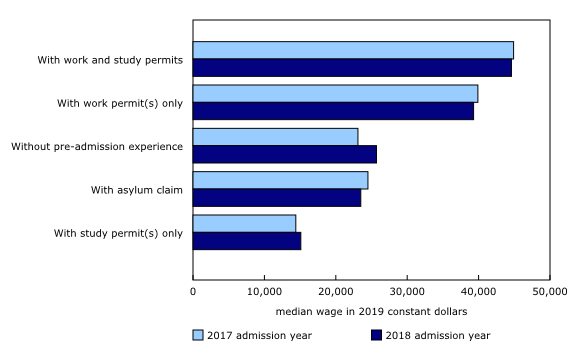
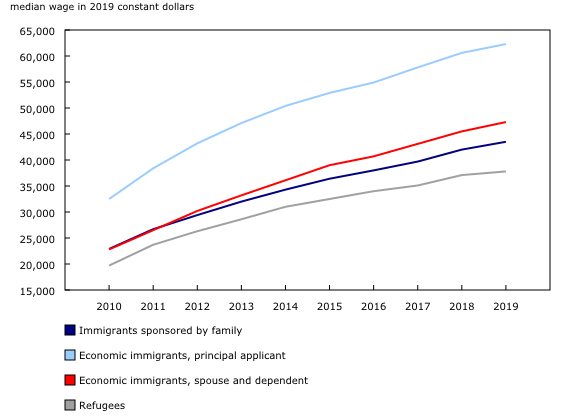
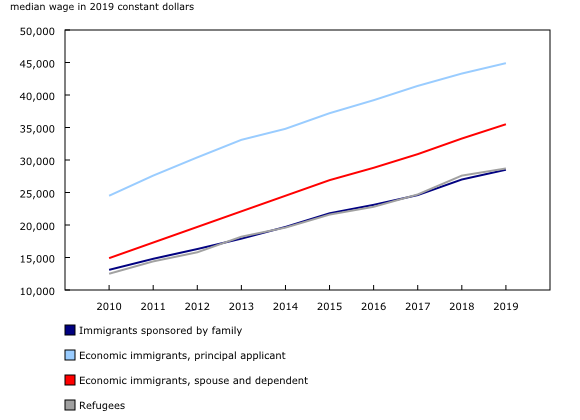
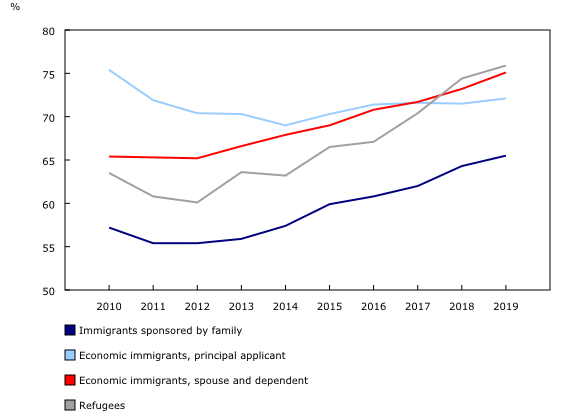
More complaints regarding IRCC’s treatment of Quebec applicants. Not seeing much evidence in the data for Temporary Foreign Workers:

En août dernier, Québec et Ottawa concluaient une entente en vue d’alléger les exigences que le gouvernement fédéral impose aux entreprises qui recourent à des travailleurs étrangers temporaires (TET) dans certains types d’emplois. Le ministre québécois du Travail, de l’Emploi et de la Solidarité sociale, Jean Boulet, vient de dévoiler les détails des assouplissements qui découlent de cette entente et qu’il demande maintenant au fédéral d’avaliser.

Ces mesures, qui feront l’objet d’un projet pilote, sont particulières en ce sens qu’elles ne visent pas seulement des emplois qualifiés à 100 000 $ par an dont rêve François Legault, mais aussi des gagne-pain modestes dans des domaines toutefois frappés par des pénuries de main-d’œuvre.

À la fin octobre, la Commission des partenaires du marché du travail, un organisme qui regroupe patrons et syndicats, a dégagé un consensus et confectionné une liste de 71 métiers et occupations qui doivent faire l’objet d’un traitement simplifié des demandes. Le commerce de détail, l’hébergement, la restauration et la transformation alimentaire font partie des secteurs favorisés. On y trouve des caissiers d’épicerie, des manutentionnaires, des préposés à l’entretien, des manœuvres et des serveurs, mais aussi des opérateurs de machinerie, dont les postes sont mieux rémunérés.

Un des problèmes touchant ces travailleurs étrangers, c’est qu’ils se voient accorder par le gouvernement fédéral des permis de travail dits « fermés », c’est-à-dire liés à un seul employeur, ce qui les rend vulnérables et les expose à des abus de la part de patrons exploiteurs. Cette situation est exacerbée par le fait que ces travailleurs ne connaissent pas leurs droits et peuvent avoir de la difficulté à communiquer en français ou en anglais.

Le ministre s’est montré sensible à la situation. Il a fait adopter des modifications à la Loi sur les normes du travail assorties d’un règlement sur les agences de recrutement auxquelles les entreprises font appel. Ces agences, dont les pratiques, dans certains cas, étaient douteuses, doivent désormais détenir un permis. Elles sont dans l’obligation de fournir aux travailleurs une description des conditions de travail relatives à leur emploi ainsi que des documents d’information de la Commission des normes, de l’équité, de la santé et de la sécurité du travail (CNESST) qui portent sur leurs droits et les obligations de l’employeur. Ces documents existent maintenant en français, en anglais et en espagnol.

Comme il l’a fait pour les travailleurs étrangers agricoles, le ministre a formé au sein de la CNESST une escouade TET vouée à enquêter sur les plaintes concernant d’éventuels abus et contraventions aux normes du travail.

Sans que ce soit une garantie que les travailleurs seront toujours bien traités, il s’agit d’une nette amélioration. En outre, les employeurs se sont engagés, même pour les emplois moins rémunérés, à fournir aux nouvelles recrues le transport, le logement et la couverture de la Régie d’assurance maladie du Québec (RAMQ).

Cet afflux accru de travailleurs étrangers, dans la région de Montréal du moins, réjouira les commissions scolaires anglophones, qui trouveront sans doute, quand les travailleurs sont accompagnés de leur famille, un certain nombre d’enfants pour peupler leurs écoles. Contrairement aux immigrants, ces travailleurs temporaires ne sont pas soumis à la Charte de la langue française et peuvent envoyer leurs enfants à l’école anglaise.

C’est une anomalie qu’il faudrait corriger. Le gouvernement Legault voudrait d’ailleurs qu’Ottawa lui cède la gouverne du programme des TET, qu’il pourrait harmoniser avec ses responsabilités en matière d’immigration. À cet égard, Le Journal de Montréal nous apprenait que Service Canada ne répond plus à la demande en provenance des entreprises du Québec. Celles-ci doivent toujours produire une fastidieuse « étude d’impact sur le marché du travail » pour chacun des emplois offerts, tandis que les fonctionnaires fédéraux n’arrivent pas à traiter les dossiers en temps utile.

Le recours aux travailleurs étrangers temporaires est un pis-aller qui témoigne d’un système d’immigration grippé. Le programme québécois Arrima, qui consiste à lancer des invitations à des candidats à l’immigration en fonction des besoins du marché de travail, n’est pas fonctionnel. De toute façon, Immigration Canada, dont le dysfonctionnement est manifeste, ne parvient même pas à accorder la résidence permanente aux dizaines et dizaines de milliers d’immigrants détenteurs d’un certificat de sélection du Québec qui sont déjà sur le territoire québécois. En recruter de nouveaux par le truchement d’Arrima ne ferait qu’ajouter aux inexcusables délais, de 28 mois en moyenne, dont est responsable le gouvernement fédéral.

Source: Le pis-aller

#COVID-19: Comparing provinces with other countries 3 November Update

The latest charts, compiled 27 October. Canadians fully vaccinated 75.4 percent, higher than USA 58.7 percent and the UK 68.4 percent).

Vaccinations: Quebec and UK are now ahead of the Canadian North, where few vaccinations took place. Australia now ahead of New York. China fully vaccinated 76.6 percent, India 24.4 percent.

Trendline Charts:

Infections: The chart shows the number of infections in Alberta continues to level off unlike the Prairies or British Columbia.

Deaths: Alberta deaths, along with the Prairies albeit to a lesser extent, continue to climb.

Vaccinations: Alberta vaccinations continue to surpass the Prairies. Immigration source country vaccination rates starting to increase again given India’s acceleration of its vaccination program.

Weekly

Infections: Australia ahead of Atlantic Canada.

Deaths per million: No relative change.

And a good piece on what the UK did wrong (applies to a number of Canadian provinces):

There are downsides to most Covid-19 precautions. Keeping children home from school can cause them to fall behind. Working from home can impede creativity. Staying away from friends and relatives can damage mental health. Wearing masks can muffle speech, hide smiles and fog eyeglasses.

For all of these reasons, the ideal Covid policy for any society balances the benefits and costs of precautions. It acknowledges that excessive caution can do more harm than good. By now, regular readers will recognize the search for Covid balance as a theme of this newsletter. Today, we want to focus on a place that seems to be erring on the side of too little caution: Britain.

Over the past year, Britain’s Covid response has included some major victories. The country rushed to vaccinate people (as we’ve explained) and was also willing to reimpose behavior restrictions last winter. These measures helped cause a sharp drop in caseloads.

In response, Britain reopened over the summer, allowing people to live largely without restrictions. Schools and workplaces have returned to normal, without masks. Restaurants are booked. Finding a taxi on a Saturday night in Central London is again a challenge.

“There’s a feeling that finally we can breathe,” Devi Sridhar, the head of the global public health program at the University of Edinburgh, wrote in August. “We can start trying to get back what we’ve lost.”

The problem is that Britain now seems to have lost a sense of balance, as Sridhar has also suggested. Cases have surged this fall, more so than in the rest of Europe, the U.S. or many other countries. Yet Prime Minister Boris Johnson’s government continues to oppose measures that could reduce cases.

We want to focus on Britain partly because it can offer lessons for the U.S. and other countries. The Delta variant arrived in Britain earlier than in many other places, making it something of a leading indicator. Cases in Britain rose for about two months starting in May and then started falling. But the decline didn’t last:

Over the past week in the U.S., cases have also stopped falling. The reasons are not clear, as is often the case with Covid, and the recent increase is minuscule. But it’s a reminder that the pandemic will probably keep having ups and downs.

Experts say Britain seems to be making three main mistakes that are aggravating the pandemic.

Despite being ahead of most of Europe on vaccinating adults, Britain waited to approve vaccines for adolescents. It did not recommend vaccinating 12- to 15-year-olds until September, weeks after many students had returned to school, as our colleague Josh Holder has noted. Today, only 21 percent of 12- to 15-year-olds in England are vaccinated, compared with 80 percent of adults.

The U.S. faces a related challenge. About 57 percent of Americans age 12 to 15 have been vaccinated, and children 5 to 11 are on the verge of becoming eligible. A significant number of parents remain wary, partly because Covid is rarely severe in children. But vaccinating children — in addition to the individual benefits — is likely to hold down cases for everyone else.

The biggest problem in the U.S. is a vaccination rate lower than in most other high-income countries.

The pace at which vaccines lose their effectiveness remains a subject of intense debate. Most experts believe that the vaccines remain excellent at preventing severe illness, even months after shots are given. But the bulk of the evidence suggests that the vaccines do lose some of their ability to prevent at least mild infections. That’s especially true of the AstraZeneca vaccine, which has been widely used in England.

Britain’s initial speed at vaccinating people brought down caseloads early this year. Yet it also meant that waning immunity became a problem sooner than in countries that were slower to give shots. Britain is now offering boosters to people 50 and above, as well as health care workers and the medically vulnerable.

Over the next few months, waning immunity could become a growing problem in the U.S., especially for more vulnerable people. All Americans 65 and above are eligible for boosters, along with anybody who received the Johnson & Johnson vaccine and some other people.

Behavior restrictions — like mask wearing — are not as effectiveas their proponents sometimes suggest. Britain offers a case study: Scotland, where masks are often mandated, has a similar level of Covid spread as England, where masks are less common, as John Burn-Murdoch of The Financial Times has written. If masks determined Covid spread, Scotland’s rate would be lower than England’s.

But there is a difference between a precaution having a modest effect and no effect. Masks do help, according to a wide variety of evidence, even if their impact is sometimes overwhelmed by other factors. Britain seems to be suffering from a lack of almost any restrictions, including mask mandates. Among the biggest problem, Burn-Murdoch notes, is the number of crowded indoor gatherings across Britain, including Scotland.

When cases are falling, it often makes sense to let people live more freely. When cases are surging, the reverse is true. Britain is ignoring that lesson — and pleas from many experts.

Britain’s recent Covid policy has led to deaths and overwhelmed hospitals. “When a health care system fails, increasing numbers of people suffer and die needlessly,” Dr. Kenneth Baillie wrote on Twitter. “This is happening, now, all over the U.K.”

Still, it is worth putting Britain’s troubles in perspective. The country’s high vaccination rate means that only a tiny share of recent cases have led to severe illness, and the death rate this fall has been a fraction of what it was last winter. “This virus is going to be with us for years, if not the rest of our lives,” Willem van Schaik, a microbiologist at the University of Birmingham in England, told us. “We’ve definitely left the worst behind us.”

Despite the Covid surge in Britain, the U.S. — where the overall vaccination rate is lower — arguably remains in worse shape, with a considerably higher death rate per capita. Why? Vaccination rates still matter more than anything else.

Source: https://www.nytimes.com/2021/11/02/briefing/britain-covid-cases-restrictions.html

Canada, Australia embrace more Indians but US passport remains the most coveted

Australia highest on per capita basis:

India regained its position as the top country of origin of the newly naturalised citizens of the Organisation of Economic Cooperation and Development (OECD) countries in 2019, following a sharp increase in the number of Indians granted citizenship of Canada and Australia. India had lost that position to Mexico in 2017.

More than 1.56 lakh individuals surrendered Indian citizenship for more powerful passports of the OECD countries in the pre-pandemic year, a recent report from the 38-country economic bloc said.

The number of Indians who secured Canadian and Australian citizenship rose 61 percent, faster than the 28 percent rise in the Indians getting citizenship in any OECD country.

Yet, more Indians secured the US passport than the combined total of those who acquired the Canadian or the Australian passport that year. A total of 63,578 Indians became naturalised US citizens in 2019, the highest since 2008 when nearly 66,000 individuals did.

At 31,329, the number of Indians securing Canadian citizenship was the highest since 2006. A large number of highly skilled Indians, particularly techies, rushed to apply for residency in the vast but thinly populated country after the Justin Trudeau government that came to power first in 2015 eased migration rules.

Australia conferred citizenship to 28,470 Indians, perhaps a record number for any year, the latest edition of the International Migration Outlook, published annually by the OECD reported.

The UK was the fourth most sought after passport among Indians but at 14,680, the number of new citizens of Indian origin in Britain was the lowest since 2008.

The OECD data also shows that 40 percent of the 1.56 lakh who surrendered their Indian passports in 2019 had become US citizens, while 20 percent chose Canada, 18 percent Australia and 10 percent the UK.

Despite the large intake of Indians as citizens of the US, they were just 8 percent of all the foreigners who became American citizens that year.

In contrast, Indians were 22 percent of those who gained Australian citizenship and 13 percent of the newly naturalised Canadians.

New Zealand, Italy and Germany were also among the top countries where Indians took up citizenship. Nearly 4,800 Indians became citizens of New Zealand in 2019, the third consecutive year that more than 4,750 Indians acquired the nationality of the island nation in the Pacific Ocean.

About 4,700 became Italians that year but the numbers getting Italian citizenship had halved since 2016. Other OECD countries that granted citizenship to 500-1,000 Indians in 2019 were Sweden, the Netherlands, Portugal and Ireland.

The COVID stop 

The report also showed a sharp rise in the flow of Indian migrants, including students to the UK. About 92,000 Indians moved to the UK in 2019, nearly 50 percent more than in the previous year.

The flow of Indians into the UK has been on the rise since 2017, the year the Theresa May government formally began the country’s exit from the European Union.

In all, 3.94 lakh Indians migrated to OECD nations in 2019. Not surprisingly, the flow of Indians to Canada also gained that year, with 85,600 individuals migrating to the North American country. The US, Germany and Australia also received a large flow of Indian migrants during the year.

China continued to be the top country of origin for international migrants in the OECD, with their numbers rising from 4.30 lakh to 4.66 lakh. Romania was in the third position.

The OECD said that it expected a 30 percent drop in the flow of migrants due to the pandemic in 2020 to about 37 lakh, the lowest since 2003. The data on the flow of migrants to all OECD nations was not available when the report was published.

The impact on permanent migration was estimated to be much higher. It said that there was a sharp drop in all categories of migration—family migration, inter-company transfers, temporary labour and students.

Study permits issued by the US and Canada were estimated to have dropped 70 percent and those by the OECD EU countries by 40 percent.

Source: Canada, Australia embrace more Indians but US passport remains the most coveted

Who is ‘essential’? Immigrants and foreign workers overrepresented in designated jobs during COVID-19, a new report finds

Interesting and informative report, quantifying some of the numbers:

The pandemic has shed light on how immigrants and foreign workers are the backbone of the essential workforce that keeps the flow of goods and services uninterrupted during the crisis.

Now, for the first time, a new study has looked at the data to back it up.

Based on custom government data, the Conference Board of Canadaexamined the representation of immigrants and temporary foreign workers in sectors and occupations identified by Ottawa as “essential” during the COVID-19 pandemic.

Although immigrants only account for 23.8 per cent of the Canadian workforce, they are “overrepresented” in major essential jobs: transit and passenger transportation (39.7 per cent); food manufacturing (34.85 per cent); administrative and support services (29.84 per cent); truck transportation (29.71 per cent); nursing and residential care facilities (29.21 per cent); personal and laundry services (28.1 per cent); and food services and restaurants (27.43 per cent).

Temporary foreign workers are also an increasing source of labour in the farm and food manufacturing subsectors.

Work permit holders — who make up around 1.4 per cent of the overall labour force — are overrepresented in food services (3.4 per cent); accommodation services (2.7 per cent); professional and technical services and food manufacturing, both at 2 per cent.

“Immigrants and temporary residents are critical in the essential sectors and occupations. That’s very clear,” said study author Yilmaz Dinc, senior research associate at the Conference Board specializing in immigration.

“As the pandemic has shown, we don’t only need people with bachelor’s, master’s and doctor’s degrees. We also need people with manual skills. We need truck drivers, nurse aides and workers in food manufacturing. It’s important to create an immigration pathway for people with those skills to arrive in Canada as permanent residents.”

The data also revealed a chronic problem within the country’s immigration system that rewards high education achievements and professional work experiences but fails to utilize those talent and match them with jobs that are commensurate with those qualifications.

The report found that overqualification is particularly common among newcomers working as nurse aides, orderlies, and patient service associates (45 per cent); transport truck drivers (28 per cent); and process control and machine operators in food and beverage processing (34 per cent). Similar trends are observed for temporary residents in these occupations.

Among truck drivers, for instance, more than 25 per cent of the immigrants and 16.8 per cent of foreign workers in the occupation have a bachelor’s degree even though their role doesn’t require one — an indication the study says that these workers’ skills and knowledge have been underutilized.

The study said immigrants who came under the economic class such as the federal skilled workers program — which often requires post-secondary education — constitute a significant proportion of the immigrant workforce in essential subsectors.

In 2015, 45.7 per cent of the 91,500 permanent residents working in food manufacturing and 52.6 per cent of the 89,000 permanent residents employed in nursing and residential care facilities came here as economic immigrants based on their skills and qualifications.

It’s not like migrants are drawn to essential jobs with low pay and little job mobility, said Dinc, but they have few options.

“These are hard jobs. Many of these sectors, again and again, face difficulties in attracting domestic labour. What happens is these sectors turn to newcomers and temporary residents to fill those vacancies,” he said.

“They are more readily available than some of the better-paying, better-quality jobs. And that’s how the overrepresentation of immigrants and foreign workers becomes stronger and stronger.”

To build a stable essential workforce resilient to disruptions such as a global pandemic, Dinc said policy-makers can’t just rely on the import of temporary foreign workers and on overqualified permanent residents, who would seek other opportunities that arise.

Over the longer term, governments and employers must address the precarious conditions faced by essential workers by improving the benefits and wages to recognize their contributions to the economy not just during pandemic times.

“You have to create pathways to permanent residency for these essential workers to fill essential job vacancies. On the other hand, there needs to be a fresh approach to compensation, career advancement and job mobility to make those jobs attractive not just to immigrants but also Canadians,” said Dinc.

Earlier this year, Ottawa rolled out a one-time special immigration program to grant permanent residence to 90,000 recent international graduates as well as temporary foreign workers with work experience in essential occupations.

Dinc said immigration officials must tweak their existing selection criteria to ensure regular permanent residence pathways are available for migrants to fill essential jobs.

Source: https://www.thestar.com/news/canada/2021/10/29/who-is-essential-immigrants-and-foreign-workers-overrepresented-in-designated-jobs-during-covid-19-a-new-report-finds.html

Quebec’s 2022 immigration plan is not enough to address labour shortages

The fallacy lies in repeating business arguments about immigration being the solution rather than being one element in addressing labour shortages. On the other hand, if the federal government and other provinces continue with expanded immigration levels, Quebec’s share of the population will continue to decline, leading to declining seats in Parliament in relative if not absolute terms.

And I suspect that immigration levels will not feature greatly in next year’s provincial election, given identity-related issues like Bills 21 and 96, along with federal-provincial relations and respective roles:

This morning, the province announced it would welcome up to 52,500 new permanent residents in 2022.

Unfortunately, the province continues to fall short of the targets it needs to support stronger economic growth.

Quebec currently has one of the lowest unemployment rates in Canada. Its unemployment rate was 5.9 per cent in September compared with 7.1 per cent nationally. One of the reasons for its low unemployment rate is Quebec has one of Canada’s oldest populations. Over 20 per cent of Quebec’s population is aged 65-and-older, compared with 18.5 per cent nationally. Quebec also has a birth rate that is just as low as the national average, and one of the country’s lowest immigration rates per capita. When you put all this together, the province is facing significant labour shortages. According to Statistics Canada, Quebec is seeing among the highest increases in job vacancies in the country.

Labour shortages are problematic for several reasons. They make it difficult for employers to operate at full capacity, which makes it difficult for them to serve the needs of consumers. This, in turn, makes it difficult for employers to make investments, which hurts job creation and economic growth.

The topic of labour shortages has featured in Quebec media headlines throughout 2021 with stakeholders pointing to the need for higher immigration as part of the solution to better meet the province’s labour market needs.

For instance, the President of the Quebec Employers’ Council wrote an article in July providing ten solutions to tackle worker shortages, two of which pertained to increasing immigration levels and reforming the Temporary Foreign Worker Program (TFWP). In September, Quebec Manufacturers and Exporters published a report that labour shortages cost the province $18 billion over the past two years, and it also called for more immigrants to help solve this problem.

To put Quebec’s immigration figures into context, the province was targeting the arrival of some 50,000 immigrants annually until it elected a new government in the fall of 2018. The Coalition Avenir Quebec (CAQ) party successfully campaigned on a promise to reduce immigration by 20 per cent due to its believe more needed to be done to improve newcomer integration in the province. Under its first plan, CAQ set a target of welcoming a maximum of 41,800 immigrants in 2019.

Welcoming 50,000 new immigrants per year prior to 2019 was already low, so CAQ’s new policy created even greater pressure on the province’s economy. Even though Quebec has the authority to set its own immigration targets (an authority no other province or territory has), it continues to choose to welcome just 12 per cent of all newcomers to Canada, despite it being home to 23 per cent of Canada’s population. On a per capita basis, Quebec is now aiming for an immigration rate of 0.6 per cent. This pales in comparison to the immigration rate of 1 per cent that the Canadian government is pursuing under the Immigration Levels Plan 2021-2023.

It is important to stress that higher levels of immigration will not solve all of Quebec’s labour market challenges. Analysts and commentators point out that a variety of solutions are needed such as more skills training and helping marginalized members of society access job opportunities. At the same time, immigration is a key part of the equation.

So, what is an optimal level of immigration for Quebec?

Given how significant the province’s demographic and labour force challenges are, a strong case can be made Quebec needs to set much higher levels.

A good benchmark would be setting Quebec’s immigrate rate at the same level as the targets currently being pursued by Immigration, Refugees and Citizenship Canada (IRCC).

This means that given its population of some 8.4 million people, it may be wise for Quebec to pursue an immigration target of 84,000 immigrants per year.

This figure may seem high but it would be in line with the national average and would allow Quebec’s immigration rate to catch up after lagging the rest of the country for many years. It would be difficult to increase immigration this dramatically in a short period of time, but the province could set a multi-year plan to gradually reach this figure within five years or so.

At the end of the day, however, CAQ was democratically elected and was given a mandate by voters to keep immigration in the province low. Nonetheless, CAQ also has a mandate to increase the prosperity of its province, and seeking higher newcomer levels without compromising integration is a key element of a prosperous Quebec.

Now that the province’s 2022 plan has been set, we can not expect Quebec’s immigration targets to be adjusted within the next year. But, by this time next year, Quebec voters will head to the ballot box to decide who will lead their next government. At that point, CAQ and opposition parties will have the chance to share their vision of the future for Quebec, including what each party feels is an appropriate level of immigration to support the province’s economy.

Source: Quebec’s 2022 immigration plan is not enough to address labour shortages

Dutrisac: Au diable le Québec! [immigration processing delays]

Complaints about slow processing of Quebec appliccations. Hard to know without better comparative data but Quebec’s policy decisions play a role:

Que le Québec soit en mesure de suivre ou non, le gouvernement Trudeau poursuit une politique énergique en matière d’immigration. Les seuils annuels d’admission sont passés de 280 000 à 350 000 ces dernières années. Comme la pandémie a contribué à réduire le nombre d’immigrants reçus, à la fois en raison des contraintes touchant les voyages internationaux et de l’exacerbation des lacunes administratives d’Immigration Canada, l’administration fédérale doit faire du rattrapage en 2021 et traiter 400 000 admissions.

Il semble que la bouchée soit très grosse pour Immigration Canada, qui peine à faire son travail adéquatement. Le ministère est empêtré dans l’accueil des réfugiés afghans et n’arrive pas à délivrer les permis de séjour aux étudiants étrangers en temps utile. Les détenteurs d’un certificat de sélection du Québec (CSQ) sont toujours aussi nombreux à attendre 26 mois en moyenne avant que le gouvernement fédéral ne daigne leur accorder leur résidence permanente pour qu’ils deviennent des immigrants officiellement admis avec tous les droits que ce statut confère.

En 2020, à cause des problèmes administratifs affectant les bureaux d’Immigration Canada en Nouvelle-Écosse qui traitent les demandes de résidence permanente, les autorités fédérales n’ont pu admettre le nombre d’immigrants prévu dans le plan d’immigration du Québec. Cette année, il appert que le rattrapage prévu de 7000 immigrants, ajoutés aux quelque 45 000 autres qui figurent dans le plan, ne pourra pas se faire parce que l’administration fédérale n’arrive pas à traiter les dossiers.

Dans le reste du Canada, l’octroi de la résidence permanente — Ottawa y est responsable de la sélection de tous les immigrants — est beaucoup plus rapide. Ainsi, il est de six mois avec le service Entrée express destiné aux immigrants qualifiés. C’est donc deux poids, deux mesures : une administration fédérale capable d’être efficace pour accorder avec célérité la résidence permanente à des travailleurs qualifiés dans le reste du Canada et la même administration qui a besoin de deux à trois ans pour faire la même chose au Québec.

Au sein des organismes d’aide aux nouveaux arrivants et chez les avocats spécialisés en immigration, on cherche à comprendre les raisons d’une telle disparité de traitement. Immigration Canada n’a plus l’argument de la réduction des seuils d’immigration décrétés par le gouvernement caquiste à son arrivée : le seuil établi par le gouvernement Legault pour 2021 équivaut, avec le rattrapage, à ceux fixés auparavant par le gouvernement Couillard.

En octobre 2020, le ministre fédéral de l’Immigration, des Réfugiés et de la Citoyenneté, Marco Mendicino, a lancé un programme afin d’accorder des points aux candidats « francophones et bilingues » pour Entrée express. Le gouvernement Trudeau avait annoncé son intention de porter à 4,4 % le pourcentage d’immigration francophone en dehors du Québec, alors qu’il était de 2,82 %. Ce nouvel objectif correspond à la proportion des francophones qui subsistent dans le reste du Canada. En avril dernier, le ministre a aussi ouvert une voie rapide pour accorder leur résidence permanente à 90 000 travailleurs temporaires et étudiants étrangers en sol canadien. Invité à adopter le même programme, Québec avait décliné puisque cette sélection définie par Ottawa ne correspondait pas à ses critères et parce que le programme était injuste pour les détenteurs d’un CSQ qui poireautent deux à trois ans avant de devenir immigrants reçus.

Il semble que les mesures portent leurs fruits, du moins du point de vue du ministre fédéral. Ottawa pourra compter sur de nouveaux arrivants francophones établis au Québec pour se rapprocher de sa cible. Le Journal de Montréal a rapporté que plusieurs travailleurs et étudiants étrangers établis dans la région de Montréal, désespérant d’obtenir leur résidence permanente, avaient déménagé leurs pénates en Ontario. Ils ont obtenu le précieux statut en quelques mois.

Il s’agit d’une forme de concurrence malsaine, qui s’ajoute à l’incurie administrative réservée au Québec. Le gouvernement Trudeau exerce une pression sur les fonctionnaires d’Immigration Canada pour qu’ils remplissent cette commande d’accueillir 400 000 immigrants cette année. Entre satisfaire les besoins du Québec et ceux du reste du Canada, les fonctionnaires fédéraux écoutent la voix de leur maître et favorisent le système d’immigration qui relève totalement d’eux.

C’est peut-être voulu, c’est peut-être systémique, mais ce qui est clair, c’est que ce traitement inéquitable sape le système québécois d’immigration.

Source: https://www.ledevoir.com/opinion/editoriaux/642762/ottawa-et-l-immigration-au-diable-le-quebec?utm_source=infolettre-2021-10-26&utm_medium=email&utm_campaign=infolettre-quotidienne

How Can Australia Rethink Its Immigration Policies?

The ongoing divergence between Canada and Australia remains, striking given how much the two countries have borrowed ideas and approaches from each other in the past:

Australia has begun having necessary public debates about its post-pandemic recovery. One of the more crucial elements of this recovery is how the country re-establishes its immigration program, which has effectively been paused for the past year and a half. In recent decades Australia’s national strategy has relied on sourcing a significant number of skilled migrants to off-set birthrates that are below the replacement level, drive economic activity, and enhance the country’s overall capabilities. That strategy proved successful.

Due to this, the Australian Chamber of Commerce and Industry has begun pushing for 200,000 skilled migrant visas to be issued annually, a return to the pre-pandemic average. However, advice provided to the new premier of New South Wales, Dominic Perrottet, indicated that Australia will require 2 million new residents over the next five years to meet labor shortages, effectively double the pre-pandemic intake. This would match Canada’s ambitious new target for its own national expansion (one it is already meeting).

In Parag Khanna’s new book, “Move,” the author argues that the post-pandemic world will see a fierce competition for young talent by migrant-accepting countries. Countries that are able to both attract and retain people will find themselves at a distinct advantage. Pre-pandemic Australia could rightly claim to be a lifestyle superpower, providing it with a serious asset for attracting these highly skilled migrants, yet the country’s highly protectionist response to the pandemic may have blunted this image.

While in recent decades Australia has offered migrants opportunities and ways of life that they otherwise may not have had, it has also not made fully accessing these opportunities particularly easy. Australia’s visa system is notoriously complex and expensive, with myriad hurdles to jump, and no clear pathway toward permanent residency. Migrants can spend a decade or more bouncing between an array of insecure short-term visas, limiting their ability to make long-term plans and subsequently limiting their ability to feel welcome and valued in the country. If Australia wishes to compete in a post-pandemic contest for skills it will need a less obstructionist visa system.

Yet there is more to this equation than just Canberra creating the administrative processes to maximize its power and potential. While states may be self-interested entities, they also face conditions that prevent them from acting perfectly in their own self-interest. Immigration can be an emotionally sensitive subject, making the politics around it difficult to navigate. There is a tension between what the country requires and what is politically achievable.

Australia, like other Western liberal democracies, is currently facing a crisis of confidence in its own ideas and values. Admittedly, Australia is not in as degraded a state as other similar countries, but a suspicion of liberalism – and its openness to the world – exists within the country and should not be ignored. This sentiment is born out of a paradox within the nation-state, where some elements within liberal societies believe that the state is undermining the nation.

The political psychologist and behavioral economist Karen Stenner has argued that liberal democracies have reached a stage of complexity that around one-third of their citizens have difficulty adjusting themselves to. These people value consistency, conformity, and homogeneity over difference and change. This disposition can tolerate changing societies under the right conditions, but it is susceptible to arousal and agitation through political demagoguery and media outlets that prey on their insecurities — leading to support for more insular and authoritarian styles of governing.

Following several decades of rapid social change, the COVID-19 pandemic could not have been a worse global-scale event for those who would like to keep this authoritarian disposition dormant. It has exacerbated the sense among some that states are acting against the interests of the public, leading to a further retreating into in-groups. The fear would be that this public sentiment now makes it far too difficult to re-establish Australia’s significant immigration program.

Yet Australia now faces not only economic conditions that require an increased labor force, but also strategic conditions that require an increase in state power. Canberra must confront the dual problem of a powerful and belligerent regional adversary in China alongside a primary security partner in the United States whose domestic instability is making it far less reliable. To negotiate this difficult terrain Australia requires more people to enhance its economic, diplomatic, defense, and cultural capabilities.

The serious question that Canberra must now ask itself is: How does it take the necessary steps to increase its capabilities without disrupting its own internal stability?

Addressing the culture of suspicion and contradictions at the heart of immigration process should be the first place to start. In recent decades Australia has asked migrants to provide the country with labor, knowledge, and taxes, but not civic engagement. Those who perceive that migrants are not “loyal” to the country have been aided in this perception by a visa system that doesn’t give migrants the opportunity to fully invest themselves in the country. There’s the potential to address both problems if handled correctly.

This would also require a change in public narrative, highlighting the courage and resilience of migrants, the honor Australia should feel at being chosen as a destination country, and the prosperity and social enhancement that flows from their contributions to society. If psychological insecurity is the political impediment to Australia’s expanded migration program, then migration as a tool to enhance national security should be emphasized.

The pandemic has offered governments the opportunity to rethink how they approach these key nation-building initiatives. It has also provided an example of what states can do when they focus their minds on a task. This should make it clear to Canberra that such necessary rethinking of immigration’s key role in Australia’s nation-building should not be deemed too difficult to pursue.

Grant Wyeth is a Melbourne-based political analyst specializing in Australia and the Pacific, India and Canada.

Source: How Can Australia Rethink Its Immigration Policies?

Ontario to ask Ottawa to help more PSWs immigrate

Of note:

The Ford government will be closely watching the shakeup of Justin Trudeau’s cabinet on Tuesday to see which Liberal MP takes over immigration.

That’s because whoever it is will largely determine the success of Ontario’s ambitious plan to fix its beleaguered system of long-term care.

The Progressive Conservative (PC) government’s plan is three-pronged: to pass legislation strengthening care standards in nursing homes; to spend $2.7 billion for 30,000 new beds; and to spend another $4.9 billion to hire 27,000 full-time workers.

But meeting the most expensive objective requires migrants, which in turn depends on Ottawa’s willingness to give Ontario the control it wants over jobs that tend to attract foreigners to the province.

“Ontario generally … is working with Ottawa for more flexibility (over) our immigration,” Ontario’s Long-Term Care Minister Rod Phillips said at an event hosted by the Canadian Club of Toronto last week.

“If we’re going to get those 27,000 people … there’s no way we get there without providing pathways.”

Before the last Parliament dissolved in August, Phillips spoke to Deputy Prime Minister Chrystia Freeland about attracting more migrants to work as nurses and personal support workers (PSWs), he said.

The PCs plan to resume those discussions sometime after Tuesday, when the prime minister either renames Marco Mendicino as his minister of Immigration, Refugees and Citizenship, or appoints someone else.

The PCs want more autonomy in running the Ontario Immigrant Nominee Program (OINP), and for Ottawa to let it accept more immigrants through the program each year, said Monte McNaughton, Ontario’s minister of Labour, Training and Skills Development, last week.

A source close to McNaughton told iPolitics the PCs want to double the 8,900 immigrants Ontario accepts each year through the OINP, which is open to foreign workers, international students, and other would-be migrants who work jobs the Ontario and federal governments categorize as in need.

A foreigner who applies to the OINP has to be nominated for permanent residence by the provincial government, and his or her application must be approved by Ottawa.

In 2018, there were 56,000 full-time-equivalent positions in Ontario’s long-term-care sector, and 58 per cent of them were PSWs.

The 27,000 full-time-equivalent positions the PCs want to add over the next four years include 17,000 PSWs, according to comments made by Phillips that were reported by the Ottawa Citizen.

Currently, the OINP doesn’t consider PSWs “skilled workers,” thereby disqualifying them from most of the program’s streams. They can only qualify through the OINP’s “in-demand skills” stream, which has other complicating requirements, including that the applicant already has a job lined up in Ontario that pays more than the provincial average for the position, and that the applicant recently had a job in the same field in Ontario.

Many sectors in Ontario are short workers; government officials say 290,000 jobs are unfilled.

To attempt to fill them, McNaughton announced last week that the Ontario government will introduce a bill making it easier for people trained in certain professions outside Canada to become licensed in Ontario. While the bill would cover jobs in law, accounting, architecture, engineering, and plumbing, it wouldn’t apply to licensed health-care workers, however.

The PCs are interested in exploring similar legislation for immigrant health-care workers, but the sector’s complexity precludes them from McNaughton’s bill, said a source close to the minister.

Trudeau’s government shares some of the PCs’ goals for immigration and long-term care. During the federal election campaign, the Liberals promised to train 50,000 PSWs in Canada and raise their wages to $25/hour. Their platform also included promises to reform economic-immigration programs and to recognize more foreign job credentials.

While she’s in favour of classifying PSWs in a way that makes it easier for them to immigrate, it’s just “one piece of the puzzle” of filling the sector’s staff shortage, Donna Duncan, CEO of the Ontario Long Term Care Association, told iPolitics.

The group represents 70 per cent of the province’s nursing homes, including those which are private, not-for-profit, and municipally run.

Source: Ontario to ask Ottawa to help more PSWs immigrate

#COVID-19: Comparing provinces with other countries 27 October Update

The latest charts, compiled 27 October. Canadians fully vaccinated 74.8 percent, higher than USA 58.1 percent and the UK 68.2 percent).

Vaccinations: Canadian North ahead of Quebec, UK ahead of Canada, Japan ahead of Italy and France, Australia ahead of California. China fully vaccinated 76.4 percent, India 20.6 percent.

Trendline Charts:

Infections: The chart shows the number of infections in Alberta starting to level off unlike the Prairies or British Columbia.

Deaths: Alberta deaths, along with the Prairies albeit to a lesser extent, continue to climb.

Vaccinations: Alberta vaccinations continue to surpass the Prairies. Immigration source country vaccination rates tapering off.

Weekly

Infections: UK ahead of New York.

Deaths per million: Alberta ahead of Ontario.

Useful analysis in the Economist on the effectiveness of vaccine mandates:

In the 24 hours after France announced that it would require proof of vaccination or a negative covid-19 test to enter many public spaces, 1m people signed up for jabs. Other countries are following suit: Italy imposed a vaccine-or-test policy last week.Listen to this story

How effective will such rules be? The response in France was robust, but many of those people might have sought jabs anyway. In American polls, most unvaccinated people say they do not intend to get shots.

Because jabs for covid-19 are new, the impact of mandating them will probably differ from that of requiring children to get well-established vaccines. However, history still offers relevant data on hardline refuseniks’ susceptibility to legal fiat.https://infographics.economist.com/2021/20211023_GDC100_2/index.html

The link between mandates and uptake of standard vaccines in childhood is murky. Much of Europe enjoys broad coverage without mandates, whereas poor countries’ edicts are often honoured in the breach. Even among countries with similar gdp per person, those with mandates do not vaccinate more—perhaps because only places with low uptake resort to coercion.

Another way to assess impact is studying changes over time when new mandates come in. Uganda’s long-run upward trend in jab rates actually flattened out after the country imposed a mandate. However, it only began requiring vaccines once 80% of children were already getting them.

In rich countries mandates have helped a bit. In 2016 Australia ended an exemption for conscientious objectors. Its jab rate for polio rose by three percentage points. After imposing new mandates in 2017-18 following outbreaks of vaccine-preventable diseases, Italy saw gains in measles shots, and France in meningitis-C jabs. In six countries that have stiffened rules since 2000, the average gain was 2.2 percentage points.https://infographics.economist.com/2021/20211023_GDC100_3/index.html

The best evidence that mandates matter comes from America. Some states offer carve-outs from mandates only for medical reasons; others also recognise religious or philosophical ones. After adjusting for demographic and political characteristics that also affect jab rates, uptake in states with the fewest exceptions is 1.1 percentage points higher than in those with the most.

These effects sound small. But since jab rates cannot exceed 100%, mandates can only do so much if uptake is already high. Moreover, for diseases like measles, 95% of people need protection to reach herd immunity. A few percentage points can determine if outbreaks take off or fizzle out.■

Source: https://www.economist.com/graphic-detail/2021/10/23/the-impact-of-vaccine-mandates-is-modest-but-potentially-crucial

Canada has a big-time nursing shortage. So why can’t these two fully certified nurses get the OK to practise?

Of note, along with the backlog numbers for the various programs:

A former intensive-care nurse in the Philippines, Katrina Deauna has watched from the sidelines as Ontario — and all of Canada — struggles with chronic nursing shortages laid bare by the pandemic.

While the foreign caregiver enjoys looking after the 18-month-old baby girl and six-year-old son of her Canadian employer, she says, she would rather use her front-line nursing skills and experience to help those fighting for their lives against COVID-19.

Deauna has met all the licensing requirements of the Ontario College of Nursing. All she is missing is the authorization to work — either through a letter that confirms she’s eligible for permanent residence or a bridging open work permit.

“We are ready to practise in our profession. We are just waiting for our papers,” says the 28-year-old, who worked in the intensive-care unit of the Manila Doctors Hospital, one of the top hospitals in the Philippines, for three years until September 2019, when she was hired as a nanny in Toronto.

“They’re talking about the shortages of nurses in Ontario and Canada. And here we are. The only thing that’s keeping us from our practice is a piece of immigration paper.”

According to Ontario’s regulatory body of nurses, there are currently at least 41 applicants who meet all of its registration requirements but are waiting for the immigration authorization to work in Canada. It’s not sure what the numbers are for other provinces.

Statistics Canada reported that in the first three months of this year, the health-care and social-assistance sector had the largest year-over-year increase in job vacancies compared to other sectors, rising by 27,700 to 98,700 vacancies — an increase of 39 per cent. The positions with the largest vacancy increase were registered nurses and registered psychiatric nurses. Half of those positions had been vacant for 90 days or more, according to Statistics Canada.

Ontario has, so far, been hardest hit. With a ratio of 725 registered nurses per 100,000 people, it ranks as the lowest province in Canada and well below the national average of 811 nurses per 100,000 people, according to 2019 data from the Canadian Institute for Health Information.

Hospitals across the province currently have a vacancy rate of 18 to 22 per cent for nurses, the Ontario Nurses’ Association says.

“Some smaller hospitals closed their emergency departments after four o’clock because they don’t have enough staff,” says Vicki McKenna, head of the association, adding that some operating rooms are running at limited capacity for the same reason..

While complaints from internationally trained nurses have traditionally had to do with the lengthy registration and licensing process with regulators, McKenna said it’s deplorable that those who have met the licensing requirement are being held back due to an immigration backlog.

“We need these nurses, and we can’t afford to have them languish on that list, and we can’t afford to lose them to other provinces. The nursing shortages aren’t in Ontario alone. It’s across this country and it’s an international issue,” she said.

“The U.S. is recruiting hard. Our nurses are leaving, in some cases, to what is seen to be greener pastures there, and we can’t afford to sit and watch. We have to do something.”

Reduced processing capacity due to lockdowns here and abroad, as well as travel restrictions worldwide, have wreaked havoc in the immigration system during the pandemic.

As of July 31, more than 561,700 people were in the queue for permanent residence and 748,381 had a pending temporary residence application as students, workers or visitors, while the backlog for citizenship stood at 376,458 people.

Traditionally, many internationally educated nurses from the Philippines, the Caribbean and Africa arrive and work as foreign caregivers while trying to register and restart their licensing process in Canada once they’re here.

The permanent residence backlogs for foreign caregivers began long before the onset of the pandemic in early 2020. In April, Immigration Minister Marco Mendicino announced a move to prioritize the permanent residence applications of 6,000 caregivers by Dec. 31.

The immigration department said it had processed the applications for a total of 3,253 people under the initiative up to Oct. 17, but it’s not known how many of those were caregivers because the number included their family members. Officials were unable to say how much the caregiver backlogs have been reduced since the announcement.

“Immigration, Refugees and Citizenship Canada has prioritized applications from workers in essential occupations in agriculture and health care, where labour is most needed to protect the health of Canadians and ensure a sufficient food supply,” said department spokesperson Rémi Larivière.

“Applicants who intended to work in agriculture or health care but who applied for an open work permit and didn’t have a valid job offer in advance would not be triaged for priority processing.”

Deauna said she was thrilled with the government announcement, but feels those with pending nursing licences should be fast-tracked if Canadian officials are serious about addressing the shortages of nurses in the country in the wake of the pandemic.

She applied for permanent residence and the bridging open work permit in August 2020 but only received an acknowledgment of receipt this past June. Her caregiver work permit has expired since June.

The Ontario licensing process requires of applicants practical nursing experience within the three years before a certificate of registration is issued.

Deauna fears she may have to go back to the Philippines to get back to practice and restart the licensing process if her immigration and nursing certificate don’t come through before June.

“I can’t afford more delay in my permanent residence or open work permit,” she noted.

Leslie Apurada arrived in 2018 under the home support worker program to look after an elderly man with dementia in Montreal and initiated her licensing process with the Ontario College of Nurses a year later.

The former Filipino registered nurse with a psychogeriatric background underwent Canada’s national nursing assessment, registered for prep courses and sat for — and passed — a couple of required nursing exams, all while working full time to look after her client.

Even though her employer was supportive and tried to spare her from overtime work while she was studying for exams and attending courses, Apurada said she was mentally and physically exhausted jumping through all the hoops to get past the final qualifying test in June. She’s since been waiting for her immigration authorization to work.

“During the height of the pandemic … Canada’s prime minister said we’re all in this together. But we, caregivers, feel we’re always pushed to the sideline. No one really answers to us why the backlog for the caregiver programs has been so extensive,” said the 31-year-old, who is now enrolled in an online course about nephrology at Humber College.

“It’s disheartening to see how strained the Canadian health system is while all along we are here. We’ve passed all the exams and we could’ve helped.”

Karla Ducusin, another former RN from the Philippines, came to Canada in late 2018 by way of Israel to look after an elderly couple with medical needs in Markham. She’s responsible for preparing them meals, administering their medications, escorting them to doctor’s appointments and helping with household chores.

The permanent residence application that she filed last October costs $1,050 and each time she extends her caregiver work permit, it’s another $155.

Given she’s now in Canada on the so-called implied status — in transition with a pending permanent residence application in the system, Ducusin said she has lost her OHIP, which requires a temporary foreign worker to have a valid work permit to be eligible. Her caregiver work permit expired last November.

“I want to be able to help my family more financially. My father is sick and my two younger brothers are not working. I could make a lot more money and pay more taxes as a nurse than as a caregiver,” said the 32-year-old, whose file will be closed by the College of Nurses of Ontario if there’s no update for two years.

“This is putting a heavy toll on our mental health. You wake up every day and there’s still no movement in your immigration application. It’s just so frustrating.”

Source: Canada has a big-time nursing shortage. So why can’t these two fully certified nurses get the OK to practise?