Douglas Todd: Will the new leader of Quebec kill its immigrant-investor program?

Good sharp and pointed commentary:

The new premier of Quebec has promised to reduce immigration to his province by 20 per cent, require newcomers to learn French in three years and restrict some public servants from wearing religious symbols.

Premier-designate Francois Legault won a majority on Oct. 1 in large part because he professed to be committed to better “integrating” newcomers into the francophone province. But so far Legault has not hinted at ending Quebec’s divisive immigrant-investor program, one of the world’s biggest wealth migration schemes.

The Quebec Immigrant Investor Program — which attracts nine out of 10 of its millionaire applicants from Asia, mostly China — does the opposite of integrating immigrants into a distinct culture. Only one in 10 of the well-to-do migrants who take advantage of Quebec’s investor program choose to live in that province.

Most of the roughly 5,000 migrants a year who exploit Quebec’s buy-a-passport program immediately move to Metro Vancouver and Toronto, where their foreign-sourced dollars pump up the cities’ already high-priced real estate. The decades-old Quebec Immigrant Investor Program is a cynical scheme that doesn’t do what it claims.

And it’s made possible because Quebec is the only Canadian province allowed to set its own immigration policies. (The country’s other premiers in 2016 asked Ottawa for the right to also establish their own immigration rules, but so far their plea has gone nowhere. That could be unfortunate.)

Everyone who signs up for Quebec’s investor program has to hand over an $800,000 interest-free, five-year loan to the government and sign a document citing their firm intention to make their home in Quebec. But only 10 per cent of the 58,000 people who used the program, and remain in Canada, live in the province.

Half of Quebec’s investor immigrants who remain in Canada (many just return to their homeland, with their second passport safely in hand) have set up in the Vancouver region, with most of the rest in Greater Toronto.

Despite Quebec politicians’ oft-professed dedication to Quebec culture, they have for decades shown no signs of caring about the millionaire migrants’ lack of loyalty. The bizarre unintended consequence is that, since Canada’s charter gives everyone mobility rights, the Quebec program has become a key contributor to the unaffordability that is devastating so many residents of Metro Vancouver and Toronto.

One of the many perplexing things about the program is that Quebec’s media, which is normally ruthless at exposing political deception, has almost entirely ignored the province’s farcical investor program since it was instituted in 1986.

Many countries have brought in similar investor schemes, but immigration lawyers say Quebec’s program remains the world’s easiest and most generous, since it asks so little of investors and they get a tremendous amount in return. As a popular website founded by immigration lawyer Colin Singer says: “Successful candidates get permanent residency, which offers access to Canada’s social support network and the right to live anywhere in the country.”

Will Quebec’s new premier, Francois Legault, cancel his province’s immigrant-investor program? He wants immigrants to better integrate. But only 10 per cent of the 58,000 investors who used the program and still remain in Canada actually reside in La Belle Province. Half end up in Metro Vancouver.

Why has the program not been cut? Why is it not on the agenda of the new Coalition Avenir Quebec government or even of most of the French and English-language media, where Quebec news this month has been dominated by Legault’s more symbolic intention to stop allowing judges, police officers, teachers and other key public servants to wear religious symbols?

Part of the explanation for the near-complete silence must be that the program serves the self-interest of Quebec’s business sector. The immigration website of Singer, a longtime booster of investor programs, boasts that the program has made it possible for Investment Quebec, a provincial government corporation, to provide $714 million to 4,737 businesses in Quebec from 2001-2016.

In other words, Quebec’s businesses get the migrants’ cash, but the province doesn’t get the immigrants. Nor does Quebec bear the cost of providing their families with education or other social programs. Is that what Quebeckers want? And is that acceptable to Legault, who came into power on his promise to help immigrants better integrate into the province of which he is so proud?

It gets worse. In a rare exception by Quebec’s media, Radio Canada journalists last month teamed up with the South China Morning Post’s Vancouver-based Ian Young and reported that fraud, forgery, money laundering and corruption is rife in the Quebec Immigrant Investor Program. Their investigative piece revealed that the trans-national subterfuge often begins with shady immigration lawyers in Hong Kong who mostly serve clients from China.

The influential Economist magazine last month published an extensive feature exploring the widespread corruption inherent in many immigrant investor programs, which often make it possible for so-called high-net-worth individuals to evade taxes and in many cases the law-enforcement officials trying to track dirty fortunes.

It’s hard to know what Legault and his party will do. As the co-founder of Air Transat and a gung-ho entrepreneur, he may hold his nose and convince himself that offshore millionaires’ handouts to Quebec businesses are needed to boost the economy. Or he could live up to his commitment to integration. On the surface, he seems a man of integrity, comfortable with adopting pragmatic policies from both the right and left. So British Columbians could end up pleasantly surprised.

It wouldn’t be unprecedented for Quebec’s premier to kill the province’s investor scheme, since they’re under attack around the globe. After all, the federal Conservatives cancelled Canada’s program in 2014, noting few investors paid significant income taxes in Canada and most didn’t want to permanently settle in the country anyways. Most rich investors are seeking a Canadian passport as an insurance policy in case things go sideways in their country of origin.

Deciding the future of the Quebec Immigrant Investor Program will be a profound test of Legault’s character. Will he hypocritically take millionaire migrants’ money and let them run to English-speaking regions of the country? Or will he stand up for his vision and the dignity of his beloved province?

Source: Douglas Todd: Will the new leader of Quebec kill its immigrant-investor program?

Le Québec réussit mieux à garder ses immigrants

Encouraging trend:

Le Québec réussit de mieux en mieux à garder ses travailleurs et aussi les immigrants qu’il accueille chaque année. Depuis trois ans, l’écart entre le nombre de personnes qui s’installent au Québec et celles qui le quittent vers d’autres provinces a presque diminué de moitié.

Le phénomène coïncide avec le resserrement du marché du travail, analyse Hélène Bégin, l’économiste principale de Desjardins qui s’est penchée sur le solde migratoire du Québec. « II y a d’autres facteurs qui entrent en ligne de compte, mais en général, les gens se déplacent en fonction du taux de chômage », explique-t-elle lors d’un entretien avec La Presse.

Qu’ils viennent d’ailleurs ou qu’ils soient nés au Québec, les travailleurs qui ont entre 25 et 64 ans ont de moins en moins de raisons d’aller voir ailleurs.

L’écart entre le taux de chômage des immigrants et celui de la population née au Québec s’est rétréci. Le taux d’emploi des immigrants, soit la proportion des immigrants de 25 à 54 ans qui travaillent, était de 77,8 %, soit à peu près le même qu’en Ontario (78,4 %).

Avec l’étranger, le solde migratoire du Québec est largement positif depuis une quinzaine d’années, souligne l’économiste de Desjardins. Et ces immigrants restent de plus en plus au Québec. Cinq ans après leur arrivée, 84,3 % y sont encore, un taux de rétention qui ira en augmentant avec l’amélioration du marché du travail, prévoit-elle.

« Ça fait un bout de temps que les régions sont en concurrence pour recruter des immigrants et on est maintenant rendus au stade d’essayer de les garder. Et il semble qu’on réussit de mieux en mieux », constate Hélène Bégin.

D’AUTRES FACTEURS

La main-d’oeuvre québécoise, immigrante ou non, a aussi moins tendance à partir vers d’autres provinces, surtout vers l’Ontario, pour améliorer son sort. De ce côté, le solde migratoire du Québec a pratiquement toujours été déficitaire. Mais ce déficit se résorbe : il était de 11 000 personnes en 2017, presque deux fois moins qu’il y a trois ans.

« Le manque d’emplois disponibles dans certains secteurs incitait une partie de la main-d’oeuvre à se déplacer dans la province voisine. Cette époque est révolue, le taux de chômage des deux provinces est désormais semblable et avoisine 5,5 %. »

Ce sont surtout les 25 à 64 ans qui quittent la province et, en plus du marché du travail, d’autres facteurs peuvent influer sur leur décision. Le taux d’imposition, l’accès aux garderies et les programmes sociaux pèsent aussi dans la balance, souligne l’économiste de Desjardins. « Le coût de la vie, et surtout le prix des maisons, est aussi un facteur important. La maison de 300 000 $ au Québec peut coûter 1 million en Ontario », illustre-t-elle.

Le déficit migratoire avec l’Ontario devrait continuer à se résorber, avec un taux de chômage au Québec comparable à celui de l’Ontario et le vieillissement accéléré de la population du Québec.

« C’est une excellente nouvelle, mais ça reste insuffisant pour pourvoir les emplois disponibles actuellement dans le secteur privé », dit Hélène Bégin. D’autres mesures, comme la rétention des travailleurs âgés et des horaires de travail flexibles, sont nécessaires pour combler le déficit de main-d’oeuvre.

Le nombre de postes à pourvoir dans les entreprises du Québec a grimpé en flèche depuis deux ans. Il y aurait actuellement 109 600 emplois disponibles, selon la Fédération canadienne de l’entreprise indépendante.

Source: Le Québec réussit mieux à garder ses immigrants

Signes religieux: le gouvernement élu ouvre la porte à un droit acquis

Starting to face the reality of implementation:

Le gouvernement Legault s’est montré ouvert à assouplir son projet d’interdire les signes religieux aux fonctionnaires en position d’autorité, mardi. Le député Simon Jolin-Barrette a évoqué la possibilité que les employés actuels puissent bénéficier d’un droit acquis.

La Coalition avenir Québec a été élue sur la promesse d’interdire les signes religieux chez les juges, les procureurs et les agents de la paix, tel que le recommandait le rapport Bouchard-Taylor. Le parti de François Legault souhaite aussi élargir cette politique aux enseignants.

M. Legault s’est engagé à légiférer dès la première année de son mandat pour clore cette question une fois pour toutes.

Mais pour y parvenir, le nouveau gouvernement est prêt à mettre de l’eau dans son vin, a indiqué son porte-parole, le député Simon Jolin-Barrette.

«Notre position a toujours été de s’assurer que les personnes en situation d’autorité et les enseignants ne portent pas de signes religieux, a dit M. Jolin-Barrette. Mais très certainement, on veut collaborer avec les partis de l’opposition et on veut s’assurer qu’on puisse passer enfin à autre chose parce que c’est important d’adopter une loi qui va consacrer la laïcité de l’État.»

«Il y a une chose qui est sûre, c’est que le consensus du rapport Bouchard-Taylor est présent au Québec, a-t-il toutefois ajouté. Les Québécois s’attendent à ce que les personnes en situation d’autorité ne portent pas de signes religieux.»

Le gouvernement élu avait envoyé un signal beaucoup plus ferme la semaine dernière. Son autre porte-parole, la députée Geneviève Guilbault, avait prévenu que les récalcitrants pourraient perdre leur emploi s’ils refusent de se soumettre aux nouvelles règles.

Le gouvernement élu n’est pas encore assermenté que, déjà, cet engagement se heurte à de vives résistances. Une manifestation a rassemblé plusieurs centaines de personnes à Montréal en fin de semaine et un conseiller municipal de la métropole a qualifié de «racistes» les politiques caquistes.

Crucifix

S’il se dit prêt à faire preuve de souplesse quant au port des signes religieux, le gouvernement Legault se montre ferme sur le maintien du crucifix à l’Assemblée nationale. Le rapport Bouchard-Taylor recommandait de le retirer du Salon bleu, où les députés légifèrent.

Mais la CAQ s’en tient à sa «position historique»: elle souhaite qu’il reste où il est car il s’agit d’un «objet patrimonial».

«Ce n’est pas dans le cadre des discussions de déplacer le crucifix», a indiqué M. Jolin-Barrette.

Source: Signes religieux: le gouvernement élu ouvre la porte à un droit acquis

La CAQ et la laïcité, ou un début laborieux

A reminder of the more global approach to integration and reasonable accommodation of the Bouchard-Taylor Commission, with appropriate caution to the incoming CAQ government:

Lors de son élection, François Legault a promis d’être un premier ministre rassembleur et de sortir le Québec de la polarisation entre souverainistes et fédéralistes qui a marqué le débat politique des cinquante dernières années. Son premier geste fut de ramener à l’avant-plan une polarisation entre la gauche et la droite, d’une part, et entre Montréal et les régions, d’autre part, ce qui sera le trait distinctif de son mandat.

On ne pourra reprocher à M. Legault de manquer de cohérence. Il l’avait promis : il le fera. Le gouvernement caquiste va légiférer pour interdire le port de signes religieux dans la fonction publique pour les personnes en situation d’autorité. Jusque-là, il n’y a pas de quoi s’affoler et crier à la montée de l’intolérance et du populisme au Québec. D’autres nations ont fait le choix assumé de la laïcité dans les relations de l’État avec ses citoyens. Le rapport final de la commission Bouchard-Taylor sur les accommodements raisonnables, rendu public en 2008, recommandait d’ailleurs l’interdiction du port des signes religieux pour les agents de l’État en situation de coercition : juges, procureurs de la Couronne, policiers, gardiens de prison, président et vice-présidents de l’Assemblée nationale.

Le véritable scandale n’est pas qu’un gouvernement élu tente de mettre en application les recommandations d’une commission qui a sillonné le Québec, pour en arriver à une série de recommandations justes et raisonnables afin de concilier l’interculturalisme et la laïcité ouverte distinctive du Québec avec les exigences d’intégration et de francisation des nouveaux arrivants. Le véritable scandale réside dans la procrastination crasse des gouvernements libéraux de Jean Charest et de Philippe Couillard, qui ont négligé pendant de trop nombreuses années de donner suite aux recommandations. Le fait que Charles Taylor se soit dissocié du rapport depuis n’enlève en rien à la lucidité du diagnostic de l’époque et à la pertinence de l’ouvrage. Nous n’en serions pas là, à rejouer dans le vieux film identitaire post-Bouchard-Taylor, si les libéraux avaient accordé un peu plus de poids aux préoccupations de la majorité francophone.

Il y a toutefois un hic dans la démarche de François Legault. Sans en avoir fait un enjeu de fond de la campagne électorale, il s’éloigne de l’esprit et de la lettre du rapport Bouchard-Taylor en voulant désormais interdire le port des signes religieux pour le personnel de l’État en situation d’autorité (et non de coercition), ce qui revient à inclure dans un éventuel projet de loi les enseignants. Qui plus est, M. Legault menace de limoger les fonctionnaires qui ne se conformeront pas à la nouvelle directive, quitte à utiliser la disposition de dérogation au passage. Gérard Bouchard et Charles Taylor ne s’étaient jamais rendus aussi loin dans leurs réflexions.

La proposition caquiste dévie donc du consensus social arraché à la dure en 2008, sans guère de justification. Malgré le passage du temps, Le Devoirsoutient l’application des recommandations du rapport Bouchard-Taylor. Pas plus, pas moins.

Les fondements du « vivre-ensemble » n’étaient guère menacés à l’époque. Ils ne le sont pas plus aujourd’hui. François Legault s’apprête à légiférer pour régler un « problème » par anticipation, soit l’émergence d’un contingent de femmes voilées dans l’appareil d’État. Disons-le, la femme voilée est encore la mère de tous les maux dans ce débat politique à géométrie variable sur la laïcité. Qu’adviendra-t-il du crucifix à l’Assemblée nationale ? Celui-là semble bénéficier d’une clause de droits acquis.

Le gouvernement Legault rouvre des blessures mal cicatrisées. Déjà, le président de la Fédération autonome de l’enseignement, Sylvain Mallette, a indiqué que les écoles publiques n’avaient nullement besoin de ce nouveau « psychodrame ». « Interdire le port de signes religieux, ça ne donne pas plus de services aux élèves », a-t-il dit. La démarche du gouvernement Legault accentuera à coup sûr le clivage entre Montréal et le reste du Québec, la métropole se trouvant dans une situation unique en matière de diversité et de cohabitation. Des groupuscules de gauche ont déjà fait leur nid, avec bien des maladresses et des raccourcis intellectuels : la CAQ est raciste, liberticide, antiféministe. Un danger social dénoncé avec véhémence lors d’une manifestation contre le racisme dimanche à Montréal.

Dans ce climat de polarisation exacerbée, que vaut encore le rapport Bouchard-Taylor ? Cet ouvrage mesuré assoyait la légitimité de l’interculturalisme dont se réclame François Legault, tout en ratissant plus large. Les nationalistes contemporains ont réduit le débat au port de signes religieux, alors que MM. Bouchard et Taylor élargissaient la réflexion sur les accommodements raisonnables à l’intégration des nouveaux arrivants au marché du travail, à la francisation, à la régionalisation de l’immigration, à la reconnaissance des diplômes et à la lutte contre les inégalités et la discrimination.

Vivement cette approche holistique, réalisée avec doigté et pondération en lieu et place de la précipitation et de l’approximation. À moins de vouloir à tout prix un nouveau psychodrame.

Source: La CAQ et la laïcité, ou un début laborieux

Coyne and Yakabuski contrasting views on the CAQ and the notwithstanding clause in relation to religious symbols

Two very different takes, starting with Andrew Coyne:

Be careful what you wish for. Quebec’s election may have signalled a turning away from separatism — the mad, doomed project to wrench apart the country on linguistic and ethnic lines that consumed so much of the province’s energy and wealth over the last 50-odd years. But it has been accompanied by a turning toward other forms of zealotry and intolerance.

The Liberal Party and Parti Québécois may have gone down to their worst defeats in their respective histories, dispatched by voters tired of the ancient existential stalemate and the entrenched/corrupt elites that thrived upon it. But into the vacuum have surged parties peddling other fantasies.

Quebec Solidaire campaigned on a platform that might have been stolen from a student union at one of the less prestigious universities, and probably was. It was rewarded with a doubling of its share of the popular vote and a tripling of its seats in the assembly.

And the “conservative” Coalition Avenir Quebec surged to power on a mix of unfunded tax cuts, warmed-over 1970s-style dirigisme and enriched daycare subsidies. Oh, and beating up on immigrants.

The party will protest at that description, but it is not for nothing that they were feted with victory congratulations from Marine Le Pen, the French far-right leader. The party vows not only to slash immigration to Quebec — this at a time of growing labour shortages, in a province where population aging is a particular concern — but to expel those who fail a test of “values” and French language proficiency after three years.

How it would do so, or where they would be deported to, or under whose constitutional authority are among the many questions raised by this odious proposal, to say nothing of the obvious Charter issues. Party leader Francois Legault struggled to explain it during the campaign. But when a voter in Rimouski asked him whether he would fight for “us” against “these immigrants who are erasing us,” Legault was quick enough to reply: “Bien oui!”

If deporting thousands of immigrants was too much for the other parties, on the other great question of the day, whether members of religiously observant minorities should be allowed to work in the public sector, the parties were more in accord than otherwise.

While the Liberals’ Bill 62 would have banned, in the name of “religious neutrality,” covering one’s face, not only for providers but recipients of public services — those wishing to attend school, say, or ride the bus — the other parties would in some ways have gone further.

The CAQ, for example, proposes to ban anyone in a position of authority — police officers, judges, even teachers — from wearing any “conspicuous” religious symbol at work. The party has been admirably clear about what this means: those whose faith requires them to wear such symbols will not only be precluded from being hired for these jobs, but dismissed from such positions as they currently hold.

So to go with mass expulsions of ethnic minorities, add mass firings of religious minorities: the platform, not of some creepy fringe party, but of the newly elected government of Quebec. If Canadians outside Quebec think they can look the other way at this latest manifestation of the province’s famous distinctness, as they did earlier measures banning the display of English in public, they should think again. For it is about to explode in all of our faces.

Bill 62 was already tied up in the courts, the ban on face coverings suspended while its constitutionality is under review. The CAQ’s more sweeping religious bar, should it be passed into law, will quite certainly meet the same fate. But while the Liberals had never indicated they would do anything but accept the courts’ findings, the CAQ leader has again been clear: it will invoke the notwithstanding clause to override any Charter objections.

Perhaps, in the event, we will be treated to the same circus as surrounded Ontario’s recent flirtation with suspending constitutional rights: squadrons of law professors explaining again that this latest demonstration of the clause’s malevolent potential should not be held against it; elderly veterans of the constitutional wars re-emerging to protest that this was not what they intended, either; people who’ve never liked the Charter pointing out, as if it were either new or relevant, that the Charter override is in fact part of the Charter; and so on.

But in one crucial respect this time cannot fail to be different. The federal government could afford to take a pass on the Ontario fight: the override threat came in response to a particularly wonky court decision, soon set aside by an appeals court, after which it was withdrawn; it was far from clear how far the law in question, redrawing municipal election boundaries, offended against rights, as opposed to common sense; and the use of the clause was opposed by every opposition party — and, polls showed, wildly unpopular.

None of these are likely to apply in the present case. The threat to rights is obvious, and serious; it involves no arcane dispute between different levels of government, but blatant discrimination against vulnerable minorities; and yet it is likely to have the support of at least three of the four parties — and perhaps a majority of the Quebec public.

Can the federal government stay out of this? The immediate response from the prime minister was not encouraging. Invoking the notwithstanding clause, he said, is “not something that should be done lightly.” To suppress “the fundamental rights of Canadians” is “something one should be very careful about.” Stop, or I’ll shout ‘stop’ again.

No, sorry, that will not do. The question he will have to confront, the question confronting us all, is this: do we want to live in a country in which people can be fired from their jobs because of their religious beliefs? In which important positions in the public service are off limits to members of religious minorities? How can we possibly?

Source: Andrew Coyne: Quebec situation is too serious for Trudeau to stay out of notwithstanding debate

In contrast, Konrad Yakabuski is downplays the initial language and says wait to see the actual legislation:

The international headlines referencing Monday’s Quebec election left little to the imagination.

In France, where Quebec politics get more attention than anywhere outside Canada, Le Monde spoke of a “crushing victory by the right.” At the more downmarket Le Parisien, the verdict was even more sensational: Quebec Elects a Nationalist and Anti-immigration Government.

The beleaguered Marine Le Pen, leader of France’s truly anti-immigration Rassemblement national, could hardly believe her luck. She tweeted that Quebeckers had “voted for less immigration,” demonstrating “lucidity and firmness in the face of the migration challenge.”

That is hardly the message premier-designate François Legault hoped his victory would send to the four corners of the globe. But Mr. Legault is learning the hard way that what he says now carries repercussions far beyond the tiny bubble of Quebec politics and can influence his province’s reputation not just in the rest of Canada, but around the world.

For a seasoned politician, Mr. Legault was shockingly undisciplined on the campaign trail. His daily press conferences could go on ad infinitum and Mr. Legault would venture answers to reporters’ questions that a more scripted politician would not touch with a 10-foot pole. It got him into plenty of trouble and, were it not for Quebeckers’ overwhelming desire to punish the Liberals and Parti Québécois alike, it might have cost him the election.

So, it is mind-boggling why Mr. Legault chose to waste his first postvictory news conference on Tuesday by answering a double-hypothetical question about what he would do if courts strike down a law that his government is in no hurry to pass. He should have known that nothing productive could come of his outburst, which left exactly the opposite impression that he intended to make.

While the official program of the Coalition Avenir Québec that Mr. Legault leads favours prohibiting persons in a position of authority from wearing conspicuous religious symbols, passing legislation giving effect to this policy is not high on Mr. Legault’s agenda.

Yet, on Tuesday, the premier-designate was already musing about invoking the notwithstanding clause to override a non-existent court decision that nullifies the currently non-existent legislation, whose shape and form remains a matter of pure conjecture.

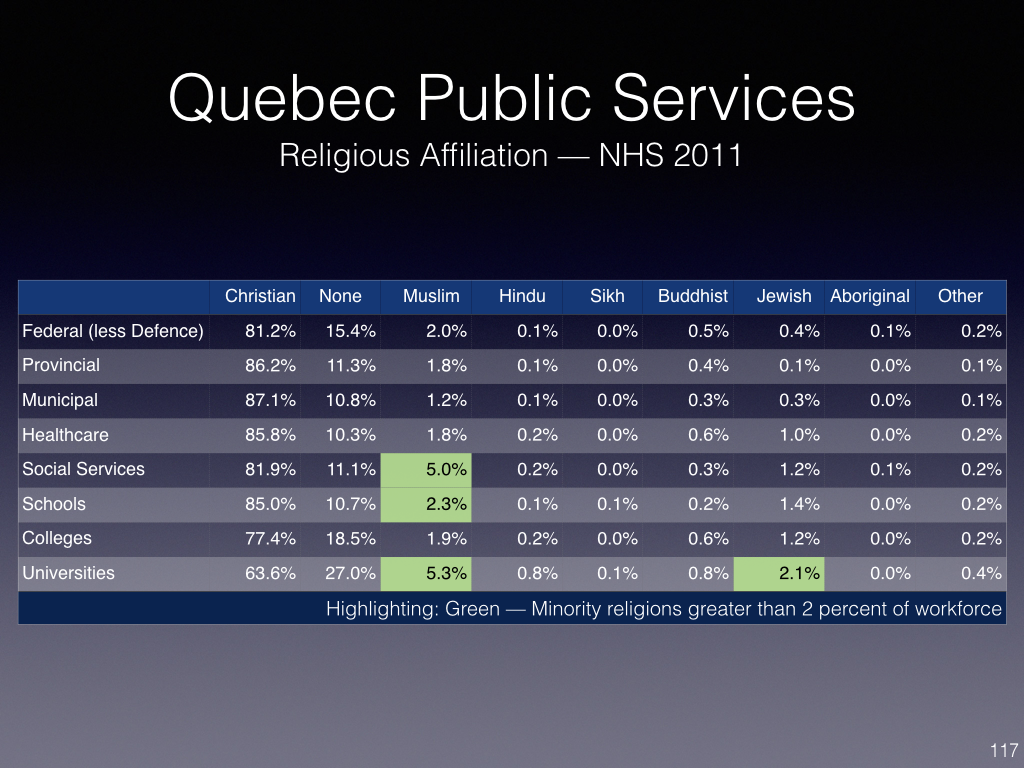
This is not to say some form of legislation regulating religious symbols in the public sphere won’t eventually show up on the order paper of a CAQ government. The issue of religious accommodation has dogged successive Quebec governments for more than a decade, as rising Muslim immigration has forced the province to grapple with questions of religious diversity.

Francophone Quebeckers’ idea of state secularism may not correspond with the dictionary definition of the concept, given their desire to grandfather the blatantly Catholic symbols of their past, right up to the crucifix that hangs in the National Assembly. But that doesn’t mean the new CAQ government will be able to indefinitely ignore demands to regulate other religious symbols.

There is a large consensus among Quebec’s political class that the best way to settle the debate once and for all is to follow the recommendations of the 2008 Bouchard-Taylor commission on religious accommodation. The commission, led by sociologist Gérard Bouchard and philosopher Charles Taylor, concluded that “agents of the state” (such as judges, Crown prosecutors and police officers) should be prohibited from wearing religious symbols.

In 2017, Prof. Taylor dropped his support for the proposal, saying that it had been misunderstood. Indeed, the Bouchard-Taylor report explicitly excluded teachers, civil servants and health-care professionals from the list of public employees it said should be prohibited from wearing religious symbols. But that detail seemed to have been lost on many politicians.

The official CAQ policy would include teachers among those banned from wearing the Muslim hijab or Jewish kippa. But whether a CAQ government would legislate to include teachers in the mix remains highly speculative. What’s more, any legislation regulating when and where police officers or judges could or could not wear religious symbols would likely be limited in scope.

On Wednesday, the CAQ MNA who served as the party’s justice critic in opposition moved to clean up the damage Mr. Legault created on Tuesday. Simon Jolin-Barrette insisted that the new government intends to ensure that any future legislation on religious accommodation would stand up in the courts. He added that invoking the notwithstanding clause, while an option, would never be the CAQ’s first course of action.

The CAQ has brought in Carl Vallée, who served as a press secretary to former Conservative prime minister Stephen Harper, to help the new government find its communications footing. It likely signals tighter messaging and less freelancing by Mr. Legault in the future.

After all, those headlines outside Quebec can be killers.

Quebec’s top court rules woman wearing hijab was entitled to have case heard

Ironic that this decision (a correct one) comes just as the incoming CAQ government has confirmed its party platform prohibiting religious symbols on public servants in positions of authority.

Different issues, of course, but both are symbolic of the ongoing identity/secularism debates:

Quebec’s highest court has ruled a woman who was denied justice three years ago after a judge ordered her to remove her hijab was entitled to be heard by the court.

The unanimous judgment rendered today in favour of Rania El-Alloul says the Quebec court dress code does not forbid head scarves if they constitute a sincere religious belief and don’t harm the public interest.

In 2015, Judge Eliana Marengo refused to hear a case involving El-Alloul’s impounded car because El-Alloul refused to remove her Islamic head scarf in the courtroom.

Marengo told her at the time that decorum was important and, in her opinion, El-Alloul wasn’t suitably dressed.

El-Alloul’s lawyers had appealed the Quebec Superior Court’s 2016 decision refusing to declare that she had the right to be heard by the court despite her attire.

Today’s judgment by the Quebec Court of Appeal quashes the original judgment by the trial judge and sets aside the Superior Court judgment that denied relief.

Julius Grey, one of El-Alloul’s lawyers, says he’s pleased with the ruling that puts both issues to rest.

Source: Quebec’s top court rules woman wearing hijab was entitled to have case heard

Des cours de francisation jugés inefficaces

Basic level versus advanced level for professionals. Likely unrealistic to expect immigrant language training to cover the latter (just think of the mixed success of federal official language training for anglophones trying to learn French and the amount of time required).

Much better to address during selection process (as current Express Entry give weight to language):

Les programmes de francisation ne sont pas efficaces pour permettre aux immigrants de bien s’intégrer au marché du travail et à la société québécoise, déplore Nima Madani, immigrant d’origine iranienne installé au Québec depuis 2015.

En suivant les débats autour de l’accueil des nouveaux arrivants, cet ingénieur mécanique de 40 ans a l’impression, comme beaucoup d’autres immigrants, que les chefs politiques ne comprennent pas vraiment les enjeux et qu’ils proposent des solutions sans lien avec la réalité.

«Ils parlent du taux élevé d’échec aux cours de francisation, mais personne n’a comme priorité de les améliorer», souligne-t-il, se basant sur ce qu’il a vécu depuis son arrivée à Montréal.

La CAQ propose d’abord de réduire le nombre d’immigrants, tandis que le PQ veut exiger qu’ils connaissent mieux le français à leur arrivée.

«Mais on a tellement de choses à faire quand on se prépare à quitter notre pays, c’est très exigeant», témoigne Nima Madani.

«Les politiciens ne semblent pas savoir comment ça se passe pour un immigrant qui arrive. La majorité fait de gros efforts pour s’intégrer, mais on a l’impression d’être abandonnés, même en étant très motivé pour apprendre le français.»

Inquiétude

Ses observations sur les lacunes en francisation sont corroborées par plusieurs études, notamment celle du Conseil supérieur de la langue française (CSLF), publiée en février dernier, ainsi que par le dernier rapport de la Vérificatrice générale du Québec, dévoilé en novembre 2017. «L’offre de francisation de base ne permet pas aux immigrants d’atteindre un niveau de maîtrise de la langue suffisamment élevé pour réaliser une intégration socioprofessionnelle réussie», a démoncé le CSlF dans son rapport sur La francisation et l’intégration professionnelle des personnes immigrantes.

De nombreux immigrants sont inquiets de ce qu’ils entendent depuis le début de la campagne électorale, renchérit Stephan Reichhold, directeur de la Table de concertation des organismes au service des personnes réfugiées et immigrantes (TCRI).

«Ils se sentent dénigrés, alors que plusieurs font de gros efforts pour apprendre le français et que les inscriptions aux cours de francisation augmentent, dit-il. Certains se demandent s’ils devront quitter le Québec si la CAQ prend le pouvoir.»

Le test des valeurs proposé par François Legault cause aussi de l’irritation. «M. Legault ne semble pas réaliser qu’on fait déjà tout ce qu’il demande, note Nima Madani. Dans les entrevues de sélection, nous sommes interrogés sur les valeurs québécoises.»

Il rappelle aussi que la demande de certificat de sélection du Québec inclut la signature d’une Déclaration portant sur les valeurs communes de la société québécoise. «Si je n’étais pas d’accord, je ne serais pas venu au Québec», fait-il remarquer.

Les immigrants invisibles

Alors que le thème de l’accueil des immigrants occupe une place centrale dans la campagne électorale, on a peu entendu les nouveaux arrivants se prononcer eux-mêmes sur cet enjeu, alors qu’ils sont les premiers concernés.

Sollicités pour ce reportage, les représentants du Regroupement des organismes de francisation du Québec ont décliné notre demande d’entrevue, préférant «ne pas se mêler de politique», a expliqué un porte-parole.

Nima Madani veut contribuer au débat de façon constructive en témoignant de son expérience d’immigrant très motivé à apprendre le français: il a suivi plusieurs sessions de cours à Téhéran, en plus de deux séjours d’un mois à Paris dans des programmes d’immersion, pour se préparer à son arrivée au Québec.

«On m’a dit que mon français était assez bon, même si j’avais encore besoin de cours de francisation, raconte-t-il. Mais les cours ici ne sont pas efficaces, les progrès sont beaucoup trop lents pour atteindre un niveau suffisant pour travailler. Et quand on a terminé le programme de francisation, c’est très difficile de trouver des cours pour continuer de progresser.»

Trop élevé d’élèves par classe, trop peu de temps consacré à la conversation, méthodes d’enseignement archaïques et inefficaces, groupes composés d’élèves aux objectifs disparates, peu adaptés aux besoins des travailleurs qualifiés, horaires qui ne conviennent pas à tous, faibles moyens financiers des élèves… La liste des observations de M. Madani est longue!

«Je ne veux pas avoir l’air de chiâler!», dit-il, dans un français teinté d’un très léger accent, en hésitant à peine sur certains mots. «Les professeurs étaient très gentils et accueillants, mais certains n’enseignaient simplement pas bien. C’était un monologue. C’est bien que les cours soient gratuits, mais il faut surtout qu’ils soient performants.»

Autre aberration, selon lui: les enseignants donnaient à l’avance aux élèves les questions des examens du ministère de l’Immigration visant à vérifier les acquis.

Pour continuer ses progrès en français, M. Madani s’est inscrit à un cours à HEC-Montréal et a trouvé des Québécois avec qui se pratiquer.

«Dans mon réseau, dans la communauté iranienne, la plupart des gens parlent anglais, alors je ne peux pas compter sur mon entourage pour pratiquer», souligne-t-il.

Il se désole aussi de voir que l’on ne parle pas de cinéma québécois, ni de littérature ou de chanson dans les cours de francisation, mais qu’on apprend aux élèves comment se débrouiller si leur lavabo coule.

«Tout est fait en fonction de survivre et non de vivre, dit M. Madani. On ne parle jamais de ce qui est agréable dans la culture québécoise. Je n’ai jamais eu de lavabo qui coule depuis que je suis arrivé ici, ça ne me sert à rien pour entrer en contact avec les Québécois!»

***

UN GUICHET UNIQUE QUI SE FAIT ATTENDRE

Un projet de guichet unique pour faciliter l’accès aux cours de francisation, dans les cartons du ministère de l’Immigration, de la Diversité et de l’Inclusion (MIDI) depuis plus de 15 ans, n’a toujours pas vu le jour, malgré des années de travaux. Un contrat de plus de 200 000$ a même été accordé en 2009 pour la mise en place de ce guichet unique, visant à simplifier l’inscription aux cours, qui peuvent être offerts dans les commissions scolaires, les cégeps ou les organismes communautaires. Le ministère promet maintenant que ce service sera implanté en 2019. «Depuis août 2017, le MIDI est devenu la porte d’entrée unique pour les personnes immigrantes admissibles à l’allocation de participation et aux cours à temps complet, qu’ils soient offerts par un partenaire du MIDI ou en commission scolaire», note cependant une porte-parole du ministère, soulignant que le dernier budget prévoyait 50 millions sur cinq ans pour bonifier les services.

MAUVAISE NOTE POUR LA FRANCISATION

Les principales lacunes des cours de français destinés aux immigrants:

«La capacité de communiquer en français ne garantit pas l’intégration professionnelle et sociale, certes, mais ce facteur constitue néanmoins le premier élément d’intégration à la société québécoise.»

«L’hétérogénéité de la composition des groupes de francisation est considérée comme un frein à l’apprentissage de la langue.»

«Même s’ils reçoivent une allocation, il n’est pas rare que des immigrants qui suivent le programme de francisation soient obligés de travailler en même temps.»

Source: Conseil supérieur de la langue française, La francisation et l’intégration professionnelle des personnes immigrantes, février 2018.

«La vaste majorité des participants aux cours de français du ministère n’ont pas atteint le seuil d’autonomie langagière, lequel facilite l’accès au marché du travail et permet d’entreprendre des études postsecondaires. Les personnes immigrantes qui ont commencé des cours de français offerts par le Ministère de l’Immigration, de la Diversité et de l’Inclusion (MIDI) en 2015 ont atteint ce seuil dans une proportion de 9,1% à l’oral et de 3,7 et 5,3% à l’écrit.»

«Le MIDI ne mesure pas le délai d’attente réel des personnes immigrantes entre leur demande d’inscription et le début d’un cours à temps complet. De plus, il ne collige pas de données sur les raisons des désistements et l’information qu’il collecte au sujet des motifs d’abandon de cours durant une session est incomplète.»

Source: Rapport du Vérificateur général du Québec sur la francisation des personnes immigrantes, novembre 2017.

Source: Des cours de francisation jugés inefficaces

Des demandeurs d’asile revendiquent l’accès aux services de garde subventionnés

I understand the logic as labour market permits, school attendance and healthcare already available to claimants. However, given shortage of childcare spaces, expect some political pushback.

Will be interesting to see how Commission responds:

Dans une démarche inusitée, des demandeurs d’asile portent plainte pour discrimination devant la Commission québécoise des droits de la personne et de la jeunesse, parce qu’ils n’ont pas accès aux services de garde subventionnés, a appris La Presse.

Cette exclusion oblige plusieurs d’entre eux à refuser un emploi et les contraint à vivre de l’aide sociale, ce qui retarde leur processus d’intégration.

Parallèlement, dans une lettre ouverte, un comité qui regroupe une quarantaine de demandeurs d’asile appelle le gouvernement à ouvrir les garderies subventionnées aux personnes en attente de statut.

Une réglementation laissant place à interprétation a longtemps permis aux demandeurs d’asile d’inscrire leurs enfants dans un CPE. Dans une directive envoyée en avril dernier, le ministère de la Famille a clairement fermé cette brèche.

Les demandeurs d’asile n’ont pas non plus accès aux remboursements anticipés du crédit d’impôt qui aident les familles à faible revenu à assumer les frais des garderies privées. Concrètement, cela exclut des centaines d’enfants nouvellement arrivés au Québec du réseau des garderies.

Cette politique «nous empêche d’accéder à la francisation et à l’emploi, nous isole avec nos enfants de la société qu’on voudrait activement intégrer et affecte surtout les femmes demandeuses d’asile», déplore le comité des demandeurs d’asile dans sa lettre ouverte, qui réclame l’accès aux CPE et aux versements anticipés du crédit d’impôt pour frais de garde.

Effets dévastateurs

La politique d’exclusion a un effet «dévastateur» sur les familles, dénoncent les demandeurs d’asile.

C’est ainsi qu’une des plaignantes, Blessing, Nigériane de 30 ans arrivée au Québec en avril dernier, a dû refuser deux offres d’emploi, l’une dans une usine de matériel électrique, l’autre dans un centre d’appels, parce qu’elle n’avait pas les moyens de payer une garderie privée pour son enfant de 4 ans.

«Je me sens coincée, impuissante et déprimée», confie la demandeuse d’asile, qui préfère taire son nom de famille et qui veut gagner sa vie en attendant que la Commission de l’immigration et du statut de réfugié (CISR) statue sur son sort – ce qui peut prendre jusqu’à 18 mois.

Au lieu de ça, déplore-t-elle, elle est dépendante de l’aide sociale.

Un autre plaignant, Vladimyr Mathieu, arrivé d’Haïti en juin 2017, vit une situation particulière. Son fils né à Montréal n’a pas accès au service de garde. Pourtant, il est citoyen canadien. Sa fille aînée, née en Haïti, a été admise en garderie avant la directive d’avril dernier, et continue à profiter de son droit acquis – pourtant, elle n’est pas citoyenne. La garderie qu’elle fréquente est disposée à accueillir son petit frère, mais Québec refuse de contribuer aux frais. La demande d’inscription a donc été rejetée.

Pour que Valdimyr et sa femme, qui occupent tous deux un emploi, puissent continuer à travailler, ils se sont résolus à faire garder leur plus jeune enfant, âgé de 1 an, par un voisin, une situation que les deux demandeurs d’asile jugent insatisfaisante.

«Je ne comprends pas, le système nous demande de travailler, nous recevons un permis de travail, mais nous n’avons pas accès aux garderies; c’est comme si on nous disait de rester sur l’aide sociale pour prendre soin de nos enfants», déplore Valdimyr Mathieu.

Au total, six demandeurs d’asile vivant des situations semblables, à un moment où les délais de traitement des dossiers s’allongent, ont demandé à la Commission des droits de la personne d’examiner leur plainte.

L’exclusion des services de garde est discriminatoire, tout particulièrement pour les femmes, qu’il s’agisse de mères seules ou de conjointes étant les plus susceptibles de rester à la maison pour prendre soin des enfants, soutient le comité de demandeurs d’asile dans sa lettre ouverte.

«Les travailleurs temporaires ont bien accès aux garderies, alors que les demandeurs d’asile, qui disposent d’un permis de travail, en sont exclus, je ne comprends pas la logique de cette politique», s’étonne l’une des signataires de la lettre ouverte, l’avocate Claude-Catherine Lemoine, selon qui ce traitement à géométrie variable n’a pas de raison d’être et entraîne à moyen terme des coûts sociaux importants.

«C’est complètement contre-productif, ça pénalise non seulement les familles, mais aussi la société québécoise, parce que ça retarde l’apprentissage du français et l’intégration au marché du travail», croit Stephan Reichhold, de la Table de concertation des organismes au service des personnes réfugiées et immigrantes.

«En barrant l’accès aux CPE aux demandeurs d’asile, on se tire simplement dans le pied», résume-t-il.

Écoles, mais pas les garderies

Depuis l’adoption du projet de loi 144, à la fin de 2017, tous les enfants, incluant ceux des demandeurs d’asile, ont accès au système scolaire. «Si on veut être cohérent, on devrait étendre ça aux garderies», plaide Geneviève Binette, du Comité d’aide aux réfugiés.

D’autant plus que ce n’est pas par manque de places que les garderies refoulent les enfants de demandeurs d’asile, mais à cause d’une politique gouvernementale.

La quarantaine de demandeurs d’asile qui ont formé le comité demandant l’accès aux services de garde ont dû surmonter des résistances intérieures, souligne Rachel Shugart, du Collectif Bienvenue, qui vient en aide aux nouveaux arrivants.

Membre, à titre personnel, du comité formé par les demandeurs d’asile, Rachel Shugart souligne que plusieurs d’entre eux viennent de pays qui ne respectent pas les droits. La démarche était «effrayante pour eux, ils se sentent inquiets, nerveux», selon Rachel Shugart.

Mais ces nouveaux venus en attente de statut sont aussi déterminés à accéder aussi vite que possible à l’autonomie financière et à ne plus dépendre de l’aide de l’État.

Source: Des demandeurs d’asile revendiquent l’accès aux services de garde subventionnés

Chantal Hébert: Quebec provides a warning that Scheer should be careful about making immigration a campaign theme

Good insightful column as usual:

Andrew Scheer’s Conservatives may want to push pause on plans to make immigration a signature federal campaign theme next fall long enough to take stock of the turn in the Quebec election conversation.

Coalition Avenir Québec Leader François Legault thought he was reaching for a low-hanging fruit when he embraced the issue. With less than two weeks to go until the Oct. 1 vot,e it has turned into a poisoned apple.

Since midcampaign, the CAQ has lost a significant amount of support.

The latest Léger sounding — done between last Thursday’s French-language debate and Monday’s English-language debate — found a six-point drop in the party’s lead among the francophone voters who will determine the outcome of the election.

Legault’s hopes for a governing majority are fading fast. It could still get worse. With the last leaders’ face-off set for Thursday, only half of his supporters say their choice is final.

The decline in CAQ fortunes essentially comes down to one issue: immigration and the party’s bid to both reduce Quebec’s overall intake of immigrants and accelerate, by coercive means if necessary, their integration into the province’s French-language mainstream.

Under the party’s plan, Quebec would cut its annual intake of immigrants by one fifth and those who after three years fail to meet the province’s language requirements would be made to leave. (It remains unclear how that would be achieved.)

At the time the policy was conceived last spring, Legault and his brain trust believed they had come up with a winning combination, a way to tap into longstanding francophone concerns over the preservation of Quebec’s French-language identity without alienating the province’s non-francophone voters.

Instead the plan has become a millstone.

Many voters are repulsed by the coercive regimen his party is proposing to impose on future immigrants. Others question the notion that Quebec’s immigration intake should be reduced.

On the latter, Legault has managed to run afoul of the mayors of Montreal and Quebec City and of many smaller towns spread out across the province.

They are all arguing that with Quebec plagued by labour shortages caused by the fast-aging of its population, the time is particularly ill chosen to cut down on immigration.

The Léger poll found Quebecers divided over the issue with 45 per cent in favour of a reduction and 47 per cent against.

But with the bulk of the province’s chattering class along with his election rivals aligned against his proposals, Legault is clearly losing the air war.

He has been in damage-control mode for most of the past week, scrambling to put the issue of his own signature policy to rest. But with every new explanation, there have been more questions as to how much actual thinking has gone into the crafting of the CAQ’s immigration platform and what the many unanswered issues it raises say about the party’s competence to run a government.

As the Léger poll was putting a number on the rising toll Legault’s decision to fight part of the campaign on the immigration minefield is taking on his party’s fortunes, the Conservative opposition in the House of Commons was accusing the Trudeau government of having eroded voters’ confidence in Canada’s immigration policy.

But in the province where the issue has been top of mind for weeks — the very place that is ground zero for the influx of irregular border crossers transiting from the U.S. to Canada — the evidence suggests otherwise.

For the first time in decades, there is an expanding Quebec audience, outside of the already diverse Montreal area, supporting the notion that immigration is part of the solution to the province’s economic challenges.

At the same time, the federal Conservative party’s summer-long effort to highlight the irregular refugee issue has had little or no echo in the provincial campaign. The refugee file started to drop from the Quebec radar around the time the Trump’s administration’s policy of separating the children of illegal immigrants to the U.S. from their parents surfaced in the media. That is probably not a complete coincidence.

And then for all the talk about Prime Minister Justin Trudeau losing the argument over irregular border crossings, it has so far had no significant impact on his party’s fortunes. At the end of a difficult summer for his government, his ruling party continues to enjoy a prohibitive lead in Quebec. At the national level, the gap between the leading Liberals and the Conservatives has widened.

There is a reason why mainstream provincial and federal parties have rarely if ever made immigration a major campaign plank in the past. As Legault’s experience is demonstrating, it is easy to lose control of the narrative.

Source: Chantal Hébert: Quebec provides a warning that Scheer should be careful about making immigration a campaign theme

Quebec: Rich investors granted Canadian residency despite fake documents and dubious assets, ex-officials say

Good in-depth reporting. Investor immigration programs invite abuse as the former federal and Prince Edward Island programs also attest. In Quebec’s case, back door entry to British Columbia and Ontario with minimal benefits:

Some rich foreigners seeking Canadian residency under a special Quebec program for wealthy investors couldn’t point to the province on a map, while others submitted fake documents or disguised their assets — yet many of them were still accepted for immigration, former civil servants say.

The officials, charged with administering the Quebec Immigrant Investor Program (QIIP), say they were sometimes pressured into ignoring signs that applicants’ fortunes were founded on corruption or other ill-gotten gains.

“It’s a program that has lots of gaps, that permits people with dubious or even illicit business to launder money through the program and to buy themselves citizenship inexpensively,” said one former immigration officer.

Numerous current and former civil servants in Quebec spoke to Radio-Canada’s investigative program Enquête on condition of anonymity, revealing what they see as major flaws in an immigration program that has granted permanent residency to tens of thousands of people since it began in 1986.

QIIP applicants must have at least $2 million in assets and agree to loan $1.2 million of that to the Quebec government interest-free for five years. The government invests the money and uses the interest to provide grants to small- and medium-sized businesses.

“We were under a lot of pressure to approve applicants in order to meet annual financial targets,” said one ex-bureaucrat.

Staff were overwhelmed

The federal government used to have a similar immigration track for rich investors seeking to settle in Canada, but shut it down in 2014 due to concerns about its effectiveness.

The Quebec version still accepts 1,900 people a year, plus their family members, with two-thirds coming from mainland China. Last year alone, more than 5,000 people obtained their permanent residency through the program.

All of the applications from China would’ve pass through Quebec’s immigration office in Hong Kong, until it closed last year. The office was overwhelmed by the workload, with staff working 60 to 70 hours a week to keep up, according to the former officials who spoke to Enquête.

The provincial government allotted seven hours to screen each application — including verifying that applicants had come by their fortunes honestly. But as one former immigration officer said: “It takes time to do proper due diligence, and we didn’t have it.”

Officials’ suspicions could be raised by any number of things, including copycat submissions.

“The applicants were all heads of sales, then became assistant managers,” the ex-bureaucrat said. “The first time you have an applicant like that, you tell yourself, ‘Why not.’ Then you get 10, 20, 30 more from the same immigration consultant. It raises serious doubts about their back story.”

In the early 2000s, the Quebec government hired an outside firm to help vet applications. It was found that more than 65 per cent of them contained forged documentation.

And according to data obtained under Quebec’s access-to-information law, from 2013 to 2017, a total of 1,783 immigrant investor applications were rejected by the province’s officers in Hong Kong due to faked documents.

‘Really shocked me’

But even as dodgy candidates were flagged, immigration officers say they felt pressure to overlook many applications with apparent shortcomings.

One former bureaucrat recalled rejecting a candidate on suspicions their assets were corruptly obtained. His boss instructed him to be more lenient next time because corruption existed in Quebec too.

We knew they weren’t coming to Quebec and we also knew they weren’t going to learn French.– Former immigration official

Around the same time, the Charbonneau Commission was investigating corruption and collusion in Quebec’s construction industry. “It really shocked me to hear that,” he said.

Another civil servant said they were told by a senior official at Quebec’s Immigration Ministry not to dig too deep into each applicant’s background. Some immigration staff bowed to those pressures and accepted more applicants, the people interviewed by Enquête said, while others refused.

Government claims credit for job creation

In a statement, Quebec’s Immigration Ministry said its vetting process is effective at maintaining the integrity of the immigrant-investor program. It said applicants and their assets are examined multiple times: by financial institutions that help recruit them, by governmental financial analysts, and by immigration personnel. Finally, FINTRAC, the federal financial intelligence agency, verifies the funds that successful applicants lend to the Quebec government.

The province also says the program has had important economic benefits, allowing for $695 million in grants to small- and medium-sized businesses since 2000 — which it says has translated into tens of thousands of jobs.

But those numbers may be overly rosy.

Grants from the Quebec Immigrant Investor Program are limited to a maximum of 10 per cent of a business’s expansion or modernization project. Nevertheless, Investment Quebec, the provincial agency that administers the grants, counts all the jobs created or saved by the expansion projects it supports — meaning the employment gains seem to be inflated by a factor of 10.

Investment Quebec maintains it’s a standard method of calculating and it doesn’t deem every one of those jobs to stem from its grants.

Westward bound

Perhaps the most controversial aspect of QIIP is that while it’s meant to draw wealthy investors to la belle province, the vast majority who have taken up residency in Canada under the program settle in other provinces.

As part of the process, applicants have to sign two forms declaring their intention to reside in Quebec.

But once in Canada, the law allows anyone to move freely. Data reported earlier this year by Global News shows that 85 per cent of Quebec’s immigrant investors — since the program began in 1986 — have ended up in British Columbia and Ontario. Only 10 per cent remained in Quebec.

“We’re way off our immigration targets under this program,” said Suzanne Ethier, who served as Quebec’s associate deputy minister of immigration from 2005 to 2006.

“We knew they weren’t coming to Quebec and we also knew they weren’t going to learn French,” said one of the former bureaucrats who helped run the program.

Quebec Immigration Minister David Heurtel told reporters in March that he wasn’t fazed by this tendency. “Even if an immigrant investor goes elsewhere in Canada, their money stays here,” he said.

Other provinces aren’t so keen to welcome Quebec’s immigrants, though, and to bear the costs of providing health care and education. Freedom-of-information records obtained by Enquêteshow the B.C. government complained to Quebec several times in 2015 and 2016

Former federal immigration minister Chris Alexander, who served in Stephen Harper’s last government, said he brought up the issue with his Quebec counterparts, and while they “recognized there were problems, they weren’t ready to move forward with any changes.”

Quebec has since taken steps to retain more of its immigrant investors, Heurtel said, including prioritizing applicants from francophone countries and sending out videos and brochures promoting living in Quebec.

But that hasn’t been enough to alter how the program’s critics see things.

“The Quebec Immigrant Investor Program is a scam from start to finish. I think that everyone who’s involved in the program knows that,” said Ian Young, the Vancouver correspondent for Hong Kong’s South China Morning Post newspaper and a seasoned observer of immigration patterns from China to Canada.

“I think that includes policy-makers, the people who facilitate it and the immigrants themselves.”

Source: Rich investors granted Canadian residency despite fake documents and dubious assets, ex-officials say