USA: Southeast Asians are underrepresented in STEM. The label ‘Asian’ boxes them out more

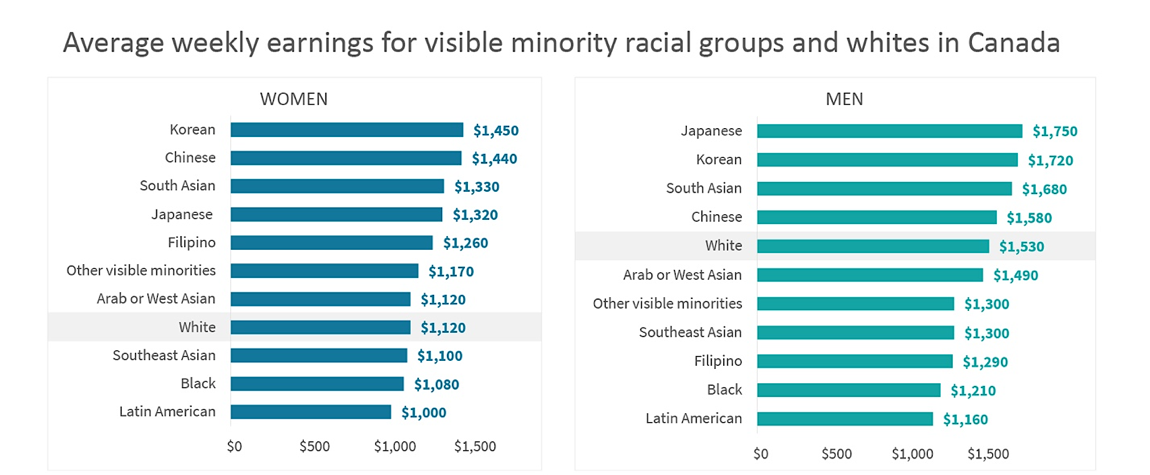
The impact of overly broad groupings. In contrast, Canadian visible minorities have 7 groupings of Asian: Chinese, South Asian, Filipino, Southeast Asian, Korean, Japanese, West Asian (but of course, considerable differences within most of these groups):

When Kao Lee Yang received a nomination from her university for the Gilliam Fellowship by the Howard Hughes Medical Institute for underrepresented groups in science, technology, engineering and math, she was thrilled. She’s spent years working toward her doctorate in Alzheimer’s research at the University of Wisconsin-Madison.

Yang is Asian American, and more specifically is Hmong American, part of a small minority in the United States with just 327,000 people.

Though the Hmong population in the U.S. is growing, Hmong Americans are still underrepresented in STEM fields and have lower education rates and higher poverty rates overall, compared to the U.S. population at large.

For example, while 24% of all Asians in the U.S. have obtained an additional degree after college, and 13% of all Americans have, just 6% of Hmong Americans have, according to the Pew Research Center’s 2019 analysis of Census Bureau data. To add to that, a very low percentage of Hmong Americans actually go into STEM fields.

That’s why Yang said she was “blindsided” when HHMI emailed her academic adviser saying she wasn’t eligible for the fellowship because she didn’t meet their requirements for who is considered underrepresented.

Though the National Institutes of Health acknowledges that underrepresentation can be determined on a “case by case” basis, people who identify as Asian or white are not seen as underrepresentedin STEM, according to standards set by the NIH.

That means certain fellowships, grant funding and educational opportunities that are meant for underrepresented groups, such as Latino, Black, and Indigenous people, for example, are not always extended toward Asian American applicants. The opportunities are designed to elevate groups who are historically marginalized and make sure STEM workplaces are more inclusive and equitable.

So Yang, who said she has never met another Hmong scientist in her field, said it made no sense to her that she wasn’t considered underrepresented.

“I was dumbfounded,” Yang said. “I did wonder how HHMI came to that determination when I have had such a hard time finding other Hmong American scientists and scientific spaces.”

Yang isn’t the only one who’s experienced the contradictions that come with falling under the broad category of “Asian” in government data collection. Asian Americans have been calling attention to the issue for decades.

Hmong, Vietnamese, Filipino, Laotian, and Cambodian Americans all fall under the broad category of Asian, but their experiences the U.S. when it comes to things like education levels can vary greatly from other Asian groups such as Chinese, Korean, Indian and Japanese. Some South Asian groups such as Bhutanese and Burmese also face lower levels of educational attainment.

Because of the way HHMI looked at Asian Americans as one group, Yang was not considered to be underrepresented — effectively shutting her out from an opportunity that claims to be for someone exactly like her.

Why advocates say more nuanced data is important

“Is every Asian American group underrepresented in higher education? Obviously that’s not the case,” said Janelle Wong, a professor of Asian American studies at the University of Maryland and a co-founder of AAPI Data.

“Indian and Chinese students are the largest groups applying to these programs. And while they do often face implicit bias on campuses, they’re not facing systemic exclusion to access to higher education,” Wong said.

Wong has been advocating for data disaggregation in the Asian American community for years.

Disaggregation would involve collecting more specific data on Asian sub-groups so that a person’s country of origin is apparent, rather than just grouping people together from the entire continent. The data would show specifically if someone was Vietnamese American, or Cambodian American, for example, rather than simply classifying them as Asian.

That kind of detail would allow policymakers, health care professionals, educators and even institutions such as the NIH to better examine the nuances of different Asian populations, because different groups have different needs, experiences and beliefs. The same argument has been made for other racial groups, too, particularly Latinos.

Wong said the issue isn’t just about collecting better data — it’s about justice and civil rights, too.

“This is both a data quality issue and a data justice issue,” she said.

She said lumping all Asian Americans together in one racial category effectively reduces the experience of millions of people — not just when it comes to assessing job or educational candidates, but also for anyone trying to understand their political beliefs, education level, incomeinequality and health outcomes as well. For example, data on the broad category of Asian Americans show that a vast majority are Democratic voters. But if the data is further broken down, it reveals that Vietnamese Americans tend to have far more conservative views and more often identify as Republican.

Rachel Sklar, a post-doctorate scholar in environmental health outcomes at the University of California San Francisco, is Filipino and says she has been denied an academic opportunity in the past because she falls under the “Asian American” category.

Sklar said Filipinos in the U.S. experience what’s called “downward intergenerational mobility.” In other words, U.S.-born Filipinos are less likely to obtain a bachelor’s degree than their foreign-born parents. So efforts to boost groups struggling to obtain higher education should apply to Filipinos, Sklar said, but instead they’re hidden in the broader data on Asian Americans and educational achievement.

“The experiences of groups like Filipinos are just erased. They’re deemed invisible,” Sklar said.

More nuanced data could also be helpful to doctors treating Asian American patients, and policy makers making decisions about targeting health resources to different communities.

Sklar points out that Filipino women have high rates of hypertension and diabetes and other risk factors that can impact childbirth.

“Yet, because they’re grouped as Asians, they’re rarely considered for the types of resources that they need for safe birthing and pregnancy,” she said.

Questions of identity, and guilt

The dichotomy of being considered a minority by some institutions, but not by others, is emotionally confusing, as well.

Brittany Boribong, who was nominated to the Gilliam Fellowship in 2018 — the same one Yang was nominated for — had almost the same experience as Yang.

Boribong is Laotian American and the daughter of refugees. She and her brother are the first in her family to go to college, and she is the first to continue her education beyond a bachelor’s degree. While she was getting her doctorate at Virginia Tech, she was nominated by her school for the fellowship.

Like Yang, the fellowship told Boribong she wasn’t eligible. For her, it brought up a wave of guilt, like she was taking up an opportunity from someone else, a feeling she experienced while participating in a different fellowship for underrepresented people in STEM.

“I’m technically Asian American,” she said, but she couldn’t help thinking, “Do I belong here? Am I taking someone else’s spot? … I always felt like I snuck my way in, that I shouldn’t have been there.”

Being told by the Gilliam Fellowship that she wasn’t eligible was embarrassing, Boribong said, and it was the first time she had been told so bluntly she wasn’t underrepresented.

“I just look around the room and it’s like, where are the other Lao scientists? If I’m not considered a minority, then where are we?”

She and her advisor had to then go through the process of making a case that Boribong is underrepresented. Eventually, they did allow her nomination through, but it pushed her away from applying to other fellowships at HHMI.

There are growing calls for changing the way we collect data

Collecting more specific data about Asian Americans is something scholars and activists have been calling on for years, and it’s been picking up traction.

In November, lawmakers in New York re-upped their legislation calling for disaggregation of data on Asian Americans and Pacific Islanders.

Former Gov. Andrew Cuomo was presented with the same bill before he resigned from office but refused to sign it into law, citing logistical and financial issues of having to create new, uniform methods of collecting data, which is the most common opposition to data disaggregation. Others who have opposed efforts to disaggregate data have also cited privacy concerns, particularly related to immigrant communities, or said that it could divide different Asian groups.

But advocates of the law have pushed back against those concerns and are now asking Gov. Kathy Hochul to sign it into law.

“Asian-Americans and Pacific Islanders in New York represent 30+ different ethnicities and speak numerous languages. Failing to record & report that diversity is harmful,” State Sen. Julia Salazar, who co-sponsored the bill, tweeted.

When it comes to STEM academia in particular, the push for change has been incremental. Both Sklar and Boribong hadn’t realized how many others had gone through the same experience until Yang tweeted about her experience in October.

Elevating the conversation, though, might lead to some change. After Yang’s tweet spread on social media and after being questioned by NPR about their process of determining who is underrepresented, HHMI has updated their standards.

As of Nov. 12, the fellowship now said it recognizes “there are other ethnic populations who might be underrepresented but who are not currently designated as such by the federal government” and will “continue to consider” how they can better determine underrepresentation in STEM.

They’ve also extended the opportunity to Yang and a few others to complete their application, but Yang said she will not be moving forward with the process.

The larger problem that Sklar points out is that many other fellowships in STEM academia still take their guidance on diversity and representation from the NIH. The NIH, when asked by NPR, said they are required to take their guidance on race and ethnicity from the 1997 standards of the White House’s Office of Management and Budget.

But the OMB standards that same year also said the racial and ethnic groups that are outlined are a minimum base for gathering data, so agencies can go into further detail if they choose to. The Department of Health and Human Services guidance also said agencies are encouragedand can go into further detail. Plus, in 2012, a report to the NIH director outlined concerns about the lack of disaggregated data when it came to minority groups, specifically Latinos.

Sklar said if the NIH doesn’t change their process, she doesn’t expect much to change. In the meantime, she is focusing on what she can control: choosing to disaggregate the data she uses in her own scientific research.

For her, showing the vast differences in the Asian American population in her own research is proof in itself that the same should happen on a wider scale.

“The research needs to come first,” Sklar said, “And show that, ‘Wow, look at these experiences we’ve been making invisible just by glossing over and assuming a very heterogeneous group is actually homogeneous.'”

Source: Southeast Asians are underrepresented in STEM. The label ‘Asian’ boxes them out more

Wiseman: Redistributing seats in the House of Commons

Punchy commentary:

When governments redistribute seats in the House of Commons, they often claim they are doing what the public wants or acting in the interests of fairness. When Mike Harris’ Conservative government reduced the number of MPPs at Queen’s Park in 1996, they labelled their bill the Fewer Politicians Act. When Stephen Harper’s Conservatives increased seats in the Commons in 2011, they branded their bill the Fair Representation Act. To be consistent, Jim Flaherty, John Baird, and Tony Clement, senior cabinet ministers in both governments, ought to have termed their federal bill the More Politicians Act.

As required by law and shifts in the population, Elections Canada has determined that the House ought to expand by four seats, from 338 to 342, adding three seats for Alberta, one each for Ontario and British Columbia, and reducing Quebec’s seats by one, from 78 to 77.

By entering your email address you consent to receive email from The Hill Times containing news, analysis, updates and offers. You may unsubscribe at any time. See our privacy policy

Rather than constantly enlarging the House as two acts of Parliament require—the 1985 grandfather clause and the 2011 representation rule—Parliament ought to keep to the constitutional principle established at Confederation: proportionate provincial representation. The only exception is the “senatorial clause,” added to the Constitution by Westminster in 1915, entitling provinces to no fewer MPs than Senators. Changing that rule requires the unanimous consent of the provinces and Parliament, an impossibility.

Parliament ought to repeal both the “grandfather clause” and the “representation rule.” Neither required the consent of provinces and neither requires provincial consent for revocation. Parliament should also consider reducing and fixing a permanent number of seats. If the United States can manage with 435 Congressional representatives for 334 million people, 250 MPs ought to be sufficient to represent Canada’s 38 million people. MPs fearful of losing their jobs will argue that they are essential to serving their constituents, but more constituency staff could easily do that.

MPs are elected to represent their constituents and the parties under whose banners they run. They are not elected to represent provinces. Senators are appointed to represent provincial interests. Premiers do it especially well. But premiers have no more business in the redistribution of Commons seats than the prime minister has in how seats are distributed in a province. The idea that MPs represent their province holds no water. If it did, MPs would vote along provincial lines. The reality is they vote strictly along party lines. What constituents or provincial legislatures prefer is secondary to the preferences of party whips.

The Bloc Québécois makes much of the fact that Parliament has recognized Quebec as a nation. Quebec Premier François Legault claims “the nation of Quebec deserves a certain level of representation” regardless of its population. This begs some questions including: Should Quebec’s First Nations be entitled to a certain level of representation in the National Assembly regardless of their population since the assembly has assigned the status of “nation” to eleven provincial aboriginal groups including the Inuit, Mohawk, Cree, Algonquin, and Naskapi? Carrying Quebec’s brief, Yves-François Blanchet, whose BQ rejected the 1992 Charlottetown Accord which guaranteed Quebec 25 per cent of Commons seats in perpetuity, is outraged at the prospect of his province losing a seat. He has promised to unleash the “fires of hell” if it does.

Pure laine (dyed in the wool) or de souche (old-stock) francophones may claim to be a nation, but Quebec is merely a territory. Stephen Harper’s description of the Québécois is appropriate: “a unique people bonded together by a common language, culture and history—a nation.” However, increasing numbers of Quebecers, like provincial Liberal leader Dominique Anglade, do not fit that definition. Mordechai Richler, whose writings are set in the province, was dismissed as “not one of us” and not a “real Quebecer” by the co-chair of Quebec’s Commission on the Political and Constitutional Future of Quebec. Jacques Parizeau infamously articulated the distinction between the Québécois de souche and other Quebecers when he declared that “money and the ethnic vote” had determined the outcome of Quebec’s 1995 referendum.

Bloc Québécois founder Lucien Bouchard claimed, “Canada is not a real country” on account of its multicultural complexion, and Quebec’s governments have rejected Canada’s multiculturalism policy. Quebec is certainly not a country and if it can make the claim to nationhood, why should not Saskatchewan? Yes, the French fact makes Quebec—the only jurisdiction on the continent where a majority are francophones—distinctive in a way that Saskatchewan is not, but the language of nationhood is inappropriate for both.

If Quebec must have more MPs than to which it is entitled, let Parliament adopt another feature of the United States Congress: non-voting members. All provinces, except Newfoundland and Labrador and British Columbia, have lost seats in the past. Quebec is a cry baby in demanding overrepresentation and the federal political parties are too eager to cater to its howls.

Nelson Wiseman is the author of Partisan Odysseys: Canada’s Political Parties(University of Toronto Press).

Source: Redistributing seats in the House of Commons

Paradkar: Why I’m saying bye-bye to ‘BIPOC’ this year

While Paradkar’s points are valid when applied to the individual, groups are needed to assess differences in socio-economic outcomes at a broader level and understand the degree to which these reflect systemic or other barriers.

As Joseph Heath has argued, we need to stop using the American term BIPOC given that it reflects the centrality of Blacks in American history and exclusion, and use terms more appropriate to Canada’s history and context.

Needless to say, discussing terminology is easier than dismantling barriers and improving inclusion:

Who on earth is a BIPOC person?

BIPOC is an acronym that has flared into public consciousness since the 2020 summer of protests against police brutality against Black people. It stands for Black, Indigenous, People of Colour and was quickly pronounced bye-pock.

I thought it held some promise then. It appeared to be a thoughtful political coalition term, acknowledging disparate impacts of white supremacy by singling out Black and Indigenous experiences, even though both “Black” and “Indigenous” are homogenizing identities in themselves, and not always disparate.

When it comes to police brutality, we’re not all in it together. Black and Indigenous people are treated more unjustly than just about anyone else in our criminal justice system. Other people are treated with disdain, but that contempt often stems from anti-Black, colonial ideas of refinement and race.

However, as with POC or person of colour, BIPOC got swallowed up, quickly lost nuance and got spat out at a racial identifier to say “not white.”

Colonized lands that grapple with human rights face a perpetual puzzle: What to name “the other” without saying “the other?” It has led to a long-standing tension on this continent, a tension between a racial identity and a political one, a tension between the labels white people want to apply versus how people identify themselves.

In Canada that desire for euphemistic framing has translated into various terms over the years. “Coloured,” “minority,” “diverse”. They bunch into one box people held together by the most tenuous of all connections, that of not being of European origin.

Words matter, and they are tricky. They swim in the sociological waters around them, meaning one thing at one point in time and something else the next.

Those sociological realities have now claimed the term BIPOC like they do other racial designations that are rooted not just in history but also prejudice.

I had never been called “East Indian” until I came to Canada. If anything I identified as South Indian, as in one who lived in the southern part of the country. Then I began to be called South Asian, another label I’d never heard before. It instantly flattened the vast diversity of all the nations on the Indian subcontinent into one homogeneous lump, but at least it was a geographical descriptor.

I then came across another widely used term: POC, or person of colour. It sounded a bit like “coloured people,” which I didn’t know then was a slur. I assumed it simply referred to the fact of melanin in my skin.

POC became more of a political identity over time when it bonded me with those who experienced similar responses to our non-European origins, including East Asians. In other words, when I underwent the process of racialization or the process of being forced to see that I was categorized as a certain “race” and feel its impacts. This, even though race itself is anthropological fiction, constructed as a tool of exploitation.

Early 1900s U.S. state laws defined a person of colour as one with some “Negro blood,” but in contemporary Canada at least, the term POC erased Black experiences and kept invisible Indigenous ones. The grassroots advocacy for change came from those groups, but its biggest beneficiaries have always been white women, followed by other people of colour. When the fight for civil rights in the U.S. led to the creation of “affirmative action” laws — or a push for corporations and universities to end discrimination — white women over decades received a far higher share of managerial jobs and degrees.

POC was supposed to be a collaborative term. But even when reduced to an identity, it was more positive than non-white, which sounded like a deficit, an accusation of something lacking.

It was also better than the revolting “visible minority,” which made no sense. Visible to whom? How does it account for those that might be “invisible” but still in the margins, such as First Nations, Métis and Inuit? There is also an irony in naming a global majority a “minority,” but more than that, colonization globally has showed that numerical domination has nothing to do with power.

In a city like Toronto where the presence of “visible minorities” causes white flight, statistics showing that it is populated by a visible “majority” causes white fright, and spawns far-right white grievance ideologies in the rest of the country.

Words are not the solution, but yes, they matter.

That’s why I heard alarm bells ringing when a corporate executive said BIPOC stats had gone up in their staff demographics, but a closer look revealed there were no Indigenous hires.

Emails from publicists began routinely throwing up lines like these: BIPOC founder behind (XYZ) coffee shop. BIPOC sommelier breaks barriers on wine’s role.

At a discussion on online harassment, a white woman described another woman at the receiving end of abuse saying, “And she’s bye-pawk. She’s bye-pawk.”

How does an individual become BIPOC?

In that moment I realized I’d gone from being Indian to being South Asian to be a person of colour to now being either Black or Indigenous and a Person of Colour. In the span of a few years, my identity had been diluted beyond recognition. This absolute homogenization is the opposite of what the term BIPOC was meant to do.

It’s true that some people are simply anxious to keep up with the terminology to signal support for anti-racism, but when they do so without paying attention to the nuance of those terms, and flatten our identities and conflate the unique struggles of different groups, they replicate the problem the terminology is trying to eradicate.

I am done. Bye, bye BIPOC.

In my work I opt to use individuals’ own preference for identities and describe backgrounds as specifically as I can. I’ve also deliberately used non-white, not as a racial identity, but to emphasize experiences of people who are penalized for not being white. I quite like the term “racialized” although plenty of people of colour have not awoken to their own racialization and plenty of white people have. I realize that “racialized,” too, is used as another word for “not white.” But like “marginalized” — an even bigger umbrella term — it at least insists on being seen as a process.

Several months ago, NPR journalist Gene Demby referenced the linguistic term “euphemism treadmill” on the podcast Code Switch. It’s a term that refers to polite words, softer words used to replace those that might give offence. But over time, these euphemisms become toxic by association and themselves need to be replaced. Demby pointed to words such as Oriental, Coloured or Negro that were all proper terms at some point.

“The terminology can only stay ahead of the negative attitudes for only so long,” he said presciently. “The problem is not the language we use to refer to people. The problem is the attitude we have when referring to those people.”

Source: https://www.thestar.com/opinion/star-columnists/2021/12/11/why-im-saying-bye-bye-to-bipoc-this-year.html

Wells: And now, the inevitable Bill 21 fight

Usual insightful column by Paul Wells:

Here’s one measure of how little Building Back Better we’re getting done here in the nation’s capital: MPs from different parties and perspectives are having an interesting conversation about important matters. But it’s entirely off-book. It’s spontaneous, the leaders of the various parties didn’t ask for it, and it’s pretty clear they desperately wish it weren’t happening. In Ottawa, saying what you think is an act of rebellion.

The week’s topic is, of course, Quebec’s Bill 21, which forbids hiring public servants, including teachers, who dress incorrectly (“The persons listed in Schedule II are prohibited from wearing religious symbols in the exercise of their functions.”) The bill was introduced in March of 2019 and passed into law soon after. Federal party leaders fielded questions about it in debates during the 2019 and 2021 elections. Each time, Quebec’s premier François Legault got angry at the people who asked the questions. So did federal party leaders, who pay ever-growing hordes of witless staffers to tell them how to move and talk and who cannot for the life of them understand that the rest of us aren’t also conscripts in that effort.

Anyway the inevitable happened. This week news broke that a Grade 3 teacher in the bucolic Quebec town of Chelsea, a stone’s throw from Ottawa, was pulled from class for wearing a hijab. Here’s how it played in one early story: nameless teacher reassigned to “another function” outside the class, school officials shtum on details, shocked community hanging green ribbons.

A chain reaction ensued. Kyle Seeback, a Brampton Conservative MP, kicked it off by tweeting, “I cannot in good conscience keep silent on this anymore… Bill 21 has to be opposed. In court, in the house of commons and in the streets.” Jamie Schmale, Chris Warkentin and Mark Strahl tweeted their agreement.

Seeback’s conscience seems to have gnawed at him after he retweeted a Wednesday-night tweet from the Globe’s Robyn Urback wondering why Catherine McKenna, the former Liberal environment minister, now calls Law 21’s application “appalling” but didn’t, at the time, contradict Justin Trudeau’s milder language in the 2019 and ’21 campaigns. Good for Seeback, actually, for amplifying some snark aimed at a Liberal and then realizing it applied to him too. Soon McKenna and the Conservative MPs had company among Liberals still in caucus: Alexandra Mendes, Salma Zahid, Iqra Khalid, Marc Garneau. Finally a sitting cabinet minister, Marc Miller, called the law’s application “cowardly.” There is also a clip of Chrystia Freeland, the federal Minister of Careful What You Wish For, saying as close to nothing as she can possibly say, a recurring highlight of many recent debates.

I don’t like Bill 21 either. It’s based on silly reasoning—“the state” must have no religion, so nobody who works for the state may be seen to have any religion. This is like saying the state has no particular height, so public servants must be required to hover above the ground. Somewhere around here there’s an old column I wrote patiently explaining this logic and its heritage in the receding role of the Catholic church in Quebec society, a column some of my Toronto colleagues still enjoy mocking, but there’s a difference between understanding the argument and buying it. On a list of the top, say, thousand problems facing modern Quebec, “teachers in head scarves” would not appear. And one of the most obvious things we can say about this law is that the costs it imposes—in personal freedom, economic opportunity, social ostracism—is essentially never borne by people named Tremblay or Côté or Wells. Somehow the burden seems to land reliably on people named—well, in the current instance, on Fatemeh Anvari. About whom more in a moment.

I have also never felt that Bill 21 reveals some universal moral failing of “Quebec.” Every criticism I can level against this law has been levelled, many times, by Quebecers, including several of the Liberal MPs who ran out of patience yesterday; the Quebec Liberal and Québec Solidaire parties, which between them won more votes than Legault’s party did in 2018; an impressive selection of municipal politicians and commentators in, mostly, Montreal; and Judge Marc-André Blanchard of Quebec Superior Court, whose ruling struck down parts of Bill 21 and exclaimed his helplessness with regard to the rest: he plainly doesn’t like the thing, but Legault’s use of the constitution’s “notwithstanding” clause protects most of the law from legal challenge or judicial invalidation. Solid majorities in Quebec have supported the law in polls, but I’m not sure how long that will last, and since the law’s Charter-proofing provisions must be renewed every five years in the National Assembly, I’m not sure the law itself will last long either. I reject the notion that only Quebecers may have an opinion on the thing, because of course everyone can have an opinion on anything. But the conversation among Quebecers is plenty multifaceted already.

A few points of context. First, the provisions of the law, as they apply to the Western Quebec School Board which employs Fatemeh Anvari, have already been struck down. Minority-language education rights are notwithstanding-proof, and Judge Blanchard did to the provisions regarding English school boards what he plainly wished he could do to the whole law. Legault’s government appealed the ruling, and under Quebec law the provisions remain in place pending appeal, but Legault will lose the appeal and by next year, there may be no remaining barrier to teachers in hijabs teaching in Quebec’s English-language schools. This doesn’t help the rest of the province, at least not immediately, but it sets up two cases that parents will be able to observe and compare. Which is a ball that can bounce in many different ways over time.

Second, in interviews Anvari is plainly rattled by a situation she should not be in. But neither is she fired nor banished to the furthest reaches of her school’s steam-pipe trunk distribution venue. As the Lowdown’s excellent story notes, she’s been assigned to lead “a literacy project for all students [that] will target inclusion and awareness of diversity.” This is not as good as simply letting her teach the curriculum would have been, if the law had permitted it, but it shows considerable wit. Again, in a complex society, citizens respond in ways governments often don’t intend and wouldn’t prefer. Governments often don’t take that news well.

Third: those calling on governments to do something, now including members of the federal governing caucus, are sometimes short of ideas about what, precisely, to do. Federal lawyers in a court challenge could make no argument that hasn’t already been made—and, largely, rejected by the frustrated Judge Blanchard. Short of reviving the obsolete powers of reservation and disallowance, a step even Pierre Trudeau declined to take against even Bill 101, there’s not much a federal intervention could add.

Is there therefore no point in simply talking, or simply sending federal lawyers to say what lawyers for civil-society groups have already said? No, I think there’s a point, in that it brings government’s actions more closely in line with what are obviously the opinions of the people who compose the government. (Note that there isn’t a single Liberal MP tweeting, “Guys, Bill 21 is great!”) A reduction in the amount of hypocrisy in a system is always welcome and lately well overdue. But as a practical matter, the feds can’t do much to change the situation.

Finally, less important but still worth mentioning: When four Conservative MPs tweeted within minutes about their renewed love of freedom, it was hard to escape the suspicion that there’s something else going on. Perhaps this: those Conservatives are not, by and large, conspicuous Erin O’Toole fans, and many come from ridings where much of the Conservative voter base is spitting mad at O’Toole for perceived softness on vaccine mandates. When Seeback talks about opposing Bill 21 “in the street,” that sure sounds like an echo of the way a lot of people opposed vaccine mandates. MPs who can’t give their voters much satisfaction on the latter are probably grateful for a chance to blow off some steam on the former. That’s not to dismiss or rebut the Bill 21 Freedom Four; it’s just to note that motives are often mixed or additive.

Here’s the thing: in a liberal democracy you can’t keep a cork in everyone’s mouth forever. You shouldn’t try. It’s been fun watching the leaderships of three federal political parties try to deny simple human feelings over an inherently emotional issue. But the fun’s over. Now citizens are going to act like citizens. Always a scary moment for communications professionals.

British Labour MP: Children are being priced out of British citizenship – it’s unjust and must change

All UK citizenship fees are comparatively more expensive that other EU countries and Australia, Canada and the USA. But the fees for children are particularly high. The previous Conservative government, while increasing adult fees from $200 to $630 (including the right of citizenship), it left fees at $200 for children:

In the 2019 Conservative leadership election, Boris Johnson claimed: “I want everybody who comes here and makes their lives here to be and to feel British”. But government policy is effectively telling hundreds of thousands of children the exact opposite.

The children in question, born here to parents with leave to remain, like me, or born abroad but resident here for most of their lives, like our Prime Minister, are growing up in limbo in the country they call home instead of enjoying their full citizenship rights.

There are between 85,000 to 215,000 children with a legal entitlement to British citizenship who have ended up undocumented due to the extortionate registration fee. Through no fault of their own, they will go on to experience real difficulties in later life as a result, subjected to the same hostile environment measures that caused so much suffering to members of the Windrush generation. Many young people may not even realise they do not have citizenship until they try to travel, get a job, rent a home or are suddenly asked to pay international fees for their university education.

If the £35 fee introduced in 1983 had risen in line with inflation, it would be £120 today. Instead, it is now £1,012 and one of the highest such fees in Europe, doubling in the last decade alone. We are charging British children ten times more to claim their citizenship rights than their counterparts in Spain, France, Belgium, Denmark and Sweden.

Of the current fee, the Home Office reports that £372 accounts for administrative costs and freely admits that the remaining £640 is pure profit. Research by Citizens UK shows that between 2017 and 2020 alone, the government has made a £102,749,216 profit from these child citizenship fees.

When I challenged the Prime Minister on this practice earlier in the year at PMQs, the Prime Minister said there were “costs that must be borne by the taxpayer” and that citizenship was “a prize”. The courts have consistently disagreed with the Prime Minister’s stance, with the Court of Appeal recently upholding the High Court’s ruling that this fee was unlawful and ordering the Home Office to reconsider it.

On questions of citizenship, it’s clear that the government knows the price of everything and the value of nothing. For these children, British citizenship is a legal entitlement, not a prize or an investment. Instead of endlessly appealing, they should accept it’s wrong to set fees so high that it blocks families from applying.

Most of the children priced out of citizenship come from households facing higher levels of hardship and poverty. Many are from Black, Asian and ethnic minority backgrounds. Some come from families slapped with the ‘no recourse to public funds’ condition, preventing them from accessing basic services.

The government continues to justify these fees on the basis of fiscal responsibility but it’s absurd that they believe an effective levy on poorer households is a sustainable way of financing their immigration system. Above all, there’s nothing responsible about creating a situation where children are deprived of their rights for want of money.

It’s also a scandal that many looked after children are emerging from our care system without British citizenship. These children have been entrusted to the care of the state. The state has a responsibility to get the best outcomes for them.

I regularly speak to young people in my constituency who face feelings of worry, alienation and social exclusion as a result of being denied citizenship. The harm of being denied your citizenship rights in the only country you truly know cannot be overstated. It’s not just about the societal barriers you face, it’s about the psychological impact of being constantly treated as a second-class citizen.

You can’t put a price on belonging. Yet that’s exactly what this government continues to do. With the return of the nationality and borders bill, we have a chance to change this. My amendment to the legislation would cut the registration fee down to cost price, scrap it completely for looked after children and compel the government to produce a report on the impact that fees have on children’s right to citizenship.

These children are as British as anyone else. It is immoral and unjust that they continue to be blocked from citizenship and subjected to humiliating treatment as a result. If you grow up in the UK, British citizenship should be your right – not a privilege you pay the government large sums of money to bestow.

Source: Children are being priced out of British citizenship – it’s unjust and must change

H-1B Visa Rule About To Die For Good

Of note. May reduce the relative attractiveness of Canada:

An H-1B visa regulation that would make it less likely international students can work in the United States appears ready to die for good. Critics asked why the Biden administration was defending an immigration rule championed by Trump adviser Stephen Miller. The answer is the Biden administration is no longer defending the rule.

“Our plaintiffs are thrilled with the government’s apparent, yet belated, decision to no longer defend the H-1B Lottery Rule,” said Jesse Bless, director of litigation at the American Immigration Lawyers Association (AILA), in an interview. “While we wish that the government had not waited until we had completed briefing on cross-motions for summary judgment, we are fully committed to settlement negotiations, which will hopefully ensure that our plaintiffs receive all the relief to which they are entitled.” 

The case is Humane Society of NY, et al. v. Alejandro Mayorkas, et al. “Following the completion of briefing in this case, the parties entered into settlement negotiations,” according to an unopposed motion filed in the case on December 6, 2021. “There is now a good-faith reason to believe that the parties will reach an agreement in the near future that will fully resolve this matter. However, the parties need additional time to confer and fully resolve the issues presented. In light of the current state of play, plaintiffs hereby move for a sixty-day extension of time to file the Joint Appendix of the Administrative Record which is due on December 6, 2021. Plaintiffs conferred with opposing counsel and they expressed support for the requested extension. The parties anticipate that sixty days will allow the parties to exhaust the possibility of resolving this case without further involvement of the court and move for a dismissal of this matter.”

Plaintiffs’ attorneys in the Humane Society case, in addition to Bless, are Greg Siskind (Siskind Susser), Jeff D. Joseph (Joseph & Hall) and Charles H. Kuck (Kuck Baxter Immigration).

Background: On January 8, 2021, the Trump administration published a regulation as “final” to end the H-1B visa lottery and replace it with a system that awards H-1B petitions by highest to lowest salary. U.S. Citizenship and Immigration Services (USCIS) uses the lottery when companies file more H-1B applications than the annual limit of 85,000 (65,000 plus a 20,000-exemption for advance degree holders from U.S. universities). In 2021, USCIS received more than 300,000 H-1B registrations for FY 2022.MORE FROMFORBES ADVISORBest Travel Insurance CompaniesByAmy DaniseEditorBest Covid-19 Travel Insurance PlansByAmy DaniseEditor

H-1B petitions are essential because they typically represent the only practical way foreign nationals, including international students, can work long-term in the United States.

The H-1B rule would be bad news for international students. “The National Foundation for American Policy (NFAP) found that an international student may be 54% more likely to get an H-1B petition under the current H-1B lottery system than under the Trump administration’s regulation that would end the H-1B lottery,” according to an NFAP analysis of cases of recent international students and filings for H-1B petitions. “The data demonstrate the new regulation would have a significant negative effect on the ability of international students to gain an H-1B petition.”

In its September 20, 2021, motion for summary judgment in Humane Society of NY, et al. v. Alejandro Mayorkas, et al., plaintiffs cited NFAP research on the primary reason why the rule would prevent most international students from gaining H-1B status: “Initial registrations for these freshly graduated H-1B workers are generally assigned a Level I wage.” 

In other words, employers would naturally offer individuals with less experience in the U.S. labor market lower salaries (Level 1 under the Department of Labor wage level system) than more experienced professionals. Adopting the rule would lead the United States to establish a system—unlike any of its competitors for talent in other countries—that favors the most senior foreign nationals over young, promising talent, particularly recent graduates of U.S. universities.

Difficulty in gaining H-1B status and permanent residence contributed to an increase in Indian students at Canadian universities from 76,075 to over 172,000 between 2016 and 2018. At the same time, at U.S. universities, Indian graduate students in engineering and computer science fell 25%. The evidence indicates America is losing talent because it is much easier to work after graduation and gain permanent residence in Canada and other countries—and the Trump administration’s H-1B regulation would exacerbate this problem. 

In its complaint (May 17, 2021) and motion for summary judgment, plaintiffs argued the regulation is illegal because Chad Wolf was not properly serving as acting secretary of Homeland Security when the rule was issued. Also, according to the plaintiffs, “This final rule unlawfully makes the H-1B nonimmigrant visa selection process dependent on wage level and unlawfully gives priority for lottery selection to those H-1B applicants who are paid the highest wages.”

In a defendants’ reply in further support of their cross-motion for summary judgment, filed on November 22, 2021, the Biden administration argued, “The final rule was promulgated by an authorized official, the final rule comports with the INA [Immigration and Nationality Act]” and “DHS [Department of Homeland Security] responded sufficiently to the public comments.”

The U.S. Chamber of Commerce Lawsuit: Earlier in the year, the Biden administration lost a different lawsuit over the H-1B rule. In his order on September 15, 2021, issued in Chamber of Commerce v. DHS, Judge Jeffrey S. White agreed with a critical legal argument made by the plaintiffs. 

“Plaintiffs argue the Final Rule must be set aside because Mr. Wolf was not lawfully appointed as Acting Secretary at the time DHS promulgated the rule,” Judge White wrote. “In ILRC, the Court concluded the plaintiffs were likely to succeed on the merits of their claim that Mr. Wolf’s appointment was not lawful. At that time, two other district courts had considered and rejected DHS’s arguments, as had the Government Accountability Office (“GAO”). . . . Since then, a number of other courts also have determined that Mr. McAleenan and Mr. Wolf not acting with lawful authority. . . . Because he was not lawfully appointed, Mr. McAleenan’s subsequent attempts to amend the order of succession and to elevate Mr. Wolf to Acting Secretary also were not valid.”

Judge White ruled against the regulation solely on the DHS appointment issue and did not address other arguments raised by plaintiffs. Paul Hughes of McDermott Will & Emery, representing the plaintiffs (the Chamber of Commerce and others), argued the H-1B rule also violated current law. “First, the Lottery Rule is flatly inconsistent with the text of the Immigration and Nationality Act,” according to the plaintiffs. “The statute provides unambiguously that H-1B visas ‘shall be issued . . . in the order in which petitions are filed for such visas.’ Yet the Rule instead unabashedly institutes ‘ranking and selection based on wage levels,’ such that the relatively highest-paid noncitizens are issued visas first, likely leaving none for those at lower wage levels. Agencies are powerless to thus ‘rewrite clear statutory terms.’”

Department of Justice lawyers representing the Department of Homeland Security filed an unopposed motion for dismissal in the Chamber of Commerce case on November 30, 2021. That action foreshadowed the Biden administration’s willingness to bring the Humane Society case to a close as well.

Now that the litigation on the H-1B rule appears to be finished, one question remains: Will the Biden administration allow the regulation to stay dead, or will it issue a new regulation that critics believe embraces Stephen Miller’s vision of business immigration?

An H-1B visa regulation that would make it less likely international students can work in the United States appears ready to die for good. Critics asked why the Biden administration was defending an immigration rule championed by Trump adviser Stephen Miller. The answer is the Biden administration is no longer defending the rule.

“Our plaintiffs are thrilled with the government’s apparent, yet belated, decision to no longer defend the H-1B Lottery Rule,” said Jesse Bless, director of litigation at the American Immigration Lawyers Association (AILA), in an interview. “While we wish that the government had not waited until we had completed briefing on cross-motions for summary judgment, we are fully committed to settlement negotiations, which will hopefully ensure that our plaintiffs receive all the relief to which they are entitled.” 

The case is Humane Society of NY, et al. v. Alejandro Mayorkas, et al. “Following the completion of briefing in this case, the parties entered into settlement negotiations,” according to an unopposed motion filed in the case on December 6, 2021. “There is now a good-faith reason to believe that the parties will reach an agreement in the near future that will fully resolve this matter. However, the parties need additional time to confer and fully resolve the issues presented. In light of the current state of play, plaintiffs hereby move for a sixty-day extension of time to file the Joint Appendix of the Administrative Record which is due on December 6, 2021. Plaintiffs conferred with opposing counsel and they expressed support for the requested extension. The parties anticipate that sixty days will allow the parties to exhaust the possibility of resolving this case without further involvement of the court and move for a dismissal of this matter.”

Background: On January 8, 2021, the Trump administration published a regulation as “final” to end the H-1B visa lottery and replace it with a system that awards H-1B petitions by highest to lowest salary. U.S. Citizenship and Immigration Services (USCIS) uses the lottery when companies file more H-1B applications than the annual limit of 85,000 (65,000 plus a 20,000-exemption for advance degree holders from U.S. universities). In 2021, USCIS received more than 300,000 H-1B registrations for FY 2022.MORE FROMFORBES ADVISORBest Travel Insurance CompaniesByAmy DaniseEditorBest Covid-19 Travel Insurance PlansByAmy DaniseEditor

H-1B petitions are essential because they typically represent the only practical way foreign nationals, including international students, can work long-term in the United States.

The H-1B rule would be bad news for international students. “The National Foundation for American Policy (NFAP) found that an international student may be 54% more likely to get an H-1B petition under the current H-1B lottery system than under the Trump administration’s regulation that would end the H-1B lottery,” according to an NFAP analysis of cases of recent international students and filings for H-1B petitions. “The data demonstrate the new regulation would have a significant negative effect on the ability of international students to gain an H-1B petition.”

In its September 20, 2021, motion for summary judgment in Humane Society of NY, et al. v. Alejandro Mayorkas, et al., plaintiffs cited NFAP research on the primary reason why the rule would prevent most international students from gaining H-1B status: “Initial registrations for these freshly graduated H-1B workers are generally assigned a Level I wage.” 

In other words, employers would naturally offer individuals with less experience in the U.S. labor market lower salaries (Level 1 under the Department of Labor wage level system) than more experienced professionals. Adopting the rule would lead the United States to establish a system—unlike any of its competitors for talent in other countries—that favors the most senior foreign nationals over young, promising talent, particularly recent graduates of U.S. universities.

Difficulty in gaining H-1B status and permanent residence contributed to an increase in Indian students at Canadian universities from 76,075 to over 172,000 between 2016 and 2018. At the same time, at U.S. universities, Indian graduate students in engineering and computer science fell 25%. The evidence indicates America is losing talent because it is much easier to work after graduation and gain permanent residence in Canada and other countries—and the Trump administration’s H-1B regulation would exacerbate this problem. 

In its complaint (May 17, 2021) and motion for summary judgment, plaintiffs argued the regulation is illegal because Chad Wolf was not properly serving as acting secretary of Homeland Security when the rule was issued. Also, according to the plaintiffs, “This final rule unlawfully makes the H-1B nonimmigrant visa selection process dependent on wage level and unlawfully gives priority for lottery selection to those H-1B applicants who are paid the highest wages.”

In a defendants’ reply in further support of their cross-motion for summary judgment, filed on November 22, 2021, the Biden administration argued, “The final rule was promulgated by an authorized official, the final rule comports with the INA [Immigration and Nationality Act]” and “DHS [Department of Homeland Security] responded sufficiently to the public comments.”

The U.S. Chamber of Commerce Lawsuit: Earlier in the year, the Biden administration lost a different lawsuit over the H-1B rule. In his order on September 15, 2021, issued in Chamber of Commerce v. DHS, Judge Jeffrey S. White agreed with a critical legal argument made by the plaintiffs. 

“Plaintiffs argue the Final Rule must be set aside because Mr. Wolf was not lawfully appointed as Acting Secretary at the time DHS promulgated the rule,” Judge White wrote. “In ILRC, the Court concluded the plaintiffs were likely to succeed on the merits of their claim that Mr. Wolf’s appointment was not lawful. At that time, two other district courts had considered and rejected DHS’s arguments, as had the Government Accountability Office (“GAO”). . . . Since then, a number of other courts also have determined that Mr. McAleenan and Mr. Wolf not acting with lawful authority. . . . Because he was not lawfully appointed, Mr. McAleenan’s subsequent attempts to amend the order of succession and to elevate Mr. Wolf to Acting Secretary also were not valid.”

Judge White ruled against the regulation solely on the DHS appointment issue and did not address other arguments raised by plaintiffs. Paul Hughes of McDermott Will & Emery, representing the plaintiffs (the Chamber of Commerce and others), argued the H-1B rule also violated current law. “First, the Lottery Rule is flatly inconsistent with the text of the Immigration and Nationality Act,” according to the plaintiffs. “The statute provides unambiguously that H-1B visas ‘shall be issued . . . in the order in which petitions are filed for such visas.’ Yet the Rule instead unabashedly institutes ‘ranking and selection based on wage levels,’ such that the relatively highest-paid noncitizens are issued visas first, likely leaving none for those at lower wage levels. Agencies are powerless to thus ‘rewrite clear statutory terms.’”

Department of Justice lawyers representing the Department of Homeland Security filed an unopposed motion for dismissal in the Chamber of Commerce case on November 30, 2021. That action foreshadowed the Biden administration’s willingness to bring the Humane Society case to a close as well.

Now that the litigation on the H-1B rule appears to be finished, one question remains: Will the Biden administration allow the regulation to stay dead, or will it issue a new regulation that critics believe embraces Stephen Miller’s vision of business immigration?

Source: https://e.email.forbes.com/c2/869:5df3a796a806e2781760c8d7:rm202112111300:5e4bc7f55b099ce02faa6b40:1/56c3e6d7?jwtH=eyJ0eXAiOiJKV1QiLCJhbGciOiJIUzI1NiJ9&jwtP=eyJpYXQiOjE2MzkyMjc5MzksImNkIjoiLmVtYWlsLmZvcmJlcy5jb20iLCJjZSI6ODY0MDAsInRrIjoiZm9yYmVzLWxpdmUiLCJtdGxJRCI6IjYxYjRhMTg4NWVlMTdiM2UxMDJlODExYiIsImxpbmtVcmwiOiJodHRwczpcL1wvd3d3LmZvcmJlcy5jb21cL3NpdGVzXC9zdHVhcnRhbmRlcnNvblwvMjAyMVwvMTJcLzA5XC9oLTFiLXZpc2EtcnVsZS1hYm91dC10by1kaWUtZm9yLWdvb2RcLz91dG1fc291cmNlPW5ld3NsZXR0ZXImdXRtX21lZGl1bT1lbWFpbCZ1dG1fY2FtcGFpZ249Zm9sbG93JmNkbGNpZD01ZTRiYzdmNTViMDk5Y2UwMmZhYTZiNDAmdXRtX3NvdXJjZT1uZXdzbGV0dGVyJnV0bV9tZWRpdW09ZW1haWwmdXRtX2NhbXBhaWduPWZvbGxvdyZjZGxjaWQ9NWU0YmM3ZjU1YjA5OWNlMDJmYWE2YjQwIn0&jwtS=Q41VLkxtpbyTDTU7aGedDln-Agp94UQVb-c0_tBKuh0

Dutrisac: De grandes ambitions postnationales [Immigration and Quebec]

Regarding the medium and longer-term impact of increased immigration in the rest of Canada in contrast to relatively static numbers for Quebec, along with some of the fallacies that characterize the government’s reliance on high immigration levels to strengthen the economy and address an aging population.

Le gouvernement Trudeau voudrait bien que le Québec hausse ses seuils d’immigration pour qu’ils se rapprochent des cibles canadiennes, puisqu’Ottawa compte accueillir un nombre record d’immigrants au cours des prochaines années.


Dans une entrevue accordée au Devoir mercredi, le nouveau ministre fédéral de l’Immigration, des Réfugiés et de la Citoyenneté, Sean Fraser, a voulu encourager le Québec à augmenter le nombre d’immigrants qu’il reçoit. « Je crois que le Québec est conscient du besoin de recourir à l’immigration pour s’assurer que les entreprises trouvent des travailleurs », a-t-il déclaré.

Juste avant l’arrivée des libéraux de Justin Trudeau au pouvoir, en 2015, le nombre d’immigrants admis au Canada, sous le gouvernement Harper, variait entre 250 000 et 260 000 par an. En 2019, avant la pandémie, ce nombre était passé à 341 000. Après une chute à 184 000 immigrants en 2020 en raison de la pandémie, les seuils repartent à la hausse pour atteindre 401 000 cette année, 411 000 en 2022 et 421 000 en 2023. Ces derniers chiffres tiennent compte d’un certain rattrapage, mais l’intention, c’est de devenir le gouvernement canadien le plus ambitieux de tous les temps en matière d’immigration, comme l’a signalé le ministre Fraser.

Au Canada anglais, l’organisme Century Initiative tente de convaincre le gouvernement Trudeau d’admettre graduellement de plus en plus d’immigrants pour atteindre les 500 000 en 2026, avec comme objectif ultime de faire passer la population canadienne de 38,5 millions à 100 millions en 2100. Le Canada serait plus fort et aurait plus d’influence sur le plan mondial, avance ce groupe de pression, les Canadiens seraient plus riches, les coffres de l’État seraient mieux garnis, les pénuries de main-d’œuvre ne seraient qu’un mauvais souvenir et le vieillissement de la population serait stoppé.

Ces représentants de l’intelligentsia canadienne-anglaise ne sont pas les seuls à croire que l’admission débridée d’immigrants contribuera à accroître la richesse du pays et à réduire le vieillissement de la population. C’est le discours que tient généralement le milieu des affaires.

Or, comme l’ont montré les chercheurs Parisa Mahboubi et Bill Robson, de l’Institut C.D. Howe, cités par l’économiste Pierre Fortin, l’effet de l’immigration sur le vieillissement de la population est marginal. C’est plutôt la participation accrue des travailleurs de 60 ans et plus, comme au Japon, par exemple, qui est le moyen le plus susceptible de réduire les effets du vieillissement sur le marché du travail et les finances publiques.

À Ottawa, on n’hésite pas à lier l’immigration à un accroissement de la richesse du pays. À cet égard, il ne faut pas oublier que ce n’est pas la grosseur de la tarte qui importe, mais bien la grosseur de la part qui revient à chacun. Autrement dit, c’est le produit intérieur brut (PIB) par habitant dont il faut se soucier. Ainsi, les Néerlandais, dont le pays accueille relativement peu d’immigrants, sont plus riches que les Allemands, qui en ont admis davantage. Il n’y a pas de corrélation.

Quant à l’idée qu’une forte immigration soulagerait les pénuries de main-d’œuvre, c’est « un pur sophisme », nous dit Pierre Fortin. L’immigration accroît le bassin de main-d’œuvre, mais aussi le nombre de consommateurs de biens et de services du commerce et de services publics. Certes, une sélection précise des immigrants peut aider à pourvoir des postes de travailleurs qualifiés en forte demande. Mais augmenter tous azimuts les seuils d’immigration comme le gouvernement Trudeau l’envisage peut accroître le chômage chez les nouveaux arrivants.

La question de la pénurie de logements commence sérieusement à se poser. Comme les immigrants s’établissent en majorité dans les grands centres urbains, une pression intenable s’exerce sur le marché immobilier, comme on peut le constater à Toronto, à Vancouver et, dans une moindre mesure, à Montréal.

C’est sans compter la situation bien particulière du Québec. La politique d’immigration du gouvernement Trudeau fait fi du poids démographique du seul État à majorité francophone de la fédération. S’il fallait suivre le rythme imposé par Ottawa, qui plus est sans qu’il y ait eu de débat, ce n’est pas 50 000 immigrants par an que le Québec devrait accueillir, mais bien 95 000 et davantage, une impossibilité. Déjà, il n’y a pas suffisamment d’immigrants qui choisissent de vivre en français au Québec. Dans le reste du Canada, ce n’est pas un enjeu : tous les nouveaux arrivants, quelle que soit leur langue maternelle, finissent par parler anglais et vivre en anglais. Y compris les francophones, d’ailleurs.

Cette politique d’immigration, poussée par un élan multiculturaliste et postnational, ne convient pas au Québec, qui ne pourra plus très longtemps se contenter de demi-pouvoirs en matière d’immigration.

Source: https://www.ledevoir.com/opinion/editoriaux/653859/ottawa-et-l-immigration-de-grandes-ambitions-postnationales?utm_source=infolettre-2021-12-11&utm_medium=email&utm_campaign=infolettre-quotidienne

Why Spain’s citizenship test contained a few nasty – and incorrect – surprises for aspiring applicants

Oops! Always worried about possible errors in Discover Canada:

According to the handbook to prepare for the official examination to become a citizen of Spain, Mariano Rajoy is still the prime minister (he hasn’t been since June 2018), the death penalty still exists (it was banned in 1978 and completely abolished, including for wartime conditions, in 1995) and the Spanish Constitution is just a secondary law.

The Cervantes Institute, the public cultural institution that drafts and administers the citizenship exam, said it has corrected the mistakes detected in the manual to prepare for the test that checks applicants’ knowledge about Spanish culture, society, history and laws, known as CCSE.

Obtaining citizenship typically requires passing the CCSE and also taking a language test, the DELE A2, unless a high level of Spanish can be proven.

According to the Cervantes Institute, a “computer glitch” is to blame for the erroneous information contained in the handbook to prepare for the 2022 CCSE test. The manual was published on November 29.

The CCSE test, which costs €85, asks applicants 25 questions that must be answered within a 45-minute time frame. In order to pass, it is necessary to get at least 15 questions right. Topics include government and political organization, fundamental rights and obligations of Spaniards and different aspects of Spanish society. Errors were detected in 12 of the 300 questions included in the preparation manual, or 5% of the total.

The multiple-choice questions on the CCSE test give applicants a choice of three answers (A, B and C). The errors were allegedly caused by the fact that the computer program preserved the same letters to represent the correct answers on new test questions that had been changed from the previous test.

The Cervantes Institute has called the incident “an unfortunate mistake” and admitted that it is potentially serious because tests get automatically corrected, meaning that the system could give a failing grade to applicants who check the right answer.

A group called Legalteam that provides legal advice on citizenship issues noticed the mistakes and alerted the public agency, where officials said the errors had already come to their attention through various channels. These sources said that experts have checked the handbook’s answers “one by one” and fixed all the mistakes.

But clearly this work was not carried out before publishing the manual in late November, as anyone with a working knowledge of Spanish society would have known that primary education is free and that driver’s licenses are issued by the traffic authority, the Dirección General de Tráfico (DGT), despite what the preparation manual said. Sources consulted by this newspaper did not specify whether the mistakes were attributable to the cultural institution’s own computer services or to a contractor.

Legalteam has also flagged up the fact that the Cervantes Institute requires applicants to show their TIE card (Tarjeta de Identidad de Extranjeros or Foreign Citizen Identity Card), and accepts no other legal documents in its place. The legal advisors noted that when foreign citizens renew their residency papers, the protection this affords “has full legal effects before any government administration.” Sources at the Cervantes replied that it is up to the justice and interior ministries to determine what documentation is necessary to avoid cases of fraud in citizenship examinations.

Source: Why Spain’s citizenship test contained a few nasty – and incorrect – surprises for aspiring applicants

Syrian refugees who now call Canada home look to help Afghan newcomers

Nice:

The living room at Zoheir and Nadia Darrouba’s home is a hive of activity in the late afternoon – their older children, just back from school, are taking turns carrying around their baby brother as their parents look on.

It’s a simple scene but one that makes Zoheir Darrouba feel at home in the mid-size Ontario city the Syrian refugee family of eight has now put down roots in.

“We have settled here. We cannot live outside Peterborough,” he says. “It’s a good and quiet city. There are not problems here … People are helpful and nice.”

The family is among nearly 46,000 Syrian refugees who were resettled in Canada under a program introduced by the Liberal government in 2015. The first flight carrying Syrian refugees landed in Toronto on Dec. 10, 2015, exactly six years ago.

The Darroubas, who made their way to Canada under the resettlement program in November 2016, used to live in Idlib, in northwest Syria, one of the first regions where local uprisings escalated into widespread violence. The family lived for a period of time in Lebanon before finding themselves settling in Peterborough.

Now, as they consider themselves firmly established locals, the family is looking to help Afghan refugees who’ve started arriving in the city following the Taliban’s takeover of Kabul earlier this year, although the pandemic has made that effort a bit more complicated.

“There are several (Afghan) families here … They are in quarantine, unlike before,” said Darrouba, who wants to offer support because he knows first-hand how hard starting over in a new country can be.

“When we came here, we didn’t know anyone here. If someone showed up to visit us, we would feel it’s great support.”

Darrouba currently works as a driver delivering COVID-19 PCR test samples for local pharmacies in Peterborough to a lab in east Toronto.

The family’s five older children, ranging in age from eight to 16, are all doing well at school, their father says, while their mother is staying home to care for her two-month-old.

Nadia Darrouba says she’s content with her Canadian home.

“In my first days in Canada, I used to look at the snow from the window and cry thinking when the winter will be over,” she recalled. “We are very comfortable now. My children grow up here. They don’t know Syria.”

Two of her daughters, who are blind, say they’re well-supported at school and feel set up for success.

“If I compare where I was and where I’m now, it’s a huge achievement … I used to speak English but it wasn’t so good. Now my English is a lot better … My grades are very good,” said Aya Darrouba.

The 16-year-old, like her father, said she feels drawn to helping Afghan refugees who are now beginning a new chapter, just as her family did.

She volunteers with a local settlement agency that’s helping Afghan refugees and, since the pandemic has made it challenging to meet in person, recently helped it make a video offering advice to the newcomers.

“I just tried to make them feel at home,” she said of the video. “I told them your first days in Canada will be difficult but you will get used to the country.”

The federal government has committed to resettling 40,000 Afghan refugees, with 3,625 now in Canada, including about 80 in Peterborough, according to government data.

Marwa Khobie, executive director at the Syrian Canadian Foundation, said Syrian refugees are well placed to help the Afghan refugees who started arriving in Canada in the last few months.

Her organization, which is based in Mississauga, Ont., launched a campaign this week to raise money for Afghan newcomers and connect them with 100 Syrian refugees.

“Now that Afghan refugees have arrived, it was kind of a way to refresh our memories and remember what we went through five years ago,” she said.

“Many Syrian newcomers were actually asking and telling us: ‘How can we support Afghan refugees? What can we do? How can we meet them?'”

Her organization has partnered with four other groups that are supporting Afghan refugees to provide opportunities for now-settled Syrian refugees to help the newcomers in the Greater Toronto Area, she said.

Khobie said the campaign, called From Syria to Afghanistan, will also have a positive impact on Syrian refugees.

Sharing their success stories, remembering what they went through – this is a way to empower Syrian newcomers and Afghan refugees at the same time,” she said.

“For Afghan refugees, we want them to feel welcomed here in Canada, a sense of belonging, knowing that they’re not alone in the community, and everybody is willing to support in every way possible.”

Source: Syrian refugees who now call Canada home look to help Afghan newcomers

Raj: Erin O’Toole denounces religious persecution abroad. Why can’t he do it in Canada?

Good question. And other political leaders need to step up as well:

“I cannot in good conscience keep silent on this anymore,” Conservative MP Kyle Seeback tweeted Thursday morning. “This is an absolute disgrace. It’s time politicians stood up for what’s right. Bill 21 has to be opposed. In court, in the house of commons and in the streets.#bill21mustgo #cdnpoli

It was an unusual statement from a Conservative MP, and a risky one. This is not Conservative Leader Erin O’Toole’s position on Quebec’s controversial law, which bars individuals who wear religious symbols from holding certain jobs in public institutions. Since his election as leader, O’Toole has defended Quebec’s right to enact such discriminatory legislation. After his first meeting with Quebec Premier François Legault, back in September 2020, O’Toole pledged not to challenge Bill 21 in court. “We need a government that respects provincial autonomy and provincial legislatures,” he told reporters.

For the MP for Dufferin—Caledon to go out on such a limb publicly, amid a climate of fear and retribution (O’Toole’s team has threatened caucus expulsions to those who don’t toe the party line), is commendable. Behind closed doors, Tory MPs tell me Seeback has been pitching to caucus and to the party leadership that a strong position denouncing Bill 21 is not just the right thing to do, it’s the smart political thing to do.

While his pleas resonate with some of his colleagues, they don’t appear to have nudged his leader.

But Seeback, who declined an interview request, is right. Opposing Bill 21 is a great wedge against the Liberals on an issue where the Tories desperately need to rebrand, and in an area of the country where they need to win.

The Conservatives have a GTA problem and a visible-minority problem. Out of the 56 ridings in the Greater Toronto Area, the Conservatives hold six (although all but two are located on the periphery), while the Liberals have 50. It wasn’t always this way. In 2011, Stephen Harper found his majority in the GTA, sweeping the ethnically diverse areas of Brampton and Mississauga.

But over the past decade, the Tories pursued policies that alienated many of these communities. From immigration minister (now Alberta Premier) Jason Kenney’s niqab ban during citizenship ceremonies, to the barbaric practices snitch-line, to leadership hopeful Kellie Leitch’s values test, to the Tories fervent opposition to M-103, a motion denouncing Islamophobia.

In 2015, Brampton and Mississauga showed Harper the door. Seeback lost his seat in Brampton West. The same happened in 2019, and again in 2021.

Source: Erin O’Toole denounces religious persecution abroad. Why can’t he do it in Canada?