“The Times They Are A-Changin’?” – Immigration debates and discussions

A few years ago, it was rare to find critiques of the government’s expanding levels of immigration, and the overall consensus among the provinces, business organizations and lobby groups, media and academics organizations in favour of this approach.

However, over the past year or so, there has been significant commentary questioning the approach given the impact on housing availability and affordability, healthcare and infrastructure. In addition to my 2021 Increasing immigration to boost population? Not so fast, former head of the British Columbia public service, Don Wright, wrote one of the stronger critiques, Will Trudeau make it impossible for Eby to succeed?

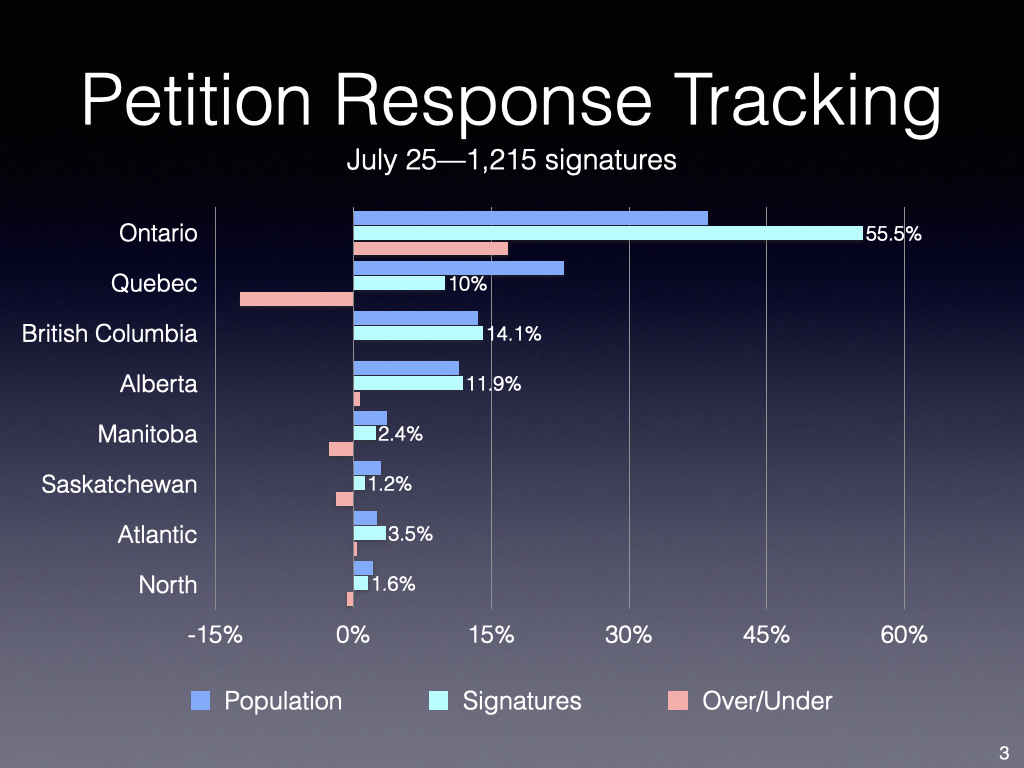
National unity and the demographic weight of Quebec in Canada has become a second major critique. A series of articles in Quebecor papers (LE QUÉBÉC PRIS AU PIÈGE PAR OTTAWA) highlighting an accelerating decline of Quebec’s population relative to the rest of Canada, reflecting different immigration rates has provoked considerable political debate and commentary in Quebec and English Canadian media.

While the Quebecor were written in an incendiary manner, the substance was correct. The approaches continue to diverge, there is, IMO, an unhealthy consensus in favour ot the current and projected levels of permanent and temporary migration among federal and provincial politicians, business organizations, academics among others.

Some of the commentary recognized that. Stuart Thompson the The Hub, A new era of immigration politics has started in Canada was one of the first to recognize the potential importance to immigration debates and discussions. Chris Selley chimed in, noting that Ottawa has no answer to Quebec’s anti-immigrant narrative. Campbell Clark stressed that Two solitudes emerging on immigration in Quebec, and noted the lame arguments on both sides of the debate. Formally, the Quebec government reject[ed] Trudeau’s immigration plan, fears decline of French.

The role of the Century Initiative received increased prominence given that these debates were happening around the time of one of its Globe and Mail sponsored conferences. Immigration Minister Fraser’s denial that the government had not adopted the 100 million population goal of the Century Initiative was met with understandable cynicism by Robert Dutrisac, Blanc bonnet, bonnet blanc, Konrad Yakabuski, L’«initiative du siècle» n’est pas l’idée du siècle among others, along with more reporting and analysis, Serons-nous vraiment 100 millions de Canadiens en 2100?.

English media commentary focussed more on the politics, with Chantal Hébert asking whether Hébert: Quebec’s separatists were searching for a way to revive their cause. Is this it? and Konrad Yakabuski, another rare journalist who writes in both English and French media, noting that François Legault’s anti-immigration crusade is coming back to bite him. Andrew Phillips in the Star dismissed Quebec concerns, framing it as a Panic attack in Quebec over immigration threat. Althia Raj, also in the Star, argued that: Pierre Poilievre is courting voters by capitalizing on immigration fears in Quebec, both discounting the substance of Quebec concerns and not questioning the federal government approach.

And of course most English language was focused on the less important issue of the passport redesign (not a fan, but my worry is that the controversy will make the government even more skittish about releasing the revised citizenship guide, Discover Canada, first promised in 2016).

Surprisingly, Andrew Coyne focussed more on Quebec, politics and demography, rather than contributing his usual economic take on issues. Almost a childish approach in 100 million Canadians by 2100 may not be federal policy, but it should be – even if it makes Quebec howl, largely ignoring the negative impacts on housing, healthcare and infrastructure and, more bizarrely, falling into the trap of overall GDP rather than productivity and per capita GDP (which most of his economic-related columns focus on).

All this being said, the Quebec government took advantage of the controversy to announce changes to its immigration program Six éléments à retenir des annonces de Québec en immigration, including increased levels to 60,000 new permanent residents while allowing ongoing temporary resident growth. This slight-of-hand was of course noted by Michel David, Et la lumière fut and Plus d’immigrants pour éviter une « louisianisation » ici ? 

This modest increase will not, of course, make any significant change to the ongoing divergence in population growth between Quebec and the Rest of Canada and Quebec’s relative weight in the country.

A recent Statistics Canada study, Unemployment and job vacancies by education, 2016 to 2022, highlighting the disconnect between immigration policy, which favours university-educated immigrants, and immigrant employment, which favours lower-skilled immigrants, provides another example of how our immigration policies appear more to be “policy-driven evidence” rather than “evidence-based policy.”

Questions on immigration levels have broadened from housing, healthcare and infrastructure impacts to the impact on the Canadian federation given the imbalance between Quebec and the Rest of Canada. A potential sleeper issue, parallel to Quebec’s relative share of the population is with respect to Indigenous peoples, given that high immigration levels dwarf Indigenous growth (visible minorities increased by 26.5 percent, Indigenous peoples by 9.4 percent, 2021 compared to 2016).

As I have argued previously, we need to find a way to have more productive discussions on immigration rather than the various solitudes between the “more the merrier” and “great replacement” camps (where most Canadians are). The disconnect between Quebec and the Rest-of-Canada is a long-term threat to the federation.

A focus on the practicalities – housing, healthcare and infrastructure impacts – is likely the best way forward and may provide a means to reduce the divergence between the “two solitudes.”

Ideally, of course, some form of commission examining demographics, immigration, and these impacts would provide deeper analysis and recommendations than current IRCC consultations or any other internal review.

To end with a quote from another favourite musician of mine:

Ring the bells that still can ring
Forget your perfect offering
There is a crack, a crack in everything
That’s how the light gets in

ICYMI: How well is the government meeting its diversity targets? An intersectionality analysis

As you know, I have been looking for some time at how the diversity within the public service continues to evolve. The overall trend over the years demonstrates that the original policy objectives of improved diversity are being met but arguably too slowly for some.

For the past six years, TBS has provided disaggregated data for the various equity groups. In 2022, TBS also provided gender breakdowns within the disaggregated data. Following up on a suggestion from a member of Black Lives Matter, I looked at hiring, separation and promotion rates for visible minority and Indigenous groups, showing that visible minority representation is growing faster than non-visible minority, not indigenous, with a more mixed picture for Indigenous public servants.

When originally published by National Newswatch and subsequently posted on LinkedIn, the analysis received a range of commentary, ranging from this who appreciated the data and analyis to those who contested it. The latter ranged from those genuinely interested in discussing the approach I took while raising valid points (I learned more about disproportionately analysis), to those, “activists on a pension,” as we sometimes called them while working in the multiculturalism branch at Canadian Heritage.

The latter appeared to have not read the article or understood that I had used the same disproportionality approach to assess the differences between hiring, separation and promotion rates, highlighting the improvements over the past six years, particularly but not exclusively, for Black public servants. Media needs to be more careful in citing individual examples without this broader context (e.g., Sandra Griffith-Bonaparte has worked 22 years for the government. She’s never gotten a promotion):

COVID-19 Immigration Effects – March 2023 update

Latest monthly update. Of particular interest, percentage of TR2PR of permanent resident admissions continues to remain around 60 percent for the first quarter. Two-step immigration as the norm.

Blogging break for a few weeks

Scofield: Believe it or not, Canada’s population will hit 40 million in June. It’s time we learned how to retain newcomers [IMO, also question levels and impacts]

Disappointing in that Scofield doesn’t question some of the assumptions behind the immigration levels and their support by the business community, education institutions and others. So much easier to turn up the immigration dial, so much harder to address housing, healthcare and infrastructure needs:

Canada’s population is about to break the 40 million mark this June.

Chief Statistician Anil Arora took to the stage last week to illustrate Canada’s surging society, and that number was his starting point for a very good reason.

Canada’s population is growing quite quickly by historical standards and compared to the rest of the world, and almost all of that growth is thanks to immigration. At the same time, it’s important to note that in any given year, there are thousands of Canadians who leave the country — either permanently or temporarily. You can actually see it happening in real time, thanks to a “population clock” built by Statistics Canada, which shows a couple thousand people per day coming into Canada mainly as immigrants or non-permanent residents.

And what’s true for the country is even more so for the GTA, the centre of the country’s vibrant and dynamic diversity.

The implications are far-reaching and profound, as Arora pointed out in the prestigious, annual Manion lecture to public servants — especially for the economy.

To make the obvious point, it’s essential that policymakers and employers alike anticipate the change coming at us, and make the most of it. That’s not lost on any employer desperately trying to fill job postings these days, nor is it lost on our political leaders.

Immigration Minister Sean Fraser and his entourage are travelling the country, looking for bold ideas for the long term, practical ideas for the short term, and tight timelines to deliver a new vision to his colleagues in cabinet.

At stake is our standard of living, our ability to compete with other countries, our regional development and, importantly, our ability to get along with one another.

Here are a few more numbers to add to Arora’s headline.

Last year, permanent residents coming into Canada reached a historic high, and the same goes for temporary workers. In other words, Canada has a healthy flow of people moving here for the long term, along with a more haphazard intake of stopgap workers whose future is uncertain.

Employers are scrambling to fill more than 731,000 positions right now, but this is down from the one million job vacancies that dominated the news last fall. The vacancies reflect an underlying labour shortage in Canada as the population ages and retirements pile up. But layered on top of that is an expected shorter-term slowdown in hiring as the country’s employers grapple with rising interest rates and stagflation.

House prices in the GTA were up four per cent in April but down 7.8 per cent from a year ago. Similarly, the volume of sales was up nine per cent on the month, but down 5.2 per cent compared to a year ago. In other words, Toronto homes are really expensive and the market is very much in flux. It’s a confusing array of short-term mismatches and long-term demographic trends that require a nuanced approach, if the country’s economy is to set itself on a growth trajectory.

There’s no doubt that we need a growing labour force over the long term, and that immigration is the source of that growth. There’s also no doubt that business leaders routinely list labour supply as their top challenge, and they’re constantly reassessing the mix of skills that they need. There’s no doubt that the challenge of expensive housing repeatedly throws a wrench in the best-laid plans. And there’s also no doubt that Canada’s reputation as a magnet for the world’s best and brightest is under pressure because other countries are mirroring our approach and taking us on.

Canada has fallen behind on key issues that impact our reputation, including administrative backlogs, inadequate housing, and poor recognition of foreign credentials. In the 2022 Global Talent Competitiveness Index, Canada fell to 15th place — down from 9th place in 2015, with its lowest scores for immigrant retention. 

Helpfully, the federal government separates out the “acute” short-term dynamics from the “chronic” longer-term pressures and is actively talking to business about how to collaborate and make sure the mix of newcomers adds to our ability to build homes, fill job vacancies and set the stage for longer-term productivity.

There’s talk of fast-tracking the flow of newcomers attached to trusted employers and trusted institutions such as universities. There’s creative thinking around how large-scale employers can work together to recruit pools of workers overseas. The discussion with professional organizations to streamline credential recognition is vigorous. And there’s some promising use of technology to speed up approvals in a way that also helps with matching people with jobs and smooths out integration.

And of course, on top of the push for speed and the right mix of workers, Canada’s immigration policy is also about a humanitarian approach to refugees and family reunification, as always.

We’re in the midst of a promising collective brainstorming around how — a brainstorming that will become more complicated in the next months as government drives towards decisions and as the economy slows down.

Luckily, most of the public, the government and business are on the same wavelength in making immigration work well for the economy, and the country as a whole.

Let’s keep that consensus in mind as policymakers and employers figure out how.

Source: Believe it or not, Canada’s population will hit 40 million in June. It’s time we learned how to retain newcomers

Black Class Action Secretariat expressing sharp disapproval of new Canadian Heritage hire for multiculturalism, anti-racism

Suspect this is driven as much by the need to keep the organization and its issues in the public spotlight as substantive concerns. Not a political appointee unlike Amira Elghawaby, the special representative on combatting Islamophobia:

An organization working to eliminate systemic discrimination in Canada’s public service is concerned about a new hire for the Department of Canadian Heritage’s acting director general of multiculturalism and anti-racism.

Melanie Mohammed, a former leadership member at the Canadian Human Rights Commission (CHRC), took on the job at Canadian Heritage in April.

The Black Class Action Secretariat (BCAS) is expressing sharp disapproval of the decision to appoint Mohammed to the role, as the CHRC was recently found to have discriminated against its Black and racialized employees.

Mohammed’s hiring came less than a month after Treasury Board made a ruling that the CHRC, the mandate of which is to deal with complaints of discrimination, had itself breached the “no discrimination” clause of a collective agreement between the Treasury Board and the Association of Justice Counsel, the bargaining agent for approximately 2,600 lawyers employed by the government.

BCAS executive director Nicholas Marcus Thompson said last month that the appointment of Mohammed, who was the CHRC’s chief of staff, is “disturbing” and “reckless” as it sends a message to Canadians that there is no accountability or consequence for discrimination.

“If the government has moved an employee from an organization that was deemed to be discriminatory to now an even bigger organization to address anti-racism, it’s not only hypocritical, but it’s a farce,” Thompson said. “There’s zero credibility in this type of leadership.”

The role of the director general of multiculturalism and anti-racism is not only to provide funding to organizations led by Black and racialized people but to address racism and hate through federal multiculturalism and anti-racism strategies, including Canada’s Anti-Racism Strategy and the Federal Anti-Racism Secretariat.

“Employees report being harassed and facing retaliation from Ms. Mohammed after speaking up,” a statement from BCAS stated. “Therefore, it is completely unacceptable for the Government of Canada to appoint this individual as Director General of anti-racism for the entire government.”

This newspaper reached out to Mohammed, who declined to comment on the matter via her lawyer.

Dominique Collin, a spokesperson for Canadian Heritage, said in an email statement last month that the department was taking BCAS’ statement “very seriously” and was looking into the organization’s concerns.

“We remain committed to improving the experiences of Black public servants, but while progress is being made, we know there is still more to do to make our workplaces inclusive and equitable for all equity-seeking employees,” Collin said.

Canadian Heritage confirmed Monday that Mohammed remains in the position.

Thompson added last month that he’d like to see the prime minister take ownership of the issue, and re-affirmed his concern about the lack of accountability within the government in an address to the Senate last week regarding anti-Black racism, sexism and systemic discrimination in the CHRC.

“We have this vicious cycle within the federal public service where there’s no accountability, wrongdoers are often either transferred when it comes to discrimination or promoted,” Thompson told the Senate.

In its statement, BCAS called on the government to rescind Mohammed’s appointment and issue an apology. The group also urged the feds to appoint someone with no connection to CHRC’s leadership and who has demonstrated “an understanding of systemic anti-Black racism.”

BCAS said the appointment also speaks to the “urgent need” to transfer the Federal Anti-Racism Secretariat to the Privy Council Office in order for it to have independence and power to implement its mandate.

The organization also called for Mohammed’s appointment to the Federal Executive Leadership Development Program to be revoked and said it would like to see the government mandate that senior Canadian Heritage executives undergo anti-Black racism training and meet with Black employees and address their concerns within the department.

“This appointment is completely counter to the government’s promise and commitment to create a diverse and inclusive workspace that is free from discrimination and harassment,” Thompson said.

Source: Black Class Action Secretariat expressing sharp disapproval of new Canadian Heritage hire for multiculturalism, anti-racism

Roberge juge intolérable que des immigrants temporaires ne parlent pas français

Well, they’re temporary unlike permanent who have a much greater incentive. And legitimate concerns regarding the impact of high immigration levels in the rest of Canada compared to more modest levels in Quebec (set by the Quebec government):

Le ministre de la Langue française, Jean-François Roberge, juge intolérable que des milliers d’immigrants temporaires vivent au Québec en n’ayant aucune notion de français. Certains de ces travailleurs venus d’ailleurs veulent pourtant apprendre le français, mais Québec doit leur offrir des cours, si possible en milieu de travail, estime le président de la Chambre de commerce du Montréal métropolitain (CCMM), Michel Leblanc.

Plus de 290 000 immigrants temporaires se trouvaient en sol québécois au 31 décembre 2022, selon le ministère de l’Immigration, de la Francisation et de l’Intégration (MIFI). Il s’agit notamment de travailleurs et d’étudiants. Ces gens ne sont pas obligés d’apprendre le français, parce qu’ils viennent au Québec pour de courts séjours — qui peuvent tout de même s’échelonner sur plusieurs années. Certains souhaitent aussi devenir résidents permanents.

Ces gens travaillent entre autres dans les commerces, dans les cafés ou dans les restaurants de Montréal. Ils changent le visage de la métropole en ne maîtrisant pas la langue nationale du Québec. « On ne peut pas tolérer qu’ils anglicisent le Québec », a déclaré le ministre Roberge lors d’une conférence organisée par la Chambre de commerce du Montréal métropolitain, lundi midi.

Le président et chef de la direction de la CCMM, Michel Leblanc, a salué la volonté du gouvernement d’aider les immigrants temporaires à se franciser. Il affirme que plusieurs entreprises (en technologies de l’information ou en aéronautique, par exemple) souhaitent garder leurs travailleurs temporaires.

« Il y a des gens qui travaillent fort, qui viennent d’arriver, parfois avec des enfants, des femmes ou des maris, qui veulent s’intégrer. Il faut leur faciliter la vie. Si on blâme l’immigrant, on perd de vue que notre système n’est pas assez accommodant pour son horaire, pour sa réalité », dit M. Leblanc.

Comme le faucon pèlerin

L’organisme Francisation Québec, qui entrera en fonction le 1er juin, est susceptible de faciliter l’apprentissage de la langue nationale de tous les nouveaux arrivants, y compris ceux issus des programmes temporaires, a fait valoir le ministre Roberge.

Le ministre québécois de la Langue française était invité par la CCMM avec son homologue fédérale, Ginette Petitpas Taylor, après leur entente historique visant à améliorer la protection du français au Québec. La ministre fédérale des Langues officielles a déjà reconnu, avec le projet de loi C-13, « qu’une seule des deux langues officielles est en déclin au Canada, y compris au Québec ». Et cette langue est le français.

Mme Petitpas Taylor a remis à son « ami » Roberge un faucon pèlerin en peluche, pour témoigner qu’il est possible de freiner le déclin d’une espèce vulnérable. Les deux ministres s’étaient entendus en mars dernier pour que le gouvernement Trudeau renforce le français au Québec. Il s’agit d’un geste impensable jusqu’à récemment, car Ottawa a généralement pour mission de protéger les minorités linguistiques, dont celle de langue anglaise au Québec.

Le projet de loi C-13 obligera notamment les entreprises sous réglementation fédérale au Québec à se conformer à la Charte québécoise de la langue française. La langue de travail devra être le français ; il sera aussi obligatoire de pouvoir servir les clients en français. Tout indique que ce projet de loi sera adopté cette semaine par la Chambre des communes.

Immigration francophone

Le ministre Jean-François Roberge a appelé les sénateurs canadiens à sanctionner par la suite le projet de loi « sans le passer à la lessive », en maintenant la référence à la Charte québécoise de la langue française.

Le ministre Roberge a pressé Ottawa d’établir des cibles ambitieuses d’immigration en français. Il dénonce l’« initiative du siècle » visant à faire grimper la population canadienne à 100 millions de personnes en 2100. « J’ose nommer la question de l’immigration massive. Certains appellent ça l’initiative du siècle. Pour moi, c’est la lubie du siècle de penser qu’on peut, de manière démesurée, perdre le contrôle de nos seuils d’immigration. Ce n’est pas bon pour le Québec et ce n’est pas bon pour la francophonie canadienne », a-t-il dit.

La ministre Ginette Petitpas Taylor, une francophone du Nouveau-Brunswick, a reconnu l’importance d’augmenter l’immigration francophone au pays, y compris au Québec.

Source: Roberge juge intolérable que des immigrants temporaires ne parlent pas français

How Trump’s Anti-Immigrant Rhetoric Crushed Crowdfunding for Minority Entrepreneurs

Another interesting study. Words matter:

What does fearmongering about immigration have to do with crowdfunding new ideas on Kickstarter?

For Black, Asian, and Hispanic entrepreneurs, such rhetoric can undermine fundraising efforts, making it even less likely that new ideas will come to fruition, argues Harvard Business School Professor William Kerr. In a new paper, Kerr and his collaborators shed light on how discrimination affects fundraising, and ways crowdfunding sites, entrepreneurs, and investors can take action.

Minority business founders already typically face a fundraising disadvantage compared to their white counterparts, but that gap triples during periods of high public anxiety over immigration in the United States.

“WHEN THERE IS THE GREATEST ANXIETY, WE SEE THIS FUNDING SHORTFALL.”

Banks have historically rejected loan applications from Black, Asian, and Hispanic small-business owners at higher rates than for whites, according to Federal Reserve data, potentially driving some to alternative sources of capital, like Kickstarter and other crowdfunding sites. The pullback in support noted in Kerr’s research is national in scope, taking place in cities like Seattle and New York, with reputations as progressive bastions, as well as in more conservative-leaning locales.

“When there is the greatest anxiety, we see this funding shortfall,” says Kerr, the D’Arbeloff Professor of Business Administration. He cowrote the paper with John (Jianqui) Bai, an associate professor of finance at Northeastern University, and Chi Wan and Alptug Yorulmaz, associate professor and graduate research assistant, respectively, at UMass Boston.

Measuring fear during the Trump era

The paper looks closely at two different sets of data. The first is the Migration Fear Index, which counts the number of newspaper articles that include at least two terms associated with the debate over immigration, such as “migrant, asylum, refugee,” and “human trafficking,” as well as “anxiety, panic, bomb, crime, terror, worry, concern,” and “violent.”

Kerr and collaborators then compared the quarterly fluctuations of the Migration Fear Index from 2009 to 2021 to efforts by minority entrepreneurs to raise money on Kickstarter, which has raised $7.3 billion for popular projects such as opening restaurants and publishing comic books.

“YOU CAN COMPARE QUARTERS WITHIN THE SAME YEAR AND FIND THE CONNECTION BETWEEN THE HOSTILE RHETORIC AND GREATER DIFFICULTY IN FUNDRAISING FOR MINORITY CREATORS.”

The fear index surged when former President Donald Trump, with a barrage of anti-immigrant rhetoric, launched his first campaign in 2015, and continued speaking disparagingly of immigrants through his first year in office. Overall, minority entrepreneurs were less likely to meet their fundraising goals during periods like this of high anxiety over immigration, the study finds.

“You can compare quarters within the same year and find the connection between the hostile rhetoric and greater difficulty in fundraising for minority creators. You can also follow individual minority creators over time and see ups and downs in their rates of success,” Kerr says.

Certain groups feel it more

The heaviest impact was felt by groups that found themselves the most frequent targets of hostile rhetoric.

Hispanic entrepreneurs or creators suffered the sharpest pullback in support from financial backers on Kickstarter during the 2016 election cycle, while Chinese ethnic creators in the US faced a harder time meeting their financing goals during “episodes of Asian hate,” including Trump’s use of the phrase “Chinese virus” to describe COVID-19.

By contrast, while Black entrepreneurs had lower success rates overall in raising money, support did not fluctuate as dramatically with the ups and downs of the Migration Fear Index.

The paper finds that even during periods of low anxiety, minority creators are 2.4 percent less likely to achieve their fundraising goals on Kickstarter. But during periods of higher anxiety, minorities experience an 8.2 percent lower success rate.

Where and why it’s happening

Meanwhile, Kerr and his co-authors considered—then knocked down— several different theories for the decline in support, including the idea that funding support from minority communities may be pulling back during times of heightened tension around immigration or that creators might be posting different types of projects.

Rather, the evidence points to another hypothesis, that spikes in anxiety over immigration trigger a broader, nationwide retraction of support among backers of Kickstarter projects. Most backers are white, the study contends.

The decline in support for minority creators during increases in the Migration Fear Index are most pronounced in conservative counties. But Kerr and collaborators “also find sizable impacts in very liberal counties,” according to the paper.

“A majority of financial backers for typical Kickstarter campaigns live more than 50 miles away from the creator they support, tending to reside in big cities like Seattle and New York,” the researchers note.

Drawing lessons from the data

The report builds upon previous research on “systemic racial bias in entrepreneurial finance,” illustrating a “more direct” connection between shifts in public attitudes and struggles experienced by minority creators in raising money for new ventures, Kerr and his co-authors write.

Still, the study does not have data on potential backers who looked at pitches by minority entrepreneurs, only to take a pass on their proposals. That, in turn, made it hard to draw any conclusions on whether these decisions by white backers were driven by conscious racism, unconscious racism, or a combination of the two, according to Kerr.

However, there might be ways for Kickstarter and similar platforms to offset or at least mitigate some of these tendencies and trends.

Minority entrepreneurs are less likely to have projects promoted as “staff picks” on Kickstarter during period of hostile rhetoric, which is not the case normally. That is likely driven by the algorithms used, which tend to pick up on momentum, Kerr says.

Given this research, platform operators could keep an eye out for this trend and look at ways of compensating for it in the algorithm, Kerr explains.

“One of the hopes for crowd funding is that it will democratize access to capital from those previously excluded,” the authors write. “Prior work has shown that discrimination still exists on crowd-funding sites … we take a step further in understanding how minority creators can suffer acute funding shortfalls in moments when anxiety over immigration is high.”

Source: How Trump’s Anti-Immigrant Rhetoric Crushed Crowdfunding for …

Les experts avec un accent sont jugés moins crédibles

Interesting study:

Les accents étrangers influencent grandement l’opinion qu’on se fait des nouveaux arrivants et des experts, suggèrent les résultats d’une nouvelle étude. Le fait d’avoir un accent et d’être issu d’une minorité visible « entrave » la possibilité d’être perçu comme légitime, digne de confiance ou même crédible.

Cette étude confirme ainsi d’autres études au Québec sur les barrières à l’emploi et sur la « glottophobie », une forme de discrimination linguistique qui inclut l’accent. Il est déjà connu que la couleur de peau, la religion ou le genre des experts influencent l’opinion qu’on s’en fait. Cette fois, « le point de départ est la discrimination basée sur l’accent », précise le professeur Antoine Bilodeau. Il a notamment mené cette enquête avec son équipe de l’Université Concordia et en présentera les conclusions au congrès de l’Acfas cette semaine.

« On connaît bien le concept de minorité visible, mais beaucoup moins les minorités audibles », affirme ce spécialiste en science politique et en intégration des immigrants. Les résultats actuels montrent que le fait d’avoir un accent étranger, combiné ou non avec le fait d’être racisé, « entrave la possibilité » d’être perçu comme un expert légitime, digne de confiance et même crédible.

Les chercheurs ont demandé à 1200 personnes dans chacune des provinces d’évaluer la crédibilité d’un expert à partir d’une photo et d’un enregistrement audio. L’effet de l’accent est indéniable dans tous les cas de figure soumis au sondage, mais il n’est pas le même au Québec qu’en Ontario.

Chaque répondant au sondage ne voyait qu’une vignette, soit un homme blanc ou noir, puis entendait cette personne parler une seule fois des changements climatiques et de la taxe sur le carbone. Au Québec, cette voix avait soit un accent québécois, ou un accent de type Europe de l’Est ou encore de l’Afrique de l’Ouest (du Togo). En Ontario, c’était plutôt un accent anglophone assez neutre, puis les mêmes accents étrangers.

Ni la « provenance » de l’accent, ni le but de l’évaluation, n’étaient révélés au répondant, précise M. Bilodeau, « puisqu’on voulait que les gens interprètent eux-mêmes cet accent ». On demandait ensuite de juger la crédibilité de l’expert sous plusieurs angles : l’éloquence de son message, sa compétence et son professionnalisme. « Est-il convaincant ? Est-il digne de confiance ? », exemplifie aussi le professeur

Dépend de la conception du « nous »

Au Québec, l’effet de l’accent étranger était plus grand pour la personne non racisée. En Ontario, il était plus « punitif » chez l’expert racisé. « C’est peut-être là, la spécificité québécoise : la langue est tellement centrale que dès qu’on voit une personne blanche on s’attend à ce qu’elle ait le même accent », avance M. Bilodeau.

Il existe ainsi un « effet de surprise » qui contredit cette attente et affecte négativement la perception. Inversement, l’expert racisé avec un accent québécois est celui qui obtient le score le plus haut en termes de crédibilité.

Une minorité visible qui a ou adopte l’accent local est en quelque sorte « récompensée », selon ces résultats. « C’est comme si le fait qu’il ait un accent de la majorité [québécoise] venait désamorcer une anticipation de distance. Ça rapproche tout à coup le répondant de l’expert en train de parler », propose comme hypothèse le chercheur.

« Est-ce que c’est suffisant de parler français, ou faut-il le parler de la “bonne manière” pour faire vraiment partie du groupe ? », réfléchit M. Bilodeau.

L’étude allait justement plus loin pour mieux comprendre la réaction des répondants, selon leur propre conception de ce qui forme leur groupe d’appartenance. Il y avait ainsi une série de questions sur les critères importants pour être un « vrai Québécois » ou un « vrai Ontarien » : doit-on être né dans la province, avoir passé la majorité de sa vie dans la province, être blanc, être chrétien, se sentir Québécois ou Ontarien, respecter les lois, etc.

Ceux qui avaient une conception qui exclut davantage de gens sont réagissaient aussi le plus fortement à l’accent chez l’expert blanc au Québec.

Une forme trop socialement acceptable

« L’accent, on n’y pense pas ou on en parle moins », abonde en ce sens Victor Armony, professeur de sociologie à l’UQAM. Dans une étude qu’il a menée à l’Observatoire sur les inégalités raciales au Québec, l’accent figure pourtant au deuxième rang des raisons de discrimination citées par les répondants.

« Je partais d’une sorte d’énigme », décrit-il. Chez plusieurs populations, il persiste des écarts importants de revenus ou de postes pour les mêmes qualifications, même si elles ne sont pas des cibles « directes ou ouvertes » de racisme.

Il donne l’exemple des Latino-Américains : « Il y a parfois des préjugés favorables envers les latinos. On nous trouve chaleureux, on apporte une cuisine, une musique, la joie de vivre, etc. L’autre côté de la médaille : on n’est pas toujours pris au sérieux au niveau intellectuel ou professionnel », explique le chercheur.

Une personne qualifiée, avec un diplôme, « qui fait des efforts considérables pour parler français » et reçue sans hostilité préalable peut tout de même être dévalorisée en raison de son accent.

« C’est l’accent qui fait en sorte que le message devient irrecevable, moins intéressant et parfois laissé de côté », résume-t-il. Arrivé d’Argentine il y a plus de 30 ans, M. Armony l’a lui-même vécu. « C’est le regard moqueur, impatient, méprisant de l’autre qui finit par avoir un impact sur l’assurance, sur l’estime de soi ou dans le goût de s’exposer devant les autres même quand j’ai quelque chose à dire. Alors on finit par se taire et rester à sa place », explique l’homme.

La discrimination linguistique, notamment basée sur l’accent, aussi appelée « glottophobie » est plus insidieuse. « Socialement, la glottophobie n’est pas reconnue comme une discrimination. Alors elle peut servir de prétexte ou d’écran pour cacher une autre forme de discrimination socialement inacceptée », décrit quant à lui le sociologue Christian Bergeron.

À l’instar d’Antoine Bilodeau, mais dans un domaine différent, il note lui aussi une attitude différente selon la perception de soi-même : « Plus un locuteur pense détenir la norme, c’est-à-dire la bonne manière de s’exprimer en français, plus il a tendance à rejeter les autres manières de s’exprimer et parfois même à discriminerl’autre », dit ce professeur à l’Université d’Ottawa.

Plus sournoise ou moins affichée, elle peut néanmoins devenir une barrière réelle à l’emploi, rappelle M. Armony. « On va invoquer par exemple l’idée qu’on a besoin d’une personne qui a “un français parfait”, mais alors on confond la grammaire et la qualité du français du point de vue de l’accent », rapporte-t-il.

La Charte des droits et libertés de la personne du Québec ne nomme pas explicitement l’accent, mais plutôt la langue. Il est toutefois interdit de traiter différemment une personne ou d’avoir des comportements offensants et répétés à son égard en raison de son accent, indique la Commission des droits de la personne et de la jeunesse du Québec.

La France est allée plus loin en 2020, en adoptant une loi qui punit la discrimination fondée sur l’accent avec des peines allant jusqu’à trois ans d’emprisonnement et à 45 000 euros d’amende. « Les minorités “audibles” sont les grandes oubliées du contrat social fondé sur l’égalité », avait alors déclaré l’instigateur du projet de loi, le député Christophe Euzet, lui-même d’une région de France connue pour ses sonorités différentes de celles de Paris.

Source: Les experts avec un accent sont jugés moins crédibles

If you are in trouble abroad, will Canada come get you?

Good realistic explainer featuring the former ambassador to Lebanon:

It was Louis de Lorimier’s first posting as an ambassador for Canada when he arrived in Lebanon in September 2005, after almost a quarter-century in the foreign service.

His appointment came just a few months after then Lebanese prime minister Rafic Hariri was assassinated in a truck bombing, and the relationship between Israel, the militant group Hezbollah and neighbouring Syria was tense.

Political and military skirmishes between the various forces in the region were not uncommon, but de Lorimier didn’t foresee he would be caught at the centre of Operation LION, Canada’s largest international evacuation effort of its citizens to date.

“You did have violence to a certain extent on the border but nothing could suggest that it would go so far,” recalls the retired career diplomat, now a fellow at the Montreal Institute of International Studies.

“Lebanon was a turning point. I think they really got the (evacuation) system much better organized after that.”

In July 2006, after Israel’s military attacked Hezbollah forces in Lebanon to retaliate for the killing and kidnapping of its soldiers, Ottawa came under heavy fire for what some criticized as chaotic and slow response to bring home its citizens stranded in the war zone. By the end of that August, 14,000 Canadians had been evacuated.

Nearly 17 years later, after a civil war erupted in Sudan between the ruling government and a paramilitary group, the Canadian government’s evacuation effort has once again raised the questions of its responsibilities to its citizens abroad and its readiness to save its people from harm’s way.

Last Saturday, Canada ended its evacuation flights to bring Canadians home from Sudan amid escalating violence and deteriorating safety conditions. Over two weeks, of the 1,728 Canadians in Sudan who had registered with the government, more than 400 had been evacuated, with hundreds of others still looking for assistance.

“Canada continues to monitor the situation actively and will continue to provide assistance to Canadians and permanent residents wishing to depart Sudan,” Global Affairs Canada said in a statement on Friday.

“Our officials will keep in contact with those who call on us for help. We will keep in touch using whatever is the most effective way to help them stay safe, be it phone, e-mail or text message.”

De Lorimier said taking care of Canadians abroad has always been a top priority for consular staff, who constantly monitor conditions on the ground and report them to Ottawa.

“One of our responsibilities is to have a plan in place to deal with social unrests and major events of that nature, or it could be earthquakes or natural disasters, and it goes as far as war,” said de Lorimier, who headed the Lebanese mission until 2008 and then served as ambassador to Belgium and Mali before he retired in 2015.

“But what is obvious is that Canada doesn’t have the assets in the region to deal as quickly as we have to deal with a huge crisis.”

There are many variables in an evacuation effort and officials have to constantly negotiate with the local security authorities to seek safe pathways for both Canada’s personnel and citizens alike.

“I think most people do have unreasonable expectations. Sure, your government is there to protect you in every way possible. Obviously, it’s what we try to do. But the government also tells people, ‘Well, you’re responsible for your own safety first and foremost,’” said de Lorimier.

“If you go to a place where there’s social unrest, or even war, well, there could be consequences. There’s only so much we can do. That’s why we have these warnings that in certain countries, you’d better be careful. It’s not that the government doesn’t want to take care of people. But sometimes you have situations where you just can’t.”

The operation in Lebanon was certainly unprecedented in terms of the scale. At the onset of the war, only 1,000 Canadians registered with the embassy, which quickly ballooned to 30,000 a week into the conflict.

Although Lebanon was under complete blockade by the Israelis who bombed the main runway at the airport and blew up its fuel depots, Canada’s strong diplomatic relationships with both countries assured safe pathways to bus its citizens to an evacuation spot and then repatriate them via Cyprus.

In Sudan, however, de Lorimier said Canadian officials are dealing with two warring parties declaring ceasefires that never hold, and there’s a complete breakdown in the rule of law. The only blessing is the main airport in the capital Khartoum seems to be working of late, letting Canada shift its emergency evacuation efforts toward assisted departures through commercial transportation to exit the country.

Still, de Lorimier said there still could be a lot of uncertainty.

For example, on the first day of the Lebanese evacuation, the Canadian government had initially secured six ships to each carry 250 people out of the Lebanon’s main port. However, at the last minute, the Turkish company that loaned the boats was not satisfied with the security assurances and decided to send just one ship.

“We had prepared more than 1,000 people to evacuate. That’s when the press reported in Canada that the operation was a mess. We got really bad press. Some people were complaining that we left them out in the sun and they didn’t have water and they didn’t have food. It was quite something,” recalled de Lorimier, who didn’t sleep for weeks then and was running on his adrenalin.

“We almost had a catastrophe because we had this 1,000 people that were waiting in a room. We weren’t expecting to give them room and board for a night. So you can imagine kids running around and older people, and we didn’t even have enough restrooms.”

Canada recognizes dual citizenships and dual citizens are treated equally as their Canadian-born peers, but the Lebanese evacuation led to a public debate about whether these individuals’ birth country or adopted country is actually responsible for them.

“If there’s a problem, is it not logical that he be supported by his birth country before being supported by the consular service of Canada, his country of adoption?” asked de Lorimier. Yet in the end, “anyone that had Canadian papers was evacuated.”

The evacuation effort would end up costing Canada $94 million, which also prompted prime minister Stephen Harper’s Conservative government in 2009 to restrict the passage of Canadian citizenship by descent to the first generation of Canadians born overseas.

In its post-mortem of the Lebanese operation, the Canadian Senate, made many recommendations, including urging Foreign Affairs officials to review and ensure adequate resources to missions in countries where the size of the Canadian population and regional risks are high.

In hindsight, de Lorimier said he felt the Lebanese operation was provided with proper resources, with 200 Foreign Affairs staffers redeployed from outside Lebanon to assist with the evacuation, along with additional immigration and military personnel.

“People will always say there’s not enough resources. That’s a tricky question. We evacuated 15,000 people and everybody made it … no casualties,” he noted.

“The first responsibility lies with you. You have to know what you’re getting into and where you’re going in terms of security, military and war and even tsunamis or earthquakes. There’s so many risks that you have to figure out and decide if you want to take the risk.”

Source: If you are in trouble abroad, will Canada come get you?