While I was away: Multiculturalism and Identity

Some multiculturalism articles other than on antisemitism:

Christopher Dummitt: Nothing says generic left-winger like getting an honorary degree

Useful analysis:

…Is this a conspiracy? Probably not. But it is a textbook case of systemic bias. Universities are populated overwhelmingly by people who share a homogeneous worldview. They are the ones nominating candidates. Those nominations are then filtered through committees explicitly instructed to favour recipients who embody progressive DEI values.

Imagine the reverse. If universities leaned right and committees were instructed to favour those who champion conservative conceptions of social order, Stephen Harper would top the list. Former Saskatchewan premier Brad Wall and former cabinet minister Rona Ambrose would follow. But the more revealing cases come further down. If Desmond Cole can receive an honorary degree, why not Jonathan Kay — journalist, former editor of the Walrus, and a genuine contributor to Canadian public debate? Why not Brian Lee Crowley, founder of the Macdonald-Laurier Institute, or Mark Milke, founder of the Aristotle Foundation? These are precisely the kinds of public intellectuals — fighters for their conception of a just society — that universities celebrate on the left. Why not the right?

To be more provocative, but no more so than in the cases of Cole or Rebick: why not former Harper advisor and academic Tom Flanagan? Or John Carpay, whose legal challenges to COVID-19 restrictions represent exactly the kind of principled dissent that universities seem to admire — at least when it comes from the left.

All of these figures are at least as accomplished as many being honoured this year. Many believe deeply in social justice — just with different assumptions about what “just” means.

When Zak Patterson and I published research showing the political composition of Canadian universities some years ago, one of the most striking responses came from those who insisted our numbers were wrong and our surveys flawed. A clearer case of motivated reasoning would be hard to find.

But if hard data on the political beliefs of university faculty isn’t convincing enough, just attend a convocation ceremony this spring. The ideological skew will be on full display — one last kick in the teeth for any non-leftist student or parent. You thought tuition was too high? Here’s one more insult on your way out the door.

McWhorter: A Black Helen of Troy? Fine. A White Obama? Not Yet.

Of interest:

Plus, white actors playing Black figures in “blaccents” of various degrees would verge on minstrelsy. It’s one thing that Black British or African actors such as Idris Elba and Thandiwe Newton do American blaccents in roles (and uncannily well). But Reese Witherspoon or Steve Carell? Um — no.

Or, at least, not now. It would be tragic to expect our current sensibilities to be permanent. If we are truly making progress, then we have to allow that the past becomes history, power relations change, and minstrelsy is too antique to be relevant to our current existences.

In some future time we should have no problem with a talented white man playing the lead in “A Raisin in the Sun,” a white woman cast as Representative Barbara Jordan, or white people singing in “Porgy and Bess.” I didn’t say tomorrow — but sometime.

Whites already talk ever more like Black people, dance ever more like Black people, greet one another ever more like Black people, marry ever more Black people and create ever more half-Black people. There is no reason to assume there is some point at which this melangerie will — or must — halt, regardless of inevitable holdout bigotry. A natural next step would be for white people to be able to portray Black people in performance. Maybe it will be too late for Ryan Gosling to play Barack Obama — but someone like him.

“Everyone expects the Jews to be the only real Christians in this world,” observed the philosopher Eric Hoffer in 1968. That remains true today. Hatred of Israel has become the sty in Western eyes that, as it grows larger, risks making too many people blind.

StatsCan: Preterm births among mothers from racialized groups, 2016-2021

Useful analysis:

Data from the mother-centric data linkages show that:

Compared with mothers aged 25-34, proportions of singleton preterm births were higher for mothers aged 35-39 and 40+ among all racialized groups and non-racialized, non-Indigenous mothers, whereas for mothers under 25, the increase was observed only in non-racialized, non-Indigenous mothers. 

In Canada, the proportions of single births (i.e., singleton births) that were preterm (<37 weeks) were higher among South Asian (6.9%) and Black mothers (6.3%) compared with non-racialized, non-Indigenous mothers (5.5%).

All racialized groups of mothers had higher proportions of extremely and very preterm singleton births (<32 weeks) compared with non-racialized, non-Indigenous mothers.

The proportion of preterm multiple births was more common among South Asian mothers than among non-racialized, non-Indigenous mothers (69.2% vs 58.2%).

The Canadian Armed Forces are right to experiment around recruitment

Nice contrarian and thoughtful discussion compared to the standard outrage largely by right-leaning politicians and media:

…The report was written by the commander of the school responsible for basic military qualifications. It outlined how changes in entry standards, which started in 2022 with the opening of the military to permanent residents, affected training outcomes. The bottom line stood in sharp contrast with the optimism Canadian generals displayed a week prior: the completion rate of basic training declined from a historical average of 85 per cent to 77 per cent. 

These findings sent shockwaves through the defence community, and raised questions around the quality of recruits and future operational effectiveness. But the reaction may miss two key points. First, the report demonstrates that, despite changes in standards to admissions, criteria for success at basic training have not changed. 

Second, the report reflects an important shift toward risk-taking, learning, and adaptation within the military. This is what we want for an organization that wants to win the next war. As retired Australian general Mick Ryan noted in assessing the war in Ukraine, “[a]daptation is THE critical contemporary and future capability for nations and their military organizations to win in war.”

The reality is that any modernization plan must address the critical personnel deficiency that has plagued the CAF for the past 30 years, starting with the poorly managed drawdown of the 1990s. Its effects have been crippling and wide-ranging; contributing to low readiness rates among units and systems, poor morale, high attrition rates, and the delayed transition to new capabilities. Without a robust pool of military personnel to fill existing skill deficiencies, as well as emerging ones as the CAF introduces new capabilities, any effort to create a modern fighting force will continue to stall. Thus, innovation in how the military recruits and trains is an essential element towards this objective.

Immigrants less likely to support freedom of gender expression than people born in Canada: StatCan

Of interest:

…The findings, published in Statistics Canada’s Juristat, were based on self-reported data from the 2018 and 2025 Survey of Safety in Public and Private Spaces (SSPPS). The survey examined how attitudes toward gender-related issues have changed over time.

When it came to gender expression, people born in Canada were more likely to agree with statements supporting people’s rights to gender expression than those born elsewhere.

The survey found that 80 per cent of women and 71 per cent of men born in Canada agreed that individuals should be able to express their gender however they choose, compared to 70 per cent of women and 67 per cent of men born outside the country.

In addition, a larger proportion of First Nations women (82 per cent) than non-Indigenous women (77 per cent) supported people’s right to express their gender.

The survey also found that support people being able to express their gender however they choose has declined in recent years.

The percentage of women who agreed that people should have this right decreased from 85 per cent to 77 per cent between 2018 and 2025, while support among men dropped from 78 per cent to 70 per cent.

A Muslim wage gap? New study exposes major economic disparities in Greater Toronto and Hamilton

Would be more useful if the tables did not just have the dichotomy between Muslim and non-Muslim for compare for all religious groups. When I did an intersectionality between religious affiliation, visible minorities status and citizenship (all of Canada), it indicated that there was a gap across most visible minority groups.

Muslim Canadians in the Greater Toronto and Hamilton Area earn less and face greater unemployment and poverty compared to non-Muslims despite higher education levels, gaps that a new report suggests are rooted in systemic racism and Islamophobia.

Overall, 51 per cent of Muslims in prime working age who are employed full time hold post-secondary degrees, compared to 40.5 per cent among non-Muslims, according to data extrapolated from the 2021 census.

Yet they had a median employment income of $61,000, $12,000 less than their non-Muslim counterparts. The aggregate annual income loss could amount to $1.2 billion a year, said the report, which offers a rare glimpse at the economic well-being of a religious minority in Canada. …

Black reps left off federal advisory council on rights, equality and inclusion

Not unexpected and from the usual advocates:

Advocates are calling for Black representation and a more inclusive mandate for the federal government’s new Advisory Council on Rights, Equality and Inclusion.

The calls follow the federal government’s announcement on June 1 of the new advisory council that did not include Black representatives.

Advocates also slammed the federal government for neglecting to include anti-Black racism in the council’s mandate.

“Anti-Black racism was not explicitly identified. At some point, omission becomes difficult to distinguish from indifference,” Nicholas Marcus Thompson, co-chair of the National Employment Equity Council, told reporters in a news conference on June 4.

Indigenous

Aaron Pete: Criminalizing residential school ‘denialism’ won’t help reconciliation

Not the mainstream Indigenous perspective but a valuable one:

A healthier path would be more demanding, but also more democratic: better education, better records, more transparency, more excavation where appropriate, more serious journalism and more honest public dialogue, all carried out in a spirit of kindness, which is the Canadian way. We should confront hatred firmly without turning every difficult or uncomfortable question into a potential criminal matter.

Reconciliation will not be advanced by fear. It will be advanced by truth, humility and mutual responsibility. Canadians should not prejudge one another or assume the worst of intent. This is our shared country, and we all have a duty to seek truth, guard against government overreach and debate complex issues civilly.

The history of residential schools deserves seriousness. So does freedom of expression. A confident democracy should be able to protect both.

Aaron Pete is Chief of Chawathil First Nation in B.C.’s Fraser Valley.
Advocates push for ‘central tracking’ of job cuts by equity group as union warns public service gains at risk

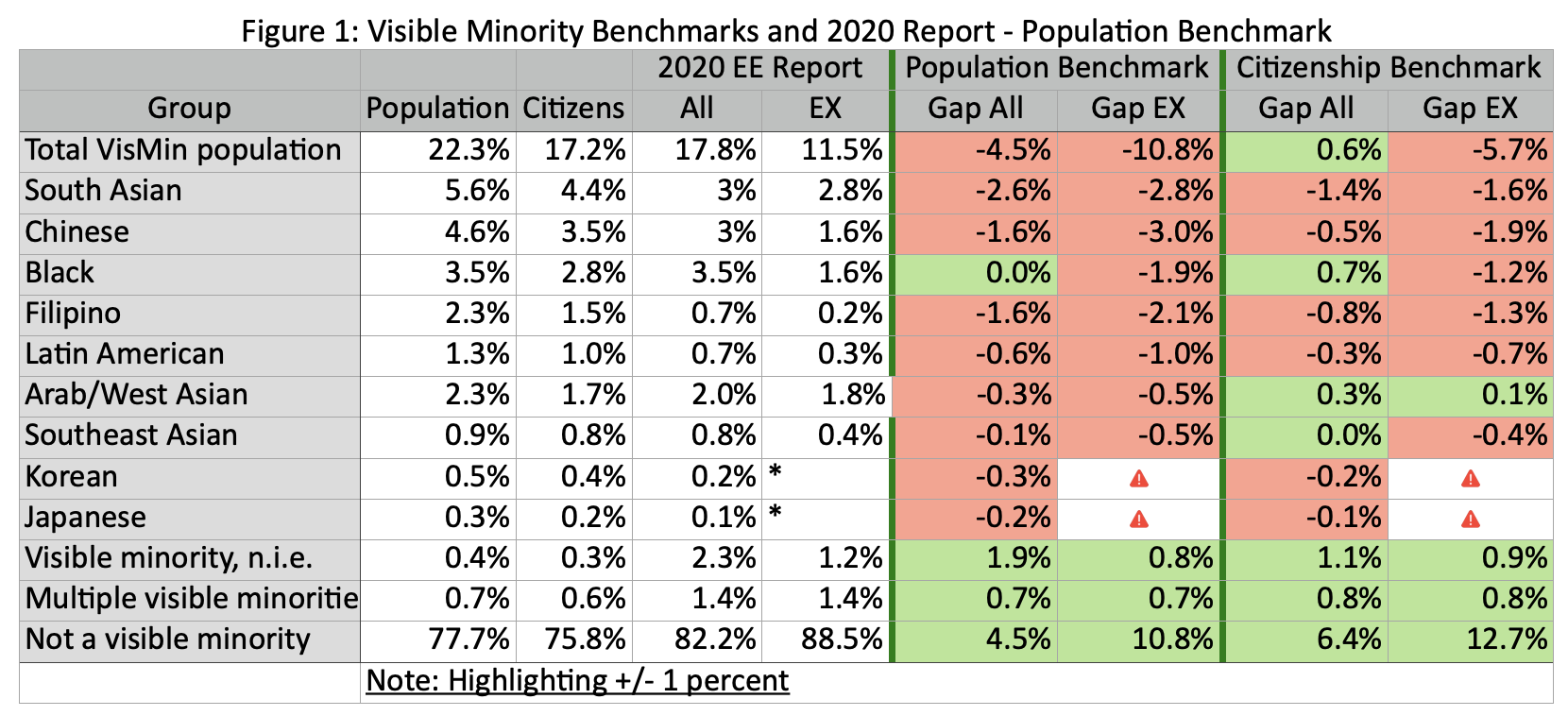
Have forthcoming analysis of the 2024-25 EE desegregated data, representation, hirings, separations, promotions that demonstrates that no negative impact compared to the previous year. So warnings may be overstated and public service may already considering equity impact:

As the public service moves to shed thousands of jobs, unions and a newly formed national coalition say equity gains may be more fragile than they appear, and warn leaving departments to monitor representation creates a “serious gap” in tracking where the cuts fall.

The federal public service entered 2026 looking more representative than it did a decade ago, according to the government’s latest Employment Equity Annual Report. The March report showed racialized workers made up 23.9 per cent of the core public administration in 2024-25, slightly above the 22.7 per cent workforce-availability benchmark. Black employees accounted for 5.1 per cent of the public service, up from 2.8 per cent in 2016-17.

Unions and advocates say the latest report can offer a useful snapshot, but it may not fully capture if employment equity efforts have been damaged. Their concern is less about whether the public service still looks representative on paper than about which workers are most exposed as job cuts deepen.

A newly formed group, the National Employment Equity Council, is calling on the government to require mandatory equity impact assessments before any further staffing decisions. Nicholas Marcus Thompson, its co-chair, warns the government’s current approach means signs of inequities tied to job losses may arrive “too late.”

Though departments have sent workforce adjustment notices tied to 17,000 job cuts, the federal government has not publicly released data to show if equity-seeking groups will be affected….

Andrew Griffith, a former senior federal official who has analyzed Treasury Board employment equity data for years, said the latest data does not support the conclusion that racialized public servants are being disproportionately harmed.

Representation of visible minorities rose slightly in 2024–25, while hiring rates for visible minorities and Indigenous staff remained above their internal representation.

Still, advocates say the TBS response to The Hill Times suggests a worrying approach.

“This doesn’t address the concern,” Thompson said by email. 

“It leaves departments to monitor themselves, with no central tracking, under a law the government has acknowledged is outdated. That’s how inequities continue, and by the time we see it, it’s too late.”…

The council’s central demand is implementation of the 2023 Employment Equity Act Task Force report, including formal recognition of Black workers and 2SLGBTQI+ people as distinct designated groups under the law.

For Thompson, one of the most urgent unresolved issues is how Black workers remain folded into the broader visible minorities category. Under that approach, the government can meet aggregate targets while leaving subgroup disparities untouched, he argued.

“When it is lumped in with everyone else, Black people almost always get left behind,” Thompson said.

Due to ongoing cuts, Thompson said Black workers contacting the council have described fear, declining trust in internal systems, and frustration with what they see as a lack of clarity and transparency in how restructuring decisions are being made….

Source: Advocates push for ‘central tracking’ of job cuts by equity group as union warns public service gains at risk

Black Class Action Secretariat apologizes after public disapproval of federal official

Always a risk for activists:

…Six months later, the group, and its president, Nicholas Marcus Thompson, have retracted their original statement and issued a new one, apologizing to Mohammed.

“The purpose of the press release was to highlight issues of systemic racism at the Canadian Human Rights Commission and ensuring that government appointments are consistent with addressing and combatting systemic racism,” the Oct. 15 release states. “Unfortunately, the Press Release could be fairly interpreted as being critical of Ms. Mohammed. For this, Black Class Action and Nicholas Thompson apologize unreservedly.”

The statement said that Mohammed “understands racism and is an advocate for racial equality and combatting systemic racism and discrimination. Her commitment to fighting anti-black or any other type of racism should not be questioned. She is also committed to upholding the highest values and ethics and she has upheld the public service’s ethics and values.”

At the time of the April press release, Mohammed declined to comment on the matter via her lawyer, Charles Daoust.

In June 2023, Mohammed filed a lawsuit against Thompson and the organization, claiming their statements were libellous and defamatory. The lawsuit said that BCAS’ statements contained “serious false allegations against her” and sought $50,000 in damages.

Daoust said the lawsuit has been settled “during confidential mediation to the satisfaction of all parties.”

“Ms. Mohammed, the plaintiff, will be discontinuing the action without costs,” he said in an email.

Noting that Mohammed is racialized, the claim said Mohammed didn’t have the opportunity to defend herself or respond to the allegations before they were published on the Black Class Action Secretariat’s website.

It also said the comments were published recklessly to “exact pressure, influence and gain leverage over the Government of Canada in the context of the Federal Court class action” and that the actions were “motivated by shameless and careless attention-seeking and greed and by jealousy.” The Black Class Action Secretariat’s lawsuit against the federal government was in Federal Court for more than two weeks for certification hearings that ended Thursday….

Source: Black Class Action Secretariat apologizes after public disapproval of federal official

Black Class Action Secretariat expressing sharp disapproval of new Canadian Heritage hire for multiculturalism, anti-racism

Suspect this is driven as much by the need to keep the organization and its issues in the public spotlight as substantive concerns. Not a political appointee unlike Amira Elghawaby, the special representative on combatting Islamophobia:

An organization working to eliminate systemic discrimination in Canada’s public service is concerned about a new hire for the Department of Canadian Heritage’s acting director general of multiculturalism and anti-racism.

Melanie Mohammed, a former leadership member at the Canadian Human Rights Commission (CHRC), took on the job at Canadian Heritage in April.

The Black Class Action Secretariat (BCAS) is expressing sharp disapproval of the decision to appoint Mohammed to the role, as the CHRC was recently found to have discriminated against its Black and racialized employees.

Mohammed’s hiring came less than a month after Treasury Board made a ruling that the CHRC, the mandate of which is to deal with complaints of discrimination, had itself breached the “no discrimination” clause of a collective agreement between the Treasury Board and the Association of Justice Counsel, the bargaining agent for approximately 2,600 lawyers employed by the government.

BCAS executive director Nicholas Marcus Thompson said last month that the appointment of Mohammed, who was the CHRC’s chief of staff, is “disturbing” and “reckless” as it sends a message to Canadians that there is no accountability or consequence for discrimination.

“If the government has moved an employee from an organization that was deemed to be discriminatory to now an even bigger organization to address anti-racism, it’s not only hypocritical, but it’s a farce,” Thompson said. “There’s zero credibility in this type of leadership.”

The role of the director general of multiculturalism and anti-racism is not only to provide funding to organizations led by Black and racialized people but to address racism and hate through federal multiculturalism and anti-racism strategies, including Canada’s Anti-Racism Strategy and the Federal Anti-Racism Secretariat.

“Employees report being harassed and facing retaliation from Ms. Mohammed after speaking up,” a statement from BCAS stated. “Therefore, it is completely unacceptable for the Government of Canada to appoint this individual as Director General of anti-racism for the entire government.”

This newspaper reached out to Mohammed, who declined to comment on the matter via her lawyer.

Dominique Collin, a spokesperson for Canadian Heritage, said in an email statement last month that the department was taking BCAS’ statement “very seriously” and was looking into the organization’s concerns.

“We remain committed to improving the experiences of Black public servants, but while progress is being made, we know there is still more to do to make our workplaces inclusive and equitable for all equity-seeking employees,” Collin said.

Canadian Heritage confirmed Monday that Mohammed remains in the position.

Thompson added last month that he’d like to see the prime minister take ownership of the issue, and re-affirmed his concern about the lack of accountability within the government in an address to the Senate last week regarding anti-Black racism, sexism and systemic discrimination in the CHRC.

“We have this vicious cycle within the federal public service where there’s no accountability, wrongdoers are often either transferred when it comes to discrimination or promoted,” Thompson told the Senate.

In its statement, BCAS called on the government to rescind Mohammed’s appointment and issue an apology. The group also urged the feds to appoint someone with no connection to CHRC’s leadership and who has demonstrated “an understanding of systemic anti-Black racism.”

BCAS said the appointment also speaks to the “urgent need” to transfer the Federal Anti-Racism Secretariat to the Privy Council Office in order for it to have independence and power to implement its mandate.

The organization also called for Mohammed’s appointment to the Federal Executive Leadership Development Program to be revoked and said it would like to see the government mandate that senior Canadian Heritage executives undergo anti-Black racism training and meet with Black employees and address their concerns within the department.

“This appointment is completely counter to the government’s promise and commitment to create a diverse and inclusive workspace that is free from discrimination and harassment,” Thompson said.

Source: Black Class Action Secretariat expressing sharp disapproval of new Canadian Heritage hire for multiculturalism, anti-racism

‘Be an ally’: Black public servants facing ‘trauma’ amid class action, says organizer

Thompson is an effective communicator and advocate.

Unfortunately, the employment equity data for the public service does not indicate that Black public servants representation are disproportionately under-represented at the EX and other levels compared  to other visible minorities for the most part.

However, the public service employee survey does show higher perceptions of discrimination than most other visible minority groups.

One of the organizers behind the class action lawsuit filed against the federal government by Black public servants says he wants Canadians learning about the experiences of claimants in the case to “be an ally” amid a process that is causing “trauma” for those involved.

In an interview with The West Block‘s Mercedes Stephenson, Nicholas Marcus Thompson said the government is “speaking from both sides of its mouth” when it comes to squaring the treatment of claimants in the lawsuit in court with the comments officials make publicly about dismantling racism.

“They’re saying one thing publicly and they’re fighting Black workers in court,” he said, adding federal lawyers keep bringing forward motions “to delay the case.”

“The government has fully acknowledged that this issue exists in all of its institutions and that the pain and damage that it causes is real. And then it shows up in court fighting Black workers, forcing Black workers to recount the trauma that they’ve endured at the hands of the government for decades.”

The class action lawsuit filed last year alleges systemic discrimination by the government when it comes to hiring and promotional decisions in the federal public service, dating back decades.

Plaintiffs in the case are seeking $2.5 billion in compensation for lost income, opportunities, and lost pension values as a result of systemic discrimination that prevented qualified Black public servants from being promoted into higher paying and more senior jobs.

Federal public service pensions are calculated based on the averages of an individual’s highest earning years, meaning those who get paid less throughout their careers get smaller pensions when they retire.

“There has been a de facto practice of Black employee exclusion from hiring and promotion throughout the Public Service because of the permeation of systemic discrimination through Canada’s institutional structures,” the statement of claim says.

The statement of claim also says that equity measures taken to date have “merely masked the increasing disparity, exclusion and marginalization of Black Canadians” from equal opportunities in the public service, and that there remains a “pernicious” underrepresentation in the upper ranks.

Thompson said he wants to see the government come to the table and commit to working towards the solutions that plaintiffs say would help fix the problem, and to make legislative changes to the Employment Equity Act as well.

“We’re seeking to create a separate and distinct category for Black workers under the legislation to ensure that Black workers are not left behind when it comes to hiring and promotional opportunities,” he said. Thompson also added there needs to be a commission formed to track concrete progress on preventing future discrimination.

“Black people want to fully participate and they’re being denied that opportunity at the highest level and the largest employer in Canada,” he said.

“So listen to us. Be an ally and let’s work together because we want to make Canada a better place and to fully participate in Canada.”

Source: ‘Be an ally’: Black public servants facing ‘trauma’ amid class action, says organizer