Canada’s M-103 debacle is a trial balloon for something much bigger | Furey

Sun Media continues to fan the flames. And not sure that the Conservatives are that keen, Kellie Leitch and Steven Blaney excepted, are that keen on maintaining a high focus (Patrick Brown, leader of Ontario PC, in his acceptance of the comparable motion – “hate is hate” – said it well):

“There will be no Shariah law in Ontario,” Liberal premier Dalton McGuinty said in 2005.

He was announcing that religious arbitration decisions would no longer be backed up by Ontario courts.

“There will be one law for all Ontarians.”

We made the right choice then. But a lot has changed in the years since. Would we do the same now?

This is the undercurrent of the fight now playing out over Canada’s so-called anti-Islamophobia motion, M-103. The motion itself is fairly benign, its only actionable item being the call for a committee study.

The bigger problem is this whole exercise is about getting a Western liberal democracy to grant recognition to weaponized language used around the world by Islamists to shore up their intolerant political agenda.

While to ill-informed social justice warriors, rejecting Islamophobia just means the common sense courtesy of not ripping off a woman’s hijab in the grocery store, that’s not what it means for many millions of people across the Muslim world.

A quarter of the countries in the world have some form of anti-blasphemy and apostasy laws, many of which are fuelled by a broad definition of Islamophobia. For too many of their citizens, opposing Islamophobia means locking up contrarian bloggers or cartoonists who draw the prophet. This is what we’re at risk of normalizing.

The motion was previously slated for second reading in April but is now set to appear in the House of Commons on Tuesday. The scheduling change means the fallout from M-103 will be drowned out by the federal budget, which will be tabled on Wednesday.

Clearly, the Liberals are no longer so keen on giving this the limelight. No wonder. They thought they’d set a trap for the Conservatives but instead fell into it themselves.

Motion sponsor Liberal MP Iqra Khalid has shied away from most media requests. When Conservative MPs such as Erin O’Toole proposed modest amendments to get consensus, Khalid declined and revealed the prime minister’s office was calling the shots.

Then Canadians saw right through her exercise of reading the thousands of mean messages she’d been sent. They know full well that hateful threats are wrong but also know two wrongs don’t make a right.

While those of us in the press criticizing the motion were, at first, few, more have come on board. CBC journalists Terry Milewski and Neil Macdonald have recently asked smart questions about it.

Meanwhile, multi-faith and ethnically diverse protests have cropped up across the country. And on Monday, a new group called Canadian Citizens for Charter Rights and Freedoms gave a press conference against the motion on Parliament Hill.

The strongest moment was when a gay Muslim man who gave his name as Yusuf took to the microphone to explain “we would like to open our religion to criticism – to find our weaknesses and strengths.”

Yusuf’s referring to the Islamic reformation, a process people both in and out of the faith argue is needed to drag this growing monotheism into modernity. Will the Liberals help or hinder making progress on one of the defining issues of our time?

This matters. The time to get it right is now.

An Environics poll from last year revealed Canadian Muslims are becoming more observant and more likely to embrace patriarchy and homophobia. A Macdonald-Laurier Institute survey from 2011 found 62% of Canadian Muslims backed some form of Shariah law. And Statistics Canada found the Muslim population recently doubled over 10 years, crossing 1 million persons in 2011.

We may not see it now, but this motion is a trial balloon for the main event – likely a future debate that will resemble what Ontario had in 2005. But this one will be much bigger.

Source: Canada’s M-103 debacle is a trial balloon for something much bigger | Furey | Co

Bureaucrats assess impacts of policies on women — but results kept secret

Indeed. There should be a way to shed some light on the gender-based analysis involved without violating Cabinet confidentiality:

Canada committed to using gender-based analysis in 1995, as part of ratifying the UN Beijing Declaration and Platform for Action, but the auditor general concluded last year that relatively few departments and agencies were using it, or that they were doing so in an incomplete and inconsistent way.

That is changing. Prime Minister Justin Trudeau is said to have pushed for more rigorous gender-based analysis around the cabinet table. Finance Minister Bill Morneau pledged to put the 2017 federal budget through the same process and publish the results.

The finance department plays a special role in gender-based analysis.

It puts many of its own policies through the process, but it also reviews the gender-based analysis done by other departments on any budget proposals before they can go to Morneau.

Treasury Board and the Privy Council Office, the other two central agencies, perform a similar “challenge function.” A template for the new due diligence document that must now be submitted with every memorandum to cabinet shows proposals must include a summary of findings from a gender-based analysis.

This is where the newly declassified memo comes in.

The report from the status of women committee had recommended all three central agencies “produce annual reports on the challenge function they play in promoting the application of (gender-based analysis).” It also recommended they share these reports with a commissioner for gender equality — another recommendation from the report.

This is what the part of the memo regarding the limits of transparency — contained in a heavily redacted section titled “considerations” — was responding to.

New Democrat MP Sheila Malcolmson, vice-chair of the status of women committee, said people need to know what questions the government is asking itself.

“We heard a lot of evidence that there is no transparency on the challenge function and nobody was able to really point to any examples of where legislation or a funding decision had been turned back at the cabinet level because they hadn’t done the (gender-based analysis) test,” Malcolmson said.

It is especially important for the finance department to find a way to shed more light on their decisions, said Conservative MP Marilyn Gladu, who chairs the committee.

“They are the ones putting money to programs that may adversely affect women if not done well,” she said.

There is a sign the finance department is looking for a better way.

The government’s official response to the committee report, tabled in the House last October, included this line: “All central agencies will explore ways to better communicate publicly the role and value-added of their challenge function with respect to (gender-based analysis.)”

Jack Aubry, a spokesman for the finance department, referred to this line when asked about the memo, but said he could not give any more details.

Isabella Bakker, a political scientist at York University who has done research on gender budgeting, said the finance department should be able to find some balance. “They could develop some kind of internal measure that would get around the issue of secrecy, but would at least give a broad indication of what they were doing.”

Dutch voters deliver a treat: Sears

Will share with some of my Dutch friends but interesting analysis of the results and possible implications for Canada:

The headline across the continent this week was, “Europe Breathes a Sigh of Relief.” Common sense and the ‘centrist’ Dutch prime minister had survived. But drill down just a little and a different picture emerges. Yes, conservative Mark Rute did survive, but he lost 25 per cent of his caucus. The biggest loser was the Dutch Labour party, which lost 75 per cent of its MPs.

The real winner, however, despite the media hysteria pre-election day was not Geert Wilders, who won only five new seats. It was the Green Left party, which tripled its caucus, D66, a liberal party, and the Christian Democrats, traditional progressive conservatives. Together these three doubled their size in the new Parliament.

What is the voters’ message to this complex collection of pizza slice parties? It’s very clear.

Those who indulged anti-immigrant, racist dog-whistle politics and more austerity — including PM Rute — were punished. Those who supported the EU, economic stimulus and a Holland open to immigration and the world were winners. Greasy Geert was the outlier for only the bewildered and angry.

This is a powerful message for progressive politicians. The giant of Dutch progressive politics, the Labour party, was decimated, after supporting austerity and flirting with anti-immigrant rhetoric. The Greens, in Holland as elsewhere, may be economically incoherent, but voters rewarded their toughness on austerity and immigrant bashing.

Of course, progressive politicians should never patronize the anger of working class white voters as “deplorable.” Their anger is well-founded and demands a response. But, no, those same politicians should never slime up to racist populists as a survival strategy. As my socialist grandmother used to say to right-drifting New Democrats, “There are two more believable capitalist parties than us, why would you think copying them will fool anyone?”

Wilders — a man who equates the Qur’an with Mein Kampf — is a long time former staffer in Rute’s party. His populist costume conceals a traditional conservative ideology. Why would any thoughtful progressive try to compete with his current poisonous politics by imitating him?

The great Canadian philosopher Charles Taylor observes that no one is borne racist, we learn it. Taylor cautions that each of us is genetically wired to be susceptible to a fear of “the other,” given the right fear-mongering baits. We have built a broad social consensus for an open, tolerant society here, but it is fragile. It can be fatally undermined by enough angry voices in hard times. This is what makes the dog-whistle racism of some Canadian Conservatives so despicable.

As Taylor puts it, each society has the ability to swing from a dark place to a sunnier plateau — and back again. Working in Egypt during the Tahrir Spring, my young Yemeni female colleagues sighed sadly, as they recalled pictures of their bathing-suited mothers playing soccer with their male friends on the beach in 1960s Aden. Many Arab nations have travelled toward openness and freedom and then slid back again.

Taylor reminds us that from the revolution in 1789 to the late 1950s France was the most welcoming and socially inclusive society in Western Europe, where thousands of Russians, Poles, Asians and North African refugees had fled. What Changed? The Algerian War, in part, and a quiescent leadership elite that first tolerated and then promoted racial division, exclusion and hate.

The real roots of populist anger — rising inequality and falling incomes, rising barriers to the newly arrived and those starting out, and falling standards of living for a new generation — must be addressed boldly and creatively. But let’s drop the flirtation with racist politics in doing so.

Imagine a different, more courageous response …

A pioneer such as Conservative leadership candidate Deepak Obhrai celebrating his success, his qualification to lead and, yes, his difference. Would it not be a proud Canadian moment, if Obhrai delivered a thundering endorsement of anti-racist, pro-immigrant politics — a strong Progressive Conservative tradition — and then got a standing ovation from party members?

Or imagine New Democrat Jagmeet Singh, speaking in French to a crowd at the Quebec City mosque, delivering a ringing denunciation of the racial, religious and ethnic provocateurs, and having the crowd — including niqab-clad women and pur laine Quebecers — rise to their feet.

Let’s hope the Conservatives have learned the lesson of their niqab humiliation and that they have the wisdom to smack down those who would play dangerous games with the hard-won harmony and social cohesion we have built.

And let’s ensure that any Canadian progressive tempted to play footsy with racism understands the certainty of their political humiliation.

Source: Dutch voters deliver a treat: Sears | Toronto Star

Multiculturalism will only work if all Australians sign up, Coalition’s first policy statement says – ABC News

A shift towards more explicit integration messaging, not unlike that occurred under former Minister Kenney starting in 2007:

The Federal Government’s first policy statement on multiculturalism declares it a “success” but says every Australian must sign up to shared values and mutual obligations.

Releasing Multicultural Australia: United, Strong, Successful (Australian Government’s Multicultural Statement) today, Assistant Minister for Multicultural Affairs Zed Seselja said the Coalition had put its stamp on the “unifying” statement, which is also the first since 2011.

The son of Croatian migrants, Senator Seselja acknowledged there were some people who were “very anti” the idea of multiculturalism but said he believed most Australians supported the policy.

“Overwhelmingly it has been a success and I want to see that continue. But we need to bring the community with us and the way we do that is by reaffirming the fundamental values of our nation,” he told the ABC.

The statement emphasises that Australians are bonded by the “shared values” of respect, freedom and equality and adds the “fundamental rights of every individual” cannot be broken.

It also addresses growing concerns about the threat of global terrorism, and the need for social cohesion, by declaring that every Australian is expected to obey the nation’s laws and support its democratic processes.

“Underpinning a diverse and harmonious Australia is the security of our nation,” the statement says.

Coalition MPs including George Christensen have questioned the benefits of multiculturalism and used the rise of violent extremism overseas to push for greater restrictions on immigration and citizenship.

Labor’s multicultural statement, released by Prime Minister Julia Gillard in 2011, focused primarily on fairness and inclusion; the Coalition’s version places a stronger emphasis on national security in a time of greater global uncertainty.

The statement promotes the principle of mutual respect and mutual obligations and states the Government “continues denouncing racial hatred and discrimination as incompatible with Australian society”.

But Senator Seselja denied this was at odds with a push within the Coalition to change the contentious section 18C of the Racial Discrimination Act, saying the latter was a debate about where to draw the line in terms of free speech.

“There is no contradiction whatsoever,” he said.

Multiculturalism was conceived as a policy in Australia in the 1970s, replacing the previous approaches of assimilation and integration.

Source: Multiculturalism will only work if all Australians sign up, Coalition’s first policy statement says – ABC News (Australian Broadcasting Corporation)

Liberals urged to scrap 19th century rule that requires laws be printed in books

Although I, like most people, never consult these hard copies, I think it these are important to have as an official and archival record.

As for the specifications, these can and should be updated, but again any new specifications should be archival quality:

An obscure statute dating from Confederation has Parliament frozen in time, forcing the government to print every new law on old-fashioned paper.

Bureaucrats want to ditch those rules, end the costly printing and make digital versions the new standard — but the Liberal government has yet to decide whether to break with tradition.

At issue is the Publication of Statutes Act, conceived in the 19th century, which requires the Queen’s Printer to publish new laws passed by Parliament in an annual compendium that must be printed on quality paper.

The legislation has never been overhauled. Although Justice Canada publishes the laws online as well, the digital versions aren’t considered official.

Each year, the Queen’s Printer — now part of Public Services and Procurement Canada (PSPC) — must print and distribute about 250 hardcover copies of the annual statutes, destined for a select group of judges, legal libraries and other locations.

The total cost is estimated at about $100,000, including $40,000 worth of printing and distribution through a private firm.

The format is meticulously spelled out in a regulation that helps keep printing costs high:

“The annual Statutes of Canada shall be printed on Number 1 Opaque Litho Book according to Canadian Government Specifications Board Standard 9-GP-29, Grade 2, Type 1, (except moisture content) or equivalent in white colour, English finish, and the basic weight shall be 100 pounds per 1,000 sheets 25 inches by 38 inches.”

The detailed specifications continue for three more paragraphs.

Deputy minister makes the case

Last May, a senior official at PSPC pressed the new minister, Judy Foote, to fix the problem, according to a briefing note obtained by CBC News.

“The requirement to print the Annual Statutes predates modern electronic communications (some provisions have not been amended since the 19th century) and does not foster the timely and efficient access to federal legislation for Canadians,” deputy minister Marie Lemay said.

Lemay called for the repeal of the regulation, and amendments to the Publication of Statutes Act and other laws to haul Parliament into the digital era. The process would require formal notices, legal drafting and the backing of Parliament, and would take months.

But Foote’s spokesperson said rookie members of Parliament need to be updated on the issue before the government decides whether to scrap the printing requirement.

Regulations governing the printing of Statutes of Canada

A regulation spells out in minute detail just how the annual Statutes of Canada are to appear in book form. (CBC)

“As the Annual Statutes contain important information for elected members and many MPs are in their first term, Minister Foote, in consultation with the deputy minister, has determined that the department will formally consult with MPs and senators before making any changes to the delivery format,” press secretary Jessica Turner said in an email.

But Lemay had specifically cautioned against delay in her briefing note last spring.

“It is important to proceed … as soon as possible,” she wrote. “On January 1, 2016, Justice Canada changed the layout of its laws and regulations. They are now incompatible with the format of the Annual Statutes as required.”

“Consequently, it will be impossible to print the 2016 Statutes.”

Source: Liberals urged to scrap 19th century rule that requires laws be printed in books – Politics – CBC News

Les ultraorthodoxes font leurs devoirs

Slow process getting to this point but the change appears to be accepted and in some cases, welcomed within the community:

Las de devoir se battre avec Québec chaque année pour le renouvellement de leur permis, plusieurs écoles juives ultraorthodoxes se sont finalement résolues à faire accréditer leurs professeurs qui enseignaient jusqu’alors sans brevet. Une première vague de professeurs s’apprêtent à obtenir leur diplôme du programme de formation des maîtres de l’Université du Nouveau-Brunswick. Une expérience qui porte des fruits, comme a pu le constater Le Devoir.

« C’est un petit miracle, résume le directeur général du Centre Bronfman de l’éducation juive, Shimshon Hamerman, en entrevue au Devoir. Traditionnellement, les communautés ultraorthodoxes ne suivent pas les études laïques […]. Mais les conseils d’administration des écoles ont compris qu’ils ne pourraient pas avoir de permis — et certainement pas un permis à long terme — si leurs professeurs n’avaient pas le brevet. Ils voulaient vraiment respecter la loi. »

Par l’entremise du Centre Bronfman, les directeurs d’écoles des communautés juives ultraorthodoxes ont contacté différentes universités québécoises. Mais selon leurs dires, il était difficile d’obtenir la flexibilité requise pour ce projet, car les élèves travaillent déjà comme professeurs à temps plein dans les différentes écoles associées à leur communauté religieuse.

Shashana R., Sarah Klein et Chana Biegeleisen suivent une formation de l’Université du Nouveau-Brunswick pour obtenir leur brevet en enseignement.

Ils se sont donc tournés vers l’Université du Nouveau-Brunswick, qui offre un programme de baccalauréat en enseignement adapté aux horaires des participants. Depuis quatre ans, une fin de semaine par mois, un professeur est dépêché à Montréal pour offrir une formation intensive. Des périodes d’enseignement sont aussi prévues pendant les vacances estivales et autres congés scolaires. Les soirs et les fins de semaine, les étudiants bénéficient de formations en ligne. Ils devraient obtenir leur diplôme en juin prochain.

« Ça coûte beaucoup plus cher que s’ils étudiaient dans une université locale, mais c’est la preuve de leur engagement à vouloir se conformer aux exigences ministérielles, plaide M. Hamerman. Les professeurs payent de leur poche pour obtenir cette formation qui leur donne accès au brevet d’enseignement de Québec en vertu d’une entente de reconnaissance mutuelle entre les gouvernements du Québec et du Nouveau-Brunswick. »

Former les professeurs

Dans un petit local surchauffé du Centre des enseignants de la Torah Umesorah, sur l’avenue du Parc, une trentaine d’élèves tentent de répondre à la leçon du jour : « Quel est le rôle de l’éducation ? » Les femmes, majoritaires, sont assises à l’avant. Certaines bercent leurs nouveau-nés tout en prenant des notes. « Elle peut rester tant qu’elle n’est pas tannante », blague la maman d’un poupon de neuf semaines. Les hommes restent en retrait derrière une bibliothèque qui fait office de paravent virtuel.

Photo: Jacques Nadeau Le DevoirUne classe d’élèves au travail

« Les parents sont de plus en plus exigeants quant à l’éducation laïque que reçoivent leurs enfants, alors il faut que je sois à la hauteur de leurs attentes », explique en entrevue Avrohom Biegeleisen, qui enseigne depuis 12 ans à la Yeshiva Gedola. Sa femme, Chana, professeure et mère de 10 enfants, suit également la formation. « Ça m’aide beaucoup, notamment dans la façon d’organiser mes cours. »

Professeure à l’école des filles de la communauté Skyer, Perel Brewer affirme que cela demande beaucoup d’efforts, mais que ça en vaut la peine : « Ce qui est génial, c’est que je n’ai pas besoin d’attendre quatre ans pour mettre en application les enseignements. Ce que j’apprends ici aujourd’hui, je peux l’appliquer dès demain dans ma classe. »

Sarah Klein, qui enseigne également à la Yeshiva Gedola, ne s’en cache pas : elle est une « meilleure professeure » depuis qu’elle suit le programme de formation des maîtres. Elle bénéficie d’une « tolérance » du ministère de l’Éducation, mais elle sait que son brevet va faire une « grande différence » aux yeux de Québec. La jeune femme s’y connaît en matière d’exigences gouvernementales. Le matin, elle enseigne aux enfants de la maternelle et l’après-midi, elle travaille à des tâches cléricales, qui consistent en grande partie à remplir des formulaires pour le gouvernement en vue du renouvellement du permis.

Source: Les ultraorthodoxes font leurs devoirs | Le Devoir

ICYMI: Will Saudi King’s Indonesia Visit Change Face of Islam? – The Atlantic

More on the worrisome aspects of Saudi Arabia:

When Saudi Arabia’s King Salman landed in Indonesia on Wednesday, he became the first Saudi monarch to visit the world’s largest Muslim-majority country since 1970. Officials in Jakarta had hoped the visit would help them strengthen business ties and secure $25 billion in resource investments. That’s largely been a bust—as of Thursday, the kingdom has agreed to just one new deal, for a relatively paltry $1 billion.

But Saudi Arabia has, for decades, been making investments of a different sort—those aimed at influencing Indonesian culture and religion. The king’s current visit is the apex of that methodical campaign, and “has the potential to accelerate the expansion of Saudi Arabia’s cultural resources in Indonesia,” according to Chris Chaplin, a researcher at the Royal Netherlands Institute of Southeast Asia. “In fact, given the size of his entourage, I wouldn’t be surprised if there will be a flurry of networking activity amongst Indonesian alumni of Saudi universities.”

“The advent of Salafism in Indonesia is part of Saudi Arabia’s global project to spread its brand of Islam throughout the Muslim world,” said Din Wahid, an expert on Indonesian Salafism at Syarif Hidayatullah State Islamic University (UIN) in Jakarta.

Salaf is Arabic for “forebear,” and Salafism is a Sunni movement that advocates a return to the Islamic traditions of the Prophet Muhammad and his contemporaries. It arose in reaction to 18th-century European colonialism in the Middle East, but it took particular root in Saudi Arabia in the hands of the influential preacher Muhammad ibn Abd al-Wahhab. Al-Wahhab’s alliance with the House of Saud in 1744 cemented Wahhabism as the spiritual backbone of the Saudi Arabian state. And in the 20th century, Saudi Arabia, which had become fabulously oil-rich, started to invest its considerable resources in propagating its ideology abroad.The heart of Indonesian Salafism is the Institute for the Study of Islam and Arabic (LIPIA), a completely Saudi-funded university in South Jakarta whose campus was abuzz the day before the king’s visit.“It’s really great that our two countries are becoming closer,” said one student who, like most of the other male students at LIPIA, had a wispy beard and wore cropped pants, per hadith verses stating that covering one’s ankles connotes arrogance. “I’ve been reading all the news about the royal visit. I hope to further my own studies in Saudi Arabia, God willing.”

LIPIA’s doors opened in 1980. Its ostensible purpose is to spread the Arabic language, and there’s not a word of the country’s official language, Bahasa Indonesia, on its campus—not a bathroom sign, not a library book. Tuition at LIPIA is free for all its 3,500 students. Music is considered bid’ah, an unnecessary innovation, and is prohibited, along with television and loud laughter. Men and women do not interact; classes of male students attend live lectures on one floor while female students watch the same lecture, live-streamed, on a separate floor.

Indonesia’s Ministry of Religious Affairs accredited LIPIA in 2015, which bodes well for the university’s push to open four more branches across the archipelago. Hammed al-Sultan, head of LIPIA’s Arabic language department, was confident that the satellite campuses would open by the fall of this year. But they will need their own green lights from the ministry, which has voiced concerns about whether they will uphold moderate Islam and Indonesia’s state philosophy of Pancasila, which enshrines religious tolerance.

When I asked whether LIPIA Jakarta already does this, al-Sultan said, “Pancasila … sorry, what is that again?” A LIPIA representative acting as our translator quickly briefed him on it. Al-Sultan said, “Yes, our integration of Pancasila is in progress, since it was a requirement for our accreditation two years ago.”

Muhammad Adlin Sila of the Ministry of Religious Affairs was more frank. “We are concerned about some alumni from LIPIA who are big fans of khilafah [the caliphate of the Islamic State].”

Ulil-Abshar Abdalla, a LIPIA alumnus who now runs the Liberal Islam Network, said he found the university’s theological climate oppressive when he attended in the early 1990s. “Theology, which is a mandatory subject there, is only taught by committed Wahhabis, and I really think their ideology is antithetical to traditional Indonesian Islam, which is usually syncretic and relaxed,” he explained.

Source: Will Saudi King’s Indonesia Visit Change Face of Islam? – The Atlantic

Internal review questions number of diplomatic passports

Valid review initiated by the Conservative government, given the incremental and somewhat ad hoc evolution of the diplomatic and special passport policy.

The article assumes that all diplomatic and special passports issued to public servants are for Global Affairs employees. Employees of other departments at embassies and consulates abroad (e.g., IRCC being the largest) are also issued these kinds of passports:

Federal officials are raising questions about whether Canada should be issuing so many diplomatic passports each year, including some to retired officials who perform no diplomacy.

The problem arises from “unclear, inconsistent or outdated eligibility provisions,” according to an internal document from Immigration, Refugees and Citizenship Canada (IRCC), which runs the passport program.

A formal review of the program began in 2015, under the Conservative government, and continues today under the Liberals, with a set of clearer rules expected by next year.

Progress has been slow, partly because of “sensitivities surrounding eligibility for diplomatic passports,” says an accompanying slide show, marked “secret.”

The briefing says “high-profile stakeholders” might be “resistant to the perception” of no longer being eligible.

“Some stakeholders also view their diplomatic or special passport as a symbol of prestige or a guarantee of certain immunities or privileges abroad.”

CBC News obtained details of the review through a request under the Access to Information Act.

About 9,500 diplomatic passports, with their distinctive red covers, are in circulation, though only about 7,000 are held by employees of Global Affairs Canada, the department in charge of Canada’s embassies, high commissions and missions abroad. Some 2,800 new ones are issued each year.

The rest are held by a broad range of others, including spouses or children of former prime ministers or of former governors general.

Outdated rules

The current rules were set in 1956 by the federal cabinet under the Diplomatic and Special Passports Order, which has not been substantially updated in more than 60 years.

In the meantime, eligibility has been gradually expanded through a long series of so-called ministerial instructions. There are now more than 50 such instructions; many no longer relevant or consistent with other rules.

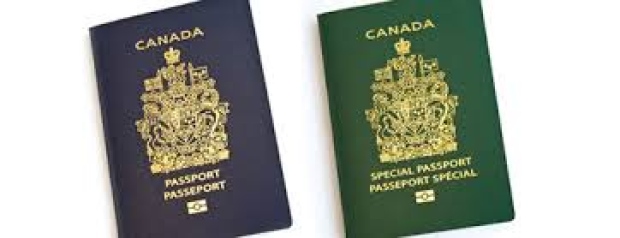
Adding further complexity are so-called special passports, which have green covers and are issued largely to National Defence employees for work overseas.

About 45,000 special passports are in circulation, some held by retired officials who no longer work in government — such as former lieutenant governors, former heads of missions, and Privy Councillors who have long since withdrawn from public life.

Some 9,850 special passports are issued each year, including to MPs, senators, premiers and speakers of legislative assemblies.

The passport program collected $3.5 million in fees to issue diplomatic and special passports in 2014-15, more than enough to cover operating costs of $2.3 million. But most of those fees — $225 per passport — are paid indirectly by taxpayers, with departments such as National Defence and Global Affairs picking up the bills.

And some diplomatic passports are issued without charge to former prime ministers, former governors general, former ministers of foreign affairs, former lieutenant governors and others, including their spouses.

The latest review follows an earlier examination of the program ordered by Prime Minister Stephen Harper in October 2010.

Earlier that year there were two incidents in which an MP and a former cabinet minister separately used their green passports for personal travel to Mexico, and were turned back by Mexican officials in a politically motivated visa dispute with Canada.

Canadian standard passport and special passport

The review is also examining the numbers of special passports, with a green cover, being issued each year, about 9,850. Most go to National Defence employees and military members, but some go to provincial officials and others as a courtesy. (cic.gc.ca)

No immunity

The Minister of Foreign Affairs issued instructions for the proper use of such passports in 2011.

“There were occasional, isolated cases of the misuse of the special and diplomatic passport,” said IRCC spokesperson Faith St-John.

Among the rules: holders of such passports cannot use them for travelling on personal business, but must instead carry the standard blue-cover personal passport familiar to most Canadians. (The few exceptions to this rule include the prime minister, the Governor General, cabinet ministers and diplomats posted abroad.)

Source: Internal review questions number of diplomatic passports – Politics – CBC News

These are the countries you can ‘buy’ citizenship to – Business Insider

Another good overview of the various schemes, and the relative advantages for those shopping for citizenship:

Most countries offer citizenship (passports) the hard way. But 7 sell them outright, and 3 have “powerful” passports. “Citizenship Planning” is a thing.

For people who need a second citizenship and passport to dodge the long arm of their government, there is something called “citizenship planning,” similar to “financial planning.” But when it comes to just outright buying a citizenship and passport without having to languish for years as mere non-citizen resident, the Huddled Masses need not apply. And not any passport will do. In fact, there are only three for sale that are really good.

Which are the best passports to get?

There are quality standards for everything, especially if it’s costly. The most powerful passports are those that allow visa-free travel to the most countries.

There are other considerations, for example those that drive US citizens nuts when they live overseas, due to the US government’s onerous reporting requirements on them and on banks that do business with them, and due to US taxation of their worldwide income no matter where they live. Few other governments treat their citizens that way.

In terms of visa-free travel, here are the 25 countries with the most powerful passports, according to a new ranking by Henley & Partners, which is into “citizenship planning.” But among them is only – Austria – one whose citizenship can be bought (more on that in a moment):

  1. Germany: visa-free travel to 176 countries.
  2. Sweden: 175 countries
  3. Denmark, Finland, Italy, Spain, and the US: 174 countries.
  4. Austria, Belgium, France, Luxembourg, Netherlands, Norway, Singapore, UK: 173 countries
  5. Republic of Ireland, Japan, New Zealand: 172 countries
  6. Croatia, Greece, Portugal, Switzerland: 171 countries
  7. Australia, South Korea: 170 countries
  8. Iceland: 169 countries.

And how do you get one of those passports?

In most countries, the hard way: Legally immigrate and obtain residency, and then fulfill the residency requirements to get citizenship and that second passport, which takes years. Most countries, including the US, have special programs for “investors” to obtain residency, such as a green card, essentially on the spot, but even then it takes years to obtain citizenship and a passport. If it’s possible at all, such as in Germany.

Then there’s the direct way: Buy a citizenship and the passport that comes along with it. These citizenship-by-investment programs are not for folks on a tight budget. According to Henley & Partners, only seven countries offer this convenient route, only three have powerful passports, and only one is in the top of the heap above.

Passports from EU countries are the best. If you’re from Russia or China or Iraq and become a citizen of one of the 28 EU countries, you’ll get a country-specific EU passport that allows you to live and do business anywhere in the EU. There are all sorts of offshore benefits. And travel around the world is a breeze.

But citizenship in most EU countries is not for sale. You can buy only residency, similar to programs in the US. But there are three exceptions:

Austria

Citizenship is almost impossible to get for normal foreigners already legally in Austria. But the super-rich and famous have a way. The government, through paragraph 10, section 6 of the Citizenship Act, can confer citizenship “because of the services already provided by the foreigner and the extraordinary achievements still to be expected of him in the special interest of the Republic.” This usually involves a big direct investments of unspecified magnitude plus some other “extraordinary” contribution, such as being famous or creating jobs. Few succeed. In some years, none succeed.

They’re playing hard to get. But the rewards are huge for the few that succeed, including an impeccable EU passport with visa-free travel to 173 countries.

Cyprus

In 2012, as the EU-part of the divided island was veering toward bankruptcy, it offered citizenship through a “fast-track” scheme to dodge the normal residency requirements. But the price tag was €10 million in direct investment. Too expensive for the average oligarch.

In 2013, Cyprus became desperate. Its offshore financial industry, the main breadwinner of the economy, had collapsed in a cesspool of corruption. The banks had taken much of the foreign money – particularly Russian money – down with them. Cyprus needed some moolah. It slashed the price of citizenship to €3 million of direct investment. Russians who’d lost at least €3 million in the collapse would also be eligible for citizenship.

Since then, the price was further slashed, to as low as €2 million. And it’s fast: about three months for citizenship and an EU passport, with visa-free travel to 159 countries. And that €3-million investment can be sold after three years. An adequate house would likely do.

Malta

The tiny EU member state with 417,000 residents spread over three islands is convenient for foreigners, with English being one of the two official languages. In 2013, during the still rough waters of the euro debt crisis, Parliament passed legislation that put Maltese citizenship up for sale at €650,000. A spouse costs another €25,000; unmarried children between 18 and 25 and dependent parents cost €50,000 each. There are no residency or investment requirements. The money goes into government funds.

This citizenship is a product to be marketed. If it sells 100 per year at €650,000 a pop, it would generate annual revenues of €65 million – or 1.75% of total 2016 revenues (€3.7 billion). Given the limits on budget deficits under EU Treaties, everything counts.

This Maltese product includes an EU passport with visa-free travel to 166 countries. Folks can stop by, jump through some bureaucratic hoops, pay, get their citizenship and passport, and settle in Germany or wherever. At the time, Simon Busuttil, leader of the opposition Nationalist Party, warned that Malta could end up being compared to shady tax havens in the Caribbean. And that’s our last stop.

Source: These are the countries you can ‘buy’ citizenship to – Business Insider

Trump Making ‘Nativist’ Group’s Wish List a Reality – The Daily Beast

Disturbing and part of a pattern:

On April 11, 2016, a tiny think tank with a bland name published a 79-point wish list. The list garnered virtually no media coverage, and in the 11 months since its publication has been largely ignored—except, apparently, by the White House.

Today, Donald Trump seems to be working through it as he rolls out his immigration policy. A number of the 79 items on the list composed by the Center for Immigration Studies (CIS), have either been implemented or shown up in leaked draft proposals from the administration. It’s a course of events that has that think tank cautiously exultant and has immigrants’ rights activists anxious and disturbed.

CIS is one of the most vocal groups supporting increased detention and deportation of undocumented immigrants. It played a key role in torpedoing the 2013 Gang of 8 comprehensive immigration reform bill, and is a long-time favorite of Jeff Sessions and Stephen Miller.

Its newfound influence isn’t just on paper and in policy.

Mark Krikorian, CIS’s executive director, told The Daily Beast that last month, for the first time, his group scored an invite to the Immigration and Customs Enforcement stakeholder meeting, a gathering that happens a few times a year where ICE leaders talk policy and procedure with immigration lawyers and activists. And he said that since Trump’s inauguration, he’s been in touch with new appointees at the Department of Homeland Security. It’s a new level of access and influence that helps explain the quick, dramatic changes Trump has made in immigration policy—changes that will impact millions of people.

“We’re a think tank,” Krikorian said. “Our job is to put stuff out there. Our job is to put a message in a bottle and hope somebody finds it.”

It’s been found.

Just 50 days into his presidency, and Trump’s team has already discussed, proposed, or implemented upwards of a dozen of CIS’s ideas.

For instance, the 29th item on CIS’s list calls for detention of people coming to the U.S. seeking asylum.

“Doing so will restore integrity to an out-of-control system that encourages both border surges and asylum fraud,” the memo reads.

A Feb. 21 memo from the Department of Homeland Security laid out how the department is working to quickly expand detention of undocumented immigrants, including asylum seekers….

In some cases, the president’s executive orders all but lift language from CIS’s list. For instance, this is the 65th item on the CIS list:

“Rescind all outstanding ‘prosecutorial discretion’ policies; eliminate the ‘Priority Enforcement Program’, and reinstitute Secure Communities.”

And this appeared in Trump’s Jan. 25 executive order:

“The Secretary shall immediately take all appropriate action to terminate the Priority Enforcement Program (PEP) described in the memorandum issued by the Secretary on November 20, 2014, and to reinstitute the immigration program known as ‘Secure Communities’ referenced in that memorandum.”

The Priority Enforcement Program directed ICE agents to focus their enforcement on undocumented immigrants who had convicted crimes. Now that PEP is toast, most undocumented immigrants in the U.S. are targets for deportation….

And the controversial VOICE office Trump announced at his speech to Congress—which would provide special advocacy and support to Americans hurt by crimes committed by undocumented immigrants—may have had its genesis with CIS. Item number 72 on their list calls for the creation of a “victims advocacy unit” responsible for “providing services to those who have been victimized by illegal alien criminals.”

Krikorian predicted an imminent step from the Trump administration could be worksite raids targeting places of employment for undocumented immigrants. That hasn’t happened yet on a widespread level, he added, but the president could direct it.

“It’s still early, so I expect stuff like that’s going to happen,” he said. “In a sense, that’s the next thing that I’d be looking for.”

And Krikorian’s group has more access than ever to the people who make immigration policy decisions. He said that in February, a representative from the group attended one of the stakeholder meetings that ICE has with immigration advocates several times per year. For CIS, it was a big first: Obama’s DHS had shown zero appetite to have CIS at the table for those meetings, which address wonky procedural issues like how immigrants are transported between detention facilities, how much access attorneys have to them, and how bond gets handled. Meeting participants include the American Immigration Lawyers Association (AILA), the American Bar Association’s immigration project, and immigrants’ rights advocates. And, now, CIS—a leading proponent of increased detention and deportation.

CIS isn’t the only restrictionist group to find newly open ears at DHS. Dan Stein, of the Federation for American Immigration Reform, told The Daily Beast his group was also invited to the meeting as well (though he added it received meeting invites from the Obama administration too). Stein said his group has found the Trump administration to be very open to their ideas.

“As you might imagine, the communication is much better now, and people are asking us to attend all kinds of different meetings,” he said. “FAIR is a very important organization for explaining to people the purposes and strategies behind various administration strategies, and quite naturally the administration would have an interest in making sure we understood the information and properly explain it to people if we’re asked. When I go on CNN to explain the trump travel ban, I expect to have somebody explain it to me in a way I understand.”

And Roy Beck, who heads NumbersUSA—a restrictionist group that boasts a 1.5 million-member email list—said his organization was invited to the ICE stakeholder meeting as well, and has found open ears in the Trump administration, particularly DHS.

“What they’re trying to do meshes with what our organization has always tried to do,” he told The Daily Beast.

These three groups share a co-founder: John Tanton, a population control activist who flirted with racist pseudo-science, supported Planned Parenthood, and argued that immigration and population growth were bad for the environment. Immigrants’ rights advocates argue that the groups are covertly white supremacist and motivated by animus towards people of color. These groups, meanwhile, argue that activists who support immigrants’ rights are secretly in the pocket of corporate interests looking to drive down wages by bringing in immigrants willing to work for less than native-born Americans.

David Leopold, who formerly headed AILA, told The Daily Beast he found CIS’s invitation unsettling.

“I don’t know what the Center for Immigration Studies would be doing there honestly,” he said. “I don’t know why they would be there. What business do they have there? Do they represent people in proceedings? What business does Mark Krikorian have at the ICE liaison committee meeting?”

And Frank Sharry, who heads the activist group America’s Voice, said he shared those concerns and found CIS’s invitation “very disturbing.”

“You have this nativist cabal that has been on the outside looking in for 25 years and now they’re on the inside looking out, and they’re going to have outsized influence,” he said. “In fact, you could say that these groups—CIS and their fellow travelers—are going to own what the Trump administration does on immigration and refugee policy. I’m sure that makes them very happy. I think it should make the country alarmed.”

Source: Trump Making ‘Nativist’ Group’s Wish List a Reality – The Daily Beast