‘That Ignoramus’: 2 French Scholars of Radical Islam Turn Bitter Rivals – The New York Times

Personally, I think it is a mix of the two elements – the individual and the structural:

What propels Islamist terrorism and attacks against France is more than an academic debate: The answer shapes policy toward blunting the threat.

So it is no inconsequential matter in a culture under attack, and one that so cherishes its intellectual debates, that France’s two leading scholars of radical Islam — former friends — have turned bitter rivals over their differing views.

“Madman,” “thug,” “illiterate,” “paranoid,” “ass,” “not a thinker” — these are just some of the choicer insults the two men have hurled at each other in a peculiarly personal quarrel with far larger stakes that has reverberated through the French news media and society for months.

The two distinguished academics, Olivier Roy and Gilles Kepel, have long lists of books to their name, and years of field work in the Middle East, Central Asia and the troubled French suburbs. They are both eagerly consulted by the French news media and government officials.

But with France on edge and the continued target of terrorist attacks, their clashing analyses of the origins, development and future of jihadism have broken out of academic circles to present an important question for France and for all of Europe: Which man holds the key to understanding the phenomenon?

Mr. Kepel, 61, a professor at Sciences Po, the prestigious political science institute, finds much of the answer inside France — in its suburbs and their dysfunctional sociology — and in the role of Islam, angering many on the left.

Mr. Roy, 66, who as a bearded young man roamed Afghanistan with the mujahedeen in the 1980s and now teaches at the European University Institute in Florence, Italy, places greater emphasis on individual behavior and psychology in a jihadism he considers strictly marginal to Islam.

Mr. Kepel sees individuals as cogs in a system — part of a classically French, structuralist tradition that minimizes the role of individual human agency.

Mr. Roy, on the other hand, sees mostly troubled people in the jihadist ranks who act out their fantasies of violence and cruelty.

The terrorists who have carried out recent attacks were mostly marginalized young men and petty criminals, he says, adding that they have used Islam as a cover to pursue extreme violence.

“They haven’t had a militant past,” Mr. Roy said of many of these terrorists, in a telephone interview. The problem they represent, he says, is the “Islamicization of radicalism.”

It is a signature phrase that enrages Mr. Kepel, who leans toward its opposite: the radicalization of Islam.

“That ignoramus,” Mr. Kepel grumbled in an interview this month in his book-lined office, offering some choice gibes about his onetime friend’s lack of Arabic.

Mr. Kepel testified for an influential 2015 parliamentary report, wrote a best seller on terrorism after the attacks in Paris in November, and has been omnipresent in television and radio studios.

“At the ministry, they tell me, ‘I saw Kepel yesterday,’ ” said Mr. Roy, himself a favorite of the country’s dominant left-leaning news media. His arguments, for the moment at least, appear to be winning in government circles.

As the jockeying has intensified in official circles, so has the falling-out between the old friends.

Today they cannot stand each other, and, with the passion that typifies intellectual fights in a country where nothing short of war is more serious, they contemptuously dismiss each other’s views.

“The King Is Naked,” read the headline on Mr. Kepel’s attack on Mr. Roy this spring in the newspaper Libération, in a play on the French meaning of Mr. Roy’s name.

In turn, while acknowledging a long and now broken friendship, Mr. Roy today offers his own less-than-friendly critique of Mr. Kepel as a kind of cloistered intellectual.

 “We were friends for 20 years,” Mr. Roy said in the interview. “I traveled with him in Istanbul. But I was very struck by his incapacity to talk to anybody.”

“He’s sincere the way a madman is,” he added. “He’s not a thinker. He’s not a philosopher.”

The French debate has echoes of Republican criticism in the United States of President Obama for his reluctance to use the word Islam in connection with terrorism.

But as is so often the case in contemporary France, the heart of the dispute here is a disagreement about the country’s relationship with Islam.

Mr. Roy sees a Muslim population that is relatively well-integrated.

But for Mr. Kepel, the murderous jihadism that struck France in 2015 is the expression of a slow-burning Islamist radicalization that took shape over decades because of a failure of integration.

Source: ‘That Ignoramus’: 2 French Scholars of Radical Islam Turn Bitter Rivals – The New York Times

Beyond Integration: How Teachers Can Encourage Cross-Racial Friendships : NPR

Lessons that can also be applied at later stages in life? In the workplace?

There’s a reason Jose Luis Vilson’s students learn in groups: He wants them to feel comfortable working with anyone in the classroom, something he’s realized in his 11 years of teaching doesn’t always come naturally.

“I don’t really give students a chance to self-select until later on, when I feel like they can pretty much group with anybody,” he says.

Vilson teaches math at a public middle school just north of Harlem in New York City. Most of his students are Latino and African-American, and Vilson pays close attention to the fact that their racial identities affect their experiences in the classroom.

Children entering adolescence, he knows, are less likely to maintain cross-racial friendships as they grow older. But teachers like him may be able to help change that, according to a new study led by researchers from New York University.

In past decades, it’s become increasingly clear that diversity in classrooms isn’t just a buzzword. A growing body of research points to classroom diversity as an important aspect of childhood development. Kids who make friends with kids of other races tend to be more socially well-adjusted, more academically ambitious and better at interacting with people who are different from them.

The NYU researchers knew of these findings and wondered if just putting kids of different races in classrooms together is enough to foster lasting connections. Their hypothesis was that, as kids grow into early adolescence, they increase their same-race friendships and decrease their cross-race friendships.

So they looked at data from the Early Adolescent Development Study (EADS), a longitudinal survey where researchers questioned more than 500 elementary and middle-schoolers over the course of two academic years: fall 1996 to spring 1998. The students in the study all went to school in one district in the American northeast where the racial makeup of each of their classrooms was roughly half black and half white.

And the researchers were right, says Elise Cappella, head of the project: “Cross-race friendships diminish over the course of one academic year; same-race friendships increase.” The finding bore out among all of the students in the study, particularly those who were older and/or white.

Integration, she says, “[is] a very important step” to fostering cross-race connections. “But it’s not the only step.”

This is where teachers like Jose Vilson can have an impact. All of those group activities he encourages in his classroom, he hopes, will help students learn to learn from each other.

The difference comes down to the kind of environment teachers created: did students collaborate with one another, or did they compete?

“Teachers who were warm and responsive to students’ needs and created a classroom context characterized by respect and trust — in those classrooms, students had lower increases in same-race friendships over the course of that year,” Cappella says.

In other words, students who started the year with cross-race friendships were more likely to keep them throughout the year with the help of a friendly teacher.

The third, fourth and fifth-graders in this sample, Cappella says, are just entering the age where they start to become more self-conscious. “Sometimes, during those times, you begin to associate with people who you think may have shared identities as you as a way of building an understanding of who you are,” she says.

Teachers who build supportive atmospheres “[allow] students to get to know one another across differences,” Cappella says. “And when you get to know each other across differences, you see other kinds of similarities that may be more hidden as well.”

It’s relatively rare to find classrooms that look like the ones profiled in the EADS: more or less an even split between black and white students. Vilson’s classroom doesn’t look like that, but he says that cross-cultural contact in school will help his students outside the classroom.

“The real world is such that people have to find a way to get along with each other, but also work with each other,” he says. “There’s a lot of value in actually getting to know different people — how they work and what their values are and what their experiences are.”

Source: Beyond Integration: How Teachers Can Encourage Cross-Racial Friendships : NPR Ed : NPR

Surprising New Evidence Shows Bias in Police Use of Force but Not in Shootings – The New York Times

Surprising_New_Evidence_Shows_Bias_in_Police_Use_of_Force_but_Not_in_Shootings_-_The_New_York_TimesUnderlying bias and discrimination remains of concern, but useful nuance to current debates:

A new study confirms that black men and women are treated differently in the hands of law enforcement. They are more likely to be touched, handcuffed, pushed to the ground or pepper-sprayed by a police officer, even after accounting for how, where and when they encounter the police.

But when it comes to the most lethal form of force — police shootings — the study finds no racial bias.

“It is the most surprising result of my career,” said Roland G. Fryer Jr., the author of the study and a professor of economics at Harvard. The study examined more than 1,000 shootings in 10 major police departments, in Texas, Florida and California.

The result contradicts the image of police shootings that many Americans hold after the killings (some captured on video) of Michael Brown in Ferguson, Mo.; Tamir Rice in Cleveland; Walter Scott in South Carolina; Alton Sterling in Baton Rouge, La.; and Philando Castile in Minnesota.

The study did not say whether the most egregious examples — those at the heart of the nation’s debate on police shootings — are free of racial bias. Instead, it examined a larger pool of shootings, including nonfatal ones.

The counterintuitive results provoked debate after the study was posted on Monday, mostly about the volume of police encounters and the scope of the data. Mr. Fryer emphasizes that the work is not the definitive analysis of police shootings, and that more data would be needed to understand the country as a whole. This work focused only on what happens once the police have stopped civilians, not on the risk of being stopped at all. Other research has shown that blacks are more likely to be stopped by the police.

Photo

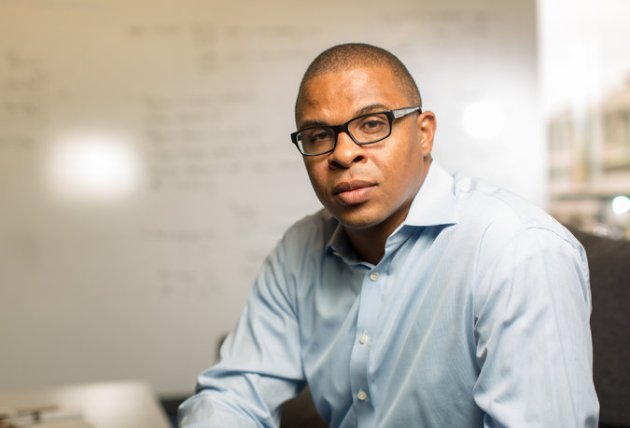
Roland G. Fryer Jr., a professor of economics at Harvard. CreditErik Jacobs for The New York Times 

Mr. Fryer, the youngest African-American to receive tenure at Harvard and the first to win a John Bates Clark medal, a prize given to the most promising American economist under 40, said anger after the deaths of Michael Brown, Freddie Gray and others drove him to study the issue. “You know, protesting is not my thing,” he said. “But data is my thing. So I decided that I was going to collect a bunch of data and try to understand what really is going on when it comes to racial differences in police use of force.”

Source: Surprising New Evidence Shows Bias in Police Use of Force but Not in Shootings – The New York Times

A Saudi Morals Enforcer Called for a More Liberal Islam. Then the Death Threats Began. – The New York Times

Good long read by Ben Hubbard on the tensions within Saudi Arabia’s religious establishment and broader society:

For most of his adult life, Ahmed Qassim al-Ghamdi worked among the bearded enforcers of Saudi Arabia. He was a dedicated employee of the Commission for the Promotion of Virtue and the Prevention of Vice — known abroad as the religious police — serving with the front-line troops protecting the Islamic kingdom from Westernization, secularism and anything but the most conservative Islamic practices.

Some of that resembled ordinary police work: busting drug dealers and bootleggers in a country that bans alcohol. But the men of “the Commission,” as Saudis call it, spent most of their time maintaining the puritanical public norms that set Saudi Arabia apart not only from the West, but from most of the Muslim world.

A key offense was ikhtilat, or unauthorized mixing between men and women. The kingdom’s clerics warn that it could lead to fornication, adultery, broken homes, children born of unmarried couples and full-blown societal collapse.

For years, Mr. Ghamdi stuck with the program and was eventually put in charge of the Commission for the region of Mecca, Islam’s holiest city. Then he had a reckoning and began to question the rules. So he turned to the Quran and the stories of the Prophet Muhammad and his companions, considered the exemplars of Islamic conduct. What he found was striking and life altering: There had been plenty of mixing among the first generation of Muslims, and no one had seemed to mind.

So he spoke out. In articles and television appearances, he argued that much of what Saudis practiced as religion was in fact Arabian cultural practices that had been mixed up with their faith.

There was no need to close shops for prayer, he said, nor to bar women from driving, as Saudi Arabia does. At the time of the Prophet, women rode around on camels, which he said was far more provocative than veiled women piloting S.U.V.s.

He even said that while women should conceal their bodies, they needed to cover their faces only if they chose to do so. And to demonstrate the depth of his own conviction, Mr. Ghamdi went on television with his wife, Jawahir, who smiled to the camera, her face bare and adorned with a dusting of makeup.

It was like a bomb inside the kingdom’s religious establishment, threatening the social order that granted prominence to the sheikhs and made them the arbiters of right and wrong in all aspects of life. He threatened their control.

Mr. Ghamdi’s colleagues at work refused to speak to him. Angry calls poured into his cellphone and anonymous death threats hit him on Twitter. Prominent sheikhs took to the airwaves to denounce him as an ignorant upstart who should be punished, tried — and even tortured.

Source: A Saudi Morals Enforcer Called for a More Liberal Islam. Then the Death Threats Began. – The New York Times

Diaspora Dialogues Gives Emerging Writers a Voice

Good initiative given the power of story telling and writing. CanLit includes a number of strong immigrant and visible minority writers (e.g., Bissoondath, Vassanji, Ondaatje, Hage, Hill):

New writers are using mentorship opportunities to create and share more diverse and inclusive stories about Toronto’s history and culture.

“What we want to do is to create a living history of Toronto through literature [and] make it as diverse as the city itself,” says Helen Walsh, the president of Diaspora Dialogues  – a charitable society made up of writers, artists and performers.

“I’m not surprised that there are at least 50 to 60 countries represented through Diaspora Dialogues – lots of voices from Asia, Africa and Northern Europe,” Walsh adds. “Often, people write about their own cultural background and we want to bring Toronto to life through literature.”

Mentoring new writers

Toronto’s iconic Old City Hall, a national historic site, was the stage for Diaspora Dialogues during Doors Open Toronto, an event that offers access to buildings with historical significance across the city.

“Often, people write about their own cultural background and we want to bring Toronto to life through literature.”

Jamaican-born and Ottawa-raised emerging writer Dianah Smith is one of 12 writers who presented their work at Old City Hall. As a teacher and arts educator, Smith joined Diaspora Dialogues in 2014 for its mentoring program, in which she paired-up with Jamaican-Canadian writer and media professional Martin Mordecai.

“For about six months, he helped me to get into [a] schedule of my draft and first novel, finalizing some of the scenes of my manuscript to get it ready for publication,” Smith says about her experience as a mentee.

“It’s a story about a seven-year-old girl, Jemela Campbell, and her experience in immigrating from Jamaica to Canada and her first year in Canada,” Smith explains.

The excerpt she reads is from the novel, with a working title The Promise of Foreign, which explores some of the challenges newcomer parents face in Canada such as finding work and keeping jobs.

Seeking recognition as writers

“As a racialized person of colour, as an immigrant, you don’t really feel represented in the publishing world,” Smith explains. “You have names like Margaret Atwood, mainly white and middle-class people.”

She says that while Diaspora Dialogues does not restrict white writers from participating, it also tries “to have alternative voices to give immigrants and indigenous people the opportunity to share their stories.”

Author Mia Herrera adds that working in the Canadian publishing and writing industry is precarious.

“A writer who publishes regularly makes a salary of about $12,000 a year. You can’t make a living on that,” she says.

Born to Filipino parents, Herrera now lives in Bradford, Ont. She works in communications and marketing and says she continues to write because it is her passion.

Smith says she is still in the process of finding an interested publisher for her novel. While her mentorship program ended last fall, she continues to participate in other programs led by Diaspora Dialogues such as Lunch and Learn events, workshops about pitching to agents, as well as mentee book readings such as the one at Old City Hall.

Source: Diaspora Dialogues Gives Emerging Writers a Voice – New Canadian Media

Josiah Wilson, the Indian Act, hereditary governance and blood quantum

Fascinating account of the different aspects of identity, ranging from bloodline requirements to culture, and the challenge this poses across a number of fronts:

The story of Josiah Wilson, the Haiti-born, Heiltsuk First Nation adopted basketball player, has raised questions of Indigenous identity much bigger than whether he should be allowed to play in an All-Native Basketball Tournament in B.C.

The tournament committee’s decision to ban Wilson, 20, a status Indian, because he doesn’t have at least 1/8th First Nations ancestry or “blood quantum” is a symptom of a greater conflict.

This conflict lurks in band offices, treaty offices, on the land and on reserves across the country.

What, or who, defines someone as Indigenous — is it the hereditary system, the Indian Act, a blood test?

According to the Canadian government, Wilson is an “Indian.” According to the Heiltsuk, he is Heiltsuk. And according to the All-Native Basketball Tournament, he is an adoptee, Canadian and Haitian, but not Heiltsuk.

Heiltsuk hereditary system

In the eyes of the Heiltsuk Hemas (hereditary chiefs), Wilson is Heiltsuk. The Hemas embody the Heiltsuk Nation’s traditional social structure and hereditary system of governance, which identifies members through cultural protocol and a connection to family crests and clans.

Heiltsuk Hemas standing with Haida Hereditary Chiefs

In the eyes of the Heiltsuk Hemas (hereditary chiefs), Josiah is Heiltsuk. Here, Heiltsuk Hemas are shown with Haida hereditary chiefs. (Don Wilson/Facebook)

Heiltsuk cultural adviser Frances Brown says the hereditary system is a complex set of laws that governs not only a responsibility to the land, but also social relationships to one another, including adoption.

“If there’s a customary adoption it means that you adopt a child and you do it in a potlatch where there’s many witnesses and the chiefs are there,” said Brown.

Gary Housty was one of the Heiltsuk Hemas to witness the ceremonial adoption of Wilson by a First Nations family. He says he wrote a letter to members of the all-native committee urging them to let Wilson play, but received no response.

“I really have a problem with the way they’re setting down rules that disallow people to participate in these very important cultural events, such as the All-Native Tournament. There’s so much culture there. And we are talking about culture here.

“In my eyes Josiah is a Heiltsuk boy, a Heiltsuk person. He belongs here with us,” said Housty.

Source: Josiah Wilson, the Indian Act, hereditary governance and blood quantum – Aboriginal – CBC

U of T gets personal with staff to track race, gender data

Lessons for the federal public service and other organizations?

Particularly significant is the removal of names from resumés to remove implicit (and explicit) bias.

Ontario EducationI was able to drill down to visible minority groups using NHS data for the  education sector as in the chart above for Ontario, as differences among groups are increasingly more important than between visible minorities and non-visible minorities:

Canada’s largest university is asking its employees remarkably personal questions — from what race they are and where they come from to whether they’re transgendered — in a bid to make sure certain groups aren’t being left out of jobs and promotions.

In a new survey given this week to all 10,000 employees from professors to secretaries, the University of Toronto goes beyond asking staff if they see themselves as “persons of colour” or “racialized,” to whether they are black, white, Asian, Latin/Hispanic, Middle Eastern or mixed.

And that’s just to start.

The updated Employment Equity Survey then dives to a level believed unmatched on any other Canadian campus: If you answer ‘black,’ are you African, Caribbean, European, North American or South American?

If you said Asian, do you mean East Asian (Chinese, Japanese, Korean), South Asian (Indian, Pakistani, Sri Lankan), Southeast Asian (Malaysian, Filipino, Vietnamese) or Asian Caribbean from, say, Trinidad? Hispanic employees are asked if their heritage is Caribbean, Central American, European or South American.

The questions also offer a sneak peek at what the university’s 85,000 students will be asked this fall on its first student demographic survey.

“Students have made it very clear they don’t see themselves reflected in faculty and staff, so collecting data is part of an overall move to get a better sense of who is under-represented so we can do better outreach and targeted recruitment,” said Angela Hildyard, vice-president of human resources and equity.

Like other organizations that do a certain amount of business with the federal government, U of T has for decades been required to track its employees by gender, disability, whether they’re aboriginal or members of a ‘visible minority.’

“But this language no longer makes sense,” said Hildyard, especially with students. “If you’ve been to one of our convocations lately, you’ll see we’re so diverse, the visible minority would likely be white.” Even changing the category last year to “person of colour or racialized person” shed little light on the true diversity of campus workers.

“If equity and diversity are linked to excellence — and we are the only university in North America to have a statement making it clear we’ll only be excellent with diversity and equity — then we need to collect more information on how different groups are represented on campus.”

Some black faculty members have been vocal about the need to increase their ranks, she said, “but we have no idea how many we have because we don’t have data. This gives us a better sense of who we have here and if they are under-represented, and target candidate pools.”

Moreover, the university will start giving the survey to job applicants as well, so it can track where the gaps begin.

“Black students feel woefully under-represented (among U of T faculty and staff), so this will allow us to actually see the numbers of black applicants in the first place, and are they being shortlisted? Is there some kind of discrimination going on?”

Too, U of T will take the unusual step of removing names from job applicants’ resumés “to see if that enhances certain groups’ possibility of being interviewed. We always want to be sure we hire the best candidate, but is there something happening (that blocks particular groups) like hiring committees having a bias against certain kinds of names?”

Anecdotally, the ranks of professors at Canadian universities “are not very representative of the wider population,” noted David Robinson, executive director of the Canadian Association of University Teachers, “so gathering this kind of information is a positive thing.” It also could help reveal which university departments are less diverse than others, not only with regards to race, but also gender and abilities.

The U of T survey asks about disabilities and sexual orientation, and a new question on gender includes check-boxes for man, woman, two-spirit, “another gender identity” or “trans: a person who identifies with a gender other than the one assigned to them at birth, or differs from stereotypical masculine and feminine norms.”

Said Hildyard: “The data can help us learn who applies, who gets shortlisted, who gets interviewed for jobs, so if we find the candidate pool is not diverse, that’s where we can focus our efforts.”

Source: U of T gets personal with staff to track race, gender data | Toronto Star

Christie Blatchford: We need light, not heat as violence by and toward police grows

One of her better columns:

As Martin Luther King, Jr. said in the very first speech that brought him to wide American attention, “There comes a time when people get tired.”

Well then, let’s hope we are all there now — the frightened and furious young black men whose brothers are shot and killed by U.S. police in staggering numbers and in sometimes galling circumstances, the scared and beleaguered police, and yes, the mass media and social media with our giddy group embrace of violence in all its forms.

As the CNN commentator Van Jones said Friday, if you bleed for Alton Sterling and Philando Castile (the black men killed by police this week in Baton Rouge, La., and near Minneapolis, Minn.) but not for the five dead Dallas police officers murdered during a Black Lives Matter protest Thursday night, “you need a heart check.” If you bleed for the slain police but not for Sterling and Castile, Jones said, “You need a heart check.”

It is, in other words, time for empathy, that great saving human ability to feel the pain of another without having to have walked in his actual shoes.

The great American civil rights leader made his speech on Dec. 5, 1955.

It was long ago and far away.

King was in Montgomery, Ala., about 585 kilometres from Baton Rouge, where Sterling was killed, and almost twice that to Falcon Heights, Minn., where Castile was shot to death.

But what he said, in part, to a thousand black Americans crowded into the Holt Street Baptist Church that night was this: “We are here this evening to say to those who have mistreated us so long that we are tired — tired of being segregated and humiliated; tired of being kicked about by the brutal feet of oppression.

“There comes a time my friends when people get tired of being plunged across the abyss of humiliation, when they experience the bleakness of nagging despair.”

Segregation ended, though it was another nine years before the Civil Rights Act of 1964 put an official end to it, and while much has changed, does that language not sound an awful lot like the same general bone weariness heard in recent weeks from black residents in U.S. city after U.S. city and even in Toronto? It does.

This week, former Canada AM news anchor and co-host Marci Ien was a guest host on The Live Drive, a Newstalk 1010 radio show.

Conflict-of-interest declaration, I do a bit on the show, but listened afterwards as Ien spoke with tremendous eloquence of her experiences as a smart young black woman growing up in Toronto.

In her quiet voice, she said, “There isn’t a man in my life, from my father who’s in his 70s to my husband to my brothers-in-law, who hasn’t been stopped by police (in effect, for driving while black) at some point.”

Born and raised in Scarborough, Ont., and proud of it, Ien had a girl seven years before she learned her second child was a boy. “My heart skipped a beat,” she said, “when I realized I was having a son. I was worried. No mother should ever feel that.”

Now, as her little boy grows up, Ien said, she is braced for the conversation she will have to have with him — about the clothes she wonders if he can wear (“Can he wear a hoodie? Low-slung jeans?”) and how he’s to behave if he’s stopped by police. “The utmost respect should be there anyway,” she said, meaning she and her husband would teach that as a matter of course, but their son will be told to ramp it up.

“These are the conversations black families have with their sons and the young men they care about,” she said. If this great woman has to have this sort of discussion with her son, that’s something the rest of us, including the police, have to accept.

Ien was commenting on Tuesday, after Sterling’s death, but before Castile’s and before the shocking Dallas mass murder.

The officers — seven others were wounded — were slain by what the FBI says now was a lone sniper, 25-year-old Micah Xavier Johnson, a former U.S. Army reserve veteran.

Dallas Police Chief David Brown said that before he was essentially blown apart by a bomb-laden robot the police force dispatched, Johnson told hostage negotiators “he was upset about Black Lives Matter. He said he was upset about the recent police shootings. The suspect said he was upset about white people. The suspect stated he wanted to kill white people, especially white officers.”

Armed to the teeth, better equipped than the unsuspecting police watching over the protest, Johnson did just that.

The ambush came everywhere as a terrible shock to police officers, who, as Chief Brown said drily at one point, “aren’t very accustomed to hearing thank you, sometimes from the citizens who most need our help.” That’s putting it kindly; even at peaceful protests, even in Canadian cities, police are routinely faced with people spitting at them, cursing them and trying to provoke them.

Yet few of them would have predicted what happened in Dallas.

It was Newstalk host Jay Michaels who suggested Friday that just as hateful ISIL propaganda and violent beheading videos on the web have served to radicalize unhappy young men in the West and turn them into homegrown terrorists, so perhaps the constant inflamed rhetoric about police violence in the press and the ghastly cellphone videos of police shootings may have inspired Johnson.

It feels as though we’re on a precipice. We need to be accountable for what we collectively have sown: the bad and racist police officers and the forces that employ them, the empty violent rhetoric of the mob, and the media and web airing of every grievance anywhere in the world and making it local.

What we need is light, not heat, and we need to do Van Jones’ heart check.

Source: Christie Blatchford: We need light, not heat as violence by and toward police grows | National Post

Shootings raise unanswered life-or-death question for black men in America: Neil Macdonald

Good column by Macdonald:

In the racially electrified fog of fear and rage following the events in Dallas Thursday, one question remains conspicuously unanswered: If you are a black man in America, how are you supposed to cope?

President Barack Obama has no real answer, nor do the members of Congress who bowed their heads in memory of the slain Dallas police officers, nor does Dallas’s anguished police chief, a black man himself.

The deadly consequences of carrying while black
#SayHisName: Americans react to videos of police killings
The only advice black Americans seem to get is to respectfully submit when some cop calls them out on the street, or looms at the door of their car, or shows up at their home, no matter how terrified they may be.

‘Comply, comply, comply’

For heaven’s sake, don’t give the officer any lip, or try to run away, even if you aren’t guilty of anything, and no matter how abusive the cop may become.

Because if you are black, that policeman is far more likely to gun you down, or choke you to death, or Taser you, or beat you into a coma.

“Comply, comply, comply,” Philando Castile’s mother says she used to tell him. “Comply — that’s the key thing in order to try to survive being stopped by the police.”

‘When is it going to stop?’: Philando Castile’s family speaks out1:10

Perhaps Alton Sterling’s parents gave him the same counsel. It’s as common for black parents to have that talk with their kids as it is for white parents to warn about talking to strangers.

But of course supine compliance does not guarantee survival at the hands of police if you are black in America (or, to be honest, if you are Indigenous in some parts of Canada, but that’s a separate discussion).

Philando Castile was evidently complying with the Minnesota policeman who’d pulled him over for a broken tail light this week when that policeman opened fire through the driver’s window. The police force has not said otherwise.

And a day earlier, Alton Sterling was pinned down, hands free of weapons, when two Louisiana cops shot him in the back and chest.
After the Castile killing, Minnesota Gov. Mark Dayton stated the obvious: “Would this have happened if those passengers, the driver and the passengers, were white? I don’t think it would have …”

There is simply no question that your race can determine whether you live or die at the hands of police in America. If you are black, you are several times more likely to be killed.

Benefit of the tiniest doubt

And, chances are, your killer will walk away, unpunished, and likely consoled by his fellow officers for having had to go through such trauma.

Source: Shootings raise unanswered life-or-death question for black men in America: Neil Macdonald – Politics – CBC News

Panel addresses realtor language barrier in British Columbia – The Globe and Mail

Yet another aspect of Vancouver’s real estate industry problems:

Many of B.C.’s realtors lack the English skills necessary to protect buyers and sellers in a market where English is the operating language for licensing education and official contracts, says a report from an independent panel being used by the provincial government as a road map for regulation reform.

Among the panel’s 28 recommendations is a suggested comprehensive review of the licensing and education requirements for aspiring realtors, including a consideration of the role of fluency in a market where many licensees deal mainly with fellow non-native English speakers.

The provincial government released data on Thursday showing that during a three-week period last month, about one in 20 homes in the Vancouver area was purchased by a foreign buyer, the majority from China. But even if many transactions are conducted in a language other than English, the formal documents required to complete the deal are entirely in English.

“This creates a risk that licensee’s education and ongoing proficiency will be impacted by language proficiency or comprehension issues,” the report stated. “This is a risk that the regulator cannot ignore.”

Many long-time agents have argued the current system makes it far too easy for anyone to join the industry and that language proficiency requirements are too easy to skirt.

Aspiring real estate agents in British Columbia must spend at least 10 weeks completing a series of online assignments through the University of British Columbia’s Sauder School of Business. Applicants must then complete a 100-question multiple-choice test, earning a mark of 65 per cent or higher, to become licensed.

If they weren’t educated in English, the real estate students must also write a separate exam where they prove their fluency by attaining a mark of at least 60 per cent on a several-hundred-word essay.

Language proficiency within the real estate industry has become part of the charged debate around foreign ownership. But formal complaints about it are rare: A search of recent disciplinary decisions by the Real Estate Council of B.C. failed to turn up a case of realtor wrongdoing where a language barrier was a direct factor.

Tony Gioventu, a member of the advisory panel and head of a trade association for B.C.’s condominium owners, said submissions from the public and industry insiders to the advisory panel made it clear that language proficiency has been an issue.

“The parties didn’t necessarily always understand what they were signing or what the implications of what they were signing was,” he said.

Several real estate brokerages offer prep courses to help aspiring realtors cram for the multiple-choice licensing exam, as well as the essay component that non-native speakers must write.

New Coast Realty, one of Metro Vancouver’s most controversial and fastest-growing brokerages, has five branches across the region that prep students seeking to become licensed.

“This complicated professional course intimidates even native English speakers. The difficult-to-understand legal and real estate terms discourage many otherwise interested people,” states a Chinese advertisement for the company’s prep course. “Our knowledgeable instructors and concise materials will help you learn easily and pass the exam quickly, paving the way for your career or investment plans.”

UBC in the past has defended its licensing program as rigorous, but says it looks forward to working with the government to “help to promote public protection and satisfy the professional education requirements” of realtors across the province.

Realtor Gary Wong suggested that adding a written essay or oral exam component to the multiple-choice licensing test would automatically raise the language-proficiency bar and make it harder for everyone to become a realtor, something the province has promised to do as it overhauls the existing real estate regulations.

He said roughly half the Chinese-Canadian agents he deals with see his name and start their conversation in Mandarin. Mr. Wong, who speaks Cantonese and only a smattering of Mandarin, said business continues as usual once he asks them to switch back to English.

“It’s not the greatest, but you can work around it,” he said, noting that agents can use templates for most contract clauses, which eliminates grammar mistakes or spelling errors.

Source: Panel addresses realtor language barrier in British Columbia – The Globe and Mail