Immigrants in America: Current Data and Demographics

Good reference source (MPI also has a great reference collection):

There were a record 44.8 million immigrants living in the U.S. in 2018, making up 13.7% of the nation’s population. This represents a more than fourfold increase since 1960, when 9.7 million immigrants lived in the U.S., accounting for 5.4% of the total U.S. population. Click the link below each summary table to download the data.

To find more context on the figures below, visit the blog post “Key findings about U.S. immigrants,” and for a downloadable version of the tables below, see the PDF and the Excel workbook. For facts on Latinos in the United States, see our profile on U.S. Hispanics.

For details on our regional grouping of countries, see our “Countries by regional classification” document (PDF).

Nativity of U.S. immigrants

Foreign-born population total 44,760,622
Percent born in Mexico 25.0%
Percent who are citizens 50.7%

Download Excel sheet with all population and nativity findings


Race of U.S. immigrants

Percent who are white alone, not Hispanic 17.7%

Download Excel sheet with all race findings


Language use among U.S. immigrants

Percent speaking English at least very well
(ages 5 and older)
53.2%

Download Excel sheet with all language findings


Age and gender of U.S. immigrants

Median age of foreign-born population (in years) 45
Percent of foreign born who are female 51.8%

Download Excel sheet with all age and gender findings


Marital status and fertility of U.S. immigrants

Percent who are married
(ages 18 and older)
61.2%
Percent who are women ages 15-44 giving birth in past year 7.5%

Download Excel sheet with all marriage and fertility findings


Education of U.S. immigrants

Highest degree completed, ages 25 and older

High school or less 49.2%
Two-year degree/Some college 18.8%
Bachelor’s degree or more 32.0%

Download Excel sheet with all education findings


Work status and occupations of U.S. immigrants

Ages 16 and older

Percent in labor force
(among civilian population)
66.6%

Download Excel sheet with all work findings


Earnings and income of U.S. immigrants

Ages 16 and older

Median annual personal earnings
(in 2018 dollars, among those with earnings)
$31,900
Median annual household income
(in 2018 dollars)
$59,000

Download Excel sheet with all income findings


Poverty and health insurance among U.S. immigrants

Percent living in poverty 14.6%
Percent uninsured 19.6%

Download Excel sheet with all poverty and insurance findings


Homeownership and households of U.S. immigrants

Percent in family households 82.3%

Download Excel sheet with all homeownership and household findings


Region and top states of residence of U.S. immigrants

West 33.9%
California 23.7%
South 33.7%
Texas 11.0%
Florida 10.0%
Northeast 21.2%
New York 10.0%
New Jersey 4.6%
Midwest 11.3%

Source: Immigrants in America: Current Data and Demographics

H-1B Visa Guidance Means Trump Likely Expects To Lose In Court

Interesting interview with immigration lawyer  H. Ronald Klasko and Stuart Anderson (Canadian tech immigration advantage):

Recent guidance issued by the U.S. Department of State to provide more exceptions to a presidential proclamation that banned the entry of H-1B and L-1 visa holders signals the Trump administration likely expects to lose in federal court. Examining a chronology of events supports this view.

–        On June 22, 2020, the Trump administration issued a presidential proclamation (P.P. 10052) that suspended the entry of foreign nationals on H-1B, L-1 and certain other temporary visas until at least December 31, 2020. The proclamation extended another proclamation, P.P. 10014, which suspended the entry to the United States of most immigrant visa applicants.

–        On July 15, 2020, Wasden and Banias, LLC filed a motion for preliminary injunction on behalf of 174 Indian nationals, asking a court to compel the State Department “to issue decisions on the plaintiffs pending requests for H-1B and H-4 visas.”

–        On July 31, 2020, the American Immigration Lawyers Association, Justice Action Center and Innovation Law Lab filed a motion for a preliminary injunction to enjoin the presidential proclamations on behalf of families, employers and organizations.

–        On August 10, 2020, 52 prominent companies and organizations filed an amicus brief in a lawsuit against the June proclamation brought by the National Association of Manufacturers, the U.S. Chamber of Commerce, the National Retail Federation, TechNet and Intrax. In the amicus brief, companies provided examples of how the proclamation harmed U.S. employers by blocking access to talented professionals, executives and others.

–        On August 12, 2020, just two days after the amicus brief from companies was filed, the State Department issued new guidance that broadened the “national interest exceptions” to the June 22nd proclamation (and P.P. 10014) to provide, at least in theory, more ways that foreign nationals and their employers could overcome the suspension on entry contained in the proclamations.

To explore the reasoning and implications behind the Trump administration’s legal maneuvers, I interviewed H. Ronald Klasko, managing partner and founding member of Klasko Immigration Law Partners, LLP. Klasko has practiced immigration law for more than three decades.

Stuart Anderson: Why do you think the State Department issued a guidance memo on August 12th that added more exceptions to the proclamation’s ban on H-1B, L-1 and other visa holders?

H. Ronald Klasko: In my opinion, the answer is obvious. The government’s attorneys likely advised that there is a very good chance that an injunction enjoining the implementation of the nonimmigrant (temporary) visa ban will be issued by one or more of the federal court judges in the pending litigations challenging the legal authority for the issuance of the ban.

The guidance memo appears to be an attempt to address many of the specific issues raised in the declarations and the amicus briefs regarding the prejudice and irreparable harm that this ban is inflicting on companies and foreign nationals. To me it is a clear sign that the administration is cognizant of the likelihood that it will be unsuccessful in avoiding the preliminary injunction unless it attempts to ameliorate the most harmful effects of the proclamation.

I do not believe that this tactic will be successful in preventing the issuance of an injunction because it does not address the legality of the ban. I believe the arguments challenging the legality of the ban are strong.

In addition, I assume that the lawyers involved in the various lawsuits challenging the ban will raise a number of issues, including some or all of the following: 1) the State Department guidance is not binding; 2) its issuance violates the Administrative Procedure Act (APA); and 3) the guidance is an attempt to impose the administration’s wish list for new H and L requirements, which it had planned to issue through regulation, by imposing these new requirements at the consular level as ways to be granted national interest exceptions to avoid the visa ban.

Presently there are no separate H or L requirements at the consular level. Rather, qualifications for these visas are based on a set of regulatory requirements at U.S. Citizenship and Immigration Services (USCIS) that can be reviewed by the courts. The State Department guidance memo creates a new set of requirements for the issuance of these visas that do not exist in the regulation.

By placing the requirements in a State Department guidance memo, it puts them in the context of national interest exceptions that are discretionary determinations and arguably non-reviewable in the courts. In contrast, USCIS adjudications and regulations can be challenged in court.

Anderson: Are there other reasons why the administration issued these measures on H-1B and L-1 visas in the guidance memo rather than in a regulation through the Department of Homeland Security?

Klasko: If the guidance were done through Administrative Procedure Act (APA) rulemaking, the process for notice and comment would be very lengthy time-wise. If the regulation were issued without notice and comment, it would be immediately challenged in the courts. In addition to the timing issue, many of the changes contained in the guidance memo would be subject to challenge as being inconsistent with the statute. (See here.)

Anderson: How would recent immigration memos and regulations be affected if Chad Wolf and Ken Cuccinelli are found to have been unlawfully holding their posts at the Department of Homeland Security and U.S. Citizenship and Immigration Services as the Government Accountability Office concluded?

Klasko: It likely will not impact the nonimmigrant visa ban and the immigrant visa ban, which were implemented through presidential proclamations rather than through memos or policies issued by the Department of Homeland Security (DHS) or USCIS. However, it could definitely be an issue in litigation challenging policies emanating from DHS or USCIS, such as public charge, asylum changes and possibly challenges to possible H-1B regulations.

Anderson: Do think the State Department guidance was helpful to companies and visa applicants?

Klasko: The State Department guidance is helpful in that it creates some possibilities for ameliorating the impacts of the nonimmigrant visa ban for at least some foreign nationals and companies. However, it is an example of a memo where there is less than meets the eye. It creates out of whole cloth an extremely document-intensive process with new requirements completely independent of the (document-intensive) process necessary to obtain USCIS approval of the H or L petition. Companies will have to document conformity with all new standards and requirements with no interpretations and with no certainty if, when and how the consular officers will adjudicate the national interest exceptions (NIEs).

Let’s look at how this will work. First, before there can be an adjudication of the NIE, the foreign national will have to be approved for an emergency appointment at the consulate, which requires proof that the travel is of an emergent nature.

Second, the consular officers will have to adjudicate the national interest exception application subject to no standards or guidance. Who knows how long it will take consular officers to complete these adjudications given that they already have extremely lengthy backlogs from 5 months of closure and they have never had to adjudicate these types of applications previously? This doesn’t even mention the fact that travel bans are still in effect for Schengen, UK, Ireland, China and Brazil.

None of this even addresses how difficult it will be to meet the language of the guidance memo. Most H-1Bs who are not resuming ongoing employment in the U.S. must meet a very difficult standard: their travel must be “necessary” to facilitate the “immediate and continued economic recovery of the U.S.” Think about it, how many H-1Bs are necessary to facilitate the immediate and continued economic recovery of the U.S.?

If the applicant meets those requirements, he then must show that he is making a “significant” and “unique” contribution to an employer meeting a critical infrastructure need. Uniqueness has never been a requirement of the immigration law. If it is really interpreted as requiring that the H-1B be the only person who could possibly do the job, the entire memo may be illusory. One other note: If the applicant is performing or could perform the functions of the position remotely from outside the U.S., he apparently doesn’t qualify.

For L-1s, it is not enough to be a manager or executive, which is the statutory and regulatory requirement. Under the State Department guidance, it is necessary to be a “senior level” executive or manager, which has no definition or guidance. Also, the statutory and regulatory requirement for an L-1 is that the transferee has been employed by the employer for at least 1 year. The State Department guidance requires multiple years of employment. How many years is multiple years?

In summary, the State Department guidance is better than no guidance at all, but possibly not much better.

Anderson: What do you think will happen between now and the end of the year on high skill immigration?

Klasko: I think in the coming months there is a good chance that the nonimmigrant ban and the immigrant ban will be enjoined by at least one federal court. I think that it is possible, and even likely, that there will be additional presidential proclamations of highly questionable legality attempting to implement further restrictions on high skilled immigration. I also think it is possible, or even likely, that there will be an effort to restrict high-skilled immigration through the regulatory process, possibly avoiding the notice and comment rulemaking required by the Administrative Procedure Act. I think litigators will be busy.

Source: https://www.forbes.com/sites/stuartanderson/2020/08/19/h-1b-visa-guidance-means-trump-likely-expects-to-lose-in-court/?utm_source=newsletter&utm_medium=email&utm_campaign=follow&utm_campaign=follow&cdlcid=5e4bc7f55b099ce02faa6b40#69373e5f15ab

Quebecers and other Canadians display similar concepts of national identity, according to Concordia researcher

Good summary of an interesting survey, with some similar conclusions as the 2020 Survey of Canadians: REGIONAL PERSPECTIVES on the ECONOMY and CLIMATE CHANGE regarding regional differences being somewhat less pronounced than public and political discourse would have one believe:

It is no secret that Quebec distinguishes itself through its unique culture, particularly its historical and linguistic background.

In a recent study, Antoine Bilodeau, professor of political science in the Faculty of Arts and Science, and University of Ottawa professor Luc Turgeon wanted to address the topic of national identity in Quebec and the rest of Canada. They tackled the question of whether Quebecers hold a more exclusive sense of identity than other Canadians.

Their article, published in Nations & Nationalism, the Journal of the Association for the Study of Ethnicity and Nationalism, examines how majority-group members in Quebec and the rest of Canada define members of their respective political communities.

“We wanted to see how Quebecers define what it means to be a true Quebecer and compare it to how other Canadians define what it means to be a true Canadian,” Bilodeau explains.

The co-authors analyzed a set of “boundary markers,” which Bilodeau explains consist of traits people use to characterize members within their national communities.

“These are mental boundaries that we use to define who belongs inside the national group and who does not,” he says. “Boundary markers are images that people have in their head, so it’s not because you’re a Canadian citizen that other people might see you as such.”

Bilodeau and Turgeon examined two types of boundary markers — ascriptive and attainable characteristics. Ascriptive markers of identity are more hereditary or non-acquirable traits such as ancestry, religion and birthplace. Whereas attainable markers are developed traits such as feelings of belonging, respect for the laws and institutions of the political community and knowledge of national languages.

The researchers examined three ways Quebec and the rest of Canada might differ. Their conclusion? Quebecers and Canadians are quite similar in their approach to defining a member of their national community.

More importance attributed to attainable traits

A total of 3,688 individuals were surveyed — 551 respondents from Quebec with a French mother tongue and 3,137 respondents from the rest of Canada with an English mother tongue.

First, they examined how each group would separate ascriptive and attainable characteristics. Bilodeau explains that Quebecers and other Canadians give relatively more importance to acquired characteristics than other traits.

“In both communities, the main emphasis in defining group membership appears to be on attainable characteristics,” he notes.

“Increasingly, people are putting emphasis on criteria such as feeling like a Canadian or speaking the language, rather than being born or having ancestors from the country.”

Similar value of language

The second aspect they examined was the importance attributed to language.

“We found out that language was not a major point of differentiation between Quebec and the rest of Canada,” Bilodeau notes.

Given the historical and cultural significance around language in Quebec, Bilodeau was surprised to see that it was attributed almost the same importance in Quebec as in the rest of Canada, in the context of defining national identity.

Comparable views on immigration

Bilodeau also points out that group members in Quebec and elsewhere in Canada expressed somewhat similar views toward immigration.

“Respondents expressing a stronger attainable conception of national identity did not provide more positive attitudes toward immigration,” reports Bilodeau. “The effect is not significantly different in Quebec than in the rest of Canada.”

However, respondents who focused on ascriptive traits to determine national identity, such as ancestry and birthplace, tended to have less positive attitudes toward immigration.

“It was quite interesting to see the distinction between those two aspects.”

A rather rigid sense of identity

“The way Quebecers define what it means to be a Quebecer was not fundamentally different than the way other Canadians define what it means to be a true Canadian,” Bilodeau concludes.

And despite the fact that attainable characteristics were overwhelmingly more important than ascriptive ones in both groups, the researchers were extremely surprised by the relatively high support for the ascriptive characteristics overall.

“There is a significant residue of a more exclusive definition of national identity that really puts emphasis on being born here, having spent a lot of time in the country, but also even having ancestry in both Quebec and the rest of Canada,” Bilodeau says.

“For a country that is so proud of its inclusive definition of national identity and its policy of multiculturalism, I’m not sure we’re really there yet.”

Source: Quebecers and other Canadians display similar concepts of national identity, according to Concordia researcher

UK must restore ISIL bride Shamima Begun’s citizenship

Echoes of previous debates regarding citizenship revocation under C-24, repealed by the Liberal government. Challenge, of course, remains in successfully prosecuting those involved in ISIS.

And of course, given that those involved in ISIS range from immigrants, second generation and “old-stock” citizens, revocation has a broader impact than just immigrants and their children.

Moreover, there is a risk of viewing those involved in ISIS only as victims, without any agency or responsibility:

ISIL bride Shamima Begum, whose British citizenship was revoked in 2019 on national security grounds, can return to the UK from Syria to plead her case to restore her citizenship, according to a UK court. The Court of Appeal ruled on July 16 that Begum had been denied a fair hearing because she could not properly defend herself from Syria. The verdict means that the UK government is now required to find a way to coordinate the return of Begum, who is currently being held in Camp Roj, a refugee camp in northern Syria.

This case could set a precedent for Canada and the rest of the Western world.

At the age of 15, Begum travelled to Syria to marry a Dutch jihadi who had converted to Islam and joined ISIL. After four years with ISIL, Begum, nine months pregnant, revealed her identity to war correspondent Anthony Loyd. “I am a sister from London,” she told him. “I’m a Bethnal Green girl…I’m scared that this baby is going to get sick in this camp…That’s why I really want to get back to Britain, because I know it will get taken care of, health-wise at least.”

By then, Begum’s two other children had died in ISIL territories, reportedly due to malnutrition. Loyd’s story appeared on the front page of The Times and created a social media storm.

In under a week, the UK government stripped Begum of her citizenship. While the Geneva Conventions prohibit making citizens stateless, the government justified taking away citizenship by pointing out that Begum’s mother is Bangladeshi, which means Begum might be eligible for Bangladeshi citizenship. However, in May 2019, the Bangladeshi foreign minister, Abul-Kalam Abdul-Momen, stated that Begum has “nothing to do” with Bangladesh and would be denied entry, and if she did find her way there she would face capital punishment due to zero-tolerance policies for terrorist activities. “The British government is responsible for her,” he said. Three weeks after her citizenship was revoked, Begum’s baby died of a respiratory infection. She continues to be effectively stateless.

Loyd described Begum as emotionless and awkward, with no discernible sympathy. Begum revealed she was not disturbed by the sight of decapitated heads of fighters in a trash can in Raqqa, by other atrocities or by the torture and murder of Western journalists by ISIL. After hearing this, anyone would see Begum as someone who does not deserve empathy. Scholar Lisa Downing has argued that it should not matter how we feel about Begum. Even so, if Begum’s intention has been to return, why has she not at least pretended to be remorseful?

Begum’s statements are precisely what I would anticipate from an indoctrinated child, spending years living within the reach of ISIL’s extreme propaganda machine. Her demeanour and lack of emotion and remorse may be a response to emotional trauma. We don’t know the full story because she has not undergone a proper evaluation with a trauma specialist. Begum’s lack of emotion matches that of many born-again insurgents whom I have interviewed.

In my fieldwork, an ex-combatant with Jundallah, an insurgent group in Iran, told me about the first time he was assigned to execute a hostage to prove his devotion to the cause. “The man was weltering around, fighting for his life, screaming.” It took multiple bullets to kill the prisoner, not the single shot he had imagined. “It killed me inside…After that experience, nothing fazes me anymore…I am dead inside.” The reality of what it means to fight for the cause shook him, and he eventually escaped to Turkey to help with a disillusionment, deradicalization and disengagement initiative. He explained that many foreign recruits want to prove themselves, to be considered insiders. They take their assignments seriously and cling strongly to the ideology to remove any remnant of hesitation, doubt or guilt.

Putting aside Begum’s lack of penitence, the first question should never have been “Where are her parents from?” but rather “What is the right thing to do?” It was much easier to strip her of citizenship and reframe the discussion in the media than to ask the hard question: Why do men and women join extremist organizations? Western-born members often have the opportunity to enjoy comfortable, middle-class lives, with the chance to advance in admired, conventional careers. Instead, they choose terrorism and commit heinous acts of violence against their fellow citizens, often at the price of their own lives. We need to rewind and ask what went wrong.

During my 2018 fieldwork, I met Jabbar, a 32-year-old barbershop owner in Paris. While he disdained acts of terror, he told me that he understood why people join extremist groups. When he was younger, with no job, and “constantly getting harassed by everyone on every occasion,” he internalized vast challenges with his identity and harboured a deep sense of alienation. He was accepted neither in France nor in Algeria, where his parents emigrated from. To be accepted as French, “you have to change your hair, switch your name to Pierre, eat pork, drink wine, and in the end, they still call you a cosmopolitan Muslim.” He was also ridiculed in Algeria and was not considered a true Algerian because of his accent and clothing. He asserted that was why second-generation youths feel alienated and excluded.

Begum’s case is an example of how citizenship, along with other rights often taken for granted by the majority, is variable and portrayed as a privilege for those whose parents or grandparents are immigrants.

In a story that made headlines recently, a sales manager named Mohamed Amghar described being coerced to change his name to Antoine, a traditional French name, at work. He is suing his former firm for 440,000 euros and filing a discrimination complaint. He was pressured into using the name on business cards, conference badges, plane tickets and even performance awards. “If people like me, who did what was necessary to get good jobs, to get training, to live as citizens, are besmirched and denied our rights, where are we going?” Amghar said. “I only have one name, I only have one nationality,” he added. “My name is Mohamed, and I am French.” The systemic nature of micro-aggressions, discrimination, racism and xenophobia has been documented throughout most of Western Europe, the United States and Canada. This narrative was common across my fieldwork and may be applicable for young recruits who have gone on to conduct terrorist activities, recruited by a group that claimed to finally accept them in all aspects of their being.

As part of Western governments’ obligations to fix their counterterrorism strategies, Western countries need to create an effective response for returnees. Begum’s case is an example of how citizenship, along with other rights often taken for granted by the majority, is variable and portrayed as a privilege for those whose parents or grandparents are immigrants. Insurgent groups appeal to this notion. An ISIS magazine  stated, “They never will consider you an equal to the white man,” and claimed you will always be considered second-class citizens. Efforts have continued to “other” Begum for her mother’s immigrant status. All the while, politicians have riled up the public, framing her case as a decision about whether to “welcome back a terrorist.”

I am not saying Begum shouldn’t be held accountable. I firmly believe that she should be subject to criminal prosecution, if appropriate, along with rehabilitation. As I have argued before, bringing back returnees may provide the opportunity to enhance counterterrorism intelligence by drawing upon them as a resource on extremist recruitment and radicalization strategies. Perhaps even more importantly, bringing back returnees would allow the UK and other Western nations to uphold human rights by pursuing justice through the judicial system and by providing the appropriate rehabilitation. Instead, we are seeing an acceleration and cultivation of separate justice for separate peoples. Consider this: Would Begum have lost her citizenship if her parents were from Leeds?

Revoking citizenship based on parents’ immigration status sidesteps the ethical obligations that states have toward their citizens and alienates second-generation immigrants, deepening prejudices they are already well accustomed to experiencing. The UK has the opportunity to change its course and set an example for Canada and the rest of the world. Begum should have a fair trial in the only country where she has ever held citizenship.

Western nations should reconsider their stance on repatriation despite the challenges involved. They should bring home their citizens to demonstrate their commitment to justice for all and prevent the secondary effects of the cycle of alienation, isolation and othering that leads to extremism in the first place. This is part of any proper justice system and could reduce radicalization in youth in the long run. It could foster belonging, which is something the politics of fear cannot do. Western nations must look upstream and deconstruct the systems and policies in place that are riddled with micro-aggressions, structural xenophobia and outright racism to reconstruct an inclusive society that would eliminate the breeding ground for radicalization that currently exists.

Source: UK must restore ISIL bride Shamima Begun’s citizenship

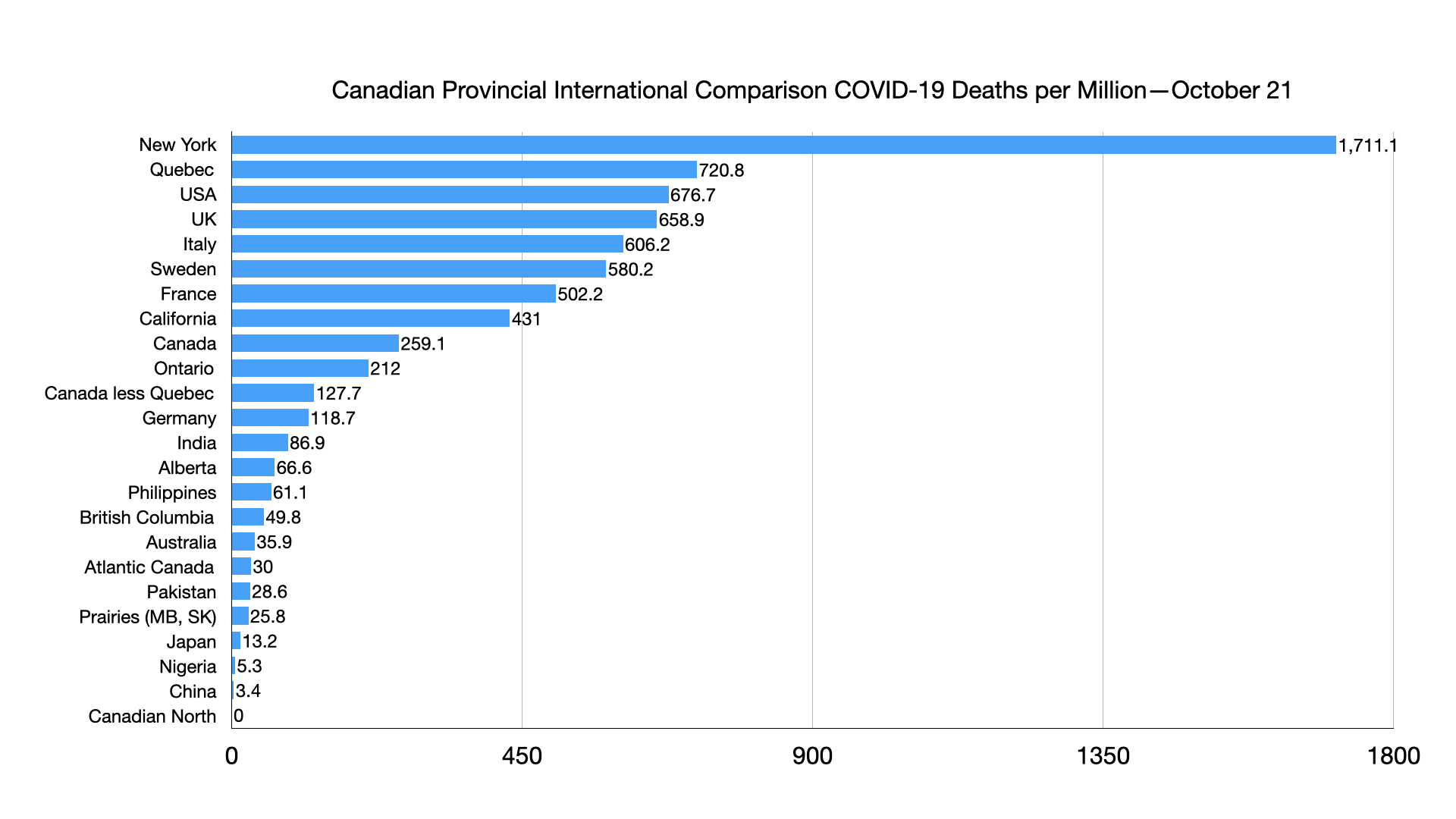
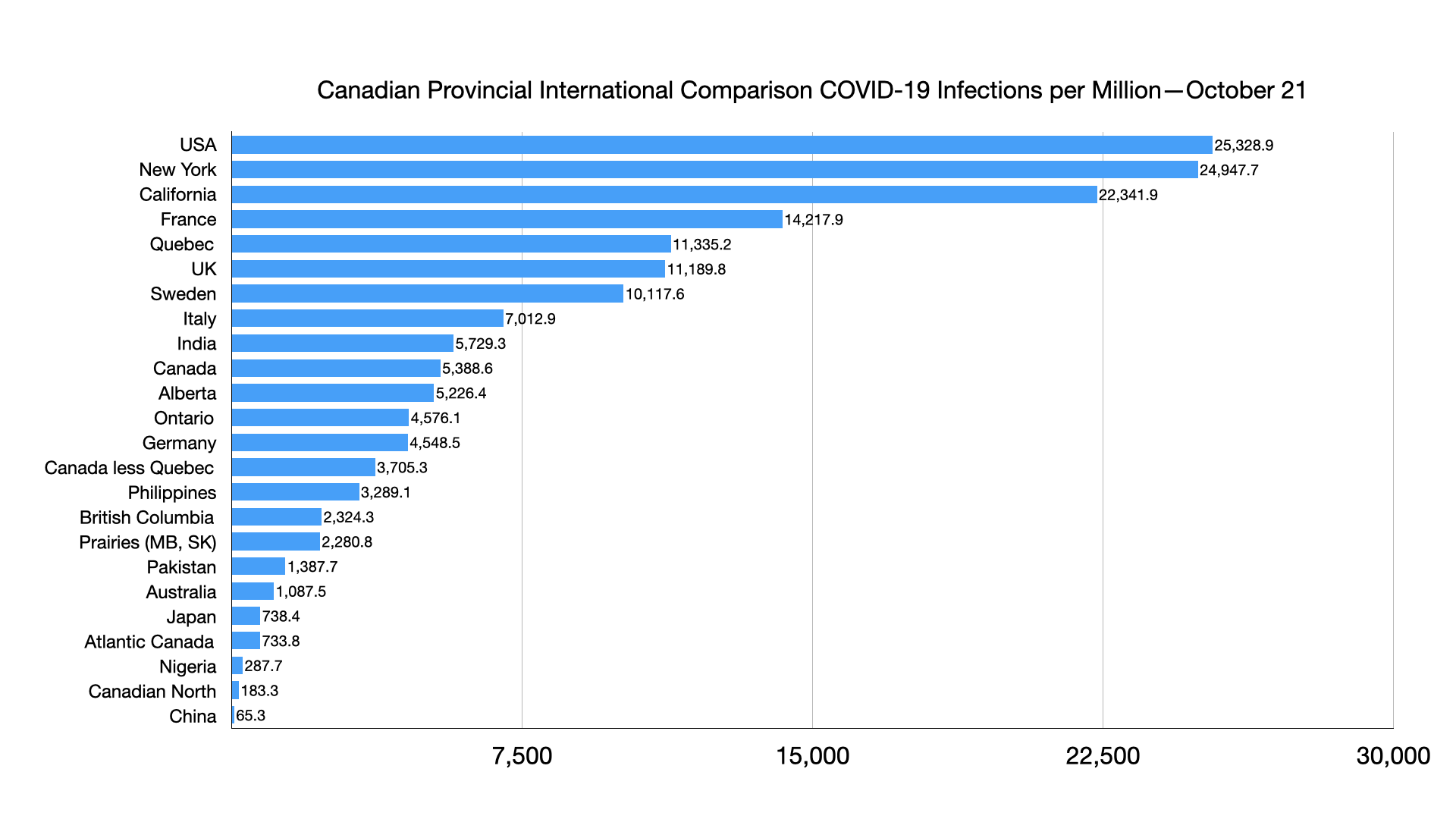
#COVID-19: Comparing provinces with other countries 19 August Update

Latest update. As UK revised the number of deaths by about 5,000, Quebec now has the highest death rate per million. Overall infection and death numbers continue to increase given the impact of some of the opening up measures.

Elsewhere they get it but the Australian media is still living in White Australia

Haven’t seen anything as comprehensive with respect to Canadian media although there have been partial samples showing underrepresentatioon:

Few would argue that Australian media does well at representing cultural diversity. Certainly not in a way you’d expect when we are a multicultural society, often trumpeted as the most successful of its kind in the world.

Now, for the first time, we have the numbers that show us just how representative – or rather, unrepresentative – the state of play is.

In our report, Who Gets to Tell Australian Stories?, we gathered data to provide the first comprehensive picture of who tells and produces stories in Australian television news and current affairs. We examined about 19,000 news and current affairs items broadcast on free to air television during two weeks in June 2019.

In their frequency of appearance on screen, we found that more than 75 per cent of presenters, commentators and reporters have an Anglo-Celtic background. While about 18 per cent have a European background, only 6 per cent of those on screen have an Indigenous or non-European background. Within our sample, none of the commercial networks had more than 5 per cent of presenters, commentators and reporters who have a non-European background.

Compare this with the Australian general population. Based on the 2016 Census figures on ancestry, the Australian Human Rights Commission has previously estimated that 58 per cent of Australians have an Anglo-Celtic background, 18 per cent have a European background, 21 per cent have non-European backgrounds, and 3 per cent identify as Indigenous.

It has been nearly five decades since an official multiculturalism was adopted in Australia. Yet that has had limited visible impact on our media.

To be fair, Australian media isn’t the only arena where this is the case. Anglo-Celtic and European backgrounds dominate the leadership ranks of politics, business, the public service and our universities. Our institutions fail to make the most of the talents within our society.

Diversity is often embraced only in name, and not in norms. If there’s a glass ceiling that many women in work hit, then those from minority backgrounds hit a cultural one. According to a survey we conducted as part of our research, more than 85 per cent of non-European background journalists believe having a culturally diverse background represents a barrier to career progression.

Representation, though, matters. It particularly matters for our television media: the medium shows us who we are as a people and as a culture. News and current affairs media have a special role in identifying and telling stories about issues of importance to all Australians.

Yet it’s overwhelmingly journalists who have Anglo-Celtic backgrounds who report, select and produce these stories. The result? Too often, media does a poor job of covering race issues.

For example, just about every time there’s a panel discussion about racism on commercial breakfast television, it involves an all-white panel that has minimal understanding of what has happened. Worse, commercial breakfast television currently seems to thrive on stoking prejudice. For sections of the media, racism is part of their business model.

Even our public broadcasters have their blind spots. For the past 10 years, the ABC’s Insiders program had no journalist who was a person of colour on its panel – something it has only rectified last month. Multicultural broadcaster SBS has recently been criticised for how it treated Indigenous journalists, and for the lack of cultural diversity within its senior management.

It’d be unthinkable for any television network to have a football commentary team on air, where not a single commentator would have experience playing the sport. By the same logic, networks should understand it’s a problem, in a multicultural society, when there’s little or no diversity within its news and current affairs.

Media elsewhere seem to get it. Indeed, Australian media lags significantly behind English-speaking counterparts. What we look like on screen can seem decades behind the United States and the United Kingdom. While they are themselves far from perfect, US and British media organisations have better collection and monitoring of data on their diversity. They’ve also been bolder at setting targets for minority talent.

For change to happen here, Australian media organisations will need to take similar steps. But more than that, there needs to be a cultural change in mindset. Too often, there is unwarranted defensiveness about criticisms concerning diversity. People can wrongly feel that a critique of systemic patterns of under-representation amount to personal attacks, or even a form of “reverse racism”. Deflections and denials come all too easily.

Talk about diversity and race will always spark debate. But it’s hard to argue with the evidence. In the case of our media, the numbers tell us we are still living in a White Australia, even if the White Australia policy was dismantled nearly 50 years ago.

Source: Elsewhere they get it but the Australian media is still living in White Australia

New controversy flares up over Lynn Beyak’s Senate-appointed anti-racism training

Hard to see this ending:

The “flames of negativity” that were stirred up by Lynn Beyak’s racist statements as a senator are being “reignited” by a controversy at the University of Manitoba, according to a residential school survivor.

Garnet Angeconeb questions the suitability of the man tasked with overseeing Beyak’s second attempt at cultural awareness and sensitivity training after Jonathan Black-Branch quietly left his post as dean at the University of Manitoba.

The university is not saying why. In an email to CBC news, a spokesperson said Black-Branch is no longer employed by the University of Manitoba and that his leave began on June 5, but would not elaborate.

Black-Branch was also removed from his position on the governing body of the Law Society of Manitoba, a position reserved for the dean of the law school.

Both moves speak to the need for a wider probe into the handling of Beyak’s discipline and the qualifications of the man tasked with educating her, said Angeconeb who is from Lac Seul First Nation in northwestern Ontario.

“The issue with Lynn Beyak continues to throw flames on a fire that was under control,” Angeconeb said of the harm the on-going saga is causing. “It stirs up unresolved trauma for survivors.”

Beyak, who has publicly praised residential schools as “well-intentioned”, was first suspended from the Senate in 2019. The move came after she declined to remove letters from her website that described First Nations people as lazy and inept and refused to apologize for posting them.

She was ordered to complete education and training to improve her understanding and awareness of Indigenous issues before returning to her senate seat.

Beyak failed her first attempt, when the Ontario Federation of Indigenous Friendship Centres said Beyak created an “unsafe learning environment” with false claims to a Metis identity and other comments. Beyak denied making those claims.

In May, the Senate appointed Black-Branch as an “eminently qualified” person to design and deliver a new training program for Beyak.

After delivering a total of 24 hours of training, by video, Black-Branch concluded that “Senator Beyak is now better equipped ‘for approaching her professional work and her personal beliefs'”, according to the report of the Senate ethics committee, in June.

Senators are set to discuss the report on September 22.

‘Racism is a disease’

“There are a lot of questions about how this training was delivered, how meaningful it was,” said Danielle Morrison, a spokesperson for the Coalition to Remove Lynn Beyak from Senate, of which Angeconeb is also a member.

Residential school survivors should have the final say when it comes to determining whether Beyak’s training was a success, she said.

“Racism is a disease. It is one of the biggest pandemics affecting our world right now,” Morrison said. “This is a moment when people should ask themselves ‘am I on the right side of history?’

“How do you measure someone’s success in being an anti-racist? That assessment has already been made by survivors.”

‘Political fluff’

Angeconeb said Beyak could show her training was a success through her actions. For him that means another apology, beyond the carefully scripted ones she gave in the Senate.

“It needs to come from somewhere in her home-town of Dryden, in front of Anishinaabe people,” he said. “Otherwise these are just apologies of convenience to save her Senate seat. It’s just political fluff.”

After decades of anti-racism work and advocacy on behalf of survivors, Angeconeb said he is heartened that residential schools are “at the forefront of the conversation” about reconciliation in Canada.

But he said “side-bar issues” such as Beyak’s behaviour and the on-going legal wrangling over compensation for survivors of St. Anne’s residential school are “really hurtful.”

“I continue to be upset and I continue to be angered by that,” he said.

Source: New controversy flares up over Lynn Beyak’s Senate-appointed anti-racism training

Canada’s federal security and intelligence establishment encouraging employees to self-identify

Further to the earlier Hill Times story. Having gone through some of the recent reports (still awaiting a few), my general observation is the lower the representation numbers, the longer the reports and the more words describing the various initiatives underway). That being said, their cultures are different from elsewhere in the public service and thus the challenges greater:

A number of organizations in Canada’s security and intelligence establishment, including the Communications Security Establishment, the Canadian Security and Intelligence Community, the Department of National Defence, and the Canada Border Services Agency have been conducting campaigns to encourage employees who belong to one of the four designated groups listed in the Employment Equity Act—women, Indigenous people, members of a visible minority, and people with a disability—to self-identify, as part of their efforts to improve data collection and hiring practices.

The National Security and Intelligence Committee of Parliamentarians, composed of 11 MPs and Senators and chaired by Liberal MP David McGuinty (Ottawa South, Ont.), focused on diversity and inclusion issues in the security and intelligence community in its most recent annual report.

The report notes that one of the challenges in the security and intelligence committee surrounds voluntary self-identification.

But the report also notes that “self-identification campaigns and internal communications are [a] way organizations try to increase awareness on these issues,” and that the Canada Border Services Agency (CBSA), the Canadian Security Intelligence Service (CSIS), the Communications Security Establishment (CSE), and the Department of National Defence (DND) have conducted campaigns to “demystify the self-identification process and encourage employees to self identify.”

The Hill Times reached out to the four organizations noted in the report for more information on how they have done that.

Communications Security Establishment

Diversity and inclusion is an important element in ensuring that the Canadian security and intelligence community can effectively protect Canada, said Ryan Foreman, a media relations representative with the Communications Security Establishment (CSE).

Mr. Foreman outlined a number of initiatives undertaken by the CSE to encourage self-identification, including a 2017 push to increase organizational awareness of the requirements of the Employment Equity Act, and to explain how a diverse workforce strengthens CSE’s ability to deliver on its mandate.

“This included providing data to managers, and developing strategies to attract job applicants from underrepresented groups,” said Mr. Foreman, who also noted that CSE launched a self-identification campaign called “Show us what CSE is made of,” which was designed to encourage employees to self-identify.

“The messaging for this campaign communicated the importance of employment equity data and its impact on other organizational initiatives, such as recruitment and training,” said Mr. Foreman. “Both the 2017 initiative and the self-identification campaign started in 2018 are on-going.”

Canadian Security and Intelligence Community

“As Canada’s security and intelligence service, it is critical that CSIS reflects the communities it protects, wrote CSIS spokesperson John Townsend in an email to The Hill Times. “To this end, CSIS has implemented an ongoing internal communications campaign to encourage employees who belong to one of the four designated groups listed in the Employment Equity Act to self-identify.”

“The campaign includes an annual Employment Equity questionnaire among other tools to advise employees on the importance of self-identification.”

Ninety per cent of CSIS employees have engaged with these tools, according to Mr. Townsend.

“The work of making CSIS more representative of Canada is never finished but our commitment is steadfast and our efforts continue,” wrote Mr. Townsend.

Department of National Defence and the Canadian Armed Forces

Staff at the Department of National Defence and members of Canadian Armed Forces have returned self-identification forms at a greater rate this year than in the past, thanks to organizational efforts to spread the word about the importance of self-identification, according to Major Smyth, spokesperson for DND.

The Employment Equity Act requires that every member be provided the opportunity to self-identify as a member of a designated group, but it remains voluntary to do so.

As such, employment equity representation rates are based on a voluntary process and may not represent the actual employment equity representation in CAF, according to Mr. Smyth.

“Overall, the CAF continues to improve upon its self-identification return rates,” said Mr. Smyth. “The first part of the self-identification form is a personal identification portion. For this portion, the regular force achieved its highest return rate yet with 97.5 per cent of [members] having had the opportunity to self-identify as a member of a designated employment equity group.”

“While the return rates are lower in the primary reserve units, the CAF saw an overall increase in self-identification as designated group members from both regular force and primary reserve members compared to 2017/18.”

“Current representation rates, as of July 2020, for the regular force and the primary reserves combined, were as follows: women, 16 per cent; visible minorities, 9.3 per cent; and Indigenous Peoples, 2.8 per cent.”

DND/CAF did not identify the representation of persons with disabilities as of July 2020 in their response to The Hill Times.

The CAF works closely with Statistics Canada to ensure that “labour market data they provide, and upon which the CAF sets its employment equity representation rate goals, is reflective of the unique occupations and employment criteria of the CAF.”

“DND/CAF is committed to reflecting the Canadian ideals of diversity, respect and inclusion. Both long and short term goals have been created, based on the labour market analysis provided by Statistics Canada. We review our progress regularly to ensure that we are always working towards increasing representation rates,” said Mr. Smyth.”

Canadian Border Services Agency

The Canada Border Services Agency’s campaign encouraging self-identification began in 2017 and was repeated in 2018, according to Jacqueline Callin, spokesperson with the agency.

“They stressed the importance of understanding our workforce composition and reinforced that employee information would be protected. Recognizing that the Agency’s manual process might be contributing to response rates of 61 per cent, an online form was piloted with success in 2019 and was set to be launched in March 2020 as part of our ‘Your Voice Matters’ campaign. It has been postponed due to the current COVID-19 pandemic and current efforts are focused on how best to virtually promote self-identification,” she said.

Employment Equity Act ‘has served Canada and the public service well,’ says expert

Andrew Griffith, who is the former director general for Citizenship and Multiculturalism and has worked for a variety of government departments in Canada and abroad, told The Hill Times that the Employment Equity Act has served Canada and the public service well, and that the diversity of virtually every group has increased since the act was introduced.

“So the basic structure of the act, I think, has worked in the reporting structure and the data collection, and the publicity that comes with the results,” said Mr. Griffith, who is a fellow of the Canadian Global Affairs Institute and Environics Institute.

“But if you re-open the act, I’m just not sure that it’s worth all that much effort, time, and invariable divisiveness and controversies that it will raise,” said Mr. Griffith. “I’m thinking that if you want to use government time wisely, it would be more effective, I would think, [to look] at specific anti-racism initiatives and look at some of the specific barriers rather than a wholesale of revision of the act, because I think the challenge is less with the act and more with some of the practical stuff.”

Source: Canada’s federal security and intelligence establishment encouraging employees to self-identify

Mississauga Hindu temples’ outdoor hymns expose public divide during pandemic

Of note:

Hindu temples across Mississauga have begun broadcasting daily hymns outdoors for believers who are unable to gather in large groups and partake in three major Hindu festivals after the city granted them a noise bylaw exemption.

The exemption mirrors one made for Mississauga mosques in May, so they could broadcast a daily call to prayer during the Muslim holy month of Ramadan. At the time, a small Hindu group was opposed to the idea, but now say if Muslims are allowed an exemption, they should be too.

In late April, some Mississaugans voiced strong opposition to the city’s exemption for calls to prayer. A Facebook group called “Mississauga Call to Prayer on LoudSpeaker Unconstitutional,” which had 10,445 members on Thursday, was fundraising to pursue legal action against the city over the decision after it was approved.

Canadians United Against Hate released a statement asking city council to uphold the decision, saying many of those who were putting pressure on city hall were “Islamophobic and racist elements in Mississauga.”

The community debate in Mississauga exposes a divide over public space and sounds during a pandemic when people are reluctant to gather indoors.

“Initially we opposed calls for prayers during the holy month of Ramadan,” said Rao Yenbamuri, president of Hindu Forum Canada (HFC) – a seven-member Mississauga-based not-for-profit formed in March. A May 2 letter on the group’s website called it “a violation of our secular values.”

“We think that such a precedent would not be practical in a multifaith community, that’s the reason we opposed it,” he said in an interview with The Globe and Mail, adding that despite multiple attempts to communicate with politicians, the decision went forward. “So given these circumstances, we would like the same privileges to be extended to us.”

Amira Elghawaby, a journalist and human-rights advocate who sits on the board of Anti-Hate Network Canada, said many Canadian Muslims face Islamophobia and discrimination under the guise of secularism.

“We see that happening very prominently in Quebec with Bill 21,” she said, referring to a law that prevents many public servants from wearing religious symbols at work, “and we saw it happening in Mississauga and other jurisdictions in the country when the call to prayer was permitted during the month of Ramadan because of the pandemic.”

Ms. Elghawaby also said there was no need “to create us versus them narratives” between both communities.

“I think it’s important to understand that Canada is a country of diversity and diverse raising and diverse backgrounds of people, and all of that is what makes our country strong and rich,” she said. “And we all actually get stronger when our communities are able to fulfill their identities in ways that [are] meaningful to them.”

Kushagr Sharma, a volunteer for Mississauga’s Hindu Heritage Centre, says broadcasting the hymns will help build a sense of connection for many who felt isolated during the COVID-19 pandemic.

“A lot of seniors want to come to the temple, just to be there physically but not come inside,” he said.

“So a lot of people would come outside, do their prayers in their cars and leave. But they weren’t able to hear the hymns and the prayers that go on.”

Playing the hymns outdoors also ensures seniors and other vulnerable community members can feel safe, Mr. Sharma said. The temple is not affiliated with HFC and had no prior knowledge of its opposition to broadcasting calls to prayers during the month of Ramadan, he added.

The bylaw exemption allows the temples to broadcast religious hymns every night at 7 p.m., for five minutes, between Aug. 11 and Sept. 1.

Varsha Naik, executive director of the Regional Diversity Roundtable of Peel, and a long-time member of the Interfaith Council of Peel, said all faith communities need places where they feel safe to practise their respective religions.

“We need to ensure that nobody in the community gets isolated,” Ms. Naik said. “And especially with COVID-19, we need to create that sense of community, that sense of celebration.”

Source: https://www.theglobeandmail.com/canada/article-mississauga-hindu-temples-play-hymns-outdoors/

Be prepared: The road to any change in policing will be long and arduous

Good thoughtful and realistic commentary by Richard Fadden,former national security adviser to the prime minister, director of the Canadian Security Intelligence Service, deputy minister of national defence and deputy clerk of the Privy Council:

It is now beyond reasonable debate that the issue of systemic racism in our law-enforcement institutions must be seriously addressed. This is not to suggest that every police service is equally flawed, or that every officer acts unacceptably, consciously or not; indeed, we must avoid ascribing all of society’s ills to the police who serve us, lest we throw the baby out with the bathwater, and ignore how other social institutions also contribute to systemic discrimination. But clearly, the current model of policing needs to change.

Political leaders, legislators, police board members, city councils and police chiefs in Canada and the United States have acknowledged as much, and with various degrees of specificity, have said that something must be done. What that might look like remains difficult to discern. Some have suggested the abolition of some police forces altogether; that is a non-starter, and will only divert attention away from more effective ways of dealing with the issue. Defunding is a more complicated proposal; most police forces are already underfinanced, but a careful look at how public funding is being used would be a worthwhile undertaking. Some police practices likely need to be more strictly limited or forbidden, including chokeholds and carding, while new ones should be mandated. And police-training curricula should be reformed so that they’re about more than just firearm requalification and criminal-law updates; it must be disseminated repeatedly over the course of all levels of a police career, and must send the message that the coercive power of the state should always be the last resort.

But whatever the solution is, it will be important to understand that change will be profoundly difficult – indeed, far harder than any simple message being delivered – because of the closed-personnel nature of these police services.

Closed-personnel organizations are ones in which young men and women join as recruits, plan to stay for their entire careers and work toward promotion within that force (some entry at mid-level is possible, but is relatively rare). Such systems aren’t the exclusive domain of police forces; they can also be found in intelligence agencies, foreign services, the military and in many religions.

All organizations develop a culture that determines not so much what they do but rather how they carry out their work, and police services are no exception, with the culture pervading widely across this closed loop. But while police culture varies from jurisdiction to jurisdiction and is a function of many factors, a crucial commonality is that officers spend the majority of their time dealing with a small part of the population that the rest of us would often rather not hear about. This gives rise to a we-versus-them mentality – one that’s amplified by the closed-personnel systems and their practical requirement that members strongly support one another, often against any outsiders. The pressures of this culture of conformity and mutual support also make it difficult to operate within the structure. Policing’s hierarchical, command-and-control approach to managing and standardizing behaviour – as is required by the considerable power held by individual police officers – should make it easier to discipline “bad apples.” Instead, police culture tends to counterbalance the ability of chiefs to act.

Over the course of my career, I’ve worked with police officers from many forces. Virtually all of them impressed me with their dedication, work ethic and belief that their role was central to peace, order and good government. But I remember that most only ever wanted to discuss their good qualities; areas where improvement might be possible were rarely ever raised. With some notable exceptions, usually at the chief level, they were professionally very conservative and resistant to any suggestions from outsiders such as myself, my colleagues, or cabinet ministers.

Without a shadow of a doubt, statements to press for change by political leaders, legislators and police chiefs are necessary, but they’re far from sufficient. Consider the challenges in dealing with sexual abuse among the Roman Catholic clergy despite the views of the Pope, or the Canadian Armed Forces’ sexual-harassment crisis despite the efforts of the Chief of the Defence Staff. Indeed, it is telling that front-line officers and their unions or associations are often missing from the list of those agitating for change.

To get officers on board, organizations that work with the police should, at minimum, transparently acknowledge their own complicity in policing’s problems. To suggest that police boards, city councils, responsible ministers, Crown counsel and criminal law courts knew nothing of these appalling practices is to suggest either gross negligence or incompetence, when neither view is warranted. This broader insensitivity to systemic racism is part and parcel of the issues in our police.

Systemic discrimination or racism anywhere is an assault on what most Canadians believe and what the Charter demands. Because of how police services are organized, however, transformation is going to be arduous and slow. Police chiefs working inside their organizations cannot do this alone: a considerable amount of political capital, structural untangling and society-wide patience is going to have to be expended if the long mission ahead has any hope of succeeding.