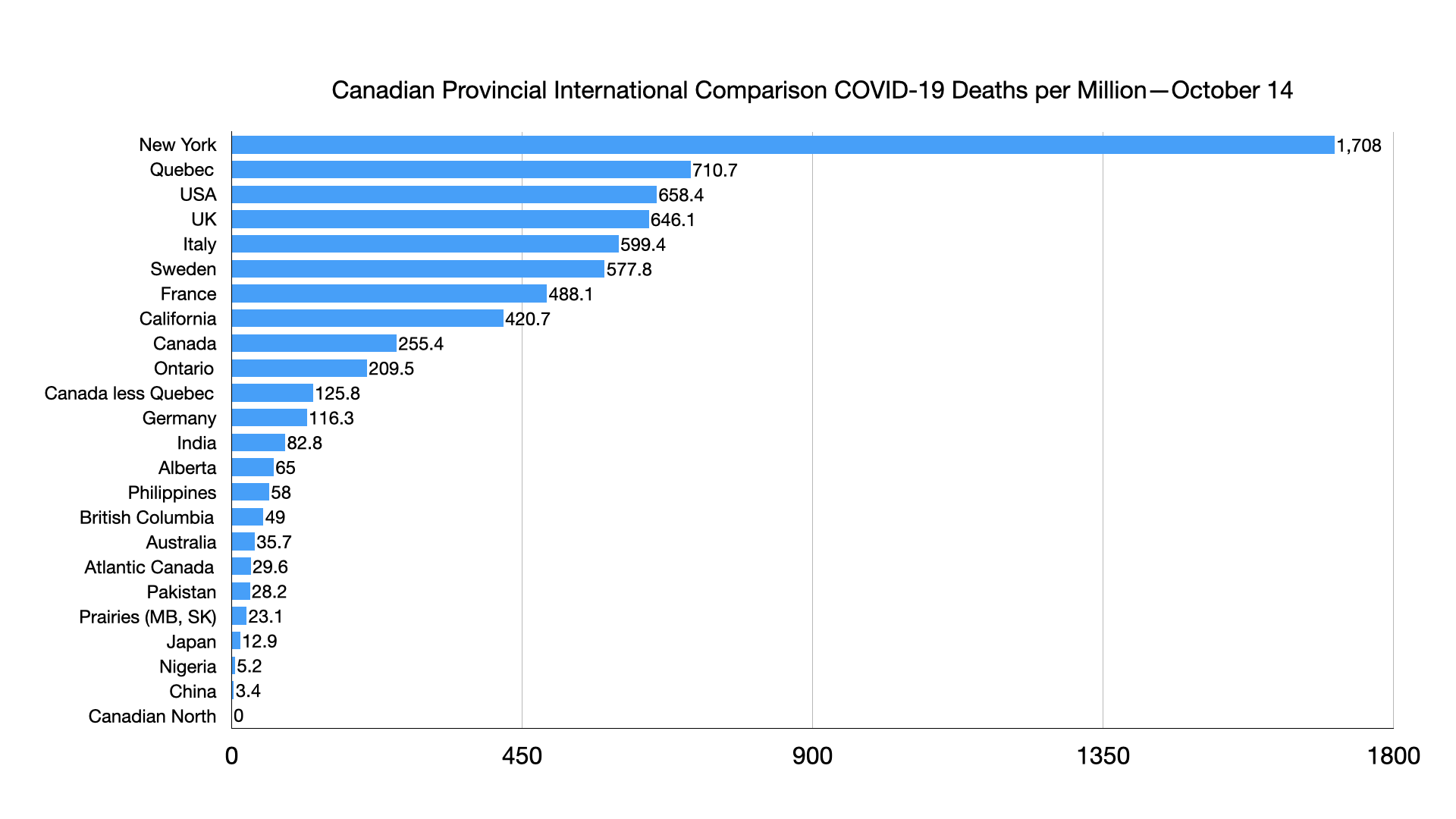
Always useful to have historical and social context, rather than contemporary reflexes only:
I was happy for two reasons when I heard earlier this week that Israeli actress Gal Gadot had been tapped to play Cleopatra in her latest Hollywood incarnation. First, she’s a star who could help popularize the legendary queen in a rare female-directed blockbuster. Second, like myself and Cleopatra, she’s from the Middle East. I celebrated this fact with my partner, a fellow Middle Easterner from Lebanon and Turkey, who was excited in the same spirit of regional solidarity.
Claims that the casting was another example of “whitewashing” had an amusing side to them since no one seemed to agree on what exactly the acceptable ethnic origin for the actress playing Cleopatra is.
But we knew controversy was soon to follow given the demands of the current social climate that roles only be played by a person of the same ethnicity as the character. In this case, though, claims that the casting was another example of “whitewashing” had an amusing side to them, since no one seemed to agree on what exactly the acceptable ethnic origin for the actress playing Cleopatra is: North African, African, Arab and Egyptian were suggested. In other words, anybody from the region except Jewish Israelis.
The controversy shows a misunderstanding of history and an unfortunate persistence of racialized thinking about both Gadot and Cleopatra, two women born some 2,000 years apart in two relatively close parts of the Eastern Mediterranean. The fact that neither one’s background can be easily distilled shows why it’s wrong to insist that artists fit rigid identity boxes to qualify for a role and to treat historical figures as markers in our modern-day divides, rather than celebrating individuals for their talents and civilizations for their diversity. To do otherwise denies humanity its rich multicultural heritage.
“Was Cleopatra white?” is an essentially meaningless question since categories and morphologies of race in the United States of 2020 are not those of 1st century B.C. Egypt. And they are particularly inappropriate given that Cleopatra and the region she dwelled in were defined by a breathtaking array of cultural mixing — something the critics of her casting would do well to remember.
When Cleopatra was born in 69 B.C., her birthplace of Alexandria was the capital of Egypt’s Ptolemaic Kingdom. Though located on the southern side of the Mediterranean, the ruling monarchy was rather conscious of its Greek origins and wanted to maintain that cultural status; intermarriage with the native Egyptians was forbidden in Alexandria and other cities, although this wasn’t always observed.
The kingdom was part of the effervescent Hellenistic Eastern Mediterranean in which Cleopatra’s mother tongue, Koine Greek (the standardized dialect of Athens), was the lingua franca for the exchange of goods and ideas. The dynasty she was born into had been founded about two centuries earlier by its namesake Ptolemy, a companion of Alexander the Great whose conquests from Egypt to India laid the foundations of the Hellenistic world. The kingdom’s diverse people included Egyptians, Nubians, Syrians, Celts and Jews, some of whom would occasionally be granted the coveted status of Greek elites.
Either way, the debate over her DNA misses the much more interesting part of Cleopatra’s biography and the mix of worlds she encompassed by nurture if not nature. Although she had been born into an Alexandria with segregation between the ruling Greeks, native Egyptians and other ethnic groups such as Jews, her own outlook defied this rigid separation.
When Cleopatra came to the throne jointly with her brother in her late teens, Cleopatra became the first-ever Ptolemaic ruler to fluently learn the local Egyptian tongue. (The language is now extinct, but a form of it was spoken until around the 16th century and is now preserved as the liturgical language of Egypt’s Coptic Christian minority.)
Cleopatra also dressed and styled herself like an Egyptian, elevated Egyptian religious practices and identified herself with the Egyptian goddess Isis. If we are to believe the tall tales of her first-century Roman biographer Plutarch, she not only possessed an “irresistible charm” but spoke fluent Ethiopian, Arabic, Syriac, Parthian and Hebrew (one thing in common with Gadot, at least.) This probably exaggerated multilingualism wasn’t due to linguaphilia but her self-nativization attempts to help spread her authority in the region, challenged as it was by the might of Rome.
Ironically, her origins were the subject of conversation then, too. Her Roman opponents inflicted racist scorn on her, with Roman ruler Augustus deriding her as an “Eastern courtesan” and Latin poets Horace and Virgil speaking of her as a conniving “oriental.”
The black-and-white thinking that confines Cleopatra and Gadot to racial boxes ignores the complexities of human commonality and community. Gadot can indeed be a white-passing actor in the U.S. while also being a fellow Middle Easterner to Iranians like me, despite the unfortunate conflicts that pit our nations against each other. Someone who celebrates her origins from a “small country in the Middle East,” Gadot is certainly as fit as anyone to play Cleopatra — their hometowns are only a half-day’s drive away, after all.
The knee-jerk anxiety about unmatched ethnicities of actors and characters is understandable. The history of cinema is full of hurtful portrayals by white actors, ranging from the gruesome blackface donned by Al Jolson in the landmark sound film “The Jazz Singer” to Mickey Rooney’s infamous Mr. Yunioshi in “Breakfast at Tiffany’s” to Alec Guinness’ anti-Semitic Fagin in “Oliver Twist.” But the problem with these portrayals is their demeaning caricaturization — something that no one expects in the coming Cleopatra film.
Meanwhile, if we are to truly expand representation on screen, maybe we can look at some other ancient female leaders? How about a film on the 2nd century B.C. Nubian Queen Shanakdakhete, who reigned in today’s Sudan? Or a biopic on the 1st century A.D.’s Musa? Believed to be he first woman to have ever ruled Iran, she was originally an Italian slave gifted to the Parthian monarch of Iran by Augustus, the very tyrant who defeated Cleopatra. Maybe we can fictionalize history and watch her rise and take revenge for Cleopatra? I’d watch Iranians and Italians fight over who gets to play her any day.
As authorities scramble to confront a second wave of Covid-19 building across America, anger is mounting against government efforts to stop the spread within a population among those hardest hit by the pandemic: the sprawling ultra-Orthodox Jewish community of metropolitan New York.
For the ultra-Orthodox to complain that they’re being discriminated against when they come under extra scrutiny is essentially to complain that it’s anti-Semitic to notice what they’re doing.
With the pandemic in its eighth month and restrictions cutting into the religious practices of the tight-knit, strictly observant subculture, it’s understandable that weariness and impatience would set in. Unfortunately, that’s leading to a growing sense in the community that it is being singled out unfairly for deprivation of its religious rights, often accompanied by open complaints of anti-Semitism as the cause for the lockdowns.
It’s a dangerous misperception, for both the ultra-Orthodox and their neighbors. The virus doesn’t single out groups by religion, race or national origin; it’s an unbiased scourge. Nor are New York officials’ containment efforts guided by any such bigoted motives. Enforcement goes where the germs are. And the germs, tragically, are hitting ultra-Orthodox Jews with special fury.
From the beginning of the crisis in March, densely populated ultra-Orthodox neighborhoods in Brooklyn, Queens and key suburbs emerged as leading viral hot spots in hard-hit New York. Their outsize vulnerability was due in large part to a traditional religious culture built on a continuous cycle of obligatory, large-scale gatherings for prayer, study, weddings and funerals, all cherished rituals that can and apparently did serve as super-spreader events.
Compounding these risks has been the mundane physical structure of the insular ultra-Orthodox lifestyle, built on large families’ living in cramped homes packed into dense neighborhoods, making social distancing extraordinarily difficult.
But because those are religious obligations and cornerstones of their Jewish identity structure, government-mandated lockdowns and social distancing can and too often did look from an ultra-Orthodox perspective like government assaults on the religion itself.
It might seem surprising that the community’s behavior hasn’t been dictated from start to finish by the fundamental Jewish principle known as “protection of human life” — the commandment that nearly all religious rules be suspended if a human life is the balance. And, indeed, while many respected rabbis urged members of the community to follow that guidance, it appears that the principle was hard to visualize when the threat wasn’t an enemy gun or a car crash — events that Jews regularly violate religious restrictions to address — but an invisible bug.
That difficulty wasn’t helped by a small but influential minority within the community that has been nodding toward a competing principle — that of sanctifying God’s name by openly defying oppressors’ bans, even at risk to one’s own life and limb. While rarely stated aloud right now, this notion has been encouraged by a handful of well-known rabbis, most of them Israelis with strong followings in the United States, and, more subtly, by a deep-seated distrust of the modern world and its dictates, which often take the form of medical directives.
After a long spring of cat-and-mouse police chases after clandestine synagogue services and other attempts by the ultra-Orthodox to evade quarantine, followed by the summer slowdown in infections, the New York City health department reported startling new statistics in late September showing that certain neighborhoods in Brooklyn and Queens, most of them featuring large ultra-Orthodox populations, were reporting virus test results averaging 4.7 percent positive, compared to just over 1 percent in the rest of the city. Two weeks later, the average jumped to more than 6 percent.
The nine “red zone” ZIP codes on the state map of the highest infection rates at that time — which carried the heaviest public restrictions as a result — were nearly all major ultra-Orthodox population centers. Among other things, houses of worship in red zones were limited to 10 attendees at a time under a policy announced by Gov. Andrew Cuomo.
Ultra-Orthodox community leaders maintain — and government authorities largely agree — that most ultra-Orthodox Jews are following government mandates and that violators represent only a minority. That minority, however, seems to be large enough to push the entire community into vastly disproportionate infection territory, given that observance by a vague “most” isn’t sufficient to stop the virus.
Yet the reaction of much of the ultra-Orthodox community has been to protest the lifesaving government restrictions — sometimes violently — and to paint them as anti-Semitic. In a typical example, a weekly tabloid with a mostly Orthodox readership touted on its front page an essay headlined “De Blasio And Cuomo Have Declared War On Us,” which accused the governor and New York Mayor Bill de Blasio of “treachery and blatant anti-Semitism” and claimed that they “want to destroy our schools and way of life.”
And in a toned-down critique, Agudath Israel of America, the main advocacy body representing ultra-Orthodox Jews, argued that while the ban on large services “discriminates against all religions,” it “disproportionately impacts the religious services of Orthodox Jews,” who would be shut out from traditional synagogue observance of two major religious holidays.
But for the ultra-Orthodox to complain that they’re being discriminated against when they come under extra scrutiny is essentially to complain that it’s anti-Semitic to notice what they’re doing. And in this case, defiantly maintaining tradition doesn’t risk just their own lives, which is their prerogative, but their neighbors’ lives, as well. The trap they’re caught in is tragic, but society has a right and an obligation to protect its people’s welfare.
Indeed, the greater anti-Semitism threat likely comes not from failing to defend Jewish rights but from trying too hard. When Jewish communities, Orthodox or not, ask for special accommodations to meet their particular needs, it’s often seen by other communities as cutting in line, wheedling extra privileges while broader needs go unmet.
To be sure, part of the ultra-Orthodox misperception that anti-Semitism is at work comes from memories of long centuries when anti-Jewish powers forced Jews to give up their traditions or take them underground. These memories, and the alarms they trigger, are familiar to Jews of every religious and ideological stripe.
Throughout their history, Torah-observant Jews have faced emergencies that have forced them to compromise and bend some laws, sometimes permanently.
At the same time, it’s precisely this history that should serve as a guide for the ultra-Orthodox community today in combating Covid-19. Throughout their history, Torah-observant Jews have faced emergencies that have forced them to compromise and bend some laws, sometimes permanently.
Disasters, usually in the form of anti-Semitic persecution, have forced them to drop some practices and amend others to survive until better times returned. So it was after the Roman destruction of Solomon’s Temple in ancient Israel and during the Spanish Inquisition, the medieval Polish-Ukrainian pogroms, the Soviet era and the Holocaust.
But America isn’t any of those things. Instead, it is the ultra-Orthodox community itself that right now poses the most danger to its own continuity.
August immigration numbers continued to drop for permanent residents compared to July with a slight increase in temporary workers
PRs: Admissions continued to decline from 13,650 in July to 11,315 in August, driven by the decline in Economic. August Year-over-year decline: Economic 70.8%, Family 48.6%, Refugees 60%
Applications: Increase from 10,380 in May to 11,957 in June. June year-over-year decrease 77.2%
Provincial Nominee Program: Decrease from 3,050 in July to 1,969 in August. August year-over-year decrease: 77.7%
TR to PRs transition: Further decrease from 2,950 in July to 1,705 in August (some double counting). August year-over-year decrease of 86.9% (i.e., those already in Canada)
Temporary Residents:
TRs/IMP: Slight increase from 11,475 in July to 12,565 in August. August Year-over-year decline: Agreements 38.4%, Canadian Interests 49.8%
TRs/TFWP: Slight decline from 8,060 in July compared to 7,390 in August. August year-over-year decline: Caregivers 53.4%, Other LMIA 25.2%. Agriculture had a significant increase of 73.8%, perhaps reflecting a later start this year
Web “Get a work permit”: From 69,931 in August to 65,397 in September (outside Canada). September Year-over-year decline: 64.5%
Students: Sharp increase from 13,455 in July to 40,130 in August (peak month). However, August year-over-year decrease: 64.5%
Applications: Stable from 3,352 in May to 3,286 in June. June Year-over-year decrease: 91.6%
Web “Get a study permit”: From 67,292 in August to 59,474 in September (outside Canada). September Year-over-year increase: 12.5%
Asylum Claimants: Increase from 885 in July to 1,030 in August (about 75% inland). August year-over-year decrease: 83.7%
Settlement Services: Decline from 112,380 in April to 101,415 in May. Year-over-year decrease 9.8 percent
Web “Find immigrant services hear you”: From 13,216 in August to 6,007 in September (outside Canada). September Year-over-year decrease: 57.6%
Citizenship: Increase from virtually none in May (53) to 1,656 in June. June Year-over-year decrease: 92.0%.(2019 monthly average was about 20,000)
Web “Apply for citizenship”: From 39,479 in August to 41,263 in September (outside Canada). September 2020-2018 increase: 39.3%
Visitor Visas: Complete shutdown. China authorizations declined faster and sharper
Will look forward to the eventual evaluation of the program to assess its impact (when I worked in multiculturalism, the small size of the projects helped the various organizations but the longer-term impact was questionable):
The Liberal government has announced new funding for 85 anti-racism community projects designed to lower socio-economic barriers for racialized Canadians, tackle online hate, and monitor extreme-right groups.
Diversity and Inclusion Minister Bardish Chagger announced the projects on Thursday that would together receive $15 million under the federal Anti-Racism Action Program, the community-project component of the three-year, $45-million anti-racism strategy the federal Liberals launched last year.
Since its unveiling, the Liberal government has come under increasing pressure to boldly tackle systemic racism in Canada, particularly after anti-Black racism protests were held in American and Canadian cities following the death of George Floyd last summer.
In a scene captured on video and shared on social media to mass outrage, Floyd was a Black man who died while being aggressively pinned down by a Minneapolis police officer.
“We’ve seen the reality of racism at the front of global and national attention,” Chagger said in her virtual announcement.
“We can’t pretend systemic racism doesn’t exist in Canada. We’ve also seen how the COVID-19 pandemic has exposed and amplified the many systemic inequalities present in our country.”
Projects include the Nova Scotia-based Black Business Initiative, which is getting $151,000 to tackle discriminatory structures in hiring and employment, and an initiative by Legal Aid Ontario, which is receiving $285,000 to improve race-based collection of data on the bail system.
The Canadian Anti-Hate Network is also getting $268,400 to hire four people to help monitor extreme-right groups and report on their activities.
The work of the network has taken on new urgency since its founding two years ago, said one of its board members, Amira Elghawaby, during Chagger’s announcement.
“There are more members and supporters of hate groups and dangerous conspiracy groups than there have been in at least a generation,” she said. “They’re harassing people. They’re killing people, and they need to be stopped, or at least contained.”
She said the money it’s getting from Ottawa, the first for the organization, will help it continue its exposure on social media of far-right activities, and its promotion of multiculturalism. The money will also allow it to actively fight hateful activities, not just research them.
B.C.-based Justice for Girls will get $206,970 to help Indigenous women and girls access justice, education and employment.
The Anti-Racism Action Program received a total of 1,100 applications in late 2019. Around 80 projects will likely involve Black and Indigenous communities.
The Liberal government has said the strategy is its first step in tackling systemic racism. In early July, Prime Minister Justin Trudeau asked his cabinet to create a “work plan” with concrete actions to fight the problem.
Last month’s speech from the throne outlined in broad strokes the Liberals’ plan. It included new legislation meant to: tackle systemic inequalities in the criminal justice system; do more to combat online hate; and increase economic opportunities for members of marginalized communities.
In a statement on Thursday, Trudeau spokeswoman Ann-Clara Vaillancourt said the government’s plans to tackle racism “will be further outlined in ministers’ mandate letters, which will be release in due course.” She said the government had made addressing systemic racism a “top priority” in the speech.
Chagger did not say when Canadians can expect more details of legislation that would enact those measures.
However, she said community organizations have told her it’s critical they get funding for more local anti-racism projects.
“We will continue ensuring that we work with community in partnership, because it’s instrumental that the decision-making table reflects the diversity of the country, and at minimum, be informed by the lived experiences of Canadians,” she said.
Unlike other anti-racism initiatives the Liberals campaigned on in the 2019 election, the promise to double funding for the anti-racism strategy wasn’t mentioned in the throne speech.
When asked about the election commitment on Thursday, Chagger would only say, “We will continue to build upon our commitments.”
Anti-Asian bigotry and conspiracy theories spiked on Twitter immediately following President Donald Trump’s Covid-19 diagnosis this month, new findings reveal.
The report, released last week by the Anti-Defamation League, a civil rights group, examined Twitter activity surrounding Trump’s diagnosis on Oct. 2. Researchers found an 85 percent increase in anti-Asian rhetoric and conspiracy theories on the platform in the 12 hours following the announcement, many blaming China.
The surge in bigoted tweets also occurred shortly after Trump said the pandemic is “China’s fault” during the first presidential debate and further referred to the virus as the “China plague.”
Rep. Judy Chu, D-Calif., chair of the Congressional Asian Pacific American Caucus, said the research shows that anyone who fails to see the link between the harmful rhetoric and subsequent bigotry is “lying to themselves.”
“These people — who include the president and congressional Republicans — want to stoke xenophobia and anger but also want to deny the dangerous impact their own words are having,” Chu said. “You can’t have it both ways, and this report exposes the danger of pushing racially based conspiracy theories like this.”
The report, “At the Extremes: The 2020 Election and American Extremism,” examined more than 2.7 million tweets that were posted from the four hours before Trump announced his diagnosis, as well as that of Melania Trump, to the afternoon the following day.
Researchers looked at tweets with mentions of the accounts @realdonaldtrump, @potus and @flotus, as well as @senatorloeffler, the account of Sen. Kelly Loeffler, R-Ga., who had pushed people to “hold China accountable” and “remember: China gave this virus to our President.” The researchers also looked at tweets with at least one of the keywords “trump,” “melania,” “first lady,” “china virus,” “plague,” “kung flu” and “Wuhan.”
Researchers found not only that was there a surge in anti-Asian tweets in the hours after Trump’s diagnosis was announced, but also that anti-Asian sentiment on the platform remained elevated for days afterward. The report revealed that the rate of discussions about various conspiracy theories — including one that alleges that the virus was engineered by humans and another that claims that Covid-19 is “patented,” a bioweapon created by the Chinese government — increased by 41 percent. The research also shows that some of the conversations veered into anti-Semitism or had anti-Semitic overtones.
Asian Americans have been weathering increased hostility since the beginning of the pandemic. The reporting forum Stop AAPI Hate collected reports of 2,583 hate incidents directed at Asian Americans from March 19 to Aug. 5, during the pandemic. Almost 800 of the reports said anti-Chinese rhetoric was used. What’s more, previous research suggests that the use of terms like “China virus” and “kung flu,” particularly by conservative outlets, has already seeped into U.S. perceptions of Asian Americans.
While anti-Asian bias had been in steady decline for over a decade, the trend reversed in days after a significant uptick in discriminatory coronavirus speech, according to a study published in September.On March 9 alone, there was an 800 percent increase in such rhetoric among conservative media outlets. The language led to an increased subconscious belief that Asian Americans are “perpetual foreigners,” researchers said.
“Progress against bias is generally stable,” Eli Michaels, a researcher on that study, has said previously. “But this particular rhetoric, which associates a racial group with a global pandemic, has particularly pernicious effects.”
Rep. Grace Meng, D-N.Y., the main sponsor of a House resolution that called on public officials to denounce any anti-Asian sentiment, said she herself had been targeted with a slew of racist voicemails after the legislation was passed in September. In one message, a caller said she looked “like a Chinese virus, you fat slob.” And she said another claimed that the harmful rhetoric is “not racist, it’s the truth. Filthy people.”
“The report shows no signs of this bigotry and xenophobia ending any time soon,” Meng said. She said the racist and obscenity-laced voicemails were filled anti-Asian remarks that Trump has made about the coronavirus, such as “Chinese virus” and “kung flu” — “the very things I and the House condemned in passing my measure.”
Chu said that as the election approaches, she is “absolutely afraid of more attacks” against Asian Americans. The report ultimately “draws a clear line from the kinds of conspiracy theories Trump spreads to help his own re-election directly to the spike in anti-Asian hate that we are seeing,” she said.
“Covid-19 is continuing to ravage this country, claiming hundreds of lives a day, but the president still does not have a plan to address it,” Chu said. “While he downplays the virus, he still blames China for every death and continues to stoke xenophobia that puts innocent Asian Americans at risk of violence. The president isn’t only indifferent to that. He’s accelerating it.”
Actually, compared to the previous Conservative government, the record in federal judicial appointments to the federal and provincial courts is strong:: 56.2% women compared to 35.6%, 7.8% vismin compared to 2%, 2.8% Indigenous compared to 0.8%.
I sometimes question whether advocates for increased representation have looked at the data before asserting that more needs to be done.
And yes, more should be done to encourage more lawyers from minorities to submit their names along with other efforts and it should be possible to learn from the experience of the last 5 years:
Federal justice minister David Lametti knows that the federally-appointed bench isn’t diversifying quickly enough, and he’s vowing to do something about it.
“It is going in the right direction, I’m pleased at the direction in which it’s going,” says Lametti. “Is there more work to do? Absolutely. We need to make more good appointments, but I think we’re doing a decent job, and we’re getting better at it, and hopefully it will continue to improve over time.”
But merely calling on lawyers from under-represented groups — BIPOC [Black, Indigenous, People of Colour], women and the LGBT community — to put their names forward hasn’t been doing the trick. Members of legal organizations representing diversity on the bar say that this approach may have run its course.
“If you just keep doing things the same old way, they’re clearly not reaching people and then people aren’t applying,” says Brad Regehr, president of the Canadian Bar Association, and a member of the Peter Ballantyne Cree Nation in Saskatchewan, who is based in Winnipeg. “It’s going to take some innovation in terms of reaching people.”
There is ample evidence that women and other minorities will self-select themselves out of an application process for a position on the bench because they don’t feel that they could be chosen based on the established profile of the judiciary, which makes the notion of application problematic.
“We know that people’s sense of how qualified they are varies according to gender and racialization, and other experiences that people may have had,” says Martha Jackman, a law professor at the University of Ottawa, and co-chair of the National Association of Women and the Law (NAWL).
“To apply, by definition, you have to think that you’re qualified. But you also have to feel like you’re appointable, and there are many qualified applicants that may well understand that they are extremely meritorious – even more meritorious than others – but they have a strong sense, that is probably accurate, that they won’t be appointed, so they don’t apply,” says Jackman. “There is a typical profile for who is appointed.”
Lori Anne Thomas, president of the Canadian Association of Black Lawyers, agrees that people who don’t see themselves on the bench will avoid applying. “Why put yourself through the torture for a job that’s probably not going to happen?” asks Thomas.
Both Thomas and Jackman also point to how opaque the federal application process can be, making it another barrier for application.
“You’re applying for a position that may or may not exist,” says Thomas. “You’ll never know when the decision will be made, and as soon as the decision is made, you’re no longer a lawyer – you plan for a future that may never happen or can happen in the next minute. It’s a very odd situation.”
At least in the Ontario Court of Justice application process, Thomas notes, there are interviews that tell applicants they have reached that stage in the process. That doesn’t happen federally, and lawyers don’t necessarily have access to someone who has been through the process before to reassure them.
Thomas recommends that the government make the process “more transparent and welcoming to everybody who applies.”
“These are professional people, and if they have the qualifications, they should know where they are,” she says adding that it would be worthwhile for the Judicial Advisory Committee to take the time to offer some encouraging words not to give up.
According to Jackman, any systemically discriminatory forces at play in society and within the profession will be reflected and reinforced in an appointment process.
“I think there is a legitimate perception that this is an insider’s opaque process where there are certain individuals who already have a big head-start, and why would you bother?” she says.
Lametti says he’s aware that people will take themselves out of the running, and that the “process is onerous.” But for a reason: “It’s onerous because it’s introspective,” says Lametti. “Whatever the outcome, you actually understand yourself a whole lot better when you’re done, and it is an in-depth application process because we want people to realize that we want them to write about their experiences. We want them to tell us about what has made them unique, and that’s onerous. But if we were more superficial about it, […] we wouldn’t get the quality outcomes that we’re looking for.”
Lametti says that the government is making headway with its appointments. Of the 74 appointments made since the October 2019 election, 44 have been women, two have been Indigenous, 14 were visible minorities, and six identified as LGBT. He hopes that record will help more lawyers from diverse backgrounds see themselves on the bench.
Thomas, however, is wary of the statistics that don’t differentiate Black appointments from other visible minorities.
“What they fail to understand is that people of colour and Black are not necessarily the same thing,” says Thomas. “Black people can be included in people of colour, but given that both Indigenous and Black persons are over-represented in the criminal justice system, when somebody who’s Black or Indigenous comes in and they see someone who is South Asian or Asian, that doesn’t make them feel that this person understands my lived experience.”
And what if, instead of waiting on people of diverse backgrounds to apply, the judicial advisory committees were to be more proactive in targeting lawyers by nominating them?
“Clearly, we are in a position where things have been done a certain way for a long time, and then we’re getting the complaint that people aren’t applying,” says Regehr. Then I say give it a try.”
According to Jackman, being tapped by someone in government will give the potential applicant the impression that they are qualified.
Thomas agrees that nominations are an idea to consider. “I can say that CABL has an open relationship with the federal government, as well as provincial governments, in terms of talking about these issues, but it is hard when the process is so difficult,” says Thomas.
It’s a fair point, says Lametti, but he doesn’t want to bring back nominations at the cost of ensuring that the process is transparent and fair.
“We’ve put in a variety of application processes to become transparent and fair, but every time I’m out since I became minister, in speaking to various parts of the legal community, I’ve told people to apply,” says Lametti. “I’ve told people not only to become judges, but to apply to be members of the JAC, because they are representative in their composition in order to get better readings of the files.”
Troy Riddell, a political science professor at the University of Guelph, who studies judicial appointments, says that the government could alleviate concerns around transparency by outlining a public list of criteria.
“As long as there was an understanding that, if the [Judicial Affairs] Commissioner’s office directly encouraged an application, that application would have to go through the same vetting process as other candidates, I would not see a problem with that approach,” says Riddell.
Lametti is also keen to emphasize the value of mentorship to get more diverse lawyers to apply to the bench.
“We all have a role to play, where you see good colleagues and you think ‘you really ought to do this. You should be thinking about this, and you should be preparing yourself to apply,’ or helping edit or draft the application, or giving feedback, or whatever,” says Lametti. “We all have an obligation to do that, and I think we’ll get a better bench if we do.”
Regehr agrees that reaching out and talking to lawyers about applying for the bench helps. But he also preaches tenacity. “Being a lawyer is a busy occupation,” he says. “Sometimes you’re getting 100 emails every day, and it gets buried. That can be part of the problem, too. It requires some rethinking in terms of how we advertise for these jobs, and how government and Judicial Affairs can reach out to people.”
Black and Indigenous professionals who have been elevated to the bench also have a role to play, says Thomas. But because there are so few of them, it can be a burden.
“It places a lot of the responsibility on associations such as ours, where we are trying to reach out to our membership and encourage them to apply,” she says. “But that’s from our point of view – not necessarily the judiciary or the federal government.” More outreach on their part “could be enough to encourage people to apply.”
Several legal groups have written letters to Lametti, calling on him to fill vacancies on the Federal Court with BIPOC judges, including the CBA. Only two currently sit on the court.
Lametti says that he hasn’t yet formally responded to the letters. However, he did want to set the record straight that candidates other than those seeking appointment to the Supreme Court of Canada need not be bilingual in both official languages.
“Bilingualism is an asset but is not a requirement or a baseline requirement for either the Federal Court judges or the federally-appointed superior court judges in Canada,” he says.
He also noted that federal judges often have to move to the Ottawa-Gatineau region. That, coupled with the subject-matter needs of the court, further complicate matters.
“The Federal Court has subject area jurisdiction in Indigenous matters, in administrative law, in intellectual property, as examples, and you do want people with expertise in those areas for those courts,” says Lametti. “That being said, we do our best to make sure that candidates from diverse backgrounds are considered for Federal Court appointments, and I think we’re getting better in that regard as well.”
Jackman notes that there will soon be two Ontario vacancies on the Supreme Court. There won’t be any excuse for passing over appointments from unrepresented groups, she says.
“There’s a burden of justification for both of those appointments,” says Jackman. “And there’s no possible explanation why the justice minister and the prime minister cannot appoint very meritorious individuals who have a lived experience that is different from the dominant culture.”
When the final bell rings at Thorncliffe Park Public School, Canada’s largest elementary school, dozens of children burst through the doors onto the schoolyard, immediately pulling their colourful masks below their mouths with the same relief that comes from undoing one’s top button after a big meal. In the apartments housed inside a cluster of highrises, the rest of the school population marks the end of the day more quietly, logging out of their online classrooms.
Most of those students live within a five-minute walk of the school, but their families, many of whom were deterred by the vertical commute, opted for remote learning this school year. In a survey conducted by community organizers in September, 75 per cent of parents in Thorncliffe and neighbouring highrise community Flemingdon Park – both COVID-19 hot spots – expressed worries about waiting for elevators and physical distancing on them.
Even before COVID-19 this was a struggle, and families, community leaders and teachers feared the crowding and wait might worsen without the ability to pack a dozen or more people in an elevator like they had in the past.
The school eliminated its late policy and parents were encouraged to pack lunches the night before for their children, but that still wasn’t enough to assuage fears. “I worried so much about the elevator. I couldn’t imagine them being at school on time,” said Saara Khota, who shares her two-bedroom 16th-floor apartment with her husband and four children.
She had big plans for the fall: For the first time in 13 years, she was going to go back to school to continue her education in computer science with hopes of finding work. Instead, over concerns about the elevators and her children’s abilities to wear masks properly, she signed three of her kids up for remote learning.Zoom/Pan
When school started, just 62 per cent of students returned to class at Thorncliffe Park Public School, which has a student body of 1,350. Later, even more made the switch and, this week, only about 56 per cent are registered to be in class, according to the Toronto District School Board.
It’s part of a larger trend of approximately 7,500 students across the board moving online in the weeks since school started as COVID-19 case counts have exponentially risen.
For decades, this neighbourhood has been a magnet for newcomers. Eight out of 10 residents are racialized (the majority are immigrants from South Asian countries) and the median household income is $46,595, about 30 per cent less than the city as a whole.
Toronto Public Health data show the coronavirus has disproportionately infected racialized and low-income people, who have also felt the virus’s secondary effects more acutely, logging higher rates of job losses, poverty and food-bank reliance.
School board data show families in areas with the highest COVID-19 case rates were more likely to select remote learning.
Keeping her children at home didn’t feel like a viable option for Sana Khan, a mother of two and a Pakistani immigrant.
Her children are in junior kindergarten and Grade 5 and she doesn’t feel equipped to parent and assist with their learning at home, so, with reservations, she sent them back to school.
“I’m always worried for the kids,” she said in the lobby of her building on a recent morning after school drop-off. “You don’t know who they’re coming across, who might make them sick.”
That afternoon after the pickup, she detoured to the nearby plaza after school – she needed to get groceries, but this is a common tactic neighbourhood parents use to avoid afternoon rush hour at the highrises.
A queue snaked out the door of Ms. Khan’s building until about 4:15 p.m. as one staffer played usher, managing the crowd and ensuring not too many crowded onto the elevators, while another deposited a squirt of hand sanitizer in every resident’s palm before they entered the lobby.
All the parents The Globe and Mail spoke to said they were pleasantly surprised by how smoothly things have gone with the elevators – they’ve made adjustments, as have the schools, but most importantly, far fewer students are actually leaving their buildings each day to get to school. The crowds have been so light that Ms. Khota decided to send her second eldest, who is in Grade 5, back to class this week.
Mehreen Ubaid, one of Ms. Khan’s neighbours, lives on the second floor of the building, but the elevator is still a part of her daily routine because she has a one-year-old who is usually transported by stroller. The risk of one of her three school-going children becoming infected with the coronavirus already felt high before school started: Her husband is a taxi driver.
Having arrived here from Pakistan in July, 2019, she is still learning English (she spoke to The Globe in Urdu through an interpreter), so assisting her children with anything they struggled with this school year would’ve been an impossibility.
Since the first day of school, a WhatsApp group for Thorncliffe parents who chose remote learning for their young children has lit up several times with inquiries about whether any neighbourhood teens might be available to tutor since the language barrier has left parents unable to assist their children with even simple assignments – 57.8 per cent of residents have a home language that isn’t English.
Shakhlo Sharipova, a member of that group, said the remote learners experienced a host of other problems as well. On the morning she assumed would be her daughter Khadija’s much-postponed first day of kindergarten at Fraser Mustard Early Learning Academy, which is beside Thorncliffe Park Public School, she couldn’t log into the online learning platform and learned she wasn’t the only one. Each morning for weeks she was greeted with a flurry of messages in the WhatsApp group: “Were you able to get into Brightspace?” “Has class started?” “Does your child have a teacher yet?”
Certain her daughter would not be able to wear a mask on the elevator ride for the journey from her apartment down to the lobby (let alone in class all day), Ms. Sharipova thought remote learning was the best option. But once classes finally began, Khadija was distracted and disengaged, especially as her teacher navigated WiFi issues, at one point clumsily reading a book to her virtual class while holding her cellphone out so they could see the pictures.
Ms. Sharipova found herself responsible for multiple hours of teaching each day, which she knew she couldn’t keep up after accepting a job at a local pop-up COVID-19 testing site. So she decided after a few days to send her daughter back to class – risks and all (about 3,000 other students have registered to do the same within the board). She says it’s a shame so many in her community don’t feel they have a true choice when it comes to how their children will be educated. “It’s disappointing and kind of unfair, you know?” she said.
I wonder how these assessments compare with the experience in governments. Large scale social experiment on the value of in-person versus remote work. Expect some b-school and other researchers will have ample opportunity for studies and the like.
On a personal level, given some hearing issues, I actually prefer webinars and the like to in-person sessions:
Lately, Zoom meetings have been hitting a nerve with CEOs.
JPMorgan Chase CEO Jamie Dimon says there’s no vital “creative combustion” happening in virtual settings.
American Airlines CEO Doug Parker finds Zoom meetings awful.
And Microsoft CEO Satya Nadella calls them transactional, where “30 minutes into your first video meeting in the morning … you’re fatigued.”
Early during the pandemic lockdowns, in April, many were touting the benefits. James Gorman, CEO of Morgan Stanley, said his bank would need much less real estate in the future because even though he was a fan of having teams together, “we’ve proven we can operate with no footprint.”
Now members of the C-suite have gone full boomerang on Zoom meetings. After finding them awesome and productive at first, they’re now questioning how much they really achieve and are suggesting they lead to a sterile work culture lacking in imagination.
“What we as human beings need, want, seek … is human contact,” Nadella says. He was speaking at a virtual conference organized by The Wall Street Journal last week.
Dimon is particularly worried about how working from home has affected JPMorgan’s younger employees. He told analysts that productivity had dipped, especially on Mondays and Fridays. Dimon says bringing people back to the office is paramount to fostering creativity.
The bloom is clearly off this rose.
Remote workers are using the bathroom during meetings
What Dimon and Nadella are articulating is increasingly bearing out in broader surveys. Architect and design firm Vocon, which of course has an interest in people returning to office spaces, conducted a survey in September. It found that 40% of people who ran businesses have noticed decreases in productivity from remote working staff. Among the same group back in April, 56% rated productivity as “excellent.”
As for the employees, who sit in front of a computer every day in the same spot of their homes, often on video chat, they found the experience “draining.” They missed being able to connect face to face with colleagues and had trouble setting boundaries for when work started or ended.
“It was surprising to see so many people felt this remote work fatigue, especially given the headlines of 100% remote forever,” says Sarah McCann, a real estate strategy associate at Vocon.
Another survey by virtual tech firm Lucid found that workers didn’t feel like they needed to behave during virtual meetings when no one was looking. Most of them admitted to “questionable behavior” during virtual brainstorm meetings, including 1 in 10 who admitted using the bathroom while on a call.
Some workers also admitted to exercising, taking a shower, watching TV and cooking or preparing a meal while participating in virtual brainstorm meetings.
Nathan Rawlins, the chief marketing officer at Lucid, said that’s because virtual meetings are often a series of monologues where people are often checked out and feel “this meeting is the sort of thing where I could lift weights.”
Rawlins said workers were put off by hearing multiple voices simultaneously, which might not be that distracting in a physical setting. The survey also found that younger workers — as many as 1 in 4 — were even breaking company pandemic protocols and meeting with colleagues in person to discuss work projects.
And corporate leaders found that they had to delay major launches, campaigns, or initiatives. Rawlins says these are exactly the kinds of projects that need people to work together in person and collaborate to finish.
Companies hedge their bets on remote work with new office space
Recognizing the importance of collaboration, some large companies, including those that are offering flexible options to employees, are doubling down on office space. Facebook is leasing all the office space at an ornate New York landmark, the former James A. Farley Post Office building.
Amazon, which so far has said employees can work from home until early next year, just bought the marquee Lord & Taylor building on Manhattan’s Fifth Avenue and leased another 2 million square feet in Bellevue, Wash. But these tech giants will continue to offer employees flexible options, recognizing that much work can be done at home, while betting that their employees are also driven by the human impulse to socialize.
Still, there is a recognition by workers and employers alike that more is possible with virtual settings than before.
“A lot of people have learned that they can work at home, or that there’s other methods of conducting their business than they might have thought from what they were doing a couple of years ago,” the legendary investor Warren Buffett said at the Berkshire Hathaway annual meeting in May. “When change happens in the world, you adjust to it.”
And despite all the misgivings, Microsoft itself announced just last week that its staff will have the option of working from home permanently. It’s what many other companies are — from Facebook and Twitter to Zillow and Nationwide Insurance — are doing.
Many workers enjoy working from home and are saying so. What most surveys show, however, is that they also want to meet their colleagues. They miss the casual moments that spark spontaneous ideas. Some tasks — such as reading, research and writing — can, in fact, be done better in a remote setting. But creative brainstorming sessions, project discussions, new client meetings, onboarding of new employees are better suited to in-person settings.
Companies recognize this new reality. Workplace consultant Korn Ferry found in a survey that few, as in just 14%, employers say returning to the office every day will be mandatory.
As with anything, one size hardly fits all. Escaping the drudgery of work from home routines is a great attraction, with more than half saying they are most looking forward to the camaraderie with colleagues at the office. However, 23% said they are not looking forward to any part of returning to the office.
Le groupe d’action contre le racisme ne demandera pas au gouvernement du Québec de reconnaître le racisme systémique, a conclu avant même la fin des travaux le premier ministre François Legault.
Il répondait mardi aux questions sur le sujet lors d’une conférence de presse à Montréal, visant principalement à faire le point sur la situation du coronavirus au Québec.
Interrogé sur la question de savoir s’il allait reconnaître le racisme systémique si le groupe d’action le lui demandait, M. Legault a d’abord laissé entendre que la question était hypothétique.
Puis, se ravisant, il a répondu qu’il ne s’attendait pas à ce qu’une telle recommandation apparaisse dans le rapport final, car il en avait déjà discuté avec les membres du groupe.
Le groupe d’action contre le racisme a été formé par le gouvernement Legault en juin dernier dans la foulée de la mort de l’Américain George Floyd.
Il est composé uniquement d’élus caquistes, qui doivent réfléchir à des façons concrètes d’enrayer le racisme et déposer un rapport au premier ministre au plus tard cet automne.
Refus
François Legault a toujours refusé de reconnaître le racisme systémique, même après que de nombreux politiciens, dont les maires de Québec et de Montréal, et le premier ministre du Canada, Justin Trudeau, l’eurent reconnu dans des termes très clairs.
Mardi, M. Legault a continué de marteler qu’il existait deux groupes de Québécois : un groupe qui reconnaît le racisme systémique et l’autre qui ne le reconnaît pas.
« Mon rôle comme premier ministre du Québec, c’est de rassembler les Québécois, de poser des gestes, d’agir enfin […] pour lutter contre le racisme, [y compris] chez les policiers et dans les hôpitaux », a-t-il déclaré. « Pour moi, c’est ça la meilleure approche. Ce que je comprends, c’est que M. Trudeau en a une autre, c’est son choix. »
Ce serait une « erreur » de « se mettre à dos une bonne partie des Québécois qui pensent qu’il n’y a pas de système de racisme au Québec, comme le propose M. Trudeau », a poursuivi M. Legault.
Plus tôt, à Ottawa, le premier ministre Trudeau avait réitéré l’importance de reconnaître le racisme systémique, notamment en ce qui a trait aux peuples autochtones.
« Au gouvernement fédéral, nous savons depuis longtemps que de reconnaître le racisme systémique, c’est la première étape nécessaire pour marcher sur cette voie de réconciliation, d’éliminer ces barrières réelles et cette violence qui est trop souvent faite contre les peuples autochtones à travers le pays et aussi d’autres minorités visibles », a-t-il déclaré.
Il a également encouragé toute personne en position d’autorité, dont les chefs d’entreprise et les leaders communautaires, à reconnaître « la réalité du racisme systémique et à s’engager à lutter contre cette injustice qui dure depuis trop longtemps dans notre pays ».