Rubin: Exposing Library and Archives Canada’s dismal transparency record

Another illustration of how broken ATIP is:

When I first came to Ottawa in the mid-1960s, I started going to the National Archives to access government records. I met Archives personnel who were trying to get the federal government to adopt better electronic record management to meet the growing demands for information.

But their efforts were largely ignored as more and more government record management came under the Treasury Board Secretariat (TBS) authority. There, record retrievals became more difficult and descended into a confusing and conflicted state of instability.

This was at a time when government department libraries were disappearing. My ability to freely wander the shelves and stacks and to get reference help ended when the access-to-information regime took over in the mid-1980s. Agency record collections became secret and inaccessible to the public.

By then, the Treasury Board Secretariat had firmly taken control of overall information management policy, with National Archives playing second fiddle. TBS sought to “standardize” and sanitize federal information holdings at a cost of many millions of dollars.

With the 2004 merger of the National Archives and the National Library, the new Library and Archives Canada (LAC) took on the attributes of a regular government agency under the Treasury Board’s tight control, driven by the latest software and ever-increasing secrecy practices.

Just another obedient agency

When Daniel Caron—neither a professional librarian, nor archivist—was put in charge at the LAC in 2009, he accelerated this deference to government powers, acting more like a TBS lieutenant.

He pressed for greater “modernization,” clumsily and at great expense transmitting LAC holdings into electronic file holdings. Caron didn’t fight the cuts imposed on LAC’s professional archivists and librarians, and seemed to relish reining in any staff’s independent actions to help the public. Nor did he fight the Public Works demand that LAC’s auditorium and meeting facilities be reserved only for federally sanctioned events and not for public use (Justice Paul Rouleau’s inquiry on the use of the Emergencies Act is currently taking place in the Library and Archives Canada building on Wellington Street).

Caron’s end came in 2013 after I obtained access to records that showed he was, at taxpayer expense, taking Spanish lessons. When he refused to end the language training, the heritage minister at the time fired him.

Eventually, LAC got a professional head and some of their former information reference service capacities were restored. But it was much too late for LAC to gain an influential central role under the Access to Information Act.

One example of how LAC had become just another obedient agency is how it took little interest in even housing or publicly listing and preserving past completed access-to-information requests.

That task, ignored for 20 years, was eventually done though the so-called open government portal, though the actual records received under access requests were never posted, just the titles of thousands of requests. The result is that much of the unofficial—at times very valuable and of historic record—of what the government did was destroyed without Canada’s retainer agency or historic records, LAC, giving one iota.

Not so well known was that for many years archive authorities had secret deals. One such arrangement that I have written about previously was that ministers’ “personal” and “political” past records deposited at LAC were allowed to remain secret for multiple years—even permanently—as demanded by ex-ministers and prime ministers.

LAC continues to make available public funds, office space, and staff to past prime ministers who assemble their so-called “personal” and “political” records. Such “private donations” get charitable income tax receipts. It’s not clear whether LAC has ever pushed back on prime ministers on ministerial claims made, Trump-style, about those records really being their personal property, a highly questionable practice in the first place.

Another long-standing deal is with the House Speaker, allowing in-camera parliamentary committee records to be hidden and housed at LAC for long periods of time.

A more recent 2018 secrecy arrangement with the Supreme Court of Canada favours many of the judges’ deliberation records remaining secret for a minimum of 50 years or more.

If that were not contentious enough, LAC has also turned its back on acquiring and preserving residential school records. Instead—and likely a better arrangement—many of those government records were sent to the University of Manitoba’s National Centre for Truth and Reconciliation in 2015. LAC, however, still has many residential school records in its possession and has been slow to get those and other federal records processed and out, especially those records held tightly by the federal Indigenous departments.

Which brings us to the 2018 Dagg case where LAC issued consultant Michael Dagg an 80-year wait-time, given the estimated 780,000 records dealing with the RCMP’s Project Anecdote, a 10-year investigation on secret commissions, money laundering and corruption, including in real estate, an investigation which ran out of steam and from which no charges were ever laid.

Dagg complained about the excessive delay to Information Commissioner Caroline Maynard, who then requested LAC take a mere 65 years to respond. The delay issue went to the Federal Court for appeal. Sadly, it was discontinued upon Dagg’s death this past September.

Faster info declassification a good first step to change

LAC, as Dagg, I, and others well-discovered, has become a typical unresponsive and obstinate bureaucratic agency quite willing to severely censor our tax-paid records under legislated secrecy claims.

Maynard’s scathing investigation report on LAC, released on April 26, 2022, readily confirms LAC’s unacceptable long wait-times to access requests, amounting to LAC regularly not meeting its legal obligation under access legislation.

The minister responsible for reporting on LAC activities, Heritage Minister Pablo Rodriguez, responded to Maynard’s report recommendations by refusing to take responsibility to correct LAC’s poor access-to-information services. He declined to put forward a strategic plan to quickly correct LAC’s laggard and disgraceful access-to-information record.

Maynard’s report scolded LAC and the Government of Canada (read the Treasury Board Secretariat, the Privy Council Office, and the Prime Minister’s Office) for not taking the lead to quickly declassify records it holds and receives from government agencies. Maynard recommended that the federal government establish a strong declassification directive as a crucial element to the functioning of access legislation.

However, LAC no longer seems up to the task of promptly declassifying those records it has in its possession. That’s even if agencies send any those records at all.

It would be helpful if the information commissioner could get tough on LAC for failing to declassify their records for public use on a timely basis, and if she, along with a rejuvenated LAC’s help, could penalize those government agencies that don’t bother to keep written records, that alter them, or that refuse to hand over records to LAC.

Another serious problem is that LAC quietly follows TBS’s 40-year practice of massive record destruction. Hundreds of thousands of draft records annually don’t make it at all to LAC as TBS orders agencies to regularly destroy draft transitory operational records.

One thing that LAC still does a relatively good job doing is collecting outside legally required deposited information from those publishing and that includes letting the public know about those published records.

Once seen as an arm’s-length agency keeping check on the PMO and the Treasury Board Secretariat’s all-powerful grip on federal records has simply wilted and been cast aside by the same cabal.

LAC has fallen in line with the centralized secrecy commands that rule Ottawa, and has even outdone many other government agencies in their dislike to giving Canadians access to their records on a timely and fuller basis.

Can LAC become more than a secrecy shill for the government? At the very least it would help if LAC, who holds the vast majority of government historical records, gets going in declassifying more records for release. That would be a start.

LAC badly needs to change course and become an independent record manager force with integrity, a pro-disclosure champion for the fulsome and quick release of federal information.

Respect and trust would follow.

Ken Rubin is a long-time observer of transparency and secrecy trends in Ottawa. He is reachable via kenrubin.ca

Source: Exposing Library and Archives Canada’s dismal transparency record
Sears: Convoy inquiry reveals another Canadian intelligence fiasco

One of the better commentaries. Paul Wells on substack continues to have a number of must read commentaries:

The developed world grudgingly accepts that its intelligence agencies have a perennially poor performance record. Despite the tens of billions of dollars we spend on them, their list of failures is breathtaking: Iraq, 9/11, prediction that Afghanistans would survive and Ukraine wouldn’t. 

In Canada, we have our own humiliations: Air India and the rendition of Canadian citizens to be tortured in police states. The most recent horror is CSIS’s employ of a human trafficker as its agent, then lying about it to allies.

The guru of intelligence history, Christopher Andrew (“The Secret World”), observes that these disasters are rarely a failure in intelligence collection. More often it is failures in sharing, analysis, and execution. However, as the convoy inquiry (officially, the Special Joint Committee on the Declaration of Emergency) has made glaringly clear, Canadian intelligence and police agencies often fail at collection, as well. 

Bizarrely, CSIS, RCMP and OPP have for years failed to understand and master the power of social media. They monitor the obscure hate sites peripatetically. They fail to see patterns, share findings, or dig into identities and connections. Shopify does a better job at it than Canadian security agencies. Perhaps we should retain them. 

It is the absence of an aggressive outbound social media strategy that is even more astonishing. No agency smacks down misinformation, calls out lies and disinformation, let alone offers a more Canadian view on issues from race to terrorism. The reason may be that they fear to be seen to be “political.” No other NATO country’s spooks are so meek, they use surrogates.

Several police and intelligence agency leaders have shared with me their frustration at their bosses failure to understand the essential role an effective social media strategy has today. It is predictably, generational. Mine doesn’t get it, my son’s generation do.

The OPP’s nose-stretchers are a case in point. Their witnesses claimed on the one hand that the Ottawa Police Service did not digest their intel warnings about the convoy’s potential for violence. Then in the same testimony they concede they did not have any “specific” evidence of such tendencies. Nor can they claim that they raised the alarm with any other agency or police service with the intensity their intel teams were shouting for.

A teen at a screen in their basement could have pointed them to the dozens of cases of inciteful rhetoric and the open calls for violent overthrow of the government, months in advance. The Inquiry has made clear this needs to be addressed urgently: work the social media platforms faster, more deeply, and share your findings. 

The second revelation of the Inquiry: little has changed since Bob Rae revealed the staggering cost in lives of CSIS and the RCMP’s mutual enmity. They treat each other, and their political masters, as interfering and untrustworthy threats. Why was their no high-level forum among three levels of government, and their agencies, weeks before the convoy arrived.

Blaming the dysfunctional state that the Ottawa police had descended to is a useful out for the OPP and RCMP. It is no defence, however, for their failure to do everything they could to ensure public safety. John Morden in his blistering assessment of the G20 Summit disaster made all of these points crystal clear more than a decade ago. No one, apparently, took him seriously.

The politicians hiding under their desks for the first two weeks are the most galling: Premier Ford refusing to even attend a high-level meeting, Justin Trudeau clinging to his “separation of powers” fig leaf until dropping it in favour of the Emergency Declaration, as his inner circle finally realized that this was going to bite them too; and the slippery mayor of Ottawa conspiring behind his own chief’s back to hire a completely unqualified negotiator who reached a deal to move even more trucks to Parliament Hill. Some deal! Political vanity made a bad situation even worse. 

The inquiry has been a blessing already. It has revealed incompetence, infighting, and childish jurisdictional games in texts, emails and testimony. Let us hope some of those tarnished by its revelations now sit down and apply its lessons — before the next armed attack on Ottawa.

Source: Convoy inquiry reveals another Canadian intelligence fiasco

May: The black hole of public service contract spending

Of note:

A parliamentary committee is trying to unpack the $15-billion back hole of spending federal departments spend on contracting.

Not sure how much progress MPs will make with four hearings.

A big question for MPs on the government operations and estimates committee: why is the public service growing in leaps and bounds while outsourcing is exploding right alongside that growth in the bureaucracy? MPs want to know if taxpayers are getting value for money using all these contractors. They have become a “shadow” or ghost public service that can dodge the staffing rules bureaucrats have to follow.

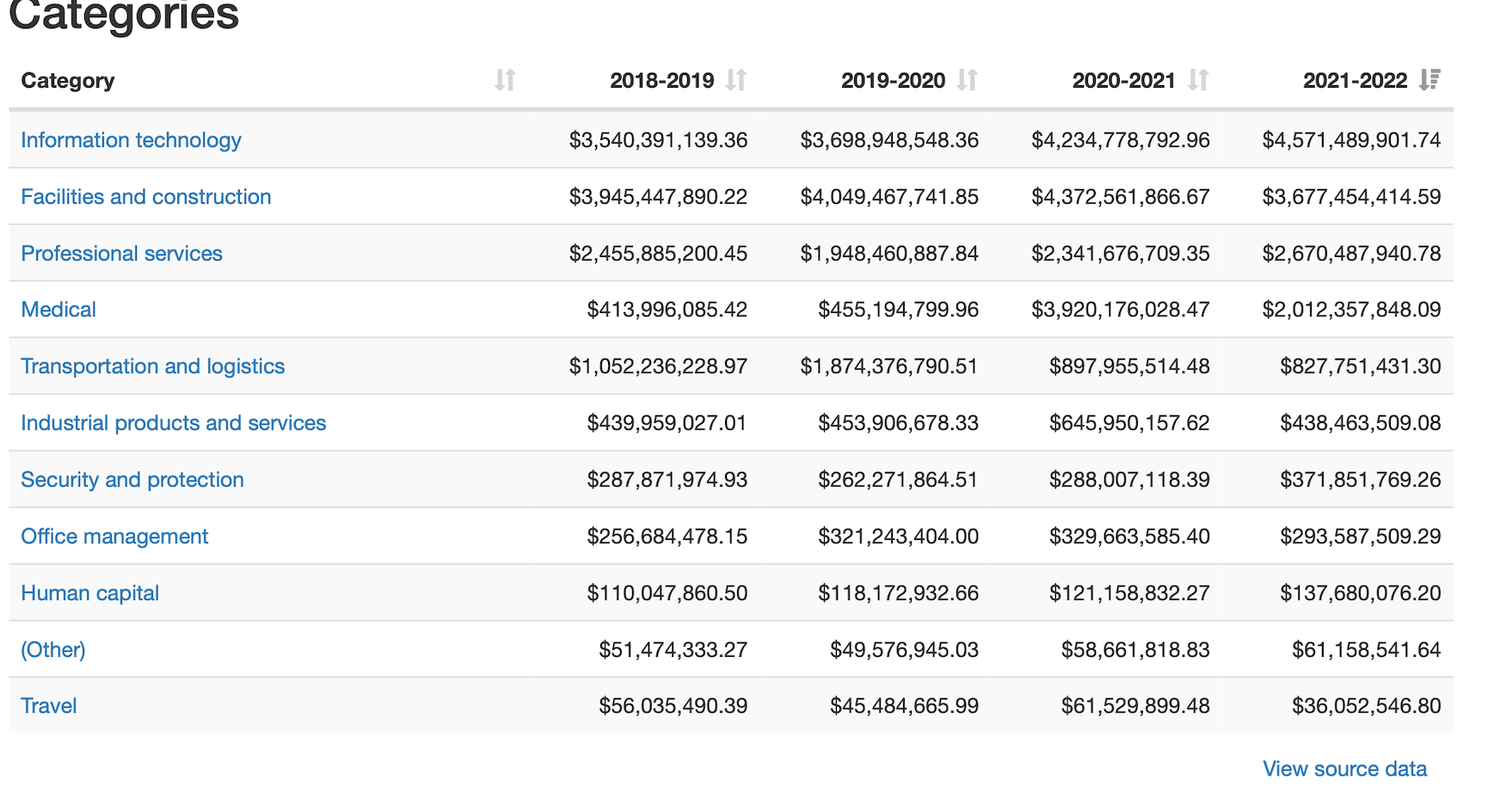
How big is big? A Carleton University research team has been digging into contracts to get a handle on how many billions are spent and on what. Last year, it estimated the government spent $15 billion, and $4.7 billion was on IT contracts.

A big part is amendments. About 272,075 contracts have been active since 2017-18. About 16 per cent of them have been amended at least once. These amendments added $25.6 billion to the original cost.

On average: Contract duration is about 10 months and is worth $423,000 (for contracts over $10,000).

Longest: 34.8 years (June 2015 to March 2050 for the consortium to replace the Champlain Bridge in Montreal).

Biggest: $5.7 billion to Brookfield Global Integrated Solutions for office building management.

ArriveCAN: The committee’s probe comes at the same time as a head-scratching revelation that the cost of the much-reviled ArriveCAN app is on track to hit $54 million. Stunned, app developers say it could have been done for about $1 million. Even public servants are aghast. There is a shortage of app developers in government. One long-time official, who is not authorized to speak about the subject, argued the app’s development should have been contracted out to the experts. Trying to build inhouse, where there’s a shortage of the right skills, means bringing in an army of consultants.

Some MPs on the committee want to have a separate probe into why developing the ArriveCAN app cost so much.

Here’s a look at some of the $15 billion in contracting costs across the government of Canada, according to a Carleton University research project:

Source: Carleton SPPS Research Project.

CONTRACTING 101
Why does it matter? Why do it?

The Professional Institute of Public Service of Canada (PIPSC) has long been consumed by outsourcing – especially for IT – and has done a number of reports. It concludes outsourcing means higher costs and lower quality services for Canadians. It erodes transparency, accountability and the institutional knowledge of the public service.

The fact is departments will always need to outsource for expertise they don’t have, especially for IT and digital talent to modernize government and services for Canadians.

The I-need-it-now pace of the public service picked up during the pandemic. Now a global talent shortage meets the public service’s turtle-slow hiring process. Departments can’t wait. They contract.

Why does it matter?

  • About $15 billion a year is spent on contracts in the core public service. (The Liberals also promised when elected to reduce spending on consultants to 2005-06 levels.)
  • It strikes at the heart of the kind of work the public service should be doing and what should it contract out, says Conservative MP Kelly McCauley. “A lot of lot these (consultant) reports should be done by our ever-expanding public service. So, what does this say…. about size of our public service if we have to source out so many contracts to the Deloittes of the world?”
  • Accountability. It raises questions about influence and who has the government’s ear in making policy and decisions.
  • Then there is question of value for money when both contracting and hiring is increasing but services don’t seem to be getting any better. We saw a summer of delays for passports, immigration applications and at airports. NDP MP Gord Johns has asked: “What steps are being taken to ensure that the quality of the service to the public and to other government departments is the first order of business?”

These questions will become even more important when the inevitable spending reviews and cuts come.

Main reasons departments contract:

  • They need special expertise and have no in-house skills to do the work.
  • Talent shortage, major recruitment and retention issues for the full gamut of IT work.
  • The time to hire staff, often months, is too long to meet the ever-shortening deadlines of the work.
  • Surges in workload.
  • No funding of public servant positions so departments use operating budgets for contracts.

IT contracts will become even more important as all governments push to modernize services. Digital expertise, hiring and contracting them, is central to Canada’s Digital Ambition, to modernize. In a speech, Treasury Board President Mona Fortier outlined her IT priorities: “escaping the trap” of decades-old legacy systems, establishing digital credentials so that Canadians can securely access all government services online, and pursuing a strategy to recruit, keep and develop in-house digital talent.

Where’s Treasury Board? Treasury Board is the employer and rules-maker, but the actual authority for contracting and human resources has been turned over to deputy ministers to manage their departments.

“Does Treasury Board have any role apart from setting a general framework,” asked McCauley. “Does Treasury Board as a guardian of the public purse ever follow up on any of these contracts that are sent out?”

Last week, MPs were all over the map during the first hearing, questioning contracts from big IT projects to cleaning services and everything in between. They grilled bureaucrats to get a handle on what is outsourced and why.

Finally, Conservative MP Kelly McCauley threw up his hands (watch here, at 12:28:30) and asked:

“I just want a quick question to the three departments here. Just a real quick yes or no if you believe taxpayers are getting fair value for the money, the billions being spent on outside or outside contracts. Just a quick yes or no?”

No takers. Crickets.

Source: The black hole of public service contract spending

Clark: How your right to know is getting stymied by the Denial Machine

Good commentary on the broke ATIP system and how this impacts service to the public, particularly with respect to immigration (IRCC does a good job in publishing most of its operational data on the government-wide open data site):

Thirty-nine years ago, after a wave of post-Watergate epiphanies about government secrecy, the Canadian government passed the first federal Access to Information Act. Ever since then it is has been building a denial machine.

It would be easy to pin the blame on secretive politicians trying to obstruct the public’s ability to know what is going on inside government, because they have done that. Prime ministers including Justin Trudeau and his predecessor, Stephen Harper, have broken promises to open government.

But it’s not just that. There is bureaucratic aversion to openness, and a default assumption that making the public’s business public would be tricky. Complicated. Impractical.

And there is another problem: The government’s failure to provide information about simple things is gumming up the system.

Take a look at the recent The Globe and Mail story in which Information Commissioner Caroline Maynard is quoted telling a House of Commons committee that every department in government is failing to keep up with Access to Information requests. Should there be reforms? Ms. Maynard told the committee, in a phrase that should leave us all gobsmacked, that “respecting the law as it currently exists would represent an important first step.”

The government’s Access to Information system, which cost $90-milion in 2021, is garnering 10,000 complaints a year, the story noted. And it included a statistic that offers a clue to one big chunk of the problem: Access to Information requests to Immigration, Refugees and Citizenship Canada have increased so much they now outnumber requests to all other departments.

Why? Because IRCC is so bad at providing basic routine info that people are resorting to freedom-of-information requests.

The Access to Information law is supposed to allow people to pay a small fee to request federal government records or, at least, records that aren’t covered by the extensive legal exceptions.

The system for implementing the Act – the $90-million machine – is based on finding the requested documents, but heavily focused on applying exceptions and blacking stuff out. Ask for a copy of a government contract and often the prices of items will be redacted, even though the Federal Court of Canada has ruled such information should be released. One huge problem is delays, sometimes of years. With information, access delayed is often access denied.

That’s why the volume of requests to the Immigration department is instructive. Many come from people asking for info on their applications, said Vancouver immigration lawyer Richard Kurland. He publishes an immigration-policy newsletter, Lexbase, which is based heavily on access-to-information releases.

IRCC has for decades been unable or unwilling to provide updates to applicants, so Members of Parliament are often deluged with requests for help. Increasingly, their offices file access requests.

If you’re a regular internet shopper, you might recognize those requests as the immigration version of a common customer-service question: “Where’s my stuff?” Companies such as Amazon have online tracking systems that give customers simple answers: whether the order has been received, or shipped, and so on. If they didn’t, they’d be deluged with inquiries. But IRCC doesn’t do that.

Now the government’s failure to provide basic information is gumming up the system that is supposed to allow Canadians to pierce the veil of secrecy.

More broadly, Ottawa’s failure to make openness routine – even though doing so is easy in the digital age – makes getting access to out-of-the-ordinary information slower, and harder.

Requesters sometimes ask for copies of agreements for “grants and contributions” that set out government funding for organizations and groups. These should be automatically published on a website. So should all contracts except in rare exceptions. And so on.

But politicians don’t much care for that sort of transparency. Why let more people see things that might raise embarrassing questions? When the system is clogged up, as it is now, they don’t have to care. There’s no real penalty for failing to respect the Access to Information law.

If the government spent twice the money on a functioning Access to Information system, it would be well worth it. Instead, over decades, Ottawa has built – by design and by accident – a system that is effectively a machine to deny and delay.

Source: How your right to know is getting stymied by the Denial Machine

Nudging the way to better public policy

More on nudging but too much on process and number of units rather than concrete examples, both successes and failures:

In 2013, Rotman School of Management professor Dilip Soman argued governments should use a behavioural approach to design public policy. Building on the concept of “nudging” introduced by Richard Thaler and Cass Sunstein, Soman suggested this approach could lead to real policy change. Nine years later, we can see how this approach appears to be working in the design and implementation of public policies across Canada. This is why policymakers should consider using it more frequently.

The idea behind nudging is simple. By creating a “choice architecture” – simple, beneficial options that people can opt in or out of – policymakers can improve access to public services and help people achieve their goals in life. Nudging makes it easier for people to get what they need from government without taxing their time and energy.

Key to this approach is finding small tweaks with big impact, backed by scientific methods like randomized controlled trials (RCTs). Nudging helps policymakers learn what works and what doesn’t.

It’s an easy idea to get behind. Too often, citizens find that interacting with government challenges their patience and sucks up their time. Renewing a driver’s licence should take a few clicks on a website ­– not hours in line at an administrative office staring at walls painted “greige.”

Many Canadians might wonder if service delivery could be improved. It can – and nudging is a mechanism that can lead to improvement. In recent years, governments have shown their ability to improve the service experience, reduce burden on citizens and increase uptake of important programs.

Consider organ donation. Survey data shows that 90 per cent of Canadians support organ donation. Yet uptake is dismally low for this critical, life-saving act – just 32 per cent of Canadians are registered donors. In Ontario, a complicated enrollment process meant that many residents didn’t know how to sign up, or simply forgot to do it. In 2016, Ontario’s “nudge unit” worked with Service Ontario to insert a prompt in the health card renewal process. The nudge considerably enhanced uptake.

The benefits are clear, but the politics aren’t always so simple. At its best, nudging can help citizens access public services. This is especially important for those who have been marginalized or excluded by government.

But concerns about the ethics of nudging are well documented, with particular attention to the idea that well-intentioned interventions could give way to outright manipulation. Further, some of the issues that nudging touches can be viewed as political such as organ donation, vaccine uptake and recruitment for the Canadian Armed Forces.

In recent years, nudging has given way to a more structured approach: the application of behavioural insights (BI). BI relies on expertise in public policy and behavioural science and recognizes that data-driven experimentation isn’t always the first-best option. If nudging improves policy implementation, BI goes that extra step to include policy design – doing the work in advance to ensure citizens can access services without wasting their time and energy.

One strength of BI is its transparency. It makes clear assumptions, and its proponents are committed to testing those assumptions through rigorous evaluation. Earlier this year, BI practitioners collaborated with researchers from Berkeley. Together, they published the results of 126 studies covering 23-million individuals. In a world of scientific uncertainty and mixed results, they found strong evidence that behaviorally informed public policy can work. Overall, nudge interventions improved target behaviours by eight per cent.

In real terms, this results in social and economic benefits. When it succeeds, BI can help citizens avoid feeling regret from making under-informed or myopic decisions based on intuition and emotion, rather than deliberation and reasoned analysis. When it fails, it provides quality evidence for policymakers to find alternatives – and quickly.

What does BI in Canada look like now? Since Soman’s piece was published in Policy Options in 2013, the federal government has introduced the Impact and Innovation Unit (IIU) in the Privy Council Office. The interdisciplinary team consists of policy experts with a variety of educational backgrounds ranging from education to neuroscience. The stated goal of is to reduce barriers to innovation within government and to “leverage the benefits of impact measurement to support evidence-based decision-making.”

While the IIU works in tandem with other departments on a contract basis to pilot and implement RCTs around discrete policy problems, small BI enclaves have also emerged in other departments such as Immigration, Refugees and Citizenship Canada and Canada Revenue Agency. The IIU also supports a broader agenda around policy innovation and responsiveness with projects such as the Impact Canada Initiative and COVID-19 snapshot monitoring (COSMO).

At the provincial level, the governments of British Columbia and Ontario have also established BI units – the former within the B.C. Public Service Agency and the latter in the Treasury Board Secretariat. Similar work (though not a standalone unit) was found in Alberta’s CoLab (though the unit was dismantled in 2020).

Together, provincial and federal ministries have reported 59 BI trials (see Figure 1) with many more in the works. The majority (39 out of 59) of the trials fall into one of three policy areas: government operations, health, or social welfare.

Cities have also taken up the challenge with projects like City Studio (Vancouver) or Civic Innovation (Toronto) that focus on improvements to service delivery and increasing citizen participation.

Governments aren’t the only actors in the BI game either. The Canadian Behavioural Insights Team (BIT), established in 2014, emerged from the original “Nudge Unit” in the British government, which was founded in the Cabinet Office in 2010. It uses a consultancy model to support government and the not-for-profit sector to support BI policy interventions.

BIT is a major player. It has offered advice and conducted hundreds of RCTs in policy domains ranging from health and social policy to natural resources and government operations. In 2019, BIT opened its first Canadian office, headquartered in Toronto. Since then, BIT Canada has helped lead pathbreaking work on tax benefit claimsemployment services and other pressing issues.

One of the interesting features of BI in Canada is the collaborative approach embedded in BI units. Not only is the work indicative of the many cross-cutting relationships across government, but it highlights the ability of government and academia to form meaningful partnerships. They bring together a variety of financial and human resources to drive evidence-based policy change

Chief among them is the relationships BI units have formed with academics. They include the Behavioural Economics in Action at Rotman and the Decision Insights for Business and Societyteams.

Looking at the context of nudging in present-day policymaking, it appears we may have arrived at a new equilibrium. Some were skeptical about nudging. There are concerns that it’s threatened to overtake policymaking with novel, experimental methods or that it would be used unethically to trick people or undermine their self-interest. There are also concerns that it would somehow cheapen or gamify policy development.

However, BI now occupies a useful, if modest, place among policymakers’ tools. We consider this success not just in the number of BI units, but in its incremental application across policy areas where the tool is well positioned to improve policy design and implementation.

As Soman noted, the behavioural approach to public policy is reflective of a set of guiding principles for policymakers even if a “grand unified theory” is not yet on the books. But perhaps one is not necessary. Nudging has grown – perhaps not prolifically – but it now appears to be an accepted tool to promote policy compliance and enhance policy uptake.

Source: Nudging the way to better public policy

Government moves to dismiss class-action suit filed by Black civil service employees

Of note – jurisdiction grounds:

The federal government has filed a court motion calling on a judge to dismiss a class-action lawsuit filed by Black civil service employees on jurisdictional grounds.

The proposed class action — launched in December 2020 — accuses the federal government of systemic racism, discrimination and employee exclusion. It alleges that, since the 1970s, roughly 30,000 Black civil services employees have lost out on “opportunities and benefits afforded to others based on their race.”

The statement of claim says the lawsuit is seeking damages to compensate Black federal employees for their mental and economic hardships. Plaintiffs also are asking for a plan to diversify the federal labour force and eliminate barriers that employment equity laws have been unable to remove.

But a motion filed on behalf of the federal government this week says the court doesn’t have jurisdiction over the case and the claim should instead be pursued through labour grievances.

The motion says that all related claims should fall under either the Federal Public Sector Labour Relations and Employment Board or the Canadian Human Rights Act.

A statement from the Treasury Board of Canada, which oversees the federal workforce, said the government is working to create an inclusive and diverse public service but the issues brought forth in the class action shouldn’t be addressed in court.

“There is an existing process to deal with harassment and discrimination in the public service,” the statement said, adding that the government’s position is consistent with previous government responses to class actions.

Nicholas Marcus Thompson is executive director of the Black Class Action Secretariat, the group that filed the suit. He said he is “extremely disappointed” by the government’s motion.

“[The government] has acknowledged these harms and now they’re moving to strike the entire claim, to deny workers their day in court,” Thompson told CBC.

Thompson disputed the government’s suggestion that the claims could be dealt with as labour grievances.

“These systems are not equipped to address systemic discrimination, and within them … there’s inherent biases. The systemic discrimination exists in all of the institutions,” he said.

NDP MP Matthew Green called the government’s motion “callous” in a tweet on Tuesday.

“They’ve been working to dismiss the harms they have caused through perpetrating anti-Black racism within the public service for decades,” he said.

Group files UN complaint

Last week, the secretariat filed a complaint with the United Nations Commission for Human Rights Special Rapporteur on racism, racial discrimination, xenophobia and related intolerance.

“With this complaint, we are elevating Canada’s past failures and failure to act in the present to an international body,” Thompson told a press conference in Ottawa last Wednesday.

Thompson said the secretariat hopes the UN special rapporteur investigates its claims and calls on Canada to meet its international obligations to Black employees by establishing a plan to increase opportunities for Black women in the government and develop specific targets for hiring and promoting Black workers.

In response to the UN complaint, Mona Fortier, president of the Treasury Board, said that far too many Black Canadians still face discrimination and hate.

“The government is actively working to address harms and to create a diverse and inclusive public service free from harassment and discrimination. We passed legislation, created support and development programs and published disaggregated data — but know there is still more to do,” Fortier said in a media statement last week

Source: Government moves to dismiss class-action suit filed by Black civil service employees

The public service’s biggest disruption in decades : hybrid work

Happy I’m retired. That being said, I tried to work from home one day every week or two weeks to prepare presentations or thought pieces, away from the transactional files (but of course remaining available as need be).

In some cases, such as coordination with regions, being virtual placed NHQ on the same footing and improved engagement compared to the tedious phone conference calls, according to some colleagues and friends who worked during the pandemic.

But understand employee preference as well as political and management concerns regarding appearances, after all, those who can work from home are privileged compared to those in front-line service, whether public or private sector:

The return-to-work pushback of Canada’s public servants could lay the groundwork for the most radical change in the federal government’s relationship with its employees in a century.

The resistance reveals a grassroots shift taking place in the public service that’s all about power and control.

The public service is one of the most hierarchical employers in the country. It has operated the same way for decades. Management decides everything about staffing; how and where people work. Employees have little choice but to toe the line.

The pandemic that sent public servants home to work challenged that hierarchy by giving federal employees a taste of controlling their time and job location – factors that had been largely out of their hands.

After more than two years of working remotely, public servants like it and resent the idea of giving up the newfound control of time. They feel more productive, enjoy better work-life balance, have more child-care options. It’s also cheaper: no commuting, no parking, no restaurant or takeout lunches.

And for the first time, they had control of their space. No more cubicles. Hundreds took jobs without having to move to Ottawa and many others picked up and moved around the country.

But that flexibility has come with a price, and no city has felt the pinch like Ottawa, the nation’s capital and home to most departmental headquarters. The Ottawa Board of Trade estimates one-quarter of the city’s workforce worked downtown pre-pandemic and 55 per cent of those downtown workers were public servants sent home, leaving ghost offices behind. (A CBC radio broadcast on Aug. 25 talked about the topic.)

It also forced the biggest rethink of the future of work and the government’s relationship with employees as it officially shifted to a hybrid workforce this fall.

It will not be an easy ride.

Lori Turnbull, director of the school of public administration at Dalhousie University, called the shift to a hybrid workforce the most disruptive change in decades.

The public service has had its share of disruptions over the years – unionization and collective bargaining in the 1960s, massive downsizings and restructuring in the 1990s, the Y2K bug, 9/11, even the disastrous Phoenix pay system. This, however, could be as seismic a shift for the employer-employee relationship as when patronage was abolished a century ago and replaced with the merit system for the hiring and promotions of public servants.

“As far as disruptions go, this is the biggest one in decades, if not ever, because it’s a completely different ballgame when it comes to relationships, and how people manage their lives,” Turnbull said.

Turnbull said remote work gave workers flexibility and the value of that newfound freedom flowed more to their personal lives than their work lives. The government can’t expect to “put that genie back in the bottle,” without a fight, she said.

“Now, people, even the lowest rungs of the organization and seen as the least powerful, were given the sense of autonomy about their time and space and that is having fundamental repercussions on how the organization and management works,” said Turnbull.

The big question is whether the return-to-office will end this flexibility or will it spark worker rebellion? Before the pandemic, the thought of working only two days at the office was beyond the wildest of dreams. Today, it’s not flexible enough.

Public servants are openly voicing their displeasure about returning to the office. A growing number are mobilizing internally, speaking out on social media, signing petitions and writing letters to MPs. Some are resorting to access to information requests to get to the bottom of the decision to send them back.

Employees who want to work remotely feel the return-to-work guidelines are arbitrary and imposed top-down from management with no rationale. They feel unheard and that there is no evidence supporting why employees have to spend specified days in the office unless to satisfy political pressures, said one union official who is not authorized to speak publicly.

“If there’s a need to have public servants in the office, what is it?” the official said. “What we’re seeing right now is people being called back for the sake of being called back for political reasons.”

It will be a top issue at the bargaining table. Unions are hoping to enshrine remote work provisions into the collective agreement to give employees more say in determining where they work. Just as important is inflation, and unions, which are emboldened by a global talent shortage, are asking for big raises.

The unions’ long game is that employees will permanently have the option to work remotely. That’s a big and controversial change, however, which would mean rewriting rules, policies and collective agreements. Not to mention that Treasury Board President Mona Fortier has already said working at home is a privilege, not a right. She insists Treasury Board won’t give up its power to organize the workplace, including where employees work.

Unions hope to find some negotiating room around where public servants work. They also want less arbitrary decisions about who can work from home and what they can do remotely. That could mean explanations in writing beyond the blanket “operational requirements” that workers are hearing.

Turnbull warns a workforce feeling management exercises too much control over their time can breed mistrust and resentment that undermines productivity.

But flexibility is unknown territory for the government. More than any other employer, it has little experience with flexible work models. A study by Jeffrey Roy showed that the senior echelons are most comfortable with the traditional in-person office model – from ministers’ offices to deputy ministers and central agencies.

Flexibility on where people work opens a pandora’s box of issues. What happens to the value of work? How does it affect the 7.5-hour work day, overtime and pay? How are employees accountable when they no longer report to the office? How to track productivity, performance or deal with discipline when working from home.

Meredith Thatcher, cofounder and workplace strategist at Agile Work Evolutions, said the unfolding workplace evolution will depend on the “maturity and skills of the individual managers and whether they have the trust of their employees.”

“It is a societal earthquake that has happened, and the fallout will be years to come,” she said. “Assuming everyone will just fall in line and return to the office either full-time or mandated time is naive. The world of the office has shifted on its axis and many executives have not figured that out yet.”

But Donald Savoie, a leading public administration expert at University of Moncton, argues there is a lot more at stake than flexibility. Back in 2003, Savoie wrote Breaking the Bargain, about the unravelling of the traditional bargain underpinning the relationship between politicians and public servants.

He says public servants also have a bargain undergirding their relationship with Canadians. The public is losing confidence in the public service and its ability to deliver services – crystalized by a summer of chaotic delays at airports and passport offices.

He said Canadians are discontent with government, and populist leaders like Pierre Poilievre and anti-institution protest groups are tapping into that mistrust. He said a public service griping about going back to the office is ripe for attack.

Many see public servants asking for the freedom of an independent contractor or entrepreneur to work when and where they want while keeping the job security, pay and benefits few other Canadians enjoy.

“My advice to federal public servants: think about the institution. Think of the public service, not just your self-interest. There’s something bigger at play here. It’s called protecting the institution that you’re being asked to serve. I think too many federal public servants have lost sight of that.”

And Turnbull said Privy Council Clerk Janice Charette, a head of the public service, bears a big responsibility for the institution. She’s out in front urging departments to get employees back to the office.

“The clerk has to worry about the reputation of the public service and the sense that they have been given too much flexibility and now we see services crumbling. Even if there’s no truth to that the perception, it’s something she has to worry about,” said Turnbull.

Source: The public service’s biggest disruption in decades : hybrid work

‘Be an ally’: Black public servants facing ‘trauma’ amid class action, says organizer

Thompson is an effective communicator and advocate.

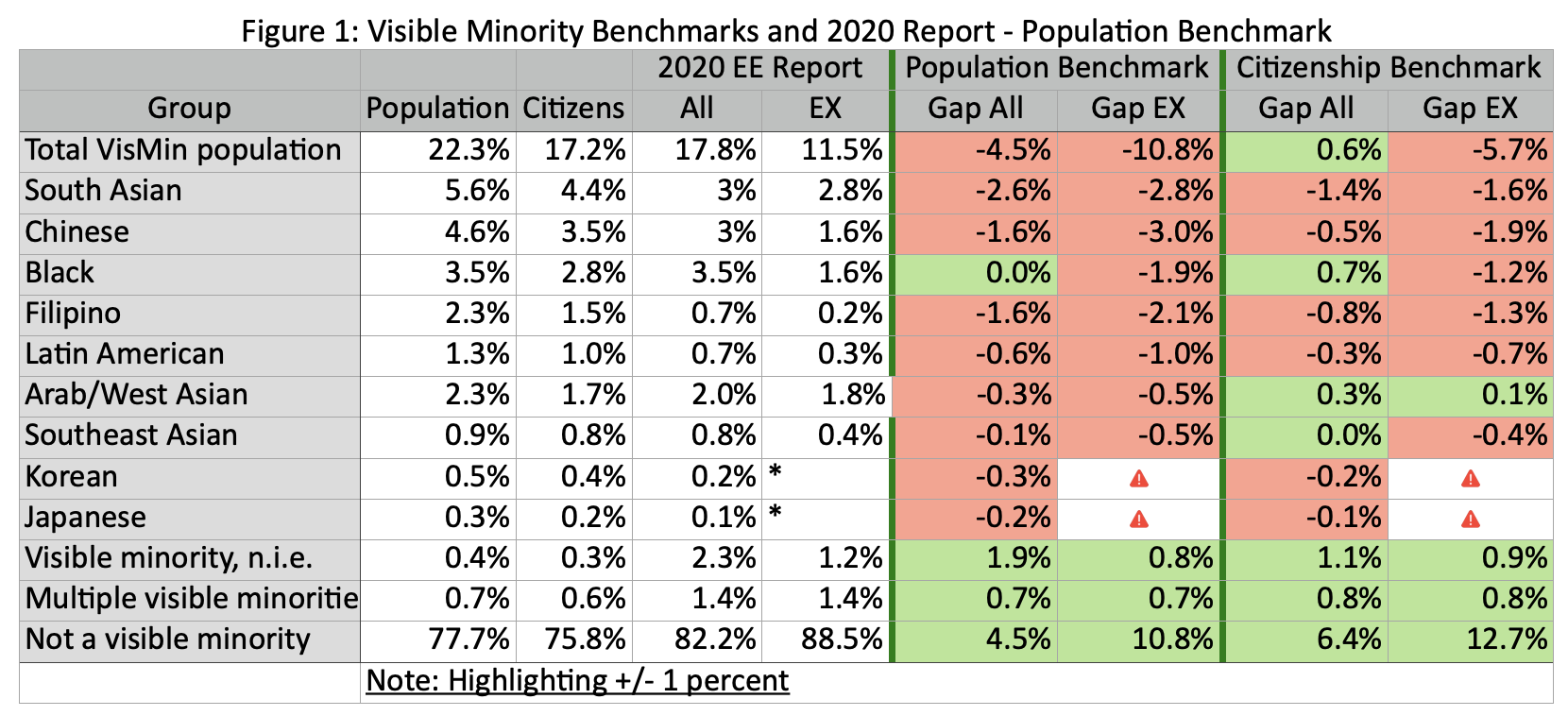
Unfortunately, the employment equity data for the public service does not indicate that Black public servants representation are disproportionately under-represented at the EX and other levels compared  to other visible minorities for the most part.

However, the public service employee survey does show higher perceptions of discrimination than most other visible minority groups.

One of the organizers behind the class action lawsuit filed against the federal government by Black public servants says he wants Canadians learning about the experiences of claimants in the case to “be an ally” amid a process that is causing “trauma” for those involved.

In an interview with The West Block‘s Mercedes Stephenson, Nicholas Marcus Thompson said the government is “speaking from both sides of its mouth” when it comes to squaring the treatment of claimants in the lawsuit in court with the comments officials make publicly about dismantling racism.

“They’re saying one thing publicly and they’re fighting Black workers in court,” he said, adding federal lawyers keep bringing forward motions “to delay the case.”

“The government has fully acknowledged that this issue exists in all of its institutions and that the pain and damage that it causes is real. And then it shows up in court fighting Black workers, forcing Black workers to recount the trauma that they’ve endured at the hands of the government for decades.”

The class action lawsuit filed last year alleges systemic discrimination by the government when it comes to hiring and promotional decisions in the federal public service, dating back decades.

Plaintiffs in the case are seeking $2.5 billion in compensation for lost income, opportunities, and lost pension values as a result of systemic discrimination that prevented qualified Black public servants from being promoted into higher paying and more senior jobs.

Federal public service pensions are calculated based on the averages of an individual’s highest earning years, meaning those who get paid less throughout their careers get smaller pensions when they retire.

“There has been a de facto practice of Black employee exclusion from hiring and promotion throughout the Public Service because of the permeation of systemic discrimination through Canada’s institutional structures,” the statement of claim says.

The statement of claim also says that equity measures taken to date have “merely masked the increasing disparity, exclusion and marginalization of Black Canadians” from equal opportunities in the public service, and that there remains a “pernicious” underrepresentation in the upper ranks.

Thompson said he wants to see the government come to the table and commit to working towards the solutions that plaintiffs say would help fix the problem, and to make legislative changes to the Employment Equity Act as well.

“We’re seeking to create a separate and distinct category for Black workers under the legislation to ensure that Black workers are not left behind when it comes to hiring and promotional opportunities,” he said. Thompson also added there needs to be a commission formed to track concrete progress on preventing future discrimination.

“Black people want to fully participate and they’re being denied that opportunity at the highest level and the largest employer in Canada,” he said.

“So listen to us. Be an ally and let’s work together because we want to make Canada a better place and to fully participate in Canada.”

Source: ‘Be an ally’: Black public servants facing ‘trauma’ amid class action, says organizer

Clerk Report to PM 2022 – Service Delivery Language [more candour required]

Like all government reports (save audits and evaluations), the Clerk report focuses on successes, not failures. Certainly, COVID financial support and vaccine procurement are right to be highlighted as overall successes, as are ongoing efforts to increase diversity and representation, as highlighted in the report and data tables.

But its characterization of how the government responded to Afghan refugees following the Taliban takeover presents a far more positive picture than warranted, to be diplomatic.

But looking ahead, curious to see how the recent failures of government service delivery (i.e., passports and immigration) will be treated in the 2023 report, given this 2022 commitment:

Deliver results for Canadians.

We have clearly shown the Public Service’s ability to step up and overcome every obstacle to get things done and deliver real results for Canadians. We have proven what we can do during times of crisis and we have learned much from this. But this has also disrupted our usual lines of work. Now, we must apply what we have learned to how we approach everything —from delivering core programs and services to responding to unexpected challenges. We must build on our enhanced capacity to deliver digitally while holding true to the importance of providing in-person support, to ensure every Canadian gets the service and results they need in a timely manner. Public servants should feel empowered to ask how things could be done better, and they should be supported in taking thoughtful risks in how we implement to achieve results for Canadians. The lessons we learned from the pandemic will help us get there.

Certainly, some honesty regarding the public service service delivery failings will be needed for the 2023 report’s (and Clerk’s) credibility.

To be mischievous, I redrafted this paragraph for the 2023 report to encourage drafters of next year’s report to be more candid regarding areas where the government had significant policy and program failures (“challenges” in bureaucratese):

Deliver results for Canadians – Lessons learned from program failures

We have clearly shown the Public Service’s (in) ability to step up and overcome every obstacle to get things done and (fail to) deliver real results for Canadians. We have proven what we can do during times of crisis (and what we cannot do) and we have learned much from this (particularly from failures in passport and immigration service delivery). But this has also disrupted our usual lines of work. Now, we must apply what we have learned (from successes and failures) to how we approach everything —from delivering core programs and services to responding to unexpected challenges. We must renew focus on service delivery in order to restore trust. We must build on our enhanced capacity to deliver digitally, including real time status updates and greater transparency, while holding true to the importance of providing in-person support (including reducing waiting times and lines), to ensure every Canadian gets the service and results they need in a timely manner. Public servants should feel empowered to ask how things could be done better (without penalty), and they should be supported in taking thoughtful (to be defined) risks in how we implement to achieve results for Canadians. The lessons we learned from the pandemic (service failures) will help us get there.

Source: 29th Annual Report to the Prime Minister on the Public Service of Canada

CRTC CBC License Renewal: “equity-seeking communities” requirements

Of interest and thanks to Sarkonak for noticing this change and The Line for bringing it to wider attention.,

Significant change from softer encouragement to hard targets, one that suggests the government may adapt a similar approach to employment equity in the public service and possibly federally-regulated sectors (e.g., bank, communications and transport), even if the original policy based on self-declaration and annual reporting has resulted in a much more diverse public service.

I also think their caution that such overt political goals run the risk of undermining the perceived independence of the CRTC and the CBC, one that a future government may use for its own political priorities:

We at The Line have a confession: we don’t slavishly follow every item coming and going out of the CRTC — although it is becoming increasingly clear that we ought to. So we admit that we missed, in June, the decision that came from this regulatory body that renewed CBC’s broadcasting license for another five years. 

Because, frankly, this is usually pretty rubber stamp stuff. 

So credit where it is due, we must tip the hat to Jamie Sarkonak for noticing some pretty significant changes in this renewal notice. 

Jamie Sarkonak @sarkonakjThe CRTC @CRTCeng just imposed DEI requirements onto CBC programming. CBC must dedicate 30% of its independent programming budget to the following identity categories: Indigenous, language minorities, visible minorities, disabled, and LGBTQ. #cdnpoli crtc.gc.ca/eng/archive/20…

Image

We read through the renewal notice ourselves and, yeah, she is correct. The CBC has a vague public mandate to inform and entertain Canadians for the purpose of creating a kind of shared national identity. Implicit in this mandate is the notion that the public broadcaster ought to broadly reflect and represent the Canadians who pay its bills. To that end, although previously the CBC could certainly choose to devote resources to “Canada’s equity-seeking communities” (and it certainly has!) never before to our knowledge has it been required to devote specific expenditure requirements to those communities as part of its license renewal. 

From the ruling: 

“As such, the Commission is imposing on the CBC the following requirements to ensure that equity-seeking communities are not only reflected in the public broadcaster’s programming, but that the programming is relevant to them.”

The CRTC is demanding a “fixed portion of independent programming expenditures directed to official language minority communities (OLMC), racialized Canadians, Canadians with disabilities, and Canadians who self-identify as LGBTQ2.” Additionally, it will grant a: “‘woman intersectionality credit’ to incentivize expenditures on productions produced by Indigenous Peoples, racialized persons, persons with disabilities, and persons who self-identify as LGBTQ2, who also self-identify as women.”

There are additional requirements for French language programming, of course. 

This line also caught our attention from the notice: 

“The Commission supports the Government of Canada’s commitment to renewing the relationship with Indigenous Peoples, based on the recognition of rights, respect, co-operation and partnership. On a broader level, the Commission also recognizes that Call to Action 84 of the Truth and Reconciliation Commission and the United Nations Declaration on the Rights of Indigenous Peoples (UNDRIP) tie into some of the objectives of the Broadcasting Act in that they refer to the reflection of Indigenous Peoples in the programming broadcast by the CBC.” 

The CRTC is demanding changes to the election of the CBC ombudsman to ensure he or she is “sensitive to issues surrounding Indigenous people, racialized Canadians and other equity-seeking communities.” 

It is also setting out “new expectations regarding the CBC’s Journalistic Standards and Practices to help ensure that journalists can provide relevant feedback and equity-seeking communities are consulted in any future review of the JSP.” 

(The JSP is basically the bible of CBC journalism and guides its employees in how it approaches reporting, analysis and opinion. The JSP has come under particular scrutiny in recent years when it was alleged that the expectation of “objective” journalism would distort how the outlet approaches racism. Attentive readers will note the obvious allusion to “moral clarity” here.)

Whether or not you agree with the outcomes being sought, what is clear is that the CRTC (which is appointed by the governor general, on advice of the privy council) is having explicitly political goals written into its license renewals. 

Now, don’t misread us, here. The CBC ought to be free to pursue equity goals in programming, or reviews of its JSP, or whatever it feels necessary to meet its mandate according to its own discretion. We happen think these outcomes are best exercised by trusted leaders and experienced producers who have the latitude to use editorial discretion, rather than by rigid quota or expenditure goals. 

To have these demands placed on it by an external regulator in order to fulfil the political goals of that regulator and, ultimately, its political masters, is playing with fire in the worst kind of way. 

For starters, one of the first pieces we ran here at The Line was from a documentary filmmaker who noted the ways in which diversity quotas shifted incentives in filmmaking. Just as students write to the test, quotas of this sort shift the focus in content production, forcing creators to produce content that checks a box, rather than fulfil a real audience desire. This creates a CBC that is dooming itself to be less relevant to the general public even as its relevance is growing more crucial thanks to the economic collapse of private media. The system is all the more insulting considering there is, in fact, a real audience desire for different voices and perspectives in our media landscape. 

(The Line can think of two such examples of CBC shows that were compelling and worth watching regardless of their diversity requirements: check out Sort Of and Trickster if you haven’t already. Unfortunately, the latter was cancelled when it was revealed that director Michelle Latimer was not as Indigenous as previously stated.) 

The second most obvious problem with all of this falls under the maxim “Do not give your enemies the weapons they will use to kill you.” In other words, having established this norm, do you not think that Prime Minister Pierre Poilievre, having done his damndest to stack the CRTC, will not do the same thing in turn? What is the CBC going to do when its license renewal is subject not to fulfilling the requirements of UNDRIP, but rather to concepts like “viewpoint diversity” and “journalistic objectivity,” as defined by Poilievre’s crew? The pendulum always swings back, friends, and it usually swings back harder when pushed. 

Source: The Line Dispatch 13 August