Does COVID-19 mean the age of global migration is over?

Good overview of one of the more significant papers on immigration post-COVID by Alain Gamien that policy makers need to consider and reflect upon:

Is the age of migration coming to an end?

For decades, easy air travel, globalization and international competition for talent in some sectors have made the growing movement of people around the world seem unstoppable.

Until now.

With the pandemic leading to less demand for skilled labour, a smaller aging population to support, and a proliferation of travel restrictions, the future of human migration looks pretty grim post-COVID-19.

“We have had the migration boom, now we are heading into the bust,” said Alan Gamlen, a human geographer at Monash University in Australia and author of a new paper about the outlook of migration, Migration and mobility after the 2020 pandemic: The end of an age?

If Canada’s immigration numbers between April and June — the first full quarter under the influence of the pandemic — are any indication of what is to come, things don’t bode well.

According to a new study to be released later this week by the Association for Canadian Studies, the number of permanent residents admitted to Canada dropped by 64 per cent to 34,260 in the second quarter of 2020, compared to 94,275 during the same period last year.

Those who came under the skilled economic class fell a whopping 52 per cent to 24,805 from 51,665; the family class is down 78 per cent to 5,990 from 27,080; and resettled refugees and protected persons declined by 83 per cent to just 2,685 from 14,570.

While much of that is due to border closures, experts say it’s not immediately clear if the downward trend will be totally reversed once travel restrictions are eased.

In his paper, released in August as part of the International Organization for Migration’s “think series,” Gamlen posed ten key questions that guide future migration and mobility trends.

The No. 1 question on the list is whether countries will need less labour migration.

Unemployment has skyrocketed during the pandemic. With corporate borrowing at a historic high, Gamlen said many companies now lack the revenue to service debt and are either folding or cutting staff.

The net result will be a reduction in demand for migrant labour, with a large pool of unemployed domestic workers and mounting political pressure to hire them over migrant workers.

“It is hard to find grounds for much optimism regarding the short- to medium-term outlook,” Gamlen told the Star.

“We will continue to see dependence on migrant labour in certain sectors of the economy, particularly at the high and low ends of the skills spectrum. This is because some sectors involve work that native workers can’t or won’t do, and because innovation will remain a key driver of prosperity.”

Further complicating the forecast is the uneven death toll COVID-19 has taken on the elderly population, a group that’s particularly vulnerable to the virus as seen in the death rates around the world.

“If high mortality rates persist until a vaccine can be mass produced, the overall death toll could amount to a significant portion of the elderly cohort,” said Gamlen, a long-standing research associate at Oxford University’s Centre on Migration, Policy and Society.

“If the pandemic devastates a specific generation, it will affect long-term dependency ratios and dynamics of demographic transition. It could reduce the proportion of dependent elderly people in the population and the financial cost of aged care, while generating a boom of babies conceived in lockdown.”

Places where people can move freely to another country by choice will likely see a decline in those rates as they put their migration plan on hold, but the traditional labour-sending countries in the developing world will see a “buildup” of people longing to leave their homelands, said Gamlen.

“The interaction of these changing flows from different places will, I think, lead to a period of unstable, non-linear changes in migration patterns,” he argued.

“The overall volume will decrease, but flows might be less predictable — like when you turn the kitchen tap halfway off, and the water starts spraying out sideways instead of flowing nicely down into the sink.”

Gamlen said it’s inevitable that the numbers of people crossing borders, especially on a permanent and long-term basis, will fall further before they bounce back — if they ever do.

“A huge amount depends on how governments manage all this. They will have a lot of control over when and how borders start to reopen and their choices in this regard will affect both the recovery timeline from the pandemic and from the economic crisis,” he said.

“Opening too early could reignite the spread of the virus. Opening too late could stifle growth and lead to a new era of closed-shop nationalism — which has ended very badly in the past.”

In its immigration study, the Association for Canadian Studies polled 1,531 Canadians between July 31 and August 2 about their attitude to immigration. Forty-six per cent of respondents still believed immigration would have a very positive or somewhat positive impact on Canada while 26 per cent of people held the opposite view.

Given the pandemic, 36 per cent of the respondents said Ottawa should prioritize the admission of those with family members in Canada, followed by refugees (16%), temporary foreign workers (12%), skilled immigrants (8%) and international students (7%).

Jack Jedwab, the academic association’s president, said whether the pandemic will mark the end of migration depends on how long the contagion lasts.

“Canadians seem comfortable with the reduced numbers and are still positive about the impact of immigration and committed to immigration as a strategy for medium to long term economic growth,” Jedwab said.

“But it is not clear when the medium term will occur. The contagion does not provide us with a time frame. There will be a need to reassess the needs regarding immigration given the economic uncertainty and what the changing circumstances call for.”

Source: https://www.thestar.com/news/gta/2020/08/17/does-covid-19-mean-the-age-of-global-migration-is-over.html

COVID-19’s latest victims: Would-be citizens waiting to take their oath face new delays over expired clearances

Appears to be a case for some flexibility on a case-by-case basis as has been done elsewhere:

The backlog and wait time for new citizenship ceremonies are bound to grow due to a new complication brought on by COVID-19.

The traditional in-person oath-taking mass ritual has already been cancelled since March as a result of public health concerns during the pandemic. As long as someone hasn’t sworn their allegiance to the country, they are still just permanent residents and are unable to vote or run for political office.

The immigration department has since slowly moved the citizenship ceremonies online.

But in the meantime, some would-be citizens who have already passed their exam and are in the queue to go in front of a citizenship judge are being told they can’t take their oath because their criminal clearances expired while they’ve been waiting for their turn.

“As required by the Citizenship Act, all citizenship candidates must meet the requirements for citizenship, including being free of prohibitions prior to taking the oath of citizenship. As such, individuals must have valid clearances in order to be permitted to take the oath,” said immigration department spokesperson Lauren Sankey.

“The criminality clearance is valid for 12 months and must be valid at the time citizenship is granted and the oath of citizenship is taken.”

According to a response to an access to information request, at least 76 virtual citizenship ceremonies were cancelled in Montreal, Greater Toronto and the Atlantic region up until the end of June as a result of expired criminal clearances.

A would-be new citizen told the Star his original in-person citizenship ceremony for March 20 was cancelled and he was then rescheduled for a virtual ceremony for June 25. But less than 24 hours before the event, he was told by email that it was cancelled because he needed a new clearance certificate.

“Getting citizenship is like being adopted by Canada. Imagine you’re in an orphanage waiting to be adopted. You met your adopted parents and they said they’d pick you up and take you home on a certain day. Before that day comes, they call the orphanage and say they can’t come,” said the American immigrant, who asked that his name not be used for fear of repercussions.

“You don’t hear anything for several months. Then less than 24 hours before the next pickup day, they call and cancel again. That’s pretty deflating there.”

The man, who moved to Toronto 12 years ago after marrying a Canadian, said he was told by his MP’s office that the citizenship application process is all paper-based. Hence, there are no automated systems warning immigration officials when a criminal clearance is about to expire.

He said he’s still waiting for instructions from the immigration department about what to do next.

Sankey said immigration officials will request new criminal checks from other federal agencies in the event clearances have expired before a citizenship ceremony.

“It is not necessary for applicants to reapply,” she said. “Once valid clearances are returned, these clients will be prioritized and rescheduled at the earliest opportunity.”

Additional delays are expected because the department depends on its partners to complete the process.

“Generally, clearances should take about a week to complete, however in the current context, our partners are making assessment on a case-by-case basis, consequently IRCC (Immigration, Refugees and Citizenship Canada) cannot provide specific processing time frames,” Sankey said.
Source: COVID-19’s latest victims: Would-be citizens waiting to take their oath face new delays over expired clearances

‘Why not us?’: Asylum seekers on COVID-19 front lines demand permanent residency

All too predictable, the understandable debates over who’s in and who’s out, which happens with respect to most government programs, whether immigration or other:

Doll Jean Frejus Nguessan Bi says he couldn’t sleep at all last night.

The asylum seeker from Ivory Coast works as a security guard in hospitals and long-term care homes in the Montreal area, where he watched many of his colleagues stop coming in as deaths linked to COVID-19 began to mount this spring.

But while Nguessan Bi kept working, he said he found out Friday that he would be excluded from a new government program to fast-track the permanent residency applications of some asylum seekers working on the front lines during the pandemic.

“Why (not) us? We who gave our hearts and our love… Why are we abandoned?” he said in an interview at a protest camp across the street from Prime Minister Justin Trudeau’s Montreal riding office Saturday. “What did we do to deserve this?”

Ottawa announced Friday that asylum seekers working in specific jobs in the health-care sector would be eligible for permanent residency without first having to wait for their asylum claims to be accepted, as is typically the process.

Immigration Minister Marco Mendicino said the move came in response to public demand for so-called “Guardian Angels” — many in Quebec — to be recognized for their work.

“They demonstrated a uniquely Canadian quality in that they were looking out for others and so that is why is today is so special,” Mendicino said in an interview Friday afternoon.

But asylum seekers and their supporters say Ottawa’s plan excludes thousands of workers without permanent status in Canada who have laboured on the front lines during the pandemic, often at great personal risk to themselves and their families.

That includes security guards and janitorial staff, factory workers, and farm labourers, among others.

“I have friends who worked with me in security that abandoned (their posts) because they were afraid of getting infected. But I stayed,” said Nguessan Bi.

He said he wants Trudeau and Quebec Premier Francois Legault to do something to help asylum seekers who are not eligible for the new program.

Several dozen people rallied in front of Trudeau’s office on Saturday to demand permanent residency for all asylum seekers.

“It’s an act of recognition. They deserve status,” Joseph Clormeus, a member of Debout pour la dignite, a Montreal advocacy group that organized the rally, told the crowd.

Anite Presume, a Haitian asylum seeker who came to Quebec in August 2017 from the United States, was among the protesters.

She works in a medication factory, and said she kept working during the pandemic despite the risks.

“To take the bus, we were all stressed, but we still went to work because it was essential. They needed medication for the hospitals,” she said in an interview.

She said she has not received a response yet to her application for asylum in Canada, and lives under a cloud of uncertainty and stress about her future.

“It’s a feeling of rejection,” Presume said, about not being included in Ottawa’s regularization program. “They rejected us as if we did nothing.”

To apply for residency under the new program, applicants must have claimed asylum in Canada prior to March 13 and have spent no less than 120 hours working as an orderly, nurse or another designated occupation between the date of their claim and Aug. 14.

They must also demonstrate they have six months of experience in the profession before they can receive permanent residency and have until the end of August 2021 to meet that requirement.

The program was the result of negotiations between the federal government and Quebec, who have had a strained relationship on the question of immigration, and in particular the asylum claimants, in recent years.

Public support has been building for asylum seekers’ demand for permanent residency after it was revealed that refugee claimants were among those toiling in Quebec’s long-term care facilities, which were hard-hit by COVID-19.

Source: ‘Why not us?’: Asylum seekers on COVID-19 front lines demand permanent residency

COVID-19 Impact on Immigration to Canada: June 2020 update

The deck examines the impact of COVID-19 on immigration to Canada: Permanent Residents, Temporary Workers, Students, Citizenship and Visitor Visas updated with June data and web data for key programs.
Key observations:
  • Immigration continued bounce back compared to May and overall quarter save for TRs
  • PRs: From 10,950 in May to 19,180. June Year-over-year decline: Greater gap between Economic only -22.6% compared to Family -69.0%, Refugees -80.2%
  • Provincial Nominee Program: Increase from 2,970 in May to 4,940. June Year-over-year decline smaller than May: -30.9%
  • TR to PRs transition: Increase from 5,820 in May to 12,955. Year-over-year increase of 39.8% (i.e., those already in Canada)
  • TRs/IMP: Ongoing decline from 15,700 in May to 13,950. June Year-over-year decline: Agreements -51.0%, Canadian Interests -46.3%
  • TRs/TFWP: Stable— 9,365 in May compared to 9,200. June Year-over-year decline: Caregivers -64.5%, Agriculture -8.9%, Other LMIA -50.1%
  • Students: Decline from 30,785 in May to 16,000. June Year-over-year decrease: 32.8%
  • Citizenship: Increase from virtually none in May (53) to 1,656. June Year-over-year decrease: 92.0%.(2019 monthly average was about 20,000)
  • Visitor Visas: Complete shutdown. China authorizations declined faster and sharper
  • IRCC Website interest (July, Work and study permits, settlement services and citizenship) broadly reflect these trends)

B.C. survey shows racialized people most likely to suffer from effects of COVID-19 pandemic

Confirming patterns elsewhere:

An official survey shows the tumult created in B.C. by the novel coronavirus has hurt racialized people the most, with more than one in five Latin American, West Asian and Black respondents reporting job losses due to the pandemic.

Provincial Health Officer Bonnie Henry said at Thursday’s daily COVID-19 briefing that the results of a recent online survey of 394,000 people confirmed a trend seen in many other places: The virus and the measures taken to slow its growth have disproportionately affected non-white people. The results did not touch on who has been infected, but charted how people of different ethnicities have fared with regards to unemployment, financial stress, and access to health care and food.

“The challenge has not been shared equally,” she said as she revealed the results of the survey done by the BC Centre for Disease Control, a government agency.

The information comes as British Columbia logs an additional 78 confirmed cases of the virus. The numbers have been creeping up all summer, leading to a recent spike that Dr. Henry says is driven by younger people socializing.

The provincial average for losing a job due to the pandemic was 15.5 per cent, according to the survey. Only white respondents reported recent unemployment at below that rate, 14 per cent. People of every other ethnicity reported rates above the provincial average, with the highest affecting Latin American people at 22.6 per cent, West Asian or Arabic people (21.5 per cent), and Black people (21.1 per cent).

That same inequality was seen when respondents were asked about whether they had more money troubles. The provincial average was 32 per cent of respondents saying they had increased financial problems, with 29 per cent of white people reporting these issues.

Neither Dr. Henry nor the provincial health ministry explained why Indigenous respondents were not represented in the survey results released on Thursday.

Japanese, multi-ethnic and Korean respondents were the most likely to report difficulty accessing health care. On the other hand, Latin American, Southeast Asian and Black respondents were the most likely to report feeling more connected to family since the province began its state of emergency in March.

The survey also showed people at the income level of less than $60,000 reported having a harder time meeting their financial needs and putting enough food on the table, and that they were more likely to be out of work.

Among respondents with school-aged children, lower-income households reported more stress on their kids, more barriers to learning and a decreased connection to their friends.

At Thursday’s briefing, Health Minister Adrian Dix and Dr. Henry spent most of their time addressing the increase in cases. Mr. Dix warned anyone ignoring physical distancing at parties this weekend that public-health inspectors will be out enforcing rules at bars and banquet halls.

Since early July, people in their 20s have made up the highest proportion of new cases, according to the Public Health Agency of Canada. From July 29 to Aug. 4, more than 40 per cent of cases nationally for which data were available were reported in people 29 or younger.

In B.C., this group accounts for about 32 per cent of cases since July 1, while people in their 30s make up about 22 per cent. In Alberta, people in their 20s make up the largest proportion of active cases, at 22 per cent, while people in their 30s followed with 19 per cent.

Source: https://www.theglobeandmail.com/canada/british-columbia/article-bc-survey-shows-racialized-people-most-likely-to-suffer-from-effects/

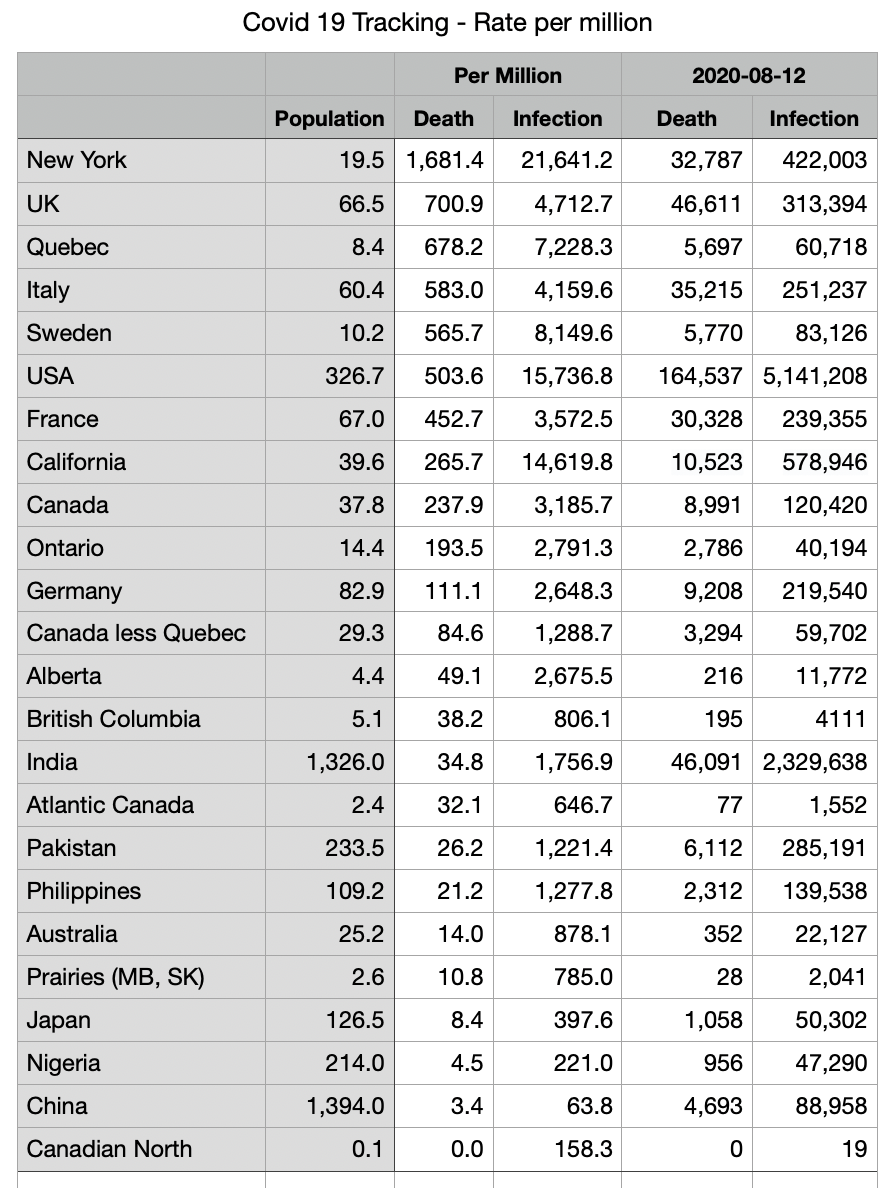
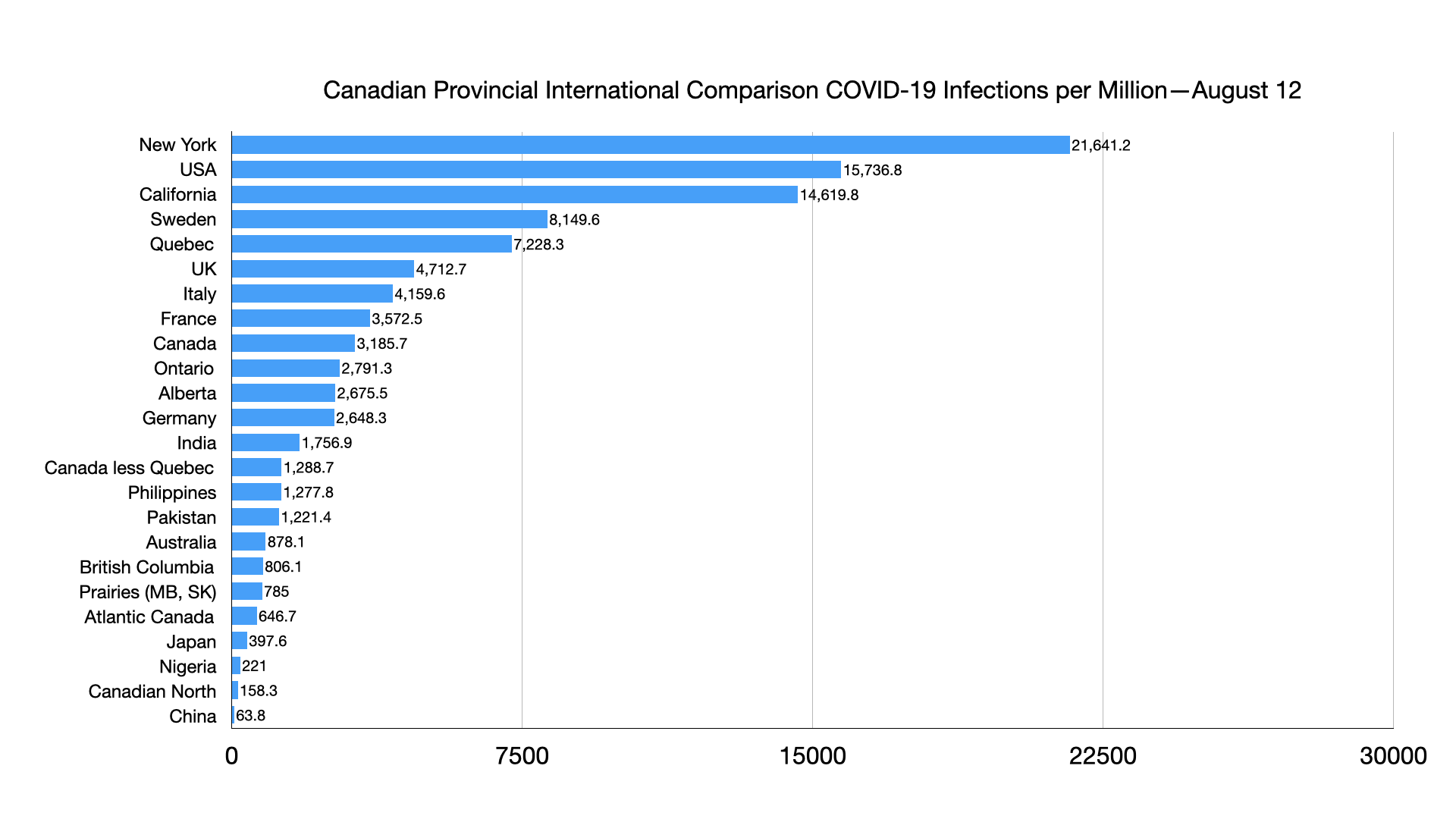
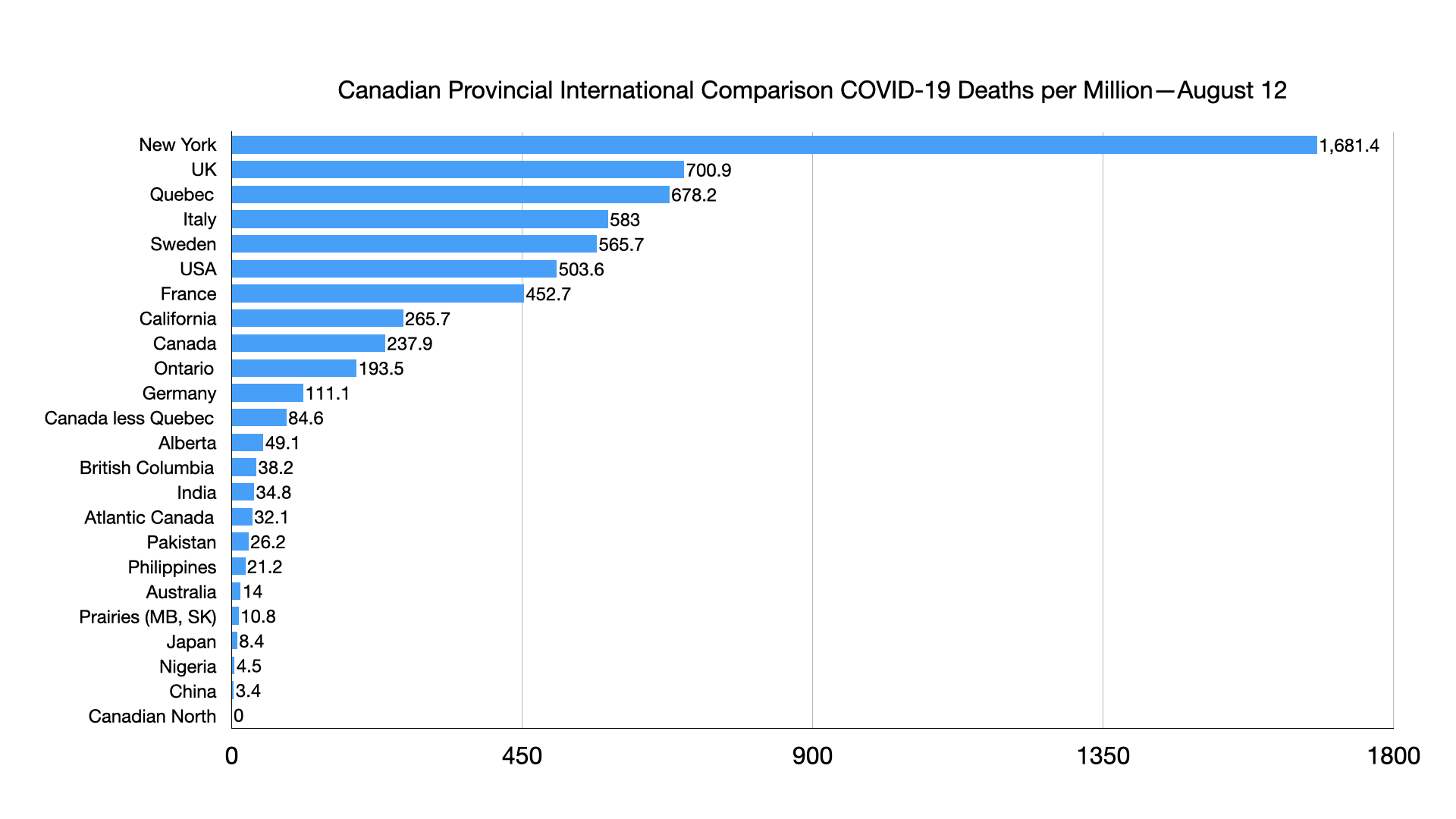
#COVID-19: Comparing provinces with other countries 12 August Update

Latest update. No major change in ranking although numbers in some of the hardest hit countries continue to increase.


Ottawa must put data first and tie to health funding

Agree in principle but politically hard to achieve (Quebec doesn’t even automatically share its data with CIHI):

The federal government looks yet again about to transfer billions of dollars to the provinces with essentially no strings attached.

We’ve seen this before with $40 billion in the 2004 First Ministers’ Health Accord and then $11 billion in the 2017 Health Accord, both highlighting home care, without evidence of significant progress.

And the prime minister just announced $19 billion for the Safe Restart Program, though without any details, especially as to what the federal government receives in return.

One major quid pro quo could address Canada’s profound lack of high-quality data, especially highlighted by the COVID-19 pandemic. While U.S. analysts are able in near real time to estimate and project COVID cases, hospitalizations and deaths down to the county level, Canada is barely able to produce comparable data by province.

Some of this $19 billion is meant for COVID testing and tracing, and improvements in long-term care.

A major failing in the tragic and disproportionate COVID-19 mortality rates in nursing homes was due to poor staffing levels, an issue that has been known for decades and pointed out in myriad reports and studies. But there are essentially no comparable and complete national data in this area.

As strongly recommended in the recent Royal Society of Canada report, high quality data on current staffing levels, connected at the individual level to health outcomes, are essential, especially for the federal government to develop the evidence-based national standards for long-term care so many have been calling for.

The provinces have typically argued that health care is a provincial jurisdiction, so the federal government cannot compel them to provide sorely needed data. However, in another example, we have had almost two decades of cajoling the provinces with federally funded Canada Health Infoway paying at least half the cost to develop and implement standardized and interoperable software systems for electronic health records.

Most relevant for the current pandemic, Infoway was specifically tasked with producing a system for anticipating and dealing with infectious disease outbreaks. This system, had it been working even 15 years after its initial funding in 2004, would have enabled a very different outcome this year, likely with far fewer cases and deaths from COVID-19.

Paper agreements and cajoling the provinces with optional subsidies have clearly failed. It’s time for a much tougher stance.

The federal government has the necessary constitutional powers, including explicit jurisdiction for statistics, criminal law, spending powers, and the general peace, order and good government (POGG) power, to compel the collection and flows of 21st century kinds of data.

Monique Bégin, as federal minister of health, successfully ended the practice of physicians’ extra-billing by amending the Canada Health Act to deduct any extra billing from an offending province’s fiscal transfer. The Supreme Court has just upheld the federal government’s genetic privacy legislation as constitutional despite objections from Quebec.

In the current pandemic emergency, high-quality, standardized, real-time data on “excess deaths,” COVID cases and hospitalizations, and details on the operations of the thousands of nursing homes and retirement residences across Canada are essential.

For nursing homes, we need these data to learn why some were completely successful in avoiding any novel coronavirus cases amongst residents and staff, while others suffered tragically. In turn, such statistical information will provide the federal government the strong evidence base needed to take the lead in establishing national standards for nursing home staffing levels, though action on staffing must not wait for perfect data.

And once we have standardized individual-level data on COVID cases, including factors like age, sex, neighbourhood, other diseases, individuals’ household composition, race, hospitalization rates, disease severity, and deaths, as the U.K. has been able to do for 17 million of its residents in near real time, then Canada will be able to support far more sophisticated analysis and projections to deal with the current top pandemic issues — not least, whether to open bars or schools.

Children Can Get Severe COVID-19, CDC Says — Especially Black And Hispanic Children

Another example of racial disparities. While the study did not include socioeconomic factors, these likely explain part of the differences:

While most children who catch the coronavirus have either no symptoms or mild ones, they are still at risk of developing “severe” symptoms requiring admission to an intensive care unit, the Centers for Disease Control and Prevention said in a new report released Friday.

Hispanic and Black children in particular were much more likely to require hospitalization for COVID-19, with Hispanic children about eight times as likely as white children to be hospitalized, while Black children were five times as likely.

Despite persistent rumors that children are “almost immune” from the virus, the analysis of 576 children hospitalized for the virus across 14 states found that one out of three was admitted to the ICU — similar to the rate among adults. Almost 1 in 5 of those were infants younger than 3 months. The most common symptoms included fever and chills, inability to eat, nausea and vomiting.

The findings come as school districts across the country are figuring out how to educate the nation’s children while still protecting kids, teachers and family members from the ravages of the virus. The American Federation of Teachers has said it considers in-person schooling to be safe only when fewer than 5% of coronavirus tests in an area are positive.

Researchers don’t fully understand why some racial groups are hospitalized at higher rates than others. But the CDC’s findings are consistent with other studies, the authors of the report said, citing a recent analysis from the Baltimore-District of Columbia region that found that Hispanics had more COVID-19 infections than other groups.

“It has been hypothesized that Hispanic adults might be at increased risk for SARS-CoV-2 infection because they are overrepresented in frontline (e.g., essential and direct-service) occupations with decreased opportunities for social distancing, which might also affect children living in those households,” the CDC researchers wrote.

Underlying medical conditions might have contributed to the children’s hospitalization, researchers wrote, noting that Hispanic and Black children are more likely to suffer from conditions like obesity.

If there’s any good news, it’s that even among children hospitalized with severe COVID-19 complications, the fatality rate remains low, researchers said.

A separate study in the journal Pediatrics also found racial and socioeconomic disparities in children and young adults tested for COVID-19 in Washington, D.C. Hispanic children were more than six times as likely as white children to test positive for the virus; Black children were over four times as likely.

Ultimately, the CDC concluded, it’s crucial to continue prevention efforts wherever children gather, specifically citing schools and child care centers.

Source: Children Can Get Severe COVID-19, CDC Says — Especially Black And Hispanic Children

East Asians have Toronto’s lowest coronavirus infection rate. But other Asian groups are suffering badly

Good article and analysis of the Toronto race-based COVID-19 data

  • Toronto’s ethnic Chinese are weathering the epidemic well – yet it’s a much different story for Filipinos, South Asians and all other non-whites

  • Wide disparities are also reflected according to income, with experts suggesting socio-economic factors like racism and poverty are likely at play, not genetics

North American Covid-19 statistics that group Asian communities together have suggested they are experiencing relatively low infection rates – but new data out of Toronto indicates sharp differences among Chinese, Filipino and other Asian groups in the city.

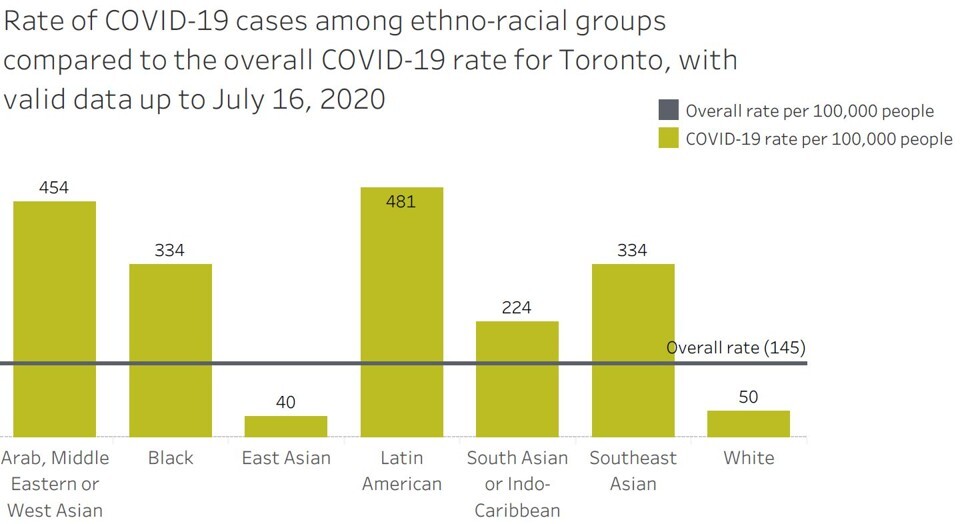
Toronto’s large East Asian population, which overwhelmingly consists of ethnic Chinese, has the lowest rate of infection among all ethnicities.

But all other Asian groups have been hit hard. Southeast Asians, consisting mostly of ethnic Filipinos, have an infection rate more than eight times higher than that of East Asians; the rate for South Asian Torontonians is more than five times East Asians’.

In fact, all other non-white groups have infection rates that exceed the East Asian rate by huge margins.

This chart shows the wide disparities in Covid-19 infection rates in Toronto, according to ethnicity, with East Asians experiencing the lowest rate and Latin Americans the highest. Graphic: Toronto Public Health

White Torontonians, meanwhile, have an infection rate that is a more modest 25 per cent higher than East Asians’ – still much lower than the rate for the whole of this diverse city.

Experts suspect that a combination of racism, behaviour and circumstance explains the stark differences among various ethnicities. The fact that wide disparities are also reflected in income-based infection rates suggests that socio-economic reasons are at play, not genetics, they say.

Widespread and early mask usage among East Asians could be a factor, said Dr Jason Kindrachuk, a University of Manitoba virologist who is studying Covid-19.
Covid-19 rate in Canada’s most Chinese city isn’t what racists might expect

But teasing apart causality would take time. “Is it as straightforward as income? Could this relate back to earlier community acceptance of things like masks or social distancing?” he asked.

Either way, the data is crucial to identifying communities that bear the greatest burden in the pandemic, said Kindrachuk.

“In Canada we talk about being a multi-ethnicity community, but we’re starting to identify just how different our communities are, how different the vulnerabilities are … so we need to think about how we provide services to those most in need.”

The Toronto data likely reflected the higher risks of certain jobs, those that relied heavily on non-white employees and were ill-suited to social distancing, Kindrachuk said.

Canada’s care industry has high numbers of Filipino workers, for example, while its meat processing and seasonal agricultural sectors employ many foreign workers from Mexico.

As well as suggesting communities most at risk, the ethnic data also stood in sharp contrast to what Kindrachuk called “shocking” racist rhetoric about “the ‘China virus’ [and the] implicit targeting of the East Asian, the Chinese communities, as being to blame for the virus”.

Poverty, racism and risk in Toronto

Previous data from New York and Los Angeles suggested that Asian residents of those cities had the lowest infection rates among various racial groups. But those US statistics lumped all Asians together, disguising any disparities within the group.

The Toronto data, presented by the city’s Medical Officer of Health Dr Eileen de Villa last Thursday and current to July 16, split up East Asians, Southeast Asians and South Asians. West Asians were grouped with Arab and Middle East people.

Separate census figures show that Toronto’s East Asian population is 84 per cent Chinese; ethnic Filipinos similarly dominate the Southeast Asian category, representing 79 per cent of the grouping.

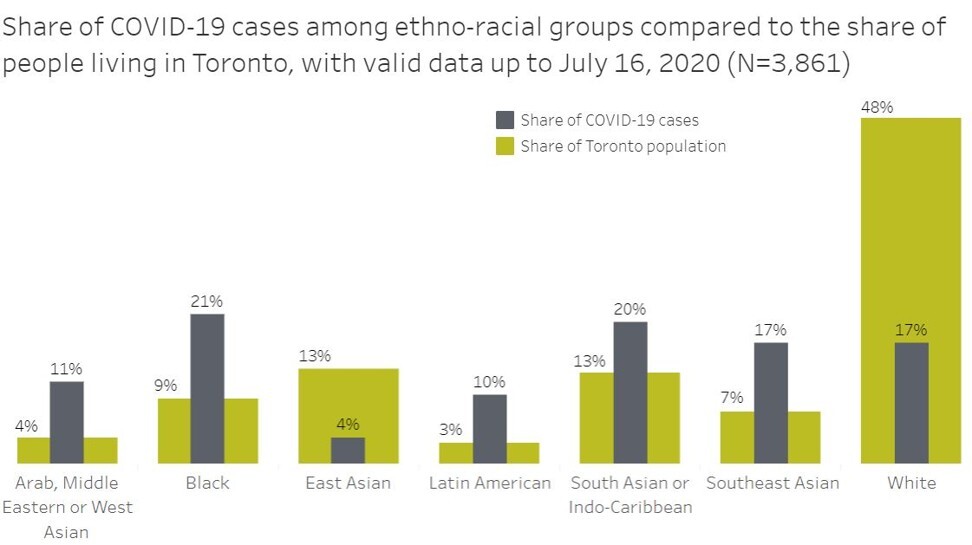
East Asians had a Covid-19 rate of 40 infections per 100,000, far below the citywide rate of 145. They make up 13 per cent of the City of Toronto’s population of about 2.7 million – but less than 4 per cent of all infections.

This chart shows the wide disparities in Covid-19 infection rates in Toronto according to ethnicity, illustrated as percentages of total population and total infections. Graphic: Toronto Public Health

The second-lowest infection rate (50 per 100,000) was among whites, who make up 48 per cent of the city’s population, and 17 per cent of infections.

Every other ethnic group has fared much worse.

The highest rates are among Latin Americans (481 per 100,000) and Arab/Middle Eastern/West Asians (454 per 100,000). Those communities are relatively small, at less than 3 and 4 per cent of the city respectively – but they suffered 10 per cent and 11 per cent of all Covid cases.

The larger populations of black Torontonians and Southeast Asians had identical infection rates of 334 per 100,000 people. Blacks make up about 9 per cent of the city, and Southeast Asians about 7 per cent, but experienced 21 and 17 per cent of all infections respectively.

South Asians (grouped with Indo-Caribbeans), had an infection rate of about 224 per 100,000. They make up about 13 per cent of Toronto, but have suffered 20 per cent of infections.

Canada has not been releasing race-based Covid-19 data on a national level, something critics call a blind spot.

But the Toronto data echoes previous geographical data from British Columbia, where the rate of Covid-19 infection in Richmond – the most ethnically Chinese city in the world outside Asia – has been the lowest in the metro Vancouver region.

In her presentation last week, Dr de Villa said there was “growing evidence … that racialised people and people living in lower-income households are more likely to be affected by COVID-19“.

“While the exact reasons for this have yet to be fully understood, we believe it is related to both poverty and racism,” she said.

She noted that 83 per cent of reported COVID-19 cases in Toronto involved a patient who identified as a member of a racialised group, compared to 52 per cent among the general population.

The race-based data from Toronto showed that “risk distribution was very unequal”, said Dr David Fisman, a professor of epidemiology at the University of Toronto. But this could be an overlapping function of wealth and income, he said.

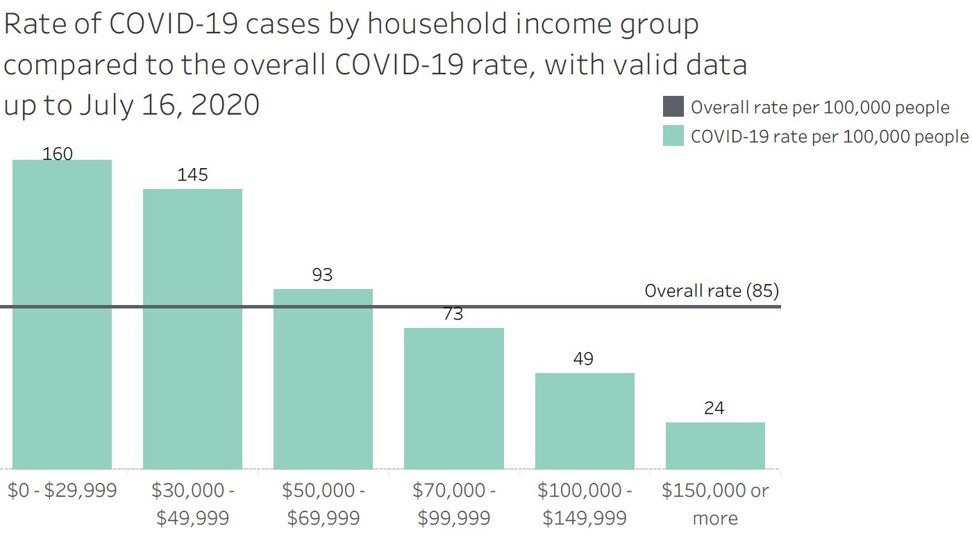
There were dramatic differences between infection rates depending on income, with the rate steeply declining as incomes rose. The infection rate among residents of households earning C$150,000 (US$113,000) or more was 24 per 100,000 – less than one-sixth the rate suffered by the lowest earners, on less than C$30,000 per year, at 160 infections per 100,000.

The risk of Covid-19 in Toronto declines steeply as income increases, this chart shows. Graphic: Toronto Public Health

“We were seeing this anecdotally in hospitals; the lockdown extinguished spread [of Covid-19] in higher-income areas, as a lot of professionals with service jobs got to go online,” he said.

“Lower-income folks are more likely to be people of colour and more likely to be in essential in-person work,” such as jobs in factories, food processing or care facilities, Fisman said.

“We can see that the epidemic split off in Toronto into two epidemics: one for wealthier Torontonians, and another, more prolonged, epidemic for those of lesser economic means.”

Kindrachuk agreed – the income divide was “eye-opening”, he said. “If you have a high income, you likely are going to be able to weather the storm … there is a complete disparity between how the burden of this disease looks between high and low income brackets.”

As for genetics, Kindrachuk said he doubted that it explained the stark disparities among ethnicities. “I haven’t seen evidence that there is a difference” on a genetic basis, he said.

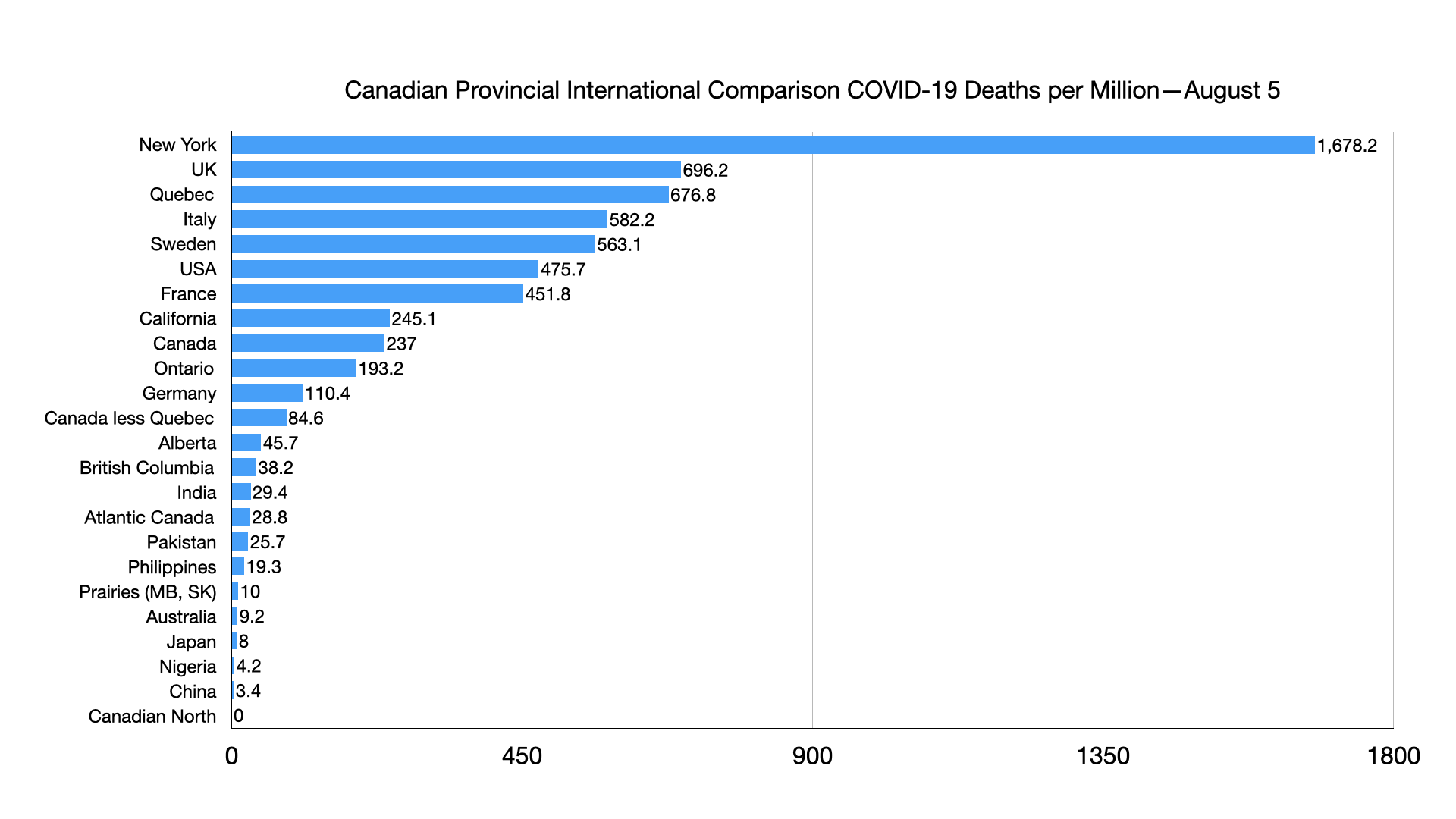
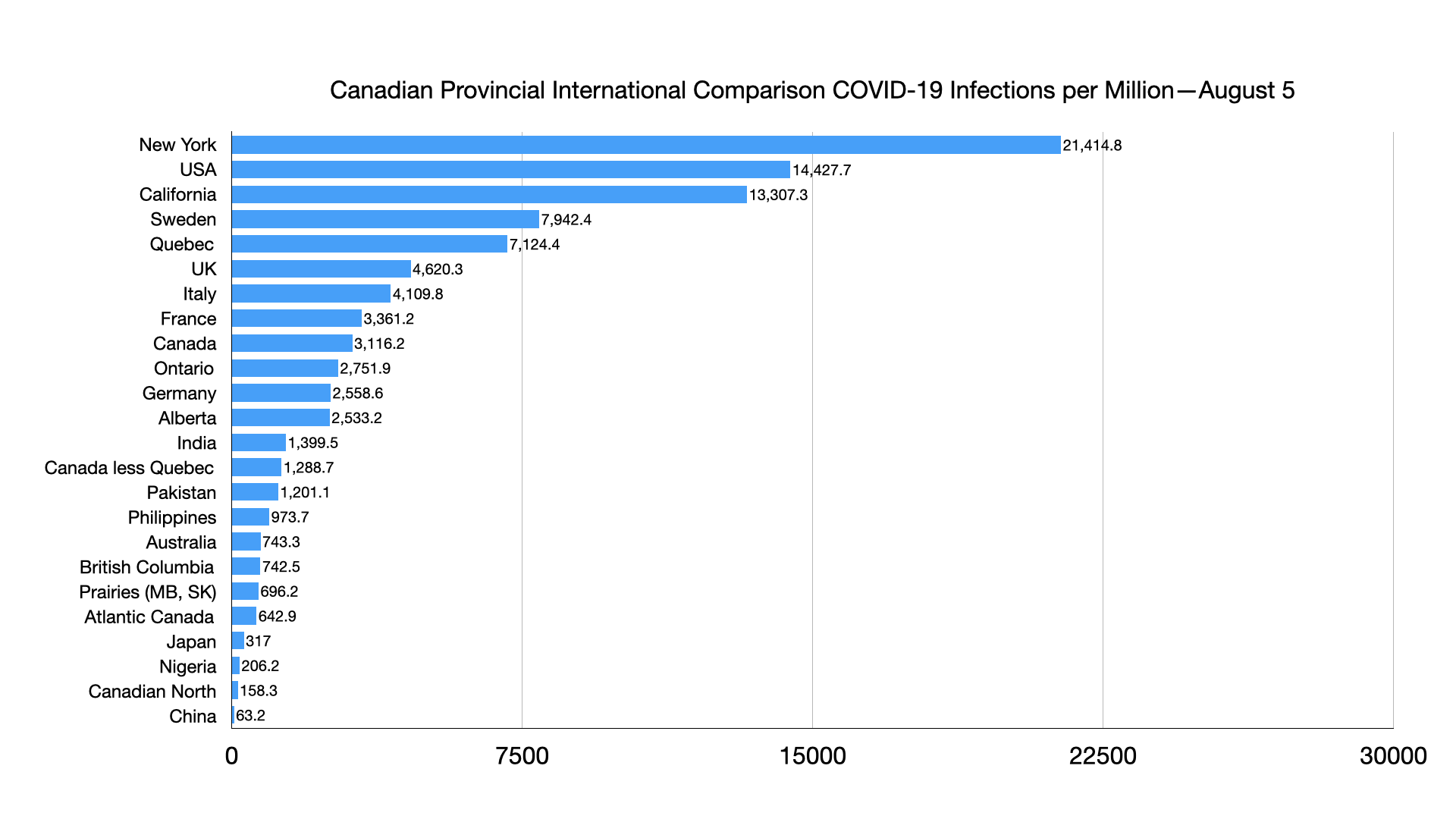
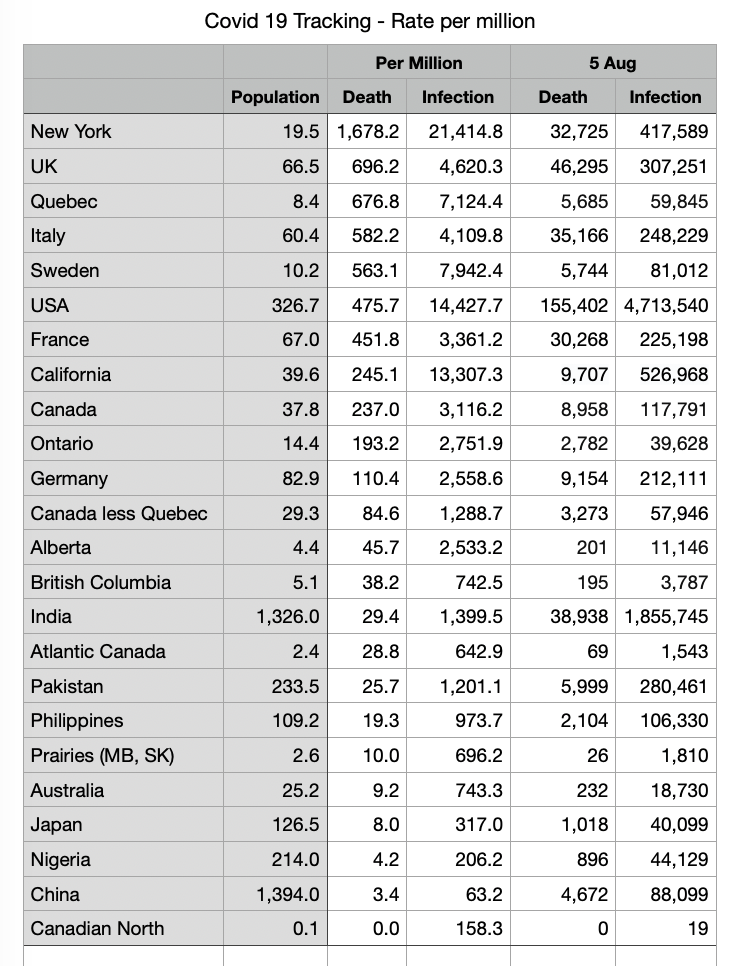
#COVID-19: Comparing provinces with other countries 5 August Update

Latest update, along with chart for infections. Recent uptick in infections can be expected to lead to an uptick in deaths. No major change in ranking.