Meera Nair: Bombing of Air India Flight 182 an attack on Canadian families but few cared then and few aware now

Good and needed reminder. The contrast of how the Air India bombing was not viewed as a Canadian tragedy and how the shooting down of PS752 with many Iranian Canadians aboard by Iran was perceived as a Canadian tragedy shows progress:

June 23, 2020, will mark 35 years since Air India Flight 182 was blown up off the coast of Ireland, killing all 329 people on board. It was a targeted attack on Canadian families. Among the dead were over 80 children.

Two years ago, I wrote to many MPs and asked that, before departing for their summer recess, which officially begins on June 23, they observe a moment of silence in memory of those victims. Parliamentarians who look forward to returning home, to be with family and friends, should not forget that those boarding Air India 182 had the same longing, the same expectation.

From Rae’s report, Lessons to be Learned (2005): “Let it be said clearly: the bombing of the Air India flight was the result of a conspiracy conceived, planned, and executed in Canada. Most of its victims were Canadians. This is a Canadian catastrophe, whose dimension and meaning must be understood by all Canadians.”

Exacerbating the grief experienced by families of the victims was the blatant disinterest of successive Canadian governments in their pain and plight. In Major’s final report, Air India Flight 182: A Canadian Tragedy (2010), he was blunt: “In stark contrast to the compassion shown by the Government of the United States to the families of the victims of the 9/11 terrorist attacks, for all too long the Government of Canada treated the families of the victims of the terrorist attack on Flight 182 as adversaries. The nadir of this attitude was displayed when the families’ requests for financial assistance were met by the Government’s callous advice to seek help from the welfare system.”

The lack of recognition that this was a Canadian tragedy was again noted: “The fact that the plot was hatched and executed in Canada and that the majority of victims were Canadian citizens did not seem to have made a sufficient impression to weave this event into our shared national experience. The Commission is hopeful that its work will serve to correct that wrong.”

Thirty-five years on, the commission’s goal appears even more distant.

Last year, the government of Canada issued a statement on June 23 to mark the National Day of Remembrance for Victims of Terrorism, and invoked the bombing of Air India 182: “This despicable act of terror left families and friends grieving the loss of loved ones, and shook our country to its core.”

Shook our country to its core. If only that were true. The reality is that few Canadians cared then, and few are aware of the bombing now. Dr. Angela Failler, a Canada Research Chair at the University of Winnipeg, has written that most of her undergraduate students have never heard of Air India 182. As to why this may be, Canadians connected to this tragedy and those who grew up in its shadow, have never been given reason to doubt that Canada’s unwillingness to weave the loss of lives into a shared national experience was, in large part, due to the colour of the victims.

That successive governments of Canada operated under the same logic as the Air India bombers, that June 23 is a good day to start a holiday, without meaningful acknowledgement of the lives lost and lives ruined, is beyond irony. A statement issued after Parliament has shuttered for the summer is not enough.

This is not a partisan issue — it is a Canadian issue. Let every summer recess be preceded with one moment of silence by parliamentarians in memory of the victims aboard Air India 182 on June 23, 1985.

Even without a full complement of MPs, those in attendance could offer comfort and acknowledge that 35 years of inattention does not diminish pain, it only compounds it.
Source: Meera Nair: Bombing of Air India Flight 182 an attack on Canadian families but few cared then and few aware now

J.K. Rowling backlash shows how progressives are turning on their own kind

Good commentary on the risks of being dogmatic (although written as a critique of progressives, warning equally applies to conservatives):

When author J.K. Rowling recently voiced her concerns around transgender activism, the criticisms and pile-ons quickly reached a fever pitch. Ms. Rowling is on trial because she thinks that sex and gender ought not to be entirely decoupled. The attempt to limit debate and the vilification of the debater is yet more worrisome evidence of the problematic culture among too many on my side of the political spectrum.

I’m a boomer, and the circles I travel in lean pretty heavily social democratic. A lot of us are Canadians-for-Bernie types, readers of The Guardian and Vox, a bit ashamed about our fossil fuel consumption, enthused about long-overdue reckonings with racism, appalled by police brutality. Some of us march in Pride parades and donate to Médecins sans frontières. We are progressives, but I suspect that some would dispute that claim because our brand is insufficiently pure.

I’ve about had it with the way too many progressives go about their business. Liberal democracies are admirable precisely because they are liberal, in the classic sense. Freedom matters, especially freedom of expression. I am a John Stuart Mill liberal: the silencing of an opinion – even and especially one without much merit – robs humanity of “the clearer perception and livelier impression of truth produced by its collision with error.”

A sign that a movement has become sclerotic and dangerous is when it stifles debate and turns on its own. Totalitarians such as Stalin and Mao wrote the manual on silencing dissent and dissenters. The progressives have not sent Ms. Rowling to the gulag or Margaret Atwood to a re-education camp, but their hegemonic impulses flow from the same well.

Ms. Rowling’s view that sex and gender should not to be entirely decoupled is not an issue about which there is settled science (and there may never be). It is not like climate change or Confederate statues. It is emergent, fluid and intellectually contested; some impeccably credentialed feminists argue that de-linking gender from sex is dangerous ground for women. Ms. Rowling is obviously and famously progressive, and her views are informed by both her politics and her own experience.

Ms. Atwood was pilloried for daring to state the obvious: that the University of British Columbia prematurely and improperly fired Steven Galloway on the basis of sexual-assault allegations that have proved unsubstantiated, in a deeply flawed process that equated being heard with being uncritically believed. It doesn’t matter that Ms. Atwood was right; what matters is that too many progressives turned on her because she refused to overlook a travesty of procedural justice.

Not every opinion deserves a hearing and not every proponent deserves respect. Some want to limit immigration because they are racists; others want to limit immigration because they don’t want to deprive developing nations of their best and the brightest. Such differences matter, and motive and past behaviours are often critical to understanding the argument being made and its subtexts. But excommunicating or censoring thoroughly decent people for raising perfectly legitimate questions sends an ominous signal.

Truth emerges from relentless scrutiny – exactly the kind of questioning and challenges to orthodoxies that have fuelled so many progressive causes. Churches are exempt from taxation. Can I create my own church and declare my house a tax-exempt temple? Surely it’s right for someone to question the legitimacy of my claim even if it offends my sensibilities – just as it is reasonable to ask why churches are tax-exempt, period. There is nothing unfair or disrespectful about probing discussions of gender and sex, or the presumption of innocence or guilt.

One cause of much of this piling on is humourlessness. Tyrants don’t laugh, but the tyrannized use humour to sustain hope and show their contempt for their oppressors and the lies of their regimes. It is possible to be committed and serious without being dour and dogmatic. We are all inconsequential specks in an absurdly vast universe. Our very existence is cosmically laughable, and amusement is an essential coping mechanism. I am much more inclined to trust leaders and fellow adherents who laugh – especially at themselves.

When your cause becomes your dogma, you have entered dangerous psychological territory. What drives the search for truth is curiosity and doubt. Shouting down speakers, stifling classroom discussions and having a black-and-white view of the moral universe are wrong, unnecessary and fatal to the prospects for building a progressive majority.

Political correctness is a mocking term; the irony is that its substance is indeed (mostly) politically correct. It is correct to acknowledge and try to redress historical wrongs. It is important to broaden representation in the halls of political and economic power. It is just to remind all of us that life’s playing field is disturbingly uneven. The comportment of many – by no means all – progressives is a gift to opponents, who can make the politics about the behaviour rather than the substance.

I don’t want to choose between my substantive politics and my even more fundamental beliefs. If I have to, I will. And I’m not alone. Enough scolding, enough censorship, enough dogma and enough beating up on good people. Cannibalism is a lousy recruitment strategy. Progressives everywhere need a lesson in the importance of not being so angrily earnest.

Source:   Opinion J.K. Rowling backlash shows how progressives are turning on their own kind Steven Lewis    

HASSAN: The fury over statues and symbols continues for a reason

Thoughtful reflections by Farzana Hassan. The one element that is missing is how should we balance the negative and possitive  aspects of historical figures. Statues commemorating Stalin and Hitler are the easy cases along with Confederate symbols.

But others, like Churchill, MacDonald, Ryerson and the like, made major positive contributions (winning WWII, creation of Canada, education respectively). In these cases, my preference is always for historical plaques that captures that mixed nature and complexities of character and the times that are important to recognize.

And there is the risk that overly focussing on the easy and symbolic may detract from the hard ongoing work to reduce barriers, discrimination and racism:

One of the several issues that have cropped up in today’s racially charged environment is the tearing down of monuments and statues.

Calls have become louder all over the Western world to destroy these and replace them with symbols that are more in line with today’s pluralistic sensibilities.

But this has also ignited a debate between those who believe even tainted history should be preserved, and those who seek racial equality with symbolism that reflects it.

Symbols are powerful; statues publicly commemorate and celebrate.The ones whose value is being questioned were erected when racial discrimination and bias were accepted in society – either openly or tacitly. Their symbolism informs North American history – the good and the bad, but mostly the ugly, especially the ones that symbolize the Confederacy’s racist past.

The question then is why celebrate and commemorate something as odious as slave-owning and its accompanying brutality?

Visual history, which these statues represent, is important. But what is more crucial in this environment is achieving racial harmony.

Heritage can be preserved in other ways. History books should record unsavoury events and document the changes of attitude that led to the anger towards these monuments.

Soviet Russia was littered with the statues of Lenin and Stalin, but with the collapse of the Soviet Union, many of its Bolshevik symbols were gone as they failed to represent the sentiments of the majority of post-Communist Russians. It has been left to history books to acknowledge this.

The Holocaust was one of the most despicable events in human history. The landscape of Hitler’s Germany was dotted with swastikas and Nazi memorials, none of which exist today. We can still read about the despair of those terrifying years before and during the Second World War.

We must consider whether America’s slavery era can be equated with the atrocities of Nazi Germany and the brutality of Communist Soviet Union. Were its effects on human lives as far-reaching and destructive as the other two more recent examples in history? And if so, what should stop a more enlightened modern government from erasing public celebration of this brutal past, especially when that past evokes anger caused by continuing discrimination?

We should also ask why Confederate symbols have lasted this long. Their persistence may show a kind of reluctance to break away from a racist heritage that divided a country over the issue of slavery.

The statues were actually commissioned post-slavery by Confederate organizations such as the United Confederate Veterans and the United Daughters of the Confederacy. One of the strangest outcomes of the American Civil War was the construction of these monuments in the late 19th century, perhaps with the intention of reclaiming a past that was lost after the defeat of the Confederacy.

The racist connotations of these statues cannot be ignored, and the fury over their preservation continues for good reason. They also represent a secessionist era of American history.

Canada has its own monuments to consider.

The name of Ryerson University in Toronto is very much in contention, Egerton Ryerson having forged the move toward residential schools for children of native communities. Supporters of preserving the name of the university point to Ryerson’s contributions to education.

Canada has no history of slavery. Yet the fury behind the move to remove certain symbols is nonetheless understandable.

Source: HASSAN: The fury over statues and symbols continues for a reason

Howard Ramos: #Immigration to Canada May Not Return to Pre-Pandemic Levels

Good analysis and commentary by my friend, Howard Ramos, that asks some needed questions rather than assuming immigration will just bounce back, particularly the impact of Canada’s mixed handling of COVID-19 compared to immigration source countries:

After almost three months of lockdown because of the COVID-19 pandemic, Canada and other countries around the world are working to slowly re-open. As they do, immigration will be a key component to their economic recovery.

The question Canadian policymakers should be considering: will immigrants want to move and call Canada their new home? At the moment, it’s a theoretical question. However, a closer look at a number of trends suggests that a rebound in immigration to Canada is far from a guarantee.

A recent report by RBC underscores the extent to which the pandemic could derail Canada’s immigration-driven economy. With travel restricted and the pandemic still spreading in some parts of the world, quarantines and shutdowns are going to be a key part of the ‘new normal.’ The impact of closed borders and restricted movement on migration will not only interrupt movement but it will also create backlogs and other obstacles in immigration systems that most countries will have to wrestle with.

For Canada’s immigration levels to return to pre-COVID levels, Canadian governments will have to look beyond our borders to see how it has handled the pandemic relative to other countries.

Canada does not fare well compared to global counterparts

According to Worldometer, Canada ranks 17th worldwide in the most deaths per million, at 217, as of June 15, 2020. When this is broken down by region, as done by Andrew Griffith on the Multicultural Meanderings web site, death rates in Quebec are higher than the United States or Italy – and almost as high as the United Kingdom.

By this metric, Canada also does not fare well when it compares itself to the countries that are its most prominent sources of its immigrants. In 2019, the top 10 countries of citizenship of new permanent resident admissions to Canada were: India, China, Philippines, Pakistan, United States, Syria, Eritrea, South Korea, and Iran.

Among these, all but the United States had lower death rates, per million, from COVID-19 than Canada. And it wasn’t even close. China had a low of three deaths per million, while Iran had 107 deaths per million.

Policymakers would also be wise to consider that many of Canada’s hardest hit neighbourhoods by the pandemic were ones with a high concentration of recent immigrants. That reality undercuts many of the perceived advantages Canada presents to immigrants, such as its accessible and strong health care system or its quality of life.

When Canada is compared to other immigrant receiving countries such as Australia or New Zealand it does not fare well either. Australia ranks 129th in most deaths per million and New Zealand declared victory over the pandemic. Both managed the disease more efficiently and have a head start in reopening. As the world may experience a second or future waves of the pandemic, Canada does not look as attractive compared to competing immigrant receiving countries.

Multicultural ‘veneer’ tarnished by recent events

While Canada is recognized internationally for being open and multicultural, that veneer has been tarnished slightly by many reported incidents of anti-Asian discrimination. Polling shows that the majority of Canadians believe negative attitudes towards Asian-Canadians have increased since the pandemic and the Vancouver police report that anti-Asian hate crime has gone up in the city this year. Given that the top three source countries of newcomers last year were all Asian, this too makes the country less attractive.

The good news for Canada is that people have continued to apply for immigration and the country has continued processing applications during the pandemic. However, if the country aims to re-kindle its high level of immigration intake, it will need to reopen its borders. Canada cannot sit back and assume that people will want to come. Canadians will have to do the hard work of assuring newcomers that the country is indeed safe, healthy, and a welcoming place to build a future.

Immigration slowdown to weigh on Canada’s economic recovery

More on the likely impact on the Canadian economy.

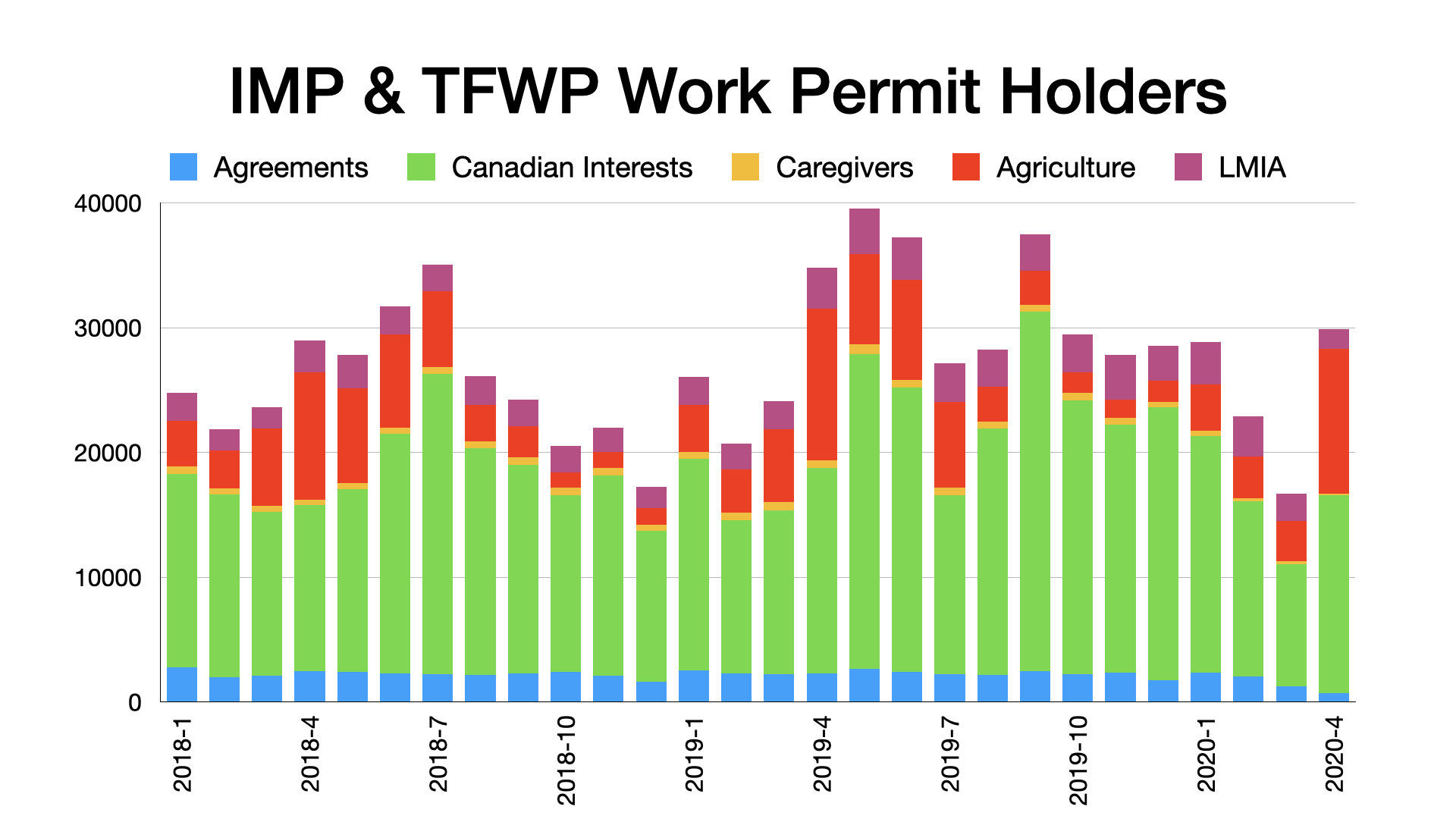
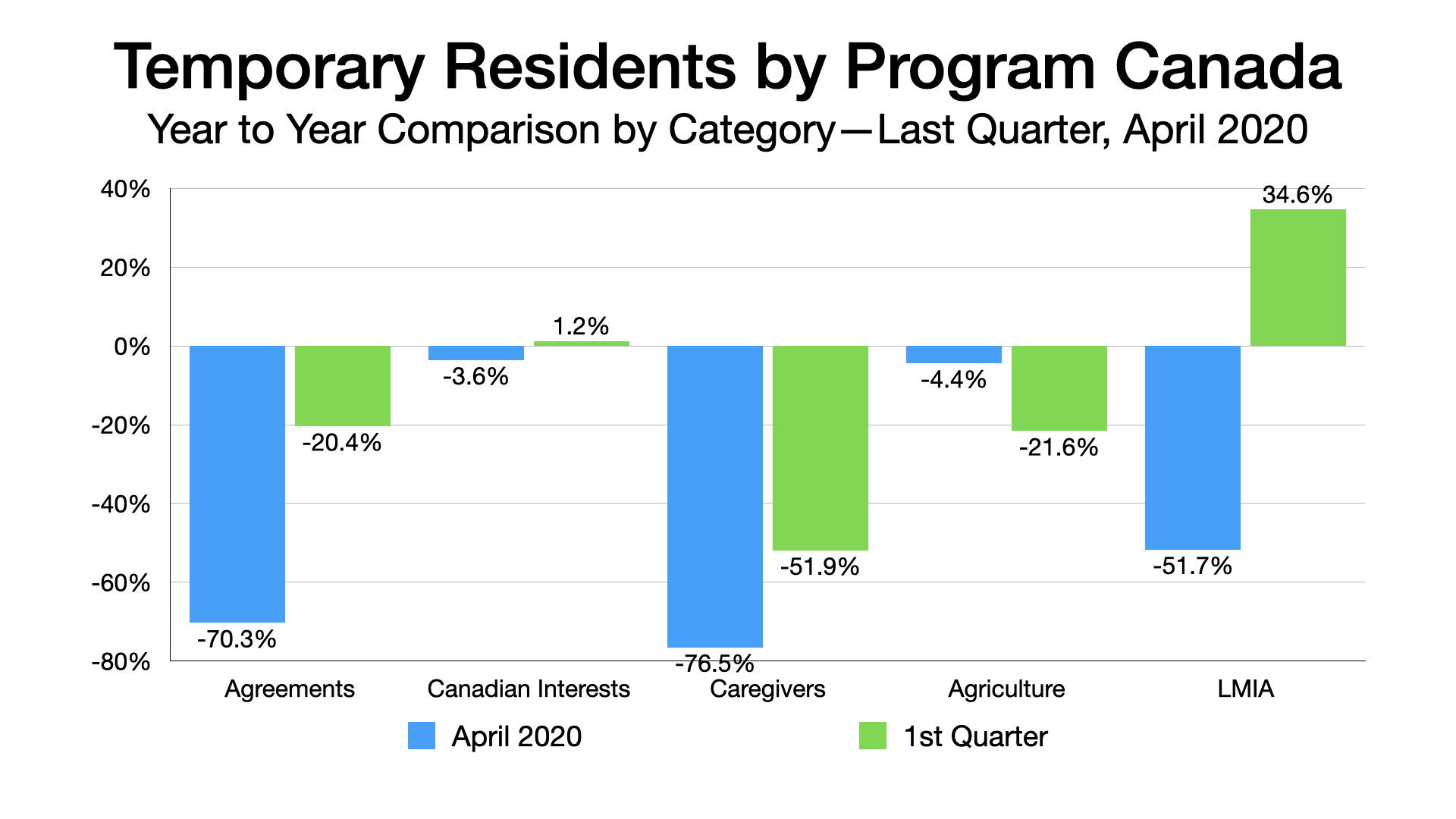
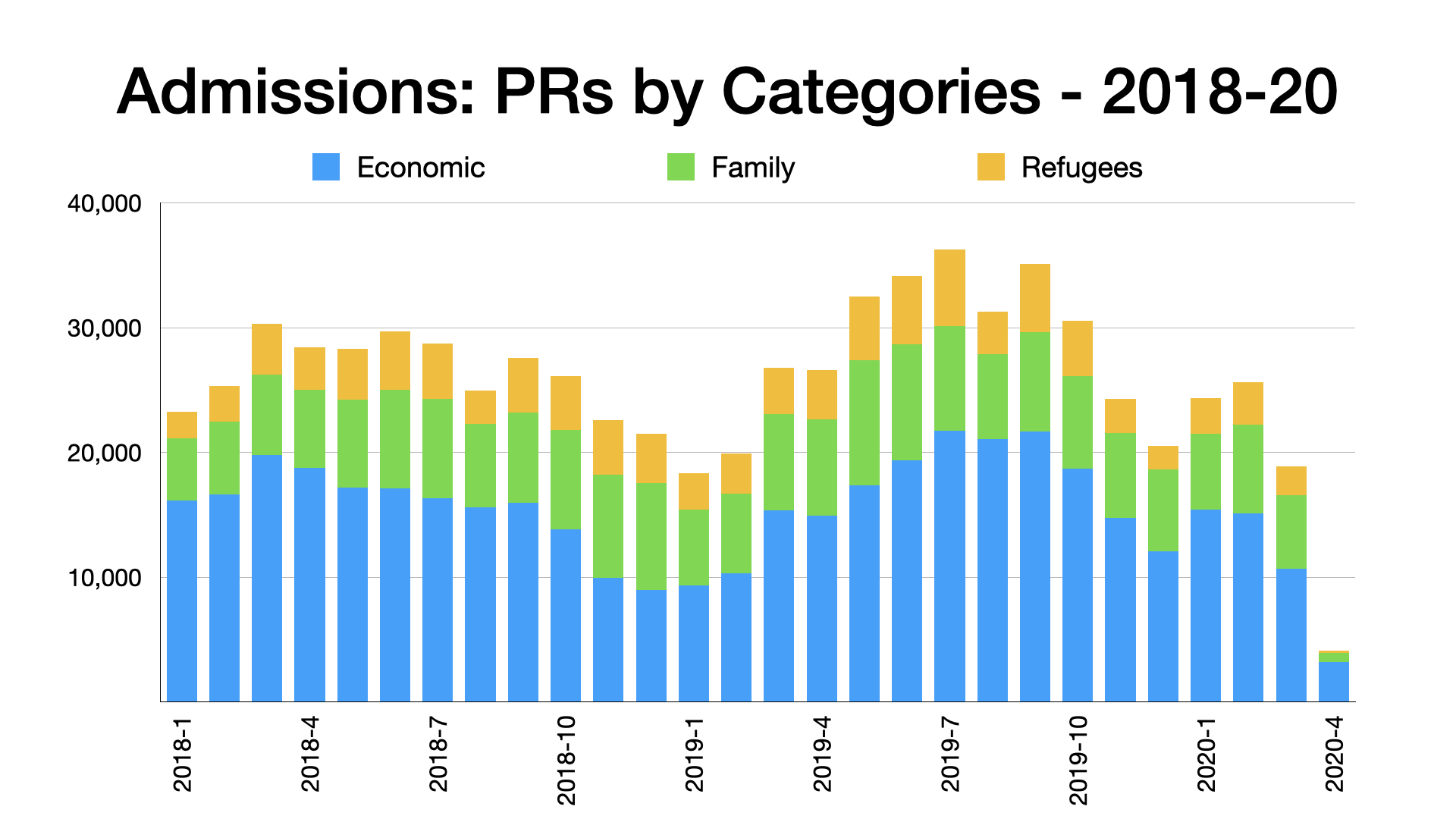
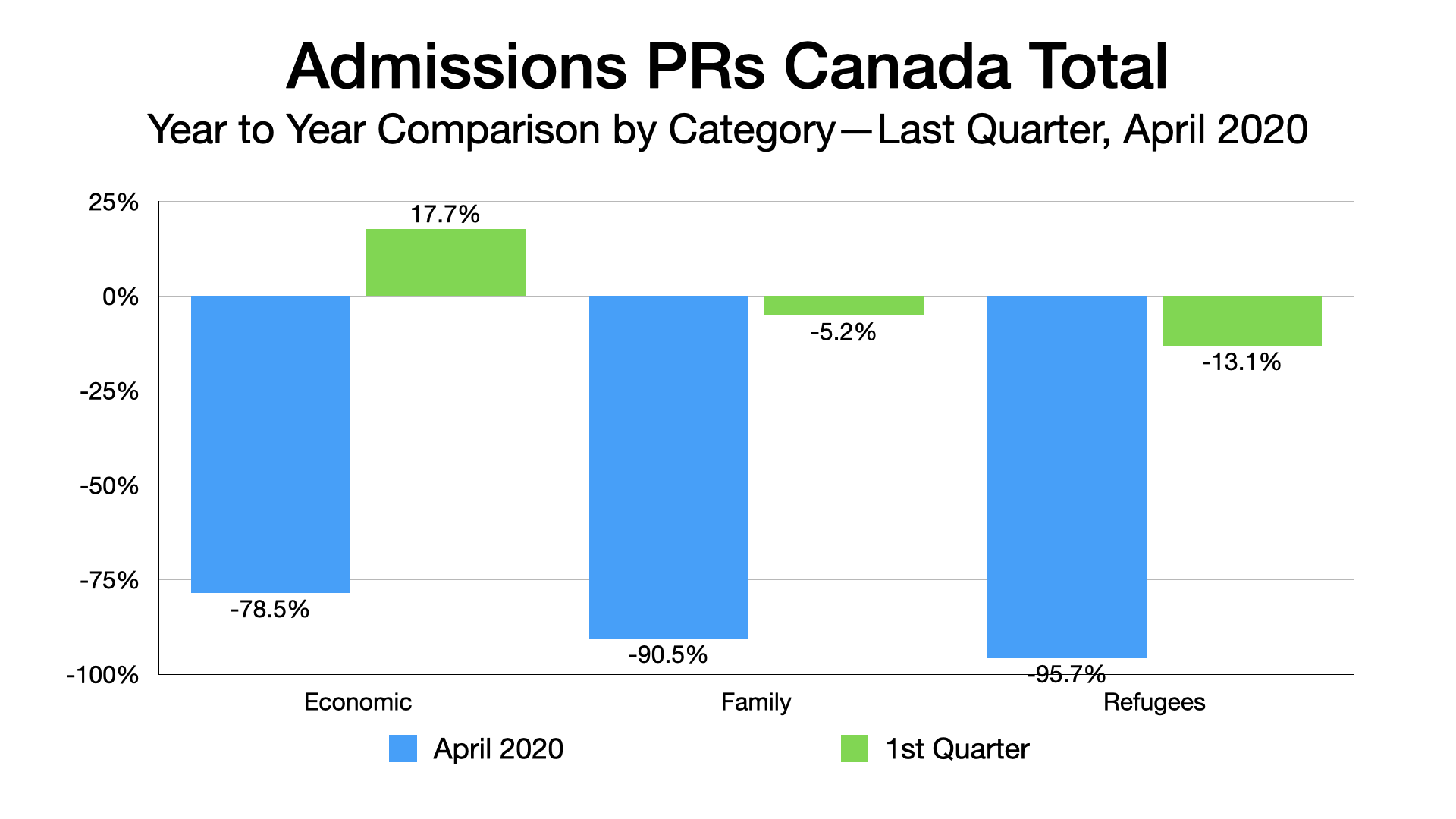
The slides below provide the monthly statistics since 2018 and capture the dramatic decrease in 2020:

Ramping up immigration without addressing Canada’s endemic productivity challenge means that any increase in GDP will not translate into an increase in GDP per capita, which economic and immigration should aim at:

Immigration to Canada has plummeted during the coronavirus pandemic, weakening a dependable lever of economic growth as the country mounts its recovery.

Canada’s population increased by about 76,000 people (0.2 per cent) over the first three months of 2020, the slowest growth in a first quarter since 2015, Statistics Canada said Thursday, warning a bigger impact will likely be felt in the second quarter.

The shift was severe for temporary immigration. The net increase of non-permanent residents in the first quarter was nearly 80 per cent lower than a year ago, largely because of fewer foreign students.

The dramatic slowdown is by design. In response to the pandemic, travel to Canada is heavily restricted. Those allowed entry include temporary foreign workers, along with foreign students and permanent residents who were approved before March 18. But for most people, the border is closed.

That is a complication for the recovery because the Canadian economy relies heavily on immigration to bolster output and consumption. Fewer immigrants will affect the labour supply, housing demand and university budgets, to name some prominent examples.

“If immigration falls by so much, then there’s a number of aspects of the Canadian economy that may be impacted pretty significantly,” said Andrew Agopsowicz, a senior economist at Royal Bank of Canada.

Before the pandemic, another record-setting year of immigration looked possible. The federal Liberals planned to welcome 341,000 new permanent residents in 2020, rising to 361,000 in 2022. The high-end estimate for 2020 was an intake of 370,000 permanent residents, which would have broken the 2019 record of about 341,000. Now, those targets look unfeasible.

For one, the Canada-U.S. border is closed to all non-essential travel through at least July 21, and with COVID-19 cases accelerating in some parts of the world, border restrictions may not ease substantially in the short term.

“We’re definitely not going to be growing very rapidly as a country this year,” said Robert Falconer, a research associate at the University of Calgary who studies immigration.

The early data suggest a massive slowdown in the second quarter. In April, about 4,100 people were approved for permanent residency, down 85 per cent from the previous April, according to the most recent data published by the federal immigration department. Most approvals were for people already living in the country.

If travel restrictions and border closings last all summer, Canada’s intake of permanent residents will decline by up to 170,000 people in 2020, RBC said in a recent report.

“The disruption will reverberate across the economy, given our reliance on immigration for labour-force growth and to offset Canada’s aging demographic,” Mr. Agopsowicz wrote at the time.

Higher immigration has been a key part of the Liberals’ economic strategy. Newcomers tend to be younger than current residents, helping to slow the country’s aging toward a fiscal cliff caused by non-working seniors with few working taxpayers to support them. They also provide talent to companies, buy goods and services, and often pay higher tuition to attend Canadian universities.

Moreover, the country is stuck in a productivity rut. For years, labour productivity – output produced for every hour worked – has essentially stagnated, Statscan data show. Instead, Canada relies on population growth – that is, more workers – to juice overall growth.

For instance, Canada’s population grew by some 580,000 people last year, the largest annual gain since 1971, and driven mostly by immigration. In percentage terms, the population grew 1.6 per cent in 2019, or the same as gross domestic product when adjusted for inflation.

Still, productivity gains are needed. As it increases, so too does the value of labour, resulting in higher wages and better living standards.

Ottawa remains committed to high immigration levels and is still accepting most applications, although processing times have been significantly affected by the virus. The federal government recently posted a tender to its procurement website, marked “urgent,” that seeks to modernize an application system that still relies on paper documents and in-person interviews.

“It’s going to be key for the government to figure out an effective strategy to ramp back up to high levels of immigration,” Mr. Agopsowicz said.

Source:  slowdown to weigh on

Supreme Court’s chief justice calls for more diversity in Canada’s legal system

Of note even if the government has made considerable efforts to increase diversity of judicial appointments. My unofficial running total compared to the 2016 baseline:

Women Visible Minorities Indigenous
2016 Baseline 35.6% 2.0% 0.8%
New Appointments 56.2% 7.2% 2.9%

The Supreme Court’s chief justice is calling for more diversity in Canada’s legal system as protests mount around the world over anti-Black and anti-Indigenous racism.

During an end-of-session news conference in Ottawa today, Richard Wagner said the top court has wrestled with cases that have underscored racial bias and the use of degrading stereotypes — and that a lack of diversity in the justice system is part of the problem.

“All Canadians should be able to see themselves reflected in their justice system. Justice should not make a person feel like an outsider or an ‘other’ when they confront it,” he said.

“I also think there is a growing awareness of the need for our courts, including our highest court, to reflect the diversity of Canadians. I certainly would welcome the insights and perspectives this could bring.”

Canada’s judiciary has become more diverse, with more women, visible minorities, LBGT and Indigenous people on the bench, but the number of Indigenous judges remains low compared to other demographic groups.

No Indigenous justice has ever been appointed to the Supreme Court of Canada.

The Liberal government overhauled the judicial appointments system in October 2016 in an attempt to recruit a more diverse array of candidates and make the selection process more transparent.

Cases show discrimination, bias

Wagner today cited some recent cases the Supreme Court has dealt with involving racism, including the case of Jeffrey Ewert, a Métis inmate who was convicted of the murder and attempted murder of two young women. The top court ruled that Canada’s prison service was using security tests that discriminate against Indigenous offenders and keep them behind bars longer and in more restrictive environments.

Wagner also cited the case of Ontario trucker Bradley Barton, which unleashed public outrageover how Indigenous victim Cindy Gladue was treated by Canada’s criminal justice system. During the trial, Gladue was described repeatedly as “native” and a “prostitute.”

Justice Michael Moldaver, who wrote for the majority in that case, said judges must do more to fight stereotypes against Indigenous victims of violence.

“As an additional safeguard going forward, in sexual assault cases where the complainant is an Indigenous woman or girl, trial judges would be well advised to provide an express instruction aimed at countering prejudice against Indigenous women and girls,” he wrote.

No call on systemic racism

Asked today if there is systemic racism in Canada’s justice system, Wagner declined to make a definitive statement. He said it’s the job of judges to weigh the facts in individual cases and speak through their judgments, while it’s up to elected officials and others to make more broad statements.

“As judges, we decide where evidence is brought forward,” he said. “We don’t issue broad statements generally without having a case to be decided upon.”

Lori Thomas, president of the Canadian Association of Black Lawyers, said she was disappointed by Wagner’s comments on systemic racism.

“The resistance to acknowledge systemic racism means that it will continue to be pervasive within the justice system,” she said.

“The fact that the perception by the community is that Black and Indigenous people are underserved or may not be given full justice in the justice system gives to mind that there is obviously a concern of systemic racism, and I can say that includes those acting in the legal community.”

Thomas said there is implicit bias within the justice system, especially given the small number of Black and Indigenous judges.

Even though Wagner said judges receive training to recognize and respond to bias and systemic discrimination, Thomas said that does not make up for a lack of diversity on the bench.

Indigenous people have long been over-represented in Canada’s courts and correctional system.

In his first news conference after being appointed as chief justice two years ago, Wagner called the incarceration rate of Indigenous people “unacceptable.”

“The rate is too high. It reveals a serious problem. And so far as the judiciary is concerned, I think that the court has a role to play whenever the case is presented to the court to decide those issues,” Wagner said at the time.

Source: Supreme Court’s chief justice calls for more diversity in Canada’s legal system

Canada has an unused card up its sleeve against China: our immigration system

Valid suggestions by Robert Falconer and to focus on Hong Kong asylum seekers and others from mainland China:

Canada is limited in the ways it can respond to the bully tactics of larger countries such as the People’s Republic of China. Yet as it confronts China’s heavy-handed attempt to quash the autonomy it had promised Hong Kong, Ottawa is not without levers of influence. One policy tool that Canada should immediately deploy is our immigration, refugee and asylum system.

As governments worldwide closed their countries’ borders, and as the United Nations suspended its refugee program, a more subtle trend emerged: an uptick in the number of Hong Kongers claiming asylum. According to the Immigration and Refugee Board of Canada, 25 Hong Kongers have claimed asylum in the first three months of 2020; unofficial sources suggest the number may be as high as 46. While that’s still a relatively small number, it represents a six-year high for Canada in just three months. Regardless of the choices Canada makes, we are likely to see record-high levels of people from Hong Kong fleeing here to seek refuge when international travel fully resumes.

Our asylum system is particularly well-suited to receiving claims from Hong Kong. It includes the ability to streamline cases from countries with well-established human-rights abuses, where asylum seekers have reliable forms of identification, and where the evidence is not ambiguous regarding the risks they face for holding an adverse political opinion or for opposing the current government.

Choosing to welcome those seeking asylum is not only the right thing to do but has practical benefits as well. It might seem odd to make a utilitarian argument in favour of asylum, and indeed, if all policy-makers and politicians were angels, such a justification would not be necessary. But there is a compelling case to be made for a renewed Canadian foreign policy that considers the role immigration and refugee status plays in our national security and response to foreign competitors. As the People’s Republic seeks to impose its will on Hong Kong, an open refugee policy is one that permits Hong Kongers to vote with their feet between an oppressive China or an open Canada.

The decision to welcome Hong Kongers as part of a robust foreign policy is not without precedent. Conservative governments in the 1970s and ’80s understood that an open-door policy was one that would attract those with the greatest levels of dissatisfaction in the Soviet bloc. The arrival of refugees and immigrants during that time strengthened our economies and added linguistic diversity and cultural understanding to our law enforcement, military and intelligence communities.

The same applies to Hong Kongers and mainland Chinese fleeing oppression. Indeed, combatting the possibility of intellectual-property theft and industrial espionage is far more likely to be aided, rather than hampered, by recruiting from a population that shares similar cultural and linguistic characteristics and understands the methods of potential competitors. Above all, welcoming Hong Kongers aligns with Canadian democratic traditions – standing against tyranny and welcoming the oppressed.

Granting asylum to Hong Kongers fleeing persecution from Beijing should not be a difficult task for this government, either. While the Trudeau government has shifted its tone regarding Canada’s relationship with China, it has faltered when asked whether Canada will accept refugee claimants from Hong Kong. In contrast, British Prime Minister Boris Johnson has announced that Britain will allow 2.8 million Hong Kongers to live and work in Britain if China implements its national-security law on the former British colony. In response, the Chinese Communist Party regime has threatened Britain with vague consequences if it continues to meddle in an “internal affair.”

Granting asylum to Hong Kongers will force the federal government to recognize the well-established truth that China is a hostile actor, and doing so will signal to both the international community and China that Canada acknowledges that hard truth. Dealing with China is not a risk- or cost-free interaction. There are no other options, aside from total silence, that will not draw retaliation from Beijing, and it should be expected if Canada decides to grant asylum to claimants from Hong Kong. But the government needs to accept this reality, recognize the risks and rethink how to move forward. Granting asylum to Hong Kongers seeking to flee persecution is not only the right thing to do – it is the Canadian thing to do.

For a government that prides itself on the principles of championing human rights, our inaction on Hong Kong remains a persistent dark stain.

Coronavirus has increased interest in immigrating to Canada

The optimistic view based upon an April World Education Services survey. Survey intentions, of course are intentions, we shall see over the next few quarters the extent to which they materialize:

The economic impacts of coronavirus have largely not changed people’s plans to immigrate to Canada. In most cases, prospective immigrants still expect that Canada will endure less economic hardship than their own country.

Of the 4,615 people who responded to a recent survey from World Education Services (WES), 38% say they are more interested in immigrating to Canada, 57% say that the pandemic does not impact their interest, and 5% say they are less interested. Researcher Joan Atlin said she was surprised to see such a small percentage of people who were less interested in immigrating to Canada.

“The research was done in April, so quite early in the pandemic, and I would have expected that number to potentially be a little bit higher,” Atlin told CIC News, “It was very encouraging to see.”

The survey was conducted by WES from April 15 to 21 in an effort to understand how COVID-19affected the intentions of prospective Canadian immigrants. The non-profit credential evaluation provider collected survey results from their clients, most of whom are in the pre-arrival phase and are on track to immigrate to Canada.

All respondents were outside of Canada at the time the survey was conducted. More than half of the people surveyed from the Philippines (64%), China (64%), and Nigeria (58%) said they are more interested in immigrating to Canada as a result of COVID-19. There was largely no impact on the desire to immigrate to Canada for respondents from Pakistan (58%), the U.K. (59%), the U.S. (57%), India (64%), and France (73%).

Just over half of respondents, 52%, do not expect COVID-19 to impact their ability to pay for the costs of immigrating to Canada; however, about 35%, do expect it to negatively impact their ability to pay the costs.

More than a third, 39%, say that personal and family economic hardships would make them more interested in immigrating.

Most are still interested despite worsening job prospects. The loss of job opportunities in a respondent’s occupation in Canada had the biggest impact on attitudes toward the move, with 31% saying it would make them less interested to come to Canada. Even so, the majority, 46%, said job loss would not impact them.

Most report that they would not be impacted by immigration obstacles such as increases in IRCC processing times, a reduction in immigration targets, or travel restrictions. The risk of contracting COVID-19 was the biggest hurdle with 36% reporting they would be less interested in immigrating to Canada, however 42% still reported that it would not impact their interest.

Just over a third, 35%, of respondents are considering delaying immigration to Canada to a future date, and 42% said they were unlikely to delay. The biggest reason for the delay was the risk of contracting coronavirus.

WES is conducting at least two more surveys on this topic. One is expected for this month and another is scheduled for August.

Source: https://www.cicnews.com/2020/06/coronavirus-has-increased-interest-in-immigrating-to-canada-0614757.html#gs.8cw8es

Race Is Used in Many Medical Decision-Making Tools

Good example of systemic but unintentional racism:

Unbeknown to most patients, their race is incorporated into numerous medical decision-making tools and formulas that doctors consult to decide treatment for a range of conditions and services, including heart disease, cancer and maternity care, according to a new paper published Wednesday in the New England Journal of Medicine.

The unintended result, the paper concludes, has been to direct medical resources away from black patients and to deny some black patients treatment options available to white patients.

The tools are often digital calculators on websites of medical organizations or — in the case of assessing kidney function — actually built into the tools commercial labs use to calculate normal values of blood tests. They assess risk and potential outcomes based on formulas derived from population studies and modeling that looked for variables associated with different outcomes.

“These tests are woven into the fabric of medicine,” said Dr. David Jones, the paper’s senior author, a Harvard historian who also teaches ethics to medical students.

“Despite mounting evidence that race is not a reliable proxy for genetic difference, the belief that it is has become embedded, sometimes insidiously, within medical practice,” he wrote.

The paper is being published at a tense moment in American society as black communities, disproportionately affected by the coronavirus, protest unequal treatment in other areas of their lives.

Dr. Jones said he believed the developers of the tools, who often are academic researchers, are motivated by empiricism, not racism. But the results, his analysis found, have often led to black patients being steered away from treatments or procedures that white patients received.

The paper included a chart listing nine areas of medicine where there are race-based tests, and it analyzed the consequences. For example, it reported, labs routinely use a kidney function calculator that adjusts filtration rates for black patients. With the adjustment, black patients end up with slightly better rates than whites, which can be enough to make those with borderline rates ineligible to be on a kidney transplant list.

An online osteoporosis risk calculator endorsed by the National Osteoporosis Foundation, among others, calculates chances of a fracture differently for black and white women. Black women end up having a score that makes them less likely to be prescribed osteoporosis medication than white women who are similar in other respects.

Some CRA systems are ‘systemically oppressive’ towards vulnerable populations: taxpayers’ ombudsman

Systemic but unintentional barriers:

The federal taxpayers’ ombudsman says some of Canada Revenue Agency’s (CRA) processes are “systemically oppressive” towards vulnerable populations as well as indigenous, rural and northern communities.

“These (tax) filers feel they receive conflicting information, the processes are unfair and the CRA does not address their unique circumstances and needs,” Canada’s outgoing Taxpayers’ Ombudsman, Sherra Profit, writes in her 2019-2020 annual report published Wednesday.

“This general belief leads to reluctance to interact with a system much of the population believes to be systemically oppressive and in turn reduces the likelihood people receive all the benefits, credits and deductions to which they are entitled,” the report says.

That belief by indigenous, rural and northern communities isn’t just a question of perception, Profit later specified in an interview with the National Post.

“One’s perception is reality. It is their reality,” said the head of the taxpayers’ watchdog.

Over her five-year mandate that ends on July 5, Profit says she found multiple instances where CRA’s bureaucracy was overly rigid and had significant communication issues with taxpayers.

She says that can be particularly problematic for vulnerable populations who don’t always have quick or timely access to some basic services.

“There are aspects of the CRA systems and processes that will be more oppressive to certain groups (…) For example, so many people don’t have a family doctor. So asking for a letter from a family doctor isn’t going to work from them,” Profit said.

“There are also socio-economic classes of people who are in housing situations where it may be very difficult to get a lease or a letter on a letterhead from a landlord,” she said, adding that these CRA systems are not intentionally designed to be oppressive.

In her report, she highlights one particularly shocking case where a woman who depended on the Canada Child Benefit (CCB) for day-to-day living was suddenly cut off from payments and demanded to reimburse $16,000.

After she reached out to CRA for an explanation, the agency told her the documents she submitted in her reapplication after separation from her ex-spouse were “not legible”.

“Instead of requesting she resend them, the CRA stopped her benefits. The complainant resent the documents and called several times to get updates, without success,” Profit explains in the report.

It took an urgent intervention by the Taxpayers’ Ombudsman’s office to have CRA conduct a review of the file, according to the report. The CRA then understood why it was more difficult for the applicant to reapply for CCB.

“At this time it became known that her living situation was not safe and she was forced into an emergency shelter while trying to find permanent housing. Losing the CCB further complicated finding a suitable home for her children,” the report said.

At that point, the CRA not only quickly approved her new application, but also manually processed a retroactive CCB payment and then sent her the December payment early to assist with holiday spending.

“I do find there is a lot of breakdown in communication,” Profit said. “I know the CRA is making changes to how it administers programs like the CCB, but we’re finding we’re still seeing a lot of these complaints.”

Another issue she’s noted over her tenure as the taxpayers’ ombudsman is that various CRA departments tend to operate in silos.

That would explain why someone could be repeatedly asked by the agency to provide the same information or documentation over and over, for example.

“There are systems that don’t talk to one another, Profit said. That’s something I’ve really been constantly bringing up. (CRA needs) a more horizontal approach to look at things as a whole.”

Overall though, Profit says she’s encouraged by efforts made by the CRA to improve service to Canadians and gradually adopt more client-centric approach.

As an example, she noted the appointment of a Chief Services Officer in March 2018 whose job is to transform the agency’s culture and significantly improve the quality and speed of services offered to Canadians.

“They’re at least starting to talk the talk. They know there are issues, they know they are problems, and they have that Chief Services Officer who is looking at it with a whole-of-organization perspective,” the ombudsman explained.

But in order for her own organization to better do its job, Profit says the federal government needs to increase its budget and make her office report to Parliament.

As of now, the Taxpayers’ Ombudsman reports directly to the Minister of National Revenue, who is in charge of CRA.

“This structure creates an inherent element of conflict of interest in the ombudsman reporting to the Minister responsible for the department or agency the ombudsman is tasked with overseeing. A Minister has a vested interested in ensuring their department or agency is perceived to be operating effectively and efficiently,” Profit agues in her report.

Source: Some CRA systems are ‘systemically oppressive’ towards vulnerable populations: taxpayers’ ombudsman