Pro-Shariah caliphate lecture held at Ontario college

Obnoxious views, but likely better to have them out in the open rather than underground:

Helping Syrian refugees coming to Canada and building an Islamic caliphate are part of the same cause, according to a pro-Shariah speaker at an Islamic conference in Hamilton.

And now Mohawk College, on whose property the event took place, says the group isn’t welcome back.

A YouTube video posted last month shows Mazin Abdul-Adhim delivering a speech entitled “The Truth Behind the Syrian Refugee Crisis” on Nov. 28.

The 40-minute English lecture shows Abdul-Adhim standing at a podium beside the flag and banner of Hizb ut-Tahrir, a global organization that promotes the unification of all Muslim countries as one caliphate — an Islamic government led by a religious authority considered a successor to Mohammed.

The speech begins addressing humanitarian matters such as aid and medical support. But the broader thesis is that much of the current conflict in Iraq and Syria is an attempt to stop Muslims from banding together to form their own Islamic government.

“The society (in Syria) has risen up as a society and says that we want Islam as our way of life,” the well-spoken Abdul-Adhim says, dressed in a checkered shirt. “And the West will not have it and this is what we are seeing.”

He later argues: “We’ve been sitting and not really doing very much for the application of Islam in society … We’re required to call for something — the full implementation of Islam — we’re not allowed to call for anything else or compromise in any other way.” However, he believes others are “trying to turn us away from our Deen (faith) by making us scared of even talking about the application of Islam.” He describes sharia as “the best system that exists on Earth” — claiming that it ends racism, has better currency and promotes “economic justice.”

According to Facebook, where he has more than 1,500 followers, Abdul-Adhim lives in London, Ont., and “was born in Canada and is originally from Iraq.”

Source: Pro-Shariah caliphate lecture held at Ontario college | Furey | Ontario | News |

Why ISIS has the potential to be a world-altering revolution: Scott Atran

A really good in-depth and lengthy analysis of some of the problems with current strategies against ISIS and similar movements. A necessary if not encouraging read:

The 9/11 attacks cost between $400,000 and $500,000 to execute, whereas the military and security response by the US and its allies is in the order of 10 million times that figure. On a strictly cost-benefit basis, this violent movement has been wildly successful, beyond even Bin Laden’s original imagination, and is increasingly so. Herein lies the full measure of jujitsu-style asymmetric warfare. After all, who could claim that we are better off than before, or that the overall danger is declining?

This alone should inspire a radical change in our counter-strategies. Yet, like the proverbial notion of insanity being the repetition of the same mistakes while expecting different results, our side continues to focus almost exclusively on security and military responses. Some of these responses have proven hopelessly ineffective from the outset, such as relying on the Iraqi, Afghan or Free Syrian armies.

ISIS manages 70,000 Twitter and Facebook accounts, with hundreds of thousands of followers, and sends approximately 90,000 texts daily

By contrast, there is precious little attention to social and psychological needs. I don’t mean to suggest that we solve things by offering potential jihadists better jobs. A still-unpublished report by the World Bank shows no reliable relationship between job production and violence reduction. If people are ready to sacrifice their lives, then it is not likely that offers of greater material advantages will stop them.

Instead, we must meet their psychological and aspirational needs. In just one example of how we fall short, the US State Department continues to send off-target tweets through negative mass messaging in its ineffectual ‘Think Again Turn Away’ campaign. Compare this to ISIS, which can spend hundreds of hours trying to enlist single individuals. Through its social media, the sophisticated Islamic State learns how personal frustrations and grievances can fit into a universal theme of persecution against all Muslims, and then translates anger and unrealised aspiration into moral outrage. Some estimates have ISIS managing upwards of 70,000 Twitter and Facebook accounts, with hundreds of thousands of followers, and sending approximately 90,000 texts daily. ISIS also pays close attention to the pop songs, video clips, action movies and television shows that garner high ratings among youth, and use them as templates to tailor their own messages.

By contrast, the US government has few operatives who personally engage with youth before they become a problem. The FBI is pressing to get out of the messy business of prevention and just stick to criminal investigation. ‘No one wants to own any of this,’ one group from the US National Counterterrorism Center told us. And public diplomacy efforts don’t quite get that hackneyed appeals to ‘moderation’ fall flat on restless and idealistic youths seeking adventure, glory and significance. As one imam and former Islamic State facilitator told us in Jordan:

The young who came to us were not to be lectured at like witless children; they are for the most part understanding and compassionate, but misguided. We have to give them a better message, but a positive one to compete. Otherwise, they will be lost to Daesh.

Local grass-roots approaches have had better luck in pulling people away. The United Network of Young Peacebuilders has had remarkable results in convincing young Taliban in Pakistan that enemies can be friends, and then encouraging those so convinced to convince others. But this will not challenge the broad attraction of the Islamic State for young people from nearly 90 nations and every walk of life. The lessons of local successes must be shared with government, and ideas allowed to bubble up before they boil over. To date, no such conduit exists, and young people with good ideas have few institutional channels to develop them.

Even if good ideas find ways to emerge from youth and obtain institutional support for their development to application, they still need intellectual help to persuade the public to adopt them. But where are the intellectuals to do this? Among Muslim leadership I’ve interviewed around the world, I listen to PowerPoint presentations intoning on ‘dimensions of ideology, grievance, and group dynamics’, notions that originate exclusively with Western ‘terrorism experts’ and think tanks. When I ask: ‘What ideas come from your own people?’, I’m told in moments of candour, as I was most recently by a Muslim leadership council in Singapore, that: ‘We don’t have many new ideas and we can’t agree on those we have.’

Civilisations rise and fall on the vitality of their cultural ideals, not their material assets alone

And where among our own current or coming generation are the intellectuals who might influence the moral principles, motivations and actions of society towards a just and reasonable way through the morass? In academia, you’ll find few willing to engage with power. They thus render themselves irrelevant and morally irresponsible by leaving the field of power entirely to those they censure. Accordingly, politicians pay them little heed, and the public couldn’t care less, often with good reason. For example, in the immediate aftermath of the 9/11 attacks, many in my own field of anthropology principally occupied themselves with the critique of empire: is the US a classic empire or ‘empire light’? This was arguably a justifiable academic exercise, and perhaps a useful reflection in the long run, but hardly helpful in the context of a country moving fast to open-ended war, with all the agony and suffering that extended wars inevitably bring.

Responsible intellectual endeavour in the public sphere was once a vibrant part of our public life: not to promote ‘certain, clear, and strong’ action, as Martin Heidegger wrote in support of Hitler, but to generate just and reasonable possibilities and pathways for consideration. Now this sphere is largely abandoned to the Manichean preachings of blogging pundits, radio talk-show hosts, product-pushing podcasters, and television evangelicals. These people rarely do what responsible intellectuals ought to do. ‘The intellectual,’ explained France’s Raymond Aron 60 years ago, ‘must try never to forget the arguments of the adversary, or the uncertainty of the future, or the faults of one’s own side, or the underlying fraternity of ordinary men everywhere.’

Civilisations rise and fall on the vitality of their cultural ideals, not their material assets alone. History shows that most societies have sacred values for which their people would passionately fight, risking serious loss and even death rather than compromise. Our research suggests this is so for many who join ISIS, and for many Kurds who oppose them on the frontlines. But, so far, we find no comparable willingness among the majority of youth that we sample in Western democracies. With the defeat of fascism and communism, have their lives defaulted to the quest for comfort and safety? Is this enough to ensure the survival, much less triumph, of values we have come to take for granted, on which we believe our world is based? More than the threat from violent jihadis, this might be the key existential issue for open societies today.
Source: Why ISIS has the potential to be a world-altering re…

The Soft Power of Militant Jihad – The New York Times

An angle that has not received much coverage by Thomas Hegghammer, Director of terrorism research at the Norwegian Defense Research Establishment.:

Why have tens of thousands of people from around the world chosen to live under the Islamic State’s draconian rule and fight under its black flag? To understand this phenomenon, we must recognize that the world of radical Islam is not just death and destruction. It also encompasses fashion, music, poetry, dream interpretation. In short, jihadism offers its adherents a rich cultural universe in which they can immerse themselves.

For the past four years I have been studying what jihadis do in their spare time. The idea is simple: To really understand a community, we need to look at everything its members do. Using autobiographies, videos, blog posts, tweets and defectors’ accounts, I have sought a sense of the cultural dimensions of jihadi activism. What I have discovered is a world of art and emotions. While much of it has parallels in mainstream Muslim culture, these militants have put a radical ideological spin on it.

When jihadis aren’t fighting — which is most of the time — they enjoy storytelling and watching films, cooking and swimming. The social atmosphere (at least for those who play by the rules) is egalitarian, affectionate and even playful. Jihadi life is emotionally intense, filled with the thrill of combat, the sorrow of loss, the joy of camaraderie and the elation of religious experience. I suspect this is a key source of its attraction.

The corridors of jihadi safe houses are filled with music or, more precisely, a cappella hymns (since musical instruments are forbidden) known as anashid. There’s nothing militant about this traditional genre, which dates from pre-Islamic times. But in the 1970s, Islamists began composing their own ideological songs about their favored themes. Today there are thousands of jihadi songs in circulation, with new tunes being added every month. Jihadis can’t seem to get enough anashid. They listen to them in their dorms and in their cars, sing them in training camps and in the trenches, and discuss them on Twitter and Facebook. Some use them to mentally prepare for operations: Ayoub El Khazani, a 25-year-old Moroccan man who attempted a shooting attack on a Paris-bound train in August, listened to YouTube videos of jihadi anashid just minutes before his failed operation.

Anashid are closely related to poetry, another staple of jihadi culture. Across the Arab and Islamic world, poetry is much more widely appreciated than it is in the West. Militants, though, have used the genre to their own ends. Over the past three decades or so, jihadi poets have developed a vast body of radical verse. Leaders from the Islamic State’s spokesman Abu Muhammad al-Adnani to Al Qaeda’s Ayman al-Zawahri often include lines of poetry in their speeches and treatises. Foot soldiers in Syria and Iraq sometimes hold impromptu poetry performances or group recitals in the field.

Perhaps more important than poems for jihadis are dreams, which they believe can contain instructions from God or premonitions of the future. Both leaders and foot soldiers say they sometimes rely on nighttime visions for decision making. Omar Hammami, the Alabama-born man who fought with the Shabab in Somalia in the late 2000s, said he thought of defecting, “but it was really a few dreams that tipped the scales and caused me to stay.” Mullah Omar, the mysterious one-eyed Taliban leader who died in 2013, reportedly made no consequential strategic decision before getting advice from his dreams.

Jihadi culture also comes with its own sartorial styles. In Europe, radicals sometimes wear a combination of sneakers, a Middle Eastern or Pakistani gown and a combat jacket on top. It’s a style that perhaps reflects their urban roots, Muslim identity and militant sympathies. The men often follow Salafi etiquette, for example by carrying a tooth-cleaning twig known as a miswak, wearing nonalcoholic perfume, and avoiding gold jewelry, as they believe the Prophet Muhammad did.

As new recruits shed their jeans and track suits for robes, as they memorize the words to the Islamic State’s anashid and learn to look for glimpses of paradise in dreams, they discover a whole new lifestyle. Music, rituals and customs may be as important to jihadi recruitment as theological treatises and political arguments. Yes, some people join radical groups because they want to escape personal problems, avenge Western foreign policy or obey a radical doctrine. But some recruits may join because they find a cultural community and a new life that is emotionally rewarding.

As the West comes to terms with a new and growing threat — horrifically evident in the recent attacks in Paris and San Bernardino, Calif. — we are not only confronting organizations and doctrines, but also a highly seductive subculture. This is bad news. Governments are much better equipped to take on the Slaughterer than they are He Who Weeps a Lot.

Source: The Soft Power of Militant Jihad – The New York Times

Canada’s Growing Jihadi Cancer: Unbalanced but captures one perspective – The Daily Beast

Dana Kennedy, former correspondent at ABC, Fox News and MSNBC, presents a one-sided account of perceived ‘jihadi cancer,’ citing the usual suspects (Farzana Hassan, David Harris, Tarek Fatah, Raheel Raza), with no attempt to balance that with other views, apart from Mubin Sheikh.

It appears her views reflect more her experience at Fox than the other networks:

The usual Canada’s new telegenic Prime Minister Trudeau, 43, the ultimate anti- Donald Trump, was pictured last week warmly greeting the first of an estimated 25,000 Syrian refugees arriving between now and March 2016. (Canada’s population is about one-tenth of the United States, so that’s as if 250,000 Syrian refugees were arriving in the U.S. in the space of just four months.)

But some worry that the feel-good photo op for Trudeau and his Liberal Party could portend trouble for Canada.

“In a technical briefing for journalists this week, Canadian immigration officials said not a single applicant has been rejected yet,” right-wing activist and lawyer Ezra Levant told The Daily Beast.

“This is a national security threat to Canada, and to the United States, which shares the world’s longest undefended border with us,” said Levant. “The Islamic State has repeatedly named Canada as a target; dozens of Canadian Muslims have gone to Syria to become terrorists. And yet Canada is rushing refugees through, far in excess of our capacity to properly vet them. We simply don’t have sufficient intelligence personnel, let alone those who function in Arabic.”

Toronto attorney and human rights activist David Harris said the new influx of Syrian refugees is part of a “gigantic and overly generous immigration policy,” coupled with a lax vetting process and a philosophy of encouraging newcomers to retain their cultural traditions, that has negative connotations for Canada.

“It’s very interesting to see how the deteriorating situation in Canada and the implications for northern America border security has not been recognized,” said Harris.

“Massive immigration here has created an immigration-industrial complex with all sorts of publicly funded language schools, settlement organizations and lobbying groups that have sprung up like the Sorcerer’s Apprentice,” said Harris. “Because Canada is so much smaller in population, there are areas of the country starting to resemble tribal homelands and the loyalty is not to Canada. Canada is extremely vulnerable to extremism and terrorism.”

“This is all a Saudi-funded cancer spreading across the world.”

Brian Levin, a former NYPD officer turned counter-terrorism and extremism specialist at San Bernardino State, concurred.

“People talk about Mexico,” said Levin. “They totally overlook Canada. Nobody has any idea what’s going on up there. In my opinion it’s a bigger threat than Mexico.”

Given Prime Minister Trudeau’s good looks, his political pedigree, a one-time TV-anchor wife who the New York Post called “the hottest First Lady in the world,” and his headline-making cabinet featuring many women and minorities, he recently scored a spread in Vogue.

But he’s come under fire at home for what some see as pandering to the Muslim vote and an extreme political correctness. He has said he will revamp aspects of C-51, the controversial anti-terrorism bill that the Conservative Party enacted this year.

Trudeau visited mosques all over Canada as part of his political campaigns leading up to his recent win. He visited a notorious Montreal mosque in 2011, a month before the U.S. classified it as an al-Qaeda recruitment center. He addressed a mosque with ties to Hamas and, unlike his Conservative Party predecessor, former Prime Minister Stephen Harper, he defends the right for Muslim Canadian women to wear the niqab, a veil covering the face, when they take their citizenship oaths.

In 2011 Trudeau objected to the word “barbaric” in a Canadian citizenship guide for new immigrants that included the passage: “Canada’s openness and generosity do not extend to barbaric cultural practices that tolerate spousal abuse, honor killings, female genital mutilation, forced marriage or other gender-based violence.”

“There’s nothing the word ‘barbaric’ achieves that the words ‘absolutely unacceptable’ would not have achieved,” said Trudeau, who later retracted his statements after a Twitter firestorm.

…But, at least so far, homegrown attacks in Canada are fairly rare.

Mubin Shaikh, a former Muslim extremist turned counter-terrorism operative who went undercover for Canadian intelligence to infiltrate the Toronto 18, says the low incidence of terror attacks is precisely because of Canada’s policy of multiculturalism.

“Our multiculturalism is a protective factor and one of the reasons why Canada has seen lower numbers [of terrorist incidents]is largely due to the fact that Muslims are treated very well,” Shaikh told The Daily Beast.

“This is the whole point, that when you actively prevent isolation and marginalization, so too do you see a low level of extremism,” said Shaikh. “The problem in the UK is that although there is multiculturalism, there is a colonial history that grievances-centered people can take advantage of.”

Others disagree and say multiculturalism has spawned a more subtle type of fundamentalism taking over some communities to the point where they look like areas of the Middle East with a corresponding mind-set—and dangers.

“If you’ve been out of Ottawa for just two months, you’ll come back and be astonished at how many more hijabs and niqabs you see on the street in just that short amount of time,” said attorney Harris. “There’s a significance and symbolism to that whether you believe it or not.”

Source: Canada’s Growing Jihadi Cancer – The Daily Beast

Why aren’t we looking into the Saudi role in San Bernardino attack?

Neil MacDonald, on Saudi Arabia and the uncomfortable parallel with ISIS:

Usually, executions — more than 150 so far this year — are performed with a “godly” sword. In public, of course, for the entertainment of a self-righteous crowd. But there are also crucifixions and mutilations.

SAUDI-ELECTION/

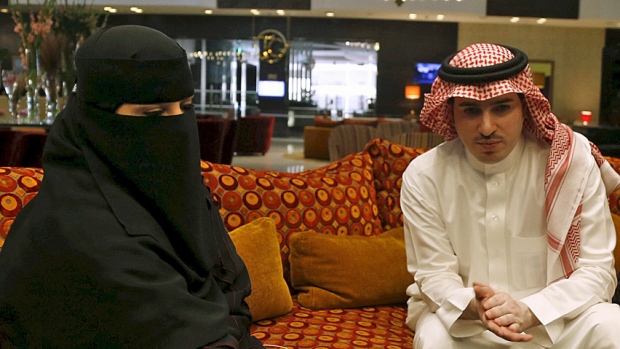
Saudi woman Fawzia al-Harbi, a candidate for local municipal council elections, sits next to one of her chaperones at a shopping mall in Riyadh last month. Saudi Arabian women are running for election and voting for the first time on Dec. 12, but their enfranchisement marks only a pigeon step towards democracy and gender equality in the Islamic kingdom. (Reuters)

Saudi women are treated better than immigrants, but are still severely oppressed, and treated like chattels of the male population.

If that all sounds like the modus operandi of ISIS, which the Saudis have been accused of having funded and armed before becoming a stout ally in the U.S. bombing campaign, well, the shoe does fit.

The Saudis have actually threatened to sue anyone who makes the ISIS comparison, but objectively, it’s not unreasonable.

The main difference is that the Saudis are extremists who managed to create a nation and have it recognized. And of course their king doesn’t claim to lead a new caliphate.

It’s almost a cliché to say this is all about oil, and the Saudi willingness to sell it, and sell it cheaply in unlimited quantities, to the West.

Because it is about oil. It’s also about the Saudis’ willingness to spend billions of that petro-revenue back in the West, signing contracts for military materiel that our governments are ecstatic to arrange.

If you’re inclined to think otherwise, try this mental exercise: imagine if Cuba, or Russia, or Venezuela (or even Canada) had produced 15 of the 19 9/11 hijackers, and had remained a consistent leader in exporting murderous ideology, and radicals like Tashfeen Malik.

Source: Why aren’t we looking into the Saudi role in San Bernardino attack? – World – CBC News

San Bernardino shooting highlights tensions within Islam

More on the Saudi influence on radicalization by Nadeem F. Paracha:

Faisal Shahzad, the American-Pakistani who tried to blow up New York’s Times Square in 2010, had also spent some time in Saudi Arabia. Like Tashfeen, he, too, belonged to a middle-class family.

The authorities in Pakistan still have no clue how to address the phenomenon of educated and relatively well-to-do young people becoming overtly radicalized to the point of committing grave violence.

The country’s military establishment, along with the government headed by the moderate center-right party, the PML-N, has unleashed a widespread operation against hardened and organized militants.

Part of the operation also includes an elaborate plan to neutralize the harder and more puritan stands of the faith that have seeped into various sections of Pakistani society ever since the 1980s.

This aspect of the operation has been tougher to implement because one major section of PMLN’s vote-bank in the Punjab is made up of men and women whose economic status has been enhanced by the money they made in the Gulf states.

But, again, till now, though such Pakistanis have often been known to denounce the faith followed by most of their compatriots and to fund a number of apolitical Islamic evangelical outfits that preach their kind of Islam, they are never expected to cross the line that separates them from militancy.

Ready-made narratives

However, as one Pakistani psychologist suggested two years ago at a seminar, young people in Pakistan with serious emotional problems and unresolved psychological issues are now being handed ready-made religious and political narratives by populist electronic and social media outlets. These narratives, he said, encourage them to give violent expression to their angst, confusion and failures while believing that they are doing so for a grander, more divine cause.

This seems to have been the case with Tashfeen. Hailing from a small town family steeped in indigenous forms of the faith; allegedly flown away to Saudi Arabia by a stubborn father who believed his country’s people were “flawed Muslims” and that “true Islam” was practiced only in Saudi Arabia; returning to Pakistan as a young woman and perhaps coming to the conclusion that her father was correct; linking up with an equally disgruntled soul from the US; marrying him; and then finally discovering her true calling: mass murder.

Hers was a psychotic break emerging from unresolved emotional issues, but combined with a warped politico-religious narrative that simply promised her a catharsis. But it was a catharsis that left 14 innocent people dead; a six-month-old child scarred for life; and a Muslim community in the US scratching their heads and wondering where they went wrong in simply trying to lead “pious lives.”

Source: San Bernardino shooting highlights tensions within Islam | World | DW.COM | 07.12.2015

How fear became the politician’s weapon of choice

Ian Buruma on the politics of fear:

As long as France’s state of emergency lasts, police may arrest people without warrants, break down the doors of private residences in the middle of the night, take over restaurants and other public places with armed force, and generally behave like agents in a police state. Most French citizens are now so frightened of Islamist attacks that such measures are widely supported. But they are almost certainly counterproductive.

A national leader can declare war on a state, not on a network of revolutionaries. Islamic State, despite its claims, is not a state, and Mr. Hollande should not treat it as one. Besides, even if bombing IS strongholds in Iraq or Syria makes military sense, it won’t break the spell of Islamist revolution for frustrated, bored and marginalized young people in French slums.

On the contrary: The canny leaders of IS also rely on an apocalyptic “us or them” view of the world. Most Muslims are not violent revolutionaries who condone, let alone admire, mass violence. IS seeks to broaden its support, especially among young Muslims, by convincing them that true Muslims are in an existential war with the West – that the infidels are their mortal enemies. For them no less than for Mr. Trump, fear is the most powerful weapon.

So the more a Western government allows its policemen to humiliate and bully Muslims in the name of security, the more IS is likely to win European recruits. The only way to combat revolutionary Islamist violence is to gain the trust of law-abiding Muslims in the West. This will not be easy, but arbitrary arrests are surely the wrong way to go about it.

Likewise, when it comes to civil wars in the Middle East, Western restraint is usually a better strategy than hasty military intervention driven by domestic fear. Republican candidates in the United States are already using the recent murder spree in Paris to blame President Barack Obama, and by extension any future Democratic candidate, for being weak. Mr. Trump has promised to “bomb the shit out of ISIS.”

This bellicosity has had the effect of pushing Hillary Clinton, the front-runner for the Democratic presidential nomination, into distancing herself from Mr. Obama. As with Mr. Hollande, she has to assuage public fear by talking tough and promising more military action.

Mr. Obama has consistently resisted the temptation to unleash more wars. His policies have sometimes been inconsistent and irresolute. But in his refusal to give in to panic and act rashly, he has been far braver than all the big talkers who accuse him of being a wimp.

Source: How fear became the politician’s weapon of choice – The Globe and Mail

How Young Brains Get Radicalized – The Daily Beast

Not surprising, the same neuroscience that helps explain greater willingness to take risks (e.g., drunk driving, extreme sports etc) also plays a role in understanding susceptibility to radicalization:

Fortunately, findings from neuroscience may help us to understand where these vulnerabilities exist, and why some brains—particularly adolescent brains—are more susceptible to believing whatever they are fed. Such neural insights are important because they contribute to a better understanding of how to combat radicalization here at home.

According to peer-reviewed research, radicalization is made easier in brains that have impaired functioning in one of the main regions responsible for generating the ability to doubt. Specifically, scientists have found that damage to the brain area known as the ventromedial prefrontal cortex (vmPFC) may cause individuals to have a “doubt deficit”—a hindered ability to question, scrutinize, or be skeptical of new information.

In a 2012 study published in the journal Neuropsychology, researchers found that patients with damage to the vmPFC scored higher on measures of religious fundamentalism and authoritarianism compared to others.

Such qualities would make people with similar impairments, such as those with decreased or disrupted brain activation in the vmPFC, the perfect prey for ISIS recruiters. According to the authors of the study, “Individuals high in authoritarianism tend to easily submit to authority, are often aggressive in the name of authority, and tend to hold dogmatic beliefs without a reflexive critique.”

So the question is, who possesses poor brain circuitry in the prefrontal cortex that could produce doubt deficits? The unsettling answer: young people.

There is overwhelming evidence that teenagers and those in their early 20s have brain circuits in the prefrontal cortex that are still developing. It may come as no surprise that this brain region is also involved in controlling impulses, regulating our emotions, and making sound decisions. The brain’s wiring simply hasn’t had a chance to make all the proper connections to support such behavior.

This falls in line with what is actually being observed in the real world. Teenagers are commonly targeted through the Internet by ISIS recruiters, like 19-year-old Asher Abid Khan from Texas, who was drawn to the group after watching propaganda videos put up by ISIS online.

In another case, ISIS members spent months carefully grooming a 23-year-old female named Alex, who was a devout Christian and Sunday school teacher. A recruiter known to her only as “Faisal” provided the lonely girl with constant companionship by spending hours communicating with her through Skype, Twitter, and email, teaching her the fundamentals and rituals of Islam as a first step.

By being so persistent, ISIS recruiters are also exploiting the brain’s natural tendency to accept beliefs rather than reject them. Since the latter requires an additional evaluation phase, which means more work for the brain, its default state is to believe.

These accounts clearly show that ISIS recruiters recognize the young brain’s vulnerabilities—and how to take advantage of them. If we want to protect against their techniques, we have to understand these vulnerabilities as well.

Source: How Young Brains Get Radicalized – The Daily Beast

What ISIS songs reveal about the group’s evolution

Another side of Daesh/ISIS’ propaganda and recruitment strategy:

After this month’s attacks in Paris, ISIS released an audio recording celebrating the attacks and taking responsibility for them. The RCMP is still investigating the recording to determine whether the voice on the recording belongs to a Canadian. Some linguists are convinced it does, and that the speech patterns suggest he is from Ontario. But it’s still not clear whose voice is on that recording.

What we do know is that the audio statement begins with an acapella song that’s as hooky as any pop song, and it plays throughout the five and a half minute recording.

The song takes the form of a traditional Islamic holy chant, called a “nasheed”. These songs have become key to the ISIS propaganda machine. They’re the soundtrack to the shocking execution videos, they’re blasted from cellphones on the battlefield and now, they’re showing up more and more in English.

Aymenn Jawad Al-Tamimi,fellow at the Middle Eastern Forum, says the Islamic State is one of the leading producers – if not the­ leading producer – of jihadi nasheeds today.

Day 6 asked him to  listen to the music in ISIS’ latest audio recording following the Paris attacks, and to compare it to other jihadi songs that ISIS has produced.

“My immediate thoughts on that nasheed is the language used: English,” says Al-Tamimi. He says the Islamic State has recently branched out into producing nasheeds in other languages, including English, French, German and even Hindi and Uyghur to reach  out to non-Arabic foreigners to join the Islamic State.

“This one  is what you could call one of the more generic nasheeds in terms of content, referring to conceptions of martyrdom and virgins of paradise promised for those who die in the cause of jihad,” says Al-Tamimi.

And he says the catchiness of the songs serves a strategic purpose. “In regards to the melodies of nasheeds being catchy, it can help subconsciously imbibe the nasheed into your mind. The catchiness of the nasheed will help reinforce the messaging and indoctrination,” says Al-Tamimi.

Source: What ISIS songs reveal about the group’s evolution – Home | Day 6 | CBC Radio

Good example of Muslim criticism of violent extremists

A reminder to those who continually ask question the perceived lack of criticism of terrorism by Muslims that it is not too hard to find, as this short video attests:

Saudi-Born Singer Shams Bandar: Why Do We Pin All Our Problems on the West?