Monsef case brings calls to strengthen appeal rights for those facing citizenship revocation

More on citizenship revocation for fraud or misrepreasentation, provoked by Monsef and the upcoming Senate review of C-6:

Not having a connection to Iran is a good thing, according to Sen. Omidvar.

“Once you get Iranian citizenship, it’s with you for the rest of your life whether you want it or not,” said the Indian-born Senator, who is an internationally recognized expert on immigration, diversity and inclusion named to the Senate by Prime Minister Justin Trudeau (Papineau, Que.) earlier this year. “I was an Iranian citizen by marriage, and so when I went to Iran, the only way I could stay there was if I relinquished my passport from India and was issued an Iranian identity.”

Although she left Iran and came to Canada in 1981, and subsequently became a Canadian citizen, she would still be considered an Iranian citizen were she to return to Iran. “That is why I never want to go back,” Sen. Omidvar said in an interview.

Last week, she moved the second reading of C-6 and hopes the Senate will be able to amend the bill to provide “an avenue for an appeal or a hearing” for Canadians whose citizenship is being revoked based on misrepresentation or fraud.

Sen. Omidvar explained that in the case of Ms. Monsef—who at the age of 11 came to Canada with her widowed mother and two younger sisters as refugees—she and her siblings “would be held accountable” if her mother told Canadian immigration officials her children were born in Afghanistan and not Iran.

Under the current system, Ms. Monsef could get a letter from a Citizenship and Immigration Canada official stating that her Canadian citizenship was being revoked based on misrepresentation, and she would have 60 days to respond to the same official who sent the letter. Ms. Monsef could then seek leave to appeal to the Federal Court for a judicial review, but only after she lost her citizenship.

Even then, the court only grants leave on about 15 per cent of citizenship revocation cases, according to Toronto-based immigration and refugee lawyer Lorne Waldman, who is representing the British Columbia Civil Liberties Association and the Canadian Association of Refugee Lawyers in a constitutional challenge to the citizenship revocation regime in C-24 that was filed with the Federal Court last Monday.

He explained that if someone was found to have lied when applying to become a permanent resident and later became a Canadian citizen, that individual could lose both status and face automatic deportation.

What is known about Ms. Monsef’s case “is an example of that scenario,” said Mr. Waldman, who is in court next month on a similar case involving two people who came to Canada as children and whose citizenship is imperilled because of their father’s alleged misrepresentation on his permanent resident application.

Mr. Waldman said he doesn’t believe Ms. Monsef will be stripped of her Canadian citizenship. If the misrepresentation in her case involves where she was born rather than her citizenship at birth “it is not likely that would be relevant” in raising questions about the minister’s status in Canada, said Mr. Waldman.

http://www.hilltimes.com/2016/10/03/monsef-case-brings-calls-strengthen-appeal-rights-facing-citizenship-revokation/82379?ct=t(RSS_EMAIL_CAMPAIGN)&goal=0_8edecd9364-032584e435-90755301&mc_cid=032584e435&mc_eid=685e94e554

Will changes to the Citizenship Act affect the naturalization rate? – Policy Options

My piece in IRPP’s Perspectives on the need for the Senate to consider the decline in the naturalization rate in its review of Bill C-6’s changes to the Citizenship Act.

Source: Will changes to the Citizenship Act affect naturalization rate? – Policy Options

Senate could get rid of law threatening to strip Maryam Monsef’s citizenship

Needed: the removal of the previous procedural protections for citizenship fraud and misrepresentation without any effective replacement was over-reach:

The Senate could come to the rescue of Canadians who are being stripped of their citizenship without a hearing.

Independent Sen. Ratna Omidvar, who is sponsoring another citizenship-related bill in the upper house, says she’s hopeful the Senate will amend the bill to do away with a law that allows the government to revoke the citizenship of anyone deemed to have misrepresented themselves.

It’s a law that could potentially ensnare Democratic Institutions Minister Maryam Monsef, who revealed last week that she was born in Iran, not Afghanistan as she’d always believed.

The law, part of a citizenship bill passed by the previous Conservative government, was denounced by the Liberals when they were in opposition but lawyers say they’ve been aggressively enforcing it since forming government.

The British Columbia Civil Liberties Association and the Canadian Association of Refugee Lawyers on Monday launched a constitutional challenge of the law, which they argue violates the Charter of Rights and Freedoms.

The Liberal government chose not to deal with the issue in Bill C-6, which repeals other aspects of the Conservatives’ citizenship regime, including a provision empowering the government to revoke the citizenship of dual nationals who are convicted of high treason or terrorism.

During study of C-6 at a House of Commons committee, the NDP attempted to amend the bill to repeal the power to revoke citizenship without a hearing. But that was ruled by the committee chair to be outside the scope of the bill.

Omidvar, who moved the second reading of C-6 on Tuesday in the upper chamber, said Senate procedural rules are different and she’s hopeful the upper house will be able to do what the Commons could not.

“I would like to see this question addressed,” said Omidvar, a longtime advocate for immigrant and refugee rights.

“I think it’s a very important question because, as BCCLA has pointed out, even if you get a traffic ticket, you get a hearing or an appeal and here your citizenship is being revoked and you have no avenue for a hearing and appeal.”

Omidvar said she’s spoken about the matter with Immigration Minister John McCallum and “he’s open to an amendment” from the Senate.

“He understands that this was an oversight.”

Source: Senate could get rid of law threatening to strip Maryam Monsef’s citizenship | Toronto Star

Italy’s ‘Cultural Allowance’ For Teens Aims To Educate, Counter Extremism : NPR

Interesting approach.

One of the best initiatives of the Institute for Canadian Citizenship gives every new Canadian a one-year pass that provides free access to over 1,000 cultural and historical sites.:

Few things inspire more loathing in the hearts of high school students than the words “extra homework.” But as Florence Mattei hands out a pamphlet to her homeroom class at the Southlands School in Rome, she tells them they may want to give this assignment a chance.

“Who would like to read what it’s about?” she asks the room full of 18-year-olds.

A senior named Alessio translates from Italian into English: “For the people born in 1998 there is a 500-euro bonus that you can spend on cultural things, such as going to the cinema, visiting museums and this kind of stuff.”

He stares at the page in disbelief. But it’s true. Starting this month, Italy is offering its 18-year-old residents the equivalent of $563 to spend on culture, from concert tickets, books and museum admission to other qualifying events.

To get the money, they need to register online and download an app.

“Do we want to try?” says the teacher. “Yeah? So get your phone.”

Youth unemployment in Italy is nearly 40 percent in a country that’s been struggling economically for years. So the free cash is a welcome surprise for teens like Daniele Montagna, who knows where he is going to spend his first.

“On the concert of JB — Justin Bieber!” he rejoices.

And he can. The program doesn’t distinguish between pop culture and highbrow culture.

The Italian government is hoping the program will educate kids born in Italy as well as integrate a growing population of foreign residents, dissuading alienated youths from following radical Islam.

Prime Minister Matteo Renzi first announced the so-called Culture Bonus last November after the Paris massacre, when Islamist terrorists killed 130 people inside a theater and outside on the streets.

“They destroy statues, we protect them,” he said in a speech at the time. “They burn books, we’re the country of libraries; they envision terror, we respond with culture.”

But some question whether exposing young Muslims to, say, Lady Gaga will really endear them to Western culture.

“There is a chance that Lady Gaga is exactly what’s going to make somebody angry,” says Barak Mendelsohn, a senior fellow at the Foreign Policy Research Institute in Philadelphia and an expert in combating extremism. “That doesn’t mean that they buy into your values. We’ve seen radicals trying to take advantage of the welfare state, funding themselves while building bombs.”

He points to the Paris attackers. French authorities estimate they collected more than 50,000 euros in unemployment benefits — even while at least one of them had a job.

“They don’t have any ideological obstacle in taking money from Western countries,” Mendelsohn adds.

Source: Italy’s ‘Cultural Allowance’ For Teens Aims To Educate, Counter Extremism : Parallels : NPR

Monsef’s place of birth shouldn’t have ‘serious consequences’ – De Kerckhove, Glavin

Former Canadian Ambassador Ferry de Kerckhove injects needed knowledge about the region and refugees:

Many people have expressed sympathy for Maryam Monsef, the federal Minister for Democratic Institutions, since the disclosure that she was born in Iran, rather than in Afghanistan. But there have been criticisms – which I simply can’t fathom – from MPs such as Tony Clement and Michelle Rempel, who talked about “serious consequences” if the minister’s birthplace had not been accurately represented on her refugee and citizenship applications.

Do these people have any idea what region we are talking about? Does Ms. Rempel have any understanding of how volatile, porous and border-inconsequential the region was, where even dates of birth, when registered, between Muslim and Christian countries don’t match up? Does she, and those who chime in with her, realize that many Afghans sought refuge in Iran during both the Soviet occupation and the subsequent civil war culminating in the rise of the vicious Taliban regime?

 The Afghan city of Herat (where Ms. Monsef’s parents married and where she believed she was born) and the Iranian city of Mashad (where she was actually born) are historically and geographically close. So Afghans would travel back and forth to Iran in times of duress; although they might have not been warmly welcomed, they were at least in a safer environment than in Afghanistan.

Source: Monsef’s place of birth shouldn’t have ‘serious consequences’ – The Globe and Mail

Terry Glavin makes similar points in What you need to know about Maryam Monsef – Macleans.ca The MP’s birthplace does not matter. Her mother made a brace choice, sparing her daughters from a brutal and ruthless past macleans.ca      

Maryam Monsef case highlights ‘absurdity’ of Canadian law, refugee lawyers say

The Minister did commit during parliamentary committee hearings last spring to address the lack of due process for citizenship revocation in cases of fraud or misrepresentation. This court challenge likely reflects frustration that no action has been taken to date:

Maryam Monsef could be stripped of her citizenship without a hearing under a law the Liberals denounced while in opposition but which they’ve been enforcing aggressively since taking power, civil liberties and refugee lawyers say.

The democratic institutions minister revealed last week that she was born in Iran, not Afghanistan as she’d long believed. She said her mother, who fled Afghanistan with her daughters when Monsef was 11, didn’t think it mattered where the minister was born since she was still legally considered an Afghan citizen.

Monsef has said she will have to correct her birthplace information on her passport.

If Monsef’s birthplace was misrepresented on her citizenship application as well, that would be grounds for revocation of citizenship, regardless of whether it was an innocent mistake or the fault of her mother, said immigration lawyer Lorne Waldman.

Misrepresentation could lead to deportation

And if the misrepresentation was on her permanent residence and refugee applications, she could even be deported, said Waldman, part of a group that launched a constitutional challenge of the law Monday.

The Canadian Association of Refugee Lawyers and the British Columbia Civil Liberties Association argue that the law, known as Bill C-24, is procedurally unfair and a violation of the Charter of Rights and Freedoms.

Josh Paterson, the BCCLA’s executive director, said Monsef’s case demonstrates the absurdity of the law, which was passed by the previous Conservative government.

“The minister’s situation … is exactly the kind of situation that many other Canadians are facing right now because of this unjust process,” Paterson told a news conference.

“When we get a parking ticket, we have a right to a court hearing … You leave your garbage in the wrong place and you get a ticket, you have the right to a hearing and yet for citizens to lose their entitlement to membership in Canada based on allegations of something they may or may not have said 20 years ago, they have no hearing? It just doesn’t make any sense.”

Law to be enforced

When he was in opposition, John McCallum denounced the law as “dictatorial” and since becoming immigration minister, he’s promised to amend it to create an appeal process, Paterson said.

Nevertheless, repeated requests that the government stop enforcing the law until it can be changed have been ignored. As recently as two weeks ago, Paterson said Justice Department lawyers informed his group that the law would continue to be enforced.

Source: Maryam Monsef case highlights ‘absurdity’ of Canadian law, refugee lawyers say – Politics – CBC News

Douglas Todd: Niqabs: The paradoxical world of Zunera Ishaq

Interesting interview with Zunera Ishaq, the woman at the heart of the niqab citizenship controversy:

How did it come to pass that the so-called “liberal” media, and prominent Canadian feminists, championed the 29-year-old suburban Toronto woman who insisted on wearing in a civil ceremony one of the world’s most provoking symbols of patriarchy?

What background was missing from the debate over the niqab?

I was able to obtain Ishaq’s responses to some of these questions this week.

Ishaq told me she respects Mulcair and Trudeau for defending her niqab, and for standing for multicultural “choice” and tolerance.

She went out of her way to say she also respects Harper, “who created all the mess. He was following his conscience.”

Our telephone conversation revealed a woman who inhabits a world of paradoxes, which the Oxford Dictionary defines as “seemingly absurd or self-contradictory propositions.”

On one hand, the famous 29-year-old Sunni Muslim sounded libertarian and morally relativistic, emphasizing “every person is free to live in a way in which he or she feels is right.”

On the other hand she also seems the opposite. She is ultraconservative on segregation of the sexes, homosexuality, abortion, obeying Islamic commands and women being “unclean” during menstruation.

As niqabs become more common in Canada — a regular sight on campuses, including the University of B.C. — it’s worth understanding the apparent contradictions associated with defending this stark symbol of gender inequality.

Since Ishaq was often portrayed as standing up for all Muslim women, it’s important to note hundreds of millions of Muslims around the world, and the majority of the 1.1 million Muslims in Canada, disapprove of the niqab.

Ishaq said she respects the many Muslims who disagree with her. That includes the imam at another Metro Toronto mosque who, not knowing she was present, criticized her for insisting on wearing the niqab.

Women rarely wear the niqab in most Muslim-majority countries, where scarves covering the hair or no headdress are more common. Niqabs have been banned in some Muslim countries, because they were used in crimes and terrorist attacks.

Ishaq’s religiously torn homeland of Pakistan, which she and her family were preparing this week to visit, is one of the few countries where Pew Research found support for the niqab, with 32 per cent saying women should cover their faces.

Only a few hardline Muslim leaders, including in Saudi Arabia, require women to wear long black abayas and press for them to cover their faces.

“Saudi Arabia has chosen that law,” Ishaq said, in one of repeated references to the supreme value she places on “choice,” including at the political level.

“I would not say that it’s wrong. I would not say it’s exactly right in Islam. So I would not like to comment.”

She agreed Islamic tradition advocates only personal “modesty.” And she acknowledged nothing in the Qur’an mandates women covering their faces.

“I do not feel that Muslim women who do not wear the niqab are lesser than me. What I’ve done is my choice, another opinion.”

Ishaq also called homosexualitya “choice,” which goes against the predominant understanding among gays and lesbians.

“Being a Muslim, it’s my view that homosexuality is not the right thing. But I have to tolerate it, without discrimination and without hatred. I have no issues with people who are homosexual. That’s their choice. But I definitely do not think it’s right.”

Source: Douglas Todd: Niqabs: The paradoxical world of Zunera Ishaq | Vancouver Sun

Jason Kenney: ‘I still wonder how I got here’ – remarks on Canada

In addition to the obligatory thanks to all, and his plea for civility and thoughtful deliberations, Kenney’s remarks on Canada worth noting, and consistent with his time in office:

As a last word about this country, which we all serve—this magnificent country with limitless potential—as I worked as minister of immigration, citizenship, and multiculturalism and welcomed refugees to this country, I was reminded of the words of Desmond Morton, a great Canadian historian and a former NDP candidate. He said that Canada is made up of people who have been on the wrong side of history. That includes our first nations at the time of European contact.

That also includes French Canadians at the time of the conquest and Acadians, with the great upheaval and the tragedy of what happened to them.

It includes the United Empire Loyalists; English Canada was founded by refugees, including some of my ancestors, who came here from the American Revolution. It includes those who saw Canada as the North Star through the Underground Railroad, who escaped slavery in the United States to achieve freedom in this country, sometimes with the scars of slavery on their backs. There were the Highland clearance Scots, who founded Cape Breton. There were the famine Irish, including some of my ancestors—and members can see that the Kenneys have recovered from the famine. There were Jewish victims of the pogroms before the Second World War, in the early 20th century, and the victims of the Shoah, who came after the Second World War. There were the eastern Europeans, the men in sheepskin coats who fled political oppression to pursue new opportunities in settling the Canadian Prairies; the Hungarians of 1958; the Czechs of 1968; and the Vietnamese of 1979. With the Chinese premier here today, we should also remember the Uyghurs and Tibetans and Falun Gong practitioners and those who stood at Tiananmen Square. There are so many others right to this day: the Syrian refugees whom we welcome; the 25,000 Iraqi refugees who came through a program that I established; the gay Iranians and men and women of all backgrounds. All of them in their own way were losers of history, yet by becoming Canadian they have become winners of history.

All of those people would have cause to live in a spirit of bitterness and recrimination but, instead, have decided not to forget their tragic past, to remember and memorialize it but move forward with hope in the future, as Canadians with a common sense of responsibility for one another.

I close my two decades in this place by quoting the words of former prime minister Diefenbaker, when he introduced the Canadian Bill of Rights. In expressing a sentiment that applies to all of those losers of history who have built one of the greatest countries of history, he stated:

“I am a Canadian, a free Canadian, free to speak without fear, free to worship God in my own way, free to stand for what I think right, free to oppose what I believe wrong, free to choose those who shall govern my country. This heritage of freedom I pledge to uphold for myself and all mankind.”

German MPs in heated debate over fast-track citizenship for Britons – The Guardian

Interesting debate:

The German Green party has called on the government of Angela Merkel to fast-track the applications of Britons wishing to become German citizens in the light of the UK’s vote to leave the EU.

Volker Beck, a leading member of the party, told the Bundestag that Germany should “send a signal that Britons belong to Europe and to Germany” by allowing the “swift and straightforward naturalisation” of British citizens.

The opposition Greens tabled the resolution having already written to the government over the summer requesting a reform of the citizenship law because it said that young Britons in particular who were living and working in Germany “need a clear perspective that they can stay” in the event of Britain leaving the EU.

A heated debate in the German parliament on Friday revealed the extent to which the Brexit vote and the uncertainty surrounding Britain’s future relationship with the European Union continues to vex and anger German politicians across the spectrum.

Beck said that 5,000 Britons had received German citizenship last year and there were many others who wished to apply among the more than 100,000 other UK citizens living in the country. But many were not eligible, he said, because they had not lived in the country for the eight years the current law recommended or were not earning the level of income required to prove they could support themselves.

Beck called on the German government to “change its spots” and create a “modern citizenship law” that would allow people to hold more than one citizenship. Currently, this is only possible in exceptional cases.

Once Britain leaves the EU, Britons would be unable to become German citizens without first renouncing their British citizenship, hence the Greens’ attempts to speed up the process that would allow Britons to become German and remain British.

But the proposal was met with stiff resistance by politicians from chancellor Angela Merkel’s conservatives.

Stephan Mayer of the Christian Social Union called Beck’s proposal “treasonous” and accused him of “pushing a policy of the forced Germanisation of Britons in Germany”.

He said that any discussion concerning Brexit was “premature and pointless, as long as the negotiations [regarding the conditions of exiting the EU] are still ongoing”.

“For the time being we need to view the issue with typical British dispassion,” he told parliament.

He said British citizens already “get all the rights they need here, apart from being able to vote”.

But Rüdiger Veit of the Social Democrats (SPD) hit back. “It’s not about a forced Germanisation of Britons; it’s to do with the fact they’re very welcome here and it would be a happy situation if as many of them who want to beome German citizens did,” he said.

Tim Ostermann, who is MP for Herford in North Rhine Westphalia, a base for the British forces in Germany until last year, said he had not received any complaints from British citizens who had chosen to stay in the area that they had had any difficulties in acquiring citizenship.

“I never heard from any ex-British soldiers that they had any problems,” he said, calling the Greens’ proposal “an overreaction”.

Source: German MPs in heated debate over fast-track citizenship for Britons | World news | The Guardian

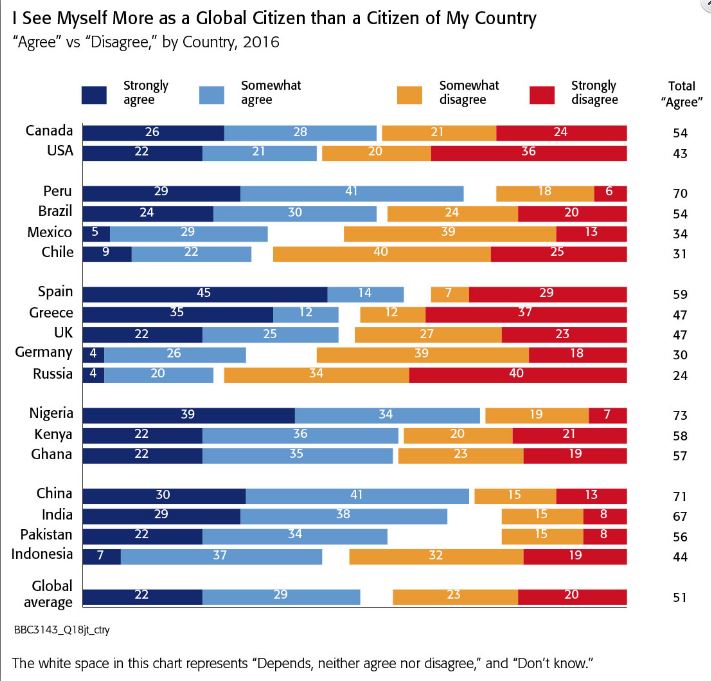
Inaugural Adrienne Clarkson Prize for Global Citizenship Awarded to the Aga Khan for His Commitment to Advancing Pluralism 

Always worth noting the Aga Khan’s comments on multiculturalism, diversity and pluralism:

“One enormous challenge, of course,” observed the Aga Khan, “is the simple fact that diversity is increasing around the world. The task is not merely learning to live with that diversity, but learning to live with greater diversity with each passing year.” The Aga Khan fully recognizes the frustrations of the pluralism story. The challenge, he noted, was that as we become aware of the diversity of the world we live in and come into contact with people who are different than us, difference becomes a source of conflict rather than an opportunity. “We talk sincerely about the values of diversity, about living with complexity. But in too many cases more diversity seems to mean more division; greater complexity, more fragmentation, and more fragmentation can bring us closer to conflict.”

It is not just proximity that creates this awareness, and often tension. Technology and media, while seemingly bringing us together, recognized the Aga Khan, often pull us apart, feeding ignorance and insularity. The antidote, however, isn’t ignoring difference. “We often hear in discussions of Global Citizenship that people are basically alike. Under the skin, deep in our hearts, we are all brothers and sisters – we are told – and the secret to a harmonious world is to ignore our differences and to emphasize our similarities. What worries me, however,” said the Aga Khan “is when some take that message to mean that our differences are trivial, that they can be ignored, and eventually erased. And that is not good advice. In fact, it is impossible.”

“Pretending that our differences are trivial will not persuade most people to embrace pluralistic attitudes. In fact, it might frighten them away. People know that differences can be challenging, that disagreements are inevitable, that our fellow-humans can sometimes be disagreeable,” he continued.

Too often people think that embracing the values of Global Citizenship means diluting or compromising one’s own bonds to country or peoples. This is not the case emphasized His Highness. Rather, “the call of pluralism should ask us to respect our differences, but not to ignore them, to integrate diversity, not to depreciate diversity. The call for cosmopolitanism is not a call to homogenization. It means affirming social solidarity, without imposing social conformity. One’s identity need not be diluted in a pluralistic world, but rather fulfilled, as one bright thread in a cloth of many colours.”

How one goes about achieving this is no easy task. He ended the evening with a recipe-of-clarity-and-wisdom in charting a future for global citizenship: “a vital sense of balance, an abundant capacity for compromise, more than a little sense of patience, an appropriate degree of humility, a good measure of forgiveness, and, of course, a genuine welcoming of human difference.”

The Aga Khan’s full speech can be found here.

Source: Inaugural Adrienne Clarkson Prize for Global Citizenship Awarded to the Aga Khan for His Commitment to Advancing Pluralism | Huffington Post