#COVID-19: Comparing provinces with other countries, Quebec similar to worst hit European countries

A number of us were discussing COVID-19 and the wide variances between different provinces in terms of infections and deaths. So we decided to see what the data looked like, comparing Canada and its provinces to other G7 countries and Australia, with New York and California.

The table below dramatizes just how. bad the situation is in Quebec, where Quebec has the second highest level of infections and the fourth highest level of deaths per million, comparable  to the worst hit European countries (data from the Globe’s daily tracker) Canada without Quebec is better than any other G7 country save Japan.

On the other hand, it highlights the West and Atlantic Canada with lower infection and death rates..

Per Million

2020-05-27

Population

Death

Infection

Death

Infection

New York 19.5 1,502.7 18,658.3 29,302 363,836
UK 66.5 558.3 4,009.1 37,130 266,602
Italy 60.4 545.6 3,817.1 32,955 230,555
Quebec 8.4 492.7 5,785.5 4,139 48,598
France 67.0 425.9 2,729.1 28,533 182,847
USA 326.7 302.8 5,146.7 98,929 1,681,418
Canada 37.8 175.6 2,292.2 6,639 86,647
Ontario 14.4 147.4 1,818.8 2,123 26,191
Germany 82.9 101.2 2,186.9 8,386 181,293
California 39.6 96.6 2,520.5 3,826 99,810
Canada less Quebec 29.3 84.6 1,288.7 2,500 38,049
Alberta 4.4 31.6 1,568.4 139 6,901
British Columbia 5.1 31.6 498.2 161 2,541
Atlantic Canada 2.4 25.8 612.9 62 1,471
Japan 126.5 6.7 131.4 846 16,623
Prairies (MB, SK) 2.6 5.8 356.2 15 926
Australia 25.2 4.1 283.3 103 7,139
Canadian population 2019, other countries 2018
Canada less Quebec 29.3

84.6

1,288.7

2,500

38,049

Health agency reveals race-based data guideline as calls grow for nation-wide collection

Yes!

Will take some time given the coordination required to ensure consistent data across provinces, with Quebec unlikely to play ball unfortunately (CIHI data does not automatically include Quebec data. When I asked the Ministère de la Santé et des Services sociaux for the comparable birth tourism (non-resident) birth statistics, I was met by bureaucratic obfuscation and had to go to major hospitals directly):

In response to calls for better demographic data to understand health inequities and COVID-19, this week the Canadian Institute for Health Information is releasing an interim race data standard that public health agencies can use.

Many advocates, though, are pushing for more than advice, saying the federal government has a leadership role to play to ensure there’s consistent data, regardless of jurisdiction. That gap in information affects the provincial, territorial, and federal response to the pandemic and until the country moves forward with race-based and disaggregated income data, Canada “can’t possibly target resources” and care where they’re most needed, said Dr. Jennifer Rayner, an epidemiologist and director of research at the Alliance for Healthier Communities.

“It’s ignorance and blindness to where there’s gross inequities. Until we know where the discrepancies and inequities in health are, we can never tackle them,” she said, saying communities need action and the work needs to start somewhere. “I hate to keep waiting until we get it all perfect.”

The alliance is part of a national working table headed by Canadian Institute for Health Information (CIHI)—which the institute notes are not formal—that’s considering two things: what data to collect, and how to train health professionals so they’re comfortable asking these questions. While this work has been going on for years, the report on the interim standard noted a “heightened awareness and interest” in collecting such data to better understand COVID-19’s spread.

The lack of data on race in Canada makes it difficult to monitor racial health inequalities and CIHI’s interim standard was created in an effort to “harmonize and facilitate collection of high-quality data,” according to a copy shared with The Hill Times of the standard, “Race-Based Data Collection and Health Reporting,” to be released later this week.

It proposed two questions asking patients to identify their race categories (also giving the option of “prefer not to answer”) and whether they identify as First Nations, Inuit, or Métis.

Though the Public Health Agency of Canada (PHAC) has said it is looking into the possibility of collecting more demographic data related to COVID, most said it’s a matter of political will, under the direction of Health Minister Patty Hajdu (Thunder Bay-Superior North, Ont.) and Indigenous Services Minister Marc Miller (Ville-Marie–Le Sud-Ouest–Île-des-Soeurs, Que.).

When asked, neither of the ministers’ offices, the PHAC, or CIHI offered a position on whether such data should be collected nation wide.

However, Ms. Hajdu’s spokesperson, Cole Davidson, said in an email that “[d]emographic data collection and data sharing between the federal and provincial/territorial governments is crucial to advancing our knowledge of COVID-19 and understanding potential inequalities in our health care system. We’re working with provinces and territories to ensure we’re collecting the data we need to better understand this pandemic.”

And while these conversations are happening, advocates say it’s not leading to the outcome that is becoming more urgent by the day—a commitment and timeframe for nationwide data collection.

“As a national strategy, if you don’t value gathering the data it’s hard to motivate other places to do so,” said Aimée-Angélique Bouka, the College of Family Physicians of Canada vice-chair-elect for residents. “You’ll see disparity across the board if you don’t see proper federal leadership in the project.”

‘It’s all about political will’

Canada has a blind spot regarding its treatment of racialized groups and immigrants, despite the evidence, she said.

COVID-19 was thought to be “the grand equalizer,” but some populations have proved more vulnerable. In the United States, by mid-April nearly one-third of those who died were African American, an Associated Press report revealed, though Black people represent about 14 per cent of the population where they reported. Such disparities exist in Canada, though Dr. Bouka said society is uncomfortable with painful questions that reveal a pattern of neglect.

“COVID is only a snapshot and a clear representation of what happens in our country in a systematic way.”

She said she would add a question about immigrant status, and how long a person has been in Canada as other important markers that influence health, said Dr. Bouka, who wrote about that blind spot for Policy Optionsthis month.

Because we don’t have this self awareness we are slow to accept it, but once the outbreaks became evident, demographics became impossible to ignore, she said.

For more than two decades, Independent Senator Wanda Thomas Bernard has been calling for race-based data collection.

“It’s so frustrating and infuriating,” said Sen. Bernard (East Preston, N.S.), a former social worker and researcher who co-authored a 2010 book, Race and Well-Being, which she said demonstrated racism is an everyday experience for Black Canadians and has an impact on all forms of their health.

“I can’t help but ask myself, ‘How many more casualties do we have to see before there’s a true appreciation for why the collection of this data across all provinces and territories [is] essential?’”

Sen. Bernard said she has been asking these questions of Liberal ministers and their aides—she’s not comfortable divulging the details of these conversations—and while she remains hopeful, she said it’s “all the more urgent to make the decision now.”

“We need to be on the same page with this, and let’s cut through the politics,” she said, and look at COVID-19 as a starting point, an “awakening” for the inequities in health that long predated the pandemic.

Unfortunately, it takes more than proof to shift policy, said Dr. Bouka and it becomes about building more evidence and raising enough voices to make inaction impossible.

“It’s mostly us being reminded so politicians can’t ignore it. Ultimately, it’s all about political will. If your weaknesses are shown repeatedly, then you can’t just pretend that you didn’t know,” she said.

Though it’s left up to the individual jurisdictions, Sen. Bernard said it’s important to have data that’s consistent across the country, which requires leadership so that it is collected in the same way.

Alex Maheux, CIHI spokesman said by email it’s up to the provinces and territories to decide how to proceed, but it has expressed willingness to support jurisdictions in that data collection and is currently working with partners to understand race and ethnicity data needs.

Earlier this month, Manitoba became the first province to track the ethnicity of COVID-19 patients while Quebec and Ontario have said they will as well. At a local level, Toronto has also said it tracks demographics.

In mid-July, CIHI said it will also publish a broader discussion document, followed by ongoing engagement with relevant stakeholders to “refine” the standard, if needed.

Public Health Agency of Canada spokesperson Maryse Durette said by email the government is committed to working with the provinces and territories—as well as other partners—to improve data completeness and access, including demographic information.

“These indicators will help to further our understanding of COVID-19 among different population subgroups and to monitor trends going forward,” she said, and it plays “a critical role” in helping to understand disease severity and risk factors, to monitor trends over time, and to ensure that public health measures can be effectively designed and delivered where needed.”

Data collection on Indigenous people ‘distinct’

CIHI’s standard notes that though Indigenous groups are often considered alongside racial and ethnic categories, First Nations, Inuit, and Métis have “inherent and collective rights to self-determination,” including ownership and governance of their data. That warrants “distinct consideration” and must include engagement with Indigenous communities and data governance agreements.

Canada tracks on-reserve cases of the coronavirus, but with nearly half of First Nations living off-reserve, the picture is incomplete. Yellowhead Institute independently researched, and on May 12 published findings revealing more than triple the cases reported by Indigenous Services Canada. Mr. Miller has acknowledged the department’s data is insufficientand on May 9 announced $250,000 towards improving data collection—not enough, according to Yellowhead researcher Courtney Skye.

“If we’re going to recognize First Nations, Indigenous, and Inuit are more impacted and more at risk for poor outcomes because of COVID-19, there needs to be a multi-jurisdictional prioritization of getting proper information available to communities to make informed decisions,” she said.

“Communities have a right to that information and the federal government has a fiduciary responsibility to make sure this work is adequately funded.”

Rose LeMay, CEO of the Indigenous Reconciliation Group and regular Hill Timescolumnist, penned a plea in April for COVID-19 data that notes background and Indigeneity. A month later, she said she remains baffled there’s been limited movement to close the data gap.

“This is a once-in-a-lifetime data dump, if we were to access it, because this shows the inequities of the system”, she said, noting Canada has “substantial work” to build trust given its problematic history collecting information on Indigenous people, and declaring who is and isn’t status.

That could be addressed by involving organizations perceived as objective to lead the way alongside Indigenous groups, and would likely require building new partnerships to do it well.

The lack of trust shouldn’t stop this work from happening, she said, adding the “how” is a “purely technical exercise” that she said she thinks Canada’s health-care system is capable of managing.

Ms. Skye said the patchwork approach isn’t working and it needs to be led by Indigenous people and be properly resourced. She added that this is another indication that the Liberal government’s approach to reconciliation is more for “show” than addressing “tangible barriers,” like health, that impact the daily lives of Indigenous people.

“These realities are known, are well-documented, and have existed for a long time, and there hasn’t been enough of the practical work done on behalf of the federal government and provinces,” she said. “It does come down to the will of the government.”

Source: Health agency reveals race-based data guideline as calls grow for nation-wide collection 
Anger as wait times for Australian #citizenship blow out during coronavirus pandemic

Looks like Australia has been able to ramp up virtual citizenship ceremonies dramatically to about 750 per day, showing it can be done although less meaningful than in person:

More than 16,800 people have received Australian citizenship via virtual ceremonies during the pandemic but many more are still waiting.

The migration sector has voiced concern as the processing times for Australian citizenship applications have blown out amid the COVID-19 pandemic.

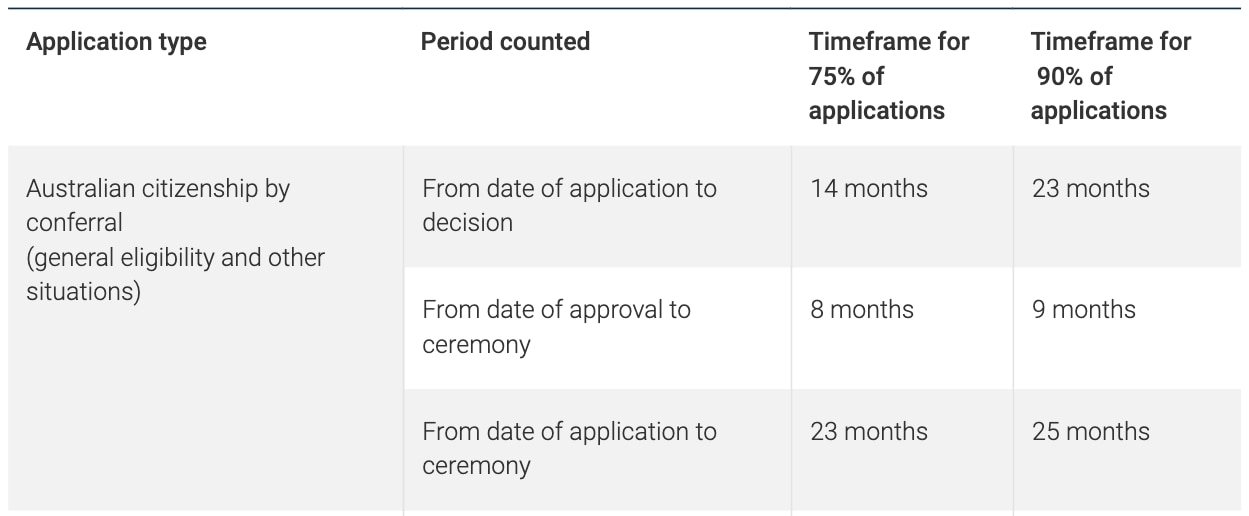
Figures from the Department of Home Affairs show 75 per cent of applications for citizenship by conferral now take 23 months – up from 16 months last June.

Ninety per cent of these applications are completed in 25 months compared to 20 months a year ago.

“Due to the COVID-19 pandemic, all face-to-face citizenship appointments, such as interviews and citizenship tests, have been placed on hold. This has meant an increase in overall processing times,” the spokesperson said.

“The department will recommence in-person interviews and citizenship tests when it is safe to do so,” they said, adding that new applications are still being accepted.

How long it is currently taking to process Australian citizenship by conferral.

How long it is currently taking to process Australian citizenship by conferral.
The Department of Home Affairs

But Carla Wilshire, CEO of the Migration Council Australia, said these numbers needed to be addressed.

“Once people go down the pathway of citizenship, a lot of decisions are put on hold until that citizenship comes through … It’s important we give them certainty as quickly as possible,” she said.

“Getting those waiting times down is critical in terms of really managing people’s sense that their lives are progressing and they are able to make decisions going forward around their commitment towards Australia.”

“Particularly during COVID, where people have a lot of generalised anxiety and feel a sense of insecurity, I think it’s really important that we take measures to … ensure resources are put to use to give citizenship as quickly as possible.”

It is a point echoed by Melbourne-based migration agent Kirk Yan.

“I haven’t seen the government offer a reasonable or acceptable explanation for the long processing times … They can’t explain why it takes two years,” he said.

“For citizenship, as long as you meet the requirements of a permanent resident, you are supposed to get it granted if you pass the citizenship test and the character or identity checks … I don’t know why it takes such a long time for the department.”

He said the latest rise in wait times left many of his clients anxious.

“The current situation has meant lots of people are waiting, just to get information or a response,” he said.

The sector has also pointed to climbing wait times as one reason why the demand for Australian citizenship is dropping.

Clearing the backlog

But even as wait times have gone up, the government has managed to address the backlog of citizenship applications this financial year.

The department spokesperson said during the year 2019-20, up to 22 May this year, 175,304 people were granted Australian citizenship – up 56 per cent on the same period last year.

Over recent months, it has been done via virtual citizenship ceremonies.

More than 750 people have received citizenship through online ceremonies each day since they began, and up to 22 May, more than 16,800 people received citizenship this way.

The latest backlog figure is now 123,727 applications, compared to 221,695 a year ago.

But Migration Council Australia’s Ms Wilshire said this number was “still significant by historical standards”.

“During COVID, there is so much insecurity as people are losing that sense of being able to visit their country of origin and connect with family as global movement is decreasing,” she said.

“I think that affirmation of being part of the Australian community is psychologically quite important for our migrant communities.”

Source: Anger as wait times for Australian citizenship blow out during coronavirus pandemic

COVID-19: Thousands of Canadians getting US$1,200 cheques simply because they’re still U.S. citizens

Including, presumably Conservative leader Andrew Scheer and Green leader Elizabeth May:

Thousands of people in Canada can expect a letter shortly from the U.S. Treasury Department.

However, you’re (probably) not in trouble. In fact, you’re most likely receiving a US$1,200 cheque thanks to America’s stimulus package.

One of the responses to the COVID-19 pandemic put in place by the U.S. government was Economic Impact Payments. Through it, most current American citizens who filed taxes in 2018 or 2019 will automatically be sent US$1,200 ($1,680) as long they make less than US$75,000 if they are single or US$150,000 if married.

And that includes U.S. citizens in Canada. Unlike Canadian benefit programs put in place during the pandemic, the U.S. program doesn’t require beneficiaries to live in their own country.

“The reason being that the U.S. is one of only two countries in the world that tax based on citizenship. So a U.S. citizen, wherever they live in the world, is always subject to U.S. tax, which is different than Canada,” said Mark Feigenbaum, an Ontario-based attorney and accountant specialized in cross-border taxes.

But that doesn’t mean his Canadian clients aren’t surprised when the money suddenly arrives in their mailboxes.

“I get a couple of pictures of cheques every day from clients,” he said. “First of all, they weren’t maybe even aware that they were supposed to get a cheque, and secondly, that they were even qualified for a cheque. And then they got a bunch of money.”

According to Statistics Canada 2016 census data, 284,870 people in Canada declared having U.S. citizenship.

One of them is Charles Lewis, a dual U.S. and Canadian citizen who received a cheque in the mail last week.

“I read three weeks ago that the payment was coming to those who file so when it did come I was not surprised at all. It came in an envelope from the U.S. Treasury Department. Soon as I looked at the envelope I knew what it was. I had to laugh that Trump’s name was on the cheque, given it’s not his money,” Lewis told the National Post.

“I think those who get it and were not really in need should donate it to charity, which is what I’m going to do. It’s really found money. I did nothing to earn it. Though filling out all those tax forms every year was a pain in the ass.”

According to the Internal Revenue Service, the agency that administers the Economic Impact Payment program, nearly 750,000 stimulus cheques have gone out to “foreign addresses,” totalling $1.2 billion.

But the IRS can’t say how many of those went to people in Canada.

“Foreign addresses doesn’t necessarily imply non-Americans. Members of the military and U.S. citizens who live or work abroad would be in that category, along with non-citizens who may have, for tax purposes, U.S. resident alien status,” spokesman Eric Smith said via email.

“The domestic numbers likely also include resident aliens, and Canadians are likely in both the domestic and foreign categories,” Smith said.

A large number of U.S. citizens living in Canada are also interested in finding out how they can get their hands on an American stimulus cheque.

According to Steve Nardi, chair of Democrats Abroad Canada, a workshop his group hosted a few weeks ago about the American stimulus package attracted 600 people, 80 per cent of whom were from Canada.

“In the last two weeks, I’ve had another thousand people on tax filing webinars, and most of them are interested in at least accessing the information about the stimulus cheques,” Nardi said in an interview.

He said he’s mainly encountered two groups of recipients: those who knew from the very start that they’d receive a cheque, and those who were stunned (and sometimes concerned) when the money arrived at their door.

“I had emails from members asking if they were eligible, and the only thing that happened at that point was the Senate approved the (stimulus) bill late the night before. It hadn’t even gotten across the building to the House yet,” he recounted.

“And then we’ve had others who were completely shocked that they would be eligible with no expectation.”

But be warned, if you’re an American in Canada who’s eligible to apply for the Canada Emergency Response Benefit (CERB) because you lost your job due to COVID-19, you may want to think twice before cashing that US$1,200 cheque.

To be eligible to receive CERB payments, you have to have made less than $1,000 in the period during which you’re applying. Depending on if the Canada Revenue Agency determines that stimulus money from the American government is revenue or not, depositing that cheque from the U.S. may make you ineligible for CERB.

Employment and Social Development Canada was not able to provide a comment.

Source: COVID-19: Thousands of Canadians getting US$1,200 cheques simply because they’re still U.S. citizens

Integration, Diversity and Inclusion: My Overview Deck, updated for 2019

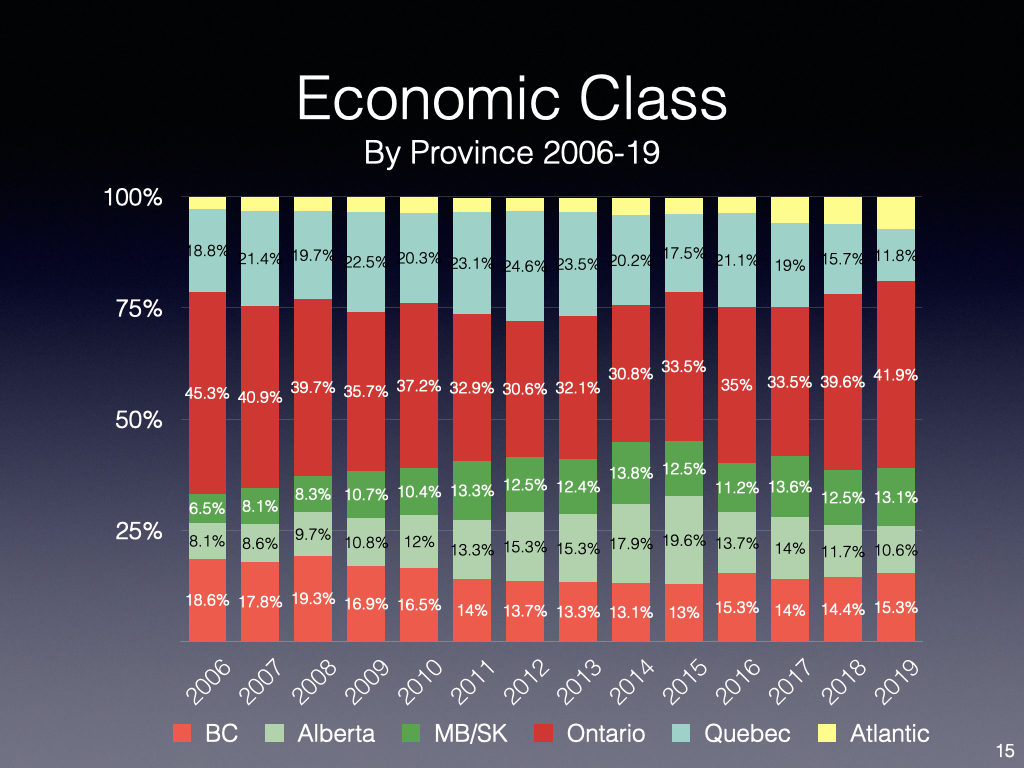
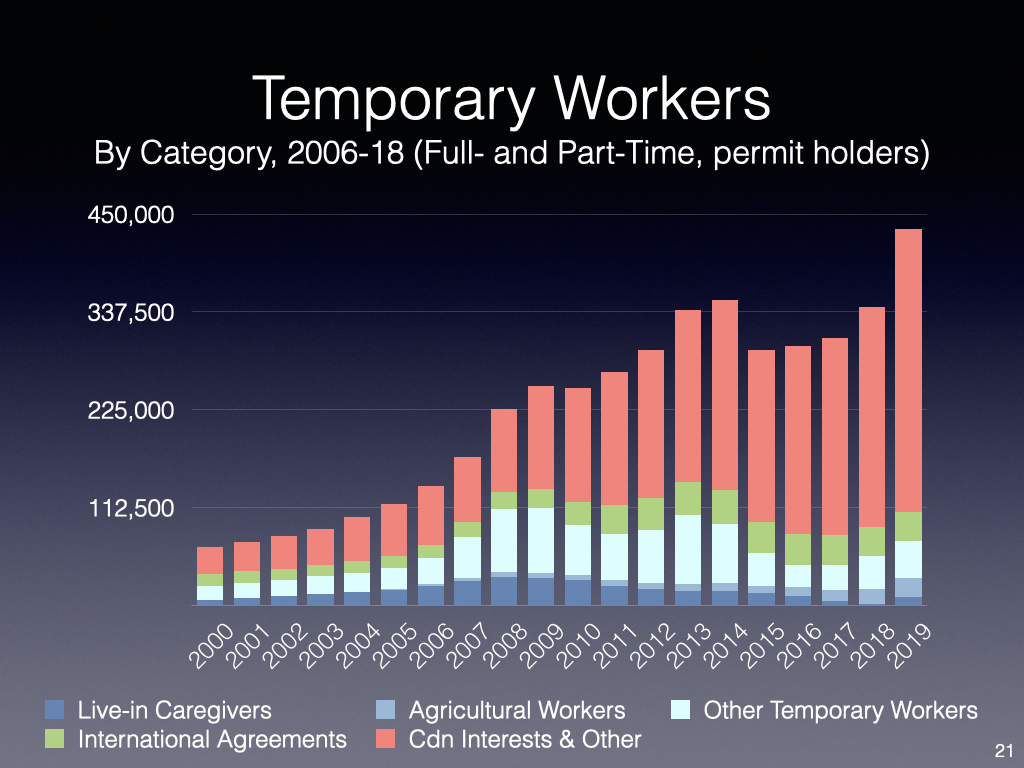
This overview deck on immigration, integration, citizenship and multiculturalism has been updated with 2019 data.

A few sample slides, full deck via link below:

Integration – General Deck 2020

@DouglasTodd Three reasons why rents suddenly dropped in Metro Vancouver

Very good article by Todd regarding the COVID-19 immigration related impacts on rental rates:

The advertised rent for a two-bedroom apartment has plunged by 15 per cent in the city of Vancouver, one of the biggest drops in Canada, as COVID-19 makes its bewildering way through the economy.

Many of the more than 800,000 tenants across Metro Vancouver were riveted when Rental.ca posted the city’s rent-price declines last week. The average rent demanded for a two-bedroom apartment in the city of Vancouver dropped by almost $450, to $2,478 a month.

But why, exactly, have Vancouver and Toronto and their suburbs been slammed?

“A lack of immigration, a decline in international students, a decline in short-term contract employment, and continued affordability concerns because of job losses are to blame,” said Ben Myers, president of Bullpen Research, an affiliate of Rental.ca, in a commentary.

All of which makes sense. But it needs unpacking.

Vancouver and Toronto are subject to some of the same COVID-19 forces — tremendous job loss and swelling household debt — that weakened countless rental markets in the world because of lockdown.

But Metro Vancouver and Toronto also contain some of the world’s highest proportions of foreign-born residents — immigrants and especially temporary residents, such as international students and guest workers. Most are young. And most rent.

That makes these two large Canadian metropolises more vulnerable to global migration patterns and to Canada’s clampdown on its international border, which has abruptly cut inbound flows of people to a trickle.

That lead Paul Danison, another analyst for Rental.ca, to go so far as to imagine the tenants of Vancouver and Toronto possibly being dug out of the hole they have found themselves trapped in: Rental-vacancy rates of less than one per cent.

“Imagine if you can, Toronto and Vancouver with a healthy three per cent vacancy rate, and rents falling by the end of the year rather than rising. A few months ago, that would have been laughable,” said Danison.

“But because of COVID-19, Canada will have less immigration, fewer international students and, with the border closed, not nearly as many seasonal and part-time workers. All typically are renters.”

Several factors are at play.

Tighter borders means landlords who once offered costly short-term rentals, like those on Airbnb, have been hammered in attractive cities like Vancouver, whose economies rely more than most on travellers.

Short-term rental providers have been moving their often-stylish apartments to the long-term rental market, which has been increasing supply, offering tenants more choices.

Rohana Rezel, a housing advocate and past candidate for Vancouver city council, is part of a group monitoring Craigslist and other real-estate forums. They’ve discovered short-term rentals are “collapsing” and hundreds of units are now switching to long-term rentals.

“People offering their places for rent on Craigslist are now blatantly saying it used to be an Airbnb. They’re boasting it was rated five stars,” says Rezel, who adds that many such landlords started off charging outlandish long-term rents, which they were forced to slash.

As in many cities around the world, many owners in Vancouver and Toronto are also feeling pressure to somehow off-load their homes, either because they have lost wages or are going into deeper debt. But they’re in a bind, because it’s no longer a house-seller’s market.

The Canada Mortgage and Housing Corporation, Moody’s and other analysts are predicting double-digit house price declines over the next year or two. So some would-be sellers are trying to wait out the downturn by renting their places, thus also increasing supply.

Thirdly, and perhaps most distinctly for a desirable cosmopolitan city like Vancouver, there are strong indications many of the region’s young temporary residents (foreign- and Canadian-born) have climbed on planes and headed home, often to live with their parents.

That means a hefty drop in demand for rental suites.

A CMHC analyst, Andrew Scott, has found an astonishing 46 per cent of Metro Vancouver residents between the ages of 18 and 44, the group most likely to rent, have been non-permanent migrants — a ratio almost unheard of in other parts of the world.

Until recently, at least 100,000 international students have been living and working in Metro Vancouver, plus another 50,000 so-called “international mobility” employees and temporary foreign workers.

“Many temporary residents just packed up and left,” says Rezel, a high-tech professional who first came to Canada from Sri Lanka as a graduate student.

Like me, when Rezel visits the city’s restaurants, pubs and cafés, he says he often asks friendly servers and others about themselves. Four times out of five such hospitality staff invariably answer that they are in Canada on study or work visas.

As colleges and universities began in March to offer their courses only on the internet and most service jobs disappeared overnight, a large portion of these intrepid young people were compelled to leave behind the country and their rental apartments. Rezel’s Japan-born wife, who is involved in her expatriate community in Vancouver, said that’s what happened in her circle, too.

Who knows when or if most of these temporary residents will return?

All of which goes to suggest Metro Vancouver’s suddenly lower rental rates are likely to remain so for at least the medium term.

Source: Douglas Todd: Three reasons why rents suddenly dropped in Metro Vancouver

Matas and Cotler: Legal steps must be taken against China for initial inaction

In order to safeguard global public health, the world must take action against the Government of China for its role in this global pandemic crisis. The Chinese Communist Party of China (CCP) and the Government of China, which the party directs, bear a large measure of responsibility for the global spread of COVID-19.

In the early days of the pandemic’s spread and during the Lunar New Year travel season, the Chinese government downplayed the severity of the illness and its spread. Human Rights Watch said in January that Chinese authorities had “detained people for ‘rumor-mongering,’ censored online discussions of the epidemic, curbed media reporting, and failed to ensure appropriate access to medical care for those with virus symptoms and others with medical needs.” Amnesty International warned soon after that the withholding of information was putting at risk the medical community’s ability to combat the virus.

There is authoritative and compelling evidence – including a study from the University of Southampton – that if interventions in China had been conducted three weeks earlier, transmission of COVID-19 could have been reduced by 95 per cent.

Meanwhile, an analysis of Chinese censorship around COVID-19, by the Munk School’s Citizen Lab, found that “Censorship of COVID-19 content started at early stages of the outbreak and continued to expand blocking a wide range of speech, from criticism of the government to officially sanctioned facts and information.”

The Chinese government’s wrongdoing and the suffering of its victims within its borders and internationally calls out for justice and accountability. There are clear and compelling legal remedies that should be considered to effectively address and redress this matter.

International

The International Court of Justice through a request for an advisory opinion from the United Nations General Assembly

The United Nations Charter provides that the UN General Assembly may request the International Court of Justice (ICJ) to give an advisory opinion on any legal question. Any UN member state can ask the General Assembly to make such a request to the ICJ, and China would not be able to veto such a resolution. The General Assembly could therefore request that the ICJ determine whether the actions of Xi Xinping’s China regarding coronavirus were in breach of its international legal obligations.

United Nations Human Rights Council

The United Nations Human Rights Council can pass a condemnatory resolution, or even establish a commission of inquiry into China’s actions regarding the coronavirus. If such initiatives are unlikely to muster the necessary majority of votes by member states of the council, independent statements can be made at the council’s regular sessions. Under agenda item 4 — “human rights situations that require the council’s attention” — any country, whether a member of the council or not, can deliver an oral statement. The wrongdoing of the Chinese government in the global spread of the coronavirus should be a matter of continuing concern at future sessions of the Human Rights Council.

The UN Special Rapporteur on the Right to Health

The UN Special Rapporteur on the Right to Health, currently Dr. Dainius Puras, can consider individual complaints, issue annual reports and conduct country visits. Accordingly, he should be asked to address China’s culpability in the spread of COVID-19.

There is a sense of urgency to such a prospective path towards accountability, as the current Special Rapporteur on the Right to Health will be replaced at the Council Session taking place between June 15th and July 3rd.

China was appointed in April to the Consultative Group of the Human Rights Council. The group advises the President of the council on the appointment of special rapporteurs and holds final approval over council appointments. It is therefore unlikely that the council, with a member of the Chinese Communist Party as part of its makeup, would appoint to any specialized mechanism a person who may be critical of the government of China.

The World Health Organization

The World Health Organization (WHO) was critical in 2003 of the Chinese Communist Party for its secrecy, dishonesty and cover-up concerning the Severe Acute Respiratory Syndrome (SARS) outbreak in Guangzhou, Guangdong of 2002. However, the behaviour of the WHO in the current pandemic is disappointing.

One might have hoped that the Chinese government has learned the lessons of its failures from the time of the SARS outbreak. Instead, of China reforming its policies and practices, it is the WHO that has altered its approach, failing to stand up to China.

The WHO has an important ongoing mandate and responsibility for our health and security which becomes particularly urgent in a time of a global pandemic, such as SARS in 2003 and now with COVID-19. Therefore, the WHO must be a particular focus of accountability efforts and encouraged to do the right thing, which is also the smart thing, for global public health and effectively confronting the Coronavirus.

International Health Regulations

The International Health Regulations were adopted in 2005 by the World Health Assembly of the WHO, to protect humanity from the international spread of disease. The unprecedented global impact of COVID-19 has demonstrated the ineffectiveness of these regulations.

In particular, there are no effective mechanisms when a state party violates regulations. All measures are subject to the approval of the violating state party, an unrealistic expectation when it comes to Xi Jinping’s China.

Yet, these regulations should not be rendered inoperative merely because of the necessity of agreement from Xi Xinping’s China to make them effective. An effort should be undertaken to render these regulations operable, and the very pursuit of this objective will underpin accountability efforts, promote a truthful narrative and mitigate Chinese propaganda.

International Court of Justice through the World Health Organization

The Constitution of the WHO provides that any dispute concerning the application of the constitution not settled by negotiation or by the World Health Assembly shall be referred to the International Court of Justice. A dispute regarding whether Xi Xinping’s China violated the International Health Regulations would likely constitute a dispute that could be referred by any WHO member state to the International Court of Justice.

The World Health Assembly

More broadly, the systemic challenges of the WHO must be addressed, and its next gathering from May 17 to 21 in Geneva presents such an opportunity. Ironically, the assembly may be unable to meet due to the failings of the WHO and the International Health Regulations in combatting the spread of COVID19.

In the World Health Assembly, as in the United Nations General Assembly, Xi Xinping’s China does not have a veto. This an opportunity for the international community to prioritize public health and pursue justice regarding the pandemic.

The Biological Weapons Convention

The Biological Weapons Convention obligates state parties, of which China is one, not to retain biological agents other than for peaceful purposes. A biological agent has been defined under the Convention to mean any organism which can cause death, disease or incapacity. 

Repressing or misrepresenting information about the virus, detaining health practitioners who seek to sound the alarm, and arguing publicly against global travel restrictions, are forms of retention of the virus that have harmed global peace and security.

Any state party to the convention could therefore make a complaint to the U.N. Security Council. Given that the convention has 183 state parties, that includes nearly every country in the world. The UN Security Council, on receipt of a complaint of violation, must investigate the matter and produce a report.

National

Magnitsky laws

Magnitsky laws for global justice and accountability, named for murdered Russian whistle-blower Sergei Magnitsky, allows for the public listing of serious human rights violators – naming and shaming them – and subjecting them to visa bans and asset seizures, thus challenging the cultures of corruption and criminality, and the impunity that underpins them.

There are six countries with this law. None of them have targeted any rights violators in Xi Xinping’s China. More countries should enact such laws, and all those with Magnitsky legislation should consider implementing them to pursue justice and accountability for those responsible for perpetrating and perpetuating COVID-19.

Universal jurisdiction laws on crimes against humanity through prosecution 

Many countries have laws which allow for the domestic prosecution of those who have committed crimes against humanity abroad. While these laws typically apply to permanent residents and citizens, some may also apply to visitors.

The accused would have to be found in the territory of the country in order for the local courts to have jurisdiction. While it varies by country – with some allowing for the private initiation of prosecutions – it is most often the exclusive decision of public prosecutors. Prosecutors are, however, usually reluctant to engage in such prosecutions, due to the prohibitive costs and evidentiary obstacles inherent in a case where the criminality and material evidence is abroad. Where private prosecutions are possible, they should be vigorously pursued.

There are other states, beyond China, that have contributed to the spread of COVID-19 through bad public policy and poor governance. Any liability response should be compelling and comprehensive, holding all wrongdoers to account. Yet, in doing so, the intentional and particularly intensive wrongdoing of China should be duly considered.

The denial, coverup and counter-factual narrative surrounding COVID-19 – underpinned by the use of global political pressure abroad and the repression of whistleblowers and medical heroes at home – has become standard operating procedure for the Communist Party of China. Immunity and impunity invite repetition.

In order to safeguard global public health, the world must act. Short-term political or economic considerations encouraging the indulgence of wrongdoing in Xi Jinping’s  China come with a long-term cost. Preventing another pandemic and protecting humanity necessitates pursuing justice and accountability for the Communist Party’s actions.

Source: Legal steps must be taken against China for initial inaction

No need to show proof of work permit to get CERB, Ottawa tells temporary foreign residents

Generous flexibility:

The federal government has taken new steps to make it easier for international students and other temporary foreign residents to receive emergency benefits, another sign of Ottawa’s determination to disburse the payments quickly and widely.

Such short-term immigrants need only give their word they have a valid work permit or have applied for a renewed one to obtain the Canada Emergency Response Benefit (CERB), says a memo sent this week to staff vetting the claims.

Until last Thursday, they had to email Employment and Social Development Canada an image of their valid work or work/study permit, or confirmation they had applied to renew an expired one.

But a memo sent to Employment and Social Development Canada officials handling CERB applications said that condition is waived “effective immediately” and agents “are only required to verbally obtain work permit details.”

The directive applies to everyone who claims to meet the programs other requirements and has a “900-series” social insurance number — people ranging from students to refugee claimants to temporary foreign workers and executives transferred from other countries. None are Canadian citizens or permanent residents.

One source familiar with the system said people with valid permits would typically email proof within a few minutes, barely slowing the process. But now there is no way for staff to verify whether someone is in the country legally, the person said.

And if an applicant does receive the $2,000-a-month payments inappropriately and then leaves Canada, it would be virtually impossible to recover the money, said the source, who’s not authorized to discuss internal matters and asked not to be named.

Outside experts offered differing opinions, with one immigrant advocate calling it an “excellent” policy that should get important help to temporary residents faster, and an immigration lawyer saying it shows an “astonishing” disregard for taxpayer funds.

Maya Dura, a spokeswoman for Ahmed Hussen, the families, children and social devlopment minister, said such claimants “may be asked to provide additional documentation to verify their eligibility at a future date.”

“The Government of Canada will, whether it be in the upcoming weeks or at tax time next year, reconcile accounts and make sure people did not defraud the CERB,” she added via email.

Asked about 900-series residents generally, Dura provided statistics just for international students, saying 39,319 had applied for CERB through ESDC by May 18, and 30,645 have received payments so far.

The CERB program has wide support from all parties as a way to soften the blow for people left jobless or unable to find work by the pandemic and lockdowns. It provides $500 a week to people who “have stopped working” because of COVID-19, so long as they made $5,000 within the previous 12 months and did not quit voluntarily.

But there has been increasing scrutiny of the program in recent days amid revelations about how it’s being managed. Previous memos, obtained by the National Post, directed staff to approve applicants even if they see evidence of potential abuse, and even if people quit their jobs voluntarily or were fired for alleged misconduct, seemingly contrary to CERB rules.

Prime Minister Justin Trudeau has said the government will claw back unwarranted or fraudulent payments later, but had to get cheques out quickly because of the millions of people put out of work.

Sergio Karas, a Toronto immigration lawyer, condemned the latest change, saying it means even an individual who is facing a deportation order or who had already left the country could now obtain CERB.

“It’s truly astonishing,” he said. “The person could potentially be overseas if the payment is going to a Canadian bank account. That is extremely troubling.”

“That money is not free,” he added. “That money is going to have to come out of someone’s pocket at some point. It is going to be the taxpayers of Canada, citizens or not.”

But Debbie Douglas, executive director of the Ontario Council of Agencies Serving Immigrants, praised the policy as “an excellent move by the federal government.”

“Many of these individuals through no fault of their own are unable to have their SINs and-or work permits renewed during this health emergency,” she said by email. “At the same time many have lost their jobs or have experienced significant reduction in hours of work. Many were or are vulnerable to evictions. “

Thursday’s directive is “very useful” as it will help speed up CERB cheques for people who haven’t had time to apply for a permit renewal, said Douglas.

The memo last week notes that to be eligible for benefits like Employment Insurance or CERB a temporary resident with a 900-series SIN “must prove they are legally allowed to work in Canada.”

But “due to COVID-19 the 900-series SIN procedures have been simplified,” it said in explaining the change to requiring merely verbal proof,

The government had paid out $39 billion under CERB to more than eight million claimants by May 21.

Source: No need to show proof of work permit to get CERB, Ottawa tells temporary foreign residents

Legault promises to give asylum seekers working in CHSLDs a chance to apply as immigrants

Reality intrudes:

Quebec Premier François Legault says he will consider giving asylum seekers who work in long-term care homes a chance to stay in the province by applying as immigrants.

Legault opened Monday’s briefing by saying he has asked Immigration Minister Simon-Jolin Barrette to look at the situation, on a case-by-case basis, as a way of saying “thank you.”

The co​​​​mments represent a departure for Legault. The Coalition Avenir Québec premier has previously rejected the idea of giving any kind of preference for asylum seekers and others without status working in essential jobs during the pandemic.

But there have been growing calls for him to recognize their contribution.

On Saturday, supporters held a rally in Montreal and on Sunday, Fabrice Vil, a Montrealer of Haitian background, was critical of the premier on the popular French-language talk show Tout le monde en parle.

Legault, whose government has cut immigration levels, said Monday he would try to strike a balance between giving thanks to those working in the residences, known by their French initials CHSLDs, while at the same time not setting a precedent.

“We have to be careful. I don’t want to send the message that in the future we will accept everybody if they find a job in Quebec,” he said.

“But we also have another situation where it’s really critical to get more people working in our CHSLD. So those people, they are already working in CHSLDs. So how can we bring them via the normal immigration process? That’s what I’m looking at.”

Legault added his government would also have discussions with the federal government, which is responsible for refugee applications.

While the province says it has no record of the total number of asylum seekers doing work in CHSLDs, advocates say hundreds of people, many of them originally from Haiti, have been working as patient attendants.

Some have already had their refugee claim rejected, and may not be able to stay in Canada when deportations resume.

Protest at PM’s office

Protestors rallied outside Prime Minister Justin Trudeau’s Montreal office on Saturday, demanding he do more for asylum seekers who have been risking their lives by working in long-term care homes with COVID-19 outbreaks.

Frantz André, a member of the Action Committee for People without Status in Montreal, the group behind the demonstration, said Legault should be taking a stronger stand on the issue.

While the federal government makes the final decision when it comes to the immigration status of asylum seekers, provincial leaders are able to influence those decisions, he said.

“I think all the parties, including the CAQ, should have said in one voice, ‘Mr. Trudeau, you need to make a decision,'” André told CBC News on Monday.

“We as Quebecers, we are willing to give people an opportunity to be accepted, to be equally Canadian as anybody else.”

Source: Legault promises to give asylum seekers working in CHSLDs a chance to apply as immigrants

Fearfulness is linked to reduced interaction with novel cultures for both immigrants and non-immigrants

Interesting and relevant study:

People who believe there are more dangers lurking in the social world are less likely to engage with cultures other than their own, according to new research published in Evolutionary Psychological Science. The new study indicates that this is the case for both minority groups and majority ingroup members.

“There was some existing work suggesting that different forms of threat play a role in prejudices towards outgroups, but these studies had often only looked at mainstream populations and their attitudes to stigmatized minorities, and had generally focused on people’s feelings towards individuals,” explained study author Nicholas Kerry, a PhD student at Tulane University.

“We wanted to look at this in a broader way which focused on social interactions and cultural practices. In other words, we were interested in things like how much time people spent with people of other cultures, how likely they would be to date someone of that culture, and how much they reported interacting with cultural practices other than the ones they grew up with.”

“So, for example, how much people enjoy the TV, movies, and jokes of another culture, and how much they believe in its cultural values. We were also especially interested in testing this in an immigrant sample, as well as a mainstream one, to see whether threat-perception was also related to their acculturation, i.e. their interaction with the mainstream culture.”

In the study, 171 immigrant Americans completed a measure of acculturation, which assessed their preference for the culture of their heritage versus mainstream American culture. A separate sample of 964 naturally-born Americans completed a similar measure, which assessed their interest in foreign cultures versus mainstream American culture. Both samples then completed surveys regarding their belief in a dangerous world, perceived vulnerability to disease, and their romantic partners.

The researchers found that belief in a dangerous world was associated with cultural neophobia. In other words, participants who agreed with statements such as “There are many dangerous people in our society who will attack someone out of pure meanness” displayed a stronger preference for their own cultural practices, regardless of whether they were immigrants or not.

Belief in a dangerous world also predicted whether participants had romantic partners of the same ethnicity.

“The central finding of this study is that people who perceive themselves to be at greater risk of physical threats tend to be less likely to interact with other cultures. One possible implication would be that if people wish to encourage integration between cultures, a good starting point might be to ameliorate conditions which make people feel threatened,” Kerry told PsyPost.

Concerns about disease, however, were unrelated to cultural preferences. The finding is somewhat surprising, given that past research has found it is a predictor of xenophobic attitudes. But Kerry and his colleagues noted that the previous studies “examined attitudes towards individuals, not cultural practices.”

“It should be noted that this study is entirely correlational, which means that we do not have direct evidence of the direction of any causal relationship. So future work could address this by looking at changes in individuals across time, to see whether it really is the case that fearfulness leads to less interaction with novel cultures,” Kerry added.

“It could also be interesting for future research to examine whether environmental conditions that serve as cues of threat (such as actual violent crime, or how much it is reported in the media) can influence regional levels of acculturation.”

The study, “Cultures of Fear: Individual Differences in Perception of Physical (but Not Disease) Threats Predict Cultural Neophobia in both Immigrant and Mainstream Americans“, was authored by Nicholas Kerry, Zachary Airington, and Damian R. Murray.

Source: Fearfulness is linked to reduced interaction with novel cultures for both immigrants and non-immigrants