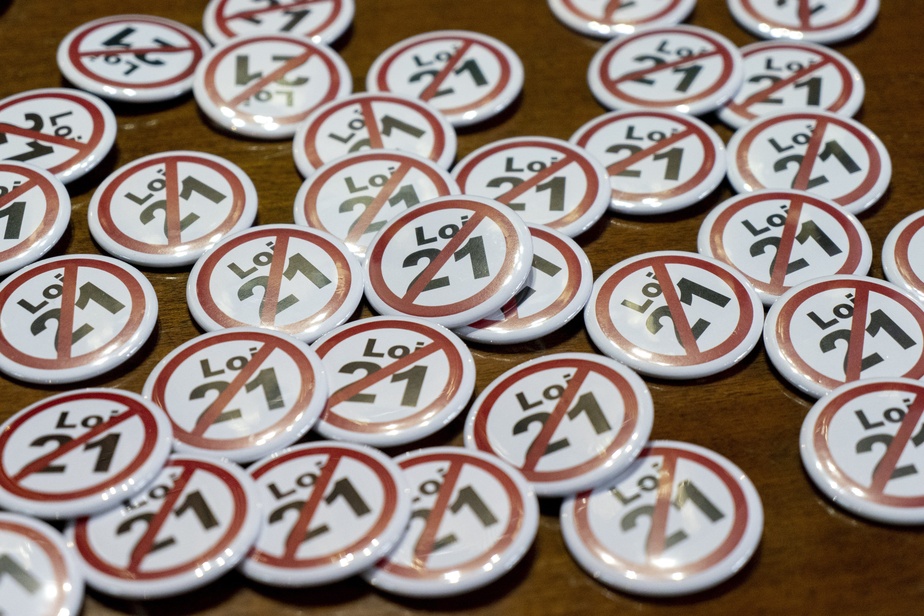
Martin Patriquin: The Quebec Liberals’ sad interculturalism gambit

Of note:

The Quebec Liberal Party is in the midst of an identity crisis. About 150 years into its existence, the party finds itself in the very unfamiliar position of being out of power and largely out of favour with the province’s electorate — it has been left bobbing in the deep blue wake of Premier François Legault’s Coalition Avenir Quebec. So the Quebec Liberals appear to have staked their future in targeting the gut-level issues of identity and cultural insecurity. In so doing, Quebec’s de facto multicultural party is distancing itself from the very concept, and the consequences are both huge and unfortunate for the province as a whole.

Last weekend, the Liberal Party’s youth wing voted in favour of the adoption of a law on interculturalism. For those of you rushing to the nearest dictionary, don’t bother; the term is obscure in origin and application. Essentially, it’s a contract between Quebec society and its new arrivals, in which integration happens by way of a common language (French) and culture. Apparently, it’s official Quebec policy, though when I asked in 2011, no one could tell me for how long. “It’s been like that for a number of years, I think,” a spokesperson told me at the time. The word barely appears on the government’s website and is rarely uttered by its ministers.

But the definition of the term isn’t nearly as important as the context in which the Liberals are suddenly pushing it. Quebec’s Liberal Party has long been the parking lot of choice for the anglophone and allophone vote. Though this has given the party a long and enviable advantage in Montreal and its immediate environs, this sizeable voting bloc was a millstone for the party in the last election. The CAQ savaged the Liberals for being too English, too urbane, too out of touch and too … multicultural.

The CAQ’s trope, shabbily hidden behind these code words, is simple enough: that recent arrivals to Quebec don’t assimilate, are ambivalent or worse toward the French language, and are as such a detriment to the future of the Québécois nation. It worked like hell, and now the Liberals want in.

Granted, it isn’t the first time the party has been late to the identity game. In 1974, in an attempt to stave off a surging Parti Québécois, the Liberals introduced Bill 22, which made French the official language of government and the workplace. The party was at first fervently against Bill 101, the Parti Québécois’s ensuing (and far more restrictive) language law before coming out in its favour.

But there is a massive difference between Quebec’s language laws and the CAQ’s more recent legislation targeting immigrants and religious minorities. Bill 22 and Bill 101, the latter of which has thankfully been law for over four decades, addressed a quantifiable problem concerning the French language. Namely, without legislation buttressing its precarious existence in Quebec’s classrooms and workplaces, French would disappear. Conversely, the alleged non-integration of recent arrivals to Quebec is an unsubstantiated fear — a “crisis of perception”largely conjured by certain members of the political and media classes eager for a wedge issue to exploit. In fact, and contrary to this fear, Quebec’s language laws have ensured that successive waves of immigrants are schooled in French. Interculturalism had exactly nothing to do with any of this.

Its interculturalism gambit is the Liberal Party’s attempt to ingratiate itself with the white francophone majority by appealing to its baser fears. Even sadder: I doubt the party will suffer one iota because of it. This province’s immigrants, allophones and English types, long supporters of the Quebec Liberal Party out of conviction or convenience, have no one else to vote for. They are a captive audience, for better and now for worse.

Source: Martin Patriquin: The Quebec Liberals’ sad interculturalism gambit

CAQ’s immigration plan blasted for favouring European white francophones

I think this critique may be overblown if we look at the impact of the federal Express Entry system, where an offer from an employer is given considerable weighting: In 2008, immigration from Europe/UK was 17 percent of economic class, in 2017, it declined to 13.7 percent, from the USA, it declined from 3.1 percent to 2.4 percent:

Immigration hearings got off to a rocky start Monday when a group said the government is ignoring the issue of systemic racism faced by new arrivals even with a series of reforms that have been put in place.

And if you add into the mix the requirements of a Quebec values test and plans to give more power to employers to pick their own workers, the future is shaping up to mean most new arrivals will be white francophones from Europe, the group said.

The comments were made by representatives of the Table de concertation des organismes au service des personnes réfugiées et immigrantes (TCRI), which represents 150 groups across Quebec who aid immigrants and refugees.

Refugees and families from diverse countries will be overlooked because they are seen as a burden to society, while others with the right skills won’t stand a chance because of “unconscious ethnic profiling” by employers, they said.

With the Quebec business lobby exerting enormous pressure on the government to boost immigration levels to as high as 60,000 a year, the TCRI warned Quebec must not overlook the human side of the equation.

As it stands, the Coalition Avenir Québec government’s immigration plan is “simplistic and utilitarian,” light years from the dreams of diversity and so focused on plugging labour shortages it represents a “historic setback” for Quebec’s immigration policies, they said.

The TCRI representatives were presenting a brief on the opening day of legislature committee hearings into Quebec’s immigration plan for the next three years.

After slapping a reduction on the number of immigrants for the year 2019 at 40,000, Immigration, Diversity and Inclusiveness Minister Simon Jolin-Barrette shifted gears and is proposing to gradually increase it to 52,500 a year by 2022.

But he proposes to increase the percentage of qualified workers from 59 per cent to 65 per cent of the total to meet labour shortages, which has upset immigration groups. There are 120,000 vacant jobs in Quebec.

On his way into the hearings, Jolin-Barrette was cautious when asked whether he will boost the numbers as high as Quebec Inc. wants, saying he wants to listen to the views of everyone first.

But the TCRI gave the government an earful, saying cutting the number of refugees and candidates in the family unification category is wrong because they actually settle better into Quebec society while workers often move away.

“Immigration should not be instrumentalized to respond to economic needs,” Veronica Islas, a member of the group, told the committee.

“Immigration needs to be seen in a global sense. Yes, business plays a role. They need workers. But we need to avoid the privatization of immigration access.

“If we give business all the power, we could wind up with very homogeneous immigration. An employer could say it’s easier to integrate someone who is already like me.”

The group said they doubt Quebec’s much vaunted Arrima system — which matches immigrants with open jobs before they arrive — is the miracle solution, either.

It gives more power to employers to select workers, but there is no mention of how Quebec proposes to counter discrimination experienced by candidates with “non-Québécois”-sounding names.

That won’t disappear overnight with the new system, they said.

“Like it or not, there is a problem that can be qualified as systemic racism,” group member Dominique Lachance said during her testimony.

“It’s not so much intended by the employer, but there is a built-in discrimination in the system because people come from foreign countries, don’t know our system and don’t have the network of contacts others do to make their pitch (for work).”

The group said employers are completely unprepared to handle such powers.

“The TCRI fears that the net result is that we will observe a homogenization of permanent immigrant profiles to be more and more European white francophones,” it says in its brief.

“In partially leaving the power of selection of immigrants at the discretion of employers, and the bias of employers in this area is well documented, we can reasonably expect some candidates will never be approached despite their skills due to an unconscious ethnic profiling.”

Speaking to reporters later, group spokeswoman Eva Lopez said such discrimination hits the Maghrebian and black communities the most.

Some new arrivals even try to change their names to get around the problem of getting a job.

Speaking at the committee, Jolin-Barrette countered the comments, saying the Arrima system is based on skills and experience and “not the region of the world they come from,” so everyone has an equal chance of being admitted.

The immigration and refugee group is the first of 31 who will appear this week.

During the next few days, Jolin-Barrette will face an intense business lobby that will argue Quebec has to open the door to more immigrants than ever before.

The minister will present his final plan in November.

Source: CAQ’s immigration plan blasted for favouring European white francophones

Lise Ravary: Multiculturalism, interculturalism and Quebec

Yet another example of a comementator who does not understand the intent, history and practice of multiculturalism in Canada, which is based upon integration with accommodation where warranted, all within the context of Canada’s constitutional, legal and regulatory frameworks.

And generally, with some exceptions, Canadian multiculturalism is working well, whether in terms of linguistic, social or economic integration:

Tricky words like nationalism, patriotism and multiculturalism dominate today’s public discourse in much of the developed world. These are essential topics of debate in these days of migration, but there is one problem: these words have different definitions, meanings and populist undertones.

An official research document from the Library of Parliament suggests that multiculturalism can be interpreted in three different ways, as a sociological fact, ideology or policy.

As a sociological fact refers to a society made up of people of different origins. The ideology is that found in the 1971 Multiculturalism Policy established Canada as a mosaic as opposed to the American melting pot, one key objective of which was to assist cultural groups to retain and foster their identity. And teaching immigrant children their heritage language, culture and history in public schools, something Quebec has done since 1979, is an example of a good multicultural policy, because it facilitates integration.

So how do we know we’re all on the same page?

If I say I’m against multiculturalism, you may think I am saying that I am opposed to diversity, when what I am doing is stating that I prefer to see immigrants integrate and become non-hyphenated Canadians who do not bring conflicts in their native lands to their new home. This should not be mistaken for a call for assimilation, the aim of Canada’s residential schools for Indigenous people.

Let’s be clear, Quebec has never been opposed to being a pluralistic society, starting with Samuel de Champlain, who forged brotherly relationships with Indigenous peoples of eastern North America whom he saw as “nations indiennes.” (Read Champlain’s Dream by American historian and Pulitzer Prize-winner David Hackett Fischer. It is an eye-opener on how this country began.)

Every Quebec government since 1971 has officially rejected multiculturalism, an ideology devised by Trudeau père that serious nationalist thinkers believe was meant to destroy Quebec nationalism. Later, Gérard Bouchard promoted Quebec’s own “interculturalism” as an alternative that recognizes the existence of a majority culture, something multiculturalism does not.

I have travelled all over Canada and lived in Vancouver, Calgary and Toronto. Canadian identity exists, regardless of people’s origin. I don’t understand why Canadians did not condemn Prime Minister Justin Trudeau’s ignorant and truncated view of Canada as a post-national country.

Canadian multiculturalism, whose 2011 redefinition by the federal government includes “improving the responsiveness of institutions to meet the needs of a diverse population,” has far-reaching consequences. For example, judges have been known to consider an accused’s culture of origin as a mitigating factor at sentencing time.

Similar debates go on elsewhere. Boris Johnson’s recent demand that immigrants learn English to feel British was condemned by some as “imperialistic” and “racist.”

But without a common language, or two — and such shared fundamental values as gender equality, the separation of Church and State and loyalty to Canadian institutions — it’s hard to imagine a harmonious future.

Neil Bissoondath raised some important concerns in his 1994 book Selling illusions: The Cult of Multiculturalism in Canada, concerns that remain pertinent. His message: “Canada has sought to order its population into a cultural mosaic of diversity and tolerance. Seeking to preserve the heritage of Canada’s many peoples, the policy nevertheless creates unease on many levels, transforming people into political tools and turning historical distinctions into stereotyped commodities … highlighting the differences that divide Canadians rather than the similarities that unite them.”

Speaking a different language helped Quebecers sidestep this cultural tug-of-war. Quebecers know who they are: it’s the rest of Canada that struggles with Quebec’s identity as a nation 400 years-plus in the making, with the help of immigrants along the way.

The Coalition Avenir Québec government has just announced it will invest massively in the integration of newcomers: I can’t think of a more generous gesture to people who seek to join us. And telling proof that immigration is not an dirty word for most Quebecers. Unlike multiculturalism as ideology.

Source: Lise Ravary: Multiculturalism, interculturalism and Quebec

Le français est bafoué dans une communication du ministère de l’Immigration

Amusing (although I would not assume some of the written French of the federal government is above reproach):

Le ministère de l’Immigration ne prêche pas toujours par l’exemple dans son maniement de la langue française.

C’est ce qu’a pu récemment constater La Presse canadienne, à la lecture d’une communication écrite produite par un service du ministère de l’Immigration et rédigée dans un français très approximatif.

La courte missive d’une quarantaine de mots transmise à l’agence, document officiel affichant le logo du ministère dirigé par Simon Jolin-Barrette, était bourrée de fautes de français.

Pourtant, en cette matière, l’appareil gouvernemental n’a pas le choix : il doit donner l’exemple. La Politique gouvernementale relative à l’emploi et à la qualité du français dans l’administration, rédigée en 1996 et mise à jour en 2011, stipule clairement que les ministères doivent accorder « une attention constante à la qualité de la langue française ».

Dans ses communications écrites, l’appareil de l’État québécois doit utiliser en tout temps un français de qualité irréprochable, selon la politique en vigueur.

Or, le Service de l’accès à l’information et de la gestion des plaintes au ministère de l’Immigration a accompagné sa réponse à une demande d’accès d’une lettre de présentation visiblement rédigée par une employée de l’État maîtrisant mal la langue officielle du Québec.

La missive débutait par ces mots : « En lien avec vous demandes d’accès aux documents ».

« Veuillez, s’il vous plaît, trouvez ci-joint une copie des lettres décisions », écrit-on par la suite. On remarquera que le verbe « trouver » aurait dû être à l’infinitif, et que le style télégraphique des « lettres décisions » a de quoi surprendre le lecteur.

La fonctionnaire notait ensuite avec une ponctuation douteuse que « les lettres originales, sont également, envoyées par la poste » et elle concluait par une formule de politesse, « cordialemente ».

Fait cocasse, à la fin du message, le ministère responsable de la francisation des immigrants faisait la promotion de sa campagne « Apprendre le français, c’est gratuit et c’est gagnant ».

« Inacceptable »

Il n’a pas été possible de savoir si l’écart linguistique observé constituait un incident isolé ou non.

Impossible aussi de savoir dans quelle mesure le français créatif est toléré, voire s’il est devenu la norme dans les communications établies entre le ministère de l’Immigration et ses destinataires, clients ou autres.

Alerté au cours des derniers jours, le ministre Simon Jolin-Barrette a jugé la situation rapportée « inacceptable ». Par la voix de son porte-parole, il a affirmé avoir pris aussitôt les mesures nécessaires pour que les correctifs requis soient apportés, afin que ce genre de bavures ne se reproduise plus.

Source: Le français est bafoué dans une communication du ministère de l’Immigration

Seuils d’immigration: autre affrontement à prévoir à Québec

The immigration levels debate in Quebec. One of the ironies is that reduced Quebec levels will further reduce the overall importance of Quebec, politically and economically, in Canada.

Not necessarily a valid reason to maintain high levels but a longer term impact that needs to be recognized. One can, of course, question Canadian high levels without being xenophobic or racist:

Un autre affrontement est à prévoir lundi entre la Coalition avenir Québec (CAQ) et le Parti libéral du Québec (PLQ) sur l’immigration.

Plus tôt cette année, les deux partis avaient jeté les gants durant l’étude du projet de loi 9, qui visait à réformer le système d’immigration, jusqu’à ce que le gouvernement Legault finisse par adopter la loi sous bâillon.

Cette fois-ci, il sera question des seuils d’immigration, ou du nombre d’immigrants que le Québec admettra sur son territoire d’ici 2022. Déjà, le porte-parole du PLQ en matière d’immigration, Monsef Derraji, s’insurge contre un plan « incohérent », « illogique » et « électoraliste ».

Le Plan d’immigration du Québec, qui sera à l’étude dès lundi, prévoit l’admission en 2019 de 40 000 personnes immigrantes au Québec, ce qui constitue une diminution de plus de 20 % dans chacune des catégories d’immigration.

Le gouvernement dit s’allouer une pause cette année pour améliorer les services de francisation et d’intégration, après quoi il entend augmenter progressivement le nombre d’immigrants admis pour atteindre 49 500 à 52 500 personnes en 2022. Il souhaite alors que la proportion de personnes admises dans la catégorie de l’immigration économique soit de l’ordre de 65 %.

Pour M. Derraji, il ne fait aucun doute que ces seuils sont trop bas, surtout dans un contexte de pénurie de main-d’oeuvre « extrême ». Emploi-Québec estime que plus de 1,4 million d’emplois seront à pourvoir au Québec au cours de la période 2017-2026.

Son parti prône plutôt le retour immédiat aux seuils qui existaient avant l’élection de la CAQ, soit environ 52 000 immigrants admis par année. « Moi, je pense qu’il y a une mauvaise foi derrière ça, a-t-il déclaré en entrevue à La Presse canadienne dans un bureau du parlement. Je pense que ce gouvernement a de la misère, ou il n’est pas à l’aise avec l’immigration, moi c’est juste ça que je vois.

“Ce sont des PME en région qui vont refuser des contrats et parfois c’est du temps supplémentaire pour des employés qui ne vont pas avoir de vacances pour aller se reposer parce qu’ils doivent livrer la marchandise », s’est-il indigné.

La question des seuils d’immigration a toujours été émotive à Québec, les partis ayant tous leur petite idée sur ce dont la province a besoin pour se développer et s’épanouir en français.

Le débat qui s’amorce lundi en commission parlementaire, et qui s’étirera sur quatre jours, ne fera pas exception. Au total, 31 groupes ont été invités à y prendre part, dont le Conseil du patronat et le Haut Commissariat des Nations unies pour les réfugiés.

Lors des échanges, M. Derraji demandera entre autres au gouvernement de produire les études qui l’auraient mené à trancher pour 40 000 immigrants en 2019. Il soupçonne qu’il n’y en a guère.

« C’est un ” check ” d’une promesse électorale, on a dit aux gens qu’on va baisser les seuils à 40 000, mais il n’y a aucune assise logique ou économique qui démontre que le gouvernement avait raison de baisser les seuils. Moi je veux bien qu’il nous dévoile ça », a-t-il insisté.

« C’est de l’incohérence depuis le début. Je cherche encore de la cohérence, il n’y a aucune cohérence, a-t-il renchéri. La logique, c’est de revenir aux mêmes seuils qu’on avait, parce qu’on ne répond à aucun besoin des entreprises. »

QS outré

De son côté, Québec solidaire (QS) dit également s’attendre à un débat tendu la semaine prochaine. Son porte-parole Sol Zanetti blâme la CAQ de n’avoir rien fait depuis 10 mois pour enrayer les préjugés contre les immigrants.

Il précise que QS est également en faveur d’un retour immédiat à un seuil d’environ 52 000 immigrants admis chaque année.

« Quand la CAQ avait promis en campagne électorale de baisser les seuils d’immigration, on sentait qu’il voulait aller chercher un électorat qui sentait l’immigration comme étant un danger et potentiellement une menace, a-t-il déclaré en entrevue téléphonique vendredi. Là, on voit qu’ils ont réduit les seuils, mais que là, déjà, ils constatent que c’était peut-être quelque chose d’électoraliste et que ce n’était pas une bonne idée pour le Québec de le faire. »

En promettant de rehausser les seuils d’immigration dès l’an prochain, le gouvernement a fait « un aveu d’erreur », selon M. Zanetti.

Marc-André Gosselin, l’attaché de presse du ministre de l’Immigration Simon Jolin-Barrette, a envoyé par courriel une déclaration en fin de journée : « Nous allons écouter avec attention les différents arguments avancés lors de la consultation publique et nous déposerons ensuite un plan triennal d’ici le 1er novembre ».

Source: Seuils d’immigration: autre affrontement à prévoir à Québec

People don’t see difference between multiculturalism, interculturalism: poll

Largely, because the differences are small and nuanced. Both are policies that aim to facititate integration while recognizing identities, the major difference being that interculturalism makes explicit reference to integrating into Quebec francophone society whereas multiculturalism aims at integrating into either (or both) anglophone or francophone society:

Fully agree with Jack here. Debate is more semantics rather than substance:

Canadians, including Quebecers, do not see the difference between multiculturalism and interculturalism, a poll shows.

Even if Quebec’s Liberal youth wing this weekend will attempt to make interculturalism party policy, leading to an eventual provincial law should they take power, for most people it’s just semantics.

“People don’t understand this stuff and are not making the distinction,” said Jack Jedwab, president of Association for Canadian Studies, which commissioned the poll back in May.

“The Liberal youth will make no traction whatsoever on this. You are not going to distract people with academic rhetoric and lofty terminology to try and rebrand yourself.

“This is nothing more than intellectual camouflage. It’s a lot of semantics.”

According to the poll, conducted by Léger, relatively few Quebecers and other Canadians see the difference between the two concepts.

If you ask Quebecers their views of the terms, a total of 66.2 per cent they have a “very or somewhat positive,” perception of the term interculturalism.

But a total of 72.3 per cent also have “very or somewhat positive,” view of multiculturalism.

On the other hand, people who don’t like muliculturalism don’t like interculturalism either, the data reveals.

And whether the person is for multiculturalism or interculturalism, the views on immigration or issues like the wearing of the hijab (the Muslim head covering) are the same.

The data arrives just as the Liberal youth wing enters its annual summer policy convention in Quebec City this weekend.

Up for debate is a plan to ditch the concept of multiculturalism and pledge support for a plan to enshrine interculturalism in a law should the Liberals take power.

Interculturalism would become the guiding principle the government would use to welcome and integrate new arrivals.

While multiculturalism refers to a society in which people of different cultural backgrounds live side by side without much interaction, the youth say interculturalism would specify the existence of a francophone majority in Quebec.

Critics of the plan — which the youth hope will improve the party’s nationalistic branding in the eyes of francophones — have complained it would create a hierarchy of citizens and condemn minorities to assimilation.

The Léger poll is based on a web survey of 1,212 Quebecers 18 years or older. It was conducted from May 3 to May 7, which was before the youth wing made public their vision.

While the focus of the convention has been about multiculturalism, the youth wing also wants to pass a motion saying Quebec should write up its own constitution.

Part of that document should specify Quebec’s economy is green, the youth wing says.

Source: People don’t see difference between multiculturalism, interculturalism: poll

Immigration: Québec lance un nouveau système d’accompagnement

Interesting. Will see if they can pull such individual attention off in a consistent manner:

Québec déploie un autre volet de sa réforme du système d’immigration, en lançant son « parcours d’accompagnement personnalisé », auquel il consacrera 20 millions par année.

Cette annonce, faite jeudi par le ministre de l’Immigration, de la Diversité et de l’Inclusion, Simon Jolin-Barrette, suit ses annonces des derniers mois touchant le système Arrima, qui permet de mieux arrimer l’immigration aux besoins du marché du travail, et la bonification des programmes de francisation.

Le parcours d’accompagnement personnalisé permettra de guider les candidats à l’immigration dès le tout début de la démarche, alors même qu’ils sont encore à l’étranger.

« Dès l’étranger, maintenant, il y a un agent d’aide à l’intégration qui va être attribué à chaque personne immigrante pour la suivre dans son parcours. On va les accompagner au niveau des démarches d’installation. On va faire en sorte qu’ils soient inscrits aux cours de francisation, qu’ils soient orientés, qu’ils soient évalués au niveau de leur français pour qu’ils soient bien classés dans les classes », a expliqué le ministre, en entrevue.

« Par la suite on va les diriger vers les emplois disponibles et on va surtout assurer un suivi en termes de francisation, d’intégration, d’employabilité, durant tout le parcours de la personne », a-t-il résumé. Et le tout sera personnalisé.

Rencontre en 5 jours

Ambitieux, le ministre Jolin-Barrette s’est même donné l’objectif d’accorder un premier rendez-vous en personne avec un agent d’aide à l’intégration « dans les cinq premiers jours ouvrables » suivant l’arrivée au Québec.

À l’heure actuelle, les personnes immigrantes qui arrivent à l’aéroport reçoivent seulement une pochette d’information. Et seulement un immigrant sur deux est rencontré au bureau du ministère de l’Immigration à l’aéroport, rapporte le ministre.

Finalement, les personnes immigrantes seront invitées à suivre la session Objectif intégration. Celle-ci doit permettre de se familiariser avec la réalité socioculturelle du Québec et les caractéristiques du marché du travail. La personne qui complète la session touchera une allocation de 185 $.

« C’est vraiment une approche qui permet de donner les clefs du succès pour l’intégration pour la connaissance de la société québécoise, pour que la personne ait tous les outils en main, qu’elle ne soit pas perdue », a illustré le ministre Jolin-Barrette.

Pour déployer le système, Québec embauchera 78 agents d’aide à l’intégration – un poste nouvellement créé. Ils seront chargés d’évaluer les besoins de la personne immigrante, d’élaborer un plan individualisé, d’orienter la personne vers les ressources appropriées et d’assurer le suivi. À terme, il y aura 84 intervenants.

Employeurs contents

Cette partie de la réforme du système d’immigration a été applaudie par les associations d’employeurs, comme cela avait été le cas pour le système Arrima et pour la bonification des programmes de francisation.

Le groupe Manufacturiers et exportateurs du Québec a salué le Parcours d’accompagnement personnalisé, souhaitant qu’il « favorise l’intégration des travailleurs immigrants et que ces derniers soient bien informés des opportunités qui existent dans le secteur manufacturier, particulièrement en région, et du processus de reconnaissance des acquis. S’ils sont bien préparés pour le marché du travail, ils pourront s’intégrer et progresser plus rapidement. Cette une approche gagnante pour les travailleurs et pour les employeurs », a commenté la présidente-directrice générale, Véronique Proulx.

La Fédération des chambres de commerce du Québec a abondé dans le même sens. « L’accompagnement personnalisé permettra d’assurer un suivi rigoureux de l’évolution de la personne immigrante et ajustera, au besoin, le plan d’action, afin d’offrir un service adapté aux besoins de chaque candidat, ce qui est une mesure bénéfique qui viendra assurer leur entrée rapide sur le marché québécois », s’est réjoui son président, Stéphane Forget.

Source: Immigration: Québec lance un nouveau système d’accompagnement

Maxime Bernier encourage à se battre contre l’imposition des cours d’éducation sexuelle

His party’s strong showing in Burnaby South (close to 11 percent) reflected sex education being an issue among some socially conservative Chinese Canadians:

Maxime Bernier estime que les cours d’éducation sexuelle dans les écoles québécoises briment les droits individuels.

Dans une entrevue accordée à un pasteur baptiste montréalais, le chef du Parti populaire du Canada (PPC) encourage les parents québécois à se battre contre l’imposition de ces cours. Il ne veut cependant pas participer personnellement à cette bataille, question de respecter les champs de compétence ; l’éducation relève de Québec et non pas d’Ottawa.

Le pasteur de l’Église baptiste de l’espoir du Grand Montréal George Antonios a publié l’entrevue avec le chef du PPC samedi sur YouTube.

« Ce genre de programme va à l’encontre d’une manière très profonde des valeurs morales, religieuses, de plusieurs personnes », offre en entrée de matière M. Antonios avant de demander à son invité ce qu’il faut faire « pour au moins donner le choix aux parents de ne pas impliquer leurs enfants dans de tels programmes ».

Aux premières protestations venant, celles-là, de l’église catholique en janvier dernier, le premier ministre François Legault a affirmé qu’aucun enfant ne pourra être exempté de ces cours.

« Je ne veux pas m’ingérer dans les champs de compétence des provinces », a commencé par répondre M. Bernier avant de choisir clairement son camp.

« Il y a une certaine partie de la population qui n’est pas encore au courant que cette législation-là brime les droits individuels des Québécois », a-t-il dit.

« Je vous encourage à faire cette bataille-là pour défendre vos propres droits », a-t-il conseillé aux pasteurs et à ses ouailles.

Dans l’entrevue avec le pasteur Antonios, M. Bernier a abordé une série de sujets chers aux groupes socialement conservateurs.

Il a ainsi réitéré qu’il permettrait à un de ses députés de déposer un projet de loi sur le droit à l’avortement et qu’il y aurait un vote libre sur pareil texte législatif, s’il prenait le pouvoir.

Puis, il a une nouvelle fois dépassé par la droite son rival du Parti conservateur Andrew Scheer dans ce dossier.

« Je trouve ça un peu hypocrite si je regarde M. Scheer qui se dit pro-vie mais qui interdit à ses députés de déposer un projet de loi, qui ne veut pas avoir de débat », a-t-il critiqué.

M. Bernier, lui, a voté, par le passé, pour protéger le droit à l’avortement. Mais il dit maintenant ne pas vouloir se prononcer dans ce dossier tant qu’il n’y a pas un projet de loi à débattre.

Autre sujet cher au courant socialement conservateur, la loi C-16 qui interdit la discrimination en fonction de « l’identité ou l’expression de genre » a également été décriée par les deux hommes.

Cette loi, selon ses détracteurs, pourrait imposer un certain langage pour désigner les personnes transgenres.

« Cette législation-là doit être abolie parce que ça vient donner une direction à l’État en ce qui concerne la liberté d’expression », a tranché M. Bernier, promettant, s’il devenait premier ministre, d’abolir C-16 « le plus rapidement possible ».

Source: Maxime Bernier encourage à se battre contre l’imposition des cours d’éducation sexuelle

Fêtes juives et scrutins: Élections Québec a reconnu des ratés

Useful background to the federal case and a reminder of the importance of preparation for advance polls in those ridings with large Jewish populations should Elections Canada stick with October 21st (as I think is justified):

La fête juive au centre du débat sur l’éventuel report de la date du scrutin fédéral a été célébrée, l’an dernier, au moment des élections provinciales. Et Élections Québec a eu beau se préparer en conséquence, l’organisme a été pris de court par les répercussions des célébrations, si bien qu’il s’est excusé auprès de la communauté juive et d’une association libérale, a appris La Presse.

Le déroulement du scrutin dans la circonscription montréalaise de D’Arcy-McGee, où habite une forte concentration d’électeurs de confession juive, a été perturbé à l’automne 2018, lors du vote par anticipation, alors qu’un nombre record de citoyens se sont rendus aux urnes, ce qui a engorgé les bureaux de scrutin.

L’attente a parfois été si longue que l’association libérale de la circonscription ainsi que le Centre consultatif des relations juives et israéliennes (CIJA) ont déposé des plaintes au Directeur général des élections (DGE).

« Les délais d’attente pour voter à certains moments de la journée se sont avérés relativement longs considérant les expériences antérieures », a convenu l’adjoint au directeur général des élections et directeur des opérations électorales, Jean-François Blanchet, dans une lettre adressée à l’Association libérale de D’Arcy-McGee, dont La Presse a obtenu copie.

« Nous tenons à nous excuser des inconvénients que cette situation a pu engendrer aux membres pratiquants de la communauté juive, mais aussi à l’ensemble des électeurs. »

– Jean-François Blanchet, dans la lettre datée du 18 mars dernier

Le CIJA a aussi confirmé avoir reçu une lettre, au nom du DGE, de Pierre Reid. « On nous disait être navré des inconvénients subis par les électeurs juifs », a indiqué le directeur de la recherche et des affaires publiques, David Ouellette.

De façon plus précise, dans la lettre de M. Blanchet, le DGE reconnaît que le vote par anticipation en 2018 a connu des ratés dans D’Arcy-McGee. Le nombre d’électeurs qui ont voté de façon anticipée a « plus que quintuplé » par rapport à 2014, passant de 500 à plus de 2500.

Cet « achalandage record » doublé d’un ralentissement informatique a eu des conséquences qu’il était « difficile d’anticiper », plaide M. Blanchet dans sa missive. « Même en organisant nos bureaux de vote de façon à accueillir un plus grand nombre de personnes, il était difficilement prévisible que l’augmentation soit si importante », ajoute-t-il.

Le DGE sensibilisé

Pourtant, le député libéral actuel, David Birnbaum, et le CIJA ont confirmé qu’ils avaient sensibilisé le DGE, plusieurs mois avant les élections, à la tenue de fêtes religieuses juives pendant la période électorale. « J’étais très conscient du défi qui était devant nous », a indiqué M. Birnbaum en entrevue à La Presse.

Parce que dans une circonscription où 42 % des électeurs sont de confession juive (estimation de l’Association libérale de D’Arcy-McGee), il n’était pas difficile d’envisager, selon le député, que le vote par anticipation allait être fort populaire. Il faut dire que lors des élections de 2018, trois des cinq journées prévues pour le vote par anticipation coïncidaient avec la fête juive de Souccot.

Ce qui ne laissait aux juifs pratiquants, contraints au repos et à la prière lors de ces rituels, que deux jours pour voter par anticipation, étant donné qu’ils ne pourraient pas non plus se rendre aux urnes lors du scrutin général du 1er octobre en raison de la fête de Chemini Atseret, la même qui fait couler l’encre à Ottawa.

Une candidate conservatrice de la région de Toronto, de confession juive, s’est adressée à la Cour fédérale pour qu’Élections Canada reporte d’une semaine les élections générales. Mardi, le tribunal a ordonné à l’organisme fédéral de se pencher à nouveau sur la possibilité de modifier la date du scrutin, ce qui provoquerait tout un branle-bas.

Taux de participation à la baisse

Dans une lettre de l’Association libérale de D’Arcy-McGee, adressée au DGE en janvier dernier, la conseillère juridique de l’organisation signale « plusieurs plaintes » formulées par des électeurs libéraux.

Dans sa missive, que La Presse a pu consulter, l’association libérale fait un rapprochement entre la situation vécue et l’effondrement du taux de participation dans D’Arcy-McGee, qui est passé de 72 % en 2014 à 46,56 % en 2018. Il est à noter que le taux de participation aux élections de 2018 a été, à travers la province, le plus bas depuis 2008.

« À la suite de notre évaluation de plusieurs plaintes, nous constatons qu’il y a eu des erreurs commises et des lacunes de planification qui ont potentiellement mené à un affaiblissement du taux de participation dans notre circonscription. »

– Me Meena Khan, conseillère juridique

Elle déplore « l’attente déraisonnable » à laquelle des électeurs ont été soumis et affirme que cela en a découragé beaucoup, qui sont repartis sans avoir voté, notamment au centre communautaire et aquatique de Côte-Saint-Luc, bureau de vote décrit comme l’« épicentre de la communauté juive » de la circonscription.

Pas de changement de date

La célébration de fêtes religieuses juives coïncidant avec des élections est « une situation bien réelle » avec laquelle tant les électeurs que les candidats et les bénévoles impliqués de confession juive doivent composer, estime David Birnbaum, lui-même membre de la communauté juive. Il est d’avis que la tenue d’élections à date fixe doit maintenant faciliter la préparation de celles-ci.

C’est dans ce sens qu’il dit avoir sensibilisé le DGE afin qu’il prenne des mesures additionnelles, comme l’ajout de personnel, pour pallier le fort achalandage estimé lors du vote par anticipation.

« Le principe de base du DGE est de rendre le vote le plus accessible possible à l’intérieur des contraintes [raisonnables]. »

– David Birnbaum, député libéral de D’Arcy-McGee

« Je n’ai jamais proposé un changement de la date électorale », précise-t-il, voulant faire écho au débat actuel.

Le CIJA a confirmé avoir fait des démarches similaires à celles de M. Birnbaum.

Élections Québec a indiqué dans un courriel transmis à La Presse avoir mis en place « du personnel en nombre suffisant » lors du vote par anticipation « ainsi que des mesures adaptées pour assurer la fluidité et le bon déroulement du vote » notamment lors des journées des 21, 22 et 23 septembre 2018 en raison de la célébration de la fête juive.

L’organisme n’a pas été en mesure de confirmer l’existence de plaintes officielles.

Dans sa lettre à l’association libérale, Jean-François Blanchet assure qu’Élections Québec « prendra en considération les problèmes rencontrés [en 2018] dans la préparation des prochaines élections » et « poursuivra [ses] efforts pour faciliter la participation électorale » de la circonscription de D’Arcy-McGee.

La date des célébrations des rituels juifs est établie en fonction du calendrier hébraïque. Les élections générales québécoises de 2014 ne coïncidaient avec aucune fête religieuse juive. Il en sera de même aux prochaines élections de 2022.

Pour un amendement à la loi

L’ex-ministre libéral et ancien député de D’Arcy-McGee Lawrence Bergman a confié à La Presse souhaiter un amendement à la Loi électorale québécoise ainsi qu’à la loi canadienne afin d’éviter la situation dans laquelle se trouve actuellement Élections Canada.

« Il faudrait que la loi soit plus claire, il faudrait apporter des nuances pour préciser, non pas que le DGE peut [changer une date], mais quand le DGE doit le faire, et ce, peu importe la religion », explique-t-il. Il est d’avis que la tenue d’élections à date fixe, tant à Ottawa qu’à Québec, devrait permettre d’éviter des conflits importants.

Lawrence Bergman, qui est membre de la communauté juive, estime également que le vote par anticipation ne doit pas être la seule solution, puisque faire « sortir » le vote lors de ces journées présente aussi son lot de défis.

Source: Fêtes juives et scrutins: Élections Québec a reconnu des ratés

Are there still NDP voters in a province that just passed a religious symbols law? Singh looks to find out

Hard to see him squaring the circle on this one.

Will see during the campaign how much time he spends in Quebec compared to other provinces as possible barometer of prospects:

Quebec’s new law on religious symbols makes minorities feel like they don’t belong in the province, says Jagmeet Singh, and he wants to be the one to lead opposition to the legislation in Ottawa.

The leader of the federal New Democrats says this as he is standing in the food court of a mall in Drummondville, Que., surrounded by locals who support the law and think it’s about time immigrants adapted to Quebec’s culture.

If Singh is to hold on to his party’s 15 seats in Quebec, it will mean connecting with voters in places like Drummondville. That won’t be easy.

“Why do you wear that?” one elderly woman asks, pointing to Singh’s yellow turban. She asks him if he’s been in Canada for a long time.

Another man, Réal Lamott, admits it bothered him to see a politician wearing such a visible religious symbol.

“No, I definitely won’t vote for him,” says Lamott, who backed the Liberals in 2015.

Of the NDP’s 15 seats in Quebec, only three are in Montreal. The bulk of them are in the province’s manufacturing heartland, which stretches between Montreal and Quebec City. Drummondville is right in the middle.

The NDP swept the heartland during the Orange Wave of 2011, when the party won 58 of Quebec’s 75 ridings, but since then political affiliations have drifted toward the right, at least at the provincial level.

This region, its economy driven by mid-sized businesses, was critical to the Coalition Avenir Québec’s sweeping victory in October.

The CAQ’s so-called secularism law, which bars public schoolteachers and other authority figures from wearing religious symbols while at work, hasn’t dented its popularity here. Quite the opposite: According to some polls, the party’s popularity has grown since October’s provincial election.

Striding into these headwinds, Singh campaigned this week, visiting ridings in and around Sherbrooke, Trois-Rivières and Drummondville.

He’s tried to tailor the party’s message to local concerns on this tour.

The NDP’s immigration policy, Singh said, will help businesses deal with the labour shortage, which is particularly acute in Drummondville. Its mass transit plan will bring upgrades to the local train service.

And its proposals for the environment will help smaller municipalities prepare for the more variable weather brought on by climate change.

“That’s what people are talking about,” said Drummondville MP François Choquette, who hung onto his seat for the NDP after he was first elected in 2011.

The religious symbols law is a provincial issue, said Choquette: “I’m concentrating on federal issues.”

Critics of the law, known as Bill 21, have been hoping for more vocal opposition from the federal parties.

The NDP, like the Liberals and the Conservatives, has avoided making any commitments to directly back legal challenges of the law.

Singh, though, went one step further this week, pitching himself as the spokesperson for those Quebecers angered by Bill 21.

“There are a lot of people in Quebec who don’t feel this is the right way to go, and I can be their champion,” he said.

The law, he says, is telling young people from religious minorities that the province where they grew up “is now rejecting you.”

Talk of turban ‘an opportunity’

Political observers are skeptical of Singh’s ability to reconcile that aspiration to lead the anti-Bill 21 vote while holding onto seats in the heartland.

The conventional wisdom among pollsters is that the federal leaders have little to gain in Quebec by being vocal about the issue.

But it would be nigh impossible for Singh to avoid addressing the law head on. Aside from his boldly coloured turban, his kirpan — the small dagger that religious Sikhs carry at all times — was visible as he shook hands in the Drummondville mall.

“Instead of a challenge, I find it’s an opportunity,” he said. “I find it’s the opening of a conversation.”

He offers the woman who was wondering about his turban a quick overview of Sikh history, focusing on the turban’s egalitarian symbolism.

“Well, I think you look quite nice,” she said.

Singh responded by giving her a high-five.

Source: Are there still NDP voters in a province that just passed a religious symbols law? Singh looks to find out