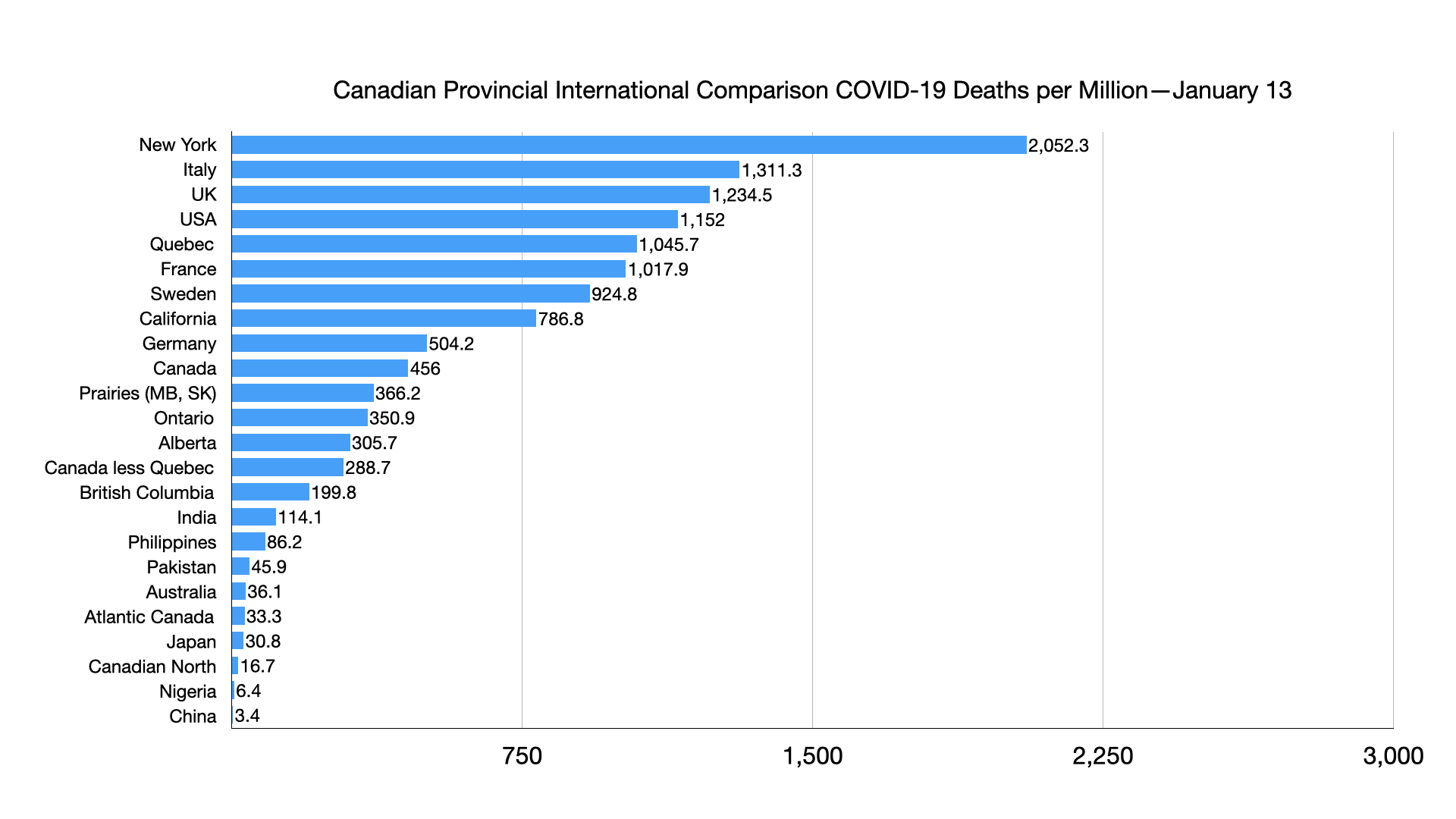
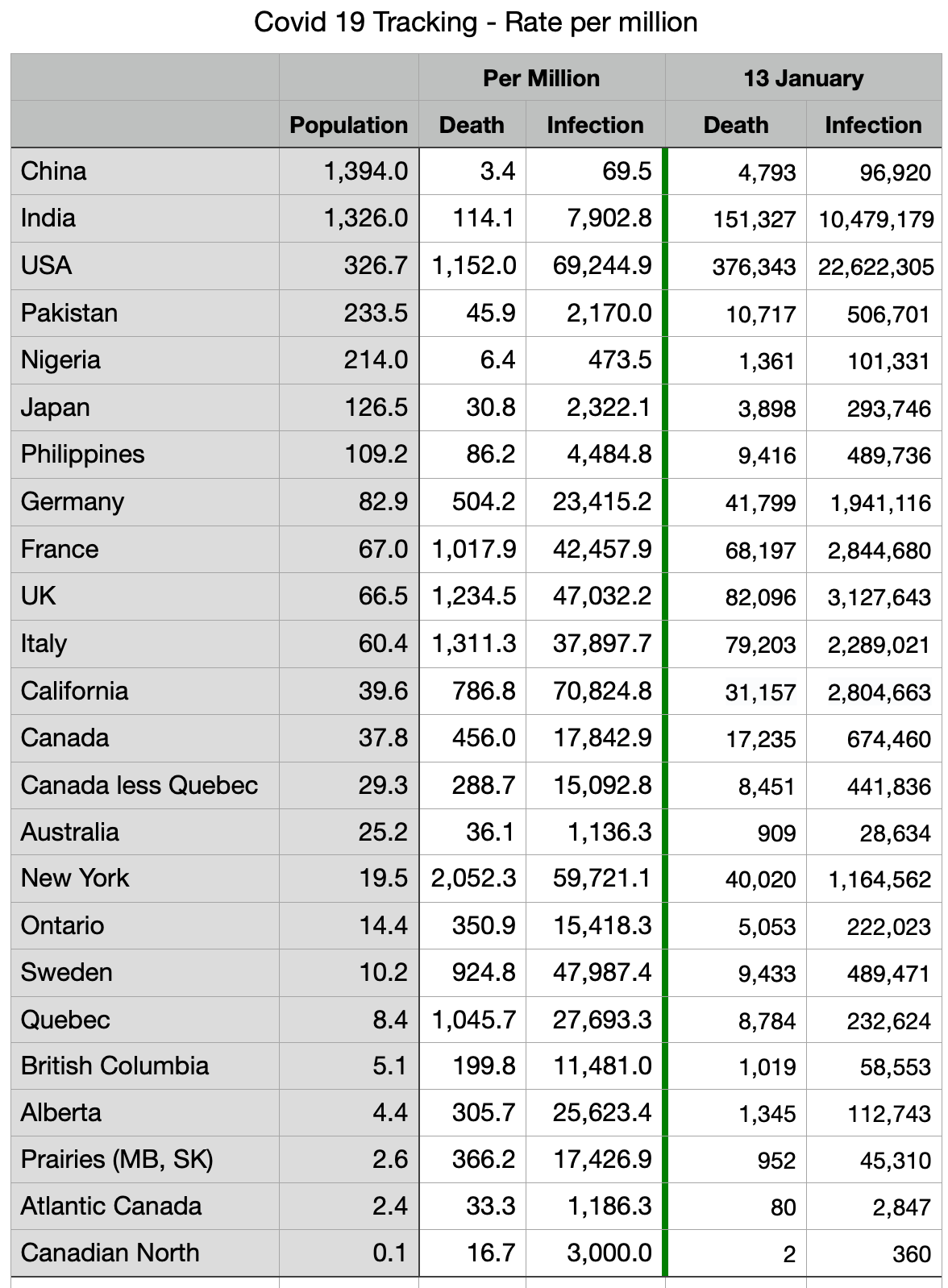
The impact of COVID may make it difficult to attract immigrants compared to other G7 countries, making it difficult to meet the targets set for 2024.

Howard Ramos, Dan Hiebert and I have been looking at COVID-19 impact on immigration (my last monthly update can be found here: https://multiculturalmeanderings.com/wp-content/uploads/2021/01/covid-19-immigration-effects-key-slides-november-2020-draft-1.pdf).

One of the research questions we have is whether or not a country’s ability to manage or control COVID-19 will impact on its relative impact to potential immigrants. Out initial analysis is below, published in Policy Options (the updated slides can be found in the previous post):

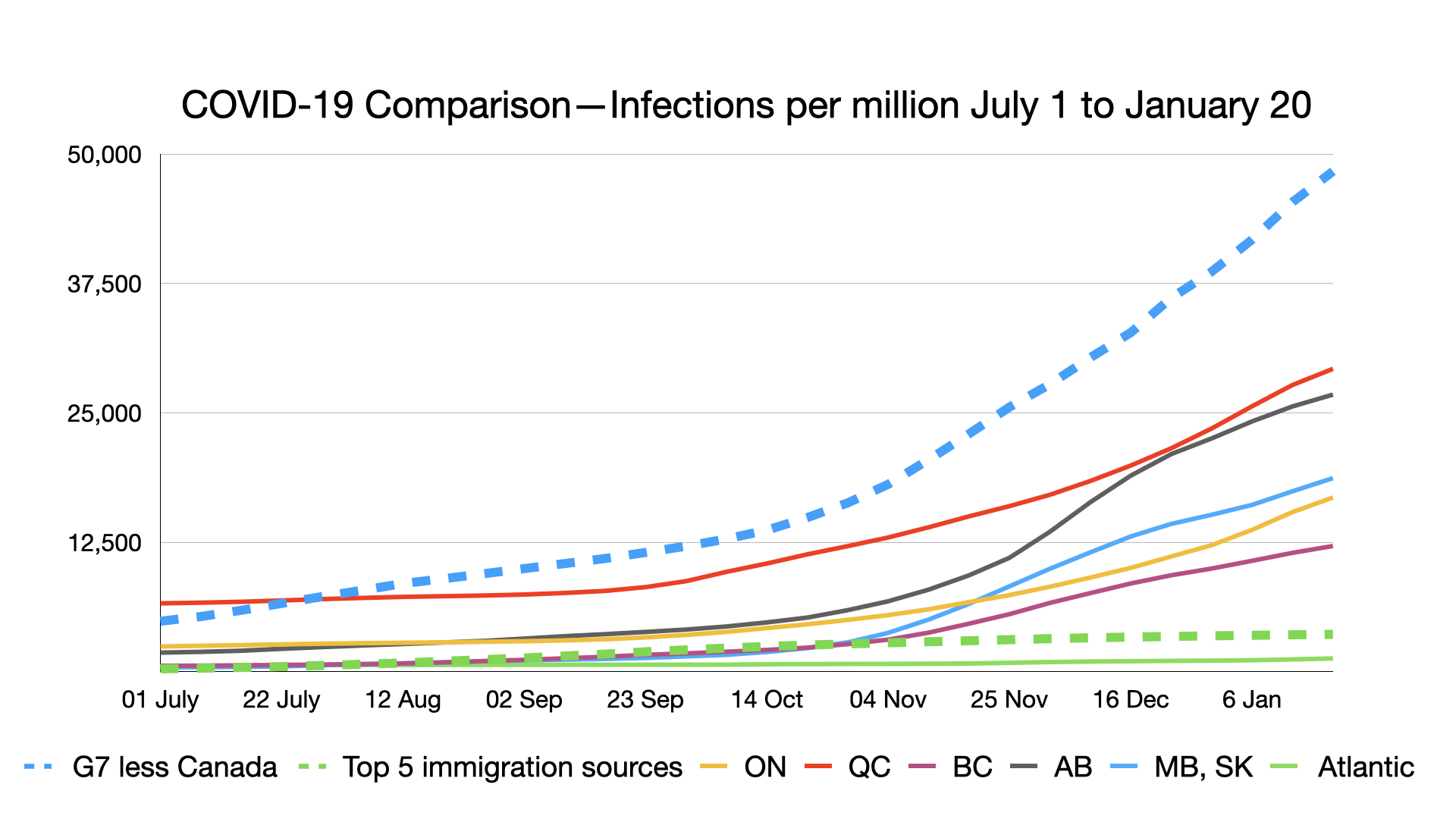
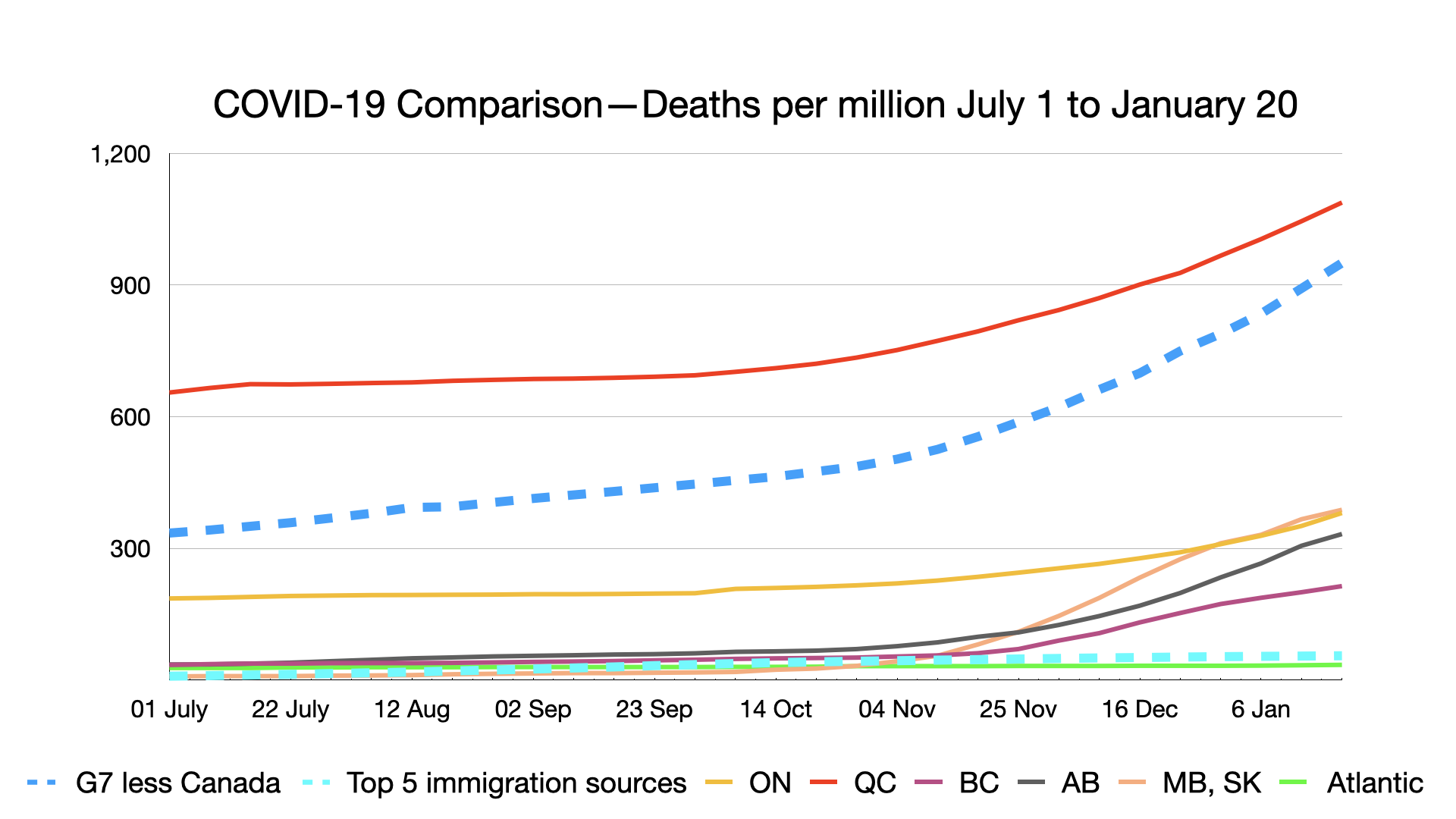
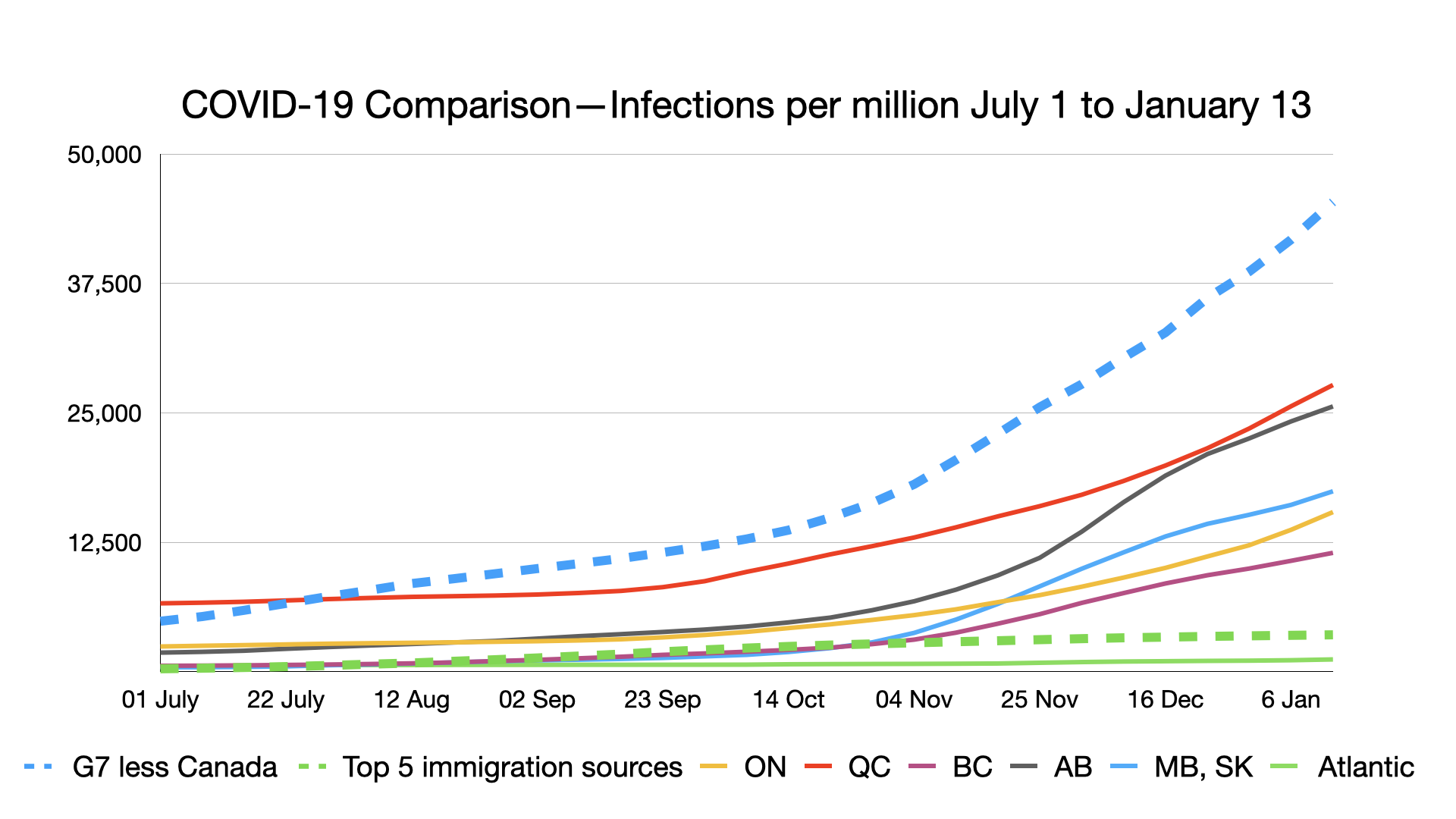
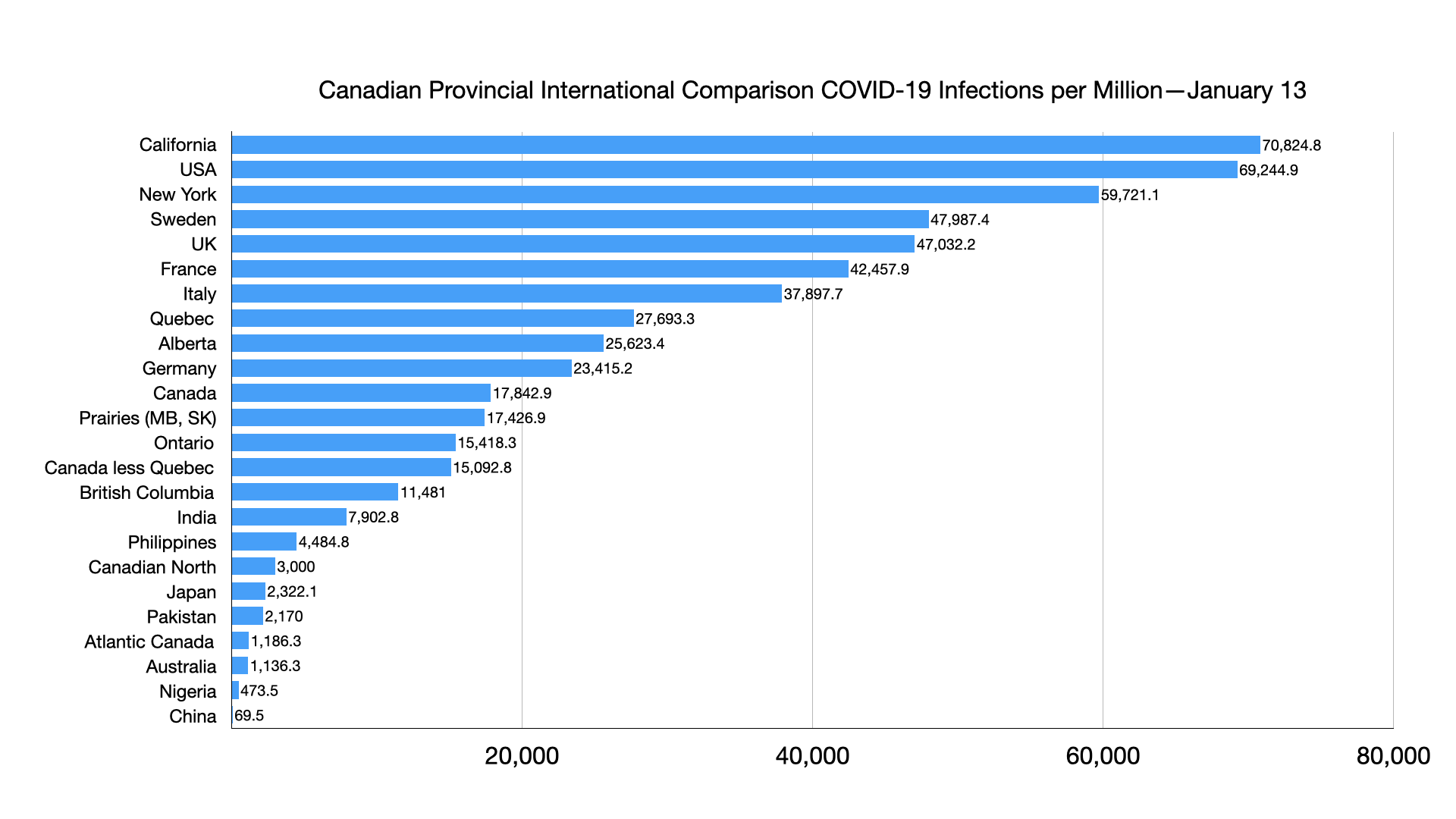
Statistics tracking infections and deaths during the COVID pandemic show that Canada is faring better than all its G7 allies, save for Japan. Yet, it is doing far worse than the top five immigration source countries that it draws newcomers from. Canada cannot assume that it looks as attractive as it once did to newcomers, suggesting that it may be time to act proactively to meet ambitious immigration targets.

In October, Refugees and Citizenship Minister Marco Mendicino made an ambitious announcement to bring 1.2 million newcomers to the Canada over the next three years. If it the country has a shot at meeting those targets, it cannot not sit back and simply expect those numbers to happen.

Immigration is driven by a complex set of push and pull factors that incentivises migration. Put simply, source countries have attributes that make life look more attractive abroad and host countries have features that attract newcomers. For instance, a weak economy or poorer quality of life at home compared to good jobs and good health abroad.

The lingering impact of the COVID-induced downturn is flipping traditional push and pull factors on their head. In past economic downturns and recessions, for example, recent immigrants suffer the most and this means we need to consider the inequalities that might get triggered by returning to recent levels (340,000 in 2019) too quickly, which the federal government’s plan largely ignores. This is not to mention how Canada’s health care system looks compared to other countries in addressing the pandemic.

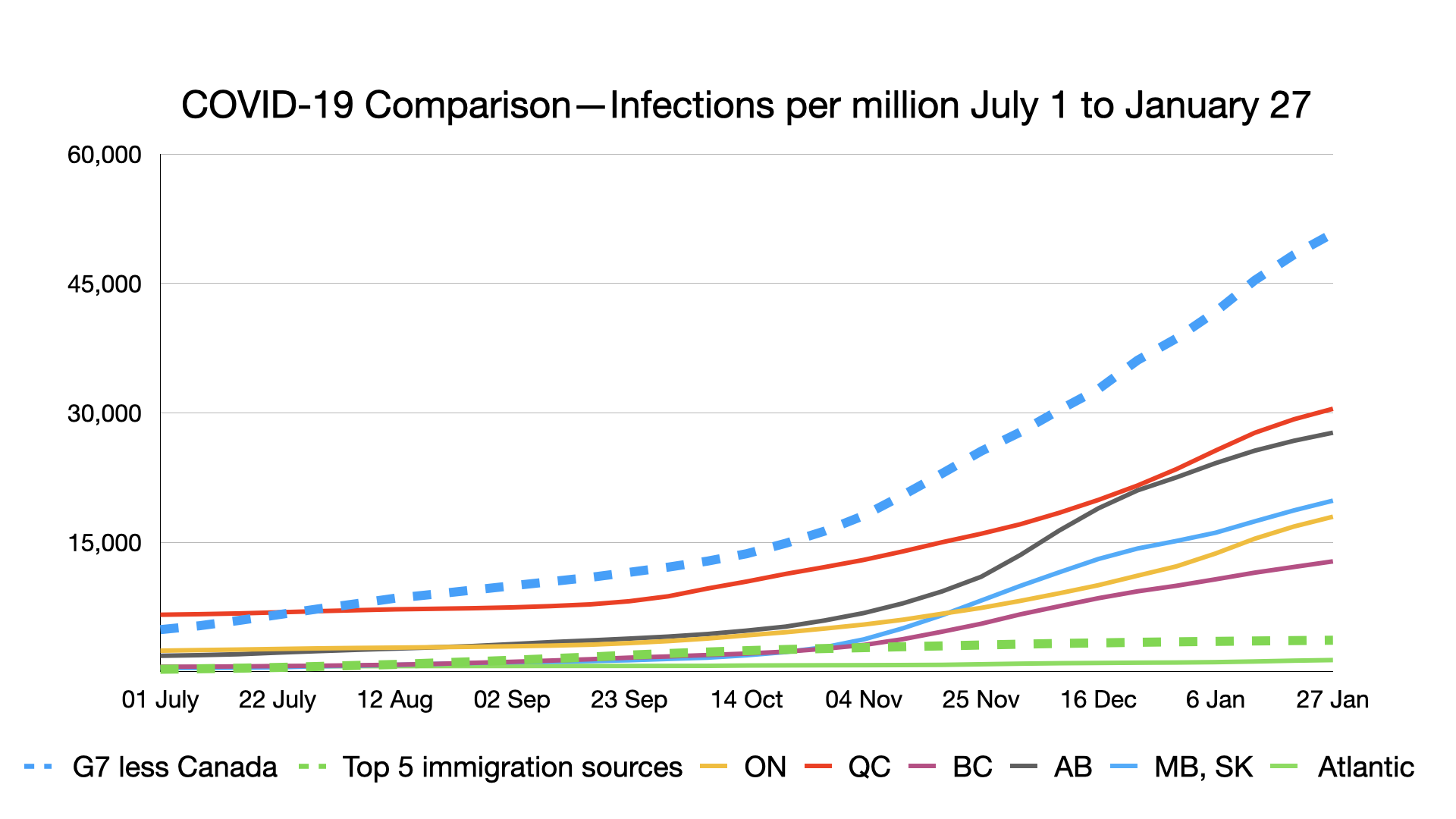
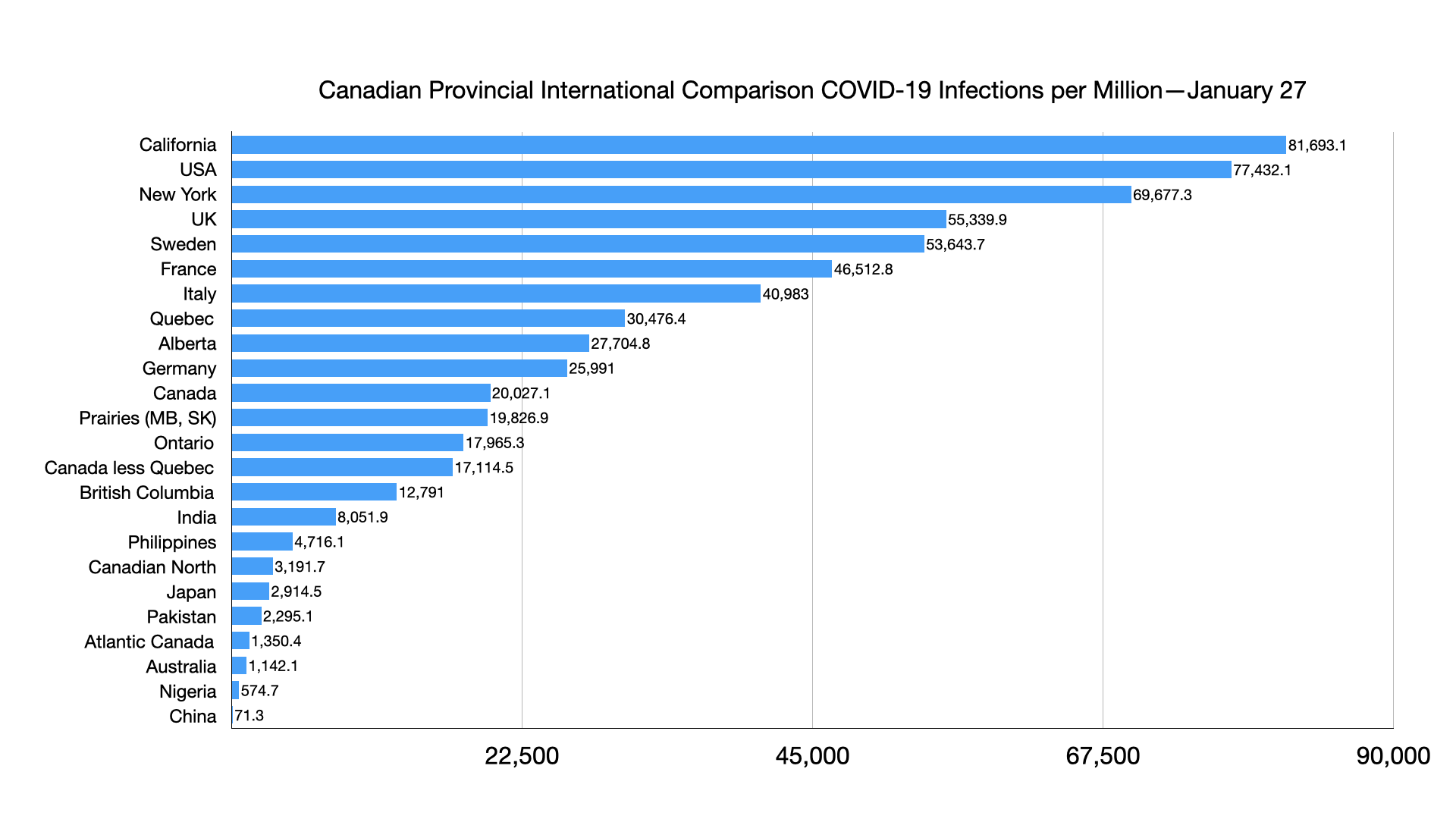
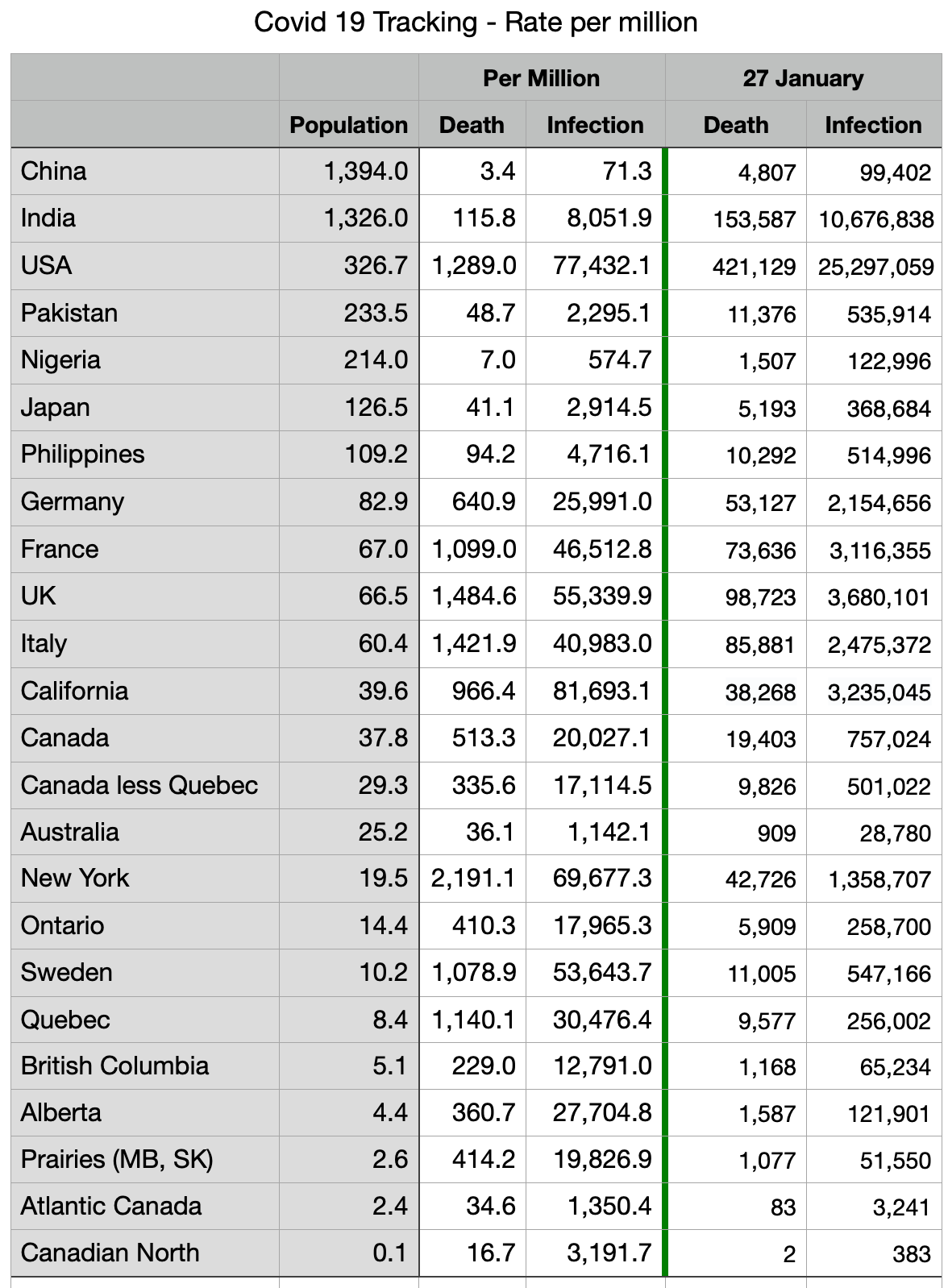
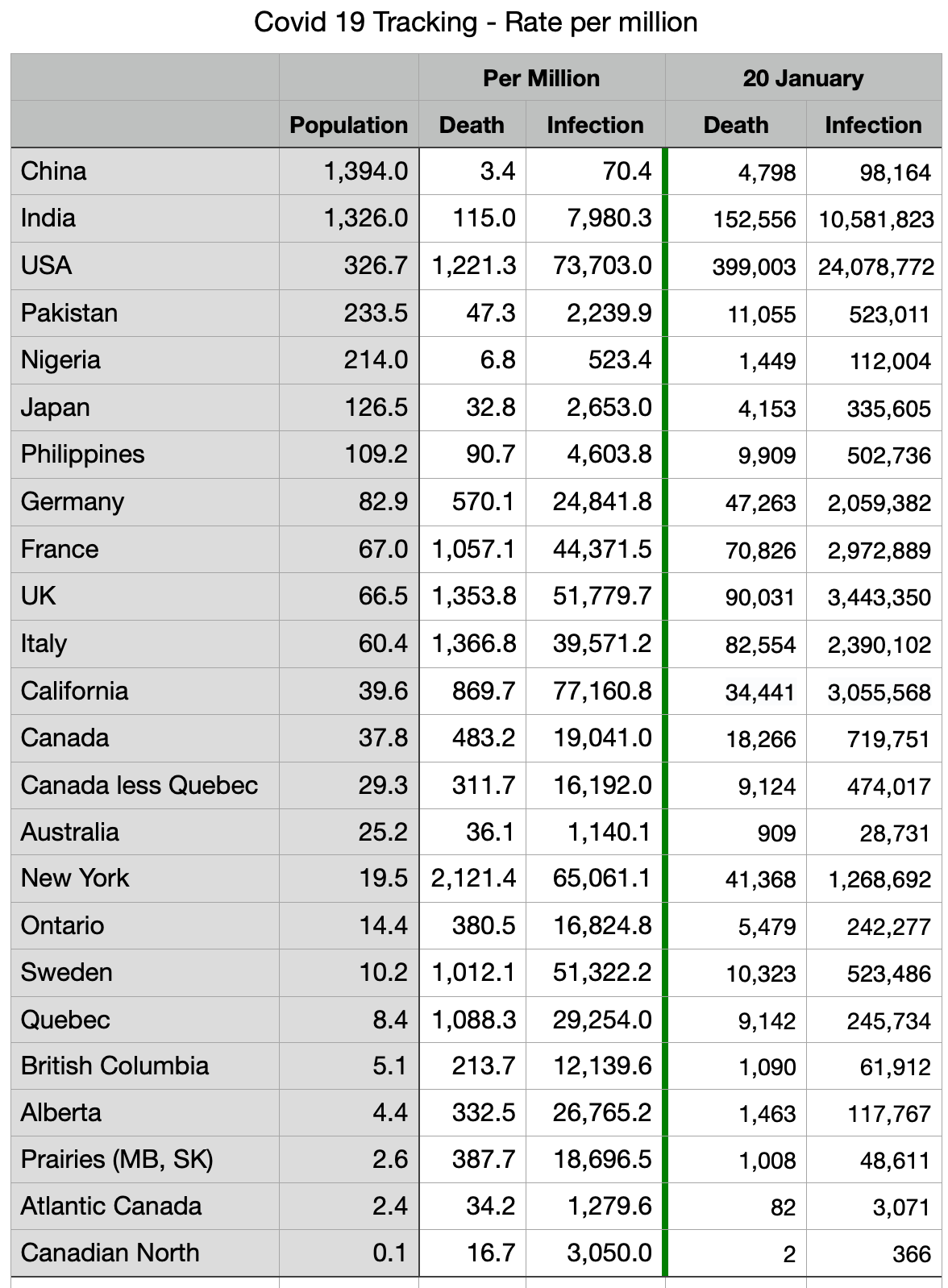
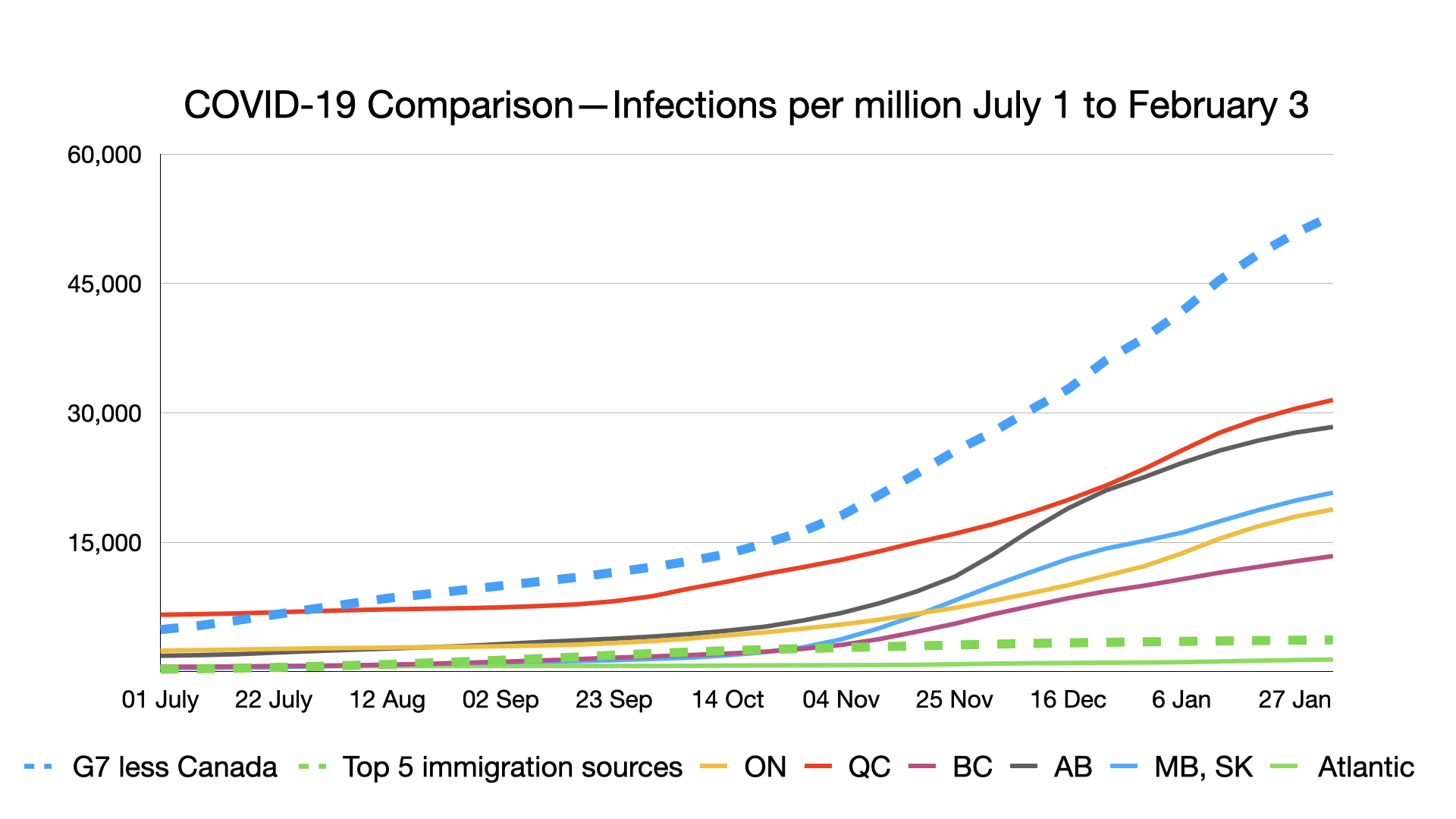
The statistics may weaken the perceptions of potential immigrants of Western public health, social welfare programs and quality of life advantages. Take for instance COVID-19 infections-per-million from July to January 2021 as an example. If you look at the top-five immigrant-source countries to Canada (India, China, Philippines, Nigeria and Pakistan) all have far lower rates of infection than the G7 which are among the countries that compete with Canada for newcomers.

Although there may be undercounting of COVID infections and deaths in non-Western countries, rates would have to be five or more times higher to change the trends we report here. We do not believe such issues are significant enough to change the overall picture that rates in G7 countries are among the highest in the world.

Rates of infection can be taken as a proxy of a number of factors. They reflect the strength of a country’s social welfare system, its healthcare system and the quality of life it can offer newcomers. Polling of immigrants to Canada time and time again show that quality of life is a reason people move to the country and it is also seen in polling on specific regions, such as Nova Scotia. Rates of infection put this all into question.

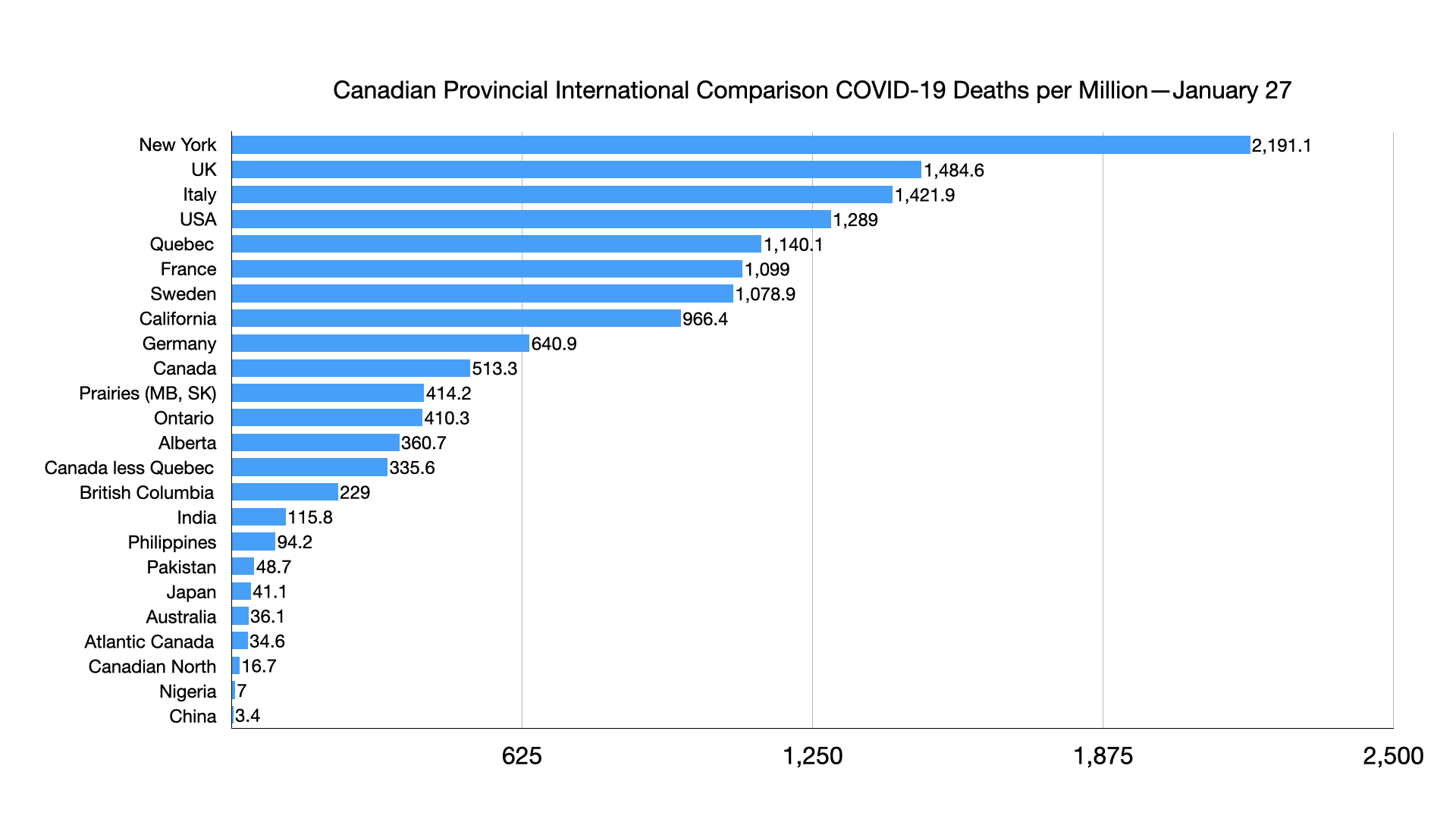
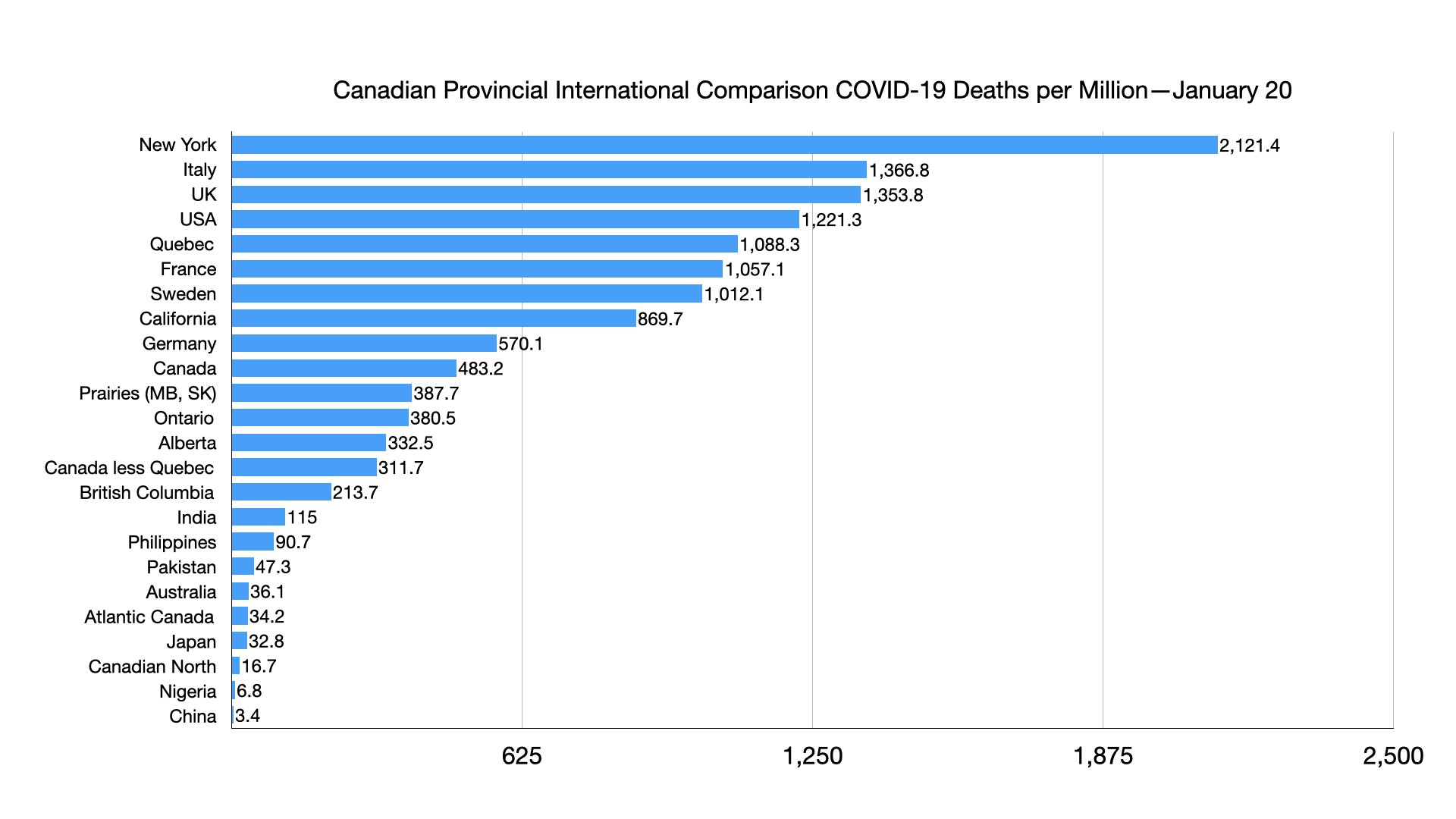
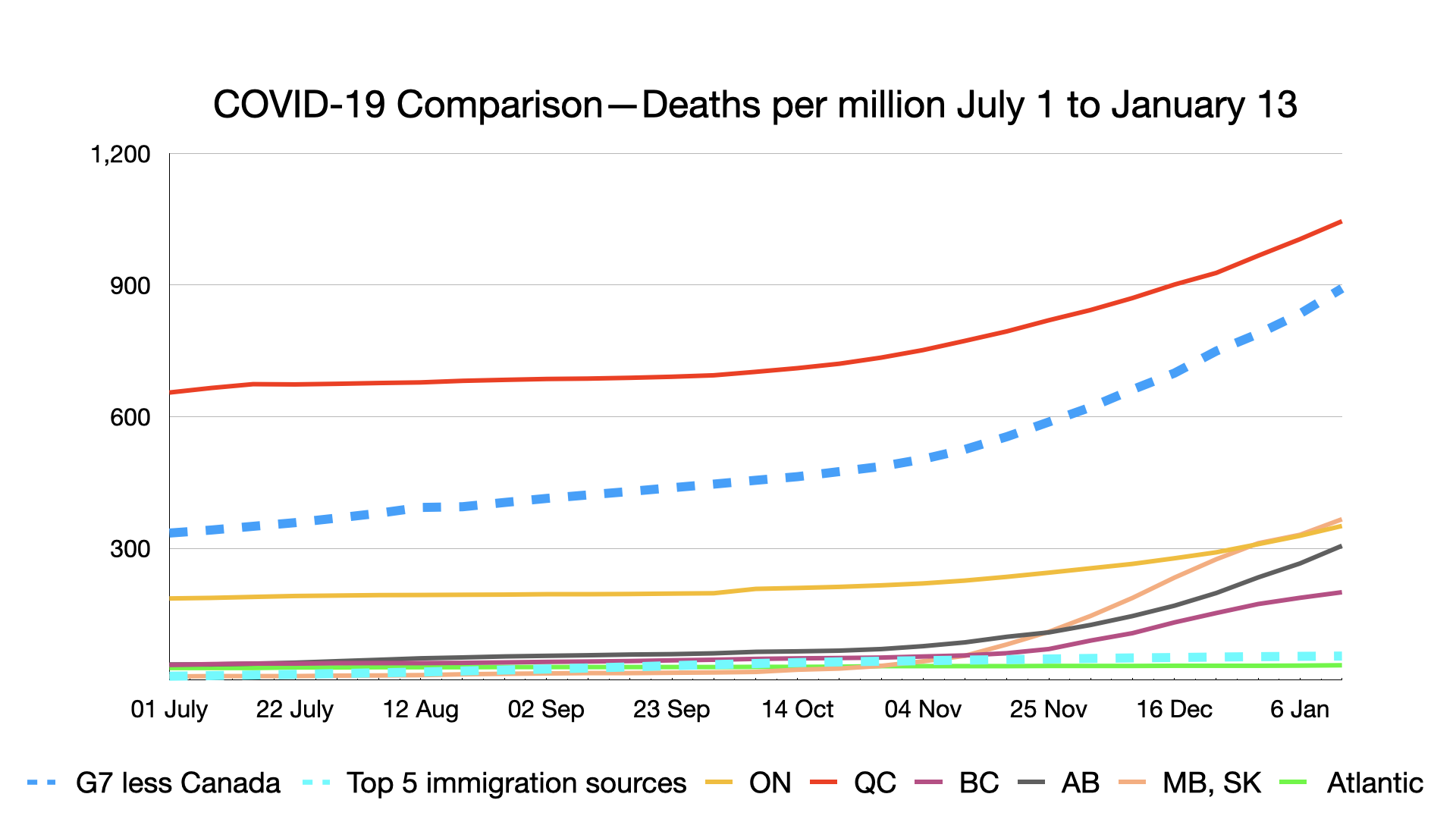
The situation is even more stark when looking at deaths-per-million over the same period in 2020. Again Canada’s top immigrant source countries all have lower rates of death compared to the G7. On this front, again, Canada tends to look better than its G7 allies. But when regions of the country are examined in more depth, Quebec has worse outcomes than other immigrant destinations and has some of the highest death rates in the world.

https://e.infogram.com/3bb049d7-ee59-4cde-b209-ed8f1edbacce?parent_url=https%3A%2F%2Fpolicyoptions.irpp.org%2Fmagazines%2Ffebruary-2021%2Fwill-the-pandemic-make-canada-less-attractive-to-newcomers-2%2F&src=embed#async_embed

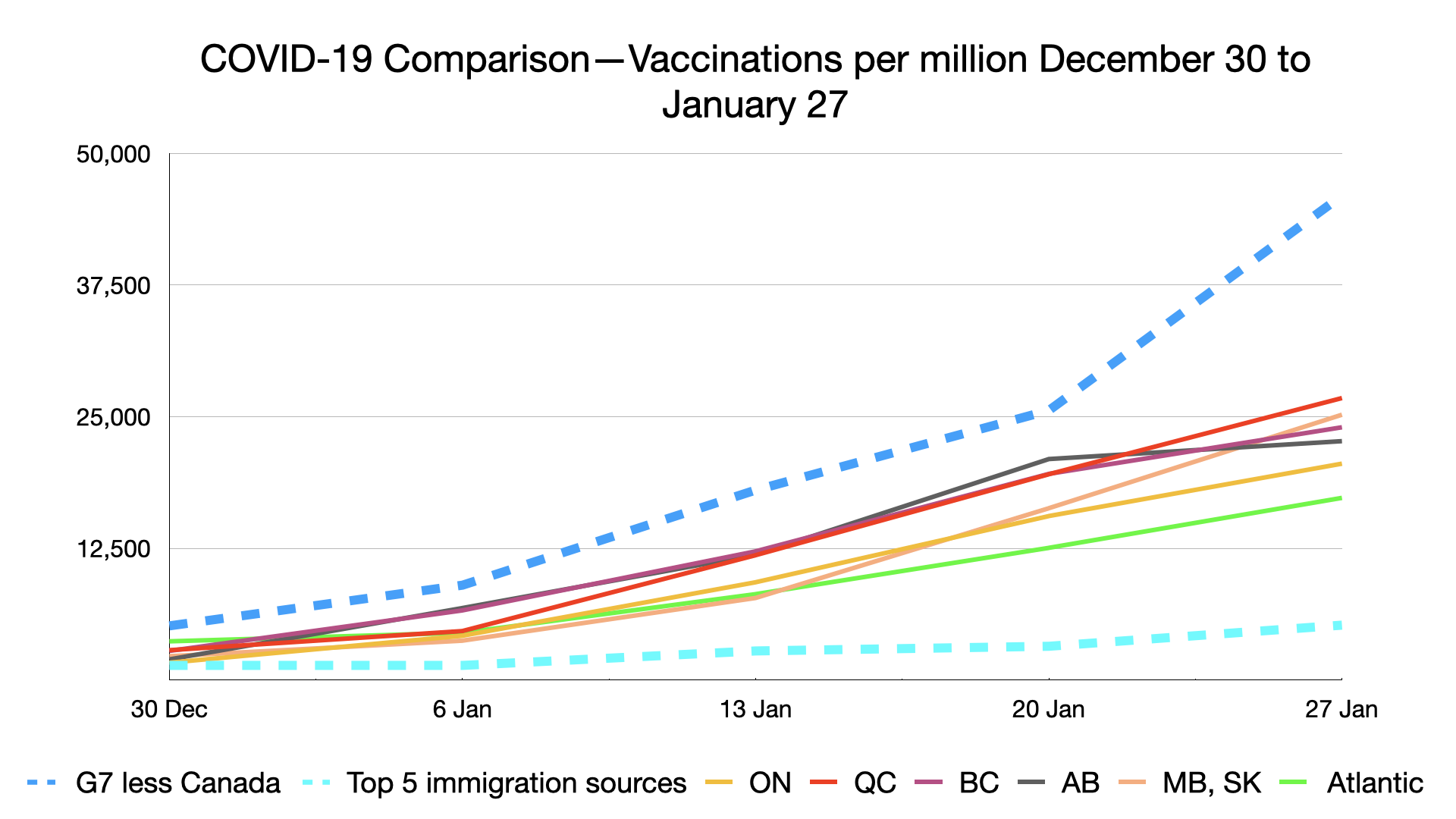
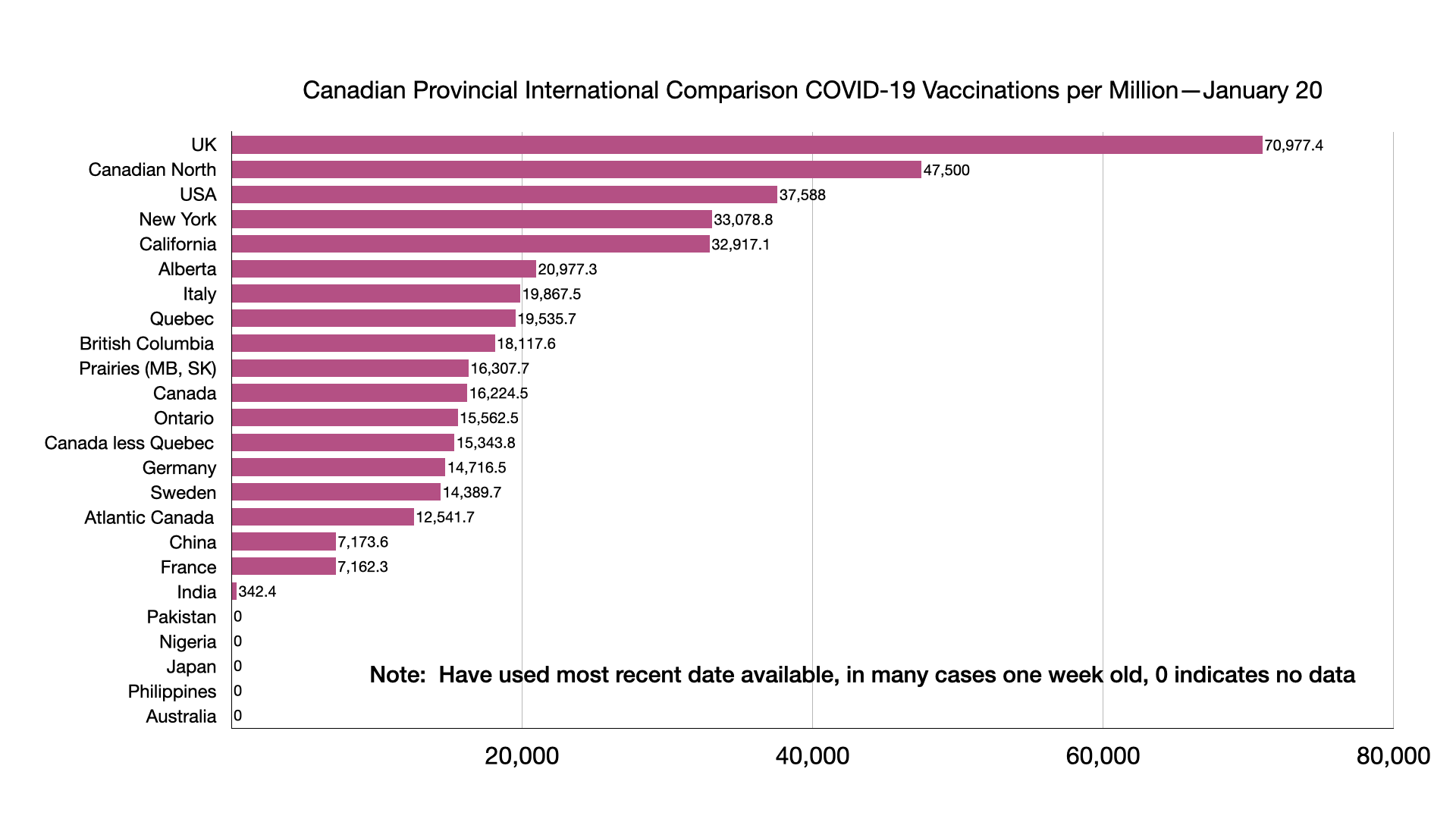
The degree to which Canada is to vaccinate may also become a factor, given its sluggish start compared to the UK and U.S. but higher than immigration source countries. Such statistics put into question whether traditional immigration destinations can offer the quality-of-life immigrants seek and this may change mix of the push and pull factors that drove migration before the pandemic.

https://e.infogram.com/7176996e-d1b1-406e-b337-d32fd0bf9c85?parent_url=https%3A%2F%2Fpolicyoptions.irpp.org%2Fmagazines%2Ffebruary-2021%2Fwill-the-pandemic-make-canada-less-attractive-to-newcomers-2%2F&src=embed#async_embed

The statistics put into question the ability of the West to offer strong public health and social welfare safety nets. Dampened perceptions of the West’s advantage will likely impact the speed at which countries recover from the pandemic, the pace at which they can get their economies back to speed and thus their relative attractiveness to immigrants.

In this context, the federal and provincial governments may well need to revise immigration targets downward, at least in 2021. The mix may also need to be revisited given that the economic immigration streams prioritize the higher skilled where one lesson from the pandemic is the essential nature of lower-skilled service jobs. At the same time, Canada’s attractiveness compared to the U.S. will likely decline under the Biden administration, which is of particular importance to the tech sector.

The government cannot take for granted that the push and pull factors that drove migration before COVID will remain the same in the new normal. Instead, Canada needs to act boldly and proactively if it has a chance to returning to being a key player in attracting newcomers.

Source: https://policyoptions.irpp.org/magazines/february-2021/will-the-pandemic-make-canada-less-attractive-to-newcomers-2/

#COVID-19: Comparing provinces with other countries 3 February Update

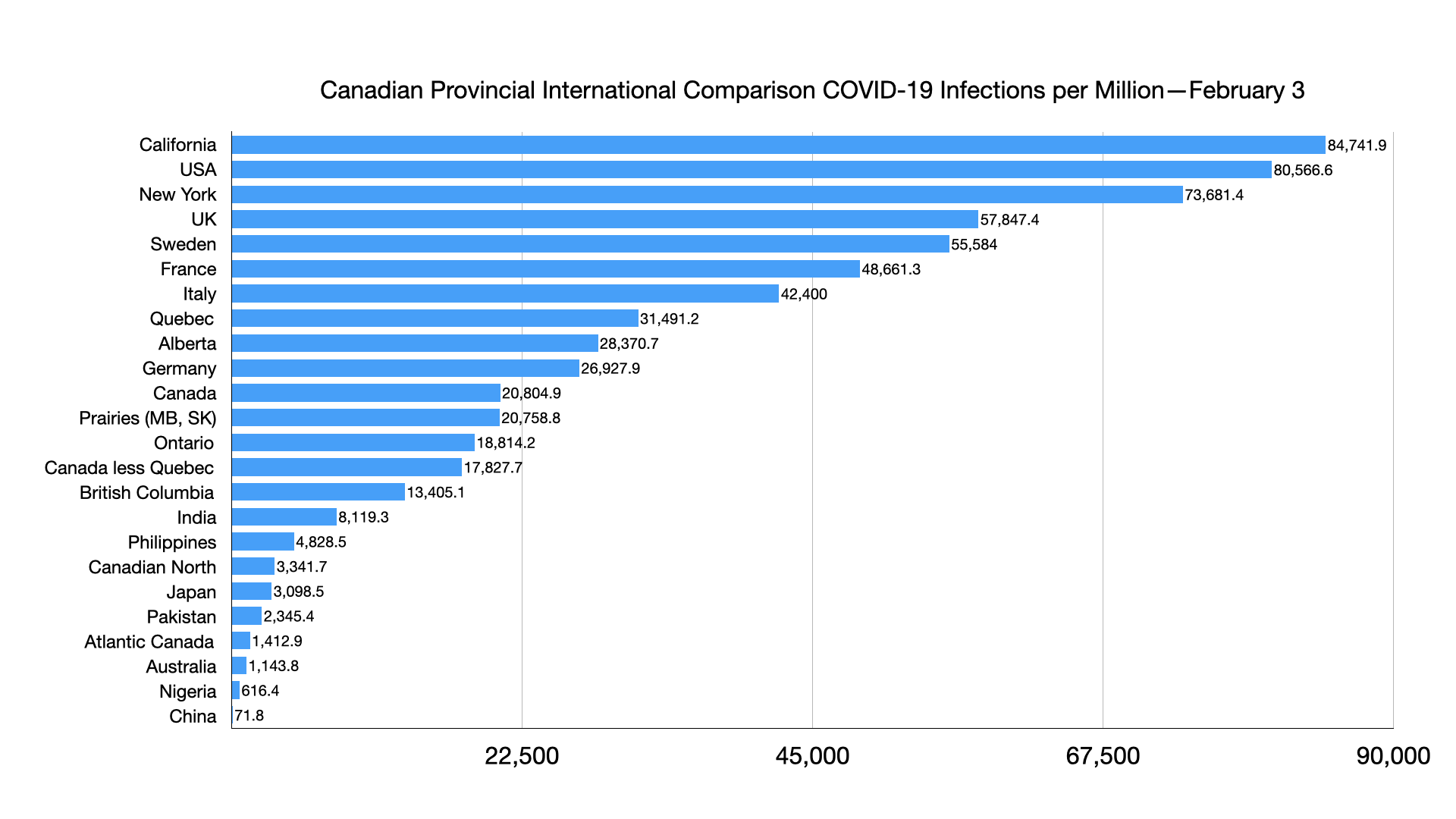
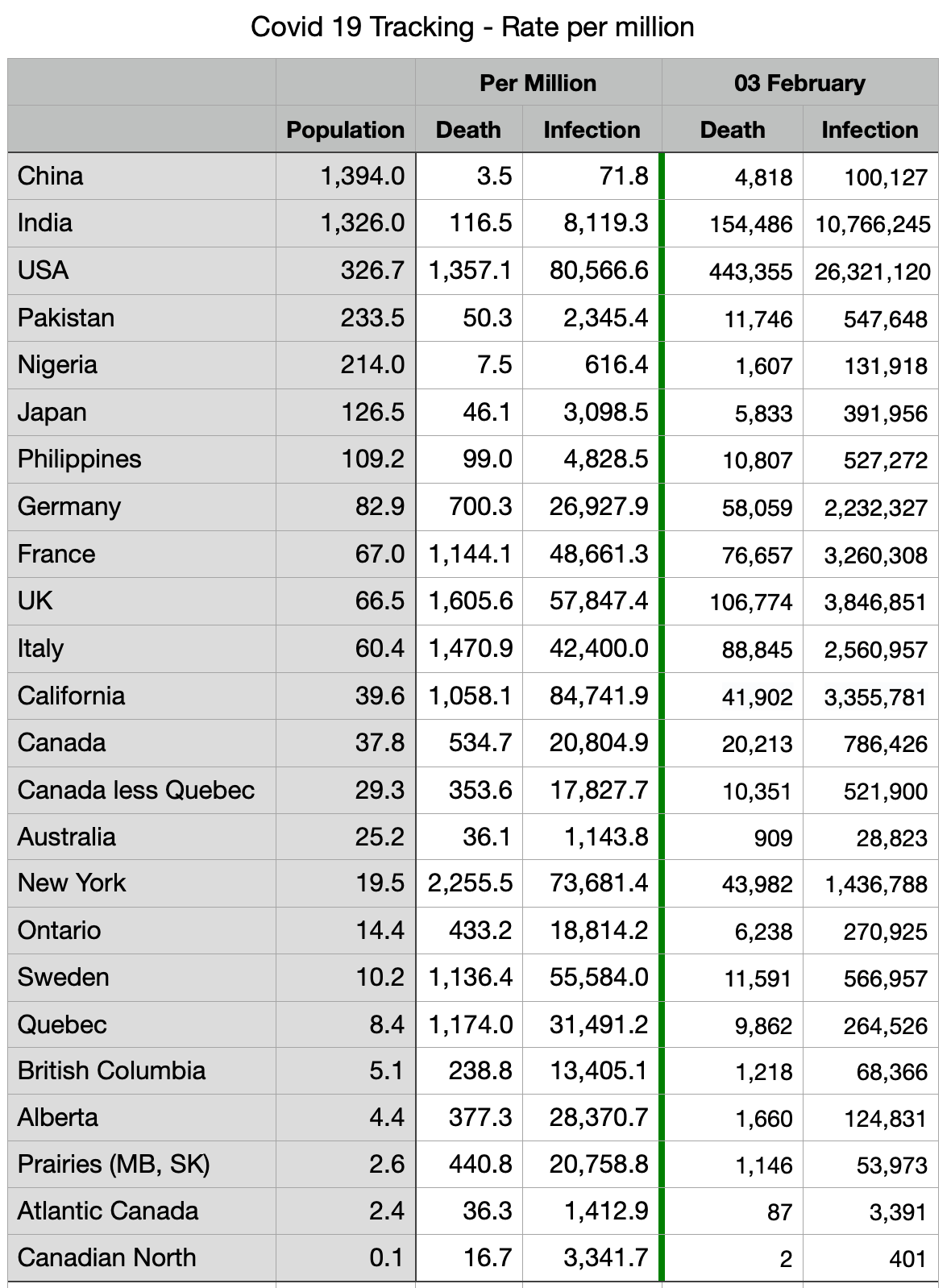
The latest charts, compiled 3 February.

Vaccinations: The gap between the leading G7 countries (UK, USA) and other EU countries continues to grow given the pause in deliveries to Canada, with the exception of France and Sweden.

Trendline charts

Infections per million: Alberta appears too be controlling the virus better than Quebec.

Deaths per million: G7 continues to close in on Quebec, Prairies continue to have similar rates to Ontario.

Vaccinations per million: Gap between G7 and Canada, driven by UK and USA, continues to widen.

Weekly

Infections per million: No change in relative ranking from last week.

Deaths per million: Atlantic Canada now ahead of Australia.

The Mystery Of India’s Plummeting COVID-19 Cases

Of interest as had been wondering whether this reflected data issues. Appears not:

Last September, India was confirming nearly 100,000 new coronavirus cases a day. It was on track to overtake the United States to become the country with the highest reported COVID-19 caseload in the world. Hospitals were full. The Indian economy nosedived into an unprecedented recession.

But four months later, India’s coronavirus numbers have plummeted. Late last month, on Jan. 26, the country’s Health Ministry confirmed a record low of about 9,100 new daily cases — in a country of nearly 1.4 billion people. It was India’s lowest daily tally in eight months. On Monday, India confirmed about 11,000 cases.

“It’s not that India is testing less or things are going underreported,” says Jishnu Das, a health economist at Georgetown University. “It’s been rising, rising — and now suddenly, it’s vanished! I mean, hospital ICU utilization has gone down. Every indicator says the numbers are down.”

Scientists say it’s a mystery. They’re probing why India’s coronavirus numbers have declined so dramatically — and so suddenly, in September and October, months before any vaccinations began.

They’re trying to figure out what Indians may be doing right and how to mimic that in other countries that are still suffering.

“It’s the million-dollar question. Obviously, the classic public health measures are working: Testing has increased, people are going to hospitals earlier and deaths have dropped,” says Genevie Fernandes, a public health researcher with the Global Health Governance Programme at the University of Edinburgh. “But it’s really still a mystery. It’s very easy to get complacent, especially because many parts of the world are going through second and third waves. We need to be on our guard.”

Scholars are examining India’s mask mandates and public compliance, as well as its climate, its demographics and patterns of diseases that typically circulate in the country.

Mask and mandates

India is one of several countries — mostly in Asia, Africa and South America — that have mandated masks in public spaces. Prime Minister Narendra Modi appeared on TV wearing a mask very early in the coronavirus pandemic. The messaging was clear.

In many Indian municipalities, including the megacity Mumbai, police hand out tickets — fines of 200 rupees ($2.75) — to violators. Mumbai’s mask mandate even applies outdoors, to joggers on the beach and passengers in open-air rickshaws.

“Every time they fine a person 200 rupees, they also give them a mask to wear,” explains Fernandes, a Mumbai native. “Very stereotypically, we [Indians] are known to break rules! You see traffic rules being broken all the time,” she says, laughing.

But in the pandemic, when it comes to masks, “the police, the monitoring, enforcement — all that was ramped up,” she says.

Authorities reportedly collected the equivalent of $37,000 in mask fines in Mumbai on New Year’s Eve alone.

But the fines and mandates appear to have worked: In a survey published in July, 95% of respondents said they wore a mask the last time they went out. The survey was conducted by phone in June by the National Council of Applied Economic Research, India’s biggest independent economic policy group.

Awareness is widespread. Whenever you make a phone call in India — on landlines and mobiles — instead of a ring tone, you hear government-sponsored messages warning you to wash your hands and wear a mask. One message was recorded by Bollywood legend Amitabh Bachchan, 78, who battled and recovered from COVID-19 last summer.

The mask and hand-washing messages have now been replaced with new ones urging people to get vaccinated; India began vaccinations on Jan. 16.

Heat and humidity

Aside from mask compliance, there’s also India’s climate: Most of the country is hot and humid. That too has deepened the mystery. There’s some evidence that India’s climate may help reduce the spread of respiratory viruses. But there’s also some evidence to the contrary.

A review of hundreds of scientific articles, published in September in the journal PLOS One, found that warm and wet climates seem to reduce the spread of COVID-19. Heat and humidity combine to render coronaviruses less active — though the certainty of that conclusion, the review says, is low. Previous research has also found that droplets of the virus may stay afloat longer in air that’s cold and dry.

“When the air is humid and warm, [the droplets] fall to the ground more quickly, and it makes transmission harder,” Elizabeth McGraw, director of the Center for Infectious Disease Dynamics at Pennsylvania State University, told NPR last year. (However, the science of transmission is still evolving.)

In a survey of COVID-19 cases in India’s Punjab state, Das, the health economist at Georgetown, found that 76% of patients there did not infect a single other person — though it’s unclear why. He and his colleagues examined data collected from contact tracing and found that most patients who did infect others infected only a few other people, while a few patients infected many. Overall, 10% of cases accounted for 80% of infections. One implication, which Das says he’s investigating further, is the possibility of making contact tracing more efficient by first testing a patient’s immediate family members. If no one at all is infected, the process can end there.

“The temperature, of course, is in our favor. We do not have too cold of a climate,” says Dr. Daksha Shah, an epidemiologist and deputy executive health officer for the city of Mumbai. “So many viruses are known to multiply more in colder regions.”

But there’s also some scientific evidence to the contrary, that India might actually be more conducive to the coronavirus: Research published in December in the journal GeoHealth says that urban India’s severe air pollution might exacerbate COVID-19. Not only does pollution weaken the body’s immune system, but when air is thick with pollutants, those particles may help buoy the virus, allowing it to stay airborne longer.

A paper published in July in The Lancet says extreme heat may also force people indoors, into air-conditioned spaces — and thus might contribute to the virus’s spread. The Natural Resources Defense Council has warnedthat extreme heat can lead to a spike in other illnesses — dehydration, diarrhea — that might lead to overcrowding in hospitals and clinics already struggling to treat victims of COVID-19.

Prevalence of other diseases

Another point to consider about India is how many other diseases are already rampant: malaria, dengue fever, typhoid, hepatitis, cholera. Millions of Indians also lack access to clean drinking water, sanitation and hygienic food. Some experts speculate that people with robust immune systems may be more likely to survive in India in the first place.

“All of us have pretty good immunity! Look at the average Indian: He or she has probably had malaria at some point in his life or typhoid or dengue,” says Sayli Udas-Mankikar, an urban policy expert at the Observer Research Foundation in Mumbai. “You end up with basic immunity toward grave diseases.”

Two new scientific papers support that thesis, though they have yet to be peer-reviewed: One study by Indian scientists from Chennai and Pune, published in October, found that low- and lower-middle-income countries with less access to health care facilities, hygiene and sanitation actually have lower numbers of COVID-19 deaths per capita. Another study by scientists at India’s Dr. Rajendra Prasad Government Medical College, published in August, found that COVID-19 deaths per capita are lower in countries where people are exposed to a diverse range of microbes and bacteria.

But experts warn that these two studies are preliminary and should serve only as a springboard for more investigation.

“They’re not based on any biological data. So they’re good for generating a hypothesis, but now we really need to do the studies that will result in explanations,” says Dr. Gagandeep Kang, an infectious diseases researcher at the Christian Medical College in Vellore. “I hope scientists work more on this soon. We need deeper dives into India’s immune responses.”

According to Health Ministry figures, the coronavirus has killed 154,392 people in India as of Feb. 1. That’s a mortality rate of 1.44% — much lower than that of the United States or many European countries. (But Brazil’s death rate is higher than India’s, and Brazil and India are both lower-middle-income countries.)

Demographics

India is a very young country as well. Only 6% of Indians are older than 65. More than half the population is under 25. Those who are young are less likely to die of COVID-19 and are more likely to show no symptoms if infected.

A study of nearly 85,000 coronavirus cases in India, published in November in the journal Science, found that the COVID-19 mortality rate actually decreases there after age 65 — possibly because Indians who live past that age are such outliers. There are so few of them.

“Those Indians who do live that long tend to be more healthy than average or more wealthy — or both,” says health economist Das.

Serological surveys — random testing for antibodies — show that a majority of people in certain areas of India may have already been exposed to the coronavirus, without developing symptoms. Last week, preliminary findings from a fifth serological study of 28,000 people in India’s capital showed that 56% of residents already have antibodies, though a final report has not yet been published. The figures were higher in more crowded areas. Last summer, another survey by Mumbai’s health department and a government think tank found that 57% of Mumbai slum-dwellers and 16% of people living in other areas had antibodies suggesting prior exposure to the coronavirus.

But many experts caution that herd immunity — a controversial term, they say — would only begin to be achieved if at least 60% to 80% of the population had antibodies. It’s also unclear whether antibodies convey lasting immunity and, if so, for how long. More serological surveys are needed, they say.

Timing

India’s climate and demographics have not changed during the pandemic. And the drop in India’s COVID-19 caseload has been recent. It hit a peak in September and has declined inexplicably since then.

In fact, India’s numbers went down exactly when experts predicted they would spike: in October, when millions of people gathered for the Hindu festivals of Diwali and Durga Puja. It’s when air pollution is also worst, and experts feared that would exacerbate the pandemic too.

Cases have also declined despite what many thought would be a superspreader event: tens of thousands of Indian farmers camping out on the capital’s outskirts for months.

Shah, the epidemiologist, wonders if, just like more infectious variants of the coronavirus have been discovered in the U.K. and elsewhere, perhaps a milder variant may have started mutating in India.

“Some processes must have happened. This is an evolution of the virus itself. In some places there are mutations happening,” she says. “We need some more deeper evidence and deeper studies.”

The truth is, scientists just don’t know.

“Three options: One is that it’s gone because of the way people behaved, so we need to continue that behavior. Or it’s gone because it’s gone and it’s never going to come back — great!” says Das, from Georgetown. “Or it’s gone, but we don’t know why it’s gone — and it may come back.”

That last option is what keeps scientists and public health experts up at night.

So for now, Indians are kind of holding their breath — just doing what they’re doing — until they get vaccinated.

Source: The Mystery Of India’s Plummeting COVID-19 Cases

Engage the ethnic press to combat vaccine hesitancy

Star has been featuring a number of similar op-eds, this being the latest:

In recent days, doctors across Canada have been calling for “culturally competent” campaigns to fight vaccine hesitancy. But we need much more than that.

In long-term-care homes, there have been reports of personal support workers (PSWs) refusing to be vaccinated — despite the fact they work in high-risk environments. Many essential workers, including PSWs, are from highly racialized populations.

Some of the worst COVID-19 hot spots across the country have been in population centres with high counts of new Canadians and immigrants.

Knowing that, you might imagine that governments would be placing public health announcements in as many ethnic publications as possible. Unfortunately, that has not been the case.

The Government of Canada only advertises in 11 languages aside from English and French. There are far too many outlets who aren’t receiving any government ads to share with their readership. As some doctors have reported from firsthand experience, the outreach to ethnic outlets has been, in some cases, non-existent.

When the pandemic hit, ethnic media was particularly affected. Most advertisers for ethnic newspapers, radio shows and TV shows are small businesses, hosts of events and conventions — all sectors hit particularly hard from the get-go.

Though some government assistance reached some members of the ethnic press, for far too many, the collapse of advertising was too much to bear. Many outlets weren’t eligible for any government assistance.

What that has meant is that outlets have closed, gone purely digital, cut their publication schedules, laid off staff, cut circulation or some combination thereof.

Day-to-day, this has meant less access to reliable and accurate news for new Canadians and immigrants. Non-English-speaking seniors, who relied on their printed ethnic newspaper to stay informed, have seen their access to news yanked away or reduced.

Even worse is that even if they are still getting a paper, it doesn’t necessarily contain accurate information from government sources — information that is going to be critical as we continue the fight against COVID-19 and misinformation about the vaccine.

While misinformation has spread, ethnic reporters have been laid off. We have tracked this — layoffs now reach as high as 80 per cent. Fewer staff means less news for the outlets who have managed to survive.

There is no magic bullet to fix vaccine hesitancy, but engaging the ethnic press will help in communities that need it. It’s not just about dollars — we need the government to send public health experts onto ethnic shows, press releases to be translated into as many languages as possible and regular government-led briefings for ethnic media.

And yes, we need to keep ethnic publications afloat and help them return to their pre-pandemic publishing schedules.

Canada’s Chinese language press isn’t just combating misinformation from Canada, it’s combating misinformation from around the world. The same goes for outlets publishing in Polish, Spanish and every other language under the sun.

The best way to fight fake news is with the truth. Ethnic journalists are ready to work to spread it in as many languages as possible.

Source: https://www.thestar.com/opinion/contributors/2021/02/01/engage-the-ethnic-press-to-combat-vaccine-hesitancy.html

#COVID-19: Comparing provinces with other countries 27 January Update

The latest charts, compiled 27 January.

Vaccinations: The gap between the leading G7 countries (UK, USA) and Canada is growing but Canadian provinces still appear to be in the middle of the pack compared to other G7 countries (Japan has not started vaccination). Vaccination rates are the highest, reflecting the small population. We should start to see the impact of the pause in Pfizer deliveries in next week’s update.

Trendline charts

Infections: Alberta no longer closing in on Quebec

Deaths per million: G7 closing in on Quebec

Vaccinations

Weekly

Infections per million: No change in relative ranking from last week.

Deaths per million: UK ahead of Italy, Japan ahead of Australia and Atlantic Canada.

#COVID-19: Comparing provinces with other countries 20 January Update, including vaccinations

The latest charts, compiled 20 January.

Vaccinations: Canada appears to be in the middle of the pack compared to G7 countries save for the UK and USA. Vaccination rates in the Canadian North are relatively high. The change in the Pfizer delivery schedule will be felt in the coming weeks, likely affecting our relative ranking.

Trendline charts:

Infections per million: Alberta no longer appears to be overtaking Quebec but Ontario appears to be approaching Prairie rates.

Deaths per million: Prairies continue to be slightly higher than Ontario with Alberta slightly behind Ontario.

Minor week to week changes:

Infections per million: UK ahead of Sweden

Deaths per million: No change

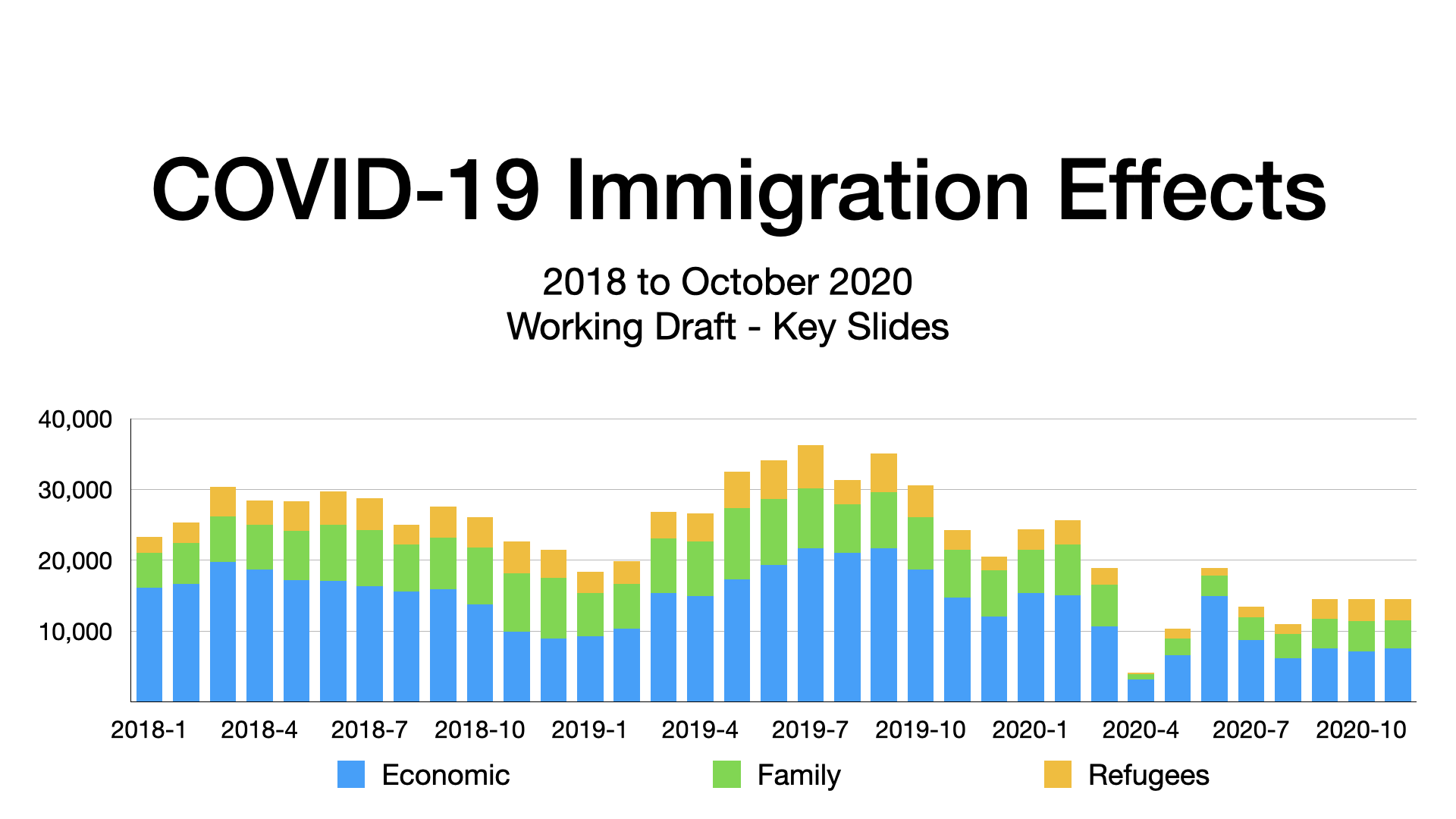
Impact of Covid-19 on Immigration to Canada – Working Deck – Full November 2020 data

Shout out to IRCC for releasing all the November data to allow for this comprehensive November portrait.

Highlights:

  • Overall, numbers of permanent residents, temporary residents and students remained flat compared to October;
  • Permanent resident admissions three times more than temporary residents and twice more than students April to November 2020/19;
  • Applications for permanent residency and study permits declined by over 60 percent April to November 2020/19;
  • Permanent Residents: A large proportion of admissions are from previous temporary residents, particularly those in the Post-graduate work program;
  • Temporary Residents IMP mainly Canadian interests, mainly the post-graduate work program;
  • Temporary Residents TFWP, small increase driven by agriculture works;
  • Citizenship decline of over 70 percent April to November 2020/19;
  • Visitor visa virtual shutdown, 96 percent decline April to November 2020/19

This data, and the ongoing nature of COVID waves, travel restrictions and expect vaccination roll-out make the government’s planned immigration levels of 401,000 in 2021 and possibly 411,000 in 2022 increasingly unlikely.

Quebec to wait up to 90 days to give second dose of COVID-19 vaccines

The province that has the highest infection and death rates, comparable to some of the worst hit G7 countries, is taking this risky approach. This will generate some good comparative data regarding following the Pharma companies advice and not doing so. But as someone who follows the instructions on my meds, question the wisdom: 

Quebec will wait up to 90 days before giving a COVID-19 vaccine booster to people who have received a first shot, Health Minister Christian Dube said Thursday.

That delay goes far beyond the recommendations of vaccine manufacturers Pfizer and Moderna, which propose intervals of 21 and 28 days respectively, and is more than double the 42-day maximum proposed by Canada’s national vaccine advisory committee.

Dube told a news conference that the decision was made in order to vaccinate as many vulnerable people as possible and to reduce the pressure on the health system.

“In our context, this is the best strategy, because we have to contend with (having) very few vaccines, and we’re in a race against the clock,” Dube said at a news conference.

Dube said the province had discussed the decision with both vaccine manufacturers and federal public health officials. He said the latter acknowledged that the 42-day recommended maximum can be extended depending on the disease’s progression in a particular province.

He said the high rate of community transmission, hospitalizations and deaths in Quebec justified the change.

“In Quebec we don’t have the same situation as in New Brunswick or British Columbia,” he said.

Richard Masse, a senior public health adviser, said the change would allow up to 500,000 seniors who are most at risk of complications — including those in private residences and those aged 80 and up — to receive their vaccine several weeks earlier than originally thought.

He said the justification to extend the interval was based on the “experience of working with many vaccines through time,” which shows that vaccine immunity does not suddenly drop off within a month or two.

However, he said the province was carefully monitoring the efficacy of the shot and would immediately give second doses if it saw evidence of decreased immunity in certain groups, such as the elderly.

Both Masse and Dube said the province would work to shorten the interval between first and second doses once the province begins to receive larger quantities of vaccine.

Meanwhile, the province was reporting some regions of the province have few or no doses of COVID-19 vaccine remaining as the vaccination effort outpaces the speed of delivery.

Quebec says as of Thursday morning, the Gaspe region, Iles-de-la-Madeleine, Nord-du-Quebec and the James Bay Cree Nation territories are out or almost out of vaccine; the province expects new deliveries Friday or Saturday.

Four other regions had almost used up all their doses but received new supplies Tuesday.

The province reported 2,132 new cases of COVID-19 Thursday and 64 more deaths attributed to the novel coronavirus, including 15 that occurred in the previous 24 hours.

One death previously attributed to COVID-19 was removed from the total after it was determined to be unrelated. Quebec has reported a total of 236,827 infections and 8,878 deaths linked to the virus.

Jean Morin, a spokesman for the Gaspe region’s health authority, said the vaccination campaign was going “exceedingly well” despite the fact nearly all the doses have been used.

Morin said there are logistical challenges to vaccinating people in the vast and thinly populated region, including having to transport people to clinics to receive their shots.

He says he expects the highest-priority groups in the region will be vaccinated by the end of January.

Source: Quebec to wait up to 90 days to give second dose of COVID-19 vaccines

As Canadians we’re proud of diversity, so why is multicultural media being left in the dark about COVID-19

While I agree that more can and should be done, one of my observations from tracking ethnic media coverage of the 2019 election campaign was that much of their coverage reflected articles in the mainstream media, and those who relied on ethnic media would be reasonable informed on the electoral platforms and choices.

It may be more a matter of resources than anything else but would be nice to know what governments are doing to publicize COVID health related information on ethnic media:

After writing my last op-ed on the underutilization of multicultural media to disseminate clear COVID-19 information, I’ve received an overwhelming response.

Some messages were from physicians and public health officials interested in utilizing these platforms to inform communities on how to stay safe. Others were a nod of acknowledgment from the Canadian public who finally felt seen and heard. And a lot of them were questions regarding why such important platforms remained underutilized when they could have been important tools to disseminate critical life saving information.

One of the things we are most proud of as Canadians is multiculturalism, yet, there’s a divide: a lack of ethnic and linguistic diversity on mainstream media. This is why multicultural and ethnic media is a much needed voice for minority communities across Canada. Along with providing language and culturally sensitive critical health information and public communication, these mediums foster a sense of culture, and community for the minority and immigrant Canadians.

While these media outlets can be very important for people with no knowledge of English or French, these platforms do more than address language barriers. For many Canadians, it’s a platform to help stay connected to one’s culture and heritage and is a heavily relied upon source of information.

The problem? These platforms can play a substantial role in sharing life-saving critical health information, and have proven to do so with information around cancer pre-pandemic. So why aren’t they getting the clear COVID-19 precaution information now?

Firstly, there is a lack of awareness. What emerged from my discussions with many physician colleagues is that many were unaware these channels existed. At the medical school education level, there needs to be better knowledge dissemination about the importance of these community platforms and how multicultural media can be leveraged to provide health related information to the public.

Secondly, there isn’t a clear bridge between mainstream and multicultural media. Mainstream media needs to do a better job at supporting and amplifying the voices of multicultural media platforms. This could be done by hosting multicultural media representatives on mainstream shows and vice versa. Moreover, government and public health bodies need to develop two-way streets with multicultural media outlets and have an ongoing regular communication with these media representatives.

Thirdly, after speaking to various multicultural media spokespersons, I learned that there is a lack of funding and financial support, particularly for the radio show channels. Their hands are tied and they have to heavily rely on advertisements to cover their expenses and are unable to afford the latest technology or means to be on par with popular mainstream outlets. Their sole profit sometimes is from advertisements; some of these advertisements can be alternative care providers or various sources in radio, TV, and print media. As part of the advertisement package, it’s hard for media channels to control knowledge dissemination. This as one can imagine then can be a source of misinformation on top of an already existing information vacuum due to underutilization of the media platforms which is exponentially dangerous.

We as Canadians are proud of our multiculturalism and public health care system and therefore it is heartbreaking to hear that multicultural media struggles to thrive. It’s an important vehicle to deliver health related and public communication to all Canadians. It is critical for us to engage multicultural and ethnic media to ensure pandemic messaging reaches to everyone nationally.

As we combat the second wave, develop an inclusive vaccination strategy, and disseminate vaccine and COVID-19 related information, it’s still not too late to incorporate linguistic and culturally sensitive print, radio and TV media outlets in our armamentarium to deliver critical health related information.

Source: As Canadians we’re proud of diversity, so why is multicultural media being left in the dark about COVID-19

#COVID-19: Comparing provinces with other countries 13 January Update, including vaccinations

As vaccination data is becoming available, I have started to compile this data (number of vaccinations administered) by province and my standard list of countries. Some countries have yet to publish vaccination data. While Canada is far behind the UK and USA, it is ahead of China and France:

The standard charts can be found below.

Minor week to week changes:

Infections per million: California ahead of USA, Ontario ahead of Canada less Quebec, Japan ahead of Pakistan, Atlantic Canada ahead of Australia 

Deaths per million: Alberta moved ahead of Canada less Quebec