Are the Courts Beginning to Move in Favor of Trump’s Immigration Policies?

Good analysis:

Since taking office, Donald Trump has issued nearly twenty Presidential actions on immigration, and more rule changes and regulations than one can easily count. Nearly all of them—including the travel ban, the cancellation of daca, and measures to end asylum applications at the Southern border—have prompted legal challenges, and, in several instances, federal judges have issued nationwide injunctions blocking the Administration’s plans. This situation has not deterred the White House, though, and, a few months ago, a senior D.H.S. official told me why. “The idea is, ‘don’t waste time trying to anticipate the risk of litigation,’ ” the official said. “Everything will get challenged in the lower courts anyway. We’ll win at the Supreme Court.”

Last week, in an unsigned, 5–4 decision, the justices lifted an injunction against the Administration’s “public charge” rule, which will use immigrants’ financial status to determine their qualification for green cards and, eventually, citizenship. (The rule will make it much more difficult for anyone who may need to rely on public assistance to become a legal permanent resident.) A few days later, the White House expanded Trump’s travel ban, to include travellers from six additional countries, among them Nigeria. District-court judges had repeatedly blocked the previous ban, but the Supreme Court eventually upheld it, in June, 2018, on the ground that the President has unfettered authority to shape immigration policy for national-security purposes. This time, the Administration didn’t bother to invoke any such purpose. A D.H.S. official admitted to reporters that the extension “focussed on people who want to reside in the U.S., not people who want to visit,” meaning that travellers from the countries in question can enter the United States without incident, as long as they have no intention of staying here. “How can that be national-security motivated?” a former State Department official asked me.

If the Administration appears to be growing bolder, it may be because, three years into the President’s first term, the nation’s highest courts are starting to bolster his agenda. In July, 2019, the Supreme Court—which, by then, included two Trump appointees, Neil Gorsuch and Brett Kavanaugh—lifted an injunction on a Presidential proclamation calling for the use of military funding to build the border wall. Two months later, the Justices allowed Trump’s asylum ban at the border to stand, pending further appeals. Sometime this summer, they’re expected to issue a ruling in a separate case, on whether the Administration’s cancellation of daca was legal. Earlier this week, Trump, in his State of the Union address, thanked the Senate Republicans for confirming Gorsuch and Kavanaugh, and boasted that “my Administration is restoring the rule of law.” He has successfully appointed at least a hundred and eighty-seven judges to the federal judiciary and, he said, there are many more “in the pipeline.”

The legal landscape has already begun to reflect his influence. The Ninth Circuit Court of Appeals, for instance, which the President used to routinely attack as a “complete and total disaster,” rife with “Obama judges,” has ten new conservative jurists. When Trump took office, there were eleven more Democratic appointees than Republican appointees on the circuit; now, on a court with twenty-nine judges, there are just three more Democratic appointees. Generally, it isn’t the entire court that hears cases but, rather, panels of three judges who are selected at random. This past May, one such panel lifted an injunction that a federal judge had issued to block a policy called the Migrant Protection Protocols, which has forced more than a hundred thousand Central Americans seeking asylum in this country to wait in dangerous Mexican border cities.

The main fight in the shifting legal battle against the Administration’s policies now turns on what was once a semi-obscure matter of academic debate: whether it’s appropriate for federal judges to issue nationwide injunctions to halt those policies. The practice has always been fraught, but it has become especially so in the past several years. Since a federal judge can single-handedly stall a national policy, litigants have increasingly opted to file lawsuits in jurisdictions that are ideologically sympathetic to their causes. During the Obama years, conservative groups and Republican attorneys general tried to stop executive actions on immigration and health care by challenging them before judges in South Texas. When Trump became President, advocates sued the government in California, New York, Maryland, and other liberal states, prompting a spate of injunctions against the Administration.

The most obvious explanation for the rise of injunctions in the Trump era is, as Lee Gelernt, a lead litigator at the American Civil Liberties Union, told me, the fact that “there’s never been an Administration that tried to do so many unlawful things, nationwide, at once.” Senior members of the Administration, however, blame their legal setbacks on rogue judges and a faulty system. Last May, in a speech before the American Law Institute, in Washington, Attorney General William Barr called the issuance of nationwide injunctions “perverse,” and added that “rather than an orderly pattern of litigation in which the government loses some cases and wins others . . . we have an inter-district battle fought with all-or-nothing injunctions.” Last week, in a concurring opinion on the Supreme Court’s decision on the public-charge rule, Justice Gorsuch hinted that the Court will likely take up the issue at some point. “The routine issuance” of injunctions, he wrote, “is patently unworkable, sowing chaos.”

As the battle has swung back and forth between the executive and the judiciary branches, it has bypassed the legislative branch. “Congress has been completely out of the conversation,” Sarah Pierce, an analyst at the Migration Policy Institute, told me. “The government will continue to lean on the executive to develop policies, and on the courts to draw clear boundaries around what the executive can and should do. But, if the courts can’t do that, if they’re impeded from stopping the executive when it’s gone past what its authority allows, then we’re going to have a one-sided conversation.” The public-charge rule is a case in point. The policy itself is technical: for decades, the federal government could withhold permanent legal status for certain immigrants who might have become overly dependent on the state as recipients of social services, but the formula for how the government decides who is ineligible, and why, has been stable since the late nineteen-nineties.

Now the Administration plans to drastically expand the list of factors that will count against a green-card applicant, including the use of non-cash benefits, such as food stamps and Medicaid. It will also raise the threshold for how much money a person must earn each year in order to avoid being labelled as a potential public charge. The changes will disproportionately affect immigrants from Latin America, Asia, and Africa, and observers argue that this is by design. According to the Migration Policy Institute, the policy is a “modern-day version of the National Origins Quota Act of 1924,” a law that “sought to tilt immigration to Western Europe.”

Such a radical rule change would not pass the current Congress, so the White House made it unilaterally, with the Supreme Court’s blessing. “The Administration has looked hard for things that can be done administratively to tighten the screws on legal immigration, to bring the numbers down, and change the composition of who gets to come,” Barbara Strack, a veteran official at the Department of Homeland Security, who recently retired, told me. “The public-charge rule is a significant part of that.”

Without nationwide injunctions to counterbalance aggressive executive actions, the President can make immigration policy in ways that are virtually unchecked. I asked several civil-rights lawyers how they would now fight the White House on any number of sweeping new policies. Last month, for example, a federal judge blocked another executive order designed to restrict the refugee-resettlement program. Will that injunction stand? The Administration, meanwhile, is preparing to take further action on asylum seekers and on the treatment of immigrant children. The lawyers didn’t have an immediate answer, because there isn’t one. Gelernt said, “You’d have to try to pull together class-action suits, or bring a lot of different cases at once. It would take a long time, and would be really hard. In the meantime, your clients would suffer irreparable harm.”

Source: Are the Courts Beginning to Move in Favor of Trump’s Immigration Policies?
‘Hi, my name is Mohammed. I’m here to help you.’ Meet the unofficial crisis manager for Muslim Canadians

Good profile of Hashim and his bringing a more sophisticated awareness of how to work with the media:

Mohammed Hashim hoped it wasn’t terrorism, but that’s where his thoughts naturally went. He heard a van had mounted the sidewalk at a busy intersection in Toronto and driven for several blocks, killing and injuring people. There was no time to watch this news unfold online like everyone else – he had work to do.

No one knew the identity of the driver but it didn’t take long for the labels “Middle Eastern” and “jihadist” to spread on Twitter.

He coached prominent Muslims on what to say when journalists called. “Well, this is clearly a deviation from our faith,” was a favourite line in situations like this. Mr. Hashim loved the word “deviant” – it clearly and strongly communicated that this person was not following the teachings of Islam.

He reached out to contacts at City Hall to find out when and where the mayor would be giving a news conference, so he could send a few Muslims to the same place. If the attacker was confirmed to be a follower of Islam, it was important for viewers to think of the Muslims they saw on TV, along with the mayor, as “us” rather than “them.”

Finally, he helped the Council of Imams draft a statement condemning every aspect of the attack, which he was ready to release to every major news outlet in the country that evening. But he never hit send. He didn’t have to. Four hours after the incident, the alleged attacker was identified as Alek Minassian, a Canadian-born man of mixed Armenian and Iranian ancestry. Not “Middle Eastern.” Not a “jihadist.” Not a Muslim.

Mr. Hashim can’t help but see news stories in terms of what they might mean for Canadian Muslims. A labour organizer by day, he moonlights as an unofficial crisis manager for the community, helping craft PR campaigns, liaise with police and counsel those who have found themselves in the middle of firestorms. He does the (mostly pro-bono) work of de facto publicist, defence lawyer and therapist for his clients, who are often the victims of Islamophobic attacks.

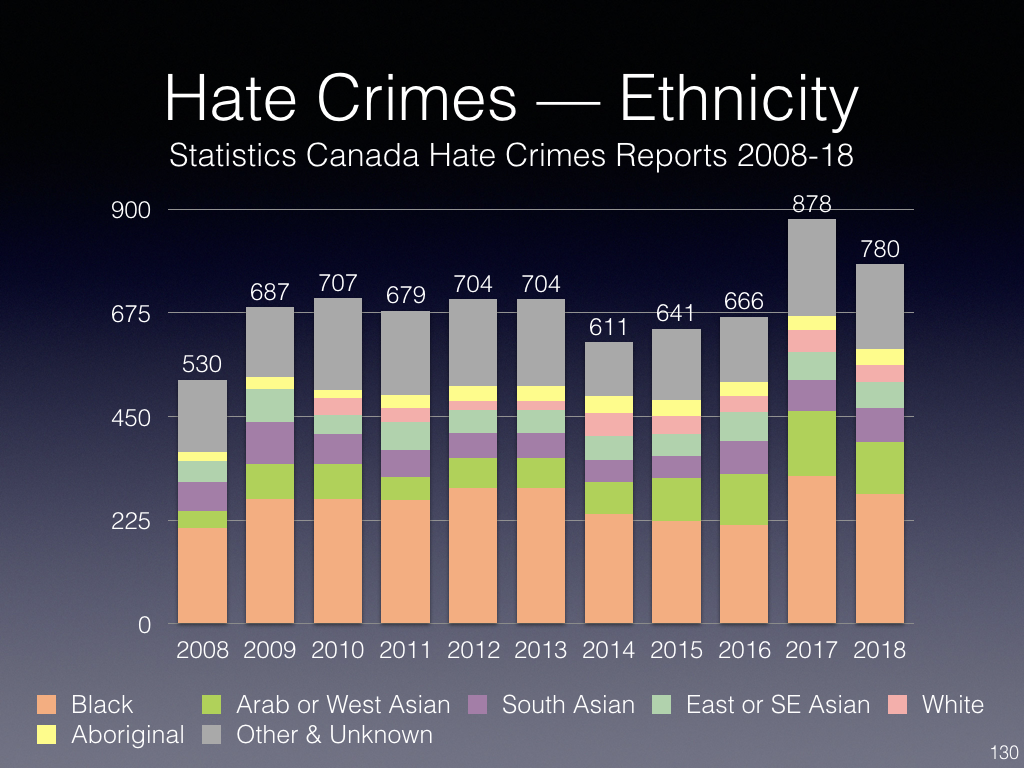
Police data published by Statistics Canada showed a 151-per-cent increase in hate crimes targeting Muslims across Canada from 2016 to 2017 – the largest increase across any group.

In the past four years, Mr. Hashim has assisted the people at the centre of nearly every major news story involving Canadian Muslims. To some, he represents a new image of Canadian Muslims that is young, progressive and Canadian-born, but in the Toronto Sun, he’s been portrayed as a “spin doctor,” someone who exercises too much control over messaging in the community.

His motivation is simple: He wants to change the narrative about Canadian Muslims. While he’s done pro-active campaigns, such as organizing a debate for Muslim youth for the 2015 federal election campaign, the work that has come to define him is those moments when he runs toward Muslims in crisis.

“I typically show up on the worst day of people’s lives,” he said. “‘Hi, my name is Mohammed. I’m here to help you.’”

Overnight, an east Toronto Muslim family had gone from being one of the most sympathetic in the country to one of the most reviled.

It began on a day in January, 2018, when an 11-year-old girl appeared on every local newscast to explain how, while walking to school, an “Asian man” had followed her and cut her hijab with a pair of scissors. The story took off and by end of day, the Mayor, Premier and Prime minister had all decried the attack.

But a few days later all those newscasts had an update. Police had “determined the events described … did not happen.”

Evidence had shown the child had made up the story. The investigation was closed. The father was advised by relatives to avoid social media, where people were saying horrific things about his daughter, demanding his family be criminally charged or deported.

A group of protestors showed up at Parliament Hill, calling for Justin Trudeau to apologize. Strangers – were they reporters? angry neighbours? – had found their way into the family’s building and knocked on their apartment door. The child’s father was afraid to go to work, to send his children to school, to even pick up groceries.

Mr. Hashim had little sympathy for the family at this point.

“I was like, ‘What the hell is this nonsense?’ Like, if like there’s Islamophobia in Canada, it needs to be real,” he recalls thinking at the time.

But he pivoted. Worse than this revelation, he realized, was the impact of the family’s silence.

“If they don’t [speak up], they drag all of us down. And they let their failures be imposed as our failures and I’m not having any of that,” he said.

He also hated seeing how, in the absence of comment from those directly involved, media often turned to local imams. In the years since 9/11, Mr. Hashim says he noticed “every single imam was saying the most random shit that made no sense, that was inarticulate, that didn’t represent … any of our collective truths.”

Sometimes those messages were anti-Semitic or furthered negative stereotypes the public held about Muslims.

After being recruited by a friend of the family, Mr. Hashim arrived at their apartment one evening to offer his assistance. He had them explain in detail what had happened, how they were dealing, what they feared.

He is a master of holding eye contact, even when he’s uncomfortable, and readily offering empathetic smiles to fill long silences. His hair is often in a buzz cut (occasionally overgrown) and he usually wears jeans. It’s a look that projects “I’m just a friendly neighbour dropping by to help” rather than “Here’s a 25-point PR strategy and, by the way, I bill by the hour.”

The father recalls feeling immediately at ease.

Mr. Hashim’s advice was straightforward: Issue a public apology. “Don’t try to justify it,” he advised them. “Just own it.”

With their input, Mr. Hashim helped draft the note that he would distribute to media.

But the father wondered if it was enough to make things right with fellow Muslims who had turned against them.

“It’s a big thing for the community, too, because they were thinking, you know, ‘Next time, if something really happens, nobody’s gonna believe, you know, because you guys gave a bad name to the community,’ ” the father said.

Armed with Mr. Hashim’s advice and the right language, the father made it to his local mosque and asked the imam if, at the next Friday prayer, he could share an apology on behalf of the family after delivering his sermon. He agreed.

Things felt lighter after that. The father said he felt welcomed back by his community, as if he no longer had to lower his eyes and make a quick exit when he went to pray.

Learning how to speak to the diverse Muslim populations scattered across Canada came to Mr. Hashim precisely because he’s never been tied to any one Muslim community. He’s never had a “home mosque” per se; his labour-relations work takes him all over Toronto and its surrounding suburbs and he ducks into whichever mosque is in the area – one day he’s kneeling beside Somalis and the next day it’s Bosnians.

Shaila Carter, a long-time friend who had grown up in a conservative Muslim family, couldn’t make sense of Mr. Hashim the day she met him on the Mississauga campus of the University of Toronto: he introduced himself with a casual “Salaam alaikum” (“peace be unto you,” a common way Muslims greet each other) but with his smoking, tattoos and cut-offs, he didn’t look like a Muslim to her.

Mr. Hashim was a political science student and became close with Ms. Carter after they worked together on various student-government campaigns. Ms. Carter occasionally invited Mr. Hashim to join her in prayer and was pleasantly surprised when he eventually came – a reluctant embrace of a faith that didn’t have much of a place in his life before. He came from a Muslim family, but they weren’t devout.

After this, Mr. Hashim approached Islam with his student politician tool kit. He joined mosque boards and took issues raised by local Muslims straight to their MP or MPP’s offices. He got to know the leadership at different mosques well, and fantasized about unionizing the city’s imams.

Ms. Carter believes her friend has become such an effective interlocutor because he came to the faith as an outsider who understood how Muslims were seen by others.

In 2017, Ipsos-Reid released the results of a poll that showed how skewed Canadians’ perceptions were of Muslims. While they only made up 3.2 per cent of the population at the time and were projected to drop to 2.8 per cent of the population by 2020, those polled believed they were already 17 per cent of the population and would be 27 per cent of the population by 2020 – gross overestimations.

“Clearly, Canadian Muslims have an image problem,” says Amira Elghawaby, the former communications director at the National Council for Canadian Muslims, who has worked closely with Mr. Hashim on PR campaigns – both pro-active and reactive.

When a white supremacist commits a mass killing, his community doesn’t have to apologize for him or distance itself from him, but if a Muslim does the same, “I think many Muslim organizations feel compelled to forcefully and in a very clear manner state that they condemn these acts of violence and stand against them,” says Karim H. Karim, director of Carleton University’s Centre for the Study of Islam.

But Ms. Elghawaby and Mr. Hashim are optimistic that that trend is on its way out. And research suggests that when media portrays Muslims as individuals, rather than as a homogeneous bloc, the public’s fears are dispelled. Studies have found a correlation between ignorance and fear; when people have contact with Muslims, their views of them improve.

“Obviously, we can’t get to know every single Canadian,” Ms. Elghawaby said, “and that’s why it’s so critical and crucial that we help Canadian Muslims feel comfortable speaking to the media.”

It was this advice Mr. Hashim brought to the family of Faisal Hussain, the man responsible for the deadly attack on Toronto’s busy Danforth Avenue in July, 2018.

In the days that followed the attack, Mr. Hashim counselled a member of the Hussain family – who were under enormous media scrutiny – on the phone. There was something in Mr. Hashim’s voice on the other end of the line that immediately conveyed trust.

As he learned Mr. Hussain had suffered from psychosis and depression, that he’d tried and failed with various treatments, Mr. Hashim empathized with the family – but also saw an opportunity.

Revealing that Mr. Hussain had this struggle and that his family had tried to help him might make the public see them with some compassion. This was also a chance to clearly state that Mr. Hussain’s actions were in no way motivated by his faith. And there was no time to waste – ISIS had already claimed the attack, as they so often do.

The relative wrote a statement and sent it to Mr. Hashim. They exchanged edits. Then Mr. Hashim released it to the press.

He also urged the family to give interviews, telling them what they had to say would seem more believable if it came from them directly, but they were resistant to that.

“When your face is out there, you don’t know what people are thinking. There’s a lot of racism out there and we didn’t want to be victims,” the family member said.

After their side of the story was public, the Hussain family received letters of support and empathy from strangers. But it also put a target on Mr. Hashim.

Right-wing commentators questioned Mr. Hashim’s role in all this: Why was he helping the family? They tried to connect the dots between this case and others they learned he’d been involved with. Were his motivations sinister? Some messaged him directly, suggested he was doing PR for the Muslim Brotherhood. For a while, security increased at Mr. Hashim’s office. He “digitally divorced” his wife, not wanting her to receive any of the vitriol that was filling his inbox.

But it hasn’t deterred him from doing this work. Even after there was nothing else to follow-up on, Mr. Hashim continued calling the Hussains, the family member said – just to check in on how everyone was doing.

“He was very consoling with his words. I remember him saying things like, ‘I wish I was there right now with you and your family and able to hug all of you,’ ” the family member recalls.

To police, Mr. Hashim has become a useful community ally, says Meaghan Gray, a communications officer at the Toronto Police Service.

Ms. Gray and Mr. Hashim first connected about three years ago, when the TPS hired its first Muslim chaplain. Since then he has become one of the people she is routinely in touch with to ask about how the service was doing on the communications front and he’s helped on a dozen files.

“The almost constant conversation Mohammed and I have is, ‘How could the messaging that we give out possibly feed into any sort of Islamophobia?’ ” she said.

Despite the many cases he’s worked on in the past few years, Mr. Hashim sees his work being obsolete in another decade or two.

There are promising signs: Muslim politicians who speak out, community organizations that don’t feel they need to be as defensive as they once were and more enlightened journalists.

His vision for Canada in 20 years is one where imams are Canadian-born, mosques aren’t divided along ethnic lines and Muslims are never subjected to questions about whether they have a dual loyalty to Canada and the Muslim Brotherhood or jihadism or even the country from which their parents emigrated.

But for now, Mr. Hashim says, the work still feels necessary and is often messy; he admits he’s never had a “clean win.”

There are limitations to Mr. Hashim’s work, which have become clear in the months following his latest intervention. In the fall of 2019, Mr. Hashim called Ms. Gray to alert her to something alarming: A family, the Al-Soufis, who ran a popular Syrian restaurant downtown, had received written and phone threats for weeks. One day they jumped off the page – the owners’ son was physically assaulted.

Earlier that fall, the son had attended a protest at a People’s Party of Canada event and had been filmed blocking an elderly woman in a walker from entering the event. He was doxxed, and a flood of abuse was soon directed at his family and their business. Spooked after the attack, the family abruptly closed their restaurant.

After Mr. Hashim flagged the situation, Ms. Gray connected the local police division with the Al-Soufi family, and officers began an investigation.

It bothered Mr. Hashim that Islamophobia and xenophobia had prompted a family of recent immigrants to give up their dream. He explained to Husam Al-Soufi, the family patriarch, how his decision would be read by immigrants across the country.

“Your story is your story,” he told him. “If you allow your restaurant to be closed, that tells all of us that maybe we shouldn’t hope so much.”

He told them to reopen the restaurant. They did with the management help of Mohamad Fakih, the owner of Middle Eastern restaurant chain Paramount Foods. Mr. Hashim knew Mr. Fakih from earlier in the year, when Mr. Hashim helped Mr. Fakih publicize a defamation case he’d won against a Mississauga man who had accused Mr. Fakih in a series of videos of having ties to extremism.

The trust of Mr. Hashim was, again, nearly instant.

“So many people advised me to do something,” Mr. Al-Soufi said. “The only one I listened to was [Mr. Hashim].”

He convinced them to do what he couldn’t get the Hussain family to do: Hold a news conference at the restaurant. Two dozen journalists showed up.

Since the restaurant reopened, Mr. Al-Soufi’s son has been charged by Hamilton police with causing a disturbance, assault and theft for his behaviour at the protest. His son doesn’t have permanent residency and if he is convicted, he could be deported, Mr. Al-Soufi fears.

He isn’t sure he was right in following Mr. Hashim’s advice, as he now feels dread when he spends time in his restaurant. It’s hard for him to see a future for Canada where the public’s views of Muslims catch up with Mr. Hashim’s ideals.

“When people … criticize immigrants, it’s 100 per cent they’re not talking about new immigrants from Ukraine, from Russia, from Europe. They’re talking about us,” he said.

Source: ‘Hi, my name is Mohammed. I’m here to help you.’ Meet the unofficial crisis manager for Muslim Canadians

Student behind class-action lawsuit against Niagara College says settlement empowers international students

Good result and message:

The student at the helm of a class-action lawsuit against Niagara College says a settlement Thursday should empower vulnerable international students to stand up for themselves.

“This has set a great precedent that will benefit future international students in Canada,” an emotional Anish Goyal told Justice Paul M. Perell after the Ontario Superior Court of Justice approved a settlement between the college and its international graduates.

Some of those students were forced to leave the country in 2015 and had their immigrant dreams shattered when Canadian immigration officials rejected their work permit applications because their credits were earned through Niagara College’s online courses — though the government later reversed some of the refusals.

“I wish to thank Canada and all Canadians for being welcoming to international students. Also, to God for empowering me to help so many students. This situation has affected my life in ways that are irreparable by money. We settled this lawsuit mostly to ensure that we don’t burden the already overburdened courts of Canada and its colleges,” Goyal told Justice Perell.

“International students are here to be a positive part of Canada. I am sure every international student is here to work hard and be a better part of this society,” he said. “Problems are part of every system. Important is its willingness to help.”

According to the settlement terms, the college has offered to compensate each student between $7,500 and $20,000, depending on their circumstances. At least 100 former international graduates from the college’s general arts and science program have been identified as part of the lawsuit, but the number of members could reach as many as 500 as the legal action initially indicated.

The students had alleged the school and its representatives misled them to believe that by completing the mostly online general arts and science diploma transfer program, after finishing a year of graduate or postgraduate schooling in Canada, they would qualify for a three-year work permit.

But they later learned the four-month Niagara College program didn’t meet the immigration department’s work permit requirements because the program was considered distance learning. Without a permit, students must leave the country after graduation.

Price of Admission, an ongoing joint investigation by the Toronto Star and the St. Catharines Standard, looked at the exponential growth of international students, particularly in the Ontario college system, and its impacts on Canada’s immigration and education systems.

The series found the influx has resulted in governments, recruiters, academic institutions and employers directly, and indirectly, profiting from international students, who are willing to pay hefty tuition fees and, in some cases, put up with abuse and exploitation, for the dream of making a life in Canada.

Goyal, who has a background in IT project management from India, is still in the process of settling permanently in Canada after ultimately receiving a three-year work permit. He and other members of the class action are bound by a gag order not to speak with the media as part of the settlement terms.

However, in the public court, the now 31-year-old lead litigant said he had learned from the hardships he endured and will use the experience and strength he acquired to build a future in Canada.

“As a gesture of peace and gratitude, I have decided to donate all the money I will receive from the lawsuit to charitable cause,” said the Brampton man. “(I) hope that no public sentiment is hurt by our (legal) actions.”

Noting that the court appreciated the settlement and expression of thanks from Goyal, Justice Perell replied: “It is honourable the good deed you are doing. It is also appreciated.”

Thursday’s settlement covers international students who graduated from the general arts and science diploma transfer program between Sept. 1, 2013 and Aug. 31, 2016 and who were initially denied a three-year post-graduation work permit “due to distance learning.” Some of those students subsequently reapplied for and were granted permits while others were turned down after reapplying.

Those who qualify for the class-action settlement must contact the law firm Thomson Rogers with supporting documents by April 6. While class members who meet the requirements will be compensated, those who object to the settlement terms must opt out before that date.

Justice Perell also approved total fees of approximately $950,750 to the students’ lawyers from the compensation settlement, in addition to $250,000 in legal fees, disbursements and applicable taxes from Niagara College.

The college declined to comment on the court settlement.

Source: Student behind class-action lawsuit against Niagara College says settlement empowers international students

The Bloc changes its tune on Canada’s court challenges program

Twelve years ago, a Bloc Québécois MP stood in the House of Commons to proclaim his party’s support for the court challenges program — a federal initiative that had been providing grants to individuals and groups who sought to defend or assert their constitutional or language rights through the courts.

Stephen Harper’s Conservative government announced its intention to eliminate funding for the program in 2006.

“Philosopher and writer Paul Valéry said that the greatness of a civilization is measured in its treatment of minorities,” said Réal Ménard, who was the MP for Hochelaga from 1993 to 2009.

The Bloc Quebecois, Menard said, “has always been extremely supportive of the court challenges program.”Twelve years later, the Bloc has discovered a limit to its enthusiasm for the program, which was reinstated by Justin Trudeau’s government in 2017. Its zeal appears to end at Bill 21, the Quebec law that bans many of the province’s public servants from wearing religious symbols or articles clothing, such as hijabs or turbans, while at work.The Montreal Gazette reported this week that Montreal’s English school board received $125,000 through the program to help fund a legal challenge to Bill 21. The school board quickly renounced the funding, but not before the Bloc — which had been demanding that the federal government stay out of the fight over Quebec’s so-called secularism law — expressed its vehement displeasure.

Bloc Quebecois Leader Yves-Francois Blanchet says the federal government has no business funding legal challenges of Bill 21. (Ryan Remiorz/Canadian Press)

When challenged by Bloc Leader Yves-François Blanchet in the House this week, Trudeau was quick to note that the court challenges program is an arms-length institution that makes its funding decisions completely independent of the federal government.

We don’t know if the court challenges program is funding any other challenges to Bill 21; the grants are confidential. But it provide federal support to a cause that Trudeau has been reluctant to engage with directly.

The history here is long and rich.

The program that died many deaths

The court challenges program actually has its roots in Pierre Trudeau’s push to establish official bilingualism — and his own government’s reluctance to directly intervene against Bill 101, the French-language charter that was introduced in 1977 by Quebec’s Parti Québécois government.

Back then, the Liberals decided against trying to disallow the legislation or referring it to the Supreme Court. But they did create a program that would provide financial support to individuals or groups who wished to challenge provincial language laws — both anglophones in Quebec and francophones in other provinces.

The program was later expanded by Brian Mulroney’s government to cover other equality rights, but the Progressive Conservatives later reversed course and decided to withdraw funding. Jean Chrétien’s Liberals restored the program in 1994. Stephen Harper’s Conservatives took a dim view of the program’s activities and quickly moved to cancel it again in 2006.

By then, the program had become a significant source of financial support for francophones outside Quebec who wished to assert their rights. A House committee report in 2007 listed a number of linguistic cases that had benefited from program funding, including several that challenged provincial or federal governments.

“Many of the cases funded by the program resulted in important language rights precedents in Canadian constitutional law.” Richard Nadeau, another Bloc MP, told the House in 2008. “They made a significant contribution to official language minority rights in Canada.”

Stéphane Dion, Liberal leader at the time, vowed that a Liberal government would revive it. Justin Trudeau made good on that promise in 2017 with a commitment of $1.5 million in annual funding and an expanded mandate to cover a wider array of rights-based cases.

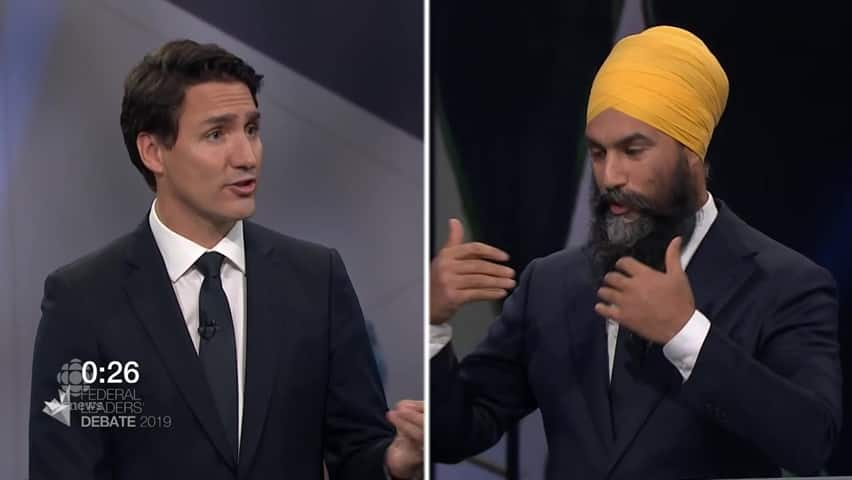
NDP Leader Jagmeet Singh speaks about his battle against discrimination after Liberal Leader Justin Trudeau challenges him to say he’ll intervene on Quebec’s secularism law. 1:15

When asked directly about Bill 21, Trudeau has maintained that he does not believe any government has the right to tell people what to wear. But he has refrained from getting the federal government directly involved — even while not ruling out the possibility of intervening at some point.

There is a case to be made for Ottawa staying out and letting Quebeckers themselves lead the challenges to the law. Federal involvement could further inflame public opinion in a province that prizes its autonomy. But the court challenges program offers an option for indirect support — something that should be harder for Quebec nationalists to demonize because politicians aren’t involved in deciding who gets the funding.

Majority will, minority rights

The Liberal Party’s interest in reviving the program predated the discussion in Quebec that led to Bill 21, but Liberals also might think that Bill 21 is exactly the sort of thing that the court challenges program exists to deal with.

In an interview with CBC’s Power & Politics this week, Blanchet presented two arguments against providing the funding to Montreal’s English school boards.

First, he argued that the school boards already have ample resources and shouldn’t need federal funding to mount a legal challenge. That could be an argument for changing the funding criteria.

But his second argument was much broader.

“What I say is that a citizen, a group, an institution has the right to disagree with the law. It has a right to challenge the law in court,” he said. “What we cannot accept, and we’ve been saying that for a whole year now, is when the government is taking Quebec taxpayers’ money to challenge a law which is largely approved by Quebec citizens and people. This is what we do not agree with.”

In a similar statement released by the Bloc on Wednesday, Blanchet is quoted as saying that the will of Quebec’s National Assembly, which passed Bill 21, must be respected.

That amounts to a suggestion that the court challenges program should be severely curtailed — that it should not be used to support challenges against any rightfully adopted provincial or federal law, particularly if the law is popular with the general public.

Constitutional and human rights exist, in part, to protect individuals and groups against abuse by the majority. But Blanchet now suggests that the court challenges program — a program designed to help protect those rights — should defer to that majority.

Is a society to be judged by how it treats all of its minorities — or just by how it treats those minorities who are easier to support politically?

Source: The Bloc changes its tune on Canada’s court challenges program

François Legault accuse son homologue à Ottawa d’insulter les Québécois, alors qu’une enveloppe de 125 000 $ d’un programme fédéral de contestation judiciaire (PCJ) finance le recours de la commission scolaire English-Montreal contre la loi 21 sur la laïcité.

« Ce n’est quand même pas anodin. On poursuit un gouvernement national qui a adopté une loi avec l’appui de la nation québécoise ! » s’est insurgé jeudi le premier ministre du Québec.

Même si le PCJ est un organisme indépendant du gouvernement fédéral, administré par l’Université d’Ottawa, M. Legault estime que Justin Trudeau aurait pu l’« encadrer » pour qu’il ne finance pas un recours contre la loi 21.

« Je pense que Justin Trudeau insulte les Québécois. […] Je [lui] demande de s’assurer que ce financement ne soit pas donné pour contester la loi 21 », a-t-il martelé jeudi.

« Je comprends que certains disent que c’est un programme indépendant, [mais] un gouvernement peut encadrer une institution » comme le PCJ, a-t-il insisté.

La ministre de la Justice, Sonia LeBel, tout comme M. Legault ont ajouté qu’ils regarderaient les recours dont ils disposent face à la CSME.

« On va regarder tous les recours, parce que c’est une commission scolaire qui est sous tutelle », a dit le premier ministre du Québec.

La loi sur la laïcité a été adoptée sous bâillon en juin 2019.

Le Parti québécois déposera jeudi une motion au Salon bleu pour que « l’Assemblée nationale dénonce le financement fédéral, octroyé via le Programme de contestation judiciaire, du recours devant les tribunaux pour invalider » la loi 21.

« On demande un vote unanime pour envoyer un message fort que le gouvernement fédéral ne peut pas faire indirectement, ce qu’il souhaiterait peut-être faire directement », a lancé le chef intérimaire, Pascal Bérubé en mêlée de presse.

Pour sa part, le chef intérimaire du Parti libéral, Pierre Arcand, dont la formation s’est opposée à l’adoption de la loi sur la laïcité de l’État, la contestation judiciaire vient démontrer que « visiblement, le débat » sur la loi 21 « n’est pas clos » au Québec.

« On pensait, nous, que c’était quelque chose dont on entendrait plus parler. C’est ce que le gouvernement Legault nous avait promis et visiblement, ça repart », a-t-il lancé avec une pointe d’ironie. « Ça va être aux tribunaux de décider », a ajouté M. Arcand.

Source: Loi 21: «Justin Trudeau insulte les Québécois», accuse Legault

Edward Alden: Crackdown by U.S. Customs and Border Protection likely to drive a deeper wedge between Canada and U.S.

Canadian governments have always been worried about the “thickening” of the border and this commentary highlights the large discretion that regional authorities have and arguably, their abuse of that discretion:

On Saturday evening, Jan. 4, I was driving back from visiting family in Vancouver to my new home in Bellingham, Wash., when I ran into a massive line of border traffic at the Peace Arch crossing. Just two days prior, a U.S. drone strike had killed Iran’s top general, Qasem Soleimani, and it occurred to me I might be witnessing a small piece of a security crackdown all along the U.S. borders.

But the truth has turned out to be far stranger. As was reported last week by Blaine’s The Northern Light newspaper, the border crackdown was not a national operation. It was a local one. At the direction of top officials in the Seattle Field Operation office, Customs and Border Protection (CBP) officers were pulling aside all crossers of Iranian origin, including many Canadian and U.S. citizens. Dozens of people were held at the border for as long as 12 hours and interrogated extensively before finally being released.

The operation was not just an isolated occurrence. Those entering the United States at Peace Arch and other western border ports of entry are facing a stepped-up enforcement regime that creates significant risks for all southbound travellers.

From 2018 to 2019, for example, the number of border crossers slapped with five-year bans barring them from entering the United States more than tripled from 91 to 309 at crossings overseen by the Seattle office, according to CBP data provided to CTV News. Even with the stepped-up border enforcement under the Trump administration, that was a far bigger increase than anywhere else along the U.S. border with Canada.

The legal provision, known as “expedited removal,” (ER) is an extreme measure that allows front-line CBP officers to bar re-entry to anyone who arrives at the border without valid entry documents, or is thought to be making fraudulent claims. Canada has no law that permits comparable penalties against U.S. citizens.

Lawyers for business groups in B.C. and Washington State say the expanded use of the provision is chilling trade and travel across the border. For example, some 18 Canadian truck drivers were recently hit with ER orders. They were engaged in a long-permitted practice of driving goods from the northern U.S. to the border with Mexico, where the goods were then picked up for delivery in Mexico.

The Seattle office is now ruling that this constitutes illegal transport within the United States, and that U.S.-based drivers must carry those loads. Instead of hitting the companies or drivers with fines, CBP is barring the drivers from entering the U.S. entirely. One Canadian trucking company says it lost about $1 million in business last year due to the loss of its drivers.

The new crackdown is quite different from the one that many Canadians and others experienced after the Sept. 11, 2001 terrorist attacks. Then, the U.S. government tightened inspections and document requirements across all its land borders and airports. Indeed the number of Canadians crossing the land border has never recovered to the pre-9/11 peaks.

But local officials also possess expansive authority to launch their own crackdowns, as the operation to detain Iranians showed. CBP officers are free to ask border crossers any questions they wish, search vehicles, cell phones and other personal possessions, and even review social media accounts before permitting entry. The actions of the Seattle Field Office, which administers 54 border crossings all the way from Point Roberts, Washington to International Falls, Minnesota, show the discretion that local officials have to interpret CBP’s legal authorities in harsher ways.

An internal CBP memo leaked last week showed that the local office issued a “high threat alert” directing that anyone born in Iran, Lebanon or the Palestinian territories between 1961 and 2001 would be pulled into secondary screening for extensive vetting. CBP headquarters in Washington, D.C. said the actions by the local office are under investigation, and that “there is no rule that would permit us to target or stop individuals based on their nationality alone.”

One woman held at Peace Arch on Jan. 4 was born in Iran, but left 20 years ago with her family and is now a Canadian citizen, a U.S. green card holder, and holds a Nexus card, which required extensive security background checks by U.S. and Canadian authorities. Nonetheless, CBP officers pulled her into secondary screening at 5 p.m. on Saturday evening, interrogated her about family, friends and travel history, and did not release her until 5 a.m. the following day.

The recent actions should trigger much harder questions from both the B.C. and Washington State governments, and from Ottawa as well. If left unchecked, these initiatives by local CBP officials are likely to further chill cross-border travel and commerce, and drive a deeper wedge between the two countries.

Despite the generally strong economy on both sides of the border, and a stable Canadian dollar, the number of vehicle passengers crossing the border has fallen over the past year. An unpredictable border is a blow to the economy of Whatcom County, which relies heavily on Canadian consumers, but also discourages Americans from coming north to visit or do business in the Vancouver region.

State and provincial officials have talked grandly about the development of a “Cascadia Innovation Corridor” that would strengthen innovation and economic growth across the Pacific Northwest. But that dream rests on seamless travel across the border between B.C. and Washington State. Instead, thanks to increasingly aggressive border enforcement, the region is headed in the opposite direction.

Edward Alden is the Ross Distinguished Professor of U.S.-Canada Economic Relations at Western Washington University, a senior fellow at the Council on Foreign Relations, and the author of The Closing of the American Border: Terrorism, Immigration and Security since 9/11.

Corpses and mob violence: How China’s social media echo chamber fuels coronavirus fears

Of note:

Corpses lie on the ground near hospitals. People kill their pets for fear the animals will spread disease. Mobs chase down people without masks and angrily force them to cover up.

These are the scenes flooding social media in China as the country grapples with the novel coronavirus that has prompted the World Health Organization to declare a global emergency.

But how much of what the Chinese people and international observers are seeing on social media is true?

Public mistrust of government authorities in China has reached such a severe level, observers say, that many Chinese people have turned to alternative online sources of information — often of questionable veracity.

“Many Chinese people are well aware of the government’s long track record of censoring information about threats to public health,” said Sarah Cook, director of the China Media Bulletin at human rights research group Freedom House.

“This fuels deep mistrust in official updates and undermines efforts to reduce fear and anxiety,” she told The Star.

There’s history to the earned mistrust. In the first few months of the SARS outbreak in 2003, the Chinese government tried to keep it a secret. By the time the new virus was publicly reported, five people had died and hundreds had already fallen ill. It was a health disaster that led to heaps of global backlash, and China sacked its health minister and the mayor of Beijing in apparent contrition about the mishandling.

While central government authorities in Beijing were much quicker to publicly report the new coronavirus, the local Wuhan city government initially censored the first reports of a new illness emerging in the city last December. Medical experts said in a research paper published in The Lancet that they’ve found new evidence that the origin of the outbreak may not have been a seafood market in Wuhan as the Chinese government reported, and the first human infections may have occurred in November.

Li Wang is among those glued to social media.

The economics researcher at the University of New Brunswick and former Canadian student is currently on lockdown in Wuhan after flying home to visit family during Lunar New Year.

To pass the time, he was one of millions of Chinese glued to their screens watching a livestream of a hospital being built in ten days to house patients that have overwhelmed Wuhan’s hospitals. The government says a crew of 7,000 worked around the clock to build the 1,000-bed hospital, and vowed to build another this week.

“Everyone is afraid to go outside … Almost everyone I have talked to online are panicked,” Wang said. Because he is not a Canadian citizen or permanent resident, he’s not able to board the chartered flight Canada is sending to bring back Canadians from the city.

China’s control of social media is a factor that adds to the confusion. Many people are familiar with mainland China’s “Great Firewall,” the internet censorship apparatus that automatically blocks international social media platforms such as Twitter, Facebook, YouTube and Instagram as well as many news outlets and the entire suite of Google services.

Chinese authorities are continually developing and fine-tuning their ability to censor social media posts on domestic websites such as the Twitter-like Weibo blogging platform. They even have the ability to surveil and automatically block parts of private conservations on chat apps such as WeChat.

WeChat is the preferred platform for many in China during the coronavirus outbreak because the chat groups there tend to be small or medium-sized groups where some users know each other personally.

“People are getting at least some information from individuals they personally know and trust (on WeChat typically), but that doesn’t make them insusceptible from the spread of false information,” said Cook.

“But for those who personally know the original source — say a relative who is a nurse in Wuhan — her information will likely appear very credible and believable to them and possibly rightly so.”

However, like all social media platforms, the quality of what a user sees depends on the quality of the people they have in their circles. A WeChat user who is friends with many doctors and nurses would likely get more reliable information.

Perhaps aware of the communication challenges government control over the scarce number of independent media outlets in China has seemed to lighten over the past several weeks.

As a result, members of the public in China are turning to respected Chinese publications like Caixin to read quality journalism about the outbreak. The magazine recently published a four-part series produced by dozens of journalistsincluding a detailed account of the Wuhan government’s coverup of the crisis.

So are the images on social media real?

Yuri Qin, an editor at the Berkeley-based China Digital Times, a bilingual website that monitors the Chinese internet, says that unfortunately, some of the horrible videos and photographs might be real, although they are difficult to verify.

“Authorities in Wuhan have imposed some brutal measures to prevent the spread, and because of the panic some people are cruel to each other and sometimes they use extreme means to drive out or detain suspected carriers of the disease,” Qin told The Star in an email.

She says the loss of credibility of the local government has seemed to exacerbate paranoia and fear among citizens of Wuhan.

However, it’s also helpful to keep in mind that among the hundreds of millions of Chinese social media users, some have retained their sense of humour even during a health crisis. Some videos that have gone viral are jokes, and likely stem from people trying to make the best of their situations.

What are some reliable sources of English-language translations of Chinese social media posts on coronavirus?

The China Digital Times verifies and translates blog posts and diary entries from people living in China dealing with the coronavirus enforced quarantines and health checks.

The website What’s on Weibo tracks and analyses viral social media posts on China’s most popular platforms.

Bill Bishop’s Sinocism newsletter regularly compiles and comments on Chinese-language media sources on a variety of news topics.

Source: Corpses and mob violence: How China’s social media echo chamber fuels coronavirus fears

Israel Trump’s plan revokes Israeli Arabs’ citizenship

Of note:

Just two years ago, Prime Minister Benjamin Netanyahu declared, “I don’t intend to bring a diplomatic plan on the eve of the elections.” He was responding to a reporter who challenged him on saying in 2008 that then-Prime Minister Ehud Olmert, “neck-deep in investigations, has no moral or public mandate to make fateful decisions for Israel” in a quest for political survival. A few days ago, on Jan. 28, Netanyahu did exactly what he said he would not do.

Several hours after “making history” by becoming the first sitting Israeli prime minister to be officially charged with bribery, fraud and breach of trust, Netanyahu took part in the unveiling ceremony of President Donald Trump’s “deal of the century” for Israeli-Palestinian peace, declaring it a “historic day like May 1948,” when Israel declared independence.

Peace is unlikely to emerge from Trump’s plan, but Netanyahu proved once again that all means justify his end of winning the March 2 elections and remaining in the prime minister’s official residence on Balfour Street in Jerusalem. To that end, he mobilized Trump’s help in presenting an alleged peace plan that consists of everything except peace and a Palestinian partner. The East Room ceremony resembled a wedding without the bride, celebrating a deal between Israel and the United States, rather than Israel and the Palestinians.

As expected, the Palestinian leadership rejected the plan. Channel 12 reported that on Jan. 29, Palestinian President Mahmoud Abbas sent Netanyahu a handwritten note informing him, “The Palestinian Authority now sees itself as free to disregard the agreements with Israel, including security cooperation.”

Anyone delving further into the details of the 80-plus-page proposal could not have missed the surprising clause allowing Israel to transfer to a future Palestinian state the populated Arab communities in the so-called Triangle of central Israel: Kufr Qara, Arara, Baka al-Garbiyeh, Umm al-Fahm, Kalansua, Taybeh, Kafr Qasem, Tira, Kafr Bara and Jaljulya.

This is not the first time an Israeli government during the Netanyahu era has tried to trade away its Arab citizens in the Triangle, which borders the West Bank, by moving the border and thereby turning them into nationals of a future Palestinian state. The idea previously arose in 2013 when US Secretary of State John Kerry mediated peace talks between the two sides, with the clear goal of finding a solution to the land swap issue. There also appears to have been a hidden agenda — reducing the number of Israel’s Arab citizens — an estimated 300,000 of who live in the Triangle communities.

“Just as with many earlier initiatives, this one too does not have any hold or acceptance among the Arab Israeli or Palestinian public,” Jamal Mjadlah, a social activist from Baka al-Garbiyeh, told Al-Monitor. “This is an initiative devoid of justice and logic, which will not be accepted and will not be adopted.”

Salah Smara, a high-tech engineer from Tira, asserted to Al-Monitor, “This is an attempt to enhance ideologies espousing population transfer using political tools to get rid of the Arab citizens rather than physically removing people from their homes. The motivations are racial — to preserve demographic superiority.”

The initiative could also have the absurd and tragic impact on many families by tearing them, as in the case of Firas Azam, an attorney born in Taybeh but now living in the coastal Mediterranean city of Haifa. If the land swap goes through, he would remain an Israeli citizen, but his mother and brother’s Israeli citizenship would be revoked.

“‘And we were like strangers in our land.’ This is my headline for this absurd move,” Azam told Al-Monitor. “Our state, where we grew up, went to school, worked, respected its laws and principles, does not want us anymore and is willing to give us up just like that. I would have expected the Jews to understand this better than any other people in the world, but I guess I was wrong.”

Trump and Netanyahu present the idea of exchanging populated lands as targeting communities that “largely self-identify as Palestinians,” according to the plan. A 2019 study by the Israel Democracy Institute found, however, that only 13% of Arab Israeli citizens define themselves as “Palestinians” in terms of their main identity, whereas 65% are “proud to be Israelis.” The study further indicates that 83% of Israeli Arab citizens want to integrate into Israeli society and become full members of it.

The above results do not conform to the premise of the Trump plan, proving yet again that it is nothing more than an attempt by Netanyahu and Israel’s political right to shrink the number of Israel’s Arab citizens, who constitute 21% of the state’s population. That, in turn, would reduce the number of Arab voters, who obviously do not tend to vote for right-wing parties, helping the right perpetuate its rule and prevent the formation of a center-left government.

Shimon Sheves, who served as director general of the Prime Minister’s Office under the late Yitzhak Rabin, shared his thoughts on Facebook about the actual difference between the so-called deal of the century and Rabin’s peace plan. Indeed, there are many similarities between the American blueprint and the one charted by Rabin, who was, as we know, assassinated because of the peace he sought to advance. At the time, it was Netanyahu who led numerous protests against Rabin and addressed rallies at which Rabin was dubbed a traitor and the crowd chanted, “With blood and fire, we will expel Rabin.” The difference is that Rabin did not agree to land swaps, as Ben Caspit explained in a Jan. 29 Al-Monitor article. Perhaps that is what the Netanyahu-led right really wants: to revoke the citizenship of hundreds of thousands of the state’s Arab citizens.

With an effective and well-targeted campaign by the Arab Joint List, currently the third largest Knesset faction, the initiative could backfire against Netanyahu. Such was the case with the so-called Camera Law, a Likud-led initiative to install cameras at Arab polling stations. The alleged idea was to guard against voter fraud, but in reality was devised to intimidate Arab voters. The move ultimately prompted a significantly high Arab turnout in protest in the September 2019 elections. If the current initiative gains ground, Netanyahu will once again be crowned the main campaigner of the Joint List.

Source: Israel Trump’s plan revokes Israeli Arabs’ citizenship

https://www.nytimes.com/aponline/2020/02/05/us/politics/ap-us-trump-foreign-policy.html

Equally revealing:

President Donald Trump’s national security adviser warned Palestinians on Wednesday that Israeli settlements will continue to expand because rising anti-Semitism around the world means more Jews will immigrate to Israel.

Addressing many hot-button global issues in a speech and discussion with foreign diplomats to the United States, Robert O’Brien also said the president hoped to go to Beijing to talk to the Chinese about a three-way nuclear arms control pact with the U.S. and Russia. He said the president still hopes that North Korean leader Kim Jong Un will resume nuclear talks with the U.S.

O’Brien defended Trump’s Mideast peace plan, which was embraced by Israel but rejected by the Palestinians. O’Brien said the plan is not “perfect,” but urged the Palestinians to negotiate terms of the proposed deal. The deal offers economic benefits that would allow Palestine to become the “Singapore of the Middle East,” he said.

The Palestinians have roundly denounced the proposal, which offers them limited self-rule in scattered chunks of territory with a capital on the outskirts of Jerusalem while allowing Israel to annex large parts of the West Bank. Protesters have burned U.S. and Israeli flags as well as posters of Trump and Israeli Prime Minister Benjamin Netanyahu, who stood with Trump at the White House when he rolled out the plan last week.

“This could be the last opportunity for a two-state solution,” O’Brien said at the Meridian International Center. “The Israeli birth rate is strong and is growing because sadly anti-Semitism in Europe and other places around the world is encouraging more Jews to return to Israel. The settlements are going to continue to expand. If this freeze on settlements doesn’t hold. If this peace process doesn’t work, it may be physically impossible to have a two-state solution.”

It was unusual for a high-level administration official to tie anti-Semitism to the settlements. The Palestinians, as well as much of the international community, view the settlements in the West Bank and annexed east Jerusalem — territories seized by Israel in the 1967 war — as illegal and a major obstacle to peace. But O’Brien’s comments are in line with the Trump administration strongly favoring Israel in the longtime conflict.

O’Brien didn’t note that the Palestinian population is growing too in both the Palestinian territories and Israel, according to U.N. statistics. The Palestinian population is growing at roughly 2.4% a year, 33% higher than Israel’s.

Those demographic shifts have led previous peacemakers to warn that Israel risks losing its ability to remain both a Jewish state and a democracy without a two-state solution that gives the Palestinians enough inhabitable and arable land to accommodate their growing numbers.

Trump’s plan would foresee the eventual creation of a Palestinian state, but would allow Israel to annex all Jewish settlements in the West Bank, as well as the strategic Jordan Valley.

U.S. officials had discouraged Netanyahu from proceeding with plans to immediately annex any new territory and had played down the possibility that the release of the plan would make any such move imminent. But after the rollout, Netanyahu vowed to bring his West Bank annexation plans to a vote at his next Cabinet meeting just days away.

That surprised and frustrated the Americans. In a series of interviews, Trump’s point people on Israel jammed the brakes on annexation, putting greater emphasis on the prospects of Palestinian statehood that Netanyahu was trying to sidestep.

U.S. Ambassador to Israel David Friedman said a U.S.-Israeli committee would need to be formed to ensure that any move matches up with the Trump administration’s “conceptual map.” Jared Kushner, Trump’s son-in-law and a chief architect of the plan, said Israel should wait until after the March 2 Israeli elections before annexing territory.

Any quick move to annex land would galvanize Netanyahu’s hard-line base and shift the focus of his reelection campaign away from his legal woes. But annexation also would likely spark an international backlash, and neighboring Jordan, a key player in Middle East peace efforts, has warned against it. It could also foreclose the possibility of a negotiated two-state solution.

Human Rights Watch: More Than 200 Salvadorans Were Abused, Killed After Deportation

A reminder of the impact of the Trump administration policies:

After living in the U.S. for five years, cousins Walter T. and Gaspar T. were deported to their home country of El Salvador in 2019, where they were ripped from their beds one night and beaten by police, according to a new report by Human Rights Watch.

“They began beating us until we arrived at the police barracks,” Gaspar said in interviews.

The thrashings went on there for three days, according to the men. Despite threats from authorities that they’d be charged with gang membership, they were eventually released. No charges were filed.

Walter and Gaspar, who say they had initially fled El Salvador to escape forcible gang recruitment, had hoped to gain asylum in the U.S. But their applications were denied.

The pair’s experience is one of more than 200 cases uncovered by Human Rights Watch in which Salvadorans are put in harm’s way — at risk of violence at the hands of gangs, law enforcement or security forces — as a result of tightening asylum and immigration policies in the U.S.

“Salvadorans are facing murder, rape, and other violence after deportation in shockingly high numbers, while the US government narrows Salvadorans’ access to asylum and turns a blind eye to the deadly results of its callous policies,” said Alison Parker managing director of the US Program at Human Rights Watch and coauthor of the report.

The 117-page report was compiled over a year and a half using court records, press reports and first-hand interviews with surviving family members and nongovernmental agency workers.

In all, researchers found 138 cases of repatriated Salvadorans killed since 2013. More than 70 others were beaten, sexually assaulted, extorted, tortured or went missing, according to the study. But, the reports says, the deaths “represent the tip of the iceberg—as … people deported to El Salvador encounter a wide range of human rights abuses that fall short of death.”

Until now, no government, U.N. or nongovernmental organization has monitored what happens to people when they’re returned to El Salvador, according to HRW.

“This report begins to fill that gap,” the study says.

Source: Human Rights Watch: More Than 200 Salvadorans Were Abused, Killed After Deportation

How Iranian immigrants can be role models for diversity in STEM

Of interest:

When I first came to the United States from Iran in 2007 for a doctorate in computer science and machine learning, I was surprised by how few women attended industry conferences. Those I did meet were usually fellow immigrants.

Diversity and gender equality drive creativity and spur innovation across the globe. It’s why the United Nations has declared Feb.11 the International Day of Women and Girls in Science and why the U.S. House of Representatives just launched the first-ever Women in STEM Caucus. The bipartisan initiative, started by four female congresswomen, now has 13 members from both sides of the aisle. The caucus aims to increase the presence of women and underrepresented minorities in STEM across the country.

In Tehran, where I grew up, it’s considered normal for girls to study computer programming from an early age. That culture has opened the door for new generations of female engineers. In fact, in Iran, nearly 70 percent of university graduates in science, technology, engineering and mathematics (STEM) are women.

That’s a sharp contrast with the United States, where women are vastly underrepresented in STEM fields. Data by the Council of Graduate Schools found that in 2018 U.S. women earned only about a quarter of PhDs in engineering, math and computer science. This is at a time when the United States is facing a critical shortage of STEM workers; in 2015, 14 states advertised 20 STEM jobs for every unemployed STEM worker, according to New American Economy. That demand is projected to grow over the next decade.

Today, I’m the executive vice president and chief algorithms officer for Overstock.com, a tech-driven online retailer committed to diversity. As an immigrant and a woman, I bring a wealth of experiences that help me see problems differently. Plenty of data shows women bring skill sets, strategic thinking and creativity valued by businesses. Women also take women’s needs to heart when creating products and services for them, whether it’s heart medication, seat belts or air bags designed for our physiques. Simply put, women are an essential part of the talent pool.

American companies should strive for increased diversity and inclusivity throughout their organizations. Teachers need to create inclusive classrooms that value girls’ and women’s opinions. Those of us in the field can create better representation by hiring and championing female colleagues or requesting female-friendly policies inside the companies where we work. Leaders in our communities also need to do more to encourage women, immigrants and minorities to enter STEM fields. I applaud the Congressional Women in STEM Caucus, whose mandate is to improve access to hands-on learning, technical training and real-world application of skills required in these jobs.

But we also need to remember the value of our personal stories in influencing young lives. If young American women and girls, including immigrants and minorities, are going to embrace STEM, they’re going to need more support and role models. As Caucus Co-Chair Rep. Chrissy Houlahan of West Chester, Pa., said, she was one of 10 women in her engineering major and doesn’t think the numbers have changed much in 30 years.

A 2018 study of 6,000 American young women conducted by Microsoft and KRC Research found that girls who know a woman in STEM are more than 70 percent more likely to know how to pursue a STEM career and what types of specific jobs might utilize a STEM skillset.

The study said parents’ encouragement was particularly influential in whether girls cultivated a love for science and technology and stuck with these fields over time. Likewise those of us already working in these industries can also serve as mentors for them, whether it’s volunteering at coding camps or sharing our enthusiasm for AI and robotics over ice cream.

Or we can simply raise our hands high in our communities and say: “This is what a female coder, engineer, biotech founder, mathematician or science professor looks like. You can be one, too.” That’s especially important, because 30 percent of girls and 40 percent of women described a man when asked what a “typical” scientist or engineer looked like.

As a woman in STEM, an Iranian American citizen and an immigrant, I want to encourage new generations to realize their potential. With any luck, I’ll see many more female faces at industry conferences to come.

Dr. Kamelia Aryafar is executive vice president and chief algorithms officer for Overstock.com.

Source: How Iranian immigrants can be role models for diversity in STEM

The Bloc changes its tune on Canada’s court challenges program

Twelve years ago, a Bloc Québécois MP stood in the House of Commons to proclaim his party’s support for the court challenges program — a federal initiative that had been providing grants to individuals and groups who sought to defend or assert their constitutional or language rights through the courts.

Stephen Harper’s Conservative government announced its intention to eliminate funding for the program in 2006.

“Philosopher and writer Paul Valéry said that the greatness of a civilization is measured in its treatment of minorities,” said Réal Ménard, who was the MP for Hochelaga from 1993 to 2009.

The Bloc Quebecois, Menard said, “has always been extremely supportive of the court challenges program.”

Twelve years later, the Bloc has discovered a limit to its enthusiasm for the program, which was reinstated by Justin Trudeau’s government in 2017. Its zeal appears to end at Bill 21, the Quebec law that bans many of the province’s public servants from wearing religious symbols or articles clothing, such as hijabs or turbans, while at work.

The Montreal Gazette reported this week that Montreal’s English school board received $125,000 through the program to help fund a legal challenge to Bill 21. The school board quickly renounced the funding, but not before the Bloc — which had been demanding that the federal government stay out of the fight over Quebec’s so-called secularism law — expressed its vehement displeasure.

Bloc Quebecois Leader Yves-Francois Blanchet says the federal government has no business funding legal challenges of Bill 21. (Ryan Remiorz/Canadian Press)

When challenged by Bloc Leader Yves-François Blanchet in the House this week, Trudeau was quick to note that the court challenges program is an arms-length institution that makes its funding decisions completely independent of the federal government.

We don’t know if the court challenges program is funding any other challenges to Bill 21; the grants are confidential. But it provide federal support to a cause that Trudeau has been reluctant to engage with directly.

The history here is long and rich.

The program that died many deaths

The court challenges program actually has its roots in Pierre Trudeau’s push to establish official bilingualism — and his own government’s reluctance to directly intervene against Bill 101, the French-language charter that was introduced in 1977 by Quebec’s Parti Québécois government.

Back then, the Liberals decided against trying to disallow the legislation or referring it to the Supreme Court. But they did create a program that would provide financial support to individuals or groups who wished to challenge provincial language laws — both anglophones in Quebec and francophones in other provinces.

The program was later expanded by Brian Mulroney’s government to cover other equality rights, but the Progressive Conservatives later reversed course and decided to withdraw funding. Jean Chrétien’s Liberals restored the program in 1994. Stephen Harper’s Conservatives took a dim view of the program’s activities and quickly moved to cancel it again in 2006.

By then, the program had become a significant source of financial support for francophones outside Quebec who wished to assert their rights. A House committee report in 2007 listed a number of linguistic cases that had benefited from program funding, including several that challenged provincial or federal governments.

“Many of the cases funded by the program resulted in important language rights precedents in Canadian constitutional law.” Richard Nadeau, another Bloc MP, told the House in 2008. “They made a significant contribution to official language minority rights in Canada.”

Stéphane Dion, Liberal leader at the time, vowed that a Liberal government would revive it. Justin Trudeau made good on that promise in 2017 with a commitment of $1.5 million in annual funding and an expanded mandate to cover a wider array of rights-based cases.

Watch

Trudeau to Singh: Why close the door to intervention on Bill 21?

  • 4 months ago
  • 1:15
  • Turn captions on

NDP Leader Jagmeet Singh speaks about his battle against discrimination after Liberal Leader Justin Trudeau challenges him to say he’ll intervene on Quebec’s secularism law. 1:15

When asked directly about Bill 21, Trudeau has maintained that he does not believe any government has the right to tell people what to wear. But he has refrained from getting the federal government directly involved — even while not ruling out the possibility of intervening at some point.

There is a case to be made for Ottawa staying out and letting Quebeckers themselves lead the challenges to the law. Federal involvement could further inflame public opinion in a province that prizes its autonomy. But the court challenges program offers an option for indirect support — something that should be harder for Quebec nationalists to demonize because politicians aren’t involved in deciding who gets the funding.

Majority will, minority rights

The Liberal Party’s interest in reviving the program predated the discussion in Quebec that led to Bill 21, but Liberals also might think that Bill 21 is exactly the sort of thing that the court challenges program exists to deal with.

In an interview with CBC’s Power & Politics this week, Blanchet presented two arguments against providing the funding to Montreal’s English school boards.

First, he argued that the school boards already have ample resources and shouldn’t need federal funding to mount a legal challenge. That could be an argument for changing the funding criteria.

But his second argument was much broader.

“What I say is that a citizen, a group, an institution has the right to disagree with the law. It has a right to challenge the law in court,” he said. “What we cannot accept, and we’ve been saying that for a whole year now, is when the government is taking Quebec taxpayers’ money to challenge a law which is largely approved by Quebec citizens and people. This is what we do not agree with.”

In a similar statement released by the Bloc on Wednesday, Blanchet is quoted as saying that the will of Quebec’s National Assembly, which passed Bill 21, must be respected.

That amounts to a suggestion that the court challenges program should be severely curtailed — that it should not be used to support challenges against any rightfully adopted provincial or federal law, particularly if the law is popular with the general public.

Constitutional and human rights exist, in part, to protect individuals and groups against abuse by the majority. But Blanchet now suggests that the court challenges program — a program designed to help protect those rights — should defer to that majority.

Is a society to be judged by how it treats all of its minorities — or just by how it treats those minorities who are easier to support politically?

Source: The Bloc changes its tune on Canada’s court challenges program