Big Shift or Big Return? Visible Minority Representation in the 2015 Election

My presentation at the Metropolis 2016, analyzing the election results and the record level of visible minority representation, 14 percent of all MPs, close to the percentage of visible minority Canadian citizens. This presentation also reviews how this representation is reflected in Cabinet, Parliamentary Secretaries, Opposition critics, and parliamentary committees.

Big Shift or Big Return? Visible Minority Representation in the 2015 Election

Diversity in political backrooms still lacking

My piece in The Hill Times:

The Liberal government included in its mandate letters to all ministers a “commitment to transparent, merit-based appointments, to help ensure gender parity and that indigenous Canadians and minority groups are better reflected in positions of leadership.”To recall, the Prime Minister appointed a Cabinet with gender parity (15 each of men and women) and almost 17 per cent visible minority ministers (four Sikh and one Afghan Canadian).

Gender parity was not attained for parliamentary secretaries (12 positions out of 35 or 34 per cent) or other leadership positions such as whips and House leaders, visible minority parliamentary secretaries are over-represented (nine positions or 24 per cent) in relation to their share of the voting population (15 per cent).

Given this commitment and action, is the Liberal government also applying diversity and inclusion to its hiring of political staff? What about the official opposition?

To assess this, I looked at the Prime Minister’s Office (59 total positions and 12 senior staffers), the Leader of the Official Opposition’s office (OLO, 23 positions), and ministerial offices (senior staff defined as chief of staff, directors of communications, policy, issues and parliamentary affairs, along with press Secretaries, total number of 101 positions filled at time of writing).

Sources for the data include the regular ‘Hill Climbers’ updates in The Hill Times, other relevant press articles, and the imperfect Government Electronic Directory Services (GEDS). Gender and visible minority status were identified through names, LinkedIn profiles, biographies and photos where available.

From a gender perspective, women are under-represented at the senior level in PMO (one-third), but close to 40 per cent for all 59 PMO staffers. OLO has slightly lower representation of women (30 per cent). For minister’s offices, the percentage of chiefs of staff is slightly less than the overall per cent of close to 40 per cent who are women.

Visible minorities are consistently under-represented, save for the overall numbers in PMO (15 per cent). OLO and senior ministerial office staff all range between four to seven per cent, less than half of the percentage of visible minority Canadian citizens, with chief of staff visible minority representation slightly higher at 10 per cent.

While I have focused on gender and visible minority status, diversity includes of course other dimensions such as regional diversity (many, if not most Liberal staffers come from, or have worked in, Ontario and Toronto), sexual orientation, religion, education etc. R. Paul Wilson’s A Profile of Ministerial Policy Staff in the Government of Canada provides the best most recent analysis of the different aspects of diversity among staffers under the Conservative government October 2012 to June 2013.

Does this matter? In many ways, it does not. Gender parity in Cabinet and relatively strong Parliamentary Secretary representation set the tone for the government and Parliament.

Being a political staffer may not necessarily lead to a direct path to becoming a future MP. Staffer experience is not necessarily perceived as an asset in local riding associations or to the broader public. Staffers may be asked by the party to be its flag-bearer in unwinnable ridings. The most famous example of a staffer becoming an MP is, of course, former Prime Minister Harper, who was a staffer to Reform Party leader Preston Manning among other positions.

All three major parties were able to recruit an impressive number of visible minority candidates (women less so).

However, staffers play an important role in government (and opposition) decision-making. Having a diversity of backgrounds and experience generally helps inform decision-making.

The Liberal government’s commitment to diversity and inclusion, so well executed at the public level for both women and visible minorities, is lacking in the backrooms, particularly for visible minorities. Given the role that staffers play in preparing ministers for debates and discussions, this may impact on the degree to which the overall diversity and inclusion agenda is implemented.

http://www.hilltimes.com/opinion-piece/2016/03/02/diversity-in-political-backrooms-still-lacking/45495 

When Integrating A School, Does It Matter If You Use Class Instead Of Race?

Interesting article on the latest US thinking on integration:

Stronger Together is not the name of the latest social-media fitness app. It’s a grant proposed in President Obama’s new budget, reviving an idea that hasn’t gotten much policy attention in decades: diversity in public schools. If the request is approved, $120 million will go to school districts for programs intended to make their schools more diverse.
As a new pair of reports from the progressive Century Foundation shows, integration policies have seen a resurgence: In 2007, 40 districts pursued integration. Today that number has more than doubled, to 83, plus nine charter schools or networks. That adds up to a total of 4 million students in classrooms that are more diverse than they’d otherwise be.

This new wave of integration has come with one big difference that sets it apart from the busing battles of the past. These programs rely on family income, not race, as the driver.

To be clear, there’s evidence that socially as well as racially integrated schools benefit all students. When a school reaches a stable level of about 30 percent middle-class students, the lower-income students achieve at higher levels and the privileged students do no worse, says Halley Potter, the author of one of the Century Foundation reports. Similarly, the racial achievement gap shrinks in schools that have less than a “supermajority” of 60 percent of any one race.

But the real case for diverse schools is a lot bigger than test scores, says Amy Stuart Wells, who teaches at Teachers College, Columbia University, and is the author of the second report. “The qualitative and quantitative evidence is powerful enough to say, ‘We should do this.’ ”

It’s worth pointing out that because of the legacy of discrimination and institutionalized segregation in the United States, in most communities mixing up students by class also means mixing them up by race.

“Diversification by socioeconomic status also means by race,” says Mercedes Ebanks, an associate professor in the school of education at Howard University. “The movement towards socioeconomic integration will lead to racial integration and educational equality.”

http://www.npr.org/sections/ed/2016/02/29/466543209/when-integrating-a-school-does-it-matter-if-you-use-class-instead-of-race?utm_medium=RSS&utm_campaign=news

Why do so many jihadis have engineering degrees?

Long but interesting article on why so many radicalized individuals have an engineering background:

That takes Hertog and Gambetta (the researchers who conducted the study)  to the thorny question of “mindsets for extremists.” Different types of people are attracted to different kinds of extremism—engineers mostly on one side, social scientists and humanities grads on the other—and the authors went in search of traits found in both secular and jihadi extremists as well as among engineers. Three stand out among conservatives in general in recent psychological research: disgust (or the felt need to keep one’s environment pure, which can underpin everything from homophobia to xenophobia); the “need for cognitive closure” (a preference for order and certainty that can support authoritarianism); a very high in-group/out-group distinction.

These are present in particularly high concentration among Nazis and Salafists alike, while European surveys show engineers to be consistently more conservative than other students: moderately right-wing, anti-immigration and tough on crime. Whether the discipline makes the man—it’s worth noting engineering, like the virtually women-free world of right-wing extremists, is male-dominated—or the man seeks the discipline, Hertog is not prepared to say, but the correlation is undeniable. And so is what it points to: contrary to what seems obvious, religious faith does not so much drive Islamist terror as provide its cover.

Why do so many jihadis have engineering degrees?

Ottawa to eliminate rule used to crack down on marriage fraud

Good range of commentary on the Government’s recent announcement on its planned removal of the two-year delay on spousal permanent residency:

One Vancouver immigration lawyer said Monday that anecdotal evidence (the government has yet to make public the official data) suggests that the 2012 measures have been effective.The two-year delay has had “the desired effect of discouraging this kind of behaviour. So if you eliminate that, I wouldn’t be surprised if (marriage fraud) went back up again,” said Andrew Wlodyka, a former assistant deputy chair with the appeal division of the Immigration and Refugee Board.

“But the government has made this decision, and they’re going to have to live with the consequences.”

Geeta Ghardwaj, a settlement worker for Punjabi immigrants at Abbotsford Community Services, said she noticed a “significant” reduction in marriage fraud cases as a result of the 2012 policy changes.

But other immigration specialists praised the pending move, saying the two-year delay had unintended consequences that put new immigrants, especially women, in a vulnerable position.

Marriage fraud “was a problem, there is no question about that,” said Vancouver immigration lawyer Alex Stojicevic, past-chairman of the Canadian Bar Association’s immigration section and an adjunct professor at the University of B.C.

But the policy “caused more problems than it solved (by creating) incentives (for sponsored spouses) to stay in abusive and bad relationships simply to keep their status.”

He said the separate prohibition on a second spousal sponsorship less than five years after an initial marriage should be an effective deterrent.

Stojicevic noted that Citizenship and Immigration Canada has also developed sophisticated tools in recent years to detect marriage fraud, making a “Draconian” measure like the two-year delay unnecessary.

Vancouver immigration lawyer Richard Kurland said there are other tools to discourage fraud, like a mid-2015 regulation that excluded “proxy” marriages executed via telephone, fax or the Internet.

But he said the government should maintain the two-year ban as a discretionary option for visa officers when they have suspicions about a spousal sponsorship, but want to give the couple a conditional benefit of the doubt rather than reject their application outright.

The Conservatives brought in both the two-year and five-year provisions in 2012 after Jason Kenney, the immigration minister at the time, told of “thousands” of victims who had their hearts broken by marriage fraudsters.

A year later, CBSA documents obtained by Kurland indicated that roughly a third of spousal immigration applications from China and India were fraudulent.

Read more: http://www.vancouversun.com/ottawa+eliminate+rule+used+crack+down+marriage+fraud/11753186/story.html#ixzz41gdoS5Rn

Douglas Todd: Divorce, Shariah and gold coins

 I always find Todd’s articles of interest and this one is no exception:

Lawyer Zahra Jenab often comes face to face with couples embroiled in acidic disputes over a small fortune in gold.The West Vancouver family lawyer, who was born in Iran and raised in Canada, works frequently with ex-partners wrangling over thousands of gold coins, which may or may not have been given by the husband in a dowry under Islamic Shariah law.

Canadian courts are increasingly being called upon to rule on religious laws of the Middle East and Asia. But they’re finding it tricky to distribute family property across nations and in an era when dowries contain symbolic promises of Qur’ans along with valuable coins.

Jenab has made her way through hundreds of trans-national divorces in which Canadian family law clashes with traditions from Iran, Egypt, Pakistan, East Africa and East Asia, and her desk is piled with yellow case files.

When separating immigrant women and men ask her why their divorces can’t follow the rules of their old country, Jenab has to tell them: “Because we’re in Canada, now.”

Estranged couples can be devastated when they discover the religious laws of their homelands don’t apply in Canada.

“My heart often breaks for the suffering couple,” Jenab said. “But the driving issue is Shariah property law.”

As trans-national divorce increasingly falls under the scrutiny of Canadian judges, the decisions they’re making about what Shariah says about the distribution of property are “all over the map,” Jenab said.

Unfortunately, an expert witness on Shariah has not emerged to guide Canada’s courts.

The focus of many trans-national divorces in Canada is the often-considerable dowry, sometimes known as a mahr or meher, which is customary in most countries containing the world’s 1.5 billion Muslims.

“The dowry is financial security for the female. It is the man’s promise to provide finances, often in gold. It can be claimed by her at any time.”

When discord tears apart the bonds of matrimony, as it often does in all cultures, conflicts over often-unwritten promises about dowries can become intense.

In some countries where Shariah is enshrined, Jenab says, men can be arrested for not providing the dowry when the wife demands it.

…Property rights are also often not equal in many Muslim countries, where males are favoured.

Trans-national divorces, as a result, are often complicated when spouses work, or hold property, in their country of origin. “That makes the fair division of property hard to enforce.”

Many of Jenab’s clients, women and men, end up wanting both the benefits of Canada’s relatively equal family law and the advantages of their traditional religious culture.

They’re often stunned or angry, she said, when they learn Canadian family law — including the ideal of parents sharing joint custody of children — doesn’t line up with their religious customs.

“It’s difficult to see families struggle as they move out of their marriages, especially the children,” Jenab said. “That’s why I try to talk everyone down from taking a scorched-earth approach.”

http://www.vancouversun.com/opinion/columnists/douglas+todd+clash+cultures+divorce+shariah+gold/11753275/story.html

Cities of Migration and Metropolis Conferences this week

Will be busy at the conferences so little blogging for the balance of the week. I will post the deck presentations I will be making on the 2015 Elections and Visible Minorities and on Citizenship: Finding the New Balance later this week.

Merkel’s approach to the migrant crisis is a battle for Germany’s soul

Alan Freeman on Germany and refugees:

Yet while Chancellor Merkel is keenly aware that the flow must slow down and is enacting measures to screen out non-Syrian and non-Iraqi migrants, she continues to insist that Germany cannot and should not follow its neighbours and simply shut its borders. In a weekend TV interview, she dismissed the idea of a rigid limit on the number of new migrants. “There is no point in believing that I can solve the problem through the unilateral closure of borders.”“I have no Plan B,” Merkel said bravely, although she added that Germany will continue to work on solving the problem at its root, in the Syrian conflict, and will try to get her EU colleagues to accept some redistribution of the migrants. Aside from Sweden, nobody else has stepped to the plate in the same way as Germany.

Why is Merkel doing this? Her reasons actually have as much to do with Germany’s past and future as they do with its present.

When I lived in Berlin in the late 1990s, I was struck by the burden of history that ordinary Germans bear. The Nazi past is around every street corner, with museums, memorials and plaques recalling the horror of those dozen years. Added to this unfortunate heritage was the weight of four decades of totalitarian rule in the old German Democratic Republic. Can a nation have too much history?

Aware of how their forebears were the source of so much displacement, hatred and death in the Second World War, contemporary Germans like Merkel have vowed they will never again close their doors to those in need. They also see their national identity as being as part of something bigger — which explains in large part why they continue to be the major backers of the European ideal.

“If Germany can’t show a friendly face in an emergency situation, then it’s not my country,” Merkel has said.

She picked up the same line in her weekend interview. “There is so much violence and hardship on our doorstep,” she said. “What is right for Germany in the long term? I think it is to keep Europe together and to show humanity.”

There’s also a practical, down-to-earth reason for opening Germany’s doors to migrants. Germany’s population is stagnating and on the verge of major decline, as the birth rate continues to fall and the proportion of the elderly rises. Over the next 15 years, it could mean a loss of 6 million of the workers needed to power the German economy. If nothing is done, the population will drop to 67 million by 2060.

Japan, facing a similar demographic crisis, already has seen its population fall by 1 million over the past five years to 127 million. Japan is on track to losing 40 per cent of its population by the end of the century. But Japan won’t even consider mass immigration as an alternative, dooming itself to increasing irrelevance.

The idea of a shrinking Germany is obviously anathema to Chancellor Merkel. So she is willing to take the risk of opening up the country to masses of migrants, hopeful that they can be successfully integrated into a strong economy and become Germans. It’s a huge gamble.

Germans may not be yet convinced — but neither are they rejecting her vision of the future either. A poll conducted for Focus magazine at the end of January showed that 39.9 per cent of those surveyed believed Merkel should resign because of her handling of the refugee crisis. But a surprisingly strong plurality of 45.2 per cent said she should stay on.

And her Christian Democratic Party still leads handily against its rivals. It would be foolish to count Merkel out.

http://ipolitics.ca/2016/02/29/merkels-approach-to-the-migrant-crisis-is-a-battle-to-save-germanys-soul/ 

ICYMI: Douglas Todd: Lest we overlook the ‘Asian Holocaust’

Good piece by Todd:

Nazi Germany’s invasions and the Holocaust have been thoroughly exposed through an avalanche of books and movies. Germany’s leaders have repeatedly apologized and offered redress. And the German people, including the young, carry the guilt of their forebears’ atrocities.

That’s not the case when it comes to Japan’s war crimes.

Eugene Sledge, a U.S. professor and veteran who advised Ken Burns on his documentary, War, has said: “The best kept secret about World War II is the truth about the Japanese atrocities.”

The full horror of Japanese aggression began manifesting itself first in 1937, when Japanese soldiers launched a brutal, sexually sadistic invasion of the Chinese city of Nanking.

Peter Li, an historian at Rutgers University, continues to think Canada and the U.S. have to be held responsible for Japanese internment camps. But he also doesn’t want the world to turn a blind eye to the devastation wrought by Japan.

“As Auschwitz has become a symbol of the Jewish Holocaust and Nazi atrocities in World War II, the ‘Rape of Nanking’ has become the symbol of the Japanese military’s monstrous and savage cruelty in the Asia Pacific War from 1931 to 1945,” Li says.

“But in comparison to the Jewish Holocaust, relatively little has been written about the atrocities perpetrated by the Japanese military in China, Korea, the Philippines, Singapore and Indonesia, where close to 50 million people died at the hands of Japanese aggression. In China alone, an estimated 30 million people lost their lives.”

Given the hot spotlight on Nazi Germany, it’s little wonder those who want to shift the attention of resistant Westerners to Japan’s war crimes often use the term, “the Asian Holocaust.”

Why have Japan’s war outrages lacked the scrutiny directed at Germany?

The University of Victoria’s John Price is among those who argue one reason for the silence has been U.S. strategy since the war. After Japan surrendered in 1945, the U.S. occupied the country and turned it into an ally in its conflicts with Communist China, Korea and elsewhere. Needing a “friend” in Asia, the U.S. and other Western powers, Price suggests, have not found it in their interest to rub Japan’s nose in its iniquities.

The second reason lies in Western guilt over dropping atomic bombs on Nagasaki and Hiroshima. Those explosions helped force Japan to surrender, but at the cost of roughly 100,000 civilian lives.

As a result, in East Asia, controversy burns openly over whether Japan should more fully apologize for starting the war. But in Canada the question rarely comes up.

That’s despite Canada sending thousands of young soldiers to the Asian war, where many were killed or injured or suffered torture and mistreatment.

A person needs a strong stomach to read even a basic Wikipedia page about “Japanese war atrocities.”

Japanese military leaders often ordered troops to “Kill all captives,” says Li, editor of Japanese War Crimes: The Search for Justice. Japanese troops were routinely ordered to decapitate, rape or pour gasoline on citizens and prisoners of war.

When Japan’s soldiers weren’t burying humans alive, they were told to build their courage by plunging 15-inch bayonets into unarmed people. “Killing was a form of entertainment,” says Li. The indignities performed on corpses of victims of rape are too gruesome to cite.

Grassroots efforts to draw attention to the need for fuller Japanese apologies and redress have faced a mountain of obfuscation and denial.

Unlike in Germany, Japan’s responsibility for the war “is not clearly established in the minds of many Japanese today,” says Li. “The Japanese people have introduced the notion of ‘a good defeat’ … and they rarely invoke an enemy, or hatred for the enemy. Somehow the war has become an ‘enemy-less’ conflict.”

Last year, on the 70th anniversary of the war, Japanese Prime Minister Shinzo Abe expressed his “profound grief” for his country’s actions.

But Abe continues to send mixed messages, since he has also visited the Yasukani Shrine, which contains graves of Japan’s worst war criminals. And accounts of war atrocities remain slim to non-existent in Japanese textbooks.
Source: Douglas Todd: Lest we overlook the ‘Asian Holocaust’

Sharmeen Obaid-Chinoy, Oscar winner, says Canada informs her work

Nice Canadian connection:

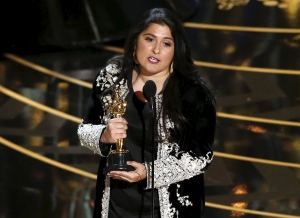
Pakistani-Canadian filmmaker Sharmeen Obaid-Chinoy, who won the Academy Award for documentary short, credits her time in Canada for helping inform her powerful storytelling.

“When you live in a country like Canada, you begin to realize how right things can be,” Obaid-Chinoy told CBC inside the Oscars press room after her win. “Then when you travel back to Pakistan and to other countries which are in conflict, you can see what’s going wrong.”

Her winning documentary short, A Girl in the River: The Price of Forgiveness, is about honour killings, told through the eyes of Saba Qaiser.

“She wanted her story told,” said Obaid-Chinoy. “The impact of her story is tremendous, because it is going to change lives, and it’s going to save lives, and there can be no greater reward than that.”

Qaiser, 18, fell in love with a man against her family’s wishes. Shortly after they eloped, her father and uncle shot her in the head and left her for dead. Her survival led her to become a rare voice for women in similar situations and the one needed for Obaid-Chinoy to tell the story.

AWARDS-OSCARS/

Pakistani-Canadian journalist and filmmaker Sharmeen Obaid-Chinoy accepts the award for Best Documentary Short Subject Film for A Girl in the River: The Price of Forgiveness at the 88th Academy Awards in Hollywood, California Feb. 28. (Mario Anzuoni/Reuters)

“I think it’s important to see what what human beings are capable of,” said the filmmaker.

Obaid-Chinoy, who now lives in Pakistan but has spent a lot of time going between Toronto and her home country, said her work has prompted difficult conversations that often risked her life but that there is “payback” in doing so.

The filmmaker and journalist also won an Academy Award for her 2012 documentary Saving Face, about women in Pakistan searching for justice after suffering acid attacks.

That win made her the first Pakistani to capture an Oscar.

“The power of being nominated for an Academy Award really does mean for a country like Pakistan that you can change laws.”

Source: Sharmeen Obaid-Chinoy, Oscar winner, says Canada informs her work – Arts & Entertainment – CBC News