An Alberta MLA on battling gender identity

A reminder of the value of having diversity among Parliamentarians:

The Alberta legislature has lately become a place for remarkable confessionals, courtesy of the governing New Democrats. Last month, it was a member from Lethbridge who told of the brutal abuse her ex-husband inflicted on her, to bring clarity to a debate on reforms making it easier for Albertans to escape domestic violence.

On Tuesday, an Edmonton-area New Democrat personalized transgender issues, as the legislature debated—and would unanimously support—explicitly adding gender identity and expression to the Alberta Human Rights Act. Estefania Cortes-Vargas, a former office aide to Premier Rachel Notley, had previously been public about being one of the first openly gay MLAs in Alberta history. Tuesday, Cortes-Vargas opened up about gender identity, and started with frustration that assembly Hansard traditionally records members with gender-specific honorifics like Mr. or Ms.

From the Hansard, here is the member recorded simply as Cortes-Vargas:

As I wrote my notes, Speaker, I started off by asking myself why I need to include in that your gender in order to identify you. I asked myself this question before I even came into this Legislature and was asked to identify my gender so Hansard could put that into the transcription.

I have always battled with gender identity, gender expression, and I continue to do so. A lot of the time I don’t have the answers to who I am, why I act this way, why I dress this way, but I do know this: I do know that I’m a person, that I deserve rights, and that anything less than that is unacceptable. Gender, Speaker, plays a role in everyone’s life, but for the trans community and for the gender-variant community it’s magnified to a level that creates high suicide rates, high unemployment rates, high levels of work in the sex trade because people are shunned.

People feel like they cannot be themselves without continuously having to explain to people that, hey, maybe I’m a boy and maybe I’m a girl. It shouldn’t matter. If the way I look confuses people, I love it. I will always continue to challenge that the way I look needs to define anything about me, because at the end of the day, when I look in the mirror, I say: “For the first time in my life, when I cut my hair, when I chose different wardrobes, when I challenged my cultural identity as a Hispanic woman, hey, maybe I don’t need to wear heels, and maybe I don’t need to have long hair just because that’s what is expected and that’s what’s considered beautiful. I think I’m a beautiful person.”

Source: An Alberta MLA on battling gender identity – Macleans.ca

Minorities Get Less Pain Treatment in E.R. – The New York Times

Highlights a problem, with a large gap in treatment:

White patients receive more pain treatment in emergency rooms than African-Americans and other minorities, a new study reports.

Researchers studied four years of data collected nationwide by the Centers for Disease Control and Prevention. They used a sample of 6,710 visits to 350 emergency rooms by patients 18 and older with acute abdominal pain.

White and black patients reported severe pain with the same frequency — about 59 percent. But after controlling for age, insurance status, income, degree of pain and other variables, the researchers found that compared with non-Hispanic white people, non-Hispanic blacks and other minorities were 22 percent to 30 percent less likely to receive pain medication. Patients were also less likely to receive pain medicine if they were over 75 or male, lacked private insurance or were treated at a hospital with numerous minority patients. The study is in the journal Medical Care.

The senior author, Dr. Adil H. Haider, the director of the Center for Surgery and Public Health at Brigham and Women’s Hospital in Boston, said: “It may be that different people communicate differently with their providers. If we as providers could improve our ability to better communicate with patients so that we could provide more patient-centered care, we’ll be making several steps toward reducing and hopefully eliminating these disparities.”

Source: Minorities Get Less Pain Treatment in E.R. – The New York Times

Lulu Book Sale – 35 percent off, today only

Lulu 3 DecFor those interested in the print version of Multiculturalism in Canada: Evidence and Anecdote or Policy Arrogance or Innocent Bias: Resetting Citizenship and Multiculturalism, one of Lulu.com’s regular sales.
The direct link to my book page is: My Author Spotlight.

The integration of refugees affirms Canada as a caring society: Governor General Johnston

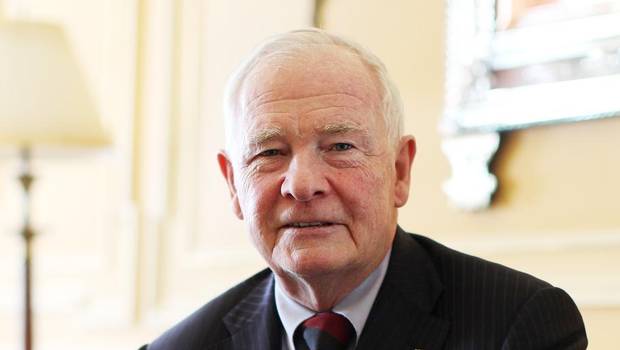
Governor General David Johnston, with the new government’s diversity and inclusion messaging:

Perhaps the bigger challenge we face is the long-term project of positioning our new Syrian-Canadian friends for success in their new country. And just as effective integration poses a significant challenge, so does it present a significant opportunity for Canada. Remember, great nations are built on great challenges.

The great opportunity we have in taking on the challenge of integrating new Canadians is simply this: It’s a chance to revisit and renew our commitment to being a smart, caring and inclusive society, not just for Syrian refugees, but for all Canadians, including the most vulnerable and marginalized among us.

The challenge of integrating refugees is the latest chapter in the continuing experiment we call Canada. At its heart, it’s an experiment in building an inclusive society of opportunity for diverse peoples. Consider our country’s roots. John Ralston Saul calls Canada a “Métis civilization.” Our national character is inclusive and mixed – and strong as a result. In their book Why Nations Fail, Daron Acemoglu and James Robinson argue that politically and economically inclusive societies thrive, while exclusive and extractive societies fail.

But perhaps the most compelling argument I’ve heard of late for rededicating ourselves to building a society of inclusive opportunity comes from a parent in Syria, whose son recently received a refugee scholarship to study at the University of Alberta. In thanks, the parent wrote: “You have pulled my son out of the hell, where he has been taking daily a high dose of risk, tension, worries and sorrow. The wheels of the war have crushed everything; the human and the stones, but not the heart and soul and never the will and hope.”

So to answer the question “How does Canada build a diverse and inclusive society?” I remember “why” we do it: Because it’s both the right and the smart thing to do. Now together, let’s reimagine how.


Source: The integration of refugees affirms Canada as a caring society – The Globe and Mail

We need to talk about how Islamic State interprets Islam

Good discussion by Balsam Mustafa:

There is no immediate magical solution to this problem. A comprehensive, constructive, and critical reading of Islamic fiqh (the human understanding of Sharia law) and history in all its stages requires a huge collective effort. That effort needs to include governments, religious authorities and other institutions, such as academia and the media.

Such effort needs to start with challenging religious messages that incite hatred or violence. That should include TV channels that support sectarian and ethnic division. These are not only broadcast from Arabic countries but also from Western countries, including the US and Britain.

Given the political conflict that feeds religious and sectarian conflict – often supporting and funding extremist voices delivering the message of hatred among and beyond Muslims – this might be difficult to achieve in the foreseeable future. Still, there are steps that need to be taken to pave the way for this ultimate goal.

People are already creatively trying to shift the extremist language and narratives through comedy and factual programmes. These efforts often emphasise the human over religion or ethnicity.

And messages of this kind can be found in religious texts too – even if they are largely overlooked by extremists. Take the Quranic verse: “there is no obligation in religion”; the Hadith by prophet Muhammed: “religion is how you treat others”; and the saying by Ali Ibn Abi Talib, cousin of prophet Muhammed, “people are two types: your brothers in religion, or your human counterparts, otherwise”.

We need to listen to these messages and use them to confront violence. It will be a long journey, but it is worth all our efforts. If we defeat IS but do not have an honest, critical re-reading of Islam, another group will only come along to replace it.

As the debate among Islamic scholars has shown, it has been difficult to establish the consensus that, even if sabi and jizya were once considered valid, they are no longer legitimate. But that very difficulty reinforces the need to undertake the task.

Source: We need to talk about how Islamic State interprets Islam

Aha! Now I Get How Everybody Lives | Anna Rosling-Ronnlund | TEDxRiga

An interesting approach to indicators: comparing household objects by country and income level. More similarity than one would expect (14 minutes):

Liberals say overhaul of patronage appointments to include gender-parity goal

No surprise – was clearly implied in the common language in the mandate letters.

The first test, of course, will be the appointment this week (I expect) of parliamentary secretaries:

The federal Liberals say they plan to extend a promise of gender parity in cabinet to ensure the same outcome in the hundreds of appointments the government makes to boards, agencies and Crown corporations.

Just how the process will work is unclear: The Liberals vowed in the election to overhaul an appointment process that now is conducted behind closed doors and was sometimes mired in accusations of political patronage for government donors or failed candidates.

The party has vowed to create an outside body to recommend new senators, a model similar to one used in Britain for government-wide appointments to boards and agencies made by cabinet and ministers.

The Liberals didn’t provide details of how the appointments process, which they now oversee, will work.

“Appointments will be open, transparent and merit-based and we will ensure gender parity and that more indigenous peoples and minority groups are reflected in positions of leadership,” said Olivier Duchesneau, deputy director of communications to Prime Minister Justin Trudeau.

“This will apply government-wide to everything from the cabinet to the Supreme Court to boards of Crown corporations.”

Duchesneau said the opaque nature of the appointment process has fuelled cynicism about backroom politics.

Source: Liberals say overhaul of patronage appointments to include gender-parity goal | CTV News

What ISIS songs reveal about the group’s evolution

Another side of Daesh/ISIS’ propaganda and recruitment strategy:

After this month’s attacks in Paris, ISIS released an audio recording celebrating the attacks and taking responsibility for them. The RCMP is still investigating the recording to determine whether the voice on the recording belongs to a Canadian. Some linguists are convinced it does, and that the speech patterns suggest he is from Ontario. But it’s still not clear whose voice is on that recording.

What we do know is that the audio statement begins with an acapella song that’s as hooky as any pop song, and it plays throughout the five and a half minute recording.

The song takes the form of a traditional Islamic holy chant, called a “nasheed”. These songs have become key to the ISIS propaganda machine. They’re the soundtrack to the shocking execution videos, they’re blasted from cellphones on the battlefield and now, they’re showing up more and more in English.

Aymenn Jawad Al-Tamimi,fellow at the Middle Eastern Forum, says the Islamic State is one of the leading producers – if not the­ leading producer – of jihadi nasheeds today.

Day 6 asked him to  listen to the music in ISIS’ latest audio recording following the Paris attacks, and to compare it to other jihadi songs that ISIS has produced.

“My immediate thoughts on that nasheed is the language used: English,” says Al-Tamimi. He says the Islamic State has recently branched out into producing nasheeds in other languages, including English, French, German and even Hindi and Uyghur to reach  out to non-Arabic foreigners to join the Islamic State.

“This one  is what you could call one of the more generic nasheeds in terms of content, referring to conceptions of martyrdom and virgins of paradise promised for those who die in the cause of jihad,” says Al-Tamimi.

And he says the catchiness of the songs serves a strategic purpose. “In regards to the melodies of nasheeds being catchy, it can help subconsciously imbibe the nasheed into your mind. The catchiness of the nasheed will help reinforce the messaging and indoctrination,” says Al-Tamimi.

Source: What ISIS songs reveal about the group’s evolution – Home | Day 6 | CBC Radio

Islamophobia is leading the West to a very dark place: Jebara

Good piece by Mohamad Jebara is Chief Imam and resident scholar at the Cordova Spiritual Education Center in Ottawa:

The demonization of peoples and religions is an insidious process that infects entire cultures. Shakespeare vilified European Jews when he wrote The Merchant of Venice, as Charles Dickens did when he made his child-slaver Fagin a Jew in Oliver Twist. For centuries, Jews were portrayed in Western media as sly, deceitful, evil and merciless — a portrayal that allowed the ‘civilized’ world to stand by in silence — and in some cases even rejoice — as the Nazis worked to annihilate European Jewry.

Muslim people, like people everywhere, are quite diverse. Some are saintly, a few demonic, but most lie somewhere in between — just ordinary people who want to live in peace with their families.

Since the formation of the so-called Islamic State, much of the non-Muslim world has continued to misdirect its rage and resentment against its victims. ISIS has killed over 100,000 Muslims, massacred top-ranking Islamic clerics and destroyed hundreds of mosques, seminaries and Islamic heritage sites. It is the Muslim world that continues to suffer most at the hands of these extremists, who try to disguise their depravity with the language of religion.

Centuries of demonization and scapegoating led directly to the death camps of the Second World War. Then, as now, we said, ‘Never again’ — never again would we allow indoctrination and mob mentality to take human civilization to the gates of hell.

Powerful words. Are we still ready to live by them?

Ottawa-based imam Mohamad Jebara wonders whether the racist panic-mongering

Good example of Muslim criticism of violent extremists

A reminder to those who continually ask question the perceived lack of criticism of terrorism by Muslims that it is not too hard to find, as this short video attests:

Saudi-Born Singer Shams Bandar: Why Do We Pin All Our Problems on the West?