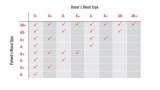
Employment Equity Promotion Rate Study

Summary from the Public Service Commission’s report on promotion rates of employment equity groups, showing women have greater promotion rates than men, comparable promotion rates of visible minorities compared to not visible minorities, and lower rates among Indigenous peoples and persons with disabilities.

Curious to see if and how the government implements recommendation 2 to breakdown the data into sub-groups such as visible minority without either asking public servants to self-identify or using name recognition technology to approximate the groups:

Part 1: Analysis of recent employment equity promotion rates

Part 1 of the study is based on 172 125 promotions from 230 310 indeterminate employees. Our findings present a mixed picture in terms of promotion rates across employment equity groups. Our public service-wide results indicate that women have a higher promotion rate when compared to men. This contrasts with Indigenous people and with persons with disabilities, who both experienced lower promotion rates than their respective counterparts. We found no appreciable difference between members of visible minorities and their counterparts.

Results also show variations for some employment equity groups across occupational categories. For example, despite having a higher overall promotion rate when compared to men, women have a lower promotion rate in the Scientific and Professional and the Technical categories. These lower promotion rates are offset by higher relative promotion rates for women in the Administrative Support and Administrative and Foreign Service occupational categories.

Part 2: Analysis of promotion rates of employment equity new hires across 2 time periods

Part 2 of the study relied on 74 762 promotions from 112 667 indeterminate employees and 97 856 promotions from 141 836 indeterminate employees for the first and second time periods respectively. Our results on the promotion rates of new hires across time periods (from April 1991 to March 2005 and from April 2005 to March 2018) suggest an improvement over time in the relative promotion rates of women, Indigenous people and persons with disabilities. However, promotion rates for Indigenous people and persons with disabilities remain below those of their counterparts. For members of visible minorities, there are no appreciable differences in promotion rates relative to their counterparts in either of the 2 time periods.

Part 3: Employment equity applicant representation and shares of promotions

Our analysis suggests that women and members of visible minorities apply at a higher rate than their rate of representation in the federal public service. Women’s share of promotions is roughly equivalent to their representation as applicants, while members of visible minorities exhibit a share of promotions that is lower than their representation as applicants.

A different pattern emerges for Indigenous people and persons with disabilities, whose representation as applicants is below their representation rates in the federal public service, while their share of promotions is on par or above their representation as applicants. This may, in part, explain differences in the promotion rates of these 2 employment equity groups as compared to their counterparts.

In response to these findings, we are recommending that, in consultation with stakeholders and employment equity community members:

  • Recommendation 1: further research be conducted to better understand underlying barriers that contribute to lower promotion rates for some employment equity groups
    • for example, the upcoming Staffing and Non-Partisanship Survey (Spring 2020) should be leveraged to gain insight into employment equity group views on barriers to career progression
  • Recommendation 2: work be undertaken to break down employment equity category data by sub-groups to allow for a more comprehensive and accurate identification of barriers that are unique to individual sub-groups, including their intersectionality
  • Recommendation 3: further outreach be provided to federal departments and agencies in order to increase awareness of the range of policy, service and program options aimed at supporting a diverse workplace
  • Recommendation 4: public service-wide approaches to career progression be explored including broadening access to existing successful programs and services such as the Aboriginal Leadership Development Initiative and the Accommodation and Adaptive Computer Technology Program at Shared Services Canada
  • Recommendation 5: concerted efforts across central agencies be undertaken to explore how we can learn from the Aboriginal Leadership Development Initiative and extend similarly targeted services and development opportunities to all employment equity groups, including development programs and career support services that are specifically designed with, and for, employment equity groups

We extend our thanks to Professor Marcel Voia and Statistics Canada who have reviewed this study and provided insightful suggestions, comments and feedback.

Prague TV tower under fire as dark reminder of city’s antisemitic past

Another Holocaust legacy a government having difficulty addressing:

It has been called one of the world’s ugliest structures, pointing above Prague like a jabbing metallic finger while offering visitors panoramic views of the Czech capital’s more aesthetically pleasing sites.

Now the city’s looming 216-metre (709ft) television tower – one of the most distinctive architectural legacies of communism – is the subject of renewed complaints from the Prague Jewish community, which says it is a brooding reminder of the antisemitism of the regime that ruled the former Czechoslovakia for more than 40 years and whose dark history needs to be officially recognised.

“Part of our community is still present under the ground here and people should know about it,” said Pavel Vesely, a history and tourism coordinator with the Prague Jewish community. “It reflects our history in the second half of the 20th century, when there was pressure – part state-organised antisemitism, part anti-religion – to erase the remnants of a Jewish presence in Prague. And the communists did a thorough job, because if you speak to people visiting the tower, they have no idea a Jewish cemetery was here.”

The ancient Prague Jewish cemetery as it was before it was turned into a tower. Also shows the site when the tower’s foundations were being dug.. Sent by Robert Tait.
Pinterest
The ancient Prague Jewish cemetery before the tower was built over it, involving the disinterment of human remains. Photograph: Archive of the City of Prague

Local officials are calling for a memorial acknowledging that the tower, believed to have been conceived partly as a cold-war gambit to block western TV and radio broadcasts, stands on what was once Prague’s biggest Jewish cemetery, where rabbis, distinguished scholars and leading industrialists, among others, were laid to rest.

Graves in the former cemetery in the Žižkov neighbourhood were disturbed after workers began drilling in 1985 to lay the tower’s foundations. While some remains were reburied in other cemeteries, others were reportedly dumped in a landfill site outside Prague, in violation of Jewish law forbidding the disinterment of buried bodies.

The Jewish community sold the site, under pressure from the communist authorities, to the state broadcaster after it was deemed the ideal location for the tower. Most of the headstones in the once sprawling cemetery – first established in 1680 and the burial place for about 40,000 people – had previously been flattened and grassed over in the early 1960s to convert it into a park, also at the demand of the communist regime.

By the time the tower was completed in 1992, the cold war had ended after communist regimes in Czechoslovakia and other eastern bloc countries lost power. It is now marketed as a tourist attraction, boasting an observatory, a restaurant and even a one-bedroom hotel.

It stands at the centre of a square hosting a restaurant, an underground parking facility and a mini-golf course, part of which is said to be sited where the grandest tombstones once stood. There is also an ice rink in winter.

The cemetery’s oldest section survived the developments and remains in relative obscurity at one end of the square, Jewish community leaders having spent heavily to rescue it from the decay it had fallen into during the communist period.

However, they say a memorial is needed out of respect for the much larger, disappeared part of the cemetery, and as a reminder of what is seen as a state-sponsored effort to erase the last vestiges of Jewish identity after the Holocaust.

Some local schools have taken pupils on tours of the site to raise awareness. Magdalena Novotná, a teacher leading a group of nine-year-olds around the cemetery as part of a class project, said: “The communist regime was not sensitive to spirituality or religious traditions. What touches me is that we know the Jewish belief that we cannot move bodies once they are in the soil, but they moved them completely. This is what we teach the children in the project.”

Anna Tumova, a spokesperson for České Radiokomunikace, the tower’s owners, said the company had not been approached, but that it would consider any proposal for a memorial. A plaque on the body of the tower itself would need permission from its architect, Václav Aulický.

The structure already carries the figures of several sculpted “babies” designed by a Czech artist, David Černý, copies of which were refitted earlier this year after the originals were removed.

The tower is the latest focal point of the Jewish community’s drive to restore scores of cemeteries, synagogues and other cultural sites destroyed or allowed to fall into ruin under communism. Some 105 synagogues were demolished during the communists’ reign – compared with 70 during the Nazi occupation.

Stonework for many abandoned sites was sold and later reused for private gardens, car parks or pedestrianised streets. Prague city council recently agreed to allow Jewish community leaders to examine cobbled paving stones dug up for a forthcoming redevelopment of Wenceslas Square. Some stones are believed to have been taken from Jewish cemeteries and repurposed for the pedestrianisation of the area carried out by the communist regime in the 1980s.

Source: Prague TV tower under fire as dark reminder of city’s antisemitic past

Le financement accordé à la Fondation Aga Khan pique du nez

Interesting change:

Après avoir trôné au sommet du palmarès des organisations de société civile les mieux financées par Ottawa pendant des années, voilà que le financement accordé à la Fondation Aga Khan Canada a chuté de moitié l’an dernier, a appris La Presse.

La fondation du richissime chef spirituel a reçu du gouvernement fédéral un financement totalisant 24,8 millions en 2017-2018, la plaçant en queue de peloton des 10 organisations de la société civile canadienne touchant la part du lion en subventions d’Affaires mondiales Canada. Il s’agit de son pire classement depuis 2009.

Cette chute draconienne n’est « pas du tout » liée aux vacances du premier ministre Justin Trudeau dans l’île privée de l’Aga Khan en décembre 2016 – qui lui avaient valu un blâme sévère à la fin de 2017 -, assure Affaires mondiales Canada, qui a compilé les données à la demande de La Presse.

Depuis 2012, la Fondation Aga Khan Canada était plutôt habituée à recevoir en moyenne près du double de ce qu’elle a touché l’an dernier, soit des sommes oscillant autour de 46,7 millions par année. En 2016-2017, elle a touché 47,4 millions, tandis qu’en 2015-2016, elle recevait pas moins de 53,6 millions du gouvernement de Justin Trudeau.

Le gouvernement précédent de Stephen Harper n’était pas moins généreux, alors que la Fondation Aga Khan, qui lutte notamment contre la pauvreté à l’échelle planétaire, a mis la main sur des subventions annuelles de 58,3 millions et de 43,2 millions lors des derniers exercices du mandat des conservateurs en 2013-2014 et 2014-2015.

La Presse a aussi appris que l’une des sommes les plus importantes accordées à la Fondation Aga Khan lui avait été versée sans appel de propositions par le gouvernement de Justin Trudeau deux mois après son arrivée au pouvoir, en décembre 2015. Il s’agissait d’une somme de 55 millions devant être affectée à un projet réalisé avec l’Agence française du développement visant la construction d’un hôpital en Afghanistan.

Financement accordé à la Fondation Aga Khan par exercice financier (en millions de dollars)

•2017-2018 : 24,8 (10e rang)

•2016-2017 : 47,4 (2e rang)

•2015-2016 : 53,6 (1er rang)

•2014-2015 : 43,2 (2e rang)

•2013-2014 : 58,3 (1er rang)

•2012-2013 : 31,2 (2e rang)

•2011-2012 : 16,5 (6e rang)

•2010-2011 : 23,1 (5e rang)

•2009-2010 : 21,5 (7e rang)

Source : Affaires mondiales Canada

Pas de lien avec la controverse

Chez Affaires mondiales Canada, on assure que la vive controverse qu’avait suscitée le séjour de Justin Trudeau dans l’île privée de l’Aga Khan n’a rien à voir avec la baisse du financement accordé aux oeuvres de charité du chef spirituel, l’an dernier.

« Il n’y a pas eu de gel, on n’a pas mis fin à des projets avec la fondation, c’est vraiment l’évolution normale du cycle d’affaires », a assuré Geoffroi Montpetit, chef de cabinet de la ministre du Développement international, Maryam Monsef.

« La Fondation [Aga Khan] est toujours un des partenaires les plus importants. Pour ce qui est du classement, ça dépend vraiment des variations cycliques des différents projets qui sont en cours. » – Geoffroi Montpetit, chef de cabinet de la ministre du Développement international, à La Presse

« Pour chaque projet, il y a des déboursés qui sont plus importants dans les premières années, moins les années suivantes », poursuit M. Montpetit.

Par exemple, le plus important projet humanitaire auquel le gouvernement fédéral a participé depuis 2009 date de l’ère Harper, alors qu’Ottawa a versé 75 millions en 2014 pour le développement humain en Afrique et en Asie. Le projet de partenariat, estimé à 100 millions (25 millions venaient de la fondation), doit prendre fin en 2019.

M. Montpetit explique également qu’en 2017-2018, Affaires mondiales Canada « a fait moins d’appels de propositions » et que ceux qui ont été lancés « peut-être ne portaient pas sur les aires d’activités de la Fondation Aga Khan ».

Reste que si les organisations de la société civile peuvent répondre à un appel de propositions, elles peuvent aussi présenter une proposition non sollicitée.

À la Fondation Aga Khan, on explique qu’il est « normal que le financement offert par Affaires mondiales Canada à ses partenaires fluctue d’une année à l’autre » selon la nature des programmes et des cycles de financement.

« La Fondation est heureuse de poursuivre son partenariat – qui remonte maintenant à plusieurs décennies – avec Affaires mondiales Canada, diverses institutions canadiennes et des milliers de Canadiens individuels, toujours dans le but d’améliorer la qualité de vie des habitants des régions pauvres et fragiles d’Afrique et d’Asie », s’est borné à indiquer un porte-parole de l’organisation dans une déclaration.

La Fondation paye le prix, dit le NPD

Pour Guy Caron, député du Nouveau Parti démocratique (NPD), il est évident que la Fondation Aga Khan fait maintenant les frais de la tourmente dans laquelle Justin Trudeau a été plongé. « On sait que les programmes de la fondation ont toujours été bien financés non pas seulement par les libéraux, mais aussi par les conservateurs », soutient-il.

« Je ne vois pas de changements au niveau de la fondation et de ses programmes, qui sont bons, à ce que j’en sais, alors il n’y a rien qui aurait pu vraiment justifier une baisse de financement de cette amplitude. » – Guy Caron, député du Nouveau Parti démocratique et porte-parole en matière d’affaires étrangères

Alors qu’ils ont réclamé au début du mois que la GRC ouvre une enquête pour déterminer si le premier ministre avait enfreint la loi en voyageant dans l’île privée de l’Aga Khan – et qu’ils interrogent le gouvernement presque tous les jours sur la question -, les conservateurs n’ont pas souhaité commenter les informations obtenues par La Presse.

Au Bloc québécois, le député Luc Thériault fait quant à lui preuve de prudence. « En toute rigueur, c’est assez difficile de savoir exactement pourquoi c’est comme ça. Ce qu’on sait, par contre, c’est que Justin Trudeau n’avait pas d’affaire là. Le premier ministre, en acceptant des vacances sur le bras, s’est mis en situation d’apparence de conflit d’intérêts, et ça, c’est inacceptable politiquement. Il a manqué de jugement », argue-t-il.

Pour rappel, le premier ministre a passé les vacances de Noël dans l’île appartenant à l’Aga Khan aux Bahamas, en 2016. En décembre de l’année suivante, l’ex-commissaire aux conflits d’intérêts et à l’éthique, Mary Dawson, publiait un rapport d’enquête attendu concluant que M. Trudeau avait contrevenu à quatre dispositions de la Loi sur les conflits d’intérêts.

Selon ses conclusions, les vacances familiales de M. Trudeau pouvaient être considérées comme un cadeau de la part de l’Aga Khan visant à influencer le premier ministre alors que la fondation est inscrite au Registre canadien des lobbyistes.

Le premier ministre s’était toujours défendu en soutenant que l’Aga Khan était un vieil ami de sa famille et il avait fait son mea culpa à la lumière du rapport de Mme Dawson. En avril dernier, la Cour fédérale a ordonné au Commissariat au lobbying de vérifier de nouveau si l’Aga Khan n’avait pas enfreint les règles en accueillant M. Trudeau dans son île.

« Ça soulève des questions »

La position du Bloc québécois trouve un écho chez la professeure à l’École d’études politiques de l’Université d’Ottawa Geneviève Tellier. « On peut se poser des questions, mais je pense qu’on n’a pas vraiment les réponses. Je pense que ce que ça dit, c’est que c’était effectivement déplacé que M. Trudeau se fasse inviter par l’Aga Khan », illustre-t-elle. « Ça soulève des questions. […] Il y a d’autres facteurs qui peuvent expliquer la chose, mais c’est effectivement troublant de voir que c’était un des principaux bénéficiaires de l’aide du gouvernement au moment où il y a eu ce fameux voyage de M. Trudeau », ajoute-t-elle, réclamant « plus de transparence » pour ce genre de compilation. Le professeur agrégé en développement international et mondialisation de la faculté des sciences sociales de l’Université d’Ottawa Lauchlan T. Munro estime qu’il est « normal de voir des variations d’année en année » dans le financement d’organisations de société civile puisqu’il « n’est jamais garanti même pour les plus grandes ». M. Munro indique aussi que le degré de dépendance financière de la Fondation Aga Khan envers le gouvernement fédéral au cours des dernières années « n’est pas anormal » en comparaison avec d’autres organisations non gouvernementales internationales.

Source: Le financement accordé à la Fondation Aga Khan pique du nez

USA: Is There a Connection Between Undocumented Immigrants and Crime?

Spoiler – no:

A lot of research has shown that there’s no causal connection between immigration and crime in the United States. But after one such study was reported on jointly by The Marshall Project and The Upshot last year, readers had one major complaint: Many argued it wasunauthorized immigrants who increase crime, not immigrants over all.

An analysis derived from new data is now able to help address this question, suggesting that growth in illegal immigration does not lead to higher local crime rates.

In part because it’s hard to collect data on them, undocumented immigrants have been the subjects of few studies, including those related to crime. But the Pew Research Center recently released estimates of undocumented populations sorted by metro area, which The Marshall Project has compared with local crime rates published by the F.B.I. For the first time, there is an opportunity for a broader analysis of how unauthorized immigration might have affected crime rates since 2007.

A large majority of the areas recorded decreases in both violent and property crime between 2007 and 2016, consistent with a quarter-century decline in crime across the United States. The analysis found that crime went down at similar rates regardless of whether the undocumented population rose or fell. Areas with more unauthorized migration appeared to have larger drops in crime, although the difference was small and uncertain.

(Illegal immigration itself is either a civil violation or a misdemeanor, depending on whether someone overstayed a visa or crossed the border without authorization.)

Most types of crime had an almost flat trend line, indicating that changes in undocumented populations had little or no effect on crime in the various metro areas under survey. Murder was the only type of crime that appeared to show a rise, but again the difference was small and uncertain (effectively zero).

For undocumented immigrants, being arrested for any reason would mean facing eventual deportation — and for some a return to whatever danger or deprivation they’d sought to escape at home.

There is no exact count of unauthorized immigrants living in the United States. To create estimates, experts at Pew subtracted Department of Homeland Security counts of immigrants with legal status from the number of foreign-born people counted by the Census Bureau. Many organizations and agencies, including the D.H.S., use this residual estimation method; it is generally considered the best one available. As of 2016, there were an estimated 10.7 million undocumented immigrants nationwide, down a million and a half since 2007.

Jeffrey Passel, a Pew senior demographer, and his team estimated changes in undocumented populations for roughly 180 metropolitan areas between 2007 and 2016. For comparison, The Marshall Project calculated corresponding three-year averages of violent and property crime rates from the Uniform Crime Reporting program, and the change in those rates.

The results of the analysis resemble those of other studies on the relationship between undocumented immigration and crime. Last year, a report by the Cato Institute, a libertarian think tank, found that unauthorized immigrants in Texas committed fewer crimes than their native-born counterparts. A state-level analysis in Criminology, an academic journal, found that undocumented immigration did not increase violent crime and was in fact associated with slight decreases in it. Another Cato study found that unauthorized immigrants are less likely to be incarcerated.

At the more local level, an analysis by Governing magazine reported that metropolitan areas with more undocumented residents had similar rates of violent crime, and significantly lower rates of property crime, than areas with smaller numbers of such residents in 2014. After controlling for multiple socioeconomic factors, the author of the analysis, Mike Maciag, found that for every 1 percentage point increase in an area’s population that was undocumented there were 94 fewer property crimes per 100,000 residents.

More research is underway about the potential effects of undocumented immigration on crime. Robert Adelman, a professor at the University at Buffalo, SUNY, whose group’s research The Marshall Project and The Upshot have previously documented, is leading a team to expand on the Governing analysis. Early results suggest unauthorized immigration has no effect on violent crime, and is associated with lower property crime, the same as Mr. Maciag found.

Preliminary findings indicate that other socioeconomic factors like unemployment rates, housing instability and measures of economic hardship all predict higher rates of different types of crime, while undocumented immigrant populations do not.

Many studies have established that immigrants commit crimes at consistently lower rates than native-born Americans. But a common concern is whether immigrants put pressure on native-born populations in any number of ways — for instance, by increasing job competition — that could indirectly lead to more crime and other negative impacts.

According to Mr. Adelman and his team, however, the impact of undocumented immigrants is probably similar to what the research indicates about immigrants over all: They tend to bring economic and cultural benefits to their communities. They typically come to America to find work, not to commit crimes, says Yulin Yang, a member of the team.

The data suggests that when it comes to crime, the difference between someone who is called a legal immigrant and an illegal one doesn’t seem to matter.

Australia: Politicians warned not to generalise migrants in final push for multicultural seats

Same applies in Canada with the exception of the more complicated Australian voting system:

Australia’s culturally diverse electorates are set to play a key role in determining the outcome of the 2019 federal election on Saturday.

That’s because they are often the most marginal seats, with candidates forced to pay particular attention to language barriers, and a wide range of issues important to migrant communities.

The 10 most marginal of the more multicultural seats, based on languages spoken at home, are all in New South Wales and Victoria.

Six are held by Labor, while the Liberals held four but lost Chisholm when Julia Banks defected and is now running as an independent candidate.

To try and tap into culturally diverse communities, politicians from both sides have had campaign posters and how to vote cards translated into different languages and lobbied Chinese Australians on WhatsApp.

They have also lobbied hard for cultural and religious leaders to back them.

But with Australia home to 300 different ethnic groups, it can often be hard for politicians to get traction on issues specific to the different backgrounds, say academics and those working with migrant groups.

“It’s very difficult because there’s great differentiation among and within migrant communities in Australia,” Jayana Nadarajalingam from the University of Melbourne’s School of Government said.

“And this differentiation is across many different interrelated dimensions, such as race, culture, religion, language, class, just to name a few.”

Ms Nadarajalingam told SBS News it was important to remember issues and concerns also change with time and across generations.

“For these reasons, unless politicians properly consult members of migrant communities and ensure that the consultation is a two-way process, it would be near impossible for them to properly ascertain the complexities of the issues migrant communities face.”

With almost half of Australians having at least one parent born overseas, Ms Nadarajalingam said there have been concerns about politicians and media outlets risking generalising the issues facing people from migrant backgrounds.

“Not all of these issues are internal to Australia and their lives in Australia. Many also have concerns that are to do with ties that they have to countries that they left or in many cases fled,” she said.

“There are some generalisations that you can draw, but because we live in a complex society and there’s economic institutions, social institutions that have to navigate, I think there’s great differentiation, within specific migrant communities and also across them.

“We have to be careful about not being too broad-brushed about how we perceive migrant communities and voting patterns.”

Conservative leanings

Even if there are common issues that many members of migrant communities face, the way they might want to respond may be different. This stands in general contrast to the 2017 same-sex marriage survey, which illustrated how conservative the multicultural vote can be.

The result was a clear ‘yes’ victory but 12 of the 17 seats that voted against same-sex marriage were diverse ones, in Sydney’s west.

Could those more conservative views see left-leaning seats swing to the right in the federal election though? Ariadne Vromen from the University of Sydney says it is unlikely.

“The marriage equality plebiscite was kind of a distinct event,” the professor of political sociology told SBS News.

“It’s true that in western Sydney they were more likely to vote no in those particular electorates. Whether or not that translates into a conservative vote for the Coalition will depend on how campaigning happens in those areas. But those are pretty safe Labor seats.”

‘Proud’ to be voting

The 18 May poll marks the first time 18-year-old fashion student Geraldine Kaburakikuyu will be allowed to vote. It’s the first time for her family too after they migrated from Kenya in 2010.

The issues that Geraldine says will sway her vote, though, are different from her mother’s.

“Probably education and public transport,” she told SBS News.

“Just because I got to uni and always catch the public transport. That’s probably what affects me most, but I feel like for my mum it’s more about housing.”

Geraldine says she is proud to cast her ballot, a feeling shared in her suburb of Mortdale in south-west Sydney, by other overseas-born voters.

“I feel good considering everywhere election is a big issue, and most people don’t enjoy the privilege. So I’m pretty lucky to be here in this country,” said one voter who migrated to Australia from Malaysia more than 50 years ago.

Temporary resident Tehmoor Rasheed says he’s passionate about Australian politics. And says he dreams for the day when he’ll get to vote here.

“Every vote counts,” Mr Rasheed said.

“Nowadays democracy comes from every vote, so of course I will be really happy whenever I will be eligible to vote.”

‘Most confusing electoral system’

But according to Dr Jill Sheppard, a politics lecturer at the Australian National University, voting can prove a difficult process for many migrants.

“We have about the most confusing electoral system in the world, so for a lot of people if you’re not from an English speaking background, or if you’re not very literate in Australian politics, voting in Australian elections can be a bit of a nightmare,” she said.

And Professor Vromen believes there’s another issue yet to be fully addressed by the major parties – and that’s a lack of diversity in political candidates. She says this could hinder many migrant’s chances to connect with the parties vying for their vote.

“There are very few politicians from diverse cultural backgrounds in Australian politics, and that’s what we kind of need to focus on more into the future, that younger communities do see themselves reflected within our politics.”

Dr Sheppard agrees.

“The Anglo vote, the native Australian-born vote, is still very very strong, and we have research for instance from Australia that they don’t really like ethnic minority candidates,” she said.

“As long as there’s still that overwhelming Anglo-Australian vote, they will continue to demand candidates that look like them and it is increasingly hard for ethnic minority voters to find candidates who will represent them culturally.

Source: Politicians warned not to generalise migrants in final push for multicultural seats

Polish nationalists protest against US over Holocaust claims

Disheartening:

Several thousand nationalists rallied in Warsaw on Saturday against a US law on the restitution of Jewish properties seized during the Holocaust, fuelling concerns about anti-Semitism in the country.

Far-right supporters who marched from the prime minister’s office to the USembassy waved banners reading “No to claims”, “Shame” and “Stop 477”.

The latter refers to the US Justice for Uncompensated Survivors Today (JUST) Act which requires the US State Department to report to Congress on the progress of countries including Poland on the restitution of Jewish assets seized during World War Two and its aftermath.

The protest took place amid a dramatic rise in anti-Semitic hate speech in public life in Poland and it appeared to be one of the largest anti-Jewish street demonstrations in recent times. It also comes as far-right groups are gaining in popularity, pressuring the conservative government to move further to the right.

‘Biggest European anti-Jewish demonstration in recent years’

Poland was a major victim of Nazi Germany during World War II and those protesting say it is not fair to ask Poland to compensate Jewish victims when Poland has never received adequate compensation from Germany.

“Why should we have to pay money today when nobody gives us anything?” said 22-year-old Kamil Wencwel. “Americans only think about Jewish and not Polish interests.”

The protesters shouted “no to claims!” and “This is Poland, not Polin,” using the Hebrew word for Poland.

Rafal Pankowski, a sociologist who heads the anti-extremist group Never Again, called the march “probably the biggest openly anti-Jewish street demonstration in Europe in recent years.”

One couple wore matching T-shirts reading “death to the enemies of the fatherland,” while another man wore a shirt saying: “I will not apologise for Jedwabne”   a massacre of Jews by their Polish neighbors in 1941 under the German occupation.

Among those far-right politicians who led the march were Janusz Korwin-Mikke and Grzegorz Braun, who have joined forces in a far-right coalition standing in the elections to the European Parliament later this month. Stopping Jewish restitution claims has been one of their key priorities, along with fighting what they call pro-LGBT “propaganda.” The movement is polling well amongst young Polish men.

Prime Minister Mateusz Morawiecki echoed the feelings of the protesters at a campaign rally Saturday, saying that it is Poles who deserve compensation.

Poland was the heartland of European Jewish life before the Holocaust, with most of the 3.3 million Polish Jews murdered by occupying Nazi German forces. Christian Poles were also targeted by the Germans, killed in massacres and in concentration camps.

Looted property ‘continues to benefit Polish economy’

Many Poles to this day have a feeling that their suffering has not been adequately acknowledged by the world, while that of Jewish suffering in the Holocaust has, creating what has often been called a “competition of victimhood.”

Many of the properties of both Jews and non-Jews were destroyed during the war or were looted and later nationalised by the communist regime that followed.

Protesters said paying compensation would ruin Poland’s economy. But Jewish organisations, particularly the World Jewish Restitution Organisation, have been seeking compensation for Holocaust survivors and their families, consider compensation a matter of justice for a population that was subjected to genocide.

Poland is the only European Union country that hasn’t passed laws regulating the compensation of looted or national property, and the head of the WJRO, Gideon Taylor, noted Saturday that such property “continues to benefit the Polish economy.”

At least two US Confederate flags were visible at Saturday’s protest, which began with a rally in front of the prime minister’s office before the protesters walked to the US Embassy. Men in Native American headdress held a banner with a message pointing to what they see as US double standards: ‘USA, Practice 447 at home. Return stolen lands to the descendants of native tribes.”

With pressure building on this issue, the US State Department’s new envoy on anti-Semitism, Elan Carr, was in Warsaw this past week, telling leaders and media that the US is only urging Poland to fulfil a non-binding commitment it made in 2009 to act on the issue. He also said the US recognises that Poland was a victim of the war and is not dictating how Warsaw regulates compensation.

Source: Polish nationalists protest against US over Holocaust claims

The missing ingredient in today’s debates? Generosity

More on polarization, binaries and the need for greater generosity – civility and goodwill – in public discussion and debates (within some limits):

In the early 1960s a white student who had seen Malcolm X speak at her college went to the Nation of Islam restaurant in New York to challenge him on his philosophy. “Don’t you believe there are any good white people,” he recalled her asking, in his autobiography. “I didn’t want to hurt her feelings,” he wrote. “I told her, ‘People’s deeds I believe in, Miss – not their words.’”

“What can I do?” she exclaimed. “Nothing,” Malcolm X said, and “she burst out crying, and ran out and up Lenox Avenue and caught a taxi”. He would later say of that encounter: “I regret that I told her she could do ‘nothing’. I wish now that I knew her name, or where I could telephone her …”

Generosity is a rare commodity in politics. That is not so surprising on the right: a politics rooted in individualism, self-reliance and private profit does not lend itself to altruism. States of penury and acts of charity are understood to emerge from entirely separate worlds. That is how George Osborne as chancellor could pauperise people with austerity and then, as editor of the London Evening Standard, run a campaign to feed the hungry without any sense of hypocrisy.

The left is different. It is difficult to imagine building a society that thrives on more sharing, redistribution and collective endeavour without a spirit of generosity – you cannot liberate humanity and dislike the people you are ostensibly doing it with and for at the same time.

At present it feels as if the well of generosity in left and liberal circles is running dry, creating an atmosphere of reflexive judgment and sweeping dismissal. On issues such as trans rights, a second referendum or Labour and antisemitism, for instance, debates have become so toxic that many find it difficult to meaningfully intervene.

A series of unequivocal binaries deny context and privilege certainty, while dispensing guilt and innocence by association. There is no room for Eurosceptic remainers or leavers who were not duped; you can either love Jeremy Corbyn and hate Jews or oppose antisemitism and hate Corbyn; support the protection of spaces fought for by women and back the “trans-exclusionary radical feminists” or be all in for every aspect of trans rights and supposedly betray those women; support a second referendum and deny democracy or do Nigel Farage’s dirty work, and deliver a manageable Brexit.

People who do not fall neatly into either camp often choose silence, not because they have nothing to say, but because they are not confident that they will be heard. The worst possible motives are assumed for every statement. The option of keeping two competing and maybe even conflicting ideas in your head at the same time is tantamount to heresy. Trapped between what feels like a choice of fundamentalisms, they witness the low blows traded in either direction and decide it is safer to keep their own counsel than get caught in the crossfire.

While it may be ugly, this particular outcome is not always a bad thing. Some people, particularly men, feel entitled to voice opinions on everything, whether they are well-informed or not. It would be preferable if they came to the conclusion by themselves that they’d do everyone a favour by shutting up. But if they need to be cowed into it, then that may be a fortunate unintended consequence.

It may seem a strange thing for a columnist to argue, but it’s OK not to have a firm opinion about everything. It’s OK not to know, to be conflicted or just in the process of working something out. Indeed, I wish more commentators would admit that more often.

I’ve frequently seen people, however, who do have something valuable to say or ask but would rather not do so. My sense of this is anecdotal not empirical. It feels worse online, where people make their case, impulsively and often while distracted, in 280 characters against or with people they’ve never met. I’ve witnessed it in social media any number of times. But I have seen it increasingly in actual live social situations, too.

It’s not hard to see why generosity might be lacking in progressive circles. Embattled people, defining their enemies broadly and their potential allies narrowly, may well fall short when called upon to be both thick-skinned and open-hearted. It is also not difficult to see why this is a problem. A lack of generosity makes the left smaller, less effective and more divided than it need be, while creating a culture of online trolling, vindictiveness and insensitivity that leaves little space for growth, evolution, inquiry or nuance.

When I talk about generosity here I am referring to a mixture of civility and goodwill towards a range of people who broadly share goals, if not methods, and with whom engagement is necessary. One need not resort to cliches such as “the truth is somewhere in the middle”, or “they’re all as bad as each other”, or even Rodney King’s hallowed “Can’t we all get along?” to believe that some kind of accommodation, rooted in sensitivity and mutual respect, is preferable to a fight to the death and all the collateral damage that comes with it.

The problem is not with people taking sides, or even the sides they’ve taken, but the apparent inability of many to venture beyond their own trenches to see what kind of truce is possible.

The coarsening of discourse does not take place in a vacuum. It relates to the deeper polarisation and anomie that has taken over our politics. This is not about the “left intolerance” constructed by rightwingers in order to justify their own bigotry. They are far less tolerant both of each other – Tory party discipline has collapsed, and just a few years ago Ukip had one of its leadership contenders punched out by a colleague – and of the outside world: you can draw a direct line from Farage to the Windrush scandal that goes straight through David Cameron and Theresa May.

There are limits, of course. I do not extend this hand of generosity to debates about whether the Holocaust happened, Islamophobia is real, climate change a hoax or ethnic diversity a threat to western civilisation. I see no need to debate my, or anybody else’s, humanity or right to exist. We all have red lines; the only question is where you draw them.

I also understand that this might be how some Jews feel about the antisemitism debate or both some trans people and cis-gendered women feel about sex and gender: their red lines have been crossed. Their right to exist has been challenged. Being cis-gendered male and Gentile, that could never be my call. Many would like to talk about it. Others would like to listen. But they can’t hear or make themselves heard for all the shouting. I’m not sure how we arrived at this bad place. But it feels like we got here very quickly.

Source: The missing ingredient in today’s debates? Generosity

Poll finds deep divisions among Ukrainian Jews on threat of anti-Semitism

Of note:

In the largest poll of Ukrainian Jews conducted in 15 years, nearly one fifth of 900 respondents (17 percent) said that anti-Semitism has increased in the country, while another fifth (21 percent) said the opposite.

The data underline divisions among Ukrainian Jews over the effects of the 2014 revolution that toppled the previous regime and unleashed an explosion of nationalist sentiment.

In the poll, commissioned by the Euro-Asian Jewish Congress this year, another 23 percent of respondents said it was too hard to say whether there has been an increase anti-Semitism. Thirty-six percent of respondents said the level of anti-Semitism has not changed.

Ariel University’s Prof. Ze’ev Khanin developed the methodology for the poll and presented it Monday at a Kyiv Jewish Forum event. The previous survey of Ukrainian Jews this size occurred in 2003-2004.

Michael Mirilashvili, president of the Eurasian Jewish Congress, said that whereas anti-Semitism “is certainly an important challenge,” the main one is helping Jews “hold onto a strong Jewish identity that can withstand the environment and not weaken as a result of social pressures.” EAJC, he added, is investing in projects focused on achieving this, including Limmud.

Other key findings of the survey include:

  • Seventy-two percent of Ukrainian Jews said they feel solidarity with Israel, compared with 3 percent who said they do not and 26 percent who could not say.

  • Forty-two percent said they find it important that their descendants feel Jewish, compared to 25 percent who said it was not.

  • Twenty-nine percent described themselves as “Ukrainian Jews;” 22 percent as “simply Jews”; 6 percent as “Russian Jews”; and 21 percent percent as “human beings,” regardless of their Jewish affiliation.

Source: Poll finds deep divisions among Ukrainian Jews on threat of anti-Semitism

Macpherson: Quebec’s Fox News, only bigger

Of note, and the consequent implications:

For their shrill populism, the Québecor media have been called Quebec’s Fox News. But in terms of their influence on this province’s politics, they’re much bigger than that.

Last weekend, in the annual Quebec journalism awards, Québecor’s newspapers, television channels and digital media were shut out.

But its flagship daily Le Journal de Montréal boasted of survey results suggesting that on all platforms, the three Québecor dailies were read at least once a week by more than half of Quebecers over the age of 14.

And Québecor’s TVA network bragged that its newscasts and LCN all-news channel led the television ratings in their respective categories.

This market domination by the Québecor media, and their resulting influence on public opinion, help explain poll results published this week suggesting that Quebec is the only province where a majority supports legislation like Bill 21.

The Legault government’s proposed anti-hijab-and-kippah-and-turban bill is supposed to settle, after more than a decade, the issue of accommodating minority religions. As the Bouchard-Taylor provincial commission on the subject reported in 2008, that issue was largely created by sensationalist and often inaccurate reporting by Québecor. And it’s mainly Québecor that has kept the issue alive.

In December 2017, TVA reported that a Montreal mosque had female construction workers removed from a work site outside during Friday prayers. The report was quickly debunked, but it wasn’t until a year later that TVA grudgingly admitted it was false and apologized.

Instead of editorials, Québecor’s dailies have columnists who circulate among its “convergent” platforms defending the supremacy of what one of them, Mathieu Bock-Côté, calls Quebec’s “historic French-speaking majority” — that is, ethnic French-Canadians — against the province’s minorities and other enemies of the true people.

Last January, another Le Journal columnist, Denise Bombardier, called minorities who complain of their treatment in the province “enemies … of French-speaking Quebec.” And she issued a call to “extinguish these hotbeds of intolerance,” even though she acknowledged it might be used by the “hotheaded and violently prejudiced.”

Le Journal’s columnists have clout. The non-binding 2017 National Assembly motion against the public use of English, in the form of the bilingual “bonjour-hi” greeting in businesses, resulted from a campaign spearheaded by one of them, Sophie Durocher.

Another, Richard Martineau, is obsessed with “Islamism” and has been accused of Islamophobia, which he denies.

In 2017, TVA’s rival Radio-Canada reported that in the previous 10 years, Martineau had written about 700 columns directly or indirectly concerning Islam.

A UQAM sociologist, Rachad Antonius, told Radio-Canada he had concluded from a study of Le Journal’s news coverage and columns on Islam that their cumulative effect fostered distrust of Muslims.

But if “Islamists” are a Martineau dog whistle, they may not be his only one. A cheerleader for Bill 21, he predicted that Prime Minister Justin Trudeau will come under pressure to challenge the legislation from “followers of multiculturalism who live in Hampstead or Côte-Saint-Luc,” Montreal suburbs widely identified with their Jewish residents.

Québecor’s domination of the marketplace puts pressure on other media to follow its lead, in both news coverage and opinion. And its position may get even stronger, as its competitors get weaker.

The same day that Le Journal boasted of its readership, its main competitor, La Presse, published another plea for reader donations.

From 250,000 paying subscribers when it was still charging for its journalism, the number of its financial supporters willing to donate money to keep reading La Presse has shrunk to a total of 23,500 donors for the past four months.

This was after Le Journal reported last week that La Presse and another of Québecor’s competitor, Quebec City’s daily Le Soleil, are in serious financial trouble, and have asked the Legault government for help.

It said the government is “particularly pessimistic” about the future of Capitales Médias, which owns Le Soleil and five small regional dailies. And it said that, despite La Presse’s campaign to raise $5 million in donations, it could be broke within a year.

Source: Macpherson: Quebec’s Fox News, only bigger

Laïcité: le SFPQ veut élargir l’interdiction des signes religieux

Regressive position for a union to take:

Le Syndicat de la fonction publique et parapublique du Québec (SFPQ) demande au gouvernement Legault d’étendre l’interdiction du port de signes religieux « ostentatoires » à l’ensemble des employés de l’État qui ont des contacts avec les citoyens.

« Les symboles religieux ostentatoires n’ont pas leur place dans la fonction publique puisqu’ils sont contraires au principe de neutralité », a affirmé le SFPQ, jeudi, de passage à Québec pour la troisième journée de consultations du projet de loi 21 sur la laïcité de l’État.

Le syndicat, qui représente quelque 30 000 employés de la fonction publique québécoise, ramène ainsi des dispositions qui étaient prévues dans la défunte Charte des valeurs présentée par le gouvernement péquiste de Pauline Marois.

« Ces symboles, qui revêtent une signification importante pour les personnes qui les portent, peuvent être perçus comme très dérangeants par les citoyens et citoyennes qui entrent en interaction avec ces personnes », affirme le SFPQ dans son mémoire, qui fait un parallèle entre le devoir de neutralité politique des fonctionnaires à la volonté d’imposer une neutralité face à une appartenance religieuse.

Le projet de loi 21 présenté par le gouvernement de la Coalition avenir Québec (CAQ) interdit le port de signes religieux (qu’ils soient « ostentatoires » ou non) aux employés de l’État en position d’autorité, incluant les enseignants et les directions scolaires.

Québec prévoit une clause grand-père pour les employés du secteur public qui sont visés par la loi, mais qui sont déjà à l’emploi de l’État en portant un signe religieux. Le SFPQ souhaite que ce droit acquis soit préservé tout au long de leur carrière. À l’heure actuelle, la loi prévoit qu’un employé visé perd son droit s’il change de poste ou d’employeur au sein de la fonction publique.

Stigmatisations des gais et des croyants

Lors de la période des questions, jeudi, la cheffe de Québec solidaire, Manon Massé, a fait un lien entre les droits des homosexuels qui ont été protégés en 1977 dans la Charte des droits et libertés de la personne et les droits que Québec souhaite désormais restreindre à certains employés de l’État qui portent un signe religieux.

« Le premier ministre répète à qui veut l’entendre que c’est parce que c’est comme ça qu’on vit au Québec [qu’il veut interdire les signes religieux aux employés de l’État en position d’autorité, incluant les enseignants]. Comme si, lorsque nos prédécesseurs ont adopté [la Charte des droits et libertés], tous partis confondus avaient erré, en 1975. Et pourtant, en 1977, lorsque les droits des personnes homosexuelles ont été inclus dans la charte québécoise, ce n’était pas comme ça qu’on vivait au Québec », a dit Mme Massé.

« À l’époque, une large partie de la population était convaincue que nous, les gais et lesbiennes, on ne pouvait pas enseigner ou s’occuper des enfants, parce que, dans les faits, on allait les contaminer avec notre différence. Une chance que les politiciens de l’époque, puis ceux qui ont suivi, n’ont pas appuyé leur seul jugement sur les qu’en-dira-t-on, parce qu’aujourd’hui il manquerait bien des profs à l’école », a-t-elle ajouté.

« Personne ne peut nous reprocher de ne pas avoir été clairs durant la campagne électorale. […] On en parle depuis des années. Je comprends que la cheffe de Québec solidaire n’est pas d’accord, je comprends aussi que certains députés libéraux ne sont pas d’accord […], mais je pense qu’on doit avoir ce débat de façon calme, sans s’accuser de gros mots. Il faut être capable de débattre au Québec de façon respectueuse. Je pense que notre projet de loi est modéré, justement pour essayer de rassembler […]. Je pense qu’on a le droit au Québec de faire ce choix », a répondu le premier ministre François Legault.

Que prévoit le projet de loi 21  ?

Le projet de loi 21 sur la laïcité de l’État, déposé en mars dernier par le gouvernement Legault, prévoit l’interdiction du port de signes religieux aux employés de l’État en position d’autorité, y compris les enseignants et les directions d’écoles publiques. Les policiers, les agents correctionnels, les agents de la faune, les constables spéciaux, les procureurs de la Couronne et tous les avocats du gouvernement sont également visés. Idem pour le président de l’Assemblée nationale et ses vice-présidents, alors que les députés pourront continuer de porter leurs signes religieux. Une clause de droit acquis est également prévue pour les employés de l’État actuellement en poste et qui portent un signe religieux, tant et aussi longtemps qu’ils ne changent pas de poste ou d’employeur. Tous les signes religieux sont visés par le projet de loi : tant le hijab que la kippa et la croix catholique. Québec a également inclus une disposition de dérogation aux chartes des droits afin que sa loi ne soit pas contestée devant les tribunaux.

Source: Laïcité: le SFPQ veut élargir l’interdiction des signes religieux