Australia: Don’t push the immigration ‘panic button’, leading demographer tells Gladys Berejiklian

Although Australia and Canada share many similarities with respect to immigration-related policies and histories, the divergence in approach and political discourse continues to widen:

The man Malcolm Turnbull once dubbed “the world’s leading demographer” has warned Premier Gladys Berejiklian against “pushing the panic button” on immigration, saying it could undermine Sydney’s economic success.

University of Melbourne Professor of Demography Peter McDonald, whose views were specifically sought by the premier’s special panel on migration, said Ms Berejiklian’s goal of halving overseas migration to NSW would require cutting the skilled migrant intake to zero.

His detailed submission to the inquiry, seen by Fairfax Media, concluded: “My view is that NSW needs to think carefully before pushing the panic button on migration.”

Professor McDonald told the panel the government’s own massive infrastructure commitments – such as Western Sydney Airport – made it a “difficult time” to cut back on skilled labour supply.

In the case where investment contracts were signed and irreversible, firms may be forced to draw labour from elsewhere in Australia, Professor McDonald said. “If the investment contracts are not signed, then the firms facing a labour supply shortage may opt to invest elsewhere,” he warned.

Ms Berejiklian tasked the panel – which includes Peter Shergold, formerly the country’s top public servant – with devising a NSW population policy. So far she is the only state premier to call for a migration cut, and wants to halve the state’s net overseas migration level to 45,000.

But Professor McDonald’s written advice to Professor Shergold noted the vast majority of extra migrants to NSW in this decade were temporary, such as international students and visitors.

Australian Bureau of Statistics data shows that in 2010, net overseas migration to NSW was 50,000 – comprising about 20,000 permanent migrants and 30,000 temporary.

Last year, the total intake was 93,000 – but only 26,500 of those were permanent migrants. Another 72,000 were temporary visa holders, including nearly 40,000 students. Some of those – about one in five, according to Professor McDonald – will go on to become permanent residents.

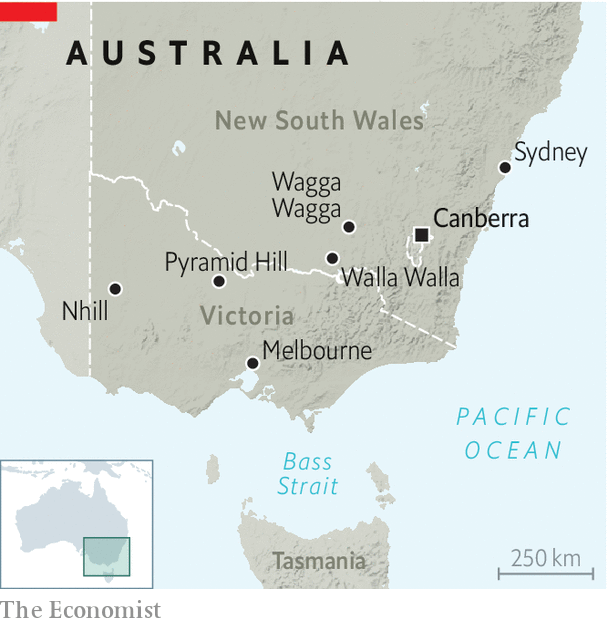
The bureau also released new figures this week projecting slightly slower population growth than previously thought. Melbourne was expected to overtake Sydney as Australia’s largest city around the year 2037.

Professor McDonald said that while Melbourne was growing faster (2.7 per cent in 2016-17) than Sydney (2.1 per cent), politicians were “not talking about cutting migration to Victoria”, even in the heat of a state election campaign.

He also cautioned against blaming surging numbers of international students for clogged roads or packed trains. “As most international students live close to the campus where they are enrolled, they are unlikely to contribute heavily to congestion in Sydney,” Professor McDonald wrote.

Prime Minister Scott Morrison turbocharged the population debate this week by vowing to slash Australia’s migration intake, declaring voters had had “enough, enough, enough”.

He did not name a new figure, but last financial year the government took in a little more than 160,000 permanent migrants, compared to the annual cap of 190,000.

Mr Morrison said he wanted to give the states and territories a greater say in immigration policy, because different states had different needs and knew their own “population carrying capacity”.

Professor McDonald said policymakers in NSW should focus on Sydney’s satellite cities such as Newcastle and Wollongong, which offered a “better long-term proposition to relieve population pressure” in the capital.

Melbourne and Brisbane’s satellite cities – Ballarat, Bendigo, Geelong, the Gold Coast and the Sunshine Coast – were all among the top 10 fastest growing urban centres in Australia, unlike Newcastle and Wollongong.

Professor McDonald previously sat on the federal government’s skilled migration advisory council, was named a Member of the Order of Australia in 2008 and helped oversee the census in 2016. In a 2013 speech, Mr Turnbull described him as “arguably the world’s leading demographer”.

The expert panel, headed by Professor Shergold alongside Infrastructure NSW chief Jim Betts and planning department boss Carolyn McNally, is due to report to Ms Berejiklian this year.

Source: Don’t push the immigration ‘panic button’, leading demographer tells Gladys Berejiklian

Why Canada’s immigration system has been a success, and what Australia can learn from it

Canada and Australia often learn from each other on immigration and related policies (e.g., Express Entry, the point-based system for speeding up the selection process for selecting economic class immigrants) but there are significant differences as this article attests. The author argues that Australia should learn from Canada’s Provincial Nominee Program to diversity where immigrants settle.

Of course, Australian political discourse on immigration is much more polarized, and while Canada is increasing its levels, the current Australian government is reducing them:

Immigration policy will be a critical issue in forthcoming state (Victoria, NSW) and federal elections. The disproportionate impact of immigration on population growth and public infrastructure in Sydney and Melbourne is the key issue.

If we look to the example of another immigrant-friendly country, Canada, however, we can see how giving states and territories a greater role in immigration target setting and selection can help take the pressure off major cities without drastically reducing immigration rates.

Immigration certainly impacts on Australia’s population to a greater degree than most Western nations. Among OECD countries, only Switzerland and Luxembourg have a higher percentage of foreign-born people than Australia.

Today, 28 per cent of the Australian population was born overseas. The key issue for Australia is that immigrants are more likely to live in large cities than smaller cities or regional areas. According to the Australian Bureau of Statistics, 85 per cent of immigrants live in major urban areas, compared to just 64 per cent of Australian-born people.

Indeed, according to the International Organisation for Migration (IOM), Sydney is now equal-fourth in the world (with Auckland and Los Angeles) with the highest percentage of foreign-born residents (39 per cent), while Melbourne is not far behind (35 per cent). Nearly two-thirds of residents in Sydney, Melbourne and Perth have at least one parent who was born overseas.

A new state-based approach?

The stress that rapid population growth has placed on Melbourne and Sydney has recently become a topic of much debate. This week, Prime Minister Scott Morrison pledged to reduce the annual permanent immigration cap of 190,000. Australia accepted just 162,417 immigrants last year, the lowest level in a decade.

Morrison has also called for a major rethink of the “top-down” approach to immigration in Australia, allowing states and territories to request the number of skilled migrants they’d like to admit each year.

The states and territories currently have a limited ability to nominate applicants for certain skilled visas. But state-nominated and regional visa approvals have fallen in recent years to just over 36,000 last fiscal year following tighter restrictions.

Morrison wants to see a bigger role for states and territories:

This is a blinding piece of common sense, which is: how about states who plan for population growth and the Commonwealth government who sets the migration levels, actually bring this together?

What we can learn from Canada

The Canadian government gave provinces a say in setting targets and selecting economic immigrants – similar to Australia’s skilled migration intake – in the early 1990s. Quebec was first to receive a high degree of autonomy in the process – it was given the right to set its own level and selection criteria for all economic immigrants. (The ability to speak French was a must.)

Quebec was also granted the right to set all of its integration programs, funded by Ottawa every year. The payments reached C$540 million this fiscal year, or C$13,500 for each newcomer.

After Quebec was given this authority, the other Canadian provinces demanded the same. But they received far more limited rights than Quebec. They can nominate the number of economic migrants they need as part of the national immigration target set by the federal government, but they can’t independently set their intake target and selection criteria like Quebec.

While provinces nominate – or in Quebec’s case, decide – annual intakes, all cases are still routed through Ottawa for application integrity testing and vetting for criminality, health and security. Ultimately, final approval rests with Ottawa.

Last year, the Canadian government set an ambitious target of admitting 1 million total immigrants from 2018-2020. The target for next year is 330,000 immigrants, of which about 190,000 will be economic migrants. The remainder will enter under the family reunification category and the refugee, humanitarian and protected category.

About one-third of the economic migrants (61,000) will be admitted through the Provincial Nominee Program. This figure excludes Quebec, which will set its numbers separately.

How the Canadian system encourages rural immigration

Giving the provinces a greater immigration policy role has helped to dramatically shift the settlement of immigrants beyond Canada’s biggest cities.

According to immigration statistics, 34% of economic migrants in 2017 landed in destinations outside Canada’s three most populous provinces, Ontario, Quebec and British Columbia – compared to just 10 per cent in 1997.

After immigrants arrive, the key issue for the provinces is retention, since immigrants can leave at any time. The provinces put a strong emphasis on ensuring that economic migrants receive a strong welcome on arrival and are provided with support programs, including education, access to local migrant community networks and assistance finding a job for those who are not sponsored by employers.

One of the biggest success stories of the Provincial Nominee Program is thinly populated Manitoba, which has added 130,000 migrants since 1998. Ninety per cent have gotten a job within a year of arriving and nearly the same number has ended up staying in Manitoba permanently. New arrivals also express some of the greatest feelings of belonging of all immigrants in western Canada.

Why this could work in Australia

South Australia, Tasmania and the Northern Territory – as well as other regional and rural areas across Australia – want more immigrants and refugees.

Attracting immigrants to less-populated states is the easy part: those willing to settle outside Sydney and Melbourne can receive more points if they are skilled migrants, possibly making the difference as to whether they come to Australia or not. The key issue is retention.

My fieldwork with refugees in Australia has shown that the majority of these migrants love living in regional communities and have received a warm welcome from locals. Our research also found they are willing to stay in regional areas if they can get jobs there. Another way of encouraging more immigrants to settle in regional areas could be to offer them priority in the family reunion process.

Importantly, Canada also doesn’t politicise immigration policy. Australia should follow Canada’s lead by giving the states a bigger seat at the immigration policy table and resisting the temptation to blame immigration for complex growth problems in our overcrowded cities.

Reducing the immigration intake cap will have no significant impact on reducing congestion or strain on public infrastructure in Sydney and Melbourne, but it could severely constrain economic growth.

The ConversationJock Collins currently receives research funding from the Australian Research Council for one Discovery Project, two Linkage Projects and one Indigenous Discovery Project.

Source: Why Canada’s immigration system has been a success, and what Australia can learn from it

My Canada2020 podcast on immigration policy

My conversation on Canada2020’s podcast.


The perilous stakes of immigration law by executive fiat

Valid questions:

American presidents long have exercised broad powers over immigration policy. But what are the limits? Since his first days in office, President Trump has forced a national conversation around that question. One of his enduring legacies, for better or worse, may be to compel some hard answers.

In recent weeks alone, President Trump has claimed the authority to end birthright citizenship, issued an executive proclamation to drastically limit asylum eligibility, and deployed thousands of U.S. military troops to enforce immigration law. In each instance, Trump has claimed the inherent presidential authority to do so, with or without congressional approval, and perhaps even despite its disapproval.

Meanwhile, in a recent Supreme Court filing, the Trump administration rigorously defended its decision to terminate President Obama’s Deferred Action for Childhood Arrivals (DACA) program for undocumented youth. In that ongoing litigation, the Trump administration argues that rescinding DACA is justified because the Obama administration exceeded executive authority when it first created the program.

More than ironic, this duality is telling. Trump’s arguments simultaneously posit the need for limits on presidential immigration authority and shine light on the absence of a principled answer to what those limits should be. If nothing else, when sentiments about constitutional power suddenly change when the president does, that should sound an alarm that political preferences are substituting for what the Constitution requires.

Trump’s claim to sweeping executive authority no doubt is emboldened by the Supreme Court’s majority opinion in Trump v. Hawaii, which upheld his so-called travel ban against constitutional challenge. Emphasizing the breadth of presidential power in immigration matters, the five-justice majority declined to scrutinize Trump’s words and actions, as it might have in other regulatory contexts. Instead, the court explained, “[F]or more than a century, [it] has recognized that the admission and exclusion of foreign nationals is a fundamental sovereign attribute exercised by the government’s political departments largely immune from judicial control.”

The court’s extreme judicial deference in immigration traces to the Chinese Exclusion Cases, decided by the Supreme Court in the late 19th century. There, the court determined that the federal political branches had complete authority to exclude and expel immigrants on any basis, including race or nationality.

When those foundational immigration cases were decided, the court’s jurisprudence on constitutional rights was undeveloped, as were the nation’s social norms regarding discrimination. As that jurisprudence and our cultural understandings evolved over time, however, immigration law lagged behind.

The result is a modern-day immigration regime where the normal constitutional rules do not always apply. More concretely, it has allowed presidents across the political spectrum to wield governmental power that would be patently unconstitutional in other regulatory contexts.

The travel-ban case tested the currency of the court’s anachronistic immigration jurisprudence. By declining to modernize it, the court missed an opportunity to bring immigration law — and this president — in line with generally applicable constitutional limits. Now, with his recent directives, Trump is doubling-down on the idea of creating immigration law through executive fiat.

But make no mistake: The stakes transcend immigration law and our sitting president.

Lurking behind the controversies over DACA, “sanctuary cities,” asylum and citizenship, are a set of constitutional values on which those cases turn — from individual rights to separation of powers to state autonomy. The fact that these core concerns arise in situations with an immigration component should not give presidents a free pass on any of these constitutional dimensions. Otherwise, it becomes all too easy for presidents to invoke catchphrases such as “national security” or “alien invasion” to paper over our written Constitution.

Nor should questions about presidential power be confused or replaced with questions about whether we like or dislike a president’s policies. The Constitution was crafted to keep certain values safe from the political whims of any one institution of government — including the president. Constitutional structures do not grind to a halt when Congress does. If anything, congressional inaction is a telltale sign of a nation divided, not a justification for a president to go it alone.

Looking ahead, there is no reason to think future presidents will forfeit power once obtained. Indeed, Trump’s invocations of executive power are perhaps the extreme, but predictable, result of the steady accretion of presidential power over time. This one-way ratcheting of presidential power must be stopped by judicial and congressional intervention, or it will not be stopped at all.

It has become a cliché to invoke America’s status as a “nation of laws.” Less appreciated is that our laws reflect who we are and wish to be as a nation. No president should be able to unilaterally decide our national complexion. Any compromise on that point compromises our constitutional democracy.

Source: The perilous stakes of immigration law by executive fiat

An Excel error could delay Japan’s massive immigration overhaul

As someone who works a lot with data, this can happen. But it shouldn’t, given government validation and checking processes:

Japan’s government seems to be in need of some tech support.

Its plans to pass a crucial immigration bill that could open the country’s doors further to as many as 340,000 foreign workers from next year might be stymied due to data input errors.

Japan’s government had given lawmakers an analysis of why foreign workers in the country are dropping out of an existing work training program, as it argues for the country to create create two new categories of work visas. The justice ministry admitted last week that the data on those workers was incorrect, and blamed the problems on the handling of an Excel spreadsheet, Japan Times reported yesterday (Nov. 19). For example, the analysis exaggerated the number of foreign workers who left their jobs because they wanted higher-paying positions, rather than to escape poor wages or working conditions.

There are some 1.3 million foreign workers in Japan as of 2017, a 17% increase from the previous year, as businesses try and fill positions in industries ranging from construction to food preparation to nursing amid a shrinkage in Japan’s working population. Right now, foreign workers filling run-of-the-mill jobs are often in the country on temporary “trainee” visas that lock them into employers.

The proposed work-visa categories, approved this month by prime minister Shinzo Abe’s cabinet, would allow those with “specified skills” in the most labor-starved industries to live and work in Japan under for up to five years. The new visa status would also allow such workers more flexibility in changing jobs, which would make them less vulnerable, proponents of greater immigration to Japan say.

Though Japan’s justice ministry has said that the errors were the result of mistakes in data processing—the latest IT mishap after Japan’s newly appointed cybersecurity minister admitted that he had never used a computer—opposition lawmakers have accused the government of glossing over the problems with the current trainee program in order to rush the bill through.

In the revised data, the government said for example that 12.6% of trainees said that they left their jobs because of harsh working conditions, up from the previous 5.4% presented by the ministry. Opposition legislators boycotted a debate over the immigration overhaul in the Diet last week in protest, but deliberations could resume this week.Many of those currently working as trainees are expected to switch over to the new visa status once the bill becomes law.

Calling foreign workers technical trainees or interns was a workaround for the government to keep it from having to admit that more people from overseas are living in Japan—a country where many remain deeply apprehensive about immigration, even as it struggles with a severe labor shortage. But it’s also a workaround that has left thousands of workers vulnerable to exploitation by employers and the brokers who bring them over, as many of these trainees told lawmakers earlier this month.

Source: An Excel error could delay Japan’s massive immigration overhaul

And public opinion appears sceptical regarding the proposed changes:

Sixty-four percent of respondents said there is no rush to revise the immigration control law to expand the acceptance of foreign workers from next spring, according to an Asahi Shimbun poll released on Nov. 20.

They said it is not necessary to pass the revisions in the current extraordinary Diet session, while 22 percent of respondents believe it should be.

The nationwide poll was conducted Nov. 17 and 18.

The government and the ruling parties are seeking to pass the revisions to the immigration control law in the current Diet session.

However, even among supporters of the Liberal Democratic Party, the main force of the ruling coalition, 57 percent said that it is not necessary to do so. Only 31 percent replied that the revisions should be passed in the current session.

The survey also asked respondents about whether they support the expansion of acceptance of foreign workers. Forty-five percent, down from 49 percent in the previous survey in October, said they support it. Forty-three percent, up from 37 percent, expressed opposition.

Prime Minister Shinzo Abe has said that accepting more foreign workers into Japan is not a policy of accepting immigrants. As for Abe’s comment, 52 percent of respondents said that they don’t accept the explanation while 29 percent replied that they agree with it.

In the latest poll, the support rate for the Abe Cabinet stood at 43 percent, up from 40 percent of the previous survey, while the nonsupport rate was 34 percent, down from 40 percent.

The latest number means that the support rate for the Abe Cabinet recovered to the levels recorded in January and February polls, which were taken prior to the revelation of the alteration of Finance Ministry documents.

Respondents also were asked about the four islands off eastern Hokkaido that were occupied by the Soviet Union at the end of World War II in 1945. The islands, called the Northern Territories in Japan, are Etorofu, Kunashiri, Shikotan and Habomai.

Abe agreed with Russian President Vladimir Putin in their summit on Nov. 14 to accelerate peace treaty negotiations based on the 1956 Japan-Soviet joint declaration that stipulates the return of two islands, Shikotan and Habomai, to Japan after concluding a peace treaty.

The survey asked respondents if they expect an agreement to lead to a resolution of the long stalemate over the Northern Territories issue.

A total of 60 percent replied that they don’t expect that at all or very much. Thirty-eight percent responded that they very much expect it or at least to some degree.

The survey also asked about how Japan should deal with the Northern Territories issue.

Fifty-one percent replied that the government should first seek the return of Shikotan and Habomai and continue to hold negotiations on the return of the remaining two islands.

Meanwhile, 25 percent said Russia should return the four islands at the same time, and 11 percent said that Japan should conclude the Northern Territories issue with the return of the two islands. Six percent replied that Japan should not seek the return of any of the four islands.

The Asahi Shimbun conducted the survey through land-line telephones and mobile phones of eligible voters chosen randomly by computer.

Of 2,048 households contacted with land-line telephones, 991 people, or 48 percent, gave valid responses. As for mobile phone users, 949 of 2,022 people, or 47 percent, gave valid responses.

Land-line telephones do not include those located in a part of Fukushima Prefecture.

Source:  Poll: 64% say not necessary to rush revisions to immigration law November 20, 2018 Sixty-four percent of respondents said there is no rush to revise the 


Why immigration could be a high-risk, low-reward issue in the 2019 election

Eric Grenier’s take on the political implications of the latest Focus 2018 survey (Focus Canada Fall 2018 – FINAL REPORTFocus Canada Fall 2018 – DETAILED DATA TABLES)

Though the political debate over immigration and border security has made a lot of noise in recent months, it might turn out to be a dud in the 2019 federal election — or it could blow up in the face of the party leader who risks making an issue of it.

A new survey by the Environics Institute shows that Canadians’ opinions on immigration and refugees have hardly budged from the generally upbeat views recorded by the polling firm over the last few years. A majority of Canadians (58 per cent) say they do not believe that immigration levels are too high, while 76 per cent say that the overall impact of immigration on the Canadian economy has been positive.

But the numbers suggest there’s still an audience for a political party demanding a reduction in immigration and greater efforts to ensure immigrants adopt “Canadian values” — both policies embraced by the new People’s Party launched by former Conservative leadership contender Maxime Bernier.

This could prove to be a point of vulnerability for Andrew Scheer’s Conservatives.

The Conservatives have been sharply critical of Prime Minister Justin Trudeau’s immigration policies since the beginning of a surge in the number of asylum seekers crossing Canada’s borders illegally. But those criticisms have been limited to questions of fairness regarding those asylum seekers who try to enter Canada illegally, and claims that the government has no plans in place to adequately house, employ and integrate immigrants.

The Conservatives have been careful to state that they are pro-immigration and are not asking for a reduction in the annual intake.

But that puts the party at odds with many of its own supporters — who appear to be more in line with where Bernier’s party is positioning itself on the issue.

Overall, immigration isn’t a top-of-mind issue for voters, according to the Environics Institute poll. Only five per cent of Canadians — and just six per cent of Conservative voters — cite immigration and refugees as the most important issues facing Canadians today. That’s up only one point since April 2017.

Over the same time, the percentage of Canadians who list the environment and climate change as the most important issue has jumped five points to 10 per cent, second only to economic issues.

Health care, the government’s record, social issues and unemployment also scored higher than immigration in the Environics Institute’s research.

Few votes to win in Quebec on immigration

Immigration ranked low on the priority list in Quebec, where the bulk of asylum seekers have crossed into Canada and where a provincial election was just waged, in part, over the issue of immigration.

Only seven per cent of Quebecers listed it as their top issue. On immigration levels, the legitimacy of refugee claims and immigrants’ impacts on the economy, opinions in Quebec were in line with those in the country as a whole.

This suggests those seeing a hard line on immigration as a winning formula in Quebec are drawing the wrong lessons from the Coalition Avenir Québec’s win in the October provincial election. The CAQ promised to reduce the province’s immigration intake and do more to integrate those who arrive. But the Liberal government of Philippe Couillard was unpopular long before immigration popped up as an issue in the campaign — and CAQ Leader François Legault’s clumsy handling of the file nearly cost him his victory.

Conservative, PPC voters on the same page

The starkest divisions in Canadians’ views on immigration are found not between regions, age groups or education levels, but between supporters of the major parties themselves. While Liberals and New Democrats generally view immigration in the same positive light, Conservative voters see things very differently — though they are no longer alone on that side of the spectrum.

The Environics Institute poll surveyed a small sample of just 63 People’s Party of Canada supporters, so the margin of error on the PPC numbers is high. But the difference between Liberal and NDP supporters on the one hand and Conservative and PPC supporters on the other (and the strong similarity between the views expressed by the last two groups) is so marked that the results are still meaningful.

Just 22 per cent of Liberals and 24 per cent of New Democrats think Canada takes in too many immigrants. But 52 per cent of Conservatives and 47 per cent of PPC supporters think so.

Meanwhile, 58 per cent of Conservatives and 55 per cent of Bernier’s supporters think most refugee claims are illegitimate. Just 30 per cent of Liberals and 32 per cent of New Democrats agree.

And 73 per cent of PPC voters and 70 per cent of Conservatives think too many immigrants are failing to adopt “Canadian values,” compared to 38 per cent of Liberals and 40 per cent of New Democrats.

Perhaps most stark are the responses Environics heard when it asked whether immigrants make the country better or worse. While 62 per cent of Liberals say immigrants make the country better and just six per cent think they make it worse, Conservatives and People’s Party supporters were split three ways.

Among Conservatives, 28 per cent said immigrants make the country better, 31 per cent said worse and 32 per cent said they make no difference. For the People’s Party, those numbers were 32, 34 and 31 per cent, respectively.

This suggests Scheer could be vulnerable on immigration if it flares up as an issue during the 2019 federal election campaign. The Conservative Party might find itself out of step with its own supporters. Normally, that wouldn’t be a problem — these voters were not going to head over to the Liberals or NDP — but Bernier’s People’s Party will be an option on the ballot that didn’t exist before.

One thing that does separate Conservative voters from People’s Party supporters is U.S. President Donald Trump. Only 13 per cent of Canadians approve of the president and Conservatives say they disapprove of Trump by a margin of two-to-one. PPC voters are split down the middle on Trump — which perhaps explains why Bernier hasn’t shied away from adopting a “Canada first” message in recent speeches.

Immigrants key to a Liberal victory in 2019

But while immigration might not turn out to be the central issue of the next federal election, immigrants themselves could play a key role.

The poll suggests that if the Liberals win next year, immigrants could be an important factor in that victory. Among voters born in Canada, the Conservatives led the Liberals by two points in the poll. But among voters born elsewhere, the Liberals held a 16-point lead. That’s what makes the difference between a neck-and-neck race and an environment that favours the re-election of Trudeau’s government.

But the poll also suggests that there’s very little difference between how Canadians born in this country and those born outside of it see immigration. In other words, however a party drafts its immigration platform, the degree to which that platform appeals to voters won’t depend on how long those voters and their families have been living here.

One noticeable difference in opinion emerged on the question of whether immigrants make Canada better or worse. By a margin of 54 to 15 per cent, immigrants said that immigration made Canada a better place. Among people who were at least third-generation Canadians, however, the margin was 40 to 19 per cent.

That suggests immigrants are (understandably) sensitive to questions about the value they bring to their new home. Policies that advocate for better integration, or lower intake targets, may not repel immigrants any more than they would non-immigrants. But the perception that a party is anti-immigrant could cause it some real trouble.

In short, immigration looks like delicate balancing act for any party wading into the debate without a positive story to tell.

Source: Why immigration could be a high-risk, low-reward issue in the 2019 election

Australians divided on immigration from Muslim countries, new polling shows

Haven’t seen comparable data from Canada but the “values” question generally – but not exclusively – refers to worries about integration of Muslims:

Australians believe there are six times as many Muslims in the country than the number who actually live here, a new poll shows.

The latest Fairfax-Ipsos poll found Australians “often overestimate the proportion of the population that is Muslim” with respondents “believing it is 17 per cent when the reality is [around] 3 per cent”, Fairfax reported on Monday.

According to the 2016 Census, the size of the Muslim population in this country is 604,200 people, or 2.6 per cent of the total population.

This compares to 30.1 per cent of Australians who have no religion, 22.6 per cent who are Catholic and 13.3 per cent who are Anglican.

The poll of 1200 voters found that 45 per cent of voters believe the number of immigrants coming to Australia should be reduced, with 23 per cent arguing for a rise and 29 per cent happy with the status quo.

When asked about the number of immigrants from Muslim countries, 46 per cent supported a cut while 35 per cent were happy with current levels and 14 per cent wanted an increase.

The poll comes as Prime Minister Scott Morrison considers possible changes to Australia’s immigration system.

Mr Morrison in September signalled plans to slow the intake of some temporary migrants and to encourage new arrivals to settle outside of congested major cities.

On Monday, Defence Minister Christopher Pyne said the government will be sticking to its non-discriminatory immigration policy.

“We have a non-discriminatory policy, that must remain in place … we need to manage our population growth sensibly in a country which quite frankly can take a lot more than 25 million people,” Mr Pyne told Sky News.

Last month, NSW Premier Gladys Berejiklian has called for a return to Howard-era immigration levels of about 45,000 a year.

Meanwhile, the poll also revealed that Mr Morrison’s coalition government trails Labor by 48 per cent to 52 per cent on a two-party preferred basis.

But Mr Morrision remains the preferred prime minister, with a 47 per cent to 35 per cent lead over Opposition Leader Bill Shorten.

On energy policy, the poll found that voters want the government to focus on reducing household bills (47 per cent), followed by reducing carbon emissions (39 per cent).

The National Energy Guarantee was declared “dead” by Mr Morrison after becoming prime minister, but the government has recently floated the idea of underwriting a new power generation project to help s to drive prices down and increase competition.

Source: Australians divided on immigration from Muslim countries, new polling shows

Ahead of a federal election, what road will Conservatives take on immigration?

The latest by Michael Adams. See my earlier take on Conservative immigration critic Michelle Rempel on her positioning (Conservative immigration critique of the levels plan):

On the surface, the contrast between Canada and the United States on immigration is sharp. U.S. President Donald Trump was recently warning of an “invasion” by a group of migrants crossing Mexico on foot, even going so far as to send troops to the border in a theatrical flourish just ahead of the mid-term elections.

Around the same time, Canada’s Prime Minister was apologizing for this country’s refusal to accept the 907 German Jewish refugees aboard the MS St. Louis who sought safety in Canada in 1939. Justin Trudeau drew parallels to our own time – noting refugees are still on the move around the globe and the resurgent anti-Semitism evidenced by the recent mass shooting in Pittsburgh.

But despite the Prime Minister’s humanitarian gestures – and the fact that the Immigration Minister is touring the country making the case for higher immigration levels and a compassionate asylum policy – there is certainly an appetite in Canada for a thicker border and a more hard-line approach to immigrants and refugees. Responding to that appetite is something politicians who wish to court those voters will need to do carefully.

There was a time when those who question the fundamentals of Canada’s approach to immigration, multiculturalism and refugees were spread across all political parties. Over the past 20 years, research indicates that this constituency has become concentrated in the Conservative Party. These voters are not the majority of the Conservative Party, but they’ve been gravitating in that direction for a number of years.

For most of his time in government, former prime minster Stephen Harper resisted the temptation to court xenophobic feeling on the political right; instead, he built a Conservative majority in part by courting the newcomers and settled immigrant communities in Canadian suburbs. He also cultivated an increasingly diverse caucus and cabinet. In 2015, a pivot to more xenophobic messaging, including the introduction of the “barbaric cultural practices” snitch line promoted by ministers Kellie Leitch and Chris Alexander, proved the wisdom of his earlier approach: The divisive gambit backfired and helped fuel a Liberal majority.

As the Conservatives prepare for the next federal election, they are in a tight spot. They can’t win government – and certainly not a majority – without appealing to new Canadians who are the key to winning ridings in the suburbs of large Canadian cities. At the same time, they need to appear in touch with voters who are having second thoughts about Canada’s current policies and practices on immigration, refugees and multiculturalism. Our data indicate that Canadians who are most likely to question the status quo on migration-related issues are concentrated in Alberta and Saskatchewan, where Conservatives rely on racking up plenty of seats. Attracting these two groups simultaneously will be a tricky task.

Conservative Leader Andrew Scheer will probably remember the lessons of 2015 – but he’ll also feel Maxime Bernier breathing down his neck. The platform of Mr. Bernier’s breakaway People’s Party proposes immigration levels substantially lower than those currently in place and opposes the use of immigration “as a tool to forcibly change the cultural character and social fabric of Canada.” Virtually every vote Mr. Bernier wins with these policy ideas will be a vote that’s siphoned away from Mr. Scheer’s Conservatives – a threat that is especially acute in the Quebec City area and in rural Quebec, where the CAQ did so well in the recent provincial election.

Many commentators have wondered whether the blatant racism and xenophobia advanced by far-right candidates in Europe and now the United States will take hold in Canada, where no major political party in recent decades has adopted strongly anti-immigrant policies or rhetoric. Could it happen here?

With the emergence of Mr. Bernier’s party and the success of the CAQ, some variation is here today. The question is whether Canada’s case of xenophobic populism will be a mild one that inoculates us against a more virulent strain, or whether it will take hold and change the norms of our political culture in a deeper way.

To some extent, this will be up to Mr. Scheer himself: Will he compete with Mr. Bernier for anti-immigration votes and expand the issue’s place in our political discourse? Or will he follow the model of the early Harper years, when the Conservatives used pocketbook issues and selected socially conservative messages to connect with new Canadians?

His answer will affect his party’s fortunes – and likely have a powerful effect on Canadian political culture for years to come.

Source: Ahead of a federal election, what road will Conservatives take on immigration?: Michael Adams

Latinos Increasingly Concerned About Their Place In U.S. Society, Survey Finds

Hardly surprising given the language of President Trump and the impact of his policies:

One out of every two Latinos in the United States says that life has become more difficult for them in the past year, according to a recent survey by the Pew Research Center, a nonpartisan think tank in Washington, D.C.

Mark Lopez, director of global migration and demography research at Pew and a co-writer of the survey, says the findings reflect a turn “towards being pessimistic about the country, about the direction of the country and also the future for their own children.”

Lopez says Latinos have traditionally been more optimistic than the general U.S. population about life in the United States. “But that’s changed,” he says.

Nearly 4 in 10 Latinos say they experienced some kind of harassment related to their ethnicity in the past year.

Chart showing that four-in-ten Latinos experienced an incident and heard expressions of support tied to their background in the past year.

Yet a similar number say they have also heard expressions of support for Latinos.

The experience of 38-year-old Janet Sadriu illustrates both of these findings.

Sadriu was driving on a two-lane, 35 mile-an-hour city street in Houston recently when a driver passed her on the right, pulled next to her and started yelling obscenities at her at a red traffic light. She pulled out her phone and started recording him.

Houston resident Janet Sadriu recorded this video when a driver started yelling obscenities at her at a red traffic light.

“I don’t know him,” says Sadriu, “but he automatically assumed I’m Hispanic. I have black hair, I’m not blue-eyed and white.”

“Learn English,” he rants in the video. “It’s my country. Get out.”

Sadriu was born in Mexico. She’s a U.S. citizen and has lived in the United States since 2009.

“I was shocked and shaken,” she says. “I was afraid that this man was going to follow me and pull out a gun.”

Sadriu, whose 2-year-old daughter was in the car with her, filed a police report.

Sadriu says she was angry when she posted her video on social media. “I was thinking of other immigrants who are out of status,” she explained, “and who are afraid to speak up or ashamed and would not expose this man’s ugly behavior.” But she’s also hoping for change, so that “by the time my daughter is older, she is going to live in a world where all the racism and hate and bullying is gone.”

She says the response has been overwhelmingly kind and supportive.People from all over don’t agree with this type of behavior,” she says.

According to the Pew survey, 38 percent of Latino respondents experienced similar incidents in the past year. Some said they were asked not to speak Spanish in public or were told to go back to their country.

Nearly two-thirds of Latino respondents say that Trump administration’s policies have been harmful to their communities. The survey found many Latinos are more worried about deportation and family separation. They are also more concerned about their personal finances than in past years, even though the country’s economy is doing well and Latino unemployment is at historic lows, according to Pew.

Social media documents harassment

Other recent examples of harassment include an incident in May, when a lawyer in Manhattan threatened to call ICE agents on the kitchen staff making his lunch.

Last month, a Colorado woman harassed two women for speaking Spanish at a supermarket.

At Andy’s Restaurant in Lovettsville, Va., in October, a Guatemalan family was accosted by a white woman finger-wagging at them for speaking Spanish. In the video, the woman is heard demanding, “show me your passports,” followed by, “go back to your f****** country.”

A response to the belligerent woman was posted on Andy’s Facebook pageby the restaurant owners. “Thank you for thinking that you have a right to express your venomous and vitriolic views — no matter how odious and ignorant — wherever and whenever you desire,” they posted. “Thank you —and we mean this with all the aforementioned respect that you rightfully deserve — for never returning to Andy’s. You are not welcome.”

Comments to Andy’s Facebook post quickly poured in from all over the country with words of support like Caroline Hart’s: “Thank god for human beings like you.”

Janet Sadriu, the Houston mom who experienced verbal harassment while driving “just for my looks,” has a message for Hispanics who encounter such harassment. She urges them “not to be afraid and speak up.” There are more good than bad people out there, she says.

Source: Latinos Increasingly Concerned About Their Place In U.S. Society, Survey Finds

John Ivison: Neither left nor right should politicize Canada’s immigration system

Naive to expect that parties will not politicize immigration and related issues.

The question is how they do so, what language they use, and the extent to which and how they virtue signal and practice identity politics.

The major parties largely stay within reasonable bounds. Bernier, as Ivison notes, does not:

The personal pronoun is best avoided, even by opinion columnists. In this instance it is necessary, to provide some context.

I was in a sombre mood on Remembrance Day, having posted a tribute on Twitter to three generations of my family who wore a uniform so I didn’t have to.

As I scrolled through the flotsam on my feed, I came across a tweet by Maxime Bernier, the former Conservative leadership candidate who recently broke away to form his own party. He was lamenting the case of Asia Bibi, the Pakistani Christian woman who spent eight years on death row charged with blasphemy and who, after being acquitted by Pakistan’s Supreme Court, is now at risk of extra-judicial assassination.

Bernier was quite rightly decrying the “barbarism” on the streets of Karachi. But he twisted his condemnation for his own political ends, calling for the need to “protect our society” from a threat that patently does not exist on the streets of Canadian cities.

“Radical multiculturalism is the misguided belief that all values and cultures can co-exist in one society. They cannot,” his tweet said.

The tweet came across as a transparent ploy to attract support by espousing views which, if sincerely held, he kept to himself for 15 years as part of a government that regularly expanded the number of immigrants coming to Canada from countries like Pakistan. The fact that he expressed such intolerance on Remembrance Day amplified its effect.

Some time later, I came across a video of two Eritrean children who were new to Canada and were discovering the sheer delight of their first snowfall. With Bernier’s comments still disturbing my mood, I rattled off a tongue-in-cheek retweet: “This is the kind of extreme, radical multiculturalism we’ve been hearing about. Clearly, a grave threat to our way of life.”

My comment touched a nerve, going viral with about 10,000 people “liking” it. Some people got into the spirit of it: “They are going to take our spots on the toboggan hills — I’m afraid there won’t be enough snow left for the rest of us,” wrote Rudy Reimer, not entirely seriously.

On reflection, perhaps it sullied something that should not have been politicized. “Too bad you had to use such a happy, carefree occasion to take a political swipe at some conservatives who have a genuine concern over Canada’s immigration policy,” Eric Nissen responded.

Many, many people criticized me for glibness, and, in turn, federal immigration policy, accusing it of importing “criminals and terrorists.” The father was probably busy making a bomb, one brave individual wrote behind the cloak of a ridiculous pseudonym.

The 2019 election will be won by the party that can best address the anxieties voters are feeling about the affordability of housing, wages and the cost of living. But as this little incident highlighted, deep political cleavages over cultural diversity are hardening as the consensus over mass immigration comes under increased pressure.

The nation is split on the issue as never before in recent memory. Research by Abacus Data suggests there is a 55-45 per cent divide between those who think immigration is a net positive versus those who think it is a net negative.

Conservative voters are most concerned — 63 per cent agreed with the statement that immigrants are a burden on our country because they take our jobs, housing and healthcare. But so did 32 per cent of Liberal supporters and 42 per cent of NDP voters.

The divisions and anxieties may not be as sharp as in the U.S. and parts of Europe, but Canada is not immune from the culture wars.

I’m an immigrant but I have concerns about the risks of the system being politicized. The Liberal Party is intent on raising the proportion of family-class permanent residents and refugees because it plays well in certain ridings.

There are also legitimate concerns about the integrity of the system as migrants seeking a better life stream across the Canada-U.S. border. The number of Nigerians claiming refugee status in Canada surged by 300 per cent in the first six months of 2018. Further, there very real worries that the models used to set immigration levels in the coming decades have not taken account of artificial intelligence and its impact on labour markets.

But these are not the concerns we are hearing from Bernier. “We must start pushing back against this politically correct nonsense that is destroying our society and our culture,” he said in a speech in Calgary last weekend.

Is our society being destroyed? Is Remembrance Day under threat? It didn’t seem that way on Sunday, as millions of Canadians paid their respects to those who made the ultimate sacrifices for our freedoms.

Bernier was using ultrasonic messaging, playing on a prospect frightening to many Canadian-born voters: that they will end up as a minority population in their own country.

Canada has long been said to suffer from a range of neuroses, from separation anxiety to an inferiority complex. But the real fear for many in English and French Canada in 2018 is that “the elites” are ignoring their concerns in favour of protecting the rights of minorities. Gains for immigrants are seen as losses for the native-born, who already see themselves as being under financial pressure.

There are racists and fascists out there — I spent a busy morning blocking them on Twitter. But most people who feel unease at higher immigration levels don’t see themselves as racist. Many could be persuaded to reassess, if our leaders could articulate a vibrant Canadian cultural identity that benefits from newcomers.

We certainly need a rallying call more convincing than Justin Trudeau’s contention that “there is no core identity, no mainstream in Canada” — the world’s “first post-national state,” as he told the New York Times Magazine.

The former is demonstrably untrue, the latter gibberish.

It requires real leadership to articulate and promote the consensus that still exists over cultural diversity. Canadian identity is built on hockey, maple syrup, snow and lumberjacks. But it goes beyond that, as Shane Koyczan noted in his wonderful poem, We Are More.

Canada is “an experiment going right for a change,” he wrote.

“We are an idea in the process of being realized,
We are young,
We are cultures strung together,
Then woven into a tapestry,
And the design is what makes us more
Than the sum total of our history.”

Amen to that.

Source: John Ivison: Neither left nor right should politicize Canada’s immigration system