Canada to dramatically raise fees for deportees who return to Canada

Of note:

The federal government is planning to drastically raise the removal fees levied against deportees in order to recover the full costs associated with sending inadmissible foreign nationals home.

According to a proposed fee schedule, regardless of the destination, individuals who were removed without being escorted by border agents would be charged $3,250 and those with escorts would need to to fork out $10,900. There would be an extra $1,300 fee for detention.

Currently, Canada Border Services Agency only has two removal rates: $750 for foreign nationals deported to the United States or the French territory of St. Pierre and Miquelon; and $1,500 for those removed to any other countries.

The existing fee scheme has not been updated in more than 25 years. It does not align with the costs, nor does it leverage technology to ensure that outstanding removal costs owed by foreign nationals are recovered before receiving authorization to return to Canada.

“The cost of removal varies substantially regardless of destination of removal, based on factors such as whether or not the foreign national has been detained for removal, and/or has to be escorted by CBSA officers,” said the agency’s spokesperson Mark Stuart.

“The CBSA is considering a potential regulatory amendment proposal that would make a distinction between escorted removals and non-escorted removals because the average enforcement expenditure is higher for escorted removals than it is for unescorted removals.”

Stuart said any proposed changes would likely not come into effect until late in the 2021-2022 fiscal year.

Costs can only be recovered by the agency or the immigration department when a previously removed person seeks to apply for an authorization to return to Canada.

Canadian immigration and border officials do not work with overseas partners, including foreign governments, to collect the money, nor do they seize the person’s assets in Canada and collect the money from the person’s remaining family members here.

“Records will indicate whether an applicant paid for their airfare themselves, which means they will only be charged the $400 Authorization to Return to Canada processing fee,” said Stuart.

“If there’s no indication that they paid for the airfare themselves, they must provide evidence of that or refund the cost of their removal. No application (for the authorization) can be accepted until such evidence is provided.”

Between 2015 and 2019, Canada recovered removal costs from 164 foreign nationals in the U.S. or St-Pierre and Miquelon and 1,576 from anywhere else, bringing almost $2.5 million into the government’s general coffers.

The proposed fee amendment will include a provision to allow an automatic annual fee adjustment based on Canada’s consumer price index.

“These potential regulatory changes will help protect the integrity of Canada’s immigration enforcement program by ensuring that the CBSA’s removal program remains cost-effective,” the agency said in a consultation notice.

“They would also help offset the government’s immigration- and asylum-related enforcement costs, thereby providing value from the perspective of Canadian taxpayers.”

Source: Canada to dramatically raise fees for deportees who return to Canada

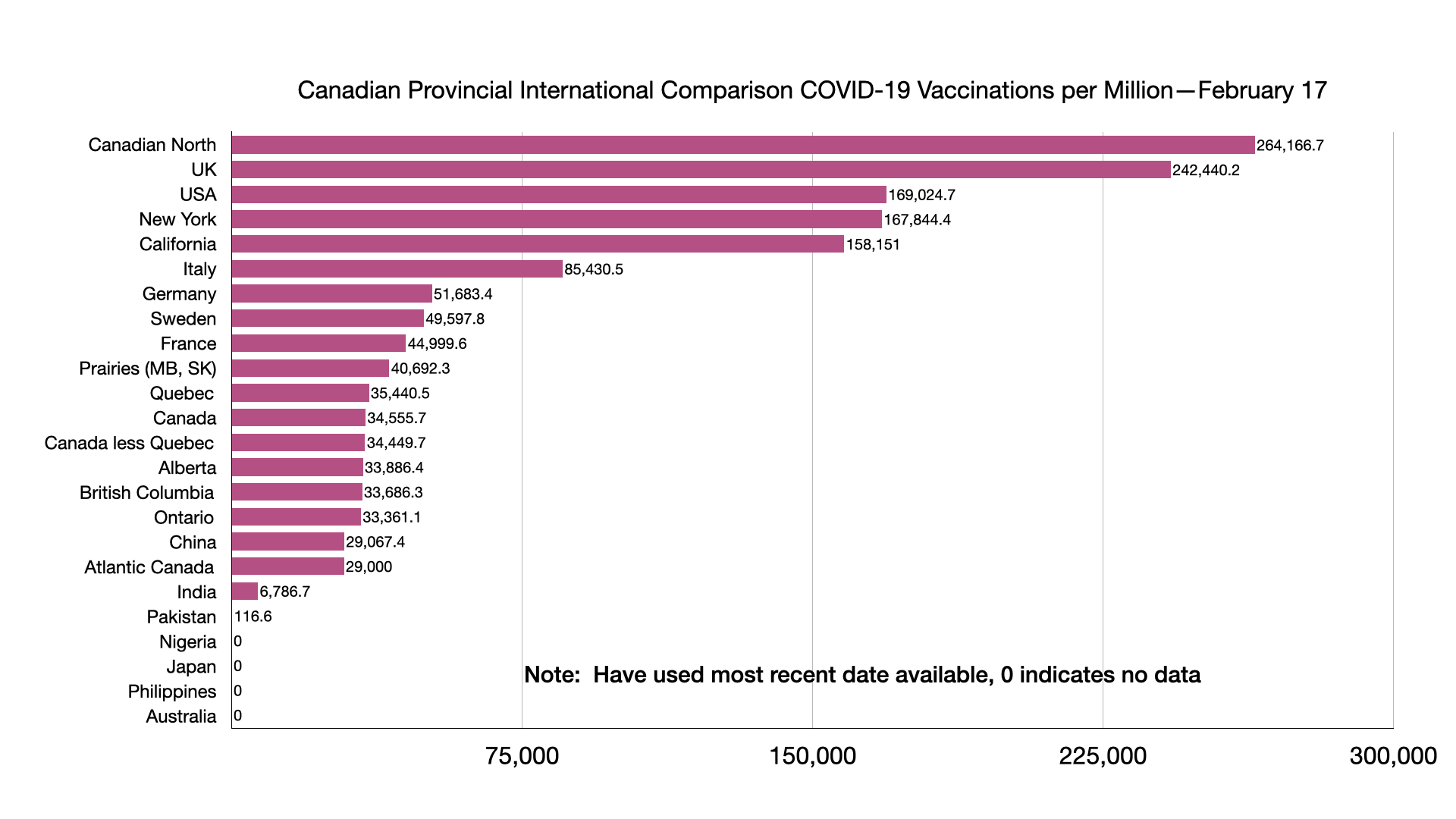
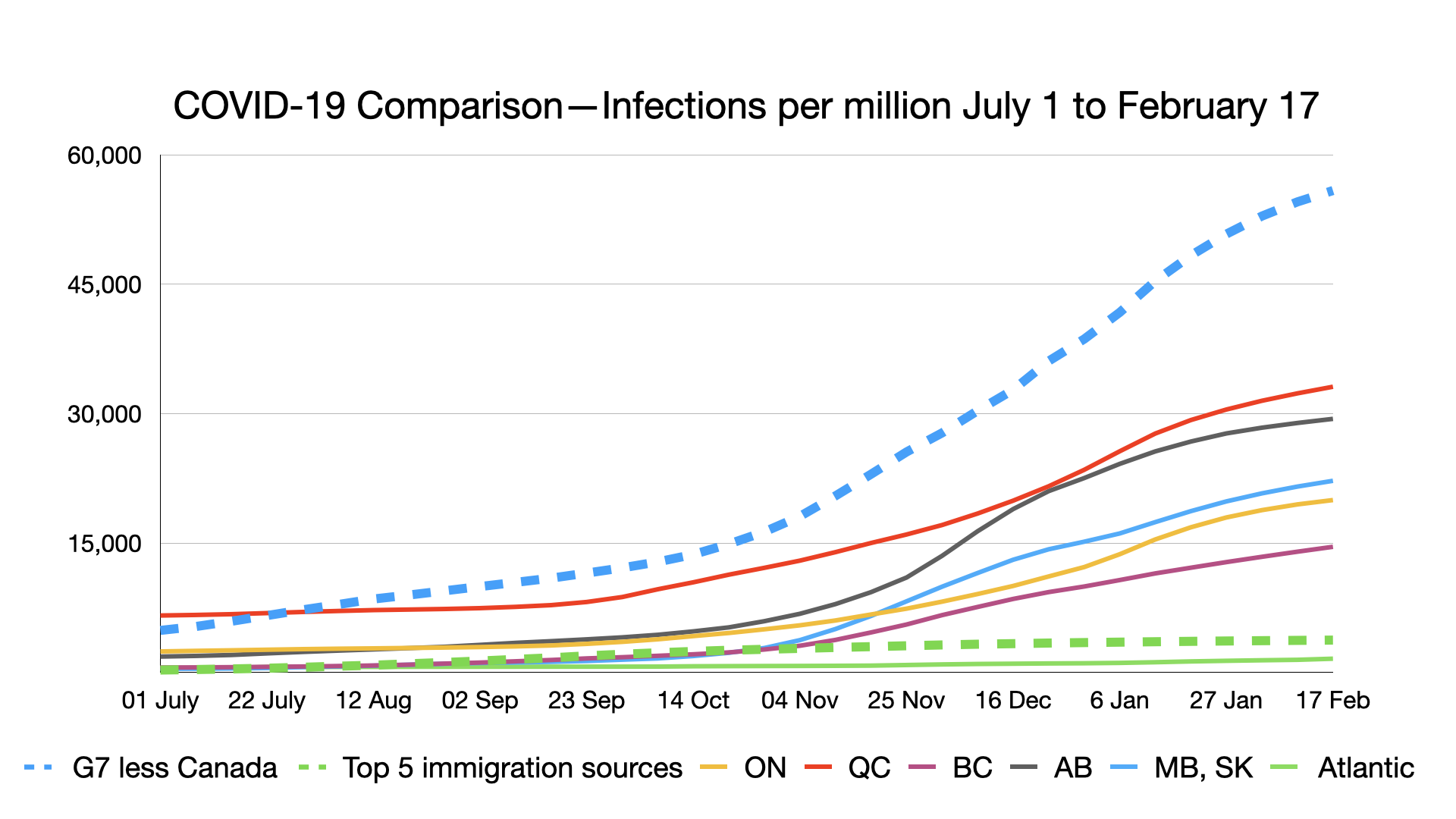
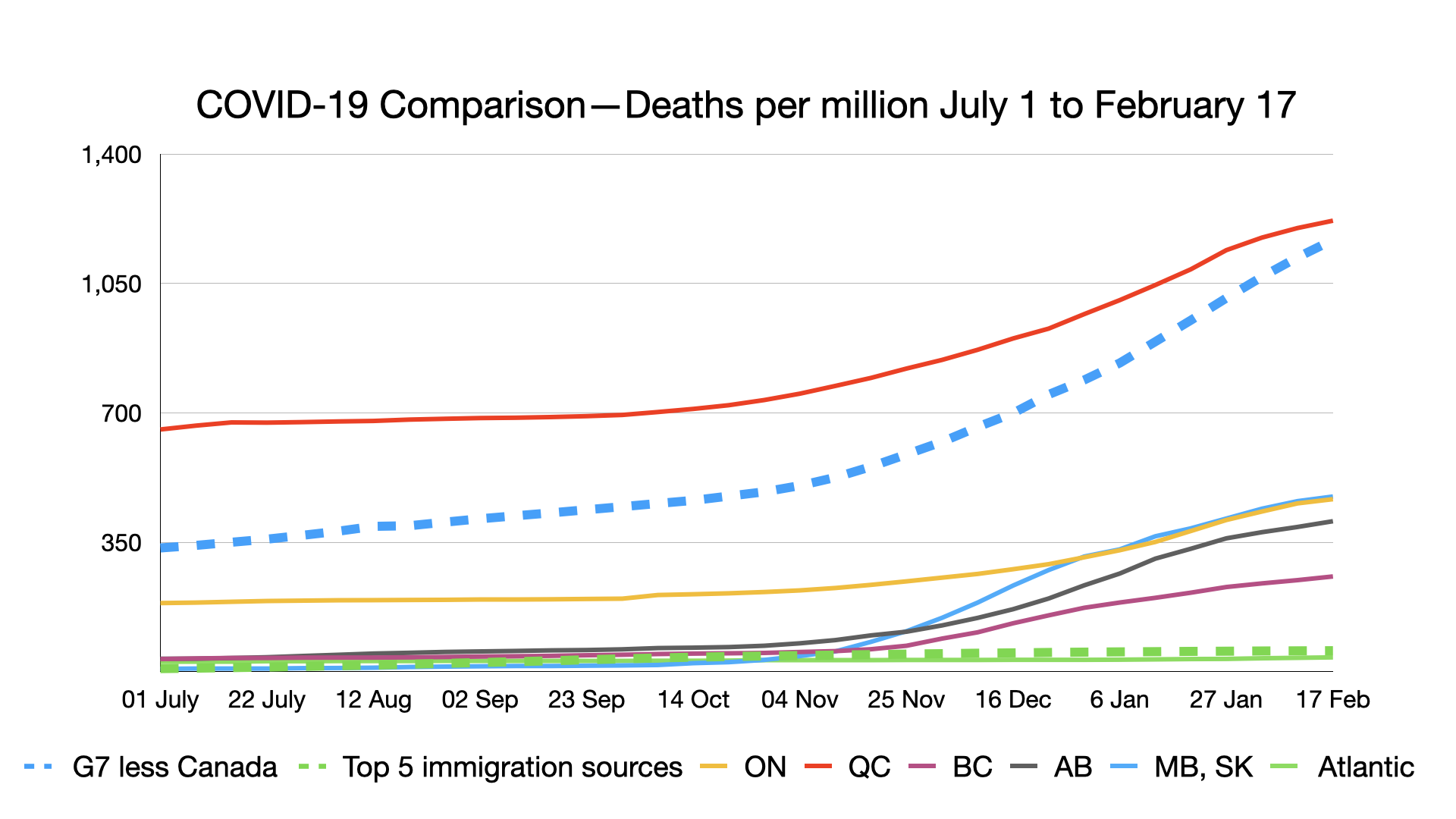
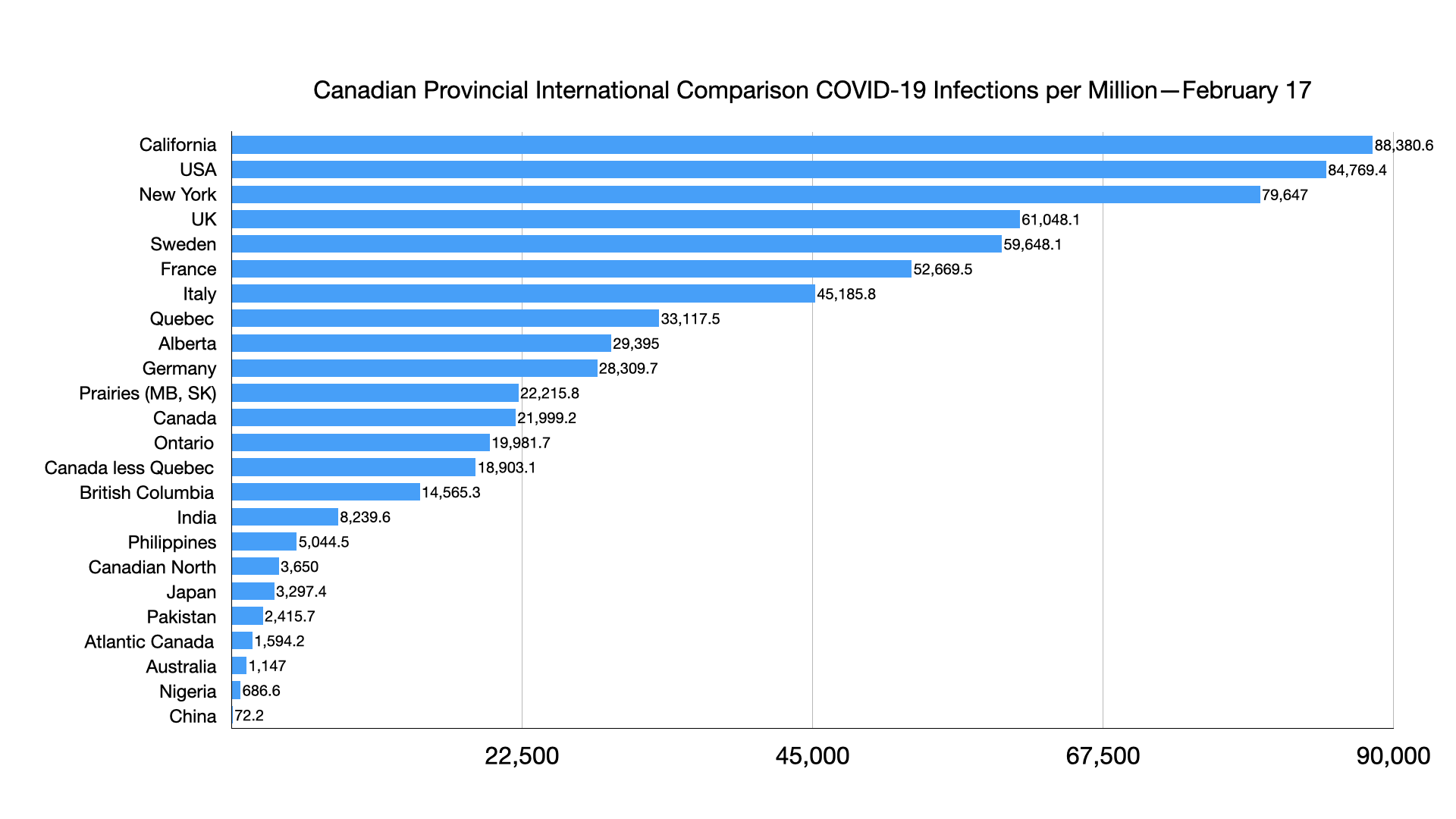
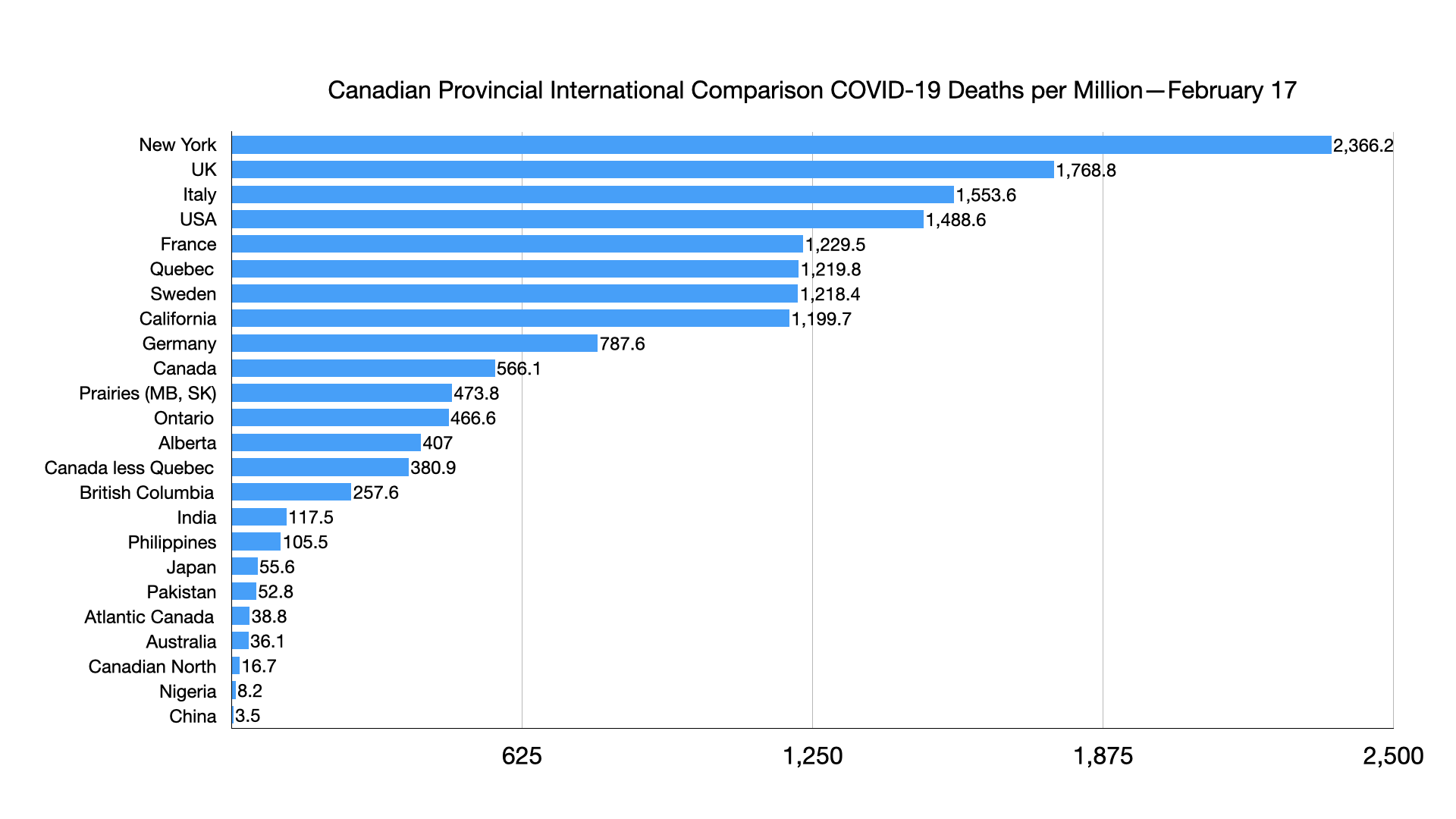
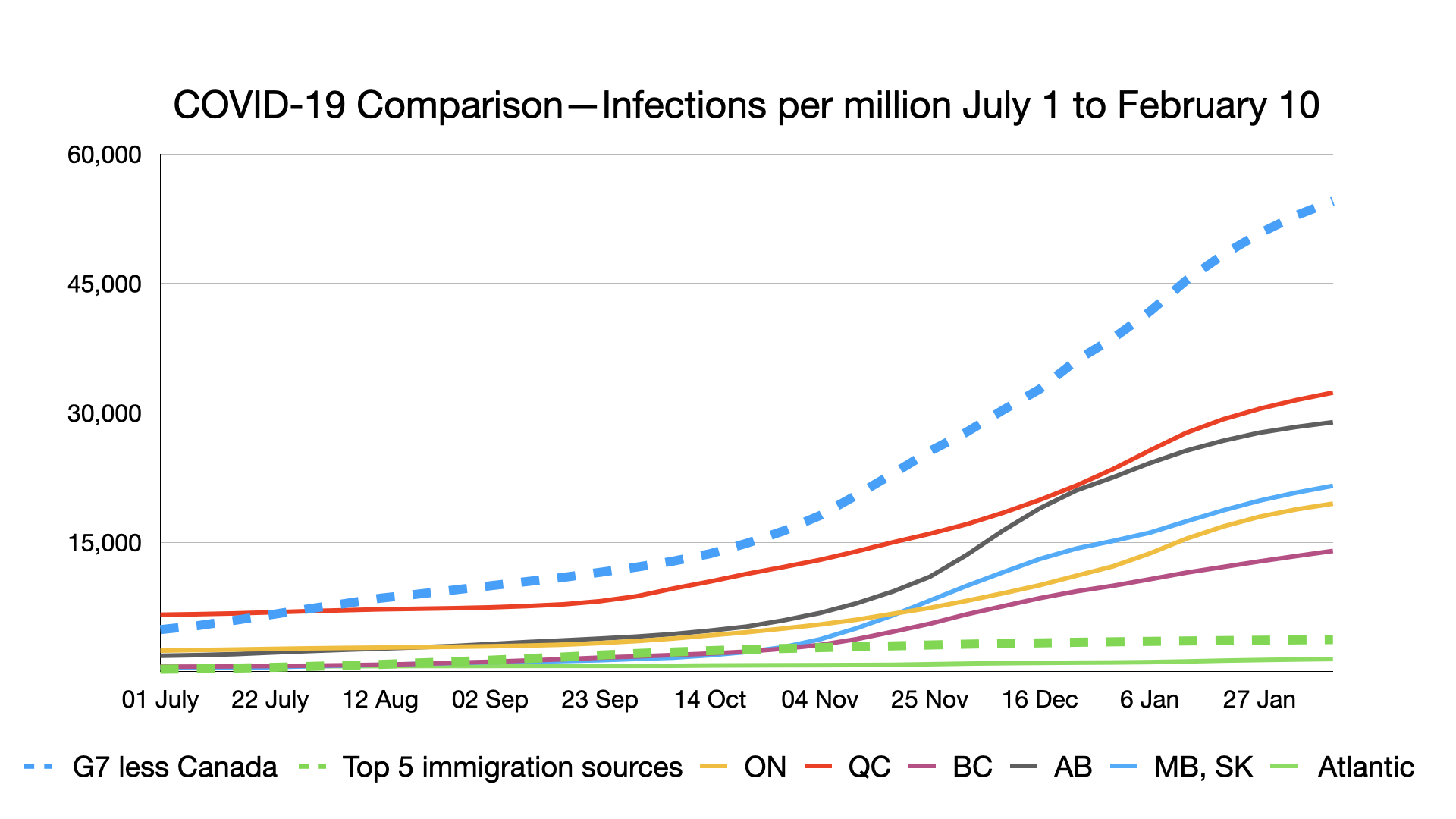
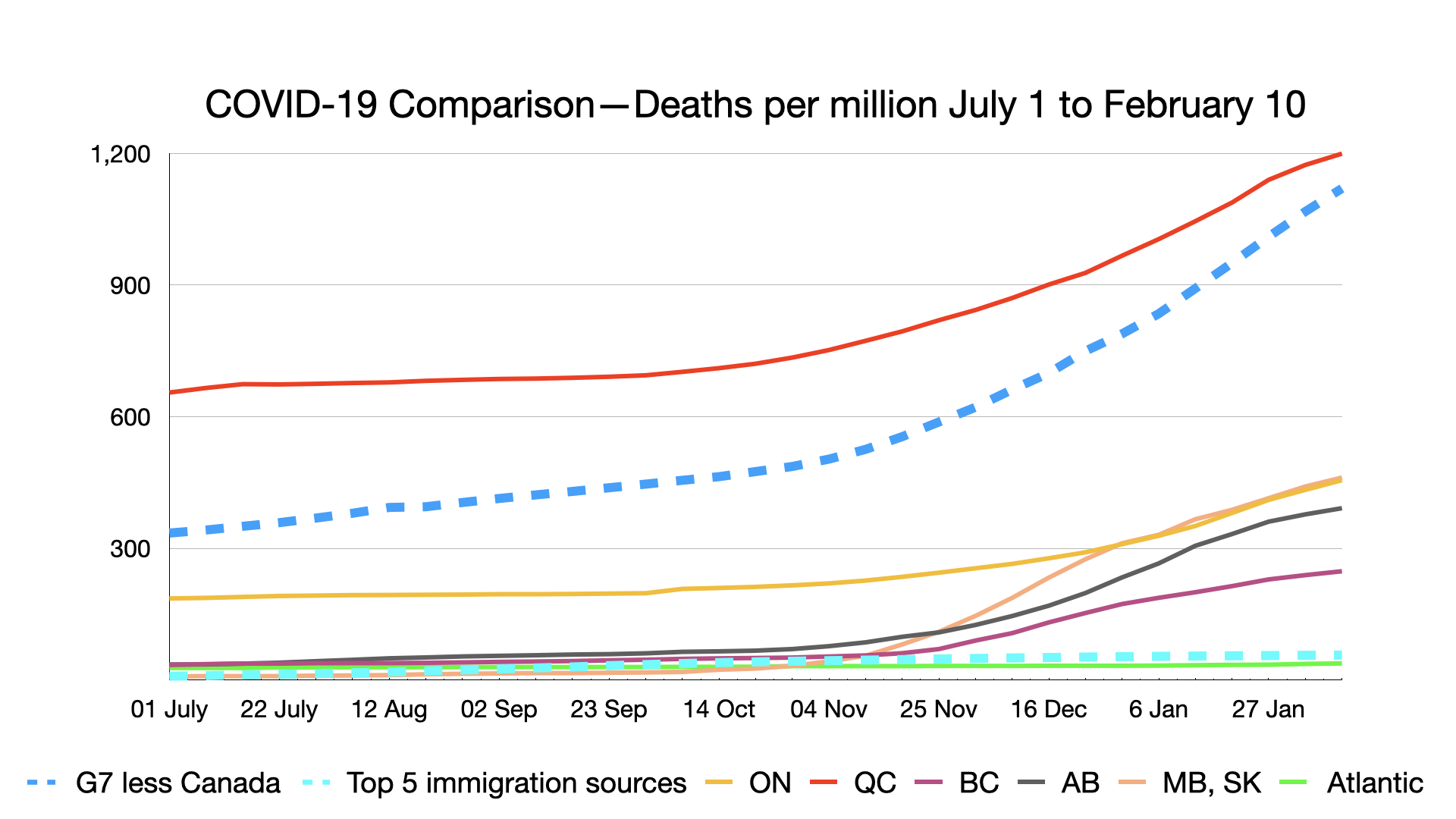
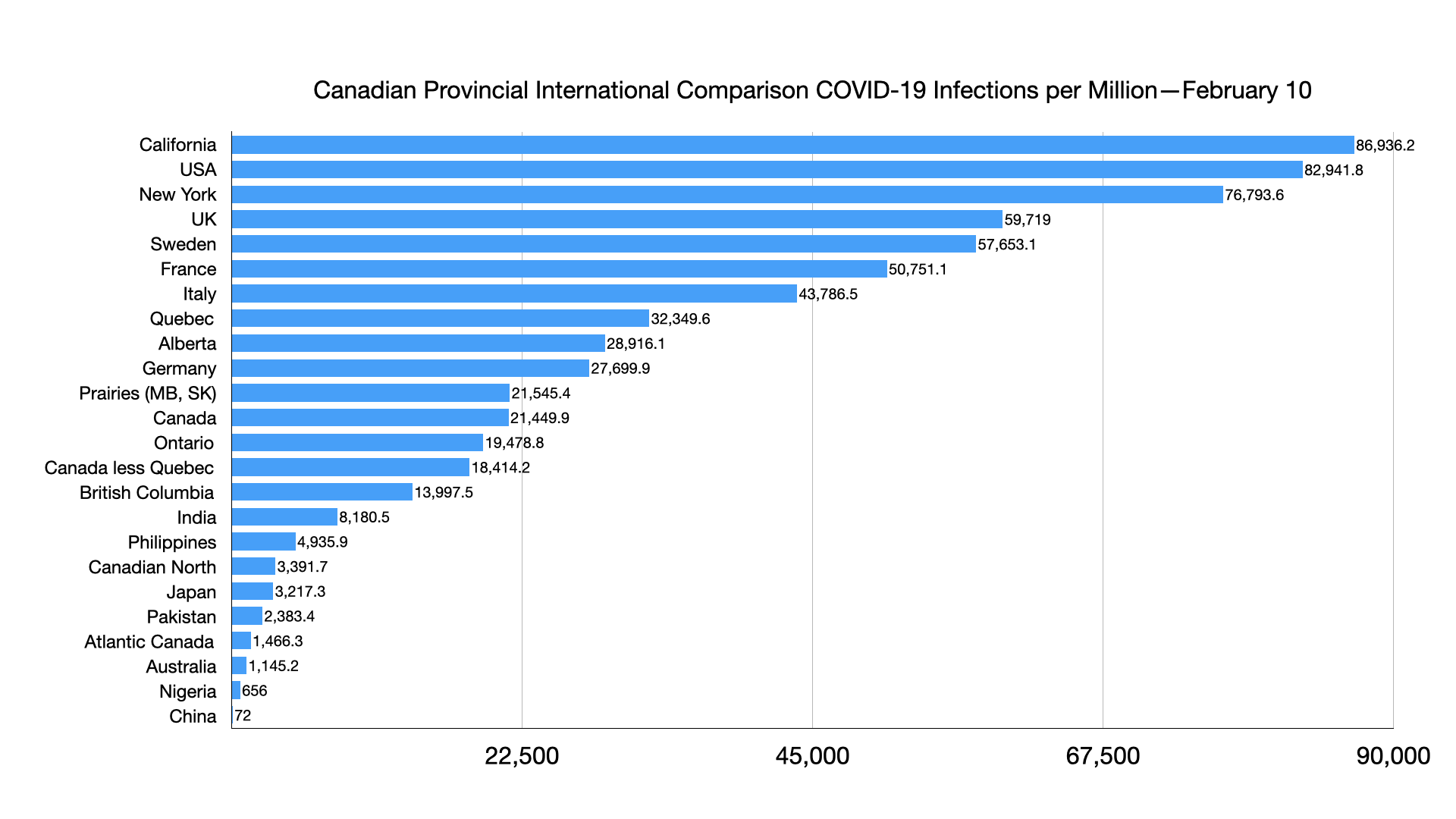
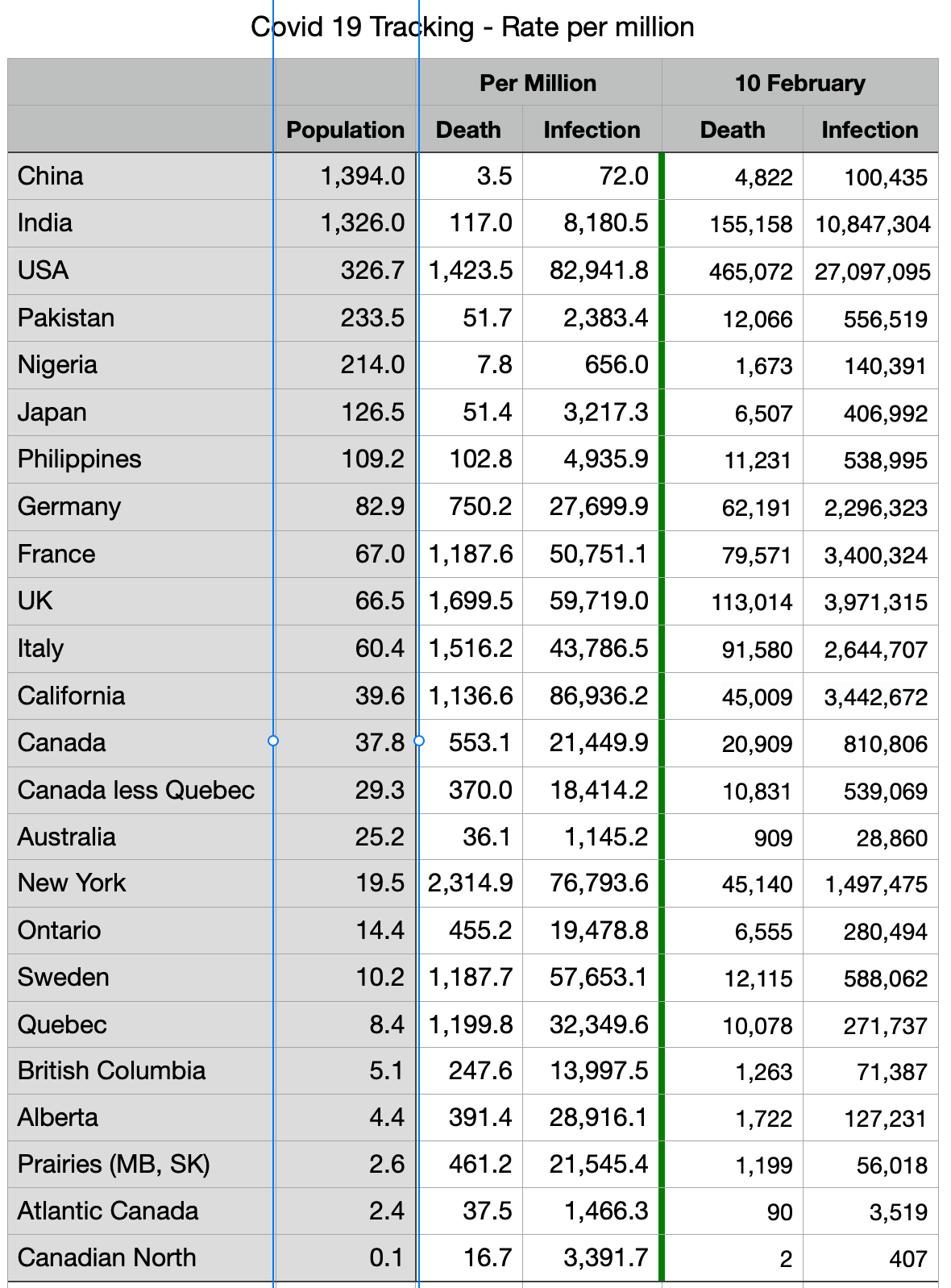
#COVID-19: Comparing provinces with other countries 6 January Update

The standard charts can be found below.

There has understandably been a “feeding frenzy” regarding federal and provincial parliamentarians who have disregarded public health and their own government’s advice to forego travel, domestic or international, during the holidays.

In some cases, this has been to visit elderly family members (e.g., Sameer Zuberi and Kamal Khera of the Liberals, Niki Ashton of the NDP), in others for holidays (the various Alberta MLAs and Premier Kenney’s Chief of Staff, Quebec MNA Pierre Arcand) along with others.

Responsibility and accountability has been mixed. The federal NDP handled Ashton’s case the best, removing her quickly from her critic responsibilities, setting the tone for the federal liberals to follow sui. Ontario Premier Ford initially botched it being aware of his former finance minister Rod Phillips vacationing in St Barts but recovering quickly by accepting (insisting?) on his resignation. In rare tone deafness, Alberta Premier Kenney initial response not to sanction minister Allard, his Chief of Staff Huckabay and a number of MLAs, for travel during the holidays, that prompted outrage on all sides of the political spectrum and led to belated resignations and discipline.

Highly ironic given Kenney and the UCP reliance of “personal responsibility” and “good judgement” to reduce COVID risks when so many in the government have demonstrated neither.

Some good examples of Alberta commentary:

Rick Bell: Premier Kenney, it’s time to face the music

Don Braid: Kenney fires and demotes to spike scandal, but Albertans will decide if they forgive

And the contrary arguments from C2C’s editor George Koch:

In Alberta, Premier Jason Kenney first avoided meting out Ford-style punishment upon Allard and her fellow travellers. When the news broke, Kenney himself shouldered much of the blame and said he would provide new and crystal-clear “guidelines” covering ministers, MLAs and senior bureaucrats. The opposition, however, gleefully called for Allard’s headwhile the media republished tweets demanding Kenney’s own resignation. It has become fashionable to criticize nearly anything Kenney says or does; his handling of the pandemic is, according to one poll, approved of by just 30 percent of Albertans.

Personally, I found the Alberta premier’s initial response not only courageous but admirable and honourable. Unlike Ford and innumerable politicians, corporate leaders and heads of other organizations in countless analogous situations, Kenney declined to throw Allard under the bus. This is not the first time Kenney has gone to the mat for a subordinate, at considerable short-term political cost to himself. Who would you rather work for? Further, someone who clearly cares about the people who work for him might, just might, also be sincere in his concern for small businesspeople and voters at large.

Sadly, however, Kenney ultimately could not resist the stinking red tide of public opinion; on Monday, he accepted Allard’s resignation from cabinet, as well as that of his chief of staff, who had travelled to the UK, and demoted the other MLAs.

Source: https://c2cjournal.us19.list-manage.com/track/click?u=e8efce716429c34122979e2de&id=cb2f1e50a3&e=4174a59277

Minor week to week changes:

Infections per million: Sweden moves ahead of UK which in turn moves ahead of France, Canada total ahead of Prairies

Deaths per million: Germany moves ahead of Canada

And the standard weekly charts and table.

Korea urged to fix immigration policies

One of an ongoing series of articles on Korean immigration policies or lack thereof, along with changing demographics:

In recent decades, South Korea has emerged as a global economic powerhouse and become a core member of the international community. Leading the transformation have been many Korean individuals and companies who have written success stories in different parts of the world.

Joining the league of advanced countries, the country has strengthened its overseas presence and raised its global profile both economically by expanding exports and diplomatically by increasing its donations to developing nations.

However, despite its successful ascension to the world stage, Korea is considered neither internationalized nor inclusive. Society here is still insular, failing to embrace different cultures, races and nationalities.

Such closed-mindedness is preventing Asia’s fourth-largest economy from moving forward, as the country is facing grave demographic challenges ― an aging population, a low birthrate and a declining workforce.

In this regard, creating an “inclusive society” to bridge the gap between Koreans and non-Koreans should be at the top of the agenda for the Moon Jae-in administration in 2021, to ensure sustainable growth and future prosperity for the country.

Reforming immigration policies

As Korea enters 2021 with its looming demographic crisis, attracting young, skilled immigrants through an open migration policy may be one of the key strategies to address the sharp decline in the population.

According to the Ministry of Justice, the number of foreign nationals staying in the country for more than three months was around 1.73 million as of December 2019 ― adding in short-term visitors, and the estimated number hit a record high of 2.52 million.

The number has been increasing almost annually from the 1.89 million tallied in 2015. With the stagnating native Korean population growth, the ratio of foreign nationals among the nation’s total population has also grown from 3.6 percent that year to 4.8 percent in 2019.

The Statistics Korea forecast in 2019 predicted that people with migrant backgrounds ― foreigners, naturalized Koreans, and second generation migrants ― are expected to account for more than 5 percent of the total population in 2024, which will constitute a “multicultural, multiracial society” according to OECD standards.

It is expected that foreign nationals will continue to play a more important part in Korean society, which means the country should lay the groundwork for inclusivity through detailed immigration policies.

These are important as they not only guide migrants’ integration into the economic, social, cultural and political spheres of society, but also shape how the native population perceives migrants and immigration.

Foreign residents and members of multicultural families living in the country shared with The Korea Times their thoughts on current immigration policies and what improvements the country needs to make in 2021.

“The biggest problem with the current immigration policies is that they are scattered across several ministries. The government needs a control tower to formulate integrated plans,” said Jasmine Lee, chairwoman of the Korea Cultural Diversity Organization.

Naturalized in Korea, Lee from the Philippines also pointed out that the country does not even have a legal definition of an immigrant.

Currently, the Ministry of Justice manages visa applications and foreign entry, while the Ministry of Employment and Labor monitors and regulates migrant workers who enter the country under the Employment Permit System (EPS), and the Ministry of Gender Equality and Family runs policies related to marriage migrants and their families.

The former lawmaker viewed that the absence of a high-level government body in charge of drafting a framework is the main reason why the country is failing to implement coherent immigration policies.

Much of the policies are focused on inviting low-skilled workers for temporary stays, and encouraging international marriage without giving sufficient opportunities for marriage migrants to fully adapt to society, she said.

“Most importantly, for an inclusive society, support measures for migrants should be drawn up not out of sympathy toward them, but based on the idea that they are equal members of our society,” she said.

Lee stated that among the bills currently being discussed at the National Assembly, the legislation of the Anti-Discrimination Law will be a start in providing equal rights to all foreign residents and eradicating prejudice against them.

‘Foreign workers are backbone of Korea’s economy’

Shekh al Mamun, a senior member of a migrant workers’ union under the Korean Confederation of Trade Unions, said the government’s low level of awareness on equality during the COVID-19 pandemic has disappointed many foreign workers, who were discriminated against in the administration’s mask distribution plan as well as the disaster relief funding programs.

He stressed that the policies for migrant workers, who mainly work in factories and farms in rural areas, should be based on the recognition that they are an essential component of Korea’s economy, not a workforce performing the so-called “3D” (dirty, dangerous and difficult) jobs that Koreans shun.

“The first step in doing this would be guaranteeing workers the freedom to change workplaces by making changes to the EPS, which hasn’t been properly revised since it was introduced in 2004,” Shekh said.

Migrant workers under the EPS enter Korea with a contract that initially allows them to work for up to three years. The contract can be extended by one year and 10 months with the employer’s consent, and “diligent workers” are also allowed to re-enter the country after they return to their homeland.

However, as re-contracting and reentry permits are very dependent on employers, workers can get tied to them, leaving themselves open to those who exploit the system to their own advantage, according to the union.

“Thousands of workers a year suffer from unfair treatment such as delayed payments and horrendous accommodation. They are also prevented from applying for compensation for industrial accidents or demanding retirement pay out of fear that their contract will not be extended,” Shekh explained.

He hoped that this year, the government will finally respond to their years-long demands and improve the system.

“We are not asking for tons of additional money to fix the problem. What we need are genuine changes that will guarantee safe working environments and fundamental labor rights, which should be provided to everyone in the country.”

Fixing ‘bureaucratic’ approach

Wang Ji-yeon, head of Migrant Women Association in Korea, believes that many of the “bureaucratic policies” that the government comes up with are failing to provide actual help to multicultural families in need.

Wang, a marriage migrant from China who has been working as a migrants’ rights activist for 12 years, said that over the years, support for multicultural families has increased in quantity, but not in quality.

According to government data, there are over 200 support measures provided to marriage migrants and their families.

“The figures create a misperception among native Koreans that the government is spending too much on multiracial families, which is not true,” Wang said. She urged the government to disclose full data to the public on the operation of multicultural policies and regularly receive feedback from beneficiaries to eliminate unnecessary measures.

Moreover, while the current support mainly focuses on the family life of foreign-born wives, it should be expanded to their social and cultural activities as more and more women are seeking career development and preparing for a stable life in their later years.

Education on cultural diversity needed

Students from multicultural backgrounds face challenges due to discrimination and social prejudice. Lee Chan-yeong, a high school student born to a Filipina mother and Korean father, suggests that this can be improved through early education in and outside of schools.

“Many people are not used to cultural diversity, probably because they grew up and were educated in a technically homogeneous country,” said Lee, a second grader at Jeonbuk National University High School in Jeonju, North Jeolla Province.

While schools should ensure that mandatory educational programs on cultural diversity and anti-discrimination are given in the classroom, the government and media should improve their representations of biracial families, he suggested.

“Documentaries, news articles and movies on multicultural children tend to focus only on the dark side such as school bullying, economic hardship, poor fluency in Korean and so on. As the media has a big influence on teens, this negativity may create misperceptions,” he said.

Lee added that more positive content using public advertising and YouTube videos on cultural and ethnic diversity should be developed.

Source: Korea urged to fix immigration policies

Impact of Covid-19 on Immigration to Canada – Working Deck- October 2020 Numbers

This deck reviews the impact of COVID-19 on immigration-related programs as of October 2020 (the latest data that is publicly available) with exceptions noted. 

Programs covered include permanent residents, temporary residents (IMP, TFWP, students), asylum claimants, citizenship and visitor visas. Data is from IRCC/Opendata. 

The deck highlights the commonalities and differences in impact between different programs, their respective categories or types and the top 10 source countries for each program. 

The deck also includes website outside Canada traffic for work permits, study permits, integration services and citizenship. This can be seen as a leading indicator as this data becomes available immidiately after end month (e.g., December 2020). 

The data for IMP and TFWP dates from August, settlement services from May (special run). 

While there has been a slight recovery from the virtually complete shutdowns of the April-June quarter, the decline in all programs is over 60 percent for the April-October period.

Chinese state-owned fund among backers of company handling Canadian visa applications

Worrisome. Of note, however, according to their website TT Services lists Australia, New Zealand and the USA as clients, so the issue is broader than just Canada:

One of China’s largest state-owned investment funds is among the biggest backers of a company the Canadian government uses to collect and process personal information from visa applicants around the world.

The ownership structure has prompted some of Canada’s former foreign intelligence leaders to warn that Ottawa should think carefully about trusting sensitive information to a company partly owned by the Chinese state.

Documents filed with Britain’s corporate registry, Companies House, show Chengdong Investment Corp. as one of the most significant contributing partners to the parent company of TT Services, which runs visa application centres for the Canadian government in 24 countries. Its services include collecting fingerprints, photos, biographical information and other personal data.

Chengdong is a subsidiary of China Investment Corp., a Chinese state-run giant with more than US$1-trillion in assets.

TT Services is owned by VFS Global, which calls itself the “world’s largest visa outsourcing and technology services specialist.” Headquartered in Dubai, VFS operates in 144 countries.

Immigration consultants in Canada have raised concerns about the contract with VFS since 2008, when the company began processing visas in China, where police can access corporate offices. Chinese national law also requires any organization operating inside the country to co-operate with intelligence services.

Richard Kurland, a Vancouver-based immigration lawyer, said the amount of personal information VFS handles is immense.

“Passing through their hands are the family trees of applicants,” Mr. Kurland said. “The VFS organization may have more personal information on applicants for immigrant services than entire countries do.”

VFS was founded in 2001 by Zubin Karkaria, an Indian entrepreneur who remains its chief executive officer. But today, its majority owner is EQT VII (No. 1) Limited Partnership, whose registered office is in Edinburgh. That company, British documents show, has numerous partners.

Two of the largest are Eight Finance Investment Co. Ltd., which belongs to the Hong Kong sovereign wealth fund, and Chengdong Investment Corp.

The records show that both Eight and Chengdong made €25,000 ($39,000) in capital contributions, considerably more than other investors, which include pension funds and banks – some of whom contributed as little as €20.

The small figures belie the importance of those investments. In limited partnerships, investments are often made as loans, the size of which can far outstrip the capital contributions. Larger contributions usually entitle investors to a larger share of profits.

In general, “if you contribute more, you get more out of the investment,” said Bobby Reddy, a lecturer at the University of Cambridge Faculty of Law.

VFS and the Canadian government say their agreement includes privacy safeguards. And under British law, limited partners such as Chengdong are meant to be “passive or silent investors,” Mr. Reddy said.

But Richard Fadden, a former director of the Canadian Security Intelligence Service (CSIS) who served as national security adviser to two prime ministers, said he does not think it is appropriate for a company with Chinese state-enterprise ownership to handle visa applications for the Canadian government.

He said that Foreign Affairs Minister François-Philippe Champagne recently ordered a review of a deal in which a Chinese state-owned company would provide new X-ray security equipment for Canadian embassies.

“It seems to me that if there are concerns in Ottawa about a company that is owned by the Chinese company operating X-ray machines in Canadian embassies, then there should be an equal amount of concern about the possibility that a Chinese company might have access to all sorts of information about foreigners wanting to come to Canada,” Mr. Fadden said.

“This is information that might be just as useful to the Chinese state, especially, if and when, they reach Canada.”

In a statement to The Globe, EQT spokesman Daniel Ketema confirmed that EQT VII (No. 1) holds majority ownership of VFS, but declined comment on the role of Chengdong.

“We are not allowed to disclose names of investors or their stakes in EQT’s funds,” Mr. Ketema wrote in an e-mail.

VFS chief communications officer Peter Brun said “VFS Global does not store any personal data related to a visa application. All data is purged from its systems in accordance with regulations set out by client governments.”

“The EQT VII fund doesn’t have access to any data from VFS Global nor any of its other portfolio companies,” he said.

The Chinese government has in recent years asserted more intensive control of companies inside its borders, both state-controlled and private entities alike. In September, the Communist Party urged privately owned companies to employ “politically sensible people” who will “firmly listen to the party and follow the party.”

State-owned firms also form a key pillar of Chinese foreign policy, and the country has sought to boost the overseas reach of its financial institutions.

Ward Elcock, a former director of CSIS, said the connections of a Chinese state-owned firm and the Hong Kong sovereign wealth fund to VFS Global need to be investigated further to determine whether the threat is serious.

“I think that the role that Chengdong plays ought to raise a few eyebrows, even if it is as part of a limited partnership,” Mr. Elcock said. “Visas and the associated applications would, I suspect, be of interest to the Chinese, so there is at least the risk that they would want to find some way to obtain access.”

“In the current environment, it would be less than wise to ignore the potential risks,” he said. “As to the Hong Kong sovereign wealth fund, we would not have thought of them as a problem until recently, but increasingly it is clear that the Hong Kong of the past will not be the Hong Kong of the future. Instead, it will simply be an extension of the regime in Beijing with a few bells and whistles retained … so, again reason for more enquiries.”

In Canada, the Liberal government has said it wants to bring in 1.2 million immigrants over the next three years, including 401,000 new permanent residents in 2021.

In other countries, VFS shares revenues with governments. Canada’s government “does not receive a portion of revenues from VFS for premium services nor does it collect any revenues from VFS Global,” Béatrice Fénelon, spokesperson for Immigration, Refugees and Citizenship Canada, said in a statement.

“Safeguards governing the protection of personal information are built into the terms of the contract between the VACs and the government of Canada,” Ms. Fénelon said.

She declined comment on the VFS ownership structure, but said using the company allows the Canadian government to “offer extended hours of operation and more points of service that make it convenient and accessible for applicants to submit their application and provide their biometrics.”

The contract with VFS will remain in place until Oct. 31, 2023. It can be extended for up to three years, but late this summer, Ottawa began a process to replace current contracts.

The government is seeking input on what visa application centres might look like in the future, including promotion of Canada as a destination of choice; collection of biometric information; premium services that would be offered for a fee; and tighter links with the government through provision of “interview facilitation, interview rooms, and videoconferencing.”

Source: https://www.theglobeandmail.com/politics/article-chinese-state-owned-fund-among-backers-of-company-handling-canadian/

What do people really think about immigration to Australia? We analysed their internet usage to find out

Wonder whether anyone has tried a similar analysis with respect to interest in Canada:

Many opinion polls on migration in Australia have limited sample sizes, such as the Essential poll, which often interviews around 1,000 people.

This is small when you consider there are over 215 languages other than English spoken in Australia. Running a survey, even a multi-lingual one, will only ever capture so much variation and complexity.

I have recently conducted a study with Elisa Choy, founder of Maven Data, an AI-powered strategic market research company, to gauge public sentiment toward . To do this, we used a much larger data pool—all open-access internet sources across the globe.

Our aim was to find out what Australians think about migration through an analysis of how people engaged with all publicly available online sources on this topic. This includes what they searched for on Google, what they read and how they discussed the topic with others on blogs, social media and online comments.

Our study included both Australian and foreign websites, as Australians often consume overseas English-language media.

We found Australians overall have a neutral view towards migration—in that they are neither strongly opposed or in favor of it. But from their internet usage, we can tell they are highly engaged on the topic.

As part of our research, we also sought to gauge what potential migrants around the world think about Australia as a destination, using the same research method in countries where most migrants come from.

Surprisingly, we found a high degree of interest in Australia in only one country—India. In other countries, such as China, there was relatively low online engagement on Australian immigration. However, with China, this could have been the result of state control of the media.

How AI can measure people’s opinions without bias

Traditional opinion polling relies on weighted samples of a population that are usually benchmarked against statistics sourced from a census or other large demographic surveys.

Another downfall of polling is that it seeks to elicit people’s opinions through interviews or surveys, which are inherently biased and do not always reflect respondents’ actual beliefs or behavior.

These traditional methods can underestimate how much human behavior is driven by emotion and unconscious bias, which people may try to hide when answering a poll. This is particularly true with contentious issues like religion, politics and migration.

In contrast, when people engage with content online, there is no scope to lie, even to themselves. This provides the opportunity for a new type of data-driven, predictive, opinion research—without bias.

In our study, we searched and extracted all the online content we could find related to immigration—everything available through open-sourced websites, blogs and social media.

Using advanced analytics, Maven Data can measure the intensity of people’s emotions on a topic to predict both their actual beliefs and future behavior. The researchers do this by analyzing the specific websites people visit—including Google, media and , blogs and social media. They then measure the emotional tone of these sources and people’s engagement with them using an algorithm.

The company has a proven track record, too. Choy successfully predicted the winners of The Voice in 2019 and 2020, MasterChef Australia in 2020 and seven of the nine battleground states in the 2020 US presidential election.

What Australians think about migration

In our analysis, we found Australians are engaging heavily with government websites in particular, as well as media websites and . They are highly engaged on this topic and watching closely at how the government plans to act.

Further, much of Australians’ interest in this subject is focused on “gaining facts” rather than forming or reinforcing opinions, which means the government has the power to shape opinion on this issue in the future.

Based on this, we would classify immigration as a “timeless” topic in AI terminology, meaning it is of enduring interest and deeply relevant to Australians.

What potential migrants think about coming to Australia

We then analyzed what the world thinks about Australia as an immigration destination.

To do this, we looked at how people in Australia’s major migration source countries engaged with not just Australian and other English-language media, but also Chinese, Indian, Arabic, Vietnamese and Spanish online information sources.

The short story is that the world is largely neutral on Australia as a major migration destination at the moment.

Chinese speakers were generally not engaged with Australia as a potential destination. However, when they did look at information about Australia online, it was centered on the country’s healthcare system, management of COVID-19 and the government’s relationship with China.

Spanish speakers were more interested in the US as a potential immigration destination (despite high levels of COVID-19 cases). This is a key finding, as Spanish speakers are a potential source of increasing migration for Australia given population growth in Latin America.

Indians, on the other hand, were highly interested in Australia as a migration destination. For Indians, the central concerns were related to visas to Australia (including the Global Talent Visa), Australia’s COVID-19 recovery, opportunities for migrants and how migration agents worked.

Key online sources that Indians looked to for information included major media outlets like the ABC, Guardian and Sydney Morning Herald, as well as government websites and Y-Axis Australia (an immigration agency).

Given India was the largest source country of immigrants to Australia in 2018–19, these findings should be of great interest to government.

What does this mean for government?

Our research tells us Australians are actively watching the government’s next move on migration and expecting it to demonstrate leadership in this area.

When we considered the global views of potential migrants, we can see Australia is perhaps no longer seen as the key destination it once was and immigration may not rebound as expected or hoped after the pandemic.

In 2019, the OECD ranked Australia as the top immigration destination in terms of attracting and retaining “high talent” migrants—highly educated workers, entrepreneurs and university students—but we may now face tough competition from other countries, such as Canada.

Another finding from our research is that migrants overseas are often reliant on translations of government websites for information rather than official Australian government websites in English.

This means there is scope for the government to translate its online immigration sources into other languages to reach more potential migrants.

Our findings should be particularly relevant to sectors reliant on immigration, such as the tertiary education, retail, hospitality, health and IT sectors, as we come out of the COVID-19 crisis.

Source: What do people really think about immigration to Australia? We analysed their internet usage to find out

Korea: Migrant women call for ‘Equal pay for equal work’

Of note:

Hundreds of female migrant workers employed at government-run facilities are suffering discrimination and unfair treatment, according to a recent survey by Hope Center with Migrant Workers, a civic group based in Seoul.

The survey results were revealed on Wednesday at a discussion session held by the Women Migrants Human Rights Center of Korea ahead of International Migrants Day which falls on Dec. 18.

About 80 percent of the 403 respondents working as interpreters, counselors and bilingual tutors stated that they have experienced discrimination such as unequal payment, limited promotion opportunities and unrecognized work experience.

“I’ve been working as an interpreter at a multicultural family support center for 13 years, during which I have never received holiday bonuses or extra pay for meal costs that are obviously provided to my Korean coworkers,” a marriage migrant was quoted as saying by the civic group. She requested anonymity.

“I don’t understand why I am paid less than my colleagues although we are given similar tasks. It’s hard to imagine that a state-run facility aimed at improving multicultural awareness openly discriminates employees by their nationality,” said another migrant woman with five years of work experience at the support center.

According to the data provided by the Ministry of Gender Equality and Family in October, bilingual tutors at public schools earn around 26.3 million won ($24,100) yearly, and interpreters working at multicultural support centers earn an average of 25.6 million won ― roughly 66 percent of the average annual salary of employees at the centers, which stood at 34.2 million won.

The civic group pointed out that the lack of details on wage guidelines has widened the payment gap.

The wage guidelines set by the ministry only state that interpreters and counselors should be paid “over the minimum wages,” whereas the specific manuals for Korean employees guarantee a yearly pay raise and chances for promotion based on their consecutive years of employment.

The survey also found that 91 percent of the migrant women experienced weak job security as their employment is based on temporary contracts of 10 months or one year. Also, 67 percent of the women have experienced workplace bullying such as verbal abuse and insults towards their home country.

“These issues, which have not been properly addressed for years, have turned into long-term systemic discrimination. Even the latest support measures from the gender ministry failed to reflect the realities in the workplace,” Wang Ji-yeon, head of the Migrant Women Association in Korea, told The Korea Times.

“What we need is improved job quality, not increased quantities of vacancies,” she said, regarding the ministry’s recent announcement to increase the number of interpreters in multicultural family support centers to 312 next year from the current 282.

She demanded an overhaul on the employment system; hiring qualified migrant women to full-time positions through proper recruitment procedures and providing education programs for their career development, as well as standardized wage guidelines.

“The current multicultural policies are mainly centered on family lives of migrant women, lacking support for their social activities. The government should recognize their capabilities and contributions to the country, and come up with better measures for them to be accepted as members of our society,” said Hwang Jeong-mi, a researcher at the Institute for Gender Research at Seoul National University.

Source: Migrant women call for ‘Equal pay for equal work’

Canada must fight to retain talent after Biden enters White House, Macklem says

Good reminder that Canada’s comparative advantage in attracting skilled workers will decrease under the Biden administration:

Canadian governments must be ready to fight a potential brain drain south of the border in the face of a new U.S. administration, Bank of Canada governor Tiff Macklem said Tuesday.

Protectionist policies and attitudes stemming from U.S. President Donald Trump have helped make Canada a more attractive landing spot for global talent over the past four years.

But the advantage for international students and workers is likely to disappear as Trump exits the White House next month, Macklem said in a speech to the Greater Vancouver Board of Trade

He says being welcoming to newcomers can help boost the economy and increase exports in goods and services needed for a recovery from the COVID-19 pandemic and that Canadian schools and companies may have to fight harder to attract and retain talent after Joe Biden is sworn in as president.

But Macklem warns that fighting for talent isn’t enough on its own to create a sustainable recovery, noting that governments must also invest in infrastructure and remove internal trade barriers to help exports recover.

He says federal and provincial governments have co-operated often through the pandemic, suggesting it could finally lead to an end on inter-provincial trade hurdles that stymy the movement of goods, services and professionals.

Government infrastructure spending should focus on trade-enhancing infrastructure so exporters know there is a way to easily get their products to market, he said.

Macklem notes he met last month with leaders from several logistics companies who shared their concerns about bottlenecks, particularly at ports.

The recovery so far has seen the country recoup just over 80 per cent of the three million jobs lost during spring shutdowns and output is climbing closer to pre-pandemic levels.

Macklem says much of that rebound is being fueled by household spending, but the country will need to see a rise in exports and business investment if the recovery is to be sustainable.

The path exports take will rest on global forces, Macklem says, including whether international co-operation on vaccines and distribution break through protectionist policies.

“Obviously, we all hope that real life turns out closer to the optimistic scenario than the pessimistic. But hope is not a strategy,” reads the text of Macklem’s speech.

“We need to think strategically to increase the odds of a strong trade recovery.”

The last time Canada climbed out of a recession following the 2008-2009 global financial crisis, Macklem was the second-in-command at the central bank.

Even though Canada’s recession was neither as long nor as deep as other countries, domestic exports took a sharper dive. As Macklem noted in his speech, global exports fell less than 20 per cent at the time, while Canadian exports dropped by close to 30 per cent.

The reason was a combination of weak foreign demand, particularly from our biggest trading partner in the United States, Canada’s reliance on the U.S. and other slow-growth markets instead of emerging economies largely, and a lack of competitiveness.

But while the period before that crisis was relatively positive for trade, Macklem says the same can’t be said this time around, pointing to trade disputes started by Trump.

As well, Canada’s trade in services, such as tourism, haven’t recovered as well as goods such as automobiles, even though service exports had been growing faster than goods.

What’s needed is for companies to think about what products are in demand in fast-growing markets, Macklem says. He pointed in his speech to digital services like online education and e-commerce, or applying new technology to traditional sectors.

He also says the export potential for green technology is high given global concerns about climate change.

Source: Canada must fight to retain talent after Biden enters White House, Macklem says

Canada a bright light in a horrible year for refugee resettlement: UN refugee agency


Of note:

The year 2020 will go down as the worst for refugee resettlement in recent history, says the UN refugee agency’s Canadian representative.

With nearly 168 countries implementing border and travel restrictions, millions of displaced people around the globe were stuck, unable to either return to their home countries or move to others.

Canada, however, was one of only a few that did listen to urgent pleas from the United Nations High Commissioner for Refugees, said Rema Jamous Imseis, the UNHCR’s Canadian representative.

Even at the height of the pandemic, when most countries were looking entirely inward, Canada did accept emergency cases and as travel has resumed continues to take in more, she told The Canadian Press in an interview.

“It hasn’t, unfortunately, been at the levels that we had planned for prior to the pandemic, but it still is offering that critical lifeline to people who desperately need it,” she said.

“And we hope that next year actually is going to bring us a very different context and an ability not only to meet those targets, but to perhaps even exceed them.”

Canada had planned to resettle around 30,000 refugees in 2020.

By the end of September, just under 6,000 had arrived, and a spokesman for Immigration Minister Marco Mendicino said the end-of-year figure will be closer to 7,000.

The target for resettlement next year is 35,000, but how realistic that goal is considering the unknowns around the end of the pandemic is unclear.

Mendicino’s spokesman said in an email that the entire resettlement “ecosystem” continues to operate at a reduced capacity, but is slowly spooling back up.

“While our operations have been affected, we’ve come a long way since the onset of the pandemic and are now processing nearly six times as many refugee cases as in a similar period last year,” Alexander Cohen said in an email.

The border closures weren’t the only challenge this year for refugees, said Jamous Imseis.

Many of the world’s displaced people were just scraping by economically before the pandemic hit, but their sources of income completely dried up, she said.

“The ability to sustain themselves and their families has been wiped out,” she said.

“So you saw entire populations going from vulnerable, but with the ability to sustain themselves overnight to becoming really vulnerable.”

There’s also been a massive blow to the ability of children to be in school. A pivot to online learning possible in some developed nations just isn’t applicable elsewhere, she said.

Some studies suggest more than half of refugee girls may never go back to post-secondary education after the pandemic, she said.

“They haven’t been at school this whole time, and they may never go back because life circumstances have changed so dramatically,” she said.

Monday is the UNHCR’s 70th anniversary. It was created to help displaced Europeans after the Second World War and originally was only supposed to exist for a few years.

“But sadly, we’re still here and it signals the failure of the international community to really address long-standing issues, and drivers of displacement globally,” said Jamous Imseis.

“We look forward to the day when our services are no longer needed.”

Source: Canada a bright light in a horrible year for refugee resettlement: UN refugee agency

The road to fix America’s broken immigration system begins abroad

Interesting take but not sure how realistic or how high it will be on the priority list compared to more immediate reversals of Trump immigration changes;

Being an immigrant in the United States in the past few years has been difficult, to say the least. The toxic rhetoric against immigration coming out from the White House from day one of the Trump presidency—and the fact that it enjoyed popular support by the Republican base—made many of us rethink whether it was time to simply leave this country for good. Perhaps the most salient feature of Trump’s legacy was that he and his policies put in doubt whether America will continue to hold on to its self-proclaimed title of “a country of immigrants.”


To summarize what the Trump administration’s anti-immigration rhetoric and policies consisted of is: Simply put, there is no place for immigrants in America. Over the past four years, over 400 executive actions directly targeted immigration and immigrants of all backgrounds. It was not only about illegal immigration, and it was not only about unskilled foreign workers. It was a full-fledged attack on immigrants across the board.

At first, the White House went against immigrants from Muslim-majority countries in a move that many analysts early on categorized as racist. Then the White House attacked undocumented immigrants, categorizing them as criminals (despite there being abundant evidence contesting such claims) and calling for a more active deportation policy. Next, the Trump administration cut the number of admitted refugees to the United States to its lowest level in 40 years, and actively established inhumane policies to deter refugees crossing from Central America, such as separating minors from their parents and putting them in cages. Finally, claiming without evidence that the ultimate goal was protecting American jobs amid the pandemic, the Trump administration restricted the issuance of green cards and work visas for highly skilled individuals (a move that me and co-authors estimate cost over $100 billion dollars to the U.S. economy almost overnight).

One of the most obvious deductions of what we saw in the past four years is that without a robust institutional binding framework in place to administer global migration flows, any future president could do and undo as he or she pleases.

With the election of Joe Biden and Kamala Harris, most of the world can be relieved that this circus of nonsense anti-immigration policies will come to an end. At least for now. To me, one of the most obvious deductions of what we saw in the past four years is that without a robust institutional binding framework in place to administer global migration flows, any future president could do and undo as he or she pleases. The truth is that there is too much at stake to let that happen: not only the livelihoods of about 250 million immigrants in the world—50 millions of them in America—but also the well-being of the global economy that partly relies on the hardworking and entrepreneurial spirit of immigrants wherever they are.

With the likely scenario of a Republican-controlled Senate, a divided government will make it nearly impossible for the incoming Biden-Harris administration to pass comprehensive immigration reform of the sort that the U.S. needs. For instance, offering a practical and a just path to citizenship to millions of undocumented immigrants—including Dreamers—is a win-win policy: By eliminating once and for all the uncertainty of an imminent deportation, these immigrants will be more likely to make long-term investments in their children’s education, their communities, and their businesses. In addition, the government must get rid of the arbitrary yearly limit of 65,000 H-1B visas for high-skilled foreign workers, or at the very least, it must allow for the cap to increase along with the demand for skills. A similar case can be made about limits to refugee admissions. Ongoing unresolved conflicts and climate change will likely continue to push entire communities to flee their homes in search of refuge somewhere else. Furthermore, reforms such as offering permanent residence or a path to citizenship to foreign students who complete graduate school in the U.S. would also be smart policy.

But, realistically, we are unlikely to see an ambitious domestic agenda on comprehensive migration reform in the next four years. Hence, it makes sense for the incoming administration to put efforts into the international arena where, without the need for Congressional involvement, important steps can be made to construct an ambitious and robust global governance apparatus for international migration, which could serve as an important stepping stone for a domestic comprehensive migration reform down the road.

In this context, the very first action item for the Biden-Harris administration is to rejoin the United Nations’ Global Compacts for Migration and for Refugees, which despite being not much more than a multicountry declaration, under the right leadership, it can serve as the basis for establishing a system of global governance with practical policies to administer migration flows. For instance, expanding bilateral or multilateral agreements to include Global Skill Partnerships, so that immigrants can receive training before moving to better satisfy the demand for certain skills in their future destinations, or establishing an international rule system to govern refugee resettlement using market-like mechanisms, to name a couple. These practical global or regional agreements inspired by the Global Compacts should be the basis for a robust and comprehensive institutional framework to govern international migration, such as what we currently have for global trade, for example, embodied in the World Trade Organization.

If there’s something we’ve learned during the global pandemic, it is that in order to better deal with the challenges ahead, we need more—not less—global governance and cooperation. This is even more relevant when it comes to immigration, a global flow that will continue to grow. Thus, if the U.S. cannot fix its immigration system at home, it must again lead the way to bring the world together on designing and putting forward the best policies to let immigrants, wherever they are and wherever they come from, achieve their full potential. And for that, the work begins abroad.

Source: The road to fix America’s broken immigration system begins abroad