Watchdog: DOJ bungled ‘zero tolerance’ immigration policy

Better incompetence with cruelty than cruelty with competence. Stain on all those involved or complicit:

Justice Department leaders under President Donald Trump knew their 2018 “zero tolerance” border policy would result in family separations but pressed on with prosecutions even as other agencies became overwhelmed with migrants, a government watchdog report released Thursday has found.

The report from the inspector general for the Justice Department found that leadership failed to prepare to implement the policy or manage the fallout, which resulted in more than 3,000 family separations during “zero tolerance” and caused lasting emotional damage to children who were taken from their parents at the border. The policy was widely condemned by world leaders, religious groups and lawmakers in the U.S. as cruel.

Former Attorney General Jeff Sessions, along with other top leaders in the Trump administration, were bent on curbing immigration. The “zero tolerance” policy was one of several increasingly restrictive policies aimed at discouraging migrants from coming to the Southern border. Trump’s administration also vastly reduced the number of refugees allowed into the U.S. and all but halted asylum at the border, through a combination of executive orders and regulation changes.

President-elect Joe Biden has said Trump’s restrictive immigration policies are harmful, but it’s not clear yet what he will do when he gets in office to alter the system. About 5,500 children have been separated from their parents since Trump took office, and many of those parents were deported without their children. Advocates for the families have called on Biden to allow those families to reunite in the United States.

The American Civil Liberties Union sued to stop the separations and a federal judge ordered the families to be reunited, but some are still not. Attorney Lee Gelernt, who has been working for years on the issue, said the practice was “immoral and illegal.”

“At a minimum, Justice Department lawyers should have known the latter,” Gelernt said. “This new report shows just how far the Trump administration was willing to go to destroy these families. Just when you think the Trump administration can’t sink any lower, it does.”

The “zero tolerance” policy meant that any adult caught crossing the border illegally would be prosecuted for illegal entry. Because children cannot be jailed with their family members, families were separated and children were taken into custody by Health and Human Services, which manages unaccompanied children at the border. The policy was a colossal mess; there was no system created to reunite children with their families. The watchdog report found that it led to a $227 million funding shortfall.

According to the report, department leaders underestimated how difficult it would be to carry out the policy in the field and did not inform local prosecutors and others that children would be separated. They also failed to understand that children would be separated longer than a few hours, and when that was discovered, they pressed on.

The policy began April 6, 2018, under an executive order that was issued without warning to other federal agencies that would have to manage the policy, including the U.S. Marshals Service and Health and Human Services. It was halted June 20, 2018.

The watchdog report found that judges, advocacy groups and even federal prosecutors raised concerns over the policy. But Sessions and others wrongly believed that arrests at the border would not result in prolonged separation and ignored the difficulty in reuniting families.

Notes from a conference call Sessions had with U.S. attorneys from border districts record the former attorney general saying in part: “We need to take away children; if you care about kids, don’t bring them in.”

Justice leadership looked at a smaller version of the policy enacted in 2017 in West Texas, but ignored some of the same concerns raised by judges and prosecutors at that time. Top leaders were focused solely on increased illegal activity and didn’t seek information that would have shown concerns over the family separations that would result.

The report follows other scathing investigations of the policy, adding to evidence that Trump administration officials knew a zero-tolerance policy would result in family separations and inflict trauma on immigrant parents and children.

A watchdog report from the Department of Health and Human Services found that children separated at the border, many already distressed by their life in their home countries or by their journey, showed more fear, feelings of abandonment and post-traumatic stress symptoms than children who were not separated. The chaotic reunification process only added to their ordeal.

In a November 2017 email, a top Health and Human Services official wrote that there was a shortage of “beds for babies” as an apparent result of separations in and around El Paso, Texas, that occurred months before the national policy began. Other emails suggest the Department of Homeland Security did not tell HHS officials about the pilot program, even as government facilities for minors run by HHS saw an uptick in children who had been taken from their parents. The emails were released by congressional Democrats in an October 2020 report.

Source: Watchdog: DOJ bungled ‘zero tolerance’ immigration policy

Avvy Go: Canada’s immigration rules kept families apart even before COVID-19. Now, as immigrants suffer from the pandemic, family reunification seems impossible

Given that the underpinning of immigration policy is to address an aging demographic, calling for an increase in parents and grandparents beyond the 30,000 is unrealistic. In many ways, the overall increased levels provided the government with flexibility for this increase.

With respect to spousal sponsorship, Go cites a 2015 memo that was rightly condemned as being overly simplistic and biased in its guidelines to visa officers and is no longer being used, I believe.

But like in other areas, spousal sponsorship fraud exists and the government has an obligation to counter it. The question is more in the how, and it is ducking that hard question by only suggesting “anti-oppression” and “anti-racism” training. Perhaps the authors could develop an alternative draft manual or operational guidance bulletin as a more concrete approach to the issue:

The COVID-19 pandemic has made many of us reassess our priorities. It has made us realize that the most important thing in our lives is not money or wealth, but family and health.

Story after story of Canadians losing their loved ones to the deadly virus are gut-wrenching. 

Equally devastating are reports of individuals being barred from visiting their parents or grandparents languishing in nursing homes overrun with COVID-19 cases, and essential workers in the health care being kept apart from their family to keep them safe. 

But for some Canadians, these people are the “lucky ones” — that they’re at last able to see their loved ones through a window, or live in the same area to drop off goods and gifts. But when your parents and spouses live on a different continent, it’s heartbreaking and isolating with the pandemic, and that isn’t even the reason why families and loved ones are being kept apart.

Even before COVID-19, Canada’s immigration policy had already made family reunification an impossible dream for many. The stringent income requirements imposed on sponsors of parents and grandparents (PGP,) and the mean-spirited quota system for this class of immigrants, have disqualified many low income Canadians from becoming sponsors. While the Liberals have relaxed the income rule and promised to increase the quota to 30,000 people in 2021, these measures are insufficient to meet the needs of tens of thousands of Canadians, whose ties with their parents are strengthened not only by love, but by culture and a strong sense of filial piety — to honour and respect their elders.

It should not come as a surprise that the top two source countries of PGP immigrants are India and China, which have both embraced the notion of extended family as a norm. However, given the racialization of poverty in Canada, Canadians of South Asian and Chinese descent are also among those least likely to meet the tough income rule to render them eligible sponsors.

These two communities, along with other racialized communities, have also been hardest hit by the pandemic-triggered economic downturn. With the rising unemployment rates among these communities, it may take years before they could earn enough income to make themselves eligible sponsors again.

While income eligibility is no bar to spousal sponsorship, Chinese and South Asian Canadians who want to bring their spouse to Canada often have their application denied due to systemic bias and racism within the immigration system.

Under the pretext of stopping “fake marriages,” Immigration Canada routinely rejects spousal sponsorship applications, particularly from countries like China, India, Pakistan and Sri Lanka. According to an internal IRCC documentrecently released by the Star, IRCC sees visa officers as “first line of defence” against marriage of convenience, rather than as civil servants whose job is to assess all applications fairly and objectively. 

The internal document is also filled with culturally and racially biased notions of what a genuine marriage should look like, and what evidence must be presented to support such applications. For instance, IRCC appears to rely on a three-page training which warns officers about sham marriages based on “photos of couples who are not kissing on the lips during the ceremony; university-educated Chinese nationals who marry non-Chinese; a small wedding reception; a Canadian sponsor who is relatively uneducated, with a low-paying job or on welfare.”

Using these criteria, none of the clients served by our two legal clinics would ever qualify. On reflection, our own long-term spousal relationships could easily have been considered “fake marriages.” Whoever came up with these preposterous indicia are probably white, belong to middle or upper-middle class, and know nothing about any other culture but their own.

Instead of relying on any “manual,” immigration officers should receive anti-oppression and anti-racism training to ensure all their decisions are biased free, so that all Canadians, regardless of their race and income, would have an equal chance to family reunification. Let’s hope the COVID-19 is not the only virus that will disappear after the pandemic. 

Let’s get rid of the virus of racism once and for all.

Source: https://www.thestar.com/opinion/contributors/2021/01/14/canadas-immigration-rules-kept-families-apart-even-before-covid-19-now-as-immigrants-suffer-from-the-pandemic-family-reunification-seems-impossible.html

Immigrants are a form of economic stimulus and businesses must help them succeed

The business case for immigration (largely Keynesian based given more immigrants means more consumers), by ScotiaBank:

The COVID-19 pandemic over the past 10 months has brought into sharp relief issues that have hindered Canada’s economic competitiveness and left some communities at a disadvantage in trying to achieve their full potential. For Canada to prosper in a rapidly changing world, we must ensure everyone has the opportunity to contribute.

One important way to achieve that goal is by ensuring the seamless integration of new Canadians and creating conditions that allow them to participate fully in the economy. Governments at all levels have a role to play, and so do businesses, including Canada’s financial institutions.

When it comes to the importance of newcomers’ contributions to our economy, the facts are clear. Because of Canada’s low birth rate and aging population, it is only through immigration that Canada’s population has continued to see substantial increases, unlike its Group of Seven counterparts, where population growth is declining or even negative.

Make no mistake: Population is a fundamental building block for an economy. The more educated and productive people we attract, the more our quality of life improves and we can maintain the things that make Canada strong. Immigration is a form of economic stimulus. At a time when governments are doing their utmost to support the economy, we should use every engine of growth we can to carry us through the pandemic.

On that score, Canada has also demonstrated its advantage. About 60 per cent of Canada’s foreign-born population is highly educated, compared with less than 40 per cent in the United States and just 35 per cent across the Organization for Economic Co-operation and Development. In part, this is because Canada’s points system for immigration helps match newcomers to gaps in the job market and tests them for language proficiency.

Because of our immigration policies, Canada now welcomes five times as many skilled newcomers as a percentage of its population than the U.S. does. Over the past two years, pre-COVID-19, new Canadians saw significantly higher employment gains than Canadian-born people.

Before the pandemic, Canada increasingly faced labour shortages that were holding back growth. At the end of 2019, there were more than 500,000 job vacancies, Statistics Canada reported. According to the Canadian Federation of Independent Business, pre-COVID-19, more than 40 per cent of its members reported a shortage of skilled labour, and almost 25 per cent reported a shortage of unskilled and semi-skilled workers.

The federal government recently announced it will substantially increase the number of new Canadians we will welcome every year. This is a positive and timely decision. It recognizes that we are an open, inclusive and diverse country, and immigrants are essential to Canada’s future prosperity.

When they arrive, we must make their transition as seamless as possible by helping them face continuing challenges, including language barriers, difficulties in obtaining professional credentials, lack of social and professional networks, and limited financial literacy.

There are many ways the business community must contribute:

  • Financial literacy: Lack of financial literacy affects all kinds of Canadians, but newcomers often face many complex financial decisions at once in a new country – saving, investing, obtaining credit, buying a home, etc. Financial institutions, in particular, must ensure they make resources available so newcomers can settle quickly and contribute.
  • Recruitment: Companies must take concrete steps to diversify their work forces and ease the path to employment for newcomers. Many studies have shown that diverse views and leadership that reflects all parts of society make organizations more successful and profitable. Yet racialized people continue to experience higher unemployment and lower incomes than non-racialized people.
  • Professional integration: The story of the immigrant professional driving a cab because credentials aren’t recognized here is all too real. While licensing bodies for professions must maintain the highest standards, governments have a role to play in helping new Canadians understand those standards before they arrive and meet them when they get here. Additional funding to help with certification, training, exams, internships and apprenticeships, and language programs will get highly qualified new Canadians more quickly into the work they are equipped and motivated to do. Business can help to provide those opportunities and more.
  • Social and professional networks: Canadians take for granted how much we rely on our extensive personal and professional connections to help us in our careers and personal lives. We must help newcomers access networking and mentorship so they can build the relationships that will help them succeed.

These are all areas of significant focus for Scotiabank. As part of our new 10-year, $500-million commitment called ScotiaRISE, we will support community and academic partners to promote economic resilience by accelerating newcomer integration, increasing high-school graduation and postsecondary participation, and removing barriers to career advancement.

The pandemic will eventually pass, but the need to strengthen Canada – economically, demographically and culturally – will not go away. Let’s make sure immigration continues to be the Canadian advantage.

Source: https://www.theglobeandmail.com/business/commentary/article-immigrants-are-a-form-of-economic-stimulus-and-businesses-must-help/

DOL H-1B Visa Wage Rule: Donald Trump’s Bad Parting Gift To Immigrants

Two contrasting views on the Trump administration’s rule imposting higher salary requirements on H-1B visas. The first from the National Foundation for American Policy opposes the change, the second, from the Niskanen Center, supports it. From a self-interested Canadian perspective, the Trump rule provides an immigration advantage to Canadian firms.

Starting with opposition to the change: 

The Department of Labor (DOL) reissued a controversial rule designed to price H-1B visa holders and employment-based immigrants out of the U.S. labor market, setting up new legal battles and a decision by the Biden administration on whether to keep a rule that fulfills a key part of White House adviser Stephen Miller’s anti-immigration agenda. The final rule makes only minimal substantive changes from the original rule and was drafted to avoid the violations of the Administrative Procedure Act (APA) that caused three judges to issue opinions blocking the regulation.

Under immigration law, employers must pay H-1B visa holders the higher of the prevailing wage or actual wage paid to similar U.S. workers. DOL determines the prevailing wage with data from the government’s Occupational Employment Statistics (OES) wage survey and uses a mathematical formula to create four levels of wages for each occupation.

A formula is already problematic, since it is much less accurate than asking employers what they pay employees at different levels of experience. A formula can be manipulated to achieve a result, as analysts note, by artificially raising the required wage. That is what the Department of Labor has done in the two versions of its wage rule.

The Department of Labor (DOL) reissued a controversial rule designed to price H-1B visa holders and employment-based immigrants out of the U.S. labor market, setting up new legal battles and a decision by the Biden administration on whether to keep a rule that fulfills a key part of White House adviser Stephen Miller’s anti-immigration agenda. The final rule makes only minimal substantive changes from the original rule and was drafted to avoid the violations of the Administrative Procedure Act (APA) that caused three judges to issue opinions blocking the regulation.

Under immigration law, employers must pay H-1B visa holders the higher of the prevailing wage or actual wage paid to similar U.S. workers. DOL determines the prevailing wage with data from the government’s Occupational Employment Statistics (OES) wage survey and uses a mathematical formula to create four levels of wages for each occupation.

In October 2020, the Department of Labor issued an interim final regulation that raised the required wage employers must pay not just to H-1B visa holders but for employment-based immigrants who required labor certification. Three courts blocked the rule on grounds that it violated the Administrative Procedure Act by claiming a “good cause” exception to allow the regulation to go into effect immediately without notice and comment. Judges cited, among other things, a National Foundation for American Policy analysis that showed the unemployment rate for computer occupations had not increased during the pandemic.

The new rule does not go into effect for 60 days. It also phases in the latest higher salary requirements over several months. Trump officials hoped that would force employers and universities to argue that the regulation violates the statutory language or did not properly address comments, rather than the more straightforward violations of the Administrative Procedure Act contained in the original rule that were defeated in court.

The Fragomen law firm summarized the regulation’s phase-in:

  • “Phase 1, Rule Effective Date through June 30, 2021: LCAs [labor condition applications] filed and PWDs [prevailing wage determinations] issued during this timeframe are to remain subject to current wage levels, with Level I at the 17th percentile, Level II at the 34th percentile, Level III at the 50th percentile and Level IV at the 67th percentile.
  • “Phase 2, July 1, 2021 through June 30, 2022: The new wage levels will take effect, however, they are to be adjusted downward as follows – Levels I and IV are to be set at the higher of either 90% of the wage value calculated at the 35th and 90th percentile or the mean of the lower one-third of the current OES wage distribution. Levels II and III are to be set using the wage calculations outlined in the Immigration and Nationality Act (INA), which rely on the amounts listed in Levels I and IV.
  • “Phase 3, July 1, 2022 and after: The new wage levels are to take effect without any adjustments, with Level I at the 35thpercentile, Level II at the 53rd percentile, Level III at the 72ndpercentile and Level IV at the 90th percentile.”

“The revisions to the rule don’t change the fact that it still fails to do what the law requires—to reflect the actual, prevailing wage for workers in that geographical area doing similar work,” said Kevin Miner, a partner at Fragomen, in an interview. “The fact that Level 1 wages are now tied to around the 35th percentile rather than the 45th percentile doesn’t change the fact that it is artificially inflating required wages. Prevailing wage data published by DOL should reflect the actual wages paid in the market. It should be math, not politics. If Congress wants to make changes to the H-1B statute, it can do so. But DOL shouldn’t be trying to do that through rulemaking.”

The new rule has the same defects as the earlier version, even if the wage effects are slightly less extreme, according to a preliminary analysis by the National Foundation for American Policy. In effect, at the 35th percentile, the new rule would require employers to pay an entry level employee the same or more than 35% of the people working in the same occupation and geographic location, even if those individuals have much more experience.

One way of looking at the new rule is since the current Level 2 wage is at the 34th percentile, and the new Level 1 is at the 35th percentile, then what the new rule does is eliminate the entire Level 1 wage level and pushes everything else upwards. “That is one of the ways the rule violates the statute,” said Miner.

The wages mandated under the DOL rule do not reflect market wages or meet the definition of a prevailing wage. “The prevailing wage rate is defined as the average wage paid to similarly employed workers in a specific occupation in the area of intended employment,” according to the Department of Labor.

Compared to the regulation in effect for years, the new DOL rule will require employers to pay, on average, 34% higher salaries at the Level 1 wage for biochemists and biophysicists, 29% higher for software developers and database administrators, and 28% more for computer programmers, according to a National Foundation for American Policy (NFAP) estimate of the new rule’s impact.

To examine how much above the market wage the new rule requires employers to pay, NFAP looked at private wage survey data. Under the new DOL mandated minimum salary, an employer in the San Jose, California area would pay an electrical engineer at Level 4 more than $41,000 above the market wage, as indicated by a private wage survey (Willis Towers Watson). At Level 1, an employer in San Jose would pay an electrical engineer more than $36,000 above the market wage, according to an NFAP estimate.

The Department of Labor wage rule is designed to make it as difficult as possible for employment-based immigrants and visa holders to enter or work in America. The DOL wage rule should be viewed the same as Trump administration’s policies that ended nearly all refugee admissions, prevented individuals from applying for asylum, banned people from several Muslim-majority nations and stopped family immigrants from entering the United States.

H-1B visas are important because they generally represent the only practical way for high-skilled foreign nationals, including international students, to work long-term in the United States and have a chance to become employment-based immigrants and U.S. citizens. Analysts note the visas are a crucial part of America’s ability to innovate at a time when elected officials want companies to develop and produce more products and services in the United States.

Pricing visa holders and immigrants out of the U.S. labor market will push more work to other nations and further discourage international students from coming to America. Economists recognize there is a global market for labor, which is ignored in the DOL rule: “[A]ny policies that are motivated by concerns about the loss of native jobs should consider that policies aimed at reducing immigration have the unintended consequence of encouraging firms to offshore jobs abroad,” according to research by Britta Glennon, an assistant professor at the Wharton School of Business.

Litigation is expected from employers. The more critical issue is whether the Biden administration will implement the Trump administration’s most recent assault on high-skilled immigration or move to rescind or substantially revise the regulation through the rulemaking process.

The DOL wage rule is Donald Trump and Stephen Miller’s parting gift to immigrants, universities and high technology companies. The Biden administration must decide if it wants to carry out the Donald Trump-Stephen Miller agenda on immigration.

Source: DOL H-1B Visa Wage Rule: Donald Trump’s Bad Parting Gift To Immigrants

In support, from the Niskanen Center:

Just days before the 2020 election, the Trump administration proposed a new ruleto change how H-1B visas are allocated. The final rule was announced last week and is set to go into effect before the 2022 H-1B lottery. The Biden administration will have many Trump-era immigration rules to reverse. But this rule — uniquely — is worth supporting after the end of the Trump administration, since it ensures visas go to the best and brightest, reduces risk for H-1B employers, protects native workers, and fulfills one of Biden’s campaign promises.

Allocating visas efficiently

The demand for cap-subject H-1Bs consistently outpaces the 85,000 that are allowed each year. The result is a zero-sum game; one employer’s approval is necessarily one fewer visa available to other employers. And the lottery-based allocation established under the old rules dictates that virtually all employers are equally likely to win, regardless of their petitions’ relative merit.

The new rule replaces the random lottery with a wage-based ranking, awarding visas to employers offering the largest salaries. Under wage-based allocation, U.S. Citizenship and Immigration Services no longer has to be indifferent between a superstar who is a perfect fit for a lucrative niche job and a worker to fill an entry-level position. Instead, USCIS can ensure visas are going to the most valuable workers.

Of course, much of this zero-sum competition is artificially imposed by the low H-1B cap — even the less productive H-1B-eligible workers with sponsors would still be of enormous benefit to the United States. But the Department of Homeland Security can’t get rid of the cap. It can make sure that in the face of the cap, visas go to the best and brightest of the best and brightest.

Pro-worker and pro-business

In addition to allocating H-1Bs efficiently, wage-based allocation yields three other significant benefits.

First, it protects native workers. Labor market competition between H-1B workers and natives is largely overblown, with H-1B workers earning much more on average than natives of the same level of education. However, there are several disturbing cases where businesses use H-1B workers to replace or undercut natives, even if such cases are quite rare. However uncommon, such cases are bad for the native workers affected and bad for the H-1B program’s political prospects. After all, how can lawmakers be persuaded to raise the cap if H-1Bs are already displacing workers?

Naturally, the issue is the lottery system, which often awards visas to the least deserving petitions and incentivizes the proliferation of outsourcing companies and H-1B dependent firms. Assigning visas to the workers who will earn the highest salaries automatically makes cases of abuse financially unviable. Making employers compete for visas by offering better wages is pro-worker and can help recover some of the program’s damaged reputation.

Second, wage-based allocation is good for business and reduces a tremendous amount of waste. Under a lottery, businesses face costly uncertainty about whether all the money and time spent trying to secure a visa will pay off. If an employer wins the lottery, their new employee will make the process worth it, but if they lose, the resources are squandered. On top of the waste, the uncertainty and risk deters some businesses from participating at all. Wage-based allocation addresses these issues, giving high-paying employers security and reliability, while providing lower-paying employers the signal they need to know they won’t win a visa if they petition for one.

Third, a wage-based allocation generates valuable information to lawmakers about the value of H-1Bs. Each year’s salary cutoff — that is, the lowest salary that still secures a visa — sends a  much stronger signal about the demand for H-1B labor than does the number of lottery applicants, which can obscure the underlying need for workers by only including employers who are willing to take on the risk inherent in entering the lottery. As demand for labor increases, it might not show up clearly in the number of H-1B applications because the value of an H-1B application decreases as the probability of winning the lottery decreases. Therefore, the number of H-1B applications is a mixed signal about the demand for workers and the risk-aversion of employers that is hard to disentangle. On the other hand, movement in a salary cutoff can more transparently inform lawmakers how to set the cap and assure them that increasing it won’t lead to low-wage labor.

As it happens, this policy is included in Biden’s immigration plan. “An immigration system that crowds out high-skilled workers in favor of only entry level wages and skills threatens American innovation and competitiveness,” his plan reads. Then it follows with Biden’s proposal to fix it: “first reform temporary visas to establish a wage-based allocation process.” Granted, Biden’s plan indicates that he hoped the change would come from Congress.

Nevertheless, allowing the rule to stand would make sure that talent and resources aren’t squandered in the next lotteries before Congress has a chance to get to it — if it does at all. Meaningful H-1B reform to charge innovation and productivity growth doesn’t stop at wage-based allocation, but it’s a promising start.

Source: Trump’s One Immigration Reform That Biden Should Keep

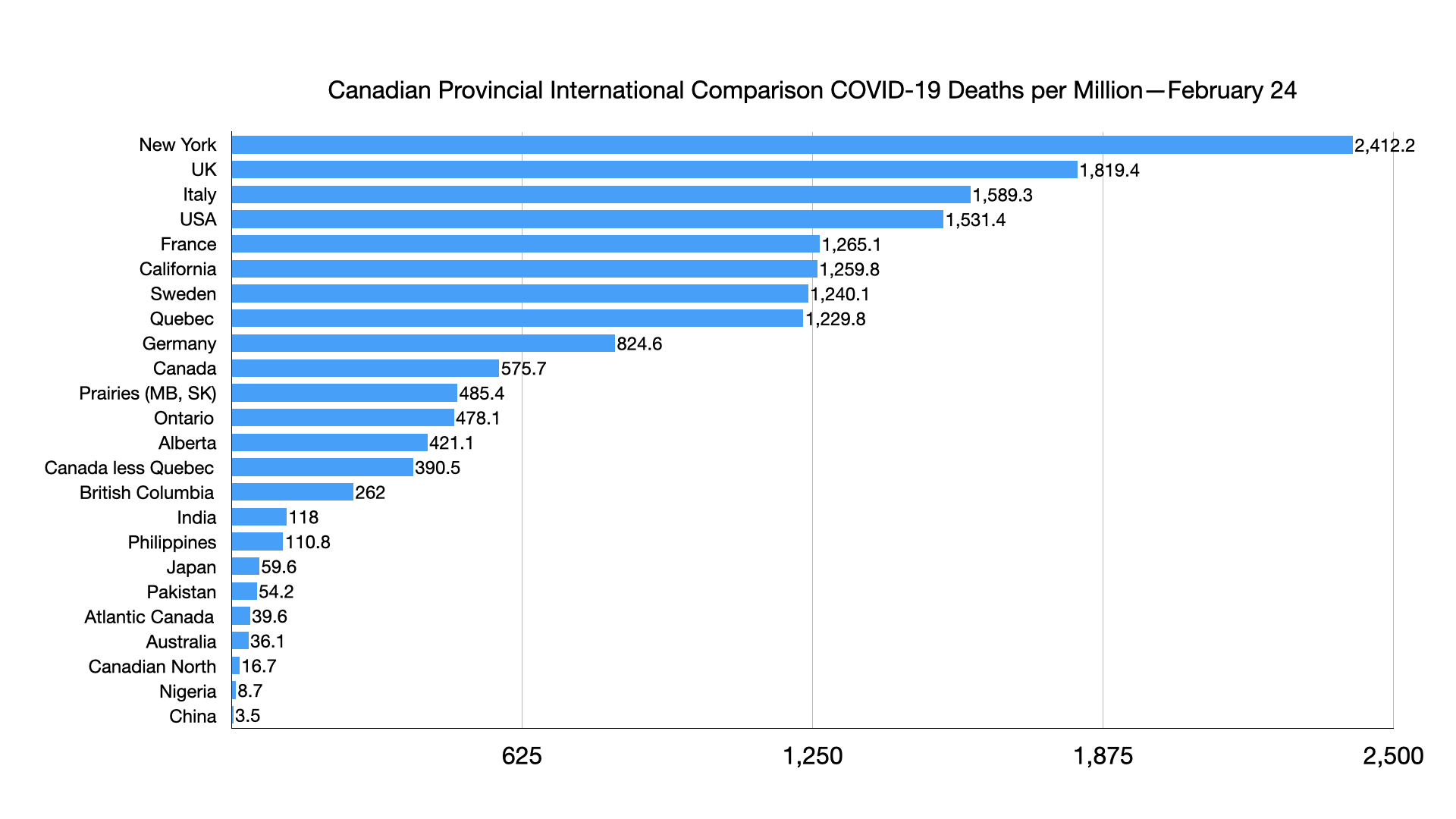
#COVID-19: Comparing provinces with other countries 13 January Update, including vaccinations

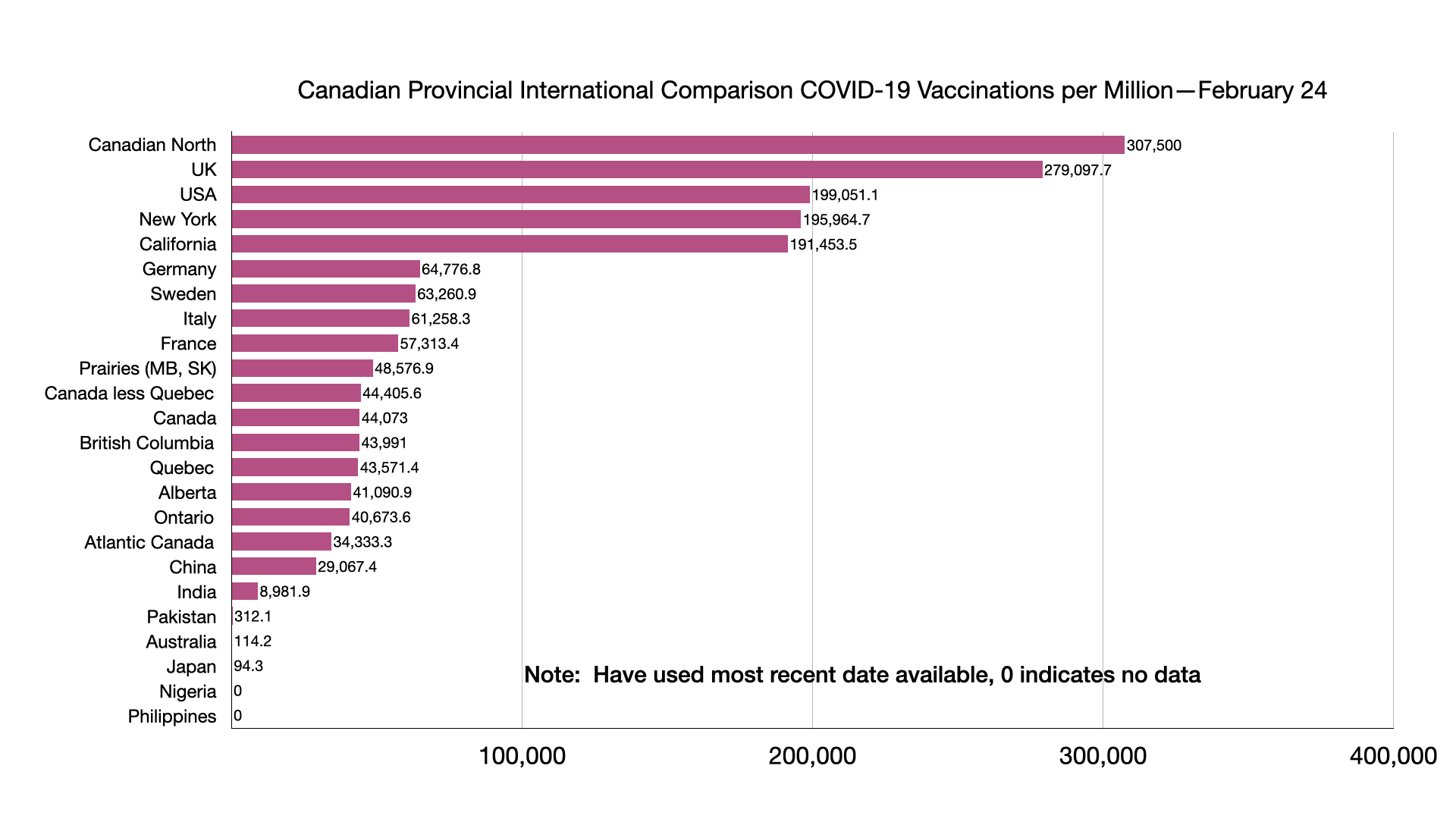
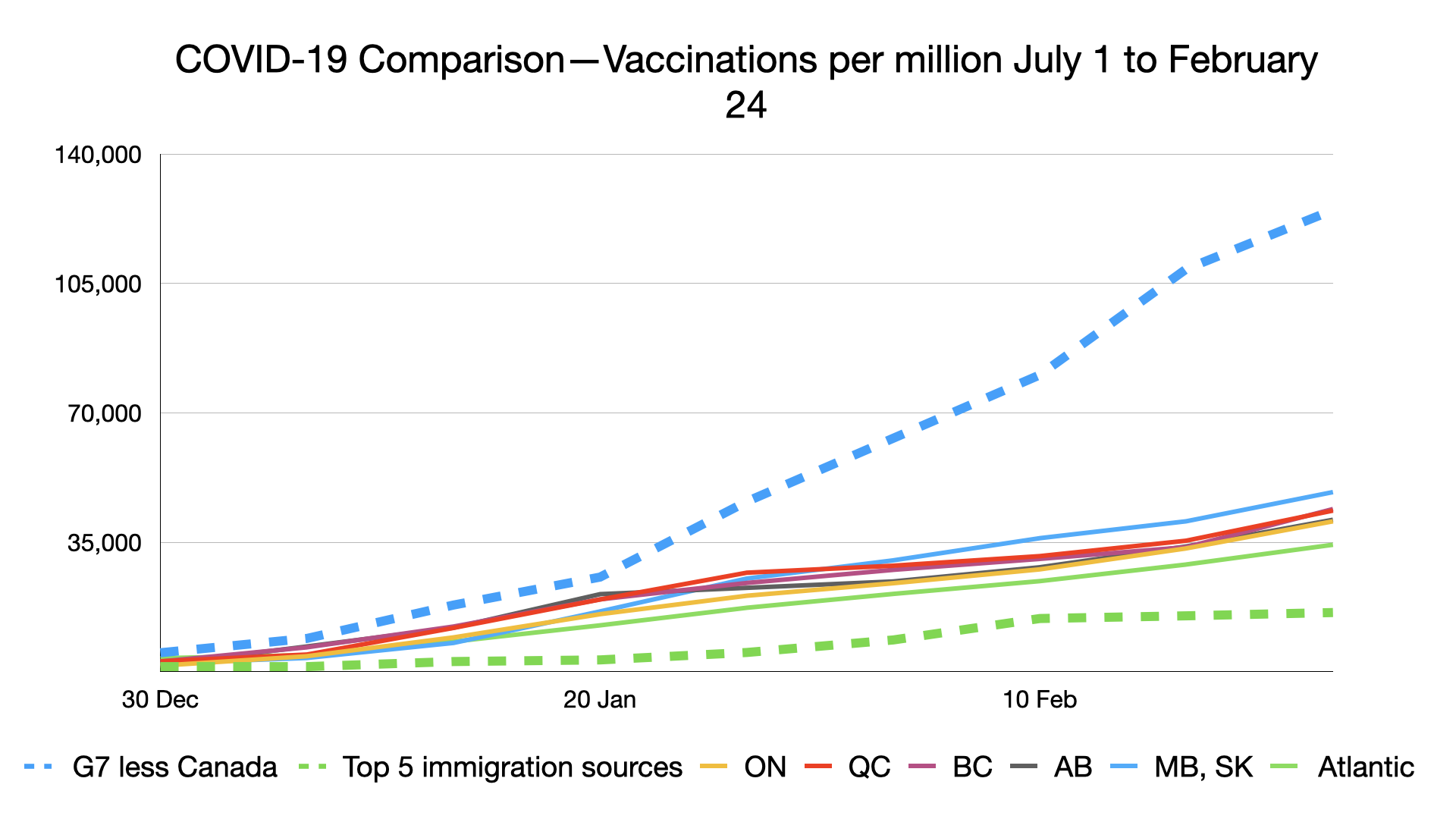
As vaccination data is becoming available, I have started to compile this data (number of vaccinations administered) by province and my standard list of countries. Some countries have yet to publish vaccination data. While Canada is far behind the UK and USA, it is ahead of China and France:

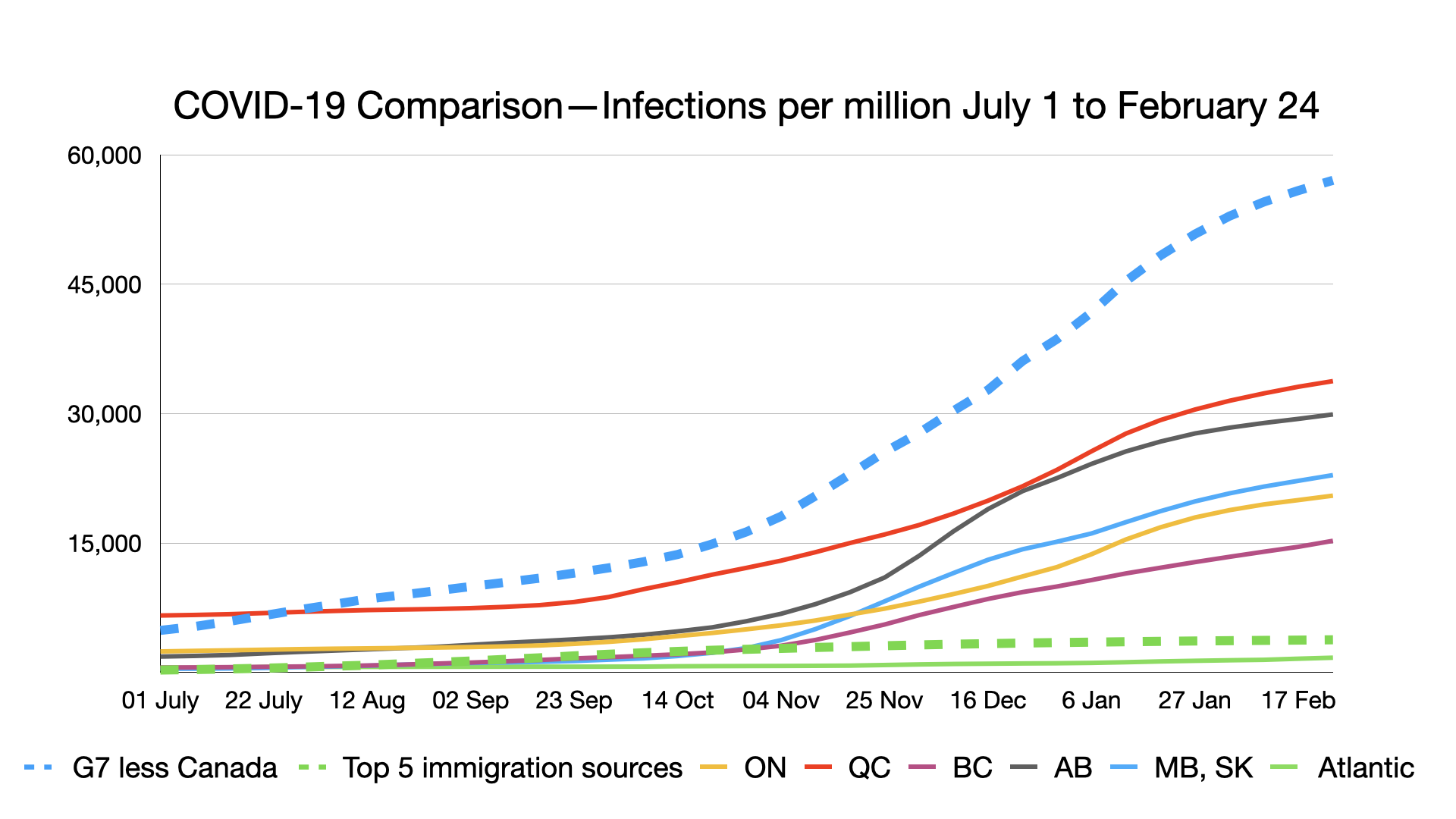
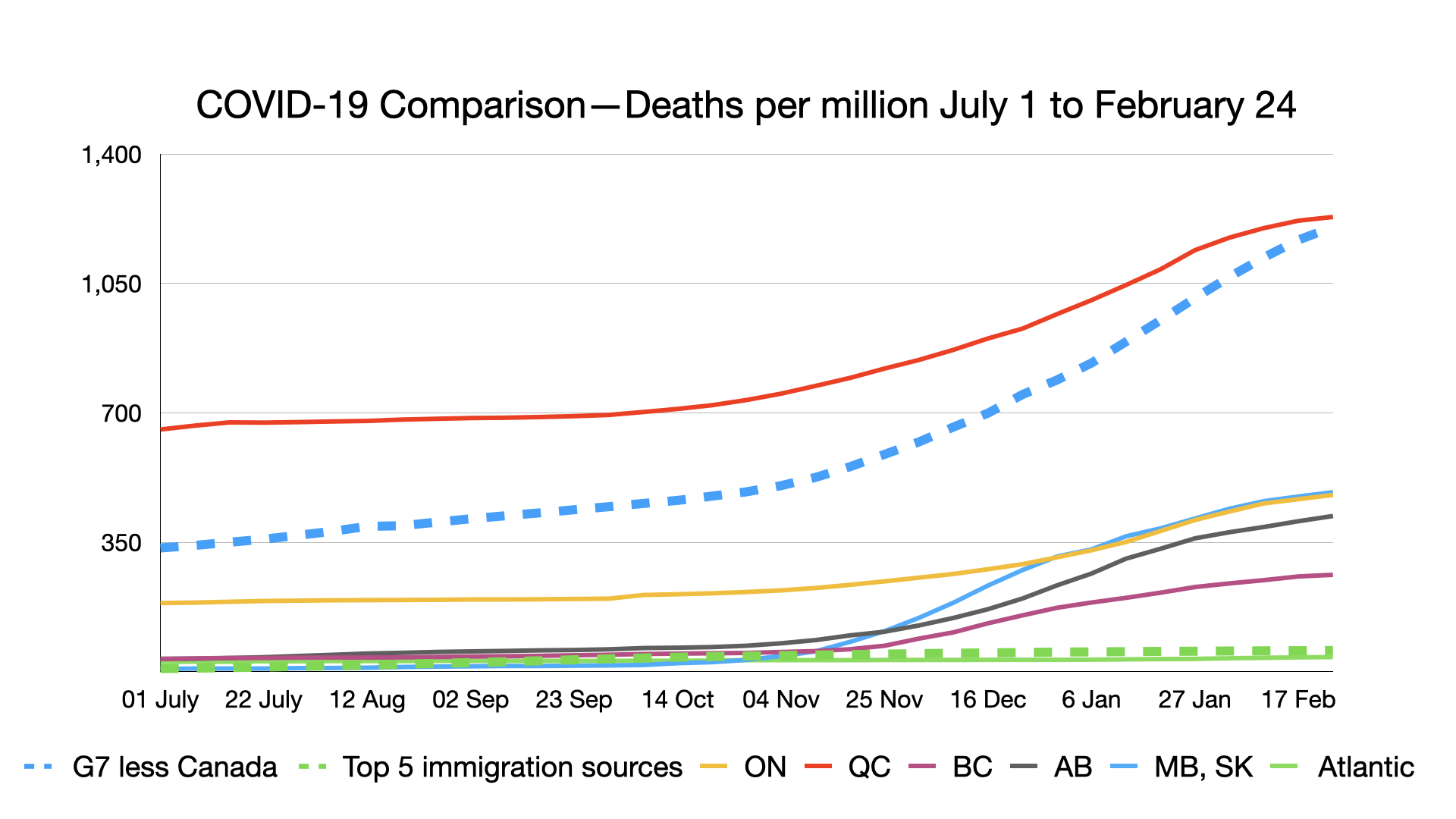
The standard charts can be found below.

Minor week to week changes:

Infections per million: California ahead of USA, Ontario ahead of Canada less Quebec, Japan ahead of Pakistan, Atlantic Canada ahead of Australia 

Deaths per million: Alberta moved ahead of Canada less Quebec

How Executive Action Can Build a More Fair, Humane, and Workable Immigration System

From the Democrat think tank, the Center for American Progress, a likely indicator of what to expect from the Biden administration:

Over the past four years, the Trump administration wreaked havoc on the nation’s immigration and humanitarian protection systems, all without enacting a single law—and often in violation of existing laws. Building on a set of laws that were already outdated, overly inflexible, and poorly suited to meet the country’s realistic wants and needs, the administration made full use of the significant amount of executive authority that Congress has both explicitly and implicitly delegated to the president over many decades. As many commentators observed when looking at the administration’s relentless anti-immigrant agenda, cruelty was often the point. Now, the incoming Biden administration—which recognized early on that “we are living through a battle for the soul of this nation” and centered its presidential campaign around a pledge to “restore the soul of America”—will need to similarly use executive authority to repair much of the damage done over the past four years, as well as in previous years. By doing so, it can help build an immigration system that is more fair, humane, and workable.

Given the substantial task at hand and the nature of both the administrative state and administrative law, some of this will take time. But because the stakes are so great for so many—indeed, for the country as a whole and for its future—the work must begin immediately and it must be sustained for the duration of the administration. By the end of his first week in office, President Donald Trump had already issued three separateexecutive orders pertaining to immigration.

During his first days in office, President-elect Joe Biden should issue a single omnibus executive order that 1) lays out a condemnation of the damaged system that he is inheriting, 2) articulates a vision for the direction in which he will take things over the course of his term in office, and 3) makes initial, urgently needed changes consistent with that vision, including the imposition of a 100-day moratorium on deportations while the administration conducts a comprehensive review of outstanding cases and develops a set of sensible enforcement priorities.

What the first executive order on immigration should include

The executive order should begin with a high-level description of the breadth of damage done by the Trump administration, including but not limited to:

Providing a concise but comprehensive condemnation of the damage done by the Trump administration is necessary to convey to the public and to both political appointees and career staff that the Biden administration recognizes the challenge at hand and will waste no time in beginning to build immigration and humanitarian protection systems that are far better than what exists today.

The executive order should then address issues by category, articulating generally what values and objectives should guide the development of policy in each area. Where possible, it should immediately rescind executive orders and policies that run counter to those values and objectives—for example, various entry bans issued pursuant to section 212(f) of the Immigration and Nationality Act, the nationwide expansion of expedited removal, and the so-called asylum cooperative agreements with Guatemala, Honduras, and El Salvador. The order should also task Cabinet secretaries with the responsibility of studying different aspects of the issues within their jurisdiction and reporting back in fixed periods of time with new plans and policies consistent with the administration’s vision.

For example, the secretary of homeland security should be tasked with establishing new civil immigration enforcement guidelines; developing a range of community-based supervision programs to significantly decrease the country’s overreliance on a punitive detention system; conducting an immediate audit of the current detention population to release those at heightened risk of developing serious health consequences if they were to contract the coronavirus, as well as vulnerable populations and others for whom detention is not strictly necessary; establishing a protocol to promote cooperative enforcement strategies designed to enhance compliance with U.S. immigration laws; and reviewing extant agreements with state and local law enforcement agencies, including all forms of 287(g) agreements, to begin the process of phasing them out entirely.

Similarly, the attorney general should be directed to take steps to significantly reduce the immigration court backlog by removing low-priority cases from the docket and to review immigration decisions issued by prior attorneys general and the Board of Immigration Appeals to identify cases ripe for certification and prompt reissuance to correct inconsistencies with law. In addition, the secretaries of state and health and human services should be ordered to engage stakeholders and review policies and procedures to ensure that a rebuilt U.S. Refugee Admissions Program is more resilient. The secretaries of homeland security and state, meanwhile, should develop a plan to restore an orderly and efficient asylum system that lives up to our highest ideals, including by dismantling the “Remain in Mexico” program.

While this bureaucratic process takes place and the administration studies each of these issues and designs appropriate solutions or harm-mitigation plans, it should issue a moratorium on deportations and associated detentions and arrests for a 100-day period, ensuring that enforcement actions going forward follow sensible enforcement priorities and are aligned with the new administration’s vision and values and not those of its predecessor.

Congressional engagement and steady policy rollouts in furtherance of the administration’s vision

During this time, the administration should work closely with the new Congress to use all necessary legislative tools to enact legislation without delay. This should include permanent protections for Dreamers and TPS holders—such as those covered by the American Dream and Promise Act, H.R. 6, which passed the House in 2019 with bipartisan support—as well as undocumented farm workers, who would have received protection under the Farm Workforce Modernization Act, H.R. 5038, which also passed the House in 2019 with even greater bipartisan support. Both of these bills ultimately died in the Senate under Sen. Mitch McConnell’s (R-KY) leadership, but they should be high priorities for the new-look 117th Congress. In addition, as the Biden administration and Congress work to enact a long overdue national coronavirus relief and recovery package that rises to the significant challenges facing the country today, they should ensure that undocumented essential workers and their families—who continue to play an important role in the nation’s fight against the coronavirus pandemic and will play a similarly critical role in the country’s efforts to rebuild—are placed on a path to citizenship.

Of course, necessary policy changes should be announced when they are ready. For instance, the administration should, without delay, begin the process of identifying and reuniting in the United States parents and children separated under the Trump administration’s family separation policy. Additionally, as part of a broader strategy of constructive reengagement with Central America, the secretary of homeland security should issue new TPS designations for El Salvador, Guatemala, Honduras, and Nicaragua on account of the two unprecedented hurricanes that devastated those countries in November and exacerbated their ongoing public health and food insecurity crises.

At the conclusion of this 100-day period, the administration should be prepared to issue new policies governing future civil immigration enforcement practices. At this time, in the event that Congress does not act, the administration should also take strong executive action consistent with its ample authority under law—for instance, by granting “significant public benefitparole in place to individuals who perform work that Trump’s Department of Homeland Security deemed essential to the critical infrastructure of the country as well as to their spouses and minor children.

Conclusion

The executive actions described above—and even the tailored legalization bills—would not eliminate the need for the significant legislative reforms required to create an immigration system that is more fair, humane, and workable and that restores faith in the rule of law. Core features of such a system would include a generous and well-functioning legal immigration system responsive to the nation’s changing needs; an asylum and refugee system that guarantees humane and efficient processing without sacrificing fairness; a new paradigm for enforcement committed to proportionality, accountability, and due process; and a path to citizenship for undocumented immigrants and others who have long resided in this country. There must also be legal mechanisms, such as a rolling registry date, designed to prevent a recurrence of the current problem.

Collectively, these structural reforms will create an immigration system that lives up to the country’s best values, meets its realistic wants and needs, and is both capable of being followed and deserving of being enforced in a fair and just way. But the fact that legislative reforms are undeniably needed does not obviate the need or the justification for steady and aggressive use of executive authority permitted under law. In fact, the decades of legislative paralysis—and the national nightmare from which we will soon emerge—ultimately demand it.

Source: How Executive Action Can Build a More Fair, Humane, and Workable Immigration System

ICYMI: While millions of Indians seek better lives abroad, India treats its immigrants poorly

As I normally use MIPEX to compare OECD country policies, missed just how low India’s rank is:

India ranked the lowest among 52 countries assessed for key indices of migrant inclusivity in 2020, shows the recently launched Migrant Integration Policy Index.

India scored the least, 24 out of 100, far lower than the average of 50, putting it in a category where migrant integration is deemed “denied”.

The index, a policy tool that measures a country’s national policies on international immigrants across eight parameters, is published jointly by two European think-tanks, the Migration Policy Group of Brussels and the Barcelona Centre for International Affairs, and was first released in 2014.

While other Asian countries such as China and Indonesia have improved their integration policies, India’s score has remained unchanged in the last five years. India’s Migrant Integration Policy Index scores fell below 20 in key policy areas including the labour market, education, health, access to nationality and anti-discrimination actions.

This is significant for two reasons: Although not the world’s most important migrant destination, India is home to 5 million immigrants, according to the Census 2011. Data from 2019 from the Population Division of the United Nations’ Department of Economic and Social Affairs noted a decline in immigrant numbers in India from 7.6 million in 1990 to 5.1 million in 2019.

Although the number of refugees and asylum seekers has gone down between 1990 and 2019 (from 212,700 to 207,600), they constitute an increasing proportion of the total immigrant population in India (2.8% in 1990 to 4% in 2019). Similar estimates from the United Nations High Commission for Refugees suggest that the number of refugees and asylum seekers in 2020 was 210,201, according to their January 2020 India Factsheet.

Further, 95.3% of India’s immigrants in 2019 also originated in the same SDG region (Central and Southern Asia comprising neighbouring countries such as Bangladesh, Pakistan, Nepal, Bhutan, Sri Lanka and Afghanistan) – a number that has not changed significantly from 1990 (96.8%).

This characteristic of immigration to India is also highlighted in a 2017 article by the Pew Research Center. However, the existing immigrant population continues to face integration barriers in various aspects of daily life, which impact their entry into the workplace, access to justice, and educational experiences, concluded the Migrant Integration Policy Index analysis.

India also sends out the world’s largest number of emigrants – 17.5 million as per estimates from the International Organisation for Migration’s (UN-IOM) World Migration Report 2020, and is, therefore, a critical voice in immigrant integration.

Migrants move seeking better livelihoods and education, so an increase in immigration rates is an indicator of a country’s growth and development trajectory. As India develops in the coming decades and takes on a leadership role in the South Asian region, integration of immigrants and their issues will only become more important, experts say.

“There is very little by way of comprehensive immigration policy in India today – access to social security benefits or the labour market is limited and often foreign nationals face discrimination as reported in the media,” said migration policy expert Meera Sethi, formerly of the UN-IOM.

Originally devised to measure the integration of Third Country Nationals – or non-European Union nationals – in the EU, Migrant Integration Policy Index is now a major policy tool to analyse and measure migrant integration in destination countries around the world: in developed countries including the United States, Canada, Australia, Japan and Norway, as well as in developing countries such as Brazil, Indonesia, China, India and Turkey. The assessment for India was conducted by Migration Policy Group’s country partner India Migration Now, a Mumbai-based research non-profit.

Low scores across key indices

India’s overall Migrant Integration Policy Index score is the lowest because of below-average scores in all policy areas except for family reunion (assessing how easy it is for immigrants to reunite with their families) where the score is 75, compared to the Migrant Integration Policy Index average of 58. The country fares worse in certain policy areas such as anti-discrimination, health, labour market mobility and access to nationality.

In the area of labour market mobility, India scored 17 while the Migrant Integration Policy Index average is 51. Accessing an employment visa in India carries certain conditions – only those from highly skilled backgrounds earning more than $25,000 per annum are eligible.

Furthermore, employment visas are not granted for jobs for which qualified Indians are available, according to informationput out by the Ministry of Home Affairs. Foreign residents on business visas have the option of self-employment, but no measures exist to promote access to the labour market or provide support to improve professional skills or opportunities.

In education too, India scored 19, less than half the Migrant Integration Policy Index average of 40. There are no measures in place in the country that recognise the unique requirements of immigrant children. They only benefit from general measures available for all children in India under the Right to Education Act, 2009. This is a lacuna evident for India’s interstate migrants as well, who face exclusion when they move from one state to another, found IMN’s IMPEX analysis of 2020. Typically, states require migrants to furnish proof of residence, which can be in the form of a domicile certificate or a school transfer certificate from the destination state, which migrants often find difficult to produce because they are not domiciles of the destination state and had acquired education in their source states, the IMPEX analysis showed.

These issues are further aggravated for immigrant families and while many have managed to utilise Right to Education provisions, their children often face discrimination and cultural barriers at Indian schools, according to this January 2020 articlein The Wire, which focuses on the Rohingya refugee community. Refugee communities such as the Rohingya are reliant on philanthropic initiatives and the work of NGOs to fill these crucial policy gaps, according to an earlier 2018 field report from The Wire.

In the area of political participation, India scored 0. The right to vote, to stand in elections, and form political parties/associations are limited to the citizens of India. These limitations often also extend to interstate migrants as voter identity is connected to the electoral roll at the place of origin, found IMN’s IMPEX analysis. Although Indian citizens are eligible to transfer to new electoral rolls when they move, the process is not easy, particularly for short-term seasonal migrants who move often.

Poor access to health

In the field of health, immigrants and asylum seekers face additional requirements to access the Indian health system and enjoy little information or support targeted to meet their specific health needs. Schemes such as Ayushman Bharat extend to those families categorised in the lower-income brackets as defined by the socio-economic and caste census of 2011 and therefore exclude immigrants. However, schemes under the Integrated Child Development Services, which provides supplementary nutrition, pre-school and non-formal education, immunisation, and health check-ups to children aged 0 years to 6 years, can usually be availed without proof of identity.

The services of public health facilities like primary healthcare centres are also open to immigrant communities and asylum seekers in India – both of these options are recommended for the communities by the United Nations High Commissioner for Refugees in India as well. These schemes may be utilised by immigrants in the same manner as RTE is.

Schemes of the Delhi government such as the Aam Aadmi Mohalla Clinic serve all residents living in areas deemed eligible (usually slum and jhuggi jhopri areas) and are available to immigrants as well.

Specific health schemes exist for Tibetan and Sri Lankan Tamil refugees as part of central level integration policies for these communities – these include the Tibetan Rehabilitation Policy of 2014 and specific schemes for maternal and child health by the government of Tamil Nadu for Sri Lankan Tamil refugees. However, these communities number approximately 200,000 in total and only form 3%-4% of the estimated legal immigrant population. Covid-19 has aggravated the existing policy gaps for refugee communities, as IndiaSpend reported in April 2020 and as argued by this September 2020 opinion editorial in Migration Policy Institute, a migration research think-tank based out of Washington DC, USA.

India’s score in the policy area of anti-discrimination is 9, compared to the Migrant Integration Policy Index average of 71. There is currently no legislation related to discrimination against immigrant communities. Article 15 of the Constitution of India addresses direct and/or indirect discrimination and/or harassment and/or instruction to discriminate on grounds of race, ethnicity, religion and belief – a provision that only exists for citizens.

It has also been argued that these provisions are, in themselves, inadequate, and India needs a comprehensive internal anti-discrimination law. Discrimination against immigrant communities is an issue and has occurred against various refugee groups as well as student groups from African countries such as Nigeria who have faced racist attacks.

In India, the path to permanent residence is mainly linked to the ability to fulfil certain economic requirements. However, even permanent residents are denied equal treatment with Indian nationals in key areas of life such as social security and assistance. For accessing citizenship in India, a person can apply for citizenship by naturalisation if they meet certain qualifications such as residence in India or service in the central government for a certain period of time: (i) for the 12 months immediately preceding the application for citizenship, and (ii) for 11 of the 14 years preceding the 12-month period, as specified in The Citizenship Act, 1955 Act. The process of accessing citizenship requires more than 10 years of residence and India does not offer dual nationality.

Among the eight policy areas, India has the highest score in family reunion. This policy area assesses if foreign residents can reunite with their families – for instance, whether legally resident foreign citizens can sponsor their entire families. Whether family members need prerequisites such as learning a language before departure for the destination country.

Whether the state protects family members from discretionary procedures (such as in deciding permit durations, considering personal circumstances when allowing or refusing entry, and giving the applicant a chance to appeal) and whether the family members get the same rights as their sponsor. Although India scores 75 in the policy area and many foreign citizens are eligible to apply for their dependent family members, according to information provided by the Ministry of Home Affairs, there are no additional integration measures for these reunited families.

Flawed public perception

The understanding of the impacts and contributions of immigrants to developing countries’ economies is limited. Besides adding to the overall social and cultural diversity, immigrants from neighbouring countries such as Nepal have been contributing to the Indian economy in the informal sector as construction workers, domestic help, cleaners, bar and restaurant workers, and petty traders. Unfortunately, such contributions have not been assessed or measured, found a 2015 paper published in the Economic and Political Weekly.

Cross-border migrants often face harassment, are exploited by brokers, paid irregularly and sometimes substantially less than what they are promised by the employers, and are often ill-treated by the border security forces – as reported in this 2015 research study by the Mahanirban Calcutta Research Group, which conducted fieldwork with cross-border Rohingya and Bangladeshi migrants. India has no formal immigration policy framework but existing policies regulate the entry and exit of people through the border.

The Indian government has also set up special tribunals for the determination of the question of whether a person is an illegal immigrant as per the Illegal Migrants (Determination by Tribunals) Act, 1983. Beyond this, there are ad hoc policies and executive orders for the entry and rehabilitation of Tibetan and Sri Lankan refugees and for religious minorities from neighbouring Muslim majority countries. Even the Citizenship Amendment Act of 2019 – facilitating citizenship for religious minorities from Pakistan, Afghanistan and Bangladesh – is estimated to actually benefit only 31,313 people, as detailed in the joint parliamentary committee report on the Citizenship (Amendment) Bill (then, a Bill) in 2016.

The lack of policy intervention is further aggravated by the public perception and rhetoric around illegal immigration (mostly from Bangladesh), which have often been election issuesin India. The data, however, do not bear this out: Improved developmental outcomes in Bangladesh in recent years have brought the two countries on par, argues this opinion editorial in The Indian Express – as a result, immigrants from Bangladesh may no longer be seeking out India as a destination.

In a fast globalising world, as Indian emigrants in various destination countries benefit from effective integration schemes, policy in India for the country’s over 5 million immigrant population has clearly not kept pace, said experts.

“Countries have already started to invest in ensuring basic rights and a secure future for international migrants. Now, they need to guarantee migrants the same equal opportunities as nationals,” said Giacomo Solano, policy and statistical analyst at MPG, Brussels, where the Migrant Integration Policy Index was formulated.

Source: While millions of Indians seek better lives abroad, India treats its immigrants poorly

HASSAN: Pakistan’s particular second wave challenge

Given Pakistan one of our top five immigration source countries,  of interest, with similarities with some of the fringes in Western countries:

Pakistan’s management of the pandemic was initially lauded even by the World Health Organization. Not so, the second wave.

The latest outbreaks have wrought havoc across the world, and Pakistan is no exception. COVID-19 appears to be spreading rapidly in many parts of the country. The rest of the world is beginning to see the hope of ending the pandemic in the development of various vaccines.

But Pakistan poses a special challenge toward fighting the pandemic within its borders. According to Younis Dar, Pakistan’s situation is “far more dangerous” as a significant number of Pakistanis refuse to embrace the idea of inoculation because of rampant suspicion against the vaccines.

Source: HASSAN: Pakistan’s particular second wave challenge

International students waylaid by COVID-19 will get second chance at Canadian work experience

Makes sense:

International students who have failed to secure coveted Canadian job experience due to the pandemic will be given another shot at meeting a necessary requirement for permanent residence, says Immigration Minister Marco Mendicino.

On Friday, Ottawa will launch a temporary policy to allow international students with an expired or expiring post-graduate work permit to apply for a new permit that will be valid for 18 months.

International students who graduate from a designated Canadian post-secondary college or university are eligible for a work permit that lasts between one and three years, depending on the duration of their academic programs.

Canadian education credentials and work experience have become increasingly crucial for foreign nationals looking to apply for permanent residence in Canada, which rewards those qualifications with bonus points in the immigrant-selection process.

In 2019, more than 58,000 international students who graduated from a Canadian institution successfully applied to immigrate permanently.

However, due to the COVID-19 pandemic, the 2019 and 2020 cohort was left to confront a grim job market and many international graduates were let go from their employment.

Hence, they found themselves unable to fulfil their Canadian work experience requirement and faced the prospect of having to leave Canada in spite of their investments of money and time.

The tuition fees of international students are generally three to four times above what domestic students pay. The students contribute more than $21 billion annually to the Canadian economy and international education has become a default pathway for immigration to Canada.

“This new policy means that young students from abroad who have studied here, can stay and find work, while ensuring that Canada meets the urgent needs of our economy for today and tomorrow,” Mendicino told the Star in a statement.

“Our message to international students and graduates is simple: We don’t just want you to study here, we want you to stay here.”

In October, Ottawa announced it would welcome 401,000 new immigrants in 2021; 411,000 in 2022; and 421,000 in 2023 — after a disappointing 2020 that saw the processing of immigration applications stalled by the pandemic, with overseas visa posts locked down and immigration officers operating from home in a reduced capacity.

Preliminary data has shown that only 60 per cent or some 200,000 of the 340,000 newcomers targeted for 2020 were expected to have made it to Canada by the end of last year.

Mendicino said attracting skilled immigrants is a central part of Canada’s post-pandemic economic recovery and the new post-graduate work permit policy will help more graduates fill pressing needs in sectors such as health care and technology.

“Whether as nurses on the pandemic’s front lines, or as founders of some of the most promising start-ups, international students are giving back to communities across Canada as we continue the fight against the pandemic,” Mendicino said.

“Their status may be temporary, but the contributions of international students are lasting.”

Source: International students waylaid by COVID-19 will get second chance at Canadian work experience

Impact of Covid-19 on Immigration to Canada – Working Deck – October 2020 Numbers Updated with temporary resident data

This is an updated version, including the October numbers for temporary residents (International Mobility Program and Temporary Foreign Workers Program). The most interesting data point is the sharp increase in the number of post-graduate employment, which increased more than five-fold compared to September, and more than doubled compared to October 2019.