Five Ways to Have Better Conversations About Immigration

Good suggestions, applicable more broadly than immigration and the USA:

If having a conversation about immigration with people in your life feels hard, frustrating, or scary, you’re not alone.

In recent years, the topic has become increasingly contentious and difficult. You may find that the conversation quickly transforms into a pitched debate, with each side digging in and feelings getting hurt.

After going through this experience once or twice, it’s easy to imagine why people avoid the topic altogether. Yet, as a society, we lose when a charged topic like immigration becomes off-limits or taboo and people stop exploring—and bridging—their divergent opinions. The debate drags on without a solution, with grave consequences for immigrants, their families, and the many Americans whose lives are intermingled with theirs through work and community life. As a result, it’s critically important for us to find new ways to connect and engage on the issue.

Is that possible? We can’t promise that each individual conversation will be productive, but here are five suggestions for making that outcome more likely.

1. Counter the zero-sum mindset

We often hear about the vulnerability of people who fled their home countries, which we might call the “struggle” narrative. We might also learn about the value of educated individuals to our high-tech and medical industries, which is a narrative of exceptionalism.

The trouble with both the struggle and exceptionalism narratives is that they can trigger competitiveness in the minds of many. This is because people often carry the false belief that if immigrants get more of something (safety, jobs, rights, education, etc.), then the American-born would get less of that same thing. If you believe that resources are finite and that any piece of the pie that goes to an immigrant means less for you, then you might feel threatened by immigrants.

To correct zero-sum thinking, we need an abundance mindset that allows us to explore how good immigration policies can benefit everyone living in America. What would an immigration system look like that created a win-win rather than a win-lose scenario in people’s minds? Can we tell stories and have discussions that explore shared struggles, dreams, and aspirations of everyone who calls America home, and avoid some of the pitfalls of immigrant struggle/exceptionalism narratives?

2. Tread lightly around the sacred

“Research shows that when perceived threat and social identity become involved, our policy stances can become sacralized, transforming into absolutist, moralized, non-negotiable values,” write Nichole Argo and Kate Jassin in a recent report from the American Immigration Council. “These sacred values do not operate like regular values, which can be reevaluated if one is willing to make trade-offs.”

As a result, significant numbers of Americans hold their immigration positions so tightly that they wouldn’t abandon them for any amount of money. The issue is so dear to them, in fact, that trying to negotiate around it could backfire. For some, ending the practice of family separation is sacred, while for others it’s the idea of securing a border wall. Both groups are unlikely to be persuaded otherwise.

What’s the solution to such an impasse? Knowing how sacred immigration issues have become for different groups of people helps us understand why conversations on the topic are so hard and sometimes explosive. Thus, when discussing immigration with someone, it’s important to listen carefully and try to understand what they deem sacred—and why.

For example, we can learn what is behind positions like the need for a border wall. Is it safety or security? How do we satisfy those needs? Is that a bridge to helping them understand the desire of so many to migrate to the U.S. seeking a safe place to live?  Perhaps we can connect people across these fundamental feelings and concerns. After all, who doesn’t want to feel safe?

Through this process, you might find where you have the most agreement and common ground—and from there, you can build the trust necessary for deeper and more specific policy discussions.

3. Tell binding, values-based, and emotional stories rather than cite facts

The Nobel prize–winning behavioral economist Daniel Kahneman says that people are not persuaded by numbers but by stories. Yet we often start with data to make the case for immigration. We cite economic data, crime data, and demographic data. We bring facts to what is a highly emotional issue for many.

This approach usually fails because the lived experiences, prior knowledge, and in-group norms (peer pressure) informing an individual’s views on immigration won’t be undone by a data set.

Rather, sharing stories of your own lived experience with the issue can produce more powerful shifts. Stories that highlight the common identities that foreign- and U.S.-born people share as parents, sports fans, foodies, and coworkers help bind people as they learn about what they have in common with each other rather than what they don’t.

Once these commonalities have surfaced, people are better able to process the facts. That’s why facts should follow, not lead, in an immigration conversation.

4. Consider who the best messengers are

There is a growing body of evidence that shows that Americans are increasingly less trusting of national leaders and more trusting of people closest to them at the community level. In fact, people are most likely to believe what their peers and family members believe. For this reason, “in-group” messengers are often the best to reach people on any topic, but particularly the hard ones.

For example, when a fellow parent, parishioner, or soccer mom shares an opinion or story, we process it differently than when we hear the opinion of a stranger or out-group member. If an in-group member tells us a personal story about an immigrant family they were close to, that might shape our thinking about interactions with immigrants. Members of our own in-groups hold more credibility and they shape our behavior, which is why in-group members can be powerful influencers of thoughts and behaviors.

In the event that a particular group is leaning anti-immigrant in their thinking and behavior, in-group moderates (people with more moderate thinking within the group) can help shift the conversation by showing that opinion is not uniform within an in-group. It’s helpful to lift up those people who share your audience’s values or identities to address immigration issues—and it’s important that we resist attempting to enlist people who don’t have the right level of credibility with our intended audience.

5. Help shift the norms in your local community

Social norms are what we perceive to be a typical or desirable behavior. While national norms exert influence, of course, there is evidence that localities can carve out their own distinct norms.

By telling stories, engaging in discussions, and acting in ways that exemplify your values and hopes for how your community should treat your foreign-born neighbors (as well as your U.S.-born neighbors), you shape the social norms in your community, which in turn may shift the views of some of its members—or influence their public-facing behavior at the very least.

Beyond the level of one-on-one conversation, it’s important to connect neighbors, both immigrant and American-born, and bring them into community with one another. Find the safe and welcoming spaces where those interactions would be the most organic and most likely to recur. They could be houses of worship, worksites, playgrounds, sports leagues, volunteer projects, food programs, job training, schools, and universities where people can come together for themselves and for the good of their community. We can build bridges and relationships through activities that leave politics behind and help us to find common ground.

While these tips for how to have productive conversations seem pretty simple, we know it’s hard to navigate contentious topics in a polarized environment. The point is to try new approaches that are more likely to get us there than what we’re doing now.

We know it’s possible. In 2018, the Kettering Foundation hosted 86 conversations about immigration in local communities across the country. The forums brought people together who agreed, disagreed, changed their minds, and challenged one another’s thinking on immigration. They were able to have respectful, nuanced conversations on a complex and emotional area of public policy.

If we can reimagine our conversations on immigration, we’ll create a new way forward on the immigration question, but we’ll also strengthen our civic bonds, increase social trust, and take one more step toward building the pluralistic democracy that we want to live in.

Source: Five Ways to Have Better Conversations About Immigration

Angus Reid: As Ottawa prepares to ramp up immigration post pandemic, Canadians are divided over target levels

Of course, Canadians are divided on this and other issues.

But still striking to me, despite the large increases planned by the government, overall acceptance and support for levels of 400,000 and over (34 % about right, and 13 % number should be higher, for a total of 47% compared to 39 % believing the numbers too high). Equally interesting is the drop since 2018 of those thinking immigration levels too high, from 49 to 39 %:

As travel restrictions in Canada brought by COVID-19 begin to lift, the impacts will not only be felt by people living in this country, but those waiting to settle here.

An unprecedented, pandemic-related slowdown in immigration over the last year and a half is poised to ramp up against news last Monday that some 23,000 approved immigrants to Canada could immediately begin their journey to their new home country.

Public health, economic and perhaps even electoral outcomes pending, the Canadian government has signalled it plans to land more than 400,000 newcomers next year.

New data from the non-profit Angus Reid Institute in partnership with the University of British Columbia finds Canadians divided along age, gender, and political lines about whether that number represents an appropriate target.

Overall, one-in-three (34%) say that this is the right level. A plurality of past NDP (43%) and Liberal (47%) voters believe the current target of 411,000 new permanent residents is the right amount. One-quarter of past CPC voters agree (23%).

On the other hand, a plurality of 39 per cent feel that the target is too high. This proportion rises to a majority in Alberta (50%) and Saskatchewan (54%) and is the opinion of nearly two-thirds (64%) of past Conservative voters.

One-in-eight (13%) Canadians say the 411,000 target is not ambitious enough, rising to one-in-five among past Liberal and New Democrat voters.

As to which regions of the globe Canada should prioritize for new permanent residents, three-in-five Canadians say that it does not matter to them, and that no region should have priority over another. One-quarter (26%) prefer Europe, while one-in-five (20%) say the United States and Mexico. Immigration from South Asia is chosen by just four per cent, a finding starkly contrasted against the fact that Canada’s largest source of immigration is currently India.

Source: https://angusreid.org/as-ottawa-prepares-to-ramp-up-immigration-post-pandemic-canadians-are-divided-over-target-levels/

Full report: https://angusreid.org/wp-content/uploads/2021/06/2021.06.28_Immigration_2021.pdf

#COVID-19: Comparing provinces with other countries 23 June Update, China’s vaccine diplomacy

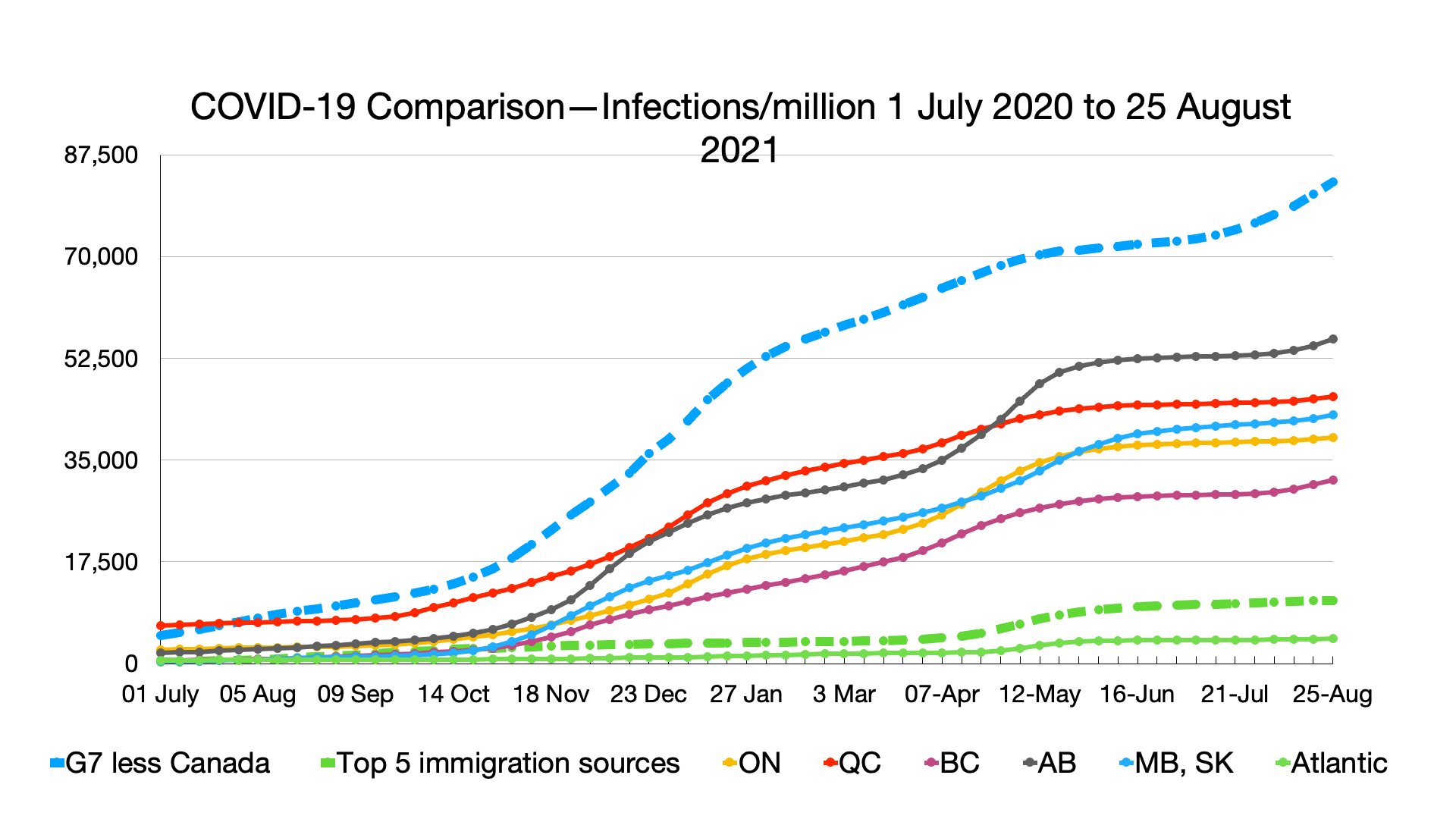
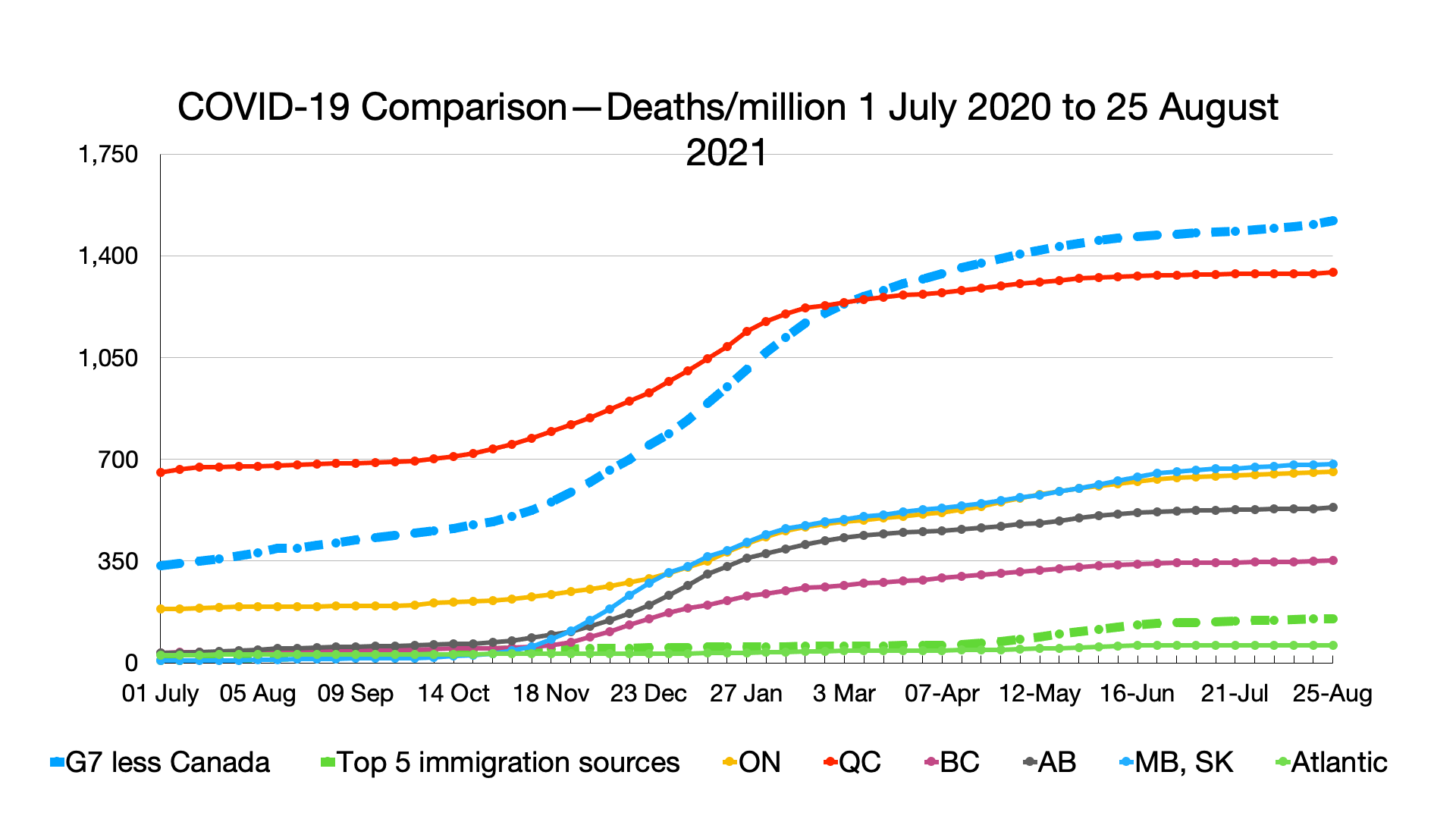
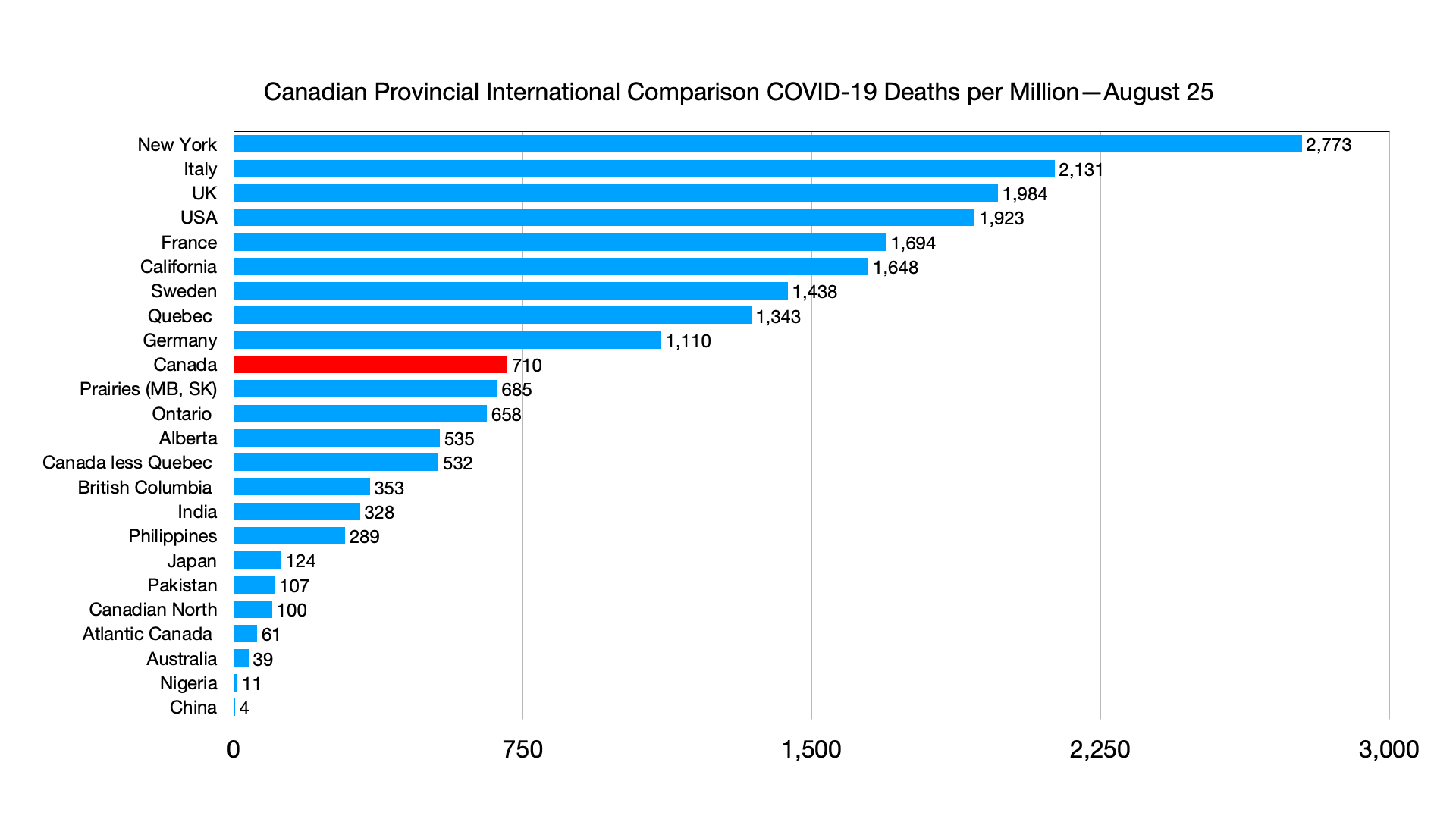
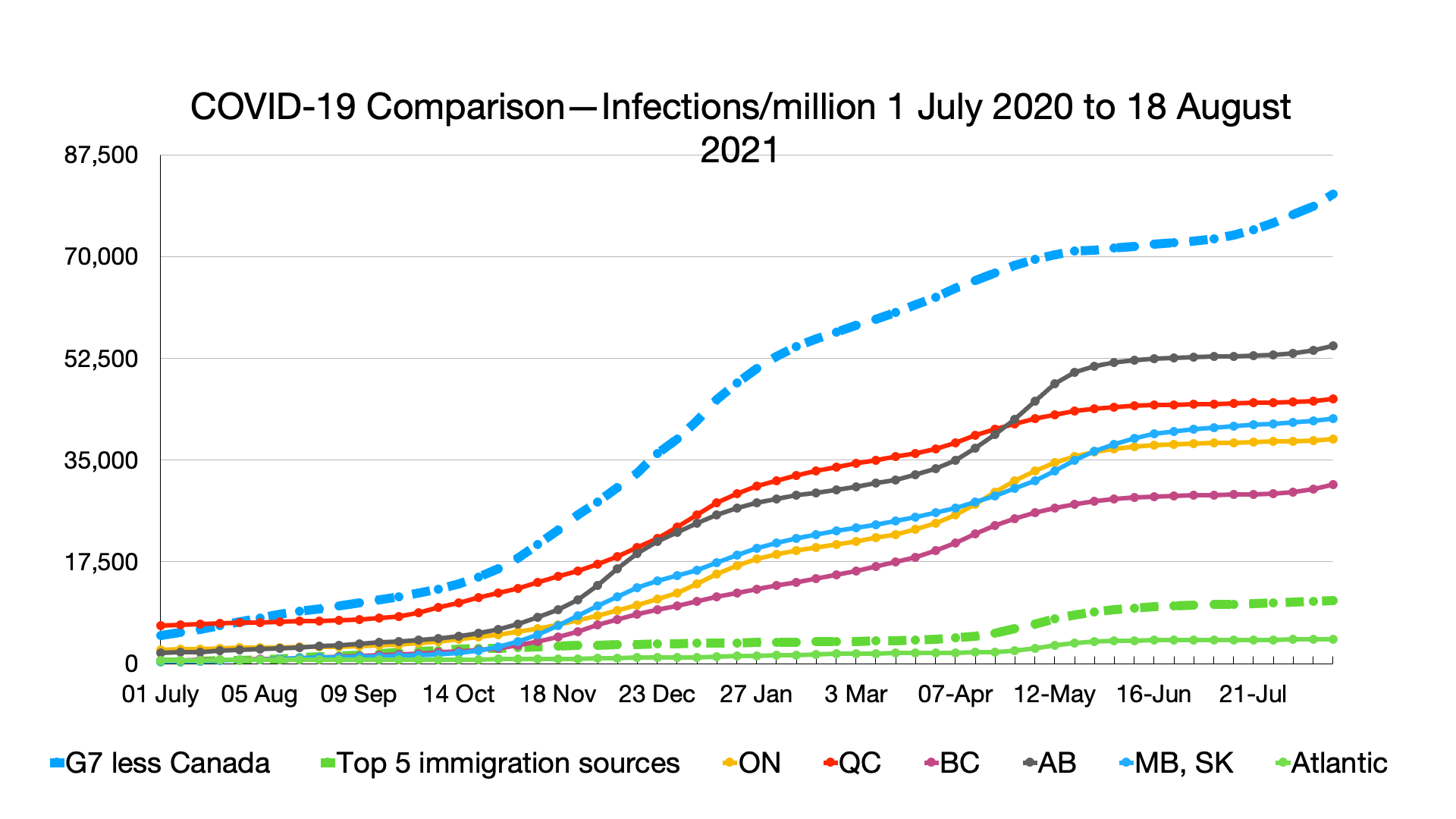
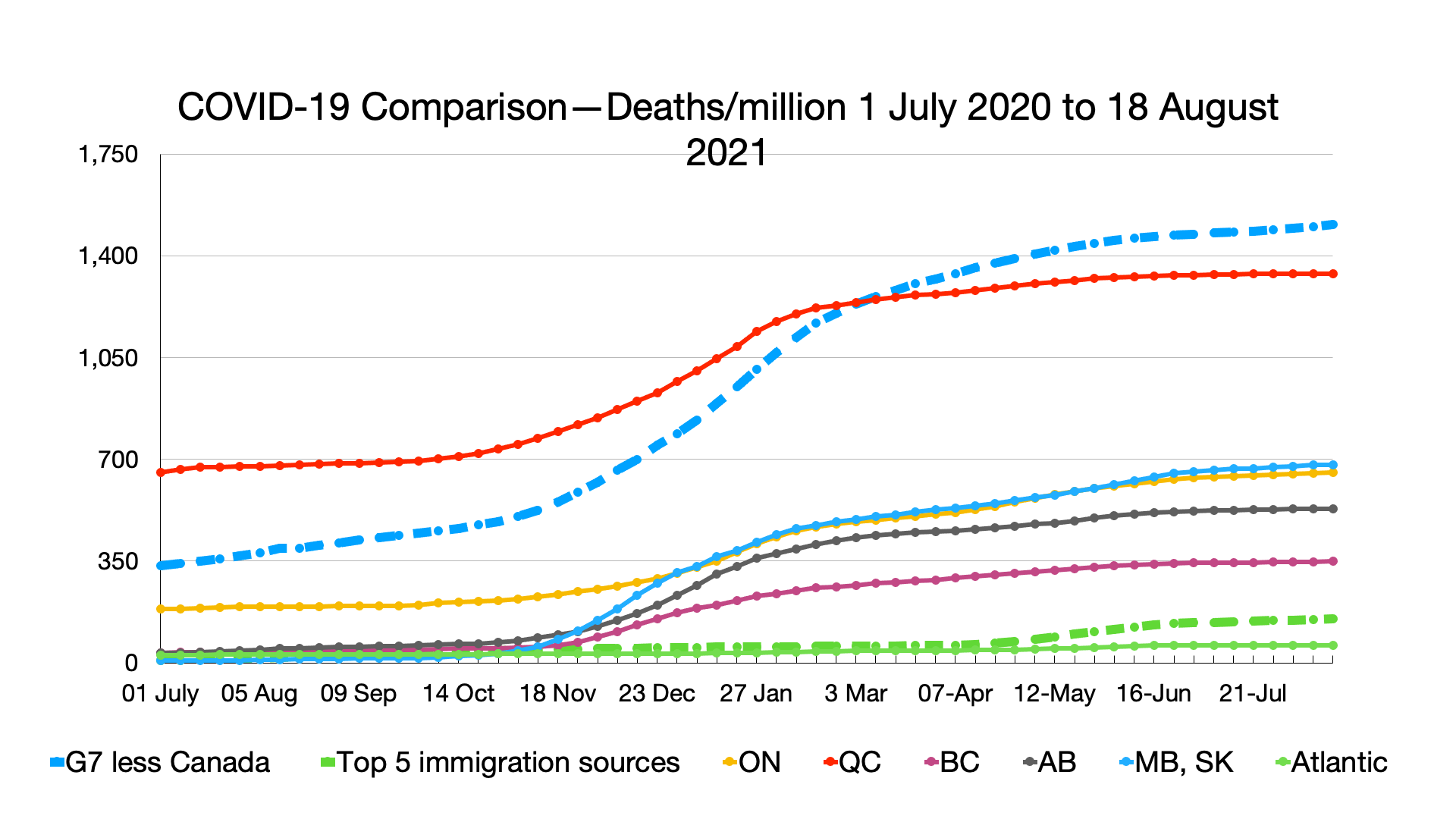
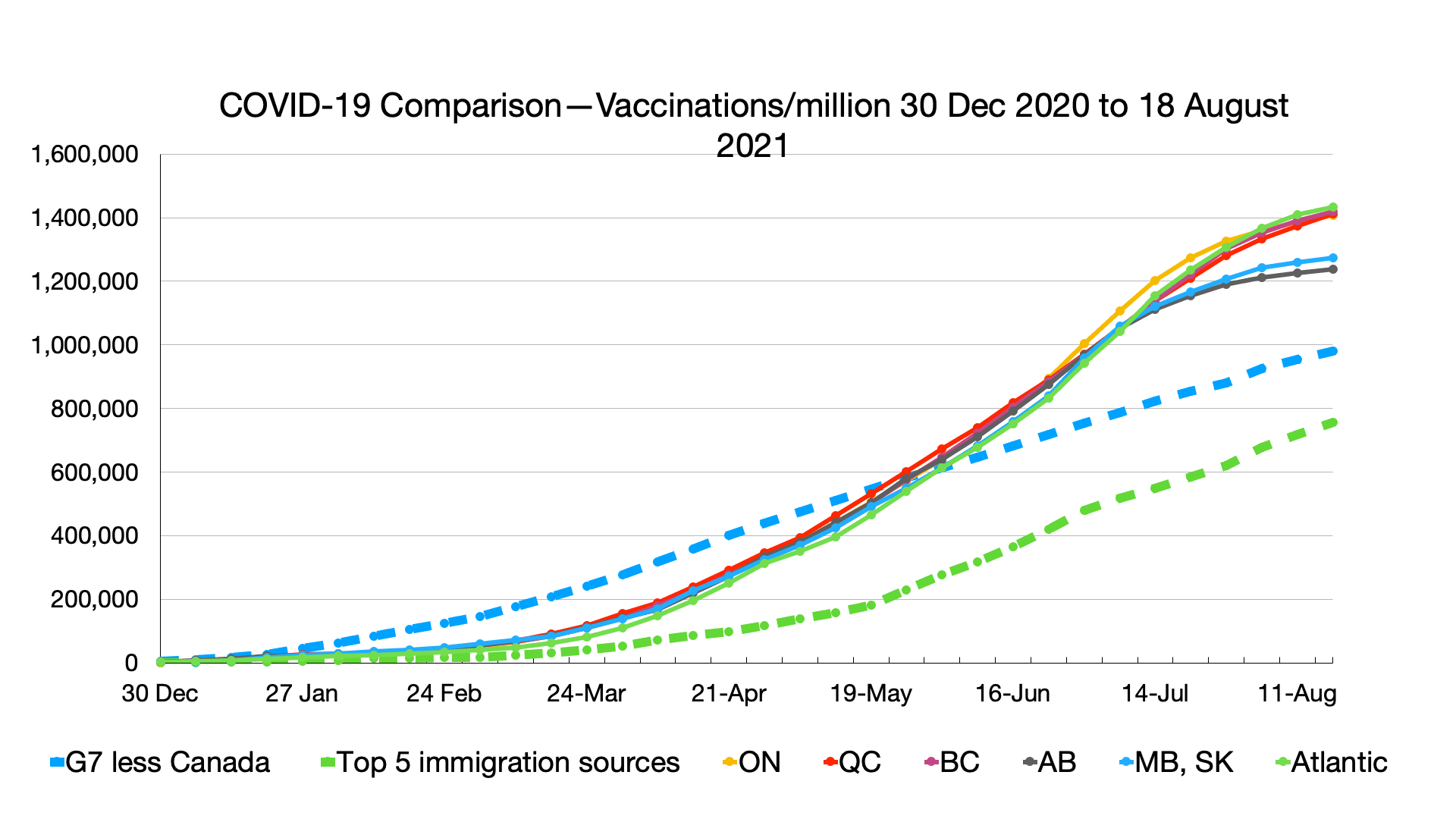
The latest charts, compiled 23 June as overall rates in Canada continue to decline along with increased vaccinations (still largely first dose, fully vaccinated 20.8 percent, most EU countries are between 25 to 35%).

Vaccinations: Minor relative changes with Ontario ahead of Quebec and British Columbia. China’s vaccination rate continues to grow dramatically (about 16% fully vaccinated. Article below charts describes lower efficacy of Chinese-made vaccines.

Trendline charts

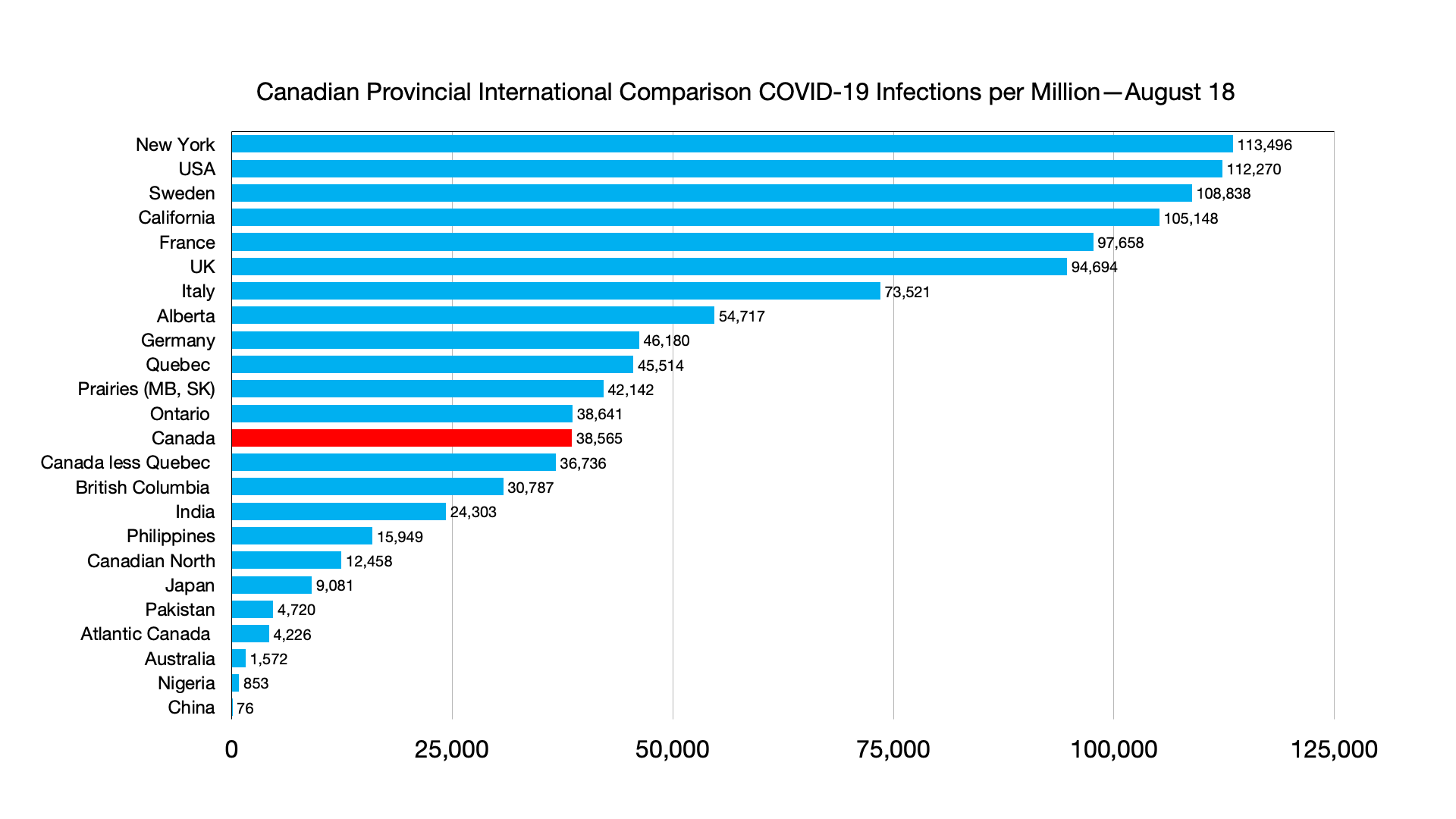
Infections per million: No relative changes.

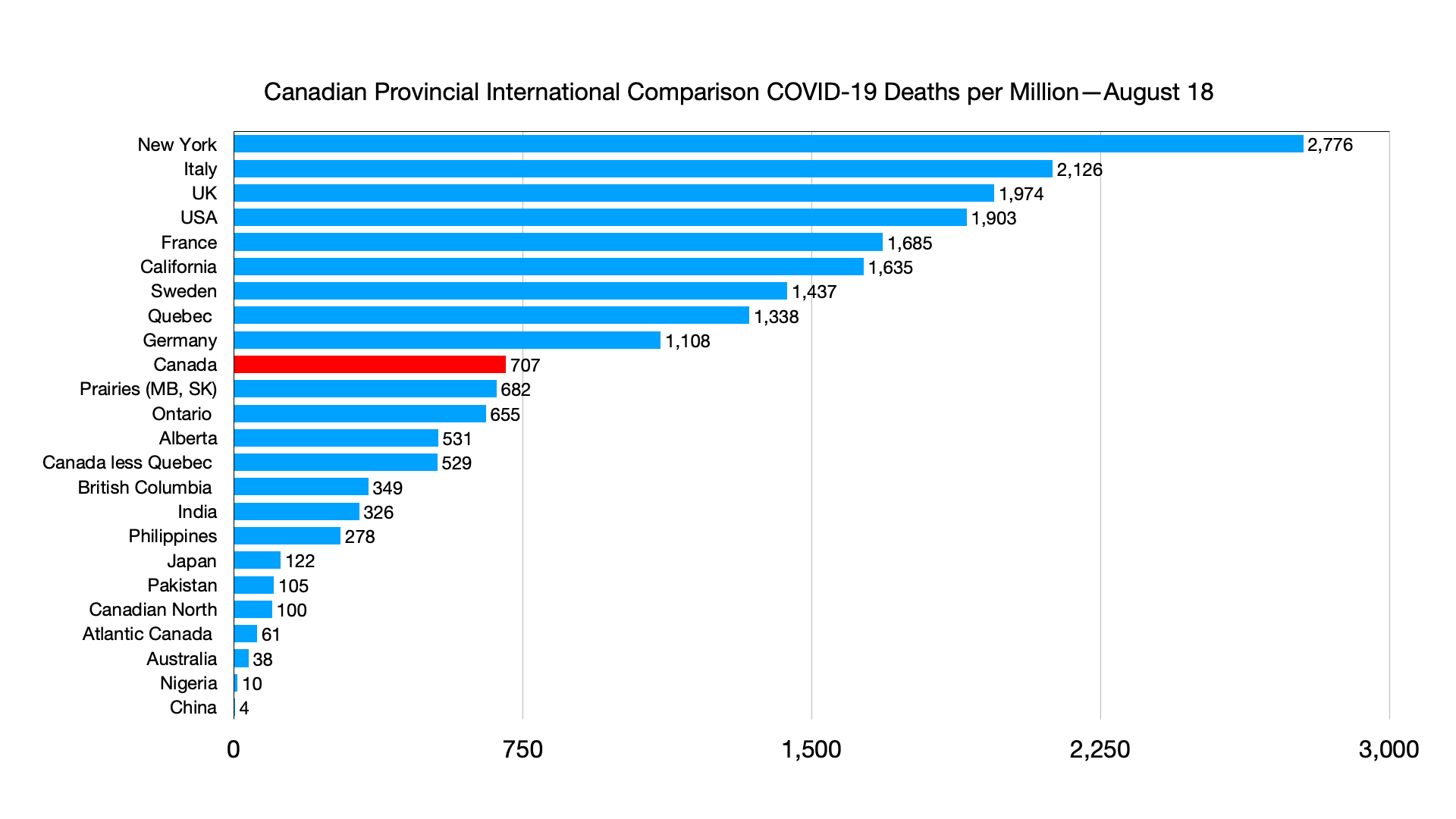
Deaths per million: No relative change.

Vaccinations per million: Canadian vaccination rates continue to exceed G7 less Canada. Vaccination rate increase in immigration source countries driven by China (up 16% from last week) with Indian vaccination rates up 12.5% compared to last week.

Weekly

Infections per million: No relative change.

Deaths per million: No relative changes.

They Relied on Chinese Vaccines. Now They’re Battling Outbreaks

Interesting data on the relative weakness of Chinese vaccines, likely to undermine the Chinese government’s vaccine diplomacy:

Mongolia promised its people a “Covid-free summer.” Bahrain said there would be a “return to normal life.” The tiny island nation of the Seychelles aimed to jump-start its economy.

All three put their faith, at least in part, in easily accessibleChinese-made vaccines, which would allow them to roll out ambitious inoculation programs when much of the world was going without.

But instead of freedom from the coronavirus, all three countries are now battling a surge in infections.

China kicked off its vaccine diplomacy campaign last year by pledging to provide a shot that would be safe and effective at preventing severe cases of Covid-19. Less certain at the time was how successful it and other vaccines would be at curbing transmission.

Now, examples from several countries suggest that the Chinese vaccines may not be very effective at preventing the spread of the virus, particularly the new variants. The experiences of those countries lay bare a harsh reality facing a postpandemic world: The degree of recovery may depend on which vaccines governments give to their people.

In the Seychelles, Chile, Bahrain and Mongolia, 50 to 68 percent of the populations have been fully inoculated, outpacing the United States, according to Our World in Data, a data tracking project. All four ranked among the top 10 countries with the worst Covid outbreaks as recently as last week, according to data from The New York Times. And all four are mostly using shots made by two Chinese vaccine makers, Sinopharm and Sinovac Biotech.

“If the vaccines are sufficiently good, we should not see this pattern,” said Jin Dongyan, a virologist at the University of Hong Kong. “The Chinese have a responsibility to remedy this.”

Scientists don’t know for certain why some countries with relatively high inoculation rates are suffering new outbreaks. Variants, social controls that are eased too quickly and careless behavior after only the first of a two-shot regimen are possibilities. But the breakthrough infections could have lasting consequences.

In the United States, about 45 percent of the population is fully vaccinated, mostly with doses made by Pfizer-BioNTech and Moderna. Cases have dropped 94 percent over six months.

Israel provided shots from Pfizer and has the second-highest vaccination rate in the world, after the Seychelles. The number of new daily confirmed Covid-19 cases per million in Israel is now around 4.95.

In the Seychelles, which relied mostly on Sinopharm, that number is more than 716 cases per million.

Disparities such as these could create a world in which three types of countries emerge from the pandemic — the wealthy nations that used their resources to secure Pfizer-BioNTech and Moderna shots, the poorer countries that are far away from immunizing a majority of citizens, and then those that are fully inoculated but only partly protected.

China, as well as the more than 90 nations that have received the Chinese shots, may end up in the third group, contending with rolling lockdowns, testing and limits on day-to-day life for months or years to come. Economies could remain held back. And as more citizens question the efficacy of Chinese doses, persuading unvaccinated people to line up for shots may also become more difficult.

One month after receiving his second dose of Sinopharm, Otgonjargal Baatar fell ill and tested positive for Covid-19. Mr. Otgonjargal, a 31-year-old miner, spent nine days in a hospital in Ulaanbaatar, the capital of Mongolia. He said he was now questioning the usefulness of the shot.

“People were convinced that if we were vaccinated, the summer will be free of Covid,” he said. “Now it turns out that it’s not true.”

Beijing saw its vaccine diplomacy as an opportunity to emerge from the pandemic as a more influential global power. China’s top leader, Xi Jinping, pledged to deliver a Chinese shot that could be easily stored and transported to millions of people around the world. He called it a “global public good.”

Mongolia was a beneficiary, jumping at the chance to score millions of Sinopharm shots. The small country quickly rolled out an inoculation program and eased restrictions. It has now vaccinated 52 percent of its population. But on Sunday, it recorded 2,400 new infections, a quadrupling from a month before.

In a statement, China’s Foreign Ministry said it did not see a link between the recent outbreaks and its vaccines. It cited the World Health Organization as saying that vaccination rates in certain countries had not reached sufficient levels to prevent outbreaks, and that countries needed to continue to maintain controls.

“Relevant reports and data also show that many countries that use Chinese-made vaccines have expressed that they are safe and reliable, and have played a good role in their epidemic prevention efforts,” the ministry said. China has also emphasized that its vaccines target severe disease rather than transmission.

No vaccine fully prevents transmission, and people can still fall ill after being inoculated, but the relatively low efficacy rates of Chinese shots have been identified as a possible cause of the recent outbreaks.

The Pfizer-BioNTech and Moderna vaccines have efficacy rates of more than 90 percent. A variety of other vaccines — including AstraZeneca and Johnson & Johnson — have efficacy rates of around 70 percent. The Sinopharm vaccine developed with the Beijing Institute of Biological Products has an efficacy rate of 78.1 percent; the Sinovac vaccine has an efficacy rate of 51 percent.

The Chinese companies have not released much clinical data to show how their vaccines work at preventing transmission. On Monday, Shao Yiming, an epidemiologist with the Chinese Center for Disease Control and Prevention, said China needed to fully vaccinate 80 to 85 percent of its population to achieve herd immunity, revising a previous official estimate of 70 percent.

Data on breakthrough infections has not been made available, either, though a Sinovac study out of Chile showed that the vaccine was less effective than those from Pfizer-BioNTech and Moderna at preventing infection among vaccinated individuals.

A representative from Sinopharm hung up the phone when reached for comment. Sinovac did not respond to a request for comment.

William Schaffner, medical director of the National Foundation for Infectious Diseases at Vanderbilt University, said the efficacy rates of Chinese shots could be low enough “to sustain some transmission, as well as create illness of a substantial amount in the highly vaccinated population, even though it keeps people largely out of the hospital.”

Despite the spike in cases, officials in both the Seychelles and Mongolia have defended Sinopharm, saying it is effective in preventing severe cases of the disease.

Batbayar Ochirbat, head researcher of the Scientific Advisory Group for Emergencies at Mongolia’s Ministry of Health, said Mongolia had made the right decision to go with the Chinese-made shot, in part because it had helped keep the mortality rate low in the country. Data from Mongolia showed that the Sinopharm vaccine was actually more protective than the doses developed by AstraZeneca and Sputnik, a Russian vaccine, according to the Health Ministry.

The reason for the surge in Mongolia, Mr. Batbayar said, is that the country reopened too quickly, and many people believed they were protected after only one dose.

“I think you could say Mongolians celebrated too early,” he said. “My advice is the celebrations should start after the full vaccinations, so this is the lesson learned. There was too much confidence.”

Some health officials and scientists are less confident.

Nikolai Petrovsky, a professor at the College of Medicine and Public Health at Flinders University in Australia, said that with all of the evidence, it would be reasonable to assume the Sinopharm vaccine had minimal effect on curbing transmission. A major risk with the Chinese inoculation is that vaccinated people may have few or no symptoms and still spread the virus to others, he said.

“I think that this complexity has been lost on most decision makers around the world.”

In Indonesia, where a new variant is spreading, more than 350 doctors and health care workers recently came down with Covid-19 despite being fully vaccinated with Sinovac, according to the risk mitigation team of the Indonesian Medical Association. Across the country, 61 doctors died between February and June 7. Ten of them had taken the Chinese-made vaccine, the association said.

The numbers were enough to make Kenneth Mak, Singapore’s director of medical services, question the use of Sinovac. “It’s not a problem associated with Pfizer,” Mr. Mak said at a news conferenceon Friday. “This is actually a problem associated with the Sinovac vaccine.”

Bahrain and the United Arab Emirates were the first two countries to approve the Sinopharm shot, even before late-stage clinical trial data was released. Since then, there have been extensive reports of vaccinated people falling ill in both countries. In a statement, the Bahraini government’s media office said the kingdom’s vaccine rollout had been “efficient and successful to date.”

Still, last month officials from Bahrain and the United Arab Emirates announced that they would offer a third booster shot. The choices: Pfizer or more Sinopharm.

Source: https://www.nytimes.com/2021/06/22/business/economy/china-vaccines-covid-outbreak.html?searchResultPosition=1

The dip in the US birthrate isn’t a crisis, but the fall in immigration may be

Similar argumentation to Canadian increased immigration advocates:

The U.S. Centers for Disease Control and Prevention announced in May 2021 that the nation’s total fertility rate had reached 1.64 children per woman in 2020, dropping 4% from 2019, a record low for the nation.

The news led to many stories about a “baby bustharming the country. The fear is that if the trend continues, the nation’s population may age and that will lead to difficulties in funding entitlements like Social Security and Medicaid for seniors in the future.

But as a statistician and sociologist who collaborates with the United Nations Population Division to develop new statistical population forecasting methods, I’m not yet calling this a crisis. In fact, America’s 2020 birth rate is in line with trends going back over 40 years. Similar trends have been observed in most of the U.S.‘s peer countries.

The other reason this is not a crisis, at least not yet, is that America’s historically high immigration rates have put the country in a demographic sweet spot relative to other developed countries like Germany and Japan.

But that could change. A recent dramatic decline in immigration is now putting the country’s demographic advantage at risk.

Falling immigration may be America’s real demographic crisis, not the dip in birth rates.

A predictable change

Most countries have experienced part or all of a fertility transition.

Fertility transitions occur when fertility falls from a high level – typical of agricultural societies – to a low level, more common in industrialized countries. This transition is due to falling mortality, more education for women, the increasing cost of raising children and other reasons.

In 1800, American women on average gave birth to seven children. The fertility rate decreased steadily, falling to just 1.74 children per woman in 1976, marking the end of America’s fertility transition. This is the point after which fertility no longer declined systematically, but instead began to fluctuate.

Birth rates have slightly fluctuated up and down in the 45 years since, rising to 2.11 in 2007. This was unusually high for a country that has made its fertility transition, and put the U.S. birth rate briefly at the top of developed countries.

A decline soon followed. The U.S. birth rate dropped incrementally from 2007 to 2020, at an average rate of about 2% per year. 2020’s decline was in line with this, and indeed was slower than some previous declines, such as the ones in 2009 and 2010. It put the U.S. on par with its peer nations, below the U.K. and France, but above Canada and Germany.

Using the methods I’ve helped develop, in 2019 the U.N. forecast a continuing drop in the global birth rate for the period from 2020 to 2025. This methodology also forecast that the overall world population will continue to rise over the 21st century.

The ideal situation for a country is steady, manageable population growth, which tends to go in tandem with a dynamic labor market and adequate provision for seniors, through entitlement programs or care by younger family members. In contrast, countries with declining populations face labor shortages and squeezes on provisions for seniors. At the other extreme, countries with very fast population growth can face massive youth unemployment and other problems.

Many countries that are peers with the U.S. now face brutally sharp declines in the number of working-age people for every senior within the next 20 years. For example, by 2040, Germany and Japan will have fewer than two working-age adults for every retired adult. In China, the ratio will go down from 5.4 workers per aged adult now to 1.7 in the next 50 years.

By comparison, the worker-to-senior ratio in the U.S. will also decrease, but more slowly, from 3.5 in 2020 to 2.1 by 2070. By 2055, the U.S. will have more workers per retiree than even Brazil and China.

Germany, Japan and other nations face population declines, with Japan’s population projected to go down by a massive 40% by the end of the century. In Nigeria, on the other hand, the population is projected to more than triple, to over 700 million, because of the currently high fertility rate and young population.

In contrast, the U.S. population is projected to increase by 31% over the next 50 years, which is both manageable and good for the economy. This is slower than the growth of recent decades, but much better than the declines faced by peer industrialized nations.

The reason for this is immigration. The U.S. has had the most net immigration in the world for decades, and the projections are based on the assumption that this will continue.

Migrants tend to be young, and to work. They contribute to the economy and bring dynamism to the society, along with supporting existing retirees, reducing the burden on current workers.

However, this source of demographic strength is at risk. Net migration into the U.S. declined by 40% from 2015 to 2019, likely at least in part because of unwelcoming government policies.

If this is not reversed, the country faces a demographic future more like that of Germany or even Japan, with a rapidly aging population and the economic and social problems that come with it. The jury is out on whether family-friendly social policies will have enough positive impact on fertility to compensate.

If U.S. net migration continues on its historical trend as forecast by the U.N., the U.S. population will continue to increase at a healthy pace for the rest of the century. In contrast, if U.S. net migration continues only at the much lower 2019 rate, population growth will grind almost to a halt by 2050, with about 60 million fewer people by 2100. The fall in migration would also accelerate the aging of the U.S. population, with 7% fewer workers per senior by 2060, leading to possible labor shortages and challenges in funding Social Security and Medicare.

While the biggest stream of immigrants is from Latin America, that is likely to decrease in the future given the declining fertility rates and aging populations there. In the longer term, more immigrants are likely to come from sub-Saharan Africa, and it will be important for America’s demographic future to attract, welcome and retain them.

Source: The dip in the US birthrate isn’t a crisis, but the fall in immigration may be

For many young Hong Kong graduates, Canada’s new routes to immigration have turned into a dead end

The impact of the five-year limit, designed to encourage younger immigrants:

When the Canadian government invited Hong Kongers to apply for a work permit that Ottawa designed solely for people from the territory, plumbing engineer Kay Pang applied as soon as he could.

The open work permit allows Pang to travel anywhere in Canada to look for a job, but he recently learned that the document — contrary to what the government had promised in February — won’t expedite permanent residency for everybody from Hong Kong. In truth, people who graduated in 2016 or earlier are not eligible.

His realization comes as authorities in Hong Kong, where freedoms have been increasingly restricted since last year, prepare to enforce a law that, according to the Hong Kong Bar Association, could allow them to block people from entering or leaving the territory as of Aug. 1.

However, the bar association’s interpretation of the new law is disputed by the city’s security bureau which says the change is aimed at stopping asylum seekers from coming to Hong Kong and is allowed under a global aviation agreement.

“It’s really sad for me,” said Pang, who graduated from City University of Hong Kong in 2016, about the new challenges on his road to permanent residency. He had planned to come to Vancouver next January to look for career opportunities in robotics engineering.

New paths to permanent residency

Hong Kongers were allowed to apply for the open work permit from February. The permit allows them to spend up to three years in Canada to gain enough work experience here in order to apply for permanent residency.

At the initial announcements in November and February, no details were given about how recently potential applicants for permanent residency would need to have graduated.

On June 8, Immigration Minister Marco Mendicino unveiled more details. There are two new paths to permanent residency exclusively for Hong Kong residents who recently graduated from a Canadian post-secondary institution (“Stream A”), or recently graduated from a Canadian or foreign institution who are working in Canada (“Stream B”).

Applicants via Stream B must hold a degree, diploma or graduate credential obtained in the past five years, on top of at least one year of full-time work experience or 1,560 hours of part-time work in Canada in the past three years.

Many graduates eyeing immigration to Canada with an open work permit prefer Stream B to Stream A, because they don’t want to spend money going back to school.

But if their degree was awarded in 2016 or before, they face not being able to meet the requirements for permanent residency via that stream.

‘Why would you just shut the door?’

Pang, among more than 28,000 people graduating from Hong Kong post-secondary institutions in 2016, applied for an open work permit in March. But even if he landed in B.C. and got a job now, it wouldn’t leave him enough time to get the necessary one year of full-time work experience before his degree becomes ineligible.

Hong Kong software developer Edward Wong is in a similar situation. He received an open work permit in May and booked a flight ticket to Toronto, with plans to settle there, in September.

But Wong, who graduated from the Hong Kong University of Science and Technology in 2016, also faces being ineligible for permanent residency.

He said he doesn’t understand why Immigration Canada has created this additional hurdle.

Source: For many young Hong Kong graduates, Canada’s new routes to immigration have turned into a dead end

Adams and Neuman: Private sponsorship is much more than a feel-good project

Good piece:

As we mark World Refugee Day on June 20, new numbers from the United Nations Refugee Agency show that there are now more than 82 million people worldwide who have been forced to flee their homes, and half of them are children. These displaced peoples are fleeing conflict, persecution, human rights violations and violence, seeking a safe haven in countries that all too often fail to welcome such newcomers. Canada – because of its geography – has been largely insulated from this international migration crisis. But in 2015-16, the country stepped up to welcome more than 33,000 refugees fleeing the war in Syria.

The federal government largely controls and manages the flow of immigration, but the most notable part of the Syrian refugee story was how individual Canadians and community organizations (churches, synagogues, NGOs) came forward to privately sponsor roughly half of the refugee quota to be filled. Private sponsorship groups commit to providing financial and social support to the refugee, and to help them find a place to live. This recent civil society mobilization mirrored an earlier one in the late 1970s that brought 70,000 Vietnamese refugees to Canada.

Few in this country appreciate the fact that private sponsorship of refugees is a Canadian innovation, and a model that is now being emulated in other countries such as Ireland, Britain and Germany. Until very recently, only in Canada was it possible for individuals and non-governmental organizations to sponsor refugees; and not just family members living abroad, but also those with whom the sponsors have no prior connection or relationship (often described as “welcoming the stranger”).

Given the immense scale of the continuing migration crisis, perhaps we are kidding ourselves that taking in 10,000 or 20,000 refugees a year makes an important difference. But the value and importance of this effort is not so much in the numbers as in its impact on those affected and on the country as a whole. Canadians from coast to coast, in large cities and small towns, organized and raised funds to bring individuals and families out of danger and help them start new lives. Statistics Canada research has shown that privately sponsored refugees have higher employment rates and earn more money than government sponsored refugees.

A newly released survey by our Environics Institute for Survey Research (conducted in partnership with Refugee 613) estimates that about 4 per cent of our country’s population ages 25 and older have been involved in sponsoring refugees in the past five years, whether through a faith-based or civil society organization, or with a group of friends. This translates into more than 1.5 million Canadians volunteering their time and effort in realizing the aspirational values of inclusion and welcoming that we like to think typify our country. Those who get involved in refugee sponsorship often find the experience to be personally rewarding in ways they never imagined, and may deepen their sense of citizenship.

And we also find there is considerable potential for much broader participation. Our research shows that another four million Canadians would consider getting involved in helping to sponsor refugees. This level of interest is striking given that private refugee sponsorship has never been actively promoted or marketed to the broader population at a regional or national level. To date, most of the people involved in “welcoming the stranger” sponsorship have been recruited through personal networks (faith-based organizations, universities) and tend to be white, highly educated and retired. But our research indicates the interest and capacity to get involved in refugee sponsorship is much more widely distributed across the Canadian public. Such interest is driven in part by being aware of the presence of refugees in one’s own community, as well as knowing others who have already become involved.

But private refugee sponsorship is much more than a feel-good community project. It is creating new Canadians of the very best sort. People who arrive as refugees must rebuild their lives, and with support from both government assistance and private sponsors, they are making impressive progress to establish themselves in their host communities. In another study recently completed by our institute, we found that the vast majority of Syrians who arrived in 2015-16 are adapting well to their new lives in Canada in terms of language acquisition, employment and creating opportunities for their children. They are very happy to be in Canada (in spite of the weather), generally feel welcomed and have life aspirations most of us would share. These newcomers embrace the value Canadians place on hard work and tolerance. And now that they are here, only 3 per cent hope to one day leave Canada for another country.

Canada is seen by much of the world as an open and welcoming society. We know this reputation is not fully earned as we continue to confront discrimination, racism and fear of the “other” in our communities. But as we strive to do better, let us also celebrate the good work that many Canadians are doing to welcome new strangers to our shores, and consider getting involved. Doing so is a unique privilege of the Canadian citizenship others envy.

Keith Neuman is a senior associate with the non-profit Environics Institute for Survey Research. Michael Adams is the Institute’s founder and president.

Source: https://www.theglobeandmail.com/opinion/article-private-sponsorship-could-be-used-to-help-many-more-refugees/

They qualified for Canada’s special immigration program — only to learn they won’t be able to work as they’re processed

Hard to understand the policy rationale:

Canada’s new immigration pathway was supposed to be a recognition of migrant workers who had worked through the COVID-19 pandemic.

Little did some applicants know they would need to stop working to make it through the process.

Typically, under regular, skilled immigration programs, applicants whose work permits expire while their applications are being processed can get a bridging permit, to allow them to keep working while the paperwork is done.

The bridging open work permit — or BOWP — ensures their employment is not disrupted.

But it turns out that’s not the case with the new pathway, a special program launched in May to grant permanent residence to 90,000 migrant workers and international graduates.

The immigration department confirmed to the Star that no bridging work permits will be issued to new pathway applicants.

“This initiative was designed as a one-time pathway recognizing the incredibly unique circumstances of the ongoing pandemic,” said a department spokesperson.

“As it has not been designed as a traditional permanent economic program, individuals are not eligible for a BOWP.”

#COVID19 impact on #immigration and related programs, April 2021 update

The latest monthly update (May for web traffic). Slide 3 has the summary numbers and changes.

Slight dip in number of Permanent Resident admissions compared to March, annualized rate now 275,000 (although likely to increase given the various policy measures announced (e.g., lowering of minimum CRS scores, special temporary program and Hong Kong measures).

Citizenship started to recover compared to earlier months but still far lower than historic levels.

Given the extremely low levels in all programs in April 2020 (travel restrictions and shutdowns), the year-over-year increases appear spectacular. Compared to April 2019, of course, changes are more modest and provide a more accurate picture of the impact.

Contrasting articles: New paths to permanent residency for Hong Kong students and workers not enough: advocates, Ottawa warned to not assume Hong Kongers are innocent of charges

Starting with the advocates:

UBC law student Davin Wong has many friends who are excited about two new paths to permanent residency for Hong Kong students and workers with temporary resident status in Canada.

Ottawa announced the new paths last week, saying it is “deeply concerned” by China’s imposing of a national security law and the “deteriorating” human rights situation in Hong Kong.

Source: New paths to permanent residency for Hong Kong students and workers not enough: advocates

And a note of caution from IRCC officials:

Canadian immigration officials warned the federal government in an internal memo last year against assuming protest-related charges faced by Hong Kongers seeking entry to Canada are bogus accusations fabricated by the city’s Beijing-backed authorities.

This internal caution, which was provided to The Globe and Mail, is different from the Canadian government’s public messaging on the crackdown on the former British colony. Ottawa routinely says it stands “shoulder to shoulder with the people of Hong Kong.” The consensus among human rights groups is that many of the arrests and charges laid against Hong Kong protesters have been unjustified.

A report from Immigration, Refugees and Citizenship Canada’s Hong Kong office advises Ottawa not to consider Hong Kongers innocent if they apply for visas or asylum but have protest-related charges. “It cannot be assumed that charges are politicized or trumped up by authorities; there have been shocking images of violent attacks during confrontations,” the report says.

Source: https://www.theglobeandmail.com/canada/article-morning-update-ottawa-warned-to-not-assume-hong-kongers-are-innocent/

#COVID-19: Comparing provinces with other countries 16 June Update

The latest charts, compiled 16 June as overall rates in Canada continue to decline along with increased vaccinations (still largely first dose, fully vaccinated just under 14 percent).

Vaccinations: Minor relative changes. Most significant is China is now ahead of France and Sweden. Also, Atlantic Canada ahead of Germany and Japan ahead of India (pre-Olympics push?)

Trendline charts

Infections per million: No relative changes and recent surges levelling off save again for the Prairies (mainly Manitoba).

Deaths per million: No relative change.

Vaccinations per million: Canadian vaccination rates continue to exceed G7 less Canada with Quebec maintaining its slight lead. Vaccination rate increase in immigration source countries driven by China (up 16% from last week) with Indian vaccination increasing more slowly (10%).

Weekly

Infections per million: No relative change.

Deaths per million: No relative changes.