Clerk Report to PM 2022 – Service Delivery Language [more candour required]

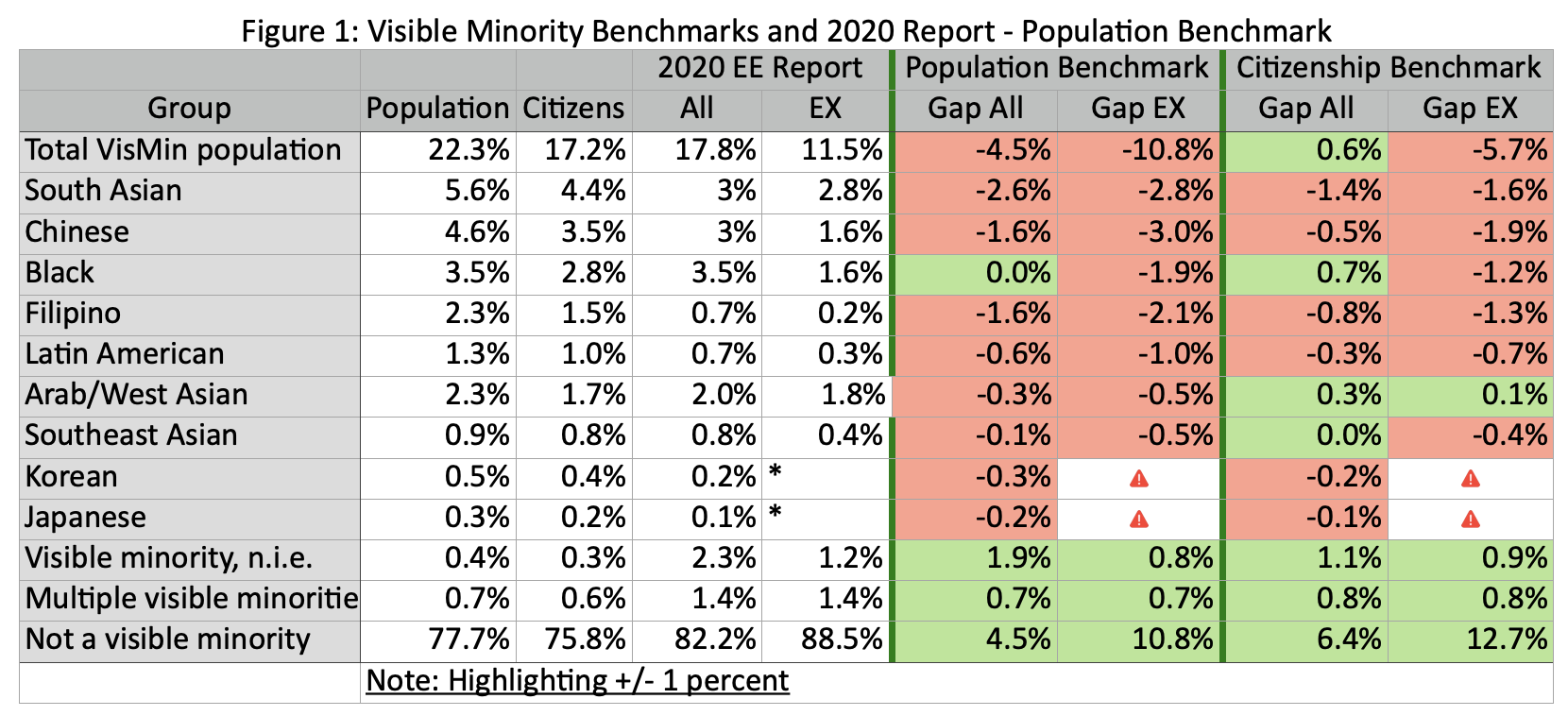
Like all government reports (save audits and evaluations), the Clerk report focuses on successes, not failures. Certainly, COVID financial support and vaccine procurement are right to be highlighted as overall successes, as are ongoing efforts to increase diversity and representation, as highlighted in the report and data tables.

But its characterization of how the government responded to Afghan refugees following the Taliban takeover presents a far more positive picture than warranted, to be diplomatic.

But looking ahead, curious to see how the recent failures of government service delivery (i.e., passports and immigration) will be treated in the 2023 report, given this 2022 commitment:

Deliver results for Canadians.

We have clearly shown the Public Service’s ability to step up and overcome every obstacle to get things done and deliver real results for Canadians. We have proven what we can do during times of crisis and we have learned much from this. But this has also disrupted our usual lines of work. Now, we must apply what we have learned to how we approach everything —from delivering core programs and services to responding to unexpected challenges. We must build on our enhanced capacity to deliver digitally while holding true to the importance of providing in-person support, to ensure every Canadian gets the service and results they need in a timely manner. Public servants should feel empowered to ask how things could be done better, and they should be supported in taking thoughtful risks in how we implement to achieve results for Canadians. The lessons we learned from the pandemic will help us get there.

Certainly, some honesty regarding the public service service delivery failings will be needed for the 2023 report’s (and Clerk’s) credibility.

To be mischievous, I redrafted this paragraph for the 2023 report to encourage drafters of next year’s report to be more candid regarding areas where the government had significant policy and program failures (“challenges” in bureaucratese):

Deliver results for Canadians – Lessons learned from program failures

We have clearly shown the Public Service’s (in) ability to step up and overcome every obstacle to get things done and (fail to) deliver real results for Canadians. We have proven what we can do during times of crisis (and what we cannot do) and we have learned much from this (particularly from failures in passport and immigration service delivery). But this has also disrupted our usual lines of work. Now, we must apply what we have learned (from successes and failures) to how we approach everything —from delivering core programs and services to responding to unexpected challenges. We must renew focus on service delivery in order to restore trust. We must build on our enhanced capacity to deliver digitally, including real time status updates and greater transparency, while holding true to the importance of providing in-person support (including reducing waiting times and lines), to ensure every Canadian gets the service and results they need in a timely manner. Public servants should feel empowered to ask how things could be done better (without penalty), and they should be supported in taking thoughtful (to be defined) risks in how we implement to achieve results for Canadians. The lessons we learned from the pandemic (service failures) will help us get there.

Source: 29th Annual Report to the Prime Minister on the Public Service of Canada

CRTC CBC License Renewal: “equity-seeking communities” requirements

Of interest and thanks to Sarkonak for noticing this change and The Line for bringing it to wider attention.,

Significant change from softer encouragement to hard targets, one that suggests the government may adapt a similar approach to employment equity in the public service and possibly federally-regulated sectors (e.g., bank, communications and transport), even if the original policy based on self-declaration and annual reporting has resulted in a much more diverse public service.

I also think their caution that such overt political goals run the risk of undermining the perceived independence of the CRTC and the CBC, one that a future government may use for its own political priorities:

We at The Line have a confession: we don’t slavishly follow every item coming and going out of the CRTC — although it is becoming increasingly clear that we ought to. So we admit that we missed, in June, the decision that came from this regulatory body that renewed CBC’s broadcasting license for another five years. 

Because, frankly, this is usually pretty rubber stamp stuff. 

So credit where it is due, we must tip the hat to Jamie Sarkonak for noticing some pretty significant changes in this renewal notice. 

Jamie Sarkonak @sarkonakjThe CRTC @CRTCeng just imposed DEI requirements onto CBC programming. CBC must dedicate 30% of its independent programming budget to the following identity categories: Indigenous, language minorities, visible minorities, disabled, and LGBTQ. #cdnpoli crtc.gc.ca/eng/archive/20…

Image

We read through the renewal notice ourselves and, yeah, she is correct. The CBC has a vague public mandate to inform and entertain Canadians for the purpose of creating a kind of shared national identity. Implicit in this mandate is the notion that the public broadcaster ought to broadly reflect and represent the Canadians who pay its bills. To that end, although previously the CBC could certainly choose to devote resources to “Canada’s equity-seeking communities” (and it certainly has!) never before to our knowledge has it been required to devote specific expenditure requirements to those communities as part of its license renewal. 

From the ruling: 

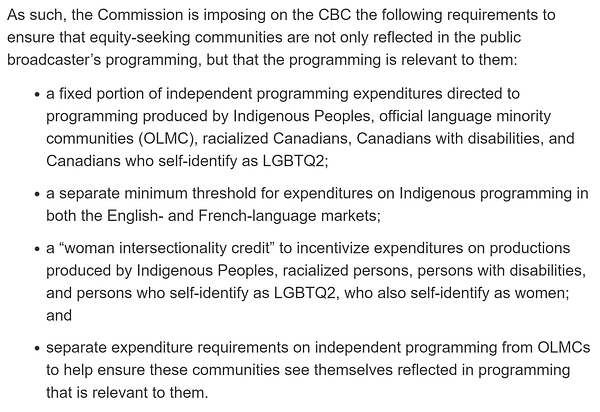
“As such, the Commission is imposing on the CBC the following requirements to ensure that equity-seeking communities are not only reflected in the public broadcaster’s programming, but that the programming is relevant to them.”

The CRTC is demanding a “fixed portion of independent programming expenditures directed to official language minority communities (OLMC), racialized Canadians, Canadians with disabilities, and Canadians who self-identify as LGBTQ2.” Additionally, it will grant a: “‘woman intersectionality credit’ to incentivize expenditures on productions produced by Indigenous Peoples, racialized persons, persons with disabilities, and persons who self-identify as LGBTQ2, who also self-identify as women.”

There are additional requirements for French language programming, of course. 

This line also caught our attention from the notice: 

“The Commission supports the Government of Canada’s commitment to renewing the relationship with Indigenous Peoples, based on the recognition of rights, respect, co-operation and partnership. On a broader level, the Commission also recognizes that Call to Action 84 of the Truth and Reconciliation Commission and the United Nations Declaration on the Rights of Indigenous Peoples (UNDRIP) tie into some of the objectives of the Broadcasting Act in that they refer to the reflection of Indigenous Peoples in the programming broadcast by the CBC.” 

The CRTC is demanding changes to the election of the CBC ombudsman to ensure he or she is “sensitive to issues surrounding Indigenous people, racialized Canadians and other equity-seeking communities.” 

It is also setting out “new expectations regarding the CBC’s Journalistic Standards and Practices to help ensure that journalists can provide relevant feedback and equity-seeking communities are consulted in any future review of the JSP.” 

(The JSP is basically the bible of CBC journalism and guides its employees in how it approaches reporting, analysis and opinion. The JSP has come under particular scrutiny in recent years when it was alleged that the expectation of “objective” journalism would distort how the outlet approaches racism. Attentive readers will note the obvious allusion to “moral clarity” here.)

Whether or not you agree with the outcomes being sought, what is clear is that the CRTC (which is appointed by the governor general, on advice of the privy council) is having explicitly political goals written into its license renewals. 

Now, don’t misread us, here. The CBC ought to be free to pursue equity goals in programming, or reviews of its JSP, or whatever it feels necessary to meet its mandate according to its own discretion. We happen think these outcomes are best exercised by trusted leaders and experienced producers who have the latitude to use editorial discretion, rather than by rigid quota or expenditure goals. 

To have these demands placed on it by an external regulator in order to fulfil the political goals of that regulator and, ultimately, its political masters, is playing with fire in the worst kind of way. 

For starters, one of the first pieces we ran here at The Line was from a documentary filmmaker who noted the ways in which diversity quotas shifted incentives in filmmaking. Just as students write to the test, quotas of this sort shift the focus in content production, forcing creators to produce content that checks a box, rather than fulfil a real audience desire. This creates a CBC that is dooming itself to be less relevant to the general public even as its relevance is growing more crucial thanks to the economic collapse of private media. The system is all the more insulting considering there is, in fact, a real audience desire for different voices and perspectives in our media landscape. 

(The Line can think of two such examples of CBC shows that were compelling and worth watching regardless of their diversity requirements: check out Sort Of and Trickster if you haven’t already. Unfortunately, the latter was cancelled when it was revealed that director Michelle Latimer was not as Indigenous as previously stated.) 

The second most obvious problem with all of this falls under the maxim “Do not give your enemies the weapons they will use to kill you.” In other words, having established this norm, do you not think that Prime Minister Pierre Poilievre, having done his damndest to stack the CRTC, will not do the same thing in turn? What is the CBC going to do when its license renewal is subject not to fulfilling the requirements of UNDRIP, but rather to concepts like “viewpoint diversity” and “journalistic objectivity,” as defined by Poilievre’s crew? The pendulum always swings back, friends, and it usually swings back harder when pushed. 

Source: The Line Dispatch 13 August

Ottawa should offer Indigenous-language training, exemptions to public servants, memo says

Easier to see from a service perspective in certain localities where numbers warrant but does pose significant operational challenges. The risk of an exemption, of course, is that it may provoke further requests for exemptions:

Senior civil servants explored offering Indigenous-language training to federal employees and possible exemptions to those who already speak one from requiring fluency in both English and French, newly released documents show.

Deputy ministers from several departments discussed the issue last fall.

A memo, released to The Canadian Press under federal access-to-information laws, flagged a “growing tension” between official-language requirements and Indigenous languages.

Under Canada’s Official Languages Act, federal institutions must offer working environments for employees to communicate in both French and English, and offer services to Canadians in either language.

As such, communicating in both is expected for senior executives and there are a number of public-service jobs where bilingualism is mandatory. There is room, however, for an employee to take classes and learn French or English as a second language.

The memo issued last fall said a working group was held about making changes to the official-language requirements. It said some Indigenous public servants belonging to a network of around 400 who work for the federal government asserted the need for a “blanket exemption.”

“My own personal view is there are opportunities for exemption – if the individual speaks an Indigenous language,” Gina Wilson, a deputy minister who champions the needs of federal Indigenous public servants, wrote in an e-mail to colleagues last November.

“Our GG [Governor-General] is a good example.”

Inuk leader Mary Simon’s appointment in 2021 sparked a discussion – and some controversy – over bilingualism in Canada’s highest offices, given how Ms. Simon, the first Indigenous person named as Governor-General, spoke English and Inuktitut, but not French.

Ms. Simon, who was born in Kangiqsualujjuaq, in the Nunavik region of northern Quebec, said she attended a federal day school and wasn’t able to learn French.

She committed to doing so after her appointment and has been taking lessons, delivering some French remarks in public speeches.

Commissioner of official languages Raymond Théberge said more than 1,000 complaints about Ms. Simon’s lack of French were lodged with his office after Prime Minister Justin Trudeau named her to the role.

Language training has been identified as one of the issues preventing Indigenous employees in the federal public service from advancing in their careers.

A report authored by public servants around the celebration of Canada’s 150th anniversary recommended those who are Indigenous be exempt from official-language requirements and instead be provided with chances to learn the language of their community.

It’s unclear if Ottawa plans to move ahead on changes to language requirements, training or exemptions.

A spokeswoman for Crown-Indigenous-Relations and Northern Affairs Canada said both that ministry and Indigenous Services Canada “have no plans to offer departmentwide Indigenous language training,” noting employees have offered workshops in the past.

It said Indigenous employees are encouraged to talk to their managers about language training.

Crown-Indigenous Relations Minister Marc Miller, an anglophone who speaks French and is learning Mohawk, said in an interview that the idea of an exemption is a sensitive issue.

“Inevitably, when you have to make one of those decisions, it is more often than not, and almost always, at the expense of jettisoning French,” said Mr. Miller, who represents a riding in Montreal.

“I don’t think that’s something that most people would find palatable … there are resources to learn it and I think there is the availability to do so.”

In their talks last fall, senior officials proposed ways to address concerns from Indigenous public servants about languages.

Ideas included providing more time to learn a second language and even offering Indigenous-language training, including to non-Indigenous public servants, as a show of reconciliation.

“I certainly recall during my French classes having this nagging thought in the back of my mind that I would be so much more open to this if I had the opportunity to be given training in my own Algonquin language,” Ms. Wilson wrote in her e-mail.

“I had a pretty good base in both, but of course my French is much better than my Algonquin now.”

Mr. Miller said he supports the idea of Ottawa providing classes, particularly to Indigenous public servants who were not provided the chance to learn these languages for themselves.

He said one challenge to doing so would be making sure Ottawa wasn’t taking language teachers away from communities.

“When you look at the fragility of Indigenous languages across the country, you would not want to be in a circumstance where we’re taking really valuable assets … people in many circumstances that are quite older, and just walking dictionaries out of their communities where communities are struggling to regain their languages.”

The same concern was highlighted by government officials. Both they and Mr. Miller said Ottawa faces calls to ensure it provides services to Inuit in Inuktitut.

“We could do better on that,” he said.

One change Lori Idlout, Nunavut’s federal member of Parliament, said should happen – and which officials also pitch in the memo – is for Ottawa to extend the $800 annual bonus it pays to employees who are bilingual to those who speak an Indigenous language.

The representative says she’s been approached by a union about federal employees in Nunavut who speak Inuktitut but are unable to access the compensation because they are not bilingual in French.

“Meanwhile, they’re providing valuable services to Inuit in Inuktitut,” she said. “It’s a huge issue.”

Ms. Idlout said Nunavut residents face many barriers when it comes to accessing federal services in general, including in Inuktitut.

According to the memo, officials recommend the government explore a pilot in Nunavut where jobs that require they speak Inuktitut “would not require competency in a second official language.”

Source: Ottawa should offer Indigenous-language training, exemptions to public servants, memo says

Kaczorowski: Real public service reform requires an independent examination. It can’t be left to government ‘insiders’

My experience over a comparable period has been much less negative than that of Kaczorowski. And underlying his viewpoint is a certain arrogance within the public service, one that I learned to confront when working on citizenship and multiculturalism issues under the Conservatives and then Minister Kenney, as they forced me to become more aware of my biases and assumptions.
To a certain extent, some “institutional timidity” is necessary for the public service, given its stewardship role and the risks involved in change. Service Canada offered the potential of citizen-centred service in the mid-2000s but such a major transformation was deemed to be too risky and thus its objectives became more modest.
That being said, a deeper outside look of the public service than yet another internal review has merit:
Real public service reform requires an independent examination. It can’t be left to government ‘insiders’
In his recent Ottawa Citizen essay, Kevin Lynch provides a blunt but necessary critique of the federal public service. The time for root-and-branch reform is long overdue to save the public service from itself.In recent months, we have had ample evidence of a public service seemingly floundering and failing at its most basic task: providing professional, timely and accurate service to Canadians. Stories of airport and passport office chaos abound. The legacy of the Phoenix pay system fiasco remains with us to this day. Whether it is procurement or IT services, the federal government appears incapable of delivering goods and services on time and on budget.

As Lynch notes, some of the problems are of the current government’s own making. Rather than focusing on a few core initiatives, the Trudeau government has too often sought to be all things to all people, trying to appease every constituency seeking attention and resources. As a consequence, the government has too often appeared scattered and unfocused, offering myriad initiatives while failing at implementation and follow-up.

Other issues, such as the predominant role of the Prime Minister’s Office and the influence — not to mention interference — of political staff in departmental business are longstanding problems that predate the current administration but that have grown worse over time. The primary concern of political staffers is optics: how will this or that initiative play to party supporters? How can I position my minister to maximum political effect?  Political staffers are seldom, if ever, substantive experts, and are naturally resented by professional public servants who have spent years in a particular policy field.

Policy expertise, however, is not an excuse for complacency, and here the public service of today is found wanting. I began my own public service career as a university summer student in 1983. I fully subscribed to the ideal of public service as a noble vocation. I had hopes of following in the footsteps of the great public servants of the past, such as Gordon Robertson. After 30 years of toil, I retired from the public service in 2018, exhausted and dispirited. I left not because I had to, but because I simply could not continue shouting into the wind.

Over the years, I witnessed a public service in which innovative thinking gave way to institutional timidity and a culture where contrary thinking was too often deemed unhelpful and unwelcome. This is how public service goes from being an honourable calling to a debilitating grind.

I saw a number of public service “renewal” exercises come and go. Yet each of these — whether it was La Releve in the 1990s, Public Service 2000 or Beyond 2020 — suffered from the same fatal flaw. They were all internal reviews led by the senior managers most invested in the status quo and therefore highly unlikely to challenge that status quo. These “in-house” initiatives produced little that was new or innovative on key issues such as recruitment, the loss of corporate memory, the political-public service relationship, accountability, or the role of the public service as a generator of innovative policy initiatives and advice.

Favouring the familiar over the new breeds inertia and decay.Take the single issue of remote work. I well remember the roadblocks, not to mention the paperwork, senior managers put before staff when it came to what we then called “teleworking.” Too many managers came with the mindset that they could not be seen as effective unless their “minions” were within easy reach. The COVID-19 pandemic put an end to the excuses associated with remote work, as well as the idea that public servants would not be working as hard as in the office. Indeed, public servants working remotely have had to juggle work and family responsibilities, all the while labouring under the assumption that they are available around the clock.

Remote working was a success, yet we already see efforts under the guise of federal “Return to Work” directives which imply a desperate effort to put public servants back in their cubicles.

In the first instance, the “return to work” moniker is insulting. Public servants have not been on holiday during the pandemic. They have been working harder and longer, in makeshift offices (a kitchen counter, a spare bedroom) and with often-outdated and unreliable IT. The notion that pushing public servants back into the downtown core is required to “grow the economy” would be laughable if it were not so bereft of reason.

What is to be done? The federal public service has historically been the subject of royal commissions. The Royal Commission on Government Organization — known as the Glassco Commission — was appointed in 1960 and chaired by businessman J. Grant Glassco. The commission issued a five-volume report in 1962 and 1963. It recommended that government departments be managed on a decentralized basis, that the Treasury Board be reorganized, and that senior management should rotate among departments.

More far-reaching was the Royal Commission on Financial Management and Accountability, established in 1976 and which issued its final report in 1979. Known as the Lambert Commission, it was in part a response to the dire warning issued by the Auditor General of Canada in his 1975-76 Report that “Parliament — and indeed the government — has lost or is close to losing, effective control of the public purse.” The Commission, led by TD Bank Executive Allan Lambert, concluded that a breakdown had occurred in the accountability regime in government, resulting in a lack of coordination in planning, haphazard budgeting and accountability. Many might argue that the situation has not changed.

The common denominator in both of these royal commissions is that they were led by outsiders and so provided sweeping inquiries into key public service reform issues that cannot be done solely by those within the system. Such an independent and wide-ranging examination of the federal public service is long overdue. Indeed, it is critical in the face of institutional timidity and paralysis.

As the former clerk notes, good government is about “turning worthy intentions into reality for Canadians through effective and efficient delivery of government programs and services.” If the public service of today cannot fulfil these responsibilities, then public confidence is lost. The time for reform is now. I hope the current Clerk is listening.

Source: Kaczorowski: Real public service reform requires an independent examination. It can’t be left to government ‘insiders’

Diversity of UK senior civil service falls, rises at lower grades

Of note. Canadian figures by way of comparison, all visible minorities 18.9 percent, executives 12.4 percent, EX-4 10.1 percent, EX-5 9.2 percent (EX-4 and 5 likely equivalent to senior UK public servants):

The percentage of UK civil servants from an ethnic minority background is at a record high, according to the latest figures, but the proportion in top jobs has fallen for the first time since 2015.

Official figures for 2022 revealed that, of those with a known ethnicity, the percentage of government officials who are from an ethnic minority background is at a record high of 15.0% – up from 14.3% in 2021, and 9.3% a decade ago.

There was a year-on-year increase at all grades, with the exception of the senior civil service – the group of officials who run government departments or hold other top posts. In this group, there was a year-on-year decline from 10.6% in 2021 to 10.3% in 2022.

Percentage of civil servants from an ethnic minority background by grade 2012 to 2022

Civil Service Statistics 2022

The government had previously pledged to increase the percentage of senior civil servants who are from an ethnic minority year-on-year to reach 13.2% in the three year period from 2022 to 2025. However, in its Diversity and Inclusion Strategy: 2022 to 2025, published earlier this year, the government said it had stopped using targets to measure progress. “We will mainstream our success measures with our broader organisational priorities, such as Places for Growth [the plan to move officials out of London and into the regions of the UK], senior civil service workforce planning, talent schemes and recruitment priorities. Rather than relying on standalone targets, our ambitions will be embedded in these key deliverables designed to improve our delivery for citizens. Where our data indicates progress is not being made, action will be taken,” the strategy said.

The strategy made only one mention of people from ethnic minority backgrounds, stating: “We will make sure that people from minority ethnic backgrounds, those living with disabilities and those who have experienced disadvantage in their early lives can flourish in public service.”

Source: Diversity of UK senior civil service falls, rises at lower grades

Speer: I was wrong about Canada’s state capacity

Good reflections. The other point I would make is that the political and bureaucratic levels need more policy “modesty” and need to consider, and value, input from the operational side (where “truth to power” may need to be strengthened). More focus, not necessarily more or less resources. Money quote:

“The key takeaway then is that our politics ought to dedicate more energy and attention to the question of state capacity. Our political debates need to go beyond bigger versus smaller government and address good versus bad government. Everyone should be able to ultimately agree that the former is better than the latter.” 

The idea of “state capacity” has attracted considerable intellectual and political attention in recent years. It started with a blog post in early 2020 by leading public intellectual Tyler Cowen about what he called “state-capacity libertarianism” to describe a policy framework for a limited yet effective government to provide basic public goods and solve for market failures. His influential essay has since spawned dozens of articlescommentaries, and papers on the topic. 

State capacity broadly refers to a government’s functional ability to carry out its market-supporting activities in an efficient and effective manner. The key insight here is that while debates about the proper size and scope of government are highly important, we ought to dedicate similar energy and attention to questions of state capacity and competency. 

Cowen’s chief contribution was to catalyse a renewed intellectual movement focused on “better or worse government” rather than merely “bigger or smaller government.” The timing couldn’t have been more apposite. His essay was published mere months before the COVID-19 pandemic. 

The pandemic experience brought the ensuing conceptual debate about state capacity into practical focus. It necessarily put governments in Canada and elsewhere around the world to the test. The results were mixed, to say the least. 

Prior to the pandemic, it was something of an axiom that Canada is home to strong public institutions, a professional public service, and high-quality public administration. It has, in other words, high levels of state capacity. 

I subscribed to this view. I’ve even authored and co-authored articlespapers, and newspaper columns in favour of a larger role for government in supporting science and technology and industrial development. It may be a reach to say that I was fully wrong. But in hindsight, I now concede that my analysis probably overstated Canada’s state capacity. 

The pandemic exposed that our governments are slower and more sclerotic than many of us fully understood. It turns out that Canada has a state capacity problem. 

Start with the federal government. The pandemic revealed that Ottawa’s state capacity has been hollowed out in recent decades. It still proved capable of creating new cash transfer programs like the Canada Emergency Relief Benefit and distributing cheques to households with minimal scrutiny or oversight, but otherwise the federal capacity for procurement, logistics, and service delivery was shockingly weak. The federal government has effectively been reduced to a revenue collection entity that exists to transfer dollars to seniors, families with children, First Nations, and other levels of government. 

This state capacity weakness manifested itself in a series of federal pandemic failures that’s quite long, including its confusing and often contradictory public health diktats, its initial vaccine procurement (including a bizarre contract with a Chinese state-owned enterprise), and the $25 million spent on the ArriveCan app. 

The post-pandemic period has similarly been marked by high-profile cases of government failure. The most obvious example is the country’s passport backlog which has led to lengthy delays, long line-ups at Service Canada offices, and canceled summer vacations. 

This case is particularly salient because it is so basic. How can a government that cannot issue passports on a timely basis reasonably expect to reduce poverty by 50 percent in 2030 or engineer an energy transition by 2050 or fulfill any other major policy ambition over the coming years? 

The provinces aren’t much better. Their collective failure to reform their health-care systems prior to the pandemic in spite of mounting evidence of limited capacity and poor outcomes was a major factor behind the country’s lengthy and stringent lockdowns. The risk of hospitals collapsing essentially held us held hostage for more than two years. 

This point cannot be overstated: we now know that children suffered long-term learning loss and others forewent diagnostic tests, surgeries, and treatments in large part because a generation of provincial bureaucrats, politicians, and special interests chose to protect the failed health-care status quo. 

These recent examples raise legitimate questions about our governments’ ability to deliver on their core functions and responsibilities. Lines of people in front of their local Passport Canada offices with lawn chairs like they’re waiting for a concert or playoff tickets is a powerful rebuttal to the pre-pandemic narrative about Canada’s world-class state capacity. 

It’s important to emphasize that these observations are neither partisan nor necessarily arguments in favour of a smaller government. Governmental failings have been broadly distributed on the Left and Right and, in any case, research tells us that the correlation between state capacity and size of government is imprecise. Denmark, Finland, and Israel have governments that are similarly sized or even bigger and yet seem able to deliver more effective and expeditious public services than we can. 

The factors behind our state capacity weaknesses are complex and would doubtless be the subject of ideological and political debate. The Left would ostensibly argue that it’s a consequence of so-called “austerity” including previous rounds of privatization and spending cuts. The Right would instead point to Public Choice explanations including institutionalized risk aversion, perverse incentives, and union-protected mediocrity that undermine effective and efficient collective action. 

The key point here though is that the pandemic exposed that Canadians shouldn’t be self-congratulatory about our country’s state capacity to deliver on whatever we collectively ask of it through our politics. 

Which brings me to my mea culpa. My research in recent years on innovation policy has highlighted the rise of the intangible economy (which has been described as the shift from an “economy of things” to an “economy of thoughts”) and its unique characteristics and properties including its geopolitical and strategic consequences. This has led me to rethink the role of the state to support science and technology and cultivate sectors, sub-sectors, and technologies that may have high-value, strategic upside for the Canadian economy. 

As part of this work, we’ve considered the creation of new public sector organizations to better support breakthrough technologies and even grappled with the potential for a modern industrial policy. I have tried to root my analysis in a clear-eyed understanding of the limits of state action and other political economy risks. In a late 2021 paper, for instance, we argued for a new science and technology agency with a specialized staff and a high degree of autonomy so as to minimize the risks of bureaucratic inertia and political capture.  

But even with these political economy caveats (which were unfairly ignored by some critics), there’s probably an argument that my work has overestimated Canada’s state capacity. That is to say, I spent so much time worrying about the twin risks of bureaucratization and politicization that I failed to ask more basic questions like “can the government reasonably do this?”. The passport mess has provided a useful corrective. 

I stand behind most or all of my work on these topics. We do need to recommit ourselves to a more ambitious science and technology strategy and the market uncertainty of breakthrough technologies will invariably involve a role for government. But I now better appreciate how improving (or at least accounting for) the country’s state capacity is a crucial first step to greater progress on these issues. I admit that I was wrong—or at least a bit incomplete in my analysis. One consequence is I’m now probably more of an economic libertarian than I was prior to the pandemic. 

The key takeaway then is that our politics ought to dedicate more energy and attention to the question of state capacity. Our political debates need to go beyond bigger versus smaller government and address good versus bad government. Everyone should be able to ultimately agree that the former is better than the latter. 

Source: I was wrong about Canada’s state capacity

Noël: Quand les gouvernements trébuchent [call for policy and program modestly]

Echoes the calls by others but nevertheless important.

Money quote: “le gouvernement fédéral devrait probablement modérer ses ambitions dans ses propres sphères de compétence, en adoptant des objectifs plus réalistes en immigration par exemple, afin d’éviter les échecs récurrents de gestion.”

Je n’étais pas en avance, c’est vrai, mais au début juillet, tard en soirée, je faisais des réservations pour un séjour de camping à Terre-Neuve et en Nouvelle-Écosse. Les réservations pour le traversier entre les deux provinces, opéré par Marine Atlantique, une société d’État fédérale, se sont avérées plutôt simples, tout comme celles pour des parcs provinciaux dans chaque province. Mais pour réserver des sites au parc national du Gros-Morne et à celui des Hautes-Terres-du-Cap-Breton, c’était un peu plus stressant. Avant de pouvoir réserver, il fallait créer une « CléGC (Service de gestion des justificatifs du gouvernement du Canada) », avec un nom d’utilisateur (toutes les variantes de mon nom ont été refusées), un mot de passe, et des réponses à une panoplie de questions. Pas un obstacle majeur, mais un processus un peu lourd pour une si petite tâche. À Ottawa, les missions les plus simples semblent souvent devenir complexes.

Tout ne va pas mal au Canada. Une étude parue à la fin juin dans le Canadian Medical Association Journal montre que, pour les deux premières années de la pandémie, le pays s’est classé parmi les meilleurs pour le nombre de cas, le taux de vaccination et la mortalité excédentaire, avec un bilan économique somme toute satisfaisant. Au Canada, ce sont les provinces atlantiques et le Québec qui ont connu les plus faibles taux de mortalité excédentaire.

Mais quelque part sur l’interminable voie de sortie de la pandémie, le bilan du gouvernement fédéral s’est détérioré. Cafouillage dans l’émission des visas et des passeports, congestion dans les aéroports, délais inacceptables à l’assurance-emploi, accueil difficile des réfugiés, traitement déficient des dossiers d’immigration, les échecs semblent s’accumuler.

Tout ne va pas nécessairement mieux dans les provinces. Il y a même des domaines où les ratés sont habituels, voire pérennes. La gestion des soins de santé constitue un cas patent. Mais dans ce cas, c’est largement une question de ressources. En 2019-2020, les soins de santé représentaient 41,4 % des dépenses de portefeuilles des provinces, comparativement à 31 % en 1981-1982. La même année, la contribution fédérale, par le biais du Transfert canadien en matière de santé, était tombée à 22,4 %. Si les provinces ne font pas mieux en santé, c’est largement parce que d’une année à l’autre elles doivent faire plus avec moins.

Dans d’autres domaines, comme en environnement, il s’agit plus clairement d’un manque de volonté politique. Si le ministre de l’Environnement du Québec « avait les convictions, la volonté, le courage et l’autorité morale nécessaires pour relever le défi de l’urgence climatique », écrivait récemment le chroniqueur Michel David, François Legault ne l’aurait pas choisi pour ce poste.

Mais émettre des visas et des passeports, acheminer des prestations d’assurance-emploi, traiter des demandes à l’immigration ? Le gouvernement fédéral a sûrement les ressources pour accomplir ces tâches et il devrait même être capable de marquer des points dans des secteurs qu’il contrôle depuis toujours, qui sont visibles et significatifs pour les citoyens et ne demandent pas des ressources faramineuses. « Il ne fallait pas être un génie », déplorait récemment l’ancien greffier du Bureau du Conseil privé Paul Tellier, « pour prédire qu’il y aurait une hausse des demandes de passeport » au sortir de la pandémie.

M. Tellier attribue les difficultés du gouvernement Trudeau à la centralisation excessive de la gestion autour du premier ministre et à la méfiance qui en découle entre élus et fonctionnaires. D’autres auteurs blâment le jeu politique, qui amène les élus à négliger les conseils et les actions des fonctionnaires.

Plus plausible, à mon avis, est le constat de l’ancien haut fonctionnaire Ralph Heintzman selon lequel le gouvernement fédéral se désintéresse des services aux citoyens depuis au moins trente ans. Dans la fonction publique fédérale, le prestige est associé aux conseils et à la stratégie, pas à la gestion compétente des programmes en place. Une carrière ascendante se caractérise par des sauts rapides d’un ministère à l’autre, pour appliquer à des niveaux supérieurs des méthodes de gestion largement indifférenciées. Consacrer trop d’années à maîtriser un domaine d’intervention gouvernementale semble manifester un manque d’ambition. Les hauts fonctionnaires voient ainsi les choses de haut. Quant aux élus, ils préfèrent annoncer des programmes plutôt que de veiller à leur bon cheminement.

Mais pourquoi ces travers semblent-ils plus prononcés à Ottawa ? Pour le comprendre, il faut considérer le fonctionnement de la fédération canadienne. Un rapport récent de l’Institut sur la gouvernance rapporte les propos d’un haut fonctionnaire qui note que « nous ne sommes pas un pays cohésif. Nous sommes une grande fédération ». On pourrait interpréter ce constat comme un appel de plus à davantage de collaboration entre les ordres de gouvernement. Mais il semble plus juste d’y voir une caractéristique structurelle, une condition d’existence du Canada.

La figure 1 ci-dessous montre bien pourquoi la gestion quotidienne de services aux citoyens n’est pas le fort du gouvernement fédéral.

Figure 1 : Dépenses du gouvernement fédéral et du gouvernement du Québec, 2021Sources : Comptes publics du Canada ; Comptes publics du Québec

Le gouvernement fédéral est un animal particulier, plus habitué à émettre des transferts aux individus, aux entreprises et aux gouvernements, et à énoncer des normes associées à ces transferts, qu’à livrer des services à la population. L’année 2021 exagère un peu le trait, puisque la pandémie a engendré son lot de transferts exceptionnels. Mais la logique générale ne change pas. Il y a plus de vingt ans, le rapport de la Commission sur le déséquilibre fiscal faisait état de proportions assez semblables.

Les difficultés actuelles du gouvernement Trudeau ne sont donc pas si exceptionnelles. Le gouvernement fédéral demeure principalement une machine à récolter et à distribuer des ressources fiscales et il a tendance à se perdre quand il s’agit de gérer des programmes concrets.

La solution réside donc moins dans une réforme additionnelle de la fonction publique fédérale que dans une meilleure compréhension du fonctionnement de la fédération. En premier lieu, il faudrait améliorer l’équilibre fiscal en laissant davantage de ressources propres aux gouvernements provinciaux, dont la tâche principale consiste justement à livrer des services à la population.

Ensuite, pour des raisons évidentes, il conviendrait de prendre avec un grain de sel les volontés de leadership fédérales sur des questions de compétence provinciale. Notant dans une formulation bien à lui qu’en santé « ce n’est pas juste pitcher de l’argent vers le problème qui va le résoudre », M. Trudeau invitait récemment les provinces à des « conversations » afin de réduire les délais d’attente. Compte tenu de l’état de ses services, il devrait se garder une petite gêne.

En fait, le gouvernement fédéral devrait probablement modérer ses ambitions dans ses propres sphères de compétence, en adoptant des objectifs plus réalistes en immigration par exemple, afin d’éviter les échecs récurrents de gestion.

Mais les difficultés actuelles ne sont pas nouvelles, et elles ne se résorberont pas facilement.

Source: Quand les gouvernements trébuchent

May: Top bureaucrat urges summer test drive of hybrid public service workforce

Will be interesting to see how this works out and how departments develop and implement guidelines and requirements:

Canada’s top bureaucrat wants public servants back in the office part-time this summer to test drive running federal departments with a hybrid workforce.

Privy Council Clerk Janice Charette recently wrote to deputy ministers calling on them to use the summer to experiment with hybrid work so their departments are ready for a full implementation by the fall.

“My expectation is that departments are actively testing hybrid work models,” Charette wrote.

“Encouraging broad employee participation in experimentation, particularly with onsite presence, is key to working through the challenges and making the most of the opportunities to shift toward a new way of working.”

The clerk is the top boss, but can’t issue directives to the public service. That authority rests with Treasury Board as the employer. However, the clerk’s power over deputy ministers, who serve at the pleasure of the prime minister, comes from her recommendations on the hiring, firing and performance pay of deputy ministers.

Treasury Board approved the move to a hybrid workforce, but took a hands-off approach and left it up to departments to decide how to make the shift and how to bring workers back to the office. This sparked complaints about inconsistency and indecision that fed the notion among public servants that they can work anywhere.

Many office workers – about half of the public service – don’t want to  come back to the office as they did before COVID. Surveys show 85 per cent want a hybrid approach, working at home and at the office. The rest – from border and prison guards to nurses, scientists and spies – are not able to work from home.

After more than two years working from home, many public servants feel successfully delivered the government’s pandemic response.

They’ve adapted their lives but now a new more contagious Omicron subvariant is making public servants even more resistant to spending time in the office or riding transit. High gasoline prices make it even more difficult to convince people to commute.

Several senior bureaucrats who are not authorized to speak publicly said hybrid work is a new ballgame that departments haven’t figured out yet – partly because they can’t get enough people in the office to test it. They hope Charette’s letter will help bring more structure or guidelines on how to do it.

“What was happening is that everybody thought ‘yippee’ we can do whatever,” said one senior bureaucrat. “People’s idea of flexibility is that every single day they can work from home; not show up at the office or work from anywhere in the country or the world.”

“We can’t be driven by people’s emotions, preferences and opinions. Let’s be driven by experimentation and get the facts and data on what works and what doesn’t.”

Another said something had to give “because we seemed to be the only employer in the country that thinks it’s outrageous to ask people back to work.”

The move to hybrid is a massive shift for the public service. It will change everything about work and how it’s done. The need for security, technology, bandwidth, office space and design will change, as will labour agreements and the way services are delivered and policies are executed.

Meredith Thatcher, co-founder and workplace strategist at Agile Work Evolutions,  said the current version of hybrid is not the same as it was working in an emergency during the pandemic when rules and processes were streamlined, bent or even discarded.

“It’s going to be new. Sometimes you just have to live it in order to figure out how to make it work, and they haven’t had the opportunity to live it. So that’s what the clerk is saying is, ‘Please let’s start living this because we can learn only if we start living it.’”

In her letter, Charette said the “one-size fits all approach” has limits for an organization as large and complex as government, but employees deserve “coherence in how hybrid approaches are applied across the enterprise.”

She reminded deputy ministers they have two responsibilities – the management of their departments and being stewards of the public service as an institution.

“You are collectively responsible for the development of the federal public service of today and tomorrow. I urge you to keep in mind this dual responsibility as you test new ways of working,” she told deputies.

Many say departments dragged their feet because they didn’t have central direction; or were scared of setting guidelines that might not work or backfire; or waited to see what others did. A big worry now, for example, is that workers will pick up and move to the departments that offer the most flexibility to work remotely.

Thatcher said another problem is understanding what people do, when and how they perform the tasks of the job. That’s more than figuring out what tasks need to be done in the office.

A public servant could do all the tasks of their jobs at home, but what about the benefits of working in the presence of others? Departments have to figure out how, when and where to do that. In-person meetings – whether for camaraderie or collaboration – leads to brainstorming that generates new ideas or innovations.

That’s all part of what Charette wants deputy ministers to figure out.

“Now is the time for us to test new models with a view to full implementation in the fall, subject to public health conditions,” she wrote.

But Charette noted this call back to the office is not signalling a return of the old ways of working pre-pandemic. Working from home offers employees flexibility and a way for managers to recruit a more diverse workforce outside of Ottawa and across the country.

She said bringing people together in the office means opportunities for “enhanced idea generation and knowledge transfer, and building a strong public service culture.”  She said the hybrid workplace should “blend” the best of the traditional and new ways of working.

For unions, the ideal is finding the balance between where employees prefer to work and the operational requirements of the jobs.

Dany Richard, co-chair of the joint union and management National Joint Council, said the clerk’s letter is a “gamechanger” which is reverberating across departments. He said the big takeaway is no one can “predominantly work remotely.”

Richard, who is also head of the Association of Canadian Financial Officers, said members who previously had the go-ahead to mostly work remotely are now being told they may have to come into the office for a day or two every week.

“Before that letter, no one was in a rush. Everyone was saying, ‘Okay, let’s work out our plans, our office designs, let’s get ready, and then slowly start bringing people back.’”

Jennifer Carr, president of the Professional Institute of the Public Service of Canada, said Treasury Boards guidelines were too wishy-washy and never really defined hybrid work.

This left departments all over the map, she said.  Some allowed remote work while others arbitrarily demanded workers return to the office – one, two or three days a week.

She said employees are already shopping for jobs, looking to move to departments that offer the most flexibility. Public servants have created Facebook pages to advertise remote jobs and some unions are ranking which departments are the most open to remote work.

Source: Top bureaucrat urges summer test drive of hybrid public service workforce

Lynch: Federal government must better deliver core services [more interesting would be his reflections on how Service Canada didn’t live up to its promise]

Hard to disagree with Kevin’s arguments about what is ailing the federal government nor his prescriptions to address these issues, which reflect a reasonable and, more debatable given the need for political buy-in, approach to addressing these.

However, what he leaves out is any reflection on the creation of Service Canada and how the government and the bureaucracy pulled back on Service Canada’s potential to develop and implement citizen-centred service and reverse, or at least rebalance, towards service delivery compared to policy and program development.

He was the Clerk at the time and his insights on the reasons for the pullback would be more insightful than the more general points he makes.

When Clerk, the aggressive and innovative (but certainly not risk free) Deputy was replaced by a much more cautious Deputy, likely chosen deliberately to engineer the pull-back.

More generally, he is silent on the bias within the public service culture for policy and program development, rather than service delivery. He, of course, as one of the most brilliant policy minds of that period, exemplifies that bias:

What is going on with the delivery of government services?

What do the provision of passports, airport security screening, immigration processing, dealing with refugee claims, military procurement, public service payroll systems, keeping border crossings open, preserving public order in the nation’s capital, handling harassment in the military, responding to the mass casualties in Nova Scotia and enforcing anti-money laundering have in common?

All are core government services and they are not being delivered well at all.

Canadians certainly differ in what they think of the government’s proposed policy initiatives. But the unasked question is, can the government actually deliver on them while maintaining the core public services Canadians expect? Indeed, critics accuse this government of being more about announcements than implementation, that it is not focussed on, or good at, delivery.

Delivering requires complex, exhausting, and time-consuming work by a highly capable and empowered workforce of public servants. That it’s not being done well suggests that the delivery issue is not solely the fault of the politicians, that it also lies in the hands of the public service.

If you believe what government does and how it does it matter, then less-than-quality delivery of public services neither serves the public interest nor bolsters the public’s trust in our institutions of government.

The questions are why is this happening, and what can be done? As with any complex problem, there are multiple reasons, but four stand out.

The first is that the sheer volume of new policy initiatives of the Trudeau government is a major impediment to implementation. In either the private or public sector, there is only a limited number of priorities you can manage well, and it’s often said that a government with too many priorities is a government with none. Efficient and timely implementation of policy promises and effective oversight of core government services is the unintended casualty of over-crowded policy agendas.

The second is excessive centralization of power and control in the Prime Minister’s Office. As more and more decision making, on more and more aspects of both policy and operations, as well as communications, is centralized in the PMO, the consequences for effective cabinet governance, ministerial accountability and the role of a professional public service are profound.

The third reason is a compliance regime run amok. In government today there are too many layers of checking, too much reporting and too many different central agencies involved in oversight, all in the name of compliance. This consumes a ridiculous amount of a department’s time and resources, and encourages excessive process, paper work and caution. The end result is risk aversion, not effective risk management.

And fourth is a bureaucracy that spends too much time in reactive mode, too little time on professional advice and getting things done, and is burdened by a proliferation of self-inflicted red tape. The public service has under-invested in hiring the new skills it needs, such as digital operations, data analytics, and project management. Its advice to ministers is too often vetted in advance by political staff rather than discussed when received by ministers. These practices influence public service culture, where today there is reduced emphasis on “speaking truth to power” and taking initiative to “get things done.”

What can be done?

The start would be for the government, and Parliament, to recognize that there is a real and present problem with policy and program delivery. Time will tell whether the Prime Minister’s recent creation of a special ministers’ task force on service delivery will actually move beyond the announcement phase.

The fixing of the problem will take pragmatism, determination, common sense and non-partisanship. Here are some ingredients of a solution.

First, back to basics for ministerial mandate letters. No more lists of 40 to 50 priorities. Instead, focus on the key priorities for ministers and their departments and the expected outcomes and delivery milestones, and abolish the endless reporting back to the PMO. This would re-establish clear accountability for policy and program execution by ministers and departmental officials.

Second, let ministers be Ministers again. Implement the Prime Minister’s promise when he took office in 2015 to move away from excessive centralization of control in the PMO. This is necessary for better governance as well as improved policy and program execution. Ministerial accountability and collective cabinet decision making, not the PMO, are central to our Westminster system of government. Ministers should select their own staff, be responsible for their communications and stand accountable for departmental activities and outcomes.

Third, tackle the compliance morass. This will require eliminating overlap in oversight mechanisms, reducing controls, cutting red tape, stopping needless reporting, and chopping the number of people on the compliance side of government. To do this well, and enhance public trust, an independent external group composed of experts in compliance should provide a clear, focussed and expedited roadmap for reform. In so doing, they could also advise on whether changes to the 15-year-old Accountability Act are needed as well. A further step would be to reform procurement, which has grown complex, risk-averse, and so prone to administrative challenge that it serves no one well.

Fourth, stop the slide toward a reactive “administrative service.” This requires a clear undertaking by the Clerk of the Privy Council to reinforce the core tenets and key capabilities of a proactive, independent public service. Restore the non-partisan voice of the public service to provide frank, unvetted, professional advice to ministers.

And fifth, do something now. What is essential for the credibility of the government is to show it is serious about improving the delivery of core government services and programs. Canadians would prefer better government to bigger government. Fixing the unacceptable problems with passport renewals, airport screening and immigration processing would be good places to start.

Good government is about more than lofty rhetoric. It’s about turning worthy intentions into reality for Canadians through effective and efficient delivery of government programs and services. Canadians invest great responsibility and power in their elected governments; in return, they rightly expect peace, order, and good government.

Source: Lynch: Federal government must better deliver core services

This Pioneering Economist Says Our Obsession With Growth Must End

Hard to see how countries will wean themselves off this obsession, even as we see the negative effects on the environment and society. Definitely asking the right ethnical and value questions:

Growth is the be-all and end-all of mainstream economic and political thinking. Without a continually rising G.D.P., we’re told, we risk social instability, declining standards of living and pretty much any hope of progress. But what about the counterintuitive possibility that our current pursuit of growth, rabid as it is and causing such great ecological harm, might be incurring more costs than gains? That possibility — that prioritizing growth is ultimately a losing game — is one that the lauded economist Herman Daly has been exploring for more than 50 years. In so doing, he has developed arguments in favor of a steady-state economy, one that forgoes the insatiable and environmentally destructive hunger for growth, recognizes the physical limitations of our planet and instead seeks a sustainable economic and ecological equilibrium. “Growth is an idol of our present system,” says Daly, emeritus professor at the University of Maryland School of Public Policy, a former senior economist for the World Bank and, along with the likes of Greta Thunberg and Edward Snowden, a recipient of the prestigious Right Livelihood Award (often called the “alternative Nobel”). “Every politician is in favor of growth,” Daly, who is 84, continues, “and no one speaks against growth or in favor of steady state or leveling off. But I think it’s an elementary question to ask: Does growth ever become uneconomic?”

There’s an obvious logic to your fundamental argument in favor of a steady-state economy, which is that the economy, like everything else on the planet, is subject to physical limitations and the laws of thermodynamics and as such can’t be expected to  grow forever. What’s less obvious is how our society would function in a world where the economic pie stops growing. I’ve seen people like Peter Thiel, for example, say that without growth we would ultimately descend into violence.

To me that suggests a fairly limited and grim view of human possibility. Is your view of human nature and our willingness to peacefully share the pie just more hopeful than his? 

First, I’m not against growth of wealth. I think it’s better to be richer than to be poorer. The question is, Does growth, as currently practiced and measured, really increase wealth? Is it making us richer in any aggregate sense, or might it be increasing costs faster than benefits and making us poorer? Mainstream economists don’t have any answer to that. The reason they don’t have any answer to that is that they don’t measure costs. They only measure benefits. That’s what G.D.P. is.

There’s nothing subtracted from G.D.P. But the libertarian notion is logical. If you’re going to be a libertarian, then you can’t accept limits to growth. But limits to growth are there. I recall that Kenneth Boulding said there are two kinds of ethics. There’s a heroic ethic and then there’s an economic ethic. The economic ethic says: Wait a minute, there’s benefits and costs. Let’s weigh the two. We don’t want to charge right over the cliff. Let’s look at the margin. Are we getting better off or worse? The heroic ethic says: Hang the cost! Full speed ahead! Death or victory right now! Forward into growth! I guess that shows a faith that if we create too many problems in the present, the future will learn how to deal with it.

Do you have that faith? [Laughs.] No, I don’t.

Historically we think that economic growth leads to higher standards of living, lower death rates and so on. So don’t we have a moral obligation to pursue it? 

In ecological economics, we’ve tried to make a distinction between development and growth. When something grows, it gets bigger physically by accretion or assimilation of material. When something develops, it gets better in a qualitative sense. It doesn’t have to get bigger. An example of that is computers. You can do fantastic computations now with a small material base in the computer. That’s real development. And the art of living is not synonymous with “more stuff.” People occasionally glimpse this, and then we fall back into more, more, more.

But how would a country continue to raise its standard of living without growing its G.D.P.? 

It’s a false assumption to say that growth is increasing the standard of living in the present world because we measure growth as growth in G.D.P.

If it goes up, does that mean we’re increasing standard of living? We’ve said that it does, but we’ve left out all the costs of increasing G.D.P. We really don’t know that the standard is going up. If you subtract for the deaths and injuries caused by automobile accidents, chemical pollution, wildfires and many other costs induced by excessive growth, it’s not clear at all. Now what I just said is most true for richer countries. Certainly for some other country that’s struggling for subsistence then, by all means, G.D.P. growth increases welfare. They need economic growth. That means that the wealthy part of the world has to make ecological room for the poor to catch up to an acceptable standard of living. That means cutting back on per capita consumption, that we don’t hog all the resources for trivial consumption.

You said “make ecological room,” which brings to mind the arguments you’ve made about how we’ve moved from an empty world to a full one. But how do we know that our world is full and that we’re operating near the limits of the planet’s ecological capacity?

What I call the empty world was full of natural resources that had not been exploited. What I call the full world is now full of people that exploit those resources, and it is empty of the resources that have been depleted and the spaces that have been polluted. So it’s a question of empty of what and full of what. Is it empty of benefits and full of cost? Or full of benefits and empty of cost? That gets to that point of paying attention to the costs of growth.

Aren’t the serious difficulties that we’ve seen during past recessions or periods of stagnant growth indicative of what would happen in a steady-state economy? 

The failure of a growth economy to grow is a disaster. The success of a steady-state economy not to grow is not a disaster. It’s like the difference between an airplane and a helicopter. An airplane is designed for forward motion. If an airplane has to stand still, it’ll crash. A helicopter is designed to stand still, like a hummingbird. So it’s a comparison between two different designs, and the failure of one does not imply the failure or success of the other. But in order to move from our present growth economy to a steady-state economy, that’s going to imply some important design principles — some changes in the fundamental design.

Let’s say that tomorrow the United States government says it recognizes the need for ecological balance and is going to de-emphasize growth. Wouldn’t every other country have to make the same decision for it to have the desired ecological effect? 

That’s a very difficult question. If you try to enact laws for counting the ecological costs of your production in the United States and then you enter into trading relations with another country that does not count the costs, they have a competitive advantage. They may ruin themselves in the long run, but in the short run they’re going to undersell you. This creates huge problems for the free traders because the answer to the problem is to have a tariff to protect the U.S. industry. At one time I would have tended to favor moving toward a global government. I don’t know what changed my mind. Perhaps spending six years at the World Bank made me think that global governance looks like a chimera. I think you’re stuck with nation-states. But this is globalism versus internationalism. Globalism says to erase national boundaries. Let’s have one global system that we manage globally. Internationalism says national boundaries are important, but they’re not the ultimate thing. This was the philosophy behind the Bretton Woods agreements.

We said we have a world of interdependent nations, which are fundamentally separate but try to be cooperative. That’s the model that we’re stuck with. So the best road forward is for nations to try to move toward a steady state and accept the fact that you’re going to need to have some tariffs and hope that the resulting benefits are sufficient to convince other nations to follow suit.

A lot of what you’re talking about has to do with getting humanity — from individuals to corporations to governments — to accept the idea of having “enough” and that constraining the ability to pursue “more” is a good thing. Those ideas are basically anathema to modern Western society and, especially, certain notions of liberty. So what would the inflection point or mechanism be that might move people away from that mind-set of “more”? 

So, how do you envision a successful steady-state economy? First, back up and say, How do you envision a successful steady-state Earth? That question is easier because we live in one. Earth is not expanding. We don’t get new materials, and we don’t export stuff to space. So you have a steady-state Earth, and if you don’t recognize that, well, there’s an education problem. But again, there’s this heroic ethic and economic ethic. Maybe the heroic ethic is the right one, but religion’s counsel is to pay attention to the cost. Don’t make people worse off.

Do your religious beliefs influence your economic ideas? 

I’ll start with the second part of that question. When you study economics, you’re looking at the relationship between ends and means. You want to allocate your means so as to maximally satisfy your ends. But traditionally economics has begun with what I would call intermediate means and intermediate ends. Our intermediate ends might be a good diet, education, a certain amount of leisure, health — the benefits of wealth. We dedicate our means toward these intermediate ends. Our intermediate means are commodities that we’re able to produce: food and industrial goods, education. Economics is going from intermediate means, which are limited, to intermediate ends, which economics says are unlimited. I say, let’s not just talk about intermediate means. Let’s ask what our ultimate means are. What is necessary to satisfy our ends and which we ourselves cannot make but must take as given? Is there an answer to such a big question? I think there is. I learned from my old professor Georgescu-Roegen

that it’s matter and low-entropy energy. You need matter and energy to accomplish your physical ends. But the first law of thermodynamics says that matter and energy can never be destroyed or created. You can change its form, and all processes change that form from low-entropy, useful energy to high-entropy, useless energy. Our ultimate means are constrained by the entropy law. But is there an ultimate end? That’s harder to answer.

Can you give it a shot for me? 

I think we’re all in the position where we have to try to answer it for ourselves. But I can rule out the current answer, which is that growth is the ultimate end. Now, instead of that you could say spiritual improvement is the ultimate end. That gets you into fundamental religious questions: What is the meaning of life? Where did I come from? What’s going to happen when I die? These are questions people used to think of as fundamental. Now they’re marginal, unscientific. My critique of economics as it exists today would be that it is too materialistic because it does not consider the relationship between the ultimate ends and the intermediate ends. At the same time, economics is not materialistic enough because it also refuses to deal with the ultimate means. It doesn’t ask questions about the fundamental limits of the entropic nature of the world, of matter and energy and adapting to these physical limits.

Let me stick with ultimate ends for a second. What do you think the meaning of life is? Everyone has an answer to that, even if it’s just to punt, but I’m a Christian. I do think there’s a creator. I don’t think that you can say life is an accident, which is really what scientific materialism says. Neo-Darwinism has gotten a free ride philosophically for a long time. When you calculate the compound probability of all these infinitesimally probable events happening at once to generate life, it becomes quite absurd. The Neo-Darwinist types say, “Yes, we accept that, that’s mathematics.” It’s totally improbable that life should have originated by chance in our universe. “But we have infinitely many unobserved universes!” Infinitely many universes, unobserved? “Mathematically it could have happened!” And our universe is the lucky one? They look down their noses at religious people who say there’s a creator: That’s unscientific. What’s the scientific view? We won the cosmic lottery. Come on.

You’ve spent a lifetime arguing rationally and diligently for your ideas, and there is real discussion happening about alternatives to an economy predicated solely on growth.But growth is still king. Is that at all disappointing? 

My duty is to do the best I can and put out some ideas. Whether the seed that I plant is going to grow is not up to me. It’s just up to me to plant it and water it. Of course, I don’t think burning the world is ethically mandated by the ultimate end, so I like to see the ideas of ecological and steady-state economics move forward. But you’re asking about disappointment. I get a lot of criticism in the sense of “I don’t like that; that’s unrealistic.” I don’t get criticism in the more rational sense of “Your presuppositions are wrong” or “The logic which you reason from is wrong.” That is a disappointment. Georgescu-Roegen made many of the same arguments, and he was also completely ignored. In his case he had made other contributions to mathematical economics, which should have given credibility to his more radical ideas but didn’t. I lacked that independent thing, so it’s even more unlikely I would be taken seriously. But unlikely things do happen.

Source: This Pioneering Economist Says Our Obsession With Growth Must End