What role do unions have in addressing systemic racism?

Article tries to do too much by discussing police unions and public servant unions. Issues are quite different and it is a mistake to conflate the two:

Reported cases of abuse and murder of people from visible minority groups at the hands of police forces across Canada persist today. Yet, by and large, Canadian police unions have been opposing or watering down efforts to address discriminatory policing practices and unbridled growth in police funding for years. Since 1999, even during times of budget cuts and cutbacks on social expenditure, there’s been a steady increase in real expenditure on policing over the past three decades, according to Statistics Canada.

Last year, unions across Canada issued statements against racism. In October 2020, the Canadian Labour Congress (CLC) exhorted unions to join the fight to defund police. The CLC argues that defunding the police would strengthen long-underfunded social service and public service sectors, as well as help in the fight against racism and violence in policing communities.

Right now, there’s an opportunity to make the goal of defunding the police part of union negotiations and the work of the broader Canadian labour movement – and we should seize it. Before that happens, however, unions must look inward. They should ask themselves: What can we in the labour movement do to address the power of police unions and associations? What steps can we take to address structural racism within institutions across Canada?

Unions and structural racism

In Canada, the wage gap in the highly unionized public sector is smaller than in the mostly non-unionized private sector. According to research published by Canadian professors Gerald Hunt and David Rayside, unions here have been more responsive than their American counterparts on issues of equity. Indeed, they have some of the largest settlements on equity in the country, and the Public Service Alliance of Canada (PSAC) is currently supporting a class action lawsuit to address systemic discrimination in the public sector.

That said, data shows that the wage gap between visible minorities and white Canadians in unions persists over generations in Canada. A recent study published in International Migration Review examines the ability of newly arrived non-white immigrants to access union jobs and the impact of unionization on their earnings. The study’s findings are disturbing because not only do non-white immigrants have less access to union jobs, the positive impact of unionization on earnings is somewhat lower for new non-white immigrants than for new white immigrants. The study concludes that unionization does not contribute to reducing the earnings gap of new non-white immigrants relative to white immigrants and native-born Canadians of any background. We need to expand this kind of research to other marginalized and visible minority communities, such as First Nations, and then work on addressing the aforementioned gaps.

A more difficult problem to address is how we root out the structural injustices that are now normalized in collective bargaining agreements, grievance-handling and other union processes. The wage gap between unionized visible minority members and unionized white male members is much smaller than the gap between all visible minority workers and white workers – but it still exists. There are also other issues, such as access to what are considered better positions for members with more seniority, who tend to bedisproportionately white, as well as the preponderance of visible minorities in precarious work that’s sometimes contracted out by public sector employers.

In the United Kingdom, the Trades Union Congress (TUC) launched an anti-racist task force,  which has done work that’s worth emulating in Canada. TUC is compiling decades of research conducted by U.K.-based unions, as well as researchers and analysts, to promote more effective anti-racism work within these unions. It’s also been surveying union membersto ask about discrimination at work, looking at structural racism in union practices and perception, as well as why sometimes cases go unreported. Now that London has declared its city hall to be an anti-racist organization, TUC will leverage its work to develop policies and make this declaration a reality.

As policy-makers, the most difficult question for any union to answer is what to do when marginalized communities report that members are complicit in practices that are racist. When it comes to complaints about individual members, unions have a duty to represent those individuals during the grievance process, but as Public Service Alliance of Canada (PSAC) points out, that doesn’t mean the union must represent the individual over the needs of the collective or those of marginalized communities. Union-bargaining agents and stewards must be reminded of this when they defend reprehensible behaviour.

Carceral unions and the labour movement

Since police and corrections officers first sought recognition as bargaining agents, they faced widespread opposition from different stakeholders. Many governments and businesses felt that police forces, which are an essential service to maintain law and order, shouldn’t be allowed to organize and withhold their labour to demand improvements to their work conditions.

Meanwhile, social justice and workers’ rights activists who faced repression and violence from police organized to keep them out of labour federations (for the most part, police associations and unions aren’t affiliated with the Canadian Labour Congress, except in the few cases where police forces chose to be represented by larger public sector unions).

An important aspect of demanding justice for visible minorities is demanding justice in policing. How do we influence the actions of police unions and their members? How do we stop them from obstructing efforts to change discriminatory police practices and create oversight? Is there any way they can become partners in the effort to defund police?

Currently, there are movements in Canada to demand the expulsion of police and correctional officers from unions affiliated with the larger labour federations, such as PSAC and the Canadian Union of Public Employees (CUPE). But this gesture, if made, would be largely symbolic because the lion’s share of police unions aren’t part of Canada’s labour federations.  Indeed, many call themselves associations and bargain outside of the labour movement. If expelled, the correctional officers and police in unions affiliated with the labour federations could easily form powerful independent bodies or join the majority non-affiliated police associations. Currently, the Ontario Public Service Employees Union (OPSEU) is facing a campaign by its member correctional officers to disaffiliate and create an independent corrections-only association.

As Ryan Hayes points out in Briarpatch Magazine, “In the United States, along with the call to expel police unions from the American Federation of Labor and Congress of Industrial Organizations (AFL-CIO), policy analysts have made the case for barring police associations from the right to collectively bargain. Others have called for limiting the scope of their bargaining to strictly wages and benefits.” But how will restricting the power of police officers to organize prevent the prison industrial complex from growing and further influencing policy, and disproportionately imprisoning racialized people? The right to bargain collectively is a universal right, not limited by ideology, so won’t attempts to curtail it set a dangerous precedent?

There are many union members who have been leading and coming out in support of movements against racism. However, many join as volunteers without bringing their local union or the larger labour movement along. In 2020, deaths at the hands of police in Canada and the United States made the call for defunding the police more urgent. The fact that the Canadian Labour Congress has issued a statement saying that unions should join the fight to defund the police is an opportunity. This statement is an opening for us, the progressive union members, the majority of whom work in the public sector, to bring the force of our locals and our unions to the fight against police violence.

If defunding police is officially adopted as a part of a union’s work, unions could bring staff resources, relationships with politicians and their staff, intimate knowledge of how to lobby and move different political bureaucracies to the movement. If the movement for racial justice successfully defunds police, it would grow long underfunded social service and public service sectors and budgets again, which makes economic sense for our locals and unions.

Successfully dismantling structural racism in police unions and in our work as unions more broadly will take sustained effort. Last year, many Canadian unions made important statements and launched renewed efforts toward these goals, but we must be willing to commit to making them a reality.

Source: What role do unions have in addressing systemic racism?
Conservatives Back Bloc Québécois Push To Make French The Mandatory Language For Quebec Immigrants

Pandering. Quebec already selects its economic class immigrants where it sets language criteria. Citizenship is exclusive federal jurisdiction which the Conservatives know and should respect. And the “decline” of French is more a myth than reality as it pertains to the language most often spoken at home, where immigrant languages have increased rather than English (see André Pratte’s https://montrealgazette.com/opinion/opinion-questioning-whether-french-is-in-decline-should-not-be-heresy):

Conservatives MPs voted nearly unanimously with Bloc Québécois members Wednesday in favour of making French the mandatory language for all immigrants to Quebec.

Bloc MP Sylvie Bérubé’s private member’s bill, however, was defeated — 147 in favour to 172 against — with the Liberals, NDP and Green Party members opposed.

In a statement, the Bloc accused Prime Minister Justin Trudeau and Official Languages Minister Melanie Joly of failing to act to counter the decline of the French language in Quebec. “[They] have a big credibility deficit,” MP Mario Beaulieu, the Bloc’s critic for official languages declared.

Last week, Joly proposed several new measures to achieve what the government calls “substantive equality” of both official languages. Among the proposals, the federal Liberals proposed giving workers employed by companies under federal jurisdictions in Quebec the right to work in French, as well as those in other regions of the country with a strong francophone presence.

Right now, the Citizenship Act states that applicants aged 18 to 54 must demonstrate an adequate knowledge of one of the official languages of Canada before obtaining citizenship. The Bloc campaigned in 2019 to change the law so that those residing in Quebec need to demonstrate only knowledge of French.

The bill also suggested that anyone 18 to 65 should have to demonstrate their language capability.

Several dozen Grit MPs sought to register their objection to the bill en français.

Over on the Conservative side, less French was spoken but all but one vote — New Brunswick MP John Williamson — lined up with the Bloc.

Ontario MP Marilyn Gladu, who registered her support in French, told HuffPost Canada there are about 8,000 francophones in her Sarnia–Lambton riding, and they’re seeking a bilingual designation from the province to obtain French-language services in the region. “This is an important issue,” she said.

“I think it is important to protect the French language in Canada, especially in Quebec.”

As someone who previously travelled frequently to Quebec for work, Gladu said, she believes receiving services in French is particularly important.

“Our party supports strengthening the French language in Canada,” she said, “and we would like to see this bill go to committee.”

British Columbia MP Dan Albas told HuffPost Canada that he had concerns about the bill’s changing the maximum age for requiring linguistic knowledge to 65 from 54 but felt that the bill “warrants study at committee.”

That line was also repeated by Quebec MP Pierre Paul-Hus, who told HuffPost that while the bill has the commendable objective of protecting French, it might be hard to impose language requirements on those 54 to 65, “because the change can be difficult for new arrivals.”

That said, he added that his party believes the bill should be sent to committee and amended.

Pressed about his personal opinion on the bill, Paul-Hus said he was “before anything else, a Quebecer who is proud of his francophone heritage.

“And I want Quebec to remain that way,” he said, in French.

During a debate in the House of Commons last fall, Bérubé said her bill’s objective was to ensure that anyone who becomes a citizen and resides in Quebec can “integrate into their host society.”

“In Quebec, the common language is French. The purpose of the [province’s] Charter of the French Language is to make French the official and common language of Quebec,” she said. “Right now, a permanent resident who wants to become a citizen and reside in Quebec could do so without knowing a single word of French.”

‘Most immigrants who live in Quebec speak French,’ says Liberal MP

The Liberals’ response came from Soraya Martinez Ferrada, the parliamentary secretary to the minister of immigration, refugees and citizenship. She spoke of her own experience arriving in Quebec as a political refugee, and seeing her single mother and grandparents take French classes.

“We all received our citizenship before we could speak French. Today, my children and my cousins are all young Quebec francophones who work and study in French. That was possible in 1980, and I think it is still possible today,” she said.

Martinez Ferrada said the federal government is determined to help all newcomers obtain the language skills they need to integrate into their host community and noted that Quebec already selects its economic-class immigrants.

“Most immigrants who live in Quebec speak French. Census data show that, 10 years after they arrive in Canada, 90.5 per cent of economic immigrants, 71.1 per cent  of immigrants under the family reunification program and 84.3 per cent of refugees speak French,” she said during the bill’s only debate in November.

Montreal MP Anthony Housefather told HuffPost that he believes the current requirement — to have adequate knowledge of French or English no matter where you are in the country should stay that way.

“We live in a bilingual country and when becoming a citizen you should be able to do this in French or English anywhere in Canada you happen to live,” he said. “These qualifications for citizenship should not be different based on the province or territory someone happens to live in.”

Housefather added that the Tories’ position was “very much a reversal on previous Conservative positions on Quebec and language issues, which is consistently happening these days to compete with the Bloc.”

Tories have high hopes in Quebec

Conservative Leader Erin O’Toole has made no secret that his goal is to obtain 30 seats in Quebec during the next election. The party currently has 10. For the Liberals and the Tories, securing a large portion of Quebec’s 78 seats is often seen as a ticket to a majority government.

Manitoba Conservative MP Raquel Dancho told the Commons last fall in declaring the Tories’ support for the bill that the Conservatives were doing so because they have “great respect for the Quebec nation and understand the cultural importance of protecting the French language.

“The Conservatives are offering Quebeckers a serious alternative to the Liberals. We are the only ones who can beat them in the next election and form the next government,” she said.

But standing in either party’s way is a popular Bloc Québécois, which currently has 32 seats and, according to the latest Angus Reid survey, 29 per cent support among respondents, compared with 31 per cent for the Liberals and 18 per cent for the Conservatives.

The Liberals tried to quash a previous version of the Bloc’s bill back in 2018. Bill C-421 — as it was then called — was deemed by a subcommittee to be unconstitutional and non-votable. The Bloc appealed and a secret vote was held in the House that the Liberals — who had a majority of the seats back then — were successful in defeating.

Three years ago, things were different.

The Conservatives did not participate in the bill’s only debate.

Bloc bill riddled with errors, says lone Quebec NDP MP

Pierre Nantel, at the time an NDP MP, spoke in favour of the bill, saying his party’s Quebec caucus would surely have sent the bill to committee for further study if it had been given a chance.

“It is shameful and disrespectful for any Quebec MP to ignore the vulnerability and value of Quebeckers’ quiet nationalism and to fail to proudly defend Quebec’s distinct identity,” Nantel said in the chamber. (Nantel was later dumped by the NDP and was defeated running as a Green candidate in the 2019 election.)

This time round, the party’s lone Quebec MP, Alexandre Boulerice, told HuffPost the Bloc’s bill is riddled with errors and he doesn’t think his party’s support in the province will suffer because of the New Democrats’ opposition.

For example, Boulerice said, the bill doesn’t take into account future interprovincial moves, doesn’t make note that Quebec already gives francophones priority through its economic immigrants, or that it places an unfair and unnecessary burden on those that arrive as refugees.

“La fausse bonne idée quoi,” he wrote, in an email, loosely translated as a bad good idea, or a good idea at first glance.

Source: Conservatives Back Bloc Québécois Push To Make French The Mandatory Language For Quebec Immigrants

ICYMI: Evangelical Leaders Condemn ‘Radicalized Christian Nationalism’

Of note and overdue:

A coalition of evangelical Christian leaders is condemning the role of “radicalized Christian nationalism” in feeding the political extremism that led to the violent insurrection at the U.S. Capitol on Jan. 6 by supporters of former President Trump.

In a new open letter, more than 100 pastors, ministry and seminary leaders, and other prominent evangelicals express concern about the growing “radicalization” they’re seeing, particularly among white evangelicals.

The letter notes that some members of the mob that stormed the Capitol carried Christian symbols and signs that read, “Jesus Saves,” and that one of rioters stood on the Senate rostrum and led a Christian prayer. It calls on other Christian leaders to take a public stand against racism, Christian nationalism, conspiracy theories, and political extremism.

The letter reads, in part:

“We recognize that evangelicalism, and white evangelicalism in particular, has been susceptible to the heresy of Christian nationalism because of a long history of faith leaders accommodating white supremacy. We choose to speak out now because we do not want to be quiet accomplices in this on-going sin.”

‘Baptizing’ extremism with religion

“I am not trying to assign to people something that they didn’t want assigned to them — that they were moving and marching in Christ’s name,” organizer Doug Pagitt said during a recent Zoom call with other signers of the letter. Pagitt, who leads the progressive evangelical group Vote Common Good, highlighted the prayer shouted from the Senate rostrum, which was conducted in a style typical of many charismatic and evangelical churches.

“People from our very communities called people to this action in the days before, unleashed them into the Capitol, and then chose to baptize that action in the name of Christ,” Pagitt said. “And this is our time where we need to stand up.”

White evangelical Christians made up a critical part of Trump’s base, and a majority supported him in both 2016 and 2020. A recent survey by the American Enterprise Institute found that three in five white evangelicals believe – falsely – that President Biden was not legitimately elected.

Prominent white evangelical leaders have been among Trump’s most vocal supporters. Several, including Ralph Reed of the Faith & Freedom Coalition and Dallas-based pastor Robert Jeffress, have condemned the insurrection but remained steadfast in their support for Trump.

Signers of the open letter calling out Christian nationalism include Jerushah Duford, a granddaughter of the evangelical preacher, the late Rev. Billy Graham. In an interview with NPR, Duford said she was “heartbroken” by the events of Jan. 6, a feeling she said she experienced throughout the Trump years as she watched many white evangelical leaders align themselves with him.

“It felt like this was a symptom of what has been happening for a long time,” she said.

‘White evangelical brothers and sisters, where are you?’

During last week’s Zoom call, Mae Elise Cannon of the ecumenical group Churches for Middle East Peace, called out unnamed evangelical leaders who she said have declined to sign, citing concerns including how it would go over with their churches or religious organizations.

“White evangelical brothers and sisters, where are you?” Cannon said. “There’s a few of us on this call today, but let me tell you how many people said ‘no.’ ”

Another signer, Kevin Riggs, pastors a small church near Nashville affiliated with the Free Will Baptist denomination, which he describes as “to the right of everybody.” Riggs said in an interview with NPR that he may receive pushback from other pastors for signing the statement, but he expects his congregation, which devotes much of its time to working with people facing homelessness, incarceration, and addiction, to support him.

“I wanted to sign this statement just to say that Christian nationalism is not only wrong, but it’s heretical,” Riggs told other leaders on the Zoom call, adding that evangelical leaders must take responsibility for “rooting out this evil in our churches.”

Source: Evangelical Leaders Condemn ‘Radicalized Christian Nationalism’

Douglas Todd: Economists question decision to boost immigration during pandemic

Good and needed questioning:

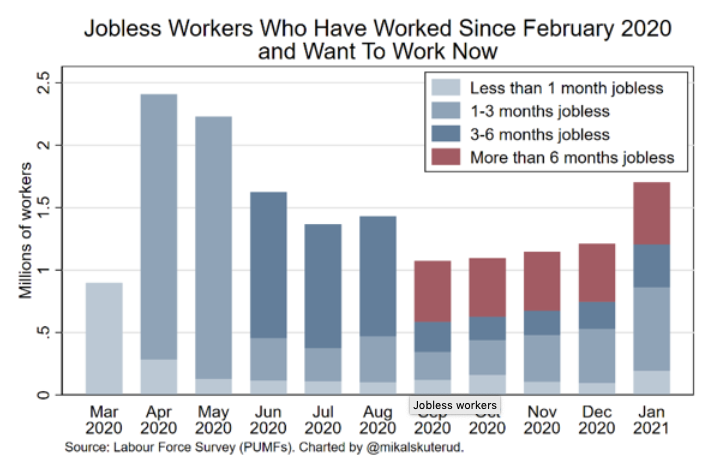
Canadian economists are questioning why Ottawa is setting record immigration targets in the middle of unprecedented unemployment caused by the pandemic.

More than 1.7 million Canadians are looking for work, and the economists are warning that the Liberals’ aggressive new target of more than 400,000 new immigrants in 2021 will likely hurt the country’s low-skilled workers, particularly those who have recently become permanent residents.

Source: Douglas Todd: Economists question decision to boost immigration during pandemic

Fear and discomfort shouldn’t block anti-racism efforts in schools

Some interesting practical suggestions towards greater inclusivity:

In 1920, Duncan Campbell Scott, then-deputy superintendent of the Department of Indian Affairs is quoted for suggesting that his goal was to “get rid of the Indian problem.” Scott’s solution was to expand the residential school system forcing Indigenous people to assimilate. One hundred years later, the legacy of residential schools continues to impact Canada’s current school systems. Research shows that Indigenous children across the country continue to experience systemic racism by their peers, teachers and the larger community. Needless to say, shaming and assimilation persist today.

Over the past 16 years, I’ve worked in education in various roles as a teacher, board lead, university course director and now as a vice-principal. Throughout this time, I’ve noted many advancements in championing Indigenous education and narrowing the Indigenous achievement gap by increasing graduation rates. But time and time again, I’ve also noticed deep discomfort and fear among educators when it comes to addressing anti-Indigenous and anti-Black racism in schools.

“I don’t feel comfortable!”

For the most part, educators want to have a positive effect on their students. But when asked to participate in creating that change by addressing racism, I’ve witnessed some who squirm and say they prefer not to “rock the boat.” For systemic racism to be dismantled in Canadian schools, however, we need to address the discomfort and fear that some educators feel in disrupting anti-Indigenous and anti-Black racism in schools.

For example, during a staff meeting at a Scarborough school where I previously worked, an administrator asked staff members how racism was being spread at school. Was it the curriculum? Our choices of books? The way we speak to students? I thought these were excellent questions to ask to encourage self-reflection and to prompt discussion about potential areas for improvement. In response, however, there was a long silence.

By comparison, I asked colleagues at different schools if race-related conversations were also happening during their staff meetings. For example, looking at race-based data and examining in-school practices that might hinder Black and Indigenous students. Most said yes, but added that they were led largely by Indigenous, Black and racialized educators.

Why are some white educators so uncomfortable? Perhaps it’s fear that openly and honestly engaging in these critical conversations may result in being labelled “racist” or “insensitive.” That said, many racialized and white educators do want to speak up. They are on a journey towards unpacking their racist ideologies or internalized oppression – but they don’t know how and where to begin or what language to use. Sometimes, it helps if a critical friend engages them in discussion. But this responsibility usually falls on Indigenous, Black and racialized people, which is problematic because the work of becoming anti-racist is a personal journey that doesn’t involve others.

“ I do not feel safe”

This makes me wonder what the union’s role is in protecting racialized teachers from microaggressions and unintentionally or intentionally racist remarks. Whose safety matters when having these discussions? What role will the union play in dismantling racism at Canadian schools?I’ve witnessed colleagues respectfully correcting white educators for saying: “I do not think racism is that bad in our school…is it?” Unfortunately, some have complained to the teachers’ union that they “do not feel safe” or feel “attacked” whenever they’re corrected for making a racist or problematic statement.

There’s also significant discomfort among educators when it comes to using anti-racist language when teaching elementary students. I’ve consistently heard some say that children at this age have “tender minds” or are “too young” to learn, and that “we don’t want to instill fear” in them. Yet research suggests that kids begin to perceive racist ideologies from the age of two. That’s why anti-racist education shouldn’t be just one lesson or unit plan. Instead, it needs to be embedded in everyday practices, starting from kindergarten. And if a student uses the term “racist” incorrectly, teachers should take that as a learning opportunity to address the class.

“I have good intentions!”

There is no doubt that educators have good intentions for student safety when participating in school board-wide events, such as Orange Shirt Day, Remembrance Day and Treaty Week. But what happens when these events cause harm to students?

For example, the purpose of Orange Shirt Day is for educators to teach students about the cultural genocide committed against First Nations, Métis and Inuit children, so it’s an opportunity for the school community to unite in the spirit of reconciliation. Specifically, students learn that the RCMP forcefully removed Indigenous children from their families and communities, as the Canadian government’s goal was to “kill the Indian in the child.”

That’s why, on Sept. 30, they read about Phyllis, a residential school survivor from Northern Secwpemc in British Columbia. As the story goes, Phyllis’ grandmother bought her an orange shirt to wear to St. Joseph’s residential school, but when she arrived, school officials took her shirt away. As a 6-year-old, Phyllis expresses that she felt worthless and like no one cared about her.

Despite this focus on Phyllis and other Indigenous residential school survivors, though, their experiences are often decentered on Orange Shirt Day. How? I’ve seen students receive handouts with the sentence starter, “I matter because…” Students’ responses, which ranged from “I am lucky I have a safe school” to “I have a mom and a dad,” are all valid but the voices of Indigenous people are erased in the process. It’s essential that educators focus on Phyllis’ story because only then can Canadians move forward towards reconciliation. For example, educators can dive deeper into researching residential schools’ objectives, and then explain how they were wrongly informed by white supremacist ideologies.

Another board practice we need to reimagine is “spirit days” like Crazy Hair Day, which can be problematic if students choose to wear an Afro, cornrows or Native long braids as a costume. Students also learn that this type of hairstyle is “crazy,” which dehumanizes Indigenous and Black people for the sake of “making school fun” or “keeping old traditions.” What’s more, Sikh and Muslim students can’t participate in these activities because some wear a turban or hijab, so they’re automatically excluded.

Educators need to understand that some school traditions promote racism, sexism, classism and other forms of discrimination against marginalized groups. We can no longer say, “But we’ve always done it this way” or “It’s a school tradition.” For example, hold a spirit day when students identify acts of kindness among their peers and compliment them, or wear their favourite piece of clothing and share why it’s special to them. This would enable students to participate without having to assimilate or adhere to antiquated norms.

It’s time to involve students in critically rethinking past practices and reimagining new inclusive school traditions. Educators can no longer hide behind fear when Indigenous, Black and racialized students’ lives depend on it.

Source: Fear and discomfort shouldn’t block anti-racism efforts in schools

Benoit Charette devient le ministre responsable de la Lutte contre le racisme

While hampered by his government’s refusal to recognize systemic racism, he and the government will be judged more by any concrete improvements they are able to realize:

Le premier ministre François Legault compte sur son nouveau ministre responsable de la Lutte contre le racisme, Benoit Charette, pour poser des « gestes concrets » pour combattre la discrimination, mais aussi pour sensibiliser les Québécois « de souche » aux périls du racisme.

« Ce n’est pas parce que quelqu’un est parmi le groupe qui est victime que nécessairement, la personne est mieux placée pour lutter », a fait valoir M. Legault pour justifier son choix de ministre. « On s’adresse entre autres aux personnes qui font partie des Québécois qu’on appelle blancs, ou “de souche”, pour qu’eux autres — s’il y en a une minorité qu’on doit faire changer d’idée — [puissent] poser des actions. »

M. Legault a ensuite rappelé sa volonté de voir davantage de représentants des minorités visibles ou des nations autochtones dans les conseils d’administration. « C’est ça qu’on veut : que ceux qui sont en situation de pouvoir traitent de la même façon les représentants des minorités visibles et les Autochtones », a-t-il affirmé.

En entrevue au Devoir, Benoit Charette a réfuté les informations voulant que ses collègues Lionel Carmant et Nadine Girault aient d’abord été approchés pour occuper les fonctions qui lui ont été dévolues. Or, diverses sources sûres ont confirmé au Devoir que les deux ministres — qui faisaient partie du Groupe d’action contre le racisme (GACR), contrairement à M. Charette — ont refusé le mandat, après réflexion, en raison de leur emploi du temps chargé. Quant au ministre responsable des Affaires autochtones, Ian Lafrenière, sa nomination avait déjà suscité de fortes réactions, et son réseau de contacts auprès des communautés culturelles n’est pas aussi développé que celui de son collègue.

À l’annonce de sa nomination, Benoit Charette a dit de la lutte contre le racisme qu’il s’agissait d’un « dossier qui lui tient à cœur depuis longtemps ». Il a rappelé qu’il est en couple avec une femme d’origine haïtienne et que ses enfants sont « métissés ».

Au Devoir, il a déclaré que la question du racisme systémique anime parfois des échanges qu’il a avec ses enfants. « Ce sont des discussions que nous avons à la maison de manière très franche et ouverte », a-t-il déclaré. « Mon garçon, il y a quelques mois à peine, a eu un premier emploi et a été confronté à une situation moins agréable, donc ce sont des situations qui peuvent être bouleversantes », a-t-il illustré.

Lui-même a dit être sensible aux enjeux d’inclusion des personnes racisées, notamment dans les plus hautes sphères de l’État. Il a toutefois reconnu ne pas avoir nommé d’Autochtones ou de personnes issues des communautés culturelles à la tête des sociétés relevant du ministère qu’il dirige depuis deux ans. « C’est pour très bientôt », a-t-il assuré, en évoquant un « renouvellement clé » qui sera annoncé dans quelques semaines.

Pas question de reconnaître le racisme systémique

À l’instar du premier ministre, Benoit Charette a rejeté les appels à une reconnaissance du racisme systémique, puisque le concept est à son avis « mal défini » et surtout, « à l’origine de beaucoup de confusion ». Ni la définition proposée par la Commission des droits de la personne et de la jeunesse (CDPDJ) ni celle de la discrimination systémique formulée par la commission Viens ne lui conviennent. « C’est l’interprétation que plusieurs en font, malgré cet exercice-là [qui pose problème], a-t-il affirmé.  Le système est là pour protéger les citoyens. »

Pour preuve, il a évoqué une expérience de discrimination qu’il a vécue, il y a plus de 20 ans, lorsque sa femme et lui se sont fait refuser l’accès à un logement. Après une dénonciation à la CDPDJ et au bout de trois ans de démarches, il a obtenu gain de cause et le propriétaire a été condamné.

Pour M. Charette, le débat sur le racisme systémique « donne un faux sentiment de sécurité [et permet] de rejeter la faute sur l’autre ». « Mais en matière de racisme, on peut tous — qu’on soit noir, blanc, peu importe notre origine — alimenter certains préjugés. Donc si on se replie uniquement derrière un concept qui est très vague, qui est mal défini, ça nous enlève un peu une responsabilité qui nous revient », a-t-il plaidé.

Lui-même a dit avoir été victime non pas de racisme, mais de « méconnaissance et de préjugés » lorsqu’il a voyagé dans des pays où il se trouvait en « situation minoritaire ». « Peu importe la couleur de notre peau, peu importe nos origines, nous sommes tous susceptibles d’alimenter un racisme, d’alimenter certains préjugés à l’égard de certaines communautés ou de certains groupes, donc la solution est en partie à l’intérieur de chacun d’entre nous », a-t-il affirmé.

Un ministre capable d’agir ?

À ses côtés, le premier ministre a dit s’attendre à « une bonne réponse » de la part des communautés culturelles au sujet de cette annonce. « J’ai l’impression que si j’avais nommé quelqu’un qui est membre des minorités, on aurait dit : “Ben on le sait bien, il l’a nommée parce qu’il est membre d’une minorité”, a-t-il affirmé.  Pourtant, c’est tous les Québécois qui doivent lutter contre le racisme. Donc je pense que ce qui était le plus important, c’était de trouver une personne qui a le dossier à cœur et qui est habituée à agir. »

Or, là n’est pas la plus grande force de Benoit Charette, s’est inquiétée la cheffe libérale Dominique Anglade. « L’engagement et la capacité d’agir, ce n’est pas ce qu’il a démontré par le passé. C’est une chose d’être sensible aux enjeux, c’en est une autre de montrer qu’on est capables d’agir et ce n’est certainement pas ce qu’on a vu en matière environnementale », a-t-elle affirmé au Devoir. Pour elle, la nomination de M. Charette n’est ni plus ni moins qu’un geste de distraction de la part du gouvernement, qui cherche à attirer l’attention ailleurs que sur le dossier du tramway ou sur la diffusion d’avis de la Santé publique.

Mme Anglade a notamment déploré le fait que le ministre Charette s’en soit remis à sa collègue à la Sécurité publique, Geneviève Guilbault, lorsqu’un journaliste lui a demandé s’il comptait interdire les interpellations aléatoires, comme l’a recommandé le GACR.

Manon Massé, de Québec solidaire, a dit de Benoit Charette qu’il était « le ministre que le PM envoie dormir sur la switch ». « Il a tellement le pied sur le frein pour lutter contre les changements climatiques, il est taillé sur mesure pour “lutter” contre le racisme systémique à la sauce caquiste : nier le problème et freiner les solutions », a-t-elle écrit sur Twitter.

« Avec cette nomination, le gouvernement nous confirme que Benoit Charette est le ministre des dossiers dont la CAQ ne reconnaît pas l’importance : le racisme et la lutte contre les changements climatiques », a ajouté son collègue Andrés Fontecilla.

Méganne Perry Mélançon, du Parti québécois, a quant à elle dit s’attendre à des actions rapides de la part du ministre. « Il y a plusieurs mesures concrètes qu’on peut appliquer rapidement pour lutter contre le racisme. Je pense entre autres à l’interdiction de la condition “première expérience canadienne de travail” et au CV anonyme. Je tends la main au ministre pour qu’on y travaille ensemble », a-t-elle réagi.

Le chef de l’Assemblée des Premières Nations Québec-Labrador, Ghislain Picard, a quant à lui dit vouloir « laisser la chance au coureur ». Il s’est cependant inquiété de la nomination d’un « ministre à temps partiel ». « Il détient un portefeuille passablement important, donc ça laisse quelle place au racisme ? » a-t-il demandé.

En entrevue à Radio-Canada, l’entrepreneur Fabrice Vil s’est lui aussi dit inquiet de voir M. Charette délaisser « l’enjeu fondamental de la planète » qu’est l’environnement. « Et s’il était si compétent, pourquoi il n’était pas au Groupe d’action contre le racisme ? Pourquoi il n’était pas considéré à l’époque » a-t-il lancé, en précisant néanmoins qu’il ne souhaitait pas « exclure de facto » le ministre.

Source: https://www.ledevoir.com/politique/quebec/595813/benoit-charette-sera-le-ministre-responsable-de-la-lutte-contre-le-racisme?utm_source=infolettre-2021-02-25&utm_medium=email&utm_campaign=infolettre-quotidienne

English article on his appointment:

Quebec Premier Francois Legault has enlisted his environment minister to spearhead the fight against racism in the province, naming Benoit Charette to the newly created post on Wednesday.

Charette added the responsibilities as part of a small cabinet shuffle announced in the provincial capital.

One of the recommendations of a task force that Legault had convened last summer to look at racism in the province was the appointment of a minister to implement its anti-racism action plan.

The 25 recommendations outlined in the final report released in December aim to tackle racial profiling and discrimination faced by minorities and Indigenous people in the province. Charette said he’s given himself until the end of the current mandate in 2022 to see those measures implemented.

“The fight against racism is first and foremost a question of human dignity,” he said, calling Quebec one of the most welcoming and tolerant societies in the world.

The Legault government has maintained that systemic racism does not exist in Quebec, and Charette echoed that Wednesday, saying what is most important is acting swiftly to fight racism. Charette noted the “system” in place includes the Quebec Charter of Human Rights and Freedoms and the province’s Human Rights Commission to protect against discrimination.

Legault was asked Wednesday why the post didn’t go to one of the Coalition Avenir Quebec members who sat on the task force, in particular co-chairs and cabinet ministers Lionel Carmant and Nadine Girault, both of whom are of Haitian origin.

The premier said he spoke to Carmant and Girault and both have seen their workload increase in recent months. Carmant, the junior health minister, is in charge of reforming the youth protection system. Girault, the international relations minister, recently took on the immigration portfolio as well.

Charette, 44, is white. His wife is of Haitian origin and they have three children. He rejected the notion that not coming from a visible minority means lacking credibility fighting racism.

“In any case, whatever the reason, in my opinion, the colour of skin should not be an argument to disqualify someone,” Charette said.

He said he is no stranger to racism, having been refused an apartment, allegedly because of prejudice aimed at his wife. He recounted filing a human rights complaint that led to the landlord being sanctioned.

“It is at times subtle, it is at times direct, but in all cases, it is very offensive. It is very hurtful,” Charette said.

Legault said he has confidence in Charette, who was responsible for dealing with cultural communities when the party was in opposition. “And Benoit, I’ve known for many years and I know it’s a very important subject for him, so I think he’s the best person to fight against racism,” Legault said.

Charette said he’ll be meeting with leaders from different groups and communities in the coming days.

Charette was given the environment portfolio in January 2019. Some environmental groups raised concerns his new responsibilities would mean less time for environment and climate change issues. Charette assured that wouldn’t be the case, noting he has a dedicated staff.

Legault also announced Wednesday that Lucie Lecours would be joining cabinet as junior economy minister.

Source: Legault government taps Environment Minister Benoit Charette to oversee racism fight

International students aren’t making as much money as their Canadian classmates in the first years after graduation, report suggests

Significant study on the importance of work experience:

Despite equal Canadian education credentials, international students earn less than their Canadian peers after graduation, Statistics Canada says.

That’s because they fail to secure enough local work experience before they graduate, data from the agency indicates.

International students earned “considerably” less than domestic students during their first five years after graduation, said a report released Wednesday in collaboration with Immigration, Refugees and Citizenship Canada.

“Fewer years of pre-graduation work experience and lower levels of pre-graduation earnings among international students accounted for most of their observed disadvantage in post-graduation earnings.”

This revelation will be crucial for Canada to address as the federal government has increasingly drawn on its pool of international students as future immigrants. In 2019 alone, more than 58,000 international graduates successfully applied to immigrate permanently.

They are favoured over immigrants who are traditionally selected directly from abroad because they’re generally younger and have more years to contribute to the labour market after immigration. There is also less uncertainty about their quality of education and language ability, and little barrier related to credential recognition when joining the labour force.

Based on Canada’s Post-secondary Student Information System and tax data, researchers compared early labour-market outcomes and sociodemographic information of international students and domestic students who graduated from post-secondary institutions between 2010 and 2012.

International students comprised six per cent or 66,800 of the sample, with Canadian citizen and permanent resident students accounting for 87 per cent and seven per cent of the population (about 927,700 and 71,900), respectively. The classification was based on the students’ immigration status at their time of graduation.

Overall, 43.6 per cent of international students had no Canadian work experience prior to graduation, compared with 2.2 per cent of Canadian citizens and 9.7 per cent of permanent resident students.

The average number of years of pre-graduation work experience was 6.2 for Canadian citizen students, 3.9 for permanent resident students and just 1.2 for international students.

Four in 10 domestic students earned more than $20,000 in a year before graduation, whereas only one in 10 international students did so.

One year after graduation, the income gaps between international graduates and Canadian citizens were larger for graduates with an advanced degree than for their international peers with a lower education. The difference was about 10 per cent for bachelor’s degree holders and 40 per cent for the ones with master’s degrees.

However, by the fifth year, the gap narrowed for international students with graduate degrees, while it increased over time for their peers with a bachelor’s degree or college diploma only.

International students had lower earnings on average than domestic students in many fields of study, with a few exceptions where they had similar earnings: visual and performing arts, and communications technologies; humanities; health and related fields.

For the four most popular fields of study among international students, graduates from the STEM fields (architecture, engineering and related technologies; and mathematics, computer and information sciences) suffered a smaller earnings gap than their non-STEM peers in business, management and public administration; and social and behavioural sciences and law.

The disadvantage faced by international students in securing pre-graduation work experience can be explained by language proficiency, cultural differences, concentration in fields of study, course grades, employers’ reluctance to recruit and train job applicants with temporary residency status, and possible employer discrimination, the study suggested.

“International students may face these barriers when looking for a job while studying, before they formally enter the labour market, and after they graduate,” it said. “Another possible answer is the difference in participation rates between domestic and international students in work-integrated learning (which) provides participating students the benefits of workplace-related skill accumulation and connections to potential employers.”

International students lack knowledge about the local labour market, have limited local networks, and face financial barriers, such as relocation costs and the additional tuition fees required for delayed graduation — all contributing to their lower participation in internship and co-op, said the report.

Although the federal government has relaxed the off-campus employment rules for international students during school year since 2014 by allowing them to work up to 20 hours a week without requiring a work permit, they still have limited access to government-sponsored student hiring programs where priorities are given to Canadians.

“The disadvantage for international students in pre-graduation work experience hampers their ability to compete for a high-paying, high-quality job after graduation,” said the report.

“The results of this study imply that policies to reduce the pre-graduation work-experience gap are crucial to reducing the post-graduation earnings gap between international and domestic students.”

Source: International students aren’t making as much money as their Canadian classmates in the first years after graduation, report suggests

Federal documents show sharp decline of Canada’s pandemic warning system, and debate over who was to blame

Looks like decision was mainly at the bureaucratic, not political level:

Newly released government documents paint a stark picture of how quickly Canada’s pandemic early warning system fell into decline before COVID-19 hit.

E-mails between staff at the Prime Minister’s Office show how alerts issued by the Global Public Health Intelligence Network, or GPHIN, dropped precipitously from 2009 to 2019, when key parts of the operation were curtailed.

The numbers confirm internal Public Health Agency data obtained by The Globe and Mail last summer, which showed how Canada’s internationally renowned pandemic early warning system was effectively shuttered less than a year before COVID-19 began spreading.

GPHIN was created in the 1990s to provide Canada and its allies with the earliest possible warnings of outbreak threats, so that governments could move quickly and decisively. A Globe investigation last year detailed how GPHIN played an integral role in detecting and helping the international community respond to past outbreaks such as SARS, H1N1 and MERS.

The e-mails between PMO staff are part of a release of thousands of federal documents that are being disclosed in response to a production order for COVID-19 records that was approved by the House of Commons in October over objections from the Liberal government.

In those e-mails, PMO advisers are responding to The Globe’s GPHIN investigation, which reported that the pandemic early warning system had issued more than 1,500 alerts on potential outbreak threats between 2009 and 2019. The probe found that GPHIN suddenly fell silent on May 24, 2019, less than eight months before COVID-19 started to become a world crisis.

The investigation detailed how shifting priorities within Public Health led to GPHIN’s resources being moved to other areas. With no apparent pandemic threats on the horizon, analysts were reassigned to study domestic issues, such as the effect of vaping and the spread of syphilis in Canada. When GPHIN’s alert system went silent last year, its surveillance of international outbreaks was also significantly curtailed.

According to an e-mail between PMO staff on Oct. 8, GPHIN issued 1,598 alerts between 2009 and 2019, including 877 in 2009, the year of the H1N1 outbreak. These alerts spanned a wide range of threats – from Zika to Ebola, yellow fever and Crimean-Congo hemorrhagic fever – and most never evolved into a crisis, though GPHIN would have kept close tabs on each situation as needed.

But the numbers began to decline sharply. After issuing 198 alerts in 2013, when an outbreak of H7N9 bird flu emerged, GPHIN’s alerts dropped in half the following year and soon declined further. By 2018, GPHIN issued just 21 alerts, a drop of 97 per cent from 2009 levels.

The e-mails suggest that as staff inside the PMO deliberated on how to respond to The Globe’s investigation, they appeared concerned about whether the Liberal government could be blamed for financial cuts to the operation, or whether the decisions that shifted GPHIN’s focus and resources inside the department rested solely with the Public Health Agency of Canada (PHAC).

“PHAC may have reprioritized its efforts, but it is an Agency that gets to decide, to an extent, their own priorities – those would be internal, bureaucratic decisions, not political ones,” Elise Wagner, a senior special assistant in the PMO wrote to a colleague. “Our government did not cut funding for the global early warning system.”

The shuffling of resources within the department had a significant effect, though. GPHIN’s role was not only to detect the first signs of an outbreak, but to provide continuing, rapid intelligence of an evolving situation, so that Ottawa could quickly bolster stockpiles of personal protective equipment and ensure hospitals and long-term care homes were ready if needed.

The goal was to inject urgency into government decisions, including when to implement physical distancing, mask wearing and stricter border measures. However, scientists inside PHAC told The Globe that they struggled to get important messages up the chain of command.

Members of the Canadian intelligence community have since raised concerns about the curtailing of GPHIN, given its role in informing the government’s risk assessments on COVID-19. Through January, February and into March of 2020, Ottawa rated the outbreak a low threat to the Canadian public, even as evidence emerged about how deadly the virus was and how easily it was spreading, and despite other countries implementing unprecedented measures.

Faced with criticism over the government’s early response, Prime Minister Justin Trudeau said he wasn’t sure what role added intelligence could have played in Ottawa’s decisions, but said he regrets not acting sooner to bolster stockpiles of personal protective equipment. However, informing such decisions is exactly what GPHIN was created to do.

The federal documents show GPHIN first picked up on the outbreak on Dec. 31, 2019, after news of a strange pneumonia in China made international headlines and a New York based disease-tracker called ProMed issued an alert to doctors and hospitals around the world. Scientists now believe COVID-19 had likely been spreading several weeks by that point, and that China did not fully disclose the problem.

Epidemiologists say the speed at which governments can implement containment measures has a major effect on the spread of a virus and its death toll, even if only by a few days or a week.

The problems surrounding GPHIN are now the subject of two federal probes; the Auditor-General of Canada has launched an investigation while the Minister of Health has ordered an independent federal review. The results of both are expected sometime this spring.

New tool could point immigrants to spot in Canada where they’re most likely to succeed

A neat example of algorithms to assist immigrants assess their prospects although human factors such as presence of family members and community-specific food shopping and the like may be more determinate. But good that IRCC is exploring this approach. More sophisticated that the work I was involved in to develop the Canadian Index for Measuring Integration. Some good comments by Harald Bauder and Dan Hiebert:

Where should a newcomer with a background in banking settle in Canada?

What about an immigrant who’s an oil-production engineer?

Or a filmmaker?

Most newcomers flock to major Canadian cities. In doing so, some could be missing out better opportunities elsewhere.

A two-year-old research project between the federal government and Stanford University’s Immigration Policy Lab is offering hope for a tool that might someday point skilled immigrants toward the community in which they’d most likely flourish and enjoy the greatest economic success.

Immigration, Refugees and Citizenship Canada is eyeing a pilot program to test a matching algorithm that would make recommendations as to where a new immigrant might settle, department spokesperson Remi Lariviere told the Star.

“This type of pilot would allow researchers to see if use of these tools results in real-world benefits for economic immigrants. Testing these expected gains would also allow us to better understand the factors that help immigrants succeed,” he said in an email.

“This research furthers our commitment to evidence-based decision making and enhanced client service — an opportunity to leverage technology and data to benefit newcomers, communities and the country as a whole.”

Dubbed the GeoMatch project, researchers used Canada’s comprehensive historical datasets on immigrants’ background characteristics, economic outcomes and geographic locations to project where an individual skilled immigrant might start a new life.

Machine learning methods were employed to figure out how immigrants’ backgrounds, qualifications and skillsets were related to taxable earnings in different cities, while accounting for local trends, such as population and unemployment over time.

The models were then used to predict how newcomers with similar profiles would fare across possible destinations and what their expected earnings would be. The locations would be ranked based on the person’s unique profile.

“An immigrant’s initial arrival location plays a key role in shaping their economic success. Yet immigrants currently lack access to personalized information that would help them identify optimal destinations,” says a report about the pilot that was recently obtained by the Star.

“Instead, they often rely on availability heuristics, which can lead to the selection of suboptimal landing locations, lower earnings, elevated out-migration rates and concentration in the most well-known locations,” added the study completed last summer after two years of number crunching and sophisticated modelling.

About a quarter of economic immigrants settle in one of Canada’s four largest cities, with 31 per cent of all newcomers alone destined for Toronto.

“If initial settlement patterns concentrate immigrants in a few prominent landing regions, many areas of the country may not experience the economic growth associated with immigration,” the report pointed out. “Undue concentration may impose costs in the form of congestion in local services, housing, and labour markets.”

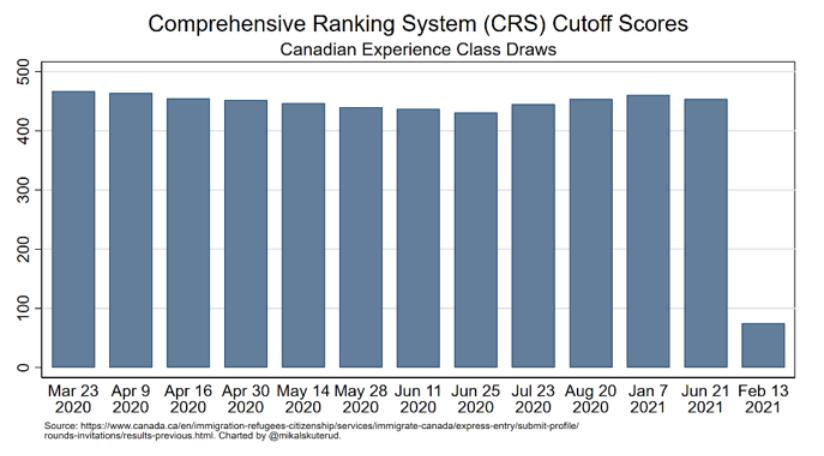
Researchers sifted through Canada’s longitudinal immigration database and income tax records to identify 203,290 principal applicants who arrived in the country between 2012 and 2017 under the federal skilled worker program, federal skilled trades program and the Canadian Experience Class.

They tracked the individuals’ annual incomes at the end of their first full year in Canada and predicated the modelling of their economic outcomes at a particular location on a long list of predictors: age at arrival, continent of birth, education, family status, gender, intended occupation, skill level, language ability, having studied or worked in Canada, arrival year and immigration category.

Researchers found that many economic immigrants were in what might be considered the wrong place.

For instance, the report says, among economic immigrants who chose to settle in Toronto, the city only ranked around 20th on average out of the 52 selected regions across Canada in terms of maximizing expected income in the year after arrival.

“In other words, the data suggest that for the average economic immigrant who settled in Toronto, there were 19 other (places) where that immigrant had a higher expected income than in Toronto,” it explains, adding that the same trend appeared from coast to coast.

Assuming only 10 per cent of immigrants would follow a recommendation, the models suggested an average gain of $1,100 in expected annual employment income for the 2015 and 2016 skilled immigrant cohort just by settling in a better suited place. That amounted to a gain of $55 million in total income, the report says.

However, researchers also warned against the “compositional effects” such as the concentration of immigrants with a similar profile in one location, which could lower the expected incomes due to saturation. Other issues, such as an individual’s personal abilities or motivation, were also not taken into account.

The use of artificial intelligence to assist immigrant settlement is an interesting idea as it puts expected income and geography as key considerations for settlement, said Ryerson University professor Harald Bauder

“It’s not revolutionizing the immigration system. It’s another tool in our tool box to better match local market conditions with what immigrants can bring to Canada,” says Bauder, director of Ryerson’s graduate program in immigration and settlement studies.

“This mechanism is probably too complex for immigrants themselves to see how a particular location is identified. It just spits out the ranking of locations, then the person wonders how I got this ranking. Is it because of my particular education? My particular country of origin? The information doesn’t seem to be clear or accessible to the end-users.”

New immigrants often gravitate toward a destination where they have family or friends or based on the perceived availability of jobs and personal preferences regarding climate, city size and cultural diversity.

“This tool will help those who are sufficiently detached, do not have family here and are willing to go anywhere,” says Daniel Hiebert, a University of British Columbia professor who specializes in immigration policy.

“People who exercise that kind of rational detachment will simply take that advice and lead to beneficial outcomes.”

But Hiebert has reservations as to how well the modelling can predict the future success of new immigrants when they are basing the advice and recommendations on the data of the past.

“This kind of future thinking is really difficult for these models to predict. There’s too much unknown to have a good sense about the future,” he says. “These models can predict yesterday and maybe sort of today, but they cannot predict tomorrow.”

Source: New tool could point immigrants to spot in Canada where they’re most likely to succeed

Women landing more leadership jobs, but racialized, Indigenous and disabled women lag: study

Of note:

The share of women in senior leadership positions at Canadian companies is on the rise despite the economic fallout from the COVID-19 pandemic. But the number of racialized, Indigenous and disabled women in top roles remains small, and many companies don’t disclose any leadership diversity data, according to a new report that is among the first to explore the varied experiences of women in Corporate Canada.

Over all, women’s representation improved between March, 2019, and September, 2020, among 48 public and private-sector companies surveyed by the Prosperity Project, a non-profit founded by a volunteer group of 62 female leaders.

Women held more than 40 per cent of seats on boards of the surveyed corporations as of September, up from 37 per cent in March, 2019. Nearly 31 per cent of executive roles were held by women, up from 28 per cent. More than 80 per cent of the companies also had at least one racialized woman in the pipeline leading to executive office, up from 68 per cent.

But the gains have been uneven. Black and disabled women each made up fewer than 2 per cent of directors and saw their share of executive positions rise from none to 0.8 per cent. Indigenous women made up only 1.6 per cent of executives and just 2.1 per cent of directors, and saw their share of senior positions relatively unchanged over the 18 months.

The toll of the pandemic and the Black Lives Matter protests of the past year have thrust issues of representation and equality into the spotlight. Companies have responded by joining corporate diversity efforts such as the BlackNorth Initiative and the 50-30 Challenge. But the report shows many corporations have yet to turn those efforts into results.

“We know that companies are pivoting and making some really good decisions,” said Kristine Remedios, chief inclusion and social impact officer at KPMG Canada, who is among the Prosperity Project’s founding members. “But I think that there is a lot of hard work ahead for many organizations to actually lift this off the ground.”

The report also exposed how few companies are willing to share gender and diversity data. Of the 120 organizations invited to participate, 72 either declined or didn’t reply.

Many companies complain about survey fatigue, or are reluctant to require employees to self-identify, making it difficult to understand whether employees of diverse backgrounds are experiencing the workplace differently, said Pamela Jeffery, who founded the Prosperity Project. But the biggest barrier to collecting data is often a reluctance among top leaders to set diversity targets and then track their progress, she said.

Crown corporations have actually achieved gender parity in leadership roles, largely because they’ve set specific gender-representation targets and worked to meet them. “They’ve been deliberate,” Ms. Jeffery said. “Those organizations achieve results because they focus on it. They measure it.”

The Prosperity Project is looking to work with other companies on its planned annual report card of Canada’s 500 largest corporations by revenue, and has developed a process to help companies securely collect anonymized data on employees.

Governments and regulators should also require companies to set and disclose diversity targets, rather than allowing them the option of providing reasons why they don’t have targets – a practice known as comply or explain. “There’s been too much explaining and not enough complying,” said Ms. Jeffery, who previously founded the Women’s Executive Network and Canadian Board Diversity Council.

The recovery from the pandemic offers companies a unique chance to increase representation among diverse groups, said BMO’s Ms. Goulet.

She points to a project the bank worked on last year to create an on-reserve Indigenous technology hub at Batchewana First Nation in Sault Ste. Marie, Ont. When the pandemic shifted much of the bank’s work force online, BMO turned the project into a virtual hub, opening up job opportunities for Indigenous workers in other remote and northern communities across the country. “I call this the kind of silver lining of the pandemic, in that we now have remote rules that are enabling us to access new and untapped talent nationwide,” she said.

Source: https://www.theglobeandmail.com/business/article-women-landing-more-leadership-jobs-but-racialized-indigenous-and/?utm_medium=email&utm_source=Morning%20Update&utm_content=2021-2-23_7&utm_term=Morning%20Update:%20Parliament%20declares%20China%20is%20conducting%20genocide%20against%20its%20Muslim%20minorities&utm_campaign=newsletter&cu_id=%2BTx9qGuxCF9REU6kNldjGJtpVUGIVB3Y