MPs, advocates urge more government action to combat ‘pandemic of anti-Asian racism’

Of note, both in terms of comments by activists and politicians, as well as some encouraging signs of a downward trendline:

Justin Kong, executive director of the Chinese Canadian National Council’s Toronto chapter, doesn’t want focus paid to his own experiences of racism, which he says most racialized people have experienced, instead emphasizing the importance of the country coming together to make things better.

He, along with several Members of Parliament and advocacy groups, have called for more to be done by the federal government to combat anti-Asian racism, in response to the surging number of racist incidents affecting Asians in Canada—and those who look Asian to some—since the start of the pandemic.

A September report from Project 1907, a group which has been tracking incidents, found that more than 600 instances of racism have occurred in Canada since the onset of COVID-19, with a higher number of anti-Asian incidents reported per capita than the United States. Women were impacted the most, reporting 60 per cent of all incidents. The data expanded on the type of harassment, too, with verbal abuse occurring in 65 per cent of incidents, and nearly 30 per cent reporting assault or targeted coughing, spitting, or other physical forms of violence.

A July Statistics Canada report, meanwhile, found that discriminatory incidents were perceived to happen sometimes or often by 26 per cent of Koreans and 25 per cent of Chinese respondents. It also found that 43 per cent of Koreans, and 38 per cent of Filipino people reported feeling unsafe walking home alone at night. Strikingly, in a recent report presented to Vancouver’s police board, the increase in anti-Asian racism was up 717 per cent from the year before, going from 12 reports in 2019 to 98 in 2020.

Some standout incidents that Conservative MP Kenny Chiu (Steveston-Richmond East, B.C.) said he’s noticed in Vancouver include reports of vandalism and even one incident where an elderly gentleman with dementia was attacked.

For Lynn Deutscher Kobayashi, vice-president of the National Association of Japanese Canadians, these types of occurrences relate to the idea of Asians being untrustworthy foreigners no matter how long they’ve been in Canada.

“It’s just this inability of people to see you as Canadian because of the colour of your skin,” she said.

Prime Minister Justin Trudeau (Papineau, Que.) has condemned racism in the past via news conferences.

Mr. Kong said the main impetus for more recent racism was COVID-19 and the political rhetoric circulating.

“Irresponsible politicians have scapegoated Chinese people as the cause of this virus,” he said.

Liberal MP Han Dong (Don Valley North, Ont.) noted that racism towards the Asian community is historic, and that continued, systemic issues, like around fair employment opportunity, plague the system.

Queenie Choo, CEO of B.C. social service agency S.U.C.C.E.S.S., described systemic racism as issues with policy that ignore privilege and create unfair inequities.

This system, Mr. Kong said, leads to issues like Chinese-Canadians being disproportionately represented under the poverty line, or having difficulties with accessing good housing or good education.

“The racism is systemic racism that puts racialized people in precarious working conditions and life conditions,” he said.

In Mr. Dong’s view, COVID-19 has simply created the setting for racist thinking to come out.

“It’s always been there, but the pandemic has created a perfect [mix] for some of these people to come out pointing fingers at Chinese-Canadians,” he said.

NDP MP Jenny Kwan (Vancouver East, B.C.) raised similar historical issues, pointing towards segregation laws and head taxes that existed in the past, which unfairly targeted Chinese- and other Asian-Canadians.

Also contributing to the issue is negative sentiment towards the Chinese government over issues like its crackdowns in Hong Kong and detention of Michael Spavor and Michael Kovrig, with Mr. Dong noting that Canada-China relations have worsened over the last three years.

“I think this will sharpen the sort of racial view on Chinese-Canadians,” he said. “I think the racism against Asian-Canadians is deeper than what’s going on between Canada and China.”

Mixed opinions on level of anti-Asian racism since pandemic start

Mr. Kong said there have been consistent levels of racism since the pandemic started: “Whether or not it’s gotten worse, it’s bad, it’s really bad.”

He was also impressed with how many Chinese organizations and individuals got together as citizens and donated to help their neighbours and their community.

“That’s a real positive out of COVID-19,” he said.

Mr. Chiu echoed these sentiments, and said the trend appears to be going down.

Less satisfied with the status quo, Ms. Choo emphasized that racism will continue if nothing is done about it. While she said she’s glad the government is openly talking about racism, she said she wants to see more sustained efforts over time and continuous vigilant action.

Ms. Kobayashi, meanwhile, expected there to be a new wave of racism as a result of the Capitol Building storming in the United States, with white supremacists and extreme groups emboldened by the attack.

And in Ms. Kwan’s eyes, racism directed at Asian-Canadians has existed for a long time, with COVID-19 giving it a chance to re-emerge “with a vengeance.”

How the government can combat anti-Asian racism

For Mr. Kong, fighting the problem of racism requires the first step of recognizing that racial inequities exist. He said he wasn’t able to offer firm policy suggestions owing to an incoming report on the topic.

In Ms. Choo’s opinion, there should be more concrete legislation around hate crimes.

“Right now, we have no clear definition. What is a hate crime? Is it a hate crime online? Is spitting on people of colour [a hate crime]?” she said.

She further advocated for serious legislation to prosecute offenders in order to send a message to people.

Ms. Choo also said race-based data should be collected in consultations with the affected communities. “If we don’t even know who is targeted, who is affected, and what communities we are talking about, how are we going to take corrective action?”

To treat this “pandemic of anti-Asian racism,” Ms. Kobayashi agreed there should be support for people targeted by hate crimes, and that more funding should be provided for data collection efforts on racism.

In Ms. Kwan’s view, a hate crime unit should be placed in every single police department across the country. Alongside this, she said there should be high-level standards that ensure every single incident is investigated fairly.

“We can talk about we’re doing to get rid of racism and hate, but we need to match those words in action, and to properly resource a hate crime unit at every single department, I would think, is the bare minimum that we should be in,” she said.

Also critical is educating the Canadian public, Ms. Kwan said. Her comments were echoed by Ms. Choo, who said that teaching around historical and contemporary racism should be funded .

Some things that the Trudeau Liberal government has already done include shortlisting a Chinese-born Canadian, Won Alexander Cumyow, for appearance on the $5 bill and acknowledging the role of Chinease railway workers every year, said Mr. Dong.

Other concrete actions taken, according to Diversity and Inclusion Minister Bardish Chagger’s (Waterloo, Ont.) press secretary, Emelyana Titarenko, include the setup of an equity-seeking communities and COVID-19 taskforce, which asked East Asian communities about the impact of the virus, and funding for more than 85 different anti-racism projects, worth $15-million.

Liberal MP Kevin Lamoureux (Winnipeg North, Man.) said Parliamentarians should call out racism whenever they can and said the government acts by providing grants to “all sorts of non-profits.”

Ms. Titarenko also noted that a multicultural, open, and inclusive society is always “a work in progress. It demands our effort, our attention and our care.”

Mr. Chiu, who has experienced racism himself, said it made him question whether he belonged in Canadian society when he was pointed and yelled at.

But he said he doesn’t think that the government is the only group with a part to play in fighting racism.

“In Richmond, for example, our community is already diverse and multicultural … my younger daughter’s best friend is a hijab-donning Muslim girl. They don’t see each other as different places, they see each other as friends, so I don’t know if the government can actually do anything to do that. It’s up to us as a society.”
Source: https://www.hilltimes.com/2021/02/24/mps-advocates-urge-more-government-action-to-combat-pandemic-of-anti-asian-racism/285240?mc_cid=a5dba06976&mc_eid=685e94e554

Law firms scramble to help clients capitalize on shift in Canada’s immigration policy

Money quote: “it doesn’t speak favourably of the integrity and predictability of our immigration system:”

Law firms are urging their clients to get in Canada’s express pool of immigration candidates as soon as possible after the federal government invited a record number of people in that system to apply for permanent residency to help hit ambitious targets.

On Feb. 13, Immigration Canada issued the invitations to more than 27,000 people in the Express Entry system, which is aimed at expediting the intake of skilled workers. That round of invitations – known as a draw – focused on those who had at least one year of recent work experience in Canada.

The number was more than five times larger than the previous record. To hit that mark, the federal government had to drastically reduce the immigration scores needed for an invitation to apply.

The decision sent a jolt through the legal community, with initial confusion giving way to a flurry of phone calls. Many lawyers had steered clients away from Express Entry because it was unlikely they could get a high enough score.

The situation has prompted a rethink. Several law firms contacted by The Globe and Mail are now telling clients that anyone who can get into the Express Entry pool should do so, given the potential for the federal government to surprise again.

“At this point, it seems like all bets are off, and we have no predictability in terms of who’s going to be selected and who’s not,” said Meika Lalonde, partner at McCrea Immigration Law in Vancouver. “We do know that the government has some ambitious immigration targets that it wants to fill this year. So there is a possibility that they’ll draw again at a remarkably low score.”

Owing to the pandemic, Canada has just had an exceptionally weak year for immigration. About 184,000 new permanent residents were added in 2020, well short of the 341,000 target. To make up for that, Immigration Canada raised its targets for the next three years, starting with an intake of 401,000 in 2021.

With border restrictions still in place, Ottawa is focused on foreign workers and students already here. Most of the invitations issued on Feb. 13 were to people in Canada, the federal government said.

Launched in 2015, Express Entry is one of several pathways for immigration. When people go into that pool, they’re assigned a score in points based on age, education, work experience and other factors. Draws are usually held every two weeks and have a cut-off score for who gets invited.

The cut-off is usually at much more than 400 points. Successful candidates in the category of people with Canadian work experience have often been under 30 years old and had advanced degrees and strong English or French skills.

This time, the cut-off score was slashed to 75. That meant nearly everyone in the Canadian-experience stream of Express Entry got an invitation, all but depleting that source of candidates.

“I actually thought it was a mistake,” said Adrienne Smith, partner at Battista Smith Migration Law Group in Toronto. “I was completely shocked.”

Once she learned it was real, Ms. Smith advised clients to try to get into the express pool. “I just don’t want to have another client that misses out on this potential draw,” she said.

The message was the same from Sonia Matkowsky, an immigration lawyer in Toronto: “I do advise individuals [who would get] lower scores to enter the pool,” she said. “Especially this year. Anything can happen.”

It’s unclear how the coming months will play out. While the Canadian-experience stream was nearly emptied, it’s undoubtedly starting to grow again. The question is whether the cut-off score will be low in future draws.

Several lawyers say they think the federal government will eventually shift its focus outside the country. Thousands of Express Entry candidates are abroad and lack Canadian work experience, but otherwise have desirable credentials. Their entry is complicated by border restrictions.

“A lot of our clients overseas were also contacting us,” Ms. Smith said. “I think the hope and the anticipation is that in order to meet the 400,000-person target, that [the government is] going to have to move to overseas applicants next.”

Even then, the 2021 target should be tough to hit. In a recent report, RBC Economics estimated that Canada would add only 275,000 new permanent residents this year.

Some lawyers said the recent draw undermined the purpose of the Express Entry system, which is intended as a way to fast-track the top candidates rather than send a blanket invitation to virtually everyone.

“It’s a very good news story for a lot of individuals,” Ms. Lalonde said. “But I would say it doesn’t speak favourably of the integrity and predictability of our immigration system.”

Source: https://www.theglobeandmail.com/business/article-immigration-strategies-take-u-turn-after-surprise-government-decision/

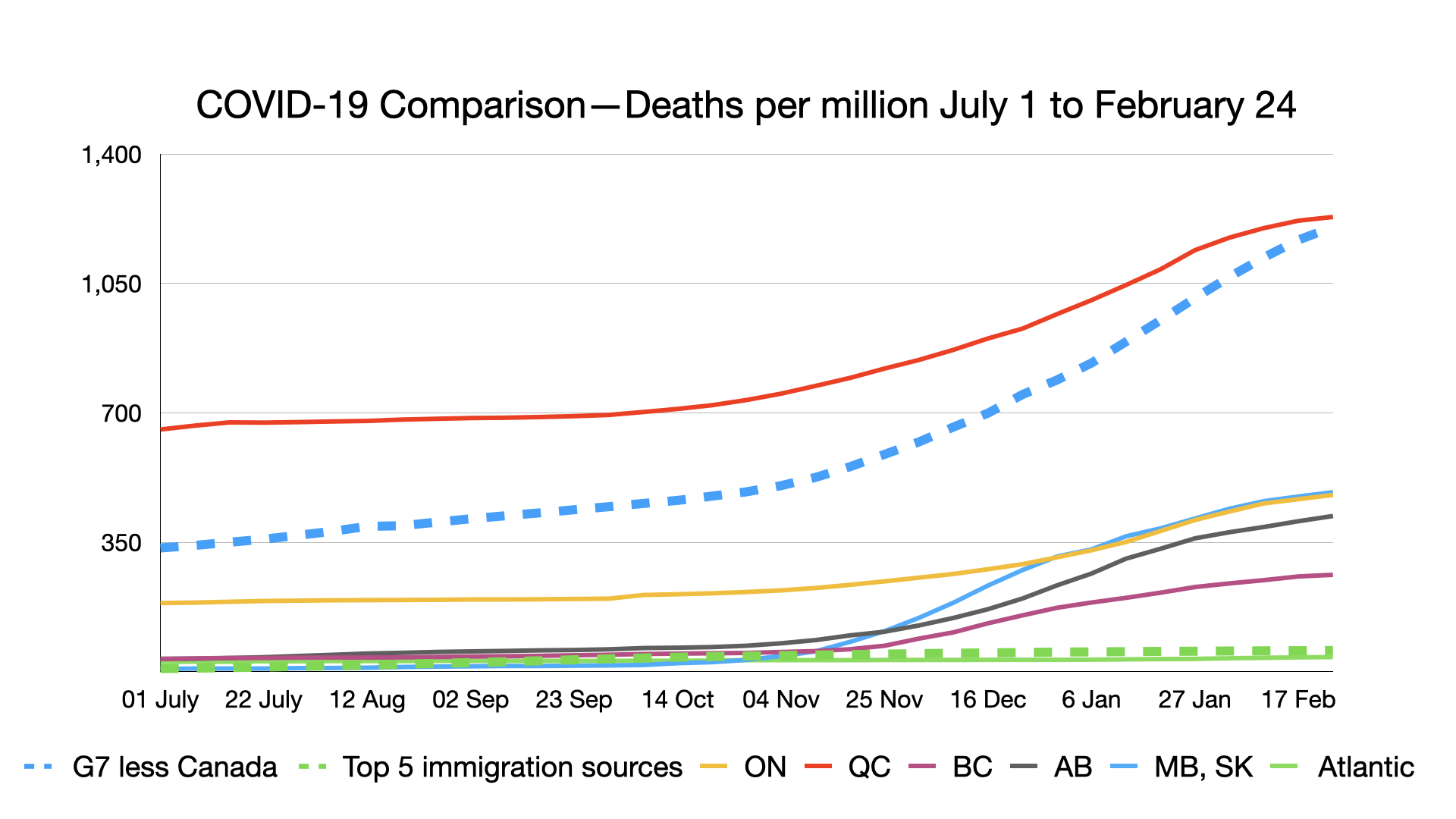
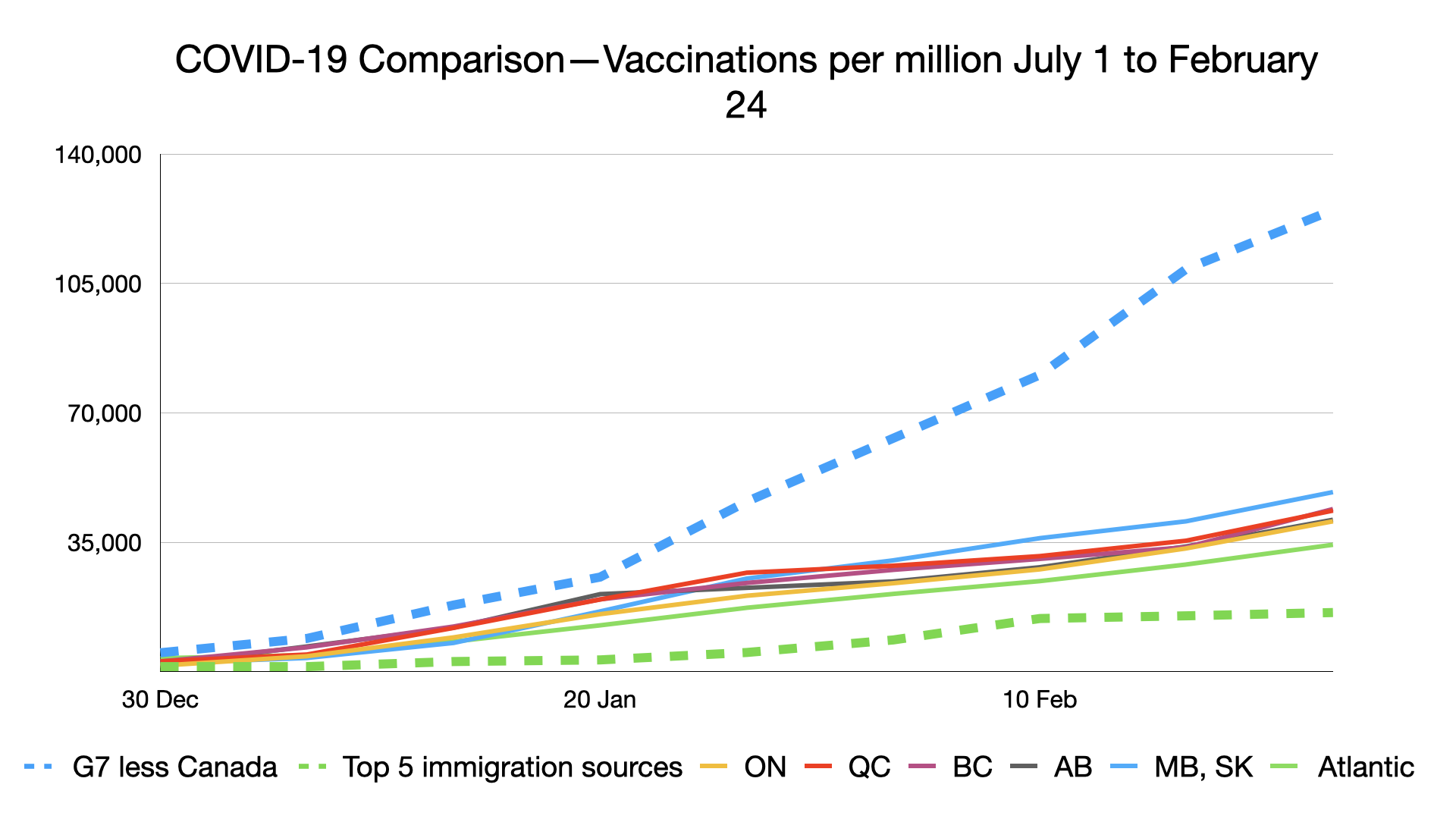
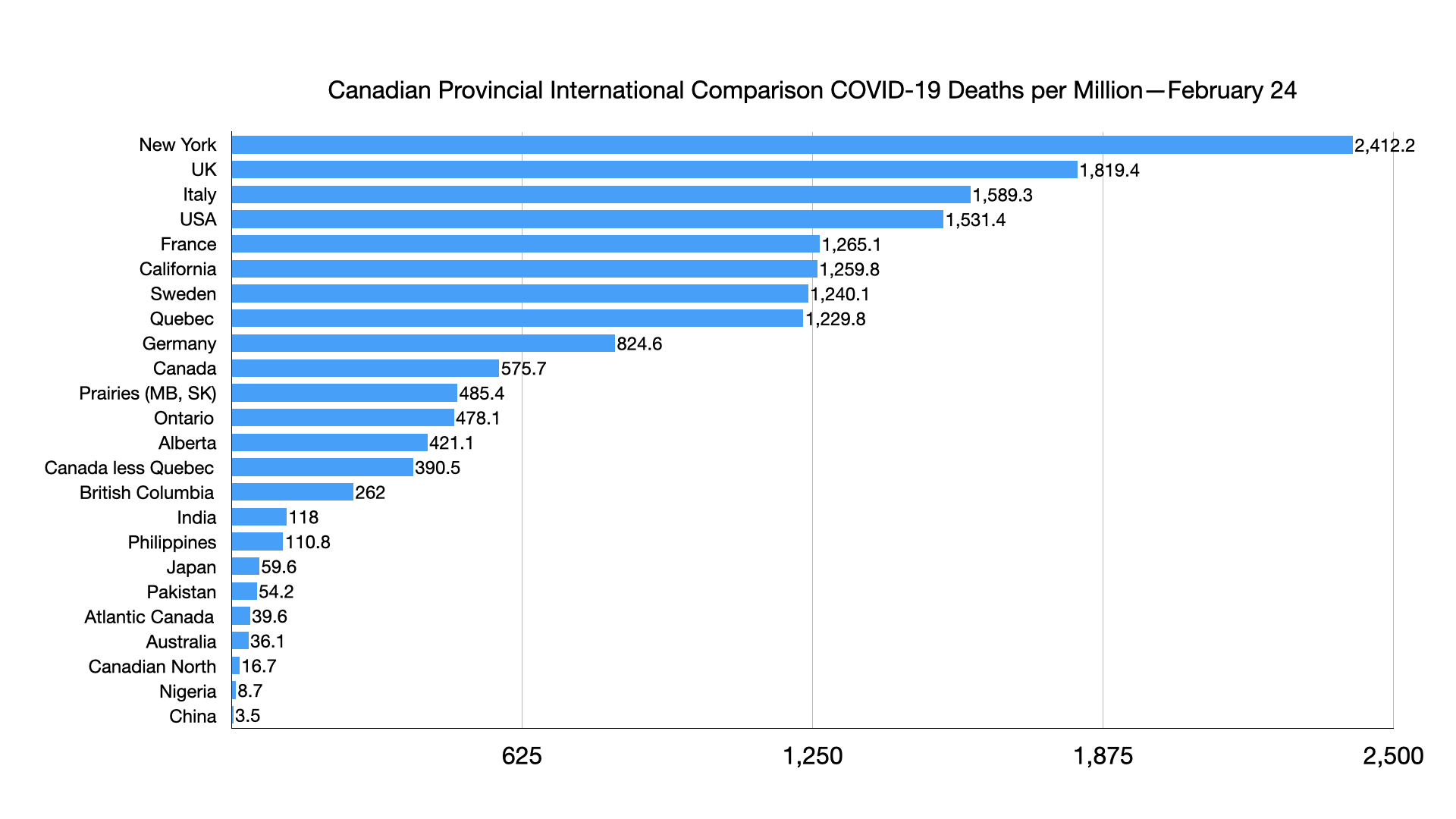
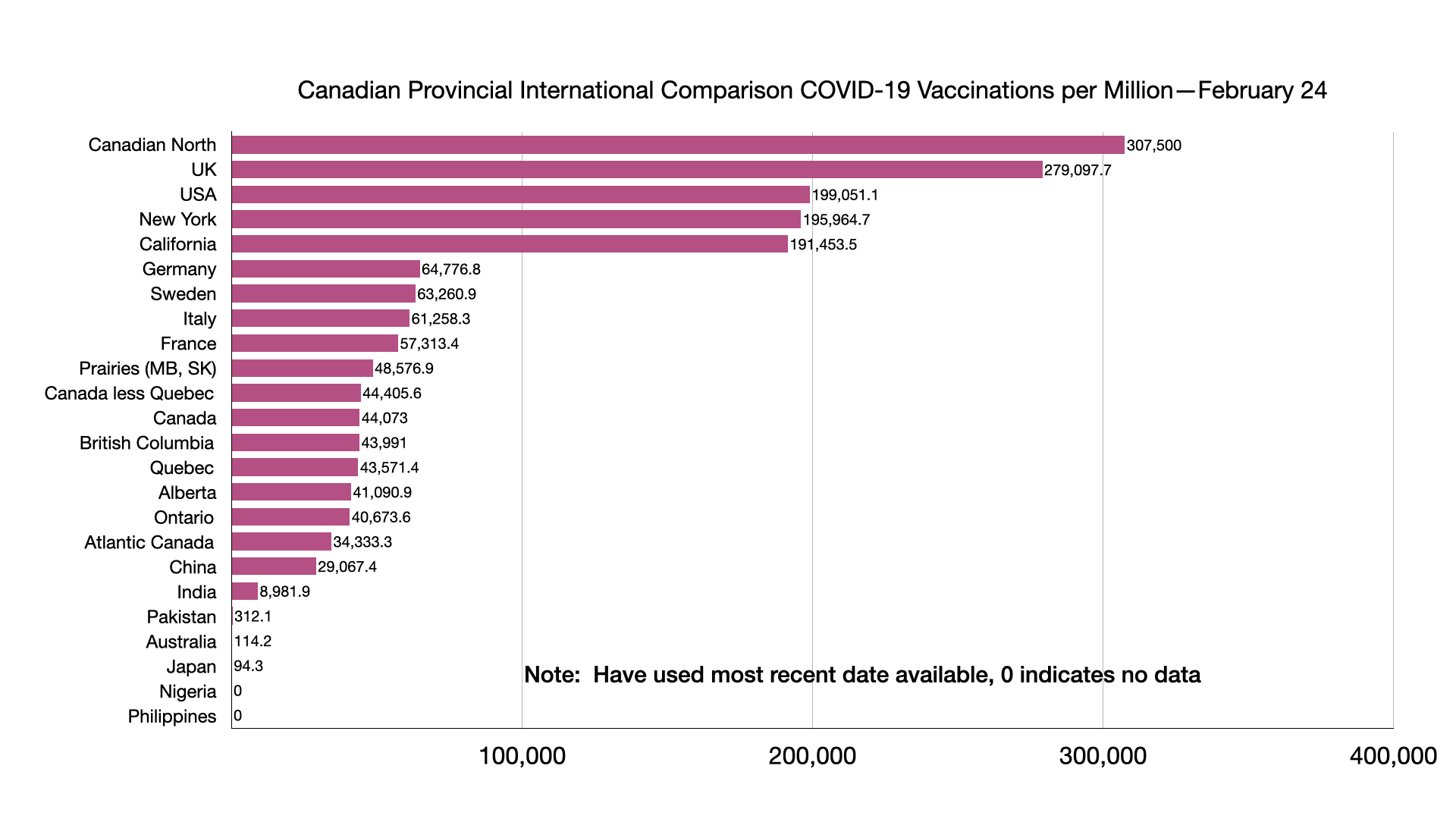
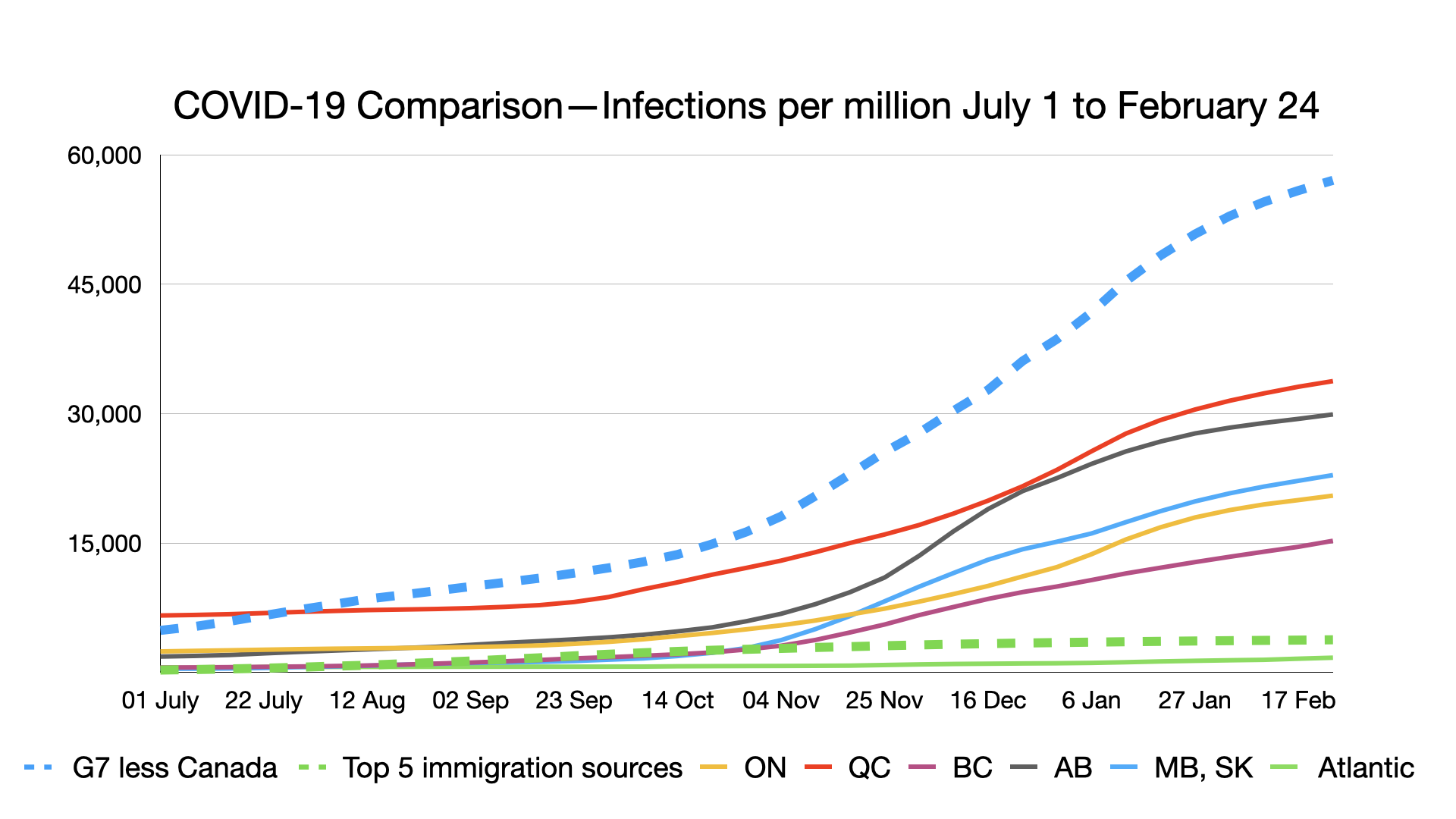
#COVID-19: Comparing provinces with other countries 24 February Update

The latest charts, compiled 24 February.

Vaccinations: The gap between all G7 countries save Japan continues to grow with the effect of increased deliveries to Canada not yet apparent.

Trendline charts

Infections per million: The overall trend of a flattening curve is seen in G7 countries and most provinces save for the Prairies and British Columbia.

Deaths per million: Most Canadian provinces continue to flatten the curve, Quebec most dramatically. Overall G7 death rate will likely surpass Quebec.

Vaccinations per million: Gap between G7 and Canada, driven not only by the UK and USA, remains largely unchanged.

Weekly

Infections per million: No relative change.

Deaths per million: California ahead of Sweden and Quebec, Sweden ahead of Quebec 

Omidvar: The diversity deficit in the boardrooms of Canada’s charities

Good op-ed and practical recommendations by Senator Omidvar:

As we celebrate Black History Month, we continue to hear loud calls for more diversity in newsrooms across the country, in corporations, and in Parliament. Canadians have correctly pointed out a diversity gap in all those power structures.

But the diversity deficit doesn’t end there; it’s also in the boardrooms of charities and non-profits. It’s always been an open secret that, despite the amazing work it does to help Canadians from all backgrounds, the sector’s leadership wasn’t that diverse.

In June last year, I issued an open letter challenging charities and non-profits to take a hard look at themselves, and ask what they could do to increase diversity in the sector. Many heard my call and wanted to do more. The first step was getting data.

After learning about my challenge, Statistics Canada, along with sector leaders, designed a survey to provide the first-ever snapshot of diversity in governance. The recently released survey found that, outside of gender, the boards of charities were not yet inclusive of Indigenous peoples, racial minorities, LGBTQ2+, and the disabled.

From Dec. 4, 2020, to Jan. 18, 2021, 8,835 people completed the survey. Among them, 14 per cent identified as immigrants to Canada; 11 per cent said they belonged to a visible-minority group; eight per cent identified as LGBTQ2+; six per cent said they had a disability; and three per cent identified as First Nations, Metis, or Inuit.

Readers may well ask: Why does it matter who sits on the boards, as long as people receive their services? It matters, because the boards of charities set the course, decide on priorities, determine how money gets allocated and spent, and approve institutional policies ranging from hiring to procurement, from harassment to promotions.

Charities are not an insignificant part of our society. More than 85,000 charities and 85,000 non-profits are registered in Canada. Before the pandemic, they employed close to two millions Canadians and contributed eight per cent to the GDP. What they do and how they do it matters.

Now there’s some hard evidence to stand on, we have a clear way forward. Both the government and the sector must respond.

The government must collect diversity data every year. The StatCan survey is a start, but no further studies have been planned. For the sake of certainty, the Canada Revenue Agency should include questions about diversity on boards of directors on the T3010 and the T1044 tax forms.

This way, the data could be fulsome, disaggregated, and provide an accurate picture of diversity in the sector every year. Based on clear, ongoing evidence, the country and the sector could see if progress is being made.

The government should also compel the sector to disclose its diversity plans, as it did with corporations under Bill C-25. Only 30 per cent of the survey participants said their organization had a diversity plan. That is unacceptable, and the government should require that this information be made public.

I’m encouraged that the sector responded to the survey by saying, “(These data are) an important opportunity for us to look critically at who is at the table and who has decision-making power in our organizations.” Now that the evidence is clear, it needs to take concrete action.

First, charities and non-profits must proactively create diversity plans and publish them for their members and Canadians to see; they mustn’t wait for the government to compel them. Second, the plans should include diversity targets to increase the representation of under-represented groups on boards and in senior management. Last, they should convene a sector-wide conversation about race, racism, and diversity.

If we’re truly determined to stamp out racism, we need all sectors to step up to the plate. Charities and non-profits do so much good for Canadians. Now is the time for them to look inward, be intentional, and truly reflect the diversity of Canada.

Source: The diversity deficit in the boardrooms of Canada’s charities

Thousands of asylum seekers stuck at home as work permit approvals slow during pandemic

IRCC operational difficulties:

Marius Tapé is bored, restless and frustrated.

The engineer arrived in Canada from the Ivory Coast in July with his teenage daughter, joining his wife and three other children who had already settled in Granby, Que.

Tapé says his family fled the Ivory Coast after he and his wife were attacked for his political affiliation. They are trying to start a new life here, but it’s been tough.

Source: Thousands of asylum seekers stuck at home as work permit approvals slow during pandemic

Normalizing diversity in newsrooms is how we’ll tackle racial equity in the media

Some good practical suggestions:

I grew up in a radio station – specifically, the first Chinese-language radio station in Vancouver. It was run by my parents who saw demand turn their hour-long volunteer program in the 1970s into a full-fledged media business. My mother set up office dividers to create a play space for me at the station while she produced programs like my dad’s weekly phone-in talk show.

Over the 25 years my parents worked in broadcasting, non-Chinese-Canadian politicians, public service agencies, businesses and local celebrities realized that Cantonese and Mandarin programming was a valuable conduit to a captive audience: new Canadians who could vote, influence their social circles and buy things. These authority figures whom mainstream media had to chase down were knocking on the doors, trying to get time and attention on a Chinese-language radio station’s airwaves.

Years later, when HuffPost Canada hired me as an editor, I walked into a news operation where more than 50 per cent of the staff were people of colour, including my boss and his boss. When it came to coverage of certain communities of colour, story meetings and staff pitches started from a place of understanding because we were part of these very communities. The HuffPost Canada team once pursued a story idea that some people may have interpreted as a complaint about WestJet baggage fees, but our newsroom recognized immediately as a potentially discriminatory policy against the practice of remittance, which is commonly used by immigrant families to send money or items to their countries of origin.

Needless to say, I was privileged to be immersed in unique media environments where the norm was people of colour leading editorial, business and hiring decisions; where “others” were re-situated as the centre of stories; and where an authentic connection to the audience was rewarded with engagement and revenue. I’m well aware it’s a rare experience.

A demographic survey of newsroom staff at Canadian newspapers in 2004 found that 3.4 per cent were non-white, even though 16.7 per cent of Canada’s population identified themselves as Indigenous or a member of a visible minority group at the time. Since then, there’s been scant research into Canadian newsroom diversity, partly because few media operations here have been willing to collect or share that data with researchers. (The Canadian Association of Journalists launched a newsroom diversity survey in November 2020, and responses are still being collected. CBC/Radio-Canada, which is mandated to report its staff demographics, said in 2020 that 14.1 per cent of its overall workforce of 7,600 – including non-editorial staff – identifies as a visible minority and 2.1 per cent as Indigenous. A breakdown of the 1,900 English-service news staff is not available.)

Along with the ongoing charges that Canada’s mainstream newsrooms and their coverageare not truly representative of the country’s racial (and I’d also argue geographic and class) diversity, there’s been discussion about the real and perceived barriers that hinder easy progress: the general decline of media revenue and jobs, a lack of qualified BIPOC journalists, systemic racism and unconscious bias.

Solutions that have already been proposed – independent reviews, unconscious-bias training, mentorship programs, scholarships and fellowships, targeted hiring percentages – are noble and welcome. But they’re also generally short-term initiatives. Unconscious-bias training, for example, may unlock some deep conversations and self-reflection, but it’s over in a day or two.

Normalizing diversity in all facets of newsroom operations is a focused way to build the critical mass necessary to have any chance of tackling racial inequity in Canadian media, and to create the audience connections that are required for its survival. Achieving racial equity in journalistic content doesn’t have to be costly, but it does require an evolution in how news is defined, and in who is involved in that process.

A diversity of experiences that comes with a diverse staff tends to elicit more robust conversations that lead to more unique story ideas.

For example, the story meeting is a hallmark of most newsrooms, and what’s defined as the day’s “news” depends on the makeup of the people debating it. If most of them spent the weekend at a cottage, for example, frustrating highway construction delays might be top of mind. But is that truly reflective of what the audience cares about? A diversity of experiences that comes with a diverse staff tends to elicit more robust conversations that lead to more unique story ideas.

On the issue of hiring, experts estimate that 70 per cent of jobs are filled through networking; in other words, “friends and acquaintances hiring other trusted friends and acquaintances,” Matt Youngquist, the president of Career Horizons, said on NPR. BIPOC journalists certainly bring those kinds of contacts, but there’s also nothing stopping current senior leaders from expanding their own networks. I’ve been to dozens of journalism mixers, panels and events focused on diversity and attended by talented BIPOC journalists and promising students, but I rarely see white newsroom leaders who have hiring influence show up to make some new connections. It’s not the responsibility of a diversity and inclusion committee or BIPOC staff to hand over their contacts list.

I’ve been to dozens of journalism mixers, panels and events focused on diversity and attended by talented BIPOC journalists and promising students, but I rarely see white newsroom leaders who have hiring influence show up to make some new connections.

Of course, creating an environment where interesting ideas can surface means moving the editorial lens from a white-majority focus to an inclusive one. Which audience are you framing this for? Who is being left out and why? And how can we shift them to the centre? Again, this is not solely the realm of BIPOC staff, but of all newsroom staff.

CBC News, where I work now, is piloting a project to track diversity in our content. Early data from one show confirms the tendency to speak to a racialized person about racialized issues, rather than interviewing someone with a strong point of view or experience who happens to be BIPOC.

Put another way, instead of contacting an imam only when his mosque is vandalized or a Black business owner only to discuss racism, ask them for their thoughts on tax increases or the NHL season restarting during the pandemic to broaden how the audience sees themselves and to ensure the lived experiences of these communities are reflected back to them.

As this kind of news-gathering approach becomes status quo, the perspectives and stories that flow into the wider media landscape can then create more trust and support for the industry as a whole.

Source: Normalizing diversity in newsrooms is how we’ll tackle racial equity in the media

Biden DHS Scraps Trump Administration’s Longer, More Difficult Citizenship Test

Expected:

The Department of Homeland Security is discarding a new citizenship test that just went into effect in December, reverting back to an older version after the Trump Administration’s test was blasted for allegedly containing conservative biases.

A new citizenship test, which took effect on December 1, upped the question pool for naturalization candidates from 100 to 128 questions and required 12 out of 20 questions randomly assigned to be answered correctly, up from 6 out of 10.

The test was also blasted for its content, with five questions in the pool referring to the Federalist Papers—a favorite topic among conservatives—with only two questions about the civil rights movement and three about women’s suffrage, for example.

Those who file for naturalization after March 1 will be given the 2008 test the Biden Administration is reverting to, while those who filed between December 1 and March 1 will be given the option of taking either the 2020 or 2008 version.

BIG NUMBER

Around 2,500. That’s how many comments from the public U.S. Citizenship and Immigration Services received about the 2020 changes.

CRUCIAL QUOTE

“Multiple commenters noted that there was little advance notice before implementation of the 2020 civics test, which raised concerns about limited time for study and preparation of training materials and resources,” the Department of Homeland Security said in its policy change announcement Monday.

KEY BACKGROUND

The Trump Administration was known for its tough stance against immigration into the U.S., whether the immigration was legal or not. One of Trump’s signature campaign promises was the construction of a wall along the southern border with Mexico, which was never completed, and his administration became notorious for unwavering enforcement of family separation policies aimed at combating illegal immigration. The Trump Administration also curbed legal access for noncitizens to work in the U.S., tightening the rules around H-1B visas. The Administration made numerous policy changes committed to enforcing what it touted as traditional American values, but what critics denounced as pushing conservative views. One of Trump’s final acts was creating the 1776 Commission to promote “patriotic education” in schools, which was almost immediately zapped by President Joe Biden.

WHAT TO WATCH FOR

Democrats have proposed an immigration bill that could give around 11 million undocumented immigrants U.S. citizenship through an eight-year process, but the bill faces a difficult path of passing through the 50-50 Senate.

Source: Biden DHS Scraps Trump Administration’s Longer, More Difficult Citizenship Test

Why the Canadian government must review its immigration policy

My latest:

Immigration can be a politically charged topic but the beauty of economics is that there is no arguing with the numbers. Canada’s birth rate has not kept up with an ageing population and so its future prosperity depends significantly on attracting migrants to fill jobs and pay pension contributions.

Immigration is less emotionally charged in Canada compared to most countries, with public debate and discussion focussed more on the specifics of selection criteria and priorities than on fundamental questioning of immigration.

The Canadian government continues to prioritise skills that don’t fully reflect the reality of the country’s needs – which has been laid bare by COVID-19.

Last October, when hopes were high of a flattened curve, the government published an immigration plan for the coming years. The target was to admit 401,000 migrants in 2021 to catch up on the 50% drop in immigration in 2020, with an overall emphasis on skilled economic immigrants.

Yet, this pandemic – which has proven to be far more of a long-term crisis than anticipated – has shown which workers Canadian society actually depends on. Low-paid grocery staff, truck drivers and healthcare support workers were deemed essential, even though they are not prioritised in immigration plans or rewarded monetarily.

The pandemic bottleneck

Between April and December last year, permanent residencyapplications and admissions were down by about 60% compared with the previous year (from 275,000 to 115,000 admissions).

During the same period, the total number of temporary workers residing in Canada fell by 6.3% (from 272,000 to 254,000), except in the agriculture sector where it dropped by 1.5 % (from 45,000 to 44,000). In this period, only 149,000 foreign students applied for study permits – a 59% decrease compared with 364,000 the previous year.

Newcomers are still subject to travel restrictions that are likely to remain in place until this summer, given the ongoing waves of infections and the fact that most people won’t be vaccinated until early autumn. So all of this will create a bottleneck for welcoming in workers that the country urgently needs.

COVID has shown which workers Canada depends on. Low-paid grocery staff, truck drivers and healthcare support workers were deemed essential, even though they are not prioritised in immigration plans or rewarded monetarily.

The reality is that the government’s immigration target levels set last year are no longer realistic for this year and possibly won’t be for next year either.

In fact, maintaining these target levels is questionable as to do so may undermine the credibility of the government’s whole immigration plan.

“Immigrants with higher education levels benefit most from services designed to support economic integration – putting the lower educated at further disadvantage.”

While selection criteria and settlement programming can be adjusted to improve economic outcomes, or at least attenuate the impact of the pandemic-induced downturn, this will be harder to achieve given that the downturn is likely to continue well into the year.

In 2018, the government department Immigration, Refugees and Citizenship Canada evaluated the settlement programme and highlighted several areas for improvement. These included the labour market and the services that support immigrants’ economic integration. The evaluation showed that immigrants with higher education levels or more work experience were benefitting most from these services – further deepening the disadvantage that the lower educated face.

Shouldn’t such programmes serve the essential workers who need this support more? And shouldn’t settlement agencies better support those who are, as John Shield explained, “less digitally adept, lacking in technology and with more limited official language abilities?”

Immigration policies are selective by design: who can obtain permanent residency; who can only stay on a temporary basis; and what are the criteria they have to meet (e.g. language knowledge, education, age, professional qualifications).

Policy steeped in inequality

These criteria invariably raise equality issues between permanent and temporary residents. This can be seen most clearly in the realisation that lower-skilled workers are deemed ‘essential’. These frontline workers are more exposed to COVID-19 than those able to work remotely yet are poorer.

Personal support and healthcare workers – mostly women and visible minorities – are vital to an increasingly ageing population yet remain under-appreciated. Many of these workers come from migrant backgrounds but aren’t supported in immigration policies.

Other inequalities exist in the ability to obtain permanent residency – it’s an easier process for those considered to be higher skilled and less so for those considered lower skilled.

Agricultural workers, given their crowded living conditions, should be prioritised for permanent residency. Some of this work is clearly seasonal, but many jobs, such as meat-packing, are not. This is where a more direct path to permanent residency would be appropriate.

One approach to improve equality in this area would be to draw from the live-in caregivers experience, whereby two years’ full-time work as a temporary resident provided a pathway to permanent residency in Canada. Why not apply this approach to any immigrant who has worked two years full-time?

Recession hits migrants hardest

The Canadian government has essentially adopted a Keynesian approach: more immigration means more demand and thus economic growth.

This approach considers growth only in terms of a country’s GDP, ignoring the more important GDP per capita that shows the total value of all the goods and services produced in a year, divided by the number of people living there. In this way it ignores the importance of equality among all, immigrants and citizens alike.

Yet it’s been proven from prior recessions that recent immigrants suffer the most in a downturn and some remain impacted in the long term.

This is why an increase in migration at this time could likely contribute to an increase in inequality over time, given poorer economic integration for those arriving during this downturn. The Canadian government has yet to adjust its policy though to address these important issues.

Source: https://www.opendemocracy.net/en/pandemic-border/why-canadian-government-must-review-its-immigration-policy/

Soh: Attacks on Asian-Americans reveal a strange racial double standard

While I agree that having heirarchies–ethnic, racial, religious etc–are unhelpful, my sense of Canadian media coverage is that anti-Asian attacks have received extensive and appropriate coverage as race-based attacks.

Not sure why the Globe would publish an op-ed focussed on the US without mentioning similarities and differences with Canada. :

The surveillance-camera video is horrifying to watch. In broad daylight, Vicha Ratanapakdee, an 84-year-old Thai man, was slammed to the ground while on a morning walk in San Francisco; he never regained consciousness. In Oakland, a man attacked a 91-year-old man, a 60-year-old man, and a 55-year-old woman in Chinatown. Nearly two dozen violent incidents in the area have been recorded in recent weeks.

These incidents are just part of a recent and unfortunate trend, particularly during the Lunar New Year. In a Pew Research Center study conducted last July, about 30 per cent of Asian-American adults said they have experienced discrimination because of their ethnicity or race since the pandemic began.

Former U.S. president Donald Trump’s rhetoric has been blamed for stoking anti-Chinese resentment. He repeatedly referenced the “China virus,” the “China plague” and the “Kung Flu” while in office, holding the country responsible for the pandemic.

And yet, as these crimes continue, there has been a failure to see these attacks as racially motivated. Mr. Ratanapakdee’s homicide, for instance, is not being prosecuted as a hate crime. It wasn’t until Hollywood actors spoke up that media attention was drawn to these incidents, with Daniel Wu and Daniel Dae Kim offering a US$25,000 reward for information. That led to the arrest of 28-year-old Yahya Muslim, who is not facing hate-crime charges.

Being level-headed about emotional subjects is never a bad approach, as it prevents us from jumping to conclusions about unclear events or any legal concerns. But in this case, what is the likelihood that multiple victims, targeted randomly, just happened to all be Asian? If an alarmingly high number of people belonging to another visible-minority group had been violently assaulted and murdered, would anyone doubt that the attacks were racially motivated?

It feels like a double standard. And it can feel, broadly speaking, as if racism against Asians is not taken as seriously as racism against other groups. Take, for example, a job listing posted by a Bay Area tech company recently, which explicitly sought “non-Asian” applicants. Or consider the debate on affirmative action sparked most recently by the case of Students for Fair Admissions versus Harvard; in 2019, a federal judge ruled against Asian-American applicants who believed they had been systematically discriminated against by university admissions officials, and who sought a race-neutral process.

That’s where it can feel like obsessions with race are erecting a bizarre racial hierarchy – one in which apparently only white perpetrators can commit racist or hateful acts, and one where discrimination against certain groups counts less or hurts less than discrimination against others.

Because the general economic success of Asian diasporic communities in Canada and the U.S. is dissonant with the narrative that societal white privilege limits and is hostile to visible minorities, we are too often stripped of any progressive clout afforded to “people of colour.” In the eyes of some, we are being recategorized as “white.” From this ideological view – one I disagree with – it isn’t possible to be racist toward white people.

Further complicating this lack of logic is the history of strained relationsbetween Asian and Black communities in the U.S., most notably between protesters and Korean business owners in the Rodney King riots. Asian-Americans have been long held up as an example of successful assimilation, and by doing so, they become used to dismiss the genuine concerns of Black Americans, pitting one group against another.

But protecting racial groups is not a zero-sum game; ensuring the safety of one does not need to come at the expense of another. We can identify racist acts while advocating that they should not be used to justify retaliatory harassment or prejudice against others.

Since the start of the pandemic, I’ve been asked whether I think claims of Sinophobia have been overblown to forward an agenda of race-baiting. In short: No. Because I am often mistaken as having a different Asian ethnicity, it’s been amusing and sad to see what some will say in my presence, only to furiously backpedal their opinions once I tell them that I’m a Canadian of Malaysian-Chinese descent.

For those who remain skeptical, I’d ask how they would feel if people who shared their racial ancestry were being violently targeted and terrorized, and then made to feel that their concerns weren’t legitimate, especially during a time of the year that would normally be celebratory. Acknowledging where the coronavirus originated can be done without blaming or discriminating more widely against people of Asian descent.

Source: https://www.theglobeandmail.com/opinion/article-attacks-on-asian-americans-reveal-a-strange-racial-double-standard/

Delacourt: ‘The nudge unit’: Ottawa’s behavioural-science team investigates how Canadians feel about vaccines, public health and who to trust

Innovative and appropriate:

Vaccines are one miracle of science in this pandemic. But another scientific experiment has also produced surprisingly speedy and widespread results over the past year. It happened in the realm of behaviour science — and ordinary citizens were the laboratory subjects. 

One year ago, few people would have believed that science would come up with a vaccine, ready for mass immunization around the world, by the start of 2021. 

But who would have also predicted that citizens could be persuaded to turn their lives upside down, wear masks and isolate themselves from their families and friends for months on end? 

“I know we’re asking a lot,” Prime Minister Justin Trudeau said in early April, when no one knew just how much COVID-19 would force Canadians into behaviour change on a grand scale. “A lot” is an understatement: not since wartime has the government had to request this much of the citizenry for so long. 

Yet while the government’s medical scientists have been front and centre on the public stage almost every day since last March, the behavioural scientists have mostly been operating under the radar. If you know where to look, though, evidence of the behaviour-nudging team keeps peeking out under all those public proclamations from Canada’s COVID-19 crisis managers. 

When Trudeau and the premiers use their podiums to calm fears or tell hard truths about the pandemic, for example, their words don’t just come from hunch or political instincts. Reams of behavioural data is being collected by government throughout the pandemic, on everything from people’s general emotions about COVID-19 to their willingness to get vaccinated. 

Dr. Theresa Tam, Canada’s chief public health officer, spoke earlier this month about the problem of vaccine hesitancy in this country and what the government knows about it. It was one of the few times that public officials have made direct reference to the behaviour-studying unit inside government. 

“Some of the studies are actually carried out by the Privy Council Office, where there is a behavioural insight team,” Tam said. “We do know that the intention for Canadians to get the vaccine is actually quite high and I think has improved since we started the vaccine campaign itself.” 

Tam went on to explain how people’s views on vaccines are shaped by where they get their information. Since you are reading this story in a mainstream news medium, you might be interested to know that you’re more likely to feel positive about getting immunized. Consumers of traditional information sources tend to have more trust in vaccines and what the government is saying about them. Conversely, if you’re the kind of person who gets your news from social media, you’re likely more wary of vaccines. 

So the government is doing some fine-tuning of its communication channels, Tam explained at this Feb. 5 briefing. “We know that we have to work with the internet and social media companies and that has been happening with Facebook, Google, YouTube and others,” she said. 

That behavioural-insight team Tam mentioned is actually called the “impact and innovation unit” of government, which was set up within the PCO in 2017, meant for more low-key work than it has been doing, now that the pandemic suddenly created an urgent need for its insights into how citizens behave.

Headed up by veteran public servant Rodney Ghali, this group has kept its eye on the huge social-science experiment of the COVID-19 crisis. (Ontario too has a behavioural insights unit, which has been working closely with the federal government over the course of the pandemic.) 

In normal times, this federal team would have been researching questions such as what would motivate people to invest more in RRSPs or cut down on food waste. 

Its members prefer to remain low-profile — a couple of them talked to me for this article, but on condition that they would not be named or quoted.

Results of the team’s research are quite public, though — anyone can check them out on their web page, along with reports of some communication campaigns they’ve tested on the population and what the ads were supposed to achieve. The most visible ad — one Canadians may remember — is one that depicted COVID-19 as a green cloud, spreading noxiously over the buttons in an elevator. 

The behaviour being studied by the government has shifted as the pandemic has dragged on, naturally. In the beginning, the research focused a lot on compliance with public health measures, what it would take to get people to wear masks, and so on. 

Nowadays, the main concern is with vaccines and whether enough people will take them to achieve herd immunity. Medical science handles the immunity part of that equation — behavioural scientists have to build the herd. For that to happen, the government has to know where and how to administer the nudging. 

“Nudge” is the operative word. Britain blazed the trail for the use of behavioural insights in government back in 2010 when it set up a team inside the cabinet office nicknamed ‘the nudge unit.” The name comes from the hugely influential book “Nudge” by Richard Thaler and Cass Sunstein, which laid out how people could be influenced to make better choices in their lives. 

Sunstein is now the chair of an advisory group for the World Health Organization, set up specifically to use behavioural insights in COVID-19 management. And that leads us right back to Canada, which has taken the WHO’s tool for tapping behavioural insights in the pandemic and put it to comprehensive use in this country for nearly a year now. According to officials inside the behaviour unit, Canada has made the most comprehensive use of the WHO tool, creating a chronicle of behavioural ups and downs throughout the COVID-19 crisis. 

Since last April, a static group of about 2,000 Canadians — chosen randomly but in proportion to statistical, demographic considerations — have been taking part in a rolling series of surveys, plumbing their attitudes and behaviour on all things pandemic-related. The process is called “COVID-19 snapshot monitoring,” which has been shortened to COSMO.

In the early months, the COSMO respondents were a dreary lot, reporting that they believed things would get worse before they got better. But they were keen on vaccines — keener than they are now, in fact. Last April, more than 70 per cent of respondents were interested in a vaccine if it was either safe or effective. By the end of 2020, that enthusiasm had dropped to the low and mid-sixties. 

Herd immunity is generally accepted to be around 70 per cent, so governments — with the help of the behaviour scientists — need to get those numbers up again. 

The COSMO group has also been asked regularly about which people they trust to provide information — perhaps one of the more important pieces of insight sought by government in this pandemic. If you’re going to nudge the population in one direction or another, after all, it’s crucial to know who should do the nudging. 

Repeated waves of data on this issue show that public health officials rank high on the trusted list, whereas politicians and the news media rank lower. This would explain why Tam and her provincial colleagues have become household names over the past year (the provincial public-health chiefs have actually been rated slightly higher for trust than their federal counterparts). 

On top of vaccine hesitancy, the biggest concern right now for the behaviour monitors is simple COVID-19 fatigue. For almost a year now, governments have been asking, imploring, begging and arguing for citizens to keep large areas of their lives on hold. The same tools that worked last April, when Trudeau was “asking a lot,” may not keep working over the long term. 

In December, the COSMO participants started being asked about pandemic fatigue. Here’s what the behaviour unit learned: “Adherence to key protective behaviours remains reportedly high, and many participants are not getting tired of having to wash their hands frequently, physical distancing or wearing a mask. However, most participants (80 per cent) indicate they are getting tired or somewhat tired of having to avoid gathering with loved ones.”

It’s probably safe to assume that the weariness has only grown since then, but the results of more recent surveys haven’t yet gone online. 

Whenever the pandemic is over, most Canadians may be too busy getting back to their normal lives to reflect on the massive social-science experiment that has taken place over the planet this past year. But that radical change in people’s lives is the other great scientific achievement of COVID-19, one that may have given government important clues on how to modify citizens’ behaviour for other big global issues — such as climate change, for instance. 

“The behaviour and choices made by each and every one of us matter a great deal,” Tam said in a briefing earlier this year, which is why a small behavioural-science unit inside government suddenly became a big deal in 2020. 

Source: https://www.thestar.com/politics/political-opinion/2021/02/21/the-nudge-unit-ottawas-behavioural-science-team-investigates-how-canadians-feel-about-vaccines-public-health-and-who-to-trust.html