Proportion of women civil service leaders improves internationally – but only one G20 country [Canada] has achieved gender parity in top jobs

Of note. When I last looked at EX breakdowns a number of years ago, there was, as one would expect, greater representation at more junior levels (directors and DGs EX1-3) than at the ADM level (EX4-5):

Less than one in three senior civil servants across the governments of G20 countries are women, new research from Global Government Forum has found.

The latest Women Leaders Index found that only one G20 country – Canada – has reached gender parity in the top five grades of its public service (at 51.1%), and just four more are within 10 percentage points of doing so.

However, there has been improvement – the G20 mean (29.3%) has increased by 1.6 percentage points since our last Index in 2020 and by 6.0 points since our first 10 years ago.

The long-running Women Leaders Index is a league table ranking G20, EU and OECD countries on the proportion of women in senior roles within their national civil services. As well as tracking progress over time, it includes comparisons with women in government, women politicians, and women on private sector boards, alongside interviews with public service leaders in two of the top performing countries – Canada and South Africa.    

Those leading the G20 pack behind Canada, are Australia and South Africa – which tie in second place – the UK, Brazil, and Mexico and the European Commission, which tie in fifth place. Mexico has increased the representation of women in civil service leadership positions the most of all G20 nations, by a dramatic 24.3 percentage points over the last decade, while South Africa has made the most improvement in the two years since the last Index – a jump of 7.2 points.

Bringing up the G20 rear are Saudi Arabia, Japan, South Korea, China and Turkey, in which representation of women in the senior civil service is between 2.5% and 11.7%.

Countries including Germany, Italy, France and the US reside in the middle of the G20 ranking, with women accounting for between 32.0% and 38.0% of top roles in each.   https://datawrapper.dwcdn.net/rr33B/4/

EU and OECD countries faring better than those in the G20  

Though the G20 has traditionally been the main ranking in the Women Leaders Index, it also analyses representation of women in the highest grades of national civil services in EU and OECD countries.

The Index found that overall, EU and OECD countries are doing better on representation of women in senior positions in government departments and agencies – for which the mean proportions are 42.7% and 36.2% respectively – than those in the G20*.

The mean across the European Union’s member states has improved by 0.8 percentage points since 2020, and by 7.5 points since 2012, with nine of the EU’s 27 member states having reached gender parity in the top two tiers of their civil services. Bulgaria tops this ranking, with women accounting for 59.5% of those running government departments, followed by Croatia, Slovenia, Greece, Finland, Latvia, Romania, Lithuania, and Portugal.https://datawrapper.dwcdn.net/GU3A7/4/

Read our Canada perspective from seasoned public service leader Yazmine Laroche, including transferable lessons on how to make progress towards gender parity

Croatia has made the most improvement of all EU nations since 2012 – a rise of 21.1 percentage points, while Bulgaria has made the greatest improvement since the 2020 Index, of 7.8 points.

Latvia, where women account for 56% of the top tiers of its civil service, tops the OECD ranking, while six more – Sweden, Iceland, New Zealand, Greece, Canada and Slovakia – have reached or exceeded gender parity.https://datawrapper.dwcdn.net/wpOb5/2/

Regression in some countries – but public services performing better overall

While most G20, EU and OECD countries have improved the representation of women in the highest grades of their civil services in recent years, some have regressed.

The G20 data shows that in Russia and Argentina there are fewer officials in senior positions now than in 2020, while China, Turkey and South Korea have regressed since 2012.  

Six EU countries – Sweden, Poland, Cyprus, Italy, the Czech Republic and Luxembourg – perform worse in terms of representation of women in the top two tiers of the civil service since 2020, while Hungary is worse off now than 10 years ago.  

However, on a positive note, when looking at the means across the G20, EU and OECD, it is clear that civil services are doing better on representation of women in leadership roles compared with ministerial cabinet appointments, elected politicians and the boards of publicly-listed private sector companies.

Read our South Africa perspective from Zukiswa Mqolomba, deputy chairperson of the country’s Public Service Commission, on why making real and positive change isn’t just a numbers game

“Many governments have made impressive gains on representation of women in leadership positions in recent years as a result of concerted efforts to make change and should be applauded,” said Mia Hunt, author of the Women Leaders Index report and editor of globalgovernmentforum.com. 

“However, while it is widely accepted that civil services with diverse workforces that resemble the populations they serve turn out better policies and better outcomes for citizens, the mean proportion of women in top civil service positions across G20 nations is still less than 30%. Clearly, there is much more work to be done.

“We hope this Index gives the countries that have made progress the recognition they deserve, whilst serving as a wake-up call for those most in need of improvement. Let us see what’s changed when we publish the next in this Women Leaders Index series.”

*Please note that grade definitions vary between the G20, EU and OECD datasets. Caution should be exercised when making comparisons – see methodology here.

Source: Proportion of women civil service leaders improves internationally – but only one G20 country has achieved gender parity in top jobs

The public service’s biggest disruption in decades : hybrid work

Happy I’m retired. That being said, I tried to work from home one day every week or two weeks to prepare presentations or thought pieces, away from the transactional files (but of course remaining available as need be).

In some cases, such as coordination with regions, being virtual placed NHQ on the same footing and improved engagement compared to the tedious phone conference calls, according to some colleagues and friends who worked during the pandemic.

But understand employee preference as well as political and management concerns regarding appearances, after all, those who can work from home are privileged compared to those in front-line service, whether public or private sector:

The return-to-work pushback of Canada’s public servants could lay the groundwork for the most radical change in the federal government’s relationship with its employees in a century.

The resistance reveals a grassroots shift taking place in the public service that’s all about power and control.

The public service is one of the most hierarchical employers in the country. It has operated the same way for decades. Management decides everything about staffing; how and where people work. Employees have little choice but to toe the line.

The pandemic that sent public servants home to work challenged that hierarchy by giving federal employees a taste of controlling their time and job location – factors that had been largely out of their hands.

After more than two years of working remotely, public servants like it and resent the idea of giving up the newfound control of time. They feel more productive, enjoy better work-life balance, have more child-care options. It’s also cheaper: no commuting, no parking, no restaurant or takeout lunches.

And for the first time, they had control of their space. No more cubicles. Hundreds took jobs without having to move to Ottawa and many others picked up and moved around the country.

But that flexibility has come with a price, and no city has felt the pinch like Ottawa, the nation’s capital and home to most departmental headquarters. The Ottawa Board of Trade estimates one-quarter of the city’s workforce worked downtown pre-pandemic and 55 per cent of those downtown workers were public servants sent home, leaving ghost offices behind. (A CBC radio broadcast on Aug. 25 talked about the topic.)

It also forced the biggest rethink of the future of work and the government’s relationship with employees as it officially shifted to a hybrid workforce this fall.

It will not be an easy ride.

Lori Turnbull, director of the school of public administration at Dalhousie University, called the shift to a hybrid workforce the most disruptive change in decades.

The public service has had its share of disruptions over the years – unionization and collective bargaining in the 1960s, massive downsizings and restructuring in the 1990s, the Y2K bug, 9/11, even the disastrous Phoenix pay system. This, however, could be as seismic a shift for the employer-employee relationship as when patronage was abolished a century ago and replaced with the merit system for the hiring and promotions of public servants.

“As far as disruptions go, this is the biggest one in decades, if not ever, because it’s a completely different ballgame when it comes to relationships, and how people manage their lives,” Turnbull said.

Turnbull said remote work gave workers flexibility and the value of that newfound freedom flowed more to their personal lives than their work lives. The government can’t expect to “put that genie back in the bottle,” without a fight, she said.

“Now, people, even the lowest rungs of the organization and seen as the least powerful, were given the sense of autonomy about their time and space and that is having fundamental repercussions on how the organization and management works,” said Turnbull.

The big question is whether the return-to-office will end this flexibility or will it spark worker rebellion? Before the pandemic, the thought of working only two days at the office was beyond the wildest of dreams. Today, it’s not flexible enough.

Public servants are openly voicing their displeasure about returning to the office. A growing number are mobilizing internally, speaking out on social media, signing petitions and writing letters to MPs. Some are resorting to access to information requests to get to the bottom of the decision to send them back.

Employees who want to work remotely feel the return-to-work guidelines are arbitrary and imposed top-down from management with no rationale. They feel unheard and that there is no evidence supporting why employees have to spend specified days in the office unless to satisfy political pressures, said one union official who is not authorized to speak publicly.

“If there’s a need to have public servants in the office, what is it?” the official said. “What we’re seeing right now is people being called back for the sake of being called back for political reasons.”

It will be a top issue at the bargaining table. Unions are hoping to enshrine remote work provisions into the collective agreement to give employees more say in determining where they work. Just as important is inflation, and unions, which are emboldened by a global talent shortage, are asking for big raises.

The unions’ long game is that employees will permanently have the option to work remotely. That’s a big and controversial change, however, which would mean rewriting rules, policies and collective agreements. Not to mention that Treasury Board President Mona Fortier has already said working at home is a privilege, not a right. She insists Treasury Board won’t give up its power to organize the workplace, including where employees work.

Unions hope to find some negotiating room around where public servants work. They also want less arbitrary decisions about who can work from home and what they can do remotely. That could mean explanations in writing beyond the blanket “operational requirements” that workers are hearing.

Turnbull warns a workforce feeling management exercises too much control over their time can breed mistrust and resentment that undermines productivity.

But flexibility is unknown territory for the government. More than any other employer, it has little experience with flexible work models. A study by Jeffrey Roy showed that the senior echelons are most comfortable with the traditional in-person office model – from ministers’ offices to deputy ministers and central agencies.

Flexibility on where people work opens a pandora’s box of issues. What happens to the value of work? How does it affect the 7.5-hour work day, overtime and pay? How are employees accountable when they no longer report to the office? How to track productivity, performance or deal with discipline when working from home.

Meredith Thatcher, cofounder and workplace strategist at Agile Work Evolutions, said the unfolding workplace evolution will depend on the “maturity and skills of the individual managers and whether they have the trust of their employees.”

“It is a societal earthquake that has happened, and the fallout will be years to come,” she said. “Assuming everyone will just fall in line and return to the office either full-time or mandated time is naive. The world of the office has shifted on its axis and many executives have not figured that out yet.”

But Donald Savoie, a leading public administration expert at University of Moncton, argues there is a lot more at stake than flexibility. Back in 2003, Savoie wrote Breaking the Bargain, about the unravelling of the traditional bargain underpinning the relationship between politicians and public servants.

He says public servants also have a bargain undergirding their relationship with Canadians. The public is losing confidence in the public service and its ability to deliver services – crystalized by a summer of chaotic delays at airports and passport offices.

He said Canadians are discontent with government, and populist leaders like Pierre Poilievre and anti-institution protest groups are tapping into that mistrust. He said a public service griping about going back to the office is ripe for attack.

Many see public servants asking for the freedom of an independent contractor or entrepreneur to work when and where they want while keeping the job security, pay and benefits few other Canadians enjoy.

“My advice to federal public servants: think about the institution. Think of the public service, not just your self-interest. There’s something bigger at play here. It’s called protecting the institution that you’re being asked to serve. I think too many federal public servants have lost sight of that.”

And Turnbull said Privy Council Clerk Janice Charette, a head of the public service, bears a big responsibility for the institution. She’s out in front urging departments to get employees back to the office.

“The clerk has to worry about the reputation of the public service and the sense that they have been given too much flexibility and now we see services crumbling. Even if there’s no truth to that the perception, it’s something she has to worry about,” said Turnbull.

Source: The public service’s biggest disruption in decades : hybrid work

‘Be an ally’: Black public servants facing ‘trauma’ amid class action, says organizer

Thompson is an effective communicator and advocate.

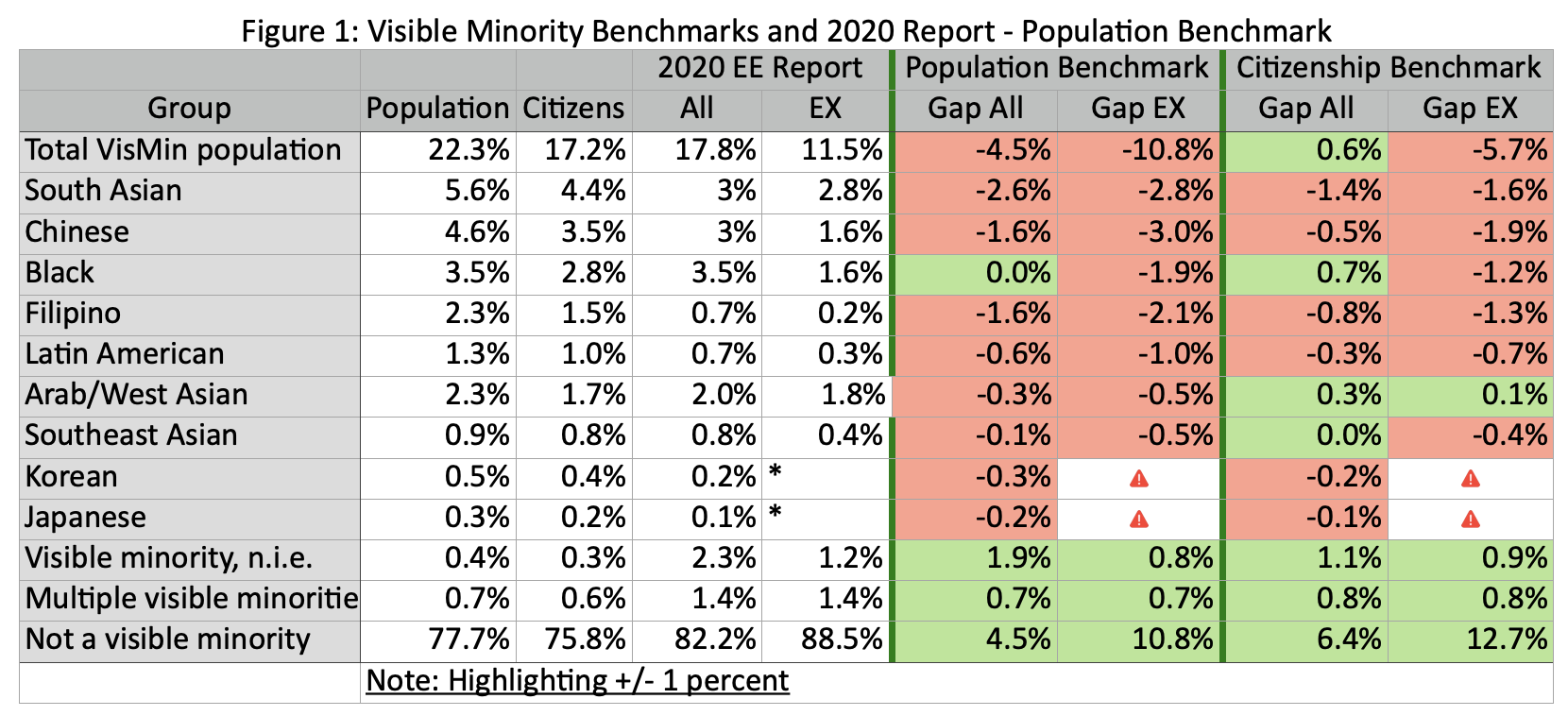
Unfortunately, the employment equity data for the public service does not indicate that Black public servants representation are disproportionately under-represented at the EX and other levels compared  to other visible minorities for the most part.

However, the public service employee survey does show higher perceptions of discrimination than most other visible minority groups.

One of the organizers behind the class action lawsuit filed against the federal government by Black public servants says he wants Canadians learning about the experiences of claimants in the case to “be an ally” amid a process that is causing “trauma” for those involved.

In an interview with The West Block‘s Mercedes Stephenson, Nicholas Marcus Thompson said the government is “speaking from both sides of its mouth” when it comes to squaring the treatment of claimants in the lawsuit in court with the comments officials make publicly about dismantling racism.

“They’re saying one thing publicly and they’re fighting Black workers in court,” he said, adding federal lawyers keep bringing forward motions “to delay the case.”

“The government has fully acknowledged that this issue exists in all of its institutions and that the pain and damage that it causes is real. And then it shows up in court fighting Black workers, forcing Black workers to recount the trauma that they’ve endured at the hands of the government for decades.”

The class action lawsuit filed last year alleges systemic discrimination by the government when it comes to hiring and promotional decisions in the federal public service, dating back decades.

Plaintiffs in the case are seeking $2.5 billion in compensation for lost income, opportunities, and lost pension values as a result of systemic discrimination that prevented qualified Black public servants from being promoted into higher paying and more senior jobs.

Federal public service pensions are calculated based on the averages of an individual’s highest earning years, meaning those who get paid less throughout their careers get smaller pensions when they retire.

“There has been a de facto practice of Black employee exclusion from hiring and promotion throughout the Public Service because of the permeation of systemic discrimination through Canada’s institutional structures,” the statement of claim says.

The statement of claim also says that equity measures taken to date have “merely masked the increasing disparity, exclusion and marginalization of Black Canadians” from equal opportunities in the public service, and that there remains a “pernicious” underrepresentation in the upper ranks.

Thompson said he wants to see the government come to the table and commit to working towards the solutions that plaintiffs say would help fix the problem, and to make legislative changes to the Employment Equity Act as well.

“We’re seeking to create a separate and distinct category for Black workers under the legislation to ensure that Black workers are not left behind when it comes to hiring and promotional opportunities,” he said. Thompson also added there needs to be a commission formed to track concrete progress on preventing future discrimination.

“Black people want to fully participate and they’re being denied that opportunity at the highest level and the largest employer in Canada,” he said.

“So listen to us. Be an ally and let’s work together because we want to make Canada a better place and to fully participate in Canada.”

Source: ‘Be an ally’: Black public servants facing ‘trauma’ amid class action, says organizer

Clerk Report to PM 2022 – Service Delivery Language [more candour required]

Like all government reports (save audits and evaluations), the Clerk report focuses on successes, not failures. Certainly, COVID financial support and vaccine procurement are right to be highlighted as overall successes, as are ongoing efforts to increase diversity and representation, as highlighted in the report and data tables.

But its characterization of how the government responded to Afghan refugees following the Taliban takeover presents a far more positive picture than warranted, to be diplomatic.

But looking ahead, curious to see how the recent failures of government service delivery (i.e., passports and immigration) will be treated in the 2023 report, given this 2022 commitment:

Deliver results for Canadians.

We have clearly shown the Public Service’s ability to step up and overcome every obstacle to get things done and deliver real results for Canadians. We have proven what we can do during times of crisis and we have learned much from this. But this has also disrupted our usual lines of work. Now, we must apply what we have learned to how we approach everything —from delivering core programs and services to responding to unexpected challenges. We must build on our enhanced capacity to deliver digitally while holding true to the importance of providing in-person support, to ensure every Canadian gets the service and results they need in a timely manner. Public servants should feel empowered to ask how things could be done better, and they should be supported in taking thoughtful risks in how we implement to achieve results for Canadians. The lessons we learned from the pandemic will help us get there.

Certainly, some honesty regarding the public service service delivery failings will be needed for the 2023 report’s (and Clerk’s) credibility.

To be mischievous, I redrafted this paragraph for the 2023 report to encourage drafters of next year’s report to be more candid regarding areas where the government had significant policy and program failures (“challenges” in bureaucratese):

Deliver results for Canadians – Lessons learned from program failures

We have clearly shown the Public Service’s (in) ability to step up and overcome every obstacle to get things done and (fail to) deliver real results for Canadians. We have proven what we can do during times of crisis (and what we cannot do) and we have learned much from this (particularly from failures in passport and immigration service delivery). But this has also disrupted our usual lines of work. Now, we must apply what we have learned (from successes and failures) to how we approach everything —from delivering core programs and services to responding to unexpected challenges. We must renew focus on service delivery in order to restore trust. We must build on our enhanced capacity to deliver digitally, including real time status updates and greater transparency, while holding true to the importance of providing in-person support (including reducing waiting times and lines), to ensure every Canadian gets the service and results they need in a timely manner. Public servants should feel empowered to ask how things could be done better (without penalty), and they should be supported in taking thoughtful (to be defined) risks in how we implement to achieve results for Canadians. The lessons we learned from the pandemic (service failures) will help us get there.

Source: 29th Annual Report to the Prime Minister on the Public Service of Canada

Myles: Le bilinguisme avant la réconciliation

A Quebec perspective on the government discussion draft on possibly exempting Indigenous Canadians from the public service bilingualism requirement:

Selon des informations obtenues par La Presse canadienne, de hauts fonctionnaires fédéraux étudient la possibilité d’accorder une exemption à l’exigence de bilinguisme à leurs employés qui parlent une langue autochtone, mais qui ne maîtrisent pas l’anglais ou le français. Aucune décision n’a été prise, mais le gouvernement Trudeau ferait mieux d’y penser deux fois avant de s’engager sur cette voie.

Une note obtenue par La Presse canadienne fait état de « tensions croissantes » au sein des fonctionnaires fédéraux autochtones qui ne maîtrisent pas les deux langues officielles du Canada. Environ 400 d’entre eux ont exprimé leur souhait d’obtenir une exemption générale aux exigences de bilinguisme dans la fonction publique fédérale. La Gouverneure générale, Mary Simon, a été citée en exemple par une sous-ministre à Patrimoine canadien. Mme Simon parle l’inuktitut et l’anglais, mais pas le français, une langue qu’elle a promis d’apprendre lors de sa nomination. À son sujet, l’heure des bilans est prématurée quoiqu’il soit permis de douter qu’elle puisse faire des progrès significatifs, à l’aube de ses 75 ans.

Le ministre des Relations Couronne-Autochtones, Marc Miller, a joué de prudence en commentant le sujet délicat de l’exemption de bilinguisme des fonctionnaires autochtones. « Quand on prend ce genre de décision, c’est presque toujours au détriment du français, a-t-il dit. Ce n’est pas quelque chose qu’une majorité de gens trouveront acceptable. »

Le ministre Miller a dit tout ce qu’il fallait pour prendre une décision éclairée. En matière de dualité linguistique, les assouplissements se font inévitablement au détriment du français. On tolère bien les juges unilingues anglophones à la Cour suprême, mais accepterait-on un juge unilingue francophone ? L’histoire de ce beau pays bilingue, au sein duquel une langue est plus officielle que l’autre, regorge d’exemples où le français est déconsidéré dans la prestation de services et de travail par les institutions fédérales.

Au nom de la réconciliation avec les Autochtones, le gouvernement Trudeau avait sans doute de bonnes raisons de faire de Mary Simon la première Gouverneure générale inuite dans l’histoire du Canada. Que dire de sa décision subséquente de nommer une lieutenante-gouverneure unilingue anglophone, Brenda Murphy, dans la seule province officiellement bilingue du pays, le Nouveau-Brunswick ? Encore là, l’inverse aurait été impensable. Pour couronner le tout, les libéraux de Justin Trudeau n’acceptent pas le jugement d’un tribunal du Nouveau-Brunswick qui a déclaré inconstitutionnel le processus de nomination de Mme Murphy, justement parce qu’elle ne maîtrisait pas le français. Ottawa a choisi de porter la cause en appel, si bien qu’il faut se questionner sur la valeur symbolique de tels gestes.

En nommant avec autant de désinvolture des unilingues anglophones à des postes clés de l’appareil étatique, le premier ministre, Justin Trudeau, libère les voix dissidentes qui se moquent de la Loi sur les langues officielles. À la moindre difficulté, « c’est le français qui prend le bord », fait remarquer le porte-parole du Bloc québécois en matière de langues officielles, Mario Beaulieu.

Malgré les nobles intentions et les boniments d’usage sur le bilinguisme du Canada, les francophones ne sont pas dupes de l’inégalité de rapports de force dans la fonction publique fédérale. Selon une compilation récente de Radio-Canada, les postes de sous-ministres et de sous-ministres associés sont occupés par des anglophones quatre fois sur cinq. Le poids des hauts fonctionnaires francophones (19 %) est inférieur à leur poids réel dans la population (23 %). Le bassin de fonctionnaires francophones (31 %) rend encore plus incompréhensible leur faible représentativité dans les postes d’influence.

Les conséquences ne surprendront guère. Une « insécurité linguistique » plombe l’usage du français dans les officines fédérales à Ottawa, à Gatineau et à Montréal. Pas moins de 44 % des fonctionnaires francophones sont mal à l’aise d’utiliser leur langue première sur les lieux de travail, par crainte d’être jugés, d’être mal compris par leurs supérieurs ou d’exiger des efforts de compréhension supplémentaires de leurs collègues anglophones. Le constat provient d’une source fiable : le Commissaire aux langues officielles du Canada. Voilà l’état de cette maison bilingue irréformable.

Les critiques rappelleront que les Autochtones sont encore plus sous-représentés que les francophones dans la fonction publique et que leur accorder une exemption est un moindre mal dans la perspective d’une réconciliation avec les peuples autochtones. La réconciliation, nous en sommes. Elle sera nettement plus féconde et durable si elle englobe les deux « peuples fondateurs » de jadis, aux côtés des Autochtones. Ceux-ci sont bien placés pour comprendre les risques et périls qui guettent les langues en situation de minorité. Ce n’est rien leur enlever que de maintenir les exigences de bilinguisme dans la fonction publique, quitte à leur donner du temps et du soutien pour qu’ils puissent avoir la possibilité de s’ouvrir au français avec la même générosité qu’à l’anglais.

Source: Le bilinguisme avant la réconciliation

Ottawa should offer Indigenous-language training, exemptions to public servants, memo says

Easier to see from a service perspective in certain localities where numbers warrant but does pose significant operational challenges. The risk of an exemption, of course, is that it may provoke further requests for exemptions:

Senior civil servants explored offering Indigenous-language training to federal employees and possible exemptions to those who already speak one from requiring fluency in both English and French, newly released documents show.

Deputy ministers from several departments discussed the issue last fall.

A memo, released to The Canadian Press under federal access-to-information laws, flagged a “growing tension” between official-language requirements and Indigenous languages.

Under Canada’s Official Languages Act, federal institutions must offer working environments for employees to communicate in both French and English, and offer services to Canadians in either language.

As such, communicating in both is expected for senior executives and there are a number of public-service jobs where bilingualism is mandatory. There is room, however, for an employee to take classes and learn French or English as a second language.

The memo issued last fall said a working group was held about making changes to the official-language requirements. It said some Indigenous public servants belonging to a network of around 400 who work for the federal government asserted the need for a “blanket exemption.”

“My own personal view is there are opportunities for exemption – if the individual speaks an Indigenous language,” Gina Wilson, a deputy minister who champions the needs of federal Indigenous public servants, wrote in an e-mail to colleagues last November.

“Our GG [Governor-General] is a good example.”

Inuk leader Mary Simon’s appointment in 2021 sparked a discussion – and some controversy – over bilingualism in Canada’s highest offices, given how Ms. Simon, the first Indigenous person named as Governor-General, spoke English and Inuktitut, but not French.

Ms. Simon, who was born in Kangiqsualujjuaq, in the Nunavik region of northern Quebec, said she attended a federal day school and wasn’t able to learn French.

She committed to doing so after her appointment and has been taking lessons, delivering some French remarks in public speeches.

Commissioner of official languages Raymond Théberge said more than 1,000 complaints about Ms. Simon’s lack of French were lodged with his office after Prime Minister Justin Trudeau named her to the role.

Language training has been identified as one of the issues preventing Indigenous employees in the federal public service from advancing in their careers.

A report authored by public servants around the celebration of Canada’s 150th anniversary recommended those who are Indigenous be exempt from official-language requirements and instead be provided with chances to learn the language of their community.

It’s unclear if Ottawa plans to move ahead on changes to language requirements, training or exemptions.

A spokeswoman for Crown-Indigenous-Relations and Northern Affairs Canada said both that ministry and Indigenous Services Canada “have no plans to offer departmentwide Indigenous language training,” noting employees have offered workshops in the past.

It said Indigenous employees are encouraged to talk to their managers about language training.

Crown-Indigenous Relations Minister Marc Miller, an anglophone who speaks French and is learning Mohawk, said in an interview that the idea of an exemption is a sensitive issue.

“Inevitably, when you have to make one of those decisions, it is more often than not, and almost always, at the expense of jettisoning French,” said Mr. Miller, who represents a riding in Montreal.

“I don’t think that’s something that most people would find palatable … there are resources to learn it and I think there is the availability to do so.”

In their talks last fall, senior officials proposed ways to address concerns from Indigenous public servants about languages.

Ideas included providing more time to learn a second language and even offering Indigenous-language training, including to non-Indigenous public servants, as a show of reconciliation.

“I certainly recall during my French classes having this nagging thought in the back of my mind that I would be so much more open to this if I had the opportunity to be given training in my own Algonquin language,” Ms. Wilson wrote in her e-mail.

“I had a pretty good base in both, but of course my French is much better than my Algonquin now.”

Mr. Miller said he supports the idea of Ottawa providing classes, particularly to Indigenous public servants who were not provided the chance to learn these languages for themselves.

He said one challenge to doing so would be making sure Ottawa wasn’t taking language teachers away from communities.

“When you look at the fragility of Indigenous languages across the country, you would not want to be in a circumstance where we’re taking really valuable assets … people in many circumstances that are quite older, and just walking dictionaries out of their communities where communities are struggling to regain their languages.”

The same concern was highlighted by government officials. Both they and Mr. Miller said Ottawa faces calls to ensure it provides services to Inuit in Inuktitut.

“We could do better on that,” he said.

One change Lori Idlout, Nunavut’s federal member of Parliament, said should happen – and which officials also pitch in the memo – is for Ottawa to extend the $800 annual bonus it pays to employees who are bilingual to those who speak an Indigenous language.

The representative says she’s been approached by a union about federal employees in Nunavut who speak Inuktitut but are unable to access the compensation because they are not bilingual in French.

“Meanwhile, they’re providing valuable services to Inuit in Inuktitut,” she said. “It’s a huge issue.”

Ms. Idlout said Nunavut residents face many barriers when it comes to accessing federal services in general, including in Inuktitut.

According to the memo, officials recommend the government explore a pilot in Nunavut where jobs that require they speak Inuktitut “would not require competency in a second official language.”

Source: Ottawa should offer Indigenous-language training, exemptions to public servants, memo says

Diversity of UK senior civil service falls, rises at lower grades

Of note. Canadian figures by way of comparison, all visible minorities 18.9 percent, executives 12.4 percent, EX-4 10.1 percent, EX-5 9.2 percent (EX-4 and 5 likely equivalent to senior UK public servants):

The percentage of UK civil servants from an ethnic minority background is at a record high, according to the latest figures, but the proportion in top jobs has fallen for the first time since 2015.

Official figures for 2022 revealed that, of those with a known ethnicity, the percentage of government officials who are from an ethnic minority background is at a record high of 15.0% – up from 14.3% in 2021, and 9.3% a decade ago.

There was a year-on-year increase at all grades, with the exception of the senior civil service – the group of officials who run government departments or hold other top posts. In this group, there was a year-on-year decline from 10.6% in 2021 to 10.3% in 2022.

Percentage of civil servants from an ethnic minority background by grade 2012 to 2022

Civil Service Statistics 2022

The government had previously pledged to increase the percentage of senior civil servants who are from an ethnic minority year-on-year to reach 13.2% in the three year period from 2022 to 2025. However, in its Diversity and Inclusion Strategy: 2022 to 2025, published earlier this year, the government said it had stopped using targets to measure progress. “We will mainstream our success measures with our broader organisational priorities, such as Places for Growth [the plan to move officials out of London and into the regions of the UK], senior civil service workforce planning, talent schemes and recruitment priorities. Rather than relying on standalone targets, our ambitions will be embedded in these key deliverables designed to improve our delivery for citizens. Where our data indicates progress is not being made, action will be taken,” the strategy said.

The strategy made only one mention of people from ethnic minority backgrounds, stating: “We will make sure that people from minority ethnic backgrounds, those living with disabilities and those who have experienced disadvantage in their early lives can flourish in public service.”

Source: Diversity of UK senior civil service falls, rises at lower grades

May: Top bureaucrat urges summer test drive of hybrid public service workforce

Will be interesting to see how this works out and how departments develop and implement guidelines and requirements:

Canada’s top bureaucrat wants public servants back in the office part-time this summer to test drive running federal departments with a hybrid workforce.

Privy Council Clerk Janice Charette recently wrote to deputy ministers calling on them to use the summer to experiment with hybrid work so their departments are ready for a full implementation by the fall.

“My expectation is that departments are actively testing hybrid work models,” Charette wrote.

“Encouraging broad employee participation in experimentation, particularly with onsite presence, is key to working through the challenges and making the most of the opportunities to shift toward a new way of working.”

The clerk is the top boss, but can’t issue directives to the public service. That authority rests with Treasury Board as the employer. However, the clerk’s power over deputy ministers, who serve at the pleasure of the prime minister, comes from her recommendations on the hiring, firing and performance pay of deputy ministers.

Treasury Board approved the move to a hybrid workforce, but took a hands-off approach and left it up to departments to decide how to make the shift and how to bring workers back to the office. This sparked complaints about inconsistency and indecision that fed the notion among public servants that they can work anywhere.

Many office workers – about half of the public service – don’t want to  come back to the office as they did before COVID. Surveys show 85 per cent want a hybrid approach, working at home and at the office. The rest – from border and prison guards to nurses, scientists and spies – are not able to work from home.

After more than two years working from home, many public servants feel successfully delivered the government’s pandemic response.

They’ve adapted their lives but now a new more contagious Omicron subvariant is making public servants even more resistant to spending time in the office or riding transit. High gasoline prices make it even more difficult to convince people to commute.

Several senior bureaucrats who are not authorized to speak publicly said hybrid work is a new ballgame that departments haven’t figured out yet – partly because they can’t get enough people in the office to test it. They hope Charette’s letter will help bring more structure or guidelines on how to do it.

“What was happening is that everybody thought ‘yippee’ we can do whatever,” said one senior bureaucrat. “People’s idea of flexibility is that every single day they can work from home; not show up at the office or work from anywhere in the country or the world.”

“We can’t be driven by people’s emotions, preferences and opinions. Let’s be driven by experimentation and get the facts and data on what works and what doesn’t.”

Another said something had to give “because we seemed to be the only employer in the country that thinks it’s outrageous to ask people back to work.”

The move to hybrid is a massive shift for the public service. It will change everything about work and how it’s done. The need for security, technology, bandwidth, office space and design will change, as will labour agreements and the way services are delivered and policies are executed.

Meredith Thatcher, co-founder and workplace strategist at Agile Work Evolutions,  said the current version of hybrid is not the same as it was working in an emergency during the pandemic when rules and processes were streamlined, bent or even discarded.

“It’s going to be new. Sometimes you just have to live it in order to figure out how to make it work, and they haven’t had the opportunity to live it. So that’s what the clerk is saying is, ‘Please let’s start living this because we can learn only if we start living it.’”

In her letter, Charette said the “one-size fits all approach” has limits for an organization as large and complex as government, but employees deserve “coherence in how hybrid approaches are applied across the enterprise.”

She reminded deputy ministers they have two responsibilities – the management of their departments and being stewards of the public service as an institution.

“You are collectively responsible for the development of the federal public service of today and tomorrow. I urge you to keep in mind this dual responsibility as you test new ways of working,” she told deputies.

Many say departments dragged their feet because they didn’t have central direction; or were scared of setting guidelines that might not work or backfire; or waited to see what others did. A big worry now, for example, is that workers will pick up and move to the departments that offer the most flexibility to work remotely.

Thatcher said another problem is understanding what people do, when and how they perform the tasks of the job. That’s more than figuring out what tasks need to be done in the office.

A public servant could do all the tasks of their jobs at home, but what about the benefits of working in the presence of others? Departments have to figure out how, when and where to do that. In-person meetings – whether for camaraderie or collaboration – leads to brainstorming that generates new ideas or innovations.

That’s all part of what Charette wants deputy ministers to figure out.

“Now is the time for us to test new models with a view to full implementation in the fall, subject to public health conditions,” she wrote.

But Charette noted this call back to the office is not signalling a return of the old ways of working pre-pandemic. Working from home offers employees flexibility and a way for managers to recruit a more diverse workforce outside of Ottawa and across the country.

She said bringing people together in the office means opportunities for “enhanced idea generation and knowledge transfer, and building a strong public service culture.”  She said the hybrid workplace should “blend” the best of the traditional and new ways of working.

For unions, the ideal is finding the balance between where employees prefer to work and the operational requirements of the jobs.

Dany Richard, co-chair of the joint union and management National Joint Council, said the clerk’s letter is a “gamechanger” which is reverberating across departments. He said the big takeaway is no one can “predominantly work remotely.”

Richard, who is also head of the Association of Canadian Financial Officers, said members who previously had the go-ahead to mostly work remotely are now being told they may have to come into the office for a day or two every week.

“Before that letter, no one was in a rush. Everyone was saying, ‘Okay, let’s work out our plans, our office designs, let’s get ready, and then slowly start bringing people back.’”

Jennifer Carr, president of the Professional Institute of the Public Service of Canada, said Treasury Boards guidelines were too wishy-washy and never really defined hybrid work.

This left departments all over the map, she said.  Some allowed remote work while others arbitrarily demanded workers return to the office – one, two or three days a week.

She said employees are already shopping for jobs, looking to move to departments that offer the most flexibility. Public servants have created Facebook pages to advertise remote jobs and some unions are ranking which departments are the most open to remote work.

Source: Top bureaucrat urges summer test drive of hybrid public service workforce

Should it stay or go? Ottawa weighs the vaccine mandate for the public service

Will be interesting to see what government decides and whether it is applied consistently across departments and organizations:

The timing and pace of return-to-office plans for Canada’s public servants will hinge on what the federal government decides to do with its vaccine mandate for employees.

The federal Office of the Chief Human Resources Officer is leading a review into the six-month-old mandate, seeking input from unions and other stakeholders, but a decision will be based on the advice of public-health officials. The results of the review will be given to Treasury Board President Mona Fortier.

While the review had to start by the six-month anniversary on April 6, it is not a deadline for a decision.

Dr. Theresa Tam, Canada’s chief public health officer, said public-health officials are at a “very important juncture” in reviewing COVID-19 policies such as mandates, which are shifting from “an emphasis on requirements to recommendations.”

But Opposition MPs repeatedly pressed Tam and Health Minister Jean-Yves Duclos at the Commons health committee this week on when mandates for travellers and public servants will be lifted. Tam said the situation is unstable because of surges caused by the latest Omicron variant. She said Canada is taking a phased approach with the lifting of mandates that must be closely watched.

“I think this is just waiting to see what happens with that situation, ensuring the provinces are still able to cope as they release measures. They are just doing that at the moment and (with) that observation, the federal government makes a decision,” Tam told the committee.

Dany Richard, co-chair of the National Joint Council, a joint union and management committee, said the review is a political “hot potato” for the government. The factors to consider are many, including the risk of lifting the mandate too soon or appearing to be capitulating to the pressure of the February convoy protests.

“They might play it by ear, extend for three months, but if they remove it, we’ll have people saying ‘Hey, I don’t feel comfortable returning to work’ knowing they’ll be working with someone who is not vaccinated,” said Richard.

Last October, the government introduced a vaccination policy requiring all public servants and RCMP employees to prove they’re fully vaccinated against COVID-19 or face unpaid leave. Today, more than 98 per cent of public servants are fully vaccinated. Vaccine mandates are also imposed on employees of federally regulated industries.

Benjamin Piper, an employment lawyer at Goldblatt Partners, said keeping the mandate has become more difficult as provinces drop COVID-19 restrictions with recent declines in serious illness and death.

“There’s no doubt that the law would say that at some point, if the situation has improved sufficiently, this will no longer be justifiable. The question is when you reach that point,” Piper said.

Health officials say the two-dose vaccine mandates that initially proved effective in increasing vaccine uptake and limiting spread aren’t offering much protection in reducing transmission of Omicron.

“We know is that, with the Omicron variant, having two doses – the protection against infection and further transmission goes really low,” Tam said during a recent news conference. “You really need a third dose to provide augmentation against transmission. All that should be taken into account as the federal government looks at the policies going forward.”

But Tam suggested expanding the mandates to three doses isn’t in the cards now. It would difficult because eligibility for a booster varies by age. Also, people who have Omicron infection are asked to wait up to three months before getting the third dose.

The mandate review also comes as the more contagious COVID Omicron variant called BA.2 is on the rise and expected to create another surge in cases. The BA.2 sub-variant is on its way to becoming dominant in Ontario and across Canada. Although more transmissible than the original Omicron, it does not appear to be as severe.

All these factors are converging as the government tries to ease the workforce it sent home to work during the pandemic back to the workplace after two years.

The government is moving to a hybrid workforce, a mix of working at home and remotely. Departments are returning at their own pace and the progress is slow. Many don’t expect a major return until the fall but a new variant could change all that.

Many argue scrapping the vaccine mandate could derail imminent return-to-office plans. Many public servants want to continue working from home. Employees could resist returning to the workplace without a vaccination policy or assurance the employee next them is vaccinated.

Richard said unions would press for workers to work from home if safety fears rise. They are particularly concerned about departments that issued blanket orders for all employees to return to the office two or three days a week.

It is an open question whether the government can justify imposing the mandate and proof of vaccination on remote workers who don’t come to the office. Since the pandemic started, the government has hired hundreds of remote workers who don’t have an office to go to.

Meredith Thatcher, co-founder and workplace strategist at Agile Work Evolutions, argues keeping the mandate for now, along with social distancing and other precautions will help get people back to the office sooner.

“I think having a mandate in place will make people feel more comfortable. If I am told I have to return to the office three days a week and there’s no vaccine mandate, I may say, ‘I’m sorry; I have an immunocompromised person in my house. I’m not coming.’”

Lifting the mandate could also fuel a wave of internal churn as employees pick up and move to departments that will allow them to work remotely.

“I’m telling you there’s going to be a kind of Darwinian natural selection. My members have mobility. They can go work where they want and if telework is a big deal for them, they’ll go and work somewhere else,” said Richard.

Whether the mandate stays or goes, unions argue it’s time to stop punishing the unvaccinated and let them go back to work.

Greg Phillips, president of the Canadian Association of Professional Employees (CAPE), argued the 702 unvaccinated employees should be provided with accommodations such as remote work or daily testing and personal protective equipment if they have to go to the workplace.

“We feel that those that remain unvaccinated should be allowed to start working again and start earning a living again, and that if people are going into the office, they should probably be vaccinated,” Phillips said.

Phillips said the mandate was introduced as a temporary measure and the 98-per-cent vaccination rate shows it was a success. If extended, CAPE wants a plan that explains the rationale and outlines milestones.

“We want to know the game plan for when they see an end to the policy,” said Phillips. “Every sporting event has a time limit or a score limit. You always know when the game is going to be over.”

Source: Should it stay or go? Ottawa weighs the vaccine mandate for the public service

May: Never tweet. Social media is complicating the age-old neutrality of the public service

Easier in my time when the major worry was appearing in the press regarding a leaked document. Safer to never tweet on public policy issues and debates while in government, as tweets can give the perception that the public service is not neutral and impartial by the political level.

Public service did give the impression of not being impartial at times during the Harper government:

Social media is a part of life that is increasingly treacherous for Canada’s public servants, who may need better guidance to navigate their public and private lives online.

The blurring of that line was on display during the so-called freedom convoy protest that paralyzed downtown Ottawa. Some public servants took to social media to oppose or support the protest, sometimes with funds. Other public servants criticized colleagues who backed the protest as well as government mishandling of the nearly month-long blockade.

The storm of often anonymous allegations of misbehaviour on social media underlined an absence of transparency in the government agencies responsible for the ethical behaviour of bureaucrats. Neither the Treasury Board Secretariat nor the Office of Public Sector Integrity Commission were willing or able to say if any investigation or other action has been taken against any public servant.

On Reddit, members of public servant forums questioned the loyalty of federal workers who donated money to a convoy with an underlying mission to overthrow the government. Public servants on Twitter chided anyone who may have used government email to send a donation; accused them of ethical breaches. One suggested any of them with secret security clearances or higher should face a loyalty interview from CSIS, the Canadian Security Intelligence Service.

Some demanded they be investigated or have security clearances revoked. Others called for dismissal. One senior bureaucrat told Policy Options public servants should be dismissed if they funded anything to do with removing the elected government to which they pledged loyalty.

Meanwhile, eyebrows were raised when Artur Wilczynski, an assistant deputy minister for diversity and inclusion at the Communications Security Establishment, tweeted a stinging criticism of Ottawa police’s handling of the protest. As a rule, senior bureaucrats, especially from such a top-secret department, keep such opinions to themselves. The CSE called Wilczynski’s criticism a personal opinion, noting it would be inappropriate for the CSE to comment on matters that don’t fall within its mandate.

It’s unclear whether any public servants are being investigated or disciplined for an ethical breach – or an illegal act.

Public servants typically have a lot of latitude to engage in political activities before risking an ethical breach. That changed when the Emergencies Act was invoked, making a peaceful protest an illegal occupation.

The Treasury Board Secretariat, the public service’s employer, knows some public servants supported the protesters, a spokesperson said. But it is unaware of whether any were warned or disciplined by their departments for any public support online or offline.

“We do not collect information about complaints or disciplinary actions against employees,” the Treasury Board said in an email.

Social media users suggested at least a dozen public servantswent to the Office of Public Sector Integrity Commission to report the possibility that a handful of bureaucrats were on a leaked list of convoy donors that was exposed when a hackers took down the crowdsourcing website GiveSendGo. The commission investigates wrongdoings that could pose serious threats to the integrity of the public service.

Commissioner Joe Friday refused to say whether he has received or is investigating any complaints. His office sees a spike in inquiries and disclosures when hot-button public issues dominate the news, he said.

Social media is here to stay. But how public servants use social media to balance their duty of loyalty to government with their right to free speech and engage in political activity seems to be an open question.

Public servants have rules for behavior at work and during off-hours, though the line between on and off the clock has increasingly blurred after two years of working at home. The rules come from the Public Service Employment Act, the Values and Ethics Code and the codes of conduct for each department.

But some argue there’s a grey zone now that partisan politics and political activities have moved online.

Jared Wesley, an associate professor of political science at the University of Alberta, said governments have not done a good job updating their ethics protocols, standards of practice and codes of conduct to manage social media. They amount to deputy ministers offering a rule-of-thumb “if your boss wouldn’t like, don’t post it,” he said.

Carleton University’s Amanda Clarke and employment lawyer Benjamin Piper examined the gap in guidance in a paper, A Legal Framework to Govern Online Political Expression by Public Servants. Clarke, a digital and public management expert and associate professor, said this uncertainty about the rules cuts two ways.

“What we can learn from this incident is that there is already a grey area and it’s dangerous for public servants who are not equipped with sufficient guidance,” said Clarke.

“There are two outcomes. One: they over-censor and unnecessarily give up their rights to political participation …. The second is they go to the other extreme and abandon their obligation to be neutral, which can put them into dangerous positions, personally and professionally and, at the larger democratic level, undermine the public service’s credibility.”

In fact, public servants believe impartiality is important, a recent survey shows, and 97 per cent steer clear of political activities beyond voting. Eighty-nine per cent believe expressing views on social media can affect their impartiality or the perception of their impartiality. But it found only about 70 per cent of managers felt capable of providing guidance to workers on engaging in such activities.

Clarke argues the modernization of public service must address how public servants reconcile their online lives with their professional duties.

“You can’t expect public servants not to have online political lives. This is where politics unfolds today. So, anybody who is trying to say that is the solution is missing the reality of how we how we engage in politics today.”

More than 40 years ago, the Supreme Court’s landmark Fraser ruling confirmed public servants’ political rights – with some restrictions. They depend on factors such as one’s rank or level of influence in the public service; the visibility of the political activity; the relationship between the subject matter and the public servant’s work and whether they can be identified as public servants.

David Zussman, who long held the Jarislowsky Chair in Public Management at the University of Ottawa, said the rules should be the same whether a public servant pens an op-ed, a letter to the editor or a tweet.

“Public servants should be able to make personal decisions about who they support, but the overriding consideration is keeping the public service neutral and apolitical.”

Shortcomings of existing rules, however, were revealed in the 2015 election, when an environment scientist, Tony Turner, was suspended for writing and performing a protest song called “Harperman” that went viral on YouTube.

His union, the Professional Institute of the Public Service of Canada, argued he had violated no restrictions: he wasn’t an executive, his job was tracking migratory birds, he wrote the song on his own time, used no government resources and there was nothing in the video or on his website to indicate he was a public servant. He hadn’t produced the video or posted it to YouTube.

About the same time, a Justice Department memo surfaced, warning: “you are a public servant 24/7,” anything posted is public and there is no privacy on the Internet. Unions feared public servants could be prevented from using social media, a basic part of life.

Twitter, Facebook, LinkedIn and YouTube have complicated the rules for public servants posting an opinion, signing an online petition or making a crowdsourced donation, Clarke and Piper argue.

Social media can amplify opinions in public debate and indiscriminate liking, sharing, or re-posting can ramp up visibility more than expected.  Assessments of whether a public servant crossed the line have to consider whether they used privacy settings, pseudonyms or identified as public servants.

Clarke and Piper question whether public servants who never mention their jobs should be punished if they are outed as government employees in a data breach – like those who donated to the convoy protest. What about a friend taking a screenshot of a private email you sent criticizing government, sending it others or posting it online?

The Internet makes it easy to identify people, Piper said. Public servants who avoid disclosing their employer on their personal social media accounts can be identified using Google, LinkedIn or the government’s own employee directory.

So back to the convoy protest. Before the emergency order, would public servants have unwittingly crossed the line by supporting the protest or donating money to it?

The protest opposed vaccines and pandemic restrictions, though the blockade also became home to a mix of grievances. Many supporters signed a memorandum of understanding by one of the organizing groups calling for the Governor-General and Senate to form a new government with the protestors.

“It’s hard for me to see how a private donation by someone who has a job that has nothing to do with vaccine mandates or the trucker protest could attract discipline. That would be a really aggressive application of discipline by the government,” said Piper.

But Wesley argues that the convoy was known from the start as a seditionist organization and anyone who gave money to the original GoFundMe account should have seen the attached MOU. It was later withdrawn.

“Most public servants sign an oath to the Queen and should have recognized that signing or donating money to that movement was an abrogation of your oath,” he said. “I think a re-examination of who they are, who they work for and implications of donating to a cause that would have upended Canada’s system of constitutional monarchy is definitely worth a conversation with that individual.”

Perhaps part of the problem is the traditional bargain of loyalty and impartiality between politicians and public servants is coming unglued.

The duty of loyalty is shifting. The stability and job security that once attracted new recruits for lifelong careers in government aren’t important for many young workers, who like remote work and expect to work for many employers.

A recent study found half of the politicians surveyed don’t really want an impartial public service. Brendan Boyd, assistant professor at MacEwan University, suggests they prefer a bureaucracy that enthusiastically defends its policies rather than simply implements and explains them. However, 85 per cent of the politicians say that outside of work hours, public servants should be impartial.

“There will be further test cases, and how we define a duty of loyalty is going to either be confirmed or adapted or changed,” said Friday.

“But public servants are still allowed to communicate, hold or express views as a means of expression. And the pace at which the views, thoughts and opinions are expressed is so phenomenal that I think it fundamentally changes the playing field.”

Source: Never tweet. Social media is complicating the age-old neutrality of the public service