What struck my attention when away

Immigration

Century Initiative’s 100 million population goal by year 2100 was meant to be provocative – and isn’t a target – CEO says

Appears to be flailing around given that their fundamental arguments appear to have failed:

Ms. Lalande said the 100 million population goal for 2100 “was meant to be provocative and bold” and to “spark an economic recharge.” The ultimate objective isn’t to see a specific population number by 2100, she said, but for Canada to be strategic and thoughtful in planning for growth.

“We don’t believe that growth should happen at all costs,” she said, saying the 100 million figure “was meant to galvanize the conversation and to spark debate and discussion of what the country could be and how we need to get there.”

But she warned against curtailing immigration, saying “that approach would result in an aging, less-skilled work force, less foreign investment, less diversity and less influence” globally.

Source: Century Initiative’s 100 million population goal by year 2100 was meant to be provocative – and isn’t a target – CEO says

Government criticized for limiting immigration sponsorships to four-year-old list

Never possible to satisfy demand:

Immigrants who came to Canada with the hope that their parents or grandparents could one day join them say they feel cheated after the federal government opened a sponsorship lottery this month drawing from a four-year-old list of applicants.

They are upset because Ottawa decided to allow around 30,000 sponsorships this year, but excluded applicants from joining the program if they had not registered an interest in 2020.

Some told The Globe and Mail that if they can’t successfully sponsor their relatives at some point, they may have to leave this country themselves to take care of them.

Immigration, Refugees and Citizenship Canada (IRCC) is sending out 35,700 randomly selected invitations to Canadian citizens and permanent residents to apply for the Parents and Grandparents Program (PGP).

The invitations are drawn from a list of 200,000 people who expressed an interest in sponsoring their relatives in 2020.

Not everyone who receives an invitation to apply will submit a PGP application; however, IRCC said it ultimately expects around 32,000 grandparents and parents to qualify for permanent residence….

Source: Government criticized for limiting immigration sponsorships to four-year-old list

Caregivers from abroad to be given permanent residence on arrival under new pilot programs

Of note, addressing some past concerns:

The pilots, which are enhanced versions of two programs set to expire on June 17, will put qualified nannies, child-care and home-support workers on a fast track to settling in Canada.

Caregivers working for organizations that provide temporary or part-time care for people who are semi-independent or recovering from an injury or illness will also qualify under the new programs, which Immigration, Refugees and Citizenship Canada (IRCC) said will later become permanent.

Canada will admit more than 15,000 caregivers as permanent residents in the next two years, as part of Canada’s overall immigration targets, according to IRCC.

“Caregivers play a critical role in supporting Canadian families, and our programs need to reflect their invaluable contributions,” Mr. Miller said in a statement….

Source: Caregivers from abroad to be given permanent residence on arrival under new pilot programs

Canada needs an Immigrant Bill of Rights

Hard to see how adding another layer will necessarily improve processing and client service compared to addressing systemic issues:

This is why in a new report entitled Let’s Clean Up Our Act, the Canadian Immigration Lawyers Association (CILA) encourages the federal government to introduce an Immigrant Bill of Rights to provide newcomers with greater protection and an enhanced experience. 

We also believe the Immigrant Bill of Rights should be complemented by introducing an Ombudsperson for Immigration, Refugees, and Citizenship Canada (IRCC), and the Canada Border Services Agency (CBSA). 

These recommendations are far from novel or controversial.  

Numerous federal departments and agencies already have a bill of rights and/or ombudspersons.  

Source: Canada needs an Immigrant Bill of Rights

Tasha Kheiriddin: Brace for a possible tsunami of illegal migrants if Trump is re-elected

So almost a dedicated stream and pathway to citizenship? But that would require Canadian residency for at least three years, not “just being on our side:”

So what can Canada do that is positive? Apart from planning for these specific eventualities, Heyman suggests that we process as many Americans as possible for the equivalent of an American H1 Visa to Canada — not necessarily to live here, but to have a Canadian passport in their pocket and advocate for our country south of the border. “You’ve got a generational opportunity to get the top talent, people with means and skills, on your side — and possibly into your country,” Heyman said. A silver lining, perhaps, but the tsunami still looms.

Source: Tasha Kheiriddin: Brace for a possible tsunami of illegal migrants if Trump is re-elected

Rioux | «It’s the immigration, stupid!»

On the results and aftermath of the European Parliament elections and the political shakeout in France:

Son coup de tête a déjà provoqué le rassemblement de la gauche autour de son aile la plus radicale (La France insoumise) qui se complaît dans une forme de romantisme révolutionnaire flirtant avec l’antisémitisme et les appels à la violence. À droite, il a accéléré l’éclatement des Républicains, dont les jours étaient comptés, au profit d’un RN portant certes des revendications partagées par la majorité des Français, mais sans expérience ni cadres chevronnés et dont le programme économique est pour le moins boiteux.

Derrière l’apparence du combat des extrêmes, ne serions-nous pas en train de découvrir le nouveau visage de ce que sont tout simplement devenues, après une période d’effacement, la gauche et la droite ? Pour le dire simplement, la nouvelle gauche est aujourd’hui plutôt multiculturelle, wokiste et décoloniale. La nouvelle droite, plutôt nationaliste, souverainiste et conservatrice.

Dans la fureur et le chaos, nous assistons non seulement au retour de l’opposition entre droite et gauche, mais peut-être aussi de l’alternance sans laquelle aucune démocratie ne saurait survivre.

Source: Chronique | «It’s the immigration, stupid!»

Antisemitism, Israel Hamas war

Abella: What happened to the legacy of Nuremberg and the liberal democratic values we fought the Second World War to protect?

Well worth reading:

To paraphrase Martin Luther King, the arc of the moral universe may be long, but it does not always bend towards justice. And that means that too many children will never get to grow up, period – let alone in a moral universe that bends toward justice and the just rule of law.

I used to see the arc of my own life bending assertively from Nuremberg to ever-widening spheres of justice, but in this unrelenting climate of hate, I feel the hopeful arc turning into a menacing circle.

We need to stop yelling at each other and start listening, so that we can reclaim ownership of the compassionate liberal democratic values we fought the Second World War to protect, and to put humanity back in charge by replacing global hate with global hope.

My life started in a country where there had been no democracy, no rights, no justice. It instilled a passionate belief in me that those of us lucky enough to be alive and free have a particular duty to our children to do everything possible to make the world safer for them than it was for their parents and grandparents, so that all children, regardless of race, religion or gender, can wear their identities with pride, in dignity, and in peace.

Source: What happened to the legacy of Nuremberg and the liberal democratic values we fought the Second World War to protect?

Regg Cohn: Doug Ford isn’t the only one who has fumbled on antisemitism

Also well worth reading by those who have no answers to these questions:

To be sure, critics of Israel — of which I am one — are not necessarily anti-Israeli (or anti-Jewish). But a good many are so adamantly opposed to the existence of the state of Israel, for reasons of history or bigotry, that you have to ask:

Where would those millions of Jews go? Back to Poland, as some like to taunt? Here to Canada, where they feel increasingly besieged? Stay where they are in a single state where “Palestine shall be free, from the river to the sea,” subsuming and consuming the Jewish state?

Israel is guilty of many sins during its long decades of occupation, although neither side is blameless about missed opportunities. After the Oct. 7 Hamas massacre of more than 1,200 Jews and the taking of hostages, Israel’s overreaction and overreach transformed a just war of defence into a war without justifiable limits.

Source: Doug Ford isn’t the only one who has fumbled on antisemitism

Lederman: The banning of an Israeli-American graphic novelist shows how some arts organizations are rushing to judgment

Exclusion is not the answer except in extreme cases where it crosses into hate speech:

With Israel and Hamas at war, there has been so much screaming at one another, across a widening divide. What could be accomplished by having actual conversations?

This isn’t the only instance of selective targeting of Israeli, Jewish or Palestinian artists by arts organizations. With festival and awards season approaching in the fall, there is reason to fear more exclusions to come.

Source: The banning of an Israeli-American graphic novelist shows how some arts organizations are rushing to judgment

Citizenship

Mansour: Citizenship in the Multicultural State

Interesting evolution by Mansour compared to his earlier writings:

In conclusion, it might be said that the generation of 1968 was a pioneer generation in the making of a new political agenda that goes beyond the attachment to the state of which a citizen is a member. Canada has contributed to this agenda, internationalist and multicultural, through the social changes that have occurred in the years since its centenary anniversary. As a result, Canadians are in the midst of emerging new sensibilities that are more open to the world, more receptive of other cultures, more inclined to accepting international law and adjusting domestic statutes to that requirement. These changes render older political arrangements less meaningful in the twenty-first century.

Source: Citizenship in the Multicultural State

Foreign interference

Three article of interest of foreign interference and the shameful “witting” involvement of some MPs

‘Witting’ involvement changes the nature of foreign interference

NSICOP doesn’t name the parliamentarians who are witting participants in foreign interference. It raises a question about parliamentarians. It calls on the government to brief MPs about interference – and warns MPs to “reduce their vulnerabilities.”

And once again, it is another report telling the public that the Canadian government has not done enough to counter the threat of foreign interference. If anything, those warnings have grown louder.

This time, what a committee of parliamentarians has told us in clearer terms than ever is that the threat of interference from abroad includes participants here in Canada, inside Parliament, who have something to gain from dealing with foreign actors.

Source: ‘Witting’ involvement changes the nature of foreign interference

Coyne: We need to know the names of the traitor MPs, but don’t count on any of the parties to give them up

The Liberals’ tactic of deny, delay and deflect – first denying the allegations, then, when they can no longer be denied, denying they matter – has proved largely successful. Polls show that foreign interference ranks low on the public’s list of important issues. The Opposition is likely to take the hint. It was to their advantage to demand a public inquiry, so long as the government refused – and so long as they could be assured its findings would only stick to the government. But now? What’s in it for them?

For that matter, the same might apply to certain sections of the media: The report refers to Chinese officials “interfering with Canadian media content via direct engagement with Canadian media executives and journalists,” while a redacted passage cites “examples of the PRC paying to publish media articles without attribution.”

So if none of the parties is keen on turning over this rock, if law enforcement are unwilling and the media nervous – Mr. Dong’s lawsuit against Global News will have had a useful chilling effect – then the betting proposition has to be that nothing will happen. None of the MPs involved will be prosecuted, or named, or face consequences of any kind. And the public will shrug. Experience has taught them that, in this country, nobody ever faces consequences for this kind of thing.

Unless … unless a lone MP stands up in the House and names the names.

Source: We need to know the names of the traitor MPs, but don’t count on any of the parties to give them up

Yakabuski | L’ingérence étrangère et l’indifférence libérale

Tout au plus, la vice-première ministre, Chrystia Freeland, a-t-elle promis que les libéraux effectueraient « un suivi interne » dans la foulée du rapport. Comme son collègue à la Sécurité publique, elle n’a pas semblé désireuse d’aller au fond des choses. Est-ce parce que le caucus libéral compte beaucoup de députés issus des communautés culturelles qui entretiennent des relations étroites avec les représentants au Canada des gouvernements de leurs pays d’origine ? Certains de ces députés craignent, avec ou sans raison, une chasse aux sorcières dans la foulée du rapport McGuinty.

« La garantie que je peux donner aux Canadiens est que notre gouvernement prend très, très au sérieux l’ingérence étrangère », a réitéré cette semaine Mme Freeland. Or, la réaction du gouvernement au dernier rapport laisse, encore une fois, une impression contraire.

Source: Chronique | L’ingérence étrangère et l’indifférence libérale

Other

Hindutva ideology proved costly for India’s Narendra Modi

Of note:

The decade-long entrenchment of far-right ideologies in India, an over-focus on dividing Hindus and Muslims and on wealth generation for the rich eroded the country’s human rights record, judicial autonomy and press freedom.

That people with the least individual power were able to collectively push back against plans of the most powerful has rekindled the flame of democracy domestically and fanned hopes of resistance against tyranny globally.

Source: Hindutva ideology proved costly for India’s Narendra Modi

A Plea for Depth Over Dismissal

Agree:

To be clear, this article is not a plea for a return to scorecard history. Scorecard history is not a sound approach either. For, in the end, history is a qualitative discipline. Ranking prime ministers, or anyone else for that matter, is a silly exercise. Good deeds and bad deeds cannot be weighted and tallied up so that some final score can be determined. For that matter, categorizing deeds as good or bad in the first place flattens a great deal of complexity, like intentionality or unforeseen consequences, and it is precisely in that great universe of gray that real insights can be found. Insights into continuities between past and present, into how politics work in practice, and into the most accurate assessments of legacy. For the legacy of most leaders, much like the legacy of the policy of multiculturalism, will be neither entirely beneficial nor detrimental. But through a rigorous, nuanced, and deep examination of the lives and legacies of politicians and their policies, we stand to learn much about our country’s past – and its present too.

Daniel R. Meister is a Banting Postdoctoral Fellow in the Department of Political Science at the University of New Brunswick. He is the author of The Racial Mosaic (MQUP 2021).

Source: A Plea for Depth Over Dismissal
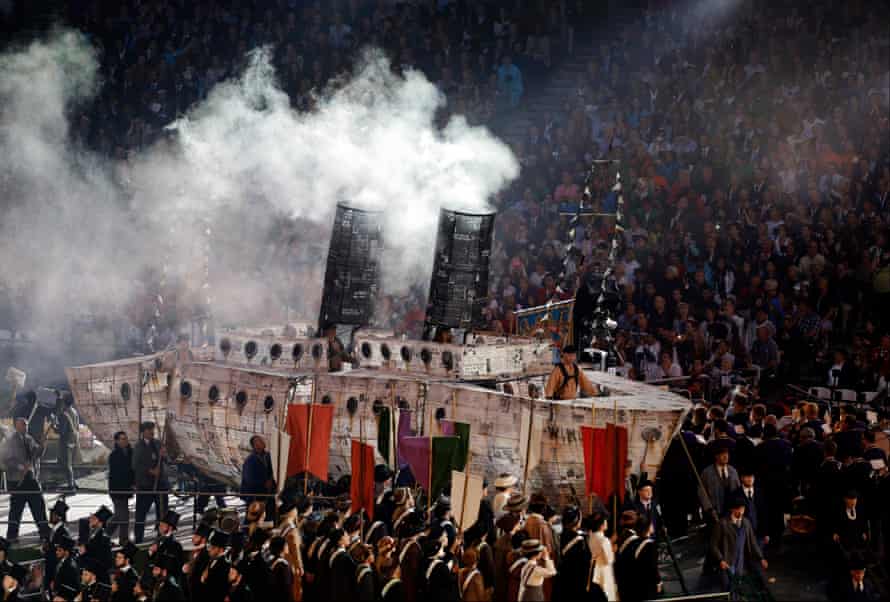
Lynn McDonald: A new museum to reclaim our history from those who want to topple it

The appropriate counter reaction?

Winnipeg is justly proud of its Canadian Museum for Human Rights, which opened in 2014, but we need a new museum in Canada to flag current concerns: a Canadian Museum of Misinformation, or possibly the Canadian Propaganda Museum. Whatever the title, Toronto deserves to have it.

The statue of Sir John A. Macdonald in front of the provincial legislature, Queen’s Park, is currently boarded up. Of the nine other Macdonald statues in the country, only the one on Parliament Hill is still in view. The others were put into storage, often after being defaced or, as with statue in Montreal, beheaded.

Toronto can also boast about beheading the statue of Egerton Ryerson, who brought us free public  schools and free public libraries. The misinformation on him amounts to reversing his pro-Indigenous work — he was named a “brother” by an Ojibway chief and given an Ojibway name for his support. Yet at what was then known as Ryerson University, he was condemned as being responsible for the Indian residential school system.

Toronto’s other great trump card in the misinformation game is Dundas Street, which was named after Henry Dundas, whose work as a lawyer led to the abolition of slavery in Scotland in 1778. Yet his Toronto detractors — thousands signed a petition against him — make him responsible for delaying the abolition of the slave trade in 1792.

His supposed offence was to get an amendment adopted in the British House of Commons to make abolition gradual. A motion tabled in the previous year, 1791, for immediate abolition failed miserably, 163-88. And, as a statement of opinion, rather than a law, it would have had no effect.

Detractors, however, like to have a culprit to blame, as opposed to the many economic and political circumstances at play, in this case the French Revolutionary Wars, which meant that the Royal Navy had to be on guard against invasion from two pro-slavery countries — France and Spain.

Dundas understood, as other well-meaning advocates for abolition did not, that the slave trade could not be ended by passing a law in one country. Slave owners in the West Indies could simply buy new enslaved people from ships carrying false papers and a false flag — Spain, Portugal and France all continued their slave-trading businesses.

Yet in 2021, Toronto city council adopted a motion to rename Dundas Street, without even holding the public inquiry promised by both council and the mayor.

What to put in the museum? A statue of Sir John A. Macdonald is a must, and the one taken down in Victoria would be ideal. The mayor of Victoria at the time had it removed to prevent it from being vandalized.

A particularly fine statue, it was commissioned by the Sir John A. Macdonald Historical Society and given to the city. The society is now looking for a home for it in Glasgow, Scotland, where Macdonald was born. Toronto should speak up before it’s too late.

The new museum should also display the Ryerson statue, either in its parts (oh the shame) or put together again. For educational purposes, the plaque placed next to it at the university should be displayed at the museum.

It makes the accusation that Ryerson was “instrumental in the design and implementation of the residential school system,” when he had nothing to do with either — rather, he supported the voluntary, bilingual day schools that Indigenous parents and leaders wanted.

The task force that recommended dropping the Ryerson name from the university and permanently removing his statue did so on the basis that he was “associated” with the residential schools. It provided no evidence for such a charge, nor is any available. His lack of responsibility for residential schools was confirmed at a meeting of the university’s senate on Oct. 5, 2021, after the board of governors announced the name change.

It would be important for the museum to set out the sequence of accusations, who made them and any evidence for or against them. It would be highly desirable, as well, for the museum to reveal the university’s concerted efforts to prevent any information getting out about what communications it received for and against the name change.

Otherwise, we have to take it on faith, just as on Chinese interference in Canadian elections, and without even a former governor general to assure us that we can believe what we are told

Lynn McDonald is a former member of Parliament and a fellow with the Royal Historical Society.

Source: Lynn McDonald: A new museum to reclaim our history from those who want to topple it

Report finds democracy for Black Americans is under attack

Of note:

Extreme views adopted by some local, state and federal political leaders who try to limit what history can be taught in schools and seek to undermine how Black officials perform their jobs are among the top threats to democracy for Black Americans, the National Urban League says.

Marc Morial, the former New Orleans mayor who leads the civil rights and urban advocacy organization, cited the most recent example: the vote this month by the Republican-controlled Tennessee House to oust two Black representatives for violating a legislative rule. The pair had participated in a gun control protest inside the chamber after the shooting that killed three students and three staff members at a Nashville school.

“We have censorship and Black history suppression, and now this,” Morial said in an interview. “It’s another piece of fruit of the same poisonous tree, the effort to suppress and contain.”

Both Tennessee lawmakers were quickly reinstated by leaders in their districts and were back at work in the House after an uproar that spread well beyond the state.

The Urban League’s annual State of Black America report being released Saturday draws on data and surveys from a number of organizations, including the UCLA Law School, the Southern Poverty Law Center and the Anti-Defamation League. The collective findings reveal an increase in recent years in hate crimes and efforts to change classroom curriculums, attempts to make voting more difficult and extremist views being normalized in politics, the military and law enforcement.

One of the most prominent areas examined is so-called critical race theory. Scholars developed it as an academic framework during the 1970s and 1980s in response to what they viewed as a lack of racial progress following the civil rights legislation of the 1960s. The theory centers on the idea that racism is systemic in the nation’s institutions and that they function to maintain the dominance of white people in society.

Director Taifha Alexander said the Forward Tracking Project, part of the UCLA Law School, began in response to the backlash that followed the protests of the George Floyd killing in 2020 and an executive order that year from then-President Donald Trump restricting diversity training.

The project’s website shows that 209 local, state and federal government entities have introduced more than 670 bills, resolutions, executive orders, opinion letters, statements and other measures against critical race theory since September 2020.

Anti-critical race theory is “a living organism in and of itself. It’s always evolving. There are always new targets of attack,” Alexander said.

She said the expanded scope of some of those laws, which are having a chilling effect on teaching certain aspects of the country’s racial conflicts, will lead to major gaps in understanding history and social justice.

“This anti-CRT campaign is going to frustrate our ability to reach our full potential as a multiracial democracy” because future leaders will be missing information they could use to tackle problems, Alexander said.

She said one example is the rewriting of Florida elementary school material about civil rights figure Rosa Parks and her refusal to give up her seat to a white rider on a Montgomery, Alabama, bus in 1955 — an incident that sparked the bus boycott there. Mention of race was omitted entirely in one revision, a change first reported by The New York Times.

Florida has been the epicenter of many of the steps, including opposing AP African American studies, but it’s not alone.

“The things that have been happening in Florida have been replicated, or governors in similarly situated states have claimed they will do the same thing,” Alexander said.

In Alabama, a proposal to ban “divisive” concepts passed out of legislative committee this past week. Last year, the administration of Virginia Gov. Glenn Youngkin, a Republican, rescinded a series of policies, memos and other resources related to diversity, equity and inclusion that it characterized as “discriminatory and divisive concepts” in the state’s public education system.

Oklahoma public school teachers are prohibited from teaching certain concepts of race and racism under a bill Republican Gov. Kevin Stitt signed into law in 2021.

On Thursday, the Llano County Commissioners Court in Texas held a special meeting to consider shutting down the entire public library system rather than follow a federal judge’s order to return a slate of books to the shelves on topics ranging from teenage sexuality to bigotry.

After listening to public comments in favor and against the shutdown, the commissioners decided to remove the item from the agenda.

“We will suppress your books. We will suppress the conversation about race and racism, and we will suppress your history, your AP course,” Morial said. “It is singular in its effort to suppress Blacks.”

Other issues in his group’s report address extremism in the military and law enforcement, energy and climate change, and how current attitudes can affect public policy. Predominantly white legislatures in Missouri and Mississippi have proposals that would shift certain government authority from some majority Black cities to the states.

In many ways, the report mirrors concerns evident in recent years in a country deeply divided over everything from how much K-12 students should be taught about racism and sexuality to the legitimacy of the 2020 election.

Forty percent of voters in last year’s elections said their local K-12 public schools were not teaching enough about racism in the United States, while 34% said it already was too much, according to AP VoteCast, an expansive survey of the American electorate. Twenty-three percent said the current curriculum was about right.

About two-thirds of Black voters said more should be taught on the subject, compared with about half of Latino voters and about one-third of white voters.

Violence is one of the major areas of concern covered in the Urban League report, especially in light of the 2022 mass shooting at a grocery store in Buffalo, New York. The accused shooter left a manifesto raising the “great replacement theory ” as a motive in the killings.

Data released this year by the FBI indicated that hate crimes rose between 2020 and 2021. African Americans were disproportionately represented, accounting for 30% of the incidents in which the bias was known.

By comparison, the second largest racial group targeted in the single incident category was white victims, who made up 10%.

Rachel Carroll Rivas, deputy director of research with the Southern Poverty Law Center’s Intelligence Project, said when all the activities are tabulated, including hate crimes, rhetoric, incidents of discrimination and online disinformation, “we see a very clear and concerning threat to America and a disproportionate impact on Black Americans.” 

Source: Report finds democracy for Black Americans is under attack

Kent: Historical sense is what keeps us human – and future generations might lose it, if we’re not careful

Good discussion and reflection:

“Imagining the functionality of a human being without historical sense is really scary.”

It was an uncharacteristically grim observation made by my old college tutor, Perry Gauci, during a Zoom conversation in the summer of 2020. My peers and I had always regarded Dr. Gauci as indefatigably cheery: His infectious grin had reassured and encouraged me through my first round of Oxford history interviews, and his pre-exam pep talks were as energizing and inspiring as the best cornerman encouragements. But what he’d said also made complete sense at a moment when the world felt as if it were teetering on the brink; when many of us were at once scrambling to try to see into the future while maintaining some semblance of normality in the “now.”

Imagining a human being without historical sense is scary. The thought of living exclusively in a blinkered present moment is scary. Scarier still is the thought of an entire generation, not to mention society, operating from a position of historical ignorance. And yet that is exactly the situation in which we find ourselves today.

The people and events of history may be rooted in the past, but how we talk about those things, what we write about them, and how we teach them (in other words, how we practise history as the record of human experience) tell us a lot about who we are and what we value right now. It’s easy to think of all those who came before us as either foolish or luckless enough to have lived in a time that’s not the present. But conditioning ourselves to believe that we’re the exception is, at best, naive and, at worst, a fatal mistake.

Thinking of ourselves as a chapter in an as-yet unwritten history book, on the other hand, is likely to force deeper self-reflection: Whose stories will we champion? What values will we defend? What models will we offer ensuing generations? In an era of environmental change, rising inequality and seismic shifts in the international political arena, we need to understand how our institutions have developed in order to understand why they don’t always have adequate responses to these crises. History gives us this power. No other subject helps us to understand so comprehensively what it is to be human. No subject is more vital to our very humanity.

That’s why it was so shocking to read, as of September, 2020, that almost two-thirds of surveyed Americans between the ages of 18 and 39 did not know that six million Jews were killed during the Holocaust, and more than one in 10 believed Jews caused the Holocaust. In a survey commissioned by the Conference on Jewish Material Claims Against Germany, The Guardian reported, 23 per cent of respondents said they believed the Holocaust was a myth, or had been exaggerated, or they weren’t sure. Twelve per cent said they had definitely not heard, or didn’t think they had heard, about the Holocaust.

The implications of this kind of ignorance are staggering, but the ignorance itself isn’t entirely surprising given the downgraded status of history in most schools. Here in Canada, the Ontario social-studies curriculum for Grades 1 to 8 contains not a single mention of the Holocaust. In early 2022, the cost of this became frighteningly clear. In January, several participants in the so-called Freedom Convoy to Ottawa displayed flags and signage bearing swastikas. The following month, the Friends of Simon Wiesenthal Centre called on the Toronto District School Board (TDSB) to recognize antisemitism as a “crisis” after another alleged incident at a middle school. The organization’s president and chief executive officer, Michael Levitt, said in a release: “Anti-Semitism has reached epidemic proportions at TDSB, and it is time for the board to recognize this as the crisis that it is. It is unfathomable and shocking that, in 2022, a Jewish teacher is faced with Nazi salutes and a ‘Heil Hitler’ chant in her classroom. Clearly, something is broken in Toronto’s public school system and requires immediate attention.”

It’s dispiriting, to say the least, to realize that we are sleepwalking toward becoming a Visigoth state like the one described by Neil Postman. “[For] the Visigoths,” he wrote in his popular and widely circulated graduation speech, “history is merely what is in yesterday’s newspaper.” If you’re reading this, chances are you already know that history is much more than that. It is, in fact, everything and all of us: It’s quite literally inescapable. As educator and author Susan Wise Bauer observes in The Well-Trained Mind, history isn’t just a subject: It’s the subject. “Unless you plan to live entirely in the present moment, the study of history is inevitable,” she writes. For many, myself included, history is inherently, inevitably and infinitely compelling, but there will still always be those who question its “usefulness.”

One simple answer is that historical knowledge is power: The control of history, which shapes our political and cultural identity, is precisely why cathedrals of knowledge from the Library of Alexandria to the Library of Congress (and from Catholic collections during the Reformation, to Jewish collections during the Holocaust, to Islamic collections during the Balkan wars of the 1990s) have been targeted for destruction and appropriation since earliest times. “There is no political power without power over the archive,” Jacques Derrida observed: Ancient Mesopotamian rulers used the texts preserved in their libraries to decide when to go to war, while today authoritarian regimes and major technology companies vie for control of the archive as it migrates to a digital realm.

On an individual level, studying history gives us roots: a context for our existence. Individuals who lack that context lack a significant element of self-understanding but also an understanding of their relationship with the rest of society. Rootlessness limits our ability to function, to empathize, to feel invested in anything beyond our own immediate needs. It also disempowers us.

Powerless people become easy targets for exploitation, propagandizing and manipulation, particularly by those who appear to offer membership to a group or cause. As University of Michigan associate professor Bob Bain put it to me, “Stories help orient us to the present. If you’ve got no story, then you’re primed for someone else to give one to you.”

Not surprisingly, there’s a great deal of skittishness over the idea of teaching children any kind of agreed-upon narrative, because no one wants to be accused of forcing the “wrong” kind of story on impressionable minds. But the result of teaching no coherent story at all is a fragmentation of knowledge, what Dr. Bain described to me as “the byproduct of a generation of people like me who were taught that any grand narrative is manipulative, paternalistic and evil, without realizing how necessary it is.”

There’s an obvious tension at play: On the one hand, we need history to build understanding and appreciation for shared values and responsibilities, while on the other we need to remain vigilant against distortions that create an oversimplified narrative, the kind that, as renowned historian Margaret MacMillan writes, “flattens out the complexity of human experience and leaves no room for different interpretations of the past.”

In her brilliantly concise and accessible The Uses and Abuses of History, Dr. MacMillan details many examples of such a flattened history: from the 19th-century Grimm brothers collecting German folk tales to prove that there was such a thing as a German nation dating back to the Middle Ages, to dictators, including Robespierre and Pol Pot, creating new calendars to begin history afresh, and Mao and Stalin writing their enemies out of the record. The BJP government has consistently attempted to rewrite history to present India as a Hindu nation from its earliest beginnings, while here in Canada, French-Canadian nationalists have often focused on the past as a story of humiliation at the hands of the British while neglecting examples of co-operation (for instance, over the building of the railways and through the early years of Confederation) or, indeed, French-Canadian sympathy for a rival foreign government during the Vichy regime.

More recently, the trend in the West has veered the other way, toward deconstructing and challenging inherited national narratives in pursuit of a type of historical catharsis. So, do we teach history to build a sense of national pride, or to poke holes in it? As Daniel Immerwahr wrote in The Washington Post toward the end of one of the most tumultuous years in living memory, “Such questions have always struck me as odd, for two reasons. First, we design curriculums around what students will learn rather than how they’ll feel. The aim of a geometry class is not for students to love or hate triangles but to learn the Pythagorean theorem. Similarly, the point of U.S. history isn’t to have students revere or reject the country but to help them understand it. The second reason is that, by imagining history class as a pep rally or a gripe session, we squeeze the history out of it. The United States becomes a fixed entity with static principles, inviting approval or scorn. And that makes it hard to see how the country has changed with time.”

Clearly, in an age of “fake news,” Google and Wikipedia, engaged citizens need to be culturally literate, critical thinkers. There is no better subject than history to develop an appreciation of context and an ability to interrogate evidence. Just as we expect a math curriculum that systematically builds on blocks of knowledge and developing skill sets, we should also expect a logical history curriculum (preferably an international one) for our children. If it were commonplace to hear graduates claim that they’d never learned to divide, there would be an outcry. So should there be now.

Such knowledge-based learning needn’t tell students what to think, but would rather provide the tools to learn how to think. In the digital age, perhaps more than ever, “users” (to adopt the purposefully dehumanizing tech term) require a sense of sequence and consequence, a nose for collecting sound evidence, and an ability to discern the difference between sophisticated and oversimplified analogies. To look something up, you need to know what you are looking for.

And in these hyper-partisan times, history reminds us of the importance of nuance and the enduring fact that there will always be contradictions. No single group is right all the time, and we all need to be able to hold two opposing ideas in our head at once.

It’s easy to reach an exhaustion point: to throw up our hands in despair at the relativism of everything. Lynn Hunt captures this problem beautifully in History: Why It Matters: “If it is so easy to lie about history, if people disagree so much about what monuments or history textbooks should convey, and if commissions are needed to dig up the truth about the past, then how can any kind of certainty about history be established?”

The fact remains that, imperfect though it is, we need historical truth. Without it, we have no leg to stand on to counter the claims of dictators or Holocaust deniers. But just what exactly is historical truth? Most would agree that it boils down to actions or events, and arguments as to their causes and consequences, which can be verified by historical evidence. As the evidence changes, so must the story. Historians’ work will never be done, therefore, because the stories we record and interpret are in constant need of correction, adjustment and reinterpretation based on the available evidence. And the questions they ask will necessarily keep changing, because we’re always wanting to ask questions that are relevant to the present.

As Julia Lovell, winner of the 2019 Cundill History Prize for her book, Maoism: A Global History, explained in a panel discussion with fellow shortlistees, “Historians always have to answer the ‘So what?’ question.” Traditionally, the questions posed about 19th-century China could often be reduced to “Why did it fail so badly?” But now, in light of China’s rise to 21st-century superpower, that question has become “How can we find the seeds of China’s contemporary success in the 19th century?” Evidently, the practice of history teaches us a number of things: not least, flexibility, patience, humility, and the value of keeping an open mind.

The good news is that the public appetite for history has never been greater. Anthony Wilson-Smith is president and CEO of Historica Canada, an organization devoted to promoting an understanding and discussion of Canadian history. The fabled Heritage Minutes, commercial-length history lessons blending re-enactment and narration, are arguably Historica’s greatest achievement, reaching about 27 million users annually. The first ones aired in 1991 and featured Valour Road, the Winnipeg street that was home to three Victoria Cross recipients; the Underground Railroad, which brought runaway slaves to freedom; and Jacques Plante’s invention of the goalie mask. Lines such as “Doctor, I smell burnt toast!” and “I need these baskets back” quickly entered the cultural lexicon of many young Canadians. One of my friends, of South Asian family heritage, said that the Minutes (in particular, the one about the Chinese workers who built the railroads) did more to teach her about diversity in Canada than anything she learned in school in the 1980s and 90s.

Current events have also informed a spike in interest. “We track the top five most-read pieces every week in the Encyclopedia,” explained Mr. Wilson-Smith (Historica Canada operates Canada’s national encyclopedia on a digital platform). “At the outset [of the COVID-19 pandemic], pieces on the 2003 SARS outbreak and the 1919 Spanish Flu routinely made the list. Once the public focus on BLM and Indigenous rights and discrimination erupted, we saw an immediate spike in related stories. For more than 10 weeks, articles on residential schools and Black history in Canada (including pre-Confederation slavery) have been among the top five.”

The success of the Heritage Minutes illustrates the potent combination of human interest and contemporary relevance in making history appealing. Curiosity about the past often starts on a personal level, which perhaps explains the explosion of interest in ancestry websites, DNA test kits and TV shows exploring celebrities’ family histories. The sensational success of the musical Hamilton illustrated the power of a compelling and important story, creatively told (the main character might be a dead white guy – a lawyer, banker and politician, to boot – but a hip-hop-influenced score and majority-Black cast brought fresh appeal and insights to a new generation of audiences). “Reality” series featuring historical re-enactments – families “sent back in time” to experience life as pioneers or on the home front during the Second World War – as well as computer games, Netflix series such as The Crown, and historical fiction also indicate the enduring claim of history on the public imagination. There’s a comfort in the sense of order that can be imposed on the past, particularly when our own times seem to be characterized by great upheaval and unpredictability.

So what’s the bad news? In short: plummeting history enrolment at universities, concerns among practitioners that the subject is fragmenting beyond recognition, and students who don’t recognize themselves in the history they study at school and can’t connect the disconnected fragments they have learned. There’s been plenty of hand-wringing in Ontario over nosediving elementary math scores, with fewer than half of Grade 6 students meeting the provincial standard in the 2021-2022 school year. By comparison, there’s been resounding silence around another subject in which elementary students have long fallen behind. By now, you can probably guess which subject that would be.

But it’s STEM jobs that are hiring, we’re told. “Historians make lattes” was the wry observation of one history teacher I spoke with. Certainly, schools are getting much better at teaching previously overlooked aspects of our history, including Indigenous history (which the last curriculum overhaul made compulsory) and social history. But these bits have been superimposed on a disjointed, incomplete curriculum – a curriculum that, as it stands, doesn’t only threaten to kill off student enthusiasm for history as a subject but sends them into the world with huge knowledge gaps. It’s a muddled curriculum, pieced together by the separate agendas of politically capricious governments, boards and education departments. It’s a timid curriculum, reluctant to embrace the conflict, collisions, controversies and paradoxes in history. It’s a curriculum heavy on centring “deep dives with lots of primary sources,” as Dr. Bain described equivalent American syllabi to me, but shy of providing a connected overview, leaving these projects “like postholes with no fences to connect them.”

The alternative doesn’t have to be a return to “rote” learning, but rather a joined-up attempt at building broad knowledge from the earliest years to create context for understanding later on. When history is only introduced as a subject in Grade 7, after which it’s limited to a couple of years of Canadian history taught largely out of any kind of chronological or global context, the results aren’t surprising: Students enter middle school without any sense of the “story” of history, high-school teachers despair that students come to them without the knowledge or skills to learn how to think historically, universities experience plummeting numbers of history applications, and, in turn, we as a society become increasingly ahistorical in our outlook, not to mention distressingly polarized in our discussions of such things as the toppling of statues.

“In the nation as a whole there is now a knowledge gap, a communications gap, and an allegiance gap. We don’t understand one another; we don’t trust one another; we don’t like one another.” This is E.D. Hirsch writing about America in 2020, though much of what he describes could equally be applied elsewhere. A loss of cohesion, Dr. Hirsch argues, is the partial result of “a loss of commonality in what we teach and therefore in what we know.” If change is to happen, it needs to happen with coherence, commonality and specificity.

We pay a certain lip service to this idea by framing history as a part of “civics” education, but the fact is that it is so much more than this. The title of my book refers to a “vanishing” past not because history itself is going anywhere, but rather because the discipline of history has become segmented, sidelined and co-opted for other purposes. “History fights for its place in the curriculum with civics and geography,” Dr. Bain observed during our conversation, “but its attention to time, place and context is what makes it really distinct.” In other words, history doesn’t simply tell us how to be good citizens: It equips us with the knowledge we need to comprehend our world clearly, and the ability to analyze it accurately.

“Precision is not a skill: It’s a value, an obligation, a moral duty,” Dr. Gauci observed toward the end of our Zoom conversation. The skills-versus-knowledge debate is an old one in history teaching, and generally it’s a misleading one: You need both to do history properly. Dr. Gauci worries about how little many students seem to know about the political process, as well as about limited public discernment when it comes to discussions around current events. But history, to him, is about even more than this. “It’s always been the instinct of many of the most creative minds to look back,” he said, and here I was pleased to see the old smile return. “The great dreamers all needed the past. We stare into space and we wonder, so it seems strange not to do it in the rear-view mirror, too.”

Source: Historical sense is what keeps us human – and future generations might lose it, if we’re not careful

Kang: The Creep of History

Good discussion on the limits of historical examples, and using history as “an evidentiary grab bag” rather than focussing on the present. To which I would add, having a sense of perspective on the changes that have occurred, and those that are occcuring.

Money quote: “All that beating about stuff that happened years ago can sometimes distract us from the injustices of the present, even when the goal of it is to provide some useful allegory about the persistence of one type of oppression or another.”

Last week, the historian James Sweet found himself in the middle of one of the confusing messes that pop up from time to time in the highest reaches of academia. As the president of the American Historical Association, Sweet writes a monthly address to his colleagues. His September entry, published on Aug. 17, was titled, “Is History History? Identity Politics and Teleologies of the Present.” What followed was a seemingly harmless missive about “presentism,” a phenomenon wherein historians allow the political, identity-based demands of the current day to dictate the focus of their scholarship and inquiry. Paraphrasing one of his predecessors, Sweet asked if students who enter the field with a fixed, identity-first point of view might be better suited to sociology, political science or ethnic studies.

Later in his address, Sweet writes, “If history is only those stories from the past that confirm current political positions, all manner of political hacks can claim historical expertise,” and claims that “too many Americans have become accustomed to the idea of history as an evidentiary grab bag to articulate their political positions.” As an example, he writes about taking a tour of the Elmina Castle in Ghana, a stop in the Atlantic slave trade. Sweet claims that his tour guide at Elmina both overstated the relevance of the site to African Americans (according to Sweet, “less than one percent of the Africans passing through Elmina arrived in North America”) while falsely downplaying the role that Ghanaians played in the slave trade. These elisions, Sweet believes, come from a desire to make history conform to our modern political understandings of race and inequality.

Sweet’s address was met with considerable criticism, and in some cases backlash, from fellow historians, many of whom felt that he was demeaning the work of minority scholars by broadly questioning whether work driven by “identity politics” belonged in the historical tradition. Sweet quickly apologized.

I agree with Sweet on the fundamentals of what he said, but I also understand why minority scholars felt like the integrity of their work was being questioned. An uncharitable reader might accuse him of singling out scholars who write about identity (read: mostly nonwhite scholars) and making unfounded insinuations about the motivations behind their work. This would be more forgivable if Sweet were not the president of the American Historical Association, a position that presumably gives him some influence over where the discipline is headed. There have been times in my own career when someone high up in an institution assumes that because I am not white, my work must be driven by identity politics. It’s an enraging experience.

What interests me most about the Sweet controversy, however, is the idea that history itself might be taking up too much space in the ways that we think about the present not just in the cloisters of the university but also within the broader discourse around social justice. “We suffer from an overabundance of history,” Sweet writes, “not as method or analysis, but as anachronistic data points for the articulation of competing politics.”

What does it mean to have an “overabundance of history”? At first glance, the idea might seem ridiculous. The public, in theory, should know about everything from the migration patterns of early man to what happened during Operation Desert Storm and beyond. In a multiethnic country rooted in the genocide of Native Americans and built on the backs of enslaved Africans, all citizens should have some knowledge of how we got to where we are in 2022. But I don’t think Sweet is talking here about historical knowledge or even scholarship, really, but rather the creep of historical writing into other disciplines, especially journalism. (Much of Sweet’s address is a halfhearted swipe at “The 1619 Project.”)

It’s unfortunate that Sweet ultimately seems aggrieved about the sanctity of history as a profession and a discipline, because there is a compelling point hidden somewhere in “Is History History?” Over the past decade or so, history has become the lingua franca of online political conversation. This is a relatively new phenomenon; back in 2010, around the time I began writing on the internet, much of the conversation revolved around cultural criticism. Young, ambitious writers published essays about “Mad Men” and other prestige television shows; pop music criticism took on a weight in political discourse that felt exciting and even a bit dangerous. Today, much of that cultural production has moved to history.

These trends are admittedly difficult to track — there is no start date for the era of online historical writing, nor is there a gravestone for lengthy pop culture criticism — but the shift has something to do with the centrality of Twitter over the past decade (historical documents and photos make for great screenshots) and, more important, the changes in the country itself. Once Donald Trump became president, it was harder to write about “Breaking Bad” and Taylor Swift in such self-serious tones.

“The Case for Reparations” by Ta-Nehisi Coates, which detailed the practice of redlining, certainly wasn’t the first piece of journalism that brought in historical techniques, but it was, without question and for good reason, the most influential of its era. History like this — cleareyed, thorough and written toward an explicit political end — showed a generation of young journalists how they might be able to leverage their skills in a new way. I was a young magazine writer when that article came out, in 2014. I recall feeling impressed by the prose and the research while realizing that Coates had raised the stakes for what a magazine story could do. He had, in effect, written a work that felt much more like an object, something that wouldn’t immediately decompose once the next news cycle rolled in.

I don’t think it’s hyperbole to say that Coates inspired thousands of imitators and ushered in a new type of journalism in which historical research could take precedence over reportage. (I tried my hand at a couple of historical essays before giving up.) Twitter has also allowed historians to assume a place in the public discourse that would’ve been available to only a select few before the advent of social media. This is ultimately a good thing that has flattened some of the usual hierarchies in the academy. A historian who writes good Twitter thread — say, about the long and sustained effort to end abortion rights in the United States — will be able to present an abbreviated version of his or her work to thousands, potentially millions of people without having to star in a Ken Burns documentary. As a result, history does seem to have an unusual amount of weight in the public discourse.

I don’t believe there’s some perfect mix of academic disciplines that will yield the most fruitful public conversations. But I do agree with Sweet that in today’s discourse, history acts mostly as what he calls “an evidentiary grab bag.” This, as he points out, happens both on the left and the right. Someone can find something in an archive, prop it up in the course of an argument and then declare the issue settled forever because history has acted as the arbiter. Sweet’s mistake is that he seems to believe that there is a type of real history — the exact type that’s produced by credentialed people in lofty spaces — that actually should be used in this hierarchical way, when the better argument would be to simply say that all history, regardless of the pedigree or methodology of its scholar, should be subject to intense scrutiny.

And yet I don’t think it’s particularly debatable that there is, in fact, an overabundance of history. Perhaps stories of the past have always been used to advance modern political goals, but I can’t think of a time in recent American memory where so much history has been fashioned into so many cudgels. All that beating about stuff that happened years ago can sometimes distract us from the injustices of the present, even when the goal of it is to provide some useful allegory about the persistence of one type of oppression or another. Over the past two years, for example, I have been bewildered by how much of the conversation about the rise in hate crimes against Asian Americans has been dominated by evocations of history, whether it’s the Chinese Exclusion Act of 1882 or Japanese internment.

These are certainly important conversations that provide an ideological framework that places Asian Americans within a history of violence and oppression. And yet I sometimes find myself wondering what all that history really has to do with Asian people being attacked and even killed in 2022. History, in this moment, has an anesthetizing, diversionary effect; instead of talking about what’s happening to recent immigrants to the United States in 2022, we are talking about what happened to gold miners in the 19th century. The connections we draw between the two might make sense logically, but they ultimately do not go anywhere.

These intellectual flailings are the more compelling evidence that the journalists, thinkers and scholars who set much of the public discourse might be making a bit too much of history. Whenever something bad happens to an oppressed group, there is an impulse to buttress it with the bad things that happened in the past as a way to almost confirm that the present is still terrible. This isn’t a necessarily bad reflex, but it oftentimes feels unnecessary. Most of the time, we can just process what happens as it happens and try to deal with the problem in front of us.

Source: The Creep of History

Boswell: The dark flip side of Canada’s oldest English coin

Good reminder to be more inclusive in reporting such discoveries and include the historical context:

The discovery in Newfoundland of what appears to be the oldest English coin ever found in Canada certainly does “spark the imagination,” as a provincial government press release noted this week.

But there’s also been a failure of imagination in communicating the significance of this 525-year-old artifact dug up at Cupids Cove Plantation Provincial Historic Site, settled in 1610 after a series of English expeditions to the region over the previous century.

Yes, it’s true: As those heralding the find have noted, this silver relic — a two-penny piece believed to have been minted in Canterbury between 1493 and 1499 — symbolizes a landmark moment in the history of European colonization in Canada.

It features the likeness of King Henry VII, who championed English exploration of the “new founde land” and paid sailors to “serche and fynde” the fabled territory across the Atlantic, bring it under his control and spread Christianity to the New World.

However, there’s a flip side to every coin. And in this era of long-overdue reckoning with the Indigenous history of North America and the often-violent dispossession of First Peoples, the province shouldn’t trumpet the unearthing of such an archeological prize without at least acknowledging the dark side of history that’s also associated with it.

Specifically, in this case, that’s the forced retreat of the Beothuk inhabitants of Newfoundland from coastal sites in the face of the 17th-century English settlement of the island, and their eventual extinction.

The vanishing of the Beothuk is one of the great tragedies of Canadian history. Does recognition of this sorrowful outcome of East Coast colonization complicate an otherwise super-cool, time-machine tale about archeologists digging up a coin at Cupids Cove stamped with the visage of the first Tudor king?

Yes, it’s now a more complicated story. Much more. Or we could say the narrative has just become more layered, more comprehensive, more balanced — and more true.

Along with a sense of awe about the efforts of early English colonizers to gain a toehold in Canada centuries ago, we now also need to consider what the coin represented to the millennia-old Beothuk civilization, and what news of the coin’s discovery this year might mean to present-day Indigenous people.

I was a national reporter for many years with a history buff’s fascination for archeological discoveries shedding light on Canada’s past. I wrote many stories in a voice of breathless enthusiasm that, in hindsight, should have been told with a more reflective tone, a deeper awareness of what milestone moments in the European “discovery” and settlement of the Americas would have meant to the people who had already been living here for countless generations.

Granted, that’s not how such discoveries were typically framed by scholars, museums and governments in past decades. But in 2021, just weeks after Canada’s first National Day for Truth and Reconciliation, we are in the midst of an ongoing transformation in the way historians shape stories, curators construct exhibitions, and governments manage controversies over street names, memorials and other landmarks of historical commemoration.

In short, across the country in recent years, there’s been an ever-strengthening push to bring other, overlooked, often-obliterated sides of Canada’s history into official depictions of the past.

In recent weeks, the government of Newfoundland and Labrador has taken important steps to rename “Red Indian Lake” – henceforth to be called Beothuk Lake – and erect a statue honouring the disappeared nation outside the provincial legislature.

But genuine reconciliation means going beyond symbolic gestures and reframing many of our historical narratives – at least enough to acknowledge the ultimate impact of contact-era settlements on the Indigenous peoples encountered during the European colonization of the lands that became modern Canada.

In other words, why rename a lake and build a statue to pay tribute to the Beothuk if other historical narratives perpetuate their erasure?

The old coin, to be sure, is an amazing find that tangibly, evocatively recalls “the story of the early European exploration in the province and the start of English settlement,” as Newfoundland and Labrador Tourism Minister Steve Crocker put it in Wednesday’s formal announcement.

But that’s not the only tale it tells. Celebrating the discovery of the coin and extolling its value as a long-lost, newly-found symbol of European exploration and English settlement leaves a glaring gap in the storytelling.

The province’s press release on the find — and, predictably, the subsequent news coverage — makes no mention of the fallout for the Beothuk of England’s colonization of Newfoundland. It’s like all those local history books filling the shelves of Canadian libraries that begin the biography of this county or that township with an account of the day the first white settler arrived in the place, chopped some trees and pitched a tent circa 1820 — as if First Peoples hadn’t already been there for many thousands of years.

There is a lesson here for all governments and all politicians across Canada. If they’re serious about healing relationships with the country’s Indigenous peoples, high-profile gestures of reconciliation must be matched by routine, sincere adjustments in the way they understand, frame and talk about history — especially in the context of the European age of exploration and so-called discovery.

Historians and archeologists, heritage officials and Indigenous leaders, teachers and multiculturalism advocates, municipalities and historical societies — these and many other individuals and groups in Canada are already engaged in difficult discussions about how to rewrite and rejuvenate the nation’s history, to rediscover the many voices and experiences that have traditionally been pushed into the shadows of the country’s past.

The last known Beothuk, a young woman named Shawnadithit, died in 1829. Her aunt, Demasduwit, survived an 1819 kidnapping attempt that left her husband and newborn child dead. But she died in 1820 after helping to create a record of the Beothuk language, and a painted portrait of her held by Library and Archives Canada remains an iconic image of a lost people.

The Newfoundland discovery of the coin stamped with a 15th-century king’s face is exciting and important. But it also illuminates a largely forgotten face of Canada’s history.

Randy Boswell is a Carleton University journalism professor and a former national reporter with Postmedia News.

Source: The dark flip side of Canada’s oldest English coin

Douthat: A Case for Patriotic Education

More on capturing the “the good, the bad and the ugly” and finding a balance, along with age appropriateness for the negative parts:

I have my doubts about America. As a Catholic, my first loyalty is to a faith that predates and promises to outlast our Republic, that was disfavored for much of our history and may be headed into disfavor once again. American anti-Catholicism is far from the worst evil in this nation’s history, but it still instills a special obligation to take critiques of our Anglo-liberal-Protestant inheritance seriously, whether they come from radicals or traditionalists or both.

But when it comes to introducing American history to my own American children, none yet older than 10, I’ve realized that we’re giving them a pretty patriotic education: trips to the battlefield at Concord; books like “Johnny Tremain” and the d’Aulaires’ biographies of Lincoln and Franklin and Pocahontas; incantatory readings of “Paul Revere’s Ride.”

One of my son’s favorite books is an account of Lewis and Clark’s mission that pairs extracts from diaries with vivid illustrations. Laura Ingalls Wilder may have been canceled a few years ago, but she’s a dominant literary figure for our daughters. Lee Greenwood’s “God Bless the U.S.A.” plays in our minivan, and when my eldest daughter tries to win arguments by declaring “I’m a free American!” I let the claim stand, rather than answering her with Catholic critiques of liberal individualism.

I should say that we also deliver doses of realism about slavery and segregation and the importance of seeing history from the perspective of the defeated, from the Tories to the Sioux. (Though many older texts contain those perspectives, however un-P.C. their form; tragic realism is not the exclusive province of the early 21st century.) And we are not home-schoolers; our patriotic education interacts with what our kids learn in school and pick up through osmosis in our progressive state and city.

But having written recently about the race-and-history wars, I think it’s worth talking about what makes patriotic education valuable, even if you ultimately want kids to have critical distance from the nation’s sins.

Here I want to disagree mildly with David French, the famous conservative critic of conservatism, who wrote for Time magazine recently chiding parents who are “afraid children will not love their country unless they are taught that their country is good.” The love for country we instill, he argued, shouldn’t rest on American innocence or greatness; rather we should love our country the way we love our family, which means “telling our full story, the good, the bad, and the ugly.”

To which I would say, yes, but … you probably want to feel a certain security in your children’s family bonds before you start telling them about every sin and scandal.

Admittedly there are families where that isn’t possible, as there are political contexts where young kids need to know dark truths upfront. But we aren’t living in Nazi-occupied France, and there is easily enough good in America, past and present, to lay a patriotic foundation, so that more adult forms of knowledge are shaped by a primary sense of loyalty and love.

Moreover, with families the people you’re supposed to love are usually there with you, and to some extent you can’t help loving them even in their sins. Whereas the nation’s past is more distant, words and names and complicated legacies, not flesh and blood. So if historical education doesn’t begin with what’s inspiring, a sense of real affection may never take root — risking not just patriotism but a basic interest in the past.

I encounter the latter problem a lot, talking to progressive-minded young people — a sense that history isn’t just unlovable but actually pretty boring, a grim slog through imperialism and cisheteropatriarchy.

Whereas if you teach kids first that the past is filled with people who did remarkable, admirable, courageous things — acts of endurance and creation that seem beyond our own capacity — then you can build the awareness of French’s bad-and-ugly organically, filling out the picture through middle and high school, leaving both a love of country and a fascination with the past intact.

And starting with heroism doesn’t just mean starting with white people: From Harriet Tubman to Martin Luther King Jr., the story of the African-American experience is the most straightforwardly heroic American narrative, the natural core of liberal patriotism — something liberalism understood at the time of Barack Obama’s election, but in its revolutionary and pessimistic mood seems in danger of forgetting.

This idea of a patriotic foundation hardly eliminates controversy. You still have to figure out at what age and in what way you introduce more detail and more darkness. This is as true for Catholic doubts as for radical critiques: I’m not sure exactly how to frame Roe v. Wade and abortion for my older kids.

In this sense French and others to his left are correct — there is no escape from hard historical truths, no simple way to raise educated Americans.

But still I feel no great difficulty letting my children begin, wherever their education takes them, with the old familiar poetry: Here once the embattled farmers stood / And fired the shot heard round the world.

Source: https://www.nytimes.com/2021/07/10/opinion/sunday/history-education-patriotic.html

Paris: The discovery of the unmarked graves brings us face to face with our suppressed history

Erna Paris’s book, Long Shadows: Truth, Lies and History, inspired the Canadian House of Commons motion to apologize, on behalf of the government, to survivors of Canadian residential schools

Good commentary, with an appropriate caution regarding erasing history.

Money quote:

“But history neither begins, nor ends. It is a cumulative record of people, events and changing ideas that cannot be buried. It can only be managed – with factual truth, contextual understanding and a commitment to change direction. This will be best accomplished by adding interpretative material to disputed monuments to enhance a layered comprehension of our country’s less-than-honourable past.

We are again reminded that the forced assimilation of devalued peoples will always fail, for humans cannot change their inner selves the way a snake sheds its skin. In his 2008 statement, former prime minister Stephen Harper said, “The apology today is founded upon … the recognition that we all own our own lives and destinies, the only true foundation for a society where peoples can flourish.””

Two Solitudes. That was the title of Hugh MacLennan’s famous 1945 book about the chasm between Quebec and the “Rest of Canada” – a fault line that has been negotiated continuously since the Battle of the Plains of Abraham in 1759. But what if there were three solitudes all along, the third being the Indigenous nations that were suffering cultural decimation far below the radar of most Canadians? I was born and raised in Ontario and never heard, or read, a word about residential schools during close to two decades of schooling. Textbooks referenced the original Indian wars, but what happened to the Indigenous populations as the entity known as Canada emerged was obscured.

Over the past two decades, Canadians have gradually learned the fate of the 150,000 children who were forcibly removed from their homes and placed in residential schools run by often abusive religious authorities, mainly Catholic. The purpose of the schools was to forcibly assimilate the children by all means possible – language, dress, culture – and to be in breach of the rules was to court punishment. We now know that the children living in these 139 institutions were underfed, that many were subject to sexual assault, and that disease, neglect and abuse killed at least 6,000 of them.

On June 11, 2008, the government of Canada mounted a moving spectacle to apologize for the treatment Indigenous Canadians had received. The apology was meant to be a symbolic turning point. It even had a follow up: a Truth and Reconciliation Commission, whose primary goals were to acknowledge and record the residential school experience, including its consequences; to provide emotional support for individuals wishing to come forward with their stories; and to educate the Canadian public about this previously occulted history.

The broadcast sessions of the TRC were affecting. But there was a structural flaw: they included no accountability for what had occurred. The Stephen Harper government had carefully excluded legal culpability from the Commission’s formal mandate. The TRC would “not hold formal hearings, nor act as a public inquiry, nor conduct a formal legal process…”

What this meant was that the perpetrators – primarily the Catholic churches – were paradoxically allowed to behave like social workers, comforting the survivors as they completed their personal testimony. Yes, individual bishops had issued apologies, but the Catholic Church, the Vatican, had not, and no one was accountable. How much more compelling it would have been had Canadians been allowed to watch the upper echelons of the clergy testify about what they knew about gross breaches of human rights and possible criminal behaviour, even if the original perpetrators were dead? The Harper government may have rightly feared evidence that Canadian governments knew about these abuses and did nothing. It is to be noted that as early as 1907 a lawyer who conducted a review of the schools told Duncan Campbell Scott, then deputy superintendent-general of Indian Affairs, “Doing nothing to obviate the preventable causes of death brings the Department within unpleasant nearness to the charge of manslaughter.”

Fast forward to June, 2021, and more words of remorse by Prime Minister Justin Trudeau. A radar search had uncovered the remains of 215 children at the Kamloops Indian Residential School and it is widely assumed that there are thousands more elsewhere.

The discovery of the bodies of maltreated nameless children has unleashed a cascade of grief among Canadians, as though the truth of what was revealed at the TRC hearings has only now become visceral. The deaths of children abused and neglected by their caregivers touches a chord. That this continued for a century in our land of “peace, order, and good government” has elicited outrage that will be assuaged only by a process of accountability. A group of Canadian lawyers has already asked the International Criminal Court to investigate the Vatican and the Canadian government for crimes against humanity. According to Asad Kiyani, assistant professor of law at the University of Victoria, there might also be grounds for domestic prosecutions for manslaughter.

In my own study of five countries that had to confront shame-producing historical truths, Canada may be unique. Unlike those who participated in authorized attacks on devalued minorities, or watched as bystanders, then struggled to create a narrative of who they were in light of what was done, Canadians were kept in the dark by successive governments that opted to efface history by means of isolated residential schools and sanitized text books. Today, there is little, if any, debate in this country about the need to make substantive amends. This does not absolve us from knowing that what was done to Indigenous children was done in our names, nor does it erase the reality of continuing racism – a prolongation of the 19th-century attitudes that produced the schools in the first place. There has been progress since the TRC issued its report in 2015, but in light of what we have recently learned, we must put pressure on government and the churches to provide all requested documentation to the National Centre for Truth and Reconciliation. Anything less than full disclosure will be seen as stonewalling.

Unsurprisingly, the question of what to do about monuments that honour those who initiated human rights abuses has intensified. A statue to the 19th-century educator, Egerton Ryerson, who helped create the residential school system and is the namesake of a Toronto university, was torn down earlier this week. Just days earlier, a picture circulated of a statue of Sir John A. MacDonald being carted away in Charlottetown, looking not unlike the French monarch, Louis XVI, in a tumbrel en route to the guillotine. There are persuasive arguments for removing the late Ryerson, although, to his credit, he was also known for promoting free education. But we, too, should be careful about excising history. Although he operated according to the repugnant “White Man’s Burden” ideology of his age, MacDonald was the lead figure in the creation of Canada and our first prime minister. To “remove” him is to reject the origins of a shared country. The French revolutionaries also believed they could sluice away history: they even devised a new calendar, starting with Year One. In our own day, the American political scientist Francis Fukuyama fantasized that the Cold War victory of liberal democracy indicated “the end of history.”

But history neither begins, nor ends. It is a cumulative record of people, events and changing ideas that cannot be buried. It can only be managed – with factual truth, contextual understanding and a commitment to change direction. This will be best accomplished by adding interpretative material to disputed monuments to enhance a layered comprehension of our country’s less-than-honourable past.

We are again reminded that the forced assimilation of devalued peoples will always fail, for humans cannot change their inner selves the way a snake sheds its skin. In his 2008 statement, former prime minister Stephen Harper said, “The apology today is founded upon … the recognition that we all own our own lives and destinies, the only true foundation for a society where peoples can flourish.”

These were fine words, but words will no longer suffice.

Source: https://www.theglobeandmail.com/opinion/article-the-discovery-of-the-unmarked-graves-brings-us-face-to-face-with-our/

David Olusoga on race and reality: ‘My job is to be a historian. It’s not to make people feel good’

Thoughtful interview:

History’s purpose isn’t to comfort us, says David Olusoga, although many in the UK seem to think it is. “History doesn’t exist to make us feel good, special, exceptional or magical. History is just history. It is not there as a place of greater safety.”

As a historian and broadcaster, Olusoga has been battling this misconception for almost two decades, as the producer or presenter of TV series including Civilisations, The World’s War, A House Through Time and the Bafta-winning Britain’s Forgotten Slave Owners. His scholarship has been widely recognised: in 2019, he was awarded an OBE and made a professor at the University of Manchester. (He is also on the board of the Scott Trust, which owns Guardian Media Group.) Yet apologists for empire, in particular, like to dismiss him as a “woke historian” in an attempt to politicise his work or flatly deny the realities that he points out.

Now he can expect more flak, thanks to the new edition of his book Black and British: A Forgotten History.

First published in 2016, and made into a TV series the same year, the book charts black British history from the first meeting between the people of Britain and the people of Africa during the Roman period, to the racism Olusoga encountered during his own childhood, via Britain’s role in the slave trade and the scramble for Africa. It is a story that some of Olusoga’s critics would prefer was forgotten.

Hostility to his work has grown since the Brexit vote, shooting up “profoundly since last summer”, he says, speaking over Zoom from his office in Bristol. “It has now got to the point where some of the statements being made are so easily refutable, so verifiably and unquestionably false, that you have to presume that the people writing them know that. And that must lead you to another assumption, which is that they know that this is not true, but they have decided that these national myths are so important to them and their political projects, or their sense of who they are, that they don’t really care about the historical truths behind them.

“They have been able to convince people that their own history, being explored by their own historians and being investigated by their own children and grandchildren, is a threat to them.”

A recreation of the Empire Windrush at the opening ceremony of the London Olympics in 2012
‘You have to have a real tenure in the country to play your ancestors’ … a recreation of the Empire Windrush at the opening ceremony of the London Olympics in 2012. Photograph: Lee Jin-man/AP

For Olusoga, 51, this hostility can in part be explained by ignorance. “If you were taught a history that the first black person to put his foot on English soil was stepping off the Windrush in 1948, then this can seem like a conspiracy,” he says.

But there is a deeper issue at play. “If you have been told a version of your history and that is part of your identity, it’s very difficult when people like me come along and say: ‘There are these chapters [that you need to know about].’ People feel – wrongly in my view – that their history is being undermined by my history. But my history isn’t a threat to your history. My history is part of your history.”

When the book was published in 2016, it ended on a hopeful note. Olusoga was writing just a few years after the London Olympics, in which a tantalising view of Britain emerged – a country at ease with its multiculturalism, nodding with pride to the arrival of the Windrush generation in 1948. Black Londoners dressed up as their ancestors for the opening ceremony, “with long, baggy suits, holding their suitcases”, says Olusoga. “You have to have a real tenure in the country to play your ancestors.” That moment, he says, was profoundly beautiful.

But that upbeat note has begun to feel inaccurate – an artefact of a more optimistic time. In the new edition of Black and British, which includes a chapter on the Windrush scandal and last year’s Black Lives Matter protests, Olusoga describes that moment in 2012 as a mirage. The summer afterwards, vans bearing the message “Go home or face arrest” were driven around London as part of Theresa May’s notorious “hostile environment” strategy, aiming to make the UK inhospitable for undocumented migrants. Thousands of people who had lived legally in the UK for decades, often people who had arrived from the Caribbean as children, were suddenly targeted for deportation.

In 2020, protesters in more than 260 British towns and cities took part in BLM protests, thought to be the most widespread anti-racist movement since the abolition of the slave trade. A statue of the slave trader Edward Colston was toppled in Bristol; a Guardian analysis suggests about 70 monuments to slavers and colonialists have been removed, or are in the process of being removed, across the UK.

But this movement for racial justice has been met with a severe backlash. In January, Robert Jenrick, the secretary of state for housing, communities and local government, said he would introduce laws to protect statues from what he called “baying mobs”. The government’s recent review on racial equality concluded controversially that there was no institutional racism in areas including policing, health and education, despite all the evidence to the contrary.

“I’m really frightened about the future of this country, and frightened about people using forces of race and racism for electoral reasons and not being cognisant about how difficult it is to control those forces after elections have been counted,” says Olusoga. “I’m really frightened about the extent to which people are able to entirely dehumanise people who they deem to be their enemies in this culture war.”


Olusoga was born in Lagos in 1970, to a white British mother and a Nigerian father, moving to his mother’s home town, Gateshead, at an early age. As one of a handful of mixed-race families on the council estate where they lived, they were regularly terrorised by the far right. The violence culminated in a brick being thrown into the family’s home, wrapped in a note demanding they be sent “back”. He was 14. Eventually, the family had to be rehoused.

His early experience of education was also distressing. “I experienced racism from teachers in ways that are shocking if I tell them to young people at school now,” says Olusoga. He was dyslexic, but the school refused to get him tested until he did his GCSEs: “It was the easier story to believe that this kid was stupid because all black kids are stupid.” When he finally got his diagnosis and support – thanks in large part to his mother’s fierce determination – Olusoga went to study history at the University of Liverpool, followed by a master’s degree at Leicester.

Olusoga was confident about having two identities, despite the prejudice he had encountered. He was proud of being a black Nigerian of Yoruba heritage and was perfectly happy being part of his mother’s white working-class geordie tradition. But he has always had a third identity.

“I’m also black British – and that had no history, no recognition. It was presented as impossible – a dualism that couldn’t exist, because whiteness and Britishness were the same thing when I was growing up. So, to discover that there was a history of being black and British, independent from being half white working-class and being half black Nigerian, that was what was critically important to me,” he says. His book does its best to uncover that history, exploring the considerable presence of black people in Britain in the age of slavery, as well as the part played by black Britons in both world wars.

He says that some of the aggression shown towards black historians who write honestly about Britain’s past comes from people who think “this history is important because it gives black people the right to be here”. They hold on to the belief that the UK was a “white country” until the past few decades and refuse to accept evidence that shows the presence of black people goes back centuries. But this is to fundamentally misunderstand what drives him and also why this history is important for black people.

“I don’t feel challenged in my right to be proud to be British,” he says. “I’m perfectly comfortable in my identity. I’ve looked at this history because it’s just exciting to be part of a long story. This comes out of wanting to enrich life, not seeking some sort of needy validation of who I am.”

He found it refreshing to see the UK’s history of empire and colonialism acknowledged in last summer’s anti-racist placards, with one popular slogan stating “The UK is not innocent”. “A generation has emerged that doesn’t need history to perform that role of comfort that its parents and grandparents did,” he says.

As for black people’s experiences in Britain, he says, there is a “hysterical” level of anger if you point out that many have lived in some form of slavery or unfreedom. Recently, historians have uncovered notices of runaway enslaved people or advertisements for their sale. This adds to the evidence that thousands of black people were brought to Britain, enslaved as well as free.

“It brings slavery to Britain and therefore undermines the idea that it doesn’t really matter because it happened ‘over there’,” says Olusoga. “It short-circuits an idea of British exceptionalism. And there are a lot of people for whom that idea of exceptionalism is a part of how they see themselves. I’m really sorry that the stuff I do and that other people do is a challenge to that, but my job is to be a historian. It’s not to make people feel good.”

Olusoga is often accused of pursuing a political agenda. He is asked, for instance, why he doesn’t speak about the Barbary slave trade of the 16th to 18th centuries, in which Europeans were captured and traded by north African pirates. He has a simple response: that he has been trying to get a programme made about it for his entire career and it is finally happening.

He gives another example: “I have been accused literally hundreds of times of ignoring the slavery suppression squadron that the Royal Navy created after 1807.” Its task was to suppress the Atlantic slave trade by patrolling the coast of west Africa. “I think the chapter in Black and British about that is 30,000 words, which is as long as some books.”

What his more extreme critics fail to understand, he adds, is that he is loyal to history and not a political agent. He remains committed to one goal: to uncover the stories of those who have long been deemed unimportant. When he wrote his first book on the 1904-08 Namibian genocide, he went to mass graves where he saw bones sticking out of the ground. “We promised the victims of that genocide that we would be their voice, we would fight for them and we would tell their story – and we use every skill we have to do that.

“I care deeply about people who were mistreated in the past. I care about the names on slave ledgers, I care about the bones of people in Africa, in mass graves in the first world war and in riverbeds in Namibia. I care about them. I think about them when I read the letters, when I look at their photographs and their faces. No one gave a damn about them. That’s my job – to care about them. And I will be ruthless in fighting for them.”

Source: David Olusoga on race and reality: ‘My job is to be a historian. It’s not to make people feel good’

In Fight Over 1619 Project and Nikole Hannah-Jones, White Ignorance Has Been Bliss—and Power

Of note, particularly the historical reminders and context:

Hell hath no fury like a white conservative confronted with the unvarnished history of slavery and racism in America.

For nearly two solid years, right-wing reactionaries have been apoplectic over the 1619 Project, a journalistic exploration of the indelible impact of Black enslavement on these United States put together by New York Times journalist Nikole Hannah-Jones. The same angry mob has also attacked a heretofore obscure, four-decades-old analytical methodology for understanding the institutionalism of white supremacy and anti-Black racism called Critical Race Theory.

The white conservative rage has been prolific, producing two House bills seeking to ban CRT and other “anti-American and racist theories” along with legislation in about a dozen states. The Trump administration put out its own 1776 Report, meant to “correct” the 1619 Project—which the American Historical Association called “simplistic” and full of “falsehoods, inaccuracies, omissions, and misleading statements.” Now the mob is vilifying Pulitzer Prize-winner Hannah-Jones, getting the University of North Carolina-Chapel Hill to cravenly retract a tenured position offer, replacing it with a five-year professor of practice contract.

All of these efforts obviously aim to re-center the white supremacist historical fable that roughly 350 years of slavery and Jim Crow were unfortunate—but inconsequential—events in an America of full equality of opportunity, where any difference between the races could only be a result of Black laziness and white superiority. That fairy tale speaks volumes about how desperately reliant white supremacy is on maintaining white ignorance. You just can’t have one without the other. It’s that embrace of ignorance that lets these racists ignore the long tradition of mandated white ignorance they’re now trying to extend into the future.

“White ignorance,” according to NYU philosopher Charles W. Mills, is an “inverted epistemology,” a deep dedication to and investment in non-knowingthat explains white supremacy’s highly curatorial (and often oppositional) approach to memory, history and the truth. While white ignorance is related to the anti-intellectualism that defines the white Republican brand, it should be regarded as yet more specific. According to Mills, white ignorance demands a purposeful misunderstanding of reality—both present and historical—and then treats that fictitious world-view as the singular, de-politicized, unbiased, “objective” truth. “One has to learn to see the world wrongly,” under the terms of white ignorance, Mills writes, “but with the assurance that this set of mistaken perceptions will be validated by white epistemic authority.”

To challenge that epistemic authority with uncomfortable but verifiable facts about race and racism guarantees the wrath of those who are otherwise quick to claim “facts don’t care about your feelings.” The 1619 Project has required tweaks and corrections. But the wholesale discounting of the initiative by white conservatives, who ignored the sloppy, error-filled 1776 Report, is more than a classic display of hypocrisy. It’s a testament to how deeply critical white ignorance is to white supremacy.

In reality—not the manicured “reality” of white supremacist historical delusion, but bonafide existence—historical fact has always hurt the feelings of white supremacists. In response, they have consistently used self-serving lies of omission to make themselves feel better. Were they less averse to historical truth, today’s white conservatives might already know this.

They’d perhaps be aware that the United Daughters of the Confederacy—the white Southern ladies group that put up most Confederate monuments, including one explicitly lauding the Ku Klux Klan—released a 1919 manifesto in all but name demanding “all authorities charged with the selection of textbooks for colleges, schools and all scholastic institutions” across the South only accept books depicting the Confederacy glowingly. Conversely, those books that correctly identified Confederate soldiers as traitors or rebels, rightly located slavery as the central cause of the Civil War, depicted the figure of the “slaveholder as cruel or unjust to his slaves,” or “glories Lincoln and vilifies Jefferson Davis,” were to be rejected. The UDC ordered school librarians to deface books that were insufficiently praiseful of the Confederacy by scrawling “Unjust to the South” on the title page. Well into the 1970s, these rules dictated the history lessons taught to Southern children, both Black and white. The group’s rewriting of history to make slavery benign, Black resistance invisible, and white terror no biggie—also known as the ahistorical Lost Cause myth—is being re-engineered for this moment.

Modern complaints about so-called “cancel culture” and political correctness are also linked to white ignorance, allowing the know-nothings who wield it to deny the harms of whiteness while turning themselves into victims of overly aggressive Black declarations of personhood. Across the 1940s and ’50s, the NAACP campaigned to purge racist language from history books, targeting passages that extolled the KKK and references to enslaved Black folks as happy “Sambos.” In response, the Washington Post dismissed their concerns as “humorless touchiness,” an old-timey way of calling them snowflakes. One WaPo editorial stated that to “insist that Negroes be given equal rights with other citizens is one thing. To insist that their particular sensibilities entitle them to exercise a kind of censorship is quite another.”

It took the longest student strike in U.S. history, held in 1968 at San Francisco State College, to finally get collegiate ethnic studies, which have been under attack ever since. To wit, in 2010, Arizona legally banned Mexican American Studies until a judge forced the state to overturn the unconstitutional policy, while the perennial fight over textbook history in Texas led to textbooks that in 2015 featured a section titled “Patterns of Immigration,” stating “the Atlantic slave trade from the 1500s to the 1800s brought millions of workers from Africa to the southern United States to work on agricultural plantations.” In addition to a bill to prohibit the teaching of the 1619 Project currently making its way through the Texas legislature, conservatives in the state are trying to ensure minimal mention of slavery or anti-Mexican discrimination in textbooks and pushing legislation to create an 1836 Project to “promote patriotic education.”

“Do you want our Texas kids to be taught that the system of government in the United States and Texas is nothing but a cover-up for white supremacy?” State legislator Steve Toth reportedly asked his Congressional colleagues.

And here, Toth is doing what white conservatives actually do with surprising frequency, which is screaming the supposedly quiet part. It’s an admission that by merely telling the whole story and including all the facts, the long and carefully maintained narrative of white innocence—a kind of perpetual white alibi—is disrupted. White ignorance is basically just a “refusal to recognize the long history of structural discrimination that has left whites with the differential resources they have today” creating a fake “equal status and a common history in which all have shared, with white privilege being conceptually erased.” The intentional know-nothingness of white ignorance “serves to neutralize demands for antidiscrimination initiatives or for a redistribution of resources.” Instead, it holds that “the real racists are the Blacks who continue to insist on the importance of race.”

So we have Florida Gov. Ron Desantis declaring the 1619 Project is “basically teaching kids to hate our country and to hate each other based on race,” and Tom Cotton, who performatively introduced a bill last year to ban the 1619 Project in schools, complaining the initiative paints the U.S. as “a systemically racist country” instead of “a great and noble country founded on the proposition that all mankind is created equal.” Earlier this month, during a press conference for the Stop Critical Race Theory Act, co-sponsor Dan Bishop called the academic theory “a smokescreen for racism” and a “divisive ideology that threatens to poison the American psyche.” Marjorie Taylor-Greene, who of course was also there added, “These are the things that we overcame in the civil rights era and I’m so proud that we did.”

White conservatives only get real into anti-racism lip service when the reality of white racism threatens to blow up their spot. That’s surely why in April, Senate Majority Leader Mitch McConnell sent a letter to Education Secretary Miguel Cardona labeling the 1619 Project “activist indoctrination that fixates solely on past flaws and splits our nation into divided camps.”

“My view—and I think most Americans think—dates like the Declaration of Independence, the Constitution, the Civil War are sort of the basic tenets of American history,” McConnell said in remarks earlier this month. “There are a lot of exotic notions about what are the most important points in American history. I simply disagree with the notion that the New York Times laid out there that the year was one of those years. I think that issue that we all are concerned about—racial discrimination—it was our original sin. We’ve been working for 200-and-some-odd years to get past it. We’re still working on it, and I just simply don’t think that’s part of the core underpinning of what American civic education ought to be about.”

That sure is a long-winded way of advising folks to stick to the white supremacist storyline. McConnell is unwittingly offering an example of how, as Charles Eagles writes, “the powerful can make decisions that actually “strive for a goal of stupidity,” rather than for genuine education. Under the guise of protecting children, imposing an engineered ignorance protects the privileged by preserving the status quo and by releasing leaders from responsibility… Too much knowledge could lead to troubling questions and a loss of control of the classroom, and the elite feared the unknown results.”

The price for not adhering to those rules is that white conservatives (give it up for The Real Kings of Cancel Culture, everybody!) will do all they can to have you blackballed, legally banned, discredited and defamed. Jay Schalin, of the James G. Martin Center for Academic Renewal, a right-wing think tank that led the charge against Hannah-Jones, maligned the 1619 Project as mere “political agitation”—inadvertently suggesting he already knows the horrors of American slavery and racism are reasons to be furious. Schalin and his co-conspirators, to protect white ignorance, went after Hannah-Jones. It all brings to mind yet more ignored history, cited by Mills, about how the terms of enslavement included that “Blacks were generally denied the right to testify against whites, because they were not seen as credible witnesses, so when the only (willing) witnesses to white crimes were Black, these crimes would not be brought to light… Moreover, in many cases, even if witnesses would have been given some kind of grudging hearing, they were terrorized into silence by the fear of white retaliation.”

Silence was the end goal then, and it’s the goal now, as a means of preserving white ignorance—which is to say plausible deniability. But the work of Hannah-Jones and folks like Kimberlé Crenshaw, an architect of CRT (and so much more) are undoing myths that are difficult to perfectly assemble without the cracks showing.

“If Black testimony could be aprioristically rejected because it was likely to be false,” Mills notes, “it could also be aprioristically rejected because it was likely to be true.”

Source: In Fight Over 1619 Project and Nikole Hannah-Jones, White Ignorance Has Been Bliss—and Power