Trump’s Birthright Citizenship Ban Faces New Peril: Class Actions

Of note:

When the Supreme Court ruled in President Trump’s favor two weeks ago in a case arising from his efforts to ban birthright citizenship, he called the decision “a monumental victory.”

But the victory may turn out to be short-lived.

To be sure, the 6-to-3 ruling severely limited a key tool federal trial judges had used in checking executive power — universal injunctions that applied not only to the plaintiffs but also to everyone else affected by the challenged program nationwide.

But the justices made clear that another important tool remained available — class actions, which let people facing a common problem band together in a single lawsuit to obtain nationwide relief.

The differences between the two procedures may at first blush seem technical. But universal injunctions have long been criticized across the ideological spectrum as a judicial power grab without a basis in law. Class actions, on the other hand, are an established mechanism whose requirements are set out in detail in the Federal Rules of Civil Procedure.

Judge Joseph N. Laplante, a federal judge in New Hampshire, embraced class actions on Thursday, opening a new front in the battle to deny Mr. Trump’s effort to redefine who can become a citizen. The move was also a new sign that Mr. Trump’s win at the Supreme Court may turn out to be less lasting than it at first appeared.

The judge provisionally certified a class of all children born to parents who are in the United States temporarily or without authorization. Then he entered a preliminary injunction in their favor barring the enforcement of Mr. Trump’s ban on birthright citizenship. It applied nationwide.

That means Mr. Trump’s executive order, which has never come into effect and may never will, remains blocked. The ban would upend the conventional understanding of the first sentence of the 14th Amendment, adopted in 1868: “All persons born or naturalized in the United States, and subject to the jurisdiction thereof, are citizens of the United States and of the state wherein they reside.”

A White House spokesman called Judge Laplante’s ruling “an obvious and unlawful attempt to circumvent the Supreme Court’s clear order against universal relief.”

But the court’s decision specifically contemplated the alternative, and it gave challengers 30 days to pursue it and other options….

Source: Trump’s Birthright Citizenship Ban Faces New Peril: Class Actions

What is birthright citizenship and what happens after the Supreme Court ruling?

Ongoing and further undermining of checks and balances:

After the Supreme Court issued a ruling that limits the ability of federal judges to issue universal injunctions — but didn’t rule on the legality of President Trump’s executive order on birthright citizenship — immigrant rights groups are trying a new tactic by filing a national class action lawsuit.

The lawsuit was filed on behalf of two immigrant rights organizations whose members include people without legal status in the U.S. who “have had or will have children born in the United States after February 19, 2025,” according to court documents.

One of the lawyers representing the plaintiffs, William Powell, senior counsel at the Institute for Constitutional Advocacy and Protection at Georgetown Law, says his colleagues at CASA, Inc. and the Asylum Seeker Advocacy Project think that, with the class action approach “we will be able to get complete relief for everyone who would be covered by the executive order.”

Source: What is birthright citizenship and what happens after the Supreme Court ruling?

Migrant farm workers pay into EI, but can’t access it. Now they’re suing the federal government

Yet another possible class action suit. Another to watch:

Migrant agricultural workers in Canada pay into employment insurance (EI), but they are not able to access it when their contracts expire and they return to their home country.

They also have employment contracts that are tied to one employer, preventing them from changing their employer while they’re in Canada.

A proposed $500-million class action lawsuit is aiming to challenge those regulations.

“It’s an issue that has been around for some time now,” said Jody Brown, a partner at Goldblatt Partners LLP, the law firm that filed the statement of claim. “The time is now for workers to come forward and try and make a change to this program.”

Kevin Palmer and Andrel Peters, seasonal migrant workers from the Caribbean who worked for companies in Leamington, Ont., are the lead plaintiffs in the suit, filed last month at the Ontario Superior Court of Justice in Toronto.

It was filed on behalf of workers in the Seasonal Agricultural Worker Program and the Temporary Foreign Workers Program-Agricultural Stream for the last 15 years.

“They’re seeking to bring a case not just on their own behalf, but on behalf of 10s of thousands of other workers who have been in a similar situation,” said Brown.

Class action lawsuits have to be certified by a judge in order to proceed. The allegations in the proposed lawsuit have not been proven in court.

A 2022 report from Statistics Canada stated that Canada is “increasingly reliant on TFWs to fill labour shortage gaps” and that the number of TFWs in Canada increased by 600 per cent from 2000 to 777,000 in 2021.

An advocate for migrant workers says the suit is important in the fight to get more rights for migrant workers.

“The feedback from workers has been quite positive,” said Chris Ramsaroop, an organizer with Justice for Migrant Workers. “The biggest concerns that they’ve got are around immigration and around employment insurance and that in their time of need, they can’t claim or access this benefit.”

In an emailed statement to CBC News, a spokesperson for Employment and Social Development Canada says the government does not comment on ongoing cases or “an individual’s personal circumstances,” but said that it takes “its responsibilities with respect to the protection of temporary foreign workers very seriously and the safety and protection of workers is paramount…

Source: Migrant farm workers pay into EI, but can’t access it. Now they’re suing the federal government

Ottawa faces class action alleging rules around migrant workers are discriminatory

We shall see (all immigration policy is inherently discriminatory, the question revolves around whether it is for legitimate reasons or not).

It seems like a bit of a stretch to argue that:

“There were now increasing numbers of persons of colour. These schemes were justified on the basis that the immigrants of certain races, colours, or ethnic or national origins were considered unable to assimilate to Canada’s climate and society and to be better-suited for ‘unfree’ and low-skilled work.”

Whe Canada was also abolishing race-based restrictions on permanent residents.

As a child, he would get postcards from his aunt in Canada and dream to see the country and live here one day.

In 2014, as a 22-year-old, he reached out to a compatriot from Guatemala and scraped together $3,000 to pay for a job offer in poultry catching from the man’s employer in Quebec.

He would end up spending most of his next nine years in Canada as a migrant worker — on six separate closed work permits, which only allowed him to work for his sponsoring employers despite what he described as abusive and exploitative conditions and treatment.

Identified in court documents only as A.B., the young man is leading a class-action lawsuit initiated against the Canadian government for violating migrant domestic workers’ and farm workers’ Charter Rights under the closed work permit regime.

“What we’re trying to do is challenge all the provisions of the immigration regulations that allow the federal government to bind these workers and to restrict their rights to change employers,” said Eugénie Depatie-Pelletier, executive director of the Association for the Rights of Household and Farm Workers, which filed the court case on behalf of closed work permit holders.

“It’s time to put an end to nonfree work, a system that treats the worker as the quasi-property of her employer.”

The plaintiffs are asking the court to declare the provisions of the immigration law that allow such practice unconstitutional, and to award damages to migrant workers who have been subjected to “employer-tying measures” on or after April 17, 1982, when the Canadian Charter of Rights and Freedoms took effect.

None of the claims have been proven in court.

As opposed to an “open” work permit, foreign workers on a “closed” or “employer-specific” work permit can only work here according to the specific conditions on the work permit, such as working for the named employer. Migrant workers in low-wage, low-skill jobs are generally issued a closed work permit.

The lawsuit alleged that “employer-tying measures” were rooted in direct discrimination based on race, national or ethnic origin and colour.

“The development of these schemes coincided with a shift in the demographics of the immigrants entering Canada to work in these occupations. They had previously included predominantly ‘white’ immigrants,” said the 55-page court application filed on Thursday.

“There were now increasing numbers of persons of colour. These schemes were justified on the basis that the immigrants of certain races, colours, or ethnic or national origins were considered unable to assimilate to Canada’s climate and society and to be better-suited for ‘unfree’ and low-skilled work.”

When migrants on closed work permits are terminated, they lose legal status in Canada and must secure another employer with authorization by Employment and Social Development Canada to hire foreign workers.

That process can be “lengthy, difficult, costly, and most importantly highly unpredictable” as the person may risk being denied a new work permit, the lawsuit claims. It can result in the worker being prohibited from working and making a living for an indeterminate period of time.

The plaintiffs said the harmful impacts of those measures are widely known and well-documented, including:

Restricting workers’ capacity to resign and make choices concerning their work and livelihood in Canada;

Limiting their freedom of movement;

Impeding their ability to assert their rights and access help.

“The employer-tied workers’ inability to change employers creates a striking power imbalance in favour of the employer, making migrant workers uniquely vulnerable,” the lawsuit argues.

“These harmful impacts are compounded when temporary foreign workers work in remote locations, reside in employer-provided accommodation or live in their employer’s own home.”

In the lead case, the Guatemalan man obtained his first “closed” work permit valid from 2014 to 2016. The lawsuit claims he had to work between 7 p.m. and 7 a.m., Monday to Friday, with only three 10-minute breaks per night, and was required to catch up to 40,000 chickens per shift, at a rate of five in each hand for every catch.

A.B. would get $3.75 per thousand chickens and $12 for the same number of turkeys. His Canadian co-workers, however, would be paid double these rates, the lawsuit alleges.

A.B. would go to bed with rips and tears on the skin of his hands and with sore muscles. When he woke up, he was often unable to extend his hands, which would remain contracted and curled in a “catching” position.

“As a result of his ‘closed’ work permit, A.B. had no choice but to endure this treatment,” he said in his claim. “He feared that complaining could lead to being fired, threatening his status in Canada, his ability to obtain a renewal of his permit.”

After a work injury in 2015, A.B. required leave from work. His contract was not renewed and he returned to Guatemala, where he underwent an MRI and found out he suffered a herniated disc.

He found another job at a family dairy farm in Quebec in 2017 and worked there until 2019, on three yearly closed work permits.

There, he claimed he was paid late, sometimes by weeks, and subjected to the employer’s “aggressive behaviour, homophobic and racial slurs, rants against the incompetence of migrant workers, and humiliating and degrading comments.” An accident in 2019 aggravated his previous work injury, and he was dismissed.

From 2020 to 2022, A.B. worked for another dairy farm — on two more “closed” permits, where he claimed he suffered similar abuse.

“The Government of Canada has not ceased to resort to employer-tying measures. It has instead continued to subject a growing number of temporary foreign workers to those measures — and it still continues to do so today,” the lawsuit said.

“The Government of Canada’s failure to put an end to those measures evidences its continued clear disregard for the employer-tied migrant workers’ Charter rights and human dignity.”

Source: Ottawa faces class action alleging rules around migrant workers are discriminatory

How immigration dreams turned into nightmares

Another case of apparent consultant fraud:

Andres Medellin thought he had struck gold.

In 2021, Medellin says a  Vancouver immigration consultant pitched him and a room full of other Latin American workers on a wunderkind Canadian immigration program that  could allow anyone to legally remain and work in the country.

Instead, Medellin is back home in Mexico, his dreams of studying in Canada on hold and his immigration file full  of red flags that will cause future problems.

Medellin and dozens of other migrant  workers, mostly Mexicans, are suing that consultant, Liza Lucion,  alleging she collected thousands in fees to apply for a Canadian  immigration program that never existed.

The proposed class action  lawsuit against Lucion, which is not yet certified, alleges the  consultant’s actions deprived clients of their chance to apply for  other, legitimate ways of staying in the country.

The lawsuit has been filed  with the B.C. Supreme Court and Lucion has filed a statement of defence.  The next step is a hearing on whether the class action lawsuit can  proceed.

Some of the clients, like Medellin, have  since either chosen or been forced to leave. Lucion’s licence to work as  an immigration consultant has since been indefinitely suspended by the  College of Immigration and Citizenship Consultants.

Lucion categorically denies the allegations against her, which have yet to be tested in a court of law.

In a statement sent by her lawyer, Lucion  said she “made her best efforts to honestly and in good faith provide  foreign nationals in Canada during the COVID-19 pandemic with  information regarding the options available to maintain legal status in  Canada based on relevant government policies.”

She said complainants “likely misunderstood  what she told them and have been encouraged by others to make this  vicious attack on her business and reputation.”

Susanna Quail, co-counsel for the proposed  class action lawsuit against Lucion, says the case highlights deep flaws  in Canada’s immigration system.

The system is “so prone to exploitation and preying on vulnerable people,” Quail said.

Medellin says he met Lucion at a time of  uncertainly. He arrived in Vancouver in August 2019 on a visitor visa.  Medellin had visited the city when he was 15 and was staying with  friends in town.

Then the COVID-19 pandemic began. Medellin  said he had apprehensions about returning home, fearful he would spread  the virus to his mother and family. “I considered myself a visitor that  was stranded in Canada,” Medellin said in a phone interview from Mexico  City.

Over time, Medellin said, he began working  construction jobs to make ends meet, getting paid in cash. He knew it  was illegal, he said, and felt ashamed for going around the law.

“I know I was doing that illegally. I don’t  want people in Canada to get me wrong. We are proud of working very  hard, but shameful at the same time because of being illegal. It’s a  sentiment that is not very easy to communicate,” Medellin said. “We feel  ashamed because we really respect the country. It could sound a little  contradictory.”

Medellin said a job site supervisor  recommended he see Lucion. He remembers sitting in the waiting room of  her consulting firm with between 10 and 12 other people, mostly Latin  American. He said they received a presentation — translated by an  interpreter into Spanish — about a new program, which Lucion said had  been opened to all migrants in response to the COVID-19 pandemic  regardless of their legal status in the country. Medellin said Lucion  told them she had special knowledge of the program, which is why it was  not publicly advertised.

In her filed court response,  Lucion said those meetings happened but argued she had only promoted  existing and legitimate immigration programs into Canada. In the chaos  of the early COVID-19 pandemic, the federal government had implemented  policy changes aimed at helping migrant workers stay in the country,  including temporary measures giving migrant workers more time to restore  temporary residence status. Her statement of defence says she had an  “honestly held belief” that applicants would be legally eligible for the  programs they applied for.

Medellin said Lucion told the crowd the  process cost $7,000 — half to start, and the other half upon completion.  He says she urged them to apply soon, since spots were limited.

Medellin was suspicious but desperate. He  had a dream of getting legal status in Canada and eventually going to  graduate school at the University of British Columbia to study art  history. “My impression was, if something good comes out from this, I do  not want to be out of it,” Medellin said.

He described himself as holding out the money with one hand while using the other to cover his eyes and turn his head away.

Quail says the roughly 50 other  migrant workers who have come forward describe a similar pattern: an  information session of eight to 12 people, a request for cash, then  silence.

“For some people, it appears she took their  money and did nothing. And then for some people she took their money  and did other kinds of applications they weren’t actually eligible for,”  Quail said.

Medellin alleges Lucion had promised she  could secure a visa in as little as two weeks. But his messages to her  went largely unanswered.

At one point, he said Lucion told him she  could not explain the delay because he did not speak English, a language  he commanded well enough to conduct a 45-minute interview with The  Tyee.

Concerns about the promises began to spread  through the Mexican community in the Lower Mainland. Medellin said he  hosted information sessions with workers in Stanley Park and the issue  was discussed on social media.

Court filings show Lucion sued two separate  people she alleged had defamed her in a Facebook group. She also sued  three other people after a tense office meeting, where one of the  defendants claimed Lucion had threatened to have the three of them  deported. None of those cases appear to have moved forward in the court  system beyond statements of defence.

It is not the first time Lucion took court  action against a critic. In 2017, she sued a fellow member of a Filipino  volleyball team for, among other things, “purposely hitting the ball  aiming to the plaintiff.”

Word about the allegations reached Berenice  Díaz Ceballos, Mexico’s consul general in Vancouver, who said the  consulate began to direct affected migrants towards Quail’s legal team.

“Some had to leave Canada, because there  were no options and they were in a risky situation. They didn’t have  status anymore,” Ceballos said in a November interview. She worries some  people may not know about the lawsuit.

“Here you are deciding or obstructing the  opportunities of real people, of real families,” Ceballos said. “When  humans are involved, it’s a very sensitive issue.”

Quail believes the case highlights  longstanding problems with the Canadian immigration system that place  desperate, vulnerable workers at risk.

Many economic migrant workers coming to the  country are on strict closed permits, allowing them to work only for a  specific employer in a specific location at a specific time. Getting an  open work permit is considerably more difficult.

“At each step of this process, we have  people who are very vulnerable to being scammed by consultants, because  people are really desperate for a way to get status in Canada. They hear  it and they want to believe it. If you can get status in Canada, it’s  life-changing,” Quail said.

Immigration consultants in Canada do have a  regulatory college. In July, its disciplinary council passed a decision  to indefinitely suspend Lucion’s right to practise after it received 11  complaints about her in the span of two years. But Quail believes  oversight of consultants is lax compared to other professions, like lawyers.

On the other hand, expectations of would-be immigrants are strict.

Amanda Aziz is Quail’s co-counsel on the  lawsuit and a lawyer at the Migrant Workers Centre. She says many of her  clients are often stuck untangling themselves from legal trouble after  an issue with an immigration application or being misrepresented by a  consultant.

“For the most part, people aren’t coming to  Canada and enjoying living here without status and just being flagrant  about the immigration system,” Aziz said. “For the most part, people are  trying very hard to make sure their status is legal, working very hard  to make sure they can get their next status. We make it difficult, and  when a mistake is made, we make it very hard for them to fix.”

In October 2021, months after he met Liza  Lucion, Medellin got a visit from immigration officials. He was not  deported, he said, but was told he had to leave the country, an order he  complied with. He is now back in Mexico City. He is currently appealing  a rejected application for a student visa in Canada. He hopes the  lawsuit, if it is certified and successful, will help clear his name  with Canada’s immigration officials.

“We know that we could get money out of the  class action, but we’re not really concerned about this… Money is not  important to us,” Medellin said. “We want justice.”

Source: How immigration dreams turned into nightmares

‘Be an ally’: Black public servants facing ‘trauma’ amid class action, says organizer

Thompson is an effective communicator and advocate.

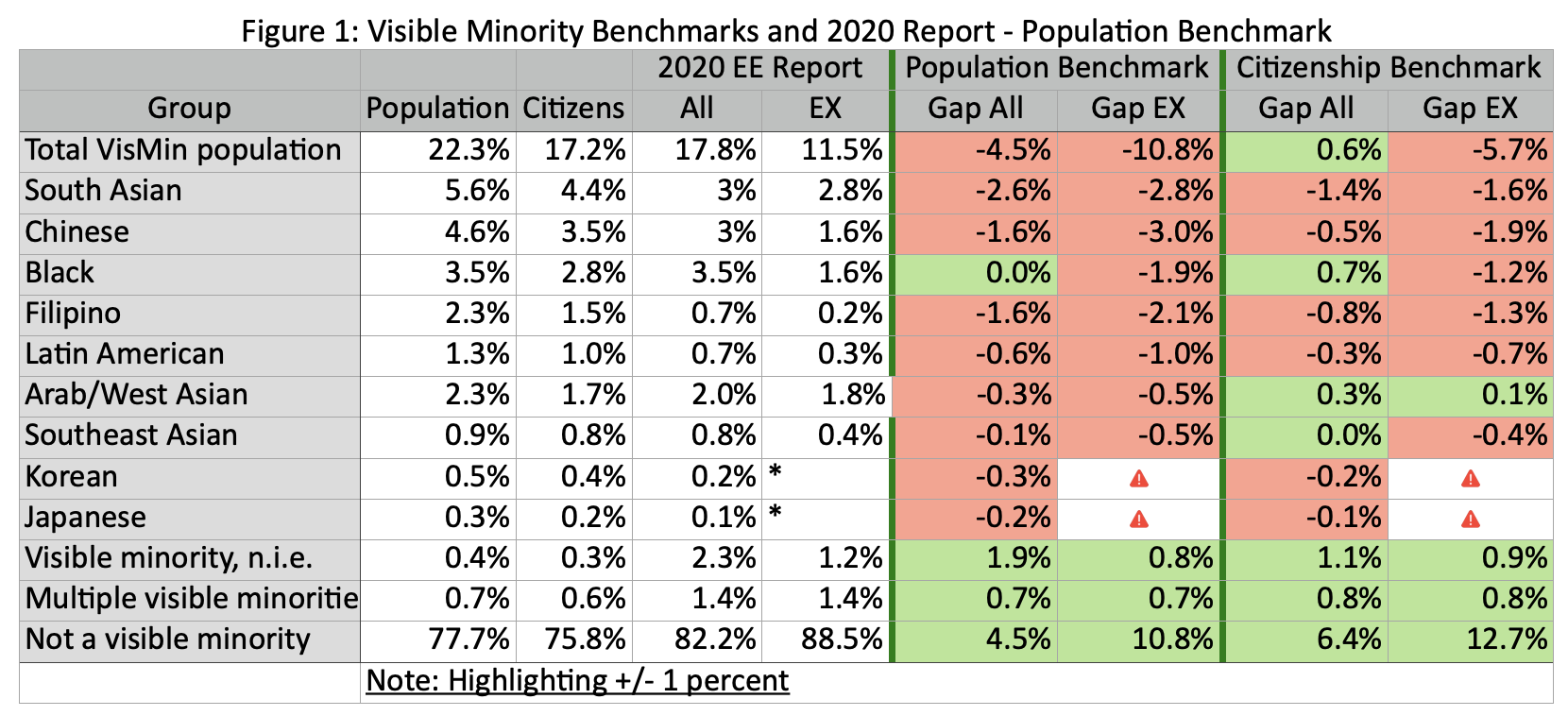
Unfortunately, the employment equity data for the public service does not indicate that Black public servants representation are disproportionately under-represented at the EX and other levels compared  to other visible minorities for the most part.

However, the public service employee survey does show higher perceptions of discrimination than most other visible minority groups.

One of the organizers behind the class action lawsuit filed against the federal government by Black public servants says he wants Canadians learning about the experiences of claimants in the case to “be an ally” amid a process that is causing “trauma” for those involved.

In an interview with The West Block‘s Mercedes Stephenson, Nicholas Marcus Thompson said the government is “speaking from both sides of its mouth” when it comes to squaring the treatment of claimants in the lawsuit in court with the comments officials make publicly about dismantling racism.

“They’re saying one thing publicly and they’re fighting Black workers in court,” he said, adding federal lawyers keep bringing forward motions “to delay the case.”

“The government has fully acknowledged that this issue exists in all of its institutions and that the pain and damage that it causes is real. And then it shows up in court fighting Black workers, forcing Black workers to recount the trauma that they’ve endured at the hands of the government for decades.”

The class action lawsuit filed last year alleges systemic discrimination by the government when it comes to hiring and promotional decisions in the federal public service, dating back decades.

Plaintiffs in the case are seeking $2.5 billion in compensation for lost income, opportunities, and lost pension values as a result of systemic discrimination that prevented qualified Black public servants from being promoted into higher paying and more senior jobs.

Federal public service pensions are calculated based on the averages of an individual’s highest earning years, meaning those who get paid less throughout their careers get smaller pensions when they retire.

“There has been a de facto practice of Black employee exclusion from hiring and promotion throughout the Public Service because of the permeation of systemic discrimination through Canada’s institutional structures,” the statement of claim says.

The statement of claim also says that equity measures taken to date have “merely masked the increasing disparity, exclusion and marginalization of Black Canadians” from equal opportunities in the public service, and that there remains a “pernicious” underrepresentation in the upper ranks.

Thompson said he wants to see the government come to the table and commit to working towards the solutions that plaintiffs say would help fix the problem, and to make legislative changes to the Employment Equity Act as well.

“We’re seeking to create a separate and distinct category for Black workers under the legislation to ensure that Black workers are not left behind when it comes to hiring and promotional opportunities,” he said. Thompson also added there needs to be a commission formed to track concrete progress on preventing future discrimination.

“Black people want to fully participate and they’re being denied that opportunity at the highest level and the largest employer in Canada,” he said.

“So listen to us. Be an ally and let’s work together because we want to make Canada a better place and to fully participate in Canada.”

Source: ‘Be an ally’: Black public servants facing ‘trauma’ amid class action, says organizer

La crise des passeports aboutira-t-elle à une action collective?

Unlikely that there will be a class action given the unlikelihood of success according to the experts cited:

Billets d’avion inutilisables, frais d’annulation d’hôtels, vacances gâchées : les voyageurs frustrés de ne pas avoir reçu leur passeport à temps pourraient-ils intenter une action collective contre le gouvernement fédéral pour se faire indemniser ? Des juristes consultés par Le Devoir estiment qu’un tel recours est possible, mais non sans embûches.

Il est évidemment possible de poursuivre en justice le fédéral, ce qui a déjà été fait à de multiples reprises, établit d’emblée le professeur de droit public de l’Université de Sherbrooke Guillaume Rousseau.

Il rappelle toutefois que, pour utiliser cette procédure spéciale qu’est l’action collective, il faut franchir une étape supplémentaire par rapport aux autres manières d’intenter une poursuite : celle de l’autorisation. Un juge se penche alors sur le dossier et vérifie s’il satisfait aux critères permettant aux personnes s’estimant lésées de procéder « en groupe ». Si oui, le magistrat donne le feu vert à la poursuite, qui peut aller de l’avant.

Le juge ainsi appelé à autoriser une action collective doit par exemple se demander si elle convient à la situation. On peut penser ici qu’elle serait préférable à des centaines ou à des milliers de poursuites individuelles, souligne le professeur Rousseau.

Mais pour avoir gain de cause, il faudra que les voyageurs qui ont subi des dommages (certains d’entre eux ont annulé leur voyage à grands frais ou ont manqué des jours de travail pour faire la file, même la nuit, afin d’obtenir le précieux document de voyage) prouvent que le fédéral a commis une faute.

En droit public, il y a faute quand une personne adopte un comportement qui s’écarte de celui de la personne raisonnable. « Ici, le gouvernement a-t-il agi comme un bon administrateur ? » demande le professeur Rousseau. En d’autres mots, est-il fautif de ne pas avoir eu assez d’employés pour traiter les nombreuses demandes de passeport déposées quand les restrictions sanitaires ont commencé à être levées ? Devait-il allouer plus de ressources au bureau des passeports ? Ou encore embaucher plus d’employés — et plus tôt — en prévision de la reprise des voyages internationaux ?

L’« argument pandémique »

Une telle action collective « n’est pas gagnée d’avance, mais ce n’est pas non plus impossible », juge Me Anne-Julie Asselin, avocate au sein du cabinet Trudel, Johnston et Lespérance, qui pilote de nombreuses actions collectives au Québec.

Selon elle, « la difficulté majeure du dossier » est de prouver la faute de l’État fédéral. Me Alexandre Brosseau-Wery, avocat associé chez Kugler Kandestin, est un peu plus optimiste : « Cela pourrait, à première vue, être un bon recours. »

Mais tous deux soulèvent la même embûche : pour justifier ses ratés et ses retards, l’État pourrait soulever comme moyen de défense la pandémie, qui a envoyé en congé de maladie bon nombre de ses employés et qui l’a forcé à affecter certains d’entre eux à d’autres tâches. Sans oublier la pénurie de personnel qui sévit un peu partout.

Cet « argument pandémique » a déjà été soulevé par plusieurs défendeurs devant les tribunaux ces derniers temps, rappelle Me Asselin. Mais deux ans plus tard, l’argument est-il toujours valable ? Les tribunaux pourraient y être moins réceptifs avec le passage du temps. Et puis, il y a quand même des choses qui auraient pu être prévues par le gouvernement, dit l’avocate.

Me Brosseau-Wery est du même avis : « On peut concevoir que, s’il avait agi diligemment et de manière proactive, il aurait pu mettre en place le nécessaire pour répondre à la demande plus élevée », et respecter ses propres normes et délais de traitement des passeports. De plus, c’est le gouvernement fédéral lui-même qui a levé certaines des restrictions de voyage, ce qui a mené à une forte demande pour ce document officiel.

Un autre argument fort pourrait être utilisé contre le fédéral, avance le professeur Rousseau : l’article 6 de la Charte canadienne des droits et libertés, qui prévoit que « tout citoyen canadien a le droit de demeurer au Canada, d’y entrer ou d’en sortir ». 

Empêcher un citoyen de voyager à l’extérieur des frontières pourrait « être constitutif de faute. » Et quand il est question de droits protégés par la Charte, les tribunaux ne sont pas très réceptifs à des excuses du type « problèmes administratifs », ajoute-t-il.

Témérité et immunité

Par contre, Me Asselin signale que des avertissements sur le site Web du gouvernement enjoignaient aux voyageurs de ne pas acheter de billets d’avion sans avoir leur passeport en main. Cela n’exonérerait peut-être pas entièrement le fédéral, mais pourrait possiblement mener à un partage de responsabilité, estime-t-elle : Ottawa pourrait plaider que l’achat de billets était téméraire. La ministre fédérale du Développement social, Karina Gould, a elle-même soulevé cet argument.

À cela, certains pourraient répliquer qu’à une certaine période, le bureau des passeports ne traitait que les demandes des voyageurs qui avaient un vol partant dans les 48 heures.

Il y a aussi une difficulté supplémentaire quand on poursuit le gouvernement : toute la question de l’immunité dont bénéficie l’État dans certaines circonstances, rappelle Me Brosseau-Wery. Le tribunal doit déterminer si la situation dommageable résulte d’une décision politique (par exemple, dans le cas d’une piste cyclable, décider ou non de la construire) ou opérationnelle (l’entretien de ladite piste afin qu’elle soit sécuritaire), illustre-t-il.

Car l’État bénéficie d’une immunité relative quant à ses décisions de nature politique, sauf en cas de mauvaise foi.

La limite entre une décision de nature politique ou opérationnelle est toutefois souvent difficile à établir, juge l’avocat. Mais cette immunité, si elle est applicable, peut jouer en faveur du gouvernement et faire échec à la poursuite, renchérit Me Asselin.

Source: La crise des passeports aboutira-t-elle à une action collective?

Indigenous public servants pursue class-action lawsuit against feds for harassment, discrimination in workplace

On the heels of the class action lawsuit initiated by Black public servants (my sense of looking at employment equity and public service employment survey data is that disparities are greater with respect to Indigenous public servants).

Likely coincidental, but announcement happening in parallel to the National Day for Truth and Reconciliation:

Systemic racism in federal Indigenous departments and agencies has led to human rights and Charter violations, allege two First Nations public servants—one current, one former—pursuing a multi-million-dollar class-action lawsuit against the federal government. 

statement of claim—the opening salvo for a possible class-action suit—outlining the experiences of lead plaintiffs Yvette Zentner and Letitia Wells was filed with the Federal Court in Calgary on Sept. 14. The pair are represented by lawyer Mathew Farrell of Guardian Law Group LLP. 

Ms. Zentner is a member of the Siksika Nation in Alberta and has been working for Indian Oil and Gas Canada (IOGC), a special operating agency within Indigenous Services Canada (ISC), since 1997. Ms. Wells is from Kainaiwa First Nation, a member of the Blackfoot Confederacy from the Treaty 7 Territory, and is a former contract employee of IOGC, where she worked from September 2015 until the end of March 2020. 

Both women say they experienced harassment and discrimination at work as a result of their Aboriginal identities, including through belittling gestures, microaggressions, racist remarks, and denial of fair advancement opportunities, but felt disempowered from reporting their experiences through internal processes and were denied “Indigenous practices and cultural methods of conflict resolution.”

The proposed class action, first reported by APTN News, is on behalf of all former employees of Indigenous and Northern Affairs Canada and all current and former employees of Crown-Indigenous Relations Canada (CIRNAC), ISC, or IOGC who experienced harassment or discrimination on the basis of race, culture, ethnicity, or gender.

The claim outlines that Ms. Zentner has “frequently” been denied training for advancement offered to others and has been denied “promotions for which she was qualified,” with, in one case, the non-Aboriginal family friend of someone she has filed two formal harassment complaints against being hired instead. Both complaints against that individual were found not to meet the threshold for harassment—one having been handled by the individual’s superior, rather than an independent third party—after which, the statement of claim describes that the person laughed at Ms. Zentner at work. 

Numerous complaints of harassment and abusive conduct by the same individual prompted a 2014 Workplace Assessment, reads the statement of claim, but while meeting with the third party hired to conduct it—who was later awarded a multi-year contract at the IOGC—no notes were taken and Ms. Zentner was allegedly told it was because they’d “already heard it before.” That assessment “was vague and resulted in no meaningful change,” and the individual who was the subject of complaints was given authority over the “steps of action taken to remedy the harassment.”

In another instance in 2016, someone found guilty of harassing Ms. Zentner by an external company was later promoted within IOGC. 

Ms. Zentner, through the statement of claim, reports having been “threatened with legal action in slander for bringing harassment concerns to the human resources manager.”  

“The harassment and dismissal of her complaints have taken a serious toll on Yvette’s physical and mental health, and she has experienced significant depression as a result,” reads the statement of claim. 

Ms. Wells is a single mother of two and is currently studying a double major in law and society and international Indigenous studies at the University of Calgary. She is also a survivor of domestic and sexual abuse, she told The Hill Times

As outlined in the statement of claim, she said she believes she lost her contract as “retaliation for speaking up about her experiences of harassment at the IOGC.” She reports having “frequently” had her “intelligence questioned”; facing “microaggressions, belittling physical gestures” and overhearing “racist language at the IOGC”; and being “singled out as a victim of aggressive micromanagement.” 

In one instance outlined in the claim, Ms. Wells experienced a “trauma flashback when her supervisor aggressively grabbed her arm in an effort to physically remove her from her cubical to have a private meeting in a board room.” An unofficial complaint over this incident “and the surrounding harassment she experienced” resulted in “no meaningful change.” 

Days after a complaint was launched by a superior over the harassment Ms. Wells was experiencing, she was demoted from her position “as retaliation for filing a complaint,” alleges the claim, and when her contract was terminated roughly two months later—after she had gone on sick leave—“no reason” was indicated. The claim also alleges that Ms. Wells “was denied promotions because she resisted sexual advancements by” a superior.

“The assault, ongoing harassment, and dismissal of her complaints have taken a serious toll on Letitia’s health, and she has suffered serious mental health consequences, including suicidal ideation as a result,” reads the statement of claim.

In an interview with The Hill Times last week, Ms. Wells spoke about her experiences and her decision to pursue a class-action suit. 

She said when she left the IOGC, she had intended to “walk away in peace,” but continued to reflect on her experiences and pray for guidance.

Last April, she was contacted by the APTN’s Brett Forester, who was working on a story about Indigenous public servants’ experiences. The resulting piece, “Death by a thousand cuts,” included interviews with “several former and current employees, many of them First Nations women,” who described a “work environment frequently marred by systemic racism, sexism, bullying, insidious revenge and fear,” reads the piece. 

After it went public, Ms. Wells said Indigenous people across Canada contacted her to thank her for speaking out and share stories of their own. Among them was Ms. Zentner—the pair were acquainted from their time working for the IOGC—and it was then that they decided to find a lawyer and pursue a class-action case, driven by their experiences and “the failure of the grievance processes within” the federal government.

“Within that company, we have seen the violence that we’ve endured, the harm that we’ve endured, the microaggressions, the micromanagements, the piling of the exec team, the tactics of toxic authority,” said Ms. Wells. “It’s a poisonous environment for authentic Indigenous people, and all we’ve ever wanted to do was make a change—make a change and contribute to the federal government, and help them reach reconciliation. And they’re failing at it, they don’t understand it.” 

While she’s now gone from the company and “safe,” Ms. Wells said it’s about “the safety of those that are still in there and the hardships they’re continuing to go through.” 

In May, the plaintiffs began to compile the experiences of other current and former Indigenous public servants as evidence of the systemic harassment and discrimination faced within the federal government and now have “well over two dozen” such accounts. 

Specifically, the statement of claim argues their section 15(1) Charter equality right was unjustifiably infringed “through discriminatory harassment which directly and adversely affects Aboriginal and female workers.” 

Moreover, it argues the federal government owed a duty of care, including to “maintain a workplace that is safe and free of harassment,” which was breached, and that multiple sections of the Canadian Human Rights Act have been breached, including for “differentiating against employees based on their Indigeneity and gender,” “limiting advancement opportunities” based on Indigeneity and gender, and for harassment based on “gender, race, colour, and ancestry.” 

It lays out that they are seeking unspecified damages and $25-million in punitive damages. 

But beyond that, Ms. Wells said she wants to see Indigenous-led, trauma-informed “safety outlets placed within the federal government for Indigenous people to turn to,” something she said wasn’t available to her.

“I felt dismissed right from the top. I felt that nobody understood what I was trying to say because they didn’t carry the inter-related trauma experience … to understand the microaggressions and how they triggered me, and the continuous attacks after that from a hierarchy of management,” said Ms. Wells. 

“Those grievance processes aren’t there to support you, they’re there to support the government,” she said earlier in the interview.

“The federal government has absolutely no safety outlets for Indigenous people who govern themselves by Indigenous laws to turn to.”

The federal government’s response

The Hill Times reached out to all three ministers’ offices last week, as well as the Treasury Board Secretariat, seeking a response to the allegations outlined in the Sept. 14 statement of claim and an update on the “thorough review” that had been pledged. Questions to the minister’s offices were directed to their departments’ shared media relations team.

Danielle Geary, a spokesperson for Crown-Indigenous Relations and Northern Affairs Canada, said “senior officials” at CIRNAC and ISC “began the dialogue of developing a Deputy Minister Action Plan to address the alleged racism, harassment, and discrimination against Indigenous employees” in April, the “groundwork” for which is being led by the Indigenous Employee Secretariat, which serves both departments “in collaboration with the Indigenous Voices Council and sector heads.” No deadlines have been “imposed” on this effort, which is instead “working with an urgency, while at the same time recognizing that an opportunity to engage with Indigenous employees must be provided.” 

CIRNAC, ISC, and IOGC have developed their own workplace harassment and violence prevention policies in compliance with Canada Labour Code regulations which came into force in January 2021, she said, and between March and August of this year an “initial assessment was conducted with all sectors” of the departments to “identify the risk factors, internal and external to the workplace, that may contribute to harassment and violence in the workplace,” including identifying preventative mitigation measures. 

Ms. Geary highlighted the Centre for Integrity, Values and Conflict Resolution as a “resource available” to all departmental staff, including employees of the IOGC, which “can provide support and explore options” for those who have “experienced or witnessed workplace harassment or violence.” The government is also “actively advancing the creation of an Ombudsperson Office in order to help employees and managers navigate existing systems, services and resources, and provide impartial advice on options for resolution to further supplement existing services and resources,” she wrote. 

She also highlighted the ISC’s launch of a task force on diversity and inclusion, equity, and anti-racism last May, and noted that CIRNAC and ISC have developed Indigenous cultural competency learning policies informed by a First Nations expert advisory committee.

“Indigenous Services Canada (ISC), Crown-Indigenous Relations and Northern Affairs Canada (CIRNAC), and Indian Oil and Gas Canada (IOGC) are committed to the health, safety and well-being of all employees. As departmental leaders within the federal government when it comes to advancing reconciliation and issues impacting the lives of Indigenous peoples, we recognize that discrimination against Indigenous employees is unacceptable and must be addressed,” reads the statement. 

“Harassment and discrimination can take many forms and can have significant repercussions. We take all allegations of harassment and discrimination very seriously,” she wrote, noting later that “senior management is committed to continued discussions with employees to address any employee concerns raised and further build a supportive environment, adapted to employee needs and experiences.” 

Mr. Farrell told The Hill Times he expects further documents related to the certification process—determining whether the court will hear the case as a class-action suit—will be filed in the coming months. That includes a certification record from the plaintiffs, laying out detailed evidence from the many stories collected.

Hundreds of current and former Black federal public servants are already pursuing a proposed multi-million-dollar class-action suit against the federal government. Launched in December 2020, it alleges the government has failed to uphold the Charter rights of Black employees by failing to provide a harassment- and discrimination-free workplace and by actively excluding Black public servants.

Nicholas Marcus Thompson, a spokesperson for Black Class Action Lawsuit, said of the proposed Indigenous lawsuit: “We welcome this legal action and we are open to working with this group and providing any support for the Indigenous community, which has been left behind for way too long and it must be addressed now.”
Source: https://www.hilltimes.com/2021/09/29/indigenous-public-servants-pursue-class-action-lawsuit-against-feds-for-harassment-discrimination-in-workplace/319641?utm_source=Subscriber+-++Hill+Times+Publishing&utm_campaign=b6d6e8ec00-Todays-Headlines-Subscribers&utm_medium=email&utm_term=0_8edecd9364-b6d6e8ec00-90755301&mc_cid=b6d6e8ec00&mc_eid=685e94e554