Austria offers citizenship to the descendants of Jews who fled the Nazis

Of note, the impact of Brexit on citizenship applications:

Tens of thousands of British citizens are among the many descendants of Jewish refugees who can apply for Austrian citizenship from Tuesday under a new law that campaigners say finally delivers a measure of historic justice for their ancestors’ expulsions under Nazi rule.

About 120,000 Jewish refugees fled persecution after the Nazis took power in Austria in March 1938. The second most common destination after the US was the UK, with up to 20,000 refugees registered in 1945.

Most refugees naturalised in their adoptive countries out of necessity, but the postwar Austrian state had a bar on dual citizenship, so considered them to be foreigners.

Obstacles to former refugees reclaiming Austrian citizenship were lifted in 1993, after the country began its first real debate about its culpability for Nazi-era crimes. Around 10% of survivors took it up. But a law extending the possibility of dual citizenship to descendants eluded its advocates in the Austrian parliament, suggesting a lack of interest in restoring the once 200,000-strong Jewish community, even in principle. One rightwing MP reportedly objected: “Enough has been done for the victims already.”

Source: Austria offers citizenship to the descendants of Jews who fled the Nazis

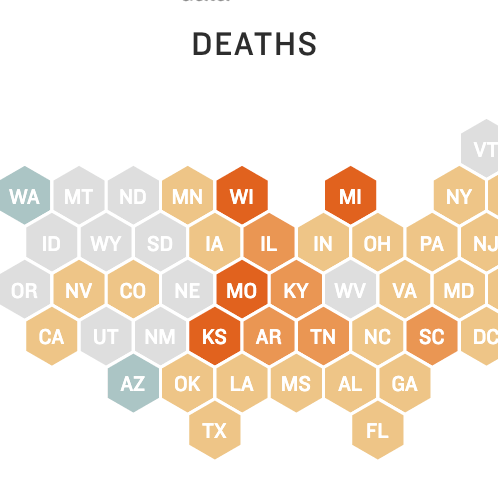
‘Racial Inequality May Be As Deadly As COVID-19,’ Analysis Finds

Yet another study, highlighting racial disparities in health:

Even during the COVID-19 pandemic, mortality rates and life expectancy are far better for white Americans than they are for Black people during normal, non-pandemic years, according to an analysis published this weekin the Proceedings of the National Academy of Sciences.

The analysis, which looked at U.S. mortality statistics back to 1900, finds an additional 1 million white Americans would have to die this year in order for their life expectancy to fall to the best-ever levels recorded for Black Americans — back in 2014. That year, the average life expectancy for African Americans was 75.3 years — similar to the average life expectancy for white Americans back in 1989, says study author Elizabeth Wrigley-Field.

“It’s as though Blacks have just missed out on the last three decades of [life expectancy] progress,” says Wrigley-Field, a demographer and infectious disease historian at the Minnesota Population Center at the University of Minnesota.

The findings underscore the pandemic scale of the racial inequalities in mortality in the U.S., she says.

“We don’t know what the ultimate scale of COVID-19 deaths is going to be,” Wrigley-Field says. “But what we can say is that white deaths to COVID would have to increase from what they are right now by a factor of [more than] five to make white death rates this year look like the best that Black death rates have ever been.”

She notes that 2014 was also the year when Black Americans had their lowest age-adjusted death rates on record — 1,061 deaths per 100,000. By comparison, for whites, the age-adjusted mortality rate was 899 per 100,000 in 2017 (the last year with available data). To match the lowestmortality rates on record for Black Americans, more than an additional 400,000 white Americans would have to die this year, her analysis found.

Thus far, COVID-19 has taken a disproportionate toll on Black people and other communities of color. Black Americans have experienced the highest death rates from the pandemic — about 88.4 deaths per 100,000, compared to 40.4 per 100,000 for white Americans, according to data compiled by the APM Research Lab.

But there are also longstanding systemic reasons behind these racial health disparities, notes Dr. Utibe Essien, a health equity researcher with the University of Pittsburgh — factors that include Black Americans’ well-documented disparities in access to quality health care.

African Americans have higher rates of underlying medical conditions, including diabetes, heart disease and lung disease, that are linked to more severe cases of COVID-19. Black people in the U.S. also bear the burden of historic discrimination policies, Essien says, such as redlining policies in housing that limited African Americans’ ability to accumulate wealth through property ownership. And wealth is a significant driver of health, Essien notes.

“I think it’s important to … appreciate that the pandemic didn’t start something new, but that these disparities really, unfortunately, have been seen for decades, if not centuries,” he says.

Indeed, Wrigley-Field says she was inspired to carry out the current analysis after conducting an earlier study on regional mortality rates from infectious disease during the early 20th century. “The thing that we found that stunned us was that white deaths in 1918 during the flu pandemic” — which killed more than a half-million Americans — “were less than what Black deaths had been in every prior year.” A century later, she writes in her paper, “the basic fact endures that Black disadvantage is on the scale of the worst pandemics in modern U.S. history.”

Wrigley-Field says she hopes her analysis will help reframe the discussion in the U.S. about the kinds of policy changes that society can realistically embrace to address health disparities stemming from systemic racism.

“To me, this really changes the question about how we think about, ‘What are we willing to do to stop these deaths?’ ” she says. “Because we know what we’re willing to do to stop deaths from COVID. We’re basically willing to change every aspect of how we live, how we work, how we do our family lives, whether we travel, whether schools are in session. Absolutely everything is on the table. And all of that is controversial, but it’s actually all pretty popular, too. ”

“Meanwhile,” she says, “we have this similar or probably larger scale of deaths happening every year, just to Blacks. But proposals that would try to address that in some way are often very controversial. Most people do not support, for example, reparations. Most people do not support defunding the police, although the opinions about that are changing pretty quickly. … To me, these results, more than anything, just kind of reframe that question about what’s realistic.

“So what are the things that we think are unimaginable that would address racism that we have to similarly say, we have no choice but to do this because the scale of death that’s resulting is unacceptable?”

Source: ‘Racial Inequality May Be As Deadly As COVID-19,’ Analysis Finds

Feds creating ‘inventory’ of racial minorities to fill senior public service posts

Reasonable approach. I recall when I worked for Global Affairs in the 90s, that a similar practice existed, run by HR, to identify promising women foreign service officers for development assignments and advancement. Some 20-30 years later, most of the names became senior officials:

The Liberal government wants to create an “inventory” of Black, Indigenous and other racialized people who could play high-ranking roles in the federal public service.

It is looking for an executive search firm to create and maintain the list of candidates from minority groups, as well as people with disabilities, who could be considered for deputy minister and assistant deputy minister positions.

Details of the planned database are contained in a request for proposals posted on the federal government’s procurement and public tenders website.

They were first reported by the True North Centre for Public Policy on its news site.

The call for the staffing consultant to do this work was put out by the Privy Council Office, a bureaucratic operation that supports the prime minister and cabinet.

The request for proposals does not disclose how much the contract will cost.

“The federal public service is stronger and most effective when it reflects the diversity of the Canadians it serves,” says the request for proposals.

“While progress has been made in recent years to achieve gender parity in the senior leadership community, there is more progress to be made in increasing representation of Black people and other racialized groups, Indigenous people, as well as persons with disabilities.”

Ordinarily, public servants rise through the ranks before attaining the most senior executive posts of deputy minister and assistant deputy minister.

However, the Employment Equity Act, which applies to federally regulated industries, Crown corporations and some portions of the federal public service, designates women, Indigenous Peoples, other visible minorities and people with disabilities as groups requiring special measures to overcome barriers to employment.

According to an analysis by Andrew Griffith, a former director general at the Immigration Department, in the October 2017 issue of Policy Options, less than four per cent of executive positions in the federal public service were Indigenous and less than 10 per cent were other visible minorities.

Caroline Xavier is the only Black assistant deputy minister, appointed in February at Immigration, Refugees and Citizenship Canada.

“We are in 2020. How come it took so long? It shouldn’t have,” she told the CBC in June.

The winning bidder will be required to update the list every two months.

Source: Feds creating ‘inventory’ of racial minorities to fill senior public service posts

Alberta Teachers’ Association president calls for curriculum advisor to be dismissed after racist articles surface

The adviser in question, Chris Champion, was the lead staffer under then IRCC minister Kenney on citizenship and the point person on the citizenship guide, Discover Canada, which remains in use.

My account of the development of the guide and some of the issues and challenges can be found in ch 2 of Policy Arrogance or Innocent Bias: Resetting Citizenship and Multiculturalism. While discussions were at times intense, we had the opportunity to provide our advice and comments and maintained a good working relationship.

Although Discover Canada improved coverage of Indigenous history compared to the earlier vapid, A Look at Canada, the unreleased draft guide will have more in-depth discussion of Indigenous peoples. Hard to know why, almost five years since then Minister McCallum promised a revision, still not released.

Equally hard to imagine one making such a comment about Indigenous histories being a “fad” in 2019, both substantively and politically:

On Wednesday August 27, 2020 the Alberta Teachers’ Association (ATA) called for the resignation of a Dr. Chris Champion from the Alberta Curriculum Review Panel.

It was recently brought to light that the member of the Alberta Curriculum Review Panel – which was made in order for the UCP Government to overhaul and review the previous NDP school curriculum – was a writer of racist articles which was titled “Alberta’s Little History War,” which called the inclusion of First Nation perspectives in school lessons a “fad.”

This particular article was written just last year, and it was written by Dr. Champion who is advising the social studies curriculum of Alberta.

The ATA, as the professional organization of teachers, promotes and advances public education, safeguards standards of professional practice and serves as the advocate for its 46,000 members.

In a news release by the ATA, an advisor who has called the inclusion of First Nations perspectives in school lessons a fad needs to be dismissed from his role in advising on Alberta’s social studies curriculum, says ATA President Jason Schilling.

“Minister LaGrange, Chris Champion has got to go,” said Schilling.

Given the well-documented writingsand publications that have recently surfaced, Schilling says that Chris Champion has no place advising the curriculum writing work currently under way in Alberta.

“Champion’s appointment to advise curriculum is in direct opposition to the Joint Commitment to Action that both Alberta Education and the ATA signed in 2016. The minister must either dismiss Champion or rescind its endorsement of the Joint Commitment.”

In June 2016, the Joint Commitment to Action was signed by representatives of the Government of Alberta, the National Centre for Truth and Reconciliation and five Alberta education stakeholder organizations as part of an enduring commitment to respond to the calls to action from the Truth and Reconciliation Commission.

Schilling says that in his school re-entry meeting with Minister LaGrange on August 19, he told the minister that they needed another meeting dedicated to discussing curriculum and that Champion had to go.

Acknowledging that the Association has been almost exclusively focused on a safe return to schools in September, Schilling says the Association regrets not issuing an earlier statement on this important matter.

This is just the latest in the story of the Albertan Government’s racist employees. There is not only Dr. Chris Champion, but there is still Jason Kenney’s racist speechwriter Paul Bunner. The ATA is just the latest to call for the firing of either of the racist state employees; the Sixties Scoop Indigenous Society of Alberta (SSISA), Grand Chiefs of Treaty 8, Chiefs of Treaty Six, the Blackfoot Confederacy, and the Assembly of First Nations regional chief for Alberta have also voiced their concerns.

Source: https://www.theglobeandmail.com/canada/alberta/article-alberta-teachers-association-president-calls-for-curriculum-advisor-to/

Police service boards grapple with diversity, inclusion amid calls for change

Source: Police service boards grapple with diversity, inclusion amid calls for change

‘Birth tourism’ articles in Vancouver press

Two articles on my recent release of the 2019-20 CIHI non-resident self-pay birth statistics (Birth Tourism: Non-resident births 2019-20 numbers show steady increase).

Starting with Douglas Todd of the Vancouver Sun:

The number of women coming to Canada to give birth, which automatically bestows citizenship on the baby, is expanding much faster in British Columbia than the rest of the country.

Richmond Hospital is the centre of the trend, often called “birth tourism.” New data released this week shows one out of four births in the past year at the hospital in the Vancouver suburb, which features many illicit “birth hotels” advertising their services in Asia, were to foreign nationals.

St. Paul’s Hospital and Mount St. Joseph’s Hospital, both in Vancouver, are also fast turning into hubs for birth citizenship, with the two hospitals experiencing a 38 per cent rise in births by non-resident women, one in seven of the total.Virtually no country outside North and South America provides citizenship to babies solely because they’re born on their soil.The newly released figures show there were 4,400 births in Canada in the past year to non-resident mothers, an overall hike of seven per cent. Ontario doctors still preside over the most non-resident births, 3,109, with one hospital in Toronto, Humber River, having a sudden jump of more than 119 per cent.But Ontario’s volume of privately funded procedures has not risen nearly as fast as in B.C., which had a total of 868 non-resident births. That’s a six-fold increase from 2010.

Source: Canadian Institute for Health Information/Andrew Griffith

The new data, compiled by Andrew Griffith, a former senior director of the federal Immigration Department, comes from the Canadian Institute for Health Information, which captures billing information directly from hospitals up until the end of March. It doesn’t include births in Quebec.

Birth tourism has recently been strongly condemned by Richmond Mayor Malcolm Brodie, Liberal MLA Jas Johal (Richmond-Queensborough), former Liberal MP Joe Peschisolido (Richmond East), the head of Doctors of B.C. and others.

Prime Minister Justin Trudeau’s government, which controls immigration policy, has been silent on the matter. Former Conservative party Leader Andrew Scheer said in 2018 he would end birth tourism. NDP leader Jagmeet Singh has accused those who raise the issue of being guilty of “division and hate.”

In February, Richmond council sent letters to Immigration Minister Marco Mendicino, to leading B.C. politicians and to Vancouver Coastal Health. Council called for “permanent changes to immigration laws which would end automatic Canadian citizenship being bestowed on babies born in Canada to non-resident parents who are not citizens of Canada.”Last week, Mendicino’s department finally responded, saying the minister is aware “of the increase in births by non-residents in Canada” and promised to “monitor” it.“All levels of government are trying to pass the buck” on birth tourism, said Au. He acknowledged Richmond was itself failing to combat the dozens of shadowy birth hotels and agents in the city, which help women give birth in Canada for fees in the tens of thousands of dollars.Ads aimed at women in China who want to have babies in Canada tout luxurious accommodation, birthright citizenship in the “world’s most livable country,” 12 years of free public education, university fees just 10 per cent of those paid by foreign students, free health care and eventual family reunification for the parents of the baby who obtains the passport.Au said Richmond officials could be cracking down on underground birth-tourism operations because they don’t have proper business licences. But council and staff, he said, haven’t yet come up with an effective way to do so.

Au is also suspicious that hospital administrators and the few doctors who perform full-fee deliveries for foreign mothers are not countering the problem for financial reasons. “We don’t want our hospitals dependent on this income.”

Source: Canadian Institute for Health Information/Andrew Griffith

In a piece on his website, Multicultural Meanderings, Griffith says figures provided by the Canadian Institute for Health Information show all “non-resident births” in Canada, which includes women who give birth while here as foreign students or temporary workers. Griffith estimates about 50 per cent of the total are full-blown “birth tourists.”

After Griffith wrote a 2018 piece on the subject for Policy Options, three female academics responded by saying those who want to end birthright citizenship are “demonizing pregnant migrant women,“ “encouraging violence against stateless people” and “fuelling discrimination.”

Nevertheless, the academics supported Griffith’s call for better data. He lamented this week, however, that the federal departments that previously promised to link health care and immigration data to monitor non-resident births have “stalled.”

David Chen, the former Pro Vancouver mayoral candidate, has publicly expressed concern about birth tourism. He said Thursday that granting citizenship to anyone born on Canadian soil “poses problems on several fronts.”

As a child of immigrants, Chen, who is now a vice-chair of Vancouver’s NPA party, said it “shortchanges those who went through proper channels only to see people with much more disposable cash jump the line and have an easier route to Canadian citizenship.”

Australia, Britain, New Zealand, France, Germany and South Africa have all, in relatively recent times, altered their citizenship laws to discourage birth tourism. More than 150 nations do not permit it.

While recognizing the issue is complicated, Au, a nine-year member of council, said he believes he understands the views of most Richmond residents, where the fast-changing population is now 53 per cent ethnic Chinese, 24 per cent white, seven per cent South Asian and seven per cent Filipino.“Ethnic Chinese feel the same as everyone else in Richmond,” he said. “They’re concerned.”

Source: Douglas Todd: ‘Birth tourism’ jumps 22 per cent in B.C.

Graeme Wood in Business intelligence for BC:

It was another record year for birth tourism in B.C., according to new data released by health officials.

The province saw a 21.9% spike in non-resident births between April 1, 2019 and March 31, 2020, as 868 non-residents of Canada – the vast majority of whom are understood to be Chinese nationals on tourist visas – paid to give birth in local hospitals in order to garner automatic citizenship for their newborns. The prior year, 712 non-residents gave birth in B.C.

“Vancouver area hospitals continue to have the largest percentages of non-resident births, with an active cottage industry supporting women coming to give birth from China,” said researcher Andrew Griffiths, who first reported the new annual data from the Canadian Institute for Health Information.

The epicentre of the budding industry is Richmond, where an annual record of 502 births to non-residents took place, up from 458 in the year to March 2019 and 474 in the year to March 2018.

Those 502 newborns represent 24% of the 2,094 total newborns at Richmond General Hospital. That is the highest total and share of non-resident births at a hospital across Canada. Meanwhile, Vancouver’s St.Paul’s Hospital is second in the nation, with 14.1% of all births being to non-residents. There, 203 babies were born to non-residents.

Non-resident births also peaked across Canada, with CIHI reporting 4,400 newborns to non-residents in 2019/2020, up 7.3% from the previous year’s total of 4,099, excluding Quebec.

B.C. figures do not include international students, who are enrolled in the public healthcare system. As such, Griffiths said B.C.’s figures are a more accurate indication of birth tourism (those non-residents who fly to Canada for the explicit purpose of obtaining citizenship for their newborns).

Griffiths, a former director general of the Citizenship and Multiculturalism Branch, Department of Citizenship and Immigration, said he estimates about half of the non-resident births outside of B.C. to be tied to parents on tourist visas. However there is no reportable data along those lines, as a federal review of the issue, first announced in November 2018, appears stalled.

“Hopefully, the work to link healthcare and immigration data will resume shortly, not only to provide more accurate numbers with respect to birth tourism but to improve our understanding of healthcare and immigrants more generally,” said Griffiths.

1

Non-resident births by hospital, 2018-2019 and 2019-2020. Figure by Andrew Griffiths

Glacier Media requested information on non-resident births tied to patients on tourist visas but Vancouver Coastal Health Authority said such data does not exist and the task to obtain it from paperwork would be too onerous – although such data is what the federal government stated it would acquire in its review.

Canada is one of two Western countries, along with the United States, to offer birthright citizenship – a concept also known as jus soli – meaning babies born to two foreign nationals on tourist visas are granted automatic citizenship.

It remains unclear exactly what the federal government is doing to enact policies to curb the practice. To date, no enforcement measures have been announced, unlike in the U.S., which has convicted “baby house” operators of money laundering and fraud in 2019.

The U.S. State Department further cracked down on birth tourism in January, with a new rule that “travel to the United States with the primary purpose of obtaining U.S. citizenship for a child by giving birth in the United States is an impermissible basis” for a tourist visa.

The lack of action to address birth tourism, which is widely perceived by the public as an abuse of Canada’s immigration system, has frustrated Richmond community activist Kerry Starchuk, who has documented dozens of “baby houses” in the Vancouver suburb offering accommodation and doula services for Chinese nationals, who typically arrive three to four months prior to giving birth on a six-month or extended tourist visa.

“It’s a joke. It’s so blatant you can see it. They’re advertising this in China,” said Starchuk.

In a written response to Starchuk, dated July 8, 2020, Immigration, Refugees and Citizenship Canada (IRCC) said it was “aware of the increase in births by non-residents in Canada.”

IRCC said, “While statistics indicate that birth tourism is not widespread, IRCC is researching the extent of this practice, including how many of the non-residents are short term visitors.”

Birth tourism is technically legal in Canada, in so much that nothing bars a pregnant woman from entering Canada to give birth, so long as they are honest with border agents.

“Providing false information or documents when dealing with IRCC is considered misrepresentation and has immigration consequences.  However, non-residents giving birth in Canada is not considered fraud under the Citizenship Act,” stated IRCC.

“Additionally, under the Immigration and Refugee Protection Act, a persons are not inadmissible nor can they be denied a visa solely on the grounds that they are pregnant or that they may give birth in Canada,” wrote IRCC.

Starchuk said the federal Liberal government has dragged its feet on the matter.

“I’m not interested in writing any more letters. I want action,” she said.

2

Non-resident births in Canada by year. Figure by Andrew Griffiths

Richmond Conservative Members of Parliament Kenny Chiu and Alice Wong have proposed a hybrid jus soli policy that would bar those on tourist visas from obtaining citizenship for their newborns. Newborns of non-resident international students, for instance, would continue to obtain citizenship under their proposal.

Griffiths said birth tourism businesses in Richmond are at a stand still with COVID-19 flight restrictions and visitor visas from China down 72.2% between January and March, and down 99.79% by June.

A poll from Research Co. in February, 2019 showed almost three in four (73%) believe it is time to end automatic citizenship for people born in Canada (adopting rules used by most Western countries). An Angus Reid poll in March, 2019 showed 60% of Canadians want the law changed.

Immigration Minister Marco E.L. Mendicino declined to be interviewed on this matter.

Source: Record-setting year for birth tourism in B.C. prior to pandemic

Nigeria’s wealthy use Henley in Caribbean passports for cash plan

More on the citizenship-by-investment industry:

A year ago, the office of Citizenship by Investment Program (CIP) in the small Caribbean island nation  of St. Lucia had received no applications from any Africans in its nearly five years of operations.

But in the past few months, it has issued up to 60 passports to Nigerians and is reporting steady increases in applications from the country—still its sole African market.

That sharp rise reflects spiking demand among Nigeria’s wealthy private citizens who are increasingly tapping into “investment migration” programs offered by foreign countries. The programs allow foreign nationals to obtain fast-tracked citizenship and passports or permanent residency permits in exchange for specified amounts of cash investments. The payment for the passports can come in form of direct “contributions” to the development funds set up by the national governments or through investment in real estate projects which offer the promise of not just passports but also possible profits.

With around 40,000 passports believed to have been issued through investment migration programs globally, citizenship by investment is now estimated to be a $3 billion industry. It is often favored by high-net worth individuals from countries with “weak” passports often from countries in sub-Saharan Africa and some Middle Eastern countries.

“What you have is a community of wealthy individuals who cannot travel without visas.”

Henley & Partners, the world’s largest investment migration consultancy, has also set up shop in Africa’s largest economy after seeing a sharp rise in demand from the country over the past three years. The office in Lagos is only Henley & Partners’ third in Africa, in addition to offices in Cape Town and Johannesburg opened six years ago.

“The reason we opened in Nigeria is because we saw significant potential in the market with growth in private wealth without global mobility for high net worth individuals,” says Paddy Blewer, public relations director at Henley & Partners. “What you have is a community of wealthy individuals who cannot travel without visas.”

That reality is best captured by the weakness of Nigeria’s international passport. In fact, Nigerian passport holders can visit two fewer countries now than they could in 2010 without first obtaining a visa. The country also suffered the worst decline in passport power over the past decade, according to rankings on the annual Henley Passport Index.

But even paperwork-intensive visa application processes have also gotten more complicated for Nigerians. Under the Trump administration, for example, US visa application fees for Nigerian applicants have been increased, an interview waiver process  for visa renewals for frequent travelers has been indefinitely suspended while a ban has also been placed on issuing immigrant visas to Nigerians. The net effect of these restrictions resulted in Nigeria recording the largest global drop-off in visitors to the US last year.

In search of improved international mobility, investment migration programs by Caribbean nations offer wealthy Nigerians and other citizens a legal and established workaround that ticks two crucial boxes: price point and access.

For instance, St. Lucia’s lowest-priced program, a “contribution to the national economic fund,” costs $100,000 for individuals and $140,000 for a family of four, as well as $15,000 for each additional family member. “That pricing model has really resonated well with the Nigerian community,” says Nestor Alfred, chief executive of St. Lucia’s CIP office. “A lot of our Nigerian applications consist of families.”

Other Caribbean islands including Dominica as well as St. Kitts and Nevis also offer investment migration programs with minimum costs of $100,000 and $150,000 respectively, a lot less than similar European programs typically cost. The US program issues permanent residence permits in exchange for investment ranging from $500,000 to $1 million.

But in addition to relative affordability, passports of Caribbean island nations also rank much higher than Nigeria’s on a global scale. For instance, St. Lucia passport holders have visa-free and visa-on-arrival access to 145 countries—more than triple Nigeria’s figure. And for extra context, St. Lucia passport holders’ visa free access allows them into the entire European 26-country “Schengen” area, the UK, and Switzerland.

Taking it up

With Nigeria’s oil-dependent economy battered by the pandemic and set for its worst recession in three decades, there are few indications interest in investment migration from Nigeria will slow down.

Nigeria and South Africa dominate demand from Africa and currently account for 85% of Henley & Partners’ business on the continent, with Nigeria growing rapidly with an interest in Caribbean-based citizenship programs.

That momentum will likely remain fueled by Nigeria’s super-wealthy with the country’s population of people with a net worth of more than $30 million—currently at 724 people—forecast to grow by 13%in the next five years.

But as it turns out, interest in emigration is not restricted to Nigeria’s super-wealthy alone. Over the past three years, middle-class Nigerians have also increasingly emigrated through skill-based programs offering legal pathways to residency and citizenship in Canada and Australia. In the last five years alone, the number of Nigerian immigrants issued permanent resident permits in Canada has tripled.

One distinction however is that high net-worth individuals who have earned most of their wealth locally are typically simply looking to boost their mobility options rather than permanently relocate. “What we’re dealing with people whose businesses and largely their wealth is derived from Nigerian investment—they’re not going to leave permanently,” says Blewer. “This is about being able to go where they want at the drop of a hat. It’s not about leaving Lagos.”

Double-checking

For tourism-based economies in the Caribbeans, investment migration programs offer a significant alternative to receiving foreign direct investment. And as recent history shows, with the Covid-19 pandemic paralyzing global travel and tourism, the revenue diversification opportunities these programs offer can prove vital. Indeed, after Hurricane Maria devastated Dominica in 2017, the government sought to shore up tourism deficits by reducing some of its processing fees to make its investment migration programs more attractive and in turn, provide much-needed funds to rebuild and boost the local economy.

But Dominica has also been caught in the crosshairs of a corruption scandal involving its passports program. Last year, an Al Jazeera investigation showed high-powered officials involved in brokering transactions to sell diplomatic passports to foreign business people suspected of corrupt dealings. Diezani Alison-Madueke, Nigeria’s embattled former minister of petroleum who is wanted for alleged corrupt dealings while in office, was identified in the investigation as one of the recipients of a diplomatic passport under questionable circumstances.

The scrutiny from such scandals amplify why investment migration programs claim to place a premium on due diligence. Even though it’s not legally required to, Henley & Partners says it carries out client verification processes, covering sources of wealth, and criminal history.

“We’re not interested in persons involved in military, government officials, or politically exposed persons. Our interest is more in executives and young professionals,” Alfred tells Quartz Africa. As such, the increased applications from Nigeria being primarily from private business executives across sectors, including banking, is ideal for St. Lucia because “it’s easier for us to determine the source of funds,” Alfred says.

Source: Nigeria’s wealthy use Henley in Caribbean passports for cash plan

Canada needs to walk the talk on migrant rights

COVID-19 has exposed a number of the long-standing issues, particularly with respect to agriculture workers:

If you drive around the farming communities of Southern Ontario, you’ll see workers in the fields toiling under the hot sun. Their exhausting work puts food on Canadian tables. It also puts food on tables in Mexico, Jamaica and across the Caribbean. These front line workers ensure we don’t go hungry, particularly during the pandemic; they are critical to our food security.

Almost all migrant workers arriving in Canada were tested and confirmed to be free of COVID-19. Through no fault of their own, hundreds have contracted the virus through community transmission after they arrived, and three have died. The virus spread quickly because of their cramped living quarters and inadequate working areas.

Canada has been a leader in establishing international standards on migration, but our country’s treatment of migrant workers runs counter to its international commitments and threatens to damage its global reputation.

In 2018, Canada endorsed the Global Compact for Safe, Orderly and Regular Migration at the United Nations. The Global Compact is a framework of principles, objectives and actions to strengthen migration standards and protect the rights of migrants. It applies to both sending and receiving countries, and by endorsing it, Canada made a commitment to implementing those standards.

Over two years of negotiations, Canada was recognized as a leader by the UN. Canada identified and proposed concrete solutions to global migration challenges. It worked closely with civil society organizations and built partnerships that crossed the world. Canada was regularly asked by the Global Compact organizers to mediate with countries that were backpedalling on migration issues and to assist in garnering international commitment for the compact’s implementation.

Canada’s accomplishments are doubly impressive given the rise of populist movements around the world. In the U.K., the Brexit side won in part because of a campaign against migration, and in the United States, President Donald Trump ran on an anti-migration platform, subsequently pulling out of the Global Compact. Globally, anti-migrant sentiment has been growing. Even in Canada, a misinformation campaign claimed the compact would impinge on sovereignty and encourage mass migration.

Now COVID-19 has put a spotlight on Canada’s own policies. The outbreaks among farm workers have exposed the pre-existing weaknesses in how we treat these migrants.

For decades, Canada’s migrant worker programs have been plagued with vulnerabilities to abuse, exploitation, workplace injuries and deplorable living conditions. This vulnerability is particularly true for those on work permits tied to only one employer. Migrant workers risk losing their jobs and livelihoods if they raise complaints.

Implementing the Global Compact can help Canada do better.

The compact’s underlying, non-negotiable principle is respect for human rights, including labour rights. It also promotes partnerships among governments, employers and migrant worker organizations. It stresses that policies should “not create, exacerbate or unintentionally increase vulnerabilities.” Following the premise of the compact means that including migrant workers as partners is an important first step. For example, working directly with migrants early in the pandemic to understand why they feared COVID-19 tests could have reduced the number of outbreaks.

In adopting the compact, states committed “to adapt options and pathways for regular migration in a manner that facilitates labour mobility and decent work.” In order to do so, one action outlined in the compact is to provide “flexible, convertible and non-discriminatory visa and permit options.” In line with the compact, Canada’s migrant worker programs should move from providing migrants with employer-specific visas to open or occupation-specific visas or even permanent residency.

Not tying workers to one employer reduces the risk of exploitation and abuse. Furthermore, not fearing reprisals, migrants may more often report violations and access services, thus recognizing their rights. Canada moved toward open visas with last year’s regulatory change allowing migrant workers at risk of workplace abuse to apply for an open visa, usually for one year. However, the onus is still on the migrant worker in a vulnerable situation.

Migration, and specifically the impact of COVID-19 on migrant workers, is a global story as much as it is a national one. What we do at home affects how we are seen elsewhere. Recently, Foreign Affairs Minister François-Philippe Champagne noted that Canada would “continue to play a leadership role and continue to defend and promote our values and principles around the world.” If Canada is committed to a global leadership role, it must improve its own standards before advocating to others the importance of principles and values.

By truly improving migration standards at home and acting on the international commitments it has made to protect the most vulnerable, Canada will build healthier communities and stronger economies – at home and abroad.

Source: https://www.theglobeandmail.com/opinion/article-canada-needs-to-walk-the-talk-on-migrant-rights/

The Happiest and the Most Racist: Institutional Racism in Nordic Countries

Of note:

The Nordic countries are well known for topping charts globally in education, equality, and happiness levels. Nordic welfare systems provide citizens with myriad state benefits and free healthcare and education from pre-school to university. However, in The European Union Agency for Fundamental Rights’ “Being Black in the EU” study, Finland has also topped the charts for something far more insidious as well: racism.

Based on the study made in 2018, 63 percent of people of African descent in Finland have experienced racially motivated harassment, compared to a group average of 30 percent in the 12 European Union states surveyed. In both Denmark and Sweden, the number was 41 percent.

Besides the EU survey, another study showed that the coronavirus death rate in Sweden was 220 percent higher among people born outside the country. In an interview with the HPR, Vesa Puuronen, a researcher on racism and sociology professor at the University of Oulu, commented that “it can be partially blamed on the lack of instructions in minority languages. [Without access to adequate information] those individuals could not act in the appropriate way to be spared from the virus.”

A study shows that in Finland views on immigration have become less tolerant in the past five years. In 2015, 65 percent of the Finnish population strongly disagreed with the statement that the “white European race must be prevented from mixing into darker races because otherwise, the European autochthonous population will go extinct”, but in 2020 the number had decreased to 56.

Segregation problems can be found all across Nordic territories. Iceland recently introduced a custom-designed car to carry out border surveillance, which has been used to disproportionately target Albanians and Romanians; such practices have been criticized as racial profiling. In Denmark, the government has compiled a “ghetto list” of neighborhoods for a decade; new proposals of dealing with the neighborhoods have been identified  by United Nations High Commissioner for Human Rights as “hugely troubling and risks heightening racial discrimination against people of migrant origin – further ‘ghettoising’ them.”

In Sweden, segregated neighborhoods have long been considered a major problem, which has also become a tool for the right-wing to oppose immigration. Nationalist parties overall have been on the rise in Europe, and the Nordic countries are at a breaking point. If Nordic nations want to keep taking pride in their progressiveness and egalitarianism, definitive steps against racism must be taken now.

Systemic Racism in Academic and Professional Settings 

Nordic countries have free and well-working education, but there is inequality embedded in the same system that has been admired worldwide. The 2020 OECD report about Finland criticizes that their education is unevenly distributed. In an interview with the HPR, Michaela Moua, a senior officer at the Office of the Non-Discrimination Ombudsman in Finland, recognizes racially motivated guidance in schools, especially in the Finnish as Second Language studies: “Black and Brown students are often advised to take these classes even if Finnish is their first language.”

She adds that “this shows how it is still widely thought that one cannot be a person of color and Finnish at the same time.” Even though the original goal of Finnish as Second Language studies was to support equal language learning, downward-guidance deteriorates the development of academic language, which will affect those students’ later studies. Often, these same students are also advised downwards in student counseling. Women, in particular, are guided towards care working, even if they are planning on going to university. This kind of downward guidance could affect those individuals’ income levels in the future.

In the Nordic countries, university admissions work solely on grades, which leaves no room to account for different student contexts. This creates inequality, as it incorrectly assumes everyone to have the same background and opportunities to receive excellent grades. In the interview, Vesa Puuronen agrees that “the Nordic university admissions system does not include any attempts to level inequalities”.

Going from school to the labor market, language skills is one particularly troubling factor. In an interview with the HPR, Fatim Diarra, Vice-Chair of the Finnish Greens Party, noted that the Finnish labor market is not prepared enough to accept people without perfect language skills to “access working life and become beneficial for society”, especially considering that Finnish, for instance, is considered one of the most difficult languages in the world to learn.

In the interview, Michaela Moua also mentions a research study by Akhlaq Ahmad from the University of Helsinki. Five thousand fake resumes were sent out from five different ethnic groups: Finnish, English, Russian, Iraqi, and Somali with the same qualifications and language proficiency. The research shows that a foreign-sounding name is a significant factor in job applications; local sounding names received callbacks multiple times more likely than foreign-sounding names.

Moua recognizes that there are two levels of discrimination in the Finnish labor market: Horizontal and vertical discrimination. In horizontal discrimination, a specific group gets stuck in a low paying field even when they often have much higher qualifications than the job actually requires.

In vertical discrimination, a person that is discriminated against might be hired for a job, but career progress is unfairly challenging because of racially-motivated factors. The job benefits, like salary and access to training by the employer, are lower, but despite that, the person that is discriminated against is reluctant to report their unfair treatment even if they experience clear racist harassment. “It is so difficult to get the job in the first place so those people do not want to ruffle the waves, so to say, even when their peers left and right are going higher up the ladder”, says Moua.

Hiding Racism Won’t Make It Disappear

Shouldn’t the Nordic states that take such pride in their supposed progressive values be above such behavior? Yet, there is still widespread reluctance to accept racism as an actual problem, which is reflected in the current history curriculum.

It is typically thought that one major reason for racial discrimination is that Nordic societies have long been homogenous, blonde-haired, blue-eyed people who have only gone through rapid demographic changes due to increased immigration since the 1990s. However, the idea of homogenous Nordic societies can be contested. Michaela Moua told the HPR that Finland’s racist history towards Roma and Sami surprises most people because it has not been written about in the school books and it is not part of common knowledge to know about the extreme measures taken to assimilate those minority groups. The Finnish nation is largely considered homogenous, even though there have been people like Tatars, Sami, and Roma for hundreds of years. “Global nationalistic phenomena have affected how our narrative was switched into a strong belief of homogeneity”, comments Moua, but “studying these historical events gives a lot of answers to why things are here how they are now”.

Moua adds that based on the reports sent to the Finnish Ombudsman office, Romas are a group that suffers widespread discrimination in Finland: for instance, restaurants and other services refuse to let them in or they are demanded to pay beforehand. Romas often end up changing their name to get a job or an apartment more easily, even though they have been living in the region for hundreds of years and do not typically consider themselves outsiders. According to Moua, “this is a strong example of ethnic profiling happening here.”

Diarra said in the interview that “it is dangerous to squeeze the situation in the US straight into our context, and this challenges the activists in the Nordic countries to understand how hundreds of years of oppression elsewhere affect our culture.” There are basically no slave owner statues to loot in Helsinki or Oslo, but the thought is prevalent in the region that immigrants come to the Nordic countries just to idle with the state benefits supported by the welfare system.

According to Diarra, studies show that the system currently blocks certain people from truly accessing the supporting net, which entraps people of color in cycles of unemployment and poverty. It must be more widely pondered how the system favors the people born inside the country and fails to give adequate support to minorities who are not able to access the network on their own. Neighborhood segregation has long been a problem in Sweden in particular, but segregation is a threat to the whole region. If that isn’t addressed, the supposed multiculturalism of the region will only be lip service as people become estranged from people from different ethnic backgrounds.

A major problem in the Nordic countries is that racism is not properly recognized. Puuronen noted that “the term [racism] is loosely used and there are people who express racist opinions but get away with them by saying ‘I am not a racist, but…’” In his opinion, an ordinary citizen’s perception and understanding of racism are highly incomplete. According to Diarra, political discussions about racism are outdated and engage in discourse that  “had been done in other countries 50 years ago”. Moua notes that “in Finland racism is understood only as a conscious and deliberate act, but simply not shouting racist slurs on the streets does not make you an anti-racist.” The discourse must be switched from whether there is racism to how to abolish it.

Looking Forward

Recent happenings in the US have brought the issue of racism into wide discourse worldwide, including the Nordic countries. Even though the survey discussed at the beginning of this article shows that trust in police was highest in Finland and happiness appears to be high among immigrants, Black Lives Matter protests in the region demonstrate that things may be more turbulent than the data initially suggests. Policy initiatives to improve workplace equitability have also been spearheaded recently, acknowledging a deep-seated institutional problem. For instance, Helsinki city has introduced an anonymous recruiting policy, meaning that job applications for the city are sent without name, ethnicity, age or gender.

“Globally, we are on the top, but it doesn’t mean we don’t have things to do”, says Michaela Moua. According to her, it is crucial for the Nordic governments to be committed to the human rights programs they are currently pursuing and promote decisions that will affect people’s everyday life in a positive way. Vesa Puuronen adds that more well-conducted and comprehensive research should be made in order to understand the current issues deeper. Those who do not have to experience racism themselves must try to consider how others experience it, and the illusion of Nordic exceptionalism must be broken.

The Nordic countries are in a situation where they still can choose their direction, but action must be taken now and it won’t necessarily be easy. “Our welfare state system truly can ensure opportunities for everyone, but it should be updated and developed further. We are proud of our society and when someone points out flaws, it challenges us to think critically of ourselves, which is extremely difficult”, says Diarra, but “the era of self-reflection has now begun.”
Source: The Happiest and the Most Racist: Institutional Racism in Nordic Countries

University of Toronto research to explore racism in health care during pandemic

Should be an interesting study which hopefully will identify some pragmatic approaches:

A new research project will look at the impact of the COVID-19 pandemic on racialized communities as well as existing biases in the health-care system.

The national project was launched by Roberta Timothy, an assistant professor with the University of Toronto’s Institute for Pandemics.

Timothy says many members of the Black and Indigenous communities already avoid interacting with the health-care system mostly due to experiences with racism and biases.

During a global pandemic, Timothy says that can have grave consequences for the well-being of those communities.

“People will seek help when it’s an emergency and by then it’s too late,” she says. “Because of the bias, because of anti-Black racism, because of violence they experience, their health becomes more at risk.”

Timothy says there’s a need for more data to effectively understand the impact of COVID-19 on racialized communities.

The Ontario government refused to collect race-based data earlier in the pandemic, but it was forced to change course in June. Now it mandates the collection of data around race, income, household size and language when following up with people who’ve been infected with COVID-19.

A spokesman for the Ministry of Health said the government is engaging with people from racialized communities and other health equity experts regarding the data collection.

“We plan to share findings of this data collection, informed by this engagement,” David Jensen said in an email.

Jensen said the ministry is concerned about the spread of the virus in “certain groups of people and in certain neighbourhoods,” and would welcome additional insights and information about how COVID-19 is affecting racialized communities.

Early data compiled by Toronto Public Health showed that 83 per cent of COVID-19 cases occurred in racialized people. Black people represented 21 per cent of cases in Toronto, but only nine per cent of the city’s population.

“There is growing evidence in North America and beyond that racialized people and people living in lower-income households are more likely to be affected by COVID-19,” said Dr. Christine Navarro,  associate medical officer of health for Toronto.

“While the exact reasons for this have yet to be fully understood, we believe it is related to both poverty and racism.”

Timothy’s project will collect more data about how Black people interact with the health-care system, but also about economic impacts, evictions, support networks and essential work being done by marginalized communities.

“An underlying part of the project is not only to bring better data, but to support the community in strategizing and finding interventions to find how we get through this,” said Timothy.

Rudayna Bahubeshi, a Toronto resident and post-graduate student in public policy, says she has first-hand experience with racism in the health-care system. During a stint in a mood disorder ward when she was 18, Bahubeshi said a nurse mistook her for a 30-year-old patient — the only other Black person in the ward at the time — and tried to make her take the other person’s medication.

Bahubeshi says she argued but was ignored, and believes her race was a factor in the way she was treated by staff. She says the nurse only realized the mistake when the other patient happened to walk by.

In another hospital visit during the pandemic, Bahubeshi says she was taken to a “COVID ward” because she had fever. She says staff would not answer simple questions about whether there were risks involved with using a shared washroom, or about the fact that some staff weren’t wearing PPE.

“The way she (the nurse) was engaging with me was very much that I was the problem,” says Bahubeshi. “When I talked to a doctor afterwards they told me I was fully in the right and that was unacceptable.”

Bahubeshi says experiences like those erode her trust in the public health system and its ability to provide quality care for her. She says more data about the experience of Black people in health care will be a first step in the right direction.

“The fact that we don’t have race-based data is a way we’ve decided that Black communities are not a priority,” said Bahubeshi.

Timothy’s national project is set to begin in a few months, and will involve surveys and focus groups among Black Canadians.

Source: University of Toronto research to explore racism in health care during pandemic