Warren | The Global Transformation of Christianity Is Here

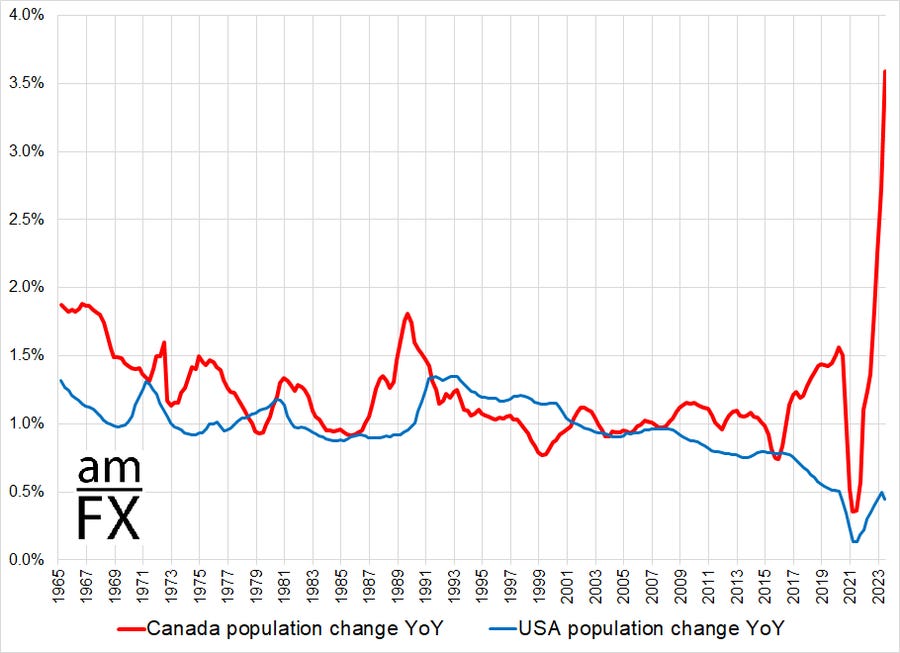
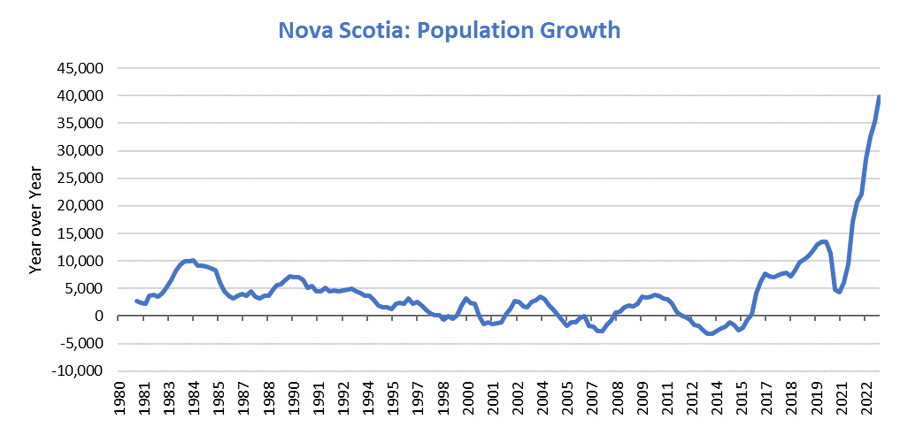
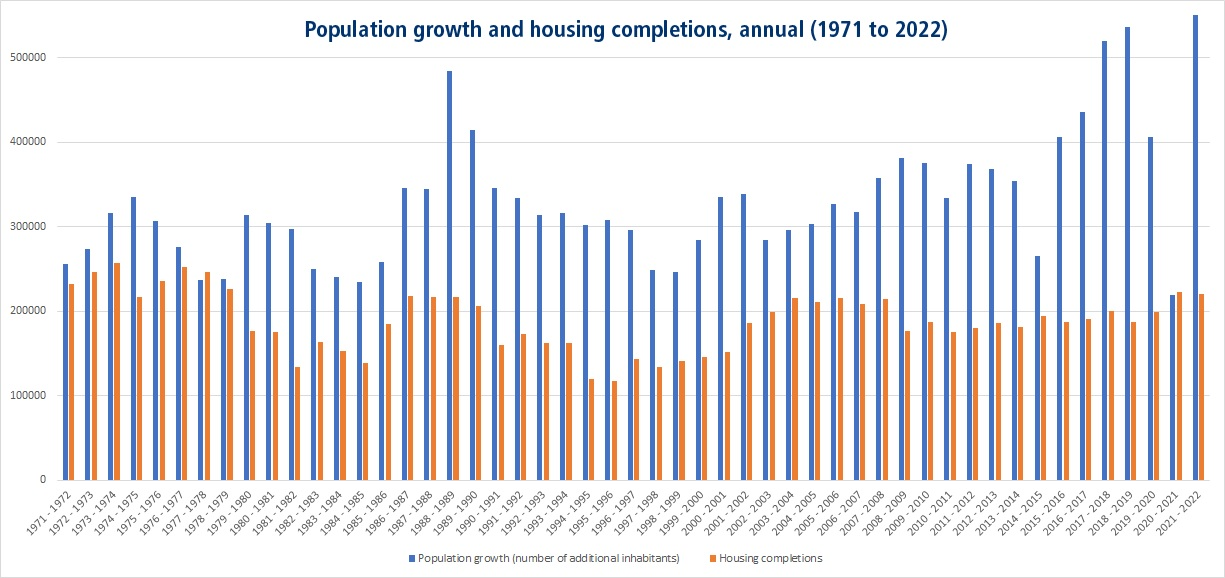
Of note, similar trend as in Canada:

A few months ago, I went to a worship service that, in many ways, was like a thousand evangelical services I’d seen before. People raised their hands while singing and cried out “Glory to God!” and “Amen.” People stood and gave “testimony,” telling stories of finding hope or healing from pain. They read Bible verses and prayed prayers. There was a clear difference, however, from most worship services I’ve attended: Nearly everyone in the room was an immigrant and a person of color. We sang in English but also in Spanish, Portuguese, Igbo and Nepali.

I was at a meeting of the Greater Austin Diaspora Network, a coalition that brings together immigrant leaders representing about 40 churches in the Austin area. They estimate that there are over 150 such churches around Austin.

“The face of Christianity is undergoing a fundamental transformation,” Sam George, the director of the Global Diaspora Institute at Wheaton College, told me. “What is happening in America is just a part of a larger transformation because Christianity is getting a new face. It is getting more Black and brown and yellow.”

The last century has seen a near-complete reversal of the global demographics of Christianity. Currently, the fastest growing Christian communities are in the “majority world” — the term I use for non-Western countries that make up most of the world’s population.

In his book “The Unexpected Christian Century,” Scott Sunquist notes that in 1900, about 80 percent of the world’s Christian population lived in the Western world and about 20 percent in the majority world. By 2000, only 37 percent lived in the Western world, and nearly two-thirds lived in the majority world. Sub-Saharan Africa had the most striking growth of Christianity, growing from around 9 percent Christian at the beginning of the 20th century to almost 45 percent at the end of it. There are around 685 million Christians in Africa now.

“Christianity at the beginning of the 21st century,” said George, “is the most global and most diverse and the most dispersed faith.”

In Africa, Latin America and Asia, Christianity is growing in historic denominations, such as Roman Catholicism and Anglicanism, but the most explosive growth has been in Indigenous, independent Pentecostal churches. Sunquist argues that in addition to Roman Catholic, Protestant and Orthodox churches, we ought to start talking about a new family of “spiritual” churches that have no historical ties to Western church traditions. These “spiritual” churches are largely not a result of colonial missions. In fact, the meteoric rise of Christianity in the majority world occurred only after the withdrawal of colonial powers when Christianity became more indigenized.

In popular religious discourse in the West, we tend to associate Christianity with white Westerners and European influence. At this point, our assumptions about this need to change. The largest church congregation in the world belongs to Yoido Full Gospel Church in Seoul, an Assemblies of God church, which has around 480,000 members. Statistics vary but even conservative estimates guess there were around 98 million evangelical Christians globallyin 1970. Now, there are over 342 million.

In my own tradition of Anglicanism, with nearly 60 percent of all Anglicans living in Africa and over 30 percent in Nigeria and Uganda alone, there are most likely more Anglicans in Sunday services in these two countries than in America and England combined. Latin America boasts 14 megachurches with total membership over 20,000. And by some estimates, China will have more Christians than any other country by 2030.

Source: Opinion | The Global Transformation of Christianity Is Here

Canada Strong and Free Network conference: Canada’s housing crisis panel excerpt

Notable reference to immigration and housing and how they need to align:

A panel on Canada’s housing crisis was packed with Hub contributors, including John Pasalis, who made the point that the country’s housing supply will not be able to keep up with its immigration targets.

“Governments need to sort out supply and find a way to build faster and build more before tripling our population growth. That should be a pretty basic concept, but apparently I was brought here because it’s controversial,” said Pasalis.

“You’re doing a disservice to everyone who is coming here,” said Pasalis.

Chris Spoke, a housing advocate and Hub contributor, said the issue of densification in big cities is a good one for conservative parties because they can upset big city voters who never vote for them with pro-development policies, and stem the tide of “Toronto refugees” who are moving farther out to the suburbs and pushing prices up.

“If you are a Peterborough NIMBY, you should be a Toronto YIMBY,” said Spoke.

Source: Canada Strong and Free Network conference: Canada’s housing crisis panel excerpt

Wiseman: Canada’s productivity weakness has a greater impact than most believe 

Welcome greater focus on productivity and per capita GDP from by the chair of the Board of Directors of the Century Initiative, rather than just population and overall GDP growth (the Coalition for a Better Future has a tighter focus on productivity than CI but is largely composed of similar members):

When Finance Minister Chrystia Freeland tabled her budget last year, Canada’s growth prospects were identified as a significant vulnerability and priority for the government. She sensibly recognized human capital and the green transition as the first two of three “pillars” required to tackle the problem, then identified the third as the “Achilles heel of the Canadian economy” – poor productivity.

Having recently torn my Achilles tendon, I can tell you the sharp, sudden pain experienced is quite unlike the slow, creeping problem that productivity growth has become in Canada. This is not an issue that suddenly emerged, rather it has sunk intrinsically into the fabric of our commercial activity and eroded Canada’s appetite for innovation.

Compared to peer countries, our productivity has been receding for decades, and its importance has been largely ignored by Canadian business and political leaders. An Achilles injury, while extremely unpleasant, means you hobble around for a few months until you get back on your feet – but that isn’t the case here. Our productivity stagnation continues to spread to all areas of the economy, like a malignant tumour.

While some economic indicators are rosy for Canada – unemployment is low, wages are rising – productivity rates are not. Labour productivity growth has slowed to less than 1 per cent today from 2.7 per cent in the 1960s and 1970s. The OECD has us ranked dead last of all the advanced economic countries in the world in its predictions for real GDP per capita growth from both 2020-30 and 2030-60.

While it’s widely known that Canada lags the United States, we have also fallen behind France, Germany, Britain, Australia and Italy in productivity. The Canadian work force is less productive because, on average, companies here use less capital and technology, are less innovative, and operate at a smaller scale in an economy plagued by insularity. And it’s getting worse.

It’s not just about having a more market-driven economy. Germany is outperforming us with a highly socialized economy and massive government investments in information and communications technology, as well as an advanced apprenticeship system and a business culture that prioritizes worker training.

When one works through the numbers, it is clear that the primary reason for our malaise is a lack of private-sector investment in research and development and in work force upskilling. Canada ranks 17th of OECD countries regarding the percentage of GDP spent on R&D and among the lowest of G7 peers.

To catch up, Canada must show discipline in focusing incentives to catalyze the private sector where it can have the greatest impact. We must prioritize R&D and training incentives that contribute to physical and human capital efficiency strategies.

Stagnation was less concerning during the longest bull market in history, when a forceful rising tide of monetary policy fuelling economic growth was able to mask many concerning, deeper trends. But that veil has now been removed, revealing that Canadian firms are not well-positioned to innovate and grow.

The United States contributes to our economy through its innovation and production, but it is also our biggest competitor. The number of patent applications submitted by Canadian businesses in 2020 was roughly 1.6 per cent of those submitted by American businesses, which is staggering underperformance even when GDP-adjusted.

Foreign companies and investors looking at Canada will always use the U.S. as a benchmark, given our shared geographic and cultural features. The Americans, recognizing we are at an industrial and economic turning point, have thrown down the gauntlet with public policy and private-sector initiatives to further advance their productivity growth over the coming decades. The most significant being the Inflation Reduction Act, earmarking US$500-billion in new spending and tax incentives to boost clean energy, labour skills and other areas that will contribute to future productivity growth.

To avoid falling further behind, our government should respond meaningfully in the federal budget this week. Last year’s budget introduced the yet-to-be-defined $15-billion Canada Growth Fund, which would use public money to entice more capital to invest in Canadian industry and is one of several bodies created to help Canadian firms innovate. While these are steps in the right direction, they lack the scale the U.S. can deploy and run the risk of having the government or other public bodies choosing winners, something that private capital is much more adept at.

A policy lever that Canada has considered but never implemented is an “intellectual property box,” which would tax income from patents and other intellectual property at a lower rate, effectively guarding against “poaching” from lower tax jurisdictions.

Recent budgets have attempted incentivization through things like the scientific research and development program that provides tax incentives to businesses that conduct qualifying R&D activities. These are available for eligible R&D expenditures, including depreciation expenses on capital assets – matching them to the revenue they generate over time. But programs like these need to be expanded broadly across industry and made straightforward. Unfortunately, eligible candidates often don’t receive the intended incentivesowing to narrow application of the rules by our tax regulators.

The 2022 budget included some tax incentives for small businesses, but these appear more driven by politics than sound economic planning. OECD data shows that productivity growth is typically driven by the top 10 per cent of firms in an industry – the biggest players. This year’s budget should include incentives for large firms located in sectors rife for innovation, in energy, e-commerce, advanced manufacturing, transportation and finance, to spend directly on R&D, and simplify the process so they can move with alacrity to get things built and skills developed.

On skills development, Canada has a natural advantage with its broad public support for immigration and merit-based application program that brings in a high percentage of working-age people with credentials. But immigration already accounts for almost our entire labour force growth – the greater challenge lies in ensuring new workers can contribute with their potential and skillsets.

According to Statistics Canada, more than 25 per cent of immigrants with foreign degrees end up in jobs that they are overqualified for, in roles that require a high-school diploma at most. Improving recognition of foreign credentials, simplifying our immigration processes, and strengthening training and education opportunities are all important ways to gear our human capital strategy towards productivity. With economic demands shifting quickly, employers have skin in the game and will need to intensify efforts to implement work-integrated learning.

The future of our country depends on a more productive economy, underpinned by improved R&D spend and a more skilled work force. In this budget, the government must embrace every tool at its disposal and commit to bold action if it wants to be the architect of a prosperous, innovative Canada that stands tall in the face of international competition.

Source: Canada’s productivity weakness has a greater impact than most believe

Kershaw: Canadian immigration targets respond to, and create, generational tensions [housing availability and affordability]

Of note, on another externality of increased immigration levels:

There is an untold story underpinning Canada’s plans to ramp up annual immigration targets from about 250,000 to half a million by 2025.

Yes, wars, famine, discrimination, poverty and climate change offer many humanitarian reasons to welcome more people to Canada. So too do the many job vacancies in our country that need filling.

But more immigration also allows provincial and federal politicians to dodge a hard conversation with baby boomers about taxes. By dodging it, we risk harming newcomers and boomers’ kids and grandchildren. To reduce this risk, we badly need our governments to revisit changes made to taxation for the Canada Pension Plan in the mid-1990s that were not applied to medical care and Old Age Security (OAS).

Here’s the challenge: When boomers started out as young adults, there were 6.9 working-age Canadians for every person over the age of 65. Now there are 3.3.

This wouldn’t pose a problem if medical care and OAS had beenbuilt on a tax system that required Canadians to pay during their working years for health and income supports in retirement. But that isn’t how our policy works – with the exception of CPP.

By the mid-1990s, the federal government recognized that a shrinking ratio of workers to retirees required changes to CPP. To keep the program solvent for future generations, CPP shifted to a prepay system. The payments individuals contribute over their working lives are closer to the average cost of CPP benefits they are expected to use in the future. The change increased annual CPP contribution rates by 65 per cent but ensured the long-term viability of the program.

Unfortunately, Canadian governments didn’t similarly adapt revenue collection for OAS and medical care, which remain “pay as the country goes” systems. Governments collect revenue in each year to correspond (more or less) with the cost of benefits paid in that same year to whomever is using the programs.

This lack of foresight means government budgets are now in a precarious position. Boomers dutifully paid taxes according to the rules of the day. But those rules asked them to pay for the smaller percentage of retirees who came before them – not for the full cost of the medical care and income support they would actually use. As a result, those rules risk leaving unpaid bills for their offspring or insufficient public funding for the medical care and OAS on which boomers will increasingly rely.

Given this historical legacy, larger immigration targets are attractive to governments.

Rather than talk about whether boomers paid enough in taxes to fully cover the cost of their medical care and OAS, Canada plans to attract more workers to increase the total number of people available to pay taxes.

This might have been a fine solution, but our invitation to come to Canada isn’t what it used to be.

It now takes 17 years to save a down payment on an average home in Canada, compared with five to seven years in the 1970s through the 1990s. Whereas in decades past it was possible for newcomers to believe in the Canadian dream that a good home was within reach for a hard-working family, that dream has become increasingly elusive, especially in British Columbia and Ontario.

A sad reality is that the children of immigrants who arrived in the 1970s to the 1990s often struggle with housing affordability more than their parents did. They struggle even though they may have acquired better educations and found better-paying jobs than their parents did upon arriving in Canada decades earlier.

Here we uncover a hard truth. The much larger numbers of newcomers our governments aim to attract will join younger Canadians in the search for affordable housing – and will struggle to find it. Through no fault of their own, a rising number of newcomers will amplify demand for housing, driving up home prices. Rising prices increase housing wealth for long-time homeowners, often boomers – and this additional housing wealth is largely sheltered from taxation.

The irony should not be lost on anyone. The very solution that enables governments to avoid asking boomers to pay more in taxes for their medical care and OAS contributes to many boomer homeowners gaining tax-sheltered wealth. All the while, that strategy erodes housing affordability for their kids and grandchildren, along with the newcomers we welcome to our country.

It’s no surprise that politicians want to avoid talking to boomers about taxes, because that’s a risky business come election time. But we have to find a way to overcome this reticence by returning to the question: Why did we change taxation for CPP decades ago but not for OAS and medical care? And what can be done now to raise additional revenue for medical care and OAS from (affluent) boomers to compensate for the lack of adaptation decades ago?

If we don’t engage with these questions, we will remain en route to securing the well-being of many boomer Canadians at the expense of undermining the financial security of those who follow in their footsteps, including their offspring and millions of hard-working immigrants.

Paul Kershaw is a policy professor at UBC and the founder of Generation Squeeze, Canada’s leading voice for generational fairness. You can follow Gen Squeeze on Twitter and Facebook and subscribe to Dr. Kershaw’s Hard Truths podcast.

Source: Canadian immigration targets respond to, and create, generational tensions

Lisée: Le nouvel Ancien Testament

Nice satyrical take on replacing words in existing literature:

Transportons-nous dans les locaux de la Commission de réécriture intersectionnelle des manuscrits et propos offensants et fautifs. La CRIMPOF. Sur le grand tableau recensant les travaux accomplis, on constate que beaucoup de textes pour enfants ont déjà traversé la moulinette à n’offenser personne. Les livres du Dr Seuss, d’Enid Blyton (Le club des cinq) et de Roald Dahl (Charlie et la chocolaterie) sont déjà réglés. Au rayon des adultes, les James Bond ont aussi connu un premier toilettage. Peut-être faudra-t-il y revenir, car dans aucun des 14 ouvrages d’Ian Fleming son héros n’a de partenaire gai, ni même fluide.

L’équipe de zélés censeurs a beaucoup de mérite. L’ampleur de la tâche est telle que d’autres baisseraient les bras. Mais ils sont rappelés à l’importance de leur labeur par cette maxime, mise en évidence sur le mur, du grand auteur anglais George Orwell : « Tous les documents ont été détruits ou falsifiés, tous les livres réécrits, tous les tableaux repeints. Toutes les statues, les rues, les édifices, ont changé de nom, toutes les dates ont été modifiées. Et le processus continue tous les jours, à chaque minute. » C’est dans son roman phare 1984. Des ignares y voyaient un avertissement contre l’oppression intellectuelle. Les salariés de la CRIMPOF savent qu’il s’agit au contraire d’un énoncé de mission.

L’édifice est vaste comme un salon du livre, avec des sections par région, sujet, âge. La déchiqueteuse est fortement sollicitée au rayon « Allemagne, Deuxième Guerre mondiale ». Les jeunes Allemands se sont dits profondément choqués qu’on leur remette constamment sur le nez l’action des nazis, alors qu’ils n’y sont pour rien. Désormais, fini le chagrin causé par ces rappels traumatisants.

Aujourd’hui s’engage un débat important dans la section consacrée aux textes dits sacrés. Que faut-il faire de la Bible, de la Torah, du Coran ? Trois des ouvrages les plus lus au monde. Davantage que les Harry Potter. C’est dire.

Chacun vient faire rapport au commissaire en chef.

— Ça commence mal, dit l’un. Dieu crée l’homme à son image, puis la femme à partir d’une simple côtelette, pour le désennuyer.

— La femme, un produit dérivé ? Ça n’a pas de sens, opine le commissaire. Il faut réécrire. Et les autres genres, ils arrivent quand ?

— Ça empeste l’hétéronormativité, enchaîne le lecteur chargé du Déluge. Dieu dit à Noé et à sa femme d’embarquer un mâle et une femelle de chaque espèce dans son arche.

— Vous savez quoi faire, dit le commissaire. Mais que se passe-t-il avec ceux restés à terre ?

— Euh, c’est que… Dieu les noie.

— Tous ?

— Oui, tout le reste de la population mondiale. C’est comme qui dirait le plus grand crime contre l’humanité de l’histoire.

— Bon, reprenez-moi tout ça, mon petit. Écrivez que Noé et ses polyamoureux partent en croisière, tout simplement.

— Dans la Torah, dit un autre, il y a ce passage où les deux filles de Lot saoulent leur père et couchent avec lui pour tomber enceintes. Ça ne fait pas un peu culture du viol à l’envers ?

— Oui, et on me signale deux viols dans la Bible. Gommez-moi tout ça. Au moins, avec la libération des esclaves hébreux de l’Égypte, on tient un bon filon, non ?

— Ça commence bien, en effet, répond le responsable, mais une fois qu’ils sont sortis d’Égypte, Dieu les implore de trucider beaucoup de monde : « quiconque ne chercherait pas l’Éternel, le Dieu d’Israël, devait être mis à mort, petit ou grand, homme ou femme ». On est en plein nettoyage ethnique, là !

— Coupez, coupez. De toute façon, c’est trop long.

— Parlant de violence, patron, moi, je suis sur le Coran et j’ai repéré quelques passages assez, disons, tranchants.

— Une dizaine ? Enlevez-les !

— Pas une dizaine, 164.

— Moi, dans la Bible, enchaîne un autre, j’en ai 842 !

— C’est inadmissible, dit le commissaire. Mais pour le Coran, c’est une religion minoritaire. Vous connaissez notre devise. Il ne faut pas seulement accepter la différence, il faut aimer la différence.

— Certes, répond le chargé du texte, mais, dans les pays musulmans, ils sont majoritaires. Alors, ne doivent-ils pas, eux, aimer la différence ?

— Absolument, tranche le commissaire. C’est pourquoi nous avons dépêché des délégations de la CRIMPOF à Kaboul, à Téhéran et à Riyad. D’ailleurs, quelle nouvelle ?

— Ils sont en prison, monsieur le commissaire.

— Pour quel motif ?

— Inimitié envers Dieu.

(Silence gêné)

— Bon, reprend le commissaire en se tournant vers un autre lecteur. Au moins, avec vous, qui travaillez sur le Nouveau Testament, on est dans l’amour du prochain.

— Oui, ça se présente plutôt bien, surtout qu’on peut suggérer que Jésus a le béguin à la fois pour Marie Madeleine et pour Jean. On est dans la fluidité.

— Super, rien à retoucher, donc.

— Il y a quand même le moment où Jésus est très agressif avec des commerçants. Il renverse leurs étals !

— Écrivez qu’il était mécontent et qu’il a poliment laissé une note dans la boîte à suggestions.

— Puis il y a la crucifixion, c’est très gore. Des clous, un glaive, des épines. Ça traumatise beaucoup de monde.

— Vous avez raison. Mais l’intrigue nécessite qu’il soit puni, sinon il n’y a pas de suspense. Que pourrions-nous mettre ?

— J’ai une idée, dit l’un ! Trente jours de travaux communautaires ?

— Parfait, conclut le commissaire. On a bien travaillé.

— J’ai quand même un doute, dit en hésitant un des relecteurs jusqu’ici muet.

— On a laissé des passages offensants, demande le commissaire ?

— Non. Je me demande si on n’est pas en train d’appauvrir de façon irréversible le patrimoine de l’humanité.

— Je suis extrêmement offensé par ce que vous venez de dire, rétorque le chef. Vous êtes superviolent.

Puis :

— Gardes ! Emmenez ce jeune offensant. Et crucifiez-le !

Source: Le nouvel Ancien Testament

TransLink braces to handle increasing immigration among service pressures 

A useful reminder of the impact of increased immigration on infrastructure:

The capacity of TransLink’s expansion plans might be tested sooner than expected by Canada’s higher targets for immigration, according to a new report for the transit authority’s mayors council.

TransLink is estimating Metro Vancouver could see up to 50,000 new immigrants per year coming to the region, based on Canada’s targets for 500,000 new residents per year by 2025, compared with 36,000 per year between 2017 and 2021, according to the transit agency’s report.

And trends for the settlement of new immigrants show they’re landing mostly in rapidly growing communities south of the Fraser River that are on frequently served transit lines.

However, those sections of TransLink’s network are already struggling with overcrowding. Whereas ridership systemwide has only recovered to 84 per cent of levels experienced in 2019, ridership in areas south of the Fraser has surpassed pre-COVID-19 levels.

And if service can’t be expanded to meet that growth, residents in the region who tend to rely more on transit to start with will experience more overcrowding and frequent pass-ups at bus stops than they do now, according to the report, an update on system pressures received by TransLink’s mayors council on Friday.

“What changes, it just enhances the urgency to be moving forward on expansion, particularly south of the Fraser where our ridership is higher than it was in 2019,” said Sarah Ross, TransLink’s vice-president of planning and policy.

Ross said the updated figures don’t represent a big departure from expectations in TransLink’s Transport 2050 plan, with its immediate 10-year, $20 billion capital plan for expansion.

“This is not us saying we need to change our 10-year priorities’ plan, not at all,” Ross said.

However, the need to stay focused on the expansion plan has been telegraphed by TransLink’s experience with service south of the Fraser. In the last year, TransLink has reallocated service, trimming routes in slower-growing communities in the region to add 12 per cent to routes south of the Fraser.

“Every time we put out more service it’s taken up right away,” Ross said.

Implementing the R6 RapidBus service on Scott Road is one of the top priorities in that 10-year capital plan, but the update report comes at a time TransLink is trying to renew discussions with the province and federal government on how to pay for it.

TransLink’s mayors council meeting Friday was the same meeting at which chairman Brad West, mayor of Port Coquitlam, acknowledged receipt of the province’s $479 million emergency contribution to backstop the agency’s pandemic-driven shortfalls.

“It was important because the alternative to the province stepping-up was significant service reductions to our region, increased congestion and poor outcomes,” West said in his report to the meeting.

TransLink’s challenge will be to lobby Ottawa, in addition to Victoria, on supporting TransLink’s efforts to create a more sustainable funding model that doesn’t rely so heavily on regional fuel taxes that are due to decline as Lower Mainland drivers also adopt electric vehicles at a faster rate.

“We’ve talked at length about the funding model that TransLink is currently operating under being insufficient for the job ahead and in many ways has gotten us to where we are now,” West said.

Source: TransLink braces to handle increasing immigration among service pressures 

Le calme règne sur le chemin Roxham

Of note, early stages:

Une dizaine de demandeurs d’asile ont rencontré samedi un obstacle imprévu lorsqu’ils ont constaté que le chemin Roxham n’était plus la porte d’entrée aussi simple qu’ils souhaitaient au Canada

L’accord annoncé vendredi entre Ottawa et Washington qui fera des 8900 kilomètres de leur frontière commune un passage officiel et qui conduira au refoulement des demandeurs d’asile qui la traversent notamment au chemin Roxham, au Québec, est entré en vigueur samedi.

La nouvelle a surpris ces candidats au statut de réfugié descendus d’un autobus en provenance de Plattsburgh. Plusieurs l’ont apprise de représentants des médias qui les attendaient.

« Wow ! », s’est exclamé un Colombien avec un regard incrédule. Il n’a pas donné son identité, mais il a dit en espagnol qu’il voyageait avec sa femme et son jeune fils. Quelques minutes plus tard, il s’est approché de la journaliste de La Presse canadienne pour lui demander si le chemin Roxham était vraiment fermé.

Jusqu’à vendredi, des files de taxis se stationnaient à l’arrêt d’autobus, prêts à transporter des clients vers le lieu de passage. Samedi, il n’en est venu qu’un seul.

Le chauffeur, qui a refusé de dire son nom, a transporté deux familles colombiennes vers la frontière. Il s’est contenté de hausser les épaules lorsqu’on lui a demandé s’il savait que ces passagers pouvaient être arrêtés une fois à destination.

La journée avait débuté bien calmement au passage frontalier du chemin Roxham, au Québec. Seuls quelques journalistes attendaient l’arrivée possible de nouveaux arrivants voulant traverser la frontière canado-américaine afin de demander un statut de réfugié.

Une nouvelle pancarte a été installée pour prévenir les nouveaux arrivants qu’il est dorénavant illégal de franchir la frontière à cet endroit.

« Entrer au Canada ici est illégal. Vous serez arrêté et pourriez être renvoyé aux États-Unis. Les demandeurs d’asile doivent faire leur demande dans le premier pays sûr où ils arrivent », peut-on lire.

Un élu de l’assemblée législative de l’État de New York a exprimé son inquiétude sur les conséquences de la nouvelle entente sur les citoyens américains.

« Ça devient un problème local, car on a un grand flot de gens venant ici, dit Billy Jones. Si on leur nie l’accès [au Canada], où iront-ils ? Que feront-ils ? D’un point de vue humanitaire, on ne veut pas que ces gens restent coincés à la frontière. Ils ne sont pas souvent préparés aux conditions que nous avons ici. »

La clandestinité

La nouvelle entente sur les demandeurs d’asile entre le Canada et les États-Unis ne dissuadera pas les migrants de tenter d’entrer au Canada à l’extérieur des points d’entrée officiels, soutiennent toutefois des groupes de défense de l’immigration au Québec.

Restreindre l’accès à la frontière et empêcher les migrants d’accéder à un chemin sûr vers le pays ne fera qu’encourager certains individus, a déclaré Abdulla Daoud, directeur général du Centre de réfugiés basé à Montréal, vendredi.

« Ce type de prise de décision […] dans le passé a mené à la création de nombreux réseaux de passeurs, a souligné M. Daoud en entrevue à La Presse canadienne. Le Canada n’a jamais vraiment eu à composer avec cela, mais maintenant, je pense que nous allons voir les chiffres augmenter parce que ces individus mal intentionnés ne vont pas disparaître. »

L’accord a été décrit dans des documents américains comme un « ajout » au traité de 2004 connu sous le nom d’Entente sur les tiers pays sûrs. Ce traité empêche les gens au Canada ou aux États-Unis de traverser la frontière et de présenter une demande de statut de réfugié dans l’un ou l’autre pays, mais jusqu’à maintenant, il ne couvrait que les points d’entrée officiels.

Eva Gracia-Turgeon, directrice générale de Foyer du Monde, un organisme qui héberge temporairement des demandeurs d’asile et des migrants à Montréal, a déclaré qu’il est possible que des réfugiés potentiels qui sont déterminés à entrer au Canada finissent par mourir en empruntant des routes dangereuses pour entrer au pays.

« Il est très possible que les gens essaient de traverser en utilisant des endroits plus cachés et se retrouver coincés dans les bois pendant des jours et même y perdre la vie », a déclaré Mme Gracia-Turgeon en entrevue.

« Nous parlons également ici de familles, de femmes enceintes et de jeunes enfants qui vont traverser la frontière. Il y aura donc potentiellement plus de drame à la frontière », se désole Mme Gracia-Turgeon.

Au moins un demandeur d’asile était prêt à franchir illégalement la frontière. Un homme s’identifiant comme Herman est arrivé vendredi à New York en provenance du Congo où il a laissé sa femme et ses quatre enfants. L’individu espère rejoindre des proches vivant actuellement à Ottawa. Parlant en français, il a dit ne pas avoir d’autres choix que d’aller de l’avant avec son plan.

« Elle me manque, a-t-il lancé en parlant de sa famille. Les conditions de vie sont terribles là-bas. »

Source: Le calme règne sur le chemin Roxham

Closing Roxham Road will lead to ‘humanitarian catastrophes,’ immigration experts warn

We will see. Not everyone who crossed at Roxham Road, relatively risk-free, will uudertake the greater risk now that all crossings will now be subject to the STCA. A natural experiment in progress, and the current situation was untenable politically:

Quebec immigration experts say closing Roxham Road to asylum seekers may go against Canada’s international obligations and could result in more deaths at the border, after an already deadly year.

Two men died attempting to cross the Canadian border within two months of each other.

The first, 43-year-old Fritznel Richard, was trying to reach his family in Florida in time for the holidays. His body was found in early January. The second, Jose Leos Cervantes, 45, was also heading into the United States on Feb. 19, and collapsed just as U.S. border patrollers approached him and the two people he was with, shortly after they had made it into Vermont.

Richard and Leos Cervantes were crossing into the States, whereas people taking the Roxham Road unofficial border crossing south of Montreal are coming into Canada. Experts say the very reason the crossing became popular is because it is accessible and safe. They worry its closure will simply lead people to take the kinds of risks that have resulted in the deaths of people heading south.

“The global result of this is just more danger, more deaths and more humanitarian catastrophes,” said Mireille Paquet, an assistant professor of political science at Concordia University.

Details of the deal reached between Canada and the U.S. to close Roxham Road leaked to various media outlets over the course of Wednesday afternoon, hours before U.S President Joe Biden was set to arrive in Ottawa for his two-day visit with Prime Minister Justin Trudeau.

Friday’s agreement between the prime minister and Biden, which actually dates to April 2022, evokes an evolving global approach to surging migration: widening legal pathways while cutting off the irregular ones.

Radio-Canada reports the closure will take effect at midnight.

Details of the agreement were released Friday afternoon in a joint statement made by the two leaders.

The statement says the Los Angeles Declaration on Migration and Protection “enshrines our belief that irregular migration requires a regional approach centred on expanding legal pathways and humane border management and recognizes that we must address the underlying economic and security drivers of migration.”

Under this principle, Canada will welcome an additional 15,000 migrants on a humanitarian basis from the Western Hemisphere over the course of the year to continue expanding safe, regular pathways as an alternative to irregular migration.

Before the meeting, the L.A. Times and Le Devoir reported that migrants who are caught within 14 days of making it across the border into Canada outside of official checkpoints would be deported. Those details were not released in the joint statement.

Prior to the joint statement’s release, Stéphanie Valois, the president of the Quebec association of immigration lawyers (AQAADI), said the deal could go against international conventions Canada has signed.

Those agreements stipulate that refugees “should not be returned to a country where they face serious threats to their life or freedom,” according to the UN High Commissioner for Refugees website.

Valois said it’s unlikely that closing Roxham — where an RCMP post has been set up to briefly detain and process asylum seekers — will stop people from crossing altogether, and that it would only prompt migrants to go into hiding after arriving in Canada.

“It seems completely counter-productive to me,” she said.

‘Worst scenario possible’

Paquet noted that 15,000 is a low number compared to the amount of asylum seekers other countries, such as the U.S. and Germany, accept every year, as well as in comparison to the nearly 40,000 migrants, primarily from Haiti, Turkey, Colombia, Chile, Pakistan and Venezuela, who crossed at Roxham Road in 2022.

There are currently 4.6 million people seeking asylum across the world, according the UNHCR’s latest figures.

Accepting migrant crossings at the border does not mean accepting them to stay permanently, she said, echoing Valois, but accepting to heart “their story and their request for protection,” as outlined in the Convention relating to the Status of Refugees signed in 1951.

“This is closing the passage, but it’s also turning our backs on our international commitments,” Paquet said.

Frantz André has helped hundreds of asylum seekers after arriving in Quebec through Roxham Road. He flew to Florida in late January to bring Fritznel Richard’s ashes to his wife Guenda and to attend Richard’s funeral in Naples.

André struggled to believe the deal, which would in effect mean Canada will no longer accept asylum seekers at the border, if they already made a claim in the U.S.

“There’s no way — I mean, that’s ridiculous,” he said. “We’re simply creating the worst scenario possible.”

Source: Closing Roxham Road will lead to ‘humanitarian catastrophes,’ immigration experts warn

Another article, with USA activist perspectives:

Closing the northern U.S. border to asylum seekers bound for Canada solves a political problem for Justin Trudeau, but immigration advocates denounced it Friday as a “shameful” decision that will only endanger lives.

Friday’s agreement between the prime minister and President Joe Biden, which actually dates to April 2022, evokes an evolving global approach to surging migration: widening legal pathways while cutting off the irregular ones.

But making it harder than ever for migrants to claim asylum will only encourage them to undertake ever more dangerous journeys, said Yael Schacher, director for the Americas at Refugees International.

“Asylum is getting more and more restricted in the United States, so not having a way to get to Canada to ask for asylum is a big cut-off,” Schacher said.

“The problems with the U.S. asylum system and access to asylum in the United States are already getting worse, so there’s all the more need for this pathway to Canada, which is now being cut off.”

Biden and Trudeau have agreed to a supplement to the 2004 treaty known as the Safe Third Country Agreement, which governs asylum claims by migrants crossing the Canada-U.S. border.

The treaty expressly forbids such claims at official entry points, but was silent on other unofficial border crossings — a big reason why Canada has seen for years thousands of would-be claimants slipping into the country at junctures like Roxham Road in Quebec, where they can request asylum without fear of being returned to the U.S.

That all changes as of early Saturday morning, when the supplement — the “Additional Protocol 2022” — takes effect, extending the terms of the treaty so they apply along the full extent of the nearly 9,000-kilometre frontier.

The extension runs afoul of commitments both leaders have made to respect the rights of people who are in need of asylum, said Savitri Arvey, a senior policy adviser with the Women’s Refugee Commission.

“Overall, it represents a continuation of various steps that the Biden administration has taken to block access to asylum,” Arvey said. “It inevitably impacts the most vulnerable and forces them to take even more dangerous routes.”

The two countries have already agreed to the new protocol, which will require amendments to existing U.S. regulations, according to a draft order posted Friday on the U.S. Federal Register.

It will ensure the agreement applies to “individuals who cross between the official (points of entry) along the U.S.-Canada shared border, including certain bodies of water as determined by the United States and Canada.”

Canada has agreed as part of the deal to welcome an additional 15,000 migrants from across the Western Hemisphere this year — a figure that towers over the paltry 4,000 they agreed to last June at the Summit of the Americas in Los Angeles.

Migrants have been flooding Roxham Road in recent years; more than 39,000 asylum claims were filed in 2022 by people who were intercepted by the RCMP, the vast majority of them in Quebec.

Rema Jamous Imseis, the UN Refugee Agency’s representative to Canada, acknowledged in a statement the challenges posed by the sheer scale of migrants arriving in both countries.

The agency “urges all governments to keep in mind their obligation to provide haven to those fleeing conflict, violence or persecution.”

Amnesty International Canada was decidedly less diplomatic, condemning the decision as “shameful” and “an affront to the rights of refugee claimants seeking safety in Canada.”

There’s nothing like the same number of would-be claimants moving south from Canada into the U.S., prompting questions about the political upside for Biden — who has much larger migration headaches at the Mexico-U.S. border.

One thing is clear, said Schacher: the agreement “will benefit Canada much more than the U.S. Trudeau is winning on this deal.”

One emerging theory revolves around Title 42, the pandemic-era public health measure imposed in March 2020 that gave the U.S. broad power to expel migrants for fear of the spread of COVID-19.

The Biden administration’s original plan to was to rescind the measure on May 23, 2022 — less than six weeks after U.S. regulatory documents say the supplement to the Safe Third Country Agreement was signed on April 15.

A lawsuit brought by Republican state attorneys-general, however, forced the U.S. to cancel its original plan to revoke Title 42. It’s now slated to end May 11.

“We are very concerned that following May 11, the plan (at the southern border) is for a proposed rule that would block asylum seekers who had transited through other countries,” Arvey said.

“The comment period for the proposed rule actually closed on Monday, and we know the intention is for that to go into place on May 11. So there are some parallels there for sure.”

The U.S. has long been preoccupied with ensuring parity between north and south in its border measures, fuelling speculation that the Canada-U.S. agreement could be in anticipation of new post-Title 42 measures.

“I think it might be something like, ‘Well, we have to think about parity between the way we treat like Mexico and Canada,'” Schacher said.

Canada, too, has a lot of international credibility on migration issues, she added, and could be a big help in selling a new “managed migration paradigm” for the hemisphere that puts the emphasis on legal pathways.

“That would be a big deal for the Biden administration, because Canada is seen as even more progressive on refugee issues generally than the United States.”

Elora Mukherjee, director of the Immigrants’ Rights Clinic at Columbia Law School, called the new deal an “unfortunate development” for asylum seekers.

Source: Canada-U.S. deal on migration will limit safe options for asylum seekers: advocates

McWhorter: Today’s Woke Excesses Were Born in the ’60s

McWhorter’s reflections always of interest, including these on the “performative” aspects of activism:

Various books I’ve been reading lately have me thinking about 1966. I have often said that the history of Black America could be divided between what happened before and after that year.

It was a year when the fight for Black equality shifted sharply in mood, ushering in an era in which rhetoric overtook actual game plans for action. It planted the seed for the excesses of today’s wokeness. I wouldn’t have been on board, and I’m glad I was only a baby that year and didn’t have to face it as a mature person.

The difference between Black America in 1960 and in 1970 appears vaster to me than it was between the start and end of any other decade since the 1860s, after Emancipation. And in 1966 specifically, Stokely Carmichael made his iconic speech about a separatist Black Power, the Student Nonviolent Coordinating Committee he led expelled its white members (though Carmichael himself did not advocate this), the Black Panther Party was born, “Black” replaced “Negro” as the preferred term, the Afro went mainstream, and Malcolm X’s “The Autobiography of Malcolm X” (written with Alex Haley) became a standard text for Black readers.

I doubt most people living through that year thought of it as a particularly unique 365 days, but Mark Whitaker, a former editor of Newsweek, has justified my sense of that year as seminal with his new book, “Saying It Loud: 1966 — the Year Black Power Challenged the Civil Rights Movement.” Whitaker has a journalist’s understanding of the difference between merely documenting the facts and using them to tell a story, and his sober yet crisp prose pulls the reader along with nary a lull.

But one question keeps nagging at me: Why did the mood shift at that particular point? The conditions of Black America at the time would not have led one to imagine that a revolution in thought was imminent. The Civil Rights Act of 1964 and the Voting Rights Act of 1965 had just happened. The economy was relatively strong, and Black men in particular were now earning twice or more what they earned before World War II. As the political scientist and historian duo Abigail and Stephan Thernstrom noted in their book “America in Black and White,” “Before World War II, Black bank tellers, bookkeepers, cashiers, secretaries, stenographers, telephone operators or mail carriers were rare. By 1970 they were very common, though far more in the north than in the south.”

And as to claims one might hear that Black America was uniquely fed up in 1966, were Black people not plenty fed up in 1876, or after World War I or World War II?

What Whitaker so deftly chronicles strikes me less as a natural development from on-the-ground circumstances than as something more elusive for the historian: the emergence and influence of that mood shift I referred to. Carmichael memorably said: “The only way we gonna stop them white men from whuppin’ us is to take over. We been saying freedom for six years and we ain’t got nothin’. What we gonna start saying now is Black Power!”

The dramatic impact was obvious. But what did Black Power mean, and how much change on the ground did this kind of rhetoric ever actually result in? What were Carmichael’s concrete plans for action in the first place?

There was always a certain performative element in the man: not for nothing was he referred to as Starmichael. Whitaker recounts Carmichael’s proposing having Harlem “send one million Black men up to invade Scarsdale” — but really?

The N.A.A.C.P. head Roy Wilkins was infuriated at a crucial summit meeting between leading Black groups where Carmichael referred to Lyndon Johnson as “that cat, the president” and recommended publicly denouncing his work. This was a key conflict between an older style seeking to work within the only reality available and a new style favoring a kind of utopian agitprop.

Figures like Carmichael and Black Panthers Huey Newton, Eldridge Cleaver and H. Rap Brown fascinate from a distance, with their implacable fierceness and true Black pride shocking a complacent “Leave It To Beaver” America. Plus their fashion sense — the berets, the leather jackets — was hard not to like. It all made for great photos and good television. But at the time, affirmative action and the Fair Housing Act of 1968, supported by those white “cats” responding to the suasion of people like Wilkins and Martin Luther King Jr., were making a real difference in Black lives, central to encouraging the growth of the Black middle class.

This difference between mood and action is relevant to the historian Beverly Gage’s magnificent new biography, “G-Man: J. Edgar Hoover and the Making of the American Century.” The book’s 800-plus pages are so Caro-esque in detail, context and narrative energy that I have dragged the hardback across the Atlantic and back; Gage somehow makes a page turner out of the life of a man with the stage presence of a toad.

Where Hoover comes in on the 1966 issue is a common observation of his, which was that the Black-led urban riots of the Long, Hot Summer, and the general change in mood from integrationist to separatist, was not solely a response to the frustrations of poverty. Of course, Hoover couldn’t get much further than seeing Black people as having simply given in to a general anti-establishment degeneracy, egged on by Communist influence. That was one part nonsense (the Communist one) and one part racism.

Hoover was bred in a Southern city (D.C.) at the turn of the 20th century, post Plessy v. Ferguson. He came of age embraced by a fraternity steeped in post-Reconstruction “lost cause” ideology about Black people. His late-career persecution of the Panthers with F.B.I. technology and tactics was nastier — and more reckless with people’s lives — than his earlier witch hunt against white Communists had been.

Yet, his sense that the new developments were not caused by socioeconomics was not entirely mistaken. Rather, I suspect that much of why leading Black political ideology took such a menacing, and even impractical, turn in the late 1960s was that white America was by that time poised to hear it out. Not all of white America. But a critical mass had become aware, through television and the passage of bills like the Civil Rights Act, that there was a “race issue” requiring attention.

It’s a safe bet that if Black leaders had taken the tone of Carmichael and the Panthers in 1900 or even 1950, the response from whites would have been openly violent and even murderous. The theatricality of the new message was in part a response to enough whites now being interested in listening.

The problem was that so much of the message, at that point, was a kind of Kabuki, as the Black essayist Debra Dickerson memorably put it a while ago. Savory, dramatic poses were often more important than plans. This was perhaps a natural result of the fact that the remaining problems were challenging to address. With legalized segregation, disenfranchisement and residential Balkanization now illegal, the question was what to do next and how. “Black Power” did not turn out to be the real answer: It all burned out early — Whitaker identifies signs that this would happen as soon as the end of 1966.

Daniel Akst’s lucid group biography, “War By Other Means: The Pacifists of the Greatest Generation Who Revolutionized Resistance,” demonstrates people of the era engaging in action that brings about actual change. Following the lives and careers of the activists Dorothy Day, Dwight Macdonald, David Dellinger and Bayard Rustin, one senses almost none of the detour into showmanship that so infused 1966. While Carmichael made speeches that, to many, were suggestive of violence, and later moved to Africa, Rustin, for example, essentially birthed the March on Washington.

I hardly intend that Carmichael’s brand of progressivism has only been known among Black people. Today it has attained cross-racial influence, serving as a model for today’s extremes of wokeness, confusing acting out for action. One might suppose that the acting out is at least a demonstration of leftist philosophy, perhaps valuable as a teaching tool of sorts. But is it? The flinty, readable “Left is Not Woke” by Susan Neiman, the director of the Einstein Forum think tank, explores that question usefully.

Neiman limns the new wokeness as an anti-Enlightenment program, despite its humanistic Latinate vocabulary. She associates true leftism with a philosophy that asserts “a commitment to universalism over tribalism, a firm distinction between justice and power and a belief in the possibility of progress” and sees little of those elements in the essentializing, punitive and pessimistic tenets too common in modern wokeness. Woke “begins with concern for marginalized persons, and ends by reducing each to the prism of her marginalization,” she writes. “In the focus on inequalities of power, the concept of justice is often left by the wayside. Woke demands that nations and peoples face up to their criminal histories. In the process it often concludes that all history is criminal.”

Neiman critiques pioneering texts of this kind of view, such as Michel Foucault’s widely assigned book, “Discipline and Punish,” and his essay “What is Enlightenment?,” in which he scorns “introducing ‘dialectical’ nuances while seeking to determine what good and bad elements there may have been in the Enlightenment.” In this cynical and extremist kind of rhetoric, Neiman notes that “you may look for an argument; what you’ll find is contempt.” And the problem, she adds, is that “those who have learned in college to distrust every claim to truth will hesitate to acknowledge falsehood.”

All of these books relate to a general sense I have always had, that in 1966 something went seriously awry with what used to be called “The Struggle.” There is a natural human tendency in which action devolves into gesture, the concrete drifts into abstraction, the outline morphs into shorthand. It’s true in language, in the arts, and in politics, and I think its effects distracted much Black American thought — as today’s wokeness as performance also leads us astray — at a time when there was finally the opportunity to do so much more. I will explore what that more was in another column, but in the meantime, Whitaker, Neiman, Akst and — albeit more obliquely — Gage are useful in showing why 1966 was such an important turning point in the story.

Source: Today’s Woke Excesses Were Born in the ’60s

‘Nobody in the Chinese Canadian diaspora was surprised’: Diaspora communities balance fears of foreign meddling with political organizing

Of note:

As revelations continue to surface about interference by the Chinese government in recent Canadian elections, Canada’s diaspora communities say they’ve been warning about this issue for years.

They also insist that their communities have every right to organize politically and influence policy at every level of government and hope the recent revelations don’t cast a pall over these efforts.

Many members of the Chinese community said they had been warning government and security officials about foreign political interference from the Chinese government for years. 

“I can say with confidence that nobody in the Chinese Canadian diaspora was surprised at all when Global News first broke the story,” says Karen Woods, a co-founder of the Canadian Chinese Political Affairs Committee, a Toronto-based non-profit. 

Workers at the Chinese consulate in Toronto helped mobilize Chinese-Canadian voters to vote for Liberal candidate Han Dong in the riding of Don Valley North, according to recent reporting by Global News. Also reported were similar actions on behalf of the Chinese government in B.C. that contributed to the defeats of Conservative incumbents Alice Wong and Kenny Chiu in their Richmond ridings.

A string of stories by Global News and the Globe & Mail paint a picture of an intricate interference network set up by Chinese government actors to influence the 2019 and 2021 federal elections to ensure a Liberal victory. 

Calgary-based political scientist and Hub contributor Rahim Mohamed believes diaspora politics are organized to obtain greater cultural recognition within a country, or to influence a country’s foreign policy towards the “homeland,” which he notes is the right of any Canadian. 

“It may be an unseemly sort of politics to some, but it generally falls within the bounds of legitimate democratic activity,” says Mohamed. “If the recent intelligence leaks are to be believed, this is a clear-cut case of a hostile foreign power meddling in our democratic process, which is a totally different ball game.” 

Nonetheless, Mohamed believes diaspora politics can open the door to foreign interference in democratic elections.

“New Canadians have democratic rights just like all other Canadians. If they want to mobilize organically to influence public policy, I take no issue with that,” says Mohamed. “The challenge for policymakers will be dealing with the opportunities these diaspora networks give interloping foreign powers to meddle in our democratic processes.” 

With over 300,000 Cantonese speakers, 500,000 Mandarin speakers, and families that arrived last year or five generations ago, Woods says the Chinese-Canadian community is far too diverse to ever be fully under the sway of the Chinese government. 

“The Chinese-Canadian diaspora consists of people who have settled in Canada for more than five generations or people like me, who came to Canada at 12,” says Woods, who says most Chinese Canadians do not like the Chinese government. “We are no different than your everyday Canadian…we certainly are part of Team Canada.” 

Within the Chinese-Canadian community, Woods says some fault lines have developed between those whose families have lived in Canada for decades and new arrivals, as well as those born in Hong Kong, Taiwan, the Mainland, or outside China. 

“Based on these factors, your attitude toward Beijing and the CCP is going to be very different. And that is why you now have HK, Taiwanese voters that will never vote for a mainland candidate in elections,” says Woods. 

However, Woods says the Chinese government’s influence has helped silence divergent points of view on Hong Kong’s anti-extradition movement and the treatment of the Uyghur Muslim minority in western China. 

Hong Kong-born Canadians and residents, and pro-democracy activists more generally, are often confronted by supporters of the Chinese government when conducting demonstrations in cities like Vancouver and Toronto.

At the height of the 2019 anti-extradition protests in Hong Kong, crowds of pro-democracy and pro-Chinese government demonstrators at a busy Vancouver intersection had to be physically separated by the police

Kash Heed, a city councillor in Richmond, where over half of the population is of Chinese descent, says that diaspora communities have attempted to influence Canada’s relations with their ancestral homelands for hundreds of years, and this is present in every democracy. He says there is a marked distinction between members of a diaspora community attempting to influence Canadian politics and a foreign government directly interfering in Canadian elections. 

“If I can directly relate it to a foreign government, I don’t have a strong indication that they’re actively involved in it (electoral interference),” says Heed. “If I could relate it to foreigners that have come to Canada (and) that have settled in Canada, trying to influence which way we go, yes absolutely,” says Heed. 

When the Chinese government does target the diaspora in Canada, Woods says it is mostly the Mandarin-speaking community from Mainland China. 

“A large percentage of the Chinese Mainland diaspora certainly still supports Beijing, but I would also like to add that is not necessarily an ideologically driven affinity to the CCP,” says Woods, who notes there are many economic interests at play with China being Canada’s second-largest trading partner. “That adds a lot of weight.”  

Mohamed says one example of diaspora politics was the political shift of the Chinese-Australian community in the country’s 2022 federal election. 

Pointing out that Australian electoral districts with the largest Chinese-Australian populations swung heavily towards the Labor Party, Mohamed says it was reported as a response to the Liberal-National government’s deteriorating relationship with China. 

Labor, which ultimately unseated the Liberal-National government, has pursued a more moderate relationship with Beijing but has not reneged on regional security agreements aimed at countering China’s geopolitical ambitions in the Pacific region.

Source: ‘Nobody in the Chinese Canadian diaspora was surprised’: Diaspora communities balance fears of foreign meddling with political organizing