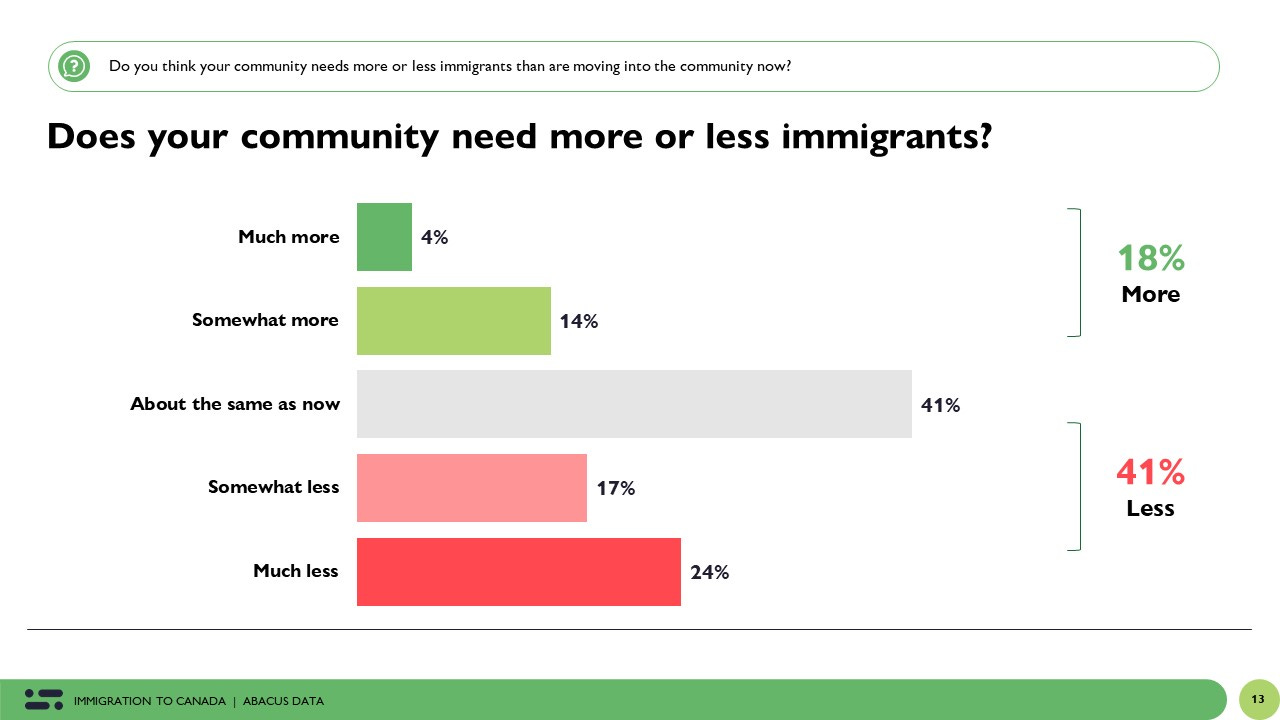
Moffat on disconnect between immigration policy and housing:

Captures the contradiction and policies working at cross-purposes:

Source: https://twitter.com/MikePMoffatt/status/1641130382425833632?s=20

Don Wright: Will Trudeau make it impossible for Eby to succeed?

Another “pointing out” the contradictions between immigration policy, levels set by the federal government, and housing, healthcare, infrastructure etc, largely under provincial jurisdictions:

It is three-and-a-half months since David Eby took the reins of power in B.C. There is no denying the energy and ambition he has brought to the role. Announcement after announcement has rolled out of the Premier’s Office since December 8 across a broad spectrum of initiatives in health care, housing, energy, infrastructure, increases in affordability tax credits and family benefits, and many, many more.

This column isn’t going to analyze the pluses and minuses of this ambition. Instead, I will argue that Premier Eby’s success on the big questions that will ultimately determine his political success may well be largely out of his control.

The most recent polling in B.C. shows that the most important issues are housing affordability, inflation/rising interest rates, and health care. Inflation and rising interest rates are overwhelmingly determined by federal monetary and fiscal policy, so largely outside the control of Premier Eby.  What about the other two big issues – health care and housing affordability?  While these two areas look to be within the domain of the provincial government, B.C.’s success in addressing the public’s concerns here will be largely hostage to the federal government’s immigration policy.  Let me explain.

Since it came to office, the current federal government has increased the level of immigration into Canada significantly.  Most of the attention has been focused on the increase in new permanent residents.  Last year, 438,000 people were granted permanent resident status, a 60% increase over 2015.  The federal government plans to raise this to 500,000 by 2025.

What receives less attention is another category of people coming to Canada – “non-permanent residents.”  This category includes Temporary Foreign Workers, International Students, and the International Mobility Program, which provides multi-year permits to live and work in Canada.  This category has been growing as well.  In fact, this category has been growing at a faster rate than permanent residents.  Last year there was a net increase of 608,000 in non-permanent residents. 

So, in total, the federal immigration policy resulted in an additional 1.045 million people coming to Canada – far and away the largest number of newcomers to Canada in one year ever.  Last year 160,000 of the 1.045 million came to B.C.

The rationale for these unprecedented numbers is that Canada has a “worker shortage.”  This rationale is almost entirely fallacious, but that is a subject for another column.  Let’s focus here on what this means to Premier Eby.

What is the basic problem in health care?  An inability to meet the public’s demands for medical services.  One million British Columbians don’t have a family doctor.  Waiting lists to get to see specialists and to get necessary surgery continue to get longer.  No doubt part of the problem is a result of the Covid pandemic.  But that rationalization is buying less and less forbearance by the public as we get further and further away from those dire days in 2020 and 2021.

The federal government’s prescription for this?  A rapid increase in the number of people who will need services from our health care system!

A story is spun is that the government will use the higher immigration numbers to bring in more health care professionals.  But this would only work if the proportion of qualified doctors, nurses and allied health workers in the more than one million new Canadians is significantly larger than the existing proportion of those professionals in the current Canadian population, and that they could get licenced immediately to practice in Canada.  Neither of these conditions will be met. 

The net result of this?  Premier Eby is going to have even more difficulty in delivering improved health care accessibility to British Columbians.

And then there is housing.  Almost all of the narrative around the shortage of affordable housing focuses on the supply side.  If only we could force municipalities to make permitting easier and faster, and to zone more density, our housing affordability would be solved.  The fact is, we build a lot of homes in B.C.  In Greater Vancouver – ground zero in our housing affordability problem – 365,000 homes were built in the 20 years between 2001 and 2021.  And there has been ample densification, as a walk through any of the redeveloped neighbourhoods in Vancouver shows. 

But supply is only half of the equation. Demand matters too.  And as quickly as we have built new homes, the population in our major urban centres rises as well. 

The Federal Government’s prescription for this?  Ramp up immigration numbers!

Again, a story is spun that this will actually increase housing supply because we are going to bring in more trades workers to build the houses we need.  Suffice it to say there are some pretty heroic assumptions here.  It is not going to work.

Of the 160,000 new British Columbians last year, more than 95% settled in the Lower Mainland, Southern Vancouver Island, and the Okanagan – where affordable housing was already acutely unavailable.

The net result?  Premier Eby is going to have even more difficulty in delivering more affordable housing.

This is all good for one group of British Columbians – those that are fortunate enough to already own a home.  So, thank you, Mr. Trudeau for making me wealthier and my fellow boomers wealthier. 

But if I were Premier Eby, I don’t think I would be quite as grateful.

Don Wright was the former deputy minister to the B.C. Premier, Cabinet Secretary and former head of the B.C. Public Service until late 2020. He now is senior counsel at Global Public Affairs.

Source: Don Wright: Will Trudeau make it impossible for Eby to succeed?

Douglas Todd: 10 ways Ottawa diminishes Canadian citizenship [my comments embedded]

Not all of these are on the same level and have embedded comments. Needless to say, agree on the oath:

Last week, the House of Commons debated the Liberal move to play down the in-person citizenship ceremony and allow more newcomers to become Canadians by the click of a laptop key.

This technological technique for fulfilling a solemn oath is startling to many, even past governor general Adrienne Clarkson, who is long associated with liberal-left values. She is among those saying the ceremony is essential to building healthy pride in Canada.

We shouldn’t, though, be surprised by Ottawa’s latest diminishment of citizenship.

Even while many joke about Prime Minister Justin Trudeau’s 2016 musings to the New York Times that Canada is the world’s first “post-national state,” he keeps finding ways to convince the world he actually means it.

Trudeau and his backers often reveal their support for almost an open-border policy, as would fit with someone who believes, as he does, that there truly is ‘‘no core identity, no mainstream in Canada.’’

By his fruits shall you know him. The most recent sign is the 15-percentage point drop, since Trudeau was elected, in new arrivals taking Canada’s oath of citizenship.

More people in the immigration process are not bothering with Canadian passports. They’re hanging in on work or study visas or going no further than permanent resident status, which provides full social services and economic advantages.

Fewer are choosing to take the oath of Canadian citizenship

It was announced Thursday that Canada accepted a record one million new immigrants in 2022, the kind of milestone that can bring out Trudeau’s often-confusing rhetoric about pride in being Canadian. But what values does he expect Canadians, native-born and naturalized, to uphold?

As a former immigration department director, Andrew Griffith, notes, one quarter of young adults who immigrated tell pollsters they will probably leave Canada in two years. Like Canadian-born people, they’re frustrated by the cost of living and home ownership, which Liberal policies have worsened.

In addition to the Liberal effort to make optional Canada’s identity-affirming citizenship ceremony, here are nine further developments that, in different ways, undermine the value of citizenship:

Urging non-residents to vote

[Agree, although important to note while the number tripled once the change was implemented, only a total of about 30,000 expatriates voted in 2019 and 2021]

: few did so in One early indicator the Liberals were reducing the meaning of citizenship occurred in 2018, when Bill C-76 allowed any passport holder who doesn’t live in the country to vote federally. While most countries that accept immigrants expect them to maintain a meaningful relationship to their new nation, Senator Linda Frum criticizes the push for non-resident citizens to vote regardless of how long they’ve been away or whether they ever intend to return.

Buying citizenship

[Don’t have the sense that the Quebec program is that active recently.]

The Conservatives in 2014 cancelled the national immigrant investor program, by which rich offshore nationals could, in effect, buy Canadian citizenship. But the Liberals basically allow it to continue, including through provinces’ nominee programs and especially Quebec’s investor scheme, which former Quebec immigration director Anne Michèle Meggs said last year admitted 5,000 multimillionaires.

Foreign nationals can vote for political candidates

[Two schools of thought here, one that it is part of the integration process, the other that it provides more opportunities for foreign interference.]

is ripe for abuseIt’s telling the Liberals and NDP allow not only non-citizens — but non-permanent residents — to become party members and vote in nomination battles. Sources told Global News recently that CSIS investigators alleged international students from China, who are on study visas, were bused in to support one Liberal candidates’ nomination.

Pushing for permanent residents to vote

[Agree, given that Canadian citizenship relatively easy (if costly) to acquire.]

Many Liberal and NDP politicians, as well as Vancouver city council in 2018, have pushed to give permanent residents the privilege to vote in elections, especially municipal. That is arguably the only significant right permanent residents do not have.

Reduced immigration requirements

[Largely just a reversal of Conservative changes in 2014 and reversion to previous requirements.]

The Liberals have lowered the bar for citizenship, by cutting expectations on how much time would-be immigrants need to spend in the country, and by reducing requirements for skills in an official language.

Don’t have to pay foreign-buyers tax

[Haven’t seen evidence of that being a major factor.]

Mortgage brokers are quick to tell newcomers to Canada they only need to be permanent residents to avoid paying provincial and federal taxes on foreign buyers of Canadian land. Immigration specialists say it’s leading to shrinking interest in citizenship.

Dual citizenship remains

[Largely a practical measure, as some countries require immigrants to use their country of origin passport when visiting. The dual citizenship ban of China affects Canadian naturalization more than that of India.]

Ottawa continues to celebrate dual (or multiple) citizenship. Despite few Canadians calling for the policy to be changed, it’s the opposite of China and India, which do not recognize dual citizenship. One reason arrivals from those countries are shunning Canadian citizenship, say specialists, is to avoid giving up their original passports.

Permanent residents can become Canadian soldiers

[This change essentially adopted a long-standing USA policy.]

Last year, says Meggs, the Liberals made it OK for those with only permanent resident status to serve in the Canadian military.

CBC plays down Canadian identity

[Sigh…]

It should be no surprise that the CBC, the public broadcaster led by Liberal-friendly Catherine Tait, is behind a strange campaign pronouncing: “It’s not about how Canadian you are, it’s about who you are in Canada.”

The slogan sends a “mixed message” about whether to commit to hard-won common Canadian values or to highlight differences, says Meggs. It mostly seems like in-vogue identity politics, which declares the most crucial thing about any Canadian is their gender, ethnicity, religion or sexual orientation.

While some can claim there are benefits to these 10 actions, it’s more than fair to also question whether they diminish citizenship.

Source: Douglas Todd: 10 ways Ottawa diminishes Canadian citizenship

Manley: Canada’s empathy for refugees isn’t limitless, so securing our border is key

Sensible and realistic, and useful reminder of the reasons behind the STCA. The right-leaning Liberal in contrast to the op-ed Here’s a better fix for Roxham Road by his left-leaning former Cabinet colleagues Lloyd Axworthy and Allan Rock:

Twenty-one years after I negotiated the Safe Third Country Agreement in 2002 as part of the post-9/11 Smart Border Declaration, I applaud the changes made to that agreement this past week by Prime Minister Justin Trudeau and President Joe Biden.

The 2002 agreement enabled Canada to return to the United States individuals claiming refugee status who entered Canada from that country at designated, regular border crossings.

The new agreement simply extends that policy to individuals attempting to enter Canada through so-called “informal” border crossings like Roxham Road.

Canada sought the agreement in 2002 for reasons that seem all too familiar today. Refugee claimants found their way in huge numbers to legal border crossing areas such as Windsor, Ont., Fort Erie, Ont., and Niagara Falls, Ont.

In those days, the available support systems were overwhelmed by the large number of claimants. The refugee determination process became backlogged, often taking two years or more to reach a decision on the validity of a claim of refugee status. The number of refugee claimants were inflated by efforts of profiteers in the U.S. who collected and delivered these people to the Canadian border, often by bus from Buffalo or other central points.

In more recent years, the situation at Roxham Road developed because of a loophole in the agreement: It became a magnet simply because it, and other areas at which illegal crossings could be attempted, were not specifically included in the original agreement.

Canada’s position was, and remains, that refugee claimants, having somehow made their way to the U.S., should make their claim there. Those who choose to attempt to enter at “informal” crossings are in effect displacing or queue-jumping other claimants.

For context, it is important to remember that, in the aftermath of 9/11, many Americans falsely tried to portray Canada as a safe haven for terrorists intent on attacking the U.S. At the time, both then-senator Hillary Clinton and former House speaker Newt Gingrich, who agreed on very little else, were reported to have falsely claimed that the 9/11 terrorists had entered the U.S. from Canada. Our openness as a society was being turned against us, putting at risk our commercial interests. As Ms. Clinton once said to me: “Security trumps trade.”

Since then, the world’s refugee problem has only worsened: The United Nations Refugee Agency (UNHCR) estimates that, in 2022, there were 103 million forcibly displaced persons worldwide. The enormous scale of this human tragedy is difficult to comprehend: If all these people were situated in one country, it would be the 14th most populous in the world. Most of those 103 million are in much greater danger of harm than those who have already found their way into the U.S., some of whom seek to enter Canada.

There is no question that Canada should continue to help house this burden of displaced humanity. But Canada also has a duty to its own citizens to enforce its laws and manage its territorial borders as part of its system of rule of law, both national and international, for the safety and well-being of its citizens.

Canada, in recent years, has taken in more refugees in absolute numbers than some Western countries our size or bigger. Refugees all around the world wait, often for years, in camps from which there is no escape. Canada has historically been a lifeline for many of these individuals. We can more than meet our global responsibility without taking in persons fleeing the United States.

Canadians have proven themselves to be open to immigration, demonstrating a willingness to pitch in to assist refugees, be they from African countries, Ukraine, Syria, Vietnam, or any other of the many venues of war, famine and persecution.

But Canadian goodwill is not bottomless and could be put at risk if some newcomers are perceived to be queue-jumpers, attempting to gain unfair advantage.

Past prime ministers and, no doubt, our current Prime Minister, feel and understand the burden of Canadian responsibility to the world’s victims of hunger, conflict and persecution, while also recognizing that Canadians’ generosity and sense of fair play must not be stretched beyond their limits.

John Manley is the former deputy prime minister and a current senior adviser with Bennett Jones LLP.

Source: Manley: Canada’s empathy for refugees isn’t limitless, so securing our border is key

Axworthy and Rock: Here’s a better fix for Roxham Road

Predictable, and only workable in the context of the excessively high and increasing immigration levels. But not necessarily in the context of an immigration policy that takes into the account of the impact on housing, healthcare and infrastructure:

Ottawa pundits say that Prime Minister Justin Trudeau scored a political win by securing President Joe Biden’s agreement to renegotiate the Safe Third Country Agreement (STCA). Henceforth, it will apply across the entire Canada-U.S. border, and asylum seekers can be turned away at any crossing point. Ottawa has thereby responded adroitly to Quebec Premier François Legault’s complaints about the flow of migrants entering Quebec at the infamous Roxham Road border crossing.

But there is something that neither the Prime Minister nor the President mentioned in their announcement: the impact of their decision on the men, women and children fleeing violence and persecution who had hoped to cross the Canadian border after feeling anything but safe in the United States. The vast majority are not in any way a threat to our security. They are ordinary people searching for sanctuary by putting themselves and their families at grave risk on a perilous journey, one they’d hoped would end with a Canadian border crossing.

We are left to imagine the bitter disappointment they will feel when instead of a portal to Canada they are met with a locked gate, a warning sign and no choice but to face the notoriously hostile American border security officials. As we have learned by watching the Mediterranean, some, in their desperation, will look for other points of entry to Canada by taking greater risks and putting their lives in danger. One “loophole” may have been closed, but others will no doubt appear.

“It’s what they deserve,” some will say. “Play by the rules! Don’t jump the queue!” But almost all of them are vulnerable survivors who escaped persecution and oppression simply to assert an ancient right – the right to asylum.

The right to seek asylum is codified in the United Nations’ 1951 Refugee Convention. Before the STCA came into effect in 2002, under international law the convention obligated Canada to allow refugees to enter and remain here until the validity of their claim for asylum could be determined by a tribunal. Under the STCA, Canada effectively subcontracted this obligation to the United States.

There was another matter that neither our Prime Minister nor the President mentioned last week: the constitutional validity of the STCA is to be considered by the Supreme Court of Canada in the coming months. Depending on what the court decides, our government could end up not with a political win, but instead a major loss of credibility. The court could send Parliament back to the drawing board to legislate a new migration policy based on the paramountcy of human rights, instead of expediency.

It is fitting that the issue will hinge on the Charter of Rights and Freedoms, which has had a major influence on Canadian attitudes toward migration. Polls have consistently shown that Canadians have a strong attachment to an open system of immigration. While Mr. Biden and Mr. Trudeau spoke of shared values, there is one major exception: Canadians differ from Americans in our commitment to pluralism and welcoming newcomers. Why, then, are we doubling down on a policy so inconsistent with that distinctive characteristic?

There is a better way. As Minister of Immigration, Sean Fraser demonstrated Canada’s openness by setting a target to welcome half a million newcomers to Canada in 2025. However, he also announced that the number of refugees admitted would be reduced from 76,000 in 2023, to 73,000 in 2025. It is not clear whether the 73,000-person figure will now include the 15,000 Central American migrants Canada promised it would assist the U.S. in resettling during President Biden’s visit last week. In any case, we should strive to dedicate 20 per cent of our 2025 immigration goal to the resettlement of forcibly displaced people, taking in at least 100,000 in 2025. We can work to build up the capacity of our U.S. diplomatic posts, and our U.S.-Canada border crossing points, to receive, process and settle those with legitimate asylum claims.

Let’s take on the diplomatic task of building a collaborative, hemispheric migration network and devote the necessary resources to make it work. We can draw on our ability to convene, and our talent for negotiation, by inviting a group of like-minded governments, civil society groups, and international organizations to a summit aimed at reviving and strengthening the imperilled right to asylum. Migration is increasing, driven by climate change and conflict. We have to get things right at our border – politically and morally.

A border that assures security while respecting asylum seekers and welcoming migrants? Now that would be a real win for Canada.

Lloyd Axworthy is a former foreign minister and current chair of the World Refugee and Migration Council. Allan Rock is a former attorney-general and minister of justice, and a member of the World Refugee and Migration Council.

Source: Here’s a better fix for Roxham Road

Unions call on Ottawa to drop challenge of Black public servants’ planned discrimination lawsuit

Predictable call:

Unions representing more than three million workers are urging the federal government to drop its challenge of a proposed class-action lawsuit brought by Black federal public servants alleging racial discrimination in the federal public service.

The Canadian Labour Congress, the Public Service Alliance of Canada and the Professional Institute of the Public Service of Canada told a joint news conference on Monday that the federal government doesn’t have grounds to continue its court challenge.

“Now is the time for the federal government to step up and do the right thing,” said Larry Rousseau, executive vice-president of the Canadian Labour Congress, the country’s largest labour organization.

The proposed lawsuit — launched in 2020 — alleges Black public servants have endured decades of systemic racism and discrimination. The lawsuit alleges that since the 1970s, roughly 30,000 Black employees have lost out on opportunities and benefits afforded to others because of their race.

It seeks $2.5 billion in compensation for economic hardship and a mental health plan for employees’ pain and trauma. Plaintiffs also want a plan to diversify the federal labour pool.

The need for the federal government to withdraw its challenge became more urgent, the unions argue, after it concluded recently that the Canadian Human Rights Commission had discriminated against its Black and racialized employees.

The Canadian government’s human resources arm, the Treasury Board of Canada Secretariat, came to that conclusion after nine employees filed a policy grievance through their unions in October 2020.

Their grievance alleged that “Black and racialized employees at the CHRC (Canadian Human Rights Commission) face systemic anti-Black racism, sexism and systemic discrimination.”

“This ruling by the government confirms that workers cannot turn to the commission for redress, and it is harming its workers,” said Nicholas Marcus Thompson, executive director of the Black Class Action Secretariat.

“As a matter of fact, its workers have told Canadians not to turn to the commission because it is a toxic workplace. And their race-based complaint is likely to be rejected.”

A group of current and former commission employees who spoke to CBC News said they’d noticed all-white investigative teams at the Canadian Human Rights Commission were dismissing complaints from Black and other racialized Canadians at a higher rate.

Canada’s human rights commission admits it has dismissed a large number of complaints about racism, with numbers showing the commission dismissed a higher percentage of race-based claims than it did others between 2018 and 2021.

Numbers the commission provided to the CBC back up the argument that the commission has a high dismissal rate for human rights complaints based on race.

CBC has requested interviews with the CHRC’s executive director, Ian Fine, and interim chief commissioner, Charlotte-Anne Malischewski. The commission has declined those requests because it says the matter is in mediation. CBC also reached out to Justice Minister David Lametti’s office for comment.

Grievance process won’t address the problem: unions

At Monday’s press conference, the unions acknowledged that the labour grievance and appeals process isn’t the place for Black civil servants to seek justice.

The union heads said the process can’t settle claims for Black employees who have left the public service. The grievance system also can’t address claims about stalled career paths, they said.

One union head added that the body that adjudicates grievances, the Federal Public Sector Labour Relations and Employment Board, could take five to six years to make a decision.

The board also offers solutions to individual complaints — it can’t address systemic discrimination affecting the entire public service, said Jennifer Carr, the national president of the Professional Institute of the Public Service of Canada.

“That’s why the class action is important because it’s going to force the government to do those systemic changes that we can’t get through any other means,” Carr said.

Source: Unions call on Ottawa to drop challenge of Black public servants’ planned discrimination lawsuit

Ottawa can’t show how feminist assistance policy has helped improve gender equality globally, audit says

Not surprising, unfortunately. But measuring “softer” social and development outcomes is difficult:

The federal government has not done enough to track whether a policy intended to direct the country’s billions of dollars in annual development aid toward improving gender equality abroad has actually helped women and girls, a report from Auditor-General Karen Hogan says.

Ms. Hogan’s report, tabled Monday, says Global Affairs Canada could not demonstrate how the roughly $3.5-billion in bilateral development aid it provides each year to low- and middle-income countries had delivered on its commitments under the federal Feminist International Assistance Policy.

The Auditor-General took aim at GAC’s information practices, which she said it had not set up to monitor long-term results.

“These weaknesses make it impossible for Global Affairs Canada to accurately track and report on the outcomes of funded projects against the goals set out in Canada’s Feminist International Assistance Policy,” she said at a news conference in Ottawa.

The federal government unveiled the policy in 2017. Since then, Canada has been commended by international development organizations for putting women and girls at the forefront of its programs.

Ms. Hogan’s office examined whether GAC’s implementation of the policy had resulted in funding for projects that supported gender equality and the empowerment of women and girls. The audit also sought evidence that the projects were generating the expected outcomes.

Ms. Hogan told reporters the weaknesses highlighted in her report had already been flagged in an internal department audit in 2021.

Her report says that although GAC took steps to monitor the policy’s progress, 24 of the 26 indicators the department tracked did not measure outcomes.

The report says the Auditor-General’s office assessed 60 projects to determine whether GAC had demonstrated that it had tracked policy indicators associated with them. The audit found that the department had used only 35 of those projects to report on policy goals.

Ms. Hogan said her office looked at a project that used government funding in an attempt to make schools more welcoming for girls by building washrooms and handwashing stations. She said that while the government could say how many washrooms had been built, it couldn’t say whether or not girls’ school attendance had increased.

“It is imperative that Global Affairs Canada immediately act to improve its information management practices and reporting on results to show parliamentarians and Canadians the value of Canada’s bilateral international assistance to support women and girls in low- and middle-income countries,” she said.

International Development Minister Harjit Sajjan told reporters he accepts the findings of the report, and that improvements to project management and reporting are already under way.

He also said he has seen the results of the Feminist International Assistance Policy firsthand. He recalled a trip to Bangladesh, where he said he visited a slum and learned about how Canadian funding is supporting menstrual health education.

When asked by a reporter if he feels personally responsible for his department not knowing if the feminist policy is working, Mr. Sajjan reiterated that he has visited many projects and spoken with organizations delivering programs.

“What we need to do is be able to aggregate and get that information. … That’s what the Auditor-General has noted,” he said.

The report also said that GAC did not meet two of its three spending commitments under the policy. It fell short on funding projects that directly support the empowerment of women and girls, and on funding projects located in sub-Saharan Africa.

The audit also found that departmental spending from the 2020-21 and 2021-22 fiscal years was affected by the pandemic and Russia’s invasion of Ukraine.

“During this time, the department reallocated money to respond to needs emerging from the coronavirus disease (COVID-19) pandemic and the invasion of Ukraine; these reallocations had an impact on the department’s ability to meet spending targets,” the report says.

Mr. Sajjan said Ottawa had not reallocated money away from international aid.

“We looked at the denominator changes, because we had to put more funding into Ukraine, and also because of COVID. However, our funding into Africa also actually increased,” he said.

Garnett Genuis, the Conservative critic for international development, called the Auditor-General’s findings “very disturbing.”

“We hear the government talk all the time about gender when they talk about international development. But the Auditor-General’s report reveals today they haven’t even been bothered to measure the results of their work,” he told reporters on Parliament Hill.

Source: Ottawa can’t show how feminist assistance policy has helped improve gender equality globally, audit says

Asselin: Budget 2023 – Canada’s economy faces mounting challenges – here’s how we overcome them

Marc Wiseman’s post, https://www.theglobeandmail.com/business/article-our-productivity-weakness-isnt-an-achilles-heel-its-a-malignancy/. another Century Initiative supporter is turning their attention to the more fundamental issue of productivity and per capita GDP rather than overall GDP:

As we approach the release of the federal budget, Canada is facing three converging and powerful challenges that require a coherent economic and fiscal strategy from the government.

The first challenge is the return of a political economy on a global scale. From the United States to Europe and Asia, countries are confronted with the challenges of national security and climate change with global competition over technological innovation and investment. By now, everyone has heard of the U.S. Inflation Reduction Act. Few should doubt the threat it poses to Canada’s economic competitiveness.

The second is the sustainability of the government’s current fiscal plan. Fast-rising debt-servicing costs, higher inflation for longer and diminishing fiscal firepower as a result of having doubled our federal debt during the COVID-19 crisis will all challenge the federal government’s inclination to ignore the real consequences of unconstrained spending.

The third challenge – largely a consequence of the first two – is the imperative of long-term growth. Without sustained economic growth, both our current account and federal budget deficits will continue to deteriorate, leading to an inevitable decline in Canadians’ living standards.

There are two main drivers of long-term economic growth. One of them is population growth. The government has taken action on this. Increasing high-skilled immigration is to be applauded, but an aggressive immigration policy will only work if we boost the other driver, productivity, thereby raising wages and living standards. The policy trap here is to confuse raising nominal GDP with GDP per capita, the latter being far more important for our living standards.

Increased productivity – output per worker – is the most important driver of economic growth. Recent experience suggests this is very hard to do. We need to pursue measures that will raise productivity in all sectors. In addition, and this is politically more challenging, we need to focus on expanding the sectors that hold the most promise for raising Canada’s productivity.

A country’s industrial composition matters a great deal. Certain sectors generate significantly higher output per employee and can increase productivity at a faster rate. Advanced industries are key to this goal. These sectors combine significant R&D investment and a highly qualified work force.

Sectors that invest heavily in technology and innovation tend to be more productive than others. A country with an advanced manufacturing base using artificial intelligence, robotics, genomic medicine and advanced computation will yield significant productivity gains. This is where the new frontiers of economic competitiveness are being drawn. The political economy of semi-conductors fabrication is not the same as the one for manufacturing shoes or T-shirts. One is being developed hastily, the other not so much.

Canada has a significant structural current account deficit in advanced industries, signalling a weakening of our economic competitiveness. It indicates we are not able to generate sufficient income from high-value exports to pay for our imports of advanced goods.

Canada can compete in advanced industries. We should be proud of our Canadian global champions in aerospace, agrifood, energy and automotive, all advanced industries. The problem is we don’t have enough of them.

British cabinet minister Michael Gove stated in a recent speech: “Rather than being an entrepôt, a bazaar and a duty-free exchange, a strong economy must also make, manufacture, create, innovate and shape.” He was referring to the British economy, but this applies just as much to Canada.

This is where modern industrial policy comes into play. It is a high-stakes game because politicians will often use industrial policy to justify all kinds of government interventions that have proven to be ineffective. As former U.S. Treasury secretary Larry Summers observed: “I like industrial policy advisers how I like generals. The best generals are the ones who hate war the most but are willing to fight when needed. What I worry about is the people who do industrial policy love doing industrial policy.”

Targeted policy design and execution are paramount. We need to mobilize our human capital, create a modern science and technology architecture capable of converting intellectual capital into expanding our advanced industries and high-tech manufacturing, build proper transmission channels of public R&D to industry, and create a regulatory and tax environment conducive to capital formation. In the current circumstance, the worst policy decision would be to take the easy road of spreading subsidies across sectors and all regions of the country.

Getting to the right policy outcomes is more important than political expediency. Addressing these challenges will require policy work that will go well beyond one budget.

Robert Asselin is senior vice-president of policy at the Business Council of Canada and a former adviser to two prime ministers.

Source: Budget 2023: Canada’s economy faces mounting challenges – here’s how we overcome them

Baron: We want objective judges and doctors. Why not journalists too?

Required reading by journalists, would be journalists and j-schools, with broader application including overly activist academics:

Objectivity in journalism has attracted a lot of attention lately. It also is a subject that has suffered from confusion and an abundance of distortion.

I’m about to do something terribly unpopular in my profession these days: Defend the idea.

Let’s step back a bit. First, a dictionary definition of objectivity. This is from Merriam-Webster: “expressing or dealing with facts or conditions as perceived without distortion by personal feelings, prejudices, or interpretations.”

Source: We want objective judges and doctors. Why not journalists too?

U.S., Canada kept migrant crossing deal a secret to avoid rush at the border

Sensible. And critics such as Brian Lilley (see below) would have rightly been all over the government had it not done so with the corresponding rush and chaos:

Canada and the United States waited a year to announce a new deal to turn asylum seekers away at unofficial border crossings, such as Roxham Road between Quebec and New York, to avoid a rush of migrants before the new rules could be enforced, the two countries said Sunday.

In an interview with The Globe and Mail, U.S. Ambassador to Canada David Cohen said it would not have served either country to disclose a deal until the planning process was complete and updated regulations were in effect. The goal was to have “an orderly transition,” he said.

Mr. Cohen said the governments feared that a premature announcement “would stimulate a large influx of migrants trying to get to Canada before that change went into place.”

“It was not in Canada’s interest to create that artificial surge of people trying to enter the country.”

On Friday, during President Joe Biden’s visit to Canada, he and Prime Minister Justin Trudeau announced that they had renegotiated the Safe Third Country Agreement, with the revised deal taking effect within hours. The changes meant that the two countries could start turning away asylum seekers whether they entered at official or unofficial border points.

Originally, the Safe Third Country Agreement, prevented people arriving via the U.S. from making asylum claims at official Canadian border crossings, but it didn’t cover unofficial ones.

Behind the scenes, the countries had already signed the deal a year earlier, in spring 2022, but the regulations that would put it into effect and allow its enforcement were only completed Wednesday, according to a document published by the U.S. government.

In the months leading up to the announcement, Canada had significantly played down the possibility of reaching an agreement with the United States. Only when Mr. Biden’s arrival in the capital on Thursday was imminent did that message change.

An administration official said changes to existing accords, such as the Safe Third Country Agreement, are subject to complicated and uncertain administrative reviews that can last two to three years after a deal is struck. Given the unknowns around implementation and the risks of people trying to get to the border before a deal was in place, the two governments only wanted to disclose the deal when it could go into effect.

Ottawa shared similar concerns about the risks of pre-emptively announcing the renegotiated deal, a federal government official told The Globe Sunday. Moreover, the individual said that Ottawa’s view was that it wasn’t a done deal until it had gone through the regulatory process. They said that within the past few weeks, the federal government had still been lobbying for an accelerated administrative review from the U.S. and it was only assured last week of its completion.

The Globe is not identifying the U.S. and Canadian officials because they were not permitted to disclose the private deliberations.

Applying the Safe Third Country Agreement uniformly across the border has been a top priority for Mr. Trudeau’s government, which has been under increasing pressure from the federal Conservatives and Quebec Premier François Legault to stem the flow of migrants at Roxham Road.

Last year, almost 40,000 people crossed into Canada at unofficial border points to make an asylum claim. Most of them arrived at Roxham Road. Smaller but growing numbers of migrants have been crossing the border in the other direction, from Canada to the U.S. They have primarily been Mexican nationals, who can enter Canada without visas.

But the much more pressing issue for the U.S. is its southern border, where between 100,000 and 200,000 migrants cross at unofficial border points each month. In a nod to the significant challenges the U.S. faces with migration from Central America, Canada on Friday also announced it would accept 15,000 more migrants from that region through legal channels.

Officials from both governments said Canada’s pledge of 15,000 more spots spurred the implementation of the renegotiated Safe Third Country Agreement.

In a joint statement, the U.S. and Canada on Friday said the changes will deter irregular migration across the border. But advocates say it will only make the situation even more precarious for asylum seekers. That’s because it risks pushing migrants to more dangerous and irregular routes and makes them more vulnerable to exploitation from traffickers.

By noon Sunday, the Canada Border Services Agency said that under the new rules, two people had been returned to the U.S. and four were deemed eligible to make an asylum claim in Canada.

Amid the suite of issues highlighted during Mr. Biden’s official visit, wasCanada’s promised spending to modernize North America’s air defences. Ahead of the trip, the U.S. had said it wanted Canada to spend more and faster on its defence upgrades.

Canada’s lagging defence spending and slow procurement processes have frequently been a point of contention with the United States. On Sunday though, Mr. Cohen said the U.S. is “generally satisfied” with the federal government’s progress.

He noted that Ottawa agreed to accelerate the installation of next-generation over-the-horizon radar in the north; committed to base upgrades in time for the arrival of new F-35 fighter jets; and reiterated its commitment to raise defence spending to 2 per cent of GDP.

Mr. Cohen also noted that Canada is in the midst of a national defence policy review, during which the U.S. is receiving classified briefings on the government’s progress.

“There’s a real satisfaction that Canada is moving in the right direction,” he said.

Source: U.S., Canada kept migrant crossing deal a secret to avoid rush at the border

But Lilley, in the Sun, his ideology blinds him to the practicalities behind the delay:

Between when the Trudeau government signed the agreement to amend the Safe Third Country agreement, and when it came into force, more than 41,000 people crossed illegally into Canada at Roxham Rd.

After we add in the numbers for March, expect the final tally to be over 45,000 or the equivalent of adding the population of Chatham, Ont., via what the government calls “irregular migration.”

While the agreement was only officially announced last Friday when U.S. President Biden was in Ottawa, it was signed almost a year ago. The official document, now released, was signed by Canada on May 29, 2022, while Americans signed it on April 15, 2022.

The agreement said that it would come into effect at a later date, but coming into force at midnight 51 weeks after it was signed seems a bit much.

“Both of our countries believe in safe, fair, and orderly migration; refugee protection; and border security. This is why we will now apply the Safe Third Country Agreement to asylum seekers who cross between official points of entry,” Prime Minister Justin Trudeau said on Friday when announcing the changes.

Recommended video

“After midnight tonight, police and border officers will enforce the agreement and return irregular border crossers to the closest port of entry with the United States.”

This is what should have been done six years ago when the problem started, but having started the problem, Trudeau tried using it for political advantage. He was effectively importing an American wedge issue into Canadian politics, illegal immigration.

Crossing at Roxham Rd. is illegal, which is why there were big Government of Canada signs facing the American side of the border stating that fact in clear language. It’s why the RCMP would issue verbal warnings as people approached, telling them it was illegal to cross, and they would be arrested.

Once they were in Canada, though, they could declare asylum and begin a legal process to stay here.

The Safe Third country agreement recognized that Canada and the United States were safe for refugees and required people to apply in the first of the two countries they landed in. The agreement was signed two decades ago to end the problem of refugee shopping by people who were turned down on the application in one country, turning to the other.

There was a loophole, though, in that the agreement only applied at legal points of entry. That loophole was exploited by people who were mostly economic migrants trying to get a shortcut into Canada.

When Donald Trump was president, Trudeau used Roxham Rd. to show that Canada was virtuous and welcoming of immigrants while Trump was not. He tried to bait those opposed to these illegal crossings by implying they were racist, he wanted to use this for his own partisan ends.

With Joe Biden in the White House, he no longer had that edge and post-pandemic, the numbers increased. With more than 39,000 people crossing in 2022, it was a record, and the numbers for January and February were off the charts.

People who crossed into the United States illegally on the southern border — into states like Texas — were being put on a bus to New York City. Once there, officials in New York offered them bus tickets to Roxham Rd.

With record crossings, Quebec declared it was full, and the strain on their social services was too great, so the Trudeau government started bussing people to Ottawa, Toronto and Niagara Falls.

Nothing about what has been happening was fair to anyone.

It’s not fair to Canadian taxpayers, asked to foot the bills for this make-shift system. It’s not fair to the people, mostly economic migrants, to be bussed around from place to place. It’s also not fair for the 2 million people in Canada’s immigration backlog looking to follow the rules.

It’s also not fair to people languishing in actual refugee camps around the world.

This should have been fixed years ago; once the deal was signed, it should have been implemented quickly.

Instead, Trudeau used and abused this file until it no longer served his political agenda.

Source: LILLEY: Deal to close Roxham Rd. was signed a year before taking effect