Ottawa: Community tells Ontario government of systemic racism

The last in a series of public consultations to help inform the Ontario anti-racism directorate:

Hiwot Adhanom couldn’t believe what she was hearing from two co-workers conducting a hiring process for a public service job.

Her colleagues were attempting to determine who might meet the job criteria’s preference for Canadian citizens. “The first answer is ‘I guess we can tell by their name’,” Adhanom said she overheard them say. It wasn’t until they saw her nameplate that they stopped to think that Canadian citizenship means more than that. It was not her first experience with racism in a workplace.

At another job, a manager at a retail store who hired her nonchalantly told her how she was “not anything like all of the other black people who come in here looking for work.” “She saw nothing wrong with that, she thought she was paying me a compliment by insulting me and every other person who happens to be black,” said Adhanom, one of dozens of people who lined up behind microphones Saturday to tell their experiences to Ontario’s political leaders.

The anti-racism directorate is attempting to come up with a strategy to address systemic racism within government. The meeting is the last of 10 public consultations held across the province before it comes up with a policy, which is expected to be released in the spring of 2017.

For Adhanom, it was asking the directorate to develop tools and resources that employers are required to use to ensure fairness and equality in hiring.

It was just one of a spectrum of concerns about systemic racism and injustice that Ontario’s minister responsible for anti-racism, Michael Coteau, heard about from an audience of 200 during the two-hour meeting at the RA Centre. Others described systemic racism in the criminal justice system, health care, child welfare system, schools and the hiring process. Many called on more education as a means to combat it.

Attorney General Yasir Naqvi also attended the meeting, along with local MPPs Nathalie Des Rosiers, John Fraser and Marie-France Lalonde. Ottawa police chief Charles Bordeleau, other senior police officers and Ottawa councillors Jeff Leiper and Mark Taylor were also present.

The directorate’s goal is to eliminate systemic racism in institutions governed or regulated by the Ontario government, increase awareness and understanding of systemic racism among the public, promote fair practices and policies that lead to racial equity, and collaborate with the community, business organizations and the Ontario Human Rights Commission.

“You have to start in government. You can’t go out there preaching that change needs to happen but not take care of that change internally,” said Coteau. “What we are talking about today is not about putting in quotas or saying ‘X amount of jobs have to be this,’ it’s about removing barriers so people have the opportunity to compete on a fair basis to get the types of jobs that they are qualified to get.”

Source: Ottawa Citizen | Latest Breaking News | Business | Sports | Canada …
Europe’s Jews have reason to fear today’s political climate: Saunders

Interesting column by Doug Saunders:

To understand this, it’s worth following the work of Yascha Mounk, a Harvard University scholar. Mr. Mounk made headlines this week with a new study, co-authored with Roberto Stefan Foa at the University of Melbourne, which found that voters in most European countries and the United States are increasingly less likely to believe it is “essential” to live in a democracy. This effect is stronger among younger people and right-wing voters.

For Mr. Mounk, this is part of a larger phenomenon. Two years ago, he published Stranger in My Own Country, a memoir of his life as a young German Jew. It noted that the Christian Europeans around him, while professing liberal tolerance, were continuing to treat Jews such as himself as different, other or outside. In an essay titled “Europe’s Jewish Problem,” he linked these observations to the rise of the new right-wing populist movements.

“Europe’s political climate is more hostile to Jews now than at any time since the second intifada,” he wrote. But he concluded that it wasn’t Muslim anti-Semitism leading the trend; rather, it was the far larger populations of Christians. As he noted, the number of Spanish citizens who express unfavourable views of Jews is almost 50 per cent; Muslims make up less than 3 per cent of Spain’s population and aren’t growing fast. So “a European anti-Semite remains far more likely to be Christian than Muslim.”

The larger problem, he concluded, is “the tendency of wily politicians to play Jews and Muslims against each other for purposes of their own.”

A recent large-scale survey of French attitudes toward Jews by political scientist Dominique Reynié found that anti-Semitism in general is declining, but the country’s Muslims do indeed have higher rates of anti-Jewish beliefs than the general population. What really stood out, though, were the many people who support Marine Le Pen’s National Front party: They were even more likely than Muslims to agree with Jewish-conspiracy claims such as “Jews use their status as victims of the Nazi genocide for their own interest” or “the Jews are responsible for the current economic crisis.” And they were almost equally likely to support statements such as “there is a Zionist conspiracy on a global scale,” at rates twice as high as the general population. Muslims make up only 7 per cent of the population of France, but Ms. Le Pen commands at least one-fifth of the population, and her support is rising fast.

These parties and movements, Mr. Mounk concluded, attract those who are hostile toward both Muslims and Jews. “The very same revival of nationalism that has been fuelled by their invocation of Jews [as foils for their politics],” he wrote, “can, in this way, quickly turn into anti-Semitism.” And that, combined with a growing group of voters who don’t care about democracy, is something that Europe ought to fear.

Source: Europe’s Jews have reason to fear today’s political climate – The Globe and Mail

Interest in public service jobs has increased since Trudeau’s election – Macleans.ca

Of note:

Not only is enrollment up in public administration fields of study, but now experts say there’s a new enthusiasm among students.

“Let me be blunt. It was miserable under the Harper government,” says Robert Shepherd, a Carleton University professor and president of the Canadian Association of Programs in Public Administration. “Nobody wanted to be there. Our numbers dropped off for [programs] connected to the federal government. It was hard to attract students.”

Now Ottawa seems to be investing in its public service employees, and Trudeau’s big budget means greater job opportunities. So while some might attribute the reason for students’ renewed enthusiasm to a “sunny ways” Prime Minister, the spike in interest for public policy and administration programs isn’t always altruistic.

Shepherd credits the sputtering economy as a common thread he hears from students looking for public service work. “[Students] see government as being a relatively stable way to anchor themselves,” he says. “Back in the 1980s, that’s what I was thinking too. The economy sucked and I saw government as having a stable career.”

While the current crop of students are not thinking about a 35-year career with a pension at the end, the Baby Boomers who did see retirement beckoning. “We’ll be in a market where we’ll need a lot of people in a hurry,” says Michael Wernick, clerk of the Privy Council of Canada. “We’re not hiring clerical people, because that stuff is pretty much automated. We’re looking for people with social media and acute management skills.”

That’s not to say everyone is jumping at available jobs. Shepherd remembers a job posting for the CRTC recently hitting his desk, which he sent out to various universities asking them to send back names of interested students. The response? Crickets.

“Where demand is outstripping supply is in the area of regulatory public policy. I’m thinking places like the CRTC, Food Inspection, Health Canada,” Shepherd says. “If you said to students there are good jobs in a regulatory agency, they look at you as though, “Why would I want to do that?’ ”

Source: Interest in public service jobs has increased since Trudeau’s election – Macleans.ca

Thousands of alleged fugitives nabbed at Canadian borders in wake of CBC Toronto investigation

Hard to understand why this took so long:

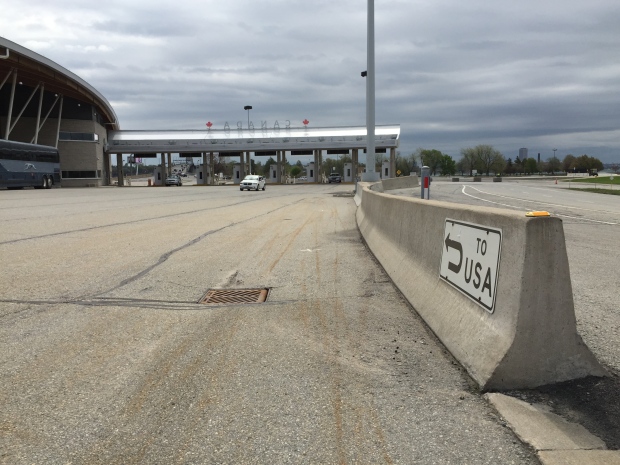
Canada’s borders have become less porous in the wake of a CBC News investigation that revealed a major security gap in the way passengers were being screened before being allowed into Canada.

In the past 12 months since new screening measures came into effect on Nov. 21, 2015, the Canada Border Services Agency (CBSA) apprehended 3,067 people with outstanding criminal arrest warrants at border crossings.

In the previous 12 months, before the changes came into effect, the CBSA caught just 556 alleged fugitives.

The almost fivefold increase is in large part due to the efforts of a southwestern Ontario woman who demanded answers after being sexually assaulted — allegedly by a Nigerian man who was able to get back into Canada despite having warrants out for his arrest.

“Knowing that potentially some other person’s rapist has been caught at the border, or somebody that’s done something terrible to someone else, gives me some comfort,” she said.

CBC News is not identifying her because she is a victim of sexual assault.

The changes to national border security came last November after CBC News looked into her case and discovered front-line border agents at primary inspection points did not have access to the Canadian Police Information Centre.

CPIC is a database detailing criminal records, individuals with outstanding arrest warrants and other information outlining who might be a risk to Canadians. Only travellers deemed suspicious and sent for more secondary checks were being screened through CPIC at border crossings. Now CBSA agents at all inspection points screen every passenger arriving in Canada through CPIC.

Jean Pierre Fortin, the head of the union representing Canada’s border and immigration agents, says the changes have boosted national security.

Border picture

Canadian governments had quietly been aware of the loophole in border security since at least 2002. Yet giving all front-line CBSA agents access to a database was considered too costly. (Sarah Bridge/CBC)

“It’s sad that this only came because of a terrible situation … but we got a better tool through CPIC to our front-line officers to be able to intervene right away.”

Source: Thousands of alleged fugitives nabbed at Canadian borders in wake of CBC Toronto investigation – Toronto – CBC News

Syrian exodus to Canada: One year later, a look at who the refugees are and where they went

Really good analysis and charts in the Globe regarding Syrian refugees (sample below):

Across the country, Syrians have arrived in new neighbourhoods and schools and, as with so many waves of immigrants before them, both the refugees and the communities that receive them will be changed by the experience. As Canada marks the first year of this initiative, we take a closer look at Syrian refugees through the demographic data.

syrian_exodus_to_canada__one_year_later__a_look_at_who_the_refugees_are_and_where_they-went_-_the_globe_and_mailOther charts highlight family size (larger than expected), education (most high school or less), aged (most under 18), knowledge of an official language (about 40 percent, mainly English).

Source: Syrian exodus to Canada: One year later, a look at who the refugees are and where they went – The Globe and Mail

Facebook’s AI boss: Facebook could fix its filter bubble if it wanted to – Recode

While Zuckerberg is correct that we all have a tendency to tune-out other perspectives, the role that Facebook and other social media have in reinforcing that tendency should not be downplayed:

One of the biggest complaints about Facebook — and its all-powerful News Feed algorithm — is that the social network often shows you posts supporting beliefs or ideas you (probably) already have.

Facebook’s feed is personalized, so what you see in your News Feed is a reflection of what you want to see, and people usually want to see arguments and ideas that align with their own.

The term for this, often associated with Facebook, is a “filter bubble,” and people have written books about it. A lot of people have pointed to that bubble, as well as to the proliferation of fake news on Facebook, as playing a major role in last month’s presidential election.

Now the head of Facebook’s artificial intelligence research division, Yann LeCun, says this is a problem Facebook could solve with artificial intelligence.

“We believe this is more of a product question than a technology question,” LeCun told a group of reporters last month when asked if artificial intelligence could solve this filter-bubble phenomenon. “We probably have the technology, it’s just how do you make it work from the product side, not from the technology side.”

A Facebook spokesperson clarified after the interview that the company doesn’t actually have this type of technology just sitting on the shelf. But LeCun seems confident it could be built. So why doesn’t Facebook build it?

“These are questions that go way beyond whether we can develop AI technology that solves the problem,” LeCun continued. “They’re more like trade-offs that I’m not particularly well placed to determine. Like, what is the trade-off between filtering and censorship and free expression and decency and all that stuff, right? So [it’s not a question of if] the technology exists or can be developed, but … does it make sense to deploy it. This is not my department.”

Facebook has long denied that its service creates a filter bubble. It has even published a study defending the diversity of peoples’ News Feeds. Now LeCun is at the very least acknowledging that a filter bubble does exist, and that Facebook could fix it if it wanted to.

And that’s fascinating because while it certainly seemed like a fixable problem from the outside — Facebook employs some of the smartest machine-learning and language-recognition experts in the world — it once again raises questions around Facebook’s role as a news and information distributor.

Facebook CEO Mark Zuckerberg has long argued that his social network is a platform that leaves what you see (or don’t see) to computer algorithms that use your online activity to rank your feed. Facebook is not a media company making human-powered editorial decisions, he argues. (We disagree.)

But is showing its users a politically balanced News Feed Facebook’s responsibility? Zuckerberg wrote in September that Facebook is already “more diverse than most newspapers or TV stations” and that the filter-bubble issue really isn’t an issue. Here’s what he wrote.

“One of the things we’re really proud of at Facebook is that, whatever your political views, you probably have some friends who are in the other camp. … [News Feed] is not a perfect system. Research shows that we all have psychological bias that makes us tune out information that doesn’t fit with our model of the world. It’s human nature to gravitate towards people who think like we do. But even if the majority of our friends have opinions similar to our own, with News Feed we have easier access to more news sources than we did before.”

So this, right here, explains why Facebook isn’t building the kind of technology that LeCun says it’s capable of building. At least not right now.

There are some benefits to a bubble like this, too, specifically user safety. Unlike Twitter, for example, Facebook’s bubble is heightened by the fact that your posts are usually private, which makes it harder for strangers to comment on them or drag you into conversations you might not want to be part of. The result: Facebook doesn’t have to deal with the level of abuse and harassment that Twitter struggles with.

Plus, Facebook isn’t the only place you’ll find culture bubbles. Here’s “SNL” making fun of a very similar bubble phenomenon that has come to light since election night.

Influential Chinese-Canadians paying to attend private fundraisers with Trudeau [investor immigrant angle]

Sigh … One of the better initiatives of the Conservative government was shutting down the business immigrant program after evaluations showed just how flawed it was and just how few benefits it provided Canadians.

And of course the broader ethical issue of such fundraising – paying for access – remains:

Mr. Chan was at the most recent Trudeau fundraiser, which was held on Nov. 7 at the West Vancouver mansion of B.C. developer Miaofei Pan, a multimillionaire from Wenzhou province who immigrated to Canada a decade ago. More than 80 guests got their pictures taken with Mr. Trudeau at the $1,500 per ticket event, including Mr. Chan.

Mr. Pan told The Globe and Mail he lobbied the Prime Minister to make it easier for well-heeled investors from China to come to Canada. He said he told Mr. Trudeau the program put in place by the former Conservative government was “too harsh.”

In exchange for permanent residency, rich immigrants must invest $2-million and are subject to strict audits.

“If they don’t do business over two years here, they cannot stay or they have to leave the country. So I wanted the Prime Minister to know that is not a very merciful policy towards these people because they want to invest or stay,” Mr. Pan said. “It’s all about investment that Canada needs. I have friends, and [they are] wealthy people, who want to stay and invest.”

A Chinese government agency in Mr. Pan’s hometown that builds ties with and keeps tabs on expatriate Chinese, supplied photos of the Trudeau-Pan event to media in China. The Foreign and Overseas Chinese Affairs Office of the Wenzhou People’s Government promotes China’s interests abroad, according to former Canadian diplomat and China expert Charles Burton.

“That is an agency of the Chinese Communist Party,” Mr. Burton told The Globe and Mail. “The fact that the photos appeared in the [Wenzhou Metropolis Daily] in China suggests that the people who participated in that activity must have been tasked by the Chinese state to try and promote the Chinese position with influential people in Canada. In this case, our Prime Minister.”

Mr. Pan is honorary chair of a Chinese-Canadian organization that is an unabashed backer of Beijing’s territorial claims in the South China Sea and East China Sea.

In 2012, he was part of a campaign by overseas Chinese groups to rally public support for the Chinese government’s position in a dispute with Japan over islands in the East China Sea that are close to key shipping lanes, bountiful fishing grounds and possible petroleum reserves.

That year, Mr. Pan was quoted in the Macau Daily newspaper saying his organization, the Canadian Alliance of Chinese Associations, had “declared its stand in newspapers” and that “overseas Chinese were responsible for defending China’s territorial integrity.”

In 2015, the Canadian Alliance of Chinese Associations held a symposium at which speakers backed Beijing’s assertion of title to islands, reefs and banks in the South China Sea, and issued a statement saying it “strongly supports the Chinese government’s defence of sovereignty over the South China Sea.”

The Prime Minister’s Office and the Liberal Party kept the Nov. 7 fundraiser confidential. Neither the PMO nor the party website noted the event. At the time, Mr. Trudeau was in Vancouver to announce a new marine strategy.

“The party has … been clear that not every event is on the party’s national website, while it’s important to note that the Liberal Party of Canada is still the only major federal political party that maintains an active online events listing in any form at all,” party spokesman Braeden Caley said in an e-mail. “All fundraising by the Liberal Party of Canada fully complies with all Elections Canada rules and regulations for political fundraising.”

The Liberal Party would not provide The Globe and Mail with a list of attendees. Mr. Pan said all the guests were his friends, and all are Canadian citizens.

Source: Influential Chinese-Canadians paying to attend private fundraisers with Trudeau – The Globe and Mail

L’État rate Latin American cible: La campagne publicitaire du ministère de l’Immigration fait rager des membres du comité consultatif sur la radicalisation

When advertising campaigns get it wrong:

« Assimilationniste », « négationniste », pleine de « clichés ». La campagne sur la diversité lancée lundi par le ministère de l’Immigration du Québec choque des leaders de la communauté musulmane. Au moins l’un d’eux, invités à siéger à une table de travail sur la prévention de la radicalisation, a annoncé son départ et d’autres songent à le faire, jugeant leur rôle inutile au sein de ce comité consultatif, a appris Le Devoir.

« La campagne me semble tout à fait grossière compte tenu de la responsabilité du ministère », a déclaré Haroun Bouazzi, président de l’Association des musulmans et des Arabes pour la laïcité au Québec (AMAL-Québec). « D’un côté, on a la négation du racisme et de l’autre, la discrimination est abordée du bout des lèvres. » Furieux, ce Canado-Tunisien a quitté la Table de travail intersectorielle sur la prévention de la radicalisation menant à la violence, à laquelle il siégeait bénévolement à la demande du ministère de l’Immigration (MIDI), aux côtés d’une dizaine d’autres leaders de la communauté musulmane.

Au coût de 1,2 million, la première phase de la campagne « Ensemble, nous sommes le Québec » qui se déploiera sur cinq ans consiste pour l’instant en deux capsules vidéo, tournées par le réalisateur Ricardo Trogi et diffusées à la télé et sur Internet. Misant sur des modèles d’intégration réussis, on y voit le joueur de soccer de l’Impact Patrice Bernier, un Haïtien d’origine né à Longueuil, et la productrice et animatrice Alexandra Diaz, une Chilienne qui a grandi au Québec, parler de leur expérience d’immigrant de façon positive, faisant allusion aux jokes de Rock et Belles oreilles, au hockey et à la tarte au sucre.

« Le bon immigrant, dépeint par les deux publicités, ne doit pas seulement apprendre le français, il doit aussi connaître toutes les répliques de RBO par coeur. Le bon racisé ne doit pas se contenter d’être un bon joueur de soccer (le sport le plus pratiqué au Québec), il doit aussi savoir jouer au hockey », a déploré M. Bouazzi dans une lettre coup de gueule envoyée au MIDI.

Vernis interculturel

Siégeant également à cette table intersectorielle, Bochra Manaï, professeure et spécialiste d’études urbaines à l’Université d’Ottawa, croit que la campagne du ministère rappelle celles des années 1980-1990, où le Québec faisait encore du « vernis interculturel ». « Ça me fait penser à [la vidéo] pour le 375e de Montréal, c’est complètement à côté de la plaque, dit-elle. Si, politiquement, on continue à faire dans le très superficiel, c’est qu’on ne comprend rien à l’époque dans laquelle on vit ». Elle appelle à plus de « courage » de la part du gouvernement. « Je ne vois pas qui on peut vraiment choquer aujourd’hui en faisait une pub d’un immigrant qui dit qu’il a du mal à se trouver une job parce qu’il s’appelle Mohamed », soutient Mme Manaï.

Ève Torrès, coordonnatrice de La Voie des femmes, s’étonne aussi que le gouvernement soit à ce point « frileux » en lançant une campagne aussi consensuelle. « On se moque de nous, s’indigne-t-elle. Nous, on pensait que le message était passé et qu’il y avait vraiment un éveil, une compréhension des enjeux et une envie de collaborer. Mais même après toutes ces années de collaboration des communautés, il n’y a rien qui sort. »

La professeure à l’UQAM, Maryse Potvin est d’avis que le gouvernement donne l’impression qu’il n’est pas à l’écoute. « Il semble ne pas entendre les voix qui lui demandent de prendre en charge certains problèmes de discrimination. Il fait simplement montrer des gens bien intégrés qui sont heureux d’être ici […] les gagnants, constate-t-elle. Le vivre-ensemble, c’est aussi être conscient qu’il y a des gens qui sont rejetés dans la société et dire un peu plus comment on va faire et ce qu’on a mis en oeuvre pour les aider. »

Exclus de la discussion

Certains membres de cette table de travail sur la radicalisation, fondée il y a deux ans à la demande du gouvernement Couillard, sont d’autant plus choqués qu’ils disent n’avoir jamais été consultés à propos de la campagne audiovisuelle. Ils n’ont été mis au courant que deux jours avant son lancement lundi dernier. « On est un peu le comité “ bonne conscience ”, qui légitime et valide ce que [le gouvernement] choisit de faire », indique Bochra Manaï. Elle se dit « choquée » que la table de travail, qui avait été lancée pour discuter des questions d’islamophobie et de radicalisation, n’ait rien produit de probant à cet effet. « Je suis la seule chercheuse qui siège. Il faut beaucoup plus de monde et de chercheurs. »

Il n’y a pratiquement que des Maghrébins qui siègent à cette table, et aucun musulman converti ou non francophone. Tous de bonne foi, ils ont même accepté de participer à une rencontre convoquée par le ministère le 12 septembre dernier… jour même de l’Aïd, qui est aux musulmans ce que Noël est aux chrétiens.

« On est là bénévolement pour s’assurer qu’on a un vrai vivre-ensemble, qui évite la xénophobie et l’exclusion, mais on n’a pas été écoutés », déplore une personne membre de cette table qui désire garder l’anonymat. Elle reconnaît toutefois que la ministre Kathleen Weil semble avoir « une volonté d’écouter nos propositions, mais ça ne se reflète pas dans les actions du ministère ».

Source: L’État rate la cible | Le Devoir

Ryerson ‘concerned’ about allegations of anti-Semitism at student union meeting

Worth noting:

Ryerson University has expressed concern about complaints of anti-Semitism that erupted at a student union meeting this week after students made a motion to mark Holocaust education week on campus every year.

“The university is very concerned about allegations at a recent RSU (Ryerson Students’ Union) meeting,” Johanna VanderMaas, manager of public affairs, said in an email Thursday.

“We are committed to providing a civil and safe environment which is free of discrimination, harassment and hate, and is respectful of the rights, responsibilities, well-being and dignity of all of its members.”

VanderMaas confirmed that Ryerson president Mohammed Lachemi had met with Obaid Ullah, head of the student union, to discuss the matter.

Ullah said the student union is also investigating the allegations, which he called disturbing.

Lachemi’s office has also spoken with one of the students who made the claims “to provide support, guidance and to ensure their concerns are heard” and contacted the Jewish student organization Hillel Ryerson, she said.

The alleged incident took place Tuesday evening at an RSU general meeting, during which a student introduced a motion to commemorate Holocaust education week with events to teach and remember the tragedy.

Third-year student Aedan O’Connor, there to support the motion, said she and other students were subject to jeers and snickers when they spoke, which escalated to anti-Semitic comments.

She also accused two groups of orchestrating a spontaneous walkout so quorum would be lost at the meeting, and with it an opportunity to vote on the motion for Holocaust remembrance — which both groups denied.

“Several students left crying and having panic attacks,” said O’Connor, 20, a member of Hillel Ryerson. Some posted their experiences on the RSU and other Facebook pages.

Neither Ullah or Tamara Jones, RSU vice-president of equity, said they heard any derogatory remarks from their positions on stage at the front of the room.

But they said the union is disturbed by the claims. The motion for a week to mark the Holocaust has the support of the board and will likely be approved at the next meeting, said Ullah.

“At the end of the day we have zero tolerance for this,” he said. “We do not tolerate any form of oppression. It’s not fair for these students to feel upset, or negative or hear such negativity on their own campus.”

He said he has met with two Jewish groups, Hillel Ryerson and Students Supporting Israel, and “they’ve been assured they have our support and the university’s support.”

Ullah said the controversy broke out more than three hours into the meeting, after many attending to support earlier motions had left, and attendance was hovering around the required quorum level of 100 people.

When someone proposed the motion regarding Holocaust education week be broadened to a week commemorating all genocides, “it definitely caused a lot of heat in the room,” he said, adding that proposal “was not appropriate.”

News of the allegations quickly spread on social media and sparked condemnation from such groups as B’nai Brith Canada and Hillel Ontario.

Jones said since the meeting, she has heard from half a dozen upset students and expects to hear from more.

“I’m shocked and disheartened that any of this had to happen,” said Jones.

Both groups accused of orchestrating the walkout strongly denied it on Facebook and did not respond to media requests.

“Allegations that we organized or directed the loss of quorum are completely false and hurtful,” said a post from the Ryerson Muslim Students’ Association.

“We strongly believe in free speech, the right for all paying members of the RSU to put forth motions, and the importance of motions being debated and put to a democratic vote.”

A statement from the executive of Students for Justice in Palestine said it supports the call for a week to commemorate the Holocaust at Ryerson and “did not engage in any manner in the ‘planned’ walkout.”

CMHC head says foreign buyers a ‘scapegoat’ for high Vancouver prices

Although he is right to point out that other factors are involved, I am not completely convinced by the data he uses to downplay the role of foreign investors,  compared to the data used by others such as David Ley (see The Asian force behind Vancouver’s housing boom, Blame politicians for Metro Vancouver’s housing price crisis):

High housing prices in the Vancouver region stem from a variety of factors, with foreign buyers shouldering a disproportionate amount of blame, says the president of Canada Mortgage and Housing Corp.

Evan Siddall said he is concerned about “unhealthy tensions” pitting existing residents against recent arrivals, and also older homeowners against younger families priced out of the market.

“Who is to blame for Vancouver’s affordability problems? To some, the scapegoat is obvious – blame foreigners,” Mr. Siddall said Wednesday in prepared remarks to the Greater Vancouver Board of Trade.

“While it would be convenient to hang all of the blame for high prices on others – offshore buyers – it’s just not that simple. Sure, it makes for a tempting narrative. Them, not us. And while foreign investment clearly is a factor, it is not the only one.”

Mr. Siddall listed a wide range of factors that he sees as contributors to Vancouver’s expensive real estate: domestic residential investing, population and economic growth, low interest rates and housing supply constraints.

Some industry observers argue that buyers from China are the primary drivers behind Vancouver’s housing boom that spilled into the suburbs.

Mr. Siddall said evidence points to housing investor activity in Canada originating from predominantly domestic sources, yet foreign investment is often seen as the culprit in Vancouver. Going off script, he added: “When a white person buys a house, we don’t notice. If somebody of a different colour does, we do. And that’s not good economics.”

During a news conference after his speech, Mr. Siddall said the debate over housing affordability is contentious. “This contrast between us and them is a factor. We notice things that are different better than we notice things that are similar,” he said.

The CMHC president added that the federal government has policy tools, with the Minister of Finance knowing not to use economic stimulus to unduly influence the real estate market.

“Our analysis confirms that the most important factors accounting for house price increases over the long term are economic,” Mr. Siddall said in his prepared speech. “We believe two income-related factors are at play: An increase in high-paying jobs and a tendency of these jobs to concentrate in cities. This is an important and statistically robust factor in Toronto, less so in Vancouver. The impact in Vancouver may differ because wealth, rather than income, could play a much more pronounced part here.”

The B.C. government implemented a 15-per-cent tax on foreign buyers in Metro Vancouver in August. On Tuesday, the province said purchasers who are not Canadian citizens or permanent residents accounted for 7.1 per cent of the total deals in Metro Vancouver closed between June 10 and Oct. 31.

British Columbia, which began collecting data on June 10 on foreign purchasers, noted that in the seven weeks leading up to the tax’s implementation on Aug. 2, foreign purchasers accounted for 13.2 per cent of the region’s total. The regional statistics, including transactions that involve buyers from China, are based on closed deals registered with the province’s land title office.

The price for detached houses sold in October within the City of Vancouver averaged more than $2.6-million, or double the average price for detached properties in the City of Toronto. The market in and around Vancouver remains the most expensive in Canada, despite prices dropping recently for detached houses, condos and townhomes.

“Our attachment to low-density single-family housing in many neighbourhoods represents regressive urban planning and makes the problem worse. This is basic economics. The more we hold back supply, the faster prices will rise in response to increased demand. And Vancouver’s supply response is among the weakest in Canada,” Mr. Siddall said in his speech.

In a new survey released on Wednesday, CMHC said the share of foreign buyers in Canada’s major markets is still low. The federal housing agency said foreign condo ownership in the metropolitan area of Vancouver has declined to 2.2 per cent in its latest survey of property managers and condo boards, compared with 3.5 per cent in the fall of 2015. In the Toronto region, the proportion of condos owned by people whose primary residence is outside of the country decreased to 2.3 per cent from 3.3 per cent, while dropping to 1.1 per cent from 1.3 per cent in the Montreal area.

Beyond the three largest markets, CMHC found that the share of international condo buyers has remained small in places such as Saskatoon, Regina, Edmonton, Calgary and Halifax.

Source: CMHC head says foreign buyers a ‘scapegoat’ for high Vancouver prices – The Globe and Mail