Je suis un « sale multiculturaliste » – La Presse+

Jack Jedwab critiques some of the myths in Quebec about multiculturalism:

Dans un texte percutant, M. Cardinal trouve curieux l’emploi débridé de cette « insulte », car, selon lui, le multiculturalisme n’existe tout simplement pas à proprement parler au Québec. Il constate entre autres que l’ensemble des partis représentés à l’Assemblée nationale rejette le multiculturalisme, que les spécialistes en sciences sociales du Québec rejettent le multiculturalisme presque à l’unanimité, que la commission Bouchard-Taylor a rejeté le modèle multiculturaliste canadien parce qu’il aurait été « non adapté » à la réalité québécoise et que « la quasi-totalité des intervenants qui se sont exprimés lors des consultations Bouchard-Taylor rejette le multiculturalisme ».

Les deux derniers arguments de François Cardinal témoignent d’une certaine méconnaissance de l’opinion des dites « minorités ethnoculturelles et linguistiques » du Québec.

Un survol des mémoires présentés à la commission Bouchard-Taylor par les organismes issus des communautés culturelles révèle en effet que peu d’entre elles rejettent le multiculturalisme.

Quant à l’affirmation selon laquelle les spécialistes en sciences sociales du Québec rejettent presque unanimement le multiculturalisme, elle semble contredite par une courte visite à McGill ou à Concordia.

Est-ce que ceci veut dire que les Québécois francophones et non francophones sont divisés sur la question du multiculturalisme ? Pas vraiment. Peu d’enquêtes démontrent que les Québécois rejettent le multiculturalisme. Un sondage mené par la firme Léger Marketing en 2014 révèle que 53 % des Québécois sont d’accord pour dire que « le multiculturalisme canadien a eu un impact positif sur les minorités ethniques et religieuses », tandis que 56 % sont d’avis que « le multiculturalisme rassemble les gens plutôt que de les diviser ». Autour de 45 % des Québécois sondés pensent que le multiculturalisme canadien favorise « la cohésion sociale » et « permet aux immigrants d’adopter plus facilement les valeurs partagées ».

Ces résultats démontrent que nous sommes beaucoup plus ambivalents sur la question du multiculturalisme que ce que nos élus et certains universitaires souhaitent nous faire croire. Ce qui, bien sûr, ne veut pas dire que les Québécois n’ont pas de réserves ou d’inquiétudes par rapport au multiculturalisme, comme c’est d’ailleurs le cas dans d’autres provinces canadiennes.

M. Cardinal prétend qu’il existe une importante distinction entre multiculturalisme et pluralisme. C’est une distinction que peu de gens à l’extérieur des milieux universitaires peuvent saisir. En fait, le texte de M. Cardinal semble indiquer que, même chez nos intellectuels les plus brillants, les jugements que l’on porte sur les politiques et le programme du multiculturalisme ne sont pas souvent fondés sur des analyses concrètes. De fait, peu de gens savent que la plus récente incarnation de la politique multiculturelle du Canada vise les objectifs suivants :

• favoriser la compréhension interculturelle et interconfessionnelle ;

• encourager la commémoration et la fierté civiques ;

• promouvoir le respect des valeurs démocratiques fondamentales ;

• éliminer la discrimination, le racisme et les préjugés ;

• offrir aux jeunes des occasions d’engagement communautaire ;

• rassembler les gens au moyen de l’art, de la culture ou du sport.

Ces objectifs sont semblables à ce que le Québec propose en matière de gestion de la diversité. Pour sa part, M. Cardinal, sans même offrir de définition du multiculturalisme canadien, semble reprendre le refrain de certains universitaires québécois qui insistent sur les différences irréductibles entre multiculturalisme canadien et interculturalisme québécois.

Selon M. Cardinal, contrairement à la version canadienne du multiculturalisme, l’interculturalisme proposerait la reconnaissance d’une culture officielle et d’une langue commune. Notons qu’à l’heure actuelle, il n’y a pas de politique officielle de l’interculturalisme au Québec et qu’en matière de diversité, il n’y a pas non plus reconnaissance d’une culture officielle. Quant à la langue officielle du Québec, son statut n’a jamais été remis en question par la politique multiculturelle canadienne.

Malgré la volonté affichée par certains de rayer le mot multiculturalisme de notre vocabulaire, les débats autour de cette politique persistent et persisteront pour encore de nombreuses années parce que la réalité est plus forte que l’étiquetage des idées. Nous ne sommes par conséquent pas près de nous débarrasser des « sales multiculturalistes ».

Source: Je suis un « sale multiculturaliste » – La Presse+

Cabinet to map out scenarios for dealing with border-crossers

As expected, work taking place behind the scenes:

Federal cabinet ministers are set for an in-depth discussion of the practical and political pressures being placed on the Liberal government by a rising number of asylum seekers in Canada.

Border security, RCMP and immigration officials have been running scenarios to prepare for the possibility that a relative winter trickle of crossings into Canada could turn into a spring flood.

The results of their table-top exercises will help form options being put before cabinet Tuesday, The Canadian Press has learned.

Officials are also studying links between distinct groups of border-crossers that might belie the common notion they’re all being pushed into Canada by the volatile U.S. political climate.

Two government officials confirmed to The Canadian Press that many of the people coming into Quebec hold American visas issued at the U.S. Embassy in Riyadh, Saudi Arabia.

Interviews revealed the visas were obtained to use the U.S. as a transit point to get to Canada and claim asylum — plans set in motion long before the U.S. election in November, the officials said, neither of whom were authorized to publicly discuss the issue.

USA-IMMIGRATION/CANADA-BORDER

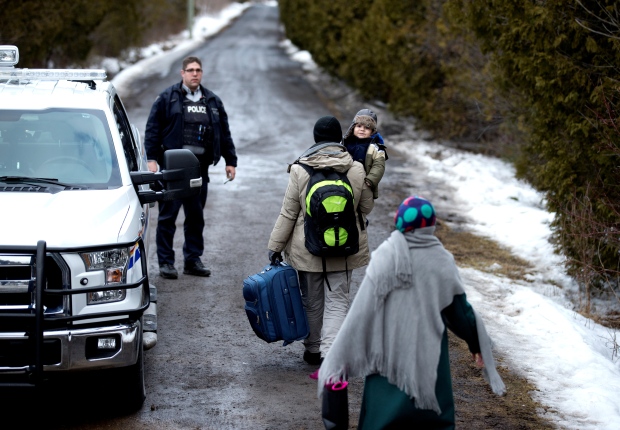
An RCMP officer carries a child from a family that said they were from Yemen after they crossed the U.S.-Canada border into Hemmingford, Que., on Sunday. (Christinne Muschi/Reuters)

But it is the pictures of RCMP officers hoisting small children above snow-covered fields along the Canada-U.S. frontier that have drawn global attention and placed political pressure on the Trudeau government from all sides.

The Opposition Conservatives are demanding a crackdown, and want those crossing illegally charged with crimes, something the government notes cannot happen until asylum claims are heard.

‘We are the endpoint’

The fact those claims are being fed into a clogged system has others urging the Liberals to put more resources into the refugee-determination process and the agencies that support newcomers.

“We are the endpoint,” said Chris Friesen, director of settlement services for the Immigrant Services Society of British Columbia.

The Immigration and Refugee Board reported in its last quarterly financial document that in the first nine months of 2016-17, there was a 40-per-cent increase in new claims compared to the same period the previous year.

Statistics provided to The Canadian Press show claim levels generally began rising in Canada before U.S. President Donald Trump took office.

Refugees crossing into Quebec

A family claiming to be from Turkey are met by a RCMP officer after they cross the U.S.-Canada border into Hemmingford, Que. (Christinne Muschi/Reuters)

In fact, the increase seems to have begun just as Prime Minister Justin Trudeau took power.

In October 2015, the month of the last federal election, 1,519 claims were lodged in Canada. The next month, when the Trudeau Liberals took office, there were 1,647 and — with the exception of two months in 2016 — they have been rising since.

Trump is pushing people into Canada, but the Trudeau government’s repeated messaging on welcoming diversity and immigration is a pretty strong pull factor, Friesen said. “We are now the beacon of hope for desperate refugees.”

In B.C., there has been a 60-per-cent increase in the number of refugee claimants in the last 12 months compared to the previous one-year period. Most are Iraqi Kurds and Afghans, and there were also 18 undocumented Latin Americans from Guatemala, Honduras and Venezuela who recently crossed the Canada-U.S. border, immigration agencies said.

The number of Mexican claimants is also starting to rise in B.C., following the end of a requirement for Mexican citizens to have a visa to enter Canada. During the last three months, there were 29 refugee claimants from Mexico, the agencies reported, compared to 30 who arrived between December 2015 and November 2016.

The Immigration and Refugee board is already adjusting to deal with the bigger numbers, but cabinet will consider giving it more resources.

Spotlight on Safe Third Country Agreement

Ministers will also consider whether there is room to alter the Safe Third Country Agreement between Canada and the U.S. The agreement says a refugee claimant must apply for asylum in whichever of the two countries they arrive first — unless they qualify for an exception.

It is being singled out as the reason people are avoiding official border stations and crossing into Canada illegally, and there are calls for Ottawa to suspend the agreement.

Source: Cabinet to map out scenarios for dealing with border-crossers – Canada – CBC News

Newly arrived Yazidis who escaped sex slavery of ISIS eager to build better future in Canada

Another article on Yazidis in Canada, focussed on London:

It’s here in London — where about 300 Yazidis have formed a small but tight-knit community since the early 1980s when they fled the dictatorship of Saddam Hussein — that Bhasa and other recently arrived Yazidis hope to start building a new life for their families and try to move beyond the horrors they suffered in captivity.

Dalal Abdallah, a Yazidi human rights activist who lives in London, says members of her community have been donating clothing, hygiene products and toys for the families who have arrived and look forward to absorbing more into their community.

“For many, many years, we have been struggling [to grow] as a community because no Yazidis were coming through,” she said. “It’s a great opportunity to build our community, and the more people, the merrier.”

She said London has already accepted and integrated Syrian refugees and that there’s enough support for Yazidis, including a program at Victoria Hospital to help refugees deal with trauma.

Other support comes from London’s Cross Cultural Learner Centre, where Yazidis can learn some basic tools for integrating in Canada: how to get housing, set up bank accounts, apply for health cards.

“We are here to support them, welcome them, make them feel comfortable, that they are not alone here,” said Omar Khoudeida, a Yazidi interpreter who works at the centre and who himself came to London nearly 20 years ago as a refugee.

“There’s a community behind them and supporting them.”

But even with that support, Bhasa must still cope with the emotional fallout of a family torn apart by genocide.

She fears being identified. Although she doesn’t know the fate of family members in Iraq, she’s worried that going public could put them in danger. She hasn’t seen her husband and other male relatives since ISIS invaded her home in August 2014.

Daughter still missing

She also fears for her daughter, who was nine years old when she was snatched by the Islamist militant group.

“They took her. She doesn’t know anything about her,”  Khoudeida said.

While ISIS targets all communities, it has particular antipathy for Yazidis, whom it considers to be infidels.

Iraq Cda Yazidis 20170222

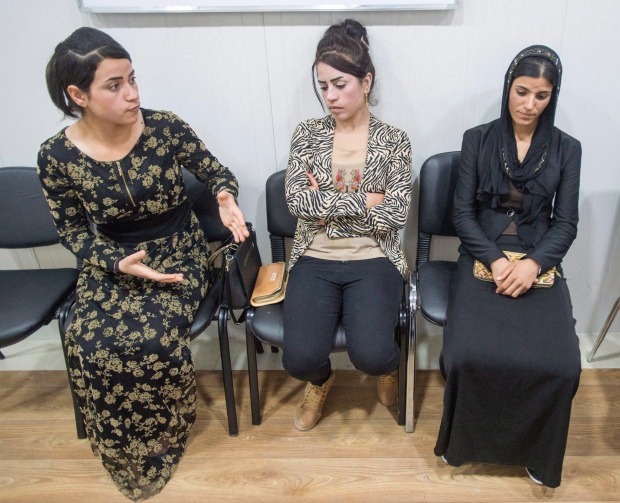
ISIS survivors Suham Haji, from left, Samira Hasan and Saud Khalid sit in the Dohuk Girls and Women Treatment and Support Centre in Dohuk, Iraq. The three women are among 900 being treated at the centre after escaping ISIS captivity. (Ryan Remiorz/Canadian Press)

Last June, a UN commission declared in a report that ISIS was committing genocide against the religious group of about 400,000. ISIS, it said, was subjecting “every Yazidi woman, child or man that it has captured to the most horrific of atrocities.”

Source: Newly arrived Yazidis who escaped sex slavery of ISIS eager to build better future in Canada – Canada – CBC News

Donald Trump: Facts, Fascism and Tyranny: Snyder | Time.com

Historian Timothy Snyder (Bloodlands, On Tyranny: Twenty Lessons from the Twentieth Century) on the risk of Trump:

The Founding Fathers designed the constitution to prevent some Americans from exercising tyranny. Alert to the classical examples they knew, the decline of ancient Greece and Rome into oligarchy and empire, they established the rule of law, checks and balances, and regular elections as the means of preserving the new republic. Thus far, it has worked. But it need not work forever.

We might imagine that the American system must somehow always sustain itself. But a broader look at the history of democratic republics established since our own revolution reveals that most of them have failed. Politicians who emerge from democratic practices can then work to undo democratic institutions. This was true in the rise of fascism in the 1920s and 1930s, as well as during the spread of communism in the 1940s, and indeed in the new wave of authoritarian regime changes of the 21st century. Indeed, absent a truly decisive revolution, which is a rare event, a regime change depends upon such people — regime changers — emerging in one system and transforming it into another.

It is in this light that we should consider President Donald Trump and his closest advisors and spokespeople. Although they occupy the positions they do thanks to an election, there is little reason to believe that they support the American constitutional system as it stands, and much to remind us of authoritarian regimes changes of the recent past. A basic weapon of regime changers, as fascists realized nearly a century ago, is to destroy the concept of truth. Democracy requires the rule of law, the rule of law depends upon trust, and trust depends upon citizens’ acceptance of factuality. The president and his aides actively seek to destroy Americans’ sense of reality. Not only does the White House spread “alternative facts,” but Kellyanne Conway openly proclaims this as right and good. Post-factuality is pre-fascism.

The function of the press, as the Founding Fathers understood, was to generate the common knowledge on which citizens could understand and debate policy, and to prevent rulers from behaving tyrannically. Whether from the far right or the far left, the regime changers of the twentieth century understood that the media had to be bullied and deprived of importance. When Steve Bannon refers to the press as the “opposition,” or Mr. Trump calls journalists “enemies,” they are expressing their support for the demolition of the historical, ethical, and intellectual bases of the political life we take for granted. Indeed, when Mr. Trump calls journalists “enemies of the people,” he is quoting Joseph Stalin.

Since the end of the cold war, the new authoritarian regimes that have emerged in eastern Europe have taken the form of authoritarian kleptocracies: Russia is the most enduring example of this model; a revolution halted the development of a similar regime in Ukraine in 2014. The Founders, opponents of a British monarchy, were alert to the danger that government might serve to enrich a single family. The emoluments clause of the constitution confirms our common sense: no one can be trusted to defend the interests of citizens if his policy choices can make him richer. This president has not revealed the basic financial information about himself, but we know that he has business interests at home and abroad. Russians and Ukrainians have been quick to notice a familiar pattern.

In recent authoritarian regime changes, in Poland and Hungary as well as Russia, the executive power has been able to sideline the judiciary and then humble the legislature. The idea of checks and balances is enshrined in our constitution, but of course also in theirs, is that none of the three branches of government can dominate the others. In denigrating judges, Mr. Trump attacks the geometry of the system. Once the courts are tamed, the legislature cannot defend itself, and we have authoritarianism. If legislators do not support the judiciary, then their turn for humiliation will come, and the laws they pass will be unenforceable. This has been the pattern in recent authoritarian regime changes around the world.

Right-wing authoritarians today use the threat or the reality of terrorism to seek and hold power. The one consistent policy of the Trump administration thus far has been to encourage a Muslim terrorist attack within or upon the United States. Everywhere the first executive order on refugees and immigrants was understood as directed against Muslims. The major consequence, most likely the intended one, is the alienation of Muslims at home and abroad. The proposal to move the US embassy in Israel to Jerusalem is similar: it will never take place, so serves only to alienate and enrage Muslims. Michael Flynn is in the same category: though he was only national security advisor for three weeks, few Muslims will forget that he referred to their religion as a “cancer.” Modern authoritarianism is terror management, and so modern authoritarians need terror attacks: real, simulated, or both. As James Madison noticed long ago, tyranny arises “on some favorable emergency.”

The experience of the 21st century, as well as the experience of the 1930s, teaches that it takes about a year to engineer a regime change. To what, exactly? We cannot deduce, from the Trump administration’s destructive chaos and ideological incoherence, what the post-democratic American regime would be. We can be sure, however, that we would miss being free. The prospect of children and grandchildren growing up under tyranny is terrifyingly real. History can remind us of the fragile fundaments of our own democracy. But what follows now is us up to us.

Source: Donald Trump: Facts, Fascism and Tyranny | Time.com

Liberals look at making skilled immigrant loans pilot project permanent

Always good to see some of the better initiatives of the previous government continued by the current government:

A pilot Conservative project to loan money to help skilled immigrants land jobs in their field could be revived as a permanent program under the Liberal government.

One of the biggest barriers for newly arrived doctors, dentists, engineers and high-tech professionals is coming up with the cash to pay for the required licensing fees, exams and training upgrades.

Proponents say micro loans speed up the process and pay off big time for the federal treasury, yet they can’t keep up with a demand that will likely grow with the Liberal government’s plan to welcome more economic immigrants to the country in 2017.

Jean-Bruno Villeneuve, spokesperson for Patty Hajdu, the minister of employment, workforce development and labour, said a three-year pilot that was launched in 2011 under the Conservatives demonstrated that loans sped up the credential recognition process, led to a 47-per-cent increase in full-time employment and eased reliance on government income assistance.

“We were very pleased with the results of the pilot, and we’re working hard on a framework for a more permanent policy,” he told CBC News.

A spokesperson for Finance Minister Bill Morneau would not say if a new foreign credentials loan program would be included in this year’s budget.

“Can’t tip our hand here either way,” the official said. “Stay tuned.”

The Conservative government earmarked $35 million over five years to make the Foreign Credential Recognition Loans program permanent in the 2015 budget, but it was never implemented due to the election. Then-prime minister Stephen Harper had also promised to more than double that figure during the 2015 campaign by adding an extra $40 million over five years.

Herb Emery, a labour market economist at the University of New Brunswick, said loans to help immigrants overcome the up-front financial hurdle have a big net payoff in federal revenue.

‘Huge’ impact on federal treasury

“When these immigrants are taken out of low-skill jobs and converted into high-paying ones, the impact on the federal treasury is huge,” he said. “They recoup any costs they put into it in the first year alone, and from then on it’s basically pure profit for the treasury.”

Emery said immigrants often have no access to credit or bank loans — what he calls a “pervasive market failure.” That leaves newcomers unemployed or working in low-paid jobs just scraping to get by.

Man hunts job board

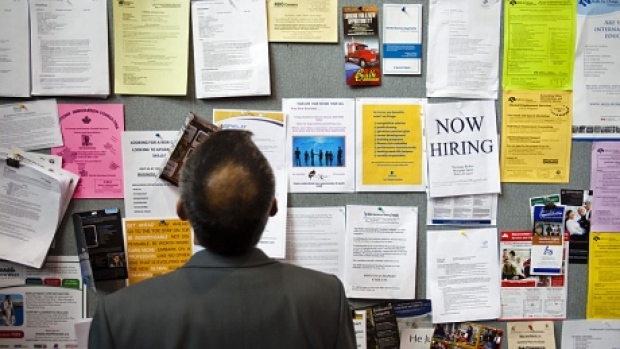
Many skilled immigrants wind up unemployed or working in low-paying jobs because of the financial barrier to earning their foreign recognition credentials. (CBC)

“We’re doing a horrible job in that we bring very high human capital individuals to Canada, then we throw away their potential by not letting them work in what they are trained and educated to do,” he said.

There are several programs in Canada offering micro loans between $5,000 and $15,000, with some receiving operating funding contributions from the federal government and the provinces.

One of the programs Emery has reviewed favourably is the Calgary-based Immigrant Access Fund (IAF), which grants loans to immigrants across the country. Dianne Fehr, vice-president of stakeholder relations, said it needs millions more in federal funding to keep up with a growing demand.

“It’s a very clear way to support immigrants toward labour market integration,” she said.

Source: Liberals look at making skilled immigrant loans pilot project permanent – Politics – CBC News

C-33 – Canada’s former chief electoral officers eager for successor, laud proposed electoral legislative changes

Interesting that the provision to extent non-resident voting rights not raised as an issue, again suggesting lesser priority:

Canada’s former chief electoral officers Marc Mayrand and Jean-Pierre Kingsley are lauding changes proposed in new legislation, including moving the elections commissioner back under the authority of Elections Canada and removing restrictions on who can apply for the job of commissioner.

But they also say there are other issues to be addressed, and with only an acting chief electoral officer in place since Mr. Mayrand stepped down at the end of December, both say they’re eager to see a new permanent chief electoral officer of Canada named.

“I don’t think it’s desirable to have too long of an interim in those positions [officers of Parliament]. I think these positions require people who have a firm ground and can make the difficult decision that they have to make from time to time,” Mr. Mayrand told The Hill Times in an interview last week. “There are other bills that I understand are coming forward and it’s important to have somebody in the position [of chief electoral officer] who can steer the organization.”

Having given notice of his plans to retire in June, Mr. Mayrand, who officially exited the role on Dec. 28, said, “It seems to be a long process, to say the least.”

The Liberal government will select its nominee to become the next chief electoral officer “in a manner consistent with the merit-based appointments process,” which the government has put in place, John O’Leary, communications director to Democratic Institutions Minister Karina Gould (Burlington, Ont.), said in an email.

That process involves advertising for open positions on a government appointments website, among other things.

“I haven’t seen any advertisement for the position,” said Mr. Mayrand in a telephone interview last week with The Hill Times. He said from his experience, once a candidate has been identified, the process “unfolds very quickly.” However, finding the right candidate can be “hard to do,” he noted, given the knowledge and skills required for the job.

Since Mr. Mayrand retired on Dec. 28, deputy chief electoral officer Stéphane Perrault has been the acting chief electoral officer.

Former chief electoral officer Jean-Pierre Kingsley held the job for 17 years until Feb. 17, 2007 and was succeeded by Mr. Mayrand days later on Feb. 21 after the House of Commons unanimously approved his appointment.

“I am disappointed because there is no reason why the government did not initiate staffing action immediately when Mr. Mayrand announced that he was retiring [in June]. … At that very time, they should have set the ball in motion, and we would have a chief electoral officer as I speak. Acting appointments in the officers of Parliament positions is a very bad process,” said Mr. Kingsley.

The Liberal government is currently faced with a backlog of hundreds of unfilled appointments.

Mr. O’Leary said finding a new chief electoral officer “is a priority for Minister Gould, and we will have more to say about this in due course.”

Paul Thomas, a professor emeritus of political science at the University of Manitoba, said he thinks there’s a “very small community of professionals” in Canada with the expertise needed for the job of chief electoral officer.

“Election law is not the simple, straightforward thing of the past,” he said.

Prof. Thomas noted the next federal election in 2019 is “not that far away now, and it would be better if we had a permanent CEO with all the status and authority and confidence of the government and Parliament presiding over the administration of that election.”

Source: Canada’s former chief electoral officers eager for successor, laud proposed electoral legislative changes – The Hill Times – The Hill Times

Is There a Christian Double Standard on Religious Violence? – The Daily Beast

Good long and nuanced read, covering a range of theological perspectives:

Shortly after September 11, 2001, then President George W. Bush spoke directly to Muslims. “We respect your faith,” he said, calling it “good and peaceful.” Terrorists, he added, “are traitors to their own faith, trying, in effect, to hijack Islam itself.”

Recently, TODAY’s Matt Lauer reminded Bush of his words. “I understood right off the bat, Matt, that this was an ideological conflict—that people who murder the innocent are not religious people,” Bush explained.

Those words epitomize an important, but controversial question: is someone who acts violently in the name of a faith truly a member of that faith? According to recently highlighted data from the Public Religion Research Institute (PRRI)—which focuses primarily on Christian responses to that yes/no question—potential answers may result in a “double standard.” Christians are more likely to say that other Christians acting violently are not true Christians, while failing to provide the same latitude for Muslims.

But how closely does this represent the reality? When I asked Christian theologians the why behind that simple survey, the answers were—perhaps surprisingly—more complicated and diverse.

According to PRRI, 50 percent of Americans in general say that violence in the name of Islam does not represent Islam—75 percent say the same of Christianity. The numbers shift, however, the more specific the demographic gets, creating the alleged “double standard.” White mainline Protestants (77 percent) and Catholics (79 percent) reject the idea that true Christians act violently, with 41 percent and 58 percent respectively being willing to say the same of Muslims.

White evangelicals stand out the most, having what PRRI calls the “larger double-standard”—87 percent disown Christians who commit violent acts, with only 44 percent willing to say the same about Muslims.

Many, however, believe that Christians who commit acts of terror are overlooked in the West—that “terrorist” is a biased word used only of non-white violent acts done in the name of Islam.

Early in February, the White House issued a report of 78 terror attacks the Trump administration says were ignored by the media. The list was widely dissected by the press and pundits, with news outlets challenging the claims (listing their own coverage as proof), taking the metaphorical red pencil to the list’s many clear spelling errors, and noting the conspicuous absence of attacks by professed white Christians. Notably, the list did not include the recent attack on a mosque in Quebec, as CNN’s Jake Tapper pointed out.

Understandably, most people are unlikely to associate willfully with anyone who acts horribly in the name of a faith they love. When terrorist attacks do occur, faith representatives frequently waste little time in denouncing them (PRRI’s “double standard”) but not all are sure that these open repudiations represent the reality.

“Christians who commit terrorists acts in the name of their religion are, of course, Christian terrorists,” she says. This does not mean that “Christianity is only a violent religion,” but “it has been complicit in horrific and systemic violence across history, from the Crusades to the Inquisition to the Nazis, and today’s Ku Klux Klan and neo-Nazis.”

She believes it is important that Christians face the issue honestly. “Christians don’t get a ‘hall pass’ to go innocently through the bloody history of what has been done by Christians in the name of Christianity over time. It is absolutely critical that Christians not turn away from the Christian theological elements in such religiously inspired terrorism.”

The same goes for Islam, she says.

“When Muslims commit horrific acts in the name of their religion, I do not think they cease to be Muslims.” She recognizes that Muslims who distance themselves from ISIS might say, “That’s not Islam,” but she believes it is more complicated than that.

“I know many thoughtful Muslims who know they need to dig deeply into their own faith in order to look at the temptations to violence, such as thinking you are doing the ‘will of God’ when what you are really doing is using Islam in order to gain political power.”

Daniel Kirk, pastoral director at Newbigin House of Studies, agrees that violence does not negate one’s Christian or Muslim status.

“Each religion and every religious text holds potential for harm as well as good. Acts of violence can be, and often are, religious expressions. It is critical that we recognize the human component involved when religious communities shape behavior. If we deny the religious component we misinterpret the action and lose our opportunity to respond to it appropriately.”

When shooters (or potential shooters) like Dylan Roof, Benjamin McDowell, Robert Doggart, and Robert Dear, identify themselves as Christians, many might hope to rescind their membership or say it was never valid, but others, like Kirk, believe that approach is problematic.

“Unless a person is being intentionally deceitful, someone who claims to be acting on the basis of religious fervor should be treated as an adherent to that religion. I do not get to judge whether or not a person is ‘really’ of their faith. As a Christian I can only try to persuade other Christians as to why certain behaviors are incompatible with the Christian faith.”

Others believe that the difference between Christians and Muslims is more distinct—that the religion of Jesus rejects violence, but that Islam does not.

“The alleged double-standard claimed by the PRRI survey essentially dissolves when we consider the example and teachings of the respective founders, Jesus and Muhammad,” says evangelical professor Paul Copan, Pledger Family Chair of Philosophy and Ethics at Palm Beach Atlantic University. “Jesus repudiated violence—that is, the unjust use of force—done in his name.”

“By contrast, Muhammad himself engaged in violent, ruthless actions during his career,” he adds. “He taught such ruthlessness as normative in the Quran.”

While agreeing with the larger results of the survey, Copan says the discussion has layers, noting particularly the role of Christians in the military who—assuming they have a just cause—may have to kill. They are in a different situation. It is also possible, he says, for “misguided” Christians to act violently (and therefore, “unjustly”), even if it is contrary to the faith.

When it comes to Islam, he adds that he’s known “plenty of gracious, hospitable Muslims” who “repudiate violence done in the name of Islam” by “screening off any violent texts of the Quran,” though he can’t say that violence in the name of Islam is inconsistent with the faith.

Evangelical J. Robert Douglass, associate professor of theological studies at Winebrenner Theological Seminary, takes a cautious approach to the question, recognizing that both faiths have sacred texts that could be understood violently.

“My understanding of the Christian faith does not permit violence in the name of Christ,” he says. “However, I am not prepared to say that a person who acts in a way contradictory to the teachings of Christ is excluded from being a Christian.” He recognizes that there are complications behind violence, like ignorance, manipulation, and mental illness.

“If behaving in opposition to the teachings of Christ kept one from being a Christian, I could not consider myself one.”

He admits that due to competing factions in Islam with varying interpretations vying for “authentic representation”—some advocating violence and others peace—the question is more difficult to answer “definitively.”

“Both the Bible and the Quran have passages that advocate violence, at least within particular historical contexts,” says Douglass. He says he doesn’t find “a sizable faction within Christianity that is still explicitly advocating the legitimacy of violence in a manner that we presently see in Islam,” but “since Christianity had a historical head start, perhaps in 500 or 600 years this will no longer be true for Islam either.”

Other theologians readily reject the face value of a faith label attached to an act of violence, agreeing with Christians or Muslims who say, “That’s not my faith.”

Greg Boyd, senior pastor of Woodland Hills Church in St. Paul, Minnesota and an outspoken pacifist, finds himself taking a very different stance, saying that anyone—Christian or Muslim—who acts out in violence is not truly a part of those faiths.

“Jesus made one’s commitment to refrain from violence, and to instead love and bless one’s enemies, the precondition for being considered ‘a child of your Father in heaven’ (Matthew 5:39-45). Though followers of Jesus are never allowed to judge another person’s heart or ‘salvation,’ Jesus’ teaching rules out killing another human for any reason, let alone doing so as an act of terror in his name!”

“While the Quran allows Muslims to take the lives of others under certain conditions,” he adds, “these conditions rule out murdering innocent people to install terror in others (6:151). I therefore side with the majority of Muslims who do not consider Islamic terrorists to be true Muslims.”

The briefest dive into this conversation about religious identity quickly reveals an undeniable mosaic of views. And—perhaps to the surprise of some—it should be noted that the flipside of this conversation among Muslims may result in conclusions similar to these Christian perspectives.

“If someone claiming to be Christian commits an act of violence in the name of Christianity,” says Harris Zafar, National Spokesperson for Ahmadiyya Muslim Community USA, “it certainly cannot be my place as a Muslim to decide whether or not that person is a true Christian.” He sees that as “the burden” of his “Christian friends,” though he does believe violence contradicts the “teachings of Christianity.”

“And to be honest,” he adds, “the same holds true with regards to a Muslim. As a Muslim, if I were to look at those Muslims who commit horrible acts of violence and terrorism and say they are not real Muslims, I’m committing the ‘no true Scotsman’ fallacy.”

The goal of Islam is not to judge others, he says, noting that the Prophet Muhammad saw such actions as a “sin.”

Instead he “would focus on highlighting all of the teachings of Islam that this person is violating. And Muslims who commit acts of terror can certainly call themselves Muslims if they would like, but I can easily illustrate the fundamental teachings of Islam that they are starkly violating.”

Islam, says Zafar, calls its adherents to “stop that injustice” and “unite people together through a bond of humanity and mutual respect—not to divide people with injustice or violence.”

Undeniably, this is a conversation and debate with years of life left in it. The diversity of opinion belies the reality: there is no such thing as a single or simple Christian perspective on how to understand violence and religiosity.

It was former president and self-professed Christian, Barack Obama, for example, who once offered a similar sentiment to that of Bush. When asked in a CNN town hall why he wouldn’t use the words “radical Islamic terrorist,” he said didn’t want to lump “these murderers” with the world’s billions of peaceful Muslims.

“There is no doubt that these folks think and claim that they are speaking for Islam,” he said, “but I don’t want to validate what they do. If you had an organization that was going around killing and blowing people up and said, ‘We’re on the vanguard of Christianity.’ As a Christian, I’m not going to let them claim my religion and say, ‘you’re killing for Christ.’ I would say, that’s ridiculous.”

Source: Is There a Christian Double Standard on Religious Violence? – The Daily Beast

No simple fix to weed out racial bias in the sharing economy

Two options to combat implicit bias and discrimination: less information (blind cv approach) or more information (expanded online reviews). The first has empirical evidence behind it, the second is exploratory at this stage:

One of the underlying flaws of any workplace is the assumption that the cream rises to the top, meaning that the best people get promoted and are given opportunities to shine.

While it’s tempting to be lulled into believing in a meritocracy, years of research on women and minorities in the work force demonstrate this is rarely the case. Fortunately, in most corporate settings, protocols exist to try to weed out discriminatory practices.

The same cannot necessarily be said for the sharing economy. While companies such as Uber and Airbnb boast transparency and even mutual reviews, they remain far from immune to discriminatory practices.

In 2014, Benjamin Edelman and Michael Luca, both associate professors of business administration at Harvard Business School, uncovered that non-black hosts can charge 12 per cent more than black hosts for a similar property. In this new economy, that simply means non-white hosts earn less for a similar service. This sounds painfully familiar to those who continue to fight this battle in the corporate world – although in this case, it occurs without the watchful eye of a human-resources division.

In the corporate world, companies have moved from focusing on overt to subconscious bias, according to Mr. Edelman and Mr. Luca, but the nature of the bias in the sharing economy remains unclear.

It’s either statistical, meaning users infer that the property remains inferior based on the owner’s profile, or “taste-based,” suggesting the decision to rent comes down to user preference. To curb discriminatory practices, the authors recommend concealing basic information, such as photos and names, until a transaction is complete, as on Craigslist.

Reached by e-mail this week, Mr. Edelman stands by that approach.

“Broadly, my instinct is to conceal information that might give rise to discrimination. If we think hosts might reject guests of [a] disfavoured race, let’s not tell hosts the race of a guest when they’re deciding whether to accept. If we think drivers might reject passengers of [a] disfavoured race, again, don’t reveal the race in advance,” he advised.

While Mr. Edelman feels those really bent on discrimination will continue to do so, other, more casual discriminators will realize it’s too costly.

An Uber driver who only notices a passenger’s race at the pickup point might think to himself he already has driven about five kilometres. If he cancels, not only will he be without a fare, but also Uber might notice and become suspicious, Mr. Edelman surmised.

Not everyone agrees that less information is the best route to take to combat discrimination in the sharing economy. In fact, more information may be the fix, according to recent research conducted by Ruomeng Cui, an assistant professor at Indiana University’s Kelley School of Business, Jun Li, an assistant professor at the University of Michigan’s Stephen M. Ross School of Business, and Dennis Zhang, an assistant professor at the John M. Olin Business School at Washington University in Saint Louis.

The trio of academics argues that rental decisions on platforms such as Airbnb are based on racial preferences only when not enough information is available. When more information is shared, specifically through peer reviews, discriminatory practices are reduced or even eliminated.

“We recommend platforms take advantage of the online reputation system to fight discrimination. This includes creating and maintaining an easy-to-use online review system, as well as encouraging users to write reviews after transactions. For example, sending multiple e-mail reminders or offering monetary incentives such as discounts or credits, especially for those relatively new users,” Dr. Li said.

“Eventually, sharing-economy platforms have to figure how to better signal user quality; nevertheless, whatever they do, concealing information will not help,” she added.

Still, others believe technology itself can offer a solution to the incidents of bias in the sharing economy, such as Copenhagen-based Sara Green Brodersen, founder and chief executive of Deemly, which launched last October. The company’s mission is to build trust in the sharing economy through social ID verification and reputation software, which enables users to take their reputation with them across platforms. For example, if a user has ratings on Airbnb, they can collate it with their reviews on Upwork.

“Recent studies in this area suggest that ratings and reviews are what creates most trust between peers. [For example] when a user on Airbnb looks at a host, they put the most emphasis on the previous reviews from other guests more than anything else on the profile. Essentially, this means platforms could present anonymous profiles showing only the user’s reputation, but not gender, profile picture, ethnicity, name and age and, in this way, we can avoid the bias which has been presented,” Ms. Brodersen said.

Regardless of the solution, platforms and their users need to recognize that combatting discriminatory practices is their responsibility and the sharing economy, like the traditional work force, is no meritocracy.

“This issue is not going to be smaller on its own,” Ms. Brodersen warned.

Source: No simple fix to weed out racial bias in the sharing economy – The Globe and Mail

Dutch love-child fathered by First Nations’ Canadian veteran finds lost identity, gets citizenship

A nice story about one “lost Canadian” whose situation was addressed in the further measures regarding “lost Canadians” in the 2014 C-24 legislation, reminding us of the complexities of families and identities:

Six weeks before Christmas a retired Dutch carpenter named Will van Ee met with Sabine Nolke, Canada’s ambassador to the Netherlands at the Canadian embassy in The Hague. Van Ee brought a small bottle of liqueur crafted in his small hometown of Sas van Gent, near the Belgian border, as a gift.

The two drank coffee and chatted for about an hour. Conversation shifted from the German-born ambassador’s roots to van Ee’s father’s war record to their shared passion for Canada before a photographer arrived to capture what was, for van Ee, an occasion 70 years in the making.

It was the day Van Ee, the illegitimate son of an aboriginal Canadian soldier and a Dutch girl who met during the end days of the Second World war, became a Canadian.

“I am a carpenter, a bricklayer and a furniture-maker,” van Ee says from Holland. “So I have always said, well, my body is definitely Dutch. But, in my heart, I am a Canadian, because that is how I truly feel, and I feel very connected to my native roots.”

Van Ee spent years searching for his Canadian family. Now he is a full-status member of the Sagamok Anishnawbeck First Nation in Northern Ontario, has a totem pole in his backyard (that he carved) and, after his November meeting with the ambassador – his Canadian citizenship.

It is a lost identity that stayed hidden from him until well into adulthood.

The Dutch refer to “the wild summer of 1945.” The war was over and about 170,000 Canadian soldiers were stationed in a country that nearly starved to death under German occupation. Young people let loose. Couples, from two different worlds, drew close. Dutch clergy scolded the older generation for letting their daughters run wild. The Canadian military scolded the soldiers, while Ottawa took the position that children born out of wedlock to Canadian servicemen were not Canada’s responsibility. But the party didn’t stop. There were 7,000 illegitimate births in Holland in 1946.

Will van Ee was one of them.

His mother, Hendrike Herber, married Albert van Ee a few years later. The couple had seven additional children. The eldest harboured suspicions about his true origins, and thought he might actually be Japanese or Italian.

“I was the only sibling with dark skin,” van Ee says, chuckling. “The real Dutch — all blond hair and blue eyes — but not me.”

But he was loved and happy, and only became interested in digging into the past after getting married in the late 1970s. His mother grew quiet when he started asking questions. Van Ee believes out of a sense of “shame,” and from knowing, perhaps, that her true “love,” wasn’t the man she married. The truth came out after a cousin gave van Ee an old photograph. Hendrike is glowing in the image, alongside a beaming Canadian soldier named Walter Majeki. Van Ee’s aunt told her nephew that their family loved Walter, and then he had left.

“My mother once told my wife that had Walter called for her — even after she had children with Albert — that she would have gone to Canada,” van Ee says.

Courtesy Will van Ee

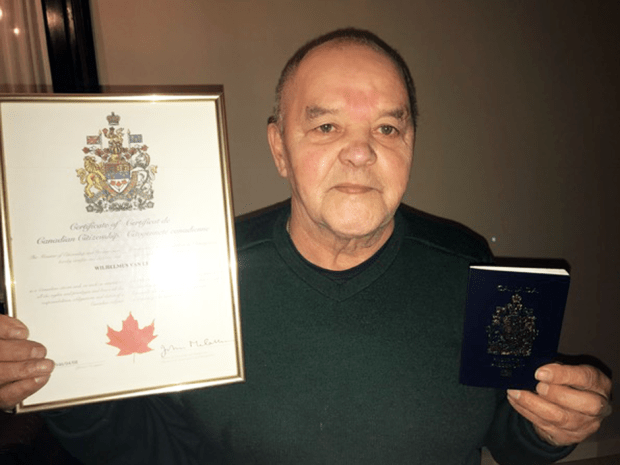
Courtesy Will van EeWill van Ee is now a Canadian citizen and a full-status member of the Sagamok Anishnawbeck First Nation.

But how to find Walter, almost 40 years after the fact, in a pre-Google world? Van Ee enlisted Olga Rains, a Dutch war bride in Peterborough, Ont., dedicated to reuniting other so-called “Liberation” children with their Canadian families. (Post-war estimates put the number of European-born children fathered — and abandoned — by Canadian soldiers at 30,000.)

Rains told van Ee that his father appeared to be First Nation. She had Walter Majeki’s photo published in several Canadian newspapers. In 1984, the son he left behind picked up the phone and dialed a number for Walter’s brother, Neil, in Latchford, Ont.

“I was shaking,” van Ee recalls.

Soon after he was on a flight to Toronto to meet his uncle and a cousin, Richard.

“When my father first saw Willy getting off that plane he said to me, ‘My God, there is Walter, my own brother,’ ” Richard Majeki says from North Bay, Ont. “Willy was a Majeki from the get-go.”

The story, as van Ee heard it from the Majeki clan and his father’s oldest childhood friends — and that he believes in his heart to be true, is that Walter returned from the war with every intention of sending for Hendrike. But his mother forbid the relationship. She said European girls were “no good.” Richard Majeki recalls a conversation with his father, Neil, in which he said that Walter spoke to him of Hendrike on only one occasion. Walter said that he hoped she would love and “look after” their child. And then he moved to Milwaukee, leaving behind a box of photographs of the Dutch girl he fell for during the wild summer of 1945.

Walter worked in a brewery. He married an American. They started a family. He died in 1972.

“I believe 100 per cent that my parents truly loved one another,” van Ee says. “It changed me, finding my father — even though we never met. I came to wish that I had started looking for him much earlier in my life.”

The Sagamok Anishnawbeck First Nation welcomed van Ee as one of its own at a traditional ceremony in Massey, Ont. Sweet-grass was burned, a pipe smoked and van Ee informed that his ancestors had “tears in their eyes,” over his return.

“I felt something that day,” he says.

He went fishing with his father’s best friends off Manitoulin Island. They said they felt as though their old friend had come home to them. Uncle Neil gave van Ee two miniature totem poles as gifts. The Dutch carpenter carved a giant replica — and put it in his backyard.

“We are proud to know Willy,” Richard Majeki says. “He is one of us.”

Van Ee wrote to Walter’s widow in Milwaukee asking if he could visit. He received a reply through a lawyer requesting he never contact the family again.

“That was hard,” he says.

What van Ee has found in three trips to Northern Ontario over the past 30 years is a sense of belonging.

“I now know where I come from,” he says.

Wilhemus van Ee became a full-status member of his tribe in 1992. But getting Canadian citizenship was more complicated. Involving, as it did – until the legislation was amended in 2015 — an archaic law barring individuals born out of wedlock to a foreign mother, prior to 1947, the right to citizenship.

“My father fought for Canada and here I was fighting to become Canadian,” van Ee says.

Four weeks after his audience with the ambassador, the 70-year-old received his Canadian passport. He is planning a trip to Canada soon.

Source: Dutch love-child fathered by First Nations’ Canadian veteran finds lost identity, gets citizenship | National Post

Un Néerlandais arrivé au Canada en 1958 expulsé lundi | Actualités

Have not seen this story in the English language press but it is a good example of the impact of the previous government’s efforts to deport those guilty of violent crime.

But someone who arrived at the age of 8 months who has lived all his life in Canada? At that point, doesn’t Canada “own” him, notwithstanding his lack of citizenship?:

Len Van Heest, un Néerlandais de 59 ans arrivé au Canada quand il était bébé, va être expulsé lundi vers les Pays-Bas, un pays dont il ne parle pas la langue, a décidé vendredi la justice au terme de neuf ans de procédures.

Arrivé avec ses parents en 1958 à l’âge de 8 mois, Len Van Heest « n’a jamais obtenu la nationalité canadienne » et a été diagnostiqué bipolaire à l’âge de 16 ans, selon les attendus du jugement d’expulsion du tribunal fédéral de Vancouver, en Colombie-Britannique.

Alcoolique et dépendant aux stupéfiants, il est poursuivi à partir du milieu des années 70 et jusqu’en 2013 pour une quarantaine de délits. Il assure qu’ils ont été commis pour la plupart dans « la phase maniaque de la maladie », selon le tribunal.

Depuis un durcissement de la législation par le précédent gouvernement conservateur, un ressortissant étranger condamné à plus de six mois de prison est passible d’une expulsion du Canada. La précédente loi ouvrait à une possible expulsion au-delà d’une condamnation de deux ans de prison.

Len Van Heest avait engagé plusieurs recours contre son expulsion dont la première décision remonte au 2 janvier 2008. Le corps médical avait permis de surseoir à son expulsion au motif que les troubles psychologiques pouvaient le pousser au suicide en l’envoyant dans un environnement totalement inconnu.

Le Néerlandais avançait également que sa santé mentale nécessitait des traitements auxquels il n’aurait pas accès aux Pays-Bas, faute de ressources financières sur place d’autant qu’il ne parlait pas la langue.

Domicilié à Courtenay, à 200 km au nord de Victoria, sur l’île de Vancouver, Len Van Heest voulait également rester auprès de sa mère âgée de 81 ans.

« J’ai payé ma dette envers la société […] et maintenant c’est une condamnation à perpétuité », avait-il déclaré fin février à la télévision locale Chek News.

Dans ses attendus, le juge Paul Crampton a reconnu que Len Van Heest « peut souffrir d’un inconvénient et d’une difficulté à s’installer aux Pays-Bas » plus importante que toute autre personne expulsée du Canada.

Néanmoins, le juge a estimé que l’individu n’avait pas pris les mesures préalables nécessaires « pour minimiser cet inconvénient et cette difficulté ».

En conséquence, Len Van Heest doit être expulsé le lundi 6 mars, conclut le juge dans ses attendus de 15 pages.