Clark:To list Iran’s Revolutionary Guards as a terrorist group, Canada needs a better way

Agree, appropriate distinction:

….Simply designating the IRGC as a terrorist organization would mean any non-citizen draftee in the IRGC would be barred from Canada – visitors, students, immigrants – with only narrow grounds to appeal.

The IRGC is big, counting roughly 150,000 troops, according to University of Ottawa professor Thomas Juneau. That means there have been a lot of conscripts. They don’t have a choice of whether they are sent to the army, the police or the Revolutionary Guards. Mahmoud Azimaee, a statistician and former conscript who was declared inadmissible to the U.S. last year, believes there are probably 10,000 Canadians who are former IRGC conscripts.

Any new regulation or law must include a well-crafted carve-out for those people.

The U.S. Trump administration didn’t do that in 2019, and it was a mistake. But the Biden administration hasn’t touched it out of fear of being labelled soft on Iran.

U.S. Secretary of State Antony Blinken told a Congressional committee in 2022 that listing Iran as a terrorist organization didn’t add much in practice, except barring more people from entering the U.S. – chiefly conscripts. “The people who are the real bad guys have no intention of travelling here, anyway,” he said.

Source: To list Iran’s Revolutionary Guards as a terrorist group, Canada needs a better way

Nicolas: «Représenter»

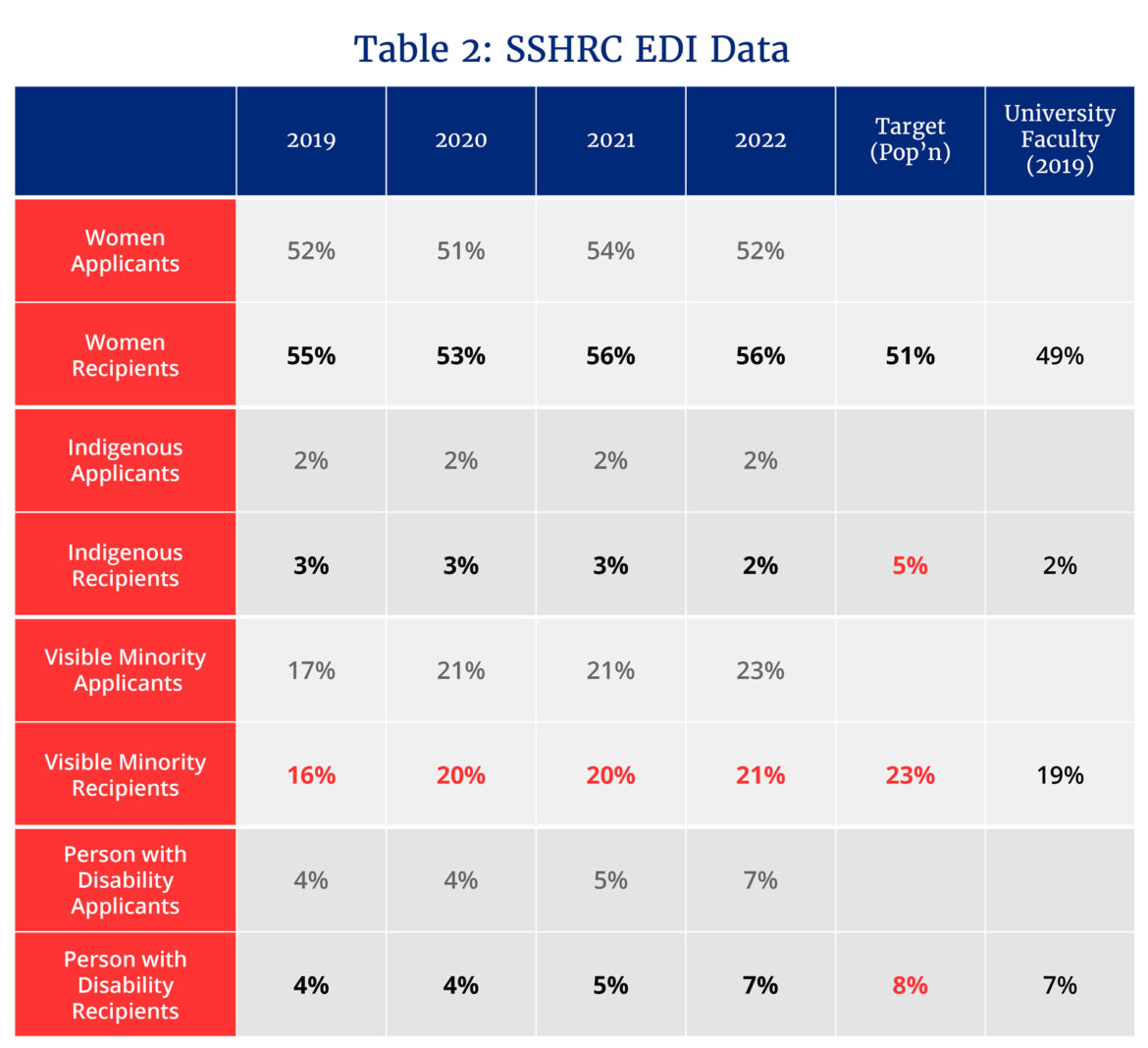
Hard to disagree with overall arguments in favour of diverse representation and lived experiences. However, there is a risk in conflating the simpler diversity of appearance and identity with the more complex diversity of perspectives and thought. Governments and organizations have a tendency to choose representatives for such bodies from organizations and individuals generally in agreement with their preferred policy directions, a recent example being the federal Employment Equity Act Review Task Force:

En décembre dernier, le gouvernement du Québec a annoncé la composition de son comité de sages sur l’identité de genre, lequel n’avait jamais été réclamé ni par les regroupements ni par les experts québécois liés à l’identité de genre. Parmi les trois personnes choisies, aucune n’est trans ou non binaire

Dès l’annonce, des voix se sont élevées dans les communautés LGBTQ+ pour dénoncer l’initiative caquiste. Du bout des lèvres, la ministre de la Famille, Suzanne Roy, a fini par admettre qu’une personne trans ou non binaire aurait pu avoir un rôle de « représentation » sur le comité, mais que le gouvernement avait « décidé de faire autrement ». 

Je pense qu’il y a dans ce fiasco une occasion de se pencher davantage sur cette notion de « représentation », qui a pris de plus en plus de place dans notre compréhension de l’équité et de l’inclusion sociale dans la dernière décennie. 

Depuis décembre, plusieurs ont déjà fait le parallèle avec la question des femmes. Oserait-on aujourd’hui créer un comité de sages sur la condition féminine — ou même sur l’avortement, plus précisément — sans qu’il y ait de femmes autour de la table ? Bien sûr que non. Mais pourquoi ?

Non seulement parce que les femmes doivent être « représentées » lorsqu’on discute de ce qui les concerne. Mais aussi parce que les femmes disposent d’une expérience de vie qui, lorsqu’elle se conjugue à une quête de savoir et de compréhension de ce vécu, aboutit à une expertise de la condition féminine difficilement égalable. Parce que la médecine a été développée par et pour les hommes, un ensemble de savoirs sur leur propre corps dont les femmes disposaient a longtemps été dévalorisé par la science occidentale. Et encore aujourd’hui, la sous-représentation des femmes dans les sciences à l’université joue un rôle dans les priorités qui sont établies en recherche médicale. Plusieurs aspects de la santé reproductive sont sous-étudiés parce que les gens qui gèrent les fonds dans ces domaines ne sont pas à l’image de la population. 

Il ne s’agit pas ici, donc, de simple « représentation ». Mais d’une perspective intégrant un vécu, ainsi que d’une expertise développée par une soif de connaissance quasi obsessive, qu’il est rare de développer à un tel niveau à moins que ce savoir ne soit lié à notre récit de vie.

Il y a aussi un souci du détail, un perfectionnisme, voire une absence de « droit à l’erreur » qui s’installent lorsqu’on sait que presque aucune personne qui nous ressemble n’a accès au lieu de pouvoir auquel on accède. Lorsqu’on sait qu’une bourde pourrait avoir une incidence sur toute une communauté déjà marginalisée et fragilisée socialement, mais qui nous est chère et avec laquelle on partage une partie de notre quotidien et de nos relations les plus intimes, on développe un sens éthique particulier dans notre rapport au travail. 

Si le comité de sages sur l’identité de genre adopte des recommandations qui font du mal, au bout du compte, aux jeunes trans et non binaires du Québec, ses membres auront-ils, de la manière dont leurs cercles sociaux sont établis, à regarder ces jeunes dans les yeux, dans leur vie personnelle, une fois leur mandat public terminé ? Ou pourront-ils se soustraire aux conséquences de leurs actes en éteignant leur télévision et en refermant leurs journaux ?

Ce ne sont là que quelques aspects de cette notion de « représentation » rarement explicités dans nos débats sociaux sur la « diversité » dans les lieux de pouvoir. La superficialité avec laquelle la question est comprise mène à des bourdes dont les conséquences ne sont justement pas vécues par les gens qui les commettent. 

Lorsque le comité a été annoncé, la ministre de la Condition féminine, Martine Biron, a quant à elle vu dans la composition un groupe qui sera « capable de s’élever un peu ». Il y a dans cette perspective une croyance populaire à laquelle il est aussi opportun de s’attarder. 

Si les minorités d’une société (ou les personnes que l’on a minorisées dans les lieux de pouvoir, comme les femmes) sont souvent perçues comme des « représentantes » des groupes auxquels elles appartiennent, les individus issus des groupes majoritaires, eux, seraient « neutres », au-dessus de la mêlée, objectifs, mieux capables d’indépendance intellectuelle. 

Or, ce n’est pas parce qu’un individu a moins été forcé par sa société à développer une réflexion explicite sur les groupes auxquels il appartient qu’il appartient moins à ces groupes. La majorité est un groupe. Les personnes cisgenres, dans le cas qui nous occupe, aussi. 

On le voit bien dans le discours caquiste sur les inquiétudes de « la population » relatives aux questions de genre. Le sous-texte de toutes les déclarations du parti, c’est que « la population », « les parents inquiets » et « le monde ordinaire » n’incluent pas les personnes trans et non binaires. 

Peu importe ce que pensent les trois personnes qui ont été nommées au comité, il faut comprendre que la Coalition avenir Québec les y a placées dans l’espoir d’en faire des « représentants » de cette « population » comprise comme excluant les minorités de genre. Il n’y a donc pas de « représentation » pour ces minorités  et de « neutralité » pour les « sages ». Mais bien un choix politique de ne représenter que la perspective majoritaire dans un comité chargé de se pencher sur les minorités de genre. 

Car l’expérience de vie et le vécu ne font pas qu’influer sur l’expertise développée par les personnes issues de groupes minoritaires : tous les humains sont constitués à partir de leur expérience de vie et de leur capacité plus ou moins développée à éprouver de l’empathie et de la curiosité pour les gens qui ne leur ressemblent pas.

Il n’y a pas, du côté majoritaire, l’universel et la « capacité à s’élever un peu », et, de l’autre, le « particularisme ». La société est formée par nos perspectives, nos angles morts, nos réseaux et nos intérêts, pour tous, partout, en tout temps.

Source: «Représenter»

Aaron Wudrick: It’s time for a grown-up conversation on immigration

Wudrick weighs into the question of values even if to date, most critics have focussed on the practicalities (housing, healthcare, infrastructure etc) with little substantiation. However, the influx of 1,000 or so Gaza’s, fleeing the destruction, combined with the range of anti-semitic language and actions, provides a high profile example. Doesn’t appear to be an accident that applicants have to provide their social media links:

Canada has been shaped by large-scale immigration. With the exception of Indigenous Peoples, the vast majority of Canadians today are either immigrants or descendants thereof. Our nation has thrived as a pluralistic and multiethnic society, built through the gradual integration of people from around the world. 

While this is largely a good news story it should not obscure a hard truth: in the 21st century, the challenges associated with immigration are vastly different from those of 50 or 100 years ago, and until recently policymakers have been unwilling to discuss immigration policy accordingly. These challenges can be broadly categorized into three areas: economic impact; infrastructure capacity; and cultural friction.

When it comes to economic impact, immigration has historically, on balance, been beneficial to Canada’s economy and standard of living. But in recent years the evidence has become more mixed. In particular, the sheer number of new arrivals—over one million in 2022 alone—especially in the form of temporary and lower-skilled migrants, is increasingly being used as a substitute for Canadian labour, driving down wages. This downward pressure, while good news for employers trying to contain costs, has the dual effect of dragging down per-capita GDP, while disincentivizing business investment in labour-productivity-enhancing innovations. 

The cause of the jump in total migrants per year is also no secret: there has been an explosion in the number of international postsecondary students studying in Canada over the last decade—jumping from 248,000 in 2012 to 807,000 in 2022—largely as a result of postsecondary institutions seeking a more lucrative income stream since they are able to charge international students much higher fees. With no annual cap on foreign student visas, this has effectively become a massive back-door entry loophole to get into the country. Many of these students arrive with the hope of becoming permanent residents, which also entitles them to sponsor family members to come to Canada, further boosting migration levels.

Equally concerning has been the effect of this population growth on housing prices, which is a straightforward arithmetic function of supply and demand. Canada has some of the most expensive housing in the world, overwhelmingly a result of insufficient housing supply, especially in major cities. High levels of immigration, also concentrated in these cities, exacerbate the problem from the demand side. Both Canadians and newcomers suffer if they cannot afford a place to live. Similarly, many Canadians are unable to find a family doctor and face crowded schools, transit, hospitals, or other crumbling infrastructure. Rapid population growth makes these challenges harder to manage.

But, while concerns about immigration’s impact on our economy and infrastructure have slowly begun to attract more attention and public discussion, the issue of cultural friction remains largely taboo. 

It should be said that historically, Canada has been fairly successful at integrating people from diverse religious, linguistic, and racial backgrounds, and even today there is a strong case that Canada manages these challenges better than most other countries. What was once a fairly organic process that allowed for integration over years, if not generations, has been supplanted by activist government policy that preaches an official doctrine of big-M Multiculturalism, which fetishizes and subsidizes cultural differences while simultaneously erasing and downplaying Canadian history. In effect, the implicit social contract between Canada and newcomers has become unbalanced. Canada is and should remain a place where newcomers are free to retain their religion, language, and culture. But we must also actively invite all Canadians, new and old, to join a shared national project to ensure we are working towards living together rather than simply side by side.

In addition to counterproductive government policies, few have noted that the integration process has been dramatically changed by technological advance which now allows for immigrants to retain permanent, real-time cultural ties to their native countries. This phenomenon—where people can be physically present in one place but maintain daily cultural and social ties to their homeland—presents a special challenge to a country with a relatively weak national identity. This is particularly true of Canada’s large diaspora communities, including those from China, India, and Iran, which have increasingly impacted Canada’s international relationships and given rise to interference (alleged or proven) by these countries on Canadian soil.

Canada has historically enjoyed strong support for immigration across the political spectrum, a consensus that is not common in other countries. Recent opinion polling suggests that this consensus is rapidly eroding, if not already gone. We are long overdue for an honest, constructive, and robust debate about the way forward on immigration. We owe it to Canadians—both present and future.

Aaron Wudrick is the domestic policy director at the Macdonald-Laurier Institute.

Source: Aaron Wudrick: It’s time for a grown-up conversation on immigration

RCMP to begin collecting, analyzing race-based data in pilot project

Overdue:

The RCMP says it will begin collecting race-based data in select locations this month to better understand interactions between police and people in various communities.

The pilot project follows two years of consultations across Canada.

The national police force said Tuesday the data about use of force, arrests and routine checks will provide evidence-based information to help improve how officers serve a diverse population.

The Mounties plan to collect, analyze and report the data to gain insight into the experiences of Indigenous Peoples, as well as Black and other racialized individuals, in dealing with officers.

The pilot project comes more than three years after Brenda Lucki, RCMP commissioner at the time, acknowledged that systemic racism exists in the police force.

The May 2020 killing of George Floyd, a Black man, by Minnesota police fanned the flames of fury over racism in the United States and sparked anger and concern in Canada.

Growing outrage about police brutality and discrimination sparked rallies and calls for change.

The pilot project will help the RCMP better understand the nature, extent and effect of systemic racial disparities, the force said in a news release.

The project will enable data-driven decision-making and policy development, build trust with communities and ultimately improve safety, the force added.

Source: RCMP to begin collecting, analyzing race-based data in pilot project

Beck: Canada is haunted by problematic place names, but we have the power to change that

Haunted? Really? Virtually any other issue is far more important to the day to day lives of Canadians, whatever their origins or ancestry:

What’s next is in our hands. As citizens, we must demand that our municipalities implement more inclusive naming policies. If there are names in your community that you find objectionable, search for your municipality’s place-name policy in our database. If there is no policy, send your councillor or alderperson a link to our report and ask them to lobby for the adoption of one. Reach out to your child’s teacher and suggest they undertake a class project through which more inclusive names can be researched and proposed to your municipality.

Municipalities have significant latitude when it comes to implementing policy and determining how places within their jurisdictions are named. The Dundases, Ryersons and Macdonalds of Canada are rightfully becoming unmoored from the landscape. For those who worry we will forget lessons from the past, look to Germany and Spain – their landscapes have been cleansed of names associated with past dictators, yet the history of what happened there has not vanished from public consciousness.

Source: Canada is haunted by problematic place names, but we have the power to change that

Steve Lafleur: It’s time to stop importing American debates, Canada. We’ve got our own country to run

Amen… Captures many of my pet peeves, reflecting a colonial mentality, although his comments on immigration oversimplify:

For the love of God, stop uncritically importing American political debates

Well, it’s here. 2024. U.S. election year. Which means that, regrettably, we’re going to be talking a lot more about Donald Trump—whether it’s because his legal troubles get the better of him, or he finds his way back into the White House. Maybe both. It’s almost too depressing to contemplate, but here we are. 

This has wide-ranging implications for Canada, and the world at large. The world will be watching—particularly America’s adversaries. Canada, Europe, and our allies need contingency plans in case America turns its back on the world.

I’m not here to talk about the geopolitical implications of letting Vladimir Putin walk through Europe, or the prospect of our closest ally potentially tearing itself apart over a geriatric nepo baby with a severe allergy to the law. I’m getting off track here.

Let’s try this again. Canadians will be rightly fixated on the American election. Who can blame us? But our cultural commonalities with the United States often make it tempting to uncritically import American debate. We’ll need to try even harder than usual to avoid that. No good comes of it. 

Canada is, in many respects, a collection of bi-national regional political cultures overlayed by a loose national culture. Vancouver is basically Seattle with Canadian characteristics, for instance. We often have as much in common with our regional neighbours south of the border as we do with Canadians on the other side of the country. 

With a population largely strewn across the American border, an economy oriented towards southern exports, and a media ecosystem filled with American content, it’s easy to forget that Canada is its own country with distinct challenges, opportunities, and history. There isn’t always an off-the-shelf American policy solution that we can just slap a maple leaf on.

This may seem painfully obvious, but Canadian politicians have a long history of seemingly forgetting which side of the border we’re on. And it’s not getting any better. Whether it’s Danielle Smith fawning over Ron DeSantis or Justin Trudeau conflating Pierre Poilievre and Donald Trump, all indications are that our political class wants to keep cosplaying American politics. 

Canadians should demand better. We deserve our own policy debates focused on actual Canadian issues. It’s up to us to ask for it.

Take immigration, for instance. It’s hard to think of two immigration systems as different as Canada’s and the United States’. Canada has very high levels of legal immigration focused on highly skilled immigrants. Our biggest immigration problem is that we haven’t built enough houses to accommodate people. By contrast, America has relatively low levels of legal immigration, but a porous southern border that people cross through for a chance to pick crops or clean hotel rooms. 

Canada has high but selective immigration; America has low but chaotic immigration. It’s understandable that irregular crossing sucks up a lot of the political oxygen stateside, but it’s a relatively niche topic here. Frankly, temporary foreign workers are a bigger political challenge in Canada than illegal immigration (specifically, housing them). Different countries, different issues.

Let’s take another thorny example: diversity. Canada is a far more multicultural country than the United States. While large American cities like New York or even Houston have very diverse populations, there are vast swaths of the country that are largely white and Black, with a smattering of Latinos. This has an enormous impact on discussions of diversity—particularly when it comes to religion. If you encounter Muslims on a regular basis, it’s hard to fearmonger about them. There’s a reason why the “Muslim ban” happened in America, not Canada. 

The fact that diversity in Canada looks different than in the United States isn’t merely a statistical curiosity. It has implications for some of the cultural debates that are increasingly monopolizing our political discourse. 

Take the term BIPOC, for instance. It’s a term often used in American progressive circles that has managed to seep through the border. BIPOC—Black, Indigenous, People of Color—is a very specific American term. Note the order of the terms. Slavery was America’s greatest sin. Racial segregation persisted until the 1960s. Discrimination continues to this day. Of course, the historical treatment of American Indigenous People wasn’t much better. But sharing an acronym isn’t entirely unreasonable. 

In Canada, it’s not reasonable. The frequency, severity, and persistence of mistreatment of Indigenous Peoples is Canada’s most shameful legacy. Lumping Indigenous issues in with broader racial issues in Canada isn’t just silly, but insulting. Reconciliation with Indigenous Peoples is one of the most important tasks facing the country. Indigenous issues deserve a more prominent role than the second letter of an acronym. 

Finally, there’s guns. A lot of them if you’re on the American side, but not so much here (unless you’re talking about farm rifles). Canada’s cities, contrary to the rhetoric, are much safer than American cities. The fact that we don’t have yahoos walking around with semi-automatic weapons probably helps. Nevertheless, firearms policy gets a surprising amount of oxygen on both sides of the political spectrum, even if it isn’t kitchen table talk. Conservatives take up gun rights issues to appease rural elements of their base, and Liberals use guns as a wedge issue. Despite the very different realities of firearms policy in Canada and America, sometimes it sounds like our politicians live a few hundred miles south. That isn’t to say there isn’t room for debate about firearms policy. But Canadian politicians should not make policy decisions based on American news stories, nor should they adopt gun rights rhetoric. Uncritically importing American gun debates isn’t going to make our policies smarter. It will almost certainly make them dumber.

Look, I’m not trying to dump on Americans here. For all its faults, America is one of the greatest countries on earth. They’ve led the peaceful post-war international order since the end of the Second World War. I desperately want America to continue doing so. But America is a unique country with a very different political, social, and historical context. Uncritically echoing American talking points doesn’t enrich our political discourse. Quite the opposite. We can, and should, think for ourselves. 

So, now that we’re in the backstretch of the white-knuckle ride to the 2024 election, Canadians need to be especially on guard against allowing the increasingly poisonous American political discourse to pollute our debates. By all means, tune in to the most bewildering show on earth. But, please, remember that we’re just viewers. We’ve got our own country to run. Let’s try to focus on that.

Steve Lafleur is a public policy analyst and columnist based in Toronto.

Source: Steve Lafleur: It’s time to stop importing American debates, Canada. We’ve got our own country to run

Most Canadians support bringing in temporary foreign workers to fill jobs, says poll

Bit surprising that the housing impact, which factors into recent declines in support for current levels, has not impacted the support for temporary workers and students, which also has an impact:

Most Canadians support employers bringing in temporary foreign workers to fill jobs they can’t find Canadians to do, according to a poll for The Globe and Mail, despite growing numbers opposed to increased immigration.

The survey also found that more than eight in 10 Canadians feel that temporary foreign workers are important to the country’s economy.

And over two-thirds show support for temporary foreign workers who wish to remain in Canada becoming citizens, according to the Nanos Research poll.

The findings are released as a growing proportion of Canadians say they want the country to accept fewer immigrants in 2024 compared to 2023, with opposition to more immigration growing since September, according to other Nanos polling.

Nik Nanos, chairman of Nanos Research, said Canadians are increasingly against more immigration, but are more supportive of migrants coming to do specific jobs….

Source: Most Canadians support bringing in temporary foreign workers to fill jobs, says poll

Les femmes et minorités, encore souvent des candidatures «poteaux» au Canada

Of note (my previous analyses have focused on growth in minority candidates and MPs but this reinforces other studies showing similar overall pattern):

….Le parcours de Nathanielle Morin fait partie des données compilées dans un article rédigé par des chercheurs de l’Université d’Ottawa à paraître dans la prochaine édition de la revue Electoral Studies, et consulté par Le Devoir.

L’analyse du parcours de 3966 candidats qui se sont présentés lors des trois dernières élections générales montre que les lesbiennes, les gais, les bisexuels, les transgenres ou les queers (LGBTQ+) autodéclarés et les femmes sont nettement surreprésentés (de 17 et de 6 points de pourcentage respectivement) dans les défaites écrasantes — celles dans lesquelles ils sont arrivés plus de 15 points derrière. Les candidats autochtones ou issus des minorités visibles sont aussi désavantagés, quoique d’une moins grande ampleur.

À la surprise des chercheurs, le Parti libéral ne fait pas meilleure figure que le Parti conservateur à ce chapitre : les candidats issus de minorités sont plus souvent nommés là où les deux formations s’attendent à perdre.

« On n’a pas trouvé de grandes différences entre les libéraux et les conservateurs, même si les libéraux ont tendance à souligner qu’ils ont la parité et la question de diversité plus à coeur que le Parti conservateur », souligne Valérie Lapointe, chercheuse postdoctorale en études politiques à l’Université d’Édimbourg et coautrice de l’étude.

En fait, ces deux partis présentent surtout des hommes hétérosexuels dans les circonscriptions réputées « prenables », une tendance aggravée par le fait que les députés sortants conservent généralement leur place comme candidats. À l’issue des dernières élections fédérales, la Chambre des communes était constituée à 69,5 % d’hommes….

Source: Les femmes et minorités, encore souvent des candidatures «poteaux» au Canada

Rubin: False Messiahs, How Zionism’s dreams of liberation became entangled with colonialism

Well worth reading:

Are Jews “indigenous” or settler colonialists in Palestine? They are both. The Jewish people originated in this land, and after two thousand years of exile, they developed an ideology and a political rather than purely religious movement of “return.” But their historical memory was not shared by the land’s inhabitants. The historical memory of the Jewish people did not create the right or capacity to confiscate or occupy a single dunam of land against the will of its possessors. The historical memory of one people, however tenacious, creates no right to rule over another.

Israeli Jews are settler colonialists with a historical memory of indigenous origin. This includes the Jews who fled or were expelled from Arab and other Muslim countries. They were indigenous to the region but not to Palestine, except in their own historical memory. That historical memory distinguishes Israel from other settler colonial states. So does the fact that the nation founded through settler colonialism has no “mother country” to which its members might return, as the French did from Algeria. Today’s settlers in the West Bank and the Golan Heights could indeed return—their “mother country” is Israel—but the same is not true of the citizens of Israel as a whole. They cannot return to the scenes of the Holocaust or to the Arab and Muslim states that expelled them. Great Britain, and then the United States, played the role of mother country by conquering the land, facilitating its settlement, and arming the settlers, but they have assumed no responsibility for the fate of Jewish refugees—whether from Hitler, from the persecution of Jews in Iraq in the early 1950s, or from a future conflagration in Palestine.

Instead, the Zionist movement and the Jewish state succeeded in building a new nation that is now indigenous to the land—though to what parts of the land, and with exactly what rights, is the core of the dispute over whether Israel is an apartheid settler state. The question “does Israel have the right to exist?” could have been meaningfully debated before the state existed, but now the only answer is, “Israel exists.” As a member of the United Nations, it has the right to continue to exist and to exercise the right to self-defense against other states. According to the UN charter, it also has the right to defend its territorial integrity, but implementation of that right requires defining the borders of the State of Israel. This depends on a peace settlement recognizing Palestinian national rights. Only such a settlement can establish Israel’s security as a state.

Genesis is not destiny. Documenting the historical fact that Israel came into existence in part through Zionism’s collaboration with colonialism does not mean that the only solution is a “decolonization” that would destroy the state and expel its inhabitants. What is objectionable about colonialism is not the immigration or settlement of a population of a different ethnic or national origin, or of people that are in some sense non-indigenous, but the domination of one group over another. It is impossible to rewind and rerun history. But it is possible, indeed necessary, to assure a future where Palestinians and Israelis have equal rights. Both peoples must be able to participate in choosing the government that rules them. Palestinians and Israelis must live either in two sovereign, equal states, or in one state as individuals with equal rights. The international consensus (excluding the government of Israel) in favor of the former—and the apparent impossibility of Israelis and Palestinians sharing a common sole polity—make the former the apparent choice….

Barnett R. Rubin is Distinguished Fellow at the Stimson Center and Non-Resident Senior Fellow at NYU’s Center on International Cooperation. His books include Afghanistan from the Cold War through the War on Terror (2013) and Blood on the Doorstep: the Politics of Preventing Violent Conflict (2002). His writing has also appeared in Foreign Affairs, The New Yorker, and the New York Review of Books.

Source: False Messiahs, How Zionism’s dreams of liberation became entangled with colonialism

McWhorter: Claudine Gay Was Not Driven Out Because She Is Black

Of note:

Since Claudine Gay’s resignation as president of Harvard University on Tuesday, it has become an article of faith among some of her supporters and other observers that she was targeted, criticized and essentially driven from the job largely because of her race. The idea is that the people who questioned her abilities and academic integrity — be they Harvard donors who found fault with her leadership after Oct. 7 or conservative activists who led an inquiry into plagiarism in her scholarly work — were marked and even motivated by animus toward a Black woman attaining such a degree of power and influence.

The Rev. Al Sharpton denounced Gay’s resignation as “an attack on every Black woman in this country who’s put a crack in the glass ceiling.” Janai Nelson, president of the NAACP Legal Defense Fund, wrote that the attacks against Gay “have been unrelenting & the biases unmasked.” Harvard’s Corporation, or governing board, noted the “repugnant and in some cases racist vitriol.” And Gay herself, writing in The Times last week, referred to “tired racial stereotypes about Black talent,” and described herself as an “ideal canvas for projecting every anxiety” due to her status as “a Black woman selected to lead a storied institution.”

But I don’t think the notion that racism was substantially to blame for Claudine Gay’s trouble holds up.

As both Gay and Harvard note, she received openly racist hate mail. This is repulsive. But however awful it must have been for Gay to endure their abuse, those people did not force her resignation.

Nor does it seem that Gay was ousted on the basis of her race in the aftermath of her Dec. 5 testimony before Congress on the topic of antisemitism on campus. Of three university presidents who attended, only one resigned under duress shortly after the hearing, and she — Liz Magill of Penn — was white.

No, the charge that ultimately led to Gay’s resignation was plagiarism, of which more than 40 alleged examples were ultimately unearthed. And plagiarism and related academic charges have of course also brought down white people at universities many times. Ward Churchill was fired from the University of Colorado for academic misconduct, including plagiarism, in 2007 in the wake of his controversially assailing people working in the World Trade Center towers on 9/11 as “little Eichmanns.” The president of the University of South Carolina, Robert Caslen, resigned thanks to a plagiarism episode in 2021. And the president of Stanford, Marc Tessier-Lavigne, resigned due to questions of data manipulation just last July.

For many, the central issue seems to be that Gay’s plagiarism would not have been uncovered at all were it not for the efforts of conservative activists, which is true. The question then is whether the people who led the charge to oust Gay from her job — principal among them the right-wing anti-critical race theory crusader Christopher Rufo and the billionaire financier and Harvard donor Bill Ackman — were acting out of racial animus, or even an opposition to Black advancement.

And here things get slightly more complicated. Rufo and Ackman are unabashedly opposed to what both perceive as an ongoing leftward drift at elite universities such as Harvard. And both are opposed to the D.E.I. — or “diversity, equity and inclusion” — programs that are increasingly prominent on campuses, within corporations, and elsewhere. According to Ackman, D.E.I. is “not about diversity” but rather is “a political advocacy movement on behalf of certain groups that are deemed oppressed.” Rufo and Ackman both believed that, in accordance with the precepts of D.E.I., Gay had been appointed as Harvard president more for her skin color than for her professional qualifications.

To analyze this position as mere racism, though, is hasty. No one is trading in “stereotypes” of Black talent by asking why Gay was elevated to the presidency of Harvard given her relatively modest academic dossier and administrative experience. It was reasonable to wonder whether Gay was appointed more because she is a Black woman than because of what she had accomplished, and whether this approach truly fosters social justice. There was a time when the word for this was tokenism, and there is a risk that it only fuels the stereotypes D.E.I. advocates so revile.

To put it succinctly: Opposing D.E.I., in part or in whole, does not make one racist. We can agree that the legacy of racism requires addressing and yet disagree about how best to do it. Of course in the pure sense, to be opposed to “diversity,” opposed to “equity” and opposed to “inclusion” would fairly be called racism. But it is coy to pretend these dictionary meanings are what D.E.I. refers to in modern practice, which is a more specific philosophy.

D.E.I. programs today often insist that we alter traditional conceptions of merit, “decenter” whiteness to the point of elevating nonwhiteness as a qualification in itself, conceive of people as groups in balkanized opposition, demand that all faculty members declare fealty to this modus operandi regardless of their field or personal opinions, and harbor a rigidly intolerant attitude toward dissent. The experience last year of Tabia Lee, a Black woman who was fired from supervising the D.E.I. program at De Anza College in California for refusing to adhere to such tenets, is sadly illustrative of the new climate. (Like Ackman, she believes that what he calls the “oppressor/oppressed framework” of D.E.I. contributes to campus antisemitism by defining Jews as “oppressors.”)

D.E.I. advocates may see their worldview and modus operandi as so wise and just that opposition can only come from racists and the otherwise morally compromised. But this is shortsighted. One can be very committed to the advancement of Black people while also seeing a certain ominous and prosecutorial groupthink in much of what has come to operate under the D.E.I. label. Not to mention an unwitting condescension to Black people.

Try this thought experiment: Harvard appoints “White Fragility” author Robin DiAngelo to become the new president of Harvard. She comes equipped with the strongest D.E.I. credentials imaginable, but with a very slender academic record. Do you imagine that conservative activists would sit back contentedly, merely because she’s white?

Or take a non-hypothetical example: After a successful tenure as the president of Smith College, Ruth Simmons became the first Black woman president of an Ivy League School when she took over Brown in 2001. Yet I am aware of no conservative crusade against her during her decade-plus in that office — despite the fact that she led a yearslong campuswide examination of the school’s role in the slave trade.

The idea that a menacing right-wing mob sits ever in wait to take down a Black woman who achieves a position of power is a gripping narrative. But its connection to reality is — blissfully — approximate at best. It is facile to dismiss opposition to modern D.E.I. as old-school bigotry in a new guise. The lessons from what happened to Professor Gay are many. But cops-and-robbers thinking about racial victims and perpetrators will help answer few of them.

Source: Claudine Gay Was Not Driven Out Because She Is Black