Douglas Todd: ‘Ethnic economies’ on the rise in North America

Interesting piece on ethnic economies, familiar to anyone in Canada’s major cities with ethnic neighbourhoods. My sense is this is particularly true for small businesses (e.g., stores, restaurants) and thus the larger questions of discrimination are less likely to have a significant impact:

Although the concept is sometimes considered controversial because it suggests ethnic groups are in competition with each other, most Western scholars are either neutral or positive about the rapid expansion of ethnic economies.

Light and Gold assert that ethnic solidarity can be highly advantageous in business. “Ethnic-based collectivism makes a difference to the economic status of immigrants and minority groups.”

Ethnic economies are particularly important to cities such as Metro Vancouver and Toronto, where the populations are more than 45 per cent foreign born.

Metro Vancouver and Toronto have dozens of Indian, Chinese, Filipino, Iranian, Pakistani, Korean and other ethnic enclaves, which often form the basis of ethnic economies (although ethnic economies can operate outside a specific geographical area).

University of B.C. geographer Daniel Hiebert has found people in enclaves in which a single ethno-cultural group predominates tend to do better economically than people in enclaves in which no single ethic group prevails.

Comparing neighbourhoods by income levels, unemployment, welfare rates and home ownership, Hiebert says residents of enclaves in which one group dominates have the benefit of unique business and job opportunities.

“Ethnic economies are situations where entrepreneurs in a group employ co-ethics and specialize in particular industrial sectors, for example, Vietnamese immigrants in nail salons in New York City or Indian immigrants in the American hotel sector,” Hiebert says.

“Living in the midst of a large co-ethnic group may be beneficial, perhaps by enabling people to access social capital, or perhaps through the employment opportunities that may arise in … ethnic economies.”

A few decades ago, the conventional theory was that ethnic economies formed because immigrants faced discrimination in the mainstream job market. But, with the rise of equal rights in the 1960s, scholars now generally believe it’s frequently a bonus for immigrants to have access to ethnic economies.

Alireza Ahmadian, an Iranian-born research associate at Vancouver’s Laurier Institution, said enclaves fuel ethnic economies because they provide a place where newcomers and strangers can meet co-ethnics and discuss challenges.

“One of the first items on their agenda is business. These conversations sometimes lead to business partnerships. The issue of trust is an important one in driving ethnic economies. For many new and first-generation immigrants, it is easier to trust someone from their own culture who speaks their language.”

Few researchers of ethnic economies have taken on the kind of ethical issues that the co-author of Freakonomics explored in his discussion of possibly discriminatory hiring practices, however.

North American human rights law places many restrictions on hiring people based on their ethnicity, particularly if a company has more than 10 to 15 employees.

For instance, a Mexican restaurant in Houston, Texas, was recently fined for terminating a black and a Filipino employee because they didn’t speak Spanish.

The U.S. Equal Opportunity Employment Commission successfully argued the Mexican restaurant was using language as a “pretext” for hiring only Hispanics.

Despite such anti-discrimination laws, it has become increasingly common for some employers in Canada, particularly in Metro Vancouver and Toronto, to require proficiency in a foreign language.

Albert Lo, head of the Canadian Race Relations Foundation, said it’s often possible to make a legitimate “business case” that a prospective employee might need to speak a certain foreign language.

But Lo said it’s always crucial to keep an eye out for when a language requirement is used as a cover for ethnic discrimination — and for when the ethnic-employee ratio of a company becomes “out of sync with the community it serves.”

Lo, a former real estate developer, said the subject of ethnic economies can sometimes be “divisive.”

In Western societies in which most companies, the public sector and non-profit organizations are legally required to be “colour-blind” — and are pressed to hire employees from a range of ethno-cultural groups — ethnic economies go the opposite direction.

Despite thorny questions regarding discrimination and ethnic competition, the traditional theory that ethnic economies rise because of discrimination in the larger marketplace is now rarely heard, according to the book Landscapes of the Ethnic Economy, edited by David Kaplan and Wei Li.

Immigrant-fuelled economies have “matured” and “drastically transformed” Canada’s major cities, says York University’s Lucia Lo. Scores of Chinese malls, for instance, now exist in the “ethno-burbs” of Toronto and Vancouver, Lo writes, because that’s what many ethnic Chinese want.

Source: Douglas Todd: ‘Ethnic economies’ on the rise in North America

Newly elected Peel police board chair sets a fresh tone | Toronto Star

Plain language:

“It doesn’t affect brown people and white people — it affects black males.” With that sharp rebuke of a report on police street checks — insisting that it missed the essence of the controversy — the man now heading the oversight of Peel Region police made clear that change is coming.

Minutes after Amrik Singh Ahluwalia stood Friday morning and moved to his new seat following his unanimous election as chair of the Peel Police Services Board, he joined other members calling for change within the country’s third-largest municipal police force.

The first issue: frustration with a consultant’s report commissioned by police chief Jennifer Evans.

“It was offensive,” said Brampton Mayor Linda Jeffrey, who just moments earlier had nominated Ahluwalia for the job as chair. “It was supporting the status quo,” Jeffrey said of the report, put together and presented by Louise Doucet and Liz Torlee, joint managing directors of TerraNova, a strategic marketing company.

Ahluwalia’s leadership could spell trouble for Evans if she continues to challenge the board on the controversial issue of police street checks, known as carding in Toronto. Unlike the outgoing chair, Laurie Williamson, who sided with Evans on the issue, Ahluwalia says the practice is harmful and has to stop.

“It disproportionately effects one segment of the society,” Ahluwalia told the Star after the meeting. “Three-and-a-half times the probability of stopping black men — it effects them significantly.”

In September, the Star published six years of street check data, obtained from the force under freedom of information laws, that showed black individuals were three times as likely to be stopped by Peel police as whites.

The next day, Mississauga Mayor Bonnie Crombie, Jeffrey, Ahluwalia and Norma Nicholson won a 4-3 vote to stop street checks, requesting that Evans take immediate action. She refused, claiming they did not have authority over her on operational matters. Anti-carding advocates, including the Law Union of Ontario, have refuted this claim. In October the provincial government announced it will ban the practice of random street checks.

Sophia Brown Ramsay, programming director for the Black Community Action Network of Peel, attended Friday’s meeting and is thrilled to have a new chair who supports her group’s goal to end street checks.

Source: Newly elected Peel police board chair sets a fresh tone | Toronto Star

ICYMI: Court program for drug addicts helping mostly white males, report finds – Politics – CBC News

Suggests ongoing issues with program design and service delivery that have not identified the reasons for low uptake by the target population:

A federal court program to divert drug addicts away from prison and into treatment is still not reaching the people it was supposed to help: aboriginals, women and youth.

A new evaluation says the program is largely helping white males over the age of 30, the same skewed population a previous assessment warned about six years ago.

Drug treatment courts “continue to experience difficulties … attracting women, aboriginal people, other visible minorities and youth into the program, and retaining them once they have entered it,” says a recently released report.

syringe needle

Drug Treatment Courts in Canada require addicts to stay drug-free for a year or more and to take counselling, while helping them to find housing and a job. (CBC)

“Caucasians, men, and individuals over 30 still represent the majority of … participants.”

The finding is part of an otherwise positive report on the Drug Treatment Court Funding Program, under which Justice Canada spends $3.6 million annually for a diversionary system to stop the “revolving door” of addiction and crime.

A five-year evaluation posted earlier this month found that the program, then offered in six cities, is generally effective in reducing drug use and criminal recidivism, and is a much cheaper alternative to imprisonment, with net savings of up to 88 per cent.

Repeats 2009 warning

Under the program, defence lawyers and Crown prosecutors nominate drug-addicted offenders for treatment that can last a year or more. The charged person must plead guilty, abide by a host of conditions that include regular urine tests for illicit drugs, and attended counselling.

The programs have an average “graduation” rate of 27 per cent, but even non-graduates were found to have cut their drug use and had fewer drug-related offences afterwards. Graduates must be drug-free, have proper housing, as well as a job or be enrolled in school.

The report repeated the warning of a 2009 evaluation, however, that the prime target groups of aboriginals, women and youth were still not getting into the programs, and that “individuals with little prior criminal history” were being served.

Source: Court program for drug addicts helping mostly white males, report finds – Politics – CBC News

The York mural controversy: when art and politics collide – Yakabuski

Yakabuski on the YorkU mural controversy:

It is entirely legitimate to criticize Israel’s defiant construction of Jewish settlements in the West Bank, which UN Secretary-General Ban Ki-moonagain this week called “an affront to the Palestinian people and the international community.” But there is nothing uncomplicated about the Israeli-Palestinian conflict, yet the terms “apartheid,” “racism” and “war crimes” steamroll over its discussion on campus.

The settlements are an obstacle to peace and the creation of a Palestinian state. They call into question Israeli Prime Minister Benjamin Netanyahu’s commitment to a two-state solution. But the settlements are not the cause of the conflict. And, as the U.S. ambassador to the UN, Samantha Power, reminded the Security Council this week, “settlement activity can never in itself be an excuse for violence.”

Only the mural’s artist, Ahmad Al Abid, knows what he intended to convey in his painting. Personally, I see Palestinian frustration and impotence more than the “purely anti-Semitic hate propaganda” Mr. Bronfman sees. But since he’s far from alone in his view, York should seize on this controversy to do what universities are supposed to do: open minds.

“The response of college officials can make a difference,” Prof. Saxe [Brandeis University Jewish Studies professor whose survey of 3,000 Jewish students revealed hostility towards Jews] explained “Each incident should be seen as an opportunity to educate students, not merely referee a dispute.”

Source: The York mural controversy: when art and politics collide – The Globe and Mail

Azeezah Kanji: Counterpoint: While on the topic of Muslims, here are a few other numbers to note

Kanji effectively rebuts Barbara Kay’s early piece stoking fear of Muslims (Barbara Kay : Most Muslims aren’t jihadists, of course. But some of them are), providing context to the numbers Kay uses and comparisons to attitudes within other religious groups:

In order to cast her net of suspicion beyond the small number of Muslims actually involved in violent activity, Kay cites data regarding the percentage of Muslims around the world who “hold beliefs in retrograde cultural practices that cannot co-exist in harmony with Western civilization.” These beliefs include a minority of Muslims’ endorsement for capital punishment for apostasy, adultery, and homosexuality: opinions which are certainly disturbing, and are vigorously opposed by Muslim activists in those countries. But the Pew study Kay relies on does not suggest that Muslims are trying to impose these beliefs in “the West” (on the contrary, available research indicates the opposite) — so on what basis is the threat to Western civilization construed?

Indeed, when it comes to attitudes deleterious to “harmony,” surveys suggest that Kay should be directing her gaze elsewhere. American Muslims are more likely to oppose attacks on civilians (which Barbara Kay defines as “terrorism”) than any other major religious group polled in the United States. And while Kay claims that “support for terrorism is high in Islamic countries” (where, according to Pew, support for such attacks ranges from 1 per cent to 40 per cent), a 2011 Gallup poll question on whether it is ever appropriate for a military to target civilians reveals it is proportionately far higher among Christian Americans (58 per cent) and Jewish Americans (52 per cent). Curiously, Kay references the numbers on Muslim support for “terrorism” but is silent on the non-Muslim statistics.

Kay’s tunnel-vision perspective leaves out more than half the picture. In addition to her selective use of statistics, Kay also makes unsubstantiated accusations about Muslims’ use of the legal system and “political/institutional membership” to advance some nefarious but unspecified agenda — recalling the fomentation of moral panics about other minority groups in other periods of history. Exaggerated narratives about the “disease of radical Islam” have been debunked by government data, academic analyses, and expert commentary. The fact that they still have any purchase reveals the perturbing resistance of stereotypes to reality.

Source: Azeezah Kanji: Counterpoint: While on the topic of Muslims, here are a few other numbers to note | National Post

Israel, Antisemitism and Terrorism: Gurski

Phil Gurski on Israel and the tendency to label any criticism as antisemitism (the former heads of Shin Bet, the interior intelligence agency, make similar points regarding the continued occupation in the documentary, The Gatekeepers):

There is no question that Israel faces significant security challenges in its dangerous neighbourhood (although I would stop short of calling those threats existential for the simple reason that Israel’s humongous technological superiority, not to mention its undisclosed nuclear arsenal, makes it more than a match for any state stupid enough to attack it) .  And Israel is, and should be, an ally of this country.  It is a vibrant, albeit unwieldy, democracy that serves as an all too rare example for the region.

On the other hand, it has been increasing settlement activity in the Occupied Territories for decades, a clear and flagrant violation of international law. It is beholden to fanatic religious zealots who are no different than the religious extremists we find elsewhere in the region. It has cracked down on freedom of association, but only for groups that are critical of the Israeli government.  All in all, some of what it does can be seen as kindling for the extremist fire.  No, terrorism does not spring solely from Israeli policies, but some of those policies are counterproductive.

Israel likes to complain that the world holds it up to a higher standard than that of its neighbours and that there are much more egregious actors who are a lot worse.  True, but as a democracy, and one that gets gazillions in subsidies from its main ally, the US, it has to put on its big boy pants and accept criticism. Without pouting and calling those that disagree with it Jew haters.

Israel has to acknowledge that its policies in the West Bank are inimical to its long term security and stop kowtowing to fundamentalist religious kooks.  We will work beside Israel to keep it safe and prosperous.  In exchange it has to accept sometimes harsh words.  Friends tell friends when they err.  Canada is Israel’s friend.  It’s time for the latter to listen.  Because it will hear more honest talk from Canada under the Trudeau government than it did under the previous one.

Source: Borealis Threat & Risk Consulting

Study: When It Comes To Identifying As Multiracial, Gender Matters

Interesting large-scale US study on how people present their ethnic identity:

In families where biological parents are of different races and ethnicities, daughters are more likely to self-identify as “multiracial” than sons, according to a new study in the February issue of the American Sociological Review. This is especially true in families with one black parent and one white parent.

“It would seem that, for biracial women, looking racially ambiguous is tied to racial stereotypes surrounding femininity and beauty,” said Lauren Davenport, assistant professor at Stanford University and author of the study. She suggests it may be easier for women to identify with multiple racial groups because they are “cast as a mysterious, intriguing ‘racial other'” as opposed to men, who are more likely to be seen as a “person of color.”

Davenport’s study was based on a sample of more than 37,000 incoming college freshmen across the county who fit into one of three mixed backgrounds — Asian-white, black-white, and Latino-white. Using data from 2001 to 2003, Davenport looked at how these individuals chose to identify themselves.

She found that a higher percentage of women than men self-labeled as multiracial across all three groups. Among black-whites, 76 percent of women identified as multiracial, compared to 64 percent of men in that group. Fifty-six percent of Asian-white women classified as multiracial, as opposed to 50 percent of Asian-white men. And 40 percent of Latino-white women self-labeled as multiracial in comparison to 32 percent of those men.

In addition to gender, Davenport looked at how religion and class affect the way people identify. Multiracial people who don’t have strong religious ties were more likely to identify as multiracial, as well as those from highly affluent neighborhoods.

Overall, those with black and white parents were the most likely to identify as multiracial, and the least likely to describe themselves as white only. Seventy-one percent of black-white study participants identified as multiracial, while only 54 percent of Asian-white and 37 percent of Latino-white participants opted for the same label.

In the paper, Davenport attributed this tendency among people with black and white parents to the “one-drop rule,” more formally known as hypodescent, which structured how part-black individuals were once legally and socially identified in the United States:

Because people in this group have so strongly been expected to identify as black, they are choosing to assert a new identity, one that incorporates both their black and white heritages. It is also likely that, for some, a multiracial label reflects a desire to socially distance and distinguish oneself from blacks.

Davenport says understanding the way people identity themselves racially is crucial for its political consequences. Not only does self-identification shape the American racial landscape, but it also impacts the enforcement of laws, implementation of affirmative action, and allocation of political resources.

But studying multiracial identity can be tricky. The Pew Research Center spent a lot of time last year researching the mixed population of America. Not only did they find that many mixed-race Americans changed how they viewed their racial identity over the course of their lifetimes, but also that self-identification was highly dependent on situational circumstances, others’ perceptions, and personal upbringing.

So does this mean we’ll all start to subconsciously assume that all wealthy biracial women with zero religious affiliations are mixed? Probably not. But if the projection that one in five Americans will be of mixed race by 2050 bears out, we’re going to need to keep understanding how people relate to being multiracial.

Source: Study: When It Comes To Identifying As Multiracial, Gender Matters : Code Switch : NPR

Smarter people more concerned about racism but no more likely to support policies against it: study

Interesting research suggesting a gap between attitudes and actions:

Recent research shows that Americans think about racial questions differently than other political issues.

In general, people with better scores on tests of intelligence are more likely to describe themselves as liberal, researchers have found. For example, they’re more likely to support intrusive governmental policies intended to protect the environment, according to the new study, which was published earlier this month. They’re also more likely to say that African-Americans are discriminated against and far less likely to call them stupid or lazy.

When you get down to the brass tacks of dealing with racial prejudice, though, more intelligent people seem to tunnel back into the woodwork. The new study revealed that smarter respondents are no more likely to support specific policies designed to improve racial equality – even though they are more liberal on other issues and are more likely to see discrimination as a problem.

That was the riddle Geoffrey Wodtke, the author of the study and a sociologist at the University of Toronto, was hoping to solve. To be sure, many white participants probably were conservatives who opposed the policies for reasons having nothing to do with race – skepticism about the government’s ability to engineer social change or commitment to the ideal of the free market. Those reasons, though, should have been less compelling for the more intelligent respondents.

“If this is truly an issue of higher-ability whites being more opposed to fairly intrusive government interventions,” Wodtke said, “they should be opposed to those across the board, at least if the principle is consistently applied.”

His conclusion is that while many intelligent Americans might think of themselves as progressive, they might not be entirely prepared to stand by their stated views on race.

Wodtke examined data from the General Social Survey, which has been asking Americans about their attitudes on a range of subjects since 1972. The survey includes a short, simple test of verbal intelligence.

Among those white participants who performed poorly on the intelligence test, 46 percent described blacks as lazy and 23 described them as unintelligent. Thirty-five percent did not want black neighbors, and 47 percent would not want a black sibling, son- or daughter-in-law.

Among those who did well on the verbal test, 29 percent said blacks were lazy and 13 percent said they were unintelligent. Twenty-four percent and 28 percent opposed residential integration and interracial marriage, respectively.

Among those who scored badly, fewer than two-thirds said employers discriminate against blacks, compared to nearly four-fifths of those who did well on the test.

In other words, white respondents with better verbal intelligence scores have more favorable opinions about blacks and are less likely to blame them for their disadvantages in the economy and in society. That was even true among white respondents with the same level of education.

Yet there was no relationship between respondents’ intelligence and their support for affirmative action in employment or for busing between school districts, which had the support of 12 percent and 23 percent of all white participants, respectively.

Source: Smarter people more concerned about racism but no more likely to support policies against it: study

Winnipeg a leader in fixing Canada’s racism problem

Appears to be a concerted, community-wide effort. Encouraging:

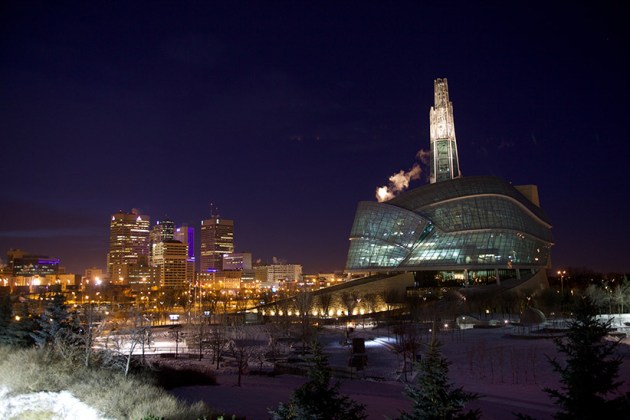
Declaring 2016 the “Year of Reconciliation” for Winnipeg, he announced a host of new initiatives aimed at combatting racism, including mandatory training for all city staff on the impact of residential schools, a promise to visit every Winnipeg high school to address diversity, and a program to foster public engagement in reconciliation. It is a kind of commitment to the issue of racism never before seen by a civic leader in Winnipeg, and one that civic leaders say has propelled Winnipeg to the forefront of the issue in Canada, as other cities begin the tough work of reconciliation.

“On that day [a year ago], this community chose to come together to recognize the existence of racism, and that we needed to work together to better address it,” Bowman said. “On that day, we chose unity over division. We responded to the Maclean’s article with honesty and humility. We knew we could not, and cannot, mend the profound wrongs and injustices of generations and centuries in one year, with a single summit or press conference. But I remain committed to the journey.”

Photograph by John Woods

Photograph by John Woods

Numerous Indigenous speakers and community leaders at the press conference announced forthcoming projects, like St. John’s High School student Sylas Parenteau, who talked about an upcoming march for diversity by 3,000 Winnipeg School Division students, continuing the anti-racism work the division undertook in the last year. Far from a top-down effort, “we’ve been able to drive this conversation down to the individual level, where it really needs to occur,” Bowman said.

Bowman addressed a packed, second-floor foyer at City Hall. Seated with him were many of the same people who stood shoulder-to-shoulder with him last year. Michael Champagne, of Aboriginal Youth Opportunities, and founder of Meet Me at the Belltower, led a smudge; a local imam led a prayer. Proceedings were briefly interrupted by a Somali mother who told media she hasn’t seen her children in the six years since they were allegedly taken by Winnipeg Child and Family Services (CFS). Rather than being promptly frogmarched out by security, she was embraced by Ojibwe elder Randi Gage, and promised an audience with Bowman; Clunis, the police chief, wrapped an arm around her husband’s shoulder. Justice Murray Sinclair, head of the Truth and Reconciliation

Commission, addressed the controversy, acknowledging the “validity” of her concerns, which mirror those many Indigenous people feel toward CFS. “They are an example of what this day is all about—the sense of injustice so many feel about the way that they are treated by society, and their inability to be able to express themselves in a full way, to be able to achieve their ambitions in being part of this nation.”

There were critics of last year’s article in the room at City Hall, too; it remains deeply controversial in the city. But some, like radio host Charles Adler, who found the thrust of it “incredibly insulting,” admitted it ultimately “forced all of us to look into our souls,” and see the problem for what it was: “a human dignity issue,” threatening the future of the city. Instead of racism, Adler, who hosted Bowman’s press conference last week, believes Winnipeg will one day become known as “the capital of reconciliation.”

“At the very foundation of attacking racism there are two things we need to think about,” said Sinclair, a member of Bowman’s new Indigenous advisory circle: “What is it that our leaders are saying? And what is it that our leaders are doing? And to that, I say: Look around. Look at what our mayor has done. Look at the fact that our mayor has stood up, has embraced the ambition of trying to address it in a way that all people of this city are comfortable with who they are, are comfortable with a sense of their future, of who they can be in this society.”

Source: Winnipeg a leader in fixing Canada’s racism problem

‘Submission’ to Islam: Critics Slam Cover-Up of Rome’s Nude Statues for Iran’s President

The challenges in finding a balance in protocol.

Personally, while serving halal food is one thing, a more balanced approach would be to pick another venue without the statues and make wine optional rather than automatically served.

And Iranians sometimes show more flexibility than expected. While working in Tehran in the late 80s, I was sometimes offered food and tea during Ramadan given that the obligation to fast did not apply to me as a non-Muslim:

Italian opposition politicians have lashed out at a decision to cover up classical statues ahead of a visit by Iranian President Hasan Rouhani to a world-famous Roman museum, for fear of offending his Muslim sensibilities.

Nude statues among the historical collections at the Capitoline Museums were hidden behind large white panels when Rouhani visited on Monday for a meeting with Prime Minister Matteo] Renzi. The museum said the prime minister’s office requested the cover-up.

Italian media also reported that no wine was served during an official dinner for Rouhani.

“The level of cultural subordination of Renzi and the left has exceeded all limits of decency,” declared right-wing politician Giorgia Meloni, who served as Youth Minister in a previous Silvio Berlusconi cabinet.

Writing on her Facebook account, she wondered what Italy could expect next – the covering of St. Peter’s Basilica “with a huge box” when the emir of Qatar visits next week?

Rouhani’s European tour, his first since the lifting of sanctions under the nuclear deal, promises to open up billions of dollars in business deals, including a major order for Airbus aircraft. At a ceremony held in the Capitoline Museums on Monday, Rouhani and Renzi oversaw the signing of contracts worth up to $18.3 billion.

“Renzi was clearly keen to avoid offending his new business partner,” the Italian news site The Local commented of the statue cover-up.

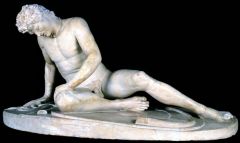
The Dying Gaul, one of the historical statues at Rome’s Capitoline Museums. (Photo: Musei Capitoli)

A lawmaker in Berlusconi’s Forza Italia party, Luca Squeri, described the concealing of the historical statues as “a sign of excessive zeal.”

“Respect for other cultures cannot and must not equal the negation of ours. This is not respect, it is the cancellation of differences or, worse still, submission,” the ANSA news agency quoted him as saying.

Source: ‘Submission’ to Islam: Critics Slam Cover-Up of Rome’s Nude Statues for Iran’s President