Making a mass murderer — the meaning of Orlando: Jebara

Good commentary by Imam Jebara of the Cordova Centre:

When I heard of the massacre in Orlando and learned something about the background of the gunman, I knew — before hearing any details — what the story was about. The young man evidently was struggling with a conflicted sense of identity. He was, apparently, gay himself. He felt ashamed of who he was and struggled to reconcile the conflicting — yet undiscussed — duplicity inherent in the ultraconservative religious culture of his family’s native Afghanistan.

His religious or political views may have had nothing to do with the tragedy; the professed vehement homophobia of his family’s culture most certainly did. When the father claimed that he was shocked by his son’s appalling act of violence, it was apparent to me that he — like too many other parents — had ignored how his son’s self-hatred had been the catalyst for his so-called “radicalization”.

It’s important to separate Islam, the faith, from the tribal systems that tend to be intertwined with it — tribal systems which consider their particular culture and habits to be indistinguishable from Islam itself. (It’s really not much different from the case of Americans affiliated with the Ku Klux Klan who consider their world-view and ideology as vital parts of their ‘Christian’ identity.)

I have witnessed several cases of young men coming from the same background as Mateen who had homosexual inclinations — young men who came from families that publically supported extremist groups, spewed anti-Western rhetoric online, in public and in the community, and supported extremist interpretations of Islam that embrace the execution of homosexuals, rampant misogyny and other self-destructive and violent forms of behaviour.

These families espoused these views because of the tensions created by the clash between their native cultures and their adopted one. Luckily for those young men, they learned to reconcile their religious identity with a candid assessment of their cultural identity, helping them divert themselves from the sort of mental and psychological breakdown that might have led them to violence.

Many cultural factors influence how we behave — and religion is interpreted as reflection of the culture in which it is observed, not the other way around. Most known extremists and terrorists are anything but spiritual and devout individuals. They tend to be broken people — empty shells with weak personalities and low self-esteem, carrying emotional baggage from childhood, from growing up in unbalanced families.

So what’s the solution? Rather than supporting generalizations against all Muslims, we should treat the various manifestations of violent extremism as we would any other mental health problem or crime. Steps should be taken to train and equip parents to recognize signs of mental illness, as well as the subtleties of unstable behaviour patterns, and to take the proper measures to have their child’s condition diagnosed and treated.

Fearmongering and victimization are counterproductive — they amount to sticking our heads in the sand regarding the effect of cultural pressures and alienation. Recognizing the influences of the various cultures from which we come can circumvent the development of more fringe psychotics and prevent future acts of heinous violence.
Source: Making a mass murderer — the meaning of Orlando

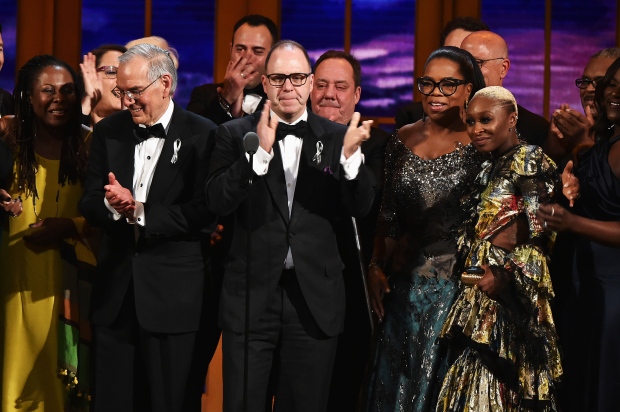
Memo to the Oscars from the Tonys — this is what diversity looks like

Stark contrast with Hollywood:

This is not to say that Broadway has solved racism. In fact many of this year’s most-lauded actors say there’s more work to be done. Speaking with the Hollywood Reporter, Leslie Odom Jr., who won for his role as Aaron Burr in Hamilton, has said the lack of complex roles for black actors is so acute he plans on focusing on his music career following Hamilton. Looking into 2017, few expect the range of plays and musicals for the year ahead to rival this season. The real question is what comes out of the seeds that Hamilton is sowing — perhaps a new generation of actors and writers inspired to tell their own stories.

645679121JN00223_2016_Tony_

The cast of The Colour Purple accepts the award for Best Revival of a Musical onstage. (Getty Images for Tony Awards Productions)

Meanwhile, when it comes to diversity, the hip-hop history lesson is just the beginning. From Spring Awakening, where actors perform American Sign Language, to the Latin rhythms of the Gloria Estefan-inspired On Your Feet, Broadway is breaking boundaries and wooing new audiences. While Hollywood is busy arguing about who should direct the inevitable Hamilton movie, executives should be taking notes. Instead of playing it safe with familiar faces and bland remakes, shake things up. As Kevin Costner once said: “Build it and they will come.”

Source: Memo to the Oscars from the Tonys — this is what diversity looks like – Arts & Entertainment – CBC News

Apple’s WWDC 2016 onstage lineup was more diverse than it has ever been – Recode

Changing the public image:

Like virtually all of Silicon Valley, Apple is both extremely white and extremely male in its upper ranks. And for many years, it has been mostly white men onstage at Apple keynote events.

Last year, that began to change. And at today’s Worldwide Developers Conference, it changed some more.

Of the 10 people onstage at WWDC today, there were six men and four women, including one African-American woman. According to 2015 figures on Apple’s website, the company has a 70/30 gender split, and is 54 percent white, 18 percent Asian, 11 percent Hispanic and 8 percent black. At last year’s WWDC, there were two women onstage for the event.

The women onstage were Apple Music’s Bozoma Saint John, Apple Watch software exec Stacey Lysik, software engineering VP Cheryl Thomas and iOS software exec Bethany Bongiorno. Imran Chaudhri, on the Apple design team, was the one nonwhite guy. (Apple iTunes executive Eddy Cue — a regular presenter at Apple events, including today’s — is Cuban American.)

Has the activist left decided #antisemitism doesn’t exist?: Neil Macdonald

Another good piece by Neil Macdonald:

The conflation of all supporters of BDS with Jew-hating is as scattershot and sweeping as the conflation of all Jews with Israel.

It ignores the inconvenient truth that some pro-Israeli Jews are embarrassed by that country’s current government, as well as the fact that some of the strongest proponents of BDS are Jewish.

But it is all of a piece with the scorched-earth nature of modern political discourse.

There is us, and them, and no-man’s land in between. Detail and nuance and history are just annoyances, to be marched past, or over.

Source: Has the activist left decided anti-Semitism doesn’t exist?: Neil Macdonald – Politics – CBC News

Multiculturalism can foster a new kind of Englishness: Modood

Good and interesting account of how the multiculturalism reality of UK and identities have and continue to evolve by Tariq Modood:

Yet over the last couple of decades a new set of challenges have become apparent, initially in Scotland but increasingly throughout the UK. In none of the nations of the union does the majority of the population consider themselves British, without also considering themselves English, Welsh, Scottish or Northern Irish first.

The 2011 census is not a detailed study of identity but it is striking that 70% of the people of England ticked the “English” box and the vast majority of them did not also tick the “British” box, even though they were invited to tick more than one. This was much more the case with white people than non-whites, who were more likely to be “British” only or combined with English. Multiculturalism, then, may actually have succeeded in fostering a British national identity among the ethnic minorities.

Multiculturalism in this case, then, offers not only the plea that English national consciousness should be developed in a context of a broad, differentiated British identity. But also, ethnic minorities can be seen as an important bridging group between those who think of themselves as only English, and those who consider themselves English and British.

Paradoxically, a supposedly out-of-date political multiculturalism becomes a source of how to think about not just integration of minorities but about how to conceive of our plural nationality and of how to give expression to dual identities such as English-British. It is no small irony that minority groups who are all too often seen as harbingers of fragmentation could prove to be exemplars of the union.

The minimum I would wish to urge upon a centre-left that is taking English consciousness seriously is that it should not be simply nostalgic and should avoid ethnic nationalism, such as talk of Anglo-Saxonism. More positively, multiculturalism, with its central focus on equal citizenship and diverse identities and on the renewing and reforging of nationality to make it inclusive of contemporary diversity, can help strengthen an appreciation of the emotional charge of belonging together.

Source: Multiculturalism can foster a new kind of Englishness

Toronto 18 may have been shock for Canada, but it was not harbinger of a path to ruin: Gurski

Phil Gurski’s reflections on what we learned from the Toronto 18:

The event was a seminal one for me as a CSIS analyst and I’d like to reflect on what this meant then as well as what is means now. Much has happened in the intervening decade and much of that has been good in Canada. Firstly, the Toronto 18 investigation proved—or rather should have proven—to skeptical Canadians that terrorism was real and not just something that happened ‘”over there.” Truth be told, there were significant doubts about the real nature of the threat in June 2006 and whether this cell was that dangerous: many believed that CSIS and the RCMP had exaggerated the plot. I am happy to say that 10 years later most Canadians accept the fact that we have terrorists in our midst. This turnaround in public opinion may have had a lot to do with the attack on the National War Memorial and Parliament on Oct. 22, 2014, but in any event it is a step forward in our collective understanding and acceptance of the issue.

Secondly, the RCMP advised Muslim leaders of the impending takedown just before it took place to allow them to prepare their communities for the news. This was an outstanding decision at the time and the relationship between Canadian government officials and these communities has only gotten better since then (albeit with an unfortunate downturn at the end of the Harper years). All this shows that we do things differently in Canada and I know that many countries have sought our input as they seek to learn from our model. Are we perfect? No, but we are in a much better position than most Western countries on this issue.

Thirdly, the case demonstrated clearly that a group of Canadian Muslims can radicalize to violence entirely at home with no significant foreign input. This was not an al-Qaeda-led or—directed plot (Islamic State did not exist back then) but rather a terrorist act planned based on what is known as the al-Qaeda (or single) narrative—the notion that the West was at war with Islam and that “true” Muslims (self-defined) had to fight to defend the faith. The Toronto 18 sought to punish Canada and Canadians for their decision to send soldiers to Afghanistan back in 2001. In an era where we obsess about IS and their involvement in organizing attacks abroad, it is important to remember that most plots in the West are homegrown.

Fourthly, the case showed that CSIS and the RCMP could work hand in glove to successfully stop a terrorist act from occurring. The investigation started with CSIS and was handed over to the Mounties when it was clear a criminal act was being planned. CSIS sources became RCMP agents (not always an easy thing to do) more or less seamlessly and a serious terrorist attack was averted. There is little doubt that the CSIS-RCMP relationship has had its ups and downs but the two do work together well and Canadians are safer as a result.

Lastly, despite more foiled plots and two successful ones in the interim, Canada remains in a good position when it comes to homegrown terrorism. We are not in the same league as France or Belgium or the U.K., or even the U.S. Our government has done a much better job at understanding the threat and putting measures into place, both soft and hard, to deal with it. We had the five-year $10-million Kanishka research project which, although many thought it under-delivered (I am among that group), set the stage for a more robust and more mature academic environment to look at terrorism where none existed before. Public Safety Canada’s Citizen Engagement branch developed a community outreach program that was the envy of all our allies and the creation of the new Office of the Coordinator for Counter Radicalization and Community Outreach will hopefully enhance this effort. There is more work to be done but these are all enviable achievements.

The Toronto 18 may have been a shock to the system for Canada, but it was not the harbinger of a path to ruin. We are still a relatively safe country and while we must remain vigilant and ensure that our security and law enforcement agencies enjoy the necessary resourcing and public trust, we will likely remain so.

Source: Toronto 18 may have been shock for Canada, but it was not harbinger of a path to ruin |

Prisons pay more for native spiritual services than all other faiths combined

While the issue may be more underfunding of chaplain services for other religions than overfunding of Indigenous spiritual services, it is nevertheless an interesting disparity, particularly given that relatively few Indigenous peoples according the 2011 NHS practice Aboriginal spirituality (less than 5 percent).

The previous government’s cut to chaplaincy services and subsequent restoration may also have played a part (Corrections Canada reverses course on chaplains | Toronto Star):

Canada’s federal prisons are paying significantly more each year for indigenous spiritual services than for all other religions combined.

Indigenous populations are grossly overrepresented in the prison population, a systemic issue. But statistics show that only five per cent of offenders identify as having “native spirituality.”

Still, the Correctional Service of Canada (CSC) is spending $8 million annually on sustaining spiritual services for those offenders — versus its $6.75 million ceiling for other religions.

Spokesperson Avely Serin said Elder services help offenders follow a “traditional healing path” and provide advice to the heads of institutions about “access to ceremonial objects and traditional medicines within the institution.”

As of last October, 85 per cent of indigenous offenders in custody, or 3,156, had undergone an “Elder review,” which requires multiple meetings, according to Serin.

Meanwhile, in the 2015-16 year, chaplaincy services registered 407,639 individual contacts with offenders. That number includes attendance at religious services and faith-based educational sessions, along with individual counselling.

The correctional service takes “a lot of criticism for the overrepresentation of First Nations people in the prison system,” said Catherine Latimer, executive director at the John Howard Society. She suggested that could be one reason for the extra funding.

Indigenous people make up a quarter of the prison population versus 4.3 per cent of the general population, according to Canada’s Correctional Investigator. And 31 per cent of female prisoners are indigenous.

Latimer questioned the fairness of offering different amounts of spiritual support based on ethnicity.

Indigenous offenders do have better outcomes when “reconnected with their spiritual and cultural traditions,” said the Correctional Investigator of Canada’s annual report for 2014-15.

But spiritual services help offenders of other religions, too, said Kate Johnson, a former chaplain at Joyceville Institution in Kingston, Ont.

Almost half of offenders are Christian, a majority of those Catholic, and just over five per cent are Muslim. About 15 per cent report having no religion.

“Chaplains generally are the people who provide that kind of bridge from institution to community,” said Johnson, now chaplain at Queen’s University after leaving corrections three years ago. “The better care we provide for somebody, the less likely they are to reoffend.”

Source: Prisons pay more for native spiritual services than all other faiths combined | National Post

Instead of atheism, Canadian clergy choose alternative views of God

Douglas Todd summarizes the survey, provoked by United Church minister Gretta Vosper, a self-proclaimed atheist:

Admittedly, the survey captures only the views of United Church clergy, who tend to the liberal side of the theological spectrum. But I suspect they illustrate the main ways most people in Canada think about God:

Panentheism: This was the most common view among active United Church of Canada clergy.

Fifty-one per cent of active UC clergy agreed with the statement: “I believe in the existence of god/God, and that God/god is greater than the universe, includes and interpenetrates it.”

Bott believes this statement illustrates the core tenet of panentheism, an emerging form of theism that is often referred to as “natural theology.” Bott acknowledged he counts himself in this group, citing American Marjorie Suchocki among his favourite theologians.

Recognizing panentheism is a term that combines “pantheism” with “theism,” Bott said he understands it to mean “that God participates with all that exists. When changes happen in creation, changes happen in God. I see God in a dance with creation.”

Classic theism: Thirty-four per cent of active UC clergy hold this classic theistic belief in God.

They agreed with the statement: “I believe in one god/God as the creator and ruler of the universe, and further believe that God/god reveals godself/Godself through supernatural revelation.”

Classic theism is “what most people think of when they think of God,” said noted Bible scholar Marcus Borg. It is generally believed such a Supreme Being can supernaturally, unilaterally “intervene” in the world.

Deism: Deism was popular in 19th-century among European intellectuals. It basically teaches that God created the laws of the natural universe, like a clockmaker makes a clock, and then stood back and let it tick away.

Only 2.3 per cent of active United Church clergy supported the deistic statement: “I believe in the existence of God/god on the evidence of reason and nature only, and reject supernatural revelation.”

God only as a metaphor: Some people think God is at least partly a metaphor for love, truth or beauty.

But just 2.1 per cent of active United Church clergy agreed with the statement: “God is solely a metaphor for what is good in the human condition.”

The finding suggests that, while many think God is an ineffable entity only understood through metaphors, United Church clergy don’t therefore buy that God is not real.

Agnosticism: Only 1.2 per cent of active United Church clergy chose the agnostic option — that they “neither believe nor disbelieve in the existence of God/god, as it can be neither known nor proven.”

Atheism: Fewer than one in 100 active United Church clergy were atheists. Only 0.7 per cent agreed: “I do not believe in the existence of God/gods.”

Together these results provides evidence that Vosper is much more rare in the United Church of Canada than she suggests.

It’s why many say that, while there is nothing wrong with “not believing in God/gods,” it’s another thing to proclaim atheism while being paid as a Christian minister.

Nevertheless, Vosper has brought in lawyers to fight the confidential review of her ordination that’s underway in the Toronto region of the United Church. So far, her lawyers have failed to stop it.

The United Church is an extremely tolerant organization when it comes to clergy’s spiritual beliefs. So anything can happen yet.

But if Vosper ends up losing her public platform as a clergywoman in a Christian denomination, she will also lose much of her novelty value to journalists.

She will become just another one of the 4.5 million Canadians who are atheists.

Source: Instead of atheism, Canadian clergy choose alternative views of God | Vancouver Sun

Status and race in the Stanford rape case: Why Brock Turner’s mug shot matters

Valid observations and commentary:

The fact that it took authorities 16 months and much prodding to release a booking photo from the Stanford sexual assault case – even after Turner was convicted – is enough to raise questions on its own given the seriousness of his crimes.

In a country where racial and socioeconomic disparity are so well-documented and pervasive, particularly within the criminal justice system, Turner’s case got many citizens wondering: Would the ex-Stanford swimmer’s sentence have been different if he wasn’t white?

A report submitted to the United Nations Human Rights Committee by The Sentencing Project in 2013 showed that African-American males are six times more likely to be incarcerated than white males in the U.S., and 2.5 times more likely than Hispanic males.

In California, where Turner was sentenced, the ratio of black people to white people in prison was 8.8 to 1 as of 2014.

While every criminal case is different, there are plenty of rulings involving black students to contrast Turner’s against – like the case of Corey Batey, a 19-year-old Vanderbilt University football star who was also convicted on three felony counts of sexual assault.

15 to 25 years for black offender

In April, a Tennessee judge ordered Batey to serve minimum sentence of 15 to 25 years in prison – “3,000 per cent longer than what Brock Turner was given for a comparable crime,” Shaun King noted in The New York Daily News.

The parallels between these cases in the wake of Turner’s sentencing hasn’t gone unnoticed. Nearly 200,000 people have now shared the Facebook image contrasting these felons below:

https://www.facebook.com/plugins/post.php?href=https%3A%2F%2Fwww.facebook.com%2FOfficialMiseeHarris%2Fposts%2F1066565476745237%3A0&width=460&show_text=true&appId=857270271060031&height=480

Many writers and academics are now saying that, at best, the fact Turner’s mug shot was withheld is illustrative of the racial disparities within America’s criminal justice system.

At worst, choosing to show images of him swimming, smiling and looking every bit the all-American athlete could influence public perception to the point that his conviction is called into question.

Source: Status and race in the Stanford rape case: Why Brock Turner’s mug shot matters – Trending – CBC News

What Jonathan Kay Has Wrong About Diversity in Journalism – New Canadian Media

Dan Rowe takes issue with Jon Kay’s explanation of the lack of diversity among journalists:

Canada’s journalism schools, not to mention independent campus newspapers and radio stations, are filled with people from almost every imaginable background—people trying to enter a field where job opportunities seem to be dwindling and salaries are stagnating. This is not because they don’t understand the situation but because they are passionate about what journalism, at its best, can and should do.

There is no reliable data specific to Canada that I’m aware of to support or refute this—there doesn’t seem to be much after former Ryerson professor John Miller’s Diversity Watch project which hasn’t been updated in 10 years—but a perception exists that there is a disparity in who gets jobs. “Journalism schools are pumping out so many visible minorities and plenty of women, and they do not get jobs the way white kids do,” Hazlitt managing editor Scaachi Koul was quoted by J-Source as saying at a recent Massey College Press Club event in Toronto on the generational gap in Canadian journalism.

Meanwhile, Amber Gero, a radio reporter who was laid off from her job at CFRB 1010 last year, effectively made the same point in a mid-March interview on the Toronto Mike podcast. “I’d also like to see more Asian people, more native people, more Hispanic people. Where are they? They’re graduating every year from the media schools so don’t tell me they’re not there and ready to work,” Gero said. “It has to change from the top down.”

Koul and Gero are right. Change will require action on many levels, including journalism schools. Journalism educators need to spend more time ensuring that all students are better prepared for success with a clear-eyed understanding of the challenges they face when they enter the field. Journalism departments need to offer a more diverse faculty, guest speakers and even examples of good works of journalism discussed in class.

Faculty also need to continue to use our resources and job security to agitate for change and highlight the problem—particularly with empirical data and not just anecdotal accounts, such as this one. For decades, journalism professors in the U.S., led by David Weaver at Indiana University, have done extensive surveys of American journalists. Without anything comparable in scope in Canadian journalism, legitimate concerns about diversity in the workplace can be brushed aside with greater ease.

Increasing diversity in workplaces will require leadership, risk-taking and time. It will require creating opportunities for younger, less proven journalists to take on assignments more challenging than what they’ve done before.

There needs to be more stories in this country like the one Ta-Nehisi Coates tells of David Carr. “In the February of 1996, I sent David Carr two poorly conceived college-newspaper articles and a chapbook of black-nationalist poetry,” Coates wrote of his time at the Washington City Paper in The Atlantic after Carr’s death earlier this year. “And David Carr hired me. I can’t even tell you what he saw.”

People in the position to hire and develop journalists need a more proactive approach than the one Kay exhibited in his interview with Brown, where he regretted the lack of diversity, but ultimately threw his hands up in the air. It was as though he—now the editor of a magazine and a longtime managing editor of the comment pages at a national newspaper prior to that—could not have played any greater role in opening up more opportunities for voices that are more reflective of Canada’s demographic makeup.

If Kay’s assertion that there are very few good essayists in the country is true, then why not use his position, resources and experience to develop new voices? Instead, when Brown asked Kay to name some people he would like to add to the Walrus’s roster, two of the three people he mentioned were Conrad Black and Rex Murphy—both of whom are exemplars of the status quo. (Not to mention bad writers.)

Kay’s comments are a perfect example of what Don Heider was writing about: someone who is not necessarily opposed to change but has no good reason, personally, professionally or politically, to act.

Source: What Jonathan Kay Has Wrong About Diversity in Journalism – New Canadian Media