How to improve university EDI policies so they address Jewish identity and antisemitism

Thoughtful reflections and suggestions how EDI policies can be inclusive of Jewish identities:

According to Statistics Canada, police-reported hate crimes against Jews rose by 82 per cent in 2023.

In the months following Oct. 7, 2023 and the subsequent war in Gaza, university campuses across Canada became sites of tension, protest and divisions.

Jewish students and faculty increasingly reported feeling alone, excluded and targeted.

As our research has examined, despite these urgent realities, Jewish identity and antisemitism remain largely invisible in the equity, diversity and inclusion (EDI) frameworks of Canadian higher education.

These frameworks are meant to address the ongoing effects of historical and structural marginalization. Emerging from the four designated categories in Canada’s Employment Equity Act, EDI policies in Canadian universities tend to centre race, Indigeneity as well as gender, with limited attention to religious affiliation.

Canadian higher education’s primary EDI focus on racism and decolonization is important, given the history of exclusion and marginalization of Black people, Indigenous Peoples and people of colour in Canada. Yet, this framing inadequately addresses the historical and ongoing antisemitism in Canada.

A cross-university study of EDI policies

To understand this oversight, we conducted a content and discourse analysis of the most recent (at the time of the study) EDI policies and Canada Research Chair EDI documents from 28 Canadian universities.

Our sample included English-speaking research universities of more than 15,000 students and a few smaller universities to ensure regional representation.

We focused on how these documents referred to Jewish identity, antisemitism and related terms, as well as how they situated these within broader EDI discourses. We found that, in most cases, antisemitism and Jewish identity were either completely absent or mentioned only superficially.

Three patterns emerged from our analysis:

1. Antisemitism is marginalized as a systemic issue: Where it appears, antisemitism is generally folded into long lists of forms of discrimination, alongside racism, sexism, homophobia, Islamophobia and other “isms.” Unlike anti-Black racism or Indigenous-based racism, which often have dedicated sections and careful unpacking, antisemitism is rarely examined. While EDI policies can be performative, they still represent institutional commitment and orientation. Not specifically considering antisemitism renders it peripheral and unimportant, even though it remains a pressing issue on campuses.

2. Jewish identity is reduced to religion: When Jewishness is acknowledged in EDI frameworks, it is almost always under the category of religious affiliation, appearing as part of the demographic sections. This framing erases the ethnic and cultural dimensions of Jewish identity and peoplehood and disregards the ways in which many Canadian Jews understand themselves. The lack of understanding of Jewishness as an intersectional identity also erases the experiences of Jews of colour, LGBTQ+ Jews, and Mizrahi and Sephardi Jews.

While some Jews may identify as white, some do not, and even those who benefit from white privilege may still experience antisemitism and exclusion.

The recent scholarly study, “Jews and Israel 2024: A Survey of Canadian Attitudes and Jewish Perceptions” by sociologist Robert Brym, finds that 91 per cent of 414 Jewish respondents in the overall study believe that Israel has the right to exist as a Jewish state — a response Brym believes indicates that the respondent is a Zionist, echoing a broad definition of the term. (Three per cent of Jewish respondents opposed the view that Israel has the right to exist as a Jewish state, and six per cent said they didn’t know).

For most Canadian Jews in the study, Brym writes, “support for the existence of a Jewish state in Israel is a central component of their identity.”

But Zionism presents a challenge for EDI for several reasons. Firstly, Zionism enters into a tension with (mis)conceptions of Jews as non-racialized people within anti-racism discourses.

Secondly, some scholars and activist movements address Zionism largely as a form of settler colonialism.

While debates over the historical sources of Zionism and their political implications are legitimate and evolving, the danger arises when debates shift to embodying and targeting Jews as individuals. Furthermore, “anti-Zionist” discourses, often amplified in student protests, risk flattening the diversity that exists under the Zionist identification.

3. Pairing antisemitism and Islamophobia: In the EDI policies we examined, antisemitism is rhetorically paired with Islamophobia: In nearly every case where antisemitism was mentioned, it was coupled with Islamophobia. This rhetorical symmetry may be driven by institutional anxiety over appearing biased or by attempts to balance political sensitivities. Yet it falsely implies that antisemitism and Islamophobia are similar or are inherently connected.

While intersectional analysis of antisemitism and Islamophobia can yield insight, this pairing functions as an avoidance mechanism and a shortcut.

Failure to name, analyze Jewish identity

The erasure of antisemitism from EDI policies affects how Jewish students and faculty experience campus life. Jews may not be marginalized in the same way as other equity-seeking groups, yet they are still deserving of protection and inclusion.

The EDI principle of listening to lived experiences cannot be applied selectivity. Jewish identity is complex, and framing it narrowly contributes to undercounting Jewish people in institutional data and EDI policies. Simplistic classifications erase differences, silence lived experiences and reinforce assimilation.

By failing to name and analyze Jewish identity and antisemitism, universities leave Jewish members of the academic community without appropriate mechanisms of support. The lack of EDI recognition reflects and reproduces the perceptions of Jews as powerful and privileged, resulting in a paradox: Jewish people are often treated as outside the bounds of EDI, even as antisemitism intensifies.

The question of Jewish connection to Israel or Zionism introduces another layer of complexity that most EDI policies avoid entirely. While criticism of Israeli state policies is not antisemitic, many Jews experience exclusion based on real or perceived Zionist identification. Universities cannot afford to ignore this dynamic, even when it proves uncomfortable or politically fraught.

What needs to change

If Canadian universities are to build truly inclusive campuses, then their EDI frameworks must evolve in both language and structure.

First, antisemitism must be recognized as a form of racism, not merely religious intolerance. This shift would reflect how antisemitism has historically operated and continues to manifest through racialized tropes, conspiracy theories and scapegoating.

Second, institutions must expand their data collection and demographic frameworks to reflect the full dimensions of Jewish identity: religious, ethnic and cultural. Without this inclusion, the understanding of Jewish identity will remain essentialized and unacknowledged.

Third, Jewish voices, including those of Jews of colour, LGBTQ+ Jews and Jews with diverse relationships to Zionism, must be included in EDI consultation processes. These perspectives are critical to understanding how antisemitism intersects with other forms of marginalization.

Fourth, the rhetorical pairing of antisemitism and Islamophobia, while perhaps intended to promote balance, should be replaced with a deep unpacking of both phenomena and their intersections.

Finally, universities must resist the urge to treat difficult conversations as too controversial to include. Complex dialogue should not be a barrier to equity work. The gaps we identified reveal how current EDI frameworks can exclude any group whose identities fall outside established categories.

In a time of polarization and disinformation, universities must model how to hold space for complexity and foster real inclusion.
Source: How to improve university EDI policies so they address Jewish identity and antisemitism

Casey Babb: Canada doesn’t need an antisemitism or Islamophobia czar

Very one sided but one does have to ask whether these special rapporteurs are effective in improving cross community relations or not or just assuaging and reflecting the concerns of their particular groups.

Former antisemitism envoy Lyons and current islamophobia envoy Elghawaby apparently did try some joint events and initiatives but Lyons, in any case, was frustrated that neither group wished to listen to the concerns of the other.

No easy way to have such dialogues but clearly, current approach not effective:

All told, this disconnect between the positions of Canada’s special envoy on preserving Holocaust remembrance and combating antisemitism and its special representative on combating Islamophobia has rendered them not just futile, but problematic. Never in our nation’s history have we so desperately needed moral fortitude, truth tellers and courageous religious and community leaders to come together and face hard truths in unison. Yet for the last two years, this need has been met not just with inefficiencies and obstacles, but what feels like deliberate attempts to undermine relations not just between Jews and Muslims, but between Jews and everyone else.

Canada is at an inflection point — socially, culturally, politically and economically. Major issues could improve in these spheres — or gradually worsen over time as they have been now for many years. It is therefore imperative that every dollar and initiative be spent and developed with prosperity and unity in mind — not the indulgence of endless grievances, the infantilization of entire peoples and the notion that our country can only be unburdened of our sins by relentlessly confirming our guilt.

Step 1 in achieving these things: get rid of useless and divisive positions.

Source: Casey Babb: Canada doesn’t need an antisemitism or Islamophobia czar

Record number of groups to speak at Supreme Court case against Quebec secularism law 

As expected given stakes. Case to watch:

A record number of groups have been given standing to present legal arguments at the Supreme Court of Canada as it hears a challenge to Quebec’s secularism law, a case that could reshape how governments across the country use the Charter’s notwithstanding clause.

At issue is Quebec’s Bill 21, a 2019 law that bans public-sector workers, including teachers and police, from wearing religious symbols such as hijabs or crosses at work. The Quebec government used Section 33 of the Charter of Rights and Freedoms, the notwithstanding clause, to shield the law from legal challenges.

The notwithstanding clause allows a government to override fundamental rights such as freedom of religion. Courts in Quebec have twice upheld Bill 21, rejecting an array of legal challenges and ruling the province’s use of the notwithstanding clause was valid. Last January, the Supreme Court agreed to take on the politically explosive case.

Last week, Chief Justice Richard Wagner granted standing to 38 outside groups – interveners – to file their legal views, which are due in mid-September.

It is a record number of interveners, according to Supreme Advocacy, an Ottawa-based firm that closely tracks the top court. Interveners include the Canadian Council of Muslim Women and the Ontario Human Rights Commission….

Source: Record number of groups to speak at Supreme Court case against Quebec secularism law

Hate crimes 2024

My latest analysis of the data, 2008-24. This year I have broken the data into three periods: Harper government, Trudeau government pre-pandemic, and Trudeau government post-pandemic and the ongoing increases save for anti-Muslim hate crimes post-pandemic.

The two key comparison slides are below:

StatsCan link: https://www150.statcan.gc.ca/n1/pub/71-607-x/71-607-x2023026-eng.htm?utm_source=mstatcan&utm_medium=eml&utm_campaign=statcan-statcan-mstatcan

Lack of action on Gaza eroding Muslim-Canadians’ sense of belonging, envoy says

Not surprising, along with similar erosion of Jewish Canadians sense of belonging given rise in anti-semitic and anti-Israel demonstrations and incidents. Sad fraying and inability to have cross-community conversations as former antisemitism envoy Lyons pointed out:

…Elghawaby said the grief felt by Muslim-Canadian families over the suffering of loved ones in Gaza is being compounded by a sense that Ottawa isn’t doing enough to prevent the suffering, despite issuing “very clear statements” on the situation.

“‘Devastated’ is not even strong enough a word to describe how people are feeling,” she said.

“[These are] their loved ones, their family members, who are starving, who are continuing to face bombing and displacement, and who are just desperate – desperate for this to end.”

On social media, Elghawaby wrote that the fear felt by Canadians with family in the region grows “with each day that passes without meaningful action towards upholding international humanitarian law.”

In the interview, Elghawaby said she doesn’t have the mandate or enough detailed information to say whether Canada is doing enough. She said she can only convey the feeling widespread in Muslim and Arab communities that Ottawa is dropping the ball.

“How can it be – is what people are asking me – that international humanitarian law is violated in this way, and nothing is actually happening, or not enough is happening?” she said….

Source: Lack of action on Gaza eroding Muslim-Canadians’ sense of belonging, envoy says

Michael Geist: When it comes to antisemitism, the sound of silence is loud in Canada 

Valid comments on lack of consistency in approaches:

…In response, there have been some notable efforts to address the antisemitism scourge. Both the federal government and some local municipalities have enacted or proposed bubble zone legislation designed to create a safe perimeter around places of worship, schools, hospitals, and other vulnerable institutions. Some universities and governments have adopted much-needed guidelines to combat antisemitism and promised to enforce them more aggressively.

More is required, but those responses appear to have shifted the discourse from disbelief to efforts to silence and thwart initiatives to protect the community. It often starts by insisting that the Jewish community is not only unable to judge what constitutes antisemitism, but that it actively engages in its weaponization. It is hard to think of any other group that is not only denied its own ability to identify harms but is painted as acting nefariously when it does so.

When the issue does break through, the efforts to protect the Jewish community are then silenced by framing them as undermining the rights of others. For example, bubble zone initiatives are frequently criticized as an affront to freedom of expression, despite being carefully drafted and modelled on similar laws that have been upheld by Canadian courts as constitutional.

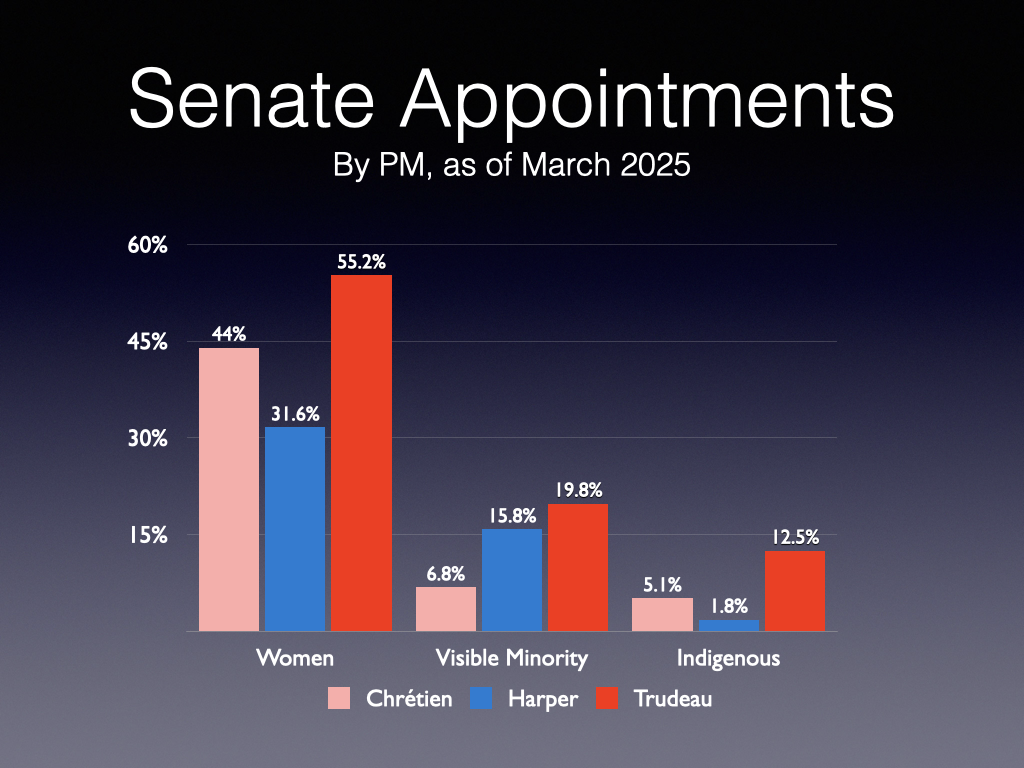
Similarly, antisemitism guidelines on campus have been derided as chilling freedom of expression. These institutions have long histories of adopting extensive regulations to protect women, visible minorities and Indigenous groups, even going so far as to identify and guard against micro-aggressions. But the same approach seemingly does not apply to the Jewish community, who instead face charges that protecting their rights would come at the expense of the rights of others.

In fact, even political views on the founding of the State of Israel or expressions of support for Zionism, which as former prime minister Justin Trudeau noted “is the belief, at its simplest, that Jewish people, like all peoples, have the right to determine their own future” runs the risk of being labelled as “racist” in today’s educational environment, thereby silencing the perspectives.

As the rise in antisemitism has become too pronounced to ignore, there have been some important efforts to chronicle it and call for action. But what has been missing is an examination of its day-to-day effects, which has placed the safety and well-being of an entire community, from grade school to seniors’ homes, at risk. Those effects will become less visible if all that is left is the sound of silence.

Source: Michael Geist: When it comes to antisemitism, the sound of silence is loud in Canada

US citizenship test too easy? Trump bringing back 2020 naturalisation format

Stay tuned. Arguably, many Trump administration figures could start with a better understanding of the US constitution and history:

The new director of the US Citizenship and Immigration Service (USCIS) stirred a debate after he said that the present US citizenship test is easy and can be memorised. The US citizenship test, officially known as the Naturalisation test, is an examination that an applicant has to take to become an American citizen.

The test is not for green card holders unless they are applying for citizenship. Joseph Edlow, the new director of USCIS, said that since the tests are too easy, the Trump administration is planning to bring back the 2020 version of the test.

For the test, applicants have to submit a former N-400 seeking naturalisation. They would be required to pass a background check and meet residency tenure, along with other requirements. After this, they will have to attend an interview where they take two tests: One is an English test, and the other is a civic test.

Source: US citizenship test too easy? Trump bringing back 2020 naturalisation format

A Columbia genocide scholar says she may leave over university’s new definition of antisemitism

Of note:

For years, Marianne Hirsch, a prominent genocide scholar at ColumbiaUniversity, has used Hannah Arendt’s book about the trial of a Nazi war criminal, “Eichmann in Jerusalem: A Report on the Banality of Evil,” to spark discussion among her students about the Holocaust and its lingering traumas. 

But after Columbia’s recent adoption of a new definition of antisemitism, which casts certain criticism of Israel as hate speech, Hirsch fears she may face official sanction for even mentioning the landmark text by Arendt, a philosopher who criticized Israel’s founding. 

For the first time since she started teaching five decades ago, Hirsch, the daughter of two Holocaust survivors, is now thinking of leaving the classroom altogether.

“A university that treats criticism of Israel as antisemitic and threatens sanctions for those who disobey is no longer a place of open inquiry,” she told The Associated Press. “I just don’t see how I can teach about genocide in that environment.”

Hirsch is not alone. At universities across the country, academics have raised alarm about growing efforts to define antisemitism on terms pushed by the Trump administration, often under the threat of federal funding cuts. 

Promoted by the International Holocaust Remembrance Alliance, the definition lists 11 examples of antisemitic conduct, such as applying “double standards” to Israel, comparing the country’s policies to Nazism or describing its existence as “a racist endeavor.”

Ahead of a $220 million settlement with the Trump administration announced Wednesday, Columbia agreed to incorporate the IHRA definition and its examples into its disciplinary process. It has been endorsed in some form by Harvard, Yale and dozens of other universities. 

While supporters say the semantic shift is necessary to combat evolving forms of Jewish hate, civil liberties groups warn it will further suppress pro-Palestinian speech already under attack by President Donald Trump. …

Source: A Columbia genocide scholar says she may leave over university’s new definition of antisemitism

Antisemitism envoy says resignation prompted by frustration over ‘not connecting’ with anti-hate message

Dispiriting. But kudos for Lyons for opening sharing her frustrations and critiques regarding the silence of business and faith leaders. Most despairing comment to me was this reference to silos:

“Lyons told The Canadian Jewish News that Amira Elghawaby, the federal government’s special representative on combating Islamophobia, tried to work with Lyons on fighting hate, citing an apparently shelved plan to visit provincial education ministers together.

“Neither my community, nor her community, were happy all the time to see us in pictures together,” Lyons said. “There were often people who just simply didn’t want me participating in respectful dialogues, or wouldn’t come into the room.””

Ottawa’s outgoing envoy for tackling antisemitism is accusing Canada’s business sector and civil society of failing to call out a rising tide of hate against Jews and other minorities.

In an extensive interview with The Canadian Jewish News, Deborah Lyons also said she could not get a meeting with Conservative Leader Pierre Poilievre during her nearly two-year term.

In a statement sent to The Canadian Press, the Conservatives said that Lyons was “powerless” in her job.

Lyons resigned early in her term as Canada’s special envoy on preserving Holocaust remembrance and combating antisemitism. She said her decision reflected her “despair” over the growing gulf in society over violence in the Middle East and the failure of many Canadians to find common ground against hate.

“People were listening and hearing on different frequencies, and so we just were not connecting,” said Lyons. “That was where the big despair comes from.”

She said her work wasn’t made any easier by the silence of corporate leaders “whom I asked many times to stand up,” and by faith leaders who seemed to keep quiet on the suffering of people from other religions.

“I was incredibly disappointed with business leaders,” she said.

“We have a tendency to want to blame politicians all the time, but where have the faith leaders been? Where have the priests and ministers and rabbis and imams and so forth (been)?”

Lyons said that some community leaders did ask for her help in finding the right words to speak out against hate — because they feared that they would offend one community if they stood up for another.

“I’ve been really quite amazed — and often become quite despondent and despairing — about the fact that it was hard to get people to speak up. To speak with clarity, to speak with conviction,” she said.

“The mark of a country is not the courage of its military. It is the courage of its bystanders.”

The Canadian Press has requested an interview with Lyons but has not yet had a response.

Lyons told The Canadian Jewish News that Amira Elghawaby, the federal government’s special representative on combating Islamophobia, tried to work with Lyons on fighting hate, citing an apparently shelved plan to visit provincial education ministers together.

“Neither my community, nor her community, were happy all the time to see us in pictures together,” Lyons said. “There were often people who just simply didn’t want me participating in respectful dialogues, or wouldn’t come into the room.”

She said that indicates a “weakening” in the ability of both Canadian society and the broader western world to stand for common human values.

Lyons said she lacked the energy at times to bridge that gap.

“I held back from having some discussions, because I knew there was going to be animosity, or I wasn’t going to be welcome in the room. It disappoints me,” she said.

Lyons said she could not get a meeting with Poilievre despite requesting one and having a cordial chat with him during an event.

“I tried to meet with Mr. Poilievre when I was in the job, and in the end I got a response that he was too busy to meet with me,” she said.

In a statement attributed to Conservative deputy leader Melissa Lantsman, the party did not dispute Lyons’ version of events.

“While communities face increasing threats, vandalism, intimidation and violence over the last 20 months, the Liberals deflected responsibility to a powerless envoy,” says the statement.

“We are ready to meet with the government at any point, because they’re the only ones with the power, the tools and the responsibility to do something — and they have done absolutely nothing to date.”

Statistics Canada reported this week a slight increase in police-reported hate crimes in 2024 compared with a year prior, and a very slight drop in those against Jewish people, who remain the most targeted group in Canada.

Lyons accused all three levels of government of failing to adequately co-ordinate their responses to hate, saying that issues like car theft or tariffs are seen as more tangible.

She said Prime Minister Mark Carney seemed engaged and requested a meeting with her, though she added it was not possible to meet with him before the July 8 date of her departure.

Lyons said she is leaving her job three months early not for health reasons but rather to restore “a little bit of the joy back into life” through retirement.

She said she would have liked to continue, but described the envoy role as more difficult than her stints as ambassador to Afghanistan and Israel.

“It was without question the toughest job I ever did.”

Source: Antisemitism envoy says resignation prompted by frustration over ‘not connecting’ with anti-hate message

French: Christian Cancel Culture Strikes Again

Good take:

…Yes, there is hypocrisy here. It’s a bit much to hear that it’s vitally important for Chip and Joanna Gaines to reject two gay dads (and their children!) from Christians who are also all in on Donald Trump. A gay couple on reality television is a bridge too far, but supporting a thrice-married man who was featured on the cover of Playboy magazine and was once good friends with Jeffrey Epstein is not?

But in another way, they’re not hypocrites at all: They’re budding authoritarians, and for authoritarians, a principle like “tolerance for me and not for thee” is entirely consistent. Authoritarians, after all, are supposed to rule.

When you possess a burning sense of certainty in your moral vision, intolerance is always a temptation. If you give your opponents a platform, won’t that lead some people astray? If error creates injustice (or worse, leads people to the gates of hell), why should error have any rights?

Think of the sense of entitlement here. On one hand, evangelicals say, “How dare you discriminate against us in the workplace,” and then turn around and tell a fellow evangelical couple, “You’re betraying us unless you discriminate against gay men at your job.” Evangelicals aren’t a superior class of citizen. We don’t get to enjoy protection from discrimination and the right to discriminate at the same time.

In times of religious and political conflict, I turn to two very different historic figures — the Apostle Paul and James Madison. In what might be some of the most ignored verses in the New Testament, Paul warned early Christians against imposing the same moral standards on those outside the church as those inside.

“I wrote to you in my letter not to associate with sexually immoral people,” Paul said in 1 Corinthians, “not at all meaning the people of this world who are immoral, or the greedy and swindlers, or idolaters. In that case you would have to leave this world.”

“What business is it of mine to judge those outside the church?” Paul asks. “Are you not to judge those inside? God will judge those outside. ‘Expel the wicked person from among you.’”

One of the fundamental problems with the American evangelical church is that it so often gets that equation exactly backward. It is remarkably permissive of abusive Christian individuals and institutions — especially if those individuals or institutions are powerful or influential — even as it can be remarkably hostile toward those people outside the church.

Evangelicals then compound the problem by viewing with deep suspicion and mistrust those people who blow the whistle on church misconduct while revering those people who are “bold” and “brave” enough to focus their fire on everyone else.

Paul’s words represent basic Christianity. Jesus himself admonished his disciples to remove the planks from their own eyes before trying to remove the “speck of sawdust” from someone else’s, and he warned that “you will be judged by the same standard with which you judge others.”

This doesn’t mean that we can’t or shouldn’t make moral judgments, but rather that we should do so with extreme humility, focusing on addressing our own flaws first.

But that’s a command to believing Christians. How should we all deal with disagreement on fundamental matters?

In Federalist No. 10, Madison wrestled with the question of how to create a lasting republic that would invariably include a broad range of competing factions. It’s easy for us to look back at the founding and dismiss its diversity by comparison to our own. After all, the founders were mainly a collection of relatively privileged Protestant white men.

That statement is true, but incomplete. Early America was remarkably diverse by the standards of the day. The religious complexity of early America was its own small miracle. When Europe encountered similar divisions, it descended into the Wars of Religion and drenched itself in blood.

The Wars of Religion are ancient history to us, but they were much more present in the Colonial era. The Wars of Religion were as recent to James Madison as World War I is to us, and they were destructive on a vast scale. The challenge of genuine religious diversity was very much on the founders’ minds.

How do you live in a pluralistic republic without abandoning your core convictions? Madison admonished us not to yield to two related temptations. Don’t try to diminish liberty and don’t try to establish uniformity of opinion.

Instead, he said, the answer was to “extend the sphere” of the republic, to “take in a greater variety of parties and interests.” In this circumstance, “you make it less probable that a majority of the whole will have a common motive to invade the rights of other citizens.”

The sphere of the American republic extends to conservative evangelicals and to gay dads. It includes people who believe every word of the Bible is inspired by the Holy Spirit and those who think it’s no more credible than a comic book. One of the beauties of our culture at its best is that no side of the American divide has to abandon any of its core convictions to enter the public square or to engage in the stream of American commerce….

Source: Christian Cancel Culture Strikes Again