Coronavirus takes a toll in Sweden’s immigrant community

Like elsewhere:

The flight from Italy was one of the last arrivals that day at the Stockholm airport. A Swedish couple in their 50s walked up and loaded their skis into Razzak Khalaf’s taxi.

It was early March and concerns over the coronavirus were already present, but the couple, both coughing for the entire 45-minute journey, assured Khalaf they were healthy and just suffering from a change in the weather. Four days later, the Iraqi immigrant got seriously ill with COVID-19.

Still not able to return to work, Khalaf is part of the growing evidence that those in immigrant communities in the Nordic nations are being hit harder by the pandemic than the general population.

Sweden took a relatively soft approach to fighting the coronavirus, one that attracted international attention. Large gatherings were banned but restaurants and schools for younger children have stayed open. The government has urged social distancing, and Swedes have largely complied.

The country has paid a heavy price, with 2,769 fatalities from COVID-19. That’s more than 26 deaths per 100,000 population, compared with about 8 per 100,000 in neighboring Denmark, which imposed a strict lockdown early on that is only now being slowly lifted.

Inside Sweden’s immigrant communities, anecdotal evidence emerged early in the outbreak that suggested that some — particularly those from Somalia and Iraq — were hit harder than others. Last month, data from Sweden’s Public Health Agency confirmed that Somali Swedes made up almost 5 percent of the country’s COVID-19 cases, yet represented less than 1 percent of its 10 million people.

Many in these communities are more likely to live in crowded, multigeneration households and are unable to work remotely.

“No one cares for taxi drivers in Sweden,” said Khalaf, who tested positive and was admitted to a hospital when his condition deteriorated. Despite difficulties breathing, the 49-year-old says he was sent home after six hours and told his body was strong enough to “fight it off.”

In Finland, Helsinki authorities warned of a similar over-representation among Somali immigrants in the capital — some 200 cases, or about 14%, of all confirmed infections. In Norway, where immigrants make up nearly 15% of the general population, they represent about 25% of confirmed coronavirus cases.

“I think a pandemic like this one, or any crisis will hit the most vulnerable people in society the most wherever in the world, and we see this in many many countries,” said Isabella Lovin, Sweden’s deputy prime minister, in an interview with The Associated Press.

Noting that the virus was spreading faster in some crowded Stockholm suburbs, Lovin said said the city is providing short-term accommodation to some people whose relatives are vulnerable.

Sweden, Norway and Finland recognized early failings in community outreach in minority languages and are seeking to fix this. The town of Jarfalla, outside Stockholm, has had high school students hand out leaflets in Somali, Persian, French and other languages, urging people to wash their hands and stay home if sick.

With Sweden’s relatively low-key approach to fighting the virus that relies mainly on voluntary social distancing, there are concerns the message has not reached everyone in immigrant neighborhoods.

“It’s important that everyone living here who has a different mother tongue gets the right information,” said Warda Addallah, a 17-year-old Somali Swede.

Anders Wallensten, Sweden’s deputy state epidemiologist, said officials have worked harder on communicating with such groups “to make sure they have the knowledge to protect themselves and avoid spreading the disease to others.”

But teacher and community activist Rashid Musa says the problem runs much deeper.

“I wish it were that easy — that you needed to just translate a few papers,” he said. “We need to look at the more fundamental issue, which is class, which is racism, which is social status, which is income.”

“The rich have the opportunity to put themselves into quarantine, they can go to their summer houses,” Musa said.

A key government recommendation for individuals to work from home if possible is harder in marginalized areas where many have jobs in the service sector.

“How can a bus driver or a taxi driver work from home?” Musa asked.

Evidence of this disparity can be found in anonymous data aggregated by mobile phone operator Telia, which has given the Swedish Health Authority information about population mobility. By comparing the number of people in an area early in the morning with those who traveled to another area for at least an hour later in the day, Telia estimates how many go to work and how many stay home.

“We do see certain areas that are maybe more affluent with a bigger number of people working from home,” said Kristofer Agren, the head of data insights for Telia. Data shows a 12 percentage point difference between Danderyd, one of Stockholm’s most affluent suburbs, and Botkryka, one with the highest percentage of first- and second-generation immigrants.

“Many of our members have contracted the coronavirus,” said Akil Zahiri, who helps administer the mosque on the outskirts of Stockholm. “But you do the best you can.”

Zahiri spoke to the AP as he sat alone in Sweden’s largest Shiite mosque coordinating a video call with the congregation to pray for a member who died of COVID-19. The sound of prayer crackled through the computer, breaking the silence in the empty hall.

During Ramadan, the month when Muslims fast during the day, the mosque canceled all public events. Zahiri reminded the congregation to take part in social distancing, urging them to stay home for the Iftar, the daily breaking of the fast after sunset, and to avoid sharing food with friends.

Source: Coronavirus takes a toll in Sweden’s immigrant community

Police Data Reveals Stark Racial Discrepancies in Social Distancing Enforcement Across New York City

Of note:

On Friday, the New York City Police Department (NYPD) released six weeks worth of data related to social distancing enforcement, following New York Gov. Andrew Cuomo’s March order mandating people stay inside and avoid congregating in large groups. The release comes amid mounting criticism of racial disparities in police enforcement of Cuomo’s orders, and just a day after Brooklyn District Attorney Eric Gonzalez released social distancing arrest data for his borough.

Both data sets reveal that minority communities have been impacted to a far greater extent by police enforcement during the coronavirus pandemic.

According to the NYPD data, 374 summons “for violations of emergency procedures and acts liable to spread disease” were handed out by police between March 16 and May 5. A summons is a ticket that is usually issued to someone by a police officer for a court appearance after violating a law.

Of that 374 summons, 304 were handed out to black and Hispanic people.

Related information from the Brooklyn DA’s office confirmed that 40 people were arrested from March 17 to May 4 for not following social distancing measures. 35 of those people were black, four of them were Hispanic and one was white.

DA Gonzalez said that his office is reviewing allegations of excessive force in Brooklyn arrest incidents, adding that arrests should be a last resort.

“Simply stated, we cannot police ourselves out of this pandemic. Instead, we need to give people the knowledge and ability to keep safe,” Gonzalez said in a statement.

According to the New York Times, the NYPD has made at least 120 arrests for social distancing between March 16 and May 5 across New York City as a whole. Of these arrests, 68% of those detained were black and 24% of them were Hispanic.

These numbers have become a point of mounting criticism for the police department and the mayor’s office. Police reform activists, community advocates and even the New York City Police Benevolent Association (NYC PBA) have said that police officers should not be enforcing social distancing at all.

New York City Mayor Bill de Blasio defended the NYPD’s role in social distancing enforcement during a Thursday press conference, after being questioned about whether it had become comparable to stop-and-frisk, the policing practice of stopping someone and searching them for weapons or other illegal items that disproportionately impacted black and Latino men during its height.

“What happened with stop and frisk was a systematic, oppressive, unconstitutional strategy that created a new problem much bigger than anything it purported to solve,” de Blasio said. “This is the farthest thing from that. This is addressing a pandemic.”

After the release of the arrest data from Brooklyn, he tweeted that the racial “disparity” apparent did not reflect the NYPD’s larger work. However, “We HAVE TO do better and WE WILL,” he wrote.

“That disparity, I don’t like, I don’t accept,” de Blasio continued during a Friday press conference. ” I want to see every community treated fairly, but I want a resolute approach where it’s really clear we got to follow these rules.”

De Blasio also announced Friday that, in response to “consistent overcrowding” in parks across the city, a cap would be placed on the number of people allowed, and that “extra enforcement” would be seen to that effect.

Source: Police Data Reveals Stark Racial Discrepancies in Social Distancing Enforcement Across New York City

Call to Prayer controversy – Hassan: Why the mosque loudspeaker request makes little sense vs Farooq: The call to prayer is a prayer for the future, a call to those in times of despair

Further to After Arab countries, now Canada punishes Indian origin man for Islamophobia; terminated from job and removed from school body as probe continues and related protests against the sunset Azaan during Ramadan being sung with a microphone, two contrary perspectives. IMO, similar to church bells being played during religious events.

That being said, there might be legitimate to it being amplified five times a day all year:

Farzana Hassan on why it is not needed, arguing that it feeds into the Islamist agenda:

When Bilal ibn Ribah, the very first muezzin, or Islamic prayer caller, recited the now familiar lines of the azaan, early Muslims rushed to the mosque to offer supplication to Allah. Their homes were near enough for them to hear the call and respond accordingly. Bilal had a powerful and melodious voice that inspired the fledgling Muslim community to convey their devotion to Allah.

Muslims across Canada have always responded to the azaan, but inside mosques. Also, many Muslims now play the azaan in their homes on their phones or azaan clocks to remind themselves that the time for prayer is approaching, or they simply refer to printed prayer schedules. Anyway, the azaan itself has never been a prerequisite to prayer. The protocol for congregational prayers includes the azaan followed by the iqamah, the sequel to the azaan, calling worshippers to line up for prayer.

But the azaan now being broadcast in some cities of Canada serves no such purpose. The demand has come under the false pretext that Muslims will hear the azaan and be comforted during this time when COVID-19 has denied them access to mosques.

Assembly of more than five people during the COVID-19 crisis is still not permitted, and the call is not even reaching Muslim homes spread across the expanses of Canada. Also, it is only during the maghrib, or fourth prayer, that the azaan is being broadcast. That is the time most devout Muslims stay home with their families to break the fast. When there are no congregational prayers being held, who is listening to the azaan? Are some Muslims driving to the mosques just to hear it? What is the purpose of this futile exercise other than to score points under the flag of Islam as a political movement, known as Islamism?

It is obvious that for proponents of Islamism a political victory, however symbolic and however pointless, is what matters. In this case, they have obtained exemptions to noise by-laws in some cities. It is only votaries of Islamism who make such demands. This year Easter and Passover were also spent in isolation. No church bells were heard in Mississauga or Halifax because church services were denied. Most citizens, including moderate Muslims, have no wish to impose their rituals on others. Munir Pervaiz, former president of the Muslim Canadian Congress, deems the broadcast of the azaan unconstitutional.

Compliant and gullible city officials have answered a demand from provocative Muslim groups and permitted this broadcast of the azaan. The allowance was made under special circumstances and for the duration of the month of Ramadan. The feeble rationalization of Muslims not having access to mosques ignores the logical, cultural and geographical absurdities of allowing azaan as compensation.

It would be gratifying if the Islamists who constantly spew hatred of the “infidel” West at least have the decency to acknowledge this act of goodwill and bridge-building. They won’t, of course. We can only hope that the demands stay confined to just this one Ramadan spent under unprecedented circumstances occasioned by the pandemic.

But, as my colleague Tarek Fatah warned last week, “A spokesperson of one of the mosques revealed that this was merely a first step” and that Islamists across the Western world are seeking to make this change permanent.

The Islamists may have foisted this controversy upon us for the long haul.

Source: HASSAN: Why the mosque loudspeaker request makes little sense

And Mustafa Farooq providing some context  and rationale:

“Allahu akbar, Allahu akbar.”

The delivery room at the Grey Nuns Hospital in Edmonton is dark, but on May 5, 2015, at 6 a.m., I was jumping up and down as my newborn son came into the world.

The Muslim tradition is to whisper the call to prayer — the adhaan — in the ear of the newborn child after birth; but I was so filled with adrenalin in the moment, that I began to loudly chant the call to prayer even as I held him in my arms for the first time.

Five years on, almost to the day, we in the Canadian context are having a public discussion about the place of the adhaan — the call to prayer — as numerous municipalities, including Brampton, Missisauga, and Edmonton have amended their noise bylaws to permit Canadian Muslims to make the public call to prayer during the COVID-19 crisis.

I am a lawyer by training — so by nature I am inclined to want to draw out arguments before you about treating citizens equally (church bells are allowed, so why shouldn’t the Muslim call to prayer?) or around the need of citizens to adequately study the changes to the bylaws (many of the changes roll up in the next two weeks as Ramadan comes to an end), but in this case, I wish to tell you what the adhaan means to me, and what it means to me today, in the context of COVID-19 and in the context of life, birth, and death.

I cannot help — even as Nazis make bomb threats to mosques because they had the audacity to recite a five minute prayer at dusk — but think of the worshippers at the Quebec City Mosque, who reportedly heard Alexandre Bissonette state the opening words of the adhaan, “Allahu akbar” before opening fire in the bloodiest attack on a religious institution in Canadian history.

I cannot help but think of the adhaan as many traditional Muslims understand it as a matter of praxis. We are taught through the tradition that the Messenger Muhammad, peace be upon him, fled from his home to new land — Madinah — from those whose in the tribe of the Quraysh who were trying to assassinate him. Upon building the first mosque, the Medinian Muslims began to think of how to call people to prayer.

At first, the idea of blowing a shofar, as per the Judaic tradition, was considered. There was then the decision to utilize a wooden clapper, the naqus, which some of the Arabian Christians used in lieu of the bell. However, revelation came of a call to prayer, delivered without material instruments, but rather with the call of the human voice — a profound reflection on the absence of the need of the material to connect with the Divine.

Yet, there is a way in which the adhaan can be understood historically in the context of the neighbours of the Medinian Muslims, of different faith communities who lived together. It can be understood in the way that the first man who called the adhaan was Sayyidna Bilal — a freed Abyssinian slave who was tormented by his Qurayshi captor, and insulted for the colour of his skin — and who would look to the first faint light in the east on the Arabian Desert and say in supplication, “Oh God, I praise Thee, and I ask Thy Help for the Quraysh.”

I think of when Bilal, may God be pleased with him, returned to Makkah, and his voice filled the whole valley, much to the chagrin of the old chiefs of the Quraysh, who were furious at the sight of the former black slave on the roof of the Kaaba making the call to prayer — the call that equalized all human beings as being servants of the Divine, of being devoted to a call to ethics and justice.

I think of learning the adhaan in mosques across Canada from so many different folks. From a Sudanese neurologist, whose strong, bold voice made my hair stand on end, to the meliflous, lilt of a Bosnian refugee who had lost his bakery during the war, the call to prayer is a call to God, a prayer, a prayer for the future, a call to those in times of despair.

And I suppose that’s the key.

Source: ContributorsOpinionThe call to prayer is a prayer for the future, a call to those in times of despair

‘Textbook’ Discrimination: Human Rights Report Accuses China Of Mistreating Africans

Yet another need for an independent examination of Chinese government human rights abuses:

Human Rights Watch is accusing China of discrimination against African communities during the coronavirus pandemic.

Authorities in China’s Guangdong province, home to China’s largest African population, have singled out people of African descent for testing, the rights group alleges. It characterizes the tests as forcible, and says that as many Africans were forced to quarantine, landlords evicted them.

Guangdong authorities said in April that all foreigners were required to submit to testing and quarantine. However, Human Rights Watch says that “in practice, the authorities just targeted Africans for forced testing and quarantine.”

Many of the incidents that Human Rights Watch discusses allegedly took place in Guangzhou, the capital and the largest city in Guangdong.

“Chinese authorities claim ‘zero tolerance’ for discrimination, but what they are doing to Africans in Guangzhou is a textbook case of just that,” Human Rights Watch researcher Yaqiu Wang says in the release. “Beijing should immediately investigate and hold accountable all officials and others responsible for discriminatory treatment.”

In an apparent response to the complaints, Chinese state media reported earlier this week that Guangdong has “unveiled measures requiring sectors … to extend the same treatment to all from home and abroad.”

Videos have surfaced of black people being denied entry into a McDonald’sand a shopping center, as well as forced tests and evictions. A black Canadian man told the rights group about his experience being denied entry to the subway.

“The metro station worker told us, ‘As of this morning, we’ve been told not to let any black people onto the subway,'” the unnamed man is quoted as saying by Human Rights Watch. “Then four or five security guards showed up and questioned me. The subway refused me just because of the color of my skin. They don’t care about any documents, or what my health app said.”

Human Rights Watch says the city of Guangzhou is home to more than 14,000 Africans. It has had a large African community for years.

Hundreds of African human rights groups submitted an open letter to the African Union Commission in late April denouncing the “xenophobic, racist and inhuman treatment” of African people in China. They called for an independent investigation into the situation in Guangdong province and throughout China. Kenya said last month that it will help its nationals stranded in China return home starting in May.

In recent years, China has spent hundreds of billions of dollars in development projects throughout the African continent. Human Rights Watch notes that the investments have “boosted Africa’s economy,” but that governments are often hesitant to criticize China as a result.

Source: ‘Textbook’ Discrimination: Human Rights Report Accuses China Of Mistreating Africans

Welcome to the tent clinic where Toronto’s undocumented immigrants get medical care

Of note:

Alma Tacuboy and her ailing father were signalled to a grey vinyl tent on the lawn as soon as she pulled her car into the driveway of the Canadian Centre for Refugee and Immigrant Health Care.

The Toronto clinic, at Sheppard and Midland Avenues, serves the city’s uninsured and undocumented migrants, but had been shut down since mid-March due to COVID-19. Patients could only call in over the phone or be seen virtually on a video app.

However, with a pent-up demand for basic health-care needs in the midst of the pandemic, volunteers and staff have erected the tent to make sure primary care remains accessible to the most vulnerable population.

“We had to stop seeing patients and started doing things virtually. There are clearly patients to be seen and their conditions are deteriorating in isolation,” said Dr. Paul Caulford, a co-founder of the clinic, which opened the 10-by-20-foot field tent to patients last week.

“With primary care backing up, things still need to be done for newborns who are not immunized and patients who have chronic health problems.”

From behind a glass panel, a masked Caulford conducted a thorough medical assessment of Hilario Tacuboy, who woke up feeling light-headed and with blurred vision in his right eye.

Wearing a face shield, an N95 mask and isolation suit coveralls, Caulford came out from behind the glass divider and gingerly examined the 60-year-old man’s eye. He was looking for symptoms of a stroke — something that couldn’t be done through the glass, let alone over the phone.

Alma Tacuboy said her father had come to visit from the Philippines, but couldn’t return home because the country is locked down and all flights have been cancelled. His travel health insurance expired and friends referred them to the clinic.

She said she decided against taking her father to the emergency room after her father-in-law died alone at North York General Hospital two weeks ago of chronic obstructive pulmonary disease. The family couldn’t visit.

“We’re afraid to go to a hospital with my dad because of COVID. We’re scared we couldn’t see him, hear him or just give him food if he’s hungry,” she said. “We feel safe in this tent. We have our masks and gloves. And there is fresh air.”

Even though the Ontario government has relaxed the access to health care and expanded medical coverage to the uninsured and undocumented patients in the wake of the pandemic, Caulford said many patients still fear seeking help and going to the hospital.

In mid-April, Caulford reached out to Global Medics, a Canadian humanitarian group, for a tent that is usually used for disaster relief. A contractor donated the labour to build the wooden deck and interior of the makeshift outdoor clinic.

The staff and volunteers were then faced with the challenge of finding personal protective equipment (PPE) to protect themselves and patients. When their own clinic shuttered, they donated what they had to their front-line colleagues fighting the pandemic in hospitals.

An effort led by the local Chinese Canadian community came to the rescue with boxes and boxes of PPE, which made the opening of the field clinic possible.

“I was in tears watching the community effort,” said Caulford, adding that the clinic also got support from local MP Jean Yip (Scarborough-Agincourt), the Canadian Medical Protective Association and the Ontario Medical Association, as well as local health authorities.

The outdoor clinic is open from noon to 4 p.m. on Tuesdays and Thursdays, and 10 a.m. to 1 p.m. on Saturdays. Before they can be seen in person, patients must call for virtual care and triaging. The virtual appointments are mandatory and must be completed before a patient can see a doctor at the clinic.

Source: Welcome to the tent clinic where Toronto’s undocumented immigrants get medical care

COVID-19 Strikes South Asia’s Minorities Whose Rights Are Already Threatened

Good overview of the effects on minorities:

A new report warns that the minorities and other marginalised communities are even more exposed to the worst impacts of the COVID-19 pandemic, which is hitting South Asia. It has come at a time when governments are inflicting sustained assaults on their rights. Minorities face severe obstacles in accessing their right to nationality amidst rising majoritarian nationalism across many parts of the South Asia, says the South Asia Collective (SAC) in its annual flagship report, South Asia State of Minorities Report.

The report, which focuses on migrants, refugees and the stateless, is the outcome of a collaborative initiative of researchers and activists from across South Asia, highlights how numerous communities, including religious minorities, are denied official refugee or minority status by politicised and discriminatory citizenship laws, leaving them deprived of essential rights and services. This means that they are even more exposed to the worst impacts of the pandemic.

“While the virus has the potency to kill, poor governance choices can weaponize this potency,” says Joshua Castellino, Executive Director of Minority Rights Group International (MRG). “Stirring hate and attributing blame underscores two things: an inability of effective governance in solving a grave problem without playing blame games; and the real possibility that the life of the virus will be prolonged if left lurking amidst the most vulnerable communities.”

With more than 75 per cent of the world’s known stateless populations belonging to minority groups, according to the UN Refugee Agency (UNHCR), this disproportionate impact on minority communities is also an issue of concern in South Asia.

“Minorities in the region face a range of discriminatory exclusions and restrictions in relationship to citizenship, in breach of their international human rights, which also leaves them vulnerable to denial of other rights and access to basic services, including unfortunately access to health care and information in their own languages during the pandemic crisis,” says Dr Fernand de Varennes, UN Special Rapporteur on Minority Issues.

Longstanding challenges facing minorities such as the Rohingya of Myanmar, the Urdu-speaking minority of Bangladesh, as well as the emerging situation in Assam in north-eastern Indian where almost 2 million people are at risk of losing their citizenship, highlight that statelessness is a minority issue and a human rights issue in South Asia, as it is globally’.

The report also provides an overview of the overall state of minorities in countries across South Asia, covering events of 2019 and the beginning of 2020. Across many parts of the region, majoritarian nationalism and divisive rhetoric are on the march, animating hate speech and targeted violence against minorities, as well as ongoing socio-economic exclusion, likely to be further exacerbated amidst the COVID-19 pandemic.

“As some governments in the region draw on divisive rhetoric and escalate measures curtailing civil liberties, there are concerns that the already challenging conditions for minorities in South Asia outlined in this report may further deteriorate in light of COVID-19,” says Deepak Thapa of Social Science Baha in Nepal, a member of the South Asia Collective (SAC) which produced the report.

The report presents chapters on six countries:

In India, 1.9 million were rendered de facto stateless in Assam by the National Register of Citizens (NRC). The Citizenship (Amendment) Act (CAA) concurrently weaponised the discourse of minority rights against Muslims, protecting every other relevant religious group. Meanwhile, the Rohingya report food scarcity and child labour, while Kashmiris suffered a lockdown, communications blackout, and detention, including torture. Deprived of refugee status, numerous vulnerable refugee communities cannot access essential protections.

In Bangladesh, the report finds so called ‘untouchability’ to be a major barrier to accessing their fundamental rights as citizens for Dalits, causing regular displacement and eviction. Violence has been perpetrated against indigenous communities, including communal attacks, land-grabbing, rape, killing, and abduction. Developments in the citizenship law have left Bangladesh’s Urdu-speaking minority, often referred to as “Biharis” precarious, and could have far-reaching consequences. On top of restricted movement and poor living conditions, the Rohingya report extrajudicial killings.

In Afghanistan, peace talks with the Taliban and a dispute over September’s presidential election represent severe concern for women and minorities. 72,000 refugees from North Waziristan live in limbo without refugee status or access to vital services. Meanwhile, the Hindu, Sikh and Shi’a Hazara populations face ongoing discrimination. The minority Ismaili community suffers double discrimination, facing severely limited access to essential services and marginalisation by Sunnis and Shi’as alike.

In Pakistan, Afghan refugees and Bangladeshi migrants seeking citizenship face legal dead-ends that deprive them of vital rights, limit economic opportunities, and leave them facing disciplinary interventions and police hostility. The Rohingya, who cannot even theoretically qualify for citizenship, are at risk of arbitrary detention and harassment and are often denied access to healthcare and education.

Aid is drying up for Nepal’s Bhutanese refugees; essentials are being withdrawn and UNHCR schools and clinics are to be shut down by the end of 2020. Dalits report physical and structural violence. The report highlights how Nepal’s increasingly close ties with China endanger its Tibetan refugee community, already at constant risk of deportation and exploitation; Chinese President Xi Jinping’s visit to Kathmandu in 2019 was met with strict surveillance and the reported detention of activists.

In Sri Lanka, Sinhala-Buddhist nationalism and the spectres of extremism and forced conversion are major drivers of religious discrimination. Christians have suffered intimidation and the attack or closure of places of worship. The 2019 Easter Sunday attacks precipitated a violent backlash against local Muslim and Muslim refugee communities alike. Long classed as foreigners, and despite the recent grant of citizenship, hill country Tamils are left ‘neither here nor there’ and face barriers to essential rights.

The SAC report, published on April 29, advises all South Asian nations to accede to UN conventions on refugees and statelessness, to protect and support refugee populations. It asks them to enact comprehensive anti-discrimination laws, repealing those laws which discriminate, and introducing legislation that protects refugee populations. It urges civil society to advance dialogue and initiatives across the region, to understand and address the issues facing all minorities.

“This report emphasizes the importance of good governance in showing how we can collectively pass this test of humanity,” says MRG Executive Director Castellino. “Written by researchers steeped in the long term future and stability of their countries, they emphasize how putting vulnerable groups at the forefront of all prevention, mitigation and eradication efforts, irrespective of their identity, is key to realising the incredible human vibrancy that exists in every country in the region.” [IDN-InDepthNews – 30 April 2020]

Source: COVID-19 Strikes South Asia’s Minorities Whose Rights Are Already Threatened

After Arab countries, now Canada punishes Indian origin man for Islamophobia; terminated from job and removed from school body as probe continues

Of note:

Days after several Indian expats were removed from their jobs in the Arab countries for displaying Islamophobia using their social media pages, Canada has cracked the whip on an Islamophobe by removing him from a school body and terminating his contract with one of the leading real estate companies in the North American country. Ravi Hooda has now made his Twitter account private after politicians and civil society members in Canada reacted with outrage on his brazen Islamophobia.

This all started with several Toronto-area municipalities granting local mosques permission to broadcast the Azaan or call to prayer using loudspeakers during Iftaar (breaking of fast) every day during Ramadan. The move was widely hailed since Muslims could not gather in mosques due to the global coronavirus pandemic.

Brampton too followed suit and decided to allow Muslims in its region to use loudspeakers for the sunset Azaan. This did not go down well with a local Islamophobe, identified as Ravi Hooda, who launched a tirade mocking Muslims and their faith. He wrote, “What’s next? Separate lanes for camel & goat riders, allowing slaughter of animals at home in the name of sacrifice, bylaw requiring all women to cover themselves from head to toe in tents to appease the piece fools for votes.”

Hooda’s tweet sent shockwaves across Canada, which is globally renowned for its liberal values. Peel District School Board in Brampton announced that it had removed Hooda as ‘School Council Chair’ and investigation was underway against him. Its tweet read, “The Principal has begun an investigation. The individual is being removed from their role as School Council Chair and won’t be able to participate on council in any other capacity. Islamophobia is not acceptable and a clear violation of our Safe and Accepting Schools Policy.”

ReMax Canada, which is one of Canada’s top real estate marketing websites, too informed that it had terminated Hooda’s contract. It tweeted, “We do not share nor support the views of Mr. Hooda. We can confirm he has been terminated and is no longer affiliated with RE/MAX. Multiculturalism & diversity are some of the best qualities in our communities, and we are committed to upholding these values in all that we do.”

Brampton Mayor Patrick Brown too said that Islamophobia will not be tolerated in Canada. He wrote, “Our noise by law originally passed in 1984 only included an exemption for Church bells. It will now include all faiths within the permitted hours & decibel levels. The Muslim community can proceed with the sunset azan because it’s 2020 & we treat all faiths equally. #Ramadan.”

Curiously, Hooda is also a registered certified immigration consultant. It remains to be soon if the government will consider revoking his licence in light of his Islamophobic views.

Source: After Arab countries, now Canada punishes Indian origin man for Islamophobia; terminated from job and removed from school body as probe continues

Workers have been left to save capitalism from COVID-19

Too early to assess the longer-term impacts but hopefully improvements in wages and working conditions (but experience at meat packing plants not encouraging):

Since the arrival of a novel coronavirus in the United States, workers at Whole Foods have carried out a mass “sickout,” demanding that management provide them not just with masks, but with hazard pay, virus testing and paid leave if they have to self-quarantine. Gig workers at grocery-service Instacart went on strike as well, demanding a pay raise, disinfectant wipes and hand sanitizer. Warehouse workers at Amazon facilities in Detroit, Chicago and New York City staged walkouts, demanding that their workplaces be temporarily closed for deep cleaning. And it isn’t just new-economy companies whose workers are concerned for their safety. Bus drivers in Birmingham, Ala., refused to work because of unsafe conditions, and across the country, drivers for Target’s delivery service, fast-food workers and gas-station attendants have all staged walkouts as well.

More than 750 cases of coronavirus, which accounted for roughly half of the confirmed cases in South Dakota last month, were traced to the Smithfield meat processing plant in Sioux Falls, which partly reopened Monday after nearly three weeks of closure. Deemed “essential workers,” which means they must remain on the front lines, most of its employees are immigrants – some 80 languages are spoken at the plant – who make between US$14 and US$16 an hour. According to union representatives speaking to the BBC, workers’ requests for protective clothing, temperature checks and sanitation stations had been ignored, while sick workers were incentivized to remain on the job. It’s a page that might have been ripped out of Upton Sinclair’s The Jungle.

Late-stage capitalism, it turns out, still looks an awful lot like it did back in the days of William Blake’s “dark satanic mills.” The consequences are not just morally appalling, but economically unsustainable. The economy cannot stay up and running through the crisis, and it won’t be able to recover over the long term, so long as essential workers don’t have the protections necessary to do their jobs. Capitalists are so oriented to the short term that they don’t realize that workers are the people keeping their factories, companies and the economy, broadly, up and running.

Roughly three in 10 workers have jobs that require physical proximity to their co-workers and close interaction with the people they serve. They are disproportionately women, immigrants and visible minorities.

In what may be the strangest of the many strange turns spurred by the COVID-19 crisis, these front-line workers are telling capitalists what they need to do in order to save their factories, their companies, and themselves. Late capitalism sees these workers not as essential but as dispensable cogs in the machine, as costs to be minimized. Pay is low and working conditions are terrible, as workers are left to fend for themselves when it comes to securing the protective gear they need – if they are even allowed to wear it.

While leading companies, including large profitable ones, shirk their responsibilities to their workers and hence to their customers and society at large, it’s our front-line heroes who are calling this out. Demanding the protective equipment and spacing they need to do their jobs safely will not just protect them, it protects factories and warehouses from becoming hot spots for spread of the virus, and ultimately means production lines, supply chains and delivery systems and stores can all continue to function.

This emerging working-class movement for higher wages, more protective equipment, and better working conditions bears an eerie similarity to the movement of industrial workers that emerged a century ago in the wake of the 1918 Spanish flu pandemic, when low-paid workers in crowded and dangerous factories organized for higher pay and safer working conditions. Like then, it may take time to bear fruit. That earlier pandemic was immediately followed by the roaring 1920s, which featured horrifying levels of economic inequality that echoed the conditions of today. It took the better part of two or three decades before the labour reforms of the New Deal and the economic mobilization of the Second World War gave rise to the golden era of the 1950s and 1960s, when factory workers finally vaulted into the middle class.

Hopefully, a reinvigorated movement of essential-service and factory workers can garner support from professional and “knowledge” workers, who depend on the products and services that essential workers deliver. What’s clear is that neither our political leaders nor our capitalists are up to the task.

In an irony that would have Marx himself rolling over in his grave: it is workers who may end up saving capitalism from itself.

Employment Equity in the Public Service: 2018-19 Numbers and report

The latest employment equity report shows a slight uptick in representation compared to the previous year of women EX (from 49.1 to 50.2 percent, visible minorities (all, from 15.7 to 16.7 percent and EX, from 10.1 to 11.1 percent) and Aboriginal (Indigenous) EX (from 3.7 to 4.1 percent).

This year report provides breakdowns within each group (intersectionality):

  • Women: 17.0 percent visible minorities, 5.8 percent Indigenous
  • Visible Minorities: 55.6 percent women, 2.4 percent Indigenous
  • Indigenous: 61.5 percent women, 7.7 percent visible minorities

TBS is also providing sub-group info, with the chart below summarizing the breakdown among visible minority groups:

Historical charts below:

Source:  Annual Report Publication

Vatican minimised Shoah reports due to antisemitism, researchers find

Having access to the Vatican archives was a long-term objective for many Holocaust researchers and good that these are being opened up with not surprising evidence of antisemitism and arguably wilful blindness and rejection of evidence:

German researchers working in the Apostolic Archive have found that the Vatican was handed reports about the extent of the Holocaust in 1942, but dismissed some of the information they contained.

The seven-person team from the University on Münster found that the Vatican had minimised information on the massacres of Jews, considering that Jewish and Ukrainian sources could not be trusted.

The conclusions hinge on a 1942 American démarche to the Holy See.

The team found that on September 27, 1942, the Holy See was passed a report by the American envoy to the Vatican, detailing the murder of Jews in occupied Poland and asking if the Catholic Church could independently confirm the crimes it outlined.

The report outlined how Jews were being taken out of the Warsaw Ghetto, and murdered outside of the city in camps.

The report, read by Pius XII on the day that it was received in Rome, said that 100,000 Jews had been murdered and that 50,000 had been murdered in Lviv, in what was then eastern Poland, and is now western Ukraine.

The report added that there were no Jews remaining in eastern Poland, and that Jews from Germany, Slovakia and the Low Countries had been transported to Eastern Europe where they were murdered.

The Vatican Apostolic Archives, which until October were known as the “Secret Archives”, contain up to 2 million pages of documents from Pius XII’s papacy. The Vatican threw open their doors, which were due to remain closed until 2028, on 1 March.

The researchers, led by priest and professor Hubert Wolf, a historian of the Catholic Church, spent a week working in the Apostolic Archive from March 2 before it was closed due to coronavirus restrictions.

Mr Wolf’s team found documents showing that the Holy See had received two letters independently confirming reports of massacres of Jews from Warsaw and Lviv.

In August 1942, it had received a letter from the Ukrainian Greek Catholic Archbishop of Lviv, Andrey Sheptysky, who wrote of 200,000 murdered. The following month, an Italian businessman spoke of “butchery” of Jews in Warsaw.

Despite these reports, the Vatican informed the American envoy that it was unable to confirm the reports.

Internally, a rationale justified that the information remained “to be verified”, in the words of a Papal adviser, as Jews “exaggerate” and that “Orientals” – referring to the Ukrainian Uniates – “are really not an example of honesty”.

Pius XII’s papacy ran from 1939 until 1958, and he never publically condemned the Holocaust, despite historians agreeing that the Vatican was aware of the murder of Jews across Europe.

Debate hinges on whether the Vatican remained too silent during the Holocaust and newly uncovered documents in the Apostolic Archive will contribute to peeling back a curtain of uncertainty on the role and knowledge of the wider Catholic Church during the Holocaust.

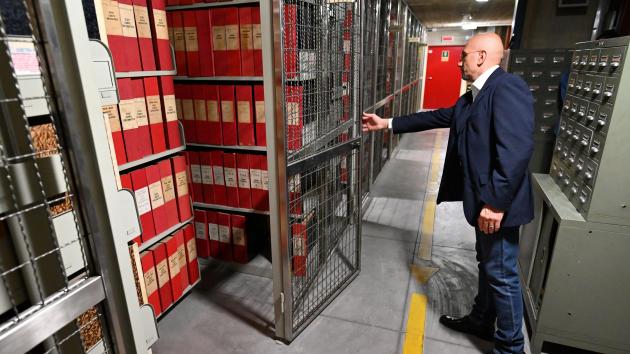
Documents from Pope Pius XII's pontificate have been opened to historians since March 1
Documents from Pope Pius XII’s pontificate have been opened to historians since March 1 (Photo: Getty)

Professor Wolf suggested that documents such as those his team had uncovered had been left out of the official Vatican compendium of Pius XII’s wartime role in a bid to preserve his legacy.

“This is a key document that has been kept hidden from us because it is clearly antisemitic and shows why Pius XII did not speak out against the Holocaust,” Wolf told Münster’s Catholic Kirche + Leben.

Mr Wolf noted in an interview with German Catholic newswire KNA that there was also potentially embarrassing information on the Church’s participation in the ‘Rat Lines’, networks that spirited high-ranking Nazis to Italy and on to Latin America.

Mr Wolf suggested, based on reports from the Papal Nuncio in Argentina, that the “the Vatican might have been able to get them passports,” and wondered whether “the nuncio was the middle man?”

Source: Vatican minimised Shoah reports due to antisemitism, researchers find