Really interesting and nuanced study with regional breakdowns:
In August 2022, the Centers for Disease Control and Prevention reportedthat over the last two years, Black Americans’ life expectancy declined to about 71 years old, six years lower than their white counterparts. National disparities in life expectancy can represent the permanency of racism, offering little reason for hope.
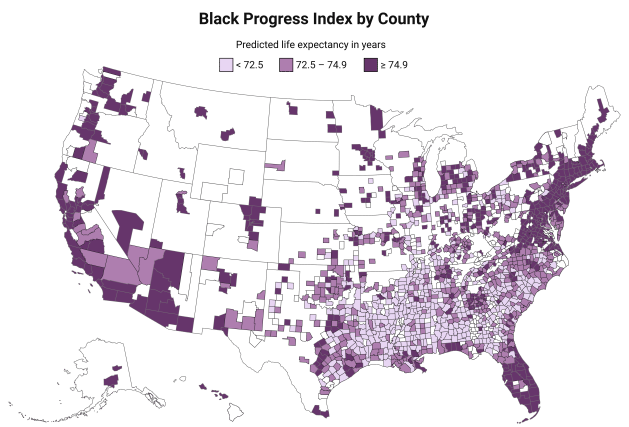
But in Manassas Park, Va. and Weld County, Colo., the mean-life expectancy for Black residents is 96—a national high among all Black citizens by county. Black people are living in their 80s in larger Democratic jurisdictions like Montgomery County, Maryland and smaller Republican districts like Collier County, Florida.
[time-brightcove not-tgx=”true”]
My colleague Jonathan Rothwell and I reported hundreds of places that exceed commonly held expectations in Brookings’s recently released Black Progress Index, an interactive tool and report developed in partnership with the NAACP that provides a means to understand the health and well-being of Black people and the conditions that shape their lives. Instead of comparing Black people to white people, we examine life expectancy differences among the Black population in different places. This method reveals the locales where Black people are thriving.
Courtesy of the Brookings Institution.
Researchers often sloppily compare rates of home ownership, educational attainment, income and mortality without attending to past and present discrimination that intended to create disparities. Consequently, broad national averages void of context policy and local contexts camouflage the very real progress that’s occurring across the country.
Still, in places like Jefferson County, Ohio, the average Black person lives 33 fewer years than Manassas Park, Va. and Weld County, Colo. That gap is roughly equivalent to 100 years of progress in living standards, medical science, and public health.
Black people are not a monolith. They have widely different outcomes in very different places. Local contexts matter as Black people do. Lower life expectancy in counties and metro areas across the country suggests that people are losing battles against racism. But geographic areas where Black people are thriving offer more than hope: People’s civic actions are delivering positive change.
What accounts for such vast differences? Life expectancy, a cumulative measure of health and well-being, summarizes both the biological and non-biological influences on our lives. Because race is a sociological construct and not a biological one, we should assume disparities in life expectancy represent differences in non-biological influences on our lives. Our current life expectancy data suggest that people are breaking down specific social conditions that influence longevity, giving real reason for optimism.
Using a common machine-learning algorithm to select variables and rank their importance, the Index identifies 13 social conditions that predict Black life expectancy. Many are those one might expect, such as income, education, housing, and family composition. Others were more surprising, including the top predictor of high Black life expectancy: larger shares of foreign-born Black residents. One standard deviation above the mean in this variable adds one year to predicted life Black expectancy. For instance, Brooklyn, N.Y. is in the 89th percentile of life expectancy at 78.5. The more than 43% of Black residents of King’s County who are immigrants, places it in the 98th percentile among all counties.
The cause for this interpretation is unclear; it may be a pure composition effect, in that foreign-born Black Americans enjoy better health than the native Black population. Though, this data points to a larger question: Is less exposure to U.S. racism good for your health?
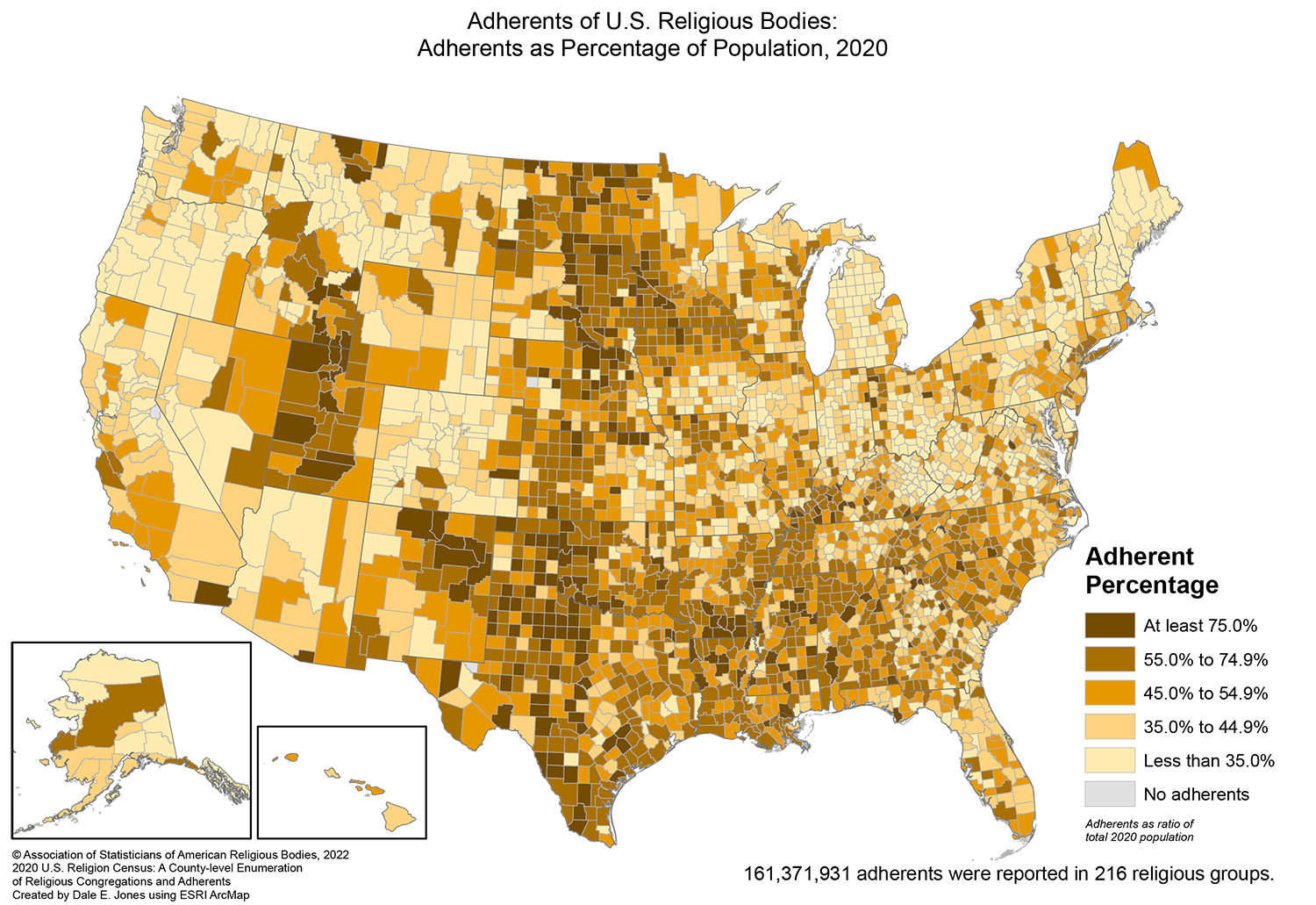
On the other end of the spectrum, a surprising predictor of low Black life expectancy is religious membership. Keeping in mind all the social determinants that showed to be significant in our study are correlational, not causal. Revoking a church membership will not automatically add years to a person’s life. The challenge is understanding why religious adherence is associated with lower life expectancy. Church goers are more likely to be obese and, on the surface, asking “Jesus to take the wheel” may negate any agency we have in influencing our health outcome. We also know that place-based bias that comes out of the wash of housing devaluation hurts the families and institutions, including churches, in those locales. More research is needed to uncover the conditions and behaviors underlying all the variables that strongly influence life expectancy.
The fact that we realize progress and stagnation in Black life expectancy in different places makes clear that people have agency. The gains and losses reflect that. When we take an overly optimistic or pessimistic view of the state of Black America and treat Black people as a monolith, we don’t see localized stories of growth, determination, and thriving.
The diversity of places where Black people are thriving suggests that it has something to do with Black people themselves. In places like Montgomery County, Md., individuals, civil rights groups, organizers, and politicians are dismantling the architecture of inequality that takes away years of life.
That said, we still need to examine and throw away the overly optimistic position on race relations—that the country has moved beyond slavery, Jim Crow racism, and the array of discriminatory policies and their long-term effects. People who hold this perspective contend that America is a level playing field and that with effort, Black people can achieve anything a white person can.
But locales that post life expectancies under 70 perform poorly on environment or institutional indicators like the air and school quality, suggesting that life is harder in some places due to systemically racist forces. In Lowndes County, Ala. where Montgomery is the county seat, Black life expectancy is 68.5. In Greenwood, Miss., it’s 67.3. In Salem, Ore., life expectancy is 64.4.
It’s also worth speculating on seemingly obvious reason why some cities, like Jackson, Miss., don’t post higher rates than 72.6. Jackson has higher homeownership rates than most places (94th percentile) and a higher percentage business ownership (59th percentile). But the recent water crises show how local politics of Mississippi play out in lower investments in the city’s water infrastructure, which plays out in other municipal services that impact life expectancy like education.
“Social reforms move slowly,” wrote W.E.B. Du Bois, suggesting that we must learn from our circumstances in ways that reject intemperance and blame. “[W]hen Right is reinforced by calm but persistent Progress we somehow all feel that in the end it must triumph.”
Society is toiling with the same struggles around racism that Du Bois faced at the turn of the 20th century. Nonetheless, we must take the time to recognize empirical signs of progress and not rush toward unsophisticated, untruthful narratives of hopelessness or blind ignorance that remove or dismiss our agency. A path of progress demands that we have a clear view of the social, political, and economic landscape in which we live. Recognizing progress and defeats will have us see the very real capacity for future change. The assumption—backed with data—that Black people in places with higher life expectancy had a hand in their outcomes should inspire us to seek change in places where discrimination is robbing people of years of life
Interesting long read, written from an Australian perspective but applicable more broadly including in Canada:
Last week, Christopher Wray, Director of the U.S. Federal Bureau of Investigation (FBI), toldlawmakers that the bureau has national security concerns about TikTok, the popular app that is owned by the Chinese firm ByteDance. “Under Chinese law, Chinese companies are required to essentially — and I’m going to shorthand here — basically do whatever the Chinese government wants them to do in terms of sharing information or serving as a tool of the Chinese government,” Wray said in the House Homeland Security Committee hearing. “That’s plenty of reason by itself to be extremely concerned.”Similar fears have been expressed by officials in other democratic governments. Concerns about rising Chinese influence have been increasingly conveyed through the lens of how technology is developed, governed and distributed. As democratic governments enter a new phase of engagement with China that balances national security worries with needed cooperation, understanding how we might govern Chinese apps in a way that squares such concerns with the needs and interests of Asian diaspora communities is paramount. Australia offers a case study in the potential pitfalls, and a possible path forward.
Introduction
The May 2022 Australian election was a moment of vindication for many. Nine years of conservative rule gave way to a coalition of independents seeking climate action, record Indigenous representation and the most diverse Parliament Australia has ever seen. With nearly 1 in 5 Australians having Asian ancestry, this election was a particular turning point for political representation: where the number of elected Asian-Australians makes up half of the total figure ever elected to Parliament from that ethnic group.
This election, however, came at a point of intense alienation for Asian-Australians. The wave of anti-Asian sentiment during the course of the COVID-19 pandemic meant increased discrimination, hate crime and attacks on the community. And rather than being repudiated by the political establishment, when combined with a historic low point in Australia’s geopolitical relationship with China, this wave of hate alongside increasingly hawkish sentiments has translated into our own brand of Down Under McCarthyism.
Like many other countries, Australia has been grappling with the societal impacts of social media for the past few years. At the coalface of this debate are elections, where issues such as misinformation, foreign interference and content moderation become both more apparent and important. How we navigate these issues becomes more complex when the focus turns to non-Western social media platforms – namely those that originate from China. But calls to ban or boycott these platforms would achieve the exact opposite of their intended aims to protect democracy, as huge proportions of the Australian population would be excluded from our political processes.
In our attempts to reign in ‘foreign’ Big Tech, how might we balance our national security anxieties and interests with the new opportunities for engagement these platforms have given us? It is crucial to separate real concerns over security and the integrity of Australian elections and political discourse from the bigotry and discrimination that has long targeted Asian-Australians.
The Asian Diaspora in Australia
Whilst multiculturalism is regularly touted nowadays as a fundamental national value, the exclusion of Asians from Australian society has deep historical roots.
Prior to the ‘establishment’ of modern Australia, the influx of Chinese migrants from the gold rush meant that distrust and violence against non-white communities was prevalent. After Federation, one of the first pieces of legislation passed from the newly formed government was designed to specifically limit non-British immigration representing the formal start of the White Australia Policy. This policy had a profound impact on Australia’s demographics, decreasing the proportion of Asians from 1.25% of the population at Federation to only 0.21% by the end of World War II. Following WWII, successive governments began dismantling this policy until its full abolishment by the government of then Prime Minister Gough Whitlam with the passage of the Racial Discrimination Act 1975. From 1978, Australia became the second country in the world (after Canada) to implement a national multiculturalism policy; since then, its value to society has been made manifest.
These policy reforms paved the way for waves of migration from Asia. From the refugee crisis in Vietnam and Cambodia, skilled migration from India, and people escaping political turmoil in the Philippines and China, Australia became a primary destination for many in the region. Whilst this has led many in the political establishment to label Australia as ‘the most successful multiculturalnation on Earth’, various voices still see rising diversity as a threat to the national identity.
As of 2021, nearly half of all Aussies have at least one overseas-born parent. From the first census in 1911 that indicated 18% of the population was born overseas, 111 years later it’s risen to 30% of the population (predominantly from Asian countries). But even with these numbers, the path for migrant communities to realize their place in business, civic and political leadership in Australian society still has a long way to go.
Asian-Australians in Politics and Leadership
The legacy of exclusion resulted in severe under-representation of Asian-Australians in politics. Prior to the recent election, 96% of Australian lawmakers were white, trailing behind other similar multicultural, liberal democracies such as the United States, the United Kingdom, Canada and New Zealand.
Representation in core Anglosphere elected officials. Source: BBC
This lack of representation of Asian-Australians extends far beyond politics into all areas of leadership in Australian society, and is known as the ‘bamboo ceiling’. But whilst the private sector also limits Asian-Australian progression, the issue is particularly pronounced in the public service.
Chinese-Australians in particular are broadly under-represented, but are increasingly so in the more ‘sensitive’ departments such as ONI (intelligence), Defence or DFAT (foreign affairs) as opposed to Education or Treasury. One of the main reasons for this are the lengthy periods associated with obtaining security clearances, on average 6 months longer for Chinese-Australians. Greater scrutiny of China links is not just an Australian phenomenon. In the US between 2010-2019, you were nearly twice as likely to get your security clearance denied if you had any familial or financial links to China – prior to this the denial rate was similar to other countries.
Holding an Election Amidst a Tense Trade War
Three elections ago, relations between China and Australia were much better than they are currently. Amid lofty optimism off the back of a finalized free trade agreement, Chinese Paramount Leader and Communist Party (CCP) General Secretary Xi Jinping’s address to a joint sitting of the Australian Parliament and tour of the country would be unthinkable in today’s climate. Instead, years of simmering tension were catalyzed when Australia called for an independent investigation into the origins of COVID-19. An ensuing petty trade war (no lobster and wine!) plummeted relations between the two countries.
The 2022 election saw the Scott Morrison government double down on a hardline national security and anti-China rhetoric, at a point where a wave of anti-Asian hate saw more than 8 in 10 Asian-Australians reporting at least one instance of discrimination. From labeling Richard Marles, the future Minister of Defence, as the Manchurian candidate to billboards from right wing campaigning groups associating Xi Jinping with the Labor Party, this all out offensive was costly, swinging almost all electorates with <10% Chinese ancestry to the Labor party.
While the hawkish positions that at times bordered on racial vilification from the conservatives was clearly miscalculated, their sentiments belie real concerns regarding foreign interference and electoral integrity more broadly. How social media platforms impacts elections, society and democracy has been one of the topical policy conversations over the past few years, and as more non-Western social media platforms gain popularity, there is an even greater need to understand the nuances of platform governance while avoiding the pitfalls of reactionary solutions (i.e. let’s ban it!).
What is WeChat?
At the eye of the storm is a Chinese app called WeChat. Developed by Tencent (one of China’s main technology companies), WeChat is the most popular online platform amongst Chinese migrants, and as of 2020 had around 700,000 daily active users in Australia. Far from just being a social media platform, WeChat also has messaging, calling, mobile payments and ecommerce functions, making it a ‘one stop shop’ for everything online. For Chinese-Australians this app is the public square. WeChat is the dominant source for both Chinese-language (at 86%) and English-language (at 63%) news for this ethnic group.
WeChat has a ‘one app, two systems’ approach, where the international version of WeChat is subjected to less severe censorship and data governance obligations than its Chinese counterpart (called Weixin). The version of the app depends on the device used to register, meaning that many Chinese visitors, students and business travelers remain under the governance framework of Weixin even outside of China’s borders. In September 2021, Tencent updated its terms of service to assure international users of the system’s discretion (and also in response to evolving data storage and localization legislation in China). It gave users a choice to switch registrations over to non-Chinese numbers, however with migration taking as long as 10 days and resulting in decreased functionality, many Australians chose to keep their Weixin accounts. Additionally, WeChat Official Accounts (WOAs), which give accounts functionality akin to a Facebook page and are the preferred choice for politicos, still require registration with a Chinese number.
The Witch Hunt on Chinese Technology
Since mid-2020, from India’s TikTok ban to investigations of Huawei, global scrutiny on Chinese technology firms has been at an all time high. Accusations range from surveillance to censorship to foreign interference, reflecting the decline in relations and trust between China and the rest of the world at large. Some of these accusations are well founded, while others are less so.
Privacy and Surveillance
Concerns over the data practices of Chinese apps, backed up by evidence uncovered by journalists, have become so commonplace that they should be taken as fact. Right after the election, leaked audio from TikTok in the US revealed that user data had been frequently accessed from China. In Australia, a report released around the same time pulls into question where data from the app is actually processed, and the risk this poses for security and privacy. A review into data harvesting of WeChat and other Chinese apps was announced by the Home Affairs Minister shortly after the election.
Censorship
As opposed to Weixin, where a sophisticated system of direct algorithmic censorship ensures CCP control over the online environment, WeChat’s censorship regime is more indirect.
Firstly, it’s well documented that many users of the app self-censor, where users avoid ‘sensitive’ topics around international relations, human rights and COVID-19, and could be a contributing factor to why Chinese-Austrailans rarely share their views online about politics and government – particularly about China.
Further, opaque platform policies (although not dissimilar to other social media platforms) mean that content moderation and censorship decisions are held entirely within the company. From activists to artists, even foreign-registered WeChat accounts have posts and messages actively censored if they touch too closely on sensitive issues.
Finally, many Australian users and politicians who register with a Chinese number to gain access to increased functionality are subjected to the stricter content rules of Weixin. Even then-Prime Minister Scott Morrison had a post removed that criticized a Chinese government official for publishing a doctored image of an Australian soldier holding a knife to an Afghan child (in response to the release of a report alleging war crimes by the Australian military). A note on WeChat said that the post was unable to be viewed as it ‘violated company regulations’.
Misinformation and Foreign Interference
Even though many within the Australian establishment have expressed concern about China’s ability to influence public opinion, proof of whether it has succeeded in impacting public discourse has been limited. Definitively proving the efficacy of state-sponsored disinformation campaigns is extremely challenging, as the network of astroturfing, proxies and shadow organizations used to achieve these goals are intended to be hidden, but incidents overseas reveal the potential risk towards Australian democracy. The 2021 Canadian election saw significant disinformation campaigns against an outspoken Hong Kong-Canadian politician, which contributed to him losing his seat. Kenny Chiu, a Conservative member of the Canadian Parliament and critic of the Chinese regime, faced significant (and falsified) opposition to proposed legislation intended to bring in more transparency requirements.
In reality, the majority of misinformation and disinformation spread on WeChat comes from domestic Australian actors. From statements that Labor will fund school programs to ‘turn students gay’ and ‘refugees flooding in and taking your wealth away’ to misinformation on how to vote, such posts are mostly forwarded between private groups. The confluence of platform design that facilitates these ‘communities of trust’ to form and the segregated nature of these online spaces leaves WeChat very susceptible to information disorder.
Paradoxically, while Chinese disinformation campaigns tend to go after more conservative candidates (due to a higher likelihood of them being China hawks), domestic misinformation tends to target more left-leaning politicians (due to the Chinese diaspora being more likely to engage with socially conservative and economic narratives).
WeChat Use Becomes a Dogwhistle for Patriotism
Early in the election period, Prime Minister Scott Morrison was rocked with a scandal. His WeChat account was sold to a company based in Fuzhou, renamed, losing him the ability to reach 76,000 subscribers. It’s important to note that account transferrals are completely allowed on the app. While foreign politicians are not allowed WOAs, they can still obtain one through registration services that pair foreign accounts with Chinese numbers – a tactic used by many politicians as these types of accounts allow for more desired campaigning features (such as push alerts and being able to broadcast).
As the news broke, many people in the Australian political and media elite quickly jumped into accusation mode. From allegations of hacking to CCP interference, it was galvanizing to both security and political folk alike – time to ditch WeChat. Senator Paterson, a libertarian who chaired the Parliament’s intelligence and security committee, said that the takeover was ‘very likely’ sanctioned by the CCP and amounted to foreign interference, joining the chorus of pundits calling for a ban on WeChat.
Even Gladys Liu, the first Chinese woman to be elected to the Australian House, was quick to renounce WeChat. This is despite the fact that she had expertly used WeChat on two separate occasions to win seats for the Conservative party – once for her predecessor and once for herself. Even as other members of her party continued to push ads on WeChat, Liu’s precautionary actions to publicly display nationalistic loyalty not only hark back to her experiences years before, when her previous links to overseas Chinese organisations were used to insinuate links to the CCP, but also to the persistent ‘otherness’ Asian-Australians face throughout society. It followed another instancewhere in a Senate inquiry on diaspora experiences, a Conservative Senator demanded three Chinese-Australians to unequivocally condemn the CCP, a question which many condemned as racially targeted. For Liu, struggling to hold onto a marginal seat where a quarter of the population speaks Chinese, the decision to not use WeChat was costly.
The Difficult Task of Platform Governance
The aftermath of the US 2016 election, from which evidence emerged of Russian interference via social media, firmly established ‘reigning in Big Tech’ as a common policy goal in many democracies. A few years on, translating this call into tangible action has revealed hard decisions, seemingly intractable tensions and systemic inertia. What the Australian experience has shown is that when the regulatory conversation shifts to try and align the actions of non-Western (i.e. non-American) digital platforms – an additional pitfall of parsing through minority alienation and political posturing must be considered.
The increasing securitization of ‘Chinese influence’ within the Australian policy discourse since 2017 mirrors our increasing frustration around social media regulation. While there are unique challenges WeChat poses from a security and geopolitical lens, attempting to parse out rational policy concerns from irrational and bigoted fears will enable a more nuanced and holistic approach towards platform governance.
For instance:
On susceptibility towards foreign interference – Chinese-Australians trust news that is shared on WOAs the least compared to other sources such as Australian news
On distrusting firm’s intentions – whilst there is evidence that the purported assurances from WeChat around transparency, privacy, accountability and safety are disingenuous, the Facebook Files and other whistleblowers have shown that this hypocrisy also occurs elsewhere
On censorship – content moderation decisions, whether on Facebook or WeChat, both happen at the discretion of these firms and their ‘Community Guidelines’. Whilst there have been some efforts to add a layer of independent governance to these efforts (most notably Facebook’s Oversight Board), key questions remain – how should these quasi-independent transnational governance initiatives fit into our existing state-centric governance model and will privately-led governance initiatives ever manage to account for public interest? Would a ‘Tencent Oversight Board’ be received with the same level of legitimacy? And how might these initiatives be constructed and integrated in a way that ensures buy-in.
What this illustrates is that while security concerns for WeChat are a consideration, many of the fundamental issues WeChat poses are fundamental platform governance policy problems.
A path forward
As our new MPs make their way to Canberra, the responsibility of regulating social media now falls to them. But what the pandemic made clear is that Chinese platforms are a lifesaving communications channel for the Asian-Australian community. Acquiescing to hawkish calls to ‘boycott’ them is not only overly simplistic, but will serve to further alienate huge sections of the Australian public.
Instead, legislators must work towards doubling down on engagement and creating the rules and systems to ensure that this engagement is safe and trustworthy. And whilst it’s a task that won’t be featured in a sensationalized Murdoch hit piece, it will do more to enhance Australian democracy than any media firestorm will. Here are three key recommendations to achieve these goals:
Shift investment towards digital-forward diverse media to combat misinformation
As one of the first countries in the world to establish a public broadcaster catering specifically to culturally diverse communities, Australia has a legacy of diverse communication. Today, Australia has a diverse media market, but there remains a clear skew towards traditional forms such as print and radio. Even as online media outfits begin to proliferate, many of these outfits originate from migrant students sympathetic towards China’s positioning on various issues. An unfamiliarity around using WeChat amongst Australian media and business outlets has left this digital public square without a counterbalance.
Language
Publications/Print
Radio
TV
Online
Chinese
80
many
1
50
Indian
50
36
2
11
Filipino
5
30
1
4
Vietnamese
16
14
2
5
Cultural media market in Australia. Source: Leba – Australia’s largest advertising agency for culturally and linguistically diverse media.
Facilitating plurality within this environment is a complex and active task, and governments should employ multiple levers to increase diversity and representation, particularly within digitally-native media operations. This should include;
Incentivising traditional media outlets to establish a presence amongst foreign-language platforms – including bi-lingual publication
Incentivising the diversification of newsrooms, and ensuring that journalistic standards are upheld
Active funding of new digital media startups that represent diverse and contextual viewpoints
This is particularly important as second-generation communities, who are more digitally literate and have completely different experiences/identities than their migrant parents, become more visible in Australian society. One of the most prominent Facebook groups that provides a forum for the unique experiences of the Asian diaspora – Subtle Asian Traits – with nearly 2 million members was started by a group of Chinese-Australian high school students in Melbourne. Continuing to invest in increasing the diversity of culturally specific media across a wide range of channels is the best way to combat the unique risks around misinformation and information disorder facing minority communities.
Establish avenues to compel platform engagement in governance processes to combat distrust of foreign social media companies
A holistic platform governance regime should combine:
Domestic action that combines a multistakeholder approach with equipping independent regulators with the appropriate powers to ensure proper transparency, oversight and accountability, and
International engagement so that legislation, processes and structures are built through consensus and alignment with international norms
Domestically, hard levers such as mandating researcher access, requiring company and algorithmic audits from independent bodies, and ‘truth in political advertising’ legislation could be considered. In many of the key platform governance policy debates, the focus has been mainly on Meta and Google – however efforts to understand, engage and cooperate with alternative platforms must included to ensure that our regulatory regime applies to all actors.
Internationally, as key geographies seek to establish their sphere of influence (via the EU’s Digital Services Act, the UK’s Online Safety Bill, or U.S President Joe Biden’s principles for tech accountability), ensuring that consensus is achieved will be a significant challenge – particularly as more and more non-American social media platforms begin accumulating larger and larger user bases. It will require diverse coalitions, novel governance frameworks and new institutions. Working towards this new digital compact will require Western democracies to broaden the tent, engage in good faith and center pragmatism, while balancing liberal values – a task that is only possible through dialogue.
Continue using alternative platforms to increase the political participation of diverse communities to combat alienation
Ultimately, alternative social media platforms are an unparalleled way for minority communities to obtain information and realize their democratic rights. This isn’t limited to WeChat, but platforms such as Zalo (Vietnam), Line (Japan), KakaoTalk (Korea) and WhatsApp all have unique usage patterns amongst various diasporic communities in Australia, even if their dynamics are less researched. What is clear is that even with the risks, WeChat not only enables greater political participation but facilitates public service, information delivery and civic engagement.
For political parties, candidates and advocacy organizations – taking a considered approach that assesses and mitigates risks without losing a valuable communication channel should be considered. This may include:
Establishing an internal policy on foreign-owned social media platform usage
Reporting violations to the Australian Electoral Commission or eSafety Commissioner
Keeping a transparent public register of WeChat ads and paid posts during an election period
Conclusion
In her maiden speech to Parliament in 1996, Senator Pauline Hanson warned that Australia was at risk of being ‘swamped by Asians’. Even though these comments were made by a fringe far-right politician, they have become emblematic of how the Asian-Australian identity is viewed as a ‘perpetual foreigner’.
Twenty years later from these vitriolic remarks will bring us to the next Australian election, where lawmakers must not succumb to making the New Red Scare a political tactic. Social media platforms, and their unparalleled ability to connect and engage communities, present an unparalleled opportunity for minority communities to add their part to the Australian story. Driving engagement with the Asian-Australian community via the channels they use whilst tackling the real platform governance issues will ensure that Australia’s democracy is strengthened, and could offer an example to other democracies struggling with similar issues.
Matt Nguyen is the Policy Lead for Digital Governance and Rights at the Tony Blair Institute, where he leads work on the future of news, platform governance and digital rights.
While Lau is trying to be too cute in his commentary, the data undermines claims of white supremacy:
If I get a speeding ticket for exceeding the speed limit by 50 kilometres per hour in a residential zone, I plan to inform the police officer that the institution of policing, the radar guns, and even the posted speed limit are all manifestations of white supremacy. That’s sure to have the ticket withdrawn.
I take my cues from a handful of those in the esteemed social class of public educators. Some context: earlier this fall, the Education Quality and Accountability Office, which is arms-length of the Government of Ontario, released the latest standardized test results. As they have over the past decade, reading and writing scores fluctuated, but math scores continued their steady downward march.
In 2021-22, only 59 per cent of Grade Three students met provincial standards in mathematics, down from 60 per cent in 2018-19 and 67 per cent in 2012-13. Among Grade Six students, only 47 per cent met provincial standards in mathematics, down from 50 per cent in 2018-19 and 57 per cent in 2012-13.
Perhaps in anticipation of such dismal results, in the weeks ahead of the EQAO results release, the Toronto District School Board launched what might be seen as a series of pre-emptive strikes, giving presentations denouncing standardized testing as an example of “white supremacy in K-12 mathematics education.”
A member of the Elementary Teachers’ Federation of Ontario’s executive staff, with similar ideas in mind, wrote in the union’s magazine that standardized testing is “biased towards upper-middle class white test-takers” and suggested that “EQAO tests are culturally and racially biased, promoting a Eurocentric curriculum and way of life that privileges white students.”
That administering standardized tests to measure student achievement is a manifestation of white supremacy is an interesting claim, but a little dubious. In the first place, if white racists are trying to use standardized testing to promote the idea that the white race is somehow superior to others, they’re doing a rather poor job. Students from many different racial backgrounds outperform white students (on average) on these tests.
The Peel District School Board reported last year, for example, that a higher proportion of students from East Asian, Southeast Asian, South Asian, Middle Eastern and multiple racial backgrounds reached the provincial standards in Grade Three mathematics than white students. Data in previous years and from other school boards, such as Toronto and Grand Erie, also show Asian students on average significantly outperforming white students in EQAO mathematics tests.
Survey data cast further doubt on the theory that standardized tests are tainted by white supremacy. In January a poll (conducted by Leger and published by the Fraser Institute) found 84 per cent of parents of children in K-12 schools supported having their children write standardized tests, including 92 per cent of immigrant parents. Unless we’re prepared to conclude that 84 per cent of Canadians and an even higher proportion of immigrants support white racist activities, we may have to conclude the tests are not racist.
On second thought, if I am pulled over for speeding, it may not help to inform the police officer that the resulting ticket is a manifestation of white supremacy. More likely, the police officer would regard me as an idiot. Similarly, reasonable people might regard as inordinately dumb the idea that standardized testing has anything to do with white supremacy.
Matthew Lau is an adjunct scholar with the Fraser Institute.
Singapore is unique in so many ways and hard to see how its approach could ever be adopted here apart from some of the tax and surcharge approaches:
If you’re Canadian, you might feel envious learning the quest for affordable housing is basically a success for many of the 5.7 million people of Singapore.
That is not a story you hear often, or at all, in Canada, especially not in Greater Toronto, Metro Vancouver or Victoria, three of the world’s more unaffordable cities.
The wealthy city-state of Singapore, in South-East Asia, is like Metro Vancouver and Toronto in many ways: A megapolis that acts as a magnet for foreign people and capital, which has faced daunting housing problems.
Like other fast-growing cities, Singapore is known for its capitalism and cultural diversity, albeit with a stronger emphasis on orderliness, which leads to cleanliness and low crime. Despite free elections, it has had only one party in government since it gained independence from Britain in 1959. Its legendary first prime minister, Lee Kuan Yew, committed to every citizen being able to own a home.
The city-state approaches Canada for its religious and ethnic diversity: 75 per cent of residents are of Chinese descent, 15 per cent are Malay and seven per cent are from the Indian subcontinent. More than one quarter of Singapore’s population is foreign born, which is less than the proportion in Vancouver and Toronto.
Yet, despite broad similarities, the upcoming book Housing Booms in Gateway Cities, from David Ley, a UBC professor emeritus of geography, explores how Singapore, through innovative taxation, has conducted an impressive experiment in housing.
Singapore has accomplished relative affordability with what Ley calls “its own version of municipal socialism” — a term that will either repel or attract Canadians.
“Typically, Singapore gets the prize of being the most business-friendly and economically open society there is. But, when it comes to housing, it battens down the hatches hard,” said Ley, author of Millionaire Migrants, whose new book will detail housing issues in the gateway cities of Vancouver, Singapore, Hong Kong, Sydney and London, England.
“It’s plan from the beginning was that everyone who is a (citizen) would be a homeowner, buying housing from the government, which is the principal landowner, or from a much smaller private sector.”
The megalopolis’s housing model, unlike in Canada, is based on differentiating three levels of citizenship rights. Restrictions on foreign investment are also tight.
“If you are born in Singapore you are called a Singapore ‘resident,’ and you have basically all the rights that are available,” Ley said. “You can also become a permanent resident and get a chunk of the rights, but not all of them. Or you’re a temporary migrant and you have almost no rights.”
As a result, nine out of 10 citizens of Singapore own a dwelling, said Ley, nearly all of which are apartments, ranging from run-of-the-mill to elegant. Most are leased for 99 years from the government. Another 20 per cent of housing is exchanged on the private market.
Here’s how Singapore’s experiment in housing works.
If you are a full citizen of Singapore, you get access to the apartments built and made available by the Housing and Development Board, or HDP, a high-powered government agency.
“And if you’re a permanent resident, but not born in Singapore, you get access to HDP apartments, but with conditions,” Ley said. “If you’re a temporary migrant you get no access at all.”
That means the majority of citizens are allowed to choose from decent or stylish government-built apartments in well-planned communities, which slowly grow in value because prices are controlled by taxation policy. It results in most residents being able to move up the housing ladder.
It also means the minority of temporary residents in Singapore mostly compete for private housing. The business people from China, Indonesia and the West who work in Singapore’s dynamic financial sector, who are called “Talents,” tend to buy nice flats. On the other hand, migrant nannies often make their homes in extra bedrooms, while many foreign construction workers live in dormitories.
While Ley joins many housing specialists around the world in observing most Singaporeans seem happy with the model, it’s not perfection. A non-Singaporean professional who lives there (and doesn’t want to be identified) told me this week that young adults complain they will not start having children until they own a dwelling. And some charge the government isn’t building them fast enough.
The debate has led to former Singapore cabinet minister Josephine Teo, who calls on citizens to produce more babies even if they don’t own, famously blurting: “You need a very small space to have sex.”
Singapore ‘tenacious’ at limiting housing speculation
“Singapore has been really tenacious in terms of controlling foreign investment in its housing market,” Ley said.
While Ley wonders if Singapore inspired B.C. and Ontario’s foreign-buyers taxes, the surcharges in Canada are modest compared to those in Singapore, where foreign nationals are taxed a solid 30 per cent on any purchase whatsoever.
Singapore’s politicians also curb speculation by local investors. A year ago they slapped a 17 per cent tax on citizens who buy a second property and 25 per cent tax on their third property. They do not, on the other hand, tax citizens who are first-time buyers.
And while Canada treats permanent residents the same as citizens when it comes to housing taxes, that’s not the case in Singapore. It has imposed a five per cent tax on permanent residents purchasing a first dwelling and 30 per cent on those snapping up a third.
While Ley generally supports a surcharge on foreign purchases, he was uncertain about Canada copying Singapore’s taxes on permanent residents who invest in primary properties to live in. To some extent, he said, such speculation is already tempered by Canada’s capital gains taxes.
What can Canada learn from Singapore’s remarkable system of relative affordability? “In some ways, sadly, it’s a rather unique place,” Ley says.
But that doesn’t mean some of the city-state’s effective policies couldn’t inspire creative adaptation here.
Good test for reasonable accommodation. IMO, fails the test given health and safety concerns (they teach shop):
The biggest breasts on record belong to one Annie Hawkins-Turner, from Atlanta, measuring 70 inches across and weighing 65 pounds each. Size 102 ZZZ.
But an allegedly transgender Halton teacher is giving Hawkins-Turner a good run for her tatas.
Of course Hawkins-Turner’s bosom was a naturally occurring endowment. The medical condition is called gigantomastia — a rare phenomenon that causes breasts to grow excessively large. Kayla Lemieux, an industrial arts instructor who apparently began identifying as female last year, showed up at school this term with oversized knockers, prosthetics that sag below her waistline, with protruding nipples the size of your knuckles. These features have been accentuated by tight-clinging sweaters.
Students were shocked, although presumably they’ve since grown accustomed to their teacher’s dimensions. Parents, upon learning of the situation — from clandestinely recorded videos that exploded on social media in September, making headlines around the world — protested in front of Oakville Trafalgar High School and complained to the Halton District School Board. I doubt whether any, or many, would be objecting to Lemieux’s gender transition. Gender identity and gender expression are protected grounds under the Ontario Human Rights Code.
That’s not the point. And frankly I don’t know the point that Lemieux seems to be making, unless this is all a bollixed misreported story driven by right wing media and reactionary organizations. If this is how she wishes to present herself to the world, so be it. Although I do wonder if such large breasts are a safety hazard whilst teaching shop.
A reasonable conclusion would be that Lemieux, for reasons known only to her, is making an exhibitionistic and provocative spectacle of herself. That too might be entirely within her rights. You might recall that women in Ontario won the right to go topless way back in 1996, a legal fight that went all the way to the Court of Appeal. The appellant, who’d been convicted by a lower court judge of committing an indecent act — she’d removed her top on a sweltering summer day — had argued against the double-standard that permitted men to go topless but not women. At rallies across the province, women came out to decry the original charge, and part of that movement was aimed at desexualizing female breasts. They’re not always, certainly not exclusively, about sexual arousal — despite what you might think, walking into any strip club.
The Halton school board was singularly incapable of resolving the controversy and, in September, passed a motion asking director of education, Curtis Ennis, about the feasibility of introducing a dress code for teachers. Education Minister Stephen Lecce also asked the Ontario College of Teachers to review professional conduct for teachers, arising from Lemieux’s pendulous udders.
Last week, after a report was presented to trustees, the board claimed it couldn’t implement a teacher dress code, although students are routinely subjected to restrictions.
I’ve read the report, signed by Ennis and Sari Taha, superintendent of human resources at the board. It makes no direct reference to a specific teacher or concern, as if the whole tizzy sprang out of nowhere. Instead, it pivots on the broader issue of a non-discriminatory dress code, its permissibility. Since the parameters of the report don’t address the elephant in the classroom, it’s impossible to speculate whether any such dress code would prohibit exceedingly humongous prostheses.
Upshot: Any dress code for teachers — which clearly was a roundabout way of getting to Lemieux’s dramatically emphasized breasts/nipples — would purportedly expose the board to “considerable liability” for violating the human rights code. Read: lawsuit. Further — and this sounds very much like gilding the liability lily — new rules can’t even be considered at this moment because of ongoing collective bargaining with teacher unions.
The Ontario Labour Relations Act imposes a “statutory freeze” during periods when there is no governing collective agreement, prohibiting employers from altering working conditions during negotiations.
Saturated in diversity and inclusion buzz phrases, the report, abysmally written — bureaucracies are averse to plain-speak — leans heavily into the province’s human rights code. Did they not take a close read of the Commission’s policies on workplace dress codes? Workers in Ontario, and everywhere else, are commonly held to dress code provisos — from restaurant employees to lawyers appearing robed in court to airline crews to health care staff wearing scrubs.
Some places — Hooter’s for instance — compel female employees to wear skimpy butt-cheek exposing outfits and hosiery. It is this kind of wardrobe to which the OHRC draws disapproving attention. “Some Ontario employers require female employees to dress in a sexualized or gender-specific way at work, such as expecting women to wear high heels, short skirts, tight clothing or low-cut tops,” the Commission states on its webpage. “These kinds of dress codes reinforce stereotypical and sexist notions about how women should look and may violate Ontario’s Human Rights Code … They contribute to an unwelcome and discriminatory employment environment for women.”
On the issue of preventing discrimination because of gender identity and gender expression, specifically addressing the trans community: “Dress code policies should be inclusive and flexible. They should not prevent trans people and others from dressing according to their expressed gender.”
Which it seems the Halton board wasn’t pursuing. Lemieux is completely free to dress in a dress, to use the personal pronoun of her choice, and to have her dignity respected.
But this situation is the inverse of what the Commission is promoting by calling out “stereotypical and sexist” dress codes or in any way interfering with trans rights to dress according to their expressed gender. What the Commission doesn’t address, far as I can tell and probably because they never saw it coming, is whether that respect should extend to in-your-face breast prostheses, which wouldn’t necessarily apply only to trans individuals.
Now, I understand the Halton board’s leeriness in taking a dress code risk that could result in a costly human rights wrangle. I’m dubious, however, that directing a teacher to knock off the buxom exhibitionism violates anybody’s human rights.
From the report: “To the extent that workplace policies mandate that employees dress in a particular manner, it is important for those policies to be gender neutral in their application, and that they impose similar dress standards and requirements for all employees, regardless of gender.”
What, pray tell, would be the cisgender, gay, lesbian or trans yin to Lemieux’s extravagant prosthesis yang?
Similar as in Canada as Douglas Todd has reported on:
A decennial study of U.S. religious life shows what many demographers and others have long known: Participation in congregational services has not kept up with overall population growth. However, religious groups drawing large numbers of immigrants have seen steady growth.
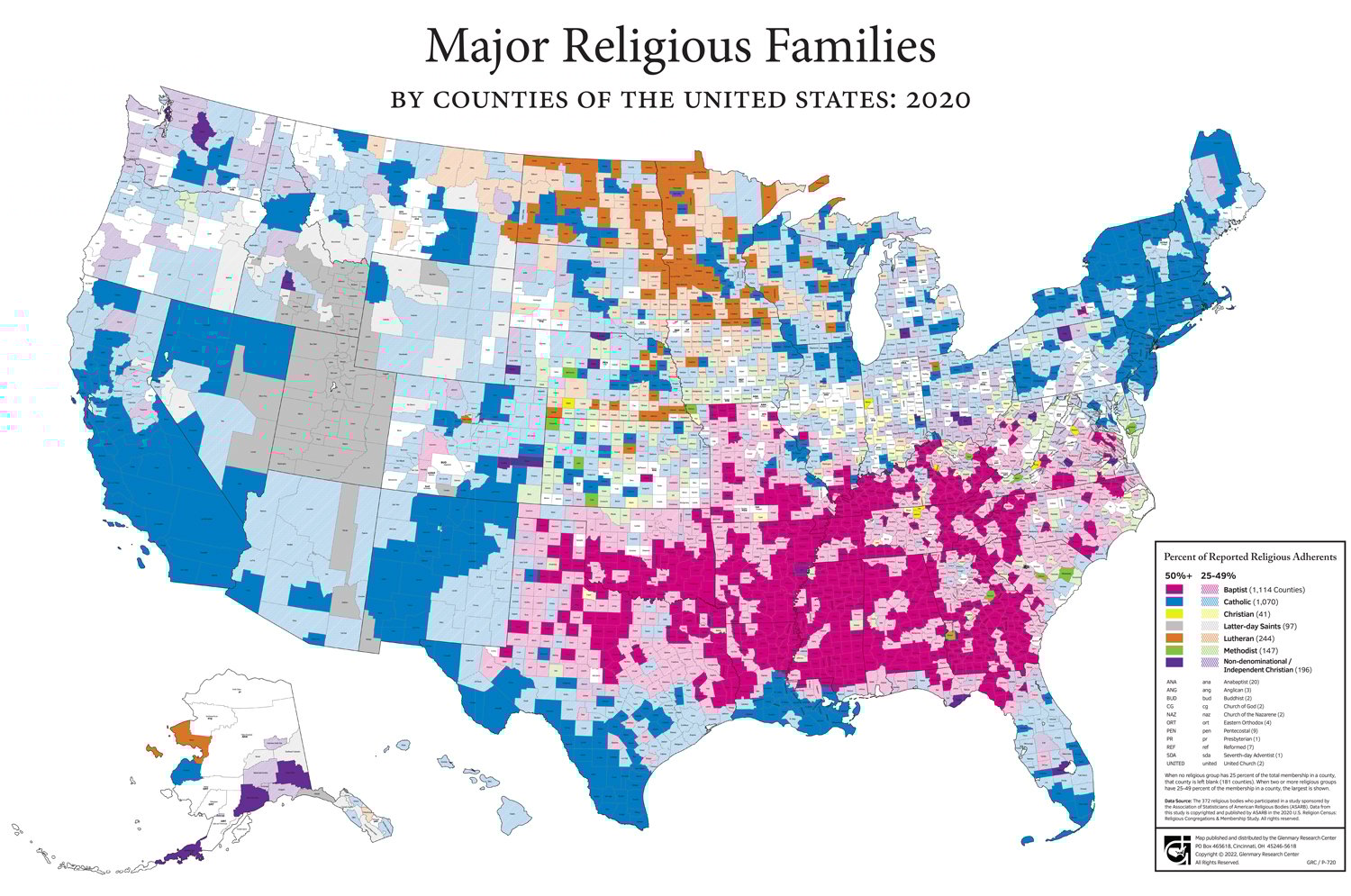
The U.S. Religion Census, conducted every 10 years by the Association of Statisticians of American Religious Bodies, concluded there were 356,739 religious congregations across the nation, and 161 million adherents, including children, in 2020. (Adherents is the formula researchers used to count those with an affiliation to a congregation, including children and people who attend but may not belong.)
Unlike polling, which asks questions from a small sample of the population and extrapolates to the general population, the religion census gathers information from denominations and other religious bodies and maps out the number of congregations and adherents on a county-wide basis. In the 2020 study, researchers collected data from 372 religious bodies, mostly denominations, but also 44,000 independent nondenominational churches. The count included synagogues, mosques and temples of Jewish, Muslim, Buddhist, Hindu, Sikh and Jain traditions
Courtesy Chart
The study finds that the Catholic Church in the U.S. is the largest religious body, with 61 million adherents in more than 19,000 churches, comprising close to 19% of the U.S. population. That’s a modest growth of 2 million adherents from 2010, when the church had nearly 59 million adherents.
Sociologist who worked on the census said growth is almost entirely made up of Hispanic immigrants.
“If you took away the Hispanic population in the Catholic Church, it would look as bad as mainline denominations,” said Scott Thumma, director of the Hartford Institute for Religion Research, who counted independent churches for the census. (Mainline denominations, such as Episcopalian, Lutheran and Presbyterian, have been declining for more than 50 years.)
Perhaps the most striking growth was among Muslims. The number of Muslims who participate in mosque prayer increased from 2.6 million in 2010 to 4.5 million in 2020, a 75% increase. (Pew Research estimates there were 3.85 million Muslims in the U.S. in 2020, but those numbers do not include children.)
That growth is due mainly to immigration, said Ihsan Bagby, associate professor of Islamic Studies at the University of Kentucky, who collected the data for Muslims. Higher birth rates may be a secondary reason.
Bagby estimated the number of U.S. mosques at 2,771, a jump of 871 mosques in just a decade.
He suggested Muslims may be in a kind of golden age in the U.S. They are younger than the American population overall, and the Boomers among them are financially well off and able to contribute to the construction of new mosques. (First-generation mosques were often in retrofitted churches or warehouses.)
Mosques, Bagby said, “have mellowed and matured and become more moderate in their understanding of Islam and that has also been an attraction,” he said. “Many Muslims who had kept away feel more comfortable coming.”
Courtesy Chart
U.S. mosques, like those overseas, do not typically keep memberships. Bagby said he arrived at his estimates by asking for information on weekly Jumah prayers as well as holiday or Eid prayers. (Muslims make up about 2.8% of all religious adherents and about 1.3% of the total population, the study estimates.)
Much of the value of the census is its county-level aggregation, which corresponds to how researchers in other fields, such as population studies and public health, collect and analyze data, said Rich Houseal, secretary-treasurer of the sociological group that conducted the study.
Houseal said the data is also useful to businesses, too. Walmart, he said, has contacted him to help determine what books to stock in their stores based on the dominant religious group in a county.
Among other interesting data points in the study:
Southern Baptists have the most churches of any religious group: 51,379.
There are some 44,319 nondenominational churches, a jump of nearly 9,000 over 10 years ago, and about 9 million adherents. Still, overall, they account for only 13% of the total number of religious adherents in the U.S.
Southern Baptists and United Methodists each lost 2 million members from 2010 to 2020.
“Denominational brands have weakened, and divisions have increased over issues such as female clergy or sexual orientation, Thumma said. “This likely led some adherents to seek or even start new nondenominational churches.”
Of note. More coverage on regime links and immigration:
As the uprisings continue in Iran, tensions between supporters of the regime and those who aspire to revolution are being felt in the Iranian diaspora.
In Toronto, anti-regime activists have moved to expose government insiders who they say live with impunity in Canada.
“This man sent me, along with many other students, to prison,” said Ardeshir Zarezadeh, an Iranian-born Toronto lawyer, pointing to his computer screen.
On the website of his organization, the International Center for Human Rights, the photo of Morteza Talaei, the former police chief of Tehran and officer of the Islamic Revolutionary Guard Corps (IRGC), seen on a treadmill, in a gymnasium in Richmond Hill, Ont., in January.
Since the beginning of the uprising in Iran, Zarezadeh has called on members of the Iranian diaspora in Canada to send him information concerning relatives of the Iranian regime who visit or live in Canada in order to expose them on his website.
There is an expression in Iran that Canada is the regime’s paradise.— Mohammad Tajdolati, Iranian journalist based in Toronto
“We all know that many people affiliated with the Iranian regime live in Canada. They come and go.”
“They take advantage of life in Canada,” maintains the lawyer who spent nearly six years in Iranian prisons for his involvement in student movements.
For Mohammad Tajdolati, there is no doubt that the presence of supporters of the Iranian regime in Canada has exacerbated tensions within the Iranian diaspora since the beginning of the uprising.
“There is an expression in Iran that Canada is the regime’s paradise,” says the Iranian journalist based in Toronto.
The activist claims to have contacted the federal government on several occasions in recent years to denounce the presence of relatives of the regime on Canadian territory, without concrete measures being taken by Ottawa.
“They tell us, ‘We know, we’re watching them,’ but that’s not enough. […] That is why we are taking matters into our own hands,” he said.
On Oct. 29, in a long-awaited speech by the diaspora, Prime Minister Justin Trudeau promised to maintain sanctions against the Iranian regime and its leaders. A promise received with skepticism by Zarezadeh.
You can’t do much legally, but by identifying them and exposing them, you can make people cut ties with them, or with their business.– Marjan
“We know that there are people today in Canada who have benefited from this horrible and corrupt regime and who are hiding in the middle of the community enjoying the opportunities that Canada offers. They are using the wealth they stole from the Iranians. We say: enough is enough,” Trudeau said.
He is not the only one. It was this same frustration that prompted Marjan* (her name has been changed) to begin investigating Iranian regime supporters in Canada. The young Torontonian left Iran to escape repression.
Radio-Canada granted her anonymity, because she fears reprisals against her or her family who still lives in Iran.
After arriving in Canada, she says she kept her distance from her home community. The uprising in Iran, however, ignited a new flame within her. On the opiran.toronto Instagram account, she now speaks out against government insiders whose families she says live freely in Canada.
“When I see these people here, it’s like post-traumatic stress disorder for me. I see them near my home, in the street, I see their children playing freely when I did not have this luxury in my country,” she said.
“You can’t do much legally, but by identifying them and exposing them, you can make people cut ties with them, or with their business.”
Even if he understands the anger of his compatriots, Tajdolti is worried about the abuses that some of their actions could cause, such as the denunciation of individuals online. “You have to be very careful because we live in a country of law. You can’t accuse someone very easily,” he warns.
Zarezadeh says he is aware of the risk of defamation. “We make sure that the information we publish is true,” he said, assuring that he will continue his fight.
Exacerbated tensions, broken wall of fear
Beyond online denunciations, tensions are also crystallizing in the community. In “Little Tehran,” a neighborhood located north of Toronto and which owes its name to its large population of Iranians, certain incidents have multiplied since the beginning of the uprising.
Opposite the famous Plaza Irania, in the heart of the Iranian quarter, a butcher shop has been the target of online vandalism and intimidation by netizens accusing it of having links with the Iranian regime.
Graffiti in Farsi saying “death to the mullahs,” for example, was painted on the walls of the Imam Mahdi Islamic Centre in Thornhill, north of Toronto. The mosque was quick to refute any political allegiance.
Both the butcher shop and the mosque declined our offer to comment on the matter.
In front of the same mosque, however, signs with the portrait of the young Mahsa Amini, whose death was the spark of the movement, have been removed, according to a video widely shared on the WhatsApp network. And still in the same place, a motorist tried to rush into anti-regime demonstrators before fleeing and being arrested by the police.
York Regional Police, which serves the territory, says it is not concerned about a possible increase in hateful acts related to the situation in Iran. However, the police say they are aware of the divisions that exist within the Iranian community in the Greater Toronto Area.
According to Tajdolati, tensions have always been underlying in the community, with supporters of the two ideologies living together. What changes this time is that fear has changed sides, according to the journalist.
“The people you see on the streets now, before, they didn’t come to demonstrations because they were afraid,” he said, explaining that being photographed at an event like this could make it difficult afterward to travel to Iran or could make things difficult for their families back home.
“Now, he continues, the situation is so atrocious in Iran, it is so brutal, so inhuman, that these people say to themselves, ‘No, that is enough. I want to participate, I want to do my duty as a human being, as an Iranian.”
We especially love to pat ourselves on the back for the fact that our system is, for the most part, mercifully free of the most extreme elements of U.S. politics. That’s mostly just good for our national self-regard, but it would be a shame if it distracts us from the disturbing possibility that a foreign power has been actively interfering in our own recent national elections, even changing the outcome in at least one case.
According to the report, CSIS told the government that Beijing funded a “clandestine network” of at least 11 federal candidates, including both Liberals and Conservatives, in the 2019 federal election. It also placed “agents” in the offices of MPs to influence policy and mounted “aggressive campaigns” to punish Canadian politicians it saw as threats to its interests.
Asked about this, Prime Minister Justin Trudeau didn’t deny it. Instead, he essentially confirmed the report by saying some “state actors,” including China, continue to “play aggressive games with our institutions, with our democracies.”
The government then went on, through a speech by Foreign Minister Mélanie Joly, to sketch out its long-awaited Indo-Pacific strategy. This is the famous “eyes wide open” approach, whereby Canada will take a more cautious stance toward China and try to deepen links with other Asian nations, in particular India.
But hang on a moment — let’s not change the channel quite so fast. Those CSIS briefings were pretty specific, according to Global’s Sam Cooper. They alleged that the Chinese government funnelled money through proxies to almost a dozen candidates in a federal election and worked to undermine others.
So many questions. Which candidates got the money? How many of them won, and how many lost? For those who did get money, did they know who was ultimately behind it or were they ignorant of what was going on? And which candidates did China work against? What happened to them?
Finally, was this activity limited to just the 2019 election, or was it happening before or after? A former Canadian ambassador to China, Guy Saint-Jacques, says he believes “several Conservative MPs” lost their seats in the 2019 and 2021 elections because China targeted them through social media networks in the Chinese community.
We know the name of at least one who was probably singled out. Conservative MP Kenny Chiu lost his Vancouver-area seat in 2021 after he introduced a bill to set up a registry of agents for foreign governments (something Canada should certainly have). He immediately found himself labelled as anti-Chinese in Chinese-language social media, and is convinced Beijing’s operatives were behind the campaign to defeat him.
Now it seems he wasn’t the only one, if the CSIS briefing to the government is to be believed. It’s in line with many warnings over the years from Canada’s top intelligence officials that China has been actively meddling in our domestic politics, partly by working through sympathetic politicians and partly by manipulating votes in Chinese communities.
Isn’t this something we should know more about? The government received that CSIS briefing in January, but as far as we know it did nothing.
It’s important to look at the big picture by elaborating a new Indo-Pacific strategy. And judging by Joly’s speech this week, the government seems to be broadly on the right track.
But in the meantime, we shouldn’t brush off a real attempt to undermine our democracy. Let’s start by asking where that Chinese money went, and to whom.
Interesting background to the slogan used by Iranian and other protesters:
For 41 days, thousands of Iranians have taken to the streets in anger over the death of a young Kurdish woman in police custody, even as authorities continue their violent crackdown against them. The demonstrations — honoring the memory of 22-year-old Mahsa Amini, whose Kurdish first name was Jina — have become the largest women’s rights movement in Iran’s recent history.
One resounding slogan has become the movement’s rallying cry: “Jin, jiyan, azadi!” — or “Woman, life, freedom!”
First chanted by mourners at Amini’s burial in her hometown of Saqez, the slogan quickly spread from the country’s Kurdish cities to the capital, Tehran. It took on new life in its Farsi translation — “Zan, zendegi, azadi” — and the message continues to reverberate across solidarity protests from Berlin to New York. Even fashion brands like Balenciaga and Gucci have posted the slogan to their Instagram feeds.
The words “jin, jiyan, azadi” and their various translations have unified Iranians across ethnic and social lines. They have come to signify the demand for women’s bodily autonomy and a collective resistance against 43 years of repression by the Iranian regime.
But Kurdish activists say that some Iranians and the media are overlooking key elements of the Kurdish background of both Amini herself and the slogan pulsing through the mass protests sparked by her death.
“It’s meant to be a universal slogan for a universal women’s struggle. That was what was always intended with it,” says Elif Sarican, a London-based anthropologist and activist in the Kurdish women’s movement. “But the root needs to be understood, at the very least in respect towards the people who have sacrificed their lives for it, but also to understand what this is saying. … These aren’t just words.”
The slogan was popularized during women’s marches in Turkey in 2006
The slogan originated with the Kurdish Freedom Movement, led by the Kurdistan Workers’ Party (PKK), an armed group carrying out an insurgency against Turkish authorities since the 1980s. The State Department has long designated the PKK as a terrorist organization.
Ocalan advocated for what he called “jineoloji,” a Kurdish feminist school of thought. That ultimately led to the development of an autonomous women’s struggle — the Kurdish women’s movement — within the broader Kurdish Freedom Movement, Sarican explains.
She says the slogan was first popularized during International Women’s Day marches across Turkey on March 8, 2006. Turkey, with about 15 million Kurds, is home to the largest population of Kurds in the Middle East. Although they make up an estimated 18% to 20% of the nation’s population, they face discrimination and persecution.
Since 2006, Sarican says, “Every year, based on ‘jin, jiyan, azadi’ as the philosophy of freedom, there’s been various different campaigns that have been announced and declared to the world by the Kurdish women’s movement on each 8th of March — to say that this is our contribution, this is our call and this is our encouragement for a common struggle of women against colonialism and patriarchal capitalism.”
Five years ago, Kurdish female guerrilla fighters with the YPJ militia chanted the slogan during the Kurdish-led Rojava revolution in northern Syria that began in 2012.
Kurds in Iran face discrimination and many live in poverty
Ignoring the slogan’s political history contributes to the long-standing erasure of Kurdish people’s identity and struggle, activists say.
That’s also been the case in international coverage of Amini’s death, they contend, in which Mahsa — Amini’s Iranian state-sanctioned first name — is used. In interviews, Amini’s parents have used both her Iranian and Kurdish names.
“I felt like she died twice because no one really was mentioning her Kurdish name or her Kurdish background, which is so relevant,” says Beri Shalmashi, an Amsterdam-based Iranian Kurdish writer and filmmaker.
The Iranian government has blamed Kurds for the current unrest in Iran, according to news reports, and has attacked predominantly Kurdish cities, like Sanandaj and Oshnavieh. Some Persian nationalists, meanwhile, continue to ignore the lived experiences of Kurds in the country.
Shalmashi believes it’s vital to highlight Amini’s Kurdish identity, and the Kurdish roots of “jin, jiyan, azadi,” as a reminder of the need for greater rights for all people in today’s Iran — no matter their ethnicity or gender. Without inclusion and unity, she warns, the current protests risk becoming meaningless.
“Because if you don’t make room for people to be in this together,” she says, “then what are you going to do if you even succeed?”


 Multicultural Meanderings