Arton Capital Partners With EnterPH, Enticing More Filipinos To Global Citizenship

Arton keeps expanding its services and trying to spin its services as “shaping a sustainable and responsible environment.” Who writes this kind of puffery? And does anyone actually believes it?:
“With the growing number of Philippine companies entering business in different parts of the world, we are very honored to work with Arton Capital to empower Filipinos with the flexibility and mobility to become global citizens,” said EnterPH President Atty. Rocky Chan.
The partnership between the two bodes well for future clients, who can expect the best of both worlds. Arton Capital brings its international knowledge and experience to the table, while EnterPH possesses a mastery of the local business landscape.Arton Capital was founded by Armand Arton, who also serves as the company’s president. A visionary entrepreneur and philanthropist, Arton has extensive background serving the specialized needs of high net worth investors around the world. Arton is a staunch ambassador of the global citizen movement, seeking to involve global citizens in shaping a sustainable and responsible environment.

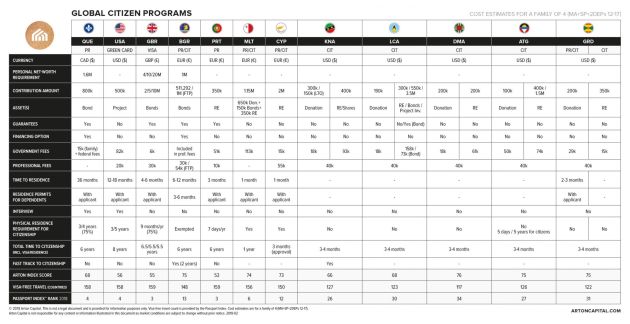
© 2018 Arton Capital. This is not a legal document and is provided for information purposes only. Visa-free travel count is provided by the Passport Index. Cost estimates are for a family of 4 (MA+SP+2DEPs 12-17). Arton Capital is not responsible for any content or information illustrated in this document as market conditions are subject to change without prior notice. 2018-02

The Global Citizen Foundation is committed to making a difference by reaching out to children and young people who are in need. They are focusing on education, but also lending a hand and contributing to the next generation of leaders and education policy worldwide.

“We live in the age of global citizens,” said Arton in a TEDx Talks session he gave recently. “As global citizens, the only boundaries we have are the way we see ourselves and the way we see each other.”

Arton Capital takes its leadership position in the global citizenship movement seriously. The company curates the Global Citizen Forum, a platform that brings together visionaries and global leaders.

The company is also a founding member of the Global Investor Immigration Council (GIIC), a group that whose mission is to establish best practices and foster sustainable and responsible industry governance; as well as a co-founder of the Global Citizen Foundation, which aims to contribute to the development of the next generation of leaders and enriching education policies worldwide.

“The place where we were born does not dictate who we are, where we can go, or what we can become. When we limit human mobility, we’re restricting the use of one of the most important growth tools humanity has at its disposal,” said Armand Arton.

Source: Arton Capital Partners With EnterPH, Enticing More Filipinos To Global Citizenship

Questions and Answers on the Report on Investor Citizenship and Residence Schemes in the European Union

Useful reference material on citizenship and investment immigration schemes:

Questions and Answers on the Report on Investor Citizenship and Residence Schemes in the European Union

1. Investor citizenship (“golden passport”) schemes

What are investor citizenship schemes?

Investor citizenship schemes are often referred to as “citizenships for sale” or “golden passports”.  They allow foreigners to be naturalised as a citizen of a country in return for an investment, provided certain criteria are fulfilled. Bulgaria, Cyprus, and Malta operate such schemes, where investors are required to invest between EUR 800,000 to EUR 2 million.

What is the EU’s competence in the area of nationality law?

It is for each Member State to lay down the conditions for the acquisition and loss of its nationality. However, these schemes are of common EU interest since every person holding the nationality of a Member States is at the same time a citizen of the Union. The European Court of Justice has found that, while it is for every Member State to lay down the conditions for the acquisition and loss of nationality, they have to do so with due regard to Union law. Member States must therefore take into account all rules that form part of the EU legal order, including international law, which requires a “genuine connection” between the State in question and the person that is granted citizenship.

The Commission’s report focusses on the naturalisation schemes that are classified as investor citizenship schemes, which are a new form of naturalisation that systematically grant citizenship based on an investment.

What is the problem with investor citizenship schemes?

Investor citizenship schemes create a range of risks for Member States and for the Union as a whole: in particular, security risks, risks of money laundering and corruption and tax evasion.  Such risks are exacerbated by the cross-border rights associated with citizenship of the Union.

The report found that applicants are often granted citizenship without any physical residence in the Member States concerned and without any genuine link to them.  The report also identifiesconcerns that the security checks applied to applicants for investor citizenship may not be robust enough and that Member States do not consult each other on applicants for investor citizenship, and do not inform each other of rejected applicants.  The report found certain grey areas in the application of anti-money laundering legislation, since agencies operating these schemes do not fall under the EU’s anti-money laundering requirements.

In addition, the transparency surrounding investor citizenship schemes is very limited: it is not always clear who applies for these schemes, who obtains the citizenship (and hence EU citizenship) and how the money raised by such schemes is spent.

How can such schemes pose money laundering risks?

The 4th Anti-Money Laundering Directive requires financial institutions and other entities (“obliged entities”) in the EU to perform customer due diligence checks. The 5th Anti-Money Laundering Directive, which entered into force on 9 July 2018, introduced an amendment requiring enhanced customer due diligence on nationals from third-countries who apply “for residence rights or citizenship in the Member State in exchange of capital transfers, purchase of property or government bonds, or investment in corporate entities in that Member State”.  Member States must transpose the Directive by 10 January 2020 at the latest and the Commission is working with them to ensure correct full and correct transposition.

Member States also have to ensure that the application of the EU rules on anti-money laundering are not circumvented under investor citizenship or residence schemes: Member States should ensure that funds paid by investor citizenship and investor residence applicants are channelled through bodies that qualify as “obliged entities” under the Anti-Money Laundering Directive.

In addition, Member States are encouraged to take into account the potential risks of money laundering linked to investor citizenship and residence schemes in their national risk assessments carried out under the EU anti-money laundering rules and take the necessary mitigating measures.

What has the Commission proposed as next steps regarding investor citizenship schemes?

The Commission will set up a group of experts from Member States that will work to address the specific risks posed by investor citizenship schemes.  It will also address the transparency of investor citizenship schemes and of discretionary naturalisation procedures, which permit acquisition of citizenship based on investment.  The group of experts shall put in place procedures for the exchange of information and statistics on such schemes, including the exchange of information concerning applicants whose applications for citizenship have been turned down in one Member State on grounds of posing a security risk.  Finally, the group should develop by the end of 2019 a common set of security checks for investor citizenship schemes, including risk management processes that take into account security, money laundering, tax evasion and corruption.

Is there a link between investor citizenship and residence schemes?

In some cases, investor residence schemes may facilitate the acquisition of citizenship.  In particular, a residence permit acquired by investment can be used under some Member States’ ordinary naturalisation procedures to provide fast-track access to permanent residence and then citizenship. In countries which have both citizenship and residence investor schemes, the investment required for the residence scheme may be taken into consideration to qualify for the investor citizenship scheme.

In addition, both schemes pose similar risks in terms of security, money laundering and tax evasion.

2. Investor residence (“golden visa”) schemes

What are investor residence schemes?

Investor residence schemes – often referred to as “golden visas” – grant a right of residence on a Member States’ territory to third country nationals on the basis of investment in the country.  They are issued at national level, and therefore do not entitle the permit holder to reside outside the issuing Member State. They do entitle the holder, however, to travel freely within the Schengen zone for a maximum of 90 days in any 180-day period. Currently, 20 Member States run such schemes: Bulgaria, Croatia, Cyprus, Czechia, Estonia, France, Greece, Ireland, Italy, Latvia, Malta, the Netherlands, Poland, Portugal, Slovakia, Spain and the United Kingdom.

What is the EU’s competence as regards investor residence schemes?

Residence permits for foreign investors are not regulated at EU level and remain governed by national law. EU law regulates the entry conditions for specific categories of non-EU nationals (for example students and researchers, seasonal workers and intra-corporate transferees).

What type of investments are required under these schemes? 

Residence investor schemes have very different features, particularly as regards the nature and amount of investment. Investment amounts can range from EUR 13,500 to over EUR 5 million in the form of capital investment, investment in immovable property, investment in government bonds, or donations to an activity contributing to the public good charity or one-time contributions to the national budget. These options are not mutually exclusive, and some Member States allow for different types of investment and their combination.

What are the main risks of investor residence schemes identified by the Commission?

  •     Security risks: In a Schengen area without internal border controls, it is particularly important to ensure that the commonly agreed security checks are fully implemented, for example through centralised information systems such as: the Schengen Information System (SIS); the Visa Information System (VIS); EURODAC and the newly established Entry/Exist system (EES); and the Electronic Travel Information and Authorisation System (ETIAS). Member States must ensure that investor schemes do not undermine and jeopardise these security efforts by allowing them to circumvent these security checks. The Commission’s report has identified both a lack of available information and an important level of discretion in the way Member States approach security checks. For these reasons, the Commission will closely monitor compliance of existing investor residence schemes with EU law to ensure that all obligatory existing border and security checks are systematically and effectively carried out by Member States.
  •     Money laundering: Member States should ensure that funds paid by investor citizenship applicants are assessed according to the EU anti-money laundering rules. This includes enhanced customer due diligence checks on non EU-nationals who apply for residence rights and, as with other higher risk financial transactions or activities, full transparency around the residence schemes to ensure the integrity of funds entering the Union financial system. Member States should also ensure that authorities running investor residence schemes have an obligation to check the origin of funds in investors’ schemes.
  •     Impact on EU law on legal migration: Residence permits obtained by investment but with limited or no required physical presence of the  investor in the Member State in question could have an impact on the application of and rights associated with the EU Long-Term Residence Status. In the absence of an effective monitoring of continuity of residence, investors considered to be residing in a Member State on the basis of a national permit for five years could acquire EU Long Term Resident status and subsequent rights, in particular mobility rights, without fulfilling the actual condition of continuity of residence for five years. This would not be compliant with the Long-Term Residence Directive.
  •     Fast-track to citizenship: Sometimes, a residence permit obtained by investment and without requiring any physical presence may provide fast-track access or a link to permanent residence and then citizenship. In Member States that have both investor citizenship and residence schemes, the investment required for the residence scheme may be taken into consideration to qualify for the investor citizenship scheme.
  •     Tax evasion: There is a risk that the use of investor residence schemes may facilitate abuse as the documentation issued under some of these schemes can make it difficult for financial institutions to correctly identify the legitimate place of tax residence. This is whyMember States should make use of the available tools in the EU framework for administrative cooperation in the context of tax avoidance, in particular for exchange of information.

What has the Commission proposed as next steps regarding investor residence schemes?

The Commission will monitor compliance by Member States with EU law, in particular, with existing EU legal migration and family reunification rules, as well as existing rules regarding the use and implementation of the EU’s migration, border and security information systems.

What are the risks of investor citizenship schemes run by third countries that have a visa-free regime with the EU? How can they be mitigated?

Acquiring the citizenship of a third country, which has visa-free access to the EU for short stays, can permit nationals who require a visa to enter the EU to circumvent the regular Schengen visa procedure and the in-depth assessment of individual migratory and security risks it entails.

However, since April 2017 such risks are mitigated as all travellers, including those that do not require an EU visa, are checked at the EU’s external borders as to whether they fulfil the entry conditions, including by carrying out checks in the Schengen Information System and Member States’ national databases. If there are indications that a traveller could pose a risk to internal security or public policy of any of the Member States, entry could be refused. New information systems such as the European Travel Information and Authorisation System (ETIAS), and the Entry/Exit System (EES) will further contribute to enhancing effective checks of non-EU travellers.

In addition, in March 2017, a revised and strengthened visa suspension mechanism entered into force. It provides for new grounds for the temporary suspension of visa liberalisation, including where the third country in question by its actions – or inaction – is endangering the public policy or internal security of the EU Member States. It applies horizontally to all third countries whose citizens enjoy visa-free access to the Union. The Commission will monitor the impact of investor citizenship schemes implemented by visa-free countries as part of this mechanism.

What will the Commission do to mitigate the risks of investor residence and investor citizenship schemes operated by candidate countries and potential candidates?

In view of the risks inherent in investor citizenship schemes, the Commission will monitor citizenship investor schemes as part of the EU accession process. The countries concerned will be expected to have robust monitoring systems in place, including systems to counter possible security risks such as money laundering, terrorist financing, corruption and infiltration of organised crime linked to any such schemes.

What will the Commission do to mitigate the risks of investor residence and investor citizenship schemes?

The Commission will monitor wider issues of compliance with EU law raised by investor citizenship and residence schemes and it will take necessary action as appropriate. For this reason, Member States need to ensure, in particular, that:

  •          All obligatory border and security checks are systematically carried out;
  •          The requirements of the Long-Term Residence Permit Directive and the Family Reunification Directive are properly complied with;
  •          Funds paid by investor citizenship and residence applicants are assessed according to the EU anti-money laundering rules;
  •          In the context of tax avoidance risks, there are tools available in the EU framework for administrative cooperation, in particular for exchange of information.

The Commission will monitor steps taken by Member States to address issues of transparency and governance in managing these schemes. It will establish a group of experts from Member States to improve the transparency, governance and the security of the schemes. That group will be tasked, in particular, with:

  •      Setting up a system of exchange of information and consultation on the numbers of applications received, countries of origin and on the number of citizenships and residence permits granted/rejected by Member States to individuals based on investments;
  •      Developing a common set of security checks for investor citizenship schemes, including specific risk management processes, by the end of 2019.

Finally, concerning third countries setting up similar schemes, which may have security implications for the EU, the Commission will monitor investor citizenship schemes in candidate countries and potential candidates as part of the EU accession process. It will also monitor the impact of such schemes by EU visa-free countries as part of the visa-suspension mechanism.

What are the risks of tax evasion linked to these schemes?

While the underlying study did not look into tax aspects related to investor citizenship and residence schemes, it seems that very few of the schemes include provisions with the explicit purpose of avoiding or evading tax. That said, a risk of potential aggressive tax planning and evasion can be created when individuals partaking in the schemes are abruptly granted new or additional citizenships which may help to obscure the actual tax residence of the individual, leading to the tax rules in their original country to be circumvented. Schemes in countries which do not tax the income, or tax it at a very low rate, carry a greater risk of account holders hiding evidence of the real state of residence and thereby evading tax. In particular, some EU citizens may deliberately evade taxation in their EU State of residence by acquiring citizenship and declaring themselves tax resident in countries where enforcement of certain requirements is less strict than in others. EU financial institutions may  be less familiar with schemes in place outside the EU in order to evaluate their relevance. Documentation issued under some of these schemes may also make it very difficult for financial institutions to identify correctly the legitimate places of tax residence.

What can be done to limit these tax risks?

EU countries that offer investor citizenship and residence schemes are already subject to strict EU transparency rules that came into force in 2014 and which ensure that all Member States exchange information with each other on the financial accounts held by EU citizens from other countries. These transparency rules have in recent years been significantly extended to include a wealth of other information. Most recently, the rules have been supplemented with new reporting provisions for tax intermediaries (factsheet) who offer advice that could lead to tax evasion or fraud. At the same time, EU level networks of fraud investigators have also been strengthened to enable professionals from all Member States to exchange more information and best practices.

However, there are a number of actions could be taken outside of the EU’s tax transparency framework to minimise the risk of tax evasion when it comes to citizen investorship schemes such as considering the issues they raise for tax purposes in the work being carried out by Member States in the Council to reform the Code of Conduct for business taxation and whether the risks posed merit the inclusion of these issues in the criteria on which the EU’s list of non-cooperative tax jurisdictions is based.
Source: http://europa.eu/rapid/press-release_MEMO-19-527_en.htm

Birth tourism: Système organisé à Vancouver pour le tourisme obstétrique

The third in the Journal de Montréal series:

En quelques années, le tourisme obstétrique est devenu une véritable industrie à Richmond, en banlieue de Vancouver. Une vingtaine de maisons de naissance chinoises sont en activité dans cette ville d’environ 200 000 habitants, dont plus de la moitié sont d’origine asiatique. Dans l’hôpital de la ville, 22 % des bébés sont nés de mères non canadiennes. Aperçu de cette industrie en pleine croissance.

Le recrutement

Plusieurs maisons de naissance sont en contact avec des agences en Chine qui leur trouvent des clients. Elles font aussi de la publicité dans les médias, ici au pays. « Bienvenue dans notre club pour la grossesse, la maternité, la formation postnatale, les visites touristiques et le bonheur d’un bébé citoyen canadien », peut-on lire dans une langue chinoise (traduit avec Google) dans une des publications sur internet dans la rubrique des petites annonces.

Les services « tout inclus »

Les familles qui payent le gros prix pour avoir un « bébé passeport » sont traitées aux petits oignons. Certaines maisons de naissance ressemblent à un véritable « tout inclus ». On offre la collecte à l’aéroport, l’hébergement, la nourriture, le transport aux rendez-vous médicaux, ou encore de l’aide pour remplir les papiers de citoyenneté, explique en entrevue un journaliste basé à Vancouver qui écrit régulièrement sur le sujet, Ian Young.

Levée de boucliers

Cette industrie est très mal perçue par de nombreux citoyens. Le député local, le libéral Joe Peschisolido, a parrainé l’an dernier une pétition visant à reconnaître le problème afin de s’y attaquer de front. « J’ai demandé au gouvernement de dire tout haut que le tourisme obstétrique est mauvais. Et que même si c’est légal, que c’est illégitime. Que c’est un modèle d’affaires qui ne doit pas être toléré et qu’on doit prendre des mesures pour le démanteler pour éventuellement l’éliminer », a-t-il affirmé en entrevue au Journal.

Des soins assurés

Que l’accouchement soit planifié ou que les mères arrivent à l’improviste, l’hôpital de Richmond — ou tout autre hôpital canadien — ne refuserait jamais d’offrir des soins de santé urgents à quiconque « en fonction de sa capacité de payer ou de son lieu de résidence », soutient une porte-parole des autorités de santé publique de Vancouver, Carrie Stefanson.

« Mais nous nous attendons à être indemnisés, que ce soit directement ou par le biais d’une assurance voyage », ajoute-t-elle. La plupart des mères s’inscrivent à l’avance et reçoivent des soins prénataux, précise-t-elle.

La pointe de l’Iceberg ?

L’hôpital de Richmond fait possiblement face à un problème de tourisme obstétrique encore plus important que ce que démontrent ses chiffres officiels, selon le député Peschisolido. Les statistiques sur les mères étrangères sont calculées en fonction de leur résidence de facturation. Or, plusieurs d’entre elles recevraient leur facture directement à la maison de naissance de Richmond.

LES DOUANIERS NE PEUVENT PAS LEUR REFUSER L’ENTRÉE AU PAYS

Les douaniers canadiens ne peuvent pas refuser l’entrée au pays à une femme, même s’ils la soupçonnent de venir au pays uniquement pour accoucher.

« En vertu de la loi, la grossesse n’est pas en soi un motif d’interdiction de territoire », précise une porte-parole de l’Agence des services frontaliers du Canada, Jayden Robertson.

Un couple rencontré par Le Journal dans le cadre de ce reportage sur les « bébés passeport » n’a d’ailleurs pas caché ses intentions lorsqu’il a atterri à l’aéroport de Toronto, en octobre.

« Je leur ai dit de mon plein gré que je venais pour accoucher », admet Hrena Singh, une nouvelle mère de 26 ans venue d’Inde pour offrir la citoyenneté canadienne à son enfant.

Les questions des douaniers à l’arrivée de Hrena et de son conjoint, Aman, se sont limitées à leur situation financière. Ce couple, qui a traversé le Pacifique, a fait appel aux services d’un avocat spécialisé en immigration pour éviter de se mettre dans l’embarras.

La première étape consiste à obtenir un visa de visiteur. Une fois ce document en poche, les douaniers peuvent difficilement leur refuser l’accès.

DES AMÉRICAINES VIENNENT ACCOUCHER ICI

Les familles qui viennent ici pour accoucher dans le but d’obtenir la citoyenneté canadienne pour leur enfant proviennent aussi de pays riches, comme les États-Unis.

Un avocat de Toronto spécialisé en immigration a même constaté une hausse d’intérêt des Américains pour le tourisme obstétrique au Canada depuis l’élection de Donald Trump à la présidence.

Réputation

« Un certain nombre de mes clients viennent des États-Unis à cause de Trump, confirme Alex Davidson. Pour eux, c’est comme un plan B, un peu comme avec le Brexit [le Royaume-Uni a quitté l’Union européenne]. Ces personnes viennent juste au cas où. Ce sont des gens qui ont de l’argent. »

Selon Me Davidson, certains Américains sont attirés par la réputation enviable du Canada à l’international. Le passeport canadien est perçu comme étant « plus utile » par certains de ses clients, explique-t-il.

Les données obtenues par Le Journal concernant l’origine des mères étrangères ne permettent toutefois pas de confirmer cette tendance au Québec. Dans les cinq dernières années, le nombre d’Américaines accouchant dans la province serait plutôt stable.

Préférence

Si plus d’Américaines accouchent ici à cause de Trump, les étrangères sont aussi maintenant plus nombreuses à choisir le Canada au détriment des États-Unis, soutient une accompagnatrice de naissance de Montréal, Rivka Cymbalist.

Les États-Unis demeurent toutefois la Mecque du tourisme obstétrique. Mais un certain déplacement vers le nord s’est opéré en raison de la rhétorique anti-immigration du président, soulignent de nombreux experts.

M. Trump a promis de s’attaquer au phénomène des « bébés passeport » en abolissant la citoyenneté à la naissance.

UN PHÉNOMÈNE QUI EST BIEN MAL DOCUMENTÉ

Le gouvernement Trudeau a récemment lancé une enquête pour mieux connaître l’envergure des « bébés passeport » après avoir minimisé longtemps son importance.

Phénomène en pleine explosion, il s’agit de femmes étrangères qui accouchent au Canada après avoir fait des milliers de kilomètres pour donner naissance ici dans un seul but : offrir la citoyenneté canadienne à son enfant. Le tout soulève des questions éthiques et légales.

« Le gouvernement admet enfin qu’il doit faire une étude, c’est un changement de cap assez significatif », soutient Andrew Griffith, un ex-haut fonctionnaire fédéral qui a publié des données inédites en novembre.

Les travaux de M. Griffith ont démontré que Statistique Canada sous-estime largement le nombre de naissances de mères étrangères au pays. Le gouvernement Trudeau s’entête pourtant à se fier à ces données qui sont contestées par des experts.

4500 accouchements

À titre d’exemple, l’agence dénombrait 313 naissances de mères étrangères dans tout le Canada en 2016. Or, la même année, 378 mères non canadiennes ont accouché uniquement à l’hôpital de Richmond, en Colombie-Britannique, selon les chiffres fournis par le centre hospitalier.

L’étude de M. Griffith, qui n’a pas été contestée par Ottawa, démontre qu’environ 3600 mères étrangères ont donné naissance au Canada l’an dernier, sans compter le Québec. En additionnant les accouchements dans quelques hôpitaux montréalais, on en obtient environ 4500. De ce nombre, environ la moitié serait du tourisme obstétrique.

« Bien que ces statistiques indiquent que ce n’est pas une pratique très répandue, le gouvernement du Canada reconnaît la nécessité de mieux comprendre l’ampleur de cette pratique ainsi que ses répercussions », souligne le ministre de l’Immigration Ahmed Hussen.

Source: Système organisé à Vancouver pour le tourisme obstétrique

Birth Tourism: S’attaquer aux consultants «sans scrupules» d’abord

The second part of the Journal de Montréal series. The most interesting nugget being Conservative immigration critic Michelle Rempel essentially disowning the CPC policy resolution calling for abolishing unqualified birthright citizenship (I may have missed an earlier reference).

As in the first article, some interesting local details:

Le gouvernement fédéral promet de s’attaquer aux consultants illégaux en immigration qui contrôlent une partie de l’industrie du tourisme obstétrique après les avoir laissés prendre racine au pays.

Le Journal rapportait hier qu’environ une femme étrangère accouche chaque jour au Québec après avoir fait des milliers de kilomètres pour donner naissance ici dans un seul but : offrir la citoyenneté canadienne à son enfant.

Le Canada et les États-Unis font partie des rares pays riches où il est encore possible d’obtenir la citoyenneté ainsi. Ce phénomène des « bébés passeport » est en pleine explosion au pays.

Certains des consultants auxquels ces mères étrangères ont recours font partie intégrante du stratagème (surtout localisé à Vancouver) permettant à des femmes — principalement chinoises — de venir accoucher ici en se faisant passer pour de simples touristes.

« Tout nous porte à croire que des consultants en immigration sans scrupules incitent les demandeurs à mentir sur la raison de leur visite au Canada », soutient un porte-parole d’Immigration Canada, Peter Liang.

Maisons de naissance

L’avocat montréalais Hugues Langlais soutient que ceux qui gèrent les maisons de naissance de Richmond, en Colombie-Britannique, pourraient être considérés comme des consultants illégaux en vertu de la loi.

Au Canada, seuls les avocats, les notaires et les consultants en immigration certifiés peuvent prodiguer des conseils en matière d’immigration, comme l’obtention de visas de voyage.

« Si des gens font de la promotion pour des naissances au Canada — comme les maisons de naissance de Richmond — et font des démarches pour solliciter ou renseigner des clients, ils pourraient s’exposer à des poursuites », croit-il.

Immigration Canada dit mener un examen afin de connaître la meilleure façon de serrer la vis aux consultants non autorisés. Or, jusqu’à présent, Ottawa a fait bien peu pour stopper leur progression.

Manque de ressources

C’est que l’agence fédérale responsable de mener ce genre d’enquête admet à mots couverts qu’elle n’a ni les ressources ni le temps de s’occuper de la lutte aux consultants œuvrant dans le domaine du tourisme obstétrique.

L’Agence des services frontaliers du Canada (ASFC), responsable de faire respecter la loi sur l’immigration, se concentre avant tout à assurer la sécurité nationale, et elle s’attaque uniquement aux plus gros délits.

« L’ASFC engage des poursuites pour les cas les plus sérieux de fausses déclarations commises par des consultants en immigration sans scrupules », fait-on valoir.

L’ASFC et Immigration Canada ont d’ailleurs été incapables de fournir des données sur les enquêtes en cours concernant la lutte aux consultants frauduleux.

« Far West »

Parallèlement, Ottawa refuse pour l’instant d’accorder plus de pouvoir à l’ordre professionnel qui régit le travail des consultants en immigration.

« Présentement, c’est le “Far West”, soutient le directeur de l’Association canadienne des conseillers professionnels en immigration (ACCPI), Dory Jade. Ça fait 10 ans qu’on demande une reconnaissance formelle. »

Il croit qu’avec un ordre professionnel comme celui des dentistes ou des ingénieurs, l’ACCPI pourrait mener des enquêtes dans le but de démanteler les maisons de naissance qui pullulent à Vancouver.

JUSQUE DANS LES PETITES ANNONCES

Les facilitateurs du tourisme obstétrique affichent leurs services un peu partout, des petites annonces jusqu’aux réseaux sociaux comme Instagram.

♦ Le Plus International Mother and Child club, situé à Vancouver, offre notamment dans son annonce des services « haut de gamme pour les mères d’outre-mer et leur bébé », précisant que les bébés sont canadiens.

♦ En plus du logement, de l’hébergement, du suivi médical, etc., le Canada Moon Centre B & B propose son aide pour le traitement des certificats de naissance, des passeports canadiens, des documents de voyage et des visas.

♦ Sur internet, le Canada Vancouver Ocean Baby Club écrit : « Bienvenue dans notre club pour la grossesse, la maternité, la formation postnatale, les visites tourististiques et le bonheur d’un bébé citoyen canadien ».

♦ Le Mansion Moon Center précise dans son annonce qu’une infirmière habite la villa qu’elle loue, et qu’on offre le transport depuis l’aéroport et vers les rendez-vous médicaux.

UNE PRATIQUE CHOQUANTE QUI DEVIENDRA UN PROBLÈME

Un important facilitateur du tourisme obstétrique au pays juge la pratique choquante, même si elle est légale, et voudrait la voir cesser.

« Je n’essaie pas de me justifier et de dire que c’est noble ce que je fais, affirme sans détour Alex Davidson en entrevue dans son bureau de Toronto.

« Mais la loi, c’est la loi, ajoute candidement l’avocat spécialisé en droit de l’immigration. Ça ne me concerne pas si ces familles souhaitent venir ici donner naissance pour avoir un passeport pour leur enfant. »

« injuste »

Me Davidson redoute les dérives d’un système qu’il juge « injuste » pour les candidats à l’immigration qui respectent le cours normal du processus. Les « bébés passeport » pourraient même « devenir un problème » pour le Canada, selon lui, s’ils choisissent de s’établir ici et de fréquenter les universités en grand nombre dans quelques années.

L’avocat torontois d’origine américaine et russe déplore que ces personnes aient accès aux systèmes d’éducation et de santé comme tous les autres Canadiens, simplement parce qu’ils sont nés ici.

Mais pour l’instant, la pratique est encore légale et Me Davidson a l’intention de continuer de profiter de ce lucratif marché en offrant ses services aux familles souhaitant entrer au pays en toute légalité avec un visa de voyage.

Il collabore aussi avec six médecins, qui touchent chacun une rémunération pour l’accouchement et le soutien prénatal et postnatal.

« Cadeau pour la vie »

Il y a quelques semaines à peine, il a publié une vidéo sur sa très populaire chaîne YouTube, dans laquelle il invite les familles qui envisagent de s’exiler pour accoucher d’agir avant qu’il ne soit trop tard.

Dans cet extrait, Me Davidson soutient que le Canada pourrait bientôt abolir le droit du sol, car « plusieurs pensent qu’il est injuste de conserver le système actuel », prévient-il.

Comme le président Donald Trump a promis de mettre fin au tourisme obstétrique aux États-Unis, le Canada pourrait bien emboîter le pas, précise-t-il. Mais pour l’instant, aucun parti politique fédéral ne compte aller aussi loin pour contrer le phénomène.

L’avocat qualifie au passage de « cadeau pour la vie » le passeport canadien, qui offre par ailleurs « de nombreux avantages ».

« Il vous reste un an pour vous décider, si vous considérez venir ici pour donner naissance. Il est encore temps d’en profiter », explique-t-il.

Me Davidson s’est fait connaître dans le monde entier grâce à sa chaîne YouTube, dans laquelle il offre des conseils pour immigrer au Canada. Il soutient toutefois que le tourisme obstétrique ne représente qu’une petite fraction de sa clientèle.

LE CANADA DEVRAIT-IL ABOLIR OU PAS LE DROIT DU SOL ?

Le Parti conservateur n’envisage plus d’abolir la citoyenneté à la naissance pour s’attaquer au phénomène des « bébés passeport » comme le souhaite une majorité de ses militants.

« Il y a clairement de l’abus, mais je ne crois pas que ce soit un problème envahissant à l’échelle nationale », croit la députée conservatrice responsable du dossier de l’immigration, Michelle Rempel.

Disant ne pas vouloir « minimiser » le phénomène, Mme Rempel soutient que des analyses plus sérieuses sont nécessaires pour connaître l’ampleur et les causes du problème.

Manchettes

Le tourisme obstétrique au Canada a fait les manchettes au cours des derniers mois après que les militants conservateurs aient voté en faveur, dans une certaine controverse, d’une motion non contraignante visant à abolir le droit du sol.

Un ex-haut fonctionnaire chez Immigration Canada croit que cette solution serait la plus efficace pour mettre fin au tourisme obstétrique. Or, il juge cette mesure trop radicale pour s’attaquer à un problème somme toute secondaire.

Un avis que partagent Mme Rempel, de nombreux experts ainsi que le gouvernement Trudeau.

Les troupes conservatrices ont d’ailleurs déjà tenté d’abolir la citoyenneté à la naissance au Canada. La démarche a été abandonnée puisque la mesure s’avérait trop complexe et coûteuse (entre 20 et 30 millions $).

Il n’en demeure pas moins que d’autres pays, dont la Grande-Bretagne, ont abandonné cette pratique, exigeant qu’un des deux parents réside dans le pays.

Le président Donald Trump a lui aussi promis de resserrer les règles. Mais ce droit est protégé par la constitution américaine, ce qui le rend presque impossible à abolir.

Qu’est-ce que le droit du sol ?

Au Canada, le droit du sol est protégé par une loi datant de 1947. Avant, les Canadiens étaient considérés comme des sujets britanniques.

Le droit du sol a été adopté dans la foulée de la Deuxième Guerre mondiale, durant laquelle beaucoup de Canadiens ont quitté le pays pour aller travailler aux États-Unis.

Le gouvernement canadien voulait donc s’assurer que les personnes qui revenaient au pays après la guerre soient considérées comme Canadiennes, puisque nées sur le territoire, explique l’avocat Hugues Langlais.

Source: SociétéS’attaquer aux consultants «sans scrupules» d’abord2019-01-20 – ArticleIl y a quelques semaines à peine, il a publié une vidéo sur sa très populaire chaîne YouTube, dans laquelle il invite les familles qui envisagent de s’exiler pour accoucher d’agir avant qu’il ne soit trop tard.

Birth Tourism: Un «bébé passeport» par jour au Québec

Interesting in-depth reporting in the Journal de Montréal on the extent of birth tourism in Montreal (the reporter spoke to me a number of times as well as others with some interesting local details) – first part:

Environ une femme étrangère accouche chaque jour au Québec, après avoir fait des milliers de kilomètres pour donner naissance ici dans un seul but : offrir la citoyenneté canadienne à son enfant.

Le principal objectif de ce coûteux séjour au pays est d’obtenir un passeport pour le bébé. La loi fédérale fait en sorte que tous les bébés nés ici obtiennent automatiquement la citoyenneté, et donc un passeport canadien.

Le Canada et les États-Unis font partie des rares pays riches où il est encore possible d’obtenir la citoyenneté ainsi.

Avec ce précieux document, l’enfant pourra :

  • étudier au Canada à peu de frais ;
  • voyager dans le monde plus facilement ;
  • s’établir ici aisément si son pays d’origine connaît des perturbations sociales ;
  • venir se faire soigner ici gratuitement (à condition de venir habiter six mois par année ici pour obtenir la carte soleil).

Explosion

Ce phénomène des « bébés passeport » est en pleine explosion partout au pays, y compris au Québec. Vancouver en est toutefois l’épicentre en raison d’un obscur réseau de facilitateurs bien établis dans la communauté chinoise.

Tout un système de consultants en tourisme obstétrique est d’ailleurs en train de se constituer clandestinement, ce qui inquiète des avocats spécialisés en immigration qui y voient un passe-droit injuste. Le gouvernement canadien promet de faire le ménage dans ce réseau de consultants « sans scrupules » (à lire demain).

Les couples paient de 20 000 $ à 30 000 $ pour venir ici, ce qui comprend les billets d’avion, l’hébergement, quelques milliers de dollars pour les consultants ou avocats et environ 8000 $ pour les frais médicaux.

Mal documenté

Le tourisme obstétrique est mal documenté par les gouvernements. Des établissements publics refusent d’en parler, dont le Centre hospitalier de St. Mary. Les douaniers constatent l’arrivée au pays de mères sur le point d’accoucher, mais ils n’ont aucun moyen légal pour intervenir.

Si certains « consultants » conseillent à leurs clientes de mentir, il y a des couples qui ne cachent pas leurs intentions lorsqu’ils arrivent ici, comme a pu le constater Le Journal. Bien que controversé sur le plan éthique, tout cela est légal.

Personne ne connaît le nombre exact de femmes qui viennent ici pour accoucher. Un calcul inédit produit par Le Journal démontre que plus de 800 mères non résidentes canadiennes ont donné naissance l’an dernier au Québec seulement, essentiellement dans la région de Montréal.

Ces données compilées n’incluent pas le principal lieu d’accouchement francophone au Québec, l’hôpital Sainte-Justine, qui ne dénombre pas ce type de naissance. Tout comme les hôpitaux de la ville de Québec.

Environ 50 % de ces mères étrangères sont venues ici en tant que touristes dans le but d’accoucher, selon l’estimation « très conservatrice » d’un ex-haut fonctionnaire d’Immigration Canada, qui a longuement étudié la question.

L’autre moitié serait composée de mamans qui sont, par exemple, des étudiantes ou des travailleuses étrangères qui ont accouché durant leur séjour ici.

C’est ainsi qu’on évalue qu’environ un « bébé passeport » naît chaque jour au Québec.

Le Centre hospitalier de St. Mary vient au 2e rang de tous les hôpitaux canadiens qui accueillent le plus de naissances de mères étrangères. Dans cet hôpital, près d’un bébé sur 10 est né d’une mère venue d’ailleurs l’an dernier (361). Une hausse significative par rapport à il y a cinq ans (177).

Ces femmes étrangères qui accouchent au Québec sont souvent d’origine chinoise, selon des données obtenues par Le Journal.

Ce phénomène soulève des questions éthiques, remet en question les lois canadiennes sur la citoyenneté et est source de conflits dans les hôpitaux.

« On se demande qui doit prendre la responsabilité de ces femmes », affirme une obstétricienne de Calgary qui a réalisé une rare étude sur le sujet, Fiona Mattatall.

Vancouver, l’épicentre

À Vancouver, le tourisme obstétrique est devenu une véritable industrie. Une vingtaine de maisons de naissance chinoises ont pignon sur rue dans les environs de la métropole britanno-colombienne.

Ces entreprises controversées, dont les tentacules s’étendent jusqu’en Asie, offrent des services clé en main à de riches familles chinoises (à lire demain).

NAISSANCES D’ENFANTS DE MÈRES ÉTRANGÈRES DANS CERTAINS HÔPITAUX DU QUÉBEC

Centre hospitalier de St. Mary

  • 2017-2018 | 361
  • 2013-2014 | 177

Hôpital de LaSalle

  • 2017-2018 | 76
  • 2013-2014 | 91

Hôpital du Lakeshore

  • 2017-2018 | 57
  • 2013-2014 | 28

CUSM

  • 2017-2018 | 123
  • 2013-2014 | 110

CHUM

  • 2017-2018 | 16
  • 2013-2014 | 37

Hôpital général juif

  • 2017-2018 | 72
  • 2013-2014 | 62

Hôpital Maisonneuve

  • 2017-2018 | 63
  • 2013-2014 | 43

Cité de la santé

  • 2017-2018 | 17
  • 2013-2014 | 16

Hôpital du Sacré-Cœur

  • 2017-2018 | 39
  • 2013-2014 | 45

Total : 824 l’an dernier

SOURCES : LES DIFFÉRENTS HÔPITAUX ET CENTRES INTÉGRÉS DE SANTÉ ET DE SERVICES SOCIAUX CONCERNÉS.

DES ENJEUX ÉTHIQUES

Des conséquences sur le système de santé

L’explosion du phénomène des « bébés passeport » entraîne inévitablement des conséquences sur les soins de santé dans les hôpitaux les plus touchés. À l’hôpital de Richmond, en Colombie-Britannique, près de 1 bébé sur 4 est d’origine chinoise. On déplore que des Canadiennes enceintes soient forcées d’accoucher ailleurs parce qu’une femme étrangère se présente en travail à l’hôpital à la dernière minute. « Des infirmières sont inquiètes des abus du système et que des résidentes de Richmond soient rétrogradées », affirme en entrevue le député libéral fédéral de la circonscription, Joe Peschisolido. Le Centre hospitalier de St. Mary, à Montréal, n’est pas à l’abri de ce genre de situation, croit un ancien haut fonctionnaire fédéral ayant longuement étudié la question. « Si la tendance se poursuit, c’est possible et même probable qu’on voie les problèmes de Richmond se produire ailleurs », affirme le chercheur Andrew Griffith.

Des factures non payées

Ils sont l’exception plutôt que la règle, mais certains parents partent sans payer l’hôpital. Les autorités de santé publique de Vancouver poursuivent une femme d’origine chinoise qui a quitté le Canada en laissant derrière elle des factures impayées de 313 000 $ après son accouchement en 2012. L’avocat canadien responsable du dossier soutient qu’il sera très difficile de récupérer les fonds, qui s’élèvent à un million avec les intérêts. À Calgary, une mère américaine a accouché de ses quatre enfants sans s’acquitter de ses factures, qui s’élèvent maintenant à plus de 100 000 $. « Elle n’avait pas d’assurance maladie aux États-Unis. Elle trouvait que c’était beaucoup moins cher de venir se faire soigner ici », explique Fiona Mattatall, une obstétricienne de Calgary. Qu’on paie ou non sa facture, l’enfant obtient la citoyenneté.

Injustice en immigration

Les parents qui offrent la citoyenneté canadienne à leur enfant en accouchant tout simplement ici font enrager les immigrants ayant attendu patiemment pendant des années avant d’obtenir leur passeport à la feuille d’érable. « Pourquoi ne pas suivre les règles qui existent déjà ? Faites les procédures habituelles comme tout le monde », a commenté un utilisateur sur un blogue spécialisé en immigration à une femme étrangère désirant accoucher au Canada. « Tant qu’à être cupide, abandonnez votre enfant au Canada pour qu’il puisse vivre sa vie de Canadien, et vous, rentrez tranquillement chez vous ! » lui a lancé un autre utilisateur.

LA CITOYENNETÉ CANADIENNE EN CADEAU

Aman et Hrena Singh, de l’Inde, ont payé environ 25 000 $ pour venir donner naissance à leur fils à Toronto

Couple d’Indiens bien nanti, Aman et Hrena Singh sont venus au Canada pour donner naissance à leur premier enfant, qui a ainsi la citoyenneté canadienne. Ils ont été pris en photo au bureau de leur avocat, à Toronto, en novembre. Leur fils a vu le jour depuis et a été nommé Alex, en honneur de l’avocat qui les a aidés dans leurs procédures.

Aman et Hrena Singh ne connaissaient rien du Canada avant d’y mettre les pieds en octobre dernier. Cela n’a pas empêché ce couple de venir d’Inde pour donner naissance à un petit garçon qui est maintenant… canadien.

Comme le font chaque année des centaines de familles étrangères, Aman, 37 ans, et Hrena, 26 ans, ont fait des milliers de kilomètres pour donner naissance à leur enfant ici.

Le principal objectif de ce coûteux séjour : obtenir la citoyenneté canadienne pour leur enfant. Le Canada, contrairement à la plupart des pays, attribue la nationalité à toute personne qui naît sur son territoire, sans condition supplémentaire.

Ce couple de l’Inde bien nanti souhaitait d’abord et avant tout offrir à leur petit garçon des soins de santé de classe mondiale et un environnement sécuritaire. Ils ont aussi obtenu pour lui, en prime, la nationalité d’un pays riche.

« Notre but au départ était de venir ici pour 10 ou 15 jours pour explorer le pays. Lorsque nous avons réalisé qu’il était possible d’obtenir la citoyenneté [pour notre bébé], nous n’avons pas hésité », explique Hrena en entrevue depuis le bureau de son avocat torontois quelques semaines avant d’accoucher.

« Je ne voulais pas accoucher en Inde. Je cherchais de bonnes conditions sanitaires, de bons hôpitaux », explique celle qui a donné naissance au début du mois de janvier.

Facture de 25 000 $

Le couple doit rentrer dans son pays à la fin janvier. Ils auront déjà en main, à ce moment-là, le passeport du petit Alex. La famille n’a aucune intention de revenir au pays de sitôt. Propriétaires d’une école primaire privée, Aman et Hrena bénéficient d’une situation économique enviable dans leur pays.

« Nous avons une entreprise prospère en Inde, soutient Aman. Nous ne voyons aucun intérêt à nous établir ici, au Canada. »

La très vaste majorité des familles s’adonnant au tourisme obstétrique font partie de la classe des privilégiés dans leur propre pays, assure l’avocat du couple, Alex Davidson. Ces familles déboursent de 20 000 $ à 30 000 $ pour offrir la nationalité canadienne à leur enfant. Cela inclut les billets d’avion, l’hébergement, les frais d’avocat et d’hôpitaux.

« Ça va nous coûter au total au moins 25 000 $, dit la nouvelle maman. C’est beaucoup plus qu’on pensait! Mais quand on voit la pureté de l’environnement, je pense que c’est raisonnable. »

Le couple a jeté son dévolu sur le Canada parce que ce pays lui semblait plus ouvert et sécuritaire que les États-Unis, seul autre pays riche où le droit du sol est encore en vigueur.

« Nous préférons le Canada à cause du multiculturalisme et parce qu’il est moins densément peuplé », indique Hrena­­­, qui se dit aussi rebutée par les nombreux « attentats terroristes » au sud de la frontière.

Le couple assure que cette démarche vise uniquement à offrir un meilleur avenir à leur enfant. Il n’envisage pas, pour l’instant, de profiter de la citoyenneté canadienne de leur garçon pour l’obtenir eux-mêmes, à leur tour.

Le Canada en a les moyens

Les parents de « bébés passeport » n’obtien­nent pas automatiquement la nationalité canadienne. S’ils souhaitent éviter le processus normal d’immigration, ces familles doivent attendre que leur enfant atteigne l’âge de la majorité, soit 18 ans, pour être admissibles au parrainage.

« Nous ne voulons pas du tout devenir canadiens », lâche Hrena dans un très bon anglais.

Le couple est bien conscient des enjeux éthiques que pose le tourisme obstétrique. Avec le recul, Aman et Hrena n’ont pas l’impression de profiter du système, puisqu’ils déboursent d’importantes sommes pour venir ici.

Ils croient aussi que le Canada a les moyens d’offrir gratuitement sa citoyenneté aux enfants nés ici et juge que cette pratique est une relation d’affaires qui est même bonne pour l’économie du pays.

PRÉSENT, MAIS MOINS BIEN FICELÉ À MONTRÉAL

L’industrie des « bébés passeport » est peut-être moins organisée à Montréal qu’à Vancouver, mais elle a tout de même le vent dans les voiles.

Le Journal a contacté des dizaines d’avocats en immigration et de nombreux spécialistes des soins de santé dans la métropole, dans le cadre de ce reportage. Presque tous ceux avec qui nous avons parlé sont convaincus que la pratique se porte bien à Montréal. Certains ont même déjà travaillé avec cette clientèle.

Il semble toutefois que les maisons de naissance de type tout inclus pour les familles étrangères désirant donner naissance au Canada soient rares, sinon inexistantes au Québec.

« Je ne connais pas de maisons de naissance spécialisées, mais je sais qu’il y a systématiquement dans tous les hôpitaux de Montréal, une bonne portion des femmes qui donnent naissance et qui sont issues de l’étranger », soutient un avocat en immi­gration, Hugues Langlais.

Plusieurs intervenants expliquent que ces familles étrangères viennent donc généralement à Montréal par leurs propres moyens. Elles logent à l’hôtel ou louent un appartement, certaines embauchent une accompagnatrice de naissance ou une sage femme. D’autres encore s’inscrivent à l’unité mère-enfant d’un hôpital. Dans de rares cas, elles arrivent à l’improviste à l’urgence au moment de l’accouchement.

Entrepreneurs

Deux entrepreneurs rencontrés par Le Journal ont tenté d’ouvrir une maison de naissance pour femmes étrangères, sans succès.

Neo Zhang a immigré de Chine en 2012. Constatant la popularité des maisons de naissance en Colombie-Britannique et en Californie, M. Zhang a fait des démarches pour reproduire ce modèle ici.

Son projet n’a toutefois jamais vu le jour ; ses recherches ont démontré que le marché montréalais n’est pas encore mûr pour une telle industrie, en raison de la taille relativement petite de la communauté chinoise, principale source du tourisme obstétrique, croit-il.

La « barrière de la langue » repousse aussi les agences chinoises qui préfèrent développer les marchés britanno-colombiens et ontariens, ajoute M. Zhang.

Yi Hai Yan s’est quant à elle installée à Montréal en 2008. Flairant une bonne affaire, Mme Yi a fait paraître en février 2017 une petite annonce dans un média chinois pancanadien. Elle y vendait des services pour entrer au Canada, remplir des formulaires d’identité pour les bébés, organiser des rendez-vous dans des hôpitaux « sophistiqués » et faire le suivi de l’accouchement.

Son projet est toutefois tombé à l’eau, rapporte-t-elle en chinois dans une entrevue traduite par sa fille de 20 ans. « Je n’avais pas réalisé à quel point c’était compliqué. Je n’ai pas les compétences pour remplir des papiers d’immigration », dit l’accompagnatrice de naissance qui offre des massages et des cours d’allaitement aux nouvelles mamans.

Mme Yi dit que son projet a aussi échoué, car elle ne possède pas de réseau de rabatteurs en Asie.

OMERTA À ST. MARY

Le centre hospitalier de St. Mary, à Montréal, se dit « réputé pour ses soins de haute technologie empreints de compassion ». Mais la transparence, elle, n’est visiblement pas dans ses cordes. Le Journal a tenté d’obtenir une entrevue avec la direction dans le cadre de ce reportage, sans succès. « Nous n’avons malheureusement personne de disponible pour traiter de ce sujet avec vous », nous a-t-on répondu après des demandes répétées. Situé dans le quartier central de Côte-des-Neiges, St. Mary a vu le nombre d’accouchements de non-résidentes bondir dans les cinq dernières années, passant de 177 (4 %) à 361 (9 %).

FACTURE TYPE D’UNE MÈRE ÉTRANGÈRE

Le Centre hospitalier de St. Mary est l’un des hôpi­taux les moins chers où accoucher à Montréal. Voici une facture type pour donner naissance sans la carte soleil

  • Hospitalisation de la mère | 2370 $ / jour
  • Hospitalisation pour le bébé | 2475 $ / jour
  • Médecin | À négocier avec le médecin
  • Anesthésiste | À négocier avec l’anesthésiste
  • Dépôt (cela inclut une nuit d’hébergement pour la mère et l’enfant) | 5045 $

PEU DE CAS À QUÉBEC

Les accouchements de mères étrangères sont si rares dans la région de Québec que le seul hôpital possédant une unité des naissances ne prend même pas la peine de les dénombrer.

« Contrairement à Montréal, ce n’est pas quelque chose qui se passe vraiment souvent chez nous pour qu’on commence à comptabiliser ça. Ce n’est pas un gros enjeu pour l’hôpital », soutient le porte-parole­­­ du CHU de Québec-Université Laval, Bryan Gélinas.

Même son de cloche dans la poignée de cliniques d’obstétrique que nous avons contactées. Le phénomène du tourisme obstétrique existe bel et bien à Québec, nous confirme-t-on, mais dans des proportions réduites.

HÉBERGÉS AVEC AIRBNB

Plusieurs familles font appel à des plateformes de location comme Airbnb en prévision de leur accouchement au Québec. Gérard Laurin, de Gatineau, a hébergé deux femmes originaires d’Afrique subsaharienne en 2013 et 2016. Elles étaient devenues canadiennes durant leurs études à l’Université d’Ottawa, et souhaitaient que leur enfant ait aussi la nationalité.

Source: SociétéUn «bébé passeport» par jour au Québec2019-01-19 – ArticleEnviron 50 % de ces mères étrangères sont venues ici en tant que touristes dans le but d’accoucher, selon l’estimation « très conservatrice » d’un ex-haut fonctionnaire d’Immigration Canada, qui a longuement étudié la question.

Lebanese lawmaker fights ‘degrading’ citizenship law against women

Uphill struggle:

Nine months after being voted into the 128-seat Lebanese parliament as one of six female lawmakers, Paula Yacoubian is urging fellow legislators to help change discriminatory laws that are an “injustice” against women.

Yacoubian, 42, won her seat as a civil society candidate in May’s election, and prides herself on being the first woman in Lebanon’s parliament not aligned with any political party in the country’s sectarian political system.

The former journalist turned lawmaker’s biggest battle is gaining nationality rights for thousands of stateless children born to Lebanese women.

In Lebanon, women married to foreigners cannot pass their Lebanese nationality on to their husbands or children.

“There is so much injustice. You have thousands of kids in this country that have no rights – they are Lebanese, they grew up here, they speak only Arabic,” Yacoubian told the Thomson Reuters Foundation from her Beirut office.

“It is not only about women – it is about suffering families … They don’t have a piece of paper that says that you have a nationality – it is degrading.”

Stateless children cannot access public healthcare, have difficulty getting access to education, and when they are old enough, they cannot work without a permit, according to the law.

Additionally, women in some communities can’t inherit or own property regardless of who they marry.Lebanon is far behind other countries in the region, like Tunisia, Morocco and Egypt, that have provided equal citizenship rights to men and women, activists who have worked on the issue said.

MORE PROTECTION FOR WOMEN

Beyond reform, Yacoubian said it is critical for additional laws to be passed in order to protect young women’s health and against forced marriage.

There is no minimum age for marriage in Lebanon. Religious communities can allow girls younger than 15 to marry, according to Human Rights Watch.

Yacoubian supports KAFA, a local campaign group calling on Lebanon to pass a law to make 18 the minimum age for marriage – with no exceptions.

“If there [are] any exceptions to be made it will not have the same impact. The message should be very clear – no marriage under 18,” she said.

Globally, 12 million girls marry before age 18 every year, according to Girls Not Brides, a coalition working to end child marriage.

KAFA said other Arab countries are a step ahead of Lebanon in setting 18 as the minimum marriage age, including Algeria, Egypt, Iraq, Jordan, Libya, Morocco, Oman, Tunisia and the United Arab Emirates.

Protecting women against violence also needs “a lot of work” in a country that passed a long-awaited law in 2014 against domestic violence, Yacoubian said.

But rights groups were outraged that authorities watered it down so much it fell short of criminalising marital rape.

A 2017 national study by ABAAD, a Lebanese women’s rights group, found that one in four women have been raped in Lebanon. Less than a quarter of those sexually assaulted reported it, the survey said.

TIME FOR DISRUPTION

With women in Lebanon gaining only two seats in parliament in May’s election for a total of six, Yacoubian said there needs to be a 33 percent quota to give women fair representation.

“It is their rights first to be represented – to have equal chances. And because this is the real representation of Lebanon … more than half of the country is women. They should be represented in a way that reflects how the society works.”

“I think in the long run it can be disruptive for this patriarchal system that humiliates women.”

Having women in lawmaking postitions will help boost women’s rights in a country where men don’t view women as their equals – something she has experienced herself in the workplace, Yacoubian said.

“I have MPs who treat me as if I am either a flower or something fragile … We don’t have a culture that understands that women are equal to men,” she said.

Many months after May’s election, Lebanese leaders are still at odds over how to parcel out cabinet positions among rival groups as mandated by a political system that shares government positions among Christian and Muslim sects.

Yacoubian called it a “mafia system” that is running the country based off of religion, money and power – dominated by men.

She said she will “keep fighting” for women’s rights and is hopeful legal changes will be made to protect women.

“I hope it will be soon because you will have less suffering, less problems. I am sure that one day this country will see a new horizon, a new light.”

USA: A Judge Blocked the Census From Asking About Citizenship. Here’s Why It Matters

One of the better analysis that I have seen:

A federal judge in New York has blocked the Trump Administration from adding a question about citizenship status to the 2020 Census, marking a victory for critics who have said the question is unnecessary and is intended to decrease the number of immigrants and minorities counted in the decennial survey.

The ruling is just the first in a series of cases on the issue, which has significant implications for future elections, political representation at every level and federal funding decisions for the next decade. The Trump Administration is also facing five other lawsuits over the Census question, and the battle is expected to end up at the Supreme Court.

But U.S. District Judge Jesse Furman’s decision on Tuesday was an important moment. The suit’s plaintiffs — a collection of immigrant advocacy groups, states and local officials — argued that the Trump Administration tried to add the citizenship question to intentionally dissuade immigrants from responding to the survey. The U.S. Census, which is conducted every 10 years, has not included a question about citizenship since 1950. More detailed sampling surveys have done so, but those go out to far fewer households.

Furman ruled that the way Commerce Secretary Wilbur Ross added the question was “arbitrary and capricious” and violated administrative procedures.

“He failed to consider several important aspects of the problem; alternately ignored, cherry-picked, or badly misconstrued the evidence in the record before him; acted irrationally both in light of that evidence and his own stated decisional criteria; and failed to justify significant departures from past policies and practices,” Furman wrote in his 227-page decision.

The judge also ruled that Ross’s explanation for the citizenship change — that the Justice Department said it was needed to help enforce the Voting Rights Act — was “pretextual.”

Ross initially offered voting rights enforcement as his official explanation, but documents released as part of the ongoing lawsuits revealed that he began pushing the issue on his own soon after becoming Commerce Secretary.

The Justice Department said it was disappointed in the ruling, while advocacy groups like the ACLU cheered the decision.

“This ruling is a forceful rebuke of the Trump administration’s attempt to weaponize the census for an attack on immigrant communities,” Dale Ho, director of the ACLU’s Voting Rights Project, said in a statement. “The evidence at trial, including from the government’s own witness, exposed how adding a citizenship question would wreck the once-in-a-decade count of the nation’s population. The inevitable result would have been — and the administration’s clear intent was — to strip federal resources and political representation from those needing it most.”

As this was the first ruling in the cases against the citizenship question, evidence that came out during the trial could encourage those pursuing similar lawsuits, said William H. Frey, a demographer and expert on the Census at the Brookings Institution.

“This is good news for people who want to have a Census that represents America,” Frey told TIME. “You want to make sure that all groups are represented and it helps the proper apportionment of Congress, it helps federal spending that is allocated to different groups around the country.”

If immigrants and other minorities avoid responding to the census because of a question about citizenship, experts, including the Census Bureau itself, say it would likely result in a survey that significantly undercounts those populations.

The Census provides crucial data that is used for a wide variety of decisions, including how many representatives each state sends to Congress and how much federal money different areas receive for everything from highway funds to Medicaid. The data can also affect state representation and even the Electoral College, which is based on Congressional delegations.

The private sector often relies on Census numbers as well for decisions about where to open stores or where to base factories and other employment opportunities, Frey notes.

“The Constitution says that we need to count everyone in the United States and I think that as a scientist, as a demographer, as someone who has been doing this for a long time, the research is pretty unequivocal that that’s going to not be done if the citizenship question is on there,” he said.

Source: A Judge Blocked the Census From Asking About Citizenship. Here’s Why It Matters

This Ontario man has a warning for permanent residents: ‘Get your Canadian citizenship’

Good advice. Other advice, always travel with photocopies of key documents as having their numbers can simplify things.

The other interesting question is why Ruijter’s didn’t bother getting a Canadian passport despite living in Canada for so many years, given the requirement to renew PR cards every 5 years (may not have been requirement in the 1960s):

For almost 60 years, Cornelis Ruijter has lived as a permanent resident in Canada, having immigrated to the country with his 14 brothers and sisters in 1961.

The Barrie, Ont., man never bothered becoming a full Canadian citizen, but after a theft abroad left him stranded in Europe for five weeks, he has some advice for any other permanent residents.

“Get your Canadian citizenship and get your passport,” he said.

Until last year, when he travelled out of the country, Ruijter would bring his Netherlands passport and his permanent resident card, getting around without fail.

But on Nov. 27, while on a family trip in Italy, he says a thief stole both documents.

The identification card Ruijter received when entering the country in 1961. (Marilyn Ruyter)

According to the Canadian government’s website, permanent residents are required to have their permanent resident card or a permanent resident travel document to enter the country.

“Once that’s gone, you’re not getting back into Canada,” he said.

After returning to his native country of the Netherlands, tracking down the right offices and filling out the required paperwork, Ruijter arrived back in Toronto on Jan. 7.

Now, he wants to share his experience with other permanent residents who haven’t made their citizenship official.

After a theft abroad left Cornelis Ruijter without his Netherlands passport or his Canadian permanent resident’s card, he began a difficult process to get back to the country, and his family. 0:32

After a few calls, he realized it would take some time to replace them and left his family vacation to go to the Netherlands.

He found out he’d have to travel to Vienna to get a new permanent resident card, so instead he went through the steps to get a new Netherlands passport.

After showing his few remaining pieces of ID — his driver’s licence and his health card —  officials there processed a passport and had it to him within a week.

The passport then had to travel to Vienna to get a permanent resident stamp so Ruijter could re-enter Canada.

‘It can take months’

According to immigration lawyer Mario Bellissimo, five weeks is a good news story for someone in Ruijter’s predicament.

“That’s as good as it gets,” he said.

“It can take months and months to get that documentation, so in his case, Netherlands acted quickly.”

Bellissimo said the loss of a permanent resident card can cause serious complications for travellers.

“When someone loses that card, they then have to move de facto to their original travel document, which would be the passport of a country they may not have lived in for 30, 40 years,” he said.

The reason for that, the lawyer said, is that authorities need time to confirm people are who they say they are if they don’t have formal documents.

Bellissimo has also seen cases of lost permanent resident cards in countries where it’s logistically much harder to get a replacement.

“Other countries … might not have the sophistication yet or the internal infrastructure to produce these documents in a timely way. He could’ve, if he was from another country, could’ve been sitting for many, many months; worst case scenario, years,” he said.

The lawyer’s advice if you’re eligible to become a Canadian citizen: Get your passport immediately.

“There’s still too many people that don’t access that right to apply for citizenship,” he said.

“Ultimately it gives you the ability to know that Canada is your permanent home, and in my view, especially with the trends in the world and what’s happening, there’s nothing more important than that for you and your family.”

‘We’re so lucky’

Back in Canada now, Ruijter and his siblings will be applying for citizenship right away.

“I plan on finishing that off and doing it,” he said. “It’s a warning for a lot of other people … if they ever lose that permanent resident card, they’ve got a problem.”

Ruijter’s wife, Marilyn Ruyter, is also relieved to have him home.

“We’re so lucky … Both of us have very large families, lots of friends, lots of contacts,” she said.

“I cannot imagine how somebody on their own could’ve done all this; it was extremely stressful.”

In the meantime, there are some perks to being back in Canada that Ruijter planned to enjoy immediately.

“It’s been a while since I’ve had a Timmies … and a good Canadian beer.”

Source: This Ontario man has a warning for permanent residents: ‘Get your Canadian citizenship’

‘Bizarre, heavy-handed: Councils push back on changes to Australia Day citizenship ceremonies

Ongoing Australian debates, political positioning and virtue signalling continue to amaze me. That being said, we are seeing some similar pressures from Indigenous peoples here in Canada (Canada celebrates 150 but indigenous groups say history is being ‘skated over’):

The federal government has revised the citizenship code to make it compulsory for all councils to hold citizenship ceremonies on Australia Day – but some councils say the Morrison government should have consulted rather than applying a “heavy-handed and odd” approach.

Under changes to the Australian Citizenship Ceremonies Code to be introduced in 2020, councils will also have to hold a second citizenship ceremony on September 17 – Australian Citizenship Day – and new citizens will have to abide by a strict dress code that bans boardshorts and thongs.

The revised code will be sent to councils this week, Immigration, Citizenship and Multicultural Affairs Minister David Coleman announced.

“Australian citizenship is an immense privilege and fundamental to our national identity,” Mr Coleman said.

“As part of this update, the government will require that citizenship ceremonies be held on Australia Day across the nation.

“New citizens should be given the opportunity to become an Australian on our national day – Australia Day is an incredibly important part of our national calendar.”

On Sunday, Prime Minister Scott Morrison said the government will “protect our national day and ensure it is respected”.

“We believe all councils who are granted the privilege of conducting citizenship ceremonies should be required to conduct a ceremony on Australia Day,” he told the Sunday Telegraph newspaper.

In 2017, two Melbourne councils were stripped of the right to hold citizenship ceremonies after scrapping all Australia Day celebrations to recognise Indigenous sensitivities. Yarra City Council and neighbouring Darebin Council cited a groundswell of popular support for the move but were slapped down by the government.

Amid a growing push from some corners to change Australia’s national from January 26, several councils have already made plans to move or cancel traditional celebrations this year.

Victoria’s Darebin, Yarra and Moreland, Western Australia’s Fremantle and NSW’s Byron have already flagged a change of date, because January 26 is considered a day of mourning by many Indigenous and non-Indigenous people.

City of Sydney Labor Councillor Linda Scott said councils had an obligation to listen to community sentiment.

“The job of local governments is to listen to their communities and represent their views,” she told SBS News.

“Councils should be able to set the day of their citizenship ceremonies in line with the views of their community.”

She said other councils had shifted citizenship ceremonies from January 26 because of extreme heat, a lack of new citizenship applications or because of cultural sensitivity.

Australian Local Government Association president Mayor David O’Loughlin said most councils likely won’t be opposed to the government’s proposed changes to the Australian Citizenship Ceremonies Code but councils will have valid concerns.

“Most councils hold more than one citizenship ceremony a year, some as often as monthly – the Federal Government’s strong focus on drawing a link between Australia Day and citizenship ceremonies is bizarre,” he said.

“We do acknowledge that a small number of councils are in discussions with their communities about whether the 26th of January is the appropriate day to celebrate Australia Day.

“However, councils cannot move Australia Day – this is ultimately up to the Federal government – but it is our job to be responsive to our communities, including to their calls for prudence and advocacy.”

He said if the Morrison government had “bothered to consult” with council it would have found many Local Government Areas forgo citizenship ceremonies on Australia Day because of the heat.

“In some locations, it’s simply too hot for councils to hold ceremonies during the day, so they do it the evening before, just as the Federal Government does with its Australian of the Year Ceremony,” he said.

“Interestingly, the federal government has made no mention of any financial contribution towards the additional costs involved in running these ceremonies.”

More than 73,000 people have become Australian citizens on Australia Day in the past five years, according to government figures – despite there being no specific requirement for councils to hold ceremonies on January 26.

City of Darebin’s Mayor Susan Rennie told SBS News her council “will not be marking January 26 by holding any events on that day or surrounding days” for a second year running.

Ms Rennie said Darebin is “opposed to Australia’s national celebration being held on January 26 out of respect for local Aboriginal and Torres Strait Islander peoples, who have told us that they experience a day of sadness, pain and disconnection”.

Source: ‘Bizarre, heavy-handed: Councils push back on changes to Australia Day citizenship ceremonies

Visible minorities form majority in 41 federal ridings, but experts say immigrants are politically diverse

Overview of some of the issues:
Abdikheir Ahmed vividly remembers casting his ballot for the first time in Winnipeg’s 2010 municipal election. Not only was he excited, he had an entourage.

“I brought my family. I brought my kids. I brought everyone,” Ahmed said. “It was the first time in my life that I voted.”

The 39-year-old Winnipeg resident arrived in Canada from Somalia as a refugee in 2003. It took several years before he could legally vote as a Canadian citizen, but he was eager to do so.

“I feel that I have a responsibility to decide the direction that this country goes in,” said Ahmed.

Now, he runs Immigration Partnership Winnipeg, an organization that helps immigrants and refugees get settled in that city. Visible minorities make up one-quarter of the population in Winnipeg, according to Statistics Canada, though not all are recent immigrants.

Volunteers with Immigration Partnership Winnipeg launch the ‘Got Citizenship? Go Vote!’ campaign in August 2018. (Submitted by Immigration Partnership Winnipeg)

It’s become conventional wisdom in Canadian politics that immigrant voters can have a powerful influence in elections.

According to Ahmed, immigrants — new or long-settled — are a potentially powerful block of voters.

“It actually makes sense to court the so-called immigrant vote because that is the determining factor, and it’s a growing population,” said Ahmed.

But as the battle begins for this year’s federal election, experts say no party has a monopoly on any particular ethnic group or religious minority.

Myth or reality?

Canada’s major parties have been competing for immigrant voters since the 1960s, according University of Toronto political science professor Phil Triadafilopoulos.

“The main sources of immigration were different then, but the dynamics were very similar. It’s an urban Canadian story,” said Triadafilopoulos.

In the 2019 federal election, ridings in Toronto and Vancouver are considered key battlegrounds that can make-or-break a party. Both have high Chinese and South Asian populations.

But they aren’t the only cities where politicians are courting ethnic voters.

Certain very racist policies, like the Barbaric Cultural Practices Act and tip line … woke up communities to actually say, ‘We cannot tolerate this in our country.’– Abdikheir Ahmed, Immigration Partnership Winnipeg

Andrew Griffith, a fellow of the Canadian Global Affairs Institute and the Environics Institute, says data on immigration and ethno-cultural diversity from the 2016 census shows many Canadian communities now have a larger percentage of visible minority residents than in 2011.

Of 338 federal ridings in Parliament, 41 have populations where visible minorities form the majority, compared with 33 five years earlier.

“Parties, when they’re developing their electoral strategies, take that into account in terms of how they advocate policies and programs to attract them,” said Griffith.

What’s more difficult is pinning down whether immigrant voters have partisan preferences.

New Canadians could once be counted on to vote Liberal, ever since Pierre Trudeau opened the door to more immigration in the 1970s, but that unwavering endorsement became less pronounced over the past decade.

Griffith says recent polling data suggests some ethnic communities still lean toward certain parties. Sikh-Canadians, for example, have a “general tendency” to vote Liberal and NDP, while Conservatives enjoy more support among Chinese-Canadians.

But, Griffith cautions, “We should never make the assumption that all members of the community are identical and behave the same way, whether it be in the polling booth or in other aspects.”

Encouraging newcomers to vote

In Winnipeg, Ahmed says it shouldn’t even be assumed new immigrants will exercise their franchise. He’s working to mobilize visible minority and newcomers who have earned citizenship to vote in this year’s federal election.

“Many newcomers have never voted in their own countries or have engaged in electoral processes that are not transparent, so do not actually trust the process and don’t see the importance of voting in it,” said Ahmed.

To encourage refugees and immigrants to vote in last fall’s municipal election, Ahmed’s non-partisan group launched a electoral campaign with the slogan “Got Citizenship, Go Vote.”

Immigration Partnership Winnipeg developed posters and videos on how and where to vote that were translated into 12 different languages, and concentrated on ethno-cultural community organizations to get the message out.

Ahmed’s impression is that immigrants don’t vote in blocks, but he says ethnic communities will respond electorally if they feel targeted by an issue.

For example, when the federal Tories campaigned in 2015 on policies such as banning the niqab at citizenship ceremonies or setting up a “barbaric cultural practices” tip line, Ahmed says it spurred newcomers to vote against them.

“The messaging from the Conservative Party came across as anti-immigrant,” said Ahmed.

“Certain very racist policies like the Barbaric Cultural Practices Act and tip line … woke up communities to actually say, ‘We cannot tolerate this in our country.'”

It’s a point echoed by Triadafilopoulos, who suggests large numbers of immigrant voters is one of the reasons Canada has not experienced the same kind of xenophobic populism sweeping Europe and the United States.

“The demographic and institutional facts [in Canada] just make it a losing proposition,” he said.

Source: Canadian politicians will court the ethnic vote, but will it benefit any one party?For years, the Liberals could count on votes from immigrant communities, but with visible minorities a majority in 41 federal ridings, experts say that newcomers are politically diverse — and offer no guarantees for any one party.Cross Country Checkup |3 hours ago|