Mississauga Hindu temples’ outdoor hymns expose public divide during pandemic

Of note:

Hindu temples across Mississauga have begun broadcasting daily hymns outdoors for believers who are unable to gather in large groups and partake in three major Hindu festivals after the city granted them a noise bylaw exemption.

The exemption mirrors one made for Mississauga mosques in May, so they could broadcast a daily call to prayer during the Muslim holy month of Ramadan. At the time, a small Hindu group was opposed to the idea, but now say if Muslims are allowed an exemption, they should be too.

In late April, some Mississaugans voiced strong opposition to the city’s exemption for calls to prayer. A Facebook group called “Mississauga Call to Prayer on LoudSpeaker Unconstitutional,” which had 10,445 members on Thursday, was fundraising to pursue legal action against the city over the decision after it was approved.

Canadians United Against Hate released a statement asking city council to uphold the decision, saying many of those who were putting pressure on city hall were “Islamophobic and racist elements in Mississauga.”

The community debate in Mississauga exposes a divide over public space and sounds during a pandemic when people are reluctant to gather indoors.

“Initially we opposed calls for prayers during the holy month of Ramadan,” said Rao Yenbamuri, president of Hindu Forum Canada (HFC) – a seven-member Mississauga-based not-for-profit formed in March. A May 2 letter on the group’s website called it “a violation of our secular values.”

“We think that such a precedent would not be practical in a multifaith community, that’s the reason we opposed it,” he said in an interview with The Globe and Mail, adding that despite multiple attempts to communicate with politicians, the decision went forward. “So given these circumstances, we would like the same privileges to be extended to us.”

Amira Elghawaby, a journalist and human-rights advocate who sits on the board of Anti-Hate Network Canada, said many Canadian Muslims face Islamophobia and discrimination under the guise of secularism.

“We see that happening very prominently in Quebec with Bill 21,” she said, referring to a law that prevents many public servants from wearing religious symbols at work, “and we saw it happening in Mississauga and other jurisdictions in the country when the call to prayer was permitted during the month of Ramadan because of the pandemic.”

Ms. Elghawaby also said there was no need “to create us versus them narratives” between both communities.

“I think it’s important to understand that Canada is a country of diversity and diverse raising and diverse backgrounds of people, and all of that is what makes our country strong and rich,” she said. “And we all actually get stronger when our communities are able to fulfill their identities in ways that [are] meaningful to them.”

Kushagr Sharma, a volunteer for Mississauga’s Hindu Heritage Centre, says broadcasting the hymns will help build a sense of connection for many who felt isolated during the COVID-19 pandemic.

“A lot of seniors want to come to the temple, just to be there physically but not come inside,” he said.

“So a lot of people would come outside, do their prayers in their cars and leave. But they weren’t able to hear the hymns and the prayers that go on.”

Playing the hymns outdoors also ensures seniors and other vulnerable community members can feel safe, Mr. Sharma said. The temple is not affiliated with HFC and had no prior knowledge of its opposition to broadcasting calls to prayers during the month of Ramadan, he added.

The bylaw exemption allows the temples to broadcast religious hymns every night at 7 p.m., for five minutes, between Aug. 11 and Sept. 1.

Varsha Naik, executive director of the Regional Diversity Roundtable of Peel, and a long-time member of the Interfaith Council of Peel, said all faith communities need places where they feel safe to practise their respective religions.

“We need to ensure that nobody in the community gets isolated,” Ms. Naik said. “And especially with COVID-19, we need to create that sense of community, that sense of celebration.”

Source: https://www.theglobeandmail.com/canada/article-mississauga-hindu-temples-play-hymns-outdoors/

Be prepared: The road to any change in policing will be long and arduous

Good thoughtful and realistic commentary by Richard Fadden,former national security adviser to the prime minister, director of the Canadian Security Intelligence Service, deputy minister of national defence and deputy clerk of the Privy Council:

It is now beyond reasonable debate that the issue of systemic racism in our law-enforcement institutions must be seriously addressed. This is not to suggest that every police service is equally flawed, or that every officer acts unacceptably, consciously or not; indeed, we must avoid ascribing all of society’s ills to the police who serve us, lest we throw the baby out with the bathwater, and ignore how other social institutions also contribute to systemic discrimination. But clearly, the current model of policing needs to change.

Political leaders, legislators, police board members, city councils and police chiefs in Canada and the United States have acknowledged as much, and with various degrees of specificity, have said that something must be done. What that might look like remains difficult to discern. Some have suggested the abolition of some police forces altogether; that is a non-starter, and will only divert attention away from more effective ways of dealing with the issue. Defunding is a more complicated proposal; most police forces are already underfinanced, but a careful look at how public funding is being used would be a worthwhile undertaking. Some police practices likely need to be more strictly limited or forbidden, including chokeholds and carding, while new ones should be mandated. And police-training curricula should be reformed so that they’re about more than just firearm requalification and criminal-law updates; it must be disseminated repeatedly over the course of all levels of a police career, and must send the message that the coercive power of the state should always be the last resort.

But whatever the solution is, it will be important to understand that change will be profoundly difficult – indeed, far harder than any simple message being delivered – because of the closed-personnel nature of these police services.

Closed-personnel organizations are ones in which young men and women join as recruits, plan to stay for their entire careers and work toward promotion within that force (some entry at mid-level is possible, but is relatively rare). Such systems aren’t the exclusive domain of police forces; they can also be found in intelligence agencies, foreign services, the military and in many religions.

All organizations develop a culture that determines not so much what they do but rather how they carry out their work, and police services are no exception, with the culture pervading widely across this closed loop. But while police culture varies from jurisdiction to jurisdiction and is a function of many factors, a crucial commonality is that officers spend the majority of their time dealing with a small part of the population that the rest of us would often rather not hear about. This gives rise to a we-versus-them mentality – one that’s amplified by the closed-personnel systems and their practical requirement that members strongly support one another, often against any outsiders. The pressures of this culture of conformity and mutual support also make it difficult to operate within the structure. Policing’s hierarchical, command-and-control approach to managing and standardizing behaviour – as is required by the considerable power held by individual police officers – should make it easier to discipline “bad apples.” Instead, police culture tends to counterbalance the ability of chiefs to act.

Over the course of my career, I’ve worked with police officers from many forces. Virtually all of them impressed me with their dedication, work ethic and belief that their role was central to peace, order and good government. But I remember that most only ever wanted to discuss their good qualities; areas where improvement might be possible were rarely ever raised. With some notable exceptions, usually at the chief level, they were professionally very conservative and resistant to any suggestions from outsiders such as myself, my colleagues, or cabinet ministers.

Without a shadow of a doubt, statements to press for change by political leaders, legislators and police chiefs are necessary, but they’re far from sufficient. Consider the challenges in dealing with sexual abuse among the Roman Catholic clergy despite the views of the Pope, or the Canadian Armed Forces’ sexual-harassment crisis despite the efforts of the Chief of the Defence Staff. Indeed, it is telling that front-line officers and their unions or associations are often missing from the list of those agitating for change.

To get officers on board, organizations that work with the police should, at minimum, transparently acknowledge their own complicity in policing’s problems. To suggest that police boards, city councils, responsible ministers, Crown counsel and criminal law courts knew nothing of these appalling practices is to suggest either gross negligence or incompetence, when neither view is warranted. This broader insensitivity to systemic racism is part and parcel of the issues in our police.

Systemic discrimination or racism anywhere is an assault on what most Canadians believe and what the Charter demands. Because of how police services are organized, however, transformation is going to be arduous and slow. Police chiefs working inside their organizations cannot do this alone: a considerable amount of political capital, structural untangling and society-wide patience is going to have to be expended if the long mission ahead has any hope of succeeding.


Immigrants urge government to deliver on promise to wipe out citizenship fee

Of note. Applications dipped to about 17,000 monthly in November and December 2019 from an average of close to 24,000 in previous months, perhaps in anticipation of fee elimination:

As the U.S. moves to hike the fee to become an American citizen, Canada plans to eliminate the cost entirely.

Yet nearly a year after the Liberals made an election campaign promise to waive the $630 fee, newcomers to Canada who are now feeling a financial pinch from the pandemic are still waiting for the government to deliver.

Faizan Malik says coming up with that amount for himself and his wife is a “big problem,” especially since he is working reduced hours and facing higher costs of living due to COVID-19. With a single income between them, and because they’re helping to support family members in his native Pakistan, he said it’s tough to put any savings aside.

“It’s kind of difficult for me to scramble that amount of money, and if it’s that difficult for me, I wonder how difficult it would be for a new immigrant or a family of four,” he said.

Malik, a Toronto-based supply chain specialist, says even if the Liberal government doesn’t waive the fee completely, he would welcome a reduction in the amount to make it more affordable.

“Right now I’m just holding my horses and waiting for the right time if something happens, otherwise it’s very difficult to file with the current fee,” he said.

Citizenship gives a person the right to vote and to obtain a passport, and provides a sense of belonging in Canadian society. Some employers, including the Canadian Armed Forces, require citizenship.

The processing fee is $530, which was increased from $100 by the previous Conservative government, plus a $100 “right of citizenship” fee.

The Liberals promised to waive the fee during the fall 2019 election campaign.

Fall campaign commitment

“Becoming a citizen allows new immigrants to fully participate in Canadian society, and the process of granting citizenship is a government service, not something that should be paid for with a user fee. To make citizenship more affordable, we will make the application process free for those who have fulfilled the requirements needed to obtain it,” reads the Liberal campaign platform.

Immigration, Refugees and Citizenship Minister Marco Mendicino was also instructed to follow through on that promise in his Dec. 13, 2019 mandate letter. The department will lose $400 million over four years if the fee is eliminated.

The minister’s spokesperson Kevin Lemkay says the Liberal government has made citizenship more accessible by cutting wait times and loosening the language, residency and other requirements to obtain citizenship.

“Our government places great value on Canadian citizenship and is committed to removing barriers and helping newcomers achieve citizenship faster while also protecting the integrity of the program,” he said.

Lemkay said the government remains committed to bringing forward a plan to eliminate the fees, but did not offer a time frame of when that would happen.

The planned move in Canada is in stark contrast to the U.S., where President Donald Trump is nearly doubling the cost of becoming a citizen by hiking the fee to $1,170 US from $640. That, and other immigration fee changes, are scheduled to come into effect in October.

Abhishek Rawat has been “waiting anxiously” for the Liberals to waive the fee, calling it “steep” for people like him with reduced incomes due to the pandemic. Rawat, a Toronto physicist, expects the promise has fallen through the cracks because the government is preoccupied with the pandemic.”I understand the government has due process to go through before they can eliminate the fees. On the other hand just last month they raised the fees for permanent residency applications. So they can move fast if they want,” he said.

‘In Canada’s interest’

Sharry Aiken, an associate professor of immigration law at Queen’s University, urged the government to move.

“It is in Canada’s interest to naturalize newcomers as fast and as efficiently as possible once they are otherwise eligible,” she said. “For many the presence of a fee is a barrier, and they will put off applying simply for financial reasons.”

Even though fees are reduced for children, a family of four would be required to pay $1,460, which Aiken says is prohibitive for many on tight budgets.

Andrew Griffith, author, former senior immigration official and fellow of the Canadian Global Affairs Institute, favours a reduced fee over an outright elimination. But since the government has made the commitment, he said it should follow through on it.

Griffith said it could be done quickly with a regulatory change.

The markedly different course that Canada is taking compared to the U.S. underscores the sharp contrast in immigration policies, he said.

“It’s part of the government’s efforts to have an overall message that immigration is good for the country; We want to increase the levels of immigration, they’ll make a contribution both in the short term and the longer term in terms of the demographics and we want you to feel part of the country,” he said.

Source: Immigrants urge government to deliver on promise to wipe out citizenship fee

COVID-19 Impact on Immigration to Canada: June 2020 update

The deck examines the impact of COVID-19 on immigration to Canada: Permanent Residents, Temporary Workers, Students, Citizenship and Visitor Visas updated with June data and web data for key programs.
Key observations:
  • Immigration continued bounce back compared to May and overall quarter save for TRs
  • PRs: From 10,950 in May to 19,180. June Year-over-year decline: Greater gap between Economic only -22.6% compared to Family -69.0%, Refugees -80.2%
  • Provincial Nominee Program: Increase from 2,970 in May to 4,940. June Year-over-year decline smaller than May: -30.9%
  • TR to PRs transition: Increase from 5,820 in May to 12,955. Year-over-year increase of 39.8% (i.e., those already in Canada)
  • TRs/IMP: Ongoing decline from 15,700 in May to 13,950. June Year-over-year decline: Agreements -51.0%, Canadian Interests -46.3%
  • TRs/TFWP: Stable— 9,365 in May compared to 9,200. June Year-over-year decline: Caregivers -64.5%, Agriculture -8.9%, Other LMIA -50.1%
  • Students: Decline from 30,785 in May to 16,000. June Year-over-year decrease: 32.8%
  • Citizenship: Increase from virtually none in May (53) to 1,656. June Year-over-year decrease: 92.0%.(2019 monthly average was about 20,000)
  • Visitor Visas: Complete shutdown. China authorizations declined faster and sharper
  • IRCC Website interest (July, Work and study permits, settlement services and citizenship) broadly reflect these trends)

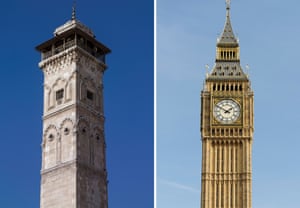
Looted landmarks: how Notre-Dame, Big Ben and St Mark’s were stolen from the east

Most cultures borrow from each other:

It is not only the twin towers and rose window that have their origins in the Middle East, she pointed out, but also the ribbed vaults, pointed arches and even the recipe for stained glass windows. Gothic architecture as we know it owes much more to Arab and Islamic heritage than it does to the rampaging Goths. “I was astonished at the reaction,” says Darke. “I thought more people knew, but there seems to be this great gulf of ignorance about the history of cultural appropriation. Against a backdrop of rising Islamophobia, I thought it was about time someone straightened out the narrative.”

Source: Looted landmarks: how Notre-Dame, Big Ben and St Mark’s were stolen from the east

B.C. survey shows racialized people most likely to suffer from effects of COVID-19 pandemic

Confirming patterns elsewhere:

An official survey shows the tumult created in B.C. by the novel coronavirus has hurt racialized people the most, with more than one in five Latin American, West Asian and Black respondents reporting job losses due to the pandemic.

Provincial Health Officer Bonnie Henry said at Thursday’s daily COVID-19 briefing that the results of a recent online survey of 394,000 people confirmed a trend seen in many other places: The virus and the measures taken to slow its growth have disproportionately affected non-white people. The results did not touch on who has been infected, but charted how people of different ethnicities have fared with regards to unemployment, financial stress, and access to health care and food.

“The challenge has not been shared equally,” she said as she revealed the results of the survey done by the BC Centre for Disease Control, a government agency.

The information comes as British Columbia logs an additional 78 confirmed cases of the virus. The numbers have been creeping up all summer, leading to a recent spike that Dr. Henry says is driven by younger people socializing.

The provincial average for losing a job due to the pandemic was 15.5 per cent, according to the survey. Only white respondents reported recent unemployment at below that rate, 14 per cent. People of every other ethnicity reported rates above the provincial average, with the highest affecting Latin American people at 22.6 per cent, West Asian or Arabic people (21.5 per cent), and Black people (21.1 per cent).

That same inequality was seen when respondents were asked about whether they had more money troubles. The provincial average was 32 per cent of respondents saying they had increased financial problems, with 29 per cent of white people reporting these issues.

Neither Dr. Henry nor the provincial health ministry explained why Indigenous respondents were not represented in the survey results released on Thursday.

Japanese, multi-ethnic and Korean respondents were the most likely to report difficulty accessing health care. On the other hand, Latin American, Southeast Asian and Black respondents were the most likely to report feeling more connected to family since the province began its state of emergency in March.

The survey also showed people at the income level of less than $60,000 reported having a harder time meeting their financial needs and putting enough food on the table, and that they were more likely to be out of work.

Among respondents with school-aged children, lower-income households reported more stress on their kids, more barriers to learning and a decreased connection to their friends.

At Thursday’s briefing, Health Minister Adrian Dix and Dr. Henry spent most of their time addressing the increase in cases. Mr. Dix warned anyone ignoring physical distancing at parties this weekend that public-health inspectors will be out enforcing rules at bars and banquet halls.

Since early July, people in their 20s have made up the highest proportion of new cases, according to the Public Health Agency of Canada. From July 29 to Aug. 4, more than 40 per cent of cases nationally for which data were available were reported in people 29 or younger.

In B.C., this group accounts for about 32 per cent of cases since July 1, while people in their 30s make up about 22 per cent. In Alberta, people in their 20s make up the largest proportion of active cases, at 22 per cent, while people in their 30s followed with 19 per cent.

Source: https://www.theglobeandmail.com/canada/british-columbia/article-bc-survey-shows-racialized-people-most-likely-to-suffer-from-effects/

Chinese ambassador denies intimidation of Chinese-Canadians

One of the classic definitions of a diplomat is one who lies for his country, whether aware or not:

Any moves by Canada to sanction Chinese officials for human rights violations against the Muslim Uyghur population would be met with a “strong and resolute reaction,” according to China’s ambassador in Ottawa.

A letter to Prime Minister Justin Trudeau signed by 64 Canadian MPs and senators called for sanctions to be levied against officials deemed guilty of abuses in Xinjiang province and Hong Kong.

On Hong Kong, global affairs minister Francois-Philippe Champagne has said that Trudeau government is considering “additional measures” on the immigration front, in conjunction with Great Britain and Australia, potentially offering a pathway to citizenship for people who would like to leave the territory. Sources said work is underway and options are being actively considered.

Cong said it is up to the 300,000 or so Canadian passport holders in Hong Kong whether they stay or leave.

But he said China would oppose any country interfering in the “Hong Kong Special Administrative Region.”

In an interview inside the Ottawa embassy compound, Cong said Canada should share with China’s interest in preserving the long-term stability and prosperity of Hong Kong, which was threatened by people “engaged in violent crimes” that had scared off investors.

He said Britain has violated its agreement with China by offering a new home to Hong Kong residents born before the handover in 1997 who hold British National (Overseas) passports.

One suggestion is that Canada and Australia offer resident status to Hongkongers born after 1997 who do not hold BN(O) passports.

Cong said that the Hong Kong national security law is designed to protect the rights of the majority and to deter “the very small number of people engaged in dangerous crimes.”

Cong is a welcome departure from his predecessor, that most undiplomatic of diplomats, Lu Shaye, who accused Canada of “Western egotism” and “white supremacy.”

But while he is more restrained, Cong is no less devoted to the party line. In a wide-ranging interview, he refuted accusations that the embassy co-ordinates influence and intimidation campaigns against its opponents in this country. Witnesses at the Canada-China parliamentary committee this week suggested that Canadians of Hong Kong origin were targeted with “bullying and harassment” by the Chinese government.

Cong said one of the functions of the embassy is to communicate with Canadians, including those of Chinese origin. “This kind of discussion can be defined as influence but there is not much logic to it. We are sitting here but are we trying to infiltrate and influence the National Post? Regular contact is one of our functions. We send out our message and it is up to you to take it up or not. We have every reason to communicate with our people,” he said.

As we approach the 50th anniversary of the establishment of bilateral relations between Canada and China, he recognized relations are at a low ebb. Just 14 per cent of Canadians look favourably on China, according to an Angus Reid poll, down from nearly 50 per cent in 2017.

But he said “important progress” has been made — a pre-COVID-19 trading relationship worth $74 billion, two way travel of 1.5 million people and 230,000 Chinese students studying here.

A chill set into the relationship with the detention of Huawei executive, Meng Wanzhou, in December 2018, after an extradition request by the U.S., in relation to alleged breaches in sanctions against Iran.

“This is the main obstacle, the most outstanding issue,” said Cong.

He said Canada was “taken advantage of by the U.S.”

“The U.S. plotted what we call a very severe political incident as it prepared to bring down Huawei.”

He said China sees political, rather than judicial, motivations in the actions of the Americans and urged Canada to make its own decisions.

(Judging by the recent memoir by former U.S. national security adviser, John Bolton, the White House knew about Meng’s imminent detention long before the Trudeau government — the prime minister is said to have found out after the fact, when he was handed a note at the G20 summit in Buenos Aires).

Cong said that the Meng case is “totally different” to the detention of two Canadians, Michael Kovrig and Michael Spavor. The two men were detained just nine days after Meng’s arrest. “You could call it a coincidence,” said Cong. After 557 days of interrogation, the two Michaels were formally charged with espionage, a crime punishable by life in prison.

Cong said the two are being treated “in strict accordance with the law” and their rights are being protected. That account contrasts starkly with reports the two men were initially interrogated for six to eight hours a day and kept under 24 hour lighting. Consular and legal visits were cut off during the COVID pandemic.

Cong said the two cases are different in nature. “A large number of people have been misled by reports from the U.S. trying to blacken China’s image,” he said.

It is all a far cry from 2017, when the relationship with China was still strong, and the enthusiasm from the Trudeau government to launch free trade negotiations was almost undignified.

During the prime minister’s visit to Beijing, his advances were rebuffed.

“We were very close but they put forward some terms and we said ‘we can be patient.’ But we are happy to continue,” Cong said. “The door is still wide open.”

Yet even that is not true, as canola exporters Richardson International and Viterra Inc. would testify.

Cong said the suspension of canola shipments by the two Canadian suppliers is specific to them, caused by concerns over “quarantined pests.” He said negotiations to recommence canola imports are ongoing and pointed to a doubling of pork imports from Canada in the first half of this year as evidence that the trade relationship can still flourish.

“I believe there is huge potential, if we can remove the main obstacle (Meng’s detention),” he said.

The exclusion of Huawei from the development of Canada’s 5G network might further test that assurance. The government has yet to make a formal decision but the three main carriers — Bell, Telus and Rogers — have all announced partnerships with European suppliers in the development of the multi-billion dollar 5G network.

“My message is for there to be a non-discriminatory business environment for Chinese companies,” Cong said.

When asked to comment on the observation by a Japanese academic that China is making the same mistakes Japan made in the 1930s — an ugly nationalism, supported by the majority of the people and taken advantage of by a military that has no civilian supervision — Cong tried to offer reassurance.

“We are committed to path of peaceful development. It is our national policy and enshrined in our constitution,” he said. “China is focused on its own development and has no intention of dominating the world or overtaking the U.S.

“It is the U.S. that is dragging the world into Cold War Two and is trying to get a lot of countries to oppose China. But I don’t think that intention will succeed. The U.S. is becoming the troublemaker for world peace and is exiting from international organizations like the World Health Organization. In this regard, China and Canada are on the same wavelength, upholding multilateralism and international organizations.”

That is unlikely to induce a warm, fuzzy feeling in the four out of five Canadians who hold an unfavourable view of China.

As long as Canadian citizens are arbitrarily imprisoned and used as human bargaining chips, there is unlikely to be much fondness in the relationship.

Source: Chinese ambassador denies intimidation of Chinese-Canadians

Trump, Repeating a Baseless Theory, Suggests Kamala Harris Is Not Eligible to Serve

Predictable (and hard if not impossible to believe that John Eastman did not do so deliberately, with Newsweek’s defence of the column as not having racist undertones tone- and reality-deaf):

President Trump on Thursday encouraged a racist conspiracy theory that is rampant among some of his followers: that Senator Kamala Harris, the presumptive Democratic vice-presidential nominee born in California, was not eligible for the vice presidency or presidency because her parents were immigrants.

That assertion is false. Ms. Harris is eligible to serve.

Mr. Trump, speaking to reporters on Thursday, nevertheless pushed forward with the attack, reminiscent of the lie he perpetrated for years that President Barack Obama was born in Kenya.

“I heard it today that she doesn’t meet the requirements,” Mr. Trump said of Ms. Harris.

“I have no idea if that’s right,” he added. “I would have thought, I would have assumed, that the Democrats would have checked that out before she gets chosen to run for vice president.”

Mr. Trump appeared to be referring to a widely discredited op-ed article published in Newsweek by John C. Eastman, a conservative lawyer who has long argued that the United States Constitution does not grant birthright citizenship. Ms. Harris, the daughter of Jamaican and Indian immigrants, was born in 1964 in Oakland, Calif., several years after her parents arrived in the United States.

But Mr. Trump was in effect revisiting an old tactic: spreading a race-based and anti-immigrant crusade he began nearly a decade ago, when he began sowing distrust in the background of Mr. Obama, who was born in Hawaii.

This time, Mr. Trump has legions of followers who have been spreading similar theories about Ms. Harris. In the hours after Joseph R. Biden Jr. announced Ms. Harris as his running mate, a new crop of memes and conspiracy website postings began proliferating online, suggesting that Ms. Harris was an “anchor baby,” a disparaging term for a child born in the United States to immigrants.

Mr. Eastman’s column tries to raise questions about the citizenship of Ms. Harris’s parents at the time of her birth, and argues that she may have “owed her allegiance to a foreign power or powers” if her parents were “temporary visitors” and not residents. Ms. Harris’s parents received doctorate degrees from the University of California, Berkeley, in 1963 and were working as academics when Ms. Harris was born in 1964.

But constitutional law scholars say that the immigration status of Ms. Harris’s parents at the time of her birth is irrelevant because under the Constitution, anyone born in the United States automatically acquires citizenship.

The 14th Amendment makes it clear: “All persons born or naturalized in the United States, and subject to the jurisdiction thereof, are citizens of the United States and of the State wherein they reside.”

Nonetheless, Mr. Eastman’s article leapfrogged throughout social media on Thursday. Tom Fitton, the president of the conservative group Judicial Watch — a favorite information source of Mr. Trump’s — shared the article on Twitter. By Thursday afternoon, it had reached some 14.3 million people on Facebook, Reddit and Twitter before it was parroted by the president, according to data reviewed by The New York Times.

Newsweek in the meantime defended Mr. Eastman’s column, asserting that it had “nothing to do with racist birtherism.” Experts in constitutional law were still quick to disparage the article as dangerous.

In an interview on Thursday, Laurence H. Tribe, a professor of constitutional law at Harvard Law School, compared Mr. Eastman’s idea to the “flat earth theory” and called it “total B.S.”

“I hadn’t wanted to comment on this because it’s such an idiotic theory,” Mr. Tribe said, “There is nothing to it.”

Mr. Tribe pointed out that the theory still quickly landed in the hands of a president who has used his pulpit to spread a number of conspiracies against his political enemies, particularly those who do not have white or European backgrounds.

During the 2016 presidential race, Mr. Trump continuously questioned the citizenship of Senator Ted Cruz of Texas, suggesting that his Canadian roots would be a problem should he win the presidency. Mr. Cruz, who was born in Canada to an American mother and a Cuban father, is a United States citizen. Mr. Eastman, for his part, wrote that year that Mr. Cruz was eligible.

But Mr. Trump was relentless about questioning Mr. Obama’s background. In 2011, he began appearing on television to question whether Mr. Obama was born in the United States — spreading the lie he has never fully apologized for.

“Maybe I’m going to do the tax returns when Obama does his birth certificate,” he said in an ABC interview in April 2011. “I’d love to give my tax returns. I may tie my tax returns into Obama’s birth certificate.”

Mr. Obama eventually released his birth certificate. Mr. Trump has never released his tax returns.

At the White House Correspondents Dinner in 2011, Mr. Obama acknowledged that he released his long-form birth certificate, and took aim at Mr. Trump, who was sitting in the audience.

“He can finally get back to focusing on the issues that matter, like, did we fake the moon landing?” Mr. Obama said as a stone-faced Mr. Trump looked on. He also displayed a rendering of the White House, styled as a casino, should Mr. Trump win the presidency.

Mr. Trump, of course, ended up running and winning. In 2016, he finally, and tersely, acknowledged that Mr. Obama was an American citizen.

“President Barack Obama was born in the United States, period,” Mr. Trump said at the time. “Now, we all want to get back to making America strong and great again.”

He then falsely suggested that Hillary Clinton, his former Democratic opponent, had started the rumor.


Quebec farms facing lost profits and rotting harvests due to migrant worker shortage

A further reminder of our dependence of foreign seasonal agriculture workers:

Nineteen-year-old Florence Lachapelle was among hundreds of Quebecers who tried their hand at planting seeds and harvesting produce this summer, replacing migrant workers who were unable to leave their countries because of the COVID-19 pandemic.

And while Lachapelle spent long days working the fields on Francois D’Aoust’s farm in Havelock, Que., too few other Quebecers took up the call to help the province’s struggling agricultural industry.

Despite a recruiting drive by the provincial government in April, the lack of labour this season has forced farmers to cut production or leave food rotting in the fields.

Unfortunately for Lachapelle, she fell ill with mononucleosis after two months and returned home to Montreal. She said the work was very demanding with so few migrant workers available.

“They’re professionals and we’re simply not,” Lachapelle said in a recent interview.

D’Aoust said he hired a handful of people to work alongside Lachapelle, who were out of work in other sectors such as communications, film and the restaurant industry. But once their opportunities returned, he said, they left for their better-paying jobs.

“Not a lot of people are used to (physical) work all day,” D’Aoust said in a recent interview. “It’s just not the kind of work that we do. It’s rare that people are in shape and can (work) all day in the field.

“People that are farmers, themselves, in their country, surely they are at an advantage.”

D’Aoust and his wife, Melina Plante, have hired the same four Guatemalan seasonal workers year after year. But this year the farmhands were stuck at home at the beginning of Quebec’s farming season due to travel restrictions their country imposed to limit the spread of COVID-19.

He said it takes inexperienced Quebecers up to three times as long to do farm work compared to a migrant worker. That meant he had to pay locals to do less work, eating into his profits.

D’Aoust slashed production at his farm, Les Bontes de la Vallee, by 60 per cent this year because he and his wife figured they would only have migrant workers later in the harvest season.

Two Guatemalan workers eventually made it on D’Aoust and Plante’s farm — but the financial damage to the business was done. “What we hope is to pass through this difficult period without too much loss and start again next year,” he said. “We just want to stay alive.”

For Michel Ricard, who owns 60 hectares of farmland in Saint-Alexis-de-Montcalm, about 60 kilometres north of Montreal, he said he’s going to lose a lot money and food this year because migrant workers from Mexico and Guatemala haven’t been able to arrive.

By the end of August, Ricard said he expects to lose approximately $100,000 dollars worth of cucumbers because he has no one to pick them.

Experienced foreign workers are “essential for the future, for me, and for the majority of growers of vegetables,” he said in a recent interview.

“The people from Guatemala are able to work from 6 a.m. to 6 p.m. It’s not a problem. Sometimes I need to stop them because they want to continue, but sometimes I say ‘that’s enough for today.'”

Local workers haven’t been much help to him, he said. Ricard had his daughter post a message on Facebook to reach out to prospective farmhands, but he said only eight came through for him.

“It was impossible,” Ricard said.

The Union des producteurs agricoles, which represents about 42,000 Quebec farmers, says there are close to 2,000 fewer migrant workers on Quebec farms than usual. Despite the UPA’s efforts to lure Quebec workers through a recruiting drive, just under 1,400 were assigned to Quebec farms this year.

“It didn’t replace, really, the foreign workers,” UPA President Marcel Groleau said in a recent interview. “It helped on some issues … but those workers are not trained and can’t really replace the foreign workers that are trained and have experience on farms.”

Farmers such as D’Aoust and Ricard say migrant farmhands are willing to work longer hours, even for minimal pay.

Groleau said the federal government’s emergency response benefit, which offers up to $2,000 a month to many people who have lost jobs, has encouraged Quebecers to stay away from the gruelling field work.

“When you can get two thousand dollars a month sitting at home,” Groleau said, “it’s not really interesting to go on a farm and work a little bit for minimum wage.”

Source: Quebec farms facing lost profits and rotting harvests due to migrant worker shortage

Canada failing to address rising complaints about foreign intimidation of rights activists, Amnesty International says

Significant issue and more concrete action warranted:

Foreign Affairs Minister François-Philippe Champagne said Ottawa will not tolerate the intimidation of human rights activists in this country by foreign governments after a democracy activist told a parliamentary committee she and her family have faced threats from Beijing over the past year.

But Amnesty International said Wednesday that Canada’s response to rising complaints about bullying by pro-China forces has been hapless, muddled and ineffective.

Parliamentary hearings on Canada-China relations this week in Ottawa included testimony from Canadians of Hong Kong origin, who described threats they’ve received on Canadian soil during the course of their advocacy for democratic rights in the former British colony.

Cherie Wong, executive director of Alliance Canada Hong Kong, told the Commons committee on Canada-China relations that she has been the target of “death and rape threats,” as well as talk of harming her family, over the past 12 months. At rallies – even on Parliament Hill – pro-Beijing supporters have harassed and threatened those demonstrating in support of Hong Kong. Afterward, the personal information of pro-Hong Kong demonstrators – cellphone numbers, e-mail addresses, photos, class schedules – was published online.

Her experience echoes a May report by Amnesty International Canada and other groups warning that Chinese government officials and supporters of the Communist Party of China are increasingly resorting to “threats, bullying and harassment” to intimidate and silence activists in Canada, including those raising concerns about democracy and civil rights in Hong Kong, and Beijing’s mistreatment of Uyghurs, Tibetans and Falun Gong practitioners.

This intimidation includes threats of sexual violence and other physical violence against targets in Canada, as well as their family members in Hong Kong and China.

Conservative foreign affairs critic Leona Alleslev asked Mr. Champagne on Wednesday in the House of Commons about testimony such as Ms. Wong’s, and whether the government would introduce legislation to fight foreign interference.

“Witnesses at the Canada-China committee stated the People’s Republic of China is actively threatening Canadians on Canadian soil who seek to expose China’s authoritarian agenda. These individuals have been subjected to everything from physical threats, commercial blacklisting and state-backed cyberhacking with no protection from Canada. When will this government introduce legislation to combat foreign influence and protect basic human rights in Canada from aggressive actions of the Chinese Communist Party?” Ms. Alleslev asked.

Mr. Champagne told the Commons that Canada does not allow such intimidation and said Ottawa has been swift to address it.

“Let me be very clear, the safety and protection of Canadians is paramount to this government. We will never allow any form of foreign interference in Canada by state or non-state actors,” the Foreign Affairs Minister said.

He said Canada has acted whenever complaints have arisen. “Every time there have been allegations … we have taken action with the Minister of Public Safety,” he said, and advised Canadians to contact the police if they are being threatened.

“We invite any Canadians who might be subject to any form of such actions that have been described to contact law enforcement authorities and we will always defend the freedom and liberty of Canadians in Canada from foreign interference.”

But Alex Neve, secretary-general at Amnesty International Canada, said the response from Canadian authorities to such complaints has been unco-ordinated and disappointing. He said that in 2017 and again in May this year, Amnesty and other groups in the Canadian Coalition on Human Rights in China published reports on the intimidation and threats, as well as recommendations to address it – but these have received little response.

He said targets of harassment end up discouraged. “Individuals have often found they turn to one agency only to be told to go to another, and yet another, and at the end of the day told, ‘Well, we share the concern, but there’s not really anything that can be done here because it’s not a clear criminal offence,’ or, ‘You don’t have enough evidence.’ ”

The Amnesty-led coalition has recommended establishing a point person and hotline to handle complaints, talking to China about the harassment, and the consideration of a law to counter foreign interference as other countries such as Australia have enacted.

Mr. Neve said the response from the Canadian government, from security agencies and from police “lacks coherence and at the end of the day therefore is entirely ineffective.”

“Individuals experiencing these instances of interference and of threats, including threats of sexual and other physical violence and threats against family members in Hong Kong or in China, are largely left without effective recourse, often unsure where to turn and what to expect,” he said in recommendations provided to the Canada-China committee this week.

“It may be a considerable challenge to counter China’s influence on the world stage, it may be difficult to exert pressure for human rights reform on the ground in China, but there is no excuse for a failure to take robust and decisive steps to counter human rights abuses that may be linked to or backed by Beijing – connected to what is happening in Hong Kong, but taking place here in Canada.”

The Chinese embassy in Ottawa did not immediately respond to a request for comment.

Source: Canada failing to address rising complaints about foreign intimidation of rights activists, Amnesty International says