Faced With Crisis, Trudeau Forced to Shift on Immigration

Too early to tell the extent to which the government may change the current three-year level plan. However, given the impact on travel restrictions and likely processing, highly unlikely that the government will meet its 2020 target level of 341,000.

Given the overall economic and employment  impact of the COVID-19 imposed shutdowns and that these will still be felt in 2021, some revising of planned levels will be required, likely on both substantive and political grounds.

Worth remembering that the Conservative government did not cut immigration following the 2008 recession given recognition of the longer-term demographic needs for immigration (Government says high number of immigrants will help economic recovery).

I would expect any revisions (downwards) to be more in the line of a “pause” rather than a major reduction given the overall national consensus in favour of immigration. But we shall see:

In the early days of Canada’s response to the coronavirus, before the crisis captured the full attention of Prime Minister Justin Trudeau’s government, it was still business as usual on at least one front: immigration.

On March 12, the day before the Canadian parliament was suspended on concern about the spread of Covid-19, Trudeau’s immigration minister, Marco Mendicino, unveiled plans to hike immigration levels over the next three years. He cited a growing labor shortage.

But as the nation’s economy plunges into recession, millions are being cast into unemployment. In the oil heartland of Alberta, a province that once had a voracious demand for skilled newcomers, Premier Jason Kenney now warns of a 25% jobless rate. Immigration targets will almost certainly be scaled back as the crisis forces a radical shift in Trudeau’s priorities.

Attracting more migrants, foreign workers and students has been a pillar of Trudeau’s political agenda since he became prime minister in 2015, making his government an outlier at a time when openness to foreigners is waning in Europe and U.S. immigration has fallen to a decade low.

Yet, history shows economic downturns almost always lead to less migration into Canada, even without the unprecedented travel restrictions associated with the pandemic.

“We may be left with a legacy of higher unemployment through 2021 that could cause governments to rethink the near term immigration targets,” said Avery Shenfeld, chief economist at Canadian Imperial Bank of Commerce in Toronto.

Strike Three

Lower immigration may represent a third strike against Canada’s economy, on top of the widespread business shutdown due to the virus and collapsing prices for crude oil, a major export.

Newcomers have powered the country’s growth in recent years, providing a major source of new demand in cities like Toronto and Vancouver, where new arrivals tend to congregate. The surge has spurred a housing boom, driving up prices and fueling construction.

If social distancing measures and business closures last for a year, the reduced flow of foreigners will not only hit the real estate market. It could also have lingering impacts on demand for education and other industries that rely on population growth, Shenfeld said.

Last year, Canada added a net 437,000 people from abroad — including close to 200,000 non-permanent residents like students, temporary workers and asylum seekers — helping to drive the fastest increase in population among Group of Seven countries. At 1.4%, Canada’s population growth was double that of the U.S.

Mendicino’s plan was to increase immigration through 2022 — targeting 341,000 immigrants in 2020, 351,000 in 2021, and 361,000 in 2022. Those targets are now looking optimistic.

For the moment, Canada’s borders are closed to most non-residents. The government is still accepting applications, but new immigrants and students are barred for now, except for seasonal agriculture workers.

Temporary Measures

“The department continues to accept and process applications throughout the period of these temporary measures,” Kevin Lemkay, a spokesperson for Mendicino, said by email. “Immigration has, and will continue to be critical to Canada’s long term success as we work to recover from the economic headwinds we are facing due to the coronavirus.”

Following past downturns, international migration levels have tended to rebound quickly, aided by a broad political consensus the inflows are good for the country. Populist rhetoric against foreigners is largely absent from Canadian political debates.

Yet, the sheer depth of this crisis could undermine public support. For example, analysts say Trudeau’s recent decision to turn back refugees coming from the U.S. may be more indicative of the mood.

“We take pride in being an open society and by and large supporting immigration, but that support is not quite as deep as we’d want to believe,” said Patrick MacKenzie, chief executive officer of the Immigrant Employment Council of British Columbia, an advocacy group. “If we don’t tread carefully, we do run the potential of tipping the scales where people don’t understand what’s going on with immigration.”

Immigration isn’t the only agenda item Trudeau may be forced to put on pause. Everything from green technology to a national drug plan and indigenous initiatives will be more difficult to finance as pandemic-related spending surges and debt mounts.

Much will depend on how quickly Canada’s economy recovers, pollsters say.

A few weeks ago, nothing on the political horizon suggested the government might be forced to back away from its policy on immigration, said Shachi Kurl, executive director at polling firm Angus Reid Institute. “Now it’s very different and we are into a time of the unknown.”
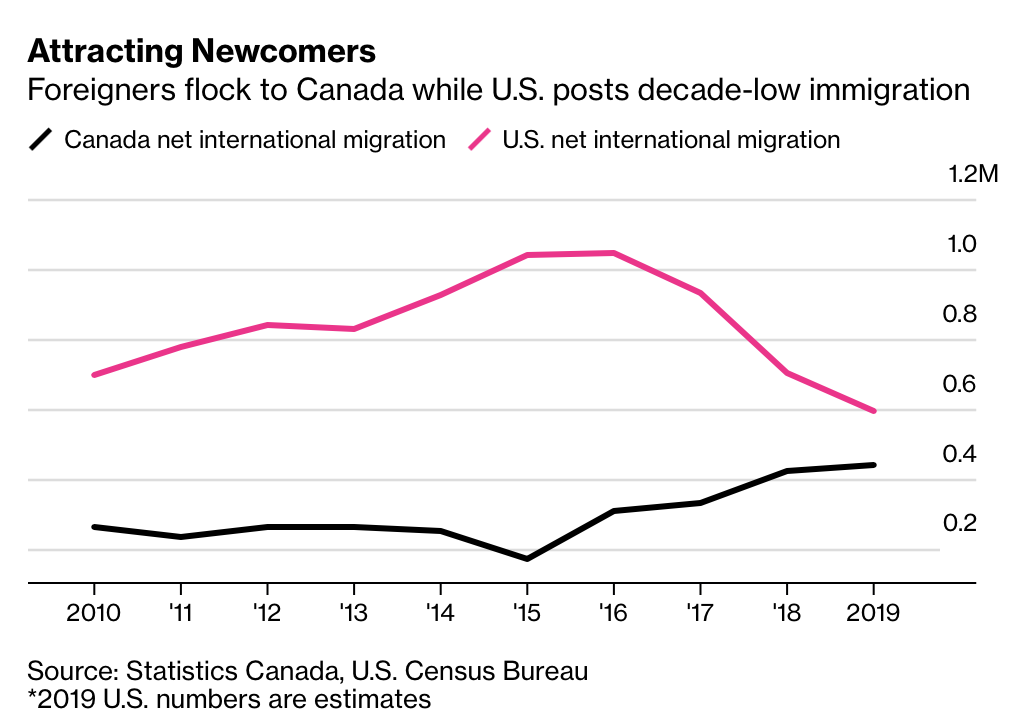
Source: Faced With Crisis, Trudeau Forced to Shift on Immigration

China’s Coronavirus Battle Is Waning. Its Propaganda Fight Is Not.

Not surprising:

For months the Chinese government’s propaganda machine had been fending off criticism of Beijing’s handling of the coronavirus outbreak, and finally, it seemed to be finding an audience. Voices from the World Health Organization to the Serbian government to the rapper Cardi B hailed China’s approach as decisive and responsible.

But China could not savor the praise for long. In recent days, foreign leaders, even in friendly nations like Iran, have questioned China’s reported infections and deaths. A top European diplomat warned that China’s aid to the continent was a mask for its geopolitical ambitions, while a Brazilian official suggested the pandemic was part of China’s plan to “dominate the world.”

As the pandemic unleashes the worst global crisis in decades, China has been locked in a public relations tug-of-war on the international stage.

China’s critics, including the Trump administration, have blamed the Communist Party’s authoritarian leadership for exacerbating the outbreak by initially trying to conceal it. But China is trying to rewrite its role, leveraging its increasingly sophisticated global propaganda machine to cast itself as the munificent, responsible leader that triumphed where others have stumbled.

What narrative prevails has implications far beyond an international blame game. When the outbreak subsides, governments worldwide will confront crippled economies, unknown death tolls and a profound loss of trust among many of their people. Whether Beijing can step into that void, or is pilloried for it, may determine the fate of its ambitions for global leadership.

“I think that the Chinese remain very fearful about what will happen when we finally all get on top of this virus, and there is going to be an investigation of how it started,” said Bonnie Glaser, the director of the China Power Project at the Center for Strategic and International Studies in Washington. “They’re just trying to repair the damage that was done very early on to China’s reputation.”

The crux of China’s narrative is its numbers. Since late March, the country has consistently reported zero or single-digit new local infections, and on Wednesday, it lifted its lockdown in Wuhan, where the outbreak began. In all, the country has reported nearly 84,000 infections and about 3,300 deaths — a stark contrast to the United States, which has reported more than 399,000 infections, and Spain and Italy, each with more than 135,000.

The numbers prove, China insists, that its response was quick and responsible, and its tactics a model for the rest of the world. During a visit last month to Wuhan, China’s top leader, Xi Jinping, said that “daring to fight and daring to win is the Chinese Communist Party’s distinct political character, and our distinct political advantage.”

Beware of COVID-19 projections based on flawed global comparisons

Continuing on the data question, found this to be a good explainer given the variances in how data is collected across jurisdictions:

As the COVID-19 pandemic unfolds, every day we are bombarded with numbers. Never before has the public been exposed to so much statistical information. You have been told that “shelter in place” measures are needed to flatten the curve of infections so that local healthcare systems have the capacity to deal with them. On the other hand, you hear that available statistics will not show if and when the curve of infections is flattening, and that existing projections are unreliable because input data are unsuitable for forecasting. Meanwhile, the issue of data and the pandemic fuels a debate in Canada over the release of federal and provincial forecasts of a COVID-19 death toll.

Should we then lose faith in the numbers altogether? The answer is no, but it is important to understand what statistics are available, what they measure, and which ones we should be looking at as the virus continues to spread around the world. One of the key areas where we need to exercise caution is especially when we compare ourselves with the situation in other countries.

As overwhelming as the flow of daily pandemic statistics might seem, data on COVID-19 around the world come from one source: health facilities’ administrative reporting about the number of positive cases, hospitalizations, intensive therapies, deaths, and recoveries. Most countries including Canada follow the guidelines of the World Health Organization and only test individuals with fever, cough, and/or difficulty breathing. Reported data on COVID-19 thus generally refer to symptomatic individuals who have presented themselves at health facilities and have met the established testing criteria.

One of the main indicators derived from these data is the overall case-fatality rate (CFR), which is the ratio between the total number of COVID-19-related deaths and the total number of confirmed positive cases. The CFR is an important indicator in an emerging pandemic because it measures the severity of the disease (how many infected people die from it). As of March 24, the CFR varied substantially across countries, ranging from 0.4 percent in Germany to 7.7 percent in Italy. In Canada and Quebec, it stands at 1.3 percent and 0.7 percent respectively.

It is well understood that different testing strategies for COVID-19 are responsible for a good part of the observed differences in the overall case-fatality rate across countries. For instance, South Korea, Germanyand Iceland adopted a large-scale testing strategy since the beginning of the outbreak, focusing on individuals in the wider population regardless of whether they were high risk or showing symptoms of COVID-19. Most other countries including Canada are following the recommendations of the World Health Organization to test only for COVID-19 symptomatic individuals.

These different testing strategies have a direct impact on the overall CFR because its value is smaller if asymptomatic individuals are included in the calculation, since the total number of positive cases (the denominator) increases. This is the first reason why the CFR is not immediately comparable across countries and should not be used as a measure of whether certain healthcare systems are dealing better with COVID-19 than others.

The second reason is that different testing strategies across countries also matter for the demographics of confirmed positive cases. As it can be seen in the figure below, because of widespread testing in Iceland, the age distribution of COVID-19 positive cases is much younger than in the Netherlands. This does not mean that younger people in Iceland are not respecting social distancing measures, or that the Netherlands has been more effective than Iceland in identifying infections among vulnerable elderly people. On the contrary, countries like Iceland that have effectively tested for COVID-19 early on have been able to identify and isolate clusters of potential infections before they spread to the more vulnerable segments of the population. By doing so, they have limited the number of COVID-19-related deaths and thus reduced the numerator in the calculation of the overall CFR. This is why the demographics of positive cases needs to be considered in the calculation of the overall case-fatality rate to make appropriate comparisons across countries.

The different demographics of COVID-19 positive cases underscore the importance of comparable data that are disaggregated by the patients’ most basic characteristics, notably age and sex. However, these data are only available for a handful of countries, because national health agencies release mainly aggregate figures on the total number of cases, hospitalizations, deaths and recoveries.

We all want to know how the COVID-19 pandemic will evolve. Considering the deep economic implications of the current worldwide standstill, there is a strong pressure to produce projections of the course of the pandemic and its human toll. Yet our efforts will continue to be misguided if we do not coordinate efforts to improve our understanding of where it is across countries through comparable statistics. This could be easily achieved by tracing the evolution not just of the total number of infections and the overall CFR, but also across age groups and for men and women separately.

National health agencies have been disseminating data and indicators about COVID-19 as they see fit because there is no global coordination about how to do so. The World Health Organization has not fulfilled its mandate to facilitate this coordination. Canada, thanks to its longstanding tradition of excellence in statistical reporting, is ideally placed to fill this gap and lead countries around the world to coordinate their monitoring efforts of the pandemic through comparable statistics. This may be one of the crucial steps to win the war against COVID-19.

Source: Beware of COVID-19 projections based on flawed global comparisons

No time to fly blind: To beat COVID 19, Canada needs better data

As we always do! Bit surprised no discussion of what role the Canadian Institute of Health Information (CIHI) could play:

Accurate information is critical to fight a health emergency like the COVID-19 pandemic. Robust data identifies the scale of the problem. It enables the prioritization of human, financial and material resources for an effective and efficient response. It allows for public scrutiny, advocacy and accountability. It builds trust. It provides authorities with tools to counter misinformation. It will enable us to slowly and safely return to economic and social activity.

In short, good data can mean the difference between life and death – or in the case of a pandemic, tens of thousands of deaths. Yet in the face of the greatest international health crisis in a generation, Canada is falling short.

Prime Minister Trudeau promised better data. To deliver on this promise, the Public Health Agency must mandate standardized information reporting for provincial and district public health authorities. These standardized templates would outline the data and information to be reported, how it should be collected and how it should be shared. Moreover, the Agency should urgently provide financial and technical resources to improve information management at all levels of the public health response.

At first glance COVID-19 data appears to be plentiful – case numbers and graphs are splashed across news reports and public health websites. Public health agencies produce epidemiological reports with colourful graphs and charts. Officials quote modelling estimates of projected case numbers and fatalities.

But in reality the value  of this information is limited. Efforts to fill in information gaps with modelling is a short-term and imperfect substitute for real-time data.  The data that does exist is of questionable validity given low testing numbers within the population and delays in receiving test results. Moreover, the data is not gathered, compiled or presented in a consistent manner by health authorities across the country. Different case definitions make comparison within and across provinces difficult. Sex and age disaggregated figures are not always provided. Some areas report hospitalization and intensive care unit numbers, some do not. Warnings of medical equipment and personal protective equipment (PPE) shortages are widespread, yet inventories of PPE stockpiles are frequently not given.

Moreover, public health officials report cases but do not discuss population context. They do not present important statistics about communities including age, sex and socio-economic data and specific vulnerabilities. Authorities rarely provide information on the number of health workers employed in the response, hospital beds available or PPE stockpiles. Officials cite testing numbers with little concrete data on laboratory capacity or efforts to expand it.

It is confusing. Overwhelming. And unhelpful.

Without accurate data and information, authorities cannot identify and manage human, financial and material resources to engage in the fight against COVID-19.  Nor can they monitor the effectiveness of interventions and stop its spread.

We can do better. During humanitarian crises, which often occur in data-scarce contexts, central coordinating bodies prioritize the collection and transparent dissemination of information. They develop standardized “Situation Reports” at multiple levels – the community, the region and the country – to identify need, prioritize interventions and target scarce human, material and financial resources. In the health sector, reports include population size disaggregated by sex, age and vulnerability; the number of health facilities in operation; key causes and rates of illness and mortality; medical procedures and treatment courses. These reports are published openly and disseminated widely. Information is critical for an effective and efficient response in complex and rapidly changing environments. It allows resources to be targeted to save lives.

COVID-19 warrants something similar. We need to understand the progress of the disease and our response – in real time. Proper information management will not only improve the effectiveness of our interventions, but it will also enable the safe resumption of economic and social activity.

A standardized reporting template would include case numbers and hospitalizations (sex and age disaggregated).  But counting the numbers of outbreak cases is only one piece of the information puzzle. Reports should include community baseline data. Important information includes population demographics (age, sex and particular vulnerabilities), neighbourhoods with higher risks, and the number of vulnerable institutions (retirement and nursing homes, corrections facilities). Authorities would identify financial, human and material resources available and required. Reports should document laboratories with COVID-19 testing capacity and provide inventories of PPE.

Better data would allow us to identify critical intervention points to stop the spread of COVID-19 and to slowly get our lives and economy back on track. The lack of prioritization on testing is both a symptom and a consequence of Canada’s failure to prioritize information management. Given testing capacity, public health officials discourage tests for those with mild symptoms. This undermines the validity of most of the numbers used by public officials to track the COVID-19 outbreak. Without the total ‘real’ numbers of individuals infected, we lack an accurate denominator, which undermines the accurate calculation of hospitalization or case fatality rates. Lag times in test results also make accurate contact tracing very difficult.

More critically, without expanded testing, we lack the ability to quickly test health workers and those employed in other essential services (such as retirement homes) to protect them, their co-workers, patients or residents and the public. Nor do we have the ability to test people to gradually and safely scale up economic and social activity. Instead we are told to wait for testing innovations while COVID rates numbers rise. Yet many private labs as well as lab facilities in university and colleges remain unutilized over three weeks into Canada’s full scale COVID-19 response. With better information would come increased accountability for mobilizing such capacity.

COVID-19 has sparked one innovation in information production – the use of outbreak models to guide public health responses to COVID-19, often funded by public health authorities. The federal government recently provided $192 million to BlueDot – a Toronto based digital health firm, not a university research department – to support its modelling activities. After calls to release modelling estimates, some provincial governments have provided projections of case and mortality numbers.

But transparency warrants more. Modelling in general is extremely challenging and COVID-19 modelling is particularly complex. Population demographic characteristics appear to determine the speed of COVID-19 transmission as well as severe illness, hospitalization and fatality rates. While the professionalization of the modellers is not in question, research driving policy decisions should be published openly and subject to scrutiny. The lack of clarity contrasts unfavourably to models published in scientific journals, or those published online by Professor Neil Ferguson of Imperial College, University of London. If governments release model estimates, they should release the assumptions and data that inform these estimates.

Moreover, modelling is an imperfect and flawed substitute for real data and concrete information about the response. Policy makers urgently need to pay attention to the generation and management of accurate and valid data, mandate standardized reporting from all public health authorities and provide public funds to make it happen.

We are in unprecedented public policy territory. Yet we lack the information needed to effectively navigate the COVID-19 pandemic and get our economy and our lives back on track. Prime Minister Trudeau’s commitment to better data and improved information management provides Canada’s Public Health Agency with the opportunity to exercise leadership. It is time to up our game.

Source: No time to fly blind: To beat COVID 19, Canada needs better data

Is it constitutional to screen Canadians trying to board flights home?

These questions have been percolating for some time, with this legal perspective being an example of those arguing that it is not constitutional. The discussion by law professors Yves Le Bouthillier and Delphine Nakache is useful in setting out the constitutional test:

“1) that the measure is taken to address a pressing and substantial objective, 2) that the measure is rationally connected to the objective, 3) that the measure impairs as little as possible the right in question, 4) that the measure’s overall effects on the right protected is not disproportionate to the government’s objective.”

While they accept that the measures meet the first two tests, they argue it fails to meet the second two tests. It is highly unlikely that these measures will be challenged in court given that any judicial process would most likely take much longer than the temporary measures themselves.

Their arguments against over-reach are unconvincing during a pandemic, when perfect narrow screening at airports is impossible, whether by medical personnel or airline personnel. And of course, migration management is already carried out by airline personnel in the form of passport and visa checks. And more special flights, given the challenge the government is already facing in organizing a multitude of flights is simply not practical at this time.

Are these measures disproportionate? IMO, not so, given the nature of the pandemic, the number of cases, and the impact on healthcare and its capacity to handle COVID-19.

And while lawyers can argue that it is “the government’s message and actions should not leave behind any of its citizens,” the reality is that this is an impossible bar to meet. To the government’s credit, it has admitted that not all will be able to return to help manage expectations while at the same time organizing many flights for returning Canadians and permanent residents.

Part of my reaction to this commentary reflects my living with cancer for over 10 years, in and out of treatment, with the compromised immunity as one of the side effects and being at higher risk of COVID-19. The fact that the Ottawa Hospital experienced a case in the same ward where I received my stem cell transplants drives home the point even more for me. So I tend to accept legalistic arguments less than those of medical professionals that reduce, albeit imperfectly, risk:

As part of its response to the COVID-19 pandemic, the federal government has, unfortunately, adopted a measure that denies the right of some Canadian citizens to enter the country, a right guaranteed by s. 6 (1) of the Canadian Charter of Rights and Freedoms.

On Monday, March 16, the Canadian government asked air carriers to take measures to prevent all travellers abroad who present symptoms suggestive of COVID-19 to board planes flying to Canada. These measures apply to everyone attempting to come back to Canada, including the more than 3 million Canadian citizens abroad at any given time.

To enforce this new policy, the Minister of Transport, on March 17, issued an interim order under the Aeronautics Act saying that air carriers “must conduct” a health check and prohibiting the carriers from allowing a person who has suspected signs or symptoms of COVID-19 to board. In conducting the health check, the carrier must rely on questions from a World Health Organization (WHO) document that offers guidance for the management of ill travellers at points of entry.

However, here, the government is requiring air carriers to ask those questions before the plane departs from a foreign country.

The interim order came into force at 12:01 a.m. on March 19. Since then, two new updated versions of the order have been adopted (on March 20 and 24). The most recent version no longer refers to the WHO’s document.

Persons prohibited from boarding cannot get on an aircraft for at least 14 days unless they have a medical certificate stipulating that their symptoms are not related to COVID-19. Presumably, they could be refused again if they still have the symptoms. Moreover, the risk is that 14 days later, they can no longer leave a country either because there are no flights available or because that country has closed its borders.

Section 6 (1) of the Canadian Charter of Rights and Freedoms provides that “Every citizen of Canada has the right to enter, remain in, and leave Canada.” Since March 19, citizens refused boarding at the request of the federal government can no longer effectively exercise this right. S. 6 is one of the few provisions in the Charter that the Parliament or the provincial legislatures cannot derogate from by using the notwithstanding clause provided by s. 33 of the Charter. However, the government can justify limits to Charter-protected rights in accordance with s. 1 of the Charter if these limits can “be demonstrably justified in a free and democratic society.”

Before looking further into the constitutionality of this interim order, it is worth examining other laws that address the type of situation we are confronted with to fully appreciate how extraordinary this measure is.

First, a ban on Canadians from returning to their country was not expressly contemplated by Parliament when it adopted the Emergencies Act in 1988. That Act provides for four types of emergency. The one applicable to the COVID-19 situation would be the “Public Welfare Emergency,” which authorizes only “regulation or prohibition of travel to, from or within any specified areas” in Canada for everyone: Canadian citizens, permanent residents or foreigners. Even a declaration of “International Emergency” (another of the four types of emergencies under the Act) to address a real or imminent use of serious force or violence, does not allow the government to refuse entry to Canadian citizens. For an international emergency, the government can regulate or prohibit “travel outside Canada by Canadian citizens or permanent residents and of admission into Canada of other persons.”

As for the Quarantine Act, adopted in 2005, one of its provisions grants the power to the Governor in Council to prohibit for a specified period of time “the entry into Canada of any class of persons who have been in a foreign country.” However, this kind of measure can only be taken if “no reasonable alternatives to prevent the introduction or spread of the disease are available,” a question addressed below.

To respond to the COVID-19 emergency, the government, on the recommendation of the Health Minister, adopted the Minimizing the Risk of Exposure to COVID-19 in Canada Order on March 18 (since updated with a new order on March 26). It is worth noting that the prohibition to enter Canada in both the March 18 and 26 orders are directed only at foreigners, not Canadian citizens and permanent residents.

Turning back to the constitutionality of the interim order, the government can justify it under s.1 of the Charter. However, to do so, the government has the burden to establish 1) that the measure is taken to address a pressing and substantial objective, 2) that the measure is rationally connected to the objective, 3) that the measure impairs as little as possible the right in question, 4) that the measure’s overall effects on the right protected is not disproportionate to the government’s objective.

There is little doubt that the Canadian government could meet the first two hurdles under section 1. The objective to protect the health of the Canadian population is pressing and urgent, and the measure, to ban travellers exhibiting signs or symptoms of COVID-19, is rationally linked to this objective. However, it is questionable that it could meet the other two conditions.

This measure does not impair the right in question as little as possible as it both overreaches and underreaches. It targets Canadian citizens exhibiting symptoms that could be indicative of COVID-19 but are also associated with many other conditions such as other types of infectious pulmonary diseases, non-infectious pulmonary diseases, a common cold, or flu. The Canadian government is asking for an assessment to be made by airlines representatives, who are not medically trained to conduct these kinds of assessments. As such, they could very well deny boarding to Canadian citizens who are not COVID-19 positive and accept on board some Canadian citizens who could be COVID-19 positive but are asymptomatic. Moreover, this measure also has the perverse effect of leading some travellers to hide their condition out of fear of being refused boarding, as has been reported by the media. Finally, critics claim that the transfer of migration management to private carriers increases risks of arbitrariness and discriminatory practices (racial profiling).

Apart from the fact that these citizens would need care if they were indeed COVID-19 positive, many of them could suffer from other conditions that would require continued access to medical care and medications, which is not a given for anyone suddenly forced to remain in another country.

There are alternatives that would allow for the repatriation of all Canadian citizens: on regular flights, airlines could isolate the few citizens exhibiting symptoms, or special flights could be arranged to repatriate these citizens. These alternatives could be costly and take some time to implement, but that in itself should not be sufficient to justify infringing fundamental rights.

As for whether the effects on the right protected are disproportionate to the government’s objective, this measure is preventing vulnerable Canadian citizens from getting back to their country.  Apart from the fact that these citizens would need care if they were indeed COVID-19 positive, many of them could suffer from other conditions that would require continued access to medical care and medications. That access is not a given for anyone suddenly forced to remain in another country, especially if this other country is or will soon be facing a crisis in its health sector. How can a measure that affects directly the most vulnerable, and that risks excluding from boarding some citizens who are not COVID-19 positive while allowing others who are, be proportionate?

Of course, in such unprecedented times, we recognize that there is no easy solution for the many Canadians abroad who want to come home. The Canadian government has acted in recent days to bring back citizens, permanent residents and members of their immediate family stranded abroad. After starting with Morocco, it has expanded this operation to several other countries with flights having taken place (or being planned for) in countries such as Ecuador, El Salvador, Guatemala, Haiti, Honduras, India, Peru and Spain. This is welcome news.

However, Canadian citizens who have suspected symptoms of COVID-19 can still be refused boarding. In our view, the government has an obligation not to create hurdles for the return of all its citizens. The Prime Minister has rightfully urged Canadians: “If you are abroad, it is time for you to come home.” To be consistent with the Canadian Charter, the government’s message and actions should not leave behind any of its citizens.

Source: Is it constitutional to screen Canadians trying to board flights home?

With COVID-19 clampdown, number of asylum seekers at Canada-U.S. border slows to a trickle

As expected. Full March numbers not out yet so these interim numbers highlight the impact from March 21:

Sweeping changes at Canada’s borders under emergency pandemic restrictions have slowed cross-border traffic to an unparalleled trickle, including people claiming persecution abroad.

Six asylum seekers were turned back at Canada’s border with the United States under recent COVID-19 restrictions, four of them irregular border crossers, from March 21 to April 2, according to data from Canada Border Services Agency (CBSA).

March 21 was the day the highly unusual emergency order under the Quarantine Act prohibited entry into Canada by people claiming refugee protection.

Only one asylum seeker has been allowed to proceed into Canada under exemptions to the closed border rule, which could mean the person was an American citizen.

Of the four irregular crossers, which are sometimes referred to as illegal border crossers, two were stopped after crossing into Quebec and two into British Columbia.

The remaining two asylum seekers arrived from the United States at a border entry point in southern Ontario and were also turned back, CBSA said. The agency refused to say what country any of these people were seeking protection from.

“Failure to comply with a direct back order could result in the foreign national to become inadmissible to Canada,” said Jacqueline Callin, a spokeswoman for CBSA. “This regulation will be applied to all foreign nationals seeking to enter Canada if their entry is prohibited — regardless if they enter irregularly or at a designated land port of entry.

“Asylum claimants will be asked to provide basic identifying information and requested to return to make their asylum claim after the temporary prohibition has been lifted.”

That stands in sharp contrast to what is typical border activity.

CBSA would not provide the numbers of asylum claims for the same period last year. However, as a point of contrast, in all of March 2019, the RCMP made 1,001 interceptions of asylum seekers who did not cross at a formal border checkpoint: 967 in Quebec, 22 in B.C., and 13 in Manitoba.

That same month there were a total of 1,870 asylum claims made at formal border crossing points, which was itself one of the lowest monthly totals for the year.

There are far fewer new cases of refugee claimants at the Immigration and Refugee Board (IRB).

The Refugee Protection Division of the IRB received 304 refugee protection claims nationally from March 21 and April 5, according to IRB data. While a specific comparison to the same period last year was not available, in 2019, the IRB had an overall average of 2,245 referrals in a two-week period.

This does not mean all 304 claimants crossed the border since the COVID-19 travel restrictions, however. There may be delays between a claimant’s arrival in Canada and a referral to the IRB, said Anna Pape, a spokeswoman for the IRB.

The steep drop in asylum seekers in Canada mirrors the unparalleled drop in all border traffic under COVID-19.

From March 23 to March 29, there were almost 82 per cent fewer land crossings into Canada compared with the same period last year, and an almost 85 per cent drop in people arriving by air.

On March 16, in an abrupt about-face, Prime Minister Justin Trudeau said foreign travellers were prevented from entering Canada, except for U.S. citizens, to curtail the spread of the novel coronavirus.

Despite that, the next day, Minister of Public Safety Bill Blair said irregular border crossers would undergo medical screening but still be allowed to proceed for assessment of their immigration claims in Canada.

The following day,  borders were clamped down even tighter with the Canada-U.S. border closed to all non-essential travel, regardless of citizenship.

On March 20, in a further change, the government announced that asylum seekers will also be rejected at the border for the time being.

All travellers arriving in Canada — including Canadian citizens — are being met with increased intervention and screening in light of COVID-19.

Temperatures, however, are not taken by CBSA at borders or airports.

During a similar but less severe pandemic, the Severe Acute Respiratory Syndrome (SARS) outbreak in 2003, temperature testing was found to be an ineffective control, CBSA said. During SARS, 2.3 million travellers had temperatures taken at Canada’s airports.

“Despite this intensive screening effort, no cases of SARS were detected using these methods,” said Callin.

Source: With COVID-19 clampdown, number of asylum seekers at Canada-U.S. border slows to a trickle

For some Canadians, this is the second half of the coronavirus battle. With family overseas, they’ve lived it for months

For so many of us, whether first, second or subsequent generations, connections to countries of origin or family members in other countries, this is very much or our reality. In our case, family members and friend in countries in Europe, the USA and the Mid-East mean we follow those statistics and situations as we do the situation in Canada:

Although it may have seemed an eternity, Canada has been on a travel lockdown for only two weeks due to the coronavirus pandemic, and many Canadians didn’t see major disruptions to their ordinary lives until mid-March.

For Canadians like Shahien Alipour, however, who have family in global epicentres of the pandemic, the coronavirus has been a cause of distress for months.

Alipour was born and raised in the Greater Toronto Area, but feels closely connected with his Iranian culture.

The York University student speaks fluent Farsi and together with his parents, he would visit Tehran once or sometimes twice a year to take in the historical sites and spend time with extended family.

“Just today, I got off the phone with my cousin. He told me he got it,” he said in an interview with the Star on Wednesday.

His cousin, who is 32, is expecting to make a full recovery from COVID-19, but several of their older relatives in Iran weren’t as lucky.

“Three of my dad’s cousins died from coronavirus. I hadn’t met them personally, but just …wow,” Alipour said with a tone of disbelief.

He is worried about his surviving relatives, because Iran was already in a precarious state with serious economic and political problems. Now, the country has been devastated by coronavirus, with more than 53,000 confirmed cases and at least 3,294 confirmed deaths, according to Johns Hopkins University.

While Alipour has been reading the news from Iran and around the world since early February, he felt that many of his friends and acquaintances in Toronto weren’t taking the highly infectious disease seriously at first.

“I feel that Canadians do tend to live in a bubble where we assume bad things happen elsewhere,” Alipour said.

“Now that the bubble has burst, we’ve been re-examining our lives and I hope that leads to a breakdown of barriers between people and nations.”

As Yue Qian, a Vancouver-based native of Wuhan put it: “If we think of coronavirus as a global battle, there were first and second halves.

“For people with transnational ties, we’ve had to experience the whole battle. This adds more stress because we’ve been worrying about the situation since January,” she said.

Then there was the dynamic where Asians who quickly began to social distance and wear masks at the outset of the pandemic were being mocked for “overreacting.”

Qian is an assistant professor of sociology at the University of British Columbia. Her current research focuses on a cross-cultural analysis of human experiences of the coronavirus pandemic.

“The effectiveness of quarantine and social distancing measures seems to differ between countries,” she said, speculating that cultural norms might have something to do with it, but there isn’t data to prove it.

For Laurel Chor, a Canadian-born multimedia journalist from Hong Kong who recently reported on coronavirus in Italy, the relatively relaxed response she’s seen from some Westerners has been baffling.

Chor lives in Hong Kong, where there has been intensive handwashing, social distancing and a near-universal wearing of masks in public. Despite its proximity to mainland China, there have only been four coronavirus-related deaths in the city.

“In Milan, I was really shocked. I didn’t understand what was going on,” she told the Star, adding she was very surprised by how people were reacting.

“I was there one week after the region had gone into lockdown, and at that point people were getting bored of it and already coming back out and saying the government was taking it too seriously and it was just the flu.

“I was at a café scripting, and on the other side, there was a man coughing uncontrollably at the faces of his three companions, and they didn’t care,” Chor said. “If this happened in Hong Kong, he would be kicked out by an angry mob. I just didn’t understand how everyone was being nonchalant.”

She thinks peer pressure and self-consciousness might have something to do with the different reactions.

“When people around you aren’t reacting, you don’t want to react. You don’t want to be the odd one out. And in Hong Kong, everyone was reacting, so you want to react.

“It’s interesting how the prevailing attitude indicates how everyone acts, because no one wants to be the odd one out.”

Alipour thinks that differing levels of trust in a society are a factor, too.

In Iran, many people have been disillusioned and angered by the government for so long, that even if officials there had responded more quickly, he doesn’t think that would’ve galvanized much public action.

“People in Iran seemed to start taking it seriously mostly after they saw that it was spreading and people were dying, so people started staying home and shutting down businesses … out of concern for their communities,” Alipour said.

“I would say to Canadians, don’t think this will happen only to other people. It can happen to anyone. But there are ways to protect ourselves, so keep your heads up and have hope.”

Source: For some Canadians, this is the second half of the coronavirus battle. With family overseas, they’ve lived it for months

Australian citizenship ceremonies to go ahead via video link during coronavirus crisis

Further to my earlier post (Thousands now face indefinite wait for Australian citizenship as ceremonies cancelled), an initiative that Canada would do well to consider:

Australian citizenship ceremonies will be conducted online via video secure video link, with the prospect of up to 750 people conferred each day, acting Immigration Minister Alan Tudge announced Monday.

The Department of Home Affairs has commenced trialling the one-on-one ceremonies for those already approved, with alternative arrangements to be made for those who can not access the internet.

“Australian citizenship is an immense privilege, and fundamental to our national identity,” Mr Tudge said in a statement.

There had been fears that tens of thousands of migrants waiting to become citizens were going to face an indefinite wait for the process to be finalised, after ceremonies across the country were cancelled because of social distancing measures brought on by the coronavirus.

After an application for citizenship is approved, migrants are required under the Australian Citizenship Act to make a pledge of commitment to Australia before a presiding officer, which normally occurs at a ceremony organised by their local council.

Current restrictions on public gatherings forced these to be put on hold.

“The Morrison Government recognises the importance of Australian citizenship for migrants and for the wider Australia community,” Mr Tudge said.

The Federal Government said there are currently 85,000 people awaiting a ceremony and those already scheduled for a citizenship event will be notified.

The Chambers family, who arrived in Perth from Wales ten years ago, are seen after becoming citizens during an Australia Day citizenship ceremony
AAP

While future applications are still being accepted, the Federal Government has put a halt on interviews and testing.

More resources will be deployed to work through the backlog once social distancing measures ease.

Source: Australian citizenship ceremonies to go ahead via video link during coronavirus crisis

China needs more, not fewer, immigrants holders

An interesting opinion piece. Like so many calls for increased immigration, primarily based on addressing the aging demographicsd along with attracting talent to support innovation:

China’s latest draft law on granting permanent residency to foreigners has touched a nerve among the public. It has been met with overwhelming disapproval, fanning fears that a “lowered threshold” will lead to an influx of immigrants who will put a strain on resources.

A closer look at the proposed regulation, however, finds the bar for obtaining a Chinese “green card” remains extremely high. For instance, a skilled applicant is required to hold a doctoral degree or a diploma from “an internationally renowned university”, to have at least three years of work experience and have lived in China for a year minimum.

China’s existing green card system, which began in 2004, is more of an obstacle than a channel for foreigners looking to settle in the country. In the past 15 years, only about 10,000 foreigners have obtained permanent residency.

Except for a handful of non-natives like Tesla founder Elon Musk, obtaining the right to reside in China for most professionals is mission impossible. The latest official data shows that China issued 1,500 green cards in 2016. The United States government by comparison provided about a million that same year, including more than 77,000 to people born in China.

As a result, the foreign community in the world’s second largest economy is tiny. It is estimated that China, a country of 1.4 billion people, has just one million foreigners working and living here. The coronavirus may shrink that number further.

Japan has a foreign-born population of 2.2 million, including 320,000 permanent residents, out of a total population of more than 127 million. The US has more than 44 million foreigners, including 13.2 million permanent residency holders, out of a total of over 327 million.

China’s green card system is too protective and turns away overseas talent. Without permanent residence, life can get very frustrating – from schooling to buying a high speed railway ticket.

If it wants to become an innovative country, China has to be more open to foreign talent. Immigrants are often more willing to take risks, work harder and innovate. Skilled migrants have an important role to play in scientific research, education and industrial upgrading. It is no accident that China’s best cities, including Beijing, Shanghai and Shenzhen, have the highest presence of foreign residents in the country.

The US, which has the highest proportion of immigrants among developed nations, has had commendable success in this regard. Immigrants are one reason for America’s tech power; in Silicon Valley, the heart of the US technology industry, more than a third of the population are foreign-born.

Although China has temporarily closed its borders to foreigners due to concerns over imported coronavirus cases, it cannot afford to allow these restrictions to impede its long-term growth and prosperity.

The proposed permanent residency threshold should be lowered further. For instance, the investment migration threshold of 10 million yuan (US$1.4 million) proposed in the draft can be lowered to one million yuan, while the education threshold can be lowered from a doctorate to a bachelor’s degree.

At the same time, the Chinese public has a reason to be sceptical about allowing foreigners to settle permanently in China as the government still discriminates against its own citizens in terms of residency.

Where Beijing’s ‘bottom of society’ live

A migrant worker from a rural province is unable to get permanent residency in a big city like Beijing even if he has been working and living in the city for decades. Try persuading him that foreign passport holders can settle permanently while he can’t.

The migration debate, in a nutshell, comes down to whether a nation’s population is viewed as a burden or a resource.

Given that China’s population is ageing rapidly after four decades of rigid birth controls, it has come to a point where it must rethink both its population and immigration policies. China cannot pin its hopes on foreigners to solve labour force shrinkage, but a larger flow of immigrants is desirable, along with encouraging new births.

If China remains unfriendly to new births and immigrants, the country will face an ageing population and its innovative capacity will be crippled – a threat to the country’s aspirations. Therefore, it is in China’s fundamental interest to issue more, instead of fewer, green cards.

Source: China needs more, not fewer, immigrants holders

ICYMI: Dole out funding for COVID-19 ads soon, say experts, as ethnic media outlets face cash crunch

Of note as there is a percentage of the visible minority and immigrant population that ethnic media has greater reach than mainstream media:

As Ottawa looks to reach communities that do not speak English or French during the COVID-19 pandemic by buying ad space in some ethnic and Indigenous media outlets, one expert fears these news organizations could come “under the gun” in the next few weeks if ads are not rolled out soon.

“The viability and sustainability of ethnic media is under the gun,” said Madeline Ziniak, chair of the Canadian Ethnic Media Association. “We’ve been hearing from our membership [who say] that, ‘I don’t know if we can sustain another month, another month and a half, and things are getting very difficult.’ ”

Like many other mainstream and independent news outlets, ad revenues for ethnic media have begun to evaporate, with the mass closure of restaurants and other businesses that place ads.

On March 11, as part of its $1-billion COVID-19 aid package, the government said it would dedicate $50-million to the Public Health Agency of Canada’s  national public education campaign. Health Canada spokesperson Eric Morrissette said in an email on April 1 the goal was“to encourage the adoption of personal protective behaviours.”

About $30-million of that funding is set aside for advertising in 15 different languages: French, English, Italian, Farsi, Mandarin, Tagalog, Punjabi, Spanish, Arabic, Tamil, Urdu, Korean, Hindi, Inuktitut, and Cree.

According to the 2016 census, 7.6 million Canadians speak a language other than French and English at home, amounting to 14.5 per cent of the population. The Office of the Commissioner of Official Languages listed Mandarin, Cantonese, and Punjabi among the top five languages in the country, along with French and English.

Mr. Morrissette wrote that French and English ads have already begun airing, along with some radio ads in Farsi, Italian, and Mandarin.

Those three languages were chosen “based on the need to urgently share information in communities with links to countries where travel health notices were in place at the time of production,” but did not specify when those ads were produced, and which outlets had begun running them.

He also did not specify which newspapers will be running the ads in the remaining languages. The government’s list, he said, “is evolving because some publishers of content in languages other than English or French have suspended or closed operations because of COVID-19.”

Ms. Ziniak said the association has a database of 1,300 media entities “in languages other than English and French across Canada,” which could be useful for the government in its efforts.

“We’ve lobbied for a long time that there should be a relevant and updated database list of who’s out there,” she added. “And now, we’re in a situation where people are scrambling, and we’re offering our services as a nonprofit, free, volunteer organization.”

Mr. Morissette wrote that the languages for print ads were chosen based on the “top ethnic languages spoken in Canada,” and that consideration was given to the “availability and reach of the outlets in these languages.”

He did not provide a timeline for when the newspaper ads will begin appearing, nor specify the metrics for what the reach needs to be for such outlets.

He noted that the government is sharing fact sheets and infographics “in a variety of languages” online. One resource listing preventative measures that can be taken in the workplace, for example, is available for download in Bengali, Dutch, Gujrati, Vietnamese, and Somali.

According to Andrew Griffith, a former senior director in the government’s immigration department, there is an urgency with which the government should begin rolling out ads to target non-English and French speakers.

“I think you have to work on the assumption that not everybody is receiving the messages,” Mr. Griffith said in a phone interview this week. “The ethnic media, by and large, does not aim at second-generation Canadians. It basically is for the immigrant ones, and there are some that have limited knowledge of English or French.”

While he said the messaging around social distancing measures from ministers, the prime minister, and public health authorities has been “pretty  clear and consistent for the last week or 10 days,” thanks to daily press briefings, he added that “getting [ads in] ethnic media out in another 10 days, means you’ve probably missed the boat.”

In an effort to reach some of their constituents, some MPs like Liberals Omar Alghabra (Mississauga Centre, Ont.) and Salma Zahid (Scarborough Centre, Ont.) have shared their own online messages in Arabic and Urdu, respectively.

“It’s important that we get the message across to everyone. Sometimes there are language barriers, sometimes our seniors don’t understand English or French,” said Ms. Zahid in a phone interview.

Ms. Zahid, who herself was diagnosed with Stage 4 cancer in 2018, said she is encouraging “community leaders” to similarly put out messages on COVID-19 in Tagalog, Tamil, Bengali, and Gujarati, which are spoken prominently in her riding.

Former MP Olivia Chow suggested that if the government is running broadcast ads, it should consider featuring prominent voices within Chinese-speaking communities, for instance.

“If they want the ads to be amplified, having community partners of each of those language groups would be useful,” said Ms. Chow in a phone interview, listing Dr. Joseph Wong as an example. A physician and philanthropist, Dr. Wong founded the Toronto-based Yee Hong Centre for Geriatric Care in 1987 and was chair for the United Way of Greater Toronto from 1990 and 1992.

“Different people [who speak] different languages from different communities have different spokespersons, that could know their media market and social media very well,” said Ms. Chow.

Daniel Ahadi, a Simon Fraser University professor in B.C. who studies ethnicity and media, suggested that funding could also be shared with community organizations like settlement agencies.

That would allow groups “to do outreach on their own terms, because I think most ethnic community organizations, they’re quite well-established within ethnic communities, and they have a broad network and can navigate those using email lists, newsletters, and other formats they’ve been using over the years,” he said in a phone interview this week.

But Andrés Machalski, president of media-monitoring firm MIREMS, which has worked with the Canadian Blood Services, Canada Post, and other federal departments in the past, cautioned against such an approach. The firm translates reports from a range of ethnic media outlets.

“I respect what agencies are doing, but you’re looking at an information distribution and communications program, not a help program,” he said in a phone interview.  “This is a journalistic job, a propaganda job, an advertising job, not a social service organization. And the people who are working there, are devoted to hands-on attention, [finding] solutions to problems. They don’t have people to go out and hand out flyers.”

Mr. Machalski later added that some shows, including  one hosted in Punjabi by B.C.-based Harjinder Singh Thind, explore multiple angles of the outbreak, such as details around wage subsidies and repatriation efforts. The show also has “a Punjabi speaking doctor come in almost daily to talk about COVID-19 and clarify any misinformation,” he wrote.

Mr. Machalski said that as of March 31, MIREMS tracked 650 stories under its health stream alone since the outbreak began, and noted that some outlets depend on taking existing stories from mainstream outlets and translate them for their own audiences, a pattern Ms. Ziniak said she too noted in her membership.

Ms. Ziniak also pointed to reports that noted some religious institutions, including some mosques, remained open last week, despite calls from public health officials to limit gatherings to contain the spread of the virus.

Over the past few weeks, officials from multiple levels of government have told Canadians to limit gatherings to under 50 people, a number that has since dropped to five, in the case of Ontario. According to CBC, one imam said some people may believe that “50 is a loophole in the law,” as some mosques tried to limit the number of worshippers to below 50 at the time.

“The seriousness of the situation has to be conveyed to a trusted source,” Ms. Ziniak said.

Source:  already under financial strain