The 14th Amendment, which declared that African-Americans were citizens, turned 150 earlier this month. But even as it was being commemorated as one of the signal achievements of post-Civil War Reconstruction, its bedrock provisions were colliding with the furious 21st-century debate over immigration.
In June, President Trump tweeted that undocumented immigrants should be sent home “immediately, with no Judges or Court Cases”— a direct contravention, legal scholars pointed out, of repeated Supreme Court rulings saying that the amendment’s guarantee of due process applies to all people in the United States, whatever their status.
This week, Michael Anton, a former national security official in the Trump administration, wrote an Op-Ed article in The Washington Post saying that birthright citizenship — the longstanding principle that anyone born in the United States is a citizen — rests on a “deliberate misreading” of the 14th Amendment.
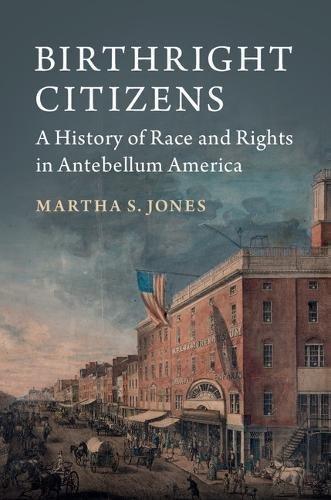
We talked with Dr. Jones about how the idea of birthright citizenship was created, and how it connects with the current debate about who belongs in America. The interview has been edited and condensed.
The idea of “jus soli,” the right of the soil, goes back to English common law. Where does the American idea of birthright citizenship enter our political tradition?
In the United States, it is the African-American community that first begins to articulate the claim to birthright citizenship. They do it because they need it. Other folks do not.
By the 1830s, African-Americans in what we call the Colored Conventions Movement are crafting an argument that will help defend them against colonization schemes that involve trying to get them to leave the country, and also trying to resist state “black laws” that regulate where they can travel or gather in public, whether they can go to school, own guns and so on.
They look at the Constitution, which doesn’t really define who is a citizen, but does have this clause saying that the president must be a natural-born citizen. They ask, if the president is a natural-born citizen, why aren’t we? The Naturalization Act of 1790 says that only white people can be naturalized. But there is no color line in the Constitution.
We tend to think of the 1857 Dred Scott decision — which declared that back people could never be citizens — as definitively slamming the door shut, until the 14th Amendment came along. How much resistance was there to the decision?
Roger Taney [the chief justice, who wrote the decision] was very aware of the history of African-Americans’ efforts to claim citizenship. And after the decision, we see African-Americans continue to resist, to critique Taney’s decision from the podium, in newspapers. At the same time, lower courts are narrowing the scope of the decision, or refusing to defer to his reasoning.
And African-Americans are not retreating to their homes, or living quiet lives in response to Dred Scott. In Taney’s home state, Maryland, there are about 75,000 to 80,000 free blacks. When the state legislature proposes a new set of draconian black laws that would either remove them or re-enslave them, people organize, gather petitions, go to Annapolis, the capital, as part of an effort that ultimately defeats the legislation.
Black voting rights, which were guaranteed in the 15th Amendment, came under sustained attack for more than a century. Were there similar efforts to roll back birthright citizenship itself?
After 1868, African-Americans are citizens, if they are born in the United States. Now they have a tool that protects them from any effort to remove them from the country. With citizenship, there really is a there there, even as the struggle over civil rights continued, arguably into our own moment.
At least 70 children under the age of 1 have been ordered before immigration judges since last October, some without any form of legal representation present, according to newly released government data.
Information from the Department of Justice (DOJ) reported by the Texas Tribune on Wednesday states that the number of infants summoned before immigration judges tripled in 2017 compared to the previous year.
A total of 1,500 “unaccompanied” children ages 3 and younger have been ordered before immigration judges since October 2015, the Tribune reported, citing DOJ data provided by Kaiser Health News.
About three-fourths of those children had legal representation, while the remainder only had access to a list of legal aid attorneys their caregiver can contact. In some cases, young children appear before judges with little to no knowledge of their situation or where their families are, the report noted.
While officials said many children under the age of 1 come into the U.S. with a parent and their case proceeds together, some of the children arrived in the U.S. without their parents or legal guardians, according to the Tribune.
Others were only deemed to be “unaccompanied” minors after being separated by their parents under the Trump administration’s “zero tolerance” border policy, which prioritized prosecuting all illegal border crossers.
President Trump signed an executive order last month to end the separation of families at the border, and his administration has been working to reunite affected families after thousands of young children were separated from adults.
“This is to some extent a … crisis of the creation of the government,” Robert Carey, the former head of the Department of Health and Human Services’ (HHS) Office of Refugee Resettlement, told the Tribune. “It’s a tragic and ironic turn of events.”
One immigration attorney based in Virginia noted to the Tribune that many children are unaware that they face life-threatening situations in their home country.
“Think about it as a parent. You’re not going to tell your child they might be killed, right?” Eileen Blessinger told the newspaper. “A lot of the kids don’t know.”
Asylum claim denials, according to the data, are at an all-time high of 42 percent.
Earlier this month the Trump administration issued guidance ending asylum claims for migrants fleeing domestic abuse or gang-related violence, a move that was heavily criticized by immigrant rights activists.
“The Trump administration just handed a death sentence to thousands of women and families fleeing domestic and gang violence by barring them from accessing asylum in the U.S.,” Jess Morales Rocketto, political director of the National Domestic Workers Alliance, said in June.
Predates Trump administration but even more of a growth industry now:
Detaining immigrant children has morphed into a surging industry in the U.S. that now reaps $1 billion annually — a tenfold increase over the past decade, an Associated Press analysis finds.
Health and Human Services grants for shelters, foster care and other child welfare services for detained unaccompanied and separated children soared from $74.5 million in 2007 to $958 million in 2017. The agency is also reviewing a new round of proposals amid a growing effort by the White House to keep immigrant children in government custody.
Currently, more than 11,800 children, from a few months old to 17, are housed in nearly 90 facilities in 15 states — Arizona, California, Connecticut, Florida, Illinois, Kansas, Maryland, Michigan, New Jersey, New York, Oregon, Pennsylvania, Texas, Virginia and Washington.
They are being held while their parents await immigration proceedings or, if the children arrived unaccompanied, are reviewed for possible asylum themselves.
In May, the agency issued requests for bids for five projects that could total more than $500 million for beds, foster and therapeutic care, and “secure care,” which means employing guards. More contracts are expected to come up for bids in October.
HHS spokesman Kenneth Wolfe said the agency will award bids “based on the number of beds needed to provide appropriate care for minors in the program.”
The agency’s current facilities include locations for what the Trump administration calls “tender age” children, typically under 5. Three shelters in Texas have been designated for toddlers and infants. Others — including in tents in Tornillo, Texas, and a tent-and-building temporary shelter in Homestead, Florida — are housing older teens.
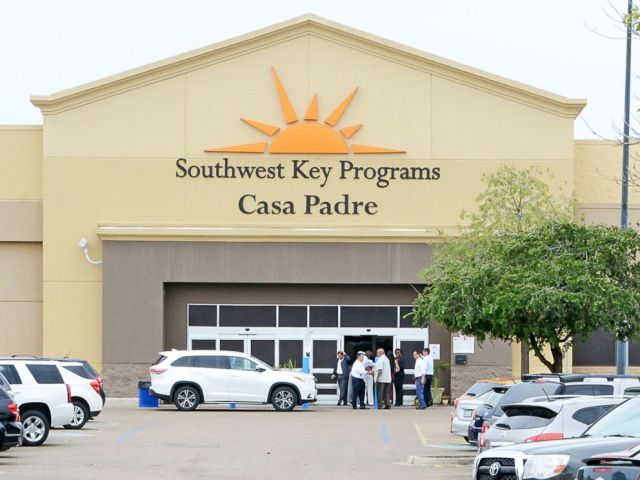
Over the past decade, by far the largest recipients of taxpayer money have been Southwest Key and Baptist Child & Family Services, AP’s analysis shows. From 2008 to date, Southwest Key has received $1.39 billion in grant funding to operate shelters; Baptist Child & Family Services has received $942 million.
A Texas-based organization called International Educational Services also was a big recipient, landing more than $72 million in the last fiscal year before folding amid a series of complaints about the conditions in its shelters.
The recipients of the money run the gamut from nonprofits, religious organizations and for-profit entities. The organizations originally concentrated on housing and detaining at-risk youth, but shifted their focus to immigrants when tens of thousands of Central American children started arriving at the U.S.-Mexico border in recent years.
They are essentially government contractors for the Health and Human Services Department — the federal agency that administers the program keeping immigrant children in custody. Organizations like Southwest Key insist that the children are well cared for and that the vast sums of money they receive are necessary to house, transport, educate and provide medical care for thousands of children while complying with government regulations and court orders…
Not that surprising (Canada was no more welcoming):
Attempts by Anne Frank’s father to escape the Nazis in Europe and travel to the United States were complicated by tight American restrictions on immigration at the time, one of a series of roadblocks that narrowed the Frank family’s options and thrust them into hiding, according to a new report released on Friday.
The research, conducted jointly by the Anne Frank House in Amsterdamand the United States Holocaust Memorial Museum in Washington, details the challenges faced by the Frank family and thousands of others looking to escape Europe as Nazi Germany gained strength and anti-refugee sentiment swept the United States.
Otto Frank, Anne’s father, was never outright denied an immigration visa, the report concludes, but “bureaucracy, war and time” thwarted his efforts.
In order to obtain a visa, Mr. Frank would have had to gather copies of family birth certificates, military records and proof of a paid ticket to America, among other documents, and be interviewed at the consulate.
In one instance, an application that Mr. Frank said he submitted in 1938 languished in an American consulate in Rotterdam, the Netherlands, amid a swell of similar applications and was lost in a bombing raid in 1940. Mr. Frank wrote to a friend that the extensive papers he had gathered as part of a visa application “have been destroyed there.”
In 1941, as Mr. Frank was again attempting to navigate the matrix of paperwork and sponsors necessary to immigrate, the United States government imposed a stricter review of applications for visas, grew suspicious of possible spies and saboteurs among Jewish refugees, and banned applicants with relatives in German-occupied countries.
President Franklin Delano Roosevelt warned at the time that Jewish refugees could be “spying under compulsion,” and the report states that “national security took precedence over humanitarian concerns.”
Mr. Frank had sought help from an influential friend, Nathan Straus Jr., who was the head of the United States Housing Authority, a friend of Eleanor Roosevelt’s and the son of a Macy’s co-owner. Despite Mr. Straus’s connections, Mr. Frank wrote to him that “all their efforts would be useless” given the immigration climate, the report states.
“We wanted to learn more about the process in itself and what documentation an applicant (e.g. Otto Frank) had to produce,” said Gertjan Broek, a researcher with the Anne Frank House who worked on the latest findings. “In the report, we point out how complex and tedious the process was and how the bombing of the Rotterdam consulate disrupted things.”
The report was released 76 years after the Frank family went into hiding on July 6, 1942. Researchers drew on dozens of pages of correspondence between Mr. Frank and friends, much of which was first made public in 2007, as well as records involving United States immigration policy.
Anne Frank’s diaries describing her time in hiding gave a voice to millions who died at the hands of the Nazis. She was eventually discovered and she died in a concentration camp in 1945, when she was 15.
Mr. Frank was the only member of the immediate family to survive the concentration camps.
“She has allowed millions of people, maybe hundreds of millions of people, to identify with persecution at the worst level,” said Richard Breitman, a professor emeritus at American University who has written about the family’s attempts to immigrate to the United States. “Any time there is a glimmer of new information, it’s a big story.”
The new research comes at a time when President Trump’s attempts to curb immigration have been likened to those in the World War II era. Mr. Trump has repeatedly sought to justify letting fewer people into the country by arguing that criminals and terrorists could be among the immigrants and refugees seeking to enter.
Mr. Breitman underscored those similarities, pointing to debates over immigration policy today and after Sept. 11. Mr. Breitman said that as Mr. Frank was trying to get to the United States, the country was instituting an “extreme cutback” on immigration.
“It wasn’t just extremists and wackos who believed that there was a serious threat to the security of the United States in 1940 that justified an immigration cutback,” Mr. Breitman said. “You can fill in the rest of it after 9/11 and today.”
Mr. Broek said the researchers did not intend to highlight parallels.
“The Anne Frank House researches into the life of Anne Frank and her family, to tell her story as accurate as possible,” Mr. Broek said. “The attempted immigration is a part of that story too.”
Incident handled with grace by the legislator and the police:
People have asked Janelle Bynum whether legislation would help solve the problem of police being called on black people for just going about their daily lives. Bynum, an Oregon state representative who herself had authorities called on her while canvassing for votes earlier this month, simply tells them, “You can’t legislate humanity.”
Bynum, who is the only black representative in the Oregon state House, was canvassing in her district ahead of Independence Day, as NPR’s Tanya Ballard Brown reported. The lawmaker said she was typing notes in a driveway when a deputy from the Clackamas County Sheriff’s Office approached her.
Bynum said her mind went from disbelief to “what did I do?”
The deputy approached her and guessed that she was selling something, according to Bynum. She introduced herself as a state representative, and to her surprise, Bynum said, he did not demand proof of identification.
“It was so incredible for me because he believed me,” she said of the officer.
“He was well within his rights to go as far down as he could to humiliate me in that circumstance as he wanted to, and he didn’t,” Bynum said.
While the situation did not escalate — she said on Facebook that the deputy “responded professionally” — Bynum points to a history of interactions between police and African-Americans that have not ended as peacefully.
“I think if you have the luxury of never having to live in fear it doesn’t mean that much to you to call the authorities on someone,” Bynum said. “And so there’s no consequence. There’s no feedback. You’re not forced to see my humanity.”
Yet another example of US tightening of immigration, and removing some of the needed flexibilities for individuals and companies. It also suggests that the Trump administration is systematically going through the various policies in effect and making changes on both highly visible areas (detention) and more subtle but also impactful areas:
It went largely unremarked, just another bland procedural decision from a government agency. But a quiet policy change at the United States Citizenship and Immigration Services last month is the next step toward a nationwide purge of non-citizens.
On June 28, USCIS announced that non-citizens who apply for a “benefit”–such as an extension or change of status, a green card, or citizenship—would be placed in deportation proceedings if that benefit is denied. For years, a criminal conviction has been required to be fast-tracked for deportation. Now, merely losing your petition for visa extension, being charged with a crime, or doing something DHS considers to be criminal (even if never arrested or charged) places you on the same fast-track.
Once in deportation proceedings, the non-citizen must prove she is eligible to stay in the United States. She will not be provided a lawyer; she may be detained, sometimes with no bond. There is no right to a speedy trial, nor trial by jury. Here are a few examples highlighting the full extent of the new rule.
Jack, a foreign student, files for an extension of his visa. He’s always been in status. He moves off campus, and properly files a change of address with USCIS (he even gets the receipt). Later, the agency sends a request for evidence to his old address anyway. Jack never receives it. USCIS denies the extension of status for failure to respond. Jack now faces deportation.
Maria is in the US on a fiancée visa and files for a green card. Her US citizen husband has a good job with health insurance. Before the green card interview, Maria is diagnosed with breast cancer. The officer finds out and denies Maria’s green card, saying she’s likely to become a public charge. Maria now faces deportation.
Sam is a software engineer. His employer sponsors him for a green card—but is then acquired by another firm. USCIS denies the petition, saying there is insufficient proof the new employer can continue the sponsorship in the shoes of the old employer. Sam now faces deportation.
Nancy is disabled and came to the US lawfully on a “medical visit” visa. Her doctors need her to stay for another 6 months of treatment. Once it finishes, she can return home, but leaving early will endanger her health. USCIS denies the extension request, saying doctors didn’t adequately explain the need for her to stay in lay terms. Nancy now faces deportation.
Jen was abused by her spouse and files for protection under the Violence Against Women Act (VAWA). She suffers from severe chronic depression, and misses the deadline for a request for evidence, asking for a doctor’s report detailing the abuse. As a result, her petition is denied. Jen now faces deportation.
It’s not always easy to stay in status. Life happens. Deporting everyone who fails to dot every “i” and cross every “t” is shelling a peanut with a sledgehammer. Under the new USCIS policy change, the United States’ already unforgiving system will become draconian.
While the USCIS has always had some authority to initiate deportation proceedings, the last policy guidance on deportation, issued in November 2011, centered on criminals, fraud, and other negative eligibility indicators. That guidance has been canned. This new policy greatly expands the categories of “enforcement priority” to most of the people trying to navigate a byzantine immigration system.
It is becoming harder and harder to comply with the immigration law. Asylum law is being gutted. Immigration judges are being robbed of the little independence they had, and pressured to order removals. Families have been ripped apart to “send a message” for the “crime” of exercising their human and legal right to seek asylum. There is now a task force dedicated to taking citizenship away from people. Millions of Muslims are now legally banned from entry. The list of countries designated for Temporary Protected Status continues to shrink, and the Dreamers who grew up in this country remain in limbo.
It’s no coincidence that brown and black people bear the brunt of these attacks. This is the result of years of nativist, protectionist rhetoric peddled by groups like the Federation for American Immigration Reform, the Center for Immigration Studies, and NumbersUSA. Their work hasn’t been cheap: hundreds of millions of dollars have been poured into this effort since the inception of FAIR in 1979. Born from white nationalism, such groups have beaten the drums of war against imaginary hordes of brown and black invaders for decades.
Immigration courts currently face a staggering backlog of over 700,000 cases, and the Trump administration has complained extensively about the bureaucracy required to deal with them. Paradoxically, USCIS will now pump in another stream of cases. This system is going to explode. When it does, the next step in the white nationalist agenda will be to replace it with a new version, stripped of the due process of law.
Ironically, Canada was inspired by the US in 2014’s C-24 citizenship legislation to provide a comparable path, one maintained by the current government:
The military is booting out immigrant reservists and recruits who enlisted with the promise of a path to citizenship, according to a AP report. Some said they are being discharged with little warning or explanation, and the Army and Pentagon said they could not comment due to pending litigation.
Last week Lucas Calixto, a Brazilian reservist who came to the U.S. when he was 12, filed a lawsuit against the Army, alleging that he was offered no reason for his discharge aside from “personnel security,” and given no chance to defend himself.
Immigration attorneys told the AP they know of around 40 other people who have been discharged under similar circumstances, or whose status is now questionable.
Immigrants have served in the U.S. military since the Revolutionary War, and there are roughly 10,000 serving currently. The immigrants facing discharge all enrolled in recent years as part of the Military Accessions Vital to the National Interest program, or MAVNI. The recruiting program, which was started under the George W. Bush administration, offered expedited naturalization to immigrants with much needed skills, including military specialists and people fluent in certain languages.
MAVNI came under attack from conservatives when President Obama made DACA recipients eligible, so the military added additional security clearances for recruits. The Trump administration added even more requirements, creating a screening backlog at the Defense Department. Last fall the Pentagon abruptly canceled the contracts of hundreds of immigrants still in the recruitment process, and a few months later the program was suspended.
GOP Congressman Andy Harris, who backed legislation to limit the program, said it should have been established by Congress, not via executive order. “Our military must prioritize enlisting American citizens, and restore the MAVNI program to its specialized, limited scope,” he said.
Immigrants must have legal status to enroll in the military, but now some fear that in addition to losing their military career they could lose their immigration status. An Iranian citizen with a graduate degree in engineering, who was recently discharged, told the AP that he was proud he was “pursuing everything legally and living an honorable life.”
“It’s terrible because I put my life in the line for this country, but I feel like I’m being treated like trash,” he said. “If I am not eligible to become a U.S. citizen, I am really scared to return to my country.”
Always a sign of possible problems or issues when governments do not release data:
The debate over sanctuary cities has raged in Massachusetts for more than three years, and has only intensified since President Trump took office, as the governor, state courts, and legislators grapple with when — and even whether — local law enforcement should detain immigrants the federal government wants to deport.
But amid the disagreement, the Trump administration has clamped down on releasing information about the administrative requests from US Immigration and Customs Enforcement, called detainers, which are at the heart of the debate. It is unclear how many have been issued over the past 16 months, how many are honored or rejected, and how many lead to deportations.
A February 2017 memo by John Kelly, who was head of the Department of Homeland Security at the time, ordered ICE to provide the public with a weekly report listing the name of the jurisdiction, the suspect’s citizenship and immigration status, the arresting charge, and “an explanation concerning why the detainer or similar request for custody was not honored.”
Three weekly Declined Detainer Outcome Reports were issued before the report was “temporarily suspended” so ICE could “analyze and refine its reporting methodologies,” according to a statement on the agency’s website.
But since then, ICE has failed to resume releasing the reports. Agency officials did not respond to e-mails asking why.
The information that is available shows the requests are not refused as often as critics say, and overall, detainers contribute to a small number of deportations by ICE, according to Transactional Records Access Clearinghouse, a nonpartisan research center at Syracuse University that has issued a series of reports exploring the role detainers play in deportations.
According to the center’s reports, about 1 million people were deported during President Obama’s second term, but detainers were used in only about 7 percent of those deportations.
“It was just shocking that it was such a small portion,” said Susan Long, the research center’s codirector and a professor of managerial statistics at Syracuse University. “If you’re measuring the effectiveness of detainers by how often does ICE deport people who had a detainer, they’re not.”
And law enforcement agencies don’t refuse to honor detainer requests in high volume, the center’s reports show.
According to a report released on April 30, ICE issued more than 142,000 detainers nationwide, including 1,213 in Massachusetts, during the 2017 fiscal year ending in September 2017. But only about 5 percent of the detainers nationwide, and about 8 percent in Massachusetts, were recorded by ICE as “refused” by law enforcement agencies.
However, the report cautioned that “the accuracy of ICE records on refusals is questionable,” as the field used to track which agency refused to honor a detainer is not required to be filled out.
The state’s highest court ruled last summer that Massachusetts law enforcement officers don’t have the authority under state law to comply with ICE detainers. Since then, a flurry of state legislators and the governor have tried to pass legislation that would allow, but not force, local law enforcement to comply.
ICE has long said detainers are a valuable tool for deporting dangerous criminals, and the Trump administration has aggressively pushed for cooperation from cities and towns that have declared themselves “sanctuary cities” and generally do not honor detainers.
“And every day, sanctuary cities release illegal immigrants and drug dealers, traffickers, and gang members back into our communities,” President Trump said in March at Manchester Community College in New Hampshire, where he took aim at Lawrence’s and Boston’s sanctuary policies.
Widespread usage of detainers by ICE began in the waning years of President George W. Bush’s administration and increased rapidly when Barack Obama took office, peaking at the end of his first term, according to the center, which regularly collected data on detainers under both administrations.
But tracking the effectiveness of the Trump administration’s use of detainers has been problematic, as ICE has been “surprisingly reticent to reveal how detainers now are actually being used,” according to the center, which filed a federal lawsuit last summer asking the court to compel ICE to release this information.
“We ought to be getting that information,” said state Representative James Lyons, a Republican from Andover.
Not surprising, whether deliberate or due to incompetence:
The backlog of pending applications for immigrants legally in the country trying to become U.S. citizens has “skyrocketed” under President Donald Trump, according to a new report from an immigrant rights organization.
“The Trump admin has built a second wall that prevents legal immigrants in the U.S. from becoming voting U.S. citizens,” Joshua Hoyt, executive director of the partnership, told NBC News.
He said the backlog at the United States Citizenship and Immigration Services means processing rates have reached as high as 20 months, raising concerns in a critical mid-term election year that some people will be unable to vote. Last year, over 925,000 people applied for U.S. citizenship, according to the report.
“They may be waiting for as much of 20 months after submitting a 21-page application, paid the $730 fee, submitted their fingerprints for a security a check and then sat and waited to take an exam,” he said.
As of Dec. 31, 2015, under Obama, the backlog was 388,832, according to the report.
“This is either absolute gross incompetence affecting close to a million legal immigrants who want to become U.S. citizens, or it is an intentional second wall that is designed to slow the pace at which lawfully present immigrants can become voters,” he said.
The report also found that certain states saw “enormous spikes” in denials of citizenship applications in the last quarter, noting changes in Alabama, Hawaii, Nevada, New Mexico, Pennsylvania and Utah.
From Oct. 1, 2017, to the end of last December, the backlog increased in Washington, D.C., the U.S. Virgin Islands and several 19 states, including Alabama, Colorado, Illinois, Iowa, Kansas, Louisiana, Maine, Maryland, Massachusetts, Michigan, Minnesota, New York, Rhode Island, Utah, Tennessee, Texas, Washington and Wisconsin, according to the report.
The states with the largest increase in pending applications over the last fiscal year included Utah with an increase of more than 53 percent, Texas with an increase of over 50 percent and Washington with over 46 percent, according to the report.
“The truth is that the total number of people the U.S. naturalizes each year has remained virtually unchanged. What we’re looking at is a dishonest and desperate attempt by open borders advocates to undermine the work of Homeland Security officials, law enforcement and the administration to protect the integrity of our immigration system and uphold the rule of law,” said spokesman Michael Bars in a statement. “The current pending workload does not equate to a backlog — it’s a statistic used in the USCIS report to include every application for naturalization filed including those filed in recent days and weeks — and is being inaccurately portrayed as evidence of delays”
“Many of these cases, which can remain pending from one quarter to the next, are well within the processing time goal established by the agency with variances being a direct result of geography and capacity. USCIS will continue to process all applications and petitions in a judicious and comprehensive manner and will do so as efficiently and expeditiously as possible in accordance with the law,” he added. “We reject the inaccurate claims of those fundamentally opposed to this effort.”
The agency naturalizes approximately 700,00 to 750,000 as citizens a year, according to USCIS, and naturalized 716,000 people in fiscal year 2017.
The partnership announced the report’s findings later Monday at a news teleconference with Reps. Zoe Lofgren, D-Calif., and Luis Gutiérrez, D-Ill., and other immigrant rights groups.
The members of Congress also sent a congressional sign-on letter asking the director of USCIS to explain the backlogs and would call for congressional hearings and legal action to address the backlog,
The backlog was denying potential citizens the right to vote, and also left some at risk for potential deportation under Trump’s policies while their applications are pending, said Gutiérrez.
“The rules have changed — legal permanent residency does not protect you from deportation under Donald Trump,” he said. “People want to participate in the democratic process, they also want to protect themselves.”
Angelica Salas, executive director of the immigrant advocacy group the Coalition for Humane Immigrant Rights (CHIRLA), said, “More and more every day you have a situation in which legal permanent residents, even for minor violations decades old, are being visited by ICE.”
Salas said during the teleconference that their naturalization campaign for 2018 was looking towards the 2020 elections to support legal residents seeking the right to vote, despite the “insurmountable hurdles they face.”
“If you want to vote in November of 2020, you’ve basically got to apply in the next 60 to 90 days. That is something unconscionable,” he said during the teleconference.
Hoyt said the advocates were also working with Chicago Mayor Rahm Emanuel, a Democrat, for a mayoral sign-on letter. Sign-on letters are used by lawmakers to come together and express a view on a policy or political matter. He added that the group was planning to file a Freedom of Information Act request looking for internal communications and numbers regarding the backlog.
USCIS did face a higher backlog after Obama was first elected, Hoyt said, but officials worked to curb that backlog to about 8 or 9 months.
Hoyt said his advocacy group has been tracking the backlog of citizenship applications for years and had never seen numbers like this.
He noted that while the backlog is ongoing, USCIS has launched an office focusing on identifying Americans suspected to have used fraudulent means to get their citizenship — and then strip them of it.
USCIS Director L. Francis Cissna told The Associated Press the agency is hiring dozens of lawyers and immigration officers to review cases and look for immigrants who were ordered deported and then used fake identities to later obtain green cards and eventually citizenship.
“We finally have a process in place to get to the bottom of all these bad cases and start denaturalizing people who should not have been naturalized in the first place,” Cissna said. “What we’re looking at, when you boil it all down, is potentially a few thousand cases.”
Hoyt said the move was a poor use of resources considering the current backlog.
“They’re not paying attention to their core responsibility of processing people in a timely manner,” Hoyt said. “Instead they’re on a witch hunt to try to denaturalize citizens who have been here for over 20 years.”
Salas said denaturalizations were very uncommon in the past.
Authorities would have to “demonstrate high, high levels of violation of any type in order for a person to be denaturalized,” she said. “It was something that was very, very rare.”
On the final day of the Supreme Court term last week, Justice Elena Kagan sounded an alarm.
The court’s five conservative members, citing the First Amendment, had just dealt public unions a devastating blow. The day before, the same majority had used the First Amendment to reject a California lawrequiring religiously oriented “crisis pregnancy centers” to provide women with information about abortion.
Conservatives, said Justice Kagan, who is part of the court’s four-member liberal wing, were “weaponizing the First Amendment.”
The two decisions were the latest in a stunning run of victories for a conservative agenda that has increasingly been built on the foundation of free speech. Conservative groups, borrowing and building on arguments developed by liberals, have used the First Amendment to justify unlimited campaign spending, discrimination against gay couples and attacks on the regulation of tobacco, pharmaceuticals and guns.
“The right, which had for years been hostile to and very nervous about a strong First Amendment, has rediscovered it,” said Burt Neuborne, a law professor at New York University.
The Citizens United campaign finance case, for instance, was decided on free-speech grounds, with the five-justice conservative majority ruling that the First Amendment protects unlimited campaign spending by corporations. The government, the majority said, has no business regulating political speech.
The dissenters responded that the First Amendment did not require allowing corporate money to flood the political marketplace and corrupt democracy.
“The libertarian position has become dominant on the right on First Amendment issues,” said Ilya Shapiro, a lawyer with the Cato Institute. “It simply means that we should be skeptical of government attempts to regulate speech. That used to be an uncontroversial and nonideological point. What’s now being called the libertarian position on speech was in the 1960s the liberal position on speech.”
And an increasingly conservative judiciary has been more than a little receptive to this argument. A new analysis prepared for The New York Times found that the Supreme Court under Chief Justice John G. Roberts Jr. has been far more likely to embrace free-speech arguments concerning conservative speech than liberal speech. That is a sharp break from earlier eras.
As a result, liberals who once championed expansive First Amendment rights are now uneasy about them.
“The left was once not just on board but leading in supporting the broadest First Amendment protections,” said Floyd Abrams, a prominent First Amendment lawyer and a supporter of broad free-speech rights. “Now the progressive community is at least skeptical and sometimes distraught at the level of First Amendment protection which is being afforded in cases brought by litigants on the right.”
Many on the left have traded an absolutist commitment to free speech for one sensitive to the harms it can inflict.
Take pornography and street protests. Liberals were once largely united in fighting to protect sexually explicit materials from government censorship. Now many on the left see pornography as an assault on women’s rights.
There was a certain naïveté in how liberals used to approach free speech, said Frederick Schauer, a law professor at the University of Virginia.
“Because so many free-speech claims of the 1950s and 1960s involved anti-obscenity claims, or civil rights and anti-Vietnam War protests, it was easy for the left to sympathize with the speakers or believe that speech in general was harmless,” he said. “But the claim that speech was harmless or causally inert was never true, even if it has taken recent events to convince the left of that. The question, then, is why the left ever believed otherwise.”
Some liberals now say that free speech disproportionately protects the powerful and the status quo.
“When I was younger, I had more of the standard liberal view of civil liberties,” said Louis Michael Seidman, a law professor at Georgetown. “And I’ve gradually changed my mind about it. What I have come to see is that it’s a mistake to think of free speech as an effective means to accomplish a more just society.”
To the contrary, free speech reinforces and amplifies injustice, Catharine A. MacKinnon, a law professor at the University of Michigan, wrote in “The Free Speech Century,” a collection of essays to be published this year.
“Once a defense of the powerless, the First Amendment over the last hundred years has mainly become a weapon of the powerful,” she wrote. “Legally, what was, toward the beginning of the 20th century, a shield for radicals, artists and activists, socialists and pacifists, the excluded and the dispossessed, has become a sword for authoritarians, racists and misogynists, Nazis and Klansmen, pornographers and corporations buying elections.”
Changing Interpretations
In the great First Amendment cases in the middle of the 20th century, few conservatives spoke up for the protection of political dissenters, including communists and civil rights leaders, comedians using vulgar language on the airwaves or artists exploring sexuality in novels and on film.
In 1971, Robert H. Bork, then a prominent conservative law professor and later a federal judge and Supreme Court nominee, wrote that the First Amendment should be interpreted narrowly in a law-review article that remains one of the most-cited of all time.
“Constitutional protection should be accorded only to speech that is explicitly political,” he wrote. “There is no basis for judicial intervention to protect any other form of expression, be it scientific, literary or that variety of expression we call obscene or pornographic.”
But a transformative ruling by the Supreme Court five years later began to change that thinking. The case, a challenge to a state law that banned advertising the prices of prescription drugs, was filed by Public Citizen, a consumer rights group founded by Ralph Nader. The group argued that the law hurt consumers, and helped persuade the court, in Virginia State Board of Pharmacy v. Virginia Citizens Consumer Council, to protect advertising and other commercial speech.
The only dissent in the decision came from Justice William H. Rehnquist, the court’s most conservative member.
Kathleen M. Sullivan, a former dean of Stanford Law School, wrote that it did not take long for corporations to see the opportunities presented by the decision.
Conservatives in Charge, the Supreme Court Moved Right
Justice Anthony M. Kennedy’s last Supreme Court term contained hints of his retirement and foreshadowed a lasting rightward shift.
“While the case was litigated by consumer protection advocates,” she wrote in the Harvard Law Review, “corporate speakers soon became the principal beneficiaries of subsequent rulings that, for example, struck down restrictions on including alcohol content on beer can labels, limitations on outdoor tobacco advertising near schools and rules governing how compounded drugs may be advertised.”
That trend has continued, with businesses mounting First Amendment challenges to gun control laws, securities regulations, country-of-origin labels, graphic cigarette warnings and limits on off-label drug marketing.
“I was a bit queasy about it because I had the sense that we were unleashing something, but nowhere near what happened,” Mr. Nader said. “It was one of the biggest boomerangs in judicial cases ever.”
“I couldn’t be Merlin,” he added. “We never thought the judiciary would be as conservative or corporate. This was an expansion that was not preordained by doctrine. It was preordained by the political philosophies of judges.”
Not all of the liberal scholars and lawyers who helped create modern First Amendment law are disappointed. Martin Redish, a law professor at Northwestern University, who wrote a seminal 1971 article proposing First Amendment protection for commercial speech, said he was pleased with the Roberts court’s decisions.
“Its most important contributions are in the commercial speech and corporate speech areas,” he said. “It’s a workmanlike, common sense approach.”
Liberals also played a key role in creating modern campaign finance law in Buckley v. Valeo, the 1976 decision that struck down limits on political spending by individuals and was the basis for Citizens United, the 2010 decision that did away with similar limits for corporations and unions.
One plaintiff was Senator Eugene J. McCarthy, Democrat of Minnesota, who had challenged President Lyndon B. Johnson in the 1968 presidential primaries — from the left. Another was the American Civil Liberties Union’s New York affiliate.
Professor Neuborne, a former A.C.L.U. lawyer, said he now regrets the role he played in winning the case. “I signed the brief in Buckley,” he said. “I’m going to spend long amounts of time in purgatory.”
To Professor Seidman, cases like these were part of what he describes as a right-wing takeover of the First Amendment since the liberal victories in the years Chief Justice Earl Warren led the Supreme Court.
“With the receding of Warren court liberalism, free-speech law took a sharp right turn,” Professor Seidman wrote in a new article to be published in the Columbia Law Review. “Instead of providing a shield for the powerless, the First Amendment became a sword used by people at the apex of the American hierarchy of power. Among its victims: proponents of campaign finance reform, opponents of cigarette addiction, the L.B.G.T.Q. community, labor unions, animal rights advocates, environmentalists, targets of hate speech and abortion providers.”
The title of the article asked, “Can Free Speech Be Progressive?”
“The answer,” the article said, “is no.”
Shifting Right
The right turn has been even more pronounced under Chief Justice Roberts.
The Supreme Court has agreed to hear a larger share of First Amendment cases concerning conservative speech than earlier courts had, according to the study prepared for The Times. And it has ruled in favor of conservative speech at a higher rate than liberal speech as compared to earlier courts.
The court’s docket reflects something new and distinctive about the Roberts court, according to the study, which was conducted by Lee Epstein, a law professor and political scientist at Washington University in St. Louis; Andrew D. Martin, a political scientist at the University of Michigan and the dean of its College of Literature, Science and the Arts; and Kevin Quinn, a political scientist at the University of Michigan.
“The Roberts court — more than any modern court — has trained its sights on speech promoting conservative values,” the study found. “Only the current court has resolved a higher fraction of disputes challenging the suppression of conservative rather than liberal expression.”
The court led by Chief Justice Earl Warren from 1953 to 1969 was almost exclusively concerned with cases concerning liberal speech. Of its 60 free-expression cases, only five, or about 8 percent, challenged the suppression of conservative speech.
The proportion of challenges to restrictions on conservative speech has steadily increased. It rose to 22 percent in the court led by Chief Justice Warren E. Burger from 1969 to 1986; to 42 percent in the court led by Chief Justice William H. Rehnquist from 1986 to 2005; and to 65 percent in the Roberts court.
The Roberts court does more than hear a larger proportion of cases concerning conservative expression. It is also far more likely than earlier courts to rule for conservative speech than for liberal speech. The result, the study found, has been “a fundamental transformation of the court’s free-expression agenda.”
But last week’s two First Amendment blockbusters were decided by 5-to-4 votes, with the conservatives in the majority ruling in favor of conservative plaintiffs.
On Tuesday, Justice Clarence Thomas wrote for the majority that requiring health clinics opposed to abortion to tell women how to obtain the procedure violated the clinics’ free-speech rights. In dissent, Justice Stephen G. Breyer said that was a misuse of First Amendment principles.
“Using the First Amendment to strike down economic and social laws that legislatures long would have thought themselves free to enact will, for the American public, obscure, not clarify, the true value of protecting freedom of speech,” Justice Breyer wrote.
On Wednesday, in announcing the decision on public unions, Justice Samuel A. Alito Jr. said the court was applying settled and neutral First Amendment principles to protect workers from being forced to say things at odds with their beliefs. He suggested that the decision on public unions should have been unanimous.
“Compelling individuals to mouth support for views they find objectionable violates that cardinal constitutional command, and in most contexts, any such effort would be universally condemned,” he wrote. “Suppose, for example, that the State of Illinois required all residents to sign a document expressing support for a particular set of positions on controversial public issues — say, the platform of one of the major political parties. No one, we trust, would seriously argue that the First Amendment permits this.”
In response, Justice Kagan said the court’s conservatives had found a dangerous tool, “turning the First Amendment into a sword.” The United States, she said, should brace itself.
“Speech is everywhere — a part of every human activity (employment, health care, securities trading, you name it),” she wrote. “For that reason, almost all economic and regulatory policy affects or touches speech. So the majority’s road runs long. And at every stop are black-robed rulers overriding citizens’ choices.”