Todd: This should be the first Canadian election that focuses on migration

I suspect, however, that it will not given that immigration, like so many other issues, is drowned out by the existential crisis of the Trump administration. But yes, appointments by PM Carney provide a hook to raise the issue and cite the excessive influence of the Century Initiative in past government policy before former immigration minister reversed course. As I have argued before, his changes provide space for immigration policy discussions without being labelled as xenophobic or racist.

Skuterud’s comments on rotating immigration ministers is valid and unfortunately former minister Miller was shuffled out by PM Carney:

A controversial appointment put migration in the headlines on the same weekend that Prime Minister Mark Carney announced a snap election.

The investment fund manager and former head of the Bank of Canada, who won the Liberal leadership contest two weeks ago, became the subject of news stories focusing on how he has chosen Mark Wiseman, an advocate for open borders, as a key adviser.

Wiseman is co-founder of the Century Initiative, a lobby group that aggressively advocates for Canada’s population to catapult to 100 million by 2100. Wiseman maintains Canada’s traditional method of “screening” people before allowing them into the country is “frankly, just a waste of time.” The immigration department’s checks, he says, are “just a bureaucracy.”

Wiseman believes migration policy should be left in the hands of business.

The appointment of Wiseman is an indication that Carney, a long-time champion of free trade in capital and labour, is gathering people around him who value exceptional migration levels and more foreign investment, including in housing.

Carney denied a charge by Conservative leader Pierre Poilievre that bringing in Wiseman “shows that Mark Carney supports the Liberal Century Initiative to nearly triple our population to 100 million people. … That is the radical Liberal agenda on immigration.”

Carney tried this week to distance himself from the Century Initiative, telling reporters Wiseman will not be advising him on migration.

For years, migration issues have been taboo in Canada, says SFU political scientist Sanjay Jeram.

But the Canadian “‘immigration consensus’ that more is always better” is weakening, Jeram says. Most people believe “public opinion toward immigration has soured due to concerns that rapid population growth contributed to the housing and inflation crises.” But Jeram also thinks Canadian attitudes reflect expanding global skepticism.

Whatever the motivations, Poilievre says he would reduce immigration by roughly half, to 250,000 new citizens each year, the level before the Liberals were elected in 2015. The Conservative leader maintains the record volume of newcomers during Trudeau’s 10 years in power has fuelled the country’s housing and rental crisis.

Carney has said he would scale back the volume of immigration and temporary residents to pre-pandemic levels, which would leave them still much higher than when the Conservatives were in office.

What are the actual trends? After the Liberal came to power, immigration levels doubled and guest workers and foreign students increased by five times. Almost three million non-permanent residents now make up 7.3 per cent of the population, up from 1.4 per cent in 2015.

Meanwhile, a Leger poll this month confirmed resistance is rising. Now 58 per cent of Canadians believe migration levels are “too high.” And even half of those who have been in the country for less than a decade feel the same way.

Vancouver real-estate analyst Steve Saretsky says Carney’s embracing of a key player in the Century Initiative is a startling signal, given that migration numbers have been instrumental in pricing young people out of housing.

Saretsky worries the tariff wars started by U.S. President Donald Trump are an emotional “distraction,” making Canadian voters temporarily forget the centrality of housing. He says he is concerned Canadians may get “fooled again” by Liberal promises to slow migration, however moderately.

Bank of Canada economists James Cabral and Walter Steingress recently showed that a one per cent increase in population raises median housing prices by an average of 2.2 per cent — and in some cases by as much as six to eight per cent.

In addition to Carney’s appointment of Wiseman, what are the other signs he leans to lofty migration levels?

One is Carney’s choice of chief of staff: former immigration minister Marco Mendicino, who often boasted of how he was “making it easier” for newcomers to come to the country. Many labour economists said Mendicino’s policies, which brought in more low-skilled workers, did not make sense.

By 2023, the Liberals had a new immigration minister in Marc Miller, who began talking about reducing migration. But Carney dumped Miller out of his cabinet entirely, replacing him with backbench Montreal MP Rachel Bendayan. Prominent Waterloo University labour economist Mikal Skuterud finds it discouraging that Bendayan will be the sixth Liberal immigration minister in a decade.

New ministers, Skuterud said, are vulnerable to special interests, particularly from business.

“It’s a complicated portfolio,” Skuterud said this week. “You get captured by the private interests when you don’t really understand the system or the objectives. You’re just trying to play whack-a-mole, just trying to meet everybody’s needs.”

Skuterud is among the many economists who regret how record high levels of temporary workers have contributed to Canada being saddled with the weakest growth in GDP per capita among advanced economies.

Last week, high-profile Vancouver condo marketer Bob Rennie told an audience that he pitched Carney on a proposal to stimulate rental housing by offering a preferred rate from the Canada Mortgage Housing Corp to offshore investors.

We also learned this week that Carney invited former Vancouver Mayor Gregor Robertson to run as a Liberal candidate. Robertson was mayor during the time that offshore capital, mostly from China, flooded into Vancouver’s housing market. When SFU researcher Andy Yan brought evidence of it to the public’s attention, Robertson said his study had “racist tones.” Two years later, however, Robertson admitted foreign capital had hit “like a ton of bricks.”

It’s notable that Carney, as head of the Bank of England until 2020, was one of the highest-profile campaigners against Brexit, the movement to leave the European Union.

Regardless of its long-lasting implications, Brexit was significantly fuelled by Britons who wanted to protect housing prices by better controlling migration levels, which were being elevated by the EU’s Schengen system, which allows the free movement of people within 29 participating countries.

For perhaps the first time, migration will be a bubbling issue this Canadian election.

While the link to housing prices gets much of the notice, SFU’s Jeram also believes “the negative framing of immigration in the U.S. and Europe likely activated latent concerns among Canadians. It made parties aware that immigration politics may no longer be received by the public as taboo.”

Source: This should be the first Canadian election that focuses on migration
Douglas Todd: Canadian taboo against debating migration policy is basically over

Yes, having been another of the earlier questioners:

Seven years ago, Simon Fraser University political scientist Sanjay Jeram perceptively said that Canada was one of the last countries in the world where it is not permitted to discuss migration policy.

“The hidden consensus in Canada is that we don’t talk critically about immigration. The taboo against discussing it is very real,” said Jeram, who has a PhD from the University of Toronto, the city in which he was born and raised.

“Prime Minister Justin Trudeau campaigned on openness to immigration without limits,” Jeram said at the time. “I have never heard him talk about the potential consequences that immigration has for overcrowding, housing, opportunities for domestic-born workers, or the welfare state.”

The Canadian housing squeeze was on the top of Jeram’s must-be-discussed list in 2017, since many in Metro Vancouver, Toronto, Victoria and other cities were enduring an escalating affordability crisis. They still are.

The difference is that in the past six months the unspoken taboo against openly talking about migration issues has been mostly broken in Canada.

That is judging by what’s coming from prominent housing analysts, mainstream media coverage, and new polls by Leger, Environics and Abacus. We’re starting to become like most other nations.

Canada’s population grew by almost three per cent in the one-year period ending July 1, 2023 — bringing in 1.2 million, causing catapulting population growth that far exceeds earlier projections.

Many of the newcomers are among this year’s batch of almost 500,000 permanent residents, but most are temporary students and guest workers. The number of such non-permanent residents in Canada now totals 2.2 million.

Even Trudeau’s Liberal government, which was always quick to silence migration skeptics with often-unfounded accusations of xenophobia, is showing hints it might reduce its record-high migration rates, at least in regard to study visas.

Polls confirm most Canadians believe new arrivals offer advantages to the country, which shows they are not concerned about immigrants themselves. The issue, instead, is Ottawa politicians’ actions on migration, which are unilaterally decided without debate in the House of Commons, and which lack any sort of coherent plan.

A new Abacus poll is among those showing the number of Canadians who believe immigration rates are too high has jumped to 67 per cent, up seven percentage points from July.

This negative view is shared by 62 per cent of residents born outside Canada.

Overall, women were most worried. And even 61 per cent of Liberal voters said rates were too high. Just two per cent of Canadians believed migration levels were “too low.”

One issue stood out. Abacus found seven in 10 respondents felt the number of immigrants was having a negative effect on “the cost and availability of housing.”

A smaller cohort, 53 per cent, believe the high volume was having a negative affect on “access to health care,” and 51 per cent felt that way in regard to “congestion and traffic.”

In most countries, there is little migration debate, but not for the reasons many Canadians may think. The relative silence is because most countries take virtually no immigrants — including Japan, China, Turkey and Brazil.

Shelter costs are the main concern behind rising migration concerns in Australia, New Zealand, Britain and even France, with all these governments instituting major policy changes recently.

This week, Australia’s ruling Labor Party said the country’s immigration system is “broken” — contributing to a growing housing crisis and soaring rents. Prime Minister Anthony Albanese will slash record intake levels to 250,000. Visa rules for international students and low-skilled workers will be tightened, and fees on foreign investors in housing will triple.

New Zealand Prime Minister Christopher Luxon has also said his country’s migration totals are “unsustainable.” And British Prime Minister Rishi Sunak this month took to social media to announce cutting future intake by 300,000 people a year, saying, “Immigration is too high. Today we’re taking radical action to bring it down. These steps will make sure that immigration always benefits the U.K.” The French government of Emmanuel Macron, in addition, is engaged in a high-profile legislative attempt to better integrate newcomers.

What of Canada? The nation’s new immigration minister, Marc Miller, was talking tough last week against a backdrop of nationally soaring rents.

He promised to require foreigners applying to study in Canada to have double the amount of funds currently required. He also threatened to shut down “unscrupulous” educational institutions. We can only wait to see if anything comes of Miller’s pledge.

Despite all this political action on the migration file, however, some observers say the taboo against criticism might not have completely vanished.

Their example is the way Conservative party leader Pierre Poilievre this month launched a 15-minute video titled “Housing Hell,” which has been viewed by more than four million people. It lambastes the Liberals on housing unaffordability, but doesn’t mention the demand pressure caused by population growth.

Why dodge the obvious? Riding high in the polls, it’s possible Poilievre didn’t feel it necessary to directly cite what observers in the past called Canada’s “third rail” of migration. When ahead, why would Poilievre take even the increasingly small risk of handing opponents a wedge issue?

Poilievre’s reluctance, however, has definitely not stopped the country’s most listened-to housing analysts — such as Ben Rabidoux, Steve Saretsky, John Pasalis, Ron Butler, Stephen Punwasi, Mike Moffat and others — from leading the way on scrutinizing the evidence on the impact of migration.

And even though bank economists are among the most cautious in the world, in the past year many have had said affordability will not return without big changes. “Unless Ottawa revises its immigration quotas downward, we don’t expect much relief for the 37 per cent of Canadian households that rent,” said economist Stefane Marion of the National Bank.

Every week, responsible economists, scholars, pundits and even some politicians are now making similar statements. If that doesn’t turn migration policy into a valid issue for respectful discussion in Canada, what will?

Source: Douglas Todd: Canadian taboo against debating migration policy is basically over

Douglas Todd: Economists question decision to boost immigration during pandemic

Good and needed questioning:

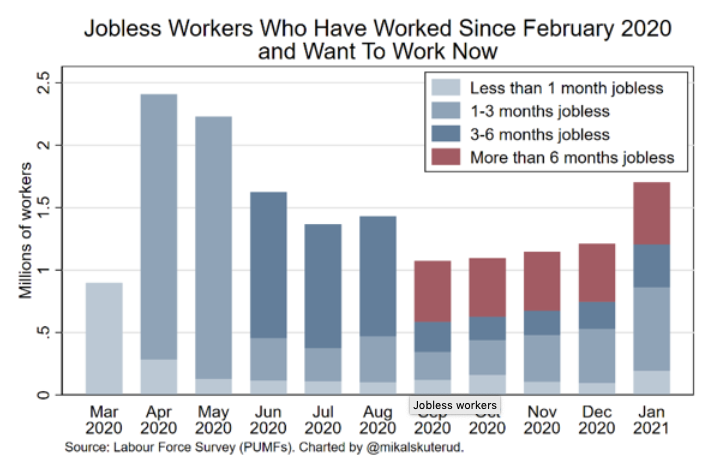
Canadian economists are questioning why Ottawa is setting record immigration targets in the middle of unprecedented unemployment caused by the pandemic.

More than 1.7 million Canadians are looking for work, and the economists are warning that the Liberals’ aggressive new target of more than 400,000 new immigrants in 2021 will likely hurt the country’s low-skilled workers, particularly those who have recently become permanent residents.

Source: Douglas Todd: Economists question decision to boost immigration during pandemic

Unpacking the People’s Party’s Fear of ‘Radical Multiculturalism’

Will see how this turns-out post the debates. And while I haven’t compiled candidate data (working with Samara and others to do so), anecdotally there so seem to be a fair number of visible minorities, some immigrants, some subsequent generations, among their candidates:

The People’s Party of Canada says it is “inclusive,” but how does that square with its calls to scrap the country’s Multiculturalism Act, tighten our borders, promote “Western civilization values” and cut immigration by more than half?

More diversity will “destroy what has made us a great country,” leader Maxime Bernier tweeted last year in a long, Trumpian thread.

Bernier, who narrowly lost the Conservative leadership to Andrew Scheer in 2017, founded the People’s Party in September 2018.

Since then, it has alarmed critics across the political spectrum, including some former supporters who are worried that xenophobic, and even racist, members of the radical right, as seen in the U.S. and Europe, now have a political home in Canada.

“What the PPC is doing risks normalizing far-right ideology,” said Brian Budd, a PhD student in political science at the University of Guelph who researches right-wing politics and populism in Canada.

The party uses the language of inclusion to communicate its ideas, noted Budd.

Those studying far-right parties in Western democracies have found that the most successful ones in Europe use the language of liberalism, civic values, and the national interest as a Trojan horse to normalize discrimination in the mainstream.

The strategy allows such parties to say they’re pursuing national unity when they’re actually promoting exclusion. It allows them to posit that hate speech is actually the free speech of a democratic society.

“It’s a built-in defence against accusations of racism,” said Budd.

It’s the kind of strategy that Conservative Kellie Leitch used in her bid for re-election in 2015. Leitch said she wanted to establish a “barbaric cultural practices” tip line to “defend Canadian values.”

Bernier used a similar approach in his Twitter rant against diversity, warning that “people live among us who reject basic Western values such as freedom, equality, tolerance and openness.”

While populist right-wing parties, including the People’s Party, have attracted supporters who are white supremacists, Budd doesn’t view the party as all-in advocating for a “homogenous, white European society.”

The party has been quick to point out that it has candidates who are immigrants and people of colour — proof, it has said, that it is not anti-immigrant or racist.

And it is willing to accept newcomers if they “share fundamental Canadian values, learn about our history and culture and integrate in our society,” Bernier has said.

That can be understood as “conditional multiculturalism,” said political scientist Erin Tolley of the University of Toronto.

The party’s immigrant candidates have said that they don’t see a problem with limiting immigration or with Bernier’s view that immigrants must assimilate and take on the party’s definition of “Canadianness.”

Rocky Dong, the party’s candidate in Burnaby North–Seymour, used a metaphor to explain his support for the policies.

“If you have one chopstick, it breaks easily,” he said. “If you have many chopsticks, they’re hard to break.”

Integration is crucial to national unity, said Dong, 48, who arrived in Canada from China in 2001. He helps international students integrate on a daily basis at work, connecting them with housing and education.

Another party candidate, Baljit Singh Bawa of Brampton Centre, who immigrated to Canada from India in 2000, said he was able to integrate thanks to his own drive to improve his English and a three-year stint working in Dubai “to get that international exposure, to get myself out of my comfort zone.” He wants others moving to Canada to integrate in similar ways.

Budd said that immigrant candidates allow the party to showcase its idea of the model minority — “the immigrants who have come in and successfully assimilated without support from the state.”

“A lot of Canadians like to think that Bernier is simply importing something successful from elsewhere,” he said. “But what he’s really doing is trying to adapt ideas and discourses to the Canadian context.”

Having these model immigrant candidates adds a made-in-Canada flavour to the kind of populism Bernier is building; it’s more visibly colourful than whiter movements in other Western democracies.

“It’s about population management,” said Budd, “while ensuring the privilege and supremacy of European culture.”

According to the party’s platform, it seeks to manage newcomer populations by:

  • Cutting immigration to between 100,000 and 150,000 people a year (Last year about 321,000 people immigrated; in the peak year under Stephen Harper, 280,700 arrived in 2010);
  • Focusing on economic immigration to fill labour gaps, while stopping the intake of temporary workers and people entering through family reunification programs;
  • Interviewing newcomers to ensure they subscribe to “Canadian values and societal norms;”
  • Eliminating the Multiculturalism Act and spending on multiculturalism;
  • Stopping “illegal migrants” and “false migrants” entering via the U.S. border;
  • Move to a reliance on private sponsorships to pay for refugee settlement, ending government support.

Bernier describes his vision in the liberal language of “harmony and the maintenance of our Canadian national identity.”

He has also attempted to justify his plans economically for his libertarian supporters, saying the party aims to cut down on state-funded “specialist services” for “freeloaders,” said Budd.

Bernier has said that some cultures, like First Nations, Cape Breton and Quebec’s Eastern Townships “deserve to be nurtured” because they were “developed in Canada” and “don’t exist anywhere else in the world.”

Political scientist Tolley said regional cultures are true of any country. “It is interesting that they’re trying to suggest that these regional cultures can’t exist alongside immigration and multiculturalism,” she said.

The party’s desire to clamp down on immigration and promote “Western civilization values” has led critics, including some former supporters, to accuse it of attracting and harbouring racists, white supremacists, anti-Semites and conspiracy theorists.

People’s Party events have been attended by such far-right individuals as Faith Goldy, an advocate of the conspiracy theory of white genocide who has verbally attacked immigrants and Islamic culture; Paul Fromm, a self-described “white nationalist” based in Hamilton who directs several far-right groups in Canada; and members of the Northern Guard, a militant anti-immigrant, anti-Muslim group that is an offshoot of the Soldiers of Odin.

This has caused trouble with some party supporters.

In July, the entire board of a Winnipeg riding association resigned, saying “racists, bigots, anti-Semites, and conspiracy theorists” had a large presence in the public conversation around the party.

The board members also said they were “appalled” to see “disinformation and distrust… encouraged with wink and a nod now.”

Last week, People’s Party candidate Brian Misera of Coquitlam–Port Coquitlam called on Bernier to “do more to help us disassociate from far-right groups that really have no place in our society.” The party has since revoked Misera’s candidacy, saying that he broke Elections Canada rules by acting as his own financial agent.

Bernier has responded by saying he doesn’t know everyone who attends his rallies and that “people who are racist and [don’t] believe in the Canadian values aren’t welcome in our party.”

Sanjay Jeram, a senior lecturer in political science at Simon Fraser University, believes Bernier’s failure to condemn these far-right elements more strongly is linked to efforts to build the new party.

“My feeling is he’s trying to cobble together a party that’s having trouble with organization,” said Jeram. As an upstart party trying to compete with the Conservatives, Bernier “can’t afford alienating people who he might not want part of the bigger message.”

Jeram said that debate about immigration levels shouldn’t be taboo but cautions against empowering more dangerous anti-immigration constituents. “The party should be more careful to screen candidates who have views that might actually incite violence,” he said.

“In a liberal democratic society, we shouldn’t be limiting debate. But that debate can go into the realm of targeting people for their race, gender, ethnicity or religion and making them vulnerable. It’s possible for people to take those messages and turn them into the legitimization of violence or discrimination.”

Stewart Prest, who also lectures in political science at SFU, said the party’s language is worth scrutiny. For example, it often decries what it calls “radical multiculturalism.”

That “could translate into disliking a particular group, Muslims being singled out,” he said.

Bernier’s attempt to redefine immigration and multiculturalism is a “grand project,” said Prest, as Canada’s mainline parties have agreed for a generation that immigration and multiculturalism are a part of the country’s foundations.

“But these messages can get picked up a number of ways and open the door to even more radical conversations.”

Tolley said that why the potential impact of the People’s Party should not be dismissed despite the party’s low support, currently at three per cent, according to the latest CBC aggregate of available polling data.

Tolley gives the example of the Reform Party, also an opponent of multiculturalism, which in the 1990s was able to change the conversation around immigration, making it an economic issue rather than a social one.

Last week the Leaders’ Debates Commission invited Bernier to participate in leadership debates.

Many experts wonder how the People’s Party’s narratives on immigration, refugees and multiculturalism might shift how other parties and the Canadian public talk about these topics.

People’s Party candidate Rocky Dong says they are only preaching “common sense.”

“We don’t hate the people outside. We just love the people inside the fence.”  [Tyee]

Source: Unpacking the People’s Party’s Fear of ‘Radical Multiculturalism’

Douglas Todd: Why Canadians need to debate immigration economics

A more nuanced critique of immigration levels and policies than most, raising some valid concerns regarding increased housing and congestion issues in our major cities, and the possible impact on per capita income:

Simon Fraser University political scientist Sanjay Jeram is bravely going where few Canadian scholars — and virtually no politicians — dare to go.

In the face of an unspoken taboo against seriously debating immigration policy in Canada, Jeram says the time has come for Canadians to start openly discussing the migration issues they’ve been avoiding.

Housing, employment, urban congestion, the welfare state and training are all affected by Canada’s immigration policies, says Jeram, who has a PhD from the University of Toronto, the city in which he was born and raised.

Instead of Canadians and the media getting worked up about race-related migration issues that Jeram thinks are largely irrelevant — such as the short-lived “barbaric cultural practices” hotline — he astutely urges discussion of the influence of immigration on economics.

‘’The hidden consensus in Canada is we don’t talk critically about immigration. The taboo against discussing it is very real,” said Jeram, who understandably believes Canadians are almost alone in this regard.

“(Prime Minister Justin) Trudeau campaigned on openness to immigrationwithout limits. I have never heard him talk about the potential consequences that immigration has for overcrowding, housing, opportunities for domestic workers or the welfare state.”

Housing is on the top of Jeram’s immigration-issues list, since Metro Vancouver, Toronto and other cities are experiencing an affordability crisis.

The rental and housing markets in Canada’s cities are increasingly shaped, he said, by federal immigration policies, which have tended to bring to Canada two financially opposite groups of newcomers: the wealthy and those with low incomes.

Strong offshore in-migration into Metro Vancouver, including an influx of international students, Jeram said, has “created competition for low-end rental spaces in the city,” which is struggling with a shortage and exorbitant fees.

“There is also pressure on the higher end of the housing market” because of the arrival of many well-off immigrants and foreign investors, he said. “Money from the outside has turned middle-income properties into high-end properties.”

As a result, said Jeram, most of Metro’s millennial generation is being required to financially “stretch beyond the breaking point.” Most do not have pockets deep enough to buy detached homes or even condominiums.

“As a country, we don’t want to discourage foreign investment, but foreign investment in housing is not going to be productive or benefit us in the long run.”

He recommended new housing policies that restrict the “amount of foreign income, which is not produced in Canada, that can be used to purchase properties” in the country.

Since more than four out of five immigrants to Canada move to its major cities, added pressure is not only on housing, but on infrastructure, traffic and transit.

It contravenes human rights law to restrict the mobility rights of anyone in Canada, so Jeram thinks politicians should follow the lead of European nations and create incentives for immigrants and others to settle outside the Toronto and Vancouver metropolitan areas.

The job market is also being affected by immigration, said Jeram, 35, who admires the work of noted Oxford migration economist Paul Collier, a leader in migration, refugee and developing world studies.

Even though a majority of Canadians tell pollsters “immigration is good for the economy,” Jeram said some don’t realize their per capita financial well-being may be shrinking as corporations bring in immigrants to make up for skill shortages.

“Instead of offering internship programs or on-the-job training, they just import new workers from elsewhere. That leads to a smaller piece of the economic pie for host-society workers.”

It should be no surprise, he said, that corporations advocate more immigrants and temporary foreign workers.

“They have no skin in the game in regards to income levels at the low end of the scale. High immigration has no negative impact on them. Only positive.”

Canada’s federal politicians have to be forced to think more carefully, he added, about whether immigration policies are reducing public support for the country’s social safety net.

“The welfare state requires we all pay into it. And some will be worse off to sustain it. There may come a time when the Canadian consensus to support a high-tax society will fray.”

Most Canadians tell pollsters that bringing in more young and middle-aged immigrants who pay taxes will advance the welfare state.

“But it just doesn’t add up, because a working immigrant comes with dependants. And with rising immigration rates, that can become expensive and unsustainable. It’s nothing to do with race. It’s just economics.”

Contrary to conventional North American wisdom, Jeram said, “bigger is not necessarily better” for creating equitable financial well-being. “Most wealthy societies are very small.”

Will Canadians ever again be able to have a fair debate about immigration policy?

“That’s the million-dollar question,” Jeram says. “Politically it’s become too much of a hot potato.”

Canada is unusual in the way every major federal political party treads cautiously on immigration, Jeram said. All go out of their way to “placate” immigrant voters that dominate in many electoral ridings in major cities like Vancouver, Toronto and Montreal.

But if Canadians don’t soon start having rational discussions about the economics of immigration, Jeram said, working-class nativist movements bent on opposing globalization and reducing immigrant flows could quickly rise to the surface, as they have in Europe and the U.S.

Source: Douglas Todd: Why Canadians need to debate immigration economics | Vancouver Sun