Germany’s Post-Nazi Taboo Against the Far Right Has Been Shattered

Worrisome:

Sometimes, it takes an earthquake to reveal what’s below the surface.

In the eastern German state of Thuringia this week a regional election displayed the disastrous state of Germany’s political center — and how far the country now stands from the anti-fascist consensus it proclaims to maintain.

On Wednesday, the state Parliament of Thuringia elected Thomas Kemmerich of the Free Democratic Party as the new governor. The only reason Mr. Kemmerich was able to win, though, was because he received the backing of the far-right Alternative for Germany party, known by its German initials AfD. The Free Democrats in Thuringia, along with members of Chancellor Angela Merkel’s Christian Democratic Union, agreed to the deal to ensure Mr. Kemmerich took office.

In doing so, the center-right parties broke a taboo that has been in place in German politics since the end of the Nazi era. Mr. Kemmerich became the first high-ranking German politician since World War II to be elected by relying on votes from a far-right party.

The centrists’ decision to side with the far right is especially worrying in Thuringia, where the AfD is not only the second strongest party in the regional parliament, but also more extreme than in any other state. The AfD’s boss there, Björn Höcke, is the leader of a hard-line movement inside the party known as “Der Flügel” — The Wing. In a 2018 book, he warned of the “coming death of the nation through population replacement.” Last year, a court ruled that he could legally be termed a fascist.

The events in Thuringia have shaken German politics. Ms. Merkel called the outcome “unforgivable.” Lars Klingbeil, the secretary general of the Social Democrats, spoke of a “low point in Germany’s postwar history.” Even the conservative tabloid Bild called the result a “disgrace.” After a wave of public fury — including protests across the country — Mr. Kemmerich announced on Thursday that he would resign in order to allow new elections. (It’s far from clear that a new election wouldn’t produce even stronger results for the AfD, however.)

But what led to these shameful machinations goes far deeper: the increasing normalization of the radical right in German politics. Even if Germany’s conservatives and liberals have not previously entered into formal agreements with the far right at the federal level, and are unlikely to let the AfD into a future government, they have nonetheless helped it gain power and far too often set the agenda. That dynamic won’t disappear soon.

This was not the first time that centrists have collaborated with the AfD. There have been at least 18 cases in which Ms. Merkel’s party has cooperated with the AfD on a local level, it was reported last fall. In the state parliaments of Berlin and Brandenburg, for example, the two parties have voted together on legislation. Leading Christian Democrats from several states have declared their willingness to work with the far-right party. In Saxony-Anhalt, the two parties teamed up in 2017 on an “inquiry on left extremism.” And in the same state, two Christian Democratic members of Parliament wrote a position paper last year in which they considered a coalition with the AfD. “We must reconcile the social with the national,” they stated, echoing neo-Nazi rhetoric.

The AfD has grown consistently since its founding in 2013 and is now present in the parliaments of every one of Germany’s 16 states. The parties of the center, meanwhile, have all shifted rightward. Both the Free Democrats, under their leader Christian Lindner, and the Christian Democrats have moved their policy platforms in an anti-immigrant direction. Neither Ms. Merkel nor the party’s new leader, Annegret Kramp-Karrenbauer, have created clear boundaries between their party and the far right. But many voters, especially in the east of Germany, would rather buy the original product than its copies.

How did it come to this? One major factor is the obsession of many German centrists with the so-called horseshoe theory of politics, where the far left and the far right are equivalent.

Ms. Merkel’s Christian Democrats have been guided by this theory. In an official resolution, the party stated that it will never enter coalition with either the Left Party or the AfD. In Thuringia, it was this unmovable opposition to the left — demonized in its entirety by conservatives and liberals, citing the Left Party’s history as successor to the East German Communist Party — that laid the groundwork for the latest scandal. To prevent a relatively moderate and highly popular Left Party politician, Bodo Ramelow, from taking power in a minority government, the Christian Democrats and the Free Democrats instead colluded with the AfD.

One day after the disaster in Thuringia, Friedrich Merz, a Christian Democratic politician whom some believe could be the next chancellor, appeared on a late-night talk show. After condemning his party’s decision to collaborate with the AfD in Thuringia, Mr. Merz also felt the need to warn of the “left scene” in Berlin torching cars; he went on to equate the Left Party with the AfD. Should Mr. Merz really become Ms. Merkel’s successor, we can expect a red scare to become ever more part of the centrist program.

For the far right, this week has been an outstanding success. AfD’s leaders have long predicted — and hoped for — a convergence with centrist and conservative parties. On Wednesday, when shaking hands to congratulate the newly elected Thuringia governor, Mr. Höcke smiled. The scene reminded many Germans of a famous picture from 1933 in which Adolf Hitler greets Paul von Hindenburg, Germany’s president at the time.

Germany in 2020 is not Germany in 1933. But German politics have shifted in recent years in a disturbing way. Centrists and the far right share talking points on immigration. They share what they perceive as a common enemy in the left. And now, for the first time in decades, they even share a governor.

Source: Germany’s Post-Nazi Taboo Against the Far Right Has Been Shattered

Retired MP overcame hurdles to secure Black History Month designation

A number of other federal heritage months have been added, e.g., Asian Heritage in May, Islamic History in October):

Jean Augustine’s efforts in the House of Commons 25 years ago to build support for a motion calling on the federal government to designate February as Black History Month in Canada succeeded in the end, but there were some hurdles along the way.

“I had colleagues who would say, ‘If you want February, who would come for March? If you have Black History month, when are we going to have white history month?'” the retired Liberal MP told The House on Friday.

“Those were kind of provocative statements that were made to me as I tried to convince my colleagues.”

The retired Liberal MP’s campaign to designate Black History Month in Canada in 1995 came just two years after the Grenada-born Augustine became the first African-Canadian woman elected to Parliament.

The importance of visibility

Today, there are still only a handful of black MPs in the House of Commons.

To encourage more black Canadians to run, Augustine said, political parties must ramp up their recruitment efforts and ensure candidates with diverse backgrounds are chosen to run in winnable ridings.

Otherwise, she said, “It’s kind of like an exercise.”

Augustine said she knows her presence in Parliament sent a signal to black Canadians everywhere. She said she can remember people telling her that they would gather their children and grandchildren every time they saw her on television in the House of Commons, or descending the stairs behind then-prime minister Jean Chrétien.

“‘Look, look, look, look,’ they would say. ‘If she can do this, you can do this.'”

Camp survivors call on Japanese Americans to oppose immigrant detainment

A reminder:

When President Franklin D. Roosevelt signed Executive Order 9066 on Feb. 19, 1942, prompting the incarceration of more than 120,000 Japanese-Americans on the West Coast, only a handful of Americans took steps to oppose it.

Now, survivors of those camps are trying to make sure that immigrant detainment doesn’t go unopposed again.

On Friday, four survivors of the camps gathered in San Francisco’s Japantown to call on Japanese-Americans to oppose family separation and detainment of children by the U.S. government. The panel, which also included two Japanese-American activists, was hosted by the Bay Area Day of Remembrance Consortium.

“It’s the concept of the way these people are being treated,” said Chizu Omori, a former resident of the government camps. “It’s the racism. That’s the thing that gets to me — that peoples of color are particularly being singled out for exclusion from our country.”

At about the age of 13, Omori and her family, a farm family in San Diego County, were incarcerated in Poston, Arizona.

She recalled her parents signing repatriation papers to return to Japan because her father was an issei — a first-generation Japanese immigrant living in North America, which was illegal at the time.

“This was a very devastating thing to happen because I really didn’t know very much about Japan and didn’t think of myself as Japanese, and I didn’t want to leave America,” she said.

The civil rights activist, who now works with the nonviolent action project Tsuru for Solidarity, plans to protest in Washington, D.C., against the detention centers and family separation policies in June.

Sadako Kashiwagi, another speaker at Friday’s event, lived with her family as tenant farmers in the Sacramento area and was incarcerated in Arboga and then Tule Lake, California.

“We were there because we were rejected,” she said. “It was really dark because your country tells you you’re not good. So you reject your language, your food — your culture.”

Her father, who was known as a troublemaker to the authorities, was reported to the FBI, she said. The bureau separated them for several months.

“I really feel for those kids,” Kashiwagi said, referring to the immigrant children being separated from their parents today. “And all I can say (to them) is: Know your language, be proud of who you are, be strong, be kind and smile.”

For film producer Jon Osaki, who accompanied the former detainees on the panel, it was essential to note that the faults of the times are being repeated today.

Osaki said that some Japanese-Americans believe that immigrants detained today deserve it because they’re illegal.

But during World War II, he said, the Immigration Act of 1924 banned Japanese immigration; one-third of those detained were isseis and illegal for that reason; and those who resisted the mass roundup and incarceration of Japanese-Americans were technically breaking the law.

“Today, as a community that has experienced one of the greatest civil liberties violations in the history of this country, we have an opportunity to push back against the same sentiment that banished our mothers and our fathers and our aunts and uncles and our bacchans [grandmas] and jiichans [grandpas],” he said.

His parents, too, were incarcerated at camps before they met.

“The incarceration is ultimately about politics,” he said. “It was about people who did not want Japanese in this country, and politicians who are trying to placate their political base and use fear, to win elections.”

Japanese-American activists are hosting a rally in front of the ICE Headquarters on Feb. 14 and a procession through Japantown and a reception on Feb. 16 at AMC Kabuki Theaters.

Source: Camp survivors call on Japanese Americans to oppose immigrant detainment

China’s coronavirus outbreak calls out for Canada’s help – and we should respond, in the spirit of Dr. Bethune

Silly piece, divorced from reality: For Weeks, China Has Ignored Outside Offers of Help on VirusFor Weeks, China Has Ignored Outside Offers of Help on VirusThe Centers for Disease Control and Prevention has been offering to send experts to China, but no invitation has come. The World Health Organization appears to be facing the same cold shoulder.

On Jan. 30, the World Health Organization declared the 2019 novel coronavirus (2019-nCoV) outbreak a public health emergency of international concern. But two days later, an even more surprising statement: Chinese Premier Li Keqiang asked the European Union to provide medical supplies to fight the epidemic unfolding in China.

This was highly unusual – top Chinese officials are not particularly known for their willingness to ask for international aid. But it points to the gravity and severity of the situation.

China is grappling with a severe public health challenge that is now outpacing the deadly SARS outbreak in 2003. As of today, more than 31,000 people in 28 countries and territories have been diagnosed with the new virus. The vast majority of those cases have emerged in China, where more than 600 people have died.

After 2019-nCoV was identified as originating in the city of Wuhan, the Chinese government took extraordinary measures to contain the outbreak. Wuhan and 13 surrounding cities have been locked down since Jan. 23 in a quarantine that affects more than 40 million people. It might be hard for Canadians to imagine this feat, but consider that Canada’s entire population is about 37 million.

However, the biggest challenge China faces is on the front lines. Doctors and nurses are racing against the clock and struggling to treat thousands of patients with dwindling supplies. Somehow, they are standing firm despite a shortage of hospital beds, staff, medicine and protective gear – even for themselves. Many doctors have worked throughout the day without drinking, eating or going to the bathroom simply to avoid replacing their protective suits. One doctor we know wore his son’s goggles to work for protection.

That the Chinese medical community is in mourning only heightens the anxiety. Dr. Li Wenliang, the Wuhan Central Hospital ophthalmologist who was among the first to identify the disease, passed away Friday.

Canada has confirmed five cases of its own – three in Ontario, two in British Columbia – but it has been acting vigorously and vigilantly, monitoring the situation, providing travel advice and evacuating Canadians in China. It’s remarkably brave of Ottawa to follow the WHO’s recommendation not to ban Chinese and other international travellers from China from entering the country. Furthermore, as acts of racism against the Chinese-Canadian community increase, Prime Minister Justin Trudeau has made statements criticizing anti-Chinese sentiments and misinformation about the coronavirus. “This,” he said, “is not something Canadians will ever stand for.”

These are admirable steps. But it is our belief that Canadians will only be truly safe when China wins its battle. And history may offer a good example of what Canada can still do to achieve this goal.

In the late 1930s, Canadian physician Norman Bethune brought modern medicine to rural China. He was credited with saving thousands of Chinese civilians and soldiers during the Second Sino-Japanese War, and for this he is revered even today in China. His story confirms the most effective way to save lives: supplying Canadian medical treatment to China.

Doing so will require three courses of action. First, we would urge Ottawa to continue demonstrating respectful concern and vigorous support as China combats this virus during this critical period. Secondly, we would recommend the Canadian government play a vital role in facilitating the procurement of medical supplies for hospitals in affected regions. Trade-promotion agencies can help by adding a medical-supplies section to their information portals to connect qualified Canadian suppliers with Chinese buyers. Thirdly, we would encourage Canadian health-care professionals and specialists to work with Chinese and international experts in developing treatments and a vaccine.

Ottawa and Beijing have had their differences. A prominent Chinese executive is facing extradition to the U.S., while two Canadian citizens remain in jail in China and a crippling import ban hurts Canadian canola farmers. But Canadians remain highly respected and liked in China – in no small part because of the legacy of people like Dr. Bethune.

There is a Chinese saying: “Friends show their love in times of trouble, not in happiness.” We hope we can focus on our shared humanity and give Chinese medical workers and citizens a hand during this extremely difficult time – for their sake, in the name of selflessness, in the spirit of Dr. Bethune.

Kenny Zhang is a Fudan University alumnus, Jenny Li is a graduate of Hubei University, ChiChi Wang is an alumnus of the University of British Columbia and Zhenyu Cheng is a Wuhan University alumnus. All are residents of Canada.

Source: China’s coronavirus outbreak calls out for Canada’s help – and we should respond, in the spirit of Dr. Bethune

UK Immigration: Salary threshold set to be lowered

Of note:

Boris Johnson and Home Secretary Priti Patel are expected to set out their immigration reforms, including a drop in salary threshold for some migrants, at a cabinet meeting on Friday.

Currently, skilled migrants from outside the EU need to have a job offer with a minimum salary of £30,000.

The BBC understands ministers plan to lower this threshold to £25,600.

Workers from the EU will face the same rules once the transition period for leaving the EU ends on 31 December.

Workers earning less might be allowed to make up “points” elsewhere in order to be granted a visa if they work in a sector with a skills shortage.

Points will also be awarded for speaking good English or for having an outstanding educational background.

It comes after the independent Migration Advisory Committee (MAC) last month made a series of recommendations for a post-Brexit transition period immigration system, including lowering the salary threshold for skilled migrants to £25,600 in order to help recruit teachers and skilled NHS staff.

The committee also criticised the UK’s current complex immigration system, where non-EU workers can attempt to qualify for a range of visas.

The prime minister made it a key pledge during the election campaign to introduce a points-based immigration scheme, based on Australia’s, for when existing EU freedom of movement rules end.

Under those rules, workers from the EU and European Economic Area countries can come to the UK to live or work without a visa.

The MAC has said there is no such thing as a “perfect” immigration system, with benefits and trade-offs in various parts of the economy.

It said whatever policies the government decides, it must work quickly to get something in place for after the transition period ends.

Source: Immigration: Salary threshold set to be lowered

Coyne: The virus of Trumpism and his infectious moral failings

Possibly more dangerous than the coronavirus:

Over the past four years, it has been hard to escape the feeling that much of America – and even some Canadians – had fallen under the spell of a cult.

That it is also a political movement does not diminish its cult-like tendencies: the imperviousness to fact, the repetition of certain prescribed slogans, the suppression of the critical faculties, the blind devotion to the leader. And while some of this is present in all political movements, the particular zealotry of Donald Trump’s followers – the willingness to believe what isn’t so, and to disbelieve what is – is something else again.

Indeed, it is not only their thinking that appears to have been taken over; it’s behavioural. What we are witnessing is not so much the expression of a particular theory of government as of a personality type; the replication, on a mass scale, of the leader’s own temperament and bearing, if not the underlying psychological disorders, as if the virus of Trumpism had infected, not just people’s minds, but their souls – their character.

Or, perhaps, revealed it. The funny thing is, you’re almost never surprised to find who turns out to be a Trump supporter and who is not. Though they may never before have uttered the sentiments you hear coming out of their mouths now, there was always, you find yourself reflecting, a certain predilection.

This has nothing to do with how conservative they are. Some of the most committed conservatives I know are revolted by the U.S. President and want only to see the end of him. It has to do with character. It has become, frankly, something of a litmus test.

I hesitate to say this. I’m a strong believer in the proposition that “reasonable people can differ,” that there are two sides to every story, that one’s opponents are at worst mistaken. But Mr. Trump, and Trumpism, represents the triumph of unreason and the suppression of differences. To pay the usual respects to such an unworthy opponent is to do dishonour to one’s worthy opponents..

Perhaps it was possible, very early on, if you had not been paying much attention, to see him as a sort of necessary evil, a shock to the system – uncouth, sure, a bit rough around the edges, but a rock through the window, as it has been put, of official Washington, a signal that people were fed up with politics as usual.

But it is not possible now. It is not possible to look at all that Mr. Trump is and all that he represents – the pathological lying, the habitual corruption, the serial groping, the casual racism, the glorification of violence, the winking to Nazis, the laziness, the impulsiveness, the childish tantrums, the bottomless ignorance, the vanity, the insecurity, the vulnerability (so skilfully exploited by America’s adversaries) to flattery, the bullying, the crudity, the indifference to suffering, the incompetence, the chaos in the White House, the attacks on America’s allies and support for its foes, the contempt for experts and for expertise, for norms and conventions, for checks and balances, for limited government, for the very rule of law – it is not possible to be exposed to all this on a daily basis for four years and shrug it off or explain it away or accept it as part of the deal without there being something wrong with you.

Because it is the deal – that’s all there is – and it was obvious it was the deal, long before it was revealed that Mr. Trump’s victory in the last election was achieved with the aid of Russian intelligence – with or without the connivance of the multiple members of Mr. Trump’s circle who were in contact with Russian officials at the time – and quite apart from the explicit and documented solicitation of interference by another foreign power in the coming election that was the subject of his recent impeachment and trial.

The Republican senators who nevertheless voted to acquit may genuinely be Trump loyalists, or they may merely be fearful of retribution from the President and his cult followers. But either way, it would be hard to ascribe their decision to a judicious weighing of the facts before them. Not when so many had announced their intent to acquit before the trial, not when the evidence of guilt was so overwhelming, not when the justification on which they eventually settled – “he did it but should not be punished for it” – amounts not merely to a benediction on the President’s past abuses of power but an invitation to future ones as well. “Acquitted for life!” Rudy Giuliani tweeted afterward, not without cause.

To reach such a verdict, in such circumstances, is beyond a mere error of reasoning. It is moral error, and of a particularly egregious kind. These are not, after all, bar-stool yahoos or internet trolls, but senators who are supposed to know better. To say that one disagrees with it, then, is insufficient. It must be condemned, as surely history will condemn it. To be sure, there is danger in the other direction; people are all too ready nowadays to convert any disagreement into a contest of absolutes. So be it. We have to be able to see every shade of grey, including black and white.

We needn’t make too much of this. The people who have fallen under Mr. Trump’s spell, or at any rate bend themselves to his will, may have other compensating virtues; it may be a blight upon their character without being the whole of their character. But neither should we avoid it. It is not just a mistake to make excuses for Donald Trump. It is a moral failing. It may only be blindness – while some might actively applaud him for his depravities, most just minimize them – but it is, at this stage, culpable blindness, if not willful blindness.

To say that Trumpism is a moral failing is not to place his followers, or his enablers, beyond the pale. I have my own moral failings, and so do you. But it is worth identifying it in such terms; it is clarifying. Sometimes you have to, as it is sometimes said of Mr. Trump, tell it like it is.

Source: The virus of Trumpism and his infectious moral failings

Are the Courts Beginning to Move in Favor of Trump’s Immigration Policies?

Good analysis:

Since taking office, Donald Trump has issued nearly twenty Presidential actions on immigration, and more rule changes and regulations than one can easily count. Nearly all of them—including the travel ban, the cancellation of daca, and measures to end asylum applications at the Southern border—have prompted legal challenges, and, in several instances, federal judges have issued nationwide injunctions blocking the Administration’s plans. This situation has not deterred the White House, though, and, a few months ago, a senior D.H.S. official told me why. “The idea is, ‘don’t waste time trying to anticipate the risk of litigation,’ ” the official said. “Everything will get challenged in the lower courts anyway. We’ll win at the Supreme Court.”

Last week, in an unsigned, 5–4 decision, the justices lifted an injunction against the Administration’s “public charge” rule, which will use immigrants’ financial status to determine their qualification for green cards and, eventually, citizenship. (The rule will make it much more difficult for anyone who may need to rely on public assistance to become a legal permanent resident.) A few days later, the White House expanded Trump’s travel ban, to include travellers from six additional countries, among them Nigeria. District-court judges had repeatedly blocked the previous ban, but the Supreme Court eventually upheld it, in June, 2018, on the ground that the President has unfettered authority to shape immigration policy for national-security purposes. This time, the Administration didn’t bother to invoke any such purpose. A D.H.S. official admitted to reporters that the extension “focussed on people who want to reside in the U.S., not people who want to visit,” meaning that travellers from the countries in question can enter the United States without incident, as long as they have no intention of staying here. “How can that be national-security motivated?” a former State Department official asked me.

If the Administration appears to be growing bolder, it may be because, three years into the President’s first term, the nation’s highest courts are starting to bolster his agenda. In July, 2019, the Supreme Court—which, by then, included two Trump appointees, Neil Gorsuch and Brett Kavanaugh—lifted an injunction on a Presidential proclamation calling for the use of military funding to build the border wall. Two months later, the Justices allowed Trump’s asylum ban at the border to stand, pending further appeals. Sometime this summer, they’re expected to issue a ruling in a separate case, on whether the Administration’s cancellation of daca was legal. Earlier this week, Trump, in his State of the Union address, thanked the Senate Republicans for confirming Gorsuch and Kavanaugh, and boasted that “my Administration is restoring the rule of law.” He has successfully appointed at least a hundred and eighty-seven judges to the federal judiciary and, he said, there are many more “in the pipeline.”

The legal landscape has already begun to reflect his influence. The Ninth Circuit Court of Appeals, for instance, which the President used to routinely attack as a “complete and total disaster,” rife with “Obama judges,” has ten new conservative jurists. When Trump took office, there were eleven more Democratic appointees than Republican appointees on the circuit; now, on a court with twenty-nine judges, there are just three more Democratic appointees. Generally, it isn’t the entire court that hears cases but, rather, panels of three judges who are selected at random. This past May, one such panel lifted an injunction that a federal judge had issued to block a policy called the Migrant Protection Protocols, which has forced more than a hundred thousand Central Americans seeking asylum in this country to wait in dangerous Mexican border cities.

The main fight in the shifting legal battle against the Administration’s policies now turns on what was once a semi-obscure matter of academic debate: whether it’s appropriate for federal judges to issue nationwide injunctions to halt those policies. The practice has always been fraught, but it has become especially so in the past several years. Since a federal judge can single-handedly stall a national policy, litigants have increasingly opted to file lawsuits in jurisdictions that are ideologically sympathetic to their causes. During the Obama years, conservative groups and Republican attorneys general tried to stop executive actions on immigration and health care by challenging them before judges in South Texas. When Trump became President, advocates sued the government in California, New York, Maryland, and other liberal states, prompting a spate of injunctions against the Administration.

The most obvious explanation for the rise of injunctions in the Trump era is, as Lee Gelernt, a lead litigator at the American Civil Liberties Union, told me, the fact that “there’s never been an Administration that tried to do so many unlawful things, nationwide, at once.” Senior members of the Administration, however, blame their legal setbacks on rogue judges and a faulty system. Last May, in a speech before the American Law Institute, in Washington, Attorney General William Barr called the issuance of nationwide injunctions “perverse,” and added that “rather than an orderly pattern of litigation in which the government loses some cases and wins others . . . we have an inter-district battle fought with all-or-nothing injunctions.” Last week, in a concurring opinion on the Supreme Court’s decision on the public-charge rule, Justice Gorsuch hinted that the Court will likely take up the issue at some point. “The routine issuance” of injunctions, he wrote, “is patently unworkable, sowing chaos.”

As the battle has swung back and forth between the executive and the judiciary branches, it has bypassed the legislative branch. “Congress has been completely out of the conversation,” Sarah Pierce, an analyst at the Migration Policy Institute, told me. “The government will continue to lean on the executive to develop policies, and on the courts to draw clear boundaries around what the executive can and should do. But, if the courts can’t do that, if they’re impeded from stopping the executive when it’s gone past what its authority allows, then we’re going to have a one-sided conversation.” The public-charge rule is a case in point. The policy itself is technical: for decades, the federal government could withhold permanent legal status for certain immigrants who might have become overly dependent on the state as recipients of social services, but the formula for how the government decides who is ineligible, and why, has been stable since the late nineteen-nineties.

Now the Administration plans to drastically expand the list of factors that will count against a green-card applicant, including the use of non-cash benefits, such as food stamps and Medicaid. It will also raise the threshold for how much money a person must earn each year in order to avoid being labelled as a potential public charge. The changes will disproportionately affect immigrants from Latin America, Asia, and Africa, and observers argue that this is by design. According to the Migration Policy Institute, the policy is a “modern-day version of the National Origins Quota Act of 1924,” a law that “sought to tilt immigration to Western Europe.”

Such a radical rule change would not pass the current Congress, so the White House made it unilaterally, with the Supreme Court’s blessing. “The Administration has looked hard for things that can be done administratively to tighten the screws on legal immigration, to bring the numbers down, and change the composition of who gets to come,” Barbara Strack, a veteran official at the Department of Homeland Security, who recently retired, told me. “The public-charge rule is a significant part of that.”

Without nationwide injunctions to counterbalance aggressive executive actions, the President can make immigration policy in ways that are virtually unchecked. I asked several civil-rights lawyers how they would now fight the White House on any number of sweeping new policies. Last month, for example, a federal judge blocked another executive order designed to restrict the refugee-resettlement program. Will that injunction stand? The Administration, meanwhile, is preparing to take further action on asylum seekers and on the treatment of immigrant children. The lawyers didn’t have an immediate answer, because there isn’t one. Gelernt said, “You’d have to try to pull together class-action suits, or bring a lot of different cases at once. It would take a long time, and would be really hard. In the meantime, your clients would suffer irreparable harm.”

Source: Are the Courts Beginning to Move in Favor of Trump’s Immigration Policies?

‘Hi, my name is Mohammed. I’m here to help you.’ Meet the unofficial crisis manager for Muslim Canadians

Good profile of Hashim and his bringing a more sophisticated awareness of how to work with the media:

Mohammed Hashim hoped it wasn’t terrorism, but that’s where his thoughts naturally went. He heard a van had mounted the sidewalk at a busy intersection in Toronto and driven for several blocks, killing and injuring people. There was no time to watch this news unfold online like everyone else – he had work to do.

No one knew the identity of the driver but it didn’t take long for the labels “Middle Eastern” and “jihadist” to spread on Twitter.

He coached prominent Muslims on what to say when journalists called. “Well, this is clearly a deviation from our faith,” was a favourite line in situations like this. Mr. Hashim loved the word “deviant” – it clearly and strongly communicated that this person was not following the teachings of Islam.

He reached out to contacts at City Hall to find out when and where the mayor would be giving a news conference, so he could send a few Muslims to the same place. If the attacker was confirmed to be a follower of Islam, it was important for viewers to think of the Muslims they saw on TV, along with the mayor, as “us” rather than “them.”

Finally, he helped the Council of Imams draft a statement condemning every aspect of the attack, which he was ready to release to every major news outlet in the country that evening. But he never hit send. He didn’t have to. Four hours after the incident, the alleged attacker was identified as Alek Minassian, a Canadian-born man of mixed Armenian and Iranian ancestry. Not “Middle Eastern.” Not a “jihadist.” Not a Muslim.

Mr. Hashim can’t help but see news stories in terms of what they might mean for Canadian Muslims. A labour organizer by day, he moonlights as an unofficial crisis manager for the community, helping craft PR campaigns, liaise with police and counsel those who have found themselves in the middle of firestorms. He does the (mostly pro-bono) work of de facto publicist, defence lawyer and therapist for his clients, who are often the victims of Islamophobic attacks.

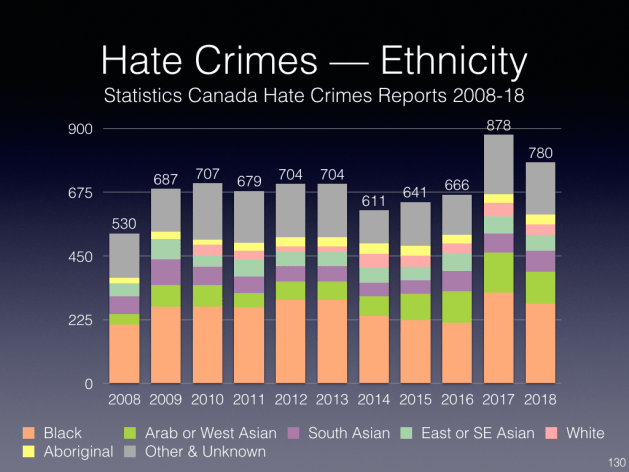
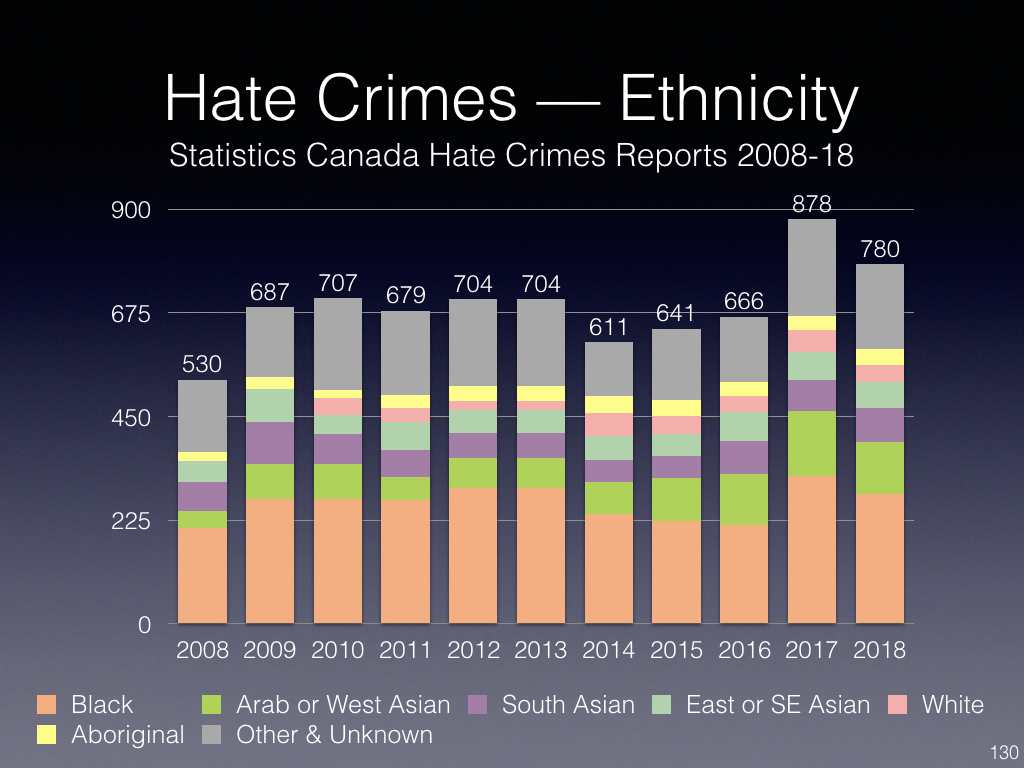
Police data published by Statistics Canada showed a 151-per-cent increase in hate crimes targeting Muslims across Canada from 2016 to 2017 – the largest increase across any group.

In the past four years, Mr. Hashim has assisted the people at the centre of nearly every major news story involving Canadian Muslims. To some, he represents a new image of Canadian Muslims that is young, progressive and Canadian-born, but in the Toronto Sun, he’s been portrayed as a “spin doctor,” someone who exercises too much control over messaging in the community.

His motivation is simple: He wants to change the narrative about Canadian Muslims. While he’s done pro-active campaigns, such as organizing a debate for Muslim youth for the 2015 federal election campaign, the work that has come to define him is those moments when he runs toward Muslims in crisis.

“I typically show up on the worst day of people’s lives,” he said. “‘Hi, my name is Mohammed. I’m here to help you.’”
Overnight, an east Toronto Muslim family had gone from being one of the most sympathetic in the country to one of the most reviled.

It began on a day in January, 2018, when an 11-year-old girl appeared on every local newscast to explain how, while walking to school, an “Asian man” had followed her and cut her hijab with a pair of scissors. The story took off and by end of day, the Mayor, Premier and Prime minister had all decried the attack.

But a few days later all those newscasts had an update. Police had “determined the events described … did not happen.”

Evidence had shown the child had made up the story. The investigation was closed. The father was advised by relatives to avoid social media, where people were saying horrific things about his daughter, demanding his family be criminally charged or deported.

A group of protestors showed up at Parliament Hill, calling for Justin Trudeau to apologize. Strangers – were they reporters? angry neighbours? – had found their way into the family’s building and knocked on their apartment door. The child’s father was afraid to go to work, to send his children to school, to even pick up groceries.

Mr. Hashim had little sympathy for the family at this point.

“I was like, ‘What the hell is this nonsense?’ Like, if like there’s Islamophobia in Canada, it needs to be real,” he recalls thinking at the time.

But he pivoted. Worse than this revelation, he realized, was the impact of the family’s silence.

“If they don’t [speak up], they drag all of us down. And they let their failures be imposed as our failures and I’m not having any of that,” he said.

He also hated seeing how, in the absence of comment from those directly involved, media often turned to local imams. In the years since 9/11, Mr. Hashim says he noticed “every single imam was saying the most random shit that made no sense, that was inarticulate, that didn’t represent … any of our collective truths.”

Sometimes those messages were anti-Semitic or furthered negative stereotypes the public held about Muslims.

After being recruited by a friend of the family, Mr. Hashim arrived at their apartment one evening to offer his assistance. He had them explain in detail what had happened, how they were dealing, what they feared.

He is a master of holding eye contact, even when he’s uncomfortable, and readily offering empathetic smiles to fill long silences. His hair is often in a buzz cut (occasionally overgrown) and he usually wears jeans. It’s a look that projects “I’m just a friendly neighbour dropping by to help” rather than “Here’s a 25-point PR strategy and, by the way, I bill by the hour.”

The father recalls feeling immediately at ease.

Mr. Hashim’s advice was straightforward: Issue a public apology. “Don’t try to justify it,” he advised them. “Just own it.”

With their input, Mr. Hashim helped draft the note that he would distribute to media.

But the father wondered if it was enough to make things right with fellow Muslims who had turned against them.

“It’s a big thing for the community, too, because they were thinking, you know, ‘Next time, if something really happens, nobody’s gonna believe, you know, because you guys gave a bad name to the community,’ ” the father said.

Armed with Mr. Hashim’s advice and the right language, the father made it to his local mosque and asked the imam if, at the next Friday prayer, he could share an apology on behalf of the family after delivering his sermon. He agreed.

Things felt lighter after that. The father said he felt welcomed back by his community, as if he no longer had to lower his eyes and make a quick exit when he went to pray.

Learning how to speak to the diverse Muslim populations scattered across Canada came to Mr. Hashim precisely because he’s never been tied to any one Muslim community. He’s never had a “home mosque” per se; his labour-relations work takes him all over Toronto and its surrounding suburbs and he ducks into whichever mosque is in the area – one day he’s kneeling beside Somalis and the next day it’s Bosnians.

Shaila Carter, a long-time friend who had grown up in a conservative Muslim family, couldn’t make sense of Mr. Hashim the day she met him on the Mississauga campus of the University of Toronto: he introduced himself with a casual “Salaam alaikum” (“peace be unto you,” a common way Muslims greet each other) but with his smoking, tattoos and cut-offs, he didn’t look like a Muslim to her.

Mr. Hashim was a political science student and became close with Ms. Carter after they worked together on various student-government campaigns. Ms. Carter occasionally invited Mr. Hashim to join her in prayer and was pleasantly surprised when he eventually came – a reluctant embrace of a faith that didn’t have much of a place in his life before. He came from a Muslim family, but they weren’t devout.

After this, Mr. Hashim approached Islam with his student politician tool kit. He joined mosque boards and took issues raised by local Muslims straight to their MP or MPP’s offices. He got to know the leadership at different mosques well, and fantasized about unionizing the city’s imams.

Ms. Carter believes her friend has become such an effective interlocutor because he came to the faith as an outsider who understood how Muslims were seen by others.

In 2017, Ipsos-Reid released the results of a poll that showed how skewed Canadians’ perceptions were of Muslims. While they only made up 3.2 per cent of the population at the time and were projected to drop to 2.8 per cent of the population by 2020, those polled believed they were already 17 per cent of the population and would be 27 per cent of the population by 2020 – gross overestimations.

“Clearly, Canadian Muslims have an image problem,” says Amira Elghawaby, the former communications director at the National Council for Canadian Muslims, who has worked closely with Mr. Hashim on PR campaigns – both pro-active and reactive.

When a white supremacist commits a mass killing, his community doesn’t have to apologize for him or distance itself from him, but if a Muslim does the same, “I think many Muslim organizations feel compelled to forcefully and in a very clear manner state that they condemn these acts of violence and stand against them,” says Karim H. Karim, director of Carleton University’s Centre for the Study of Islam.

But Ms. Elghawaby and Mr. Hashim are optimistic that that trend is on its way out. And research suggests that when media portrays Muslims as individuals, rather than as a homogeneous bloc, the public’s fears are dispelled. Studies have found a correlation between ignorance and fear; when people have contact with Muslims, their views of them improve.

“Obviously, we can’t get to know every single Canadian,” Ms. Elghawaby said, “and that’s why it’s so critical and crucial that we help Canadian Muslims feel comfortable speaking to the media.”

It was this advice Mr. Hashim brought to the family of Faisal Hussain, the man responsible for the deadly attack on Toronto’s busy Danforth Avenue in July, 2018.

In the days that followed the attack, Mr. Hashim counselled a member of the Hussain family – who were under enormous media scrutiny – on the phone. There was something in Mr. Hashim’s voice on the other end of the line that immediately conveyed trust.

As he learned Mr. Hussain had suffered from psychosis and depression, that he’d tried and failed with various treatments, Mr. Hashim empathized with the family – but also saw an opportunity.

Revealing that Mr. Hussain had this struggle and that his family had tried to help him might make the public see them with some compassion. This was also a chance to clearly state that Mr. Hussain’s actions were in no way motivated by his faith. And there was no time to waste – ISIS had already claimed the attack, as they so often do.

The relative wrote a statement and sent it to Mr. Hashim. They exchanged edits. Then Mr. Hashim released it to the press.

He also urged the family to give interviews, telling them what they had to say would seem more believable if it came from them directly, but they were resistant to that.

“When your face is out there, you don’t know what people are thinking. There’s a lot of racism out there and we didn’t want to be victims,” the family member said.

After their side of the story was public, the Hussain family received letters of support and empathy from strangers. But it also put a target on Mr. Hashim.

Right-wing commentators questioned Mr. Hashim’s role in all this: Why was he helping the family? They tried to connect the dots between this case and others they learned he’d been involved with. Were his motivations sinister? Some messaged him directly, suggested he was doing PR for the Muslim Brotherhood. For a while, security increased at Mr. Hashim’s office. He “digitally divorced” his wife, not wanting her to receive any of the vitriol that was filling his inbox.

But it hasn’t deterred him from doing this work. Even after there was nothing else to follow-up on, Mr. Hashim continued calling the Hussains, the family member said – just to check in on how everyone was doing.

“He was very consoling with his words. I remember him saying things like, ‘I wish I was there right now with you and your family and able to hug all of you,’ ” the family member recalls.

To police, Mr. Hashim has become a useful community ally, says Meaghan Gray, a communications officer at the Toronto Police Service.

Ms. Gray and Mr. Hashim first connected about three years ago, when the TPS hired its first Muslim chaplain. Since then he has become one of the people she is routinely in touch with to ask about how the service was doing on the communications front and he’s helped on a dozen files.

“The almost constant conversation Mohammed and I have is, ‘How could the messaging that we give out possibly feed into any sort of Islamophobia?’ ” she said.

Despite the many cases he’s worked on in the past few years, Mr. Hashim sees his work being obsolete in another decade or two.

There are promising signs: Muslim politicians who speak out, community organizations that don’t feel they need to be as defensive as they once were and more enlightened journalists.

His vision for Canada in 20 years is one where imams are Canadian-born, mosques aren’t divided along ethnic lines and Muslims are never subjected to questions about whether they have a dual loyalty to Canada and the Muslim Brotherhood or jihadism or even the country from which their parents emigrated.

But for now, Mr. Hashim says, the work still feels necessary and is often messy; he admits he’s never had a “clean win.”

There are limitations to Mr. Hashim’s work, which have become clear in the months following his latest intervention. In the fall of 2019, Mr. Hashim called Ms. Gray to alert her to something alarming: A family, the Al-Soufis, who ran a popular Syrian restaurant downtown, had received written and phone threats for weeks. One day they jumped off the page – the owners’ son was physically assaulted.

Earlier that fall, the son had attended a protest at a People’s Party of Canada event and had been filmed blocking an elderly woman in a walker from entering the event. He was doxxed, and a flood of abuse was soon directed at his family and their business. Spooked after the attack, the family abruptly closed their restaurant.

After Mr. Hashim flagged the situation, Ms. Gray connected the local police division with the Al-Soufi family, and officers began an investigation.

It bothered Mr. Hashim that Islamophobia and xenophobia had prompted a family of recent immigrants to give up their dream. He explained to Husam Al-Soufi, the family patriarch, how his decision would be read by immigrants across the country.

“Your story is your story,” he told him. “If you allow your restaurant to be closed, that tells all of us that maybe we shouldn’t hope so much.”

He told them to reopen the restaurant. They did with the management help of Mohamad Fakih, the owner of Middle Eastern restaurant chain Paramount Foods. Mr. Hashim knew Mr. Fakih from earlier in the year, when Mr. Hashim helped Mr. Fakih publicize a defamation case he’d won against a Mississauga man who had accused Mr. Fakih in a series of videos of having ties to extremism.

The trust of Mr. Hashim was, again, nearly instant.

“So many people advised me to do something,” Mr. Al-Soufi said. “The only one I listened to was [Mr. Hashim].”

He convinced them to do what he couldn’t get the Hussain family to do: Hold a news conference at the restaurant. Two dozen journalists showed up.

Since the restaurant reopened, Mr. Al-Soufi’s son has been charged by Hamilton police with causing a disturbance, assault and theft for his behaviour at the protest. His son doesn’t have permanent residency and if he is convicted, he could be deported, Mr. Al-Soufi fears.

He isn’t sure he was right in following Mr. Hashim’s advice, as he now feels dread when he spends time in his restaurant. It’s hard for him to see a future for Canada where the public’s views of Muslims catch up with Mr. Hashim’s ideals.

“When people … criticize immigrants, it’s 100 per cent they’re not talking about new immigrants from Ukraine, from Russia, from Europe. They’re talking about us,” he said.
Source: ‘Hi, my name is Mohammed. I’m here to help you.’ Meet the unofficial crisis manager for Muslim Canadians

Student behind class-action lawsuit against Niagara College says settlement empowers international students

Good result and message:

The student at the helm of a class-action lawsuit against Niagara College says a settlement Thursday should empower vulnerable international students to stand up for themselves.

“This has set a great precedent that will benefit future international students in Canada,” an emotional Anish Goyal told Justice Paul M. Perell after the Ontario Superior Court of Justice approved a settlement between the college and its international graduates.

Some of those students were forced to leave the country in 2015 and had their immigrant dreams shattered when Canadian immigration officials rejected their work permit applications because their credits were earned through Niagara College’s online courses — though the government later reversed some of the refusals.

“I wish to thank Canada and all Canadians for being welcoming to international students. Also, to God for empowering me to help so many students. This situation has affected my life in ways that are irreparable by money. We settled this lawsuit mostly to ensure that we don’t burden the already overburdened courts of Canada and its colleges,” Goyal told Justice Perell.

“International students are here to be a positive part of Canada. I am sure every international student is here to work hard and be a better part of this society,” he said. “Problems are part of every system. Important is its willingness to help.”

According to the settlement terms, the college has offered to compensate each student between $7,500 and $20,000, depending on their circumstances. At least 100 former international graduates from the college’s general arts and science program have been identified as part of the lawsuit, but the number of members could reach as many as 500 as the legal action initially indicated.

The students had alleged the school and its representatives misled them to believe that by completing the mostly online general arts and science diploma transfer program, after finishing a year of graduate or postgraduate schooling in Canada, they would qualify for a three-year work permit.

But they later learned the four-month Niagara College program didn’t meet the immigration department’s work permit requirements because the program was considered distance learning. Without a permit, students must leave the country after graduation.

Price of Admission, an ongoing joint investigation by the Toronto Star and the St. Catharines Standard, looked at the exponential growth of international students, particularly in the Ontario college system, and its impacts on Canada’s immigration and education systems.

The series found the influx has resulted in governments, recruiters, academic institutions and employers directly, and indirectly, profiting from international students, who are willing to pay hefty tuition fees and, in some cases, put up with abuse and exploitation, for the dream of making a life in Canada.

Goyal, who has a background in IT project management from India, is still in the process of settling permanently in Canada after ultimately receiving a three-year work permit. He and other members of the class action are bound by a gag order not to speak with the media as part of the settlement terms.

However, in the public court, the now 31-year-old lead litigant said he had learned from the hardships he endured and will use the experience and strength he acquired to build a future in Canada.

“As a gesture of peace and gratitude, I have decided to donate all the money I will receive from the lawsuit to charitable cause,” said the Brampton man. “(I) hope that no public sentiment is hurt by our (legal) actions.”

Noting that the court appreciated the settlement and expression of thanks from Goyal, Justice Perell replied: “It is honourable the good deed you are doing. It is also appreciated.”

Thursday’s settlement covers international students who graduated from the general arts and science diploma transfer program between Sept. 1, 2013 and Aug. 31, 2016 and who were initially denied a three-year post-graduation work permit “due to distance learning.” Some of those students subsequently reapplied for and were granted permits while others were turned down after reapplying.

Those who qualify for the class-action settlement must contact the law firm Thomson Rogers with supporting documents by April 6. While class members who meet the requirements will be compensated, those who object to the settlement terms must opt out before that date.

Justice Perell also approved total fees of approximately $950,750 to the students’ lawyers from the compensation settlement, in addition to $250,000 in legal fees, disbursements and applicable taxes from Niagara College.

The college declined to comment on the court settlement.

Source: Student behind class-action lawsuit against Niagara College says settlement empowers international students

The Bloc changes its tune on Canada’s court challenges program

Twelve years ago, a Bloc Québécois MP stood in the House of Commons to proclaim his party’s support for the court challenges program — a federal initiative that had been providing grants to individuals and groups who sought to defend or assert their constitutional or language rights through the courts.

Stephen Harper’s Conservative government announced its intention to eliminate funding for the program in 2006.

“Philosopher and writer Paul Valéry said that the greatness of a civilization is measured in its treatment of minorities,” said Réal Ménard, who was the MP for Hochelaga from 1993 to 2009.

The Bloc Quebecois, Menard said, “has always been extremely supportive of the court challenges program.”Twelve years later, the Bloc has discovered a limit to its enthusiasm for the program, which was reinstated by Justin Trudeau’s government in 2017. Its zeal appears to end at Bill 21, the Quebec law that bans many of the province’s public servants from wearing religious symbols or articles clothing, such as hijabs or turbans, while at work.The Montreal Gazette reported this week that Montreal’s English school board received $125,000 through the program to help fund a legal challenge to Bill 21. The school board quickly renounced the funding, but not before the Bloc — which had been demanding that the federal government stay out of the fight over Quebec’s so-called secularism law — expressed its vehement displeasure.

Bloc Quebecois Leader Yves-Francois Blanchet says the federal government has no business funding legal challenges of Bill 21. (Ryan Remiorz/Canadian Press)

When challenged by Bloc Leader Yves-François Blanchet in the House this week, Trudeau was quick to note that the court challenges program is an arms-length institution that makes its funding decisions completely independent of the federal government.

We don’t know if the court challenges program is funding any other challenges to Bill 21; the grants are confidential. But it provide federal support to a cause that Trudeau has been reluctant to engage with directly.

The history here is long and rich.

The program that died many deaths

The court challenges program actually has its roots in Pierre Trudeau’s push to establish official bilingualism — and his own government’s reluctance to directly intervene against Bill 101, the French-language charter that was introduced in 1977 by Quebec’s Parti Québécois government.

Back then, the Liberals decided against trying to disallow the legislation or referring it to the Supreme Court. But they did create a program that would provide financial support to individuals or groups who wished to challenge provincial language laws — both anglophones in Quebec and francophones in other provinces.

The program was later expanded by Brian Mulroney’s government to cover other equality rights, but the Progressive Conservatives later reversed course and decided to withdraw funding. Jean Chrétien’s Liberals restored the program in 1994. Stephen Harper’s Conservatives took a dim view of the program’s activities and quickly moved to cancel it again in 2006.

By then, the program had become a significant source of financial support for francophones outside Quebec who wished to assert their rights. A House committee report in 2007 listed a number of linguistic cases that had benefited from program funding, including several that challenged provincial or federal governments.

“Many of the cases funded by the program resulted in important language rights precedents in Canadian constitutional law.” Richard Nadeau, another Bloc MP, told the House in 2008. “They made a significant contribution to official language minority rights in Canada.”

Stéphane Dion, Liberal leader at the time, vowed that a Liberal government would revive it. Justin Trudeau made good on that promise in 2017 with a commitment of $1.5 million in annual funding and an expanded mandate to cover a wider array of rights-based cases.

NDP Leader Jagmeet Singh speaks about his battle against discrimination after Liberal Leader Justin Trudeau challenges him to say he’ll intervene on Quebec’s secularism law. 1:15

When asked directly about Bill 21, Trudeau has maintained that he does not believe any government has the right to tell people what to wear. But he has refrained from getting the federal government directly involved — even while not ruling out the possibility of intervening at some point.

There is a case to be made for Ottawa staying out and letting Quebeckers themselves lead the challenges to the law. Federal involvement could further inflame public opinion in a province that prizes its autonomy. But the court challenges program offers an option for indirect support — something that should be harder for Quebec nationalists to demonize because politicians aren’t involved in deciding who gets the funding.

Majority will, minority rights

The Liberal Party’s interest in reviving the program predated the discussion in Quebec that led to Bill 21, but Liberals also might think that Bill 21 is exactly the sort of thing that the court challenges program exists to deal with.

In an interview with CBC’s Power & Politics this week, Blanchet presented two arguments against providing the funding to Montreal’s English school boards.

First, he argued that the school boards already have ample resources and shouldn’t need federal funding to mount a legal challenge. That could be an argument for changing the funding criteria.

But his second argument was much broader.

“What I say is that a citizen, a group, an institution has the right to disagree with the law. It has a right to challenge the law in court,” he said. “What we cannot accept, and we’ve been saying that for a whole year now, is when the government is taking Quebec taxpayers’ money to challenge a law which is largely approved by Quebec citizens and people. This is what we do not agree with.”

In a similar statement released by the Bloc on Wednesday, Blanchet is quoted as saying that the will of Quebec’s National Assembly, which passed Bill 21, must be respected.

That amounts to a suggestion that the court challenges program should be severely curtailed — that it should not be used to support challenges against any rightfully adopted provincial or federal law, particularly if the law is popular with the general public.

Constitutional and human rights exist, in part, to protect individuals and groups against abuse by the majority. But Blanchet now suggests that the court challenges program — a program designed to help protect those rights — should defer to that majority.

Is a society to be judged by how it treats all of its minorities — or just by how it treats those minorities who are easier to support politically?

Source: The Bloc changes its tune on Canada’s court challenges program

François Legault accuse son homologue à Ottawa d’insulter les Québécois, alors qu’une enveloppe de 125 000 $ d’un programme fédéral de contestation judiciaire (PCJ) finance le recours de la commission scolaire English-Montreal contre la loi 21 sur la laïcité.

« Ce n’est quand même pas anodin. On poursuit un gouvernement national qui a adopté une loi avec l’appui de la nation québécoise ! » s’est insurgé jeudi le premier ministre du Québec.

Même si le PCJ est un organisme indépendant du gouvernement fédéral, administré par l’Université d’Ottawa, M. Legault estime que Justin Trudeau aurait pu l’« encadrer » pour qu’il ne finance pas un recours contre la loi 21.

« Je pense que Justin Trudeau insulte les Québécois. […] Je [lui] demande de s’assurer que ce financement ne soit pas donné pour contester la loi 21 », a-t-il martelé jeudi.

« Je comprends que certains disent que c’est un programme indépendant, [mais] un gouvernement peut encadrer une institution » comme le PCJ, a-t-il insisté.

La ministre de la Justice, Sonia LeBel, tout comme M. Legault ont ajouté qu’ils regarderaient les recours dont ils disposent face à la CSME.

« On va regarder tous les recours, parce que c’est une commission scolaire qui est sous tutelle », a dit le premier ministre du Québec.

La loi sur la laïcité a été adoptée sous bâillon en juin 2019.

Le Parti québécois déposera jeudi une motion au Salon bleu pour que « l’Assemblée nationale dénonce le financement fédéral, octroyé via le Programme de contestation judiciaire, du recours devant les tribunaux pour invalider » la loi 21.

« On demande un vote unanime pour envoyer un message fort que le gouvernement fédéral ne peut pas faire indirectement, ce qu’il souhaiterait peut-être faire directement », a lancé le chef intérimaire, Pascal Bérubé en mêlée de presse.

Pour sa part, le chef intérimaire du Parti libéral, Pierre Arcand, dont la formation s’est opposée à l’adoption de la loi sur la laïcité de l’État, la contestation judiciaire vient démontrer que « visiblement, le débat » sur la loi 21 « n’est pas clos » au Québec.

« On pensait, nous, que c’était quelque chose dont on entendrait plus parler. C’est ce que le gouvernement Legault nous avait promis et visiblement, ça repart », a-t-il lancé avec une pointe d’ironie. « Ça va être aux tribunaux de décider », a ajouté M. Arcand.

Source: Loi 21: «Justin Trudeau insulte les Québécois», accuse Legault