Israel, Antisemitism and Terrorism: Gurski

Phil Gurski on Israel and the tendency to label any criticism as antisemitism (the former heads of Shin Bet, the interior intelligence agency, make similar points regarding the continued occupation in the documentary, The Gatekeepers):

There is no question that Israel faces significant security challenges in its dangerous neighbourhood (although I would stop short of calling those threats existential for the simple reason that Israel’s humongous technological superiority, not to mention its undisclosed nuclear arsenal, makes it more than a match for any state stupid enough to attack it) .  And Israel is, and should be, an ally of this country.  It is a vibrant, albeit unwieldy, democracy that serves as an all too rare example for the region.

On the other hand, it has been increasing settlement activity in the Occupied Territories for decades, a clear and flagrant violation of international law. It is beholden to fanatic religious zealots who are no different than the religious extremists we find elsewhere in the region. It has cracked down on freedom of association, but only for groups that are critical of the Israeli government.  All in all, some of what it does can be seen as kindling for the extremist fire.  No, terrorism does not spring solely from Israeli policies, but some of those policies are counterproductive.

Israel likes to complain that the world holds it up to a higher standard than that of its neighbours and that there are much more egregious actors who are a lot worse.  True, but as a democracy, and one that gets gazillions in subsidies from its main ally, the US, it has to put on its big boy pants and accept criticism. Without pouting and calling those that disagree with it Jew haters.

Israel has to acknowledge that its policies in the West Bank are inimical to its long term security and stop kowtowing to fundamentalist religious kooks.  We will work beside Israel to keep it safe and prosperous.  In exchange it has to accept sometimes harsh words.  Friends tell friends when they err.  Canada is Israel’s friend.  It’s time for the latter to listen.  Because it will hear more honest talk from Canada under the Trudeau government than it did under the previous one.
Source: Borealis Threat & Risk Consulting

Smarter people more concerned about racism but no more likely to support policies against it: study

Interesting research suggesting a gap between attitudes and actions:

Recent research shows that Americans think about racial questions differently than other political issues.

In general, people with better scores on tests of intelligence are more likely to describe themselves as liberal, researchers have found. For example, they’re more likely to support intrusive governmental policies intended to protect the environment, according to the new study, which was published earlier this month. They’re also more likely to say that African-Americans are discriminated against and far less likely to call them stupid or lazy.

When you get down to the brass tacks of dealing with racial prejudice, though, more intelligent people seem to tunnel back into the woodwork. The new study revealed that smarter respondents are no more likely to support specific policies designed to improve racial equality – even though they are more liberal on other issues and are more likely to see discrimination as a problem.

That was the riddle Geoffrey Wodtke, the author of the study and a sociologist at the University of Toronto, was hoping to solve. To be sure, many white participants probably were conservatives who opposed the policies for reasons having nothing to do with race – skepticism about the government’s ability to engineer social change or commitment to the ideal of the free market. Those reasons, though, should have been less compelling for the more intelligent respondents.

“If this is truly an issue of higher-ability whites being more opposed to fairly intrusive government interventions,” Wodtke said, “they should be opposed to those across the board, at least if the principle is consistently applied.”

His conclusion is that while many intelligent Americans might think of themselves as progressive, they might not be entirely prepared to stand by their stated views on race.

Wodtke examined data from the General Social Survey, which has been asking Americans about their attitudes on a range of subjects since 1972. The survey includes a short, simple test of verbal intelligence.

Among those white participants who performed poorly on the intelligence test, 46 percent described blacks as lazy and 23 described them as unintelligent. Thirty-five percent did not want black neighbors, and 47 percent would not want a black sibling, son- or daughter-in-law.

Among those who did well on the verbal test, 29 percent said blacks were lazy and 13 percent said they were unintelligent. Twenty-four percent and 28 percent opposed residential integration and interracial marriage, respectively.

Among those who scored badly, fewer than two-thirds said employers discriminate against blacks, compared to nearly four-fifths of those who did well on the test.

In other words, white respondents with better verbal intelligence scores have more favorable opinions about blacks and are less likely to blame them for their disadvantages in the economy and in society. That was even true among white respondents with the same level of education.

Yet there was no relationship between respondents’ intelligence and their support for affirmative action in employment or for busing between school districts, which had the support of 12 percent and 23 percent of all white participants, respectively.

Source: Smarter people more concerned about racism but no more likely to support policies against it: study

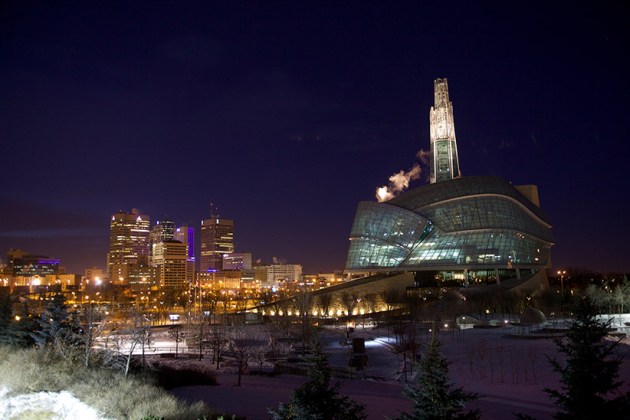
Winnipeg a leader in fixing Canada’s racism problem

Appears to be a concerted, community-wide effort. Encouraging:

Declaring 2016 the “Year of Reconciliation” for Winnipeg, he announced a host of new initiatives aimed at combatting racism, including mandatory training for all city staff on the impact of residential schools, a promise to visit every Winnipeg high school to address diversity, and a program to foster public engagement in reconciliation. It is a kind of commitment to the issue of racism never before seen by a civic leader in Winnipeg, and one that civic leaders say has propelled Winnipeg to the forefront of the issue in Canada, as other cities begin the tough work of reconciliation.

“On that day [a year ago], this community chose to come together to recognize the existence of racism, and that we needed to work together to better address it,” Bowman said. “On that day, we chose unity over division. We responded to the Maclean’s article with honesty and humility. We knew we could not, and cannot, mend the profound wrongs and injustices of generations and centuries in one year, with a single summit or press conference. But I remain committed to the journey.”

Photograph by John Woods

Photograph by John Woods

Numerous Indigenous speakers and community leaders at the press conference announced forthcoming projects, like St. John’s High School student Sylas Parenteau, who talked about an upcoming march for diversity by 3,000 Winnipeg School Division students, continuing the anti-racism work the division undertook in the last year. Far from a top-down effort, “we’ve been able to drive this conversation down to the individual level, where it really needs to occur,” Bowman said.

Bowman addressed a packed, second-floor foyer at City Hall. Seated with him were many of the same people who stood shoulder-to-shoulder with him last year. Michael Champagne, of Aboriginal Youth Opportunities, and founder of Meet Me at the Belltower, led a smudge; a local imam led a prayer. Proceedings were briefly interrupted by a Somali mother who told media she hasn’t seen her children in the six years since they were allegedly taken by Winnipeg Child and Family Services (CFS). Rather than being promptly frogmarched out by security, she was embraced by Ojibwe elder Randi Gage, and promised an audience with Bowman; Clunis, the police chief, wrapped an arm around her husband’s shoulder. Justice Murray Sinclair, head of the Truth and Reconciliation

Commission, addressed the controversy, acknowledging the “validity” of her concerns, which mirror those many Indigenous people feel toward CFS. “They are an example of what this day is all about—the sense of injustice so many feel about the way that they are treated by society, and their inability to be able to express themselves in a full way, to be able to achieve their ambitions in being part of this nation.”

There were critics of last year’s article in the room at City Hall, too; it remains deeply controversial in the city. But some, like radio host Charles Adler, who found the thrust of it “incredibly insulting,” admitted it ultimately “forced all of us to look into our souls,” and see the problem for what it was: “a human dignity issue,” threatening the future of the city. Instead of racism, Adler, who hosted Bowman’s press conference last week, believes Winnipeg will one day become known as “the capital of reconciliation.”

“At the very foundation of attacking racism there are two things we need to think about,” said Sinclair, a member of Bowman’s new Indigenous advisory circle: “What is it that our leaders are saying? And what is it that our leaders are doing? And to that, I say: Look around. Look at what our mayor has done. Look at the fact that our mayor has stood up, has embraced the ambition of trying to address it in a way that all people of this city are comfortable with who they are, are comfortable with a sense of their future, of who they can be in this society.”

Source: Winnipeg a leader in fixing Canada’s racism problem

Conservatives cherry picked certain Syrian refugee files: documents

Not one of the previous government’s finest hours, even if a case could be made to prefer those from threatened minority communities:

Newly released government documents paint the clearest picture to date of how the Conservative government’s controversial approach to Syrian refugee resettlement played out last year.

Before last winter, the previous government had only committed to take in 1,300 Syrian refugees from the millions fleeing the civil war there and spilling into surrounding countries.

Former prime minister Stephen Harper had been under intense pressure — including from inside his own cabinet — to increase that total, but only agreed to accept a further 10,000 provided that religious and ethnic minorities were prioritized.

The policy, unveiled last January, was contentious. The vast majority of the Syrian refugee population is Muslim. The decision to hone in on “religious minorities” prompted allegations the government was biased against Muslims and was also violating United Nations principles governing refugee resettlement.

The refugees the Canadian government accepts for resettlement are chosen by the UN. They do not use ethnicity or religion as a basis for determining whether someone requires resettlement to a third country.

But documents tabled in the House of Commons this week in response to a question from the NDP show how the Conservatives found a workaround.

In February 2015, visa officers in Jordan and Lebanon were instructed to track “areas of focus” for Syrian refugees, which included tracking whether someone was a member of a vulnerable ethnic or religious minority, the documents say.

They applied that criteria to the files they were receiving from the UN.

“Cases meeting at least one of the areas of focus were identified for expedited processing,” the documents say. “Cases that did not meet the areas of focus were included in the mission’s inventory and processed as a regular case.”

The tracking stopped in November 2015.

The Citizenship and Immigration department, asked repeatedly in recent months for a breakdown of Syrian refugees by religion, has consistently said it does not track that information.

On Wednesday, however, spokesperson Jessica Seguin said while the department applied the areas-of-focus approach, it never recorded how many cases met those criteria in part because the computer system isn’t set up that way.

“It is true that for a short time this information was anecdotally tracked in a few missions, but it was never done systematically,” Seguin said in an e-mail.

“No refugees were screened out of the resettlement process as a result of the areas of focus.”

The documents also illustrate the impact of another controversial Conservative move last year — auditing government-assisted refugee case files to see whether they were in keeping with the areas of focus and security requirements.

According to the data tabled in the House of Commons, in June 2015, the highest number of government-assisted refugees admitted to Canada so far that year was 62. That same month, Harper ordered the audit.

The following month, admissions fell to just 9 people.

Source: Conservatives cherry picked certain Syrian refugee files: documents

‘Submission’ to Islam: Critics Slam Cover-Up of Rome’s Nude Statues for Iran’s President

The challenges in finding a balance in protocol.

Personally, while serving halal food is one thing, a more balanced approach would be to pick another venue without the statues and make wine optional rather than automatically served.

And Iranians sometimes show more flexibility than expected. While working in Tehran in the late 80s, I was sometimes offered food and tea during Ramadan given that the obligation to fast did not apply to me as a non-Muslim:

Italian opposition politicians have lashed out at a decision to cover up classical statues ahead of a visit by Iranian President Hasan Rouhani to a world-famous Roman museum, for fear of offending his Muslim sensibilities.

Nude statues among the historical collections at the Capitoline Museums were hidden behind large white panels when Rouhani visited on Monday for a meeting with Prime Minister Matteo] Renzi. The museum said the prime minister’s office requested the cover-up.

Italian media also reported that no wine was served during an official dinner for Rouhani.

“The level of cultural subordination of Renzi and the left has exceeded all limits of decency,” declared right-wing politician Giorgia Meloni, who served as Youth Minister in a previous Silvio Berlusconi cabinet.

Writing on her Facebook account, she wondered what Italy could expect next – the covering of St. Peter’s Basilica “with a huge box” when the emir of Qatar visits next week?

Rouhani’s European tour, his first since the lifting of sanctions under the nuclear deal, promises to open up billions of dollars in business deals, including a major order for Airbus aircraft. At a ceremony held in the Capitoline Museums on Monday, Rouhani and Renzi oversaw the signing of contracts worth up to $18.3 billion.

“Renzi was clearly keen to avoid offending his new business partner,” the Italian news site The Local commented of the statue cover-up.

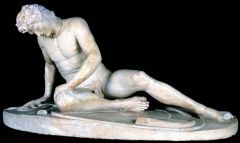
The Dying Gaul, one of the historical statues at Rome’s Capitoline Museums. (Photo: Musei Capitoli)

A lawmaker in Berlusconi’s Forza Italia party, Luca Squeri, described the concealing of the historical statues as “a sign of excessive zeal.”

“Respect for other cultures cannot and must not equal the negation of ours. This is not respect, it is the cancellation of differences or, worse still, submission,” the ANSA news agency quoted him as saying.

Source: ‘Submission’ to Islam: Critics Slam Cover-Up of Rome’s Nude Statues for Iran’s President

Shias, Catholics and Protestants: Sectarian splits are widening in Islam and lessening in Christianity | The Economist

Worth reflecting upon:

ONE OF this week’s most arresting news photographs featured Pope Francis in smiling conversation with President Hassan Rouhani of Iran, who is touring Europe in the hope of asserting his country’s emergence from international isolation. The Iranian visitor asked for the pontiff’s prayers, and the Vatican announced afterwards that “common spiritual values” emerged during the conversation. It was the first meeting between a pope and an Iranian president since 1999.

A 40-minute chat, with interpreters, probably wasn’t long enough for much investigation of those shared sensibilities. But among observers of the world of religion it has often been suggested that Islam’s Shia-Sunni split corresponds in certain ways with the Catholic-Protestant divide in Christendom. Of course, as with any broad generalisation about religion, you can’t push it too far.

But Vali Nasr, an Iranian-American scholar-cum-diplomat who is a leading world authority on Shia Islam, finds the parallel quite striking. As he has argued, both Shia Muslims and Catholics have a respect for clerical authority and for theological tradition as it has evolved over time; that is in contrast with the stress put by many Sunnis, and Protestants, on going back to the original divine revelation and ignoring whatever came later.

In the Shia tradition, as in the Catholic one, there is a long line of succession through which sacred authority is thought to have been transferred over the centuries. Both among the Shias and the Catholics, there is emphasis on the idea of martyrdom leading to redemption. Some images of the slain Ali, whose murder in 680 is a primordial event for Shias, bear at least a passing resemblance to Christian depictions of Jesus Christ.

Of course, you can find points of similarity between any pair of religions and cultures if you look hard enough and set aside the major differences. But John Allen, a commentator on Vatican affairs, has argued that Catholics and Shias have geopolitical reasons for keeping in touch, as well as the religious and cultural reasons cited by Mr Nasr.

When it looks at Syria, the Vatican is instinctively protective of the Iranian-backed Assad regime, because it fears that the government’s overthrow by Sunni militants would spell doom for Christians. (That has not prevented some individual Catholic priests speaking out bravely against the Syrian regime’s atrocities.)

In September 2013, the Holy See strongly resisted American threats to bomb government forces in Syria. Then, at least, the Iranians had good reason to feel grateful to the Vatican. Another point is that wherever fundamentalist Sunnis (from conservative monarchs to populist Muslim Brothers) have held power, they have generally been anti-Shia and anti-Christian in equal measure.

But there is one big difference between intra-Muslim and intra-Christian divisions. The former are tending to grow wider, as tension between Iran and Saudi Arabia exacerbates the sectarian chasm in every other place where different forms of Islam coincide, from the civil-war zones of Syria and Yemen to the streets of Beirut and Islamabad.

Among Christian leaders, meanwhile, it is generally agreed that everything should be done to overcome division. As well as welcoming his Iranian guest, Pope Francis announced this week that he would go to Sweden in October to attend the start of a year of commemorations of the religious Reformation initiated by Martin Luther on October 31, 1517. In some ways, that is an extraordinary thing for a pope to be celebrating; the fact that the Vatican lost its sway over northern Europe, and blood-letting between Catholics and Lutherans convulsed the centre of Europe for a couple of centuries.

But a joint reflection by Catholic and Lutheran theologians has come up with an elegant way in which both churches can mark the event; it stresses that Luther’s original intention was to reform Catholicism from within, not to start a new church; and that everybody can agree that some reform was needed.

In the same sort of spirit, Shia and Sunni theologians get together from time to time and stress that whatever their differences, they recognise one another as Muslims and monotheists; but at the moment Islam’s sectarian hotheads seem to be making a much louder noise. If the pope and Mr Rouhani had a bit longer together, they might usefully have reflected on how people can be persuaded to stop killing one another because they have different interpretations of events in sacred history that took place long, long ago.

Source: Shias, Catholics and Protestants: Sectarian splits are widening in Islam and lessening in Christianity | The Economist

Turkey commemorates Holocaust, vows to fight antisemitism

Now if the Turkish government could be more open about the Armenian genocide… Also wonder whether this appeared in Turkish-language media or only in English:

Turkey has voiced resolve in continuing its fight against anti-Semitism, racism, xenophobia and Islamophobia in a message to mark International Holocaust Remembrance Day.

“We commemorate with respect millions of people who lost their lives in the Holocaust which is one of the darkest and most painful eras in the history of humanity,” the Turkish Foreign Ministry said, recalling that Jan. 27 had been chosen by the United Nations to commemorate victims of the Holocaust during World War II.

“As it has done so far, our country will continue to fulfill its responsibility to ensure such atrocities are not experienced again and will continue its fight with determination against phenomena, such as anti-Semitism, racism, xenophobia and Islamophobia which have unfortunately been observed and strengthened,” the ministry said in a written statement released late Jan. 26.

Source: Turkey commemorates Holocaust, vows to fight anti-Semitism – DIPLOMACY

#OscarsSoWhite: How a Lack of Diversity Historically Dooms Oscars Ratings – The Daily Beast

Interesting correlation how greater diversity of Oscar nominees is reflected in greater viewership. While other factors may also be at play as noted in the article, the business argument appears persuasive:

Using ratings data provided by Nielsen that broke Oscars viewership down by race, stretching back to the 2004 telecast, we found that the largest percentage of black viewers and non-white viewers tuned in to the Academy Awards in years when the most nominees of color and films featuring protagonists of color were in contention.

The reverse is also true: Generally, the years with the least diversity were the least-watched among people of color.

Not only that, but the years that had the highest percentages of black and non-white viewers also happened to be the highest rated Oscars telecasts overall. That means that people of color have been a major force in driving the biggest Oscars ratings.

Simply put, a more diverse slate of nominees leads to better ratings. Assuming that the Academy needs big ratings numbers to make money and stay relevant, #OscarsSoWhite—or, at the very least, a resistance to diversity—is bad for business.

For example, 2005 was the year with the highest ratings among black viewers, with 5.3 million tuning in, amounting to 12.5 percent of that year’s total viewers. It was also among the highest rated Oscars ceremony in the years that we surveyed, topping out at 42 million viewers.

That year, six nominees were actors of color: Don Cheadle and Sophie Okonedo (Hotel Rwanda), Morgan Freeman (Million Dollar Baby), Catalina Sandino Moreno (Maria Full of Grace), and Jamie Foxx, who won for Ray and was nominated for Collateral.

Plus Ray was a Best Picture nominee, one of only nine Best Picture nominees in the 12 years we surveyed featuring a protagonist of color. (The others: Crash, Babel, Precious, The Help, Django Unchained, 12 Years a Slave, and Selma. And we will concede that several of the films on that list are dubious inclusions.)

Over the course of the 12 years we looked into, viewership among black and non-white viewers, which includes Hispanic and Asian viewers, reliably spiked in years with the most nominees of color.

In 2007, there were a remarkable eight nominees of various non-white races contending for acting trophies: Forest Whitaker (Last King of Scotland), Will Smith (The Pursuit of Happyness), Penelope Cruz (Volver), Djimon Hounsou (Blood Diamond), Eddie Murphy and Jennifer Hudson (Dreamgirls), and Adriana Barraza and Rinko Kinkuchi (Babel).

That year 12.15 percent of the total viewership was black, the second-highest in that period. Just more than 20 percent of the viewership was non-white as a whole—the highest of any year. And it was the year with the second-biggest ratings overall, with 40.2 million viewers tuning in, signaling again that people of color help to drive viewership in the biggest Oscars years.

Babel was also a Best Picture nominee that year. Though it didn’t get a Best Picture nod, Dreamgirls was the most nominated film of the year. Beyoncé and Jennifer Hudson were among the performers at the ceremony, and Hudson and Forest Whitaker were presumed victors long before the ceremony aired.

There’s no factual correlation between an Oscar telecast that spotlights black performers and higher ratings, but there certainly is an anecdotal case to be made suggesting that.

And while the numbers indicate that total viewership surges when black viewership surges—2010’s telecast, in which Precious was nominated, scored a stellar 42 million viewers and was third-ranked among black viewers and nominees of color—there is also a correlation between a lack of diversity and ratings.

Up until last year’s first #OscarsSoWhite telecast, during which Selma was nominated for Best Picture, the least watched Oscars telecasts among black and non-white viewers were, perhaps expectedly, the years featuring only two nominees of color or less, and no Best Picture nominees featuring diverse protagonists.

The lowest percentage of black viewers tuned in for the 2004, 2008, and 2011 telecasts. In 2004, only Djimon Hounsou (In America) and Ken Watanabe (The Last Samurai) were nominated. In 2008, only Javier Bardem (No Country for Old Men) and Ruby Dee (American Gangster) got nods. In 2011, it was only Bardem, for Biutiful.

And with the exception of 2004’s ceremony, which aired during an era when the Oscars ratings didn’t fluctuate as wildly as they tend to now and were almost always guaranteed blockbuster numbers, total viewership over the years we surveyed was reliably lowest when the films in contention were woefully, well, “white.”

The ratings for last year’s #OscarsSoWhite fiasco were the worst since 2009, a fact that you can’t help contrast with the numbers for the year before. The ceremony in 2014—when 12 Years a Slave won Best Picture, Lupita Nyong’o won Best Supporting Actress, and Chiwetel Ejiofor and Barkhad Abdi were also nominees—was the highest rated ceremony of the 12 years we surveyed.

Oh, and the lowest ratings? That was for 2008’s ceremony, a year that was almost laughably white: No Country for Old Men defeated There Will Be Blood, Juno, Atonement, and Michael Clayton for Best Picture.

Admittedly, this isn’t a perfect argument.

There are many reasons why ratings for the Oscars surge or plummet. A theory that is often floated correlates high ratings to the box office totals of the nominees. The year of Titanic remains the most-watched Oscars ever. In our surveyed range, Lord of the Rings: Return of the King help stoke big ratings in 2004, while the year that Avatar competed (but lost) also put up big numbers.

Still, there is a compelling case to be made by looking at the data that diversity in nominees and the films in contention also plays a major part in driving viewership; it should also be noted that the year Avatar competed was also one of the most diverse years in terms of nominees.

Plus, years featuring the largest percentages of black and non-white voters also had the highest Oscars ratings, suggesting that people of color play a large part in fueling bigger viewership numbers. And that happens when there are diverse nominees.

So what does all of this mean for this year, a year when the lack of diversity among the nominees isn’t just fodder for thinkpieces and social media handwringing—but actual calls for action?

This is an unprecedented situation—two consecutive years with no acting nominees of color and, this year, no Best Picture nominees either—and therefore an unprecedented case study.

Despite our argument that a lack of diversity hurts Oscars ratings, there’s a valid rebuttal that the zeitgeist-seizing controversy surrounding #OscarsSoWhite could actually lead to bigger numbers. A lot of people are desperate to know how the Academy and especially Chris Rock will address the situation, if at all, and what repercussions there will be from the grassroots Oscars boycott—again, if any.

Read more of this post

ICYMI: Why Cities Should Invest in Citizenship: Helping Immigrants Achieve Citizenship Yields Major Returns | Bob Annibale

Likely more correlation than causation, although citizenship both reflects and promotes integration:

It is widely recognized that gaining citizenship is a transformative social experience for immigrants and our nation. Naturalization ceremonies are often emotional events, and the integration of immigrants has shaped the face of America.

Less widely appreciated is the fact that citizenship is a powerful source of economic empowerment and strength both for the individuals who gain citizenship, as well as the cities in which they live.

In the past month the New York City Mayor’s Office of Immigrant Affairs (MOIA) and Citi Community Development unveiled new research conducted by the Urban Institute on the economic effects of naturalization on immigrants and their local economies. “The Economic Impact of Naturalization on Immigrants and Cities” shows that naturalization may lead to an average increase in individual earnings of 8.9%, or $3,200, in the first year after becoming a U.S. citizen. If all eligible immigrants were to naturalize, employment and homeownership rates among eligible immigrants may also rise.

Cities also reap economic benefits from naturalization. If all of the eligible immigrants across the 21 U.S. cities studied were to become citizens, their increased employment rate and earnings would generate millions in new tax revenues – $2 million per year in cities with smaller immigrant populations, like Chattanooga, Tennessee, and Reading, Pennsylvania, and up to $152 million per year in Chicago, $364 million in Los Angeles, and a whopping $789 million in New York City.

Source: Why Cities Should Invest in Citizenship: Helping Immigrants Achieve Citizenship Yields Major Returns — and It’s the Right Thing to Do | Bob Annibale

Christine Taubira, justice minister at odds with French government, resigns

A further reflection of the divisions within the Hollande government and party members and supporters over the proposed citizenship revocation measures:

French Justice Minister Christiane Taubira, a left-winger often considered at odds with her government on matters of law and order enforcement, resigned on Wednesday, President Francois Hollande’s office said in a statement.

The announcement came as parliament prepared to examine a controversial constitutional reform that would allow for people convicted of terrorism to be stripped of their citizenship in certain circumstances.

Taubira, who expressed reservations about the plan, said on her Twitter account: “Sometimes you remain in place to resist. Sometimes resisting means you go.”

The statement from Hollande’s office said Taubira would be replaced by Jean-Jacques Urvoas, widely regarded as more supportive of Prime Minister Manuel Valls and Hollande.

Taubira, born in French Guiana, was perhaps best known for shepherding legislation through parliament to legalize same-sex weddings in France. While her active role on that major social policy change was widely recognised, she was often accused of advocating a softer touch on law and order than others in her government.

That stance has looked even more problematic in the wake of the Nov. 13 Islamist militant attacks on Paris and the security clampdown they sparked, and as countries across Europe take a harder line on policing.

Source: Christine Taubira, justice minister at odds with French government, resigns – World – CBC News